
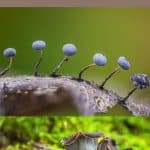
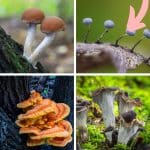
Mushrooms growing on a fallen log get their nutrients differently from those crowded at the base of a living tree. There are three basic ways mushrooms source nutrients to grow. The ones that feed on dead matter are saprotrophs; the ones that feed on wood are parasites. And, the ones that partner with the roots of a tree or plant are mycorrhizal. Where a mushroom can and will grow is a huge part of its ecology and specific lifecycle. It is also a vital factor in whether the mushroom can be grown or is only found in the wild.
Saprotrophic Fungi
The saprotrophs are the fungi that feed on dead and decaying organic matter. Their food includes dead wood, fallen leaves, dead roots, dung, and animal remains. These mushrooms are decomposers; they break down the dead material and return its nutrients to the soil. Fungi are among the most efficient decomposers of plant matter.
Much of the dead material that saprotrophs eat is hard to break down. And, mushrooms can’t bite or swallow, so a saprotroph digests its food outside its body. Its mycelium, the mass of fine threads that makes up the living fungus, grows into the dead matter and releases enzymes. The enzymes then break down the tough compounds in the dead material to make it easier to access, and the fungus then absorbs those through the walls of its mycelium threads.
Some are wood-decay fungi that live on logs, stumps, and dead branches. Others are litter decomposers that source food from fallen leaves and twigs on the forest floor. A few feed mostly on animal dung.
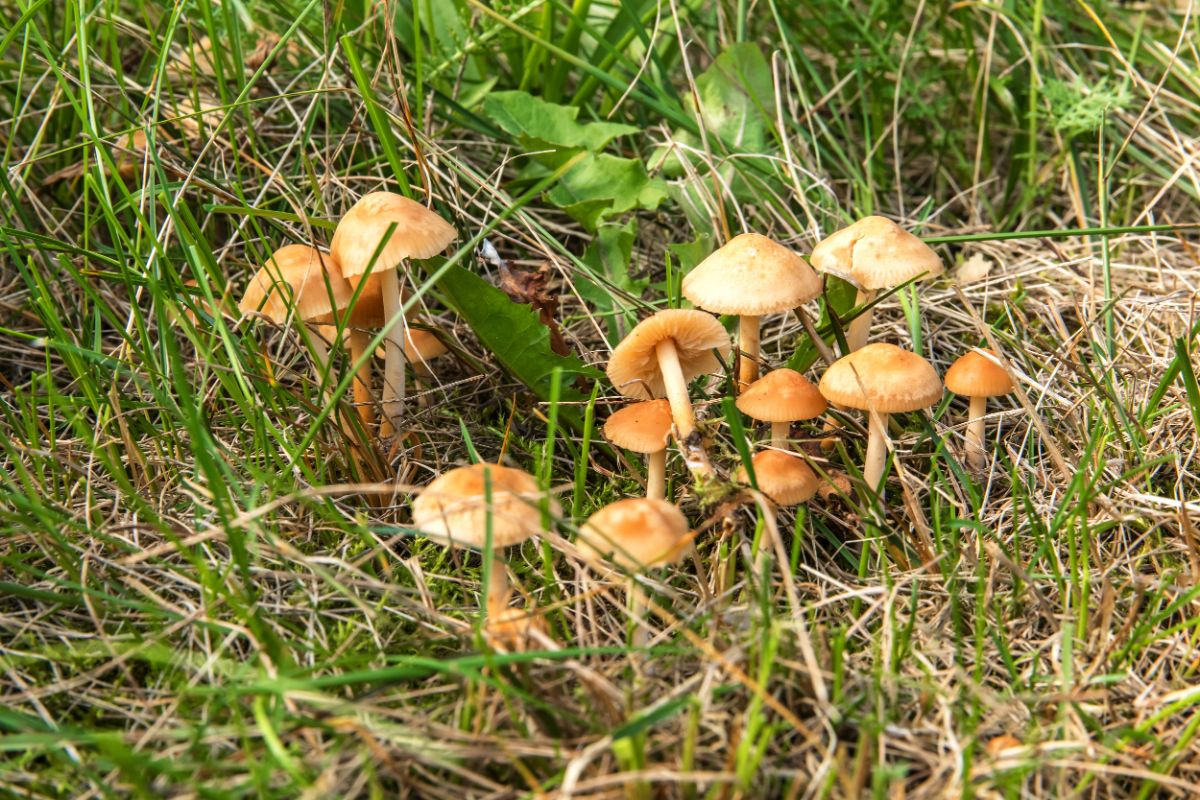
The saprotrophs are split by what they eat. The oyster mushroom (Pleurotus ostreatus) and the turkey tail (Trametes versicolor) are wood-decay fungi. Both grow on dead hardwood logs and stumps and cause a white rot. The fairy ring mushroom (Marasmius oreades) is a litter decomposer that feeds on dead grass and other organic matter in lawns, meadows, and pastures. The petticoat mottlegill (Panaeolus papilionaceus) feeds on dung, growing on the droppings of horses and cows.
Saprotroph Mushroom Species
- Oyster mushroom (Pleurotus ostreatus) — grows in shelf-like clusters on dead and dying hardwood and causes a white rot.
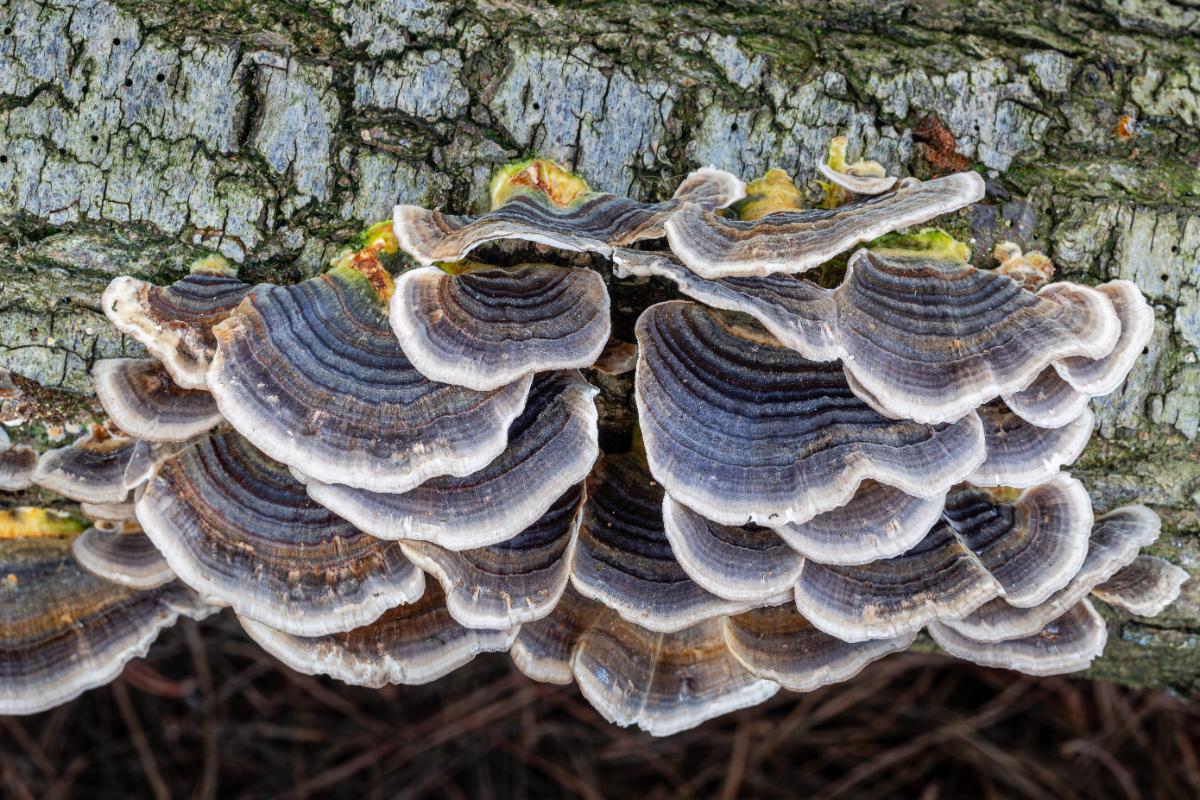
- Turkey tail (Trametes versicolor) — it grows in overlapping rows of thin, multi-colored banded fans on dead hardwood logs and stumps.
- Fairy ring mushroom (Marasmius oreades) — feeds on dead grass in lawns and meadows, and it often fruits in arcs and rings, which is how it got its name.
- Petticoat mottlegill (Panaeolus papilionaceus) — feeds on the dung of horses and cows.
- Shaggy mane (Coprinus comatus) — it grows on lawns, wood chips, and hard-packed ground, and its gills dissolve into black ink as it matures.
- Wine cap (Stropharia rugosoannulata) — grows on wood chips and in gardens and cultivated landscapes.
- Deer mushroom (Pluteus cervinus) — grows on rotting hardwood logs, stumps, and buried wood.
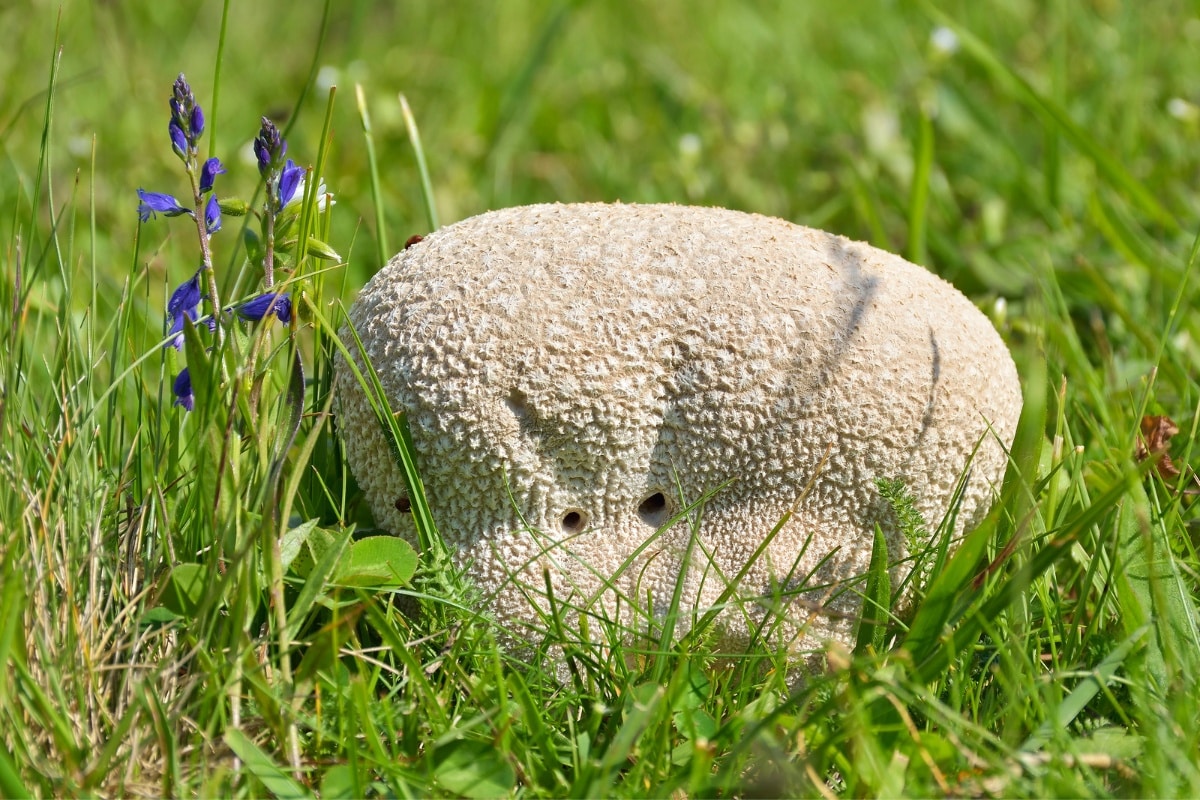
- Giant puffball (Calvatia gigantea) — it grows on the ground in meadows, fields, and lawns, and looks like a large white ball. It often reaches a foot across or more.
Parasitic Fungi
Parasites take their food from a living host rather than from dead matter. Often the host is a tree, but it can also be another plant, an insect, or even another fungus. The fungus pulls nutrients from the living tissue of the tree or plant, and while they do this, they slowly weaken the host, sometimes killing it.
The feeding works much like it does in a saprotroph. The fungus puts out enzymes and absorbs the food they free up. Many parasitic fungi also grow special absorptive structures called haustoria that tap into the host’s living tissue. Others spread from one host to the next through the soil and wood.
A fungus isn’t always just a parasite or only a saprotroph. In fact, a good number of fungi don’t fall neatly into just one group. Many mushroom species are parasitic when the host tree is alive, and then turn saprotrophic after the tree is dead. So, they slowly kill it, and then keep feeding on the same wood after it’s died. These mushrooms switch from parasite to decomposer as it suits them, to stay alive longer.
The honey mushroom (Armillaria mellea) parasitizes and kills hardwoods, causing a white rot, and goes on rotting the wood once the tree is dead. The tinder fungus (Fomes fomentarius) does the same on birch and other hardwoods. It infects a weakened tree through a wound, spreads a white rot until the tree dies, and then keeps decomposing the dead wood for years. The chicken of the woods (Laetiporus sulphureus) feeds as both a parasite and a decomposer on living and dead oaks, causing a brown rot in the heartwood. For these fungi, the switch from parasite to decomposer lets them keep feeding on one tree from the time it sickens to long after it falls.
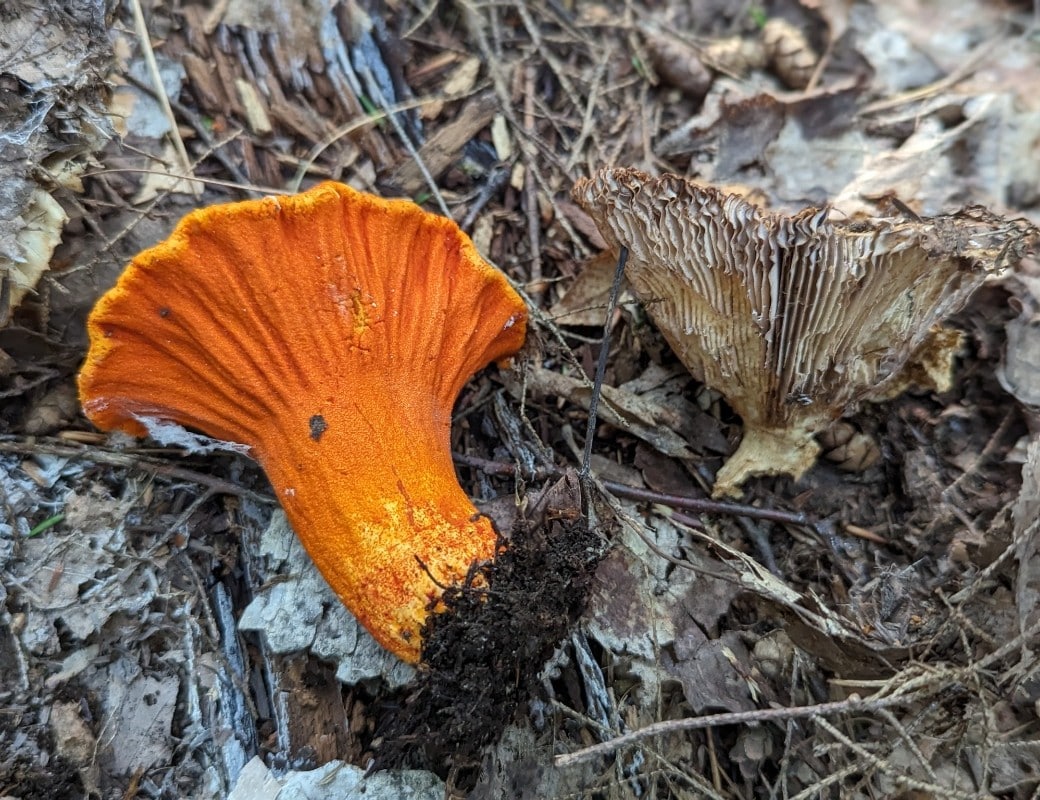
There are also parasitic fungi that parasitize other fungi. The lobster mushroom (Hypomyces lactifluorum) attacks species of Russula and Lactarius and spreads a hard, bright orange, pimpled crust over every surface of the host. As the lobster fungus takes over, the host mushroom’s own DNA drops away until almost none is left. Other members of the genus Hypomyces go after other hosts: the bolete eater (Hypomyces chrysospermus) coats boletes in a white-to-yellow mold, and Hypomyces hyalinus deforms amanitas.
Some parasitic fungi attack insects. These are called entomopathogenic fungi, and the best-known are in the genus Cordyceps. The scarlet caterpillar club (Cordyceps militaris) parasitizes the buried pupa or larva of a butterfly or moth. The fungus colonizes the living insect and mummifies it, keeping it alive just long enough to build the biomass it needs to fruit.
The fungus Cordyceps lloydii, which is found in Costa Rica, practices parasitic mind-control. It attacks living ants and releases a chemical that drives them to climb to the top of the canopy and lock themselves onto leaves. Shortly after, the mushroom then erupts from the ant’s body and scatters its spores on the wind.
Parasitic Mushroom Species
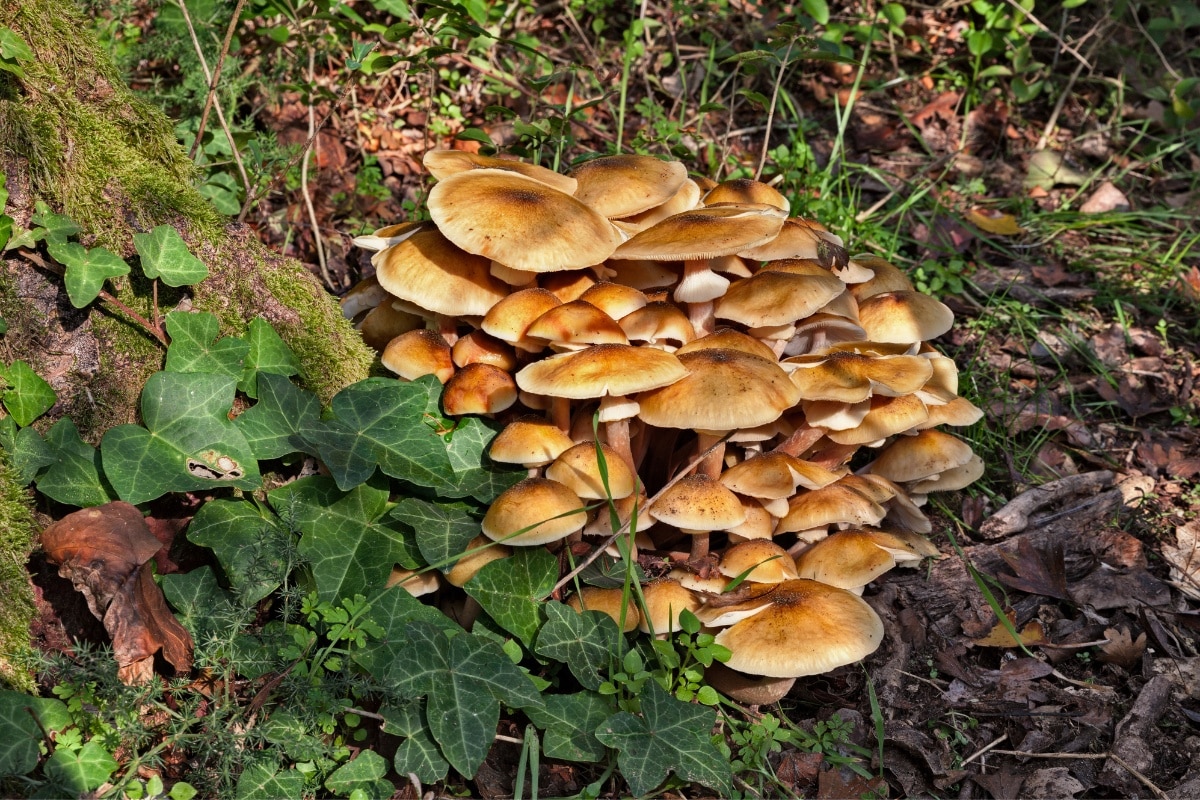
- Honey mushroom (Armillaria mellea) —grows in clusters on hardwoods, and first parasitizes, then kills the trees. It spreads from one tree to the next through the soil.
- Lobster mushroom (Hypomyces lactifluorum) — parasitizes Russula and Lactarius mushrooms, coating them in a hard, bright orange crust.
- Bolete eater (Hypomyces chrysospermus) — it parasitizes boletes, covering them in a white mold that turns golden yellow with age.
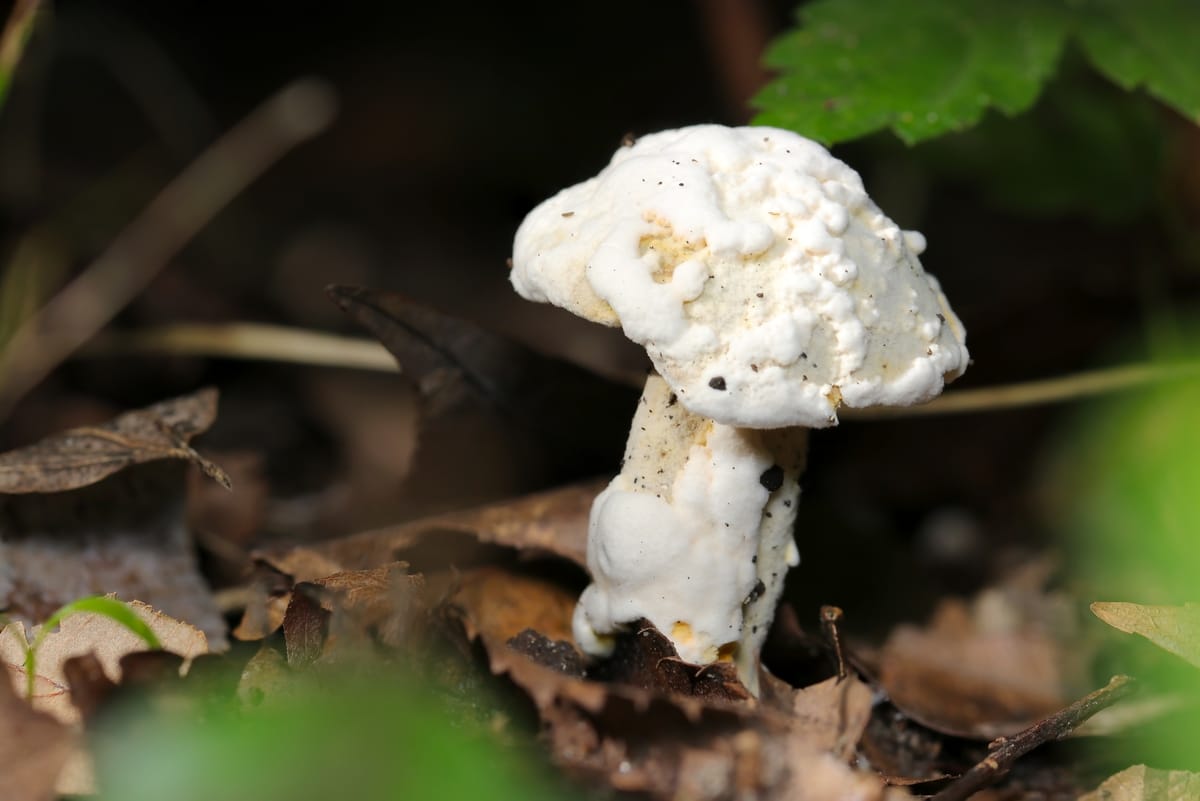
- Shrimp of the Woods (Entoloma abortivum) — parasitizes honey mushrooms and turns them into lumpy white blobs. The honey mushroom is itself a parasite, so this is one fungi parasite feeding on another.
- Scarlet caterpillar club (Cordyceps militaris) — infects buried moth and butterfly pupae and larvae, then grows a small orange club up from the dead insect.
- Tinder fungus (Fomes fomentarius) —infects birch and other hardwoods through existing wounds, and then kills the tree with a white rot. It also keeps feeding on the rotting dead wood for years after it killed it.
- Chicken of the woods (Laetiporus sulphureus) — grows on living and dead oaks as both a parasite and a decomposer (saprotroph). It causes a brown rot in the heartwood.
- Artist’s conk (Ganoderma applanatum) — mainly a decomposer of dead wood, but it sometimes parasitizes living trees that have been injured. It causes a white rot.
Mycorrhizal Fungi
The mycorrhizal fungi partner with the roots of a living plant to the benefit of both. The word mycorrhiza means fungus root; it comes from the Greek mykes, for fungus, and rhiza, for root. The way the partnership works is that the plant (usually a tree) feeds the fungus sugars it makes through photosynthesis, and the fungus feeds the plant or tree water and minerals it pulls from the soil.
The fungus wraps itself around the root tips of the tree and extends itself far out into the soil with its mycelial thread. Those threads are much finer and longer than the tree’s own roots, so they reach water and minerals the roots can’t get to on their own. The fungus hands phosphorus, nitrogen, and water to the tree, and the tree hands back sugars, which the fungus can’t make for itself.
There are two main types of mycorrhizal fungi. The ectomycorrhizal kind wraps a sheath around the outside of the tree root and grows between its cells without entering them. The arbuscular kind grows inside the root cells and is formed by a group of fungi that live in the soil of most plants on Earth. These fungi don’t form mushrooms that you can see. Glomus species are found in nearly every land habitat, from arable fields and grasslands to deserts and tundra. They live entirely in the soil with the plant roots.
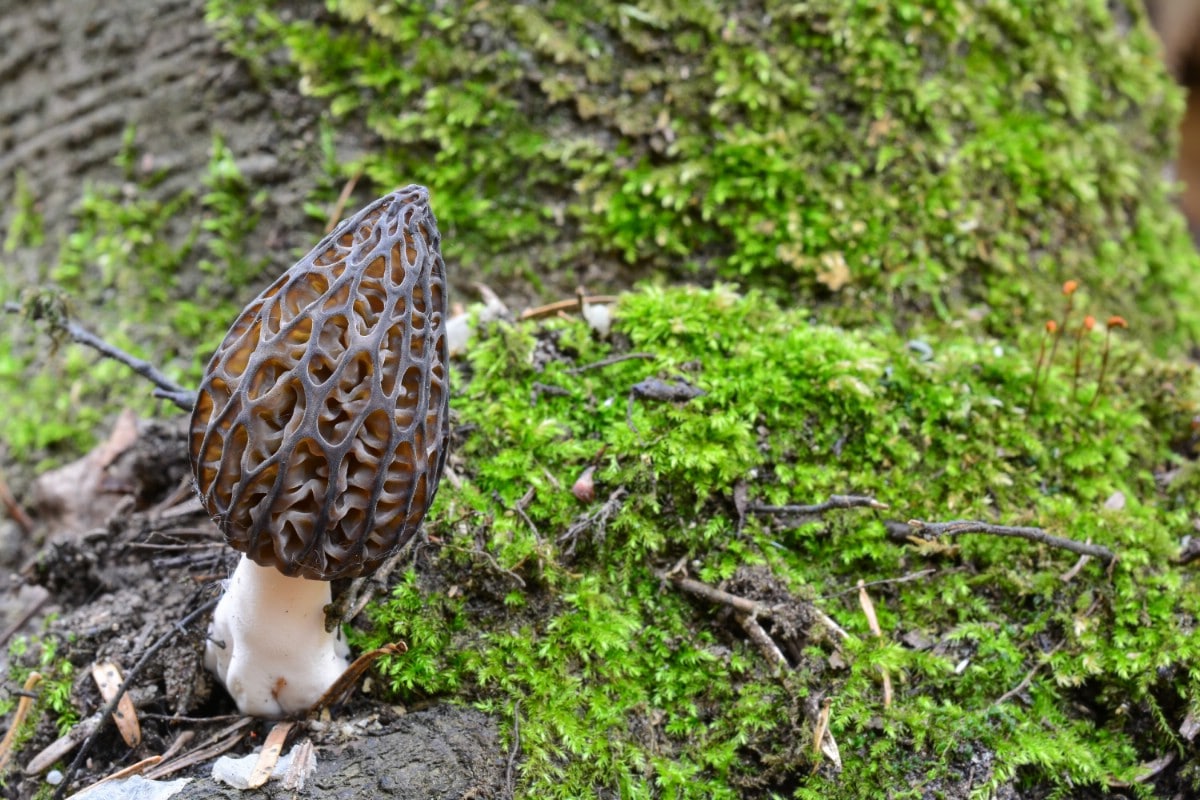
This partnership ties the fungus to its plant, and vice versa. Many mycorrhizal fungi can’t live without their host, so they grow only where the right trees grow. And many trees rely heavily on their fungal partner and either can’t grow without it, or don’t grow as well without it.
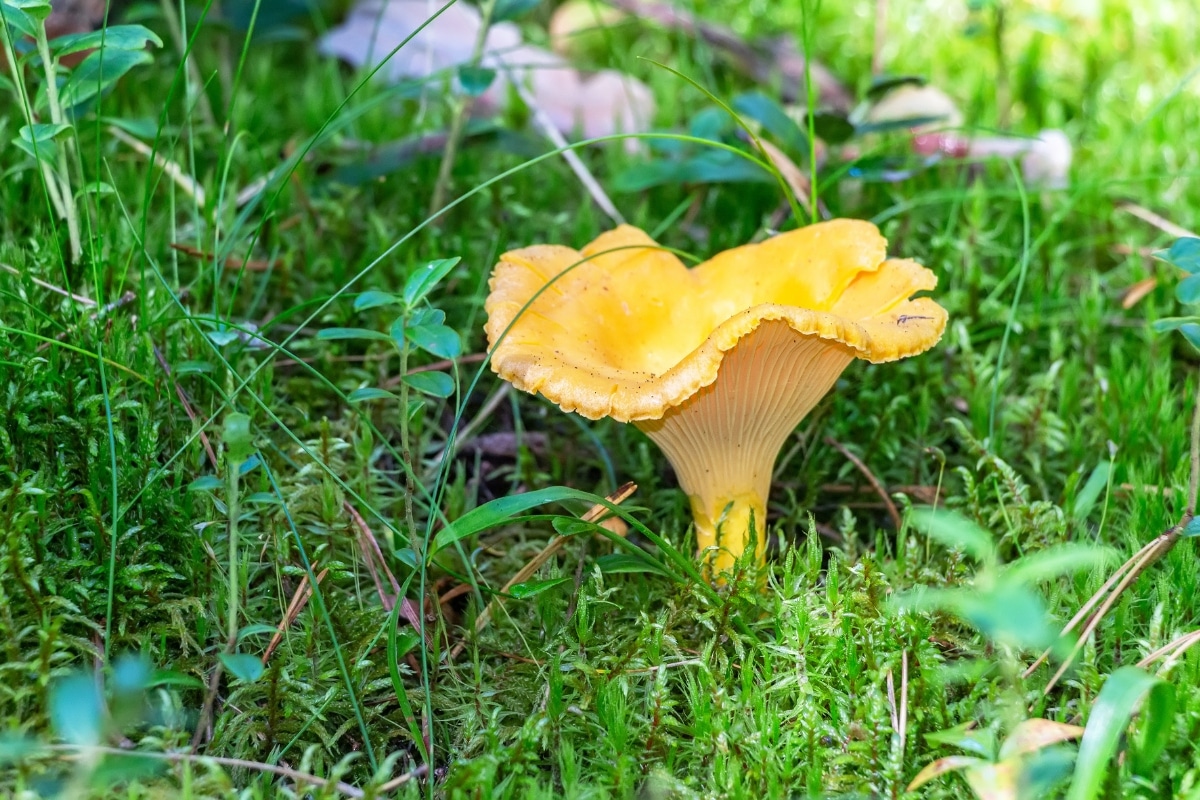
That dependent mycorrhizal tie is one reason that these mushrooms, like chanterelles and porcini, are difficult to cultivate. They need the trees to live, and recreating that bond is complicated.
Mycorrhizal Mushroom Species
- Chanterelle (Cantharellus) — partners with oaks and pine in the east and conifers in the Pacific Northwest.
- King bolete (Boletus edulis) — partners with conifers like spruce and pine and some hardwoods.
- Fly agaric (Amanita muscaria) — grows in association with birches, pines, and spruces in northern forests.
- Black trumpet (Craterellus fallax) — associates with oaks and other hardwoods.
- Slippery jacks (Suillus) — partners with pines and other conifers.
- Matsutake (Tricholoma) — grows in association with pines and other conifers.
- Hedgehog mushroom (Hydnum repandum) — partners with hardwoods and conifers.
- Brittlegills (Russula brevipes) — partners with oaks and pines, and is the main mushroom species that the lobster mushroom attacks.
Why This Matters For Foragers
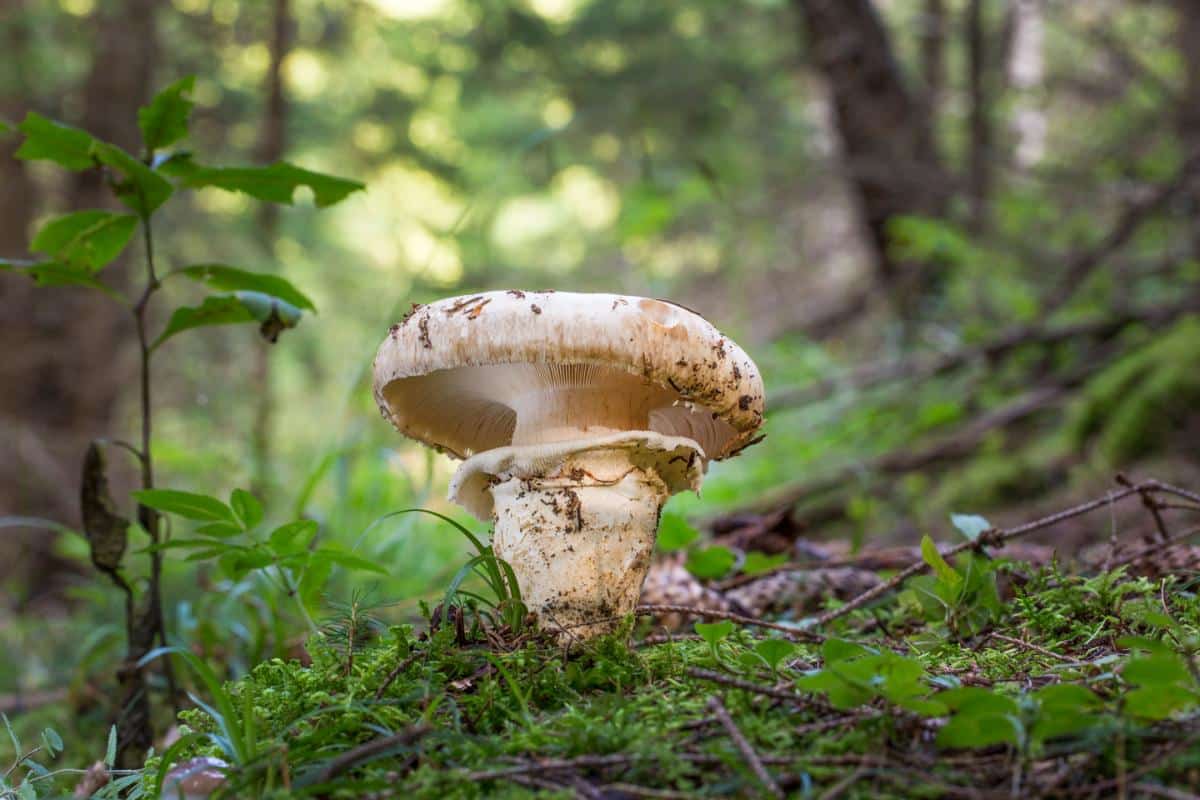
Knowing how mushrooms source their nutrients is important for the forager because it helps to figure out where to look for them. If you’re looking for turkey tail, a wood-decaying saprotroph that grows on logs, stumps, and dead branches, then there’s no point scanning the ground for it. If you’re searching for a mycorrhizal mushroom, like chanterelles, then it helps to know with whom they form relationships, so you can search for those trees. Chanterelles under oaks, king boletes near conifers, and matsutake under pines; all these highly sought-after wild edible mushrooms are only found with trees they’ve formed mycorrhizal bonds with.
Knowing the host tree helps locate these mushrooms and also helps confirm their identification. If you find something that looks like a matsutake, but it is growing under an oak tree, then it can’t be that. How a mushroom gains nutrients also, for a large part, determines whether it can be cultivated or only found in the wild. Wood-decay saprotrophs like oyster mushrooms, for the most part, grow easily commercially, while mycorrhizal species like chanterelles and porcini are difficult to cultivate and must be foraged.
Leave a Reply