
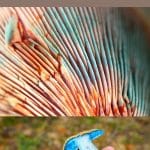
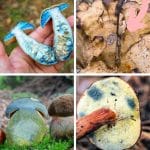
Some mushrooms change color when you press on their flesh or cut the stem or gills. The colors range all the way from blue to yellow, red, and black. The cornflower bolete turns deep blue, while the yellow stainer turns chrome yellow, and a milk cap can bleed blue or red juice from a single cut.
These color changes happen with many kinds of mushrooms, from boletes with sponge-like pores to gilled milk caps that ooze colored juice. There is not one specific type or family of mushrooms that changes color; they range widely. Some of these mushrooms are prized edibles, some are mildly poisonous, and a few are dangerous. The color change is one way to tell similar species apart, but it is never proof on its own of identification or edibility.
Jump to:
Why Some Mushrooms Change Color
These mushrooms have certain chemicals in their flesh that cause them to change color. If the mushroom is cut or bruised, this breaks open the cells and lets oxygen rush in. The oxygen reacts with those chemicals and changes them into new ones, and in these cases, the new ones are brightly colored.
In many boletes, the chemical behind the blue color change is variegatic acid, an orange pigment in the flesh. When air hits it, an enzyme triggers a reaction, and the orange pigment changes into a blue one.
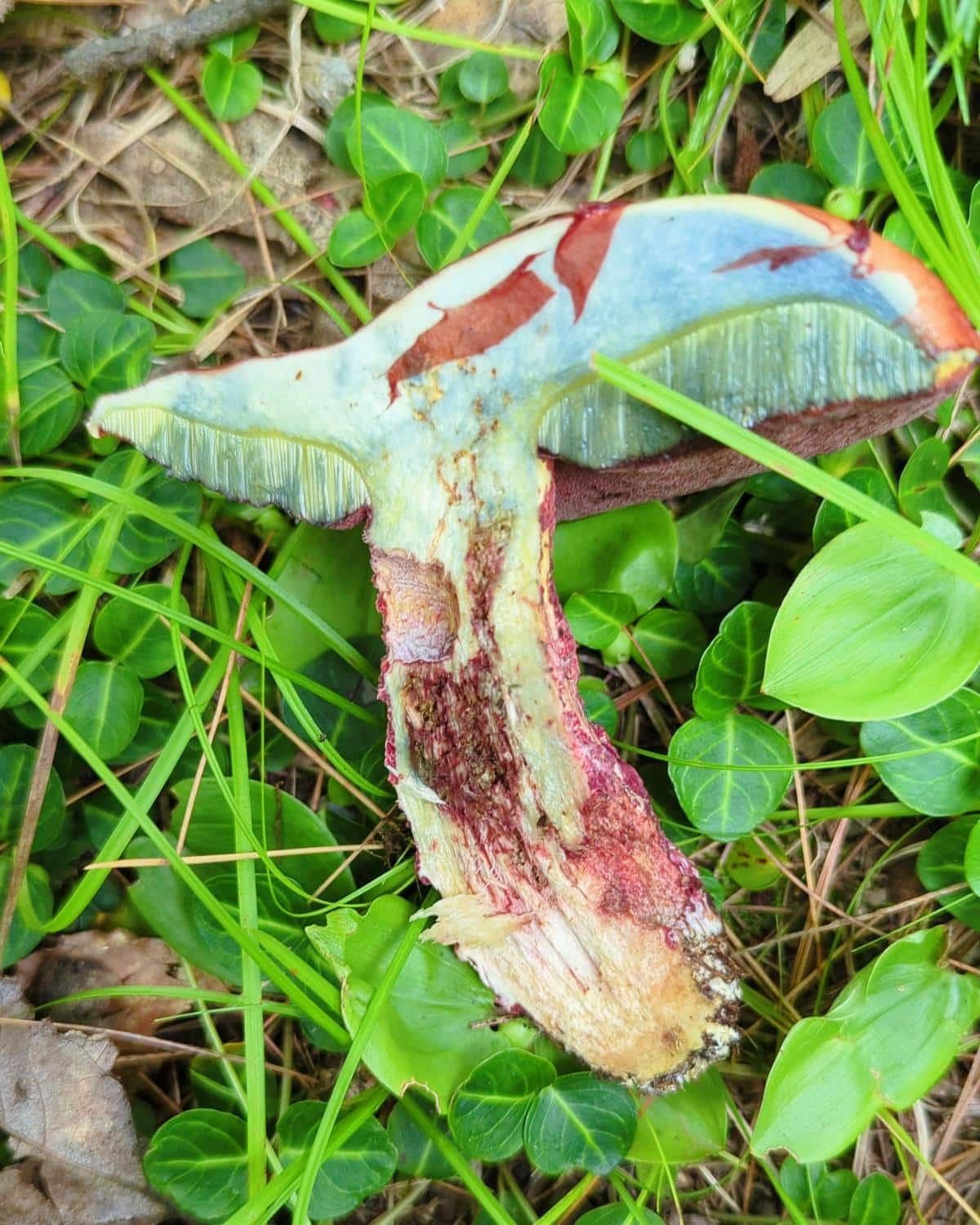
A second pigment, xerocomic acid, is red-orange and is also found in some boletes. It works the same way as variegatic acid. When it is exposed to air, an enzyme turns it blue. A single bolete can have both pigments, and both can turn blue at once to make a fast, deep bruise.
The two pigments are close chemical cousins. The mushroom makes variegatic acid out of xerocomic acid, and both are found together in some boletes, such as the lurid bolete (Suillellus luridus). The cornflower bolete uses a chemical, gyrocyanin, which also turns blue when it is exposed to air.
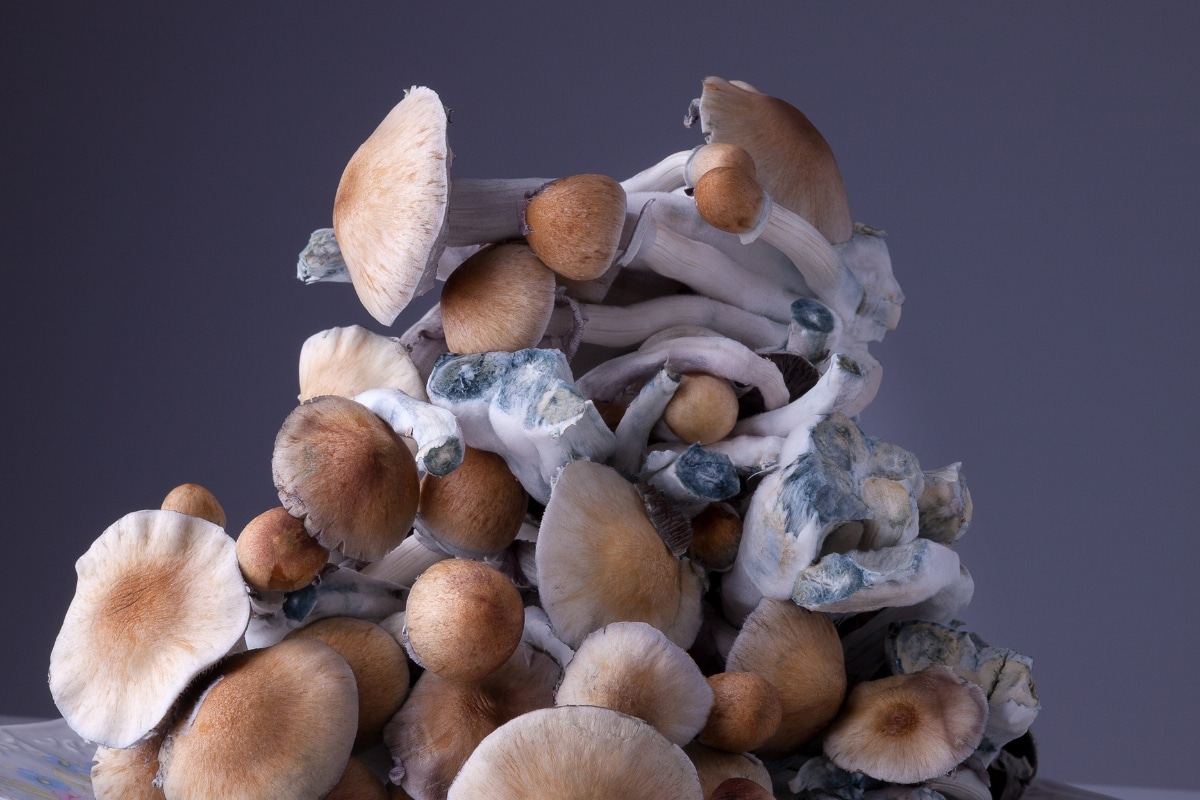
Psilocybin mushrooms are well known to turn blue, but this occurs because of a different chemical reaction. The chemical that causes the change is the actual psilocybin. When the flesh is bruised, an enzyme strips part of that chemical away to make psilocin, and a second enzyme adds oxygen to it. The psilocin pieces then turn blue.
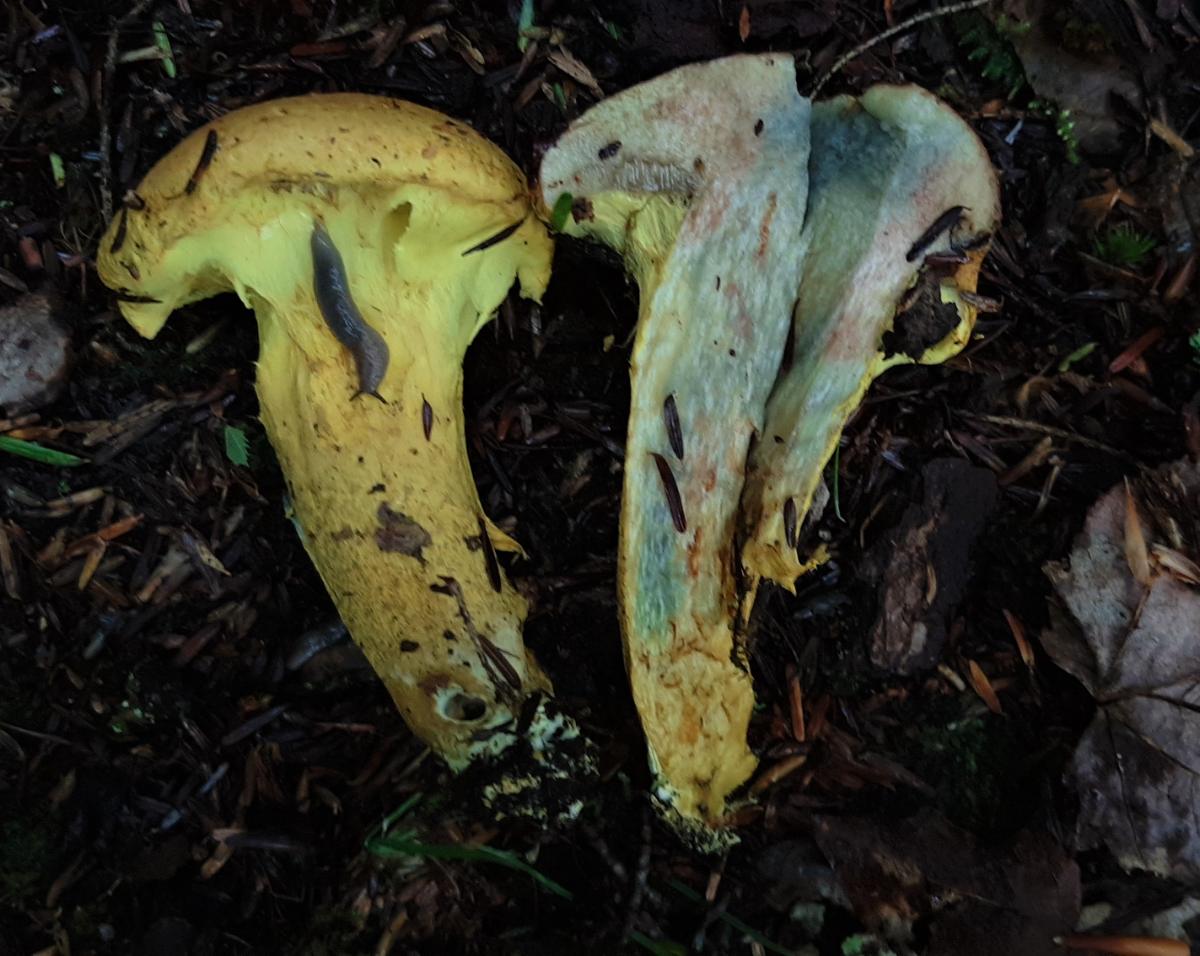
Mushrooms that stain yellow have different chemicals altogether. The yellow stainer and its relatives have phenol-type compounds in their flesh. When the mushroom is cut and the compounds exposed to air, they turn the flesh a fast chrome yellow. These compounds smell like ink or hospital cleaner, which is why the color and the smell occur in the same mushrooms.
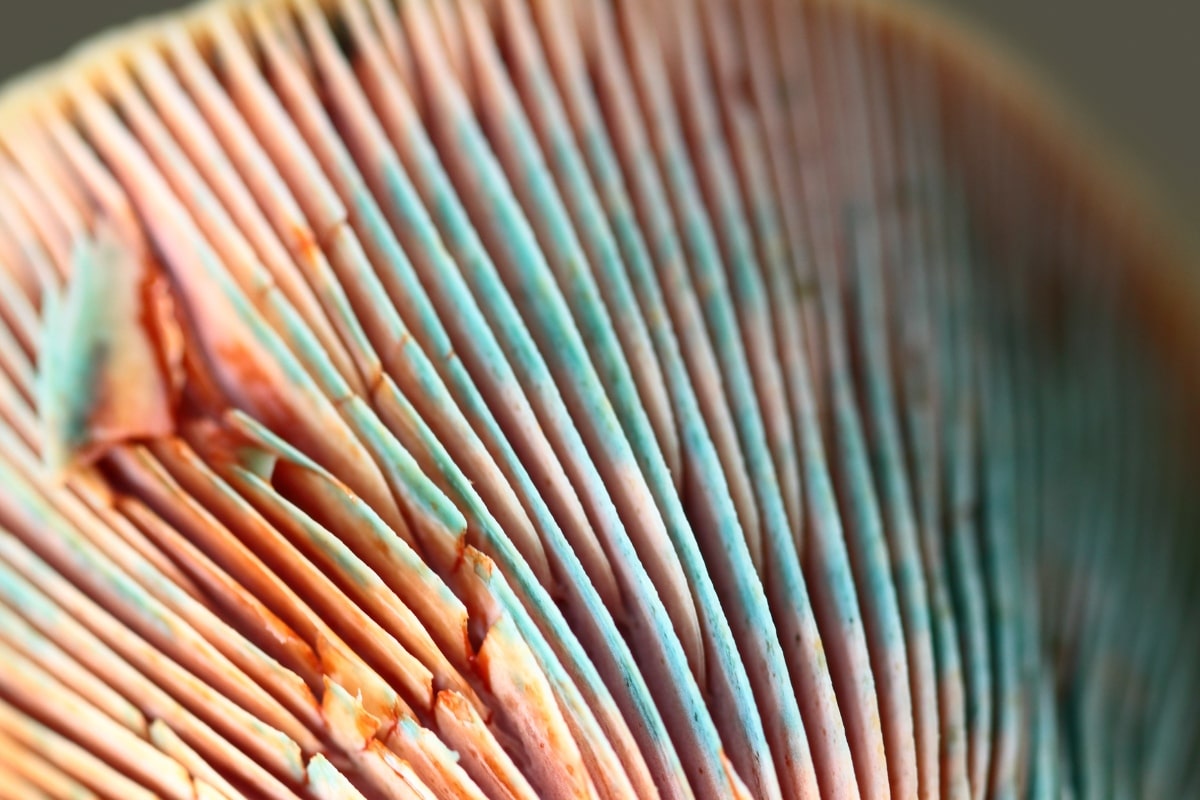
Milk cap mushrooms change color in their juice. The genus Lactarius bleeds a milk-like liquid called latex when it is cut. Each species has its own colored chemicals in that latex, and many of them change color when the latex meets the air. But not all of them. Quite a few have milky latex that doesn’t change color at all.
The indigo milk cap gets its blue from a pigment in a family of chemicals called azulenes. This is the same family of chemicals that turns chamomile oil deep blue. The saffron milk cap and its close relatives have pigments from the same family, but theirs start out orange rather than blue. When the mushrooms are cut and exposed to air, the orange pigments react and turn greenish.
Blue-Staining Boletes
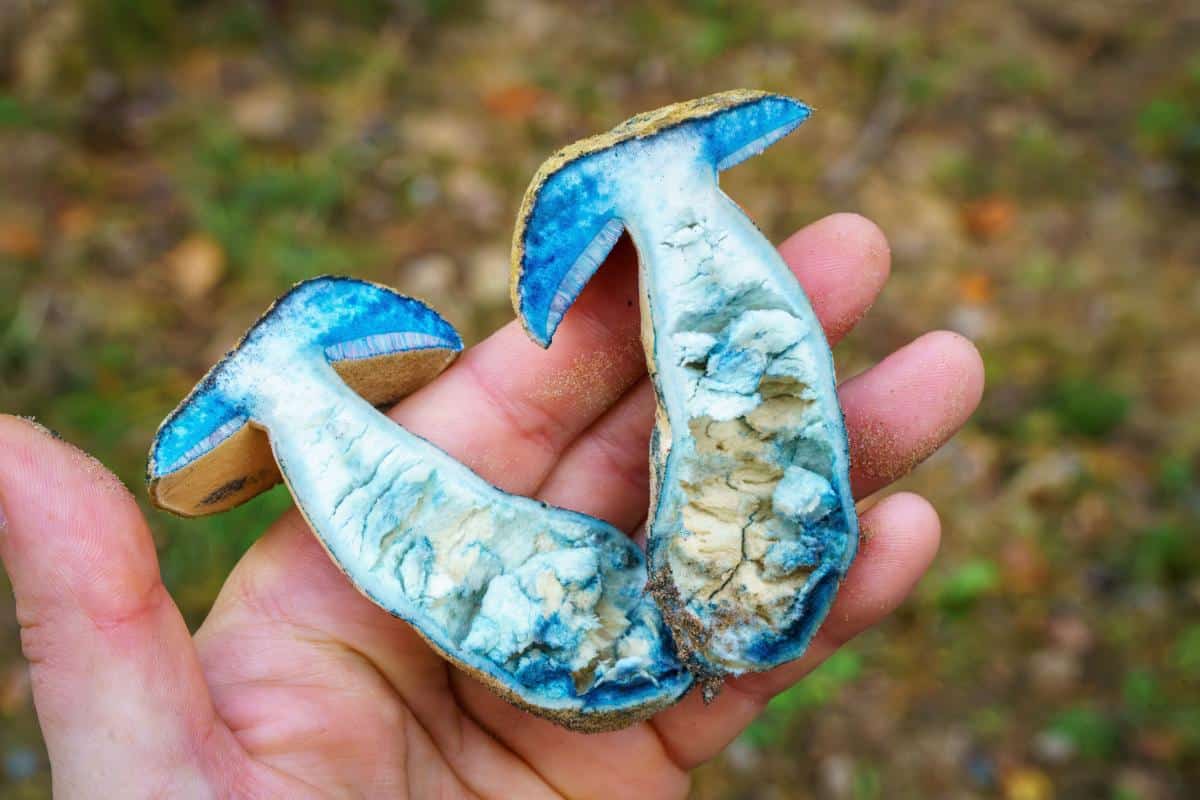
The cornflower bolete (Gyroporus cyanescens) turns blue faster and deeper than most boletes. Its cap is dry and straw colored and between about 1.5 and 4.5 inches across. When it is cut or pressed firmly, the pale flesh turns deep blue within a few seconds, close to the color of a cornflower. It grows on the ground in sandy soil at the edges of forests and road banks across eastern North America. It is a good edible species, though the blue fades to gray once it is cooked. Where to see the color change: All parts (cap, flesh, pores, stem) stain deep blue.
The ink stain bolete (Cyanoboletus pulverulentus) also changes color incredibly fast. Its cap is dark reddish brown and grows up to about 3 inches wide. This species has yellow flesh that turns blackish-blue the instant it is cut. Every part of the mushroom stains, and the color can look almost like spilled ink. It grows under oak, beech, and other hardwoods in eastern North America. In 2018, a study found that it absorbs arsenic from the soil at high levels, so it is no longer considered edible. Where to see the color change: Every part of the mushroom stains blackish blue.
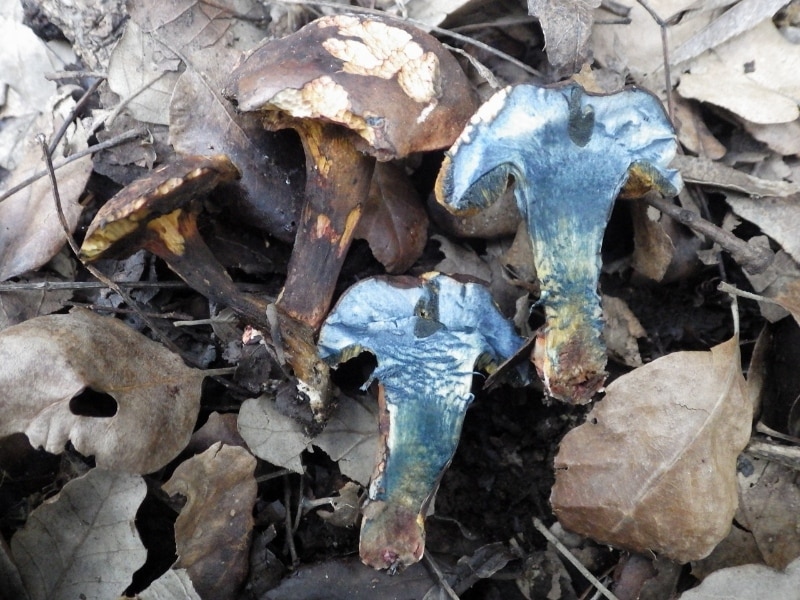
Scarletina boletes (Neoboletus luridiformis) have red pores and a reddish-yellow stem. Their yellow flesh turns blue almost the moment it is cut. These mushrooms grow in both hardwood and conifer woods in North America. They are edible, but their red pores make them easy to mix up with several look-alikes, including poisonous ones, so forage them with caution. Where to see the color change: Pores bruise blue to black, the flesh and tubes turn blue, and the stem darkens where touched.
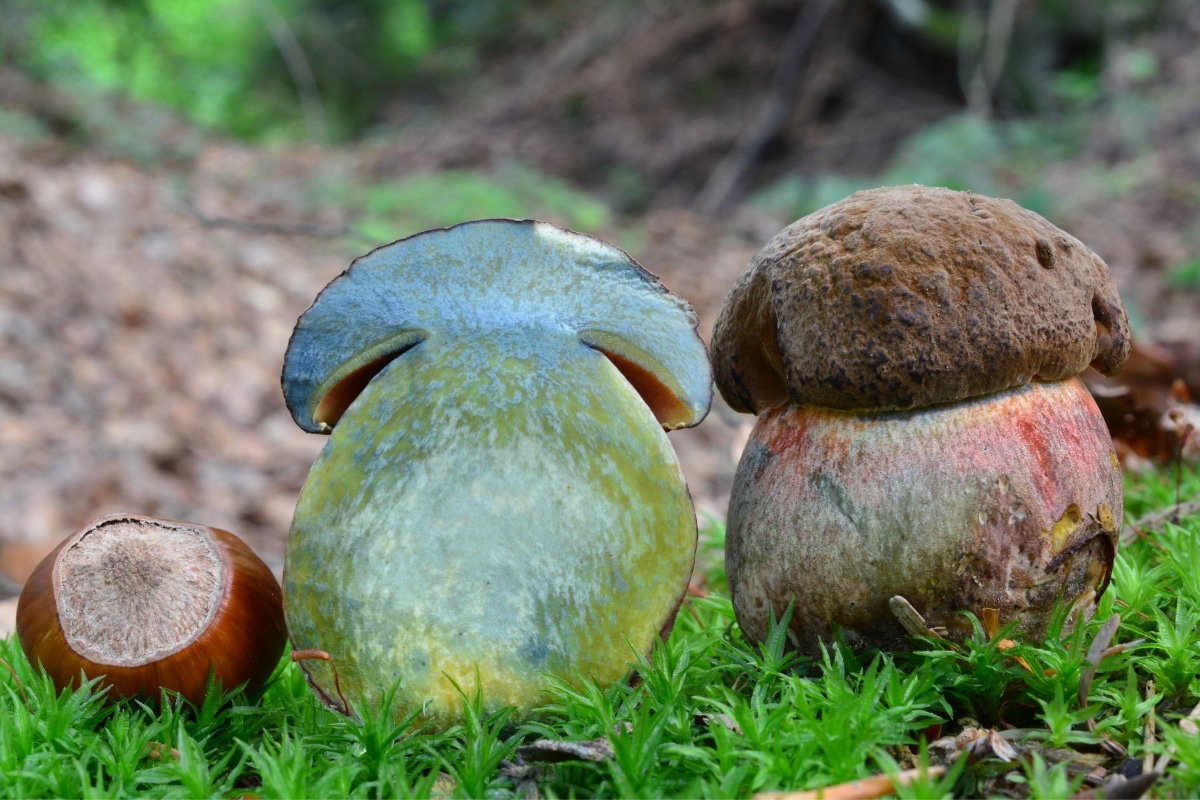
The lurid bolete (Suillellus luridus) is mostly a European mushroom, but it has close red-pored cousins in North America. Its pale flesh turns blue-black the moment air reaches it. It grows under beech, lime, and oak trees in chalky soil. Its stem has a raised red netted pattern that is often very distinctive. Where to see the color change: Pores bruise blue, the flesh turns blue-black, and the stem bruises blue.
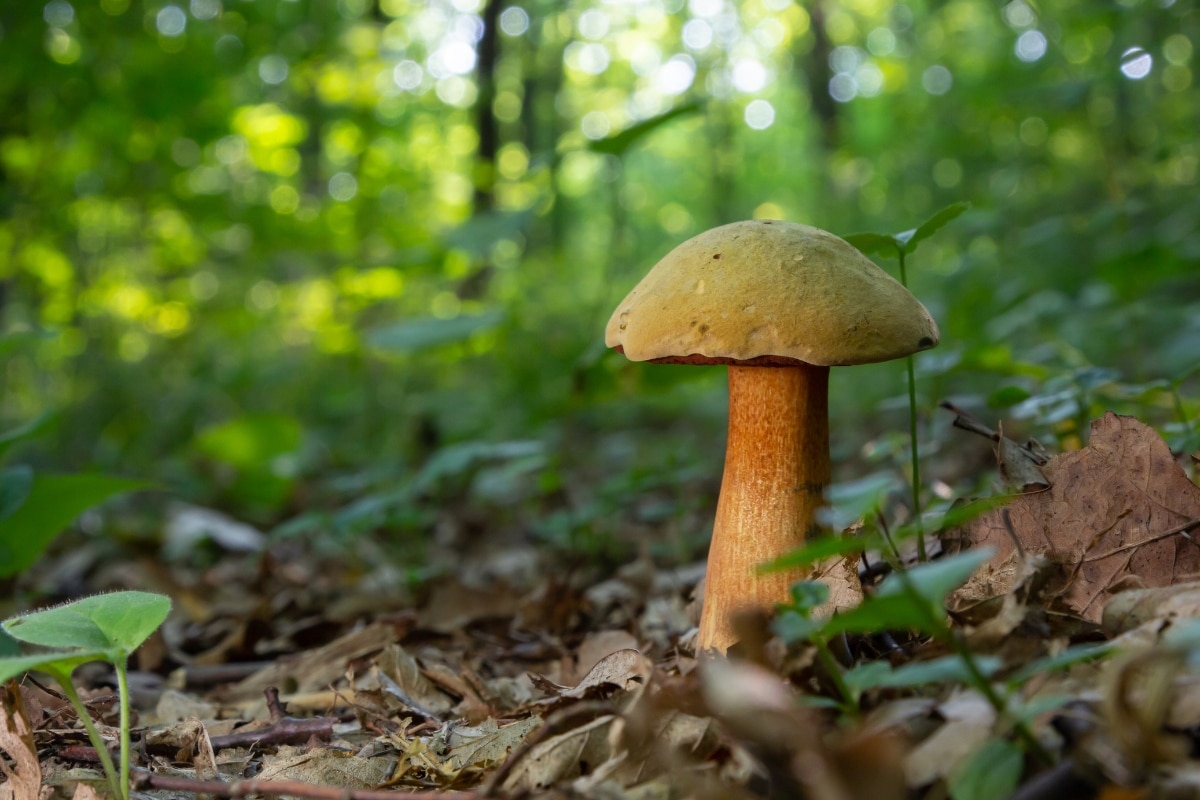
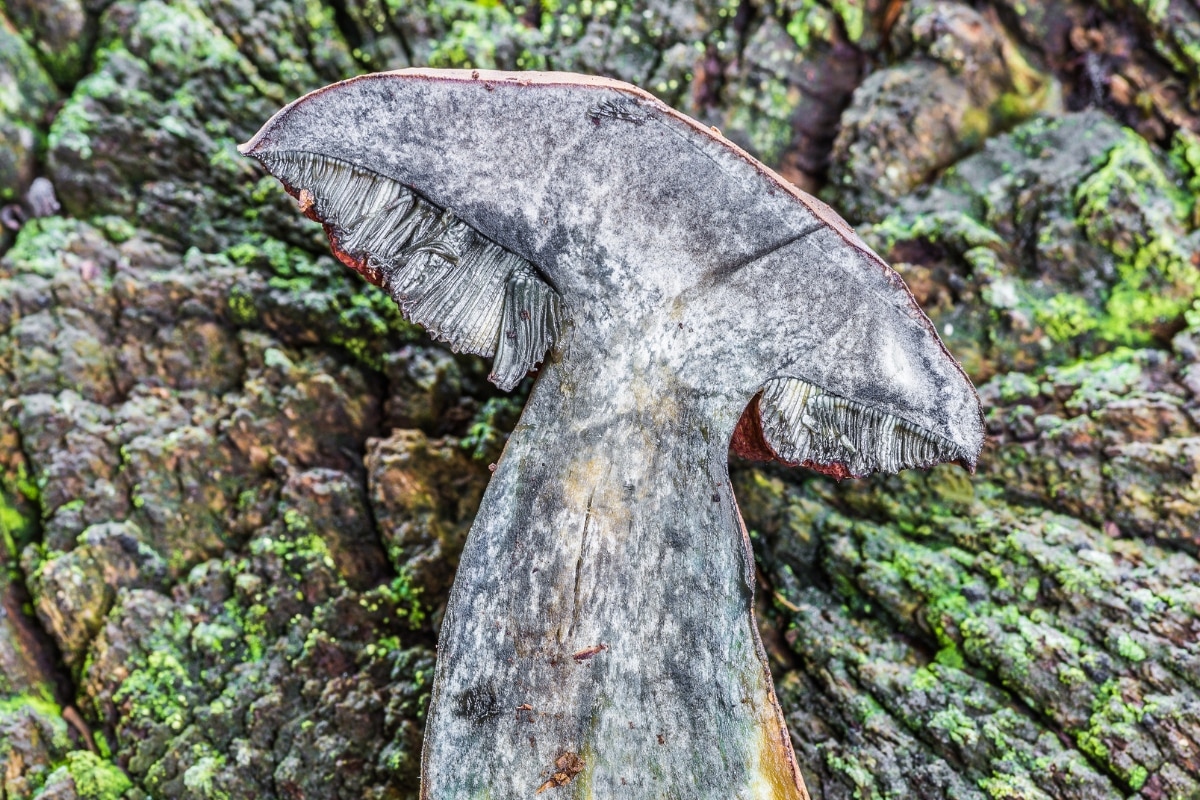
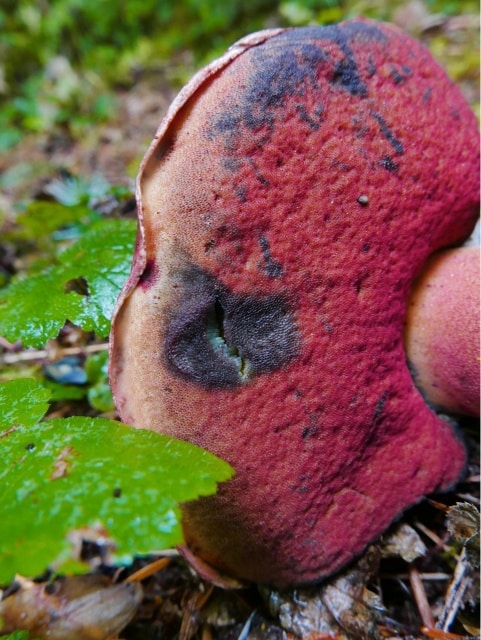
Red-Pored bolete (Rubroboletus pulcherrimus) is a poisonous species that changes color when its flesh is cut or damaged. It has a red cap, red pores, and a fat red stem. The yellow flesh turns blue when exposed to air. This is the only bolete known to cause a human death. In 1994, a man and his wife ate this mushroom and he died after developing serious damage to his gut that was irreversible. Where to see the color change: The flesh and body turn blue, but the change is slower than the others.
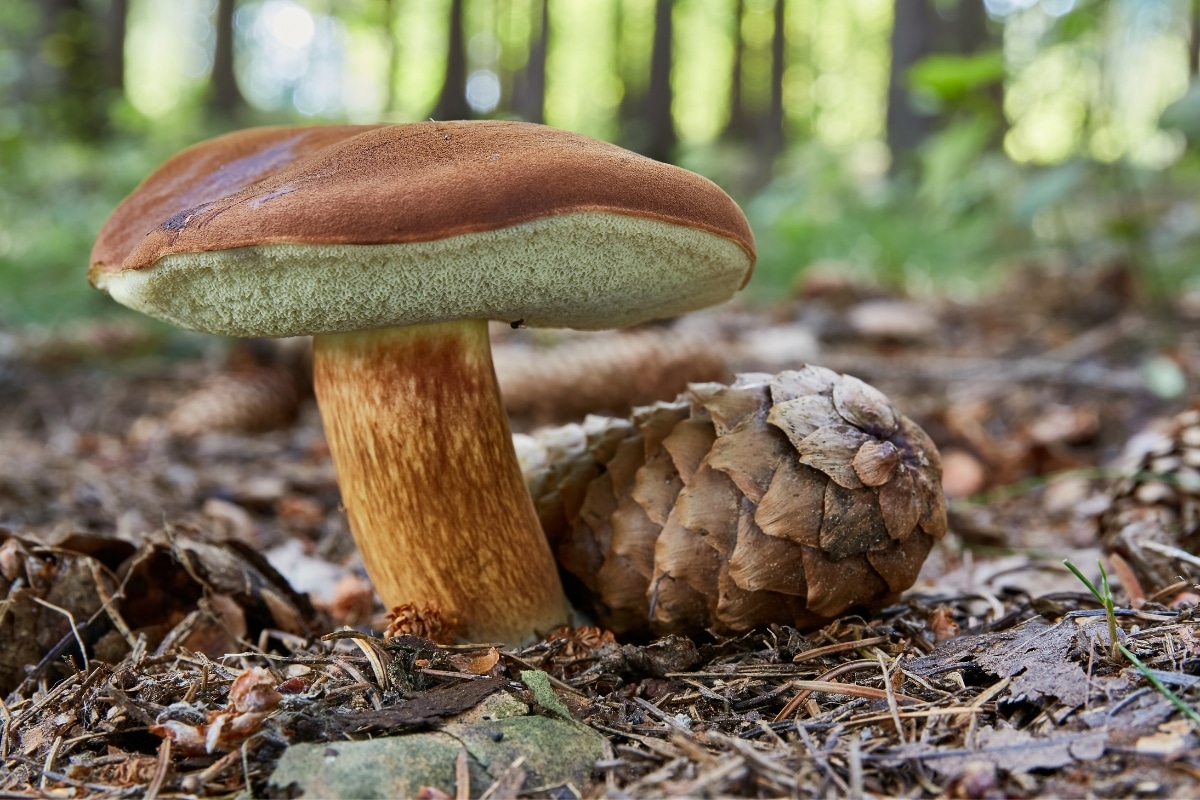
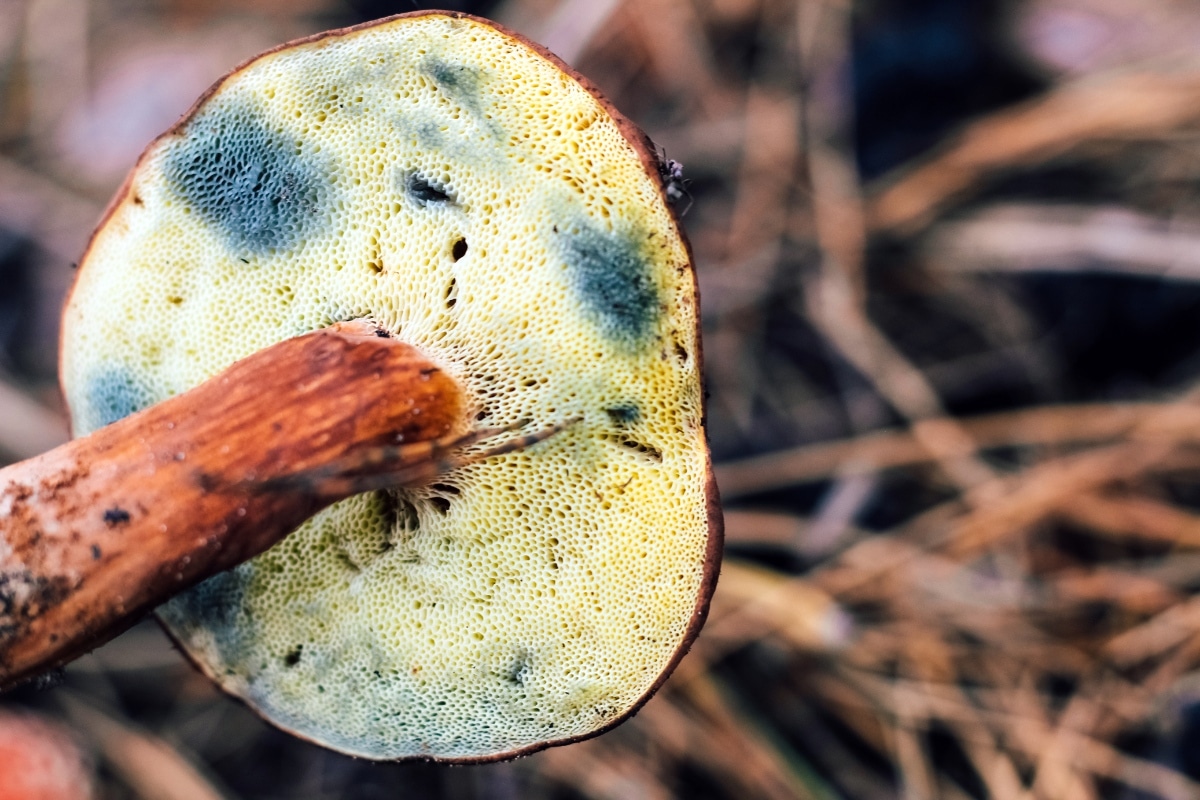
Bay boletes (Imleria badia) turn blue but not as vividly as many of the others described. This species has a glossy chestnut-brown cap, and the pale yellow pores underneath it turn a soft bluish gray when pressed. It grows with pine, spruce, hemlock, and sometimes birch and beech across eastern North America. It is a popular edible species because it is close in flavor to that of porcini. The faint blue fades with cooking. Where to see the color change: The pore surface turns bluish gray when pressed, and the flesh turns a faint blue when cut.
Boletes That Stain Other Colors
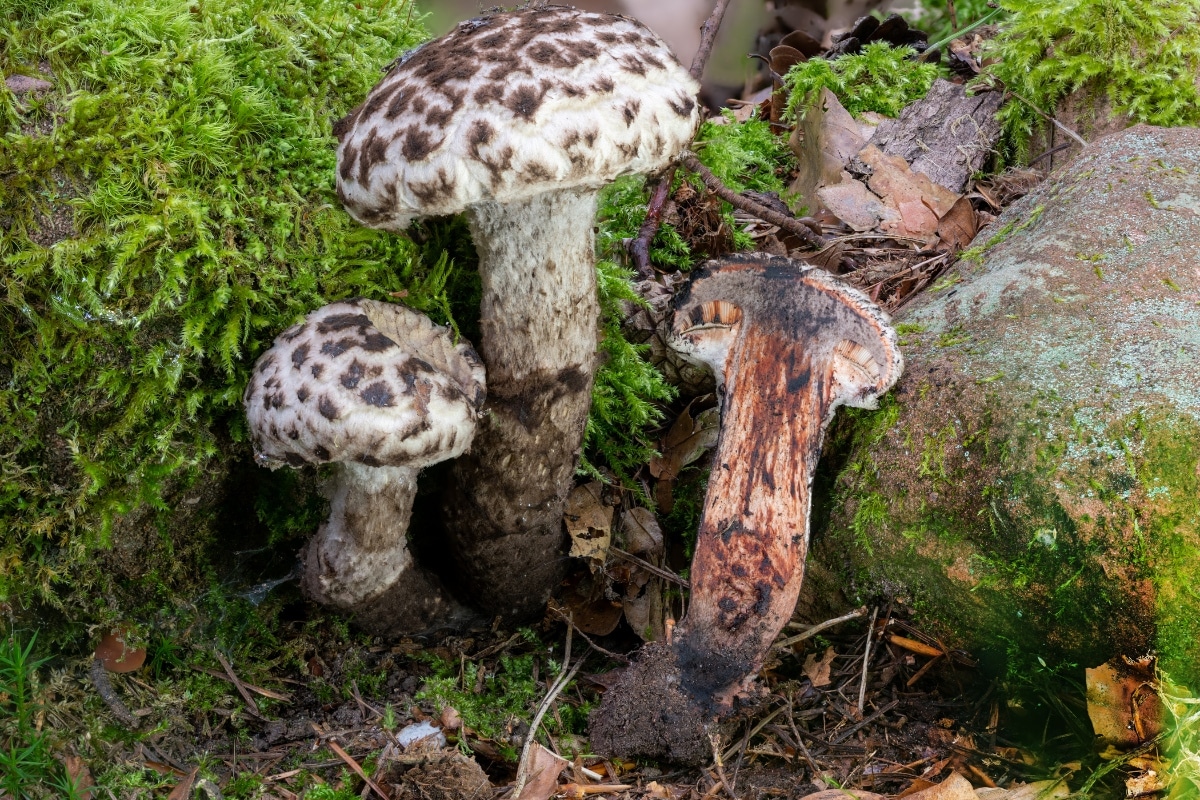
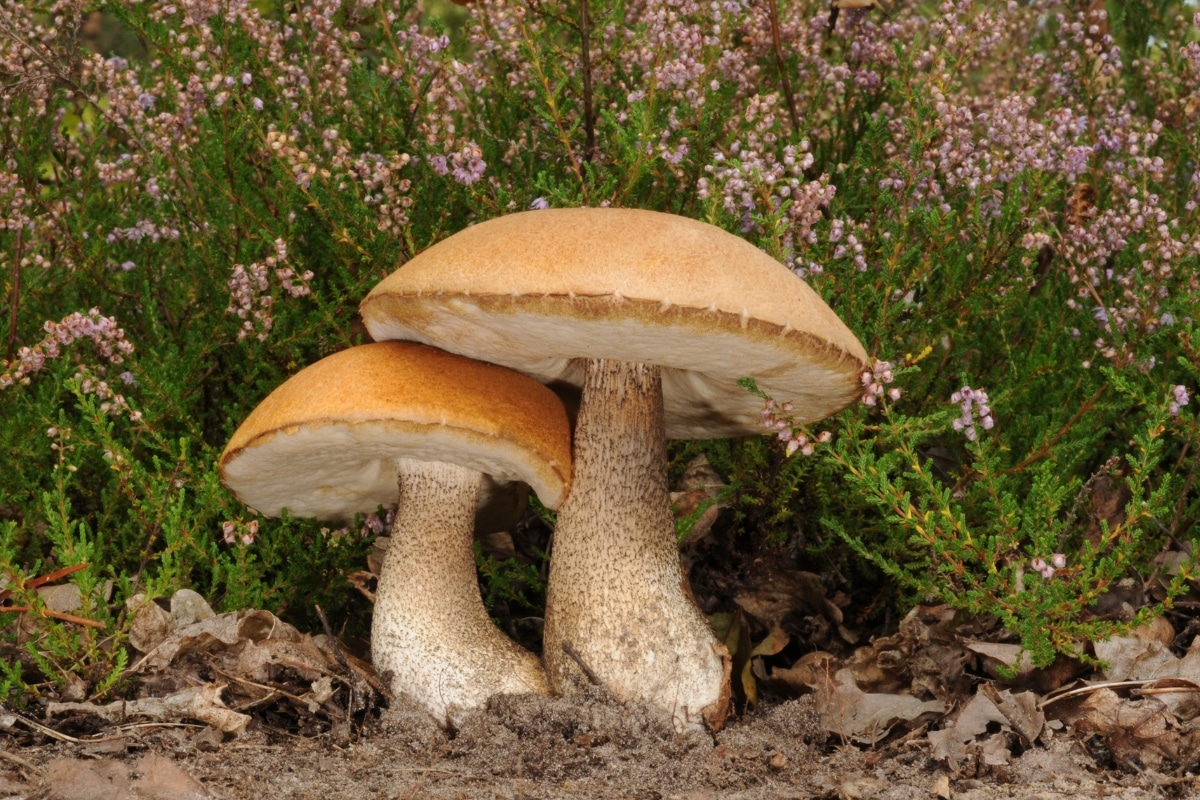
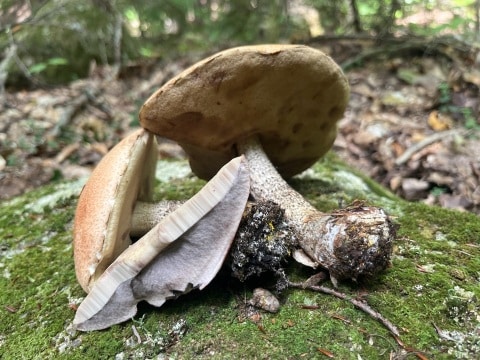
Old man of the woods (Strobilomyces strobilaceus) is a distinctive bolete with a shaggy black and gray-scaled cap between 2 and 6 inches across. When it is cut, the white flesh turns pink or red within minutes, then slowly to gray and finally black. The pale gray pores bruise reddish and then black the same way. It grows on the ground with oaks and other hardwoods in eastern North America. This species is edible and will turn a whole dish black when cooked. Where to see the color change: The whole mushroom.
The orange birch bolete (Leccinum versipelle) changes color in stages when its white flesh is cut. The flesh first turns pinkish or reddish, then slowly changes to a dull hazel, and finally to gray or near black. Its cap is bright orange to brick red, and it grows up to about 6 to 8 inches wide. It grows with birch in North America. When it is cooked, it turns black. Its common cousin, the brown birch bolete (Leccinum scabrum), also changes color, but not so dramatically. Its flesh turns only a faint pinkish gray before becoming black. Where to see the color change: The flesh and the pores.
Psilocybin Mushrooms
The psilocybin mushrooms bruise blue where they are handled, and the reaction is the best-studied of any color change in fungi. These small brown mushrooms are in the genus Psilocybe, and a few related groups, and the liberty cap (Psilocybe semilanceata) and Psilocybe cubensis are among the best known. The blue usually happens slowly when the mushrooms are bruised at the edges or on their stems.
Yellow-Staining Agaricus
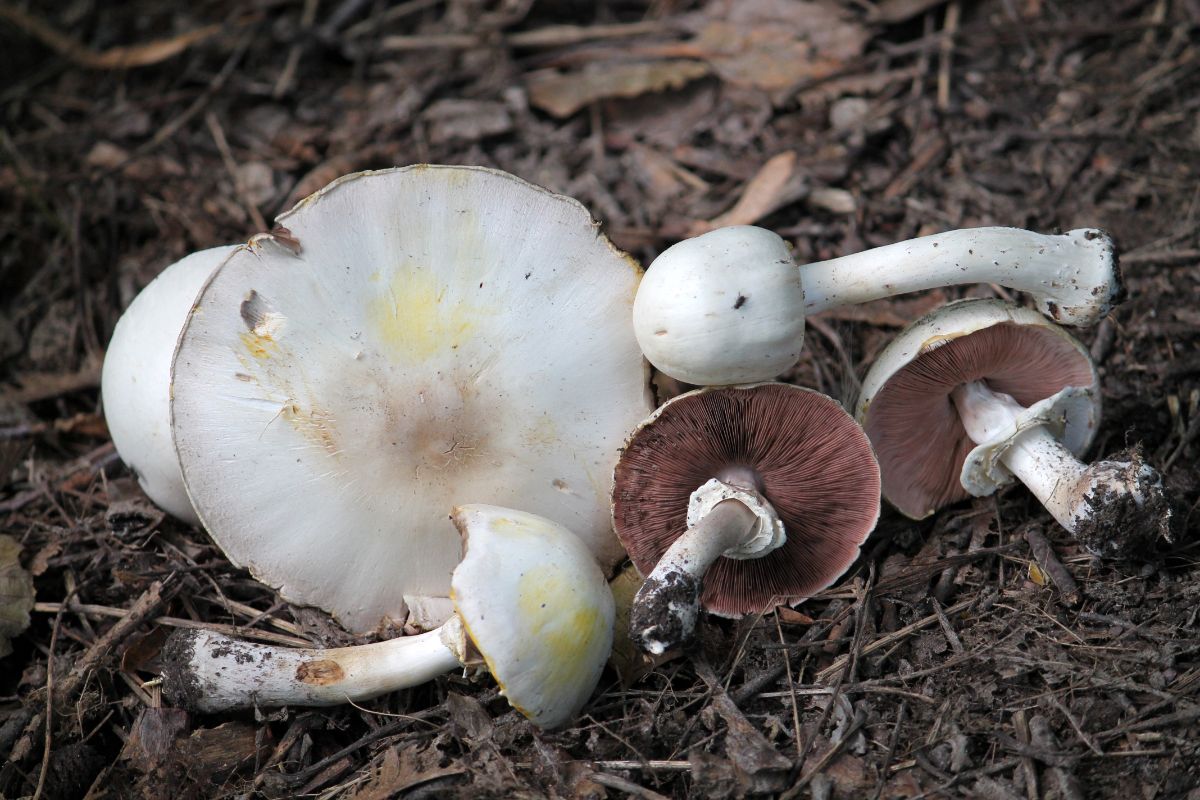
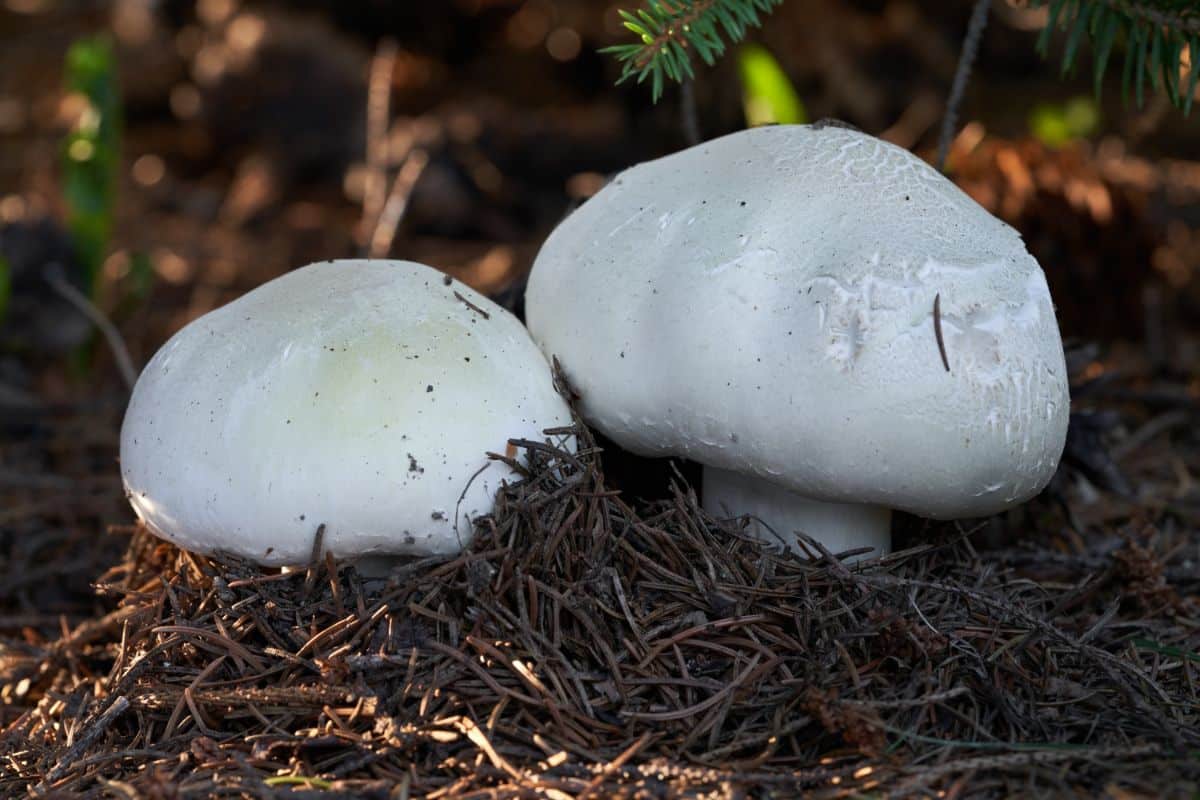
Yellow stainer (Agaricus xanthodermus) mushrooms turn bright chrome yellow when their cap rim is scratched or the base of their stem is cut. The yellow is most noticeable at the base of the stem. These mushrooms have white caps about 2 to 6 inches across and look like the white field and button mushrooms people commonly eat. Their flesh smells of ink, iodine, or hospital cleaner, and that smell gets stronger when it is cooked. Eating these causes cramps, nausea, and vomiting. Where to see the color change: On the cap surface and stem, greatest at the stem base.
The horse mushroom (Agaricus arvensis) bruises yellow too, but slowly and only lightly, and its flesh smells of aniseed rather than ink. It is a large, white edible mushroom found in fields and grassy places. The slow, faint yellowing and the sweet aniseed smell are what separate it from the toxic yellow stainer. Where to see the color change: The cap surface and the flesh; it is slow and faint.
Color-Changing Milk Caps
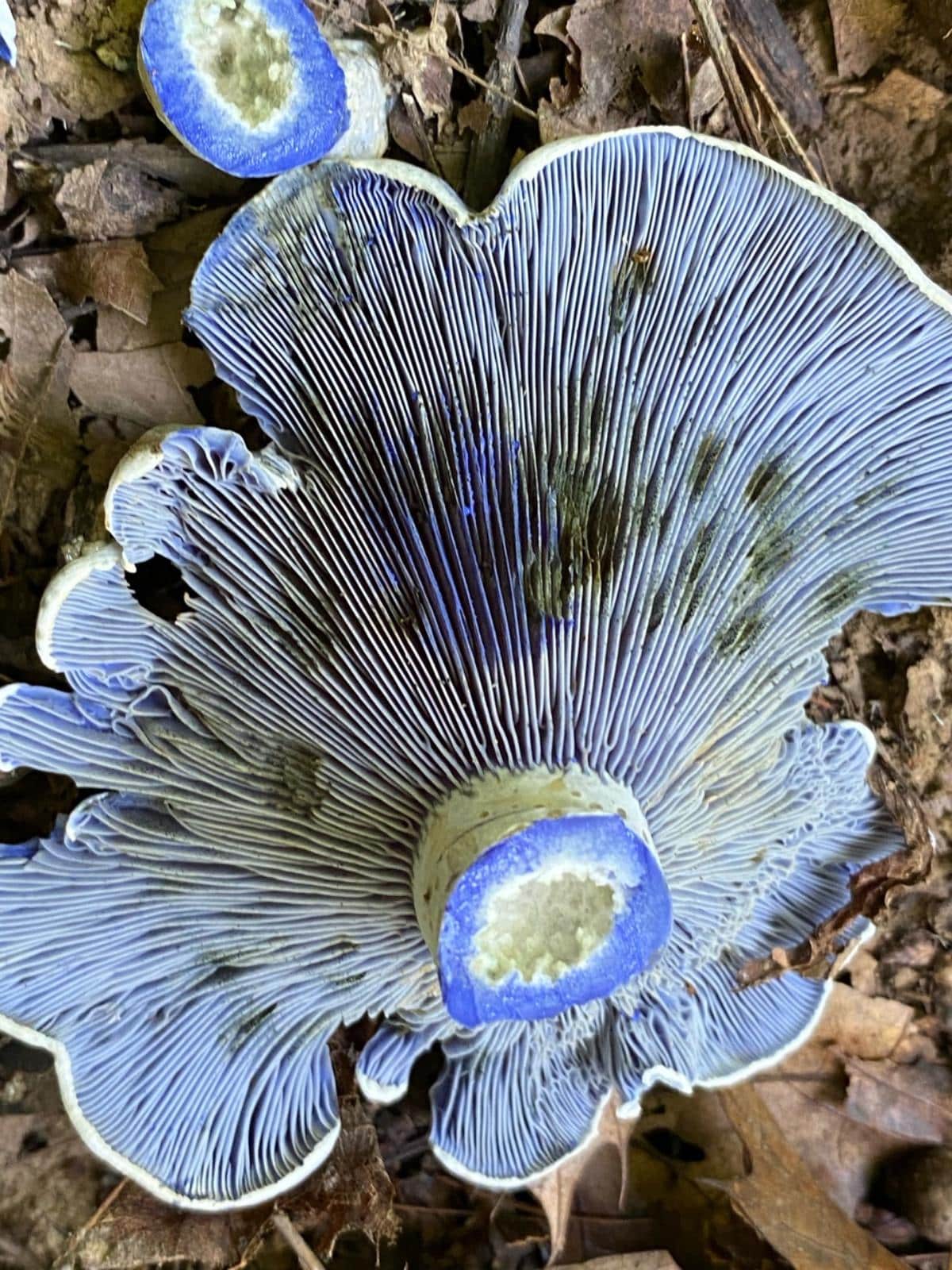
The indigo milk cap (Lactarius indigo) is blue all over, cap, gills, stem, and flesh, and is especially so when it is young. With age, the caps dull in color, but the gills usually remain quite blue. When you cut this mushroom, it releases blue milk that slowly turns green when it is exposed to the air. The gills are often stained green from this. This mushroom grows on the ground with oak and pine across the southern and eastern United States. It’s edible, and if you add it to eggs, they’ll turn green! Where to see the color change: In the milk, gills, and flesh.
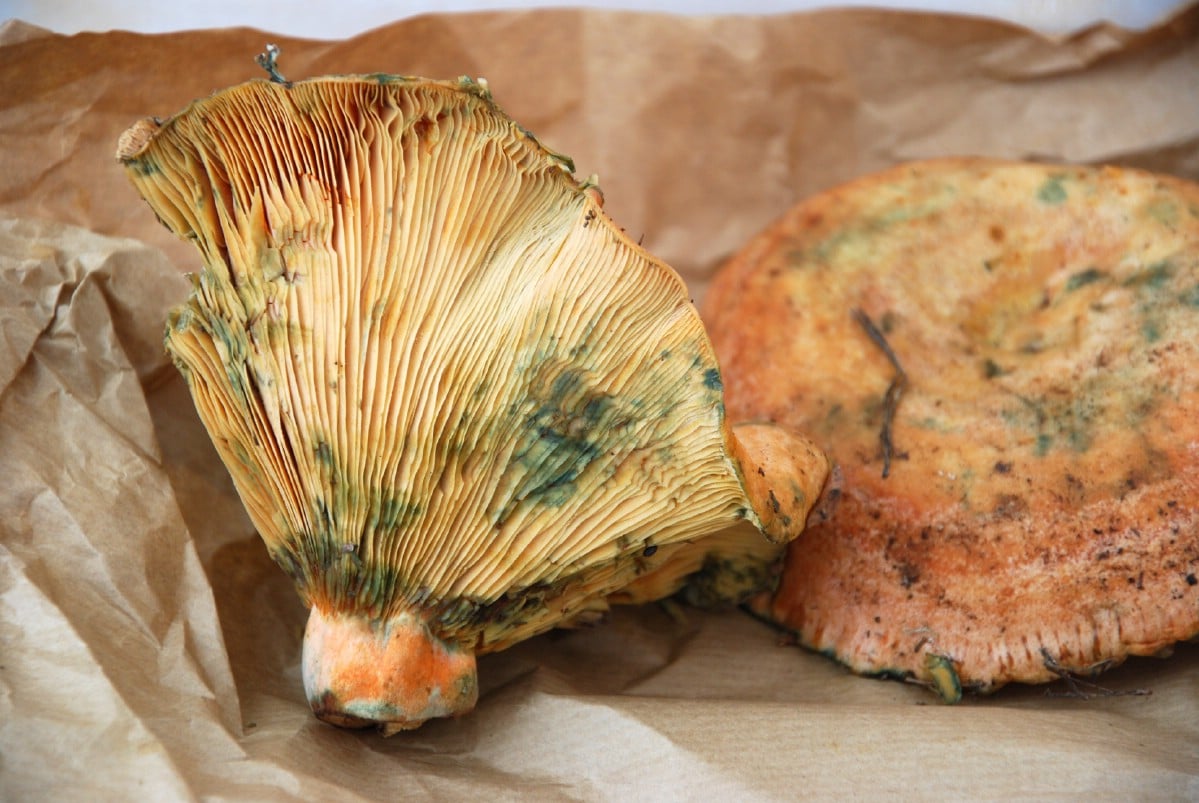
Saffron milk caps (Lactarius deliciosus) bleed carrot-orange milk that turns green when it is exposed to air, and the whole mushroom turns green with age. Their cap has rings of orange, and they have orange gills. This species grows with pine and is a good edible mushroom. Where to see the color change: The whole mushroom.
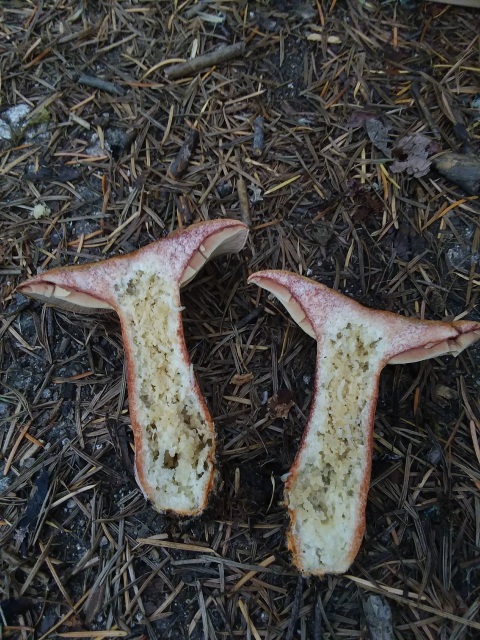
When the gills of the bleeding milk cap (Lactarius rubrilacteus) are cut, they release a dark red, almost blood-colored latex. The cap, gills, and stem slowly stain dirty green where they are bruised or handled, and the cut flesh stains pink to purplish. The cap has orange rings and grows between 2 and 5.5 inches wide. It grows with Douglas fir and pines in western North America. It is edible and turns purplish when cooked. Where to see the color change: The whole mushroom – red in the milk; green on the cap, gills, and stem; pink to purplish in the cut flesh.
Other Color Changers
The blackening brittlegill (Russula nigricans) turns red, then grays, then goes black within about twenty minutes. The cap starts out dirty white, then turns brown, and finally blackens with age, as well. The true blackening brittlegill is a European species, but a nearly identical relative, Russula dissimulans, is common across much of the United States and changes from red to black the same way. Where to see the color change: The whole mushroom.
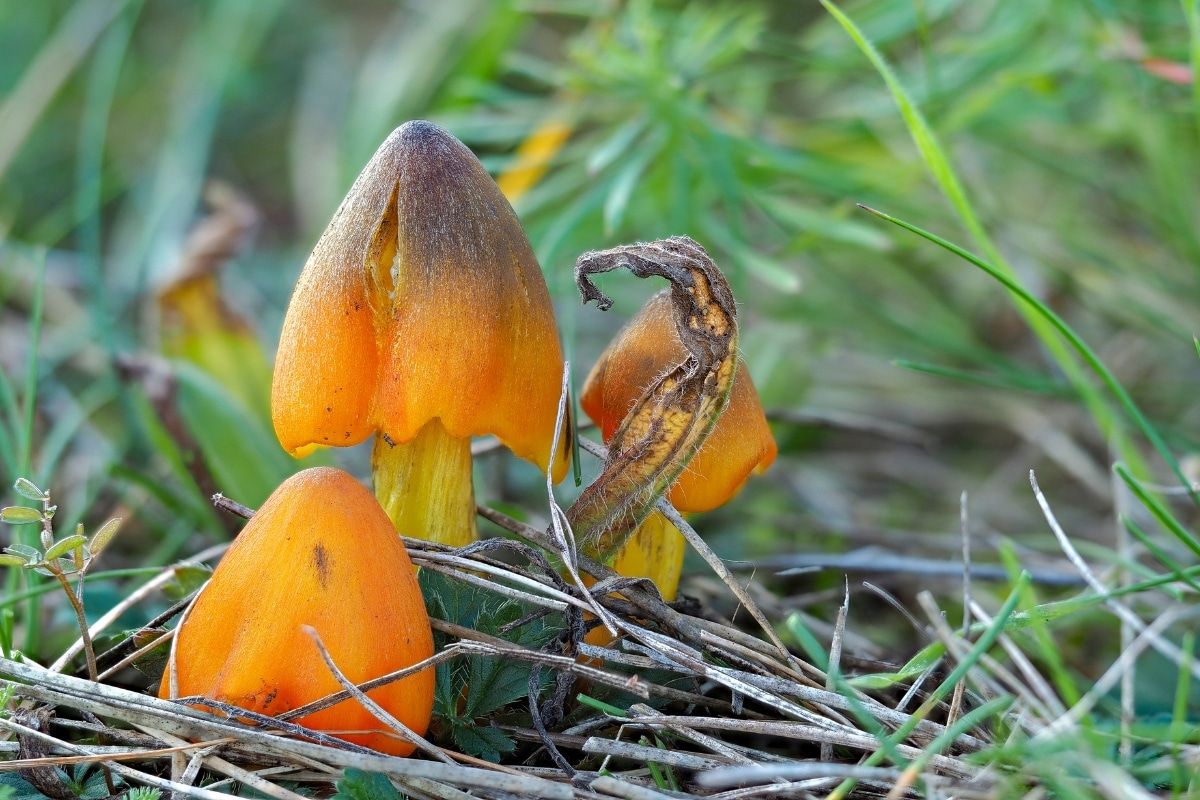
Witch’s hat (Hygrocybe conica) is a small mushroom that grows in lawns and fields and turns black all over. Its cap is cone-shaped and waxy, and bright red, orange, or yellow when fresh. The whole mushroom, cap, gills, and stem, slowly turns black where it is bruised or handled, and as it ages. Old ones are jet-black cones. Where to see the color change: The whole mushroom.
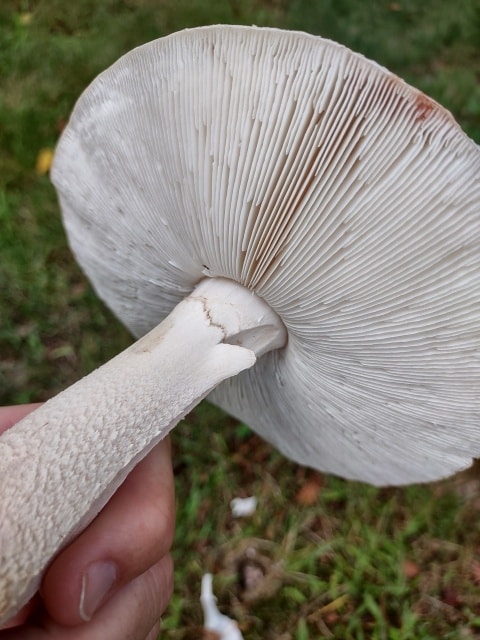
The blusher (Amanita rubescens and its North American relatives) is named for the way its white flesh slowly turns pink to dull red where it is bruised, cut, or chewed by insects. Its cap is reddish-brown to gray-brown with small pale warts on top, and it has white gills that turn red where they are damaged. The color change is slow, so a fresh cut may take several minutes to blush. It grows on the ground with hardwoods and conifers across North America. Where to see the color change: In the flesh, gills, and stem, but slowly.
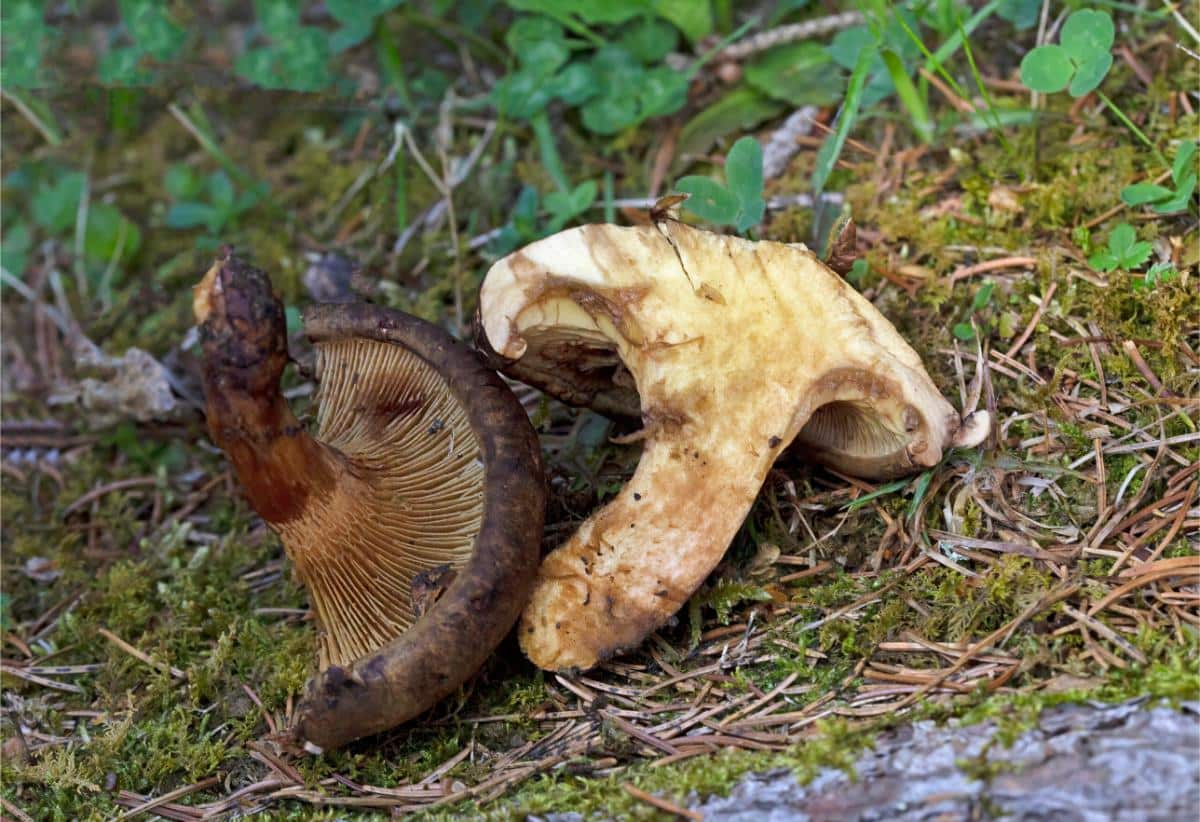
Brown roll-rims (Paxillus involutus) bruise reddish-brown to dark brown when their gills or flesh are touched. Their cap is brown and funnel-shaped, and their gills run down the stem and peel away from the cap. This mushroom grows on the ground with birch, pine, and other trees across North America. They are deadly poisonous, but won’t kill you right away. The poison builds up over time, so a person can eat it for years without issue and then get extremely sick. A German mushroom scientist died this way in 1944. Where to see the color change: The gills, flesh, and cap.
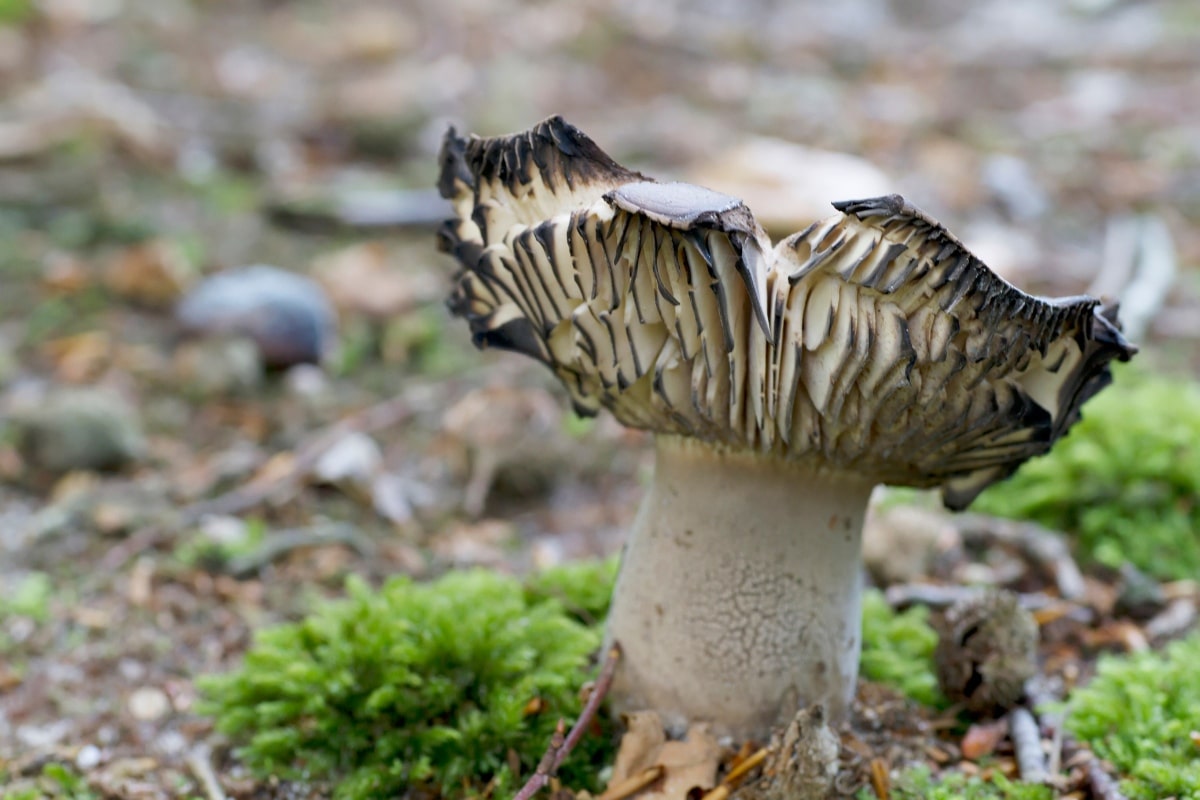
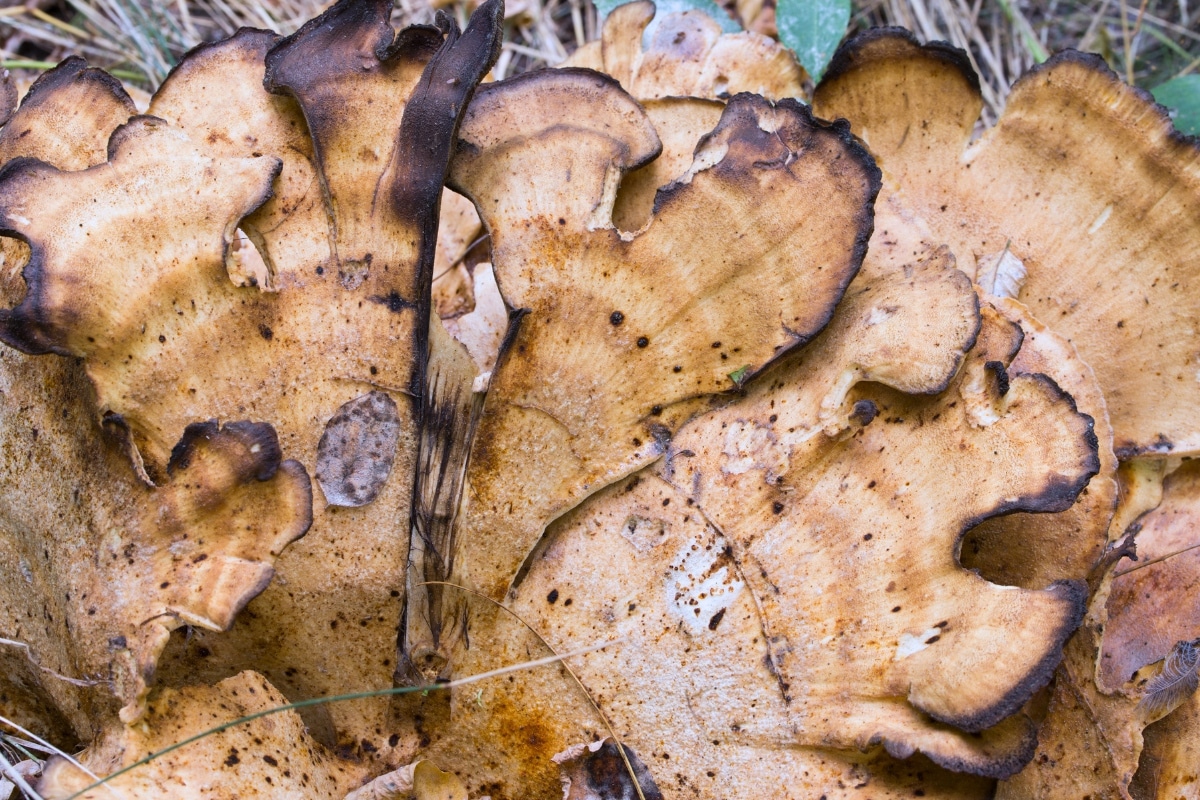
The black staining polypore (Meripilus sumstinei) is a large shelf fungus that bruises black wherever it is touched. It grows in big clusters of overlapping, fan-shaped caps near the bases of oaks and other hardwoods. The caps start whitish and turn brownish with age and the whole thing bruises dark brown to black when handled. The entire mushroom also blackens with age. It grows east of the Rocky Mountains in summer and fall, and it is edible when young. Where to see the color change: The cap edges, the pore surface, the stem, and the cut flesh.
A Few More Facts About These Color-Changing Mushrooms
Some of these mushrooms are used to dye wool and yarn. The bluing boletes have yellow-orange pigments in their flesh, the same family of chemicals behind the blue stain, and dyers use them to get yellow, gold, orange, and brown. The bay bolete and the violet-staining form of the cornflower bolete are both used in natural dyeing, and when iron is added, they produce a nice olive green.
The indigo milk cap produces one of the few naturally blue pigments found in mushrooms, a rare blue compound that scientists are studying as a natural dye.
Color Change and Edibility
A color change in a mushroom is just one feature. It is not an identification, and it does not tell you whether a mushroom is safe to eat or deadly poisonous. A blue-staining bolete can be a choice edible or a poisonous one, and a yellow-staining Agaricus can be dinner or a trip to the hospital. The color change has to be checked along with the smell, the habitat, the tree it grows near, and every other feature to determine which mushroom it is and whether it’s good to eat. No wild mushroom should be eaten (or disregarded) because of a color change alone.

Leave a Reply