

You don’t always have to go out to the forest to find a mushroom. Mushrooms grow in many places, including mowed lawns, wood chip paths, a mulched flower bed, a potted houseplant, on trees along streets, and in public parks. Many types of mushrooms can grow within a short walk of the front door, and some of them are even edible, too.
Urban mushrooms are common across the country. For many mushrooms, as long as there are sufficient nutrients and enough rain, they aren’t picky about where they grow. Other mushrooms are super particular, and their particularity may have them only growing deep in the forest or in droves in your mulched garden.
Jump to:
- 1. Fairy Ring Marasmius (Marasmius oreades)
- 2. Green-spored parasol (Chlorophyllum molybdites)
- 3. Lawn mower’s mushroom (Panaeolus foenisecii)
- 4. Mica cap (Coprinellus micaceus)
- 5. Wine cap (Stropharia rugosoannulata)
- 6. Bird’s nest fungi (Cyathus and Crucibulum species)
- 7. Common stinkhorn (Phallus impudicus)
- 8. Flowerpot parasol (Leucocoprinus birnbaumii)
- 9. Dryad’s saddle (Cerioporus squamosus)
- 10. Oyster mushroom (Pleurotus ostreatus)
- How To Begin Mushroom Foraging
1. Fairy Ring Marasmius (Marasmius oreades)
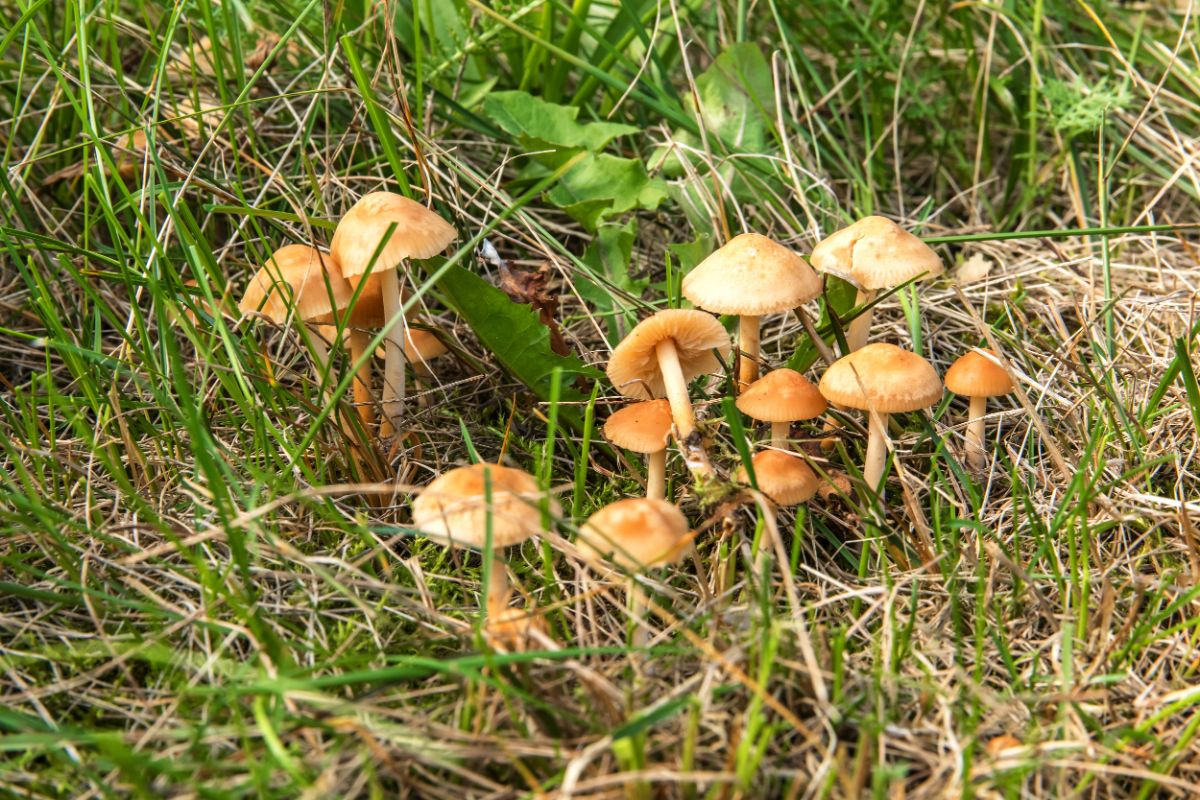
This common urban mushroom grows in grass in arcs and rings, sometimes very large ones. It grows across North America and Europe, in lawns, meadows, grassy areas, and other open spaces. While it is commonly called “the” fairy ring mushroom, it is not the only mushroom species that will form fairy rings.
This is a small brown mushroom with a cap just 0.4 to 2 inches across. It’s bell-shaped when it is young, and has a small central bump in the middle. As it grows, it flattens out and fades to pale tan to buff. The gills are whitish and broadly spaced, and the stem is thin, tough, and flexible.
The caps of the fairy ring marasmius are edible (the stems are too tough), but it has some poisonous lookalikes that grow in the same areas, so it must be foraged with utmost caution. One of the dangerous lookalikes, the white-spored Clitocybe rivulosa, is whiter, has stiffer stems, and is more robust overall. It is also extremely toxic.
2. Green-spored parasol (Chlorophyllum molybdites)
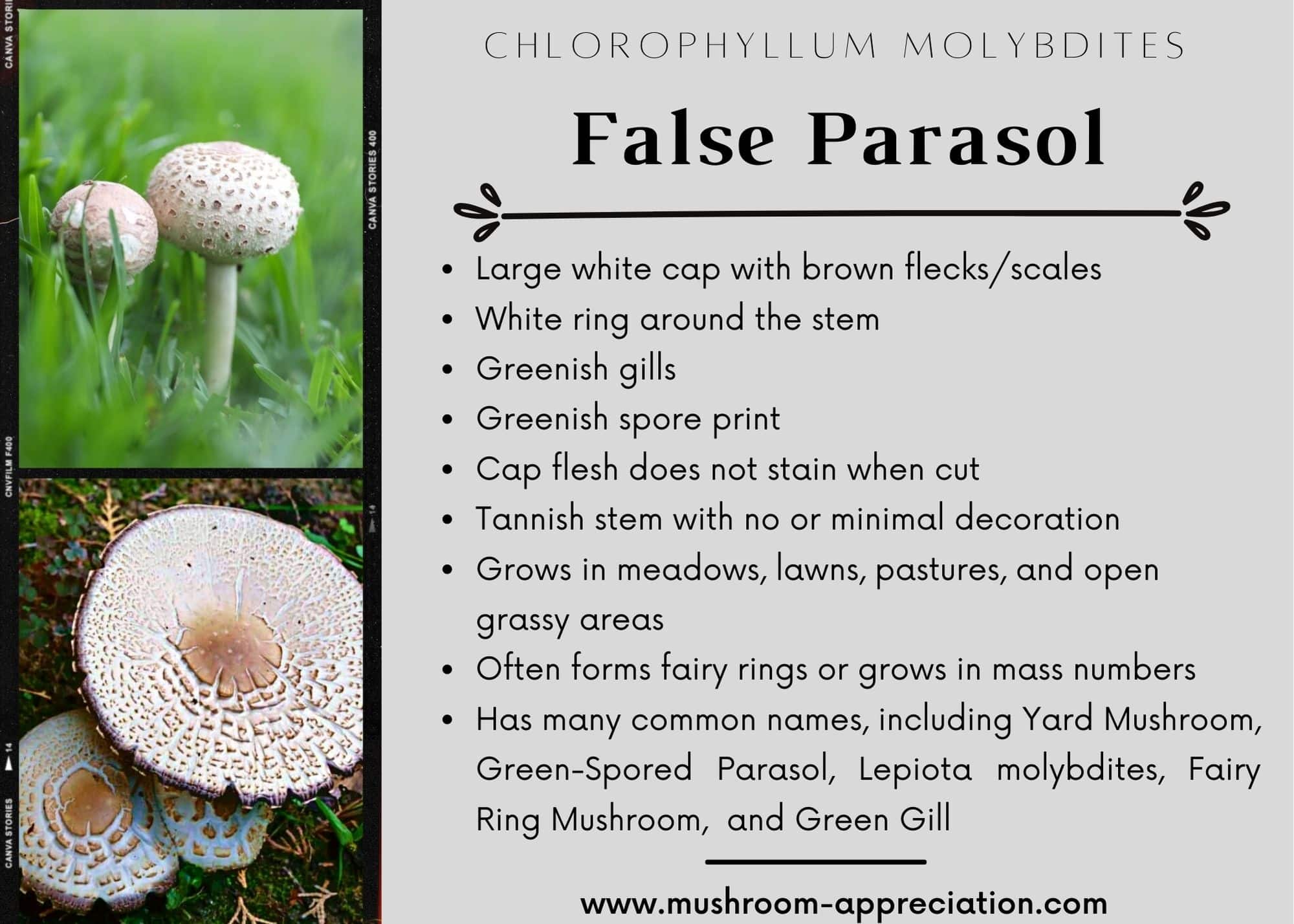
The green-spored parasol, also known as the false parasol, is extremely common in lawns in early summer through fall. It is a large mushroom that sometimes grows in massive “fairy rings” and is striking because of its size. It grows across North America, but it is more common east of the Great Plains. This urban mushroom causes more mushroom poisonings than any other in the United States, almost always from people who mistook it for an edible parasol mushroom.
The cap is large, roughly 2 to 12 inches across, and white to pale tan with brown scales that are concentrated in the center. The gills are white when the mushroom is young, but as they age, they turn grayish green. It has a dull gray-green spore print.
The mushroom has a gut irritant that causes stomach cramps, vomiting, and diarrhea, which start one to three hours after eating. Symptoms can last from four hours to several days. It’s rarely deadly in healthy adults, but children, older adults, and dogs can get dangerously sick.
3. Lawn mower’s mushroom (Panaeolus foenisecii)
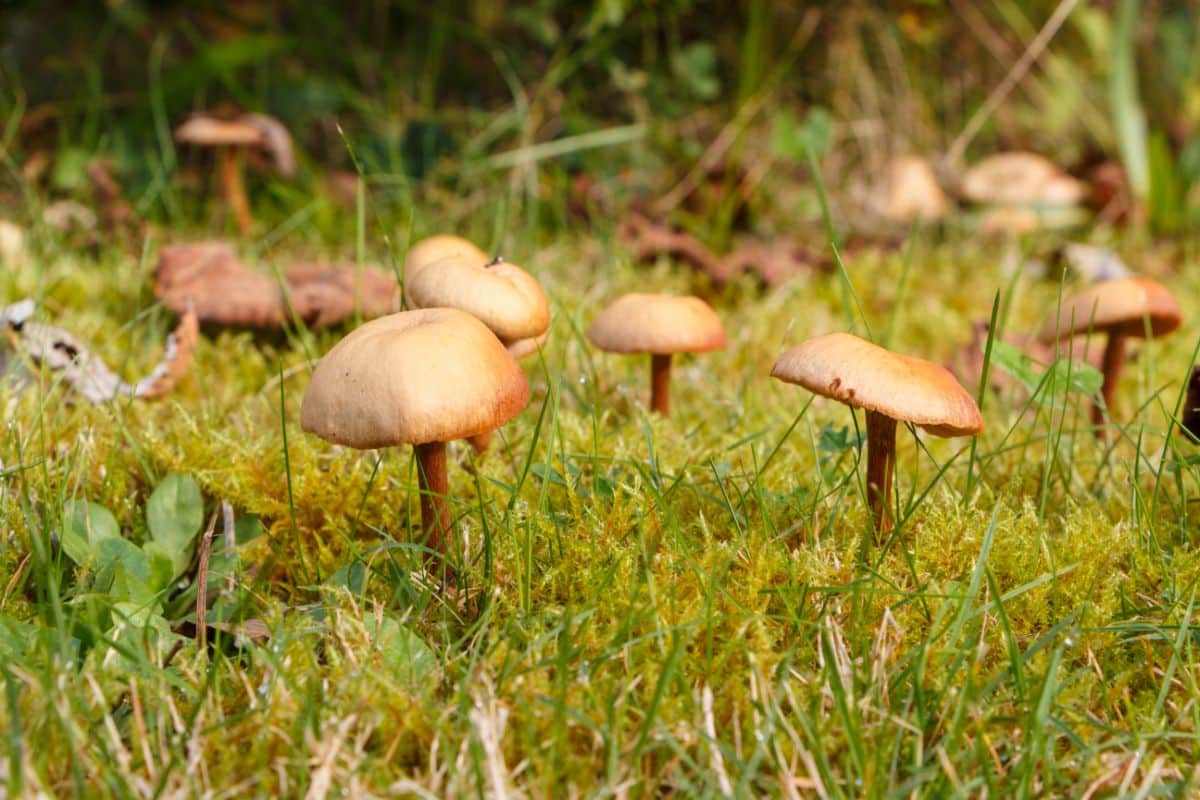
The lawn mower’s mushroom is a small brown urban mushroom that grows in mowed grass, lawns, meadows, and along roadsides. It fruits from late spring through fall throughout North America. It fruits in large numbers and can come up overnight.
The cap is small, brownish, about 0.4 to 1.4 inches across, and conical to bell-shaped. With age, it flattens out. It’s hygrophanous, which means it changes color as it dries, which can make the cap color vary in what shade of brown it is. The gills are brown, and the spore print is dark brown to nearly black. The lawn mower’s mushroom is not edible.
4. Mica cap (Coprinellus micaceus)
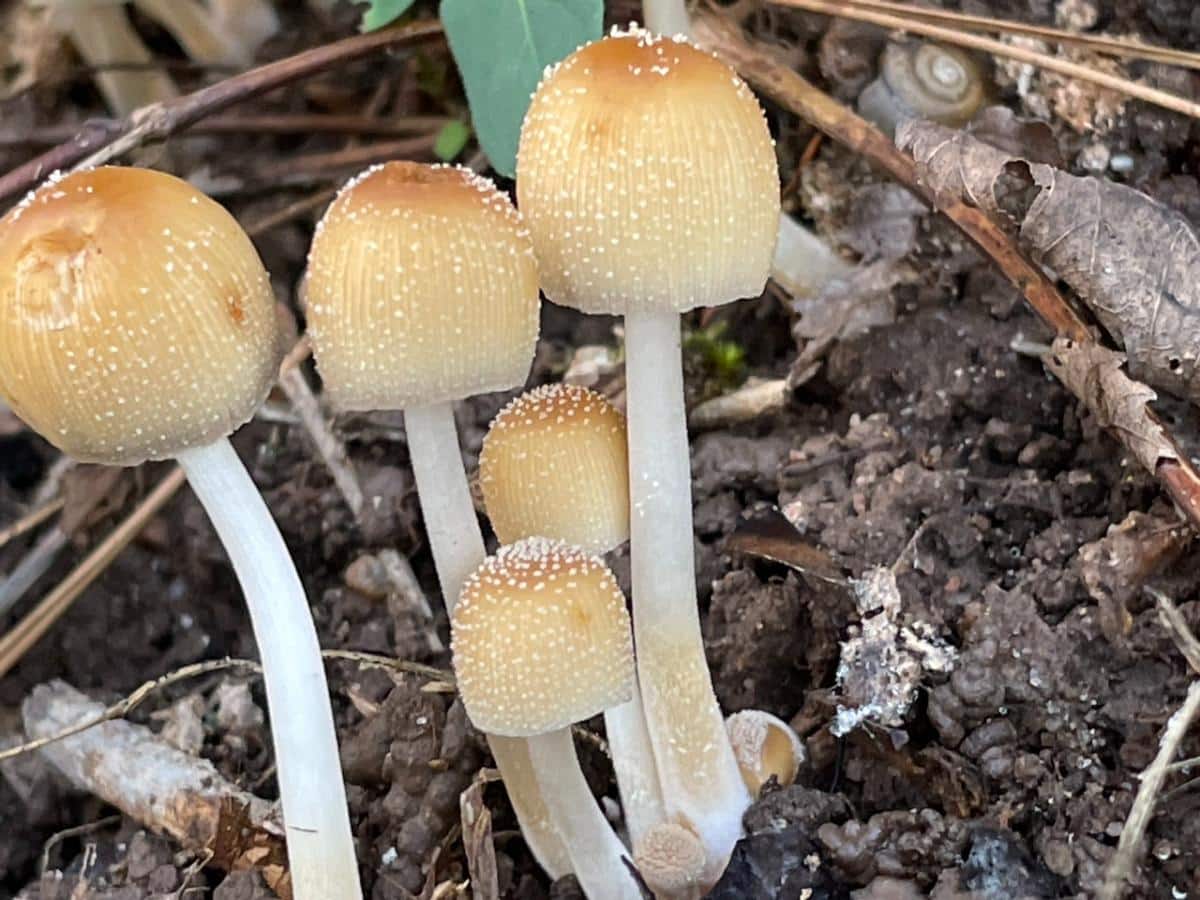
The mica cap grows in tight clusters on dead wood, and can come up overnight. It fruits on buried roots and stumps, which makes it look like it is growing out of the ground, but it is sourcing wood underneath. It grows throughout North America in yards, parks, roadsides, and at the edges of parking lots in spring through fall. The young caps are dusted with tiny shiny grains, like flecks of mica or sugar, but they wash off in the rain.
The cap is honey brown to amber, about 0.8 to 2 inches across, and rounded at first. With age, it becomes bell-shaped, and it has fine lines running from the edge of the cap toward the center. The gills start out pale, then turn brown, then blacken and dissolve into an inky liquid.
The mica cap is edible when young and fresh, but its lifespan is very short. Within a short time, under 24 to 48 hours, the gills start to liquefy into goo. It deteriorates even faster after it’s been picked, so if you plan to eat it, you have to cook it within a couple of hours. The mica cap absorbs heavy metals like cadmium and lead from the soil, so be wary of foraging any clusters from roadsides or other potentially polluted areas.
5. Wine cap (Stropharia rugosoannulata)
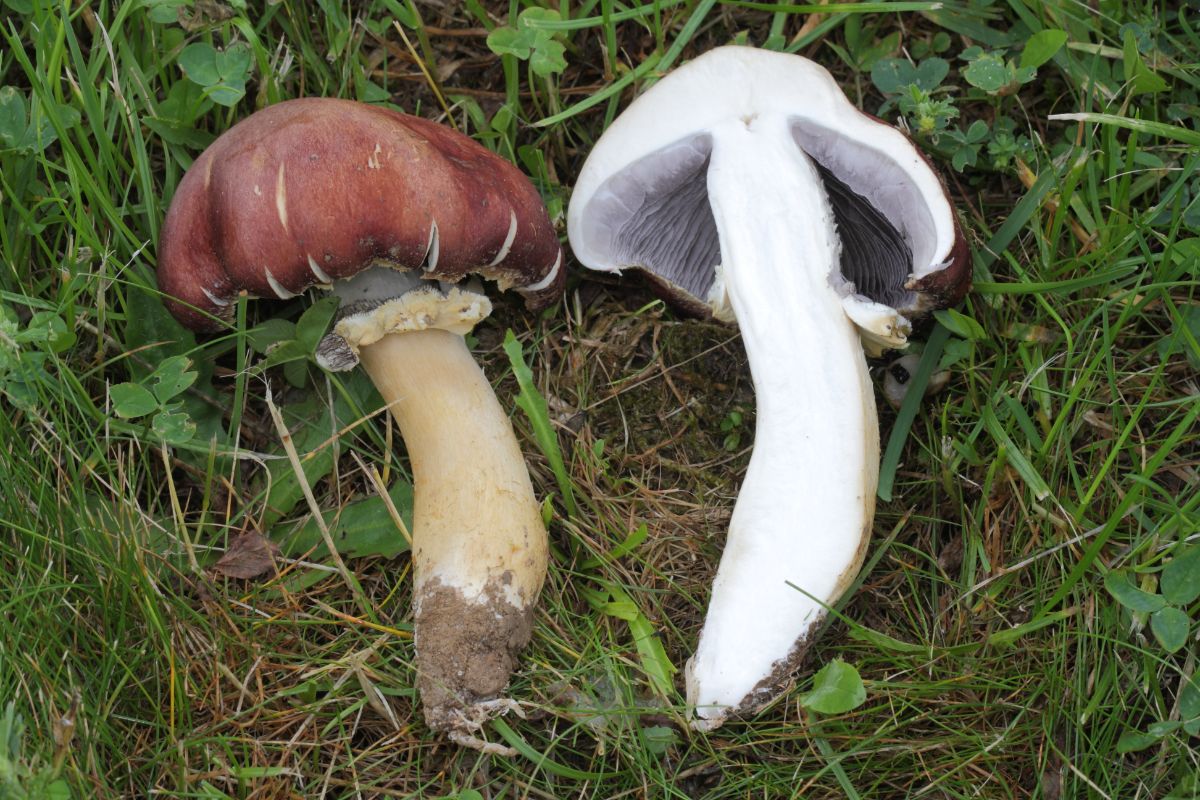
The wine cap grows in wood chips and mulch in gardens, landscaped areas, and along wood-chip paths, from spring through fall. This urban mushroom grows across North America and is fairly common east of the Great Plains. It is also planted on purpose because it is a great edible species.
The cap is wine-red to reddish-brown when young, and about 1.5 to 5 inches across, though it can get much larger. Another name for it is the garden giant. With age and sun exposure, the caps fade to yellowish-brown. The gills start pale gray and darken to purple gray, then almost black. The stem is 3 to 6 inches tall and has a thick whitish ring that’s grooved on top and split like a cogwheel underneath. The spore print is dark purple-brown.
6. Bird’s nest fungi (Cyathus and Crucibulum species)
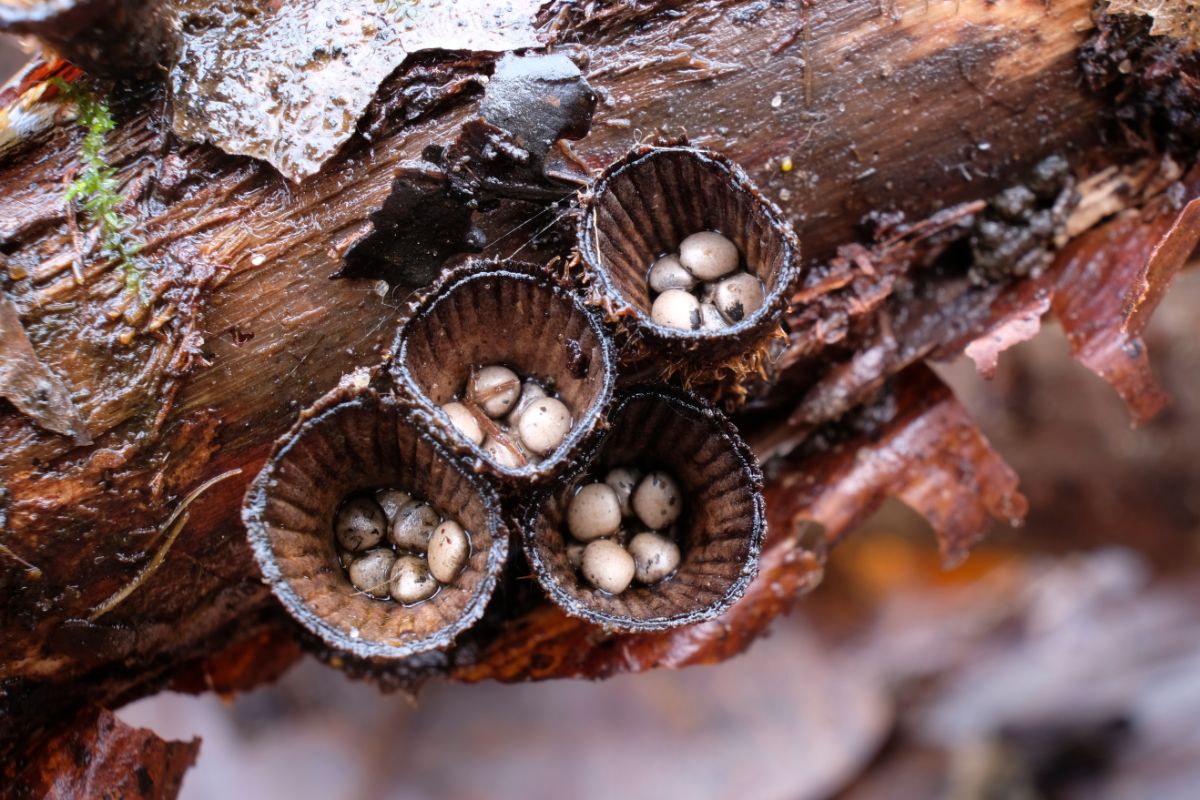
The bird’s nest fungi look like a very tiny version of an actual bird’s nest. The miniature cups hold what look like miniature eggs. The cups grow on mulch, wood chips, and woody debris in damp, shaded beds. They grow in groups of dozens to hundreds. This urban mushroom grows all over North America, and it is not edible.
Each bird’s nest cup is small, around a quarter to half an inch wide, and has several flat, seed-like discs inside it called peridioles. These discs are the eggs, and they carry the spores. When a raindrop lands inside a cup, it splashes the eggs out, and they are thrown three feet or more before sticking to a leaf or twig.
7. Common stinkhorn (Phallus impudicus)
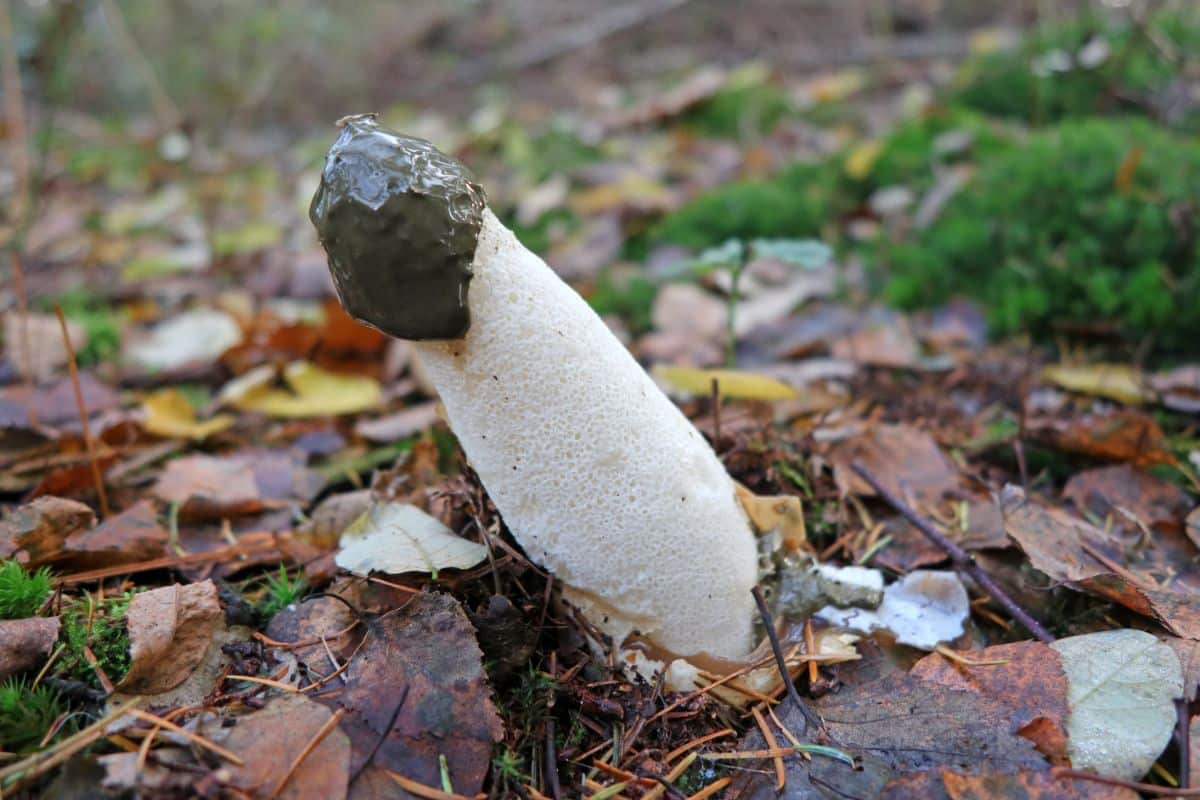
The common stinkhorn has an odor so strong that people smell it before they see it. This urban mushroom begins as a white, half-buried egg in the mulch or leaf litter. As it grows, it turns into a tall white stalk with a slimy olive-green coating on top. This coating is the gleba, which is a spore slime that smells like rotting meat. The smell attracts flies, which carry the spores off on their feet.
The stalk is about 6 to 10 inches tall, and is white, hollow, and spongy. Once the flies have cleaned off the gleba, the bare cap underneath has a pale honeycomb surface.
The common stinkhorn grows in North America and across Europe, in mulched gardens, parks, and wood debris, from summer into fall. It isn’t toxic, but its smell is enough to make it unpalatable. When it is still an egg, though, it is edible.
8. Flowerpot parasol (Leucocoprinus birnbaumii)
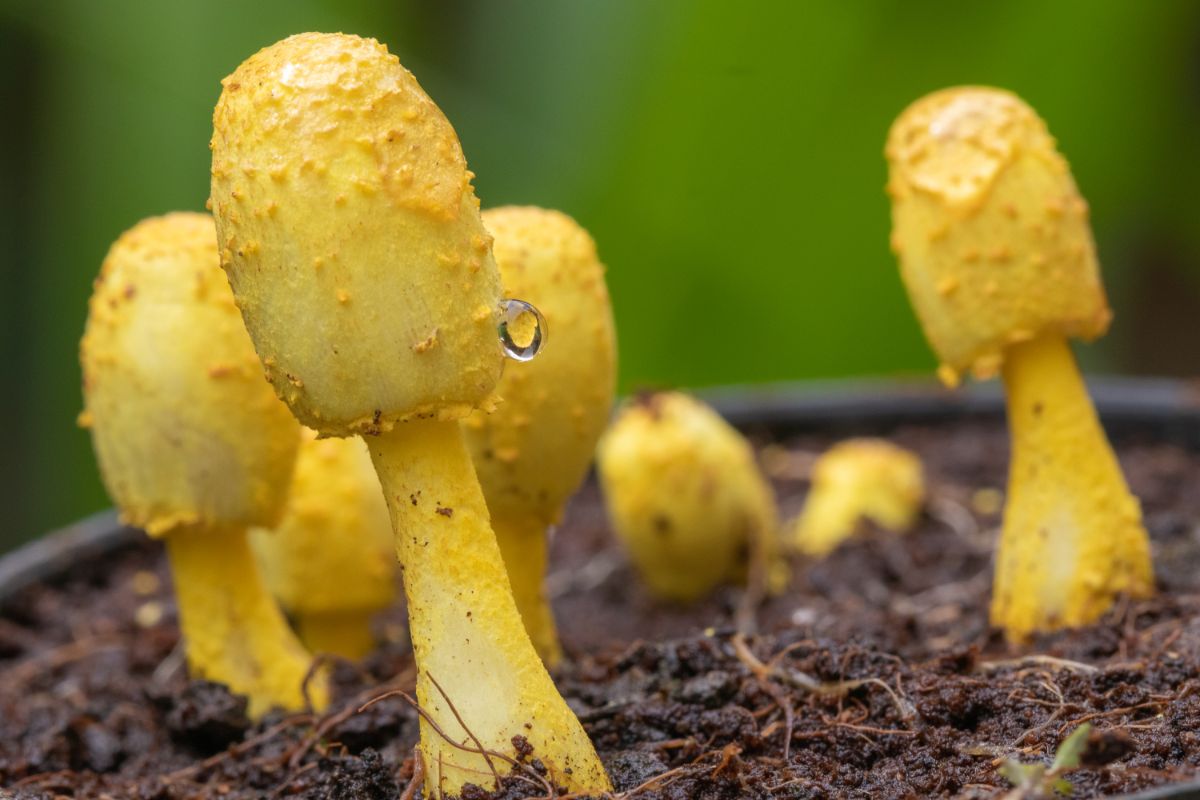
The flowerpot parasol is a bright yellow mushroom that comes up in houseplant pots. It is lemon to sulfur yellow all over, with a small parasol cap, thin yellow gills, and a slender stem. The whole thing is soft and powdery. With age, the yellow fades to whitish or tan.
The cap is 1 to 2.4 inches across and oval-shaped when it is young. It then becomes bell-shaped or flat with age. The stem is 1.2 to 4 inches long and has a swollen base. The spore print is white. This is a tropical species that hitchhikes inside bags of potting soil and fruits indoors when the soil is warm and damp.
The flowerpot parasol is toxic and causes stomach upset if eaten. It doesn’t harm the plant it is growing with.
9. Dryad’s saddle (Cerioporus squamosus)
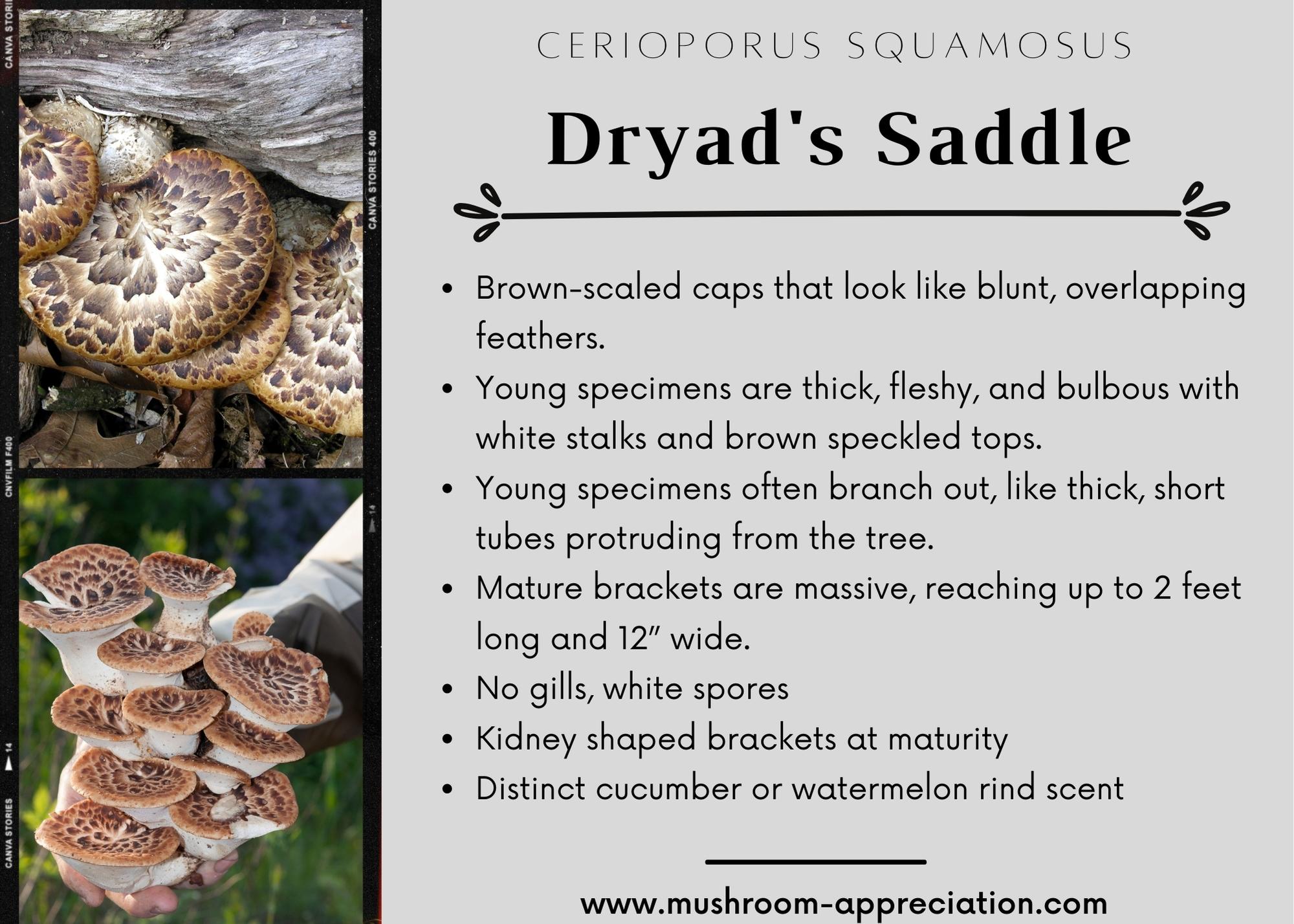
Dryad’s saddle is a big, flat, fan-shaped bracket mushroom that grows on decaying hardwood trees. It is found growing from tree wounds and stumps on streets and parks. It grows across North America, primarily east of the Rocky Mountains and across Europe. This urban mushroom is mostly a spring species but will also fruit in fall. Dryad’s saddle favors elm and maple trees, which are common along city streets.
The cap is 3 to 12 inches across and sometimes much larger. It is pale tan to cream, with flat brown scales arranged in rings that resemble the back feathers of a pheasant (its other common name is pheasant’s back). The underside has wide pores and a short, off-center stem, which is black and velvety at the base. The flesh smells like watermelon rind or cucumbers.
Dryad’s saddle is edible when young and soft. It turns rubbery and tough with age and can also get maggoty, so only pick young specimens.
10. Oyster mushroom (Pleurotus ostreatus)
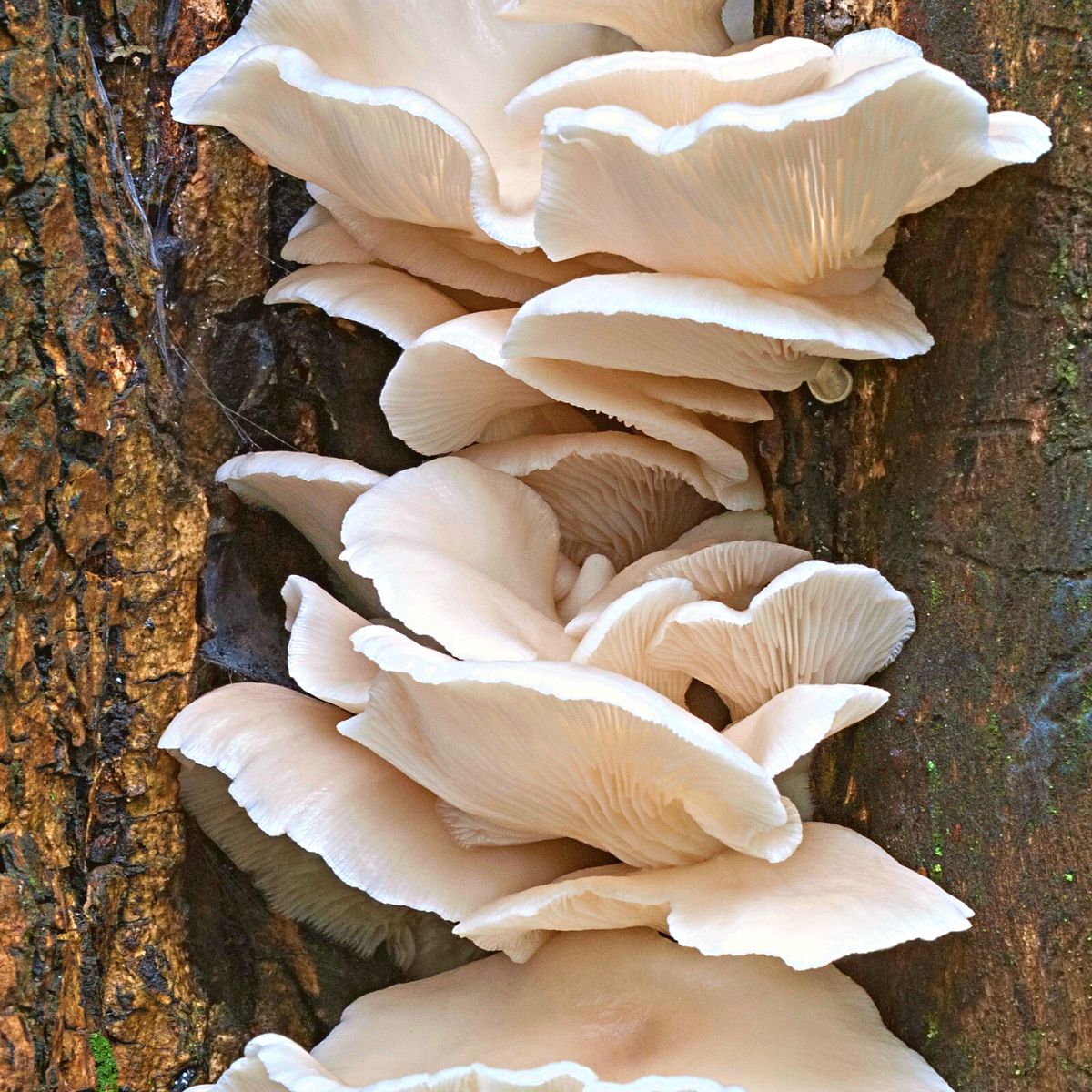
The oyster mushroom grows in overlapping shelves on dead and dying hardwoods, in parks or along streets or paths. It grows in parts of North America in the cooler months, sometimes in spring but mostly in fall into early winter. Its common hosts are beech and oak. The oyster mushroom is a choice edible urban mushroom, and it is grown commercially worldwide more than almost any other mushroom.
The cap is fan- or oyster-shaped, 2 to 7 inches across, and ranges in color from white to tan, brown, or blue-gray. The gills are white and run down the short, off-center stem. Sometimes there’s almost no stem at all.
How To Begin Mushroom Foraging
Mushroom foraging is a skill that rewards patience, observation, and a willingness to keep learning. Rather than trying to identify every mushroom you find, begin by focusing on just a handful of distinctive, beginner-friendly species, like chicken of the woods and black trumpets. A good way to start is to take the time to learn the basics of mushroom anatomy, including the differences between gills, pores, teeth, stems, and caps before going out in the woods. Building this foundation makes identification much easier and helps you recognize important details. Start with Mushroom Foraging 101, then read about how to identify mushrooms and learn the differences between gills, pores, and teeth.
Once you’ve learned the basics, a good starting point is to choose one or two common species to study in depth instead of jumping between dozens of different mushrooms. Learn where they grow, what trees they associate with, when they fruit, and which species can be confused with them. The more time you spend observing mushrooms in their natural habitat, even the urban mushrooms, the more patterns you’ll begin to notice. Keep a notebook or take photographs to document your finds, even if you don’t know what they are yet.
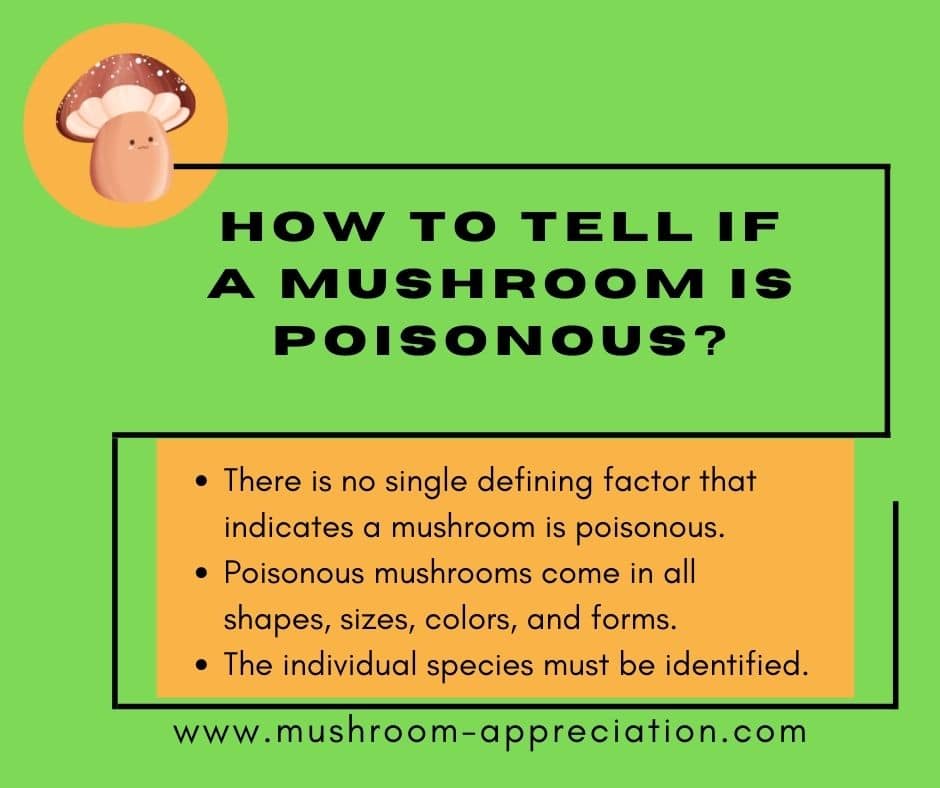
Read up on some of the common myths around mushrooms and as always, forage with safety in mind!

Leave a Reply