
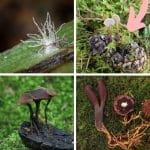
Most of the mushrooms that we see grow from the ground or from wood; this is the most common place we think about when looking for or foraging mushrooms. But a bunch of fungi species grow in some very unusual places. There are mushrooms that grow in horse dung, burned ground, the caps of other mushrooms, buried pine cones, and dead insects.
Most of these species are not edible; they are more curiosities and examples of how diverse, adaptable, and widespread mushrooms are. When you’re out foraging, keep these in mind. Many are quite small and take some real searching to find, but they’re such a treat when you discover them in all these very unusual places!
Jump to:
On Insects and Spiders
These fungi attack insects directly. The fungi’s spores land on a living insect, grow into it, and slowly replace its insides with fungal tissue. The scientific name for these is entomopathogenic fungi, meaning fungi that cause disease in insects.
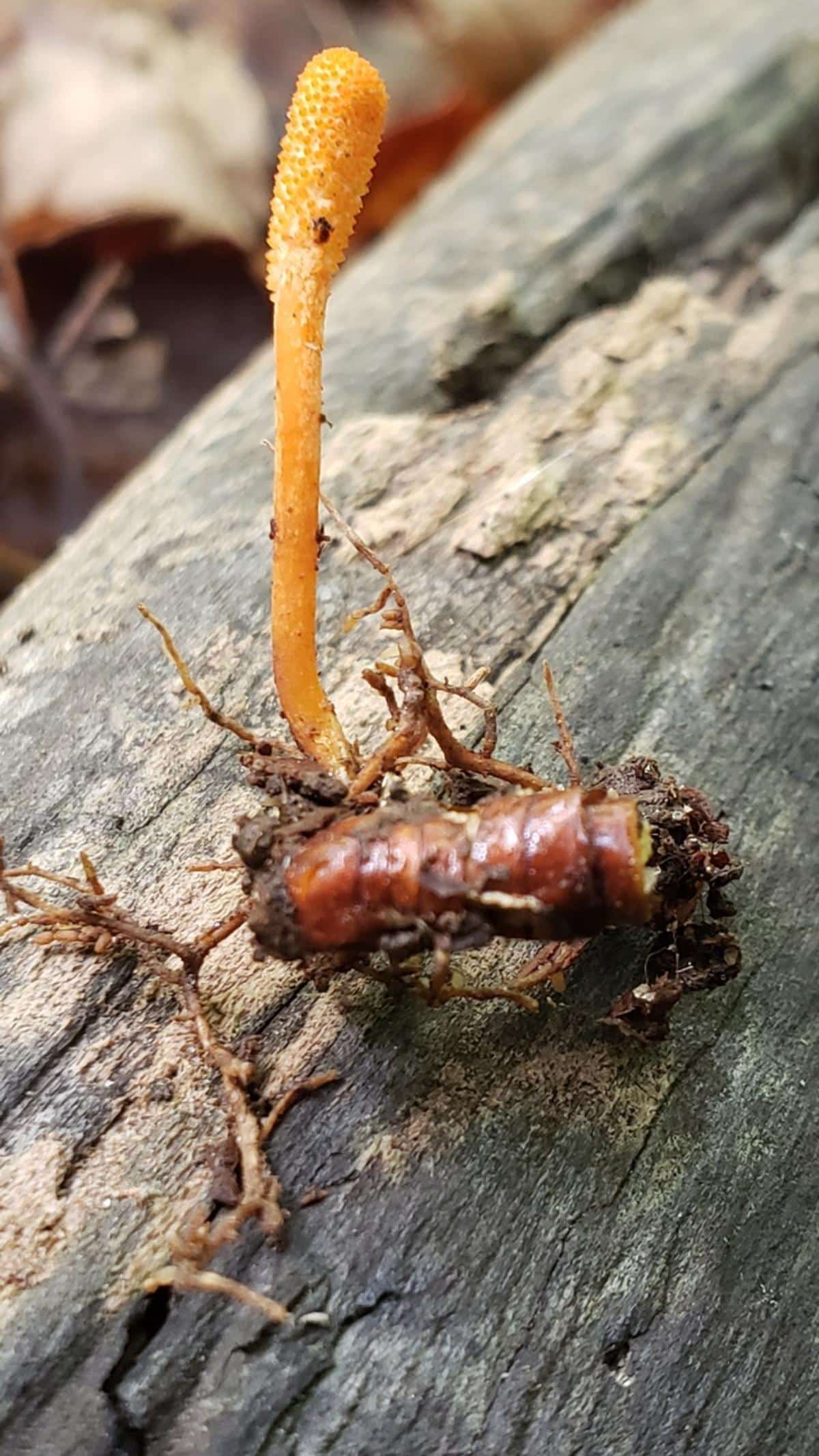
Scarlet Caterpillar Club (Cordyceps militaris)
The scarlet caterpillar club is a bright orange fungus that grows out of buried insects, mostly the underground pupae of moths and butterflies. The fruiting body is small and club-shaped, around 1/2 to 3 inches tall, and orange to reddish in color. It grows above the soil line, but the insect it is growing from is usually well below the soil, and you have to dig it up to see it.
This cordyceps grows in grasslands and at the edges of woods across North America, Europe, and Asia, in late summer and fall. Because the club is short and the host is hidden, the fungus is easy to overlook even though it is brightly colored.
Zombie-Ant Fungus (Ophiocordyceps unilateralis)
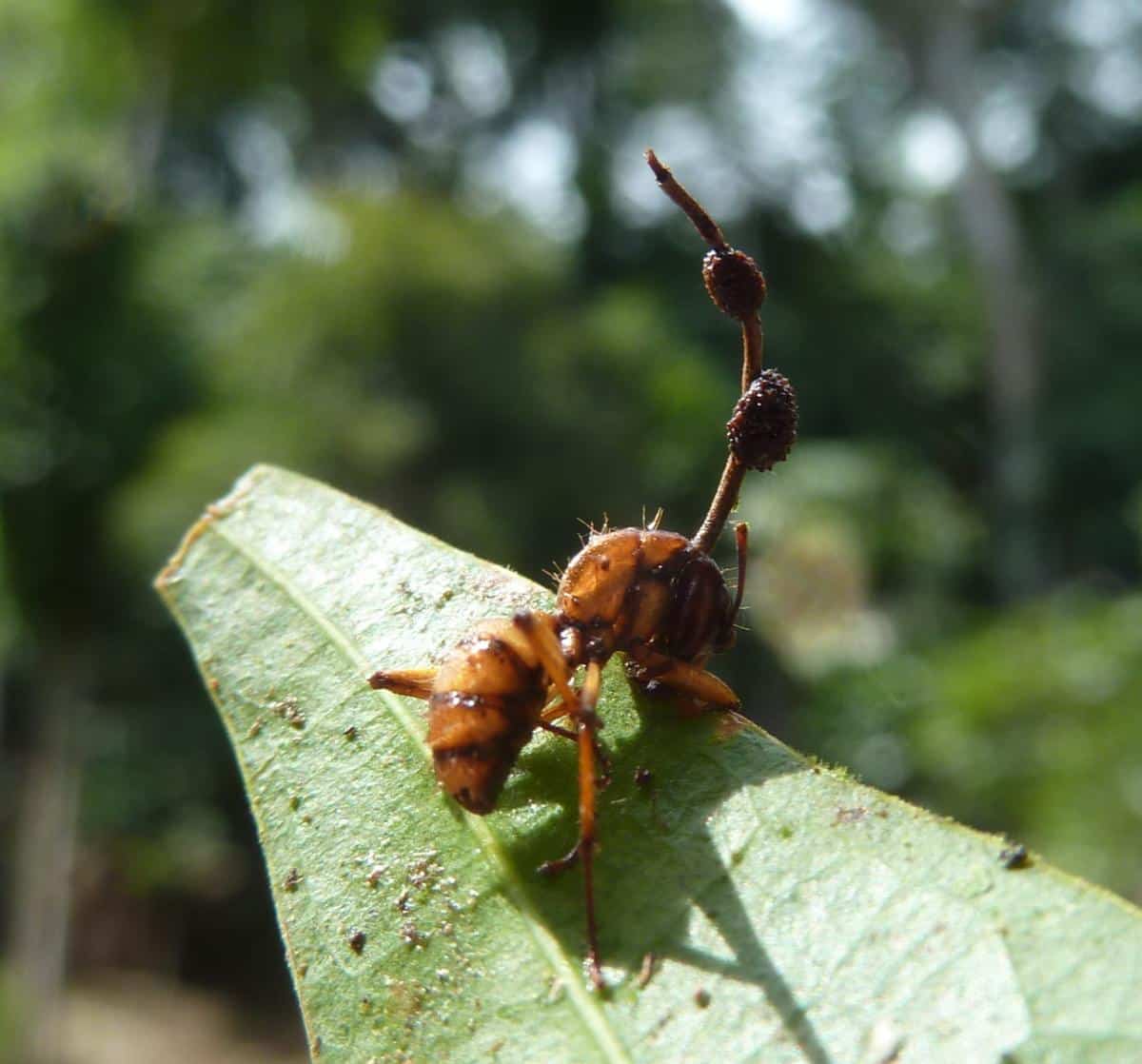
The zombie-ant fungus infects carpenter ants and changes how they behave before it kills them. The parasitic fungus makes an infected ant leave its nest, climb a plant, and clamp its jaws onto a leaf vein in a grip it cannot release, called the death grip. The fungus then kills the ant and grows a stalk out of its head, releasing spores onto the ants passing below. It does not infect people.
This famous cordyceps grows in the tropics, but North America has its own zombie-ant fungi, also. Ophiocordyceps kimflemingiae infects carpenter ants in the eastern United States, and Ophiocordyceps camponoti-floridani parasitizes the Florida carpenter ant.
Zombie Cicada Fungus (Massospora cicadina)
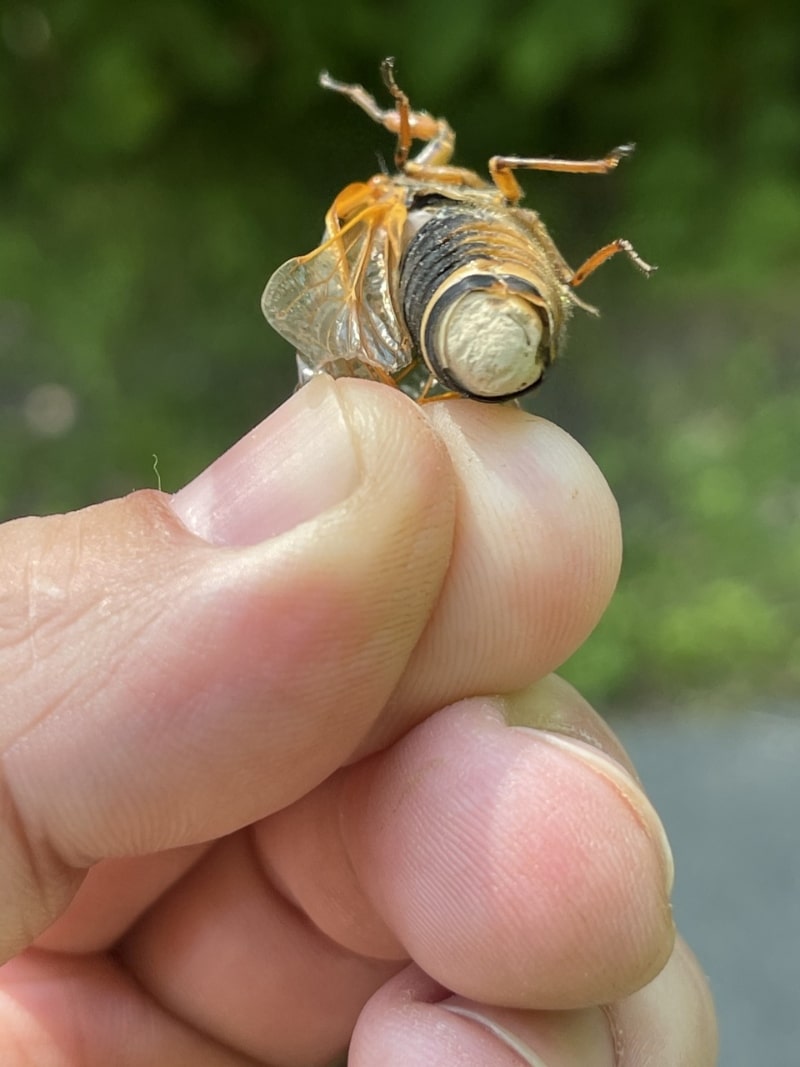
The zombie cicada fungus lives inside the periodical cicadas of eastern North America. These are the cicadas that come out of the ground every 13 or 17 years. The spores of this fungus wait in the soil for over a decade, then infect the cicadas as they emerge. The fungus fills the back half of the cicada with a chalky white plug of spores, which inhibits the insect but does not kill it. This fungus doesn’t ever form a cap or stalk; it is just the white mass of spores.
When a cicada is infected, its rear body segments, genitals included, break off and fall away, but it keeps going even so. An infected cicada will fly around and keep trying to mate with much of its abdomen gone, which spreads the spores to other cicadas through contact. The infected males even flick their wings the way females do, which draws in healthy males and passes the fungus to them. These infected insects have earned the nickname flying saltshakers of death.
Spider-Killing Fungus (Gibellula species)
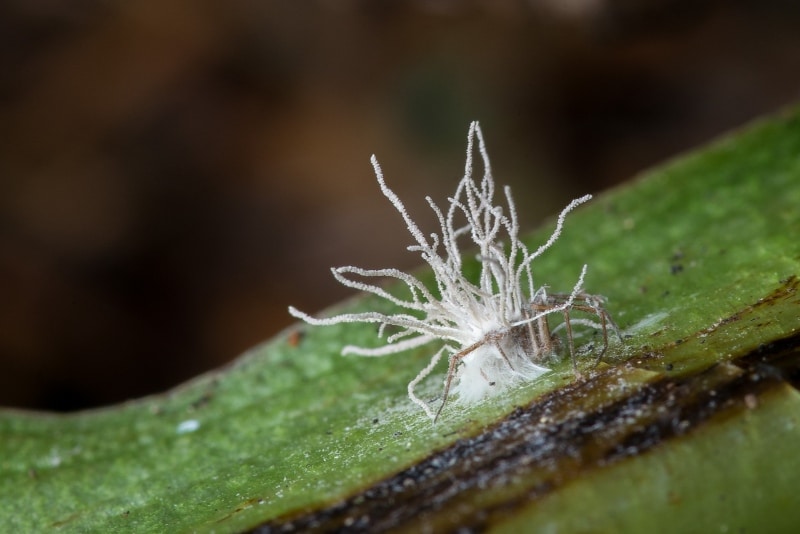
The fungi in the genus Gibellula infect only spiders. They infect and grow inside a living spider, which eventually leads to the spider’s death. But, before it dies, the spider is made to crawl to the underside of a leaf and stay there, which is the same trick the zombie ant fungus uses.
Once the spider dies, the fungus wraps the body in a mat of pale threads and sends up small spore-bearing stalks that shed spores onto spiders passing below. It so completely covers the spider that the host can be hard to identify. These fungi grow on spiders in North America and around the world.
On Other Mushrooms
Some fungi grow on and get nutrients from other mushrooms. A few of these are like kind squatters, and they’ll sprout from a mushroom that is decomposing and has already completed its lifecycle. Others are full parasites that attack a living mushroom and take it over. Mycologists call the parasitic ones mycoparasites, meaning a fungus that lives on another fungus.
Lobster Mushroom (Hypomyces lactifluorum)
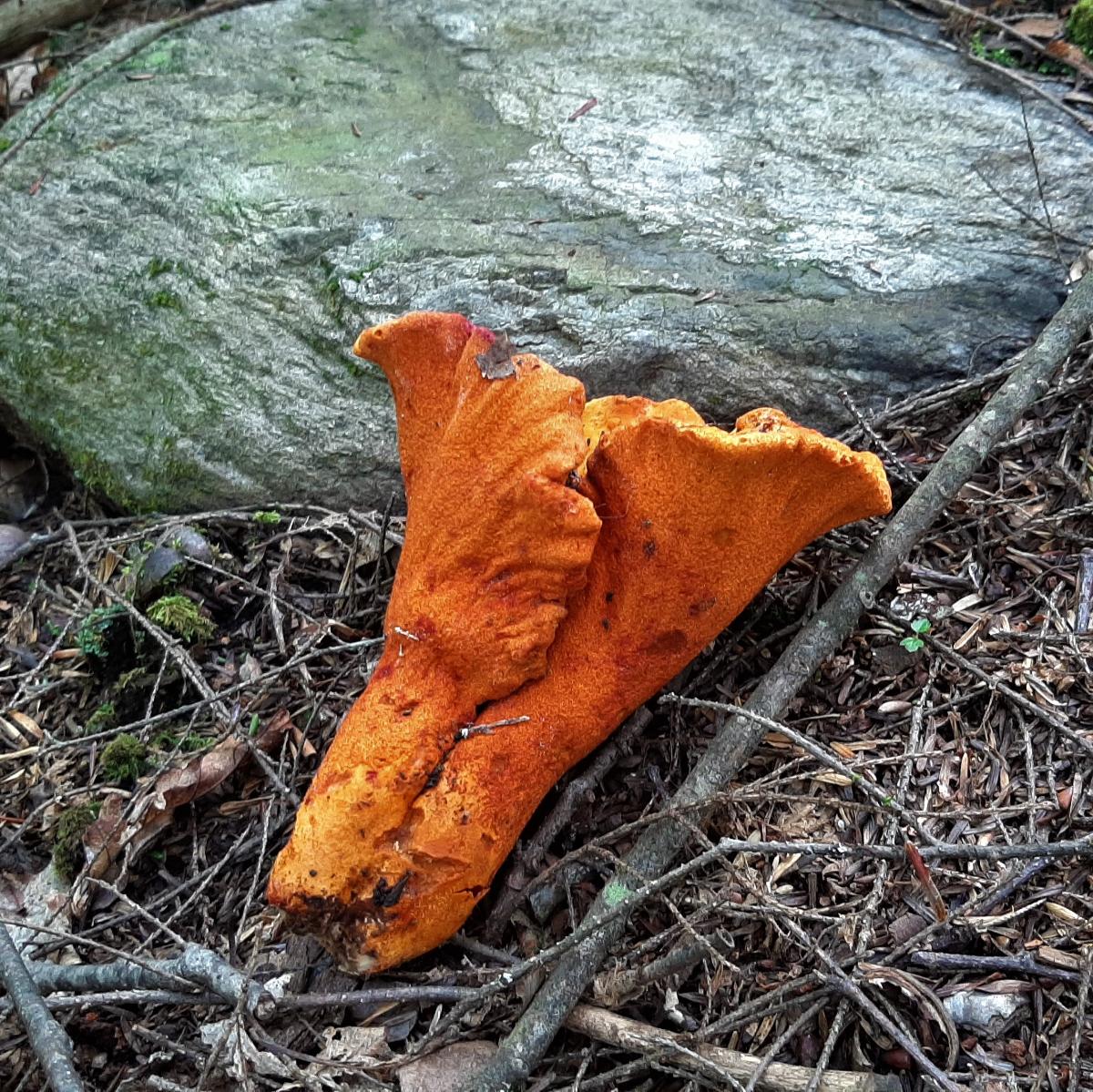
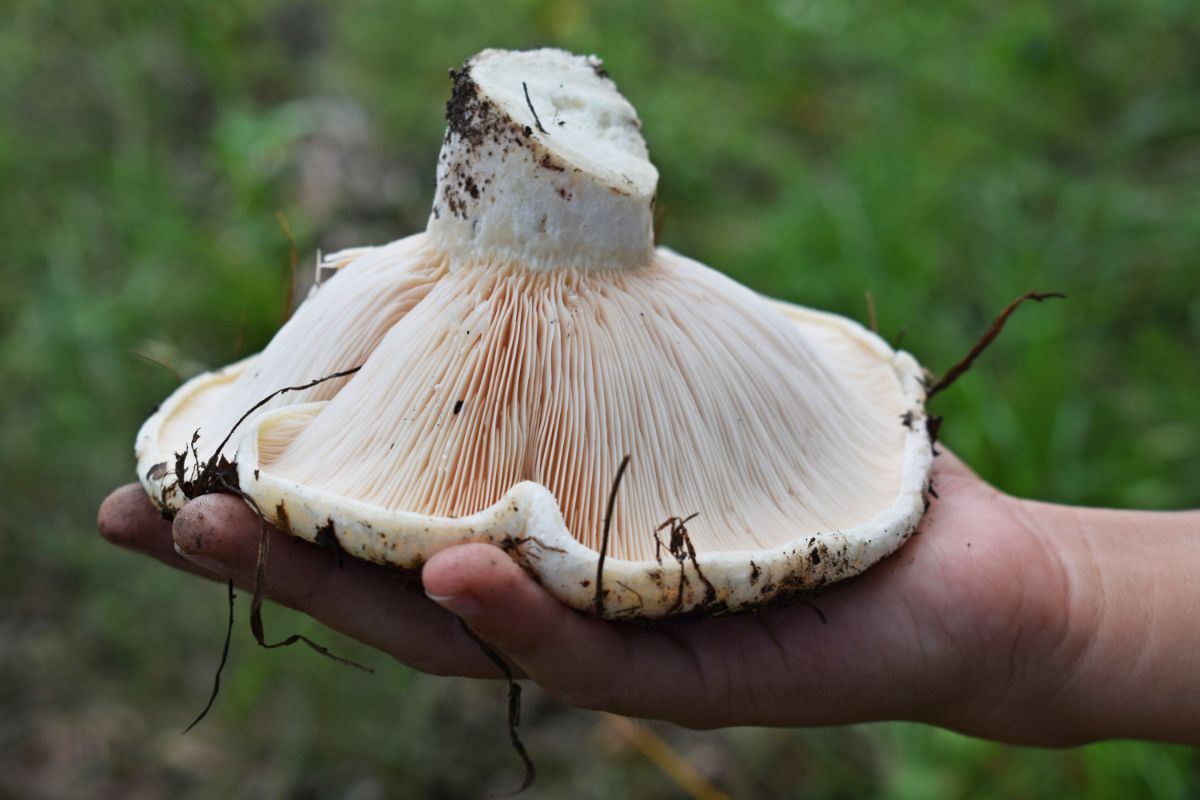
The lobster mushroom is the result of a fungal parasite that attacks other mushrooms, mostly the brittlegills and milk-caps. As it grows, it turns the whole host into a hard, bumpy, reddish-orange formation that looks like the shell of a cooked lobster.
By the time the lobster mushroom is mature, the parasite has so completely covered the host that the original mushroom cannot be identified. It grows in conifer woods across North America. The lobster mushroom is a prized edible species with a firm texture and a slight seafood-like flavor.
Powdery Piggyback (Asterophora lycoperdoides)
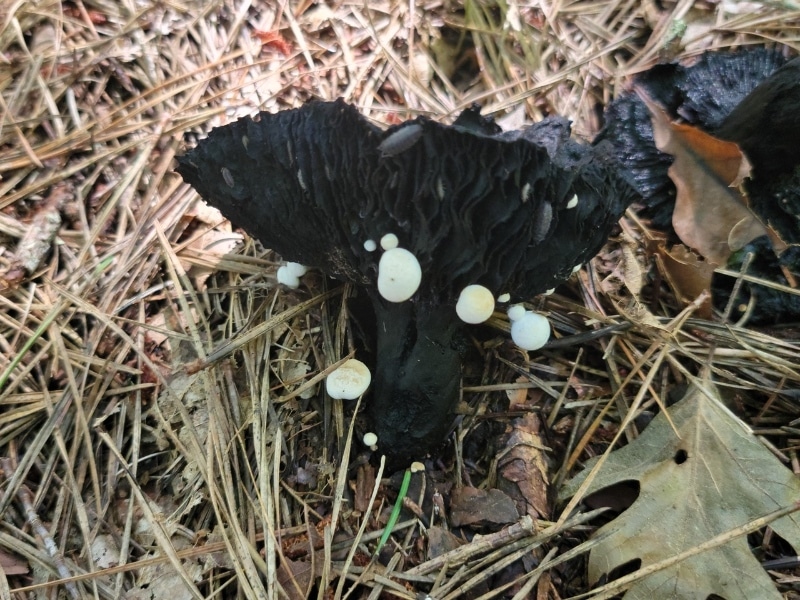
The powdery piggyback is a tiny white mushroom that grows straight out of the cap of another mushroom. Its hosts are rotting brittlegills (Russula sp), like the blackening brittlegill. The piggyback caps are only about 0.15 to 0.8 inches across.
As it ages, the white cap is coated in a thick brown powder. This powder is the tough asexual spores, and they can clone the fungus onto the next rotting host. The spores are covered in tiny points, which is where the name star bearer comes from.
It grows across North America, mostly east of the Great Plains, in summer and fall. The mushrooms are small and easy to miss because they grow on hosts that are already rotting and often overlooked.
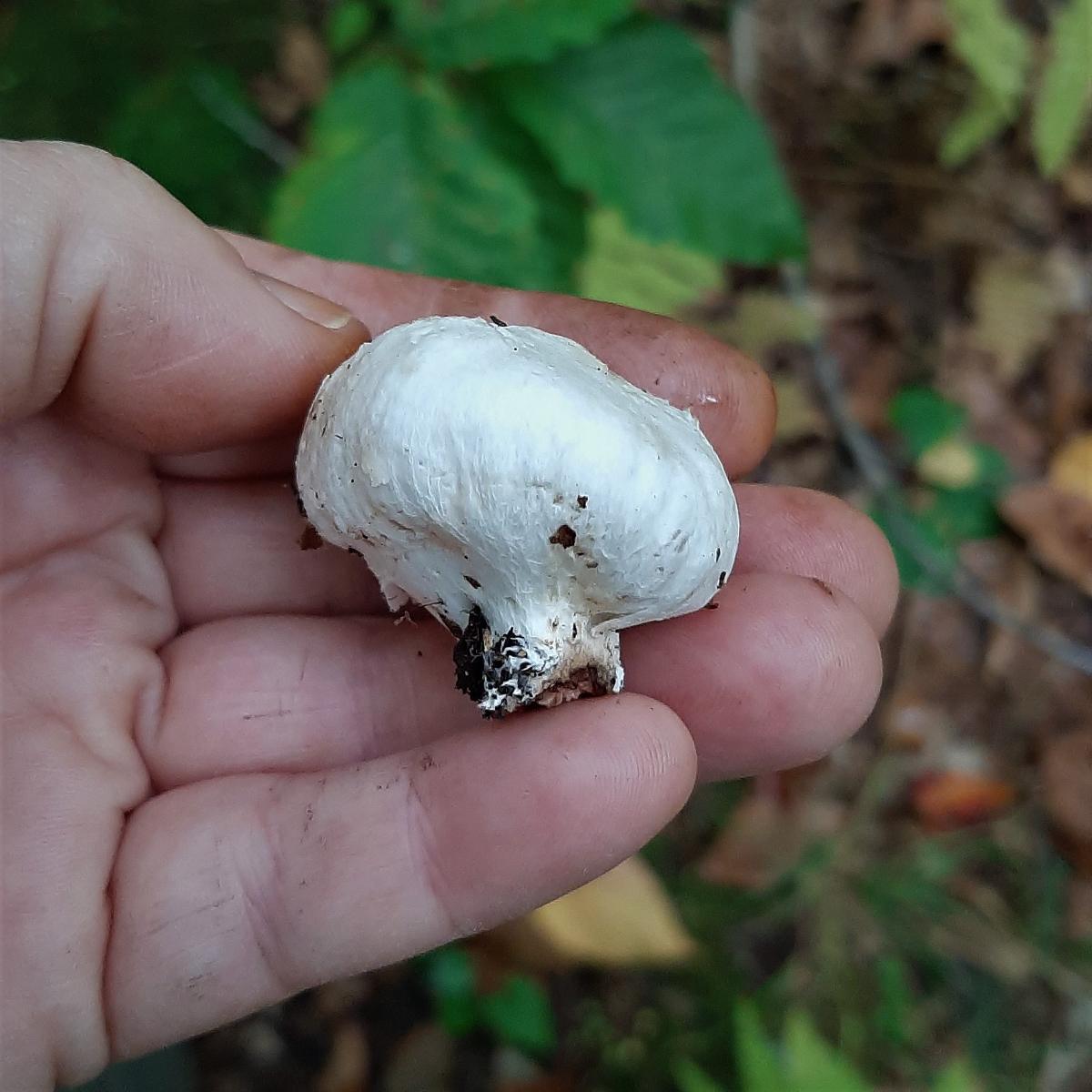
Aborted Entoloma (Entoloma abortivum)
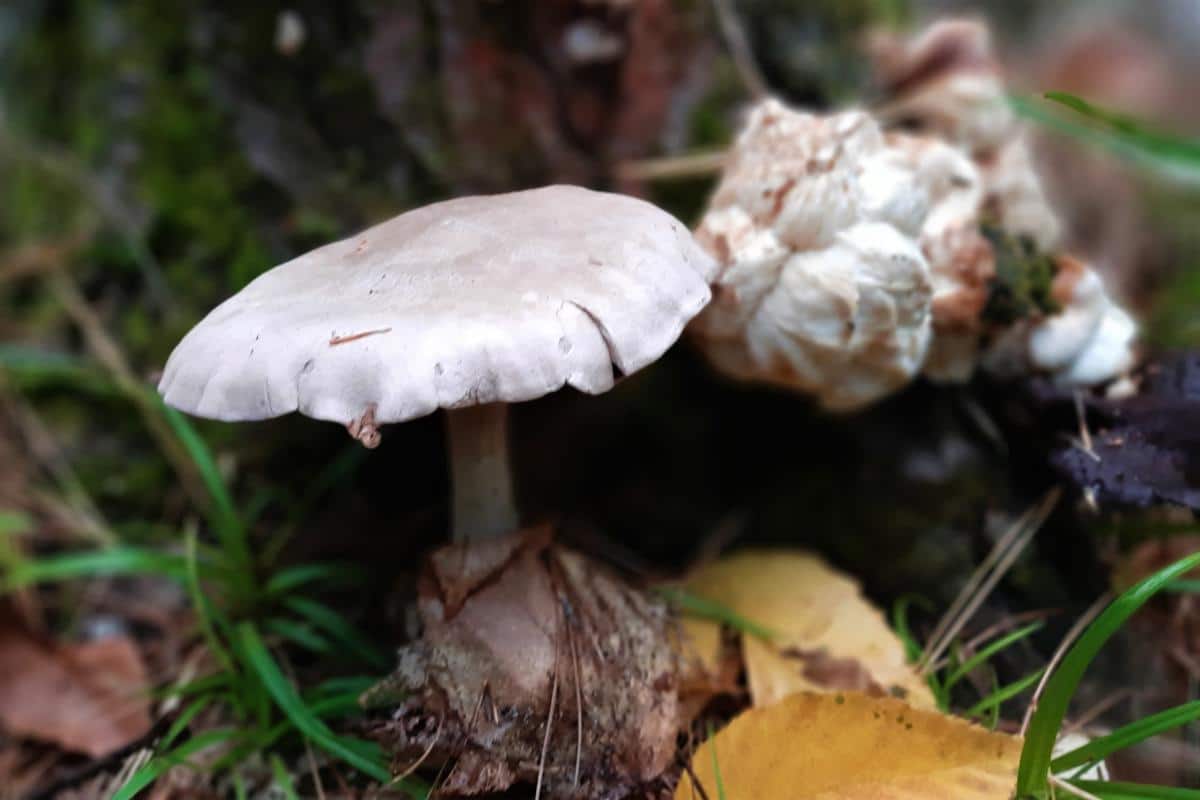
The aborted entoloma has two forms, one as a traditional-looking mushroom with a cap and gills, and another when it parasitizes honey mushrooms. In its normal form, this is a gray, gilled mushroom with a mealy smell and a cap up to about 3 inches across. The end result of the fight between the Entoloma parasite and honey mushrooms is a lumpy white blob with no clear cap or gills.
For a long time, people thought honey mushrooms were attacking the entoloma and causing the blobs, but it turns out it’s the other way around. The entoloma is the attacker. It infects the honey mushroom, and the blobs are honey mushrooms that have been taken over and deformed by it. Both forms grow on or near rotting wood where honey mushrooms live, mostly east of the Rocky Mountains.
The white blobs are edible and known as shrimp of the woods for their texture, which is dense and shrimp-like. Most people don’t forage the gilled version, even though it is edible, because there are several gray Entoloma relatives that are poisonous.
Goldenthread Cordyceps (Tolypocladium ophioglossoides)
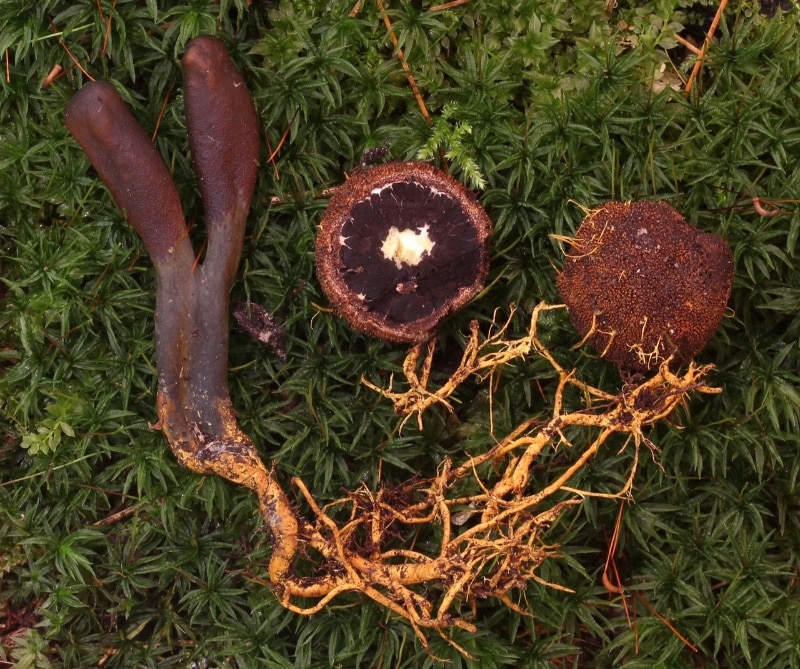
The goldenthread cordyceps grows on a buried fungus. It grows up through moss and leaf litter as a small black club about 0.8 to 3 inches tall, but a lot of the fungus stays underground. If the club is dug up carefully, a tangle of bright yellow threads can be seen running down from its base to a small, lumpy ball buried in the soil.
That buried ball is a deer truffle, a fungus in the genus Elaphomyces. The goldenthread cordyceps is a parasite on the deer truffle and takes nutrients from the truffle through the yellow threads. It grows in eastern North America in late summer and fall, under oak and pine trees where its host lives. This cordyceps species is inedible. The yellow threads running down to the truffle are the surest way to identify it.
Bolete Eater (Hypomyces chrysospermus)
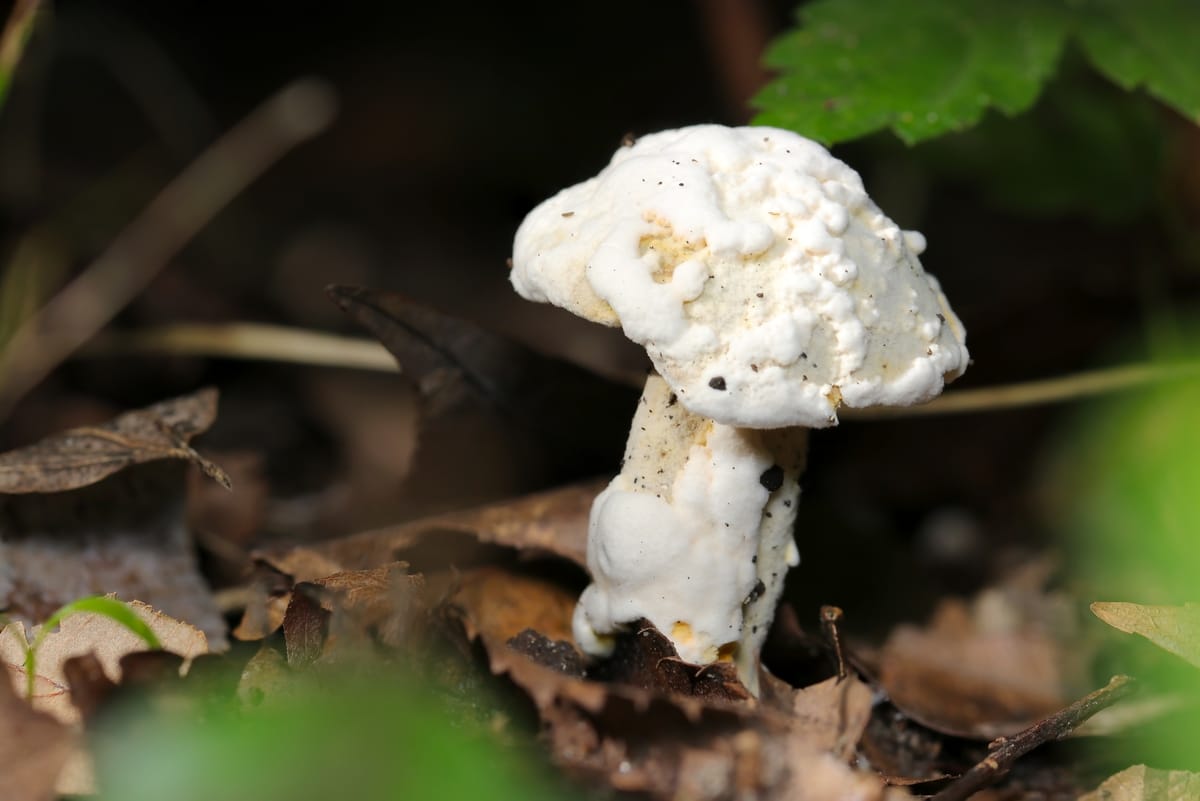
The bolete eater is a fungal parasite that attacks boletes. It coats the host bolete in a mold that starts as a thin white fuzz, then turns golden yellow, and finally ends up reddish brown and pimpled. As it spreads, it covers the whole mushroom and softens it into a rotting mess. A parasitized bolete can lose its shape entirely.
This parasite grows on boletes across North America and is common. It is in the same genus as the lobster mushroom. The infected mushroom of this one, though, is inedible.
In a River
Aquatic Gilled Mushroom (Psathyrella aquatica)
The aquatic gilled mushroom is the only gilled mushroom known to grow and fruit fully underwater. It lives in the cold, clear, spring-fed waters of the Rogue River in southern Oregon. It grows rooted in the waterlogged wood, silt, and gravel and is often well over a foot beneath the fast-moving water. The cap is small and brown, around 0.4 to 0.8 inches across, and it has a long, hairy stem that anchors into the riverbed. The whole mushroom is about 4 inches tall.
This mushroom releases its spores into tiny gas bubbles that collect under the cap and then float up through the water. It was found by chance in 2005 by a researcher wading in the river on a family picnic, and it was described as a new species in 2010. Its edibility is unknown.
On Dung
There are a lot of nutrients in animal dung, and a bunch of fungi species take advantage of this. And, they’ve created some unique reproduction methods to make these unusual places work for them.
Dung Cannon (Pilobolus crystallinus)
The dung cannon is an extremely small and extremely powerful fungus. It grows on the dung of horses, cattle, and other grazing animals across North America and around the world. It only grows to about 0.8 to 1.6 inches tall and is wild-looking. It grows tiny, clear stem stalks with a balloon-like sac on top of it, and a black cap, which is its spores.
The growing fungi live in the dung, but in order to spread their spores, they need an animal to eat them. When a cow eats grass covered with the spores, it digests them and passes them through when it defecates. The spores then create new mushrooms in the dung. The mushrooms have a problem, though. Most grazing animals, like cows, horses, and elk, avoid eating where they go to the bathroom, which means these fungi have to get their spores onto clean grass where an animal will eat and swallow them.
To do this, the fungus builds up pressure in the sac and fires the spore cap into the air. The cap can travel up to about 6.6 feet, and in the first millimeter of flight, it goes from a standstill to roughly 45 miles per hour. That works out to an acceleration of about 20,000 times the force of gravity.
Egghead Mottlegill (Panaeolus semiovatus)
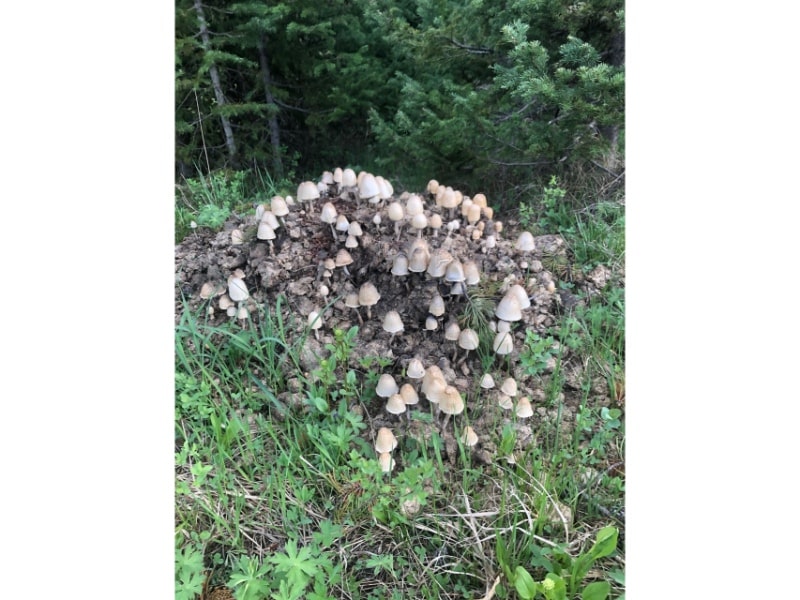
The egghead mottlegill is a mushroom that grows on horse dung, and it is found across North America. The cap is whitish to pale tan and slimy when it is fresh. The upper part of the cap is shaped like the top half of an egg, which is where the name comes from. It grows about 1.2 to 3.5 inches wide and has a thin stem 3 to 7 inches long.
This is the only common Panaeolus with a ring on its stem, and the ring is thin and washes off easily, so it helps if you can find other young ones near it. The gills are pale, but as the spores mature, they create black blotches, which give them a mottled look. This mushroom grows in spring, summer, and fall and is inedible.
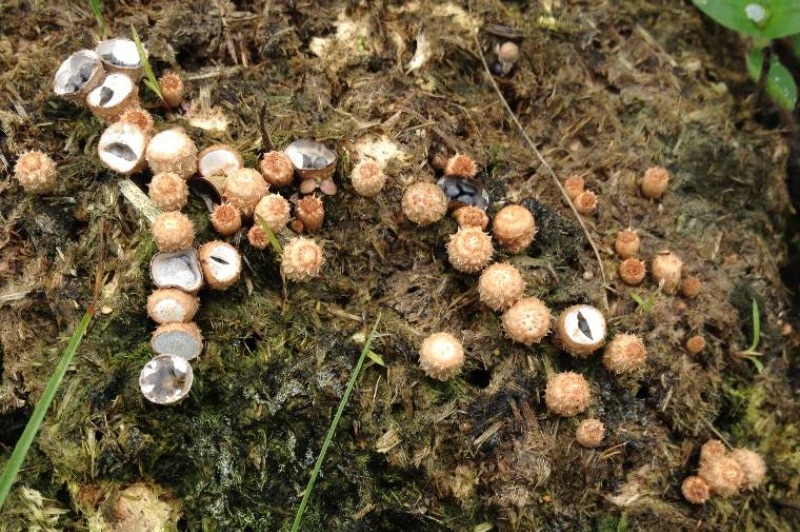
Dung Bird’s Nest (Cyathus stercoreus)
The dung bird’s nest is a tiny cup that looks like a miniature bird’s nest with eggs in it. It grows on dung and soil with lots of manure. The dung bird’s nest is most commonly found in fields, pastures, and along roadsides, and sometimes on wood chips. The cups are about 1/4 to 1/2 inch tall and dark grayish brown outside. And, inside the cup is smooth and dark, and it holds several little lens-shaped eggs. Each egg is a packet of spores. When the bird’s nest is young, the cup is covered by a thin lid, which falls away once the eggs are ripe.
The eggs are flung out of the cup by the rain. The cup is shaped so that a falling raindrop splashes the eggs out and up to about 3 feet away. Each egg has a thin, coiled cord with a sticky end that can wrap around a blade of grass and secure itself there. When a grazing animal eats it, the spores are passed on. It grows across North America and in temperate areas worldwide, in spring and fall.
On Burnt Ground
After a fire, some fungi will grow on the bare, blackened soil. Mycologists call these mushrooms pyrophilous, which means fire-loving. Some of these species live underground for years and fruit only when a fire clears the ground above them. Others arrive as spores and feed on the burnt material. Many of these species fruit in large numbers in the first year or two after a wildfire or even a backyard bonfire.
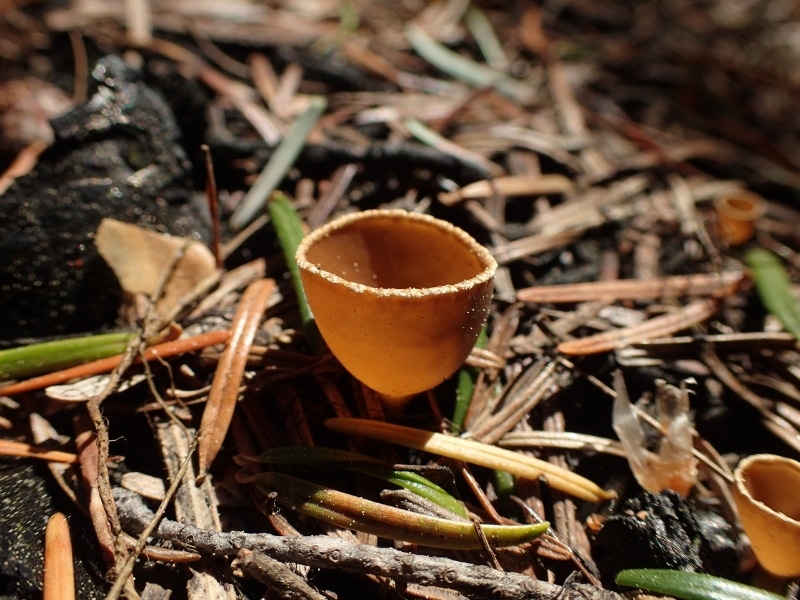
Stalked Bonfire Cup (Geopyxis carbonaria)
The stalked bonfire cup is a small, goblet-shaped cup fungus that grows on burnt soil and charcoal. The cups are about 1/4 to 3/4 inch across and reddish brown with a pale, fringed edge. It grows across North America and comes up in spring and through late fall.
It is one of the most common fungi that appears on burned ground. After a big burn in a conifer forest, the cups can carpet the soil. One study in Norway counted up to 700 to 1,000 cups per square meter in a burned spruce forest, and the year after the 1988 Yellowstone fires, they came up by the millions.
It grows in the same burned conifer stands as morels, but it fruits a little earlier. A patch of bonfire cups can be a sign that morels are about to come up nearby. The cup itself is inedible.
Bonfire Scalycap (Pholiota highlandensis)
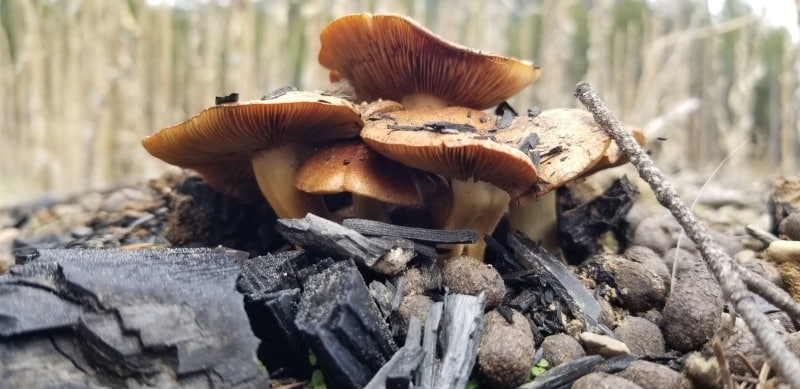
The bonfire scalycap is a small, brown-gilled mushroom that grows on burnt ground in North America and across Europe. It also grows in vast quantities. The cap is about 0.8 to 2 inches across, ochre-brown to tan, and smooth and slightly sticky. The stem is pale yellow near the top and reddish-brown toward the base, and it has fine, cottony fibers on it.
The gills start pale clay-colored, then turn cinnamon, and finally become olive-brown. It comes up on old campfire and bonfire sites and on ground left bare by wildfires, mostly in the fall but at other times of the year too.
Pyronema (Pyronema omphalodes)
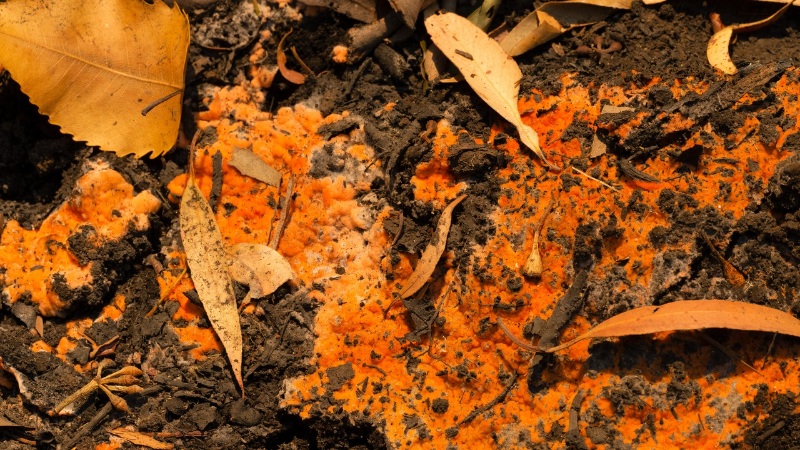
This fungus is one of the first to come up on burned ground, sometimes within weeks of a fire. It forms a bright orange, lumpy crust that spreads across the charred soil and burnt wood. At first, it is in patches, but then they run together and create a large mat. It does not have a cap or stem; it is an expansive crust of tiny cup-shaped fruiting bodies.
This species grows across North America and around the world, and usually appears in spring. In a study in California, its share of the fungal DNA in the soil rose from under 1 percent before the fire to about 60 percent after.
The orange crust is short-lived and fades as other fungi show up. The two species in the genus, Pyronema omphalodes and Pyronema domesticum, are hard to tell apart without a microscope. Pyronema domesticum can also break down charcoal.
On Cones and Seeds
The cones and seeds of trees are often tough, woody, and slow to rot, but some fungi still call them home. These mushrooms grow on fallen cones and seeds, sometimes buried under the leaves or needles, so the mushroom can look like it is coming straight out of the ground until the cone is dug up.
Ear-Pick Fungus (Auriscalpium vulgare)
The ear-pick fungus grows almost only on conifer cones, mostly pine and Douglas-fir cones that have fallen and partly buried themselves in needles. The dark-brown cap is small, about 0.4 to 1.2 inches across, kidney-shaped, and covered in fine hairs. The stem attaches to the cap on one side rather than the center, so the whole thing looks like a little periscope poking up from a cone.
Under the cap, it has tiny downward-pointing spines that start out whitish and turn brown with age. The word Auriscalpium is Latin for ear pick, a small scoop once used to clean a person’s ears. This mushroom grows across North America, mostly in late fall and early winter. It is common to find four or five of them on the same cone.
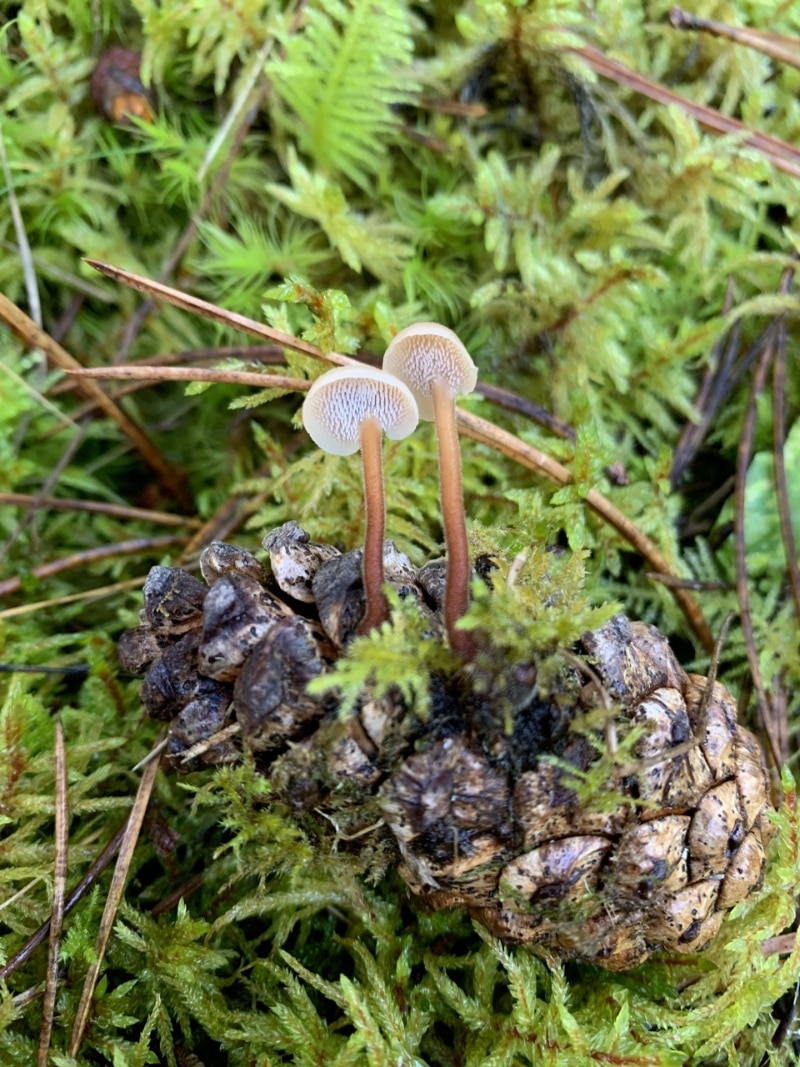
Conifercone Cap (Baeospora myosura)
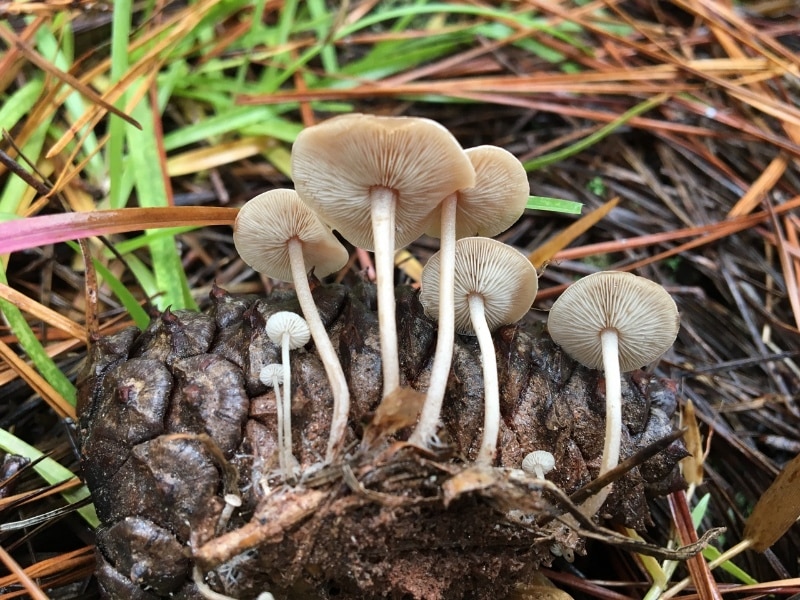
The conifercone cap is another cone specialist. It is a small tan mushroom that grows on rotting cones of spruce, pine, and Douglas-fir. The cap is about 0.4 to 1.2 inches wide and tan to brown, but lighter around the edges. The gills are whitish and packed very close together, which is one of the easiest ways to tell it apart from other cone mushrooms.
The stem is thin and pale and has a hairy, root-like base that runs down into the cone. The species name myosura means mouse tail, a nod to the curved, tail-like stem. The conifercone cap grows across North America and in Europe from late fall into winter. It is too small and thin to be worth eating.
Acorn Cup and Catkin Cup (Ciboria species)
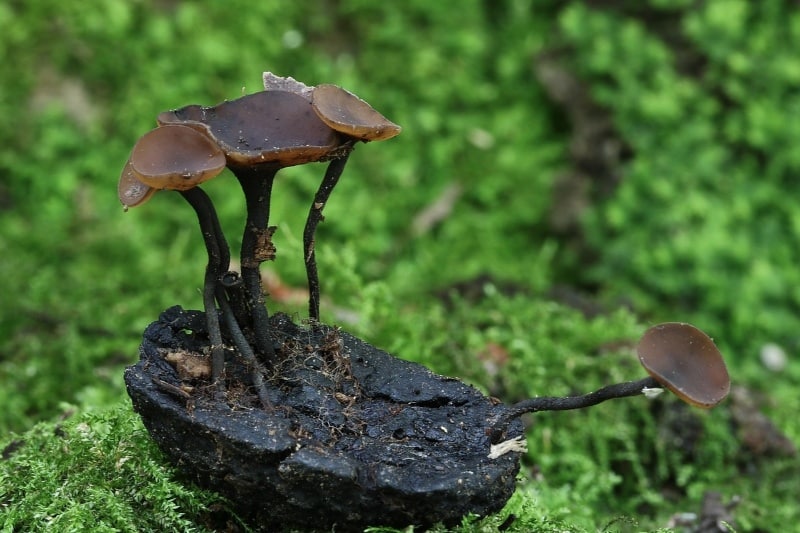
In North America, Ciboria cups grow from a catkin, a cone scale, or a nut that has fallen and worked its way under the leaf litter. The cup often looks like it is fruiting straight from the ground. The catkin cup (Ciboria amentacea) fruits from buried willow or alder catkins in North America and Europe.
A relative, the acorn cup (Ciboria batschiana), grows the same way, but from a fallen acorn. It infects the acorn, turns the seed black and mummified inside, and then grows a small cinnamon-brown cup out of the nut. It is small, less than an inch wide. It is best documented in the oak forests of Europe, where it can spoil large batches of acorns.
In Fuel Tanks
Kerosene Fungus (Amorphotheca resinae)
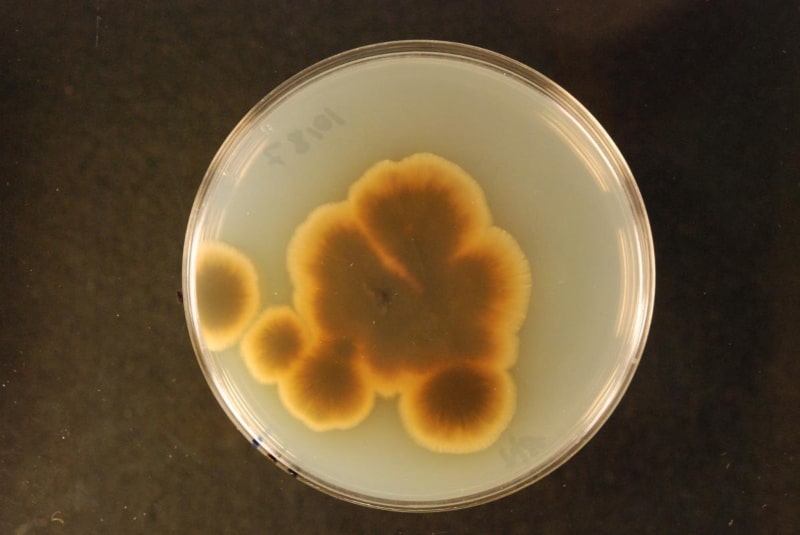
The kerosene fungus grows in fuel and lives in the tanks of aircraft, boats, and vehicles. It feeds on the hydrocarbons in jet fuel and diesel, and uses the small amount of water that settles to the bottom of a tank to hydrate. It also grows on petroleum and on wood treated with creosote.
As it grows, it forms dark mats and sludge that can clog fuel filters and lines, and its acids can corrode metal tanks and pipes. It was first discovered by aviation crews in the 1950’s when fuel began moving in bulk around the world.
This is not a mushroom that forms a cap or stem, it is a microbial growth that spreads as a thin film across the kerosene.
In Potted Plants
Warm, damp potting soil perfectly suits certain fungi, and their spores will travel in bagged soil and on the roots of plants moved from place to place. The most common one is bright yellow.
Yellow Houseplant Mushroom (Leucocoprinus birnbaumii)
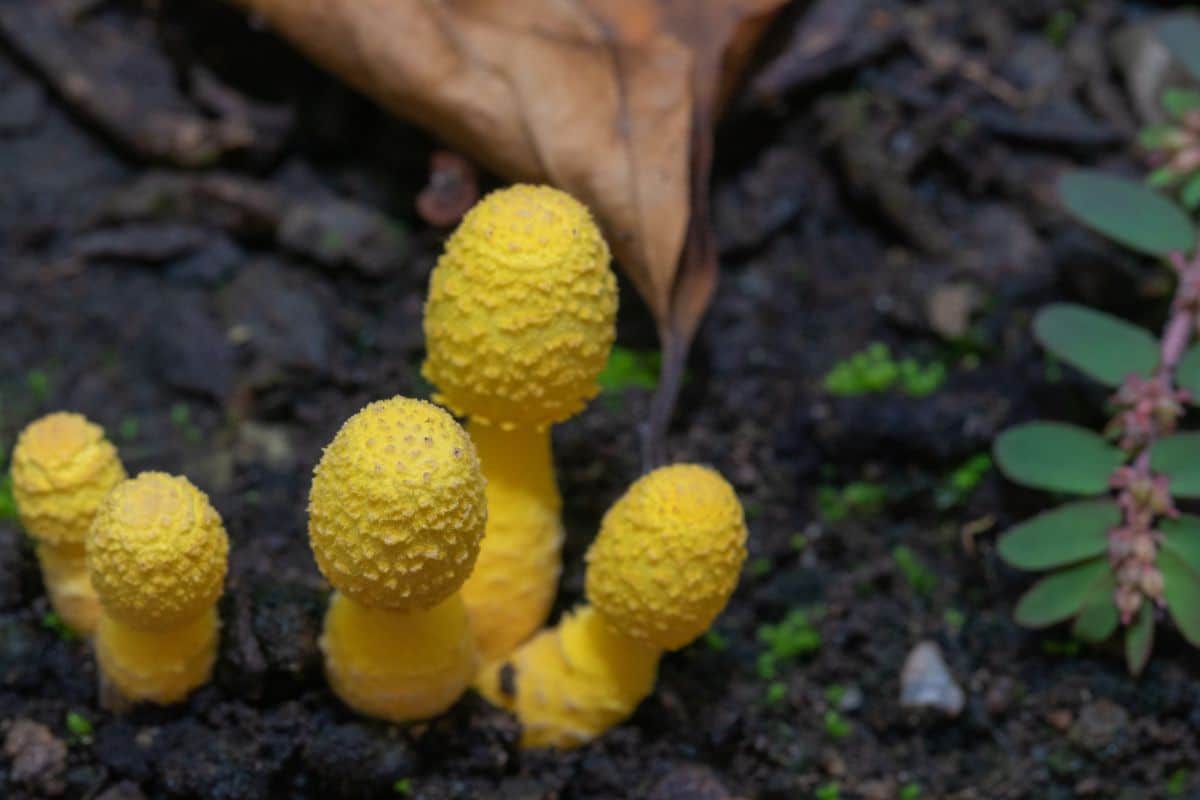
The yellow houseplant mushroom is a small, bright lemon-yellow mushroom that shows up in flowerpots, greenhouses, and indoor planters. The cap is about 1 to 2.5 inches across, egg-shaped at first, and then becomes cone or bell-shaped with fine grooves. The whole mushroom is yellow, including the thin stem and its fragile ring. With age, it’ll get paler yellow and washed-out looking.
This is a tropical fungus that has spread around the world in potting soil. It feeds on the organic matter in the soil and does not harm the plants it shows up next to. The mushrooms are short-lived; they can come up overnight and collapse within a day or two. And, they’ll come back whenever the soil is warm and damp enough for them. It is toxic if eaten and can cause stomach upset, so it is best to remove it if children or pets can reach it.
On Animal Remains
Horn Stalkball (Onygena equina)
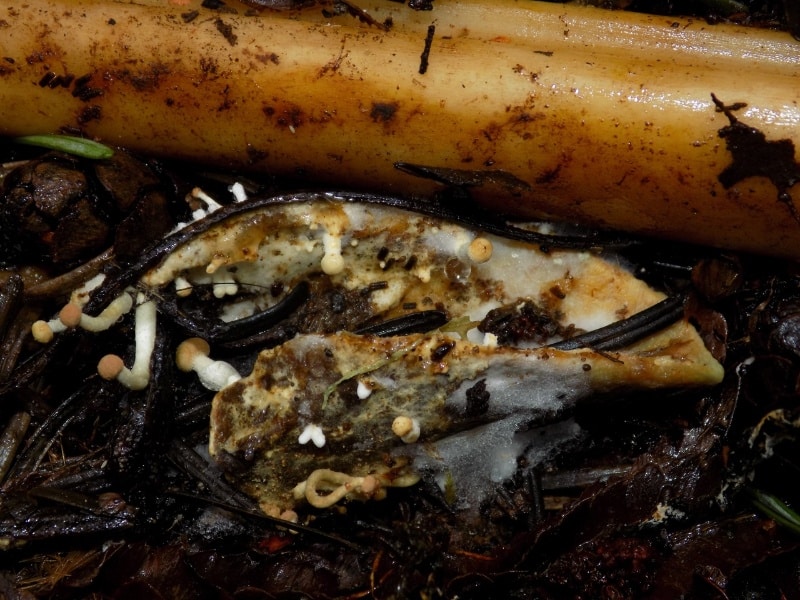
The horn stalkball grows on the rotting horns and hooves of cattle, sheep, and horses. It is a tiny fungus, only about 0.1 to 0.2 inches tall. It has a thin white stem and a round head shaped like a flattened ball. The head is coated in a white powder, and when it is mature, it cracks open and falls away in pieces to release pale reddish-brown spores.
It can break down and feed on the keratin in horn and hoof, but it doesn’t decompose bone. If you find it on a skull, you’ll see the fungus covers the horns and leaves the skull bare. It grows in North America and Europe, from spring to fall.
Feather Stalkball (Onygena corvina)
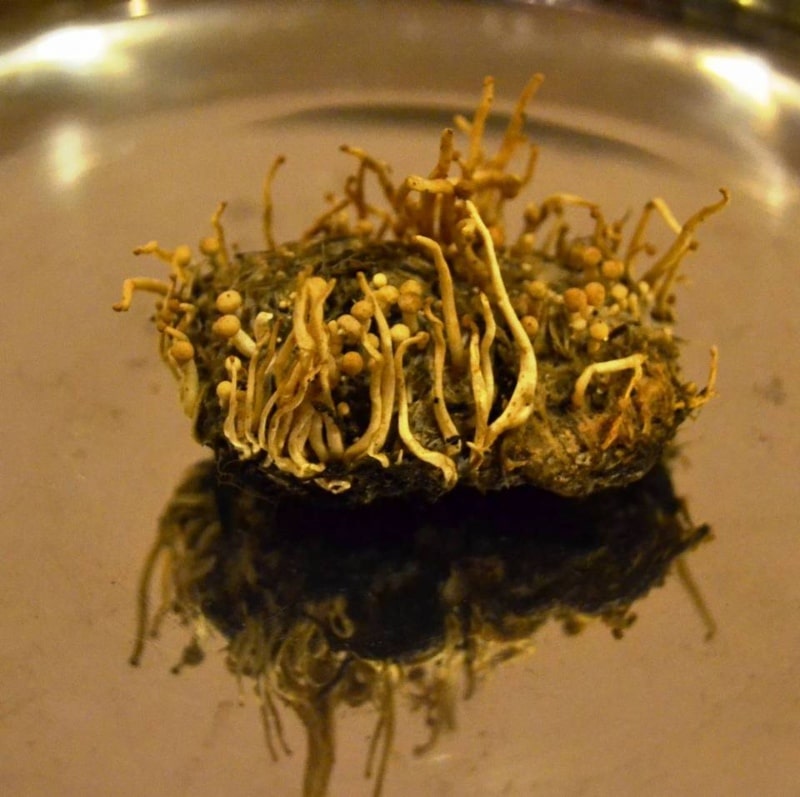
The feather stalkball is the cousin of the horn stalkball, but instead of growing on horns and hooves, it grows on old feathers, animal hair, wool, and bird carcasses. It breaks down the tough protein, keratin, for nutrients. It is most commonly found on owl pellets, the packed lumps of fur, bone, and feathers that an owl coughs up after a meal. The fungus feeds on the fur and feathers inside.
This is a tiny fungus, only growing to about an inch tall. It has a whitish stalk and an ocher to light brown head. The head ripens into a mass of powder and breaks open to release the spores. It grows in North America and Europe but is rarely collected, both because it is small and because most people do not go digging through owl pellets and animal remains.
Soil Around A Dead Body
Corpse Finders (Hebeloma species)
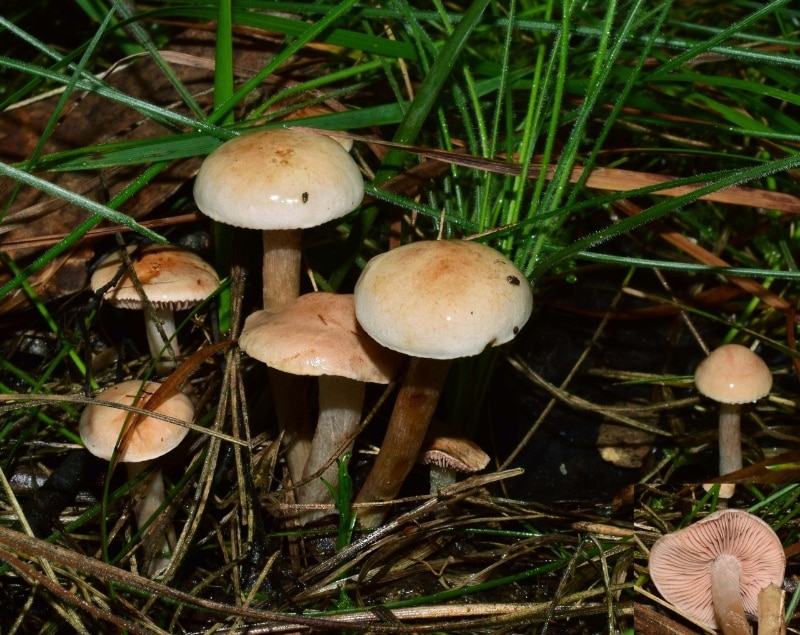
Some mushrooms fruit on the patch of ground where an animal has died and rotted. When a carcass or a buried body decomposes, it floods the soil below with nitrogen and ammonia, and a group of fungi called ammonia fungi feed on that enriched ground. They do not grow on the animal’s body itself. They fruit on the soil around and above it once the nitrogen soaks in.
Several Hebeloma mushrooms do this. Hebeloma syrjense grows in eastern North America and Europe. The Australian Hebeloma aminophilum, called the ghoul fungus, was first collected from about a hundred mushrooms fruiting around the rotting body of a kangaroo. Because these fungi show up around buried nitrogen so reliably, forensic investigators have looked at using them to locate hidden graves and to estimate how long a body has been there.


Leave a Reply