


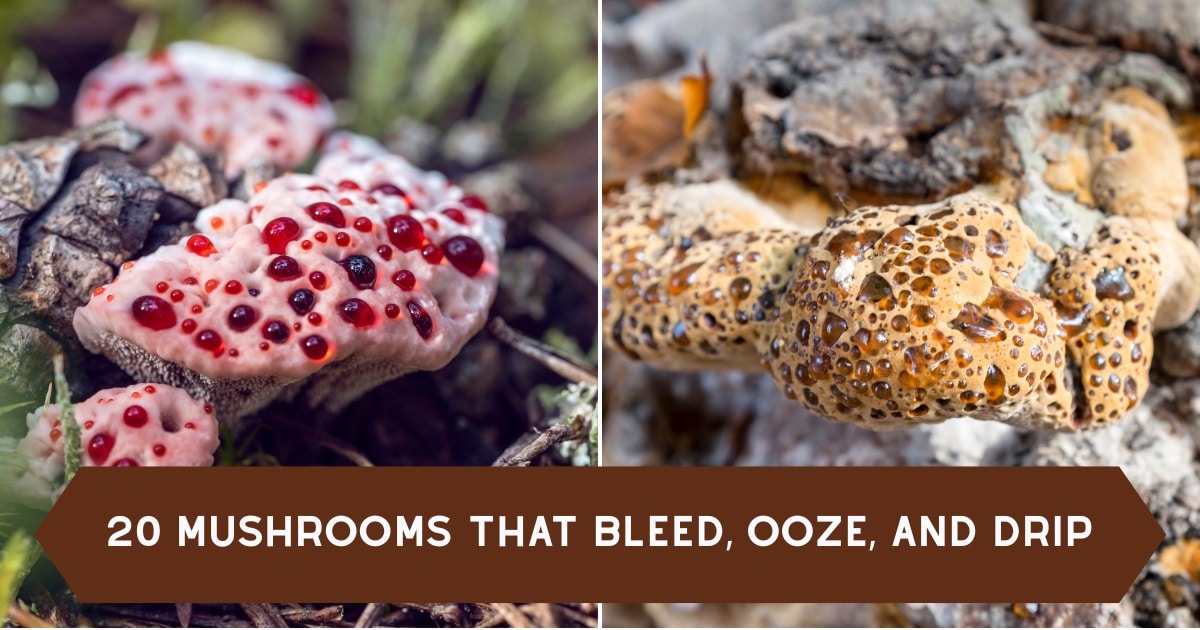
Finding a mushroom that bleeds, oozes, or drips can be a little unnerving. Some look like they’re covered in drops of blood, and others like they’re leaking milk. There are mushrooms that drip amber goo down a tree trunk and mushrooms that have small dark tears along their gills.
Across North America, there are more than a dozen mushrooms that bleed, ooze, or drip. The liquid can be red, blue, orange, white, amber, or black, and don’t worry, none of it is actual blood or milk.
Why Mushrooms Bleed, Ooze, and Drip
The method and type of bleeding, oozing, and dripping vary between mushroom species. Not all mushrooms do this, in fact, it is only a small amount that exhibit any type of liquid release. The mushrooms that bleed, ooze, and drip developed this process for potentially various reasons, some of which we still don’t fully understand.
Bleeding
These mushrooms only leak after something damages them. When a knife, a tooth, or a slug breaks the tissue open, the broken cells release a liquid. The mushroom looks like it is bleeding, even though there is no real blood in it. The liquid that leaks out might make the fungus less appealing to insects and the microbes that attack it, but the exact reason is still unknown.
Latex
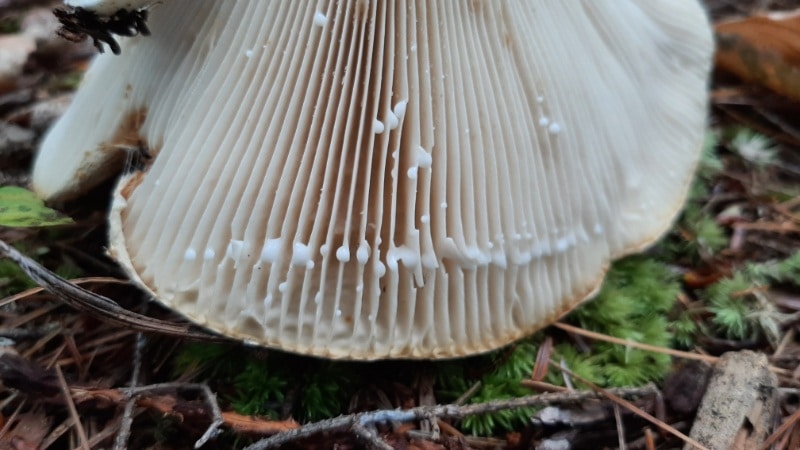
Some mushrooms have specialized cells that run through them and are filled with a liquid called latex. These latex cells are part of the mushroom’s development and are usually more prevalent in the gills, but can also be found in the cap and stem. When the mushroom is cut, this latex flows out much like sap from a wounded tree.
The mushrooms store this milky fluid in tiny channels just under the surface. When the mushroom is cut, or a bite breaks those channels, the latex floods out to seal the wound. The latex-producing mushrooms have a dedicated system for storing and transporting this liquid.
Milkcaps are the best-known examples. Depending on the species, the latex may be white, orange, yellow, red, or blue, and the color, taste, and amount of latex are important clues for identifying the different species. The latex is often bitter or sharp-tasting, and may help discourage insects and animals from eating the mushroom.
Guttation
If you see red, amber, or clear drops on a mushroom, this is usually the result of a process called guttation. Guttation happens when a mushroom takes in more water than it needs or can hold. The extra water is then pushed out onto the surface of the mushroom as tiny droplets.
Plants can do the same thing. For example, if you see small beads of water on the tips of grass early in the morning, this is also guttation. The grass has taken in as much water as it can, and now it is pushing the extra water outwards. The reason the liquid is red, amber, or another color is that as the water moves through the mushroom, it picks up natural colors and other substances from inside, which color it.
Many wood-decaying fungi produce large amounts of guttation, also called mushroom sweat or mushroom jewels. When they are growing rapidly, usually when they are very young, they may become covered with droplets that look like tree sap or honey. Because these fungi are often large and live a long time, they can produce impressive amounts of liquid.
Studies of guttation droplets have found that they aren’t just excess water. They also contain sugars, fatty acids, proteins, enzymes, antibiotics, and toxins. This has led researchers to theorize that guttation may help fungi regulate moisture, and also move metabolites through the organism, and release compounds into the environment. However, the exact purpose of fungal guttation is still being studied.
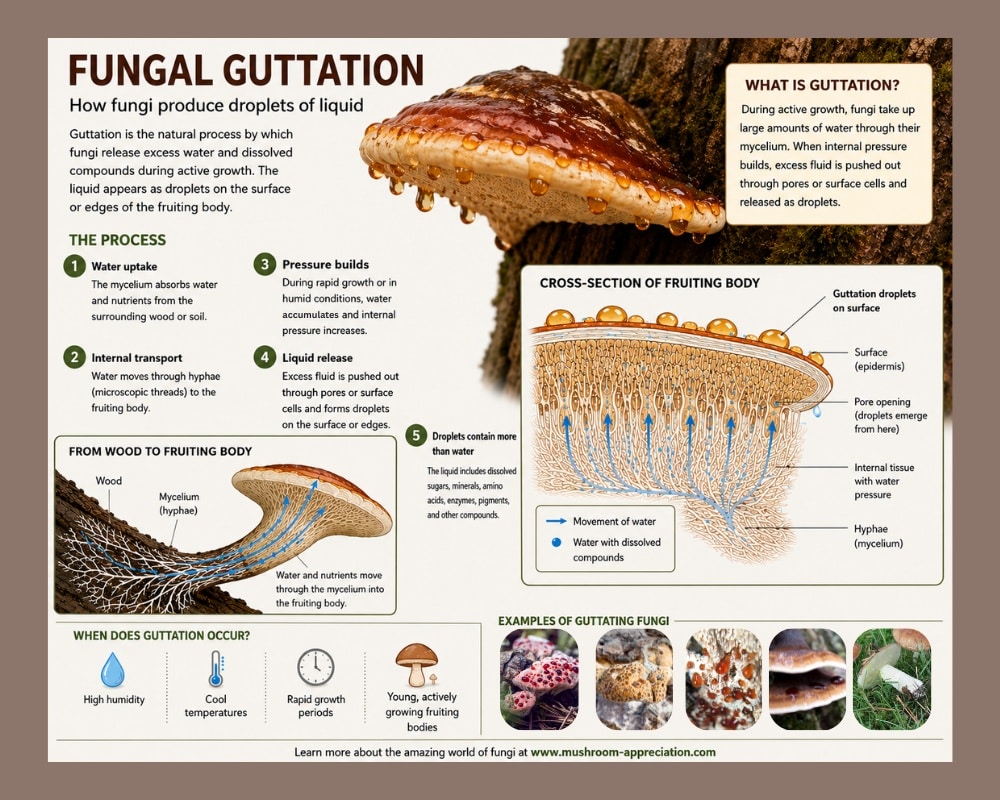
Bleeding
Beefsteak polypore (Fistulina hepatica)
The beefsteak polypore grows on the wood of oak and chestnut. The fruit body looks like a slab of raw meat or a thick tongue. It has pinkish-red flesh when it is young, but it darkens to reddish-brown with age. The soft flesh is full of a dull red juice, and when you cut it, it bleeds across the cutting board like a real steak. It is edible when cooked and has a sour, acidic taste.
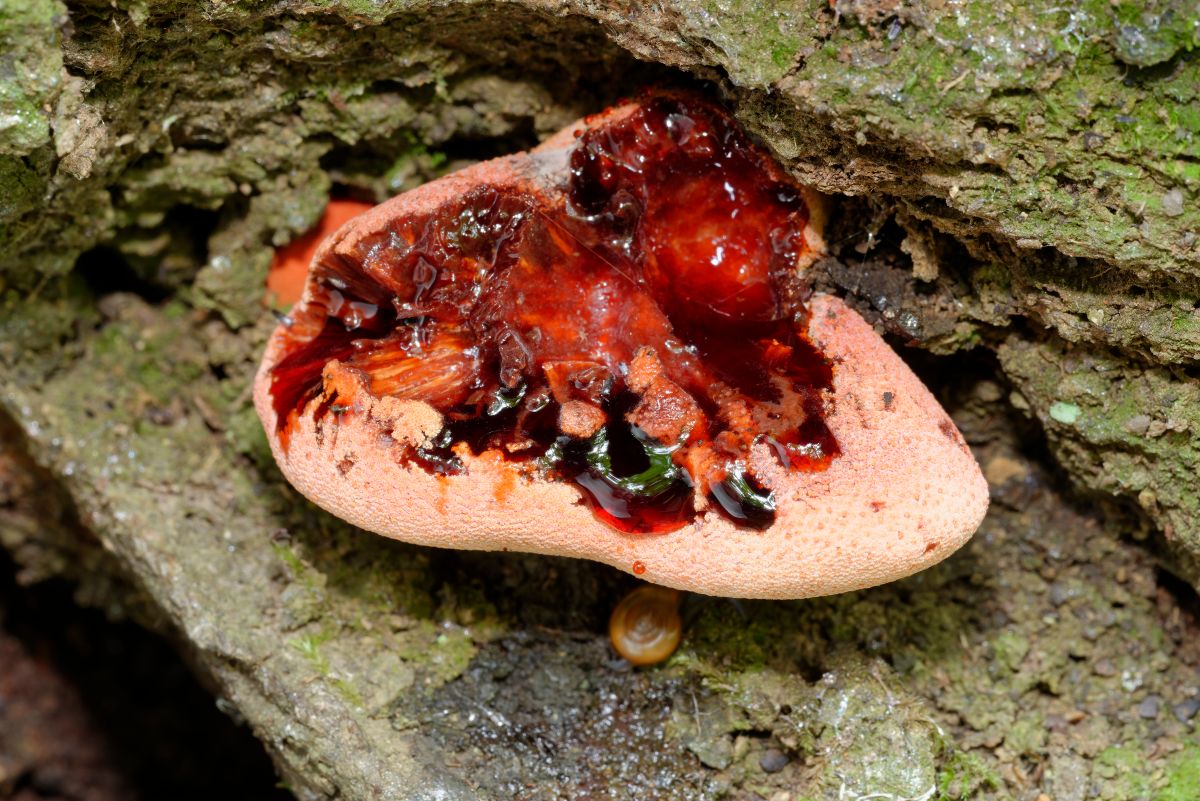
Bleeding conifer crust (Stereum sanguinolentum)
The bleeding conifer crust forms a thin, leathery skin on dead conifer wood, on fallen branches, logs, and stumps, and it lives wherever conifers grow across North America and beyond. The crust is beige to brown with a paler edge and grows flat against the wood, sometimes curling into a small shelf. A scratch or cut on a fresh crust makes it bleed a red juice or bruise red on the spot, which is where the bleeding name comes from. It also causes a red rot in the wood it is growing on.
The red comes out of fresh tissue when the crust is damaged, so it shows up only on young, living growth. The name sanguinolentum means bloody. The crust is tough and leathery and has no food value.
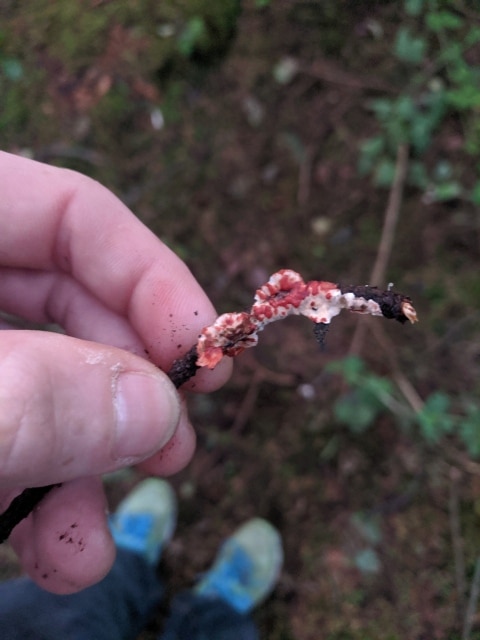
Bleeding oak crust (Stereum gausapatum)
The bleeding oak crust forms thin, leathery patches and small overlapping shelves on dead oak wood, on fallen branches, logs, and stumps, across North America. The cap is downy and has brown, orange, and gray bands with pale edges. The smooth underside is brown. A cut or scratch on fresh, growing crust turns dark red on the spot, and it can exude red droplets. It grows almost only on oak and rots the heartwood. The crust is tough, leathery, and not edible.
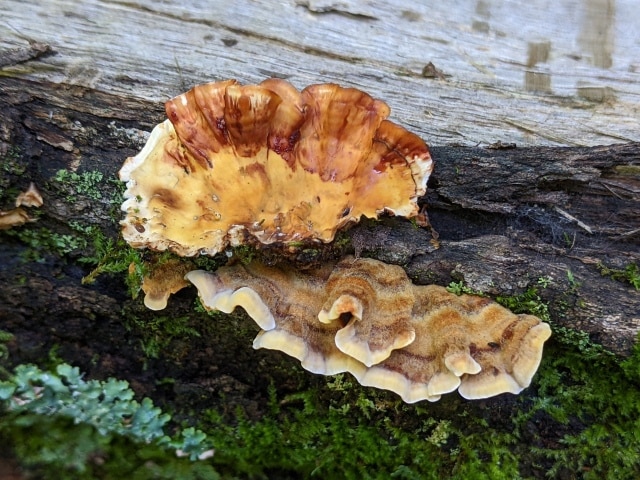
Latex
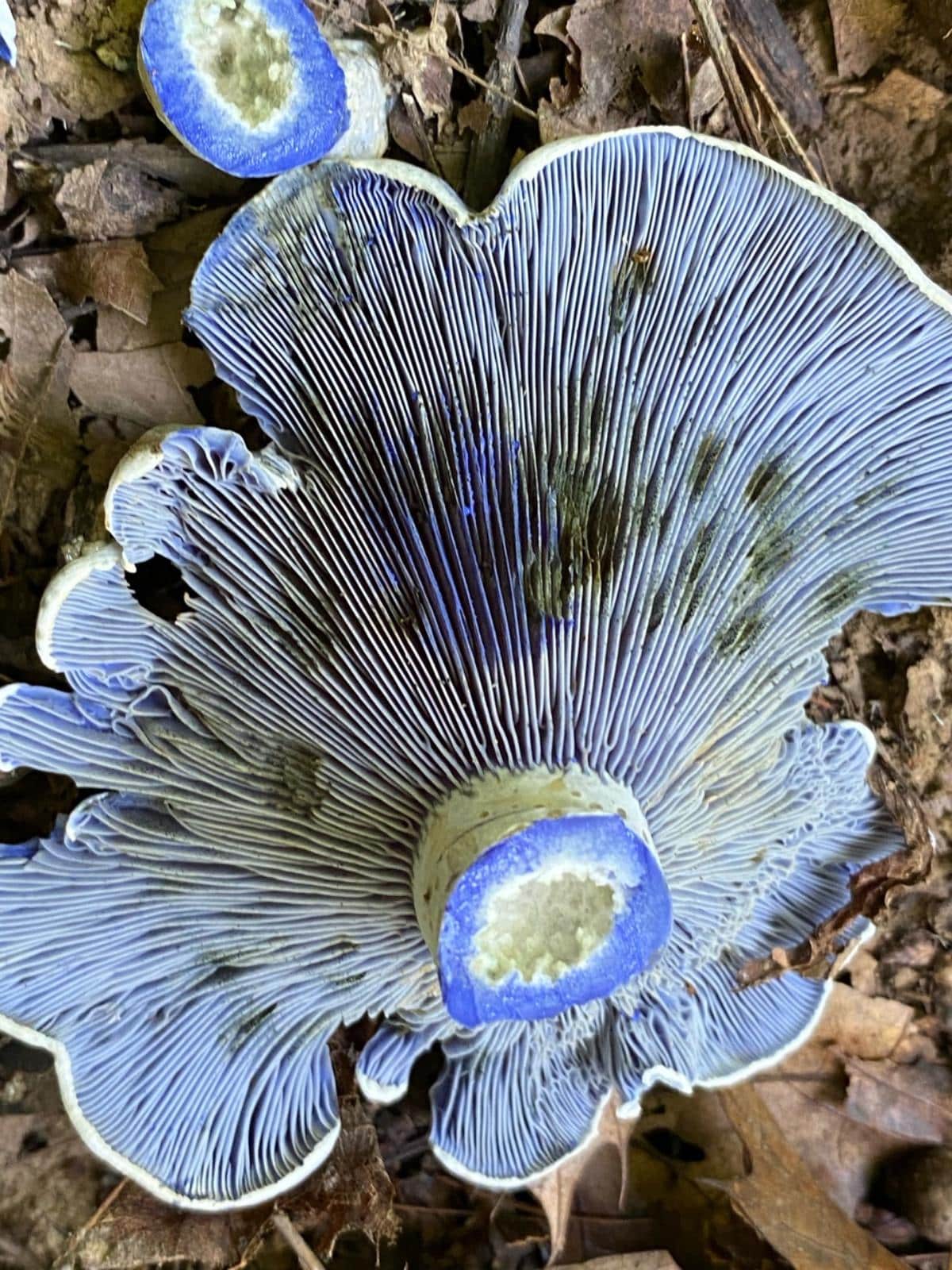
Indigo milk cap (Lactarius indigo)
The indigo milk cap grows on the ground in both hardwood and conifer woods. Its cap is a deep indigo blue when it is young and fresh, but it fades to silvery blue-gray with age. When the flesh is cut, it leaks a blue latex that slowly turns green in the air. The blue milky substance will stain your hands and anything and everything it touches, so be prepared. It is a good edible species, and the blue cap and blue milk are very unique.
Bleeding milk cap (Lactarius rubrilacteus)
The bleeding milk cap grows under Douglas fir in western North America. The cap is orange with darker orange rings, and the mushroom often turns green when it is handled. When the flesh or gills are cut, they leak a dark red, wine-colored latex that slowly stains the rest of the mushroom. It is a choice edible, and the latex turns purple when cooked.
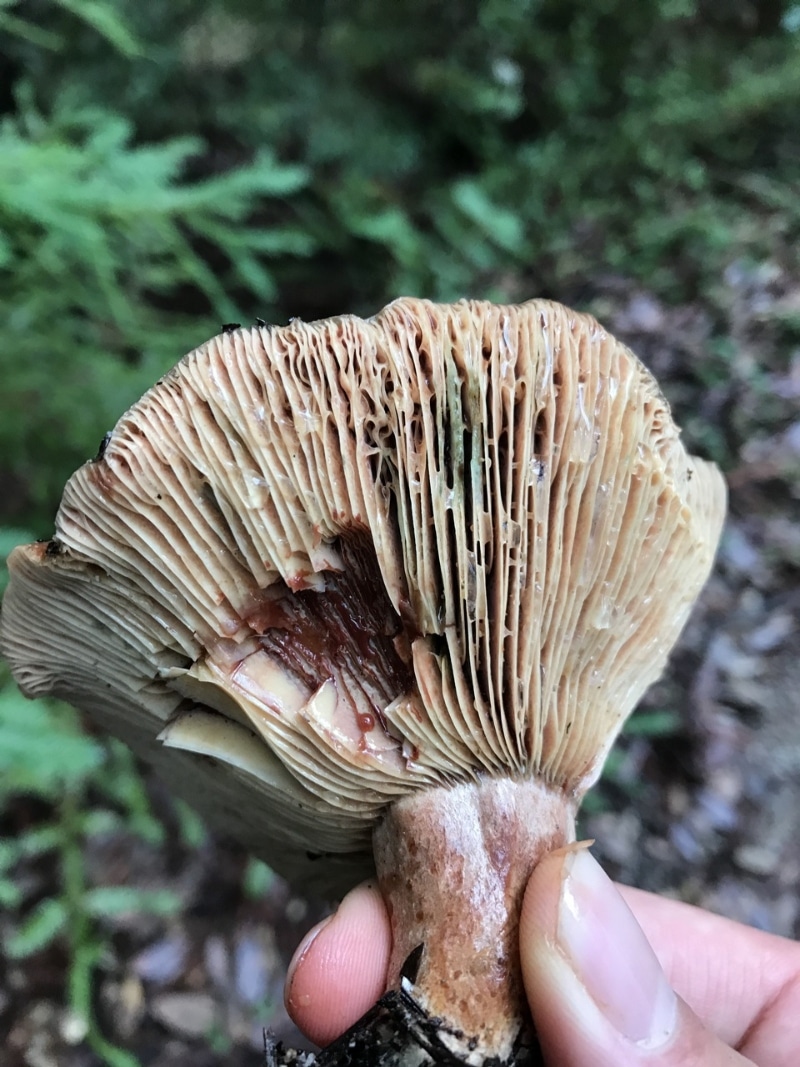
Lactarius rubrilacteus by Jason Chen on Mushroom Observer
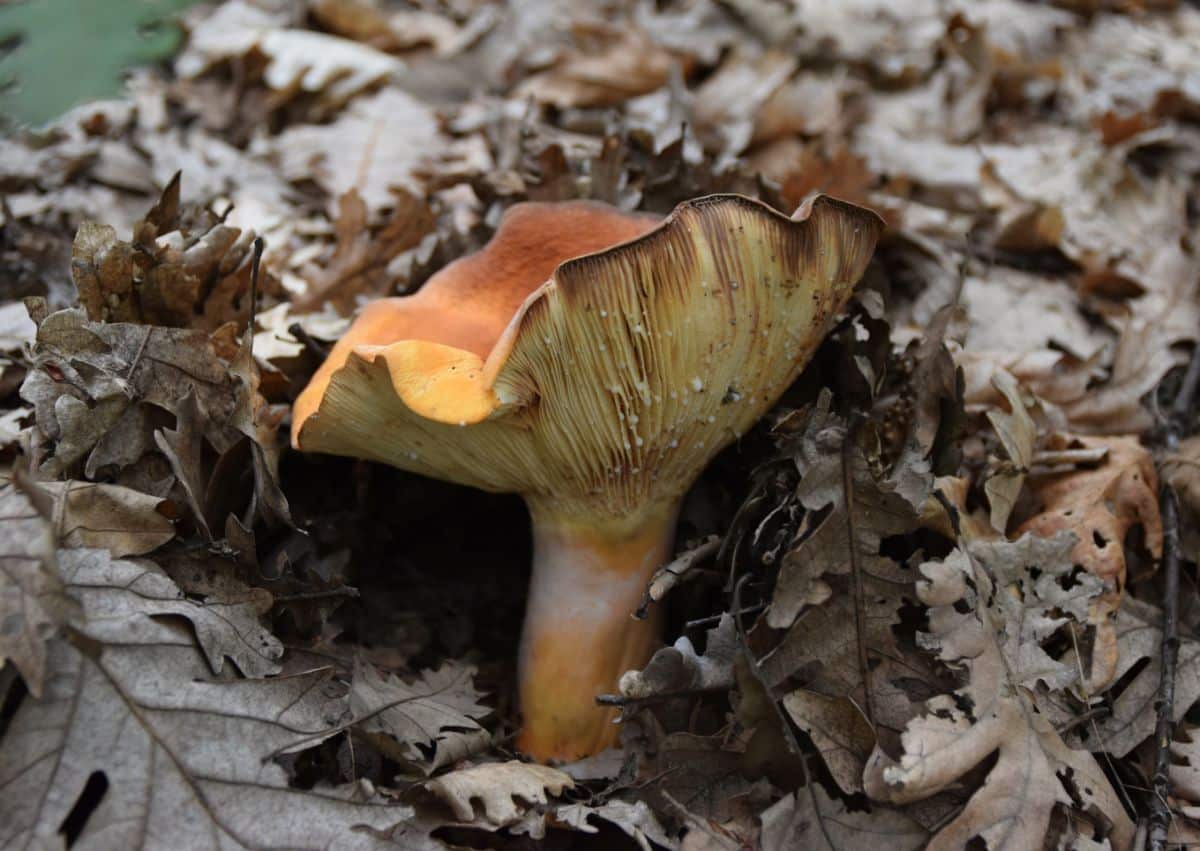
Weeping milk cap (Lactifluus volemus)
The weeping milk cap grows on the ground near hardwoods and conifers, especially oaks. The cap is apricot to tawny brown, about 2 to 4 inches wide, and has a fishy smell. Even just the smallest cut in this mushroom causes it to leak so much white latex that it runs off in drops, which is how it earned the weeping name. The latex stains everything it touches brown. This is a great edible mushroom, and cooking will reduce the fishy smell.
This species makes more latex than most of its relatives. The latex even contains a natural rubber, one that is chemically similar to what rubber trees make in their sap. Scientists have studied it as a possible rubber source, but the mushroom makes far too little to be worth using.
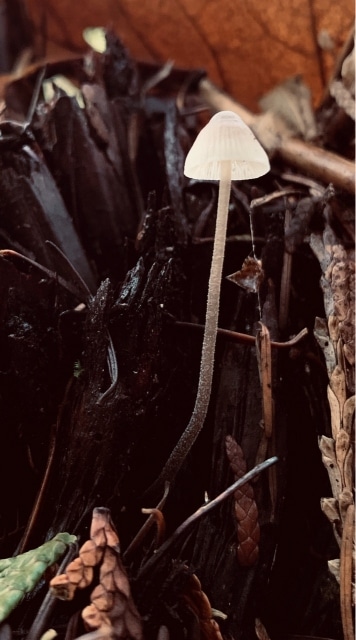
Milking bonnet (Mycena galopus)
The milking bonnet grows in leaf litter, and the cap is gray-brown, bell-shaped, and has a slender stem that is pale at the top and nearly black at its hairy base. When the stem is snapped, it leaks white latex, like a drop of milk. The scientific name galopus means milk foot.
The white latex has compounds that guard the wound against molds and yeasts. The mushroom is inedible but not poisonous.
Bleeding Fairy Helmet (Mycena haematopus)
The bleeding fairy helmet grows in small clusters on rotting hardwood logs and stumps. The cap is reddish to pinkish-brown with a scalloped edge, and the stem is thin and brittle. The mushroom is very small, only a little over an inch and a half wide. When the cap or stem is cut or snapped, it leaks a dark red latex that looks like blood. The scientific name comes from Greek words for blood and foot. This is not an edible species.
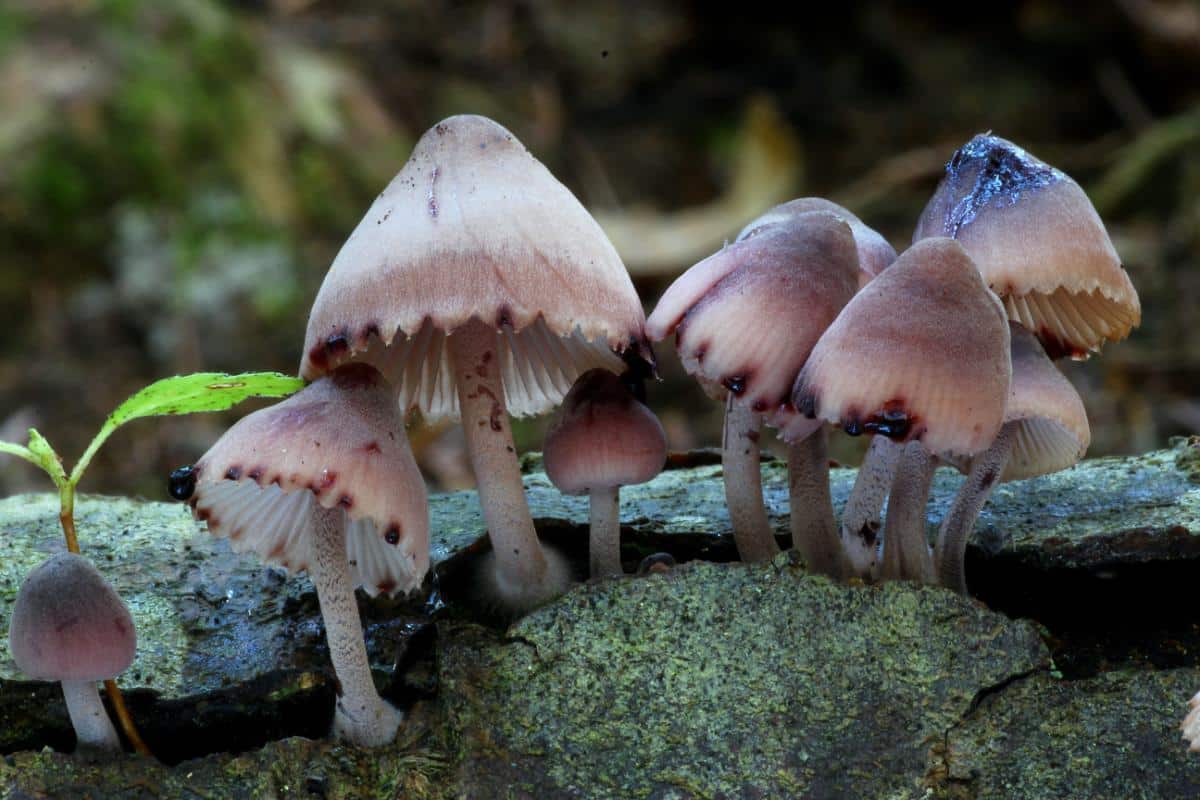
Bleeding Bonnet (Mycena sanguinolenta)
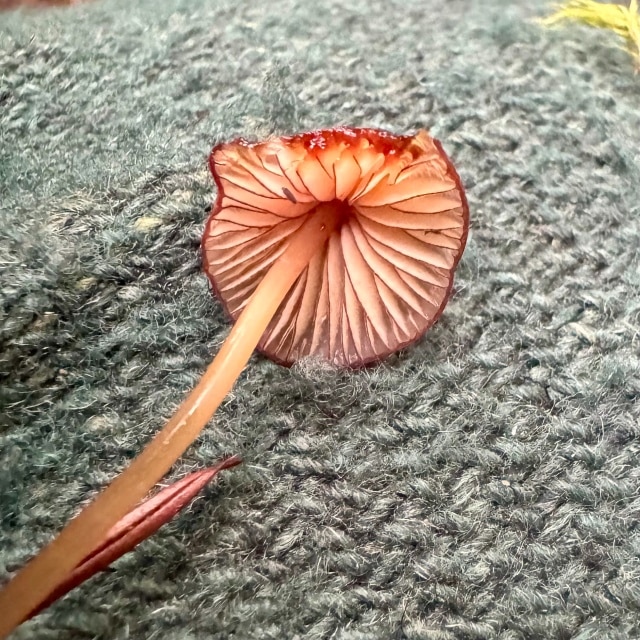
The bleeding bonnet is a smaller cousin to the bleeding fairy helmet, and it is also tiny. It grows on conifer needles and leaf litter. The cap is reddish-brown to reddish-purple, and the stem is slender. When the mushroom is cut or broken, a dark reddish-purple latex sap leaks out.
The scientific name sanguinolenta means bloody. Its edibility is unknown, and it is too unsubstantial to be worth eating.
Guttation
Devil’s Tooth aka Bleeding Tooth Fungus (Hydnellum peckii)
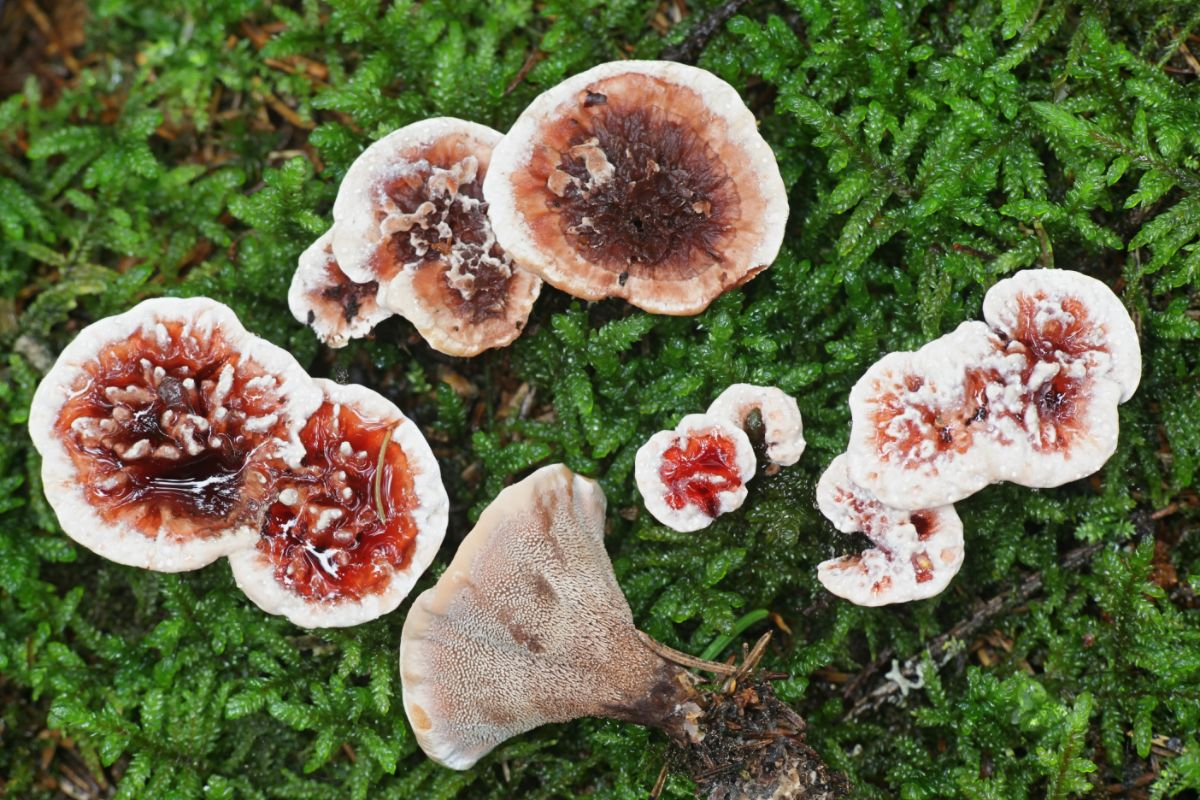
The bleeding tooth fungus grows on the ground under conifers, and it is most common in the Pacific Northwest. When the mushroom is young, the moist caps ooze thick red droplets, often in large amounts. These blood-like looking droplets cover the pale pink to white velvety surface of the mushroom and give it a wholly eerie appearance.
This mushroom is often said to be “bleeding” because the guttation is red, but this is not a bleeding fungus. It is exuding droplets of water when it is oversaturated. They just happen to be red. It does not release liquid when it is cut, like the Mycena species.
As it ages, the whole mushroom turns dull brown and stops bleeding. The bright red droplets contain a natural pigment called atromentin. In laboratory studies, scientists found that atromentin can slow blood clotting in a way similar to the medicine heparin, which is used to help prevent blood clots. This is an inedible mushroom, with a sharp, peppery taste.
Mealy Tooth (Hydnellum ferrugineum)
The mealy tooth is a close relative of the Devil’s Tooth that grows on the ground in conifer forests. The young fruit bodies have a velvety white to pink surface, and they ooze blood-red drops into the dips and hollows on top. With age, they turn dark reddish-brown and become hard to tell apart from other tooth fungi.
The red drops form the same way as in the bleeding tooth fungus. Like its relatives, it is too tough and woody to eat.
Oak Bracket (Pseudoinonotus dryadeus)
The oak bracket grows as a thick shelf low on the trunks and roots of oak trees. When it is young, the cushion-shaped bracket weeps amber-to-orange-brown droplets from small pores on its upper surface. It does this because it grows so rapidly. Oak brackets can grow more than a foot across, and they develop an unpleasant smell as they age. The fungus rots the roots and base of the tree from the inside, which is very damaging for the tree.
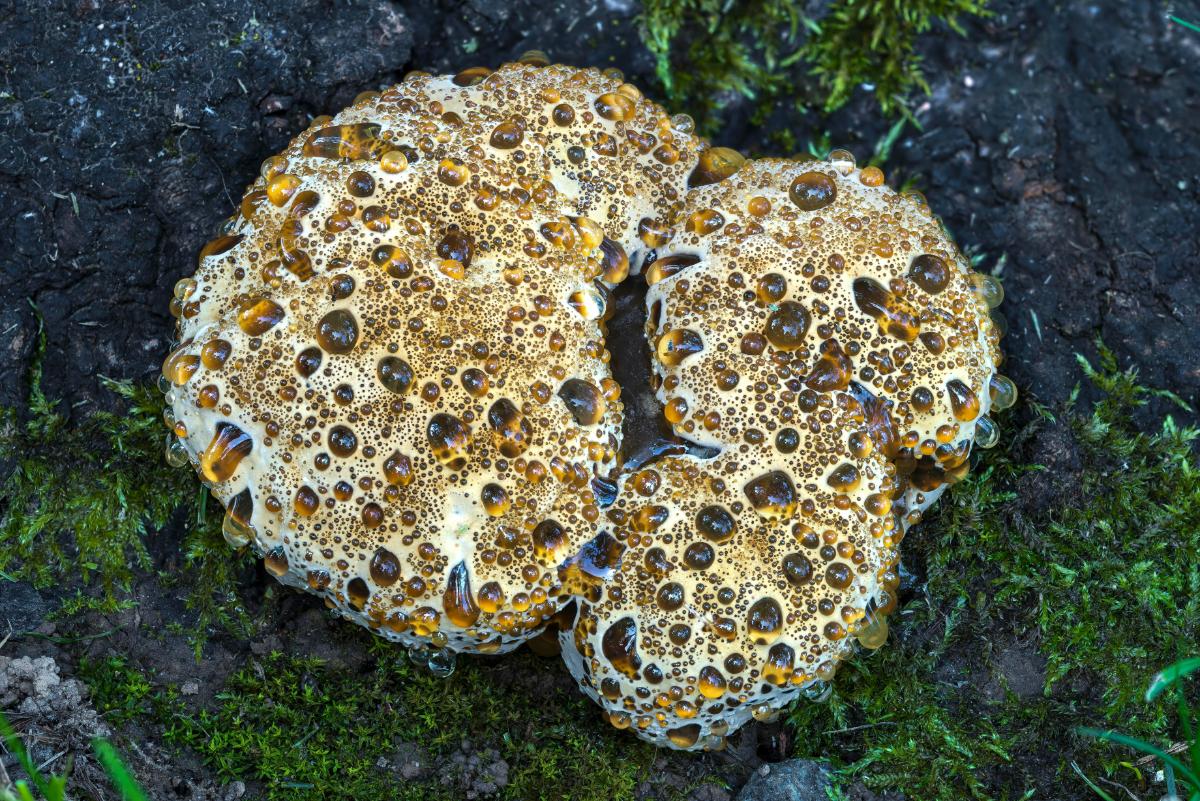
Shaggy Bracket (Inonotus hispidus)
The shaggy bracket grows on living broadleaf trees, especially ash and apple. When it is young, it is a soft, juicy, orange-red shelf with a coarse, hairy top, and it can grow up to a foot wide. The young bracket weeps clear, pale yellow, amber, or slightly reddish droplets. The fungus then darkens to brown and finally to black, and is a ragged crust without any droplets by late fall. This fungus causes a white rot in trees, which can cause their limbs to drop in a storm.
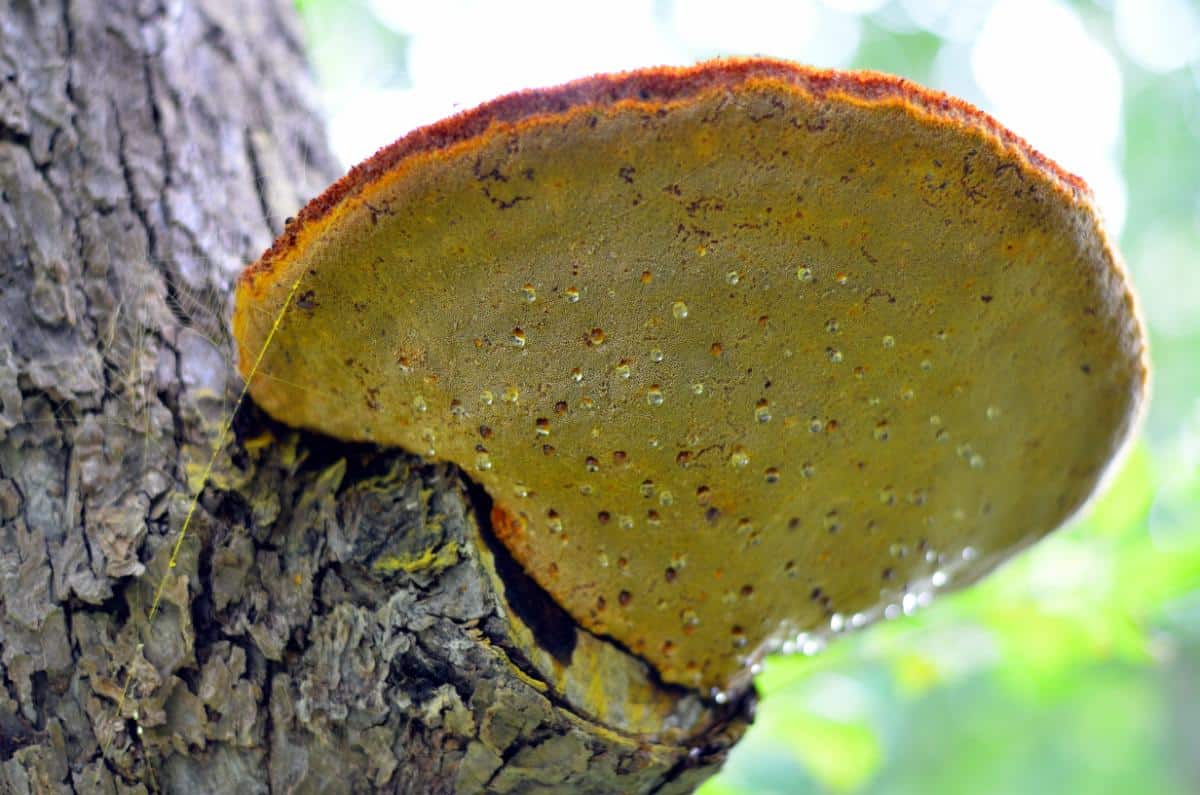
Resinous Polypore (Ischnoderma resinosum)
The resinous polypore is reddish, thick, and soft when it is young. It grows on hardwood trees, often in large groupings. When it is actively growing, it produces red and amber liquid that can really look like it’s bleeding. The guttation often appears on the cap surface and edges of the bracket. The droplets are most noticeable in cool, humid weather and can disappear as the fungus matures and hardens.
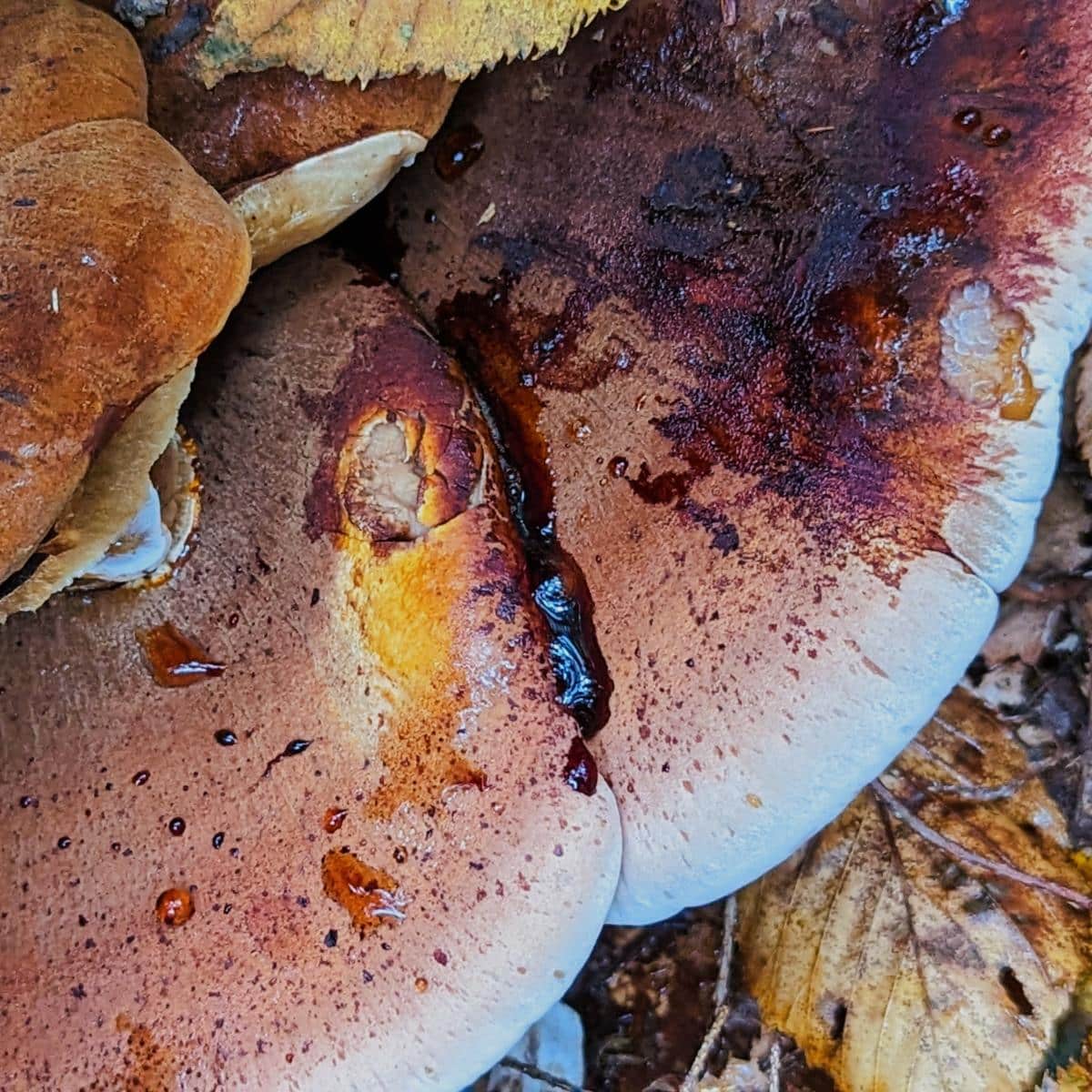
Hemlock Reishi (Ganoderma tsugae)
The young fruiting bodies of this reishi species are maroon, golden, and white and jut out of the side of hemlock trees. When it is humid, they often exude small but resin-like droplets, especially on their underside. This is where their tissue is actively expanding and growing. As the reishi matures into a harder conk, the dripping becomes much less frequent or nonexistent.
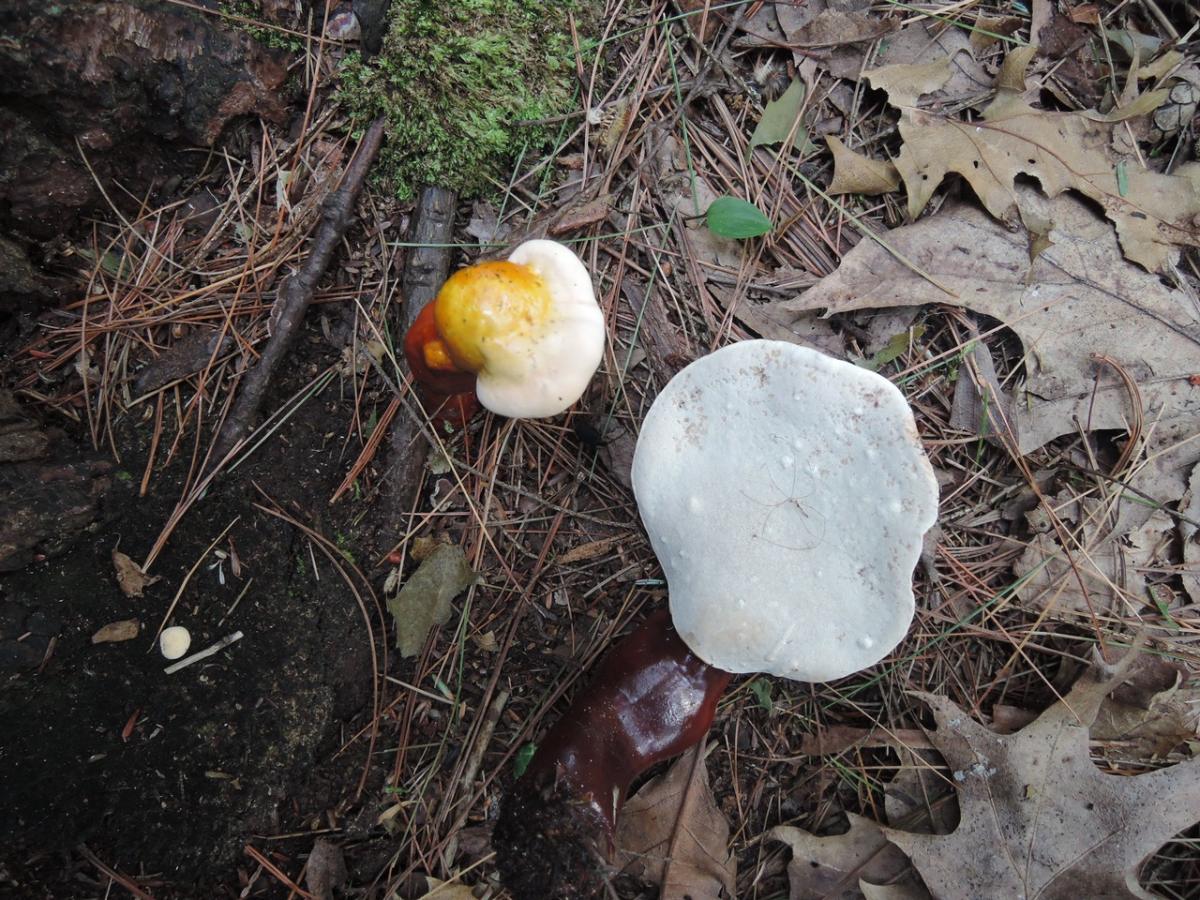
Chicken of the Woods (Laetiporus sulphureus)
The highly sought-after, top edible mushroom, chicken of the woods, is a bright orange and yellow shelf fungus that grows in stacked clusters on oak and other hardwoods. The young, fresh brackets produce clear guttation droplets along their edges, and the soft flesh oozes a yellow juice when squeezed. Once the bracket matures and becomes firmer, it stops exuding droplets.
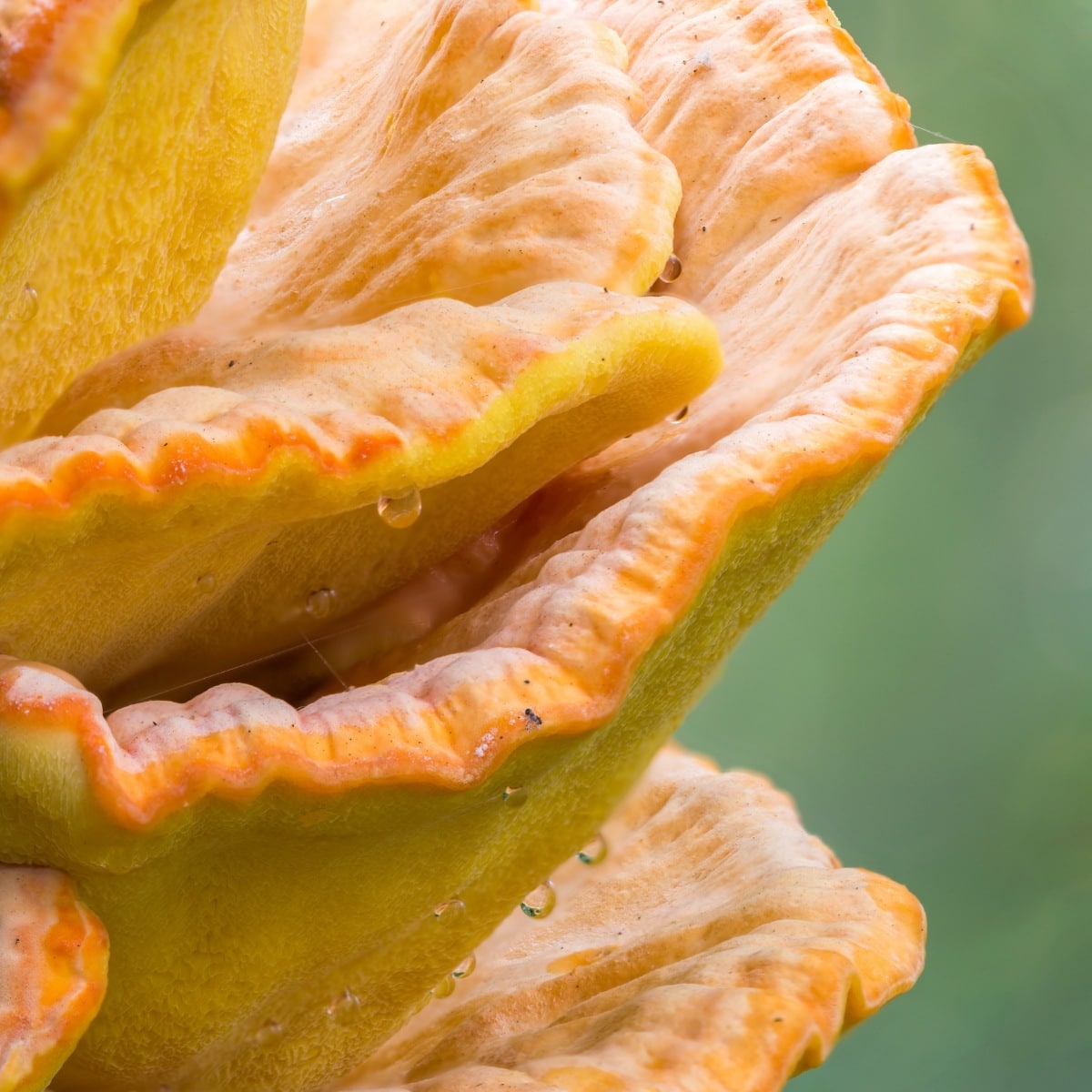
Dryad’s Saddle (Cerioporus squamosus)
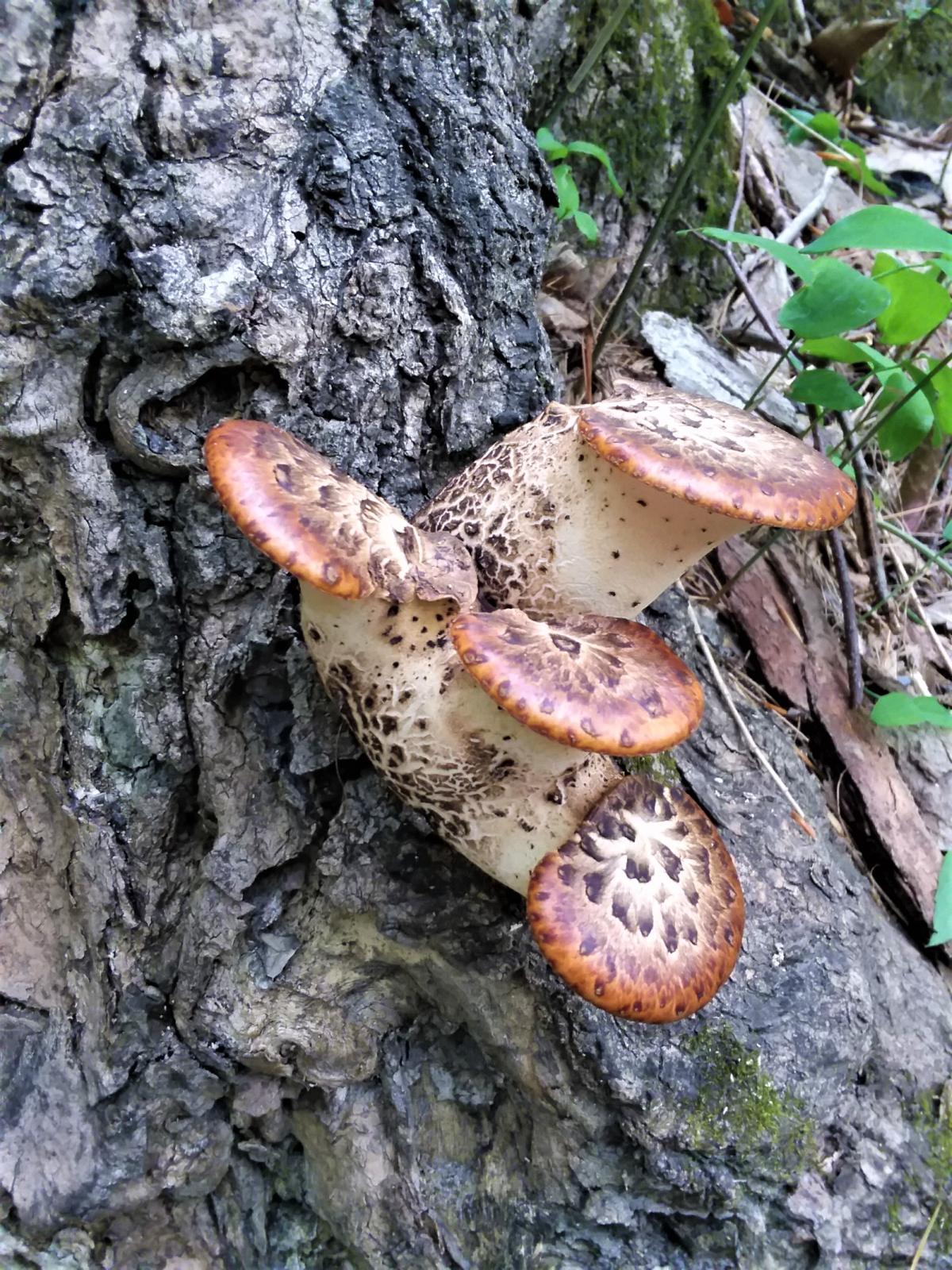
The edible dryad’s saddle is a massive polypore with markings that look like someone painted feathers on it. The young brackets might have clear guttation droplets on their underside, especially when it is damp out. The droplets can collect in small clusters and give the underside a slightly wet or varnished appearance. As the mushroom expands and matures, the guttation decreases, and the surface becomes dry and more leathery.
Blushing Rosette (Abortiporus biennis)
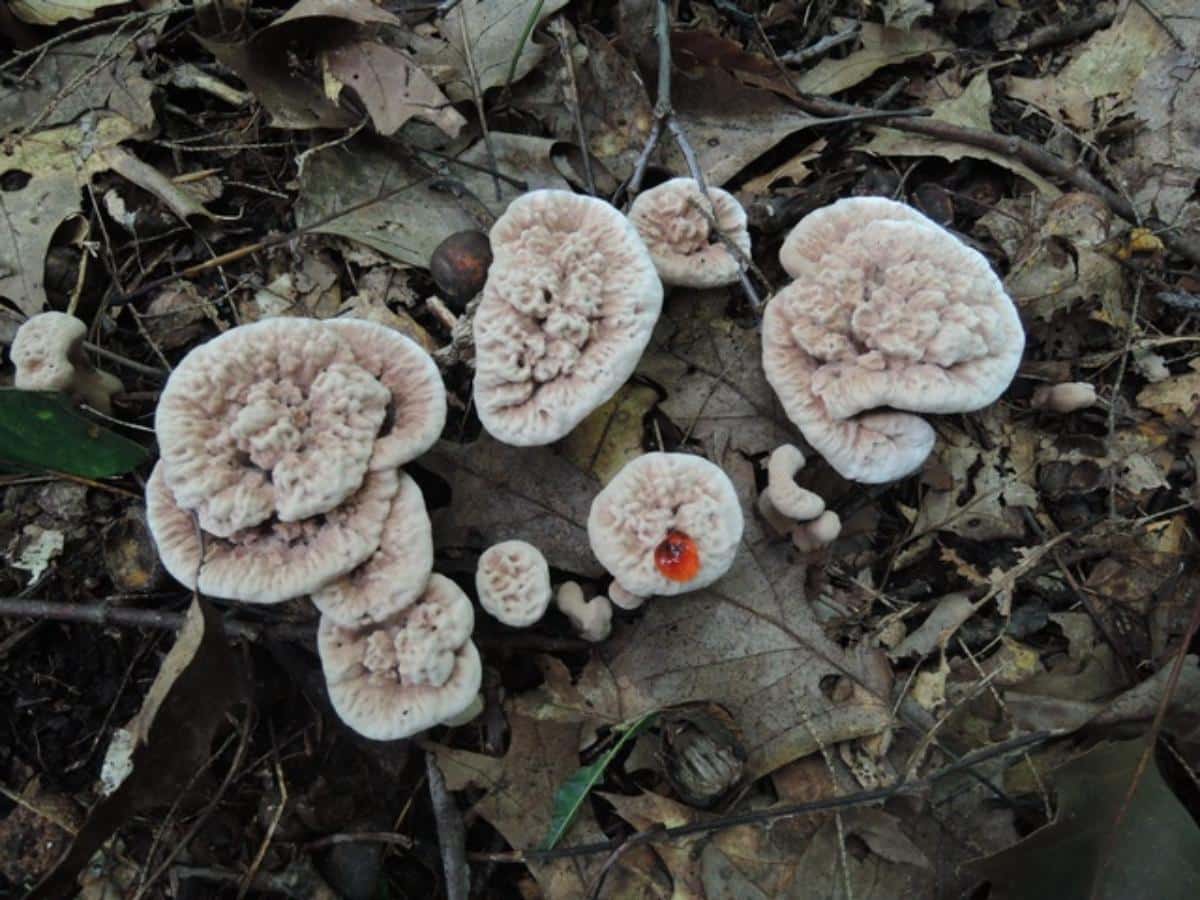
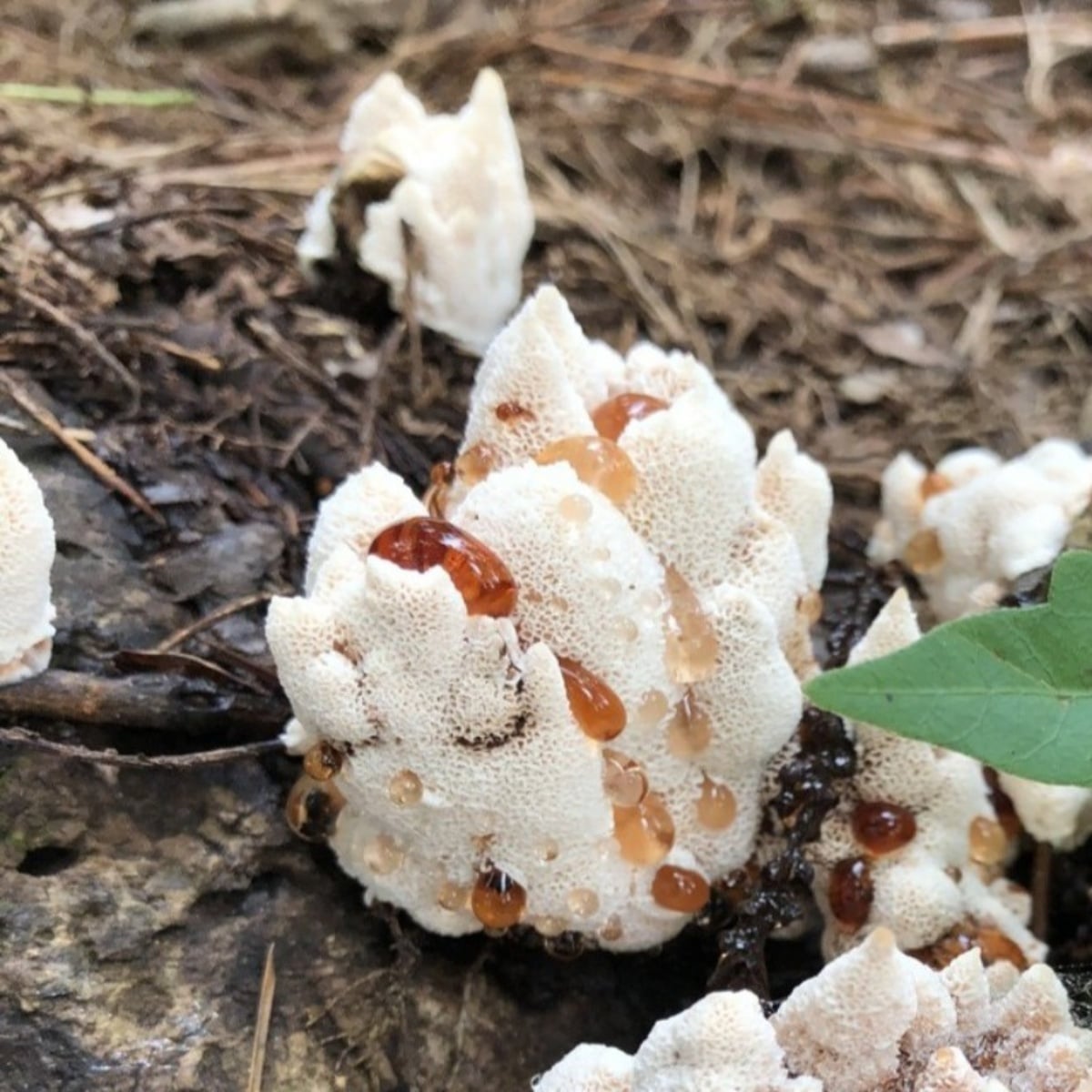
The blushing rosette grows from buried roots, stumps, and woody debris of hardwood trees, mostly under oaks. It takes two different shapes, which are very different from each other. It starts out as a small stack of overlapping reddish shelves, or a lumpy white mass covered in maze-like pores. The young fruit bodies leak red to red-brown droplets that dry into brown stains.
That second shape is called the aborted form, and it has almost no cap or stem. It looks like a lumpy, cauliflower-like mass of uneven white pores. This form will also produce the same red droplets.
Weeping bolete (Suillus granulatus)
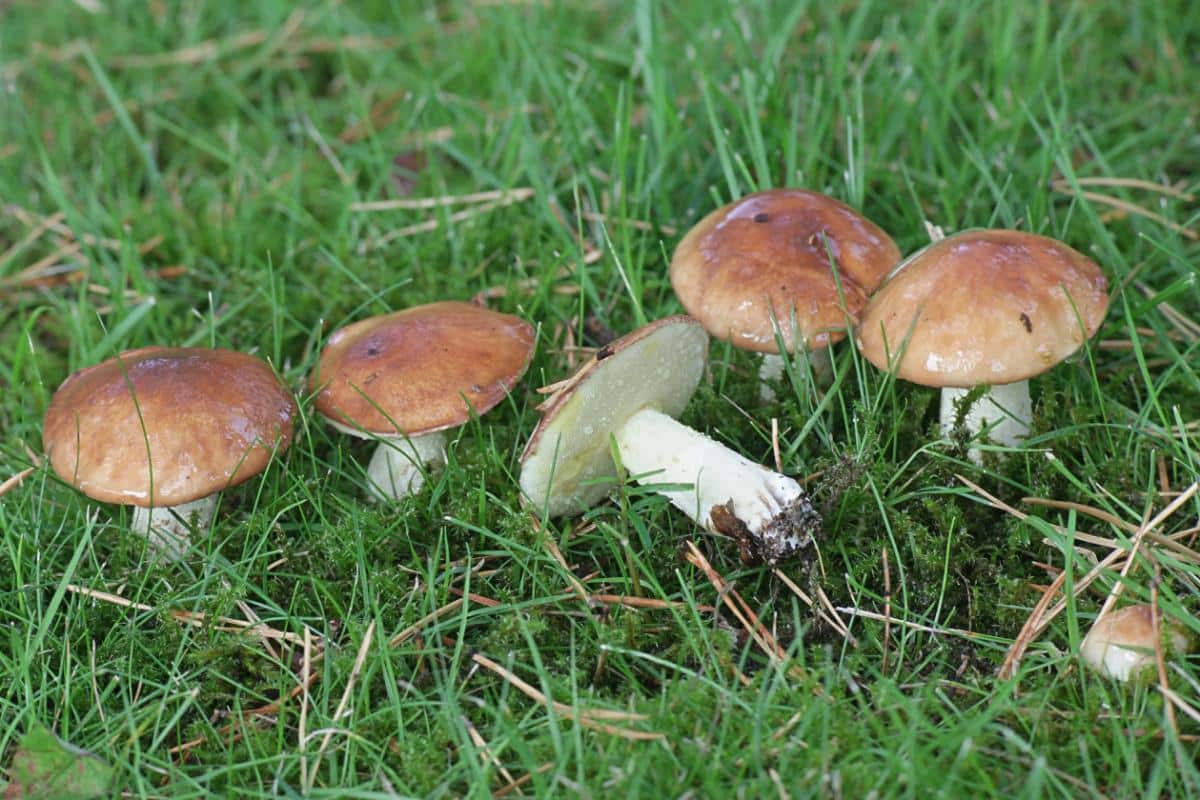
The weeping bolete grows under pines across North America. The cap is orange-brown and slimy when wet, and it has a pale yellow stem dotted with tiny brown dots. The small pale-yellow pores under the cap ooze clear or milky-looking droplets when the mushroom is young, and there is a lot of moisture in the air. It is edible once the slimy cap skin is peeled off.
Weeping widow (Lacrymaria lacrymabunda)
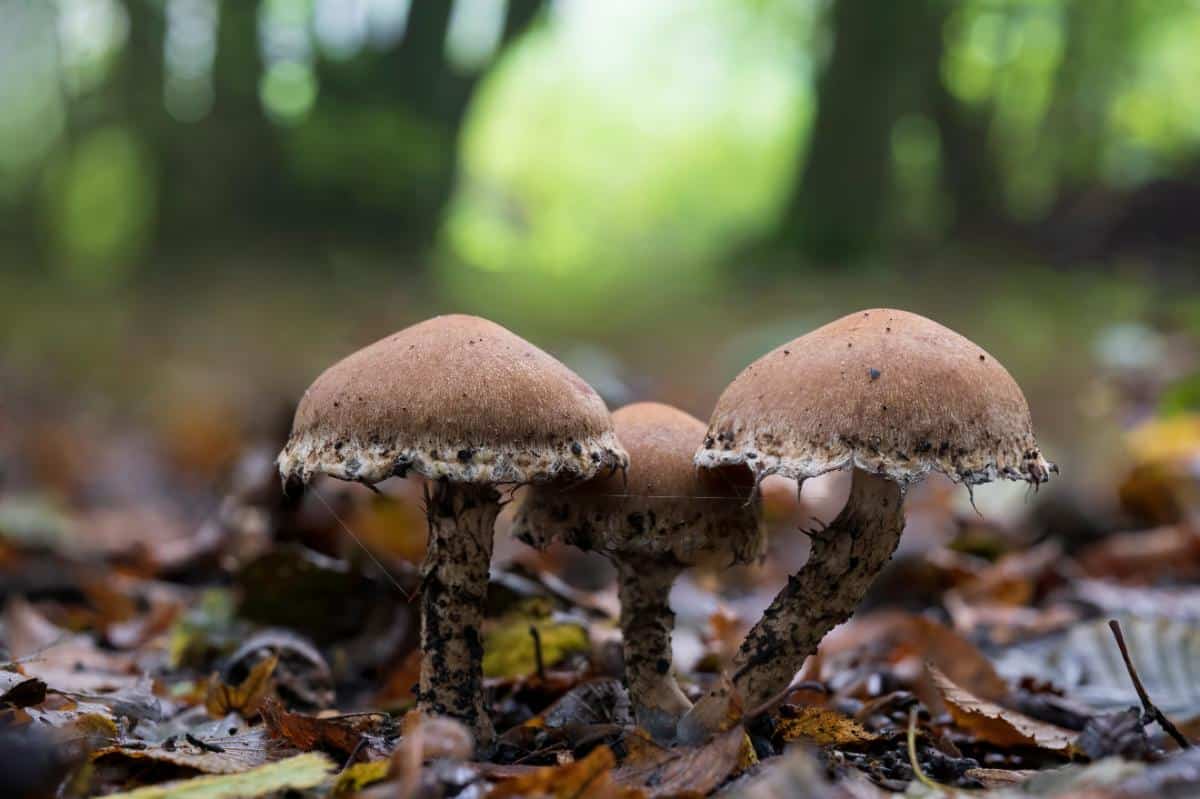
The weeping widow grows in lawns, parks, forests, and even graveyards. The cap is yellow-brown and shaggy, and the stem is the same color. When it’s damp out, the edges of the gills drip tiny water droplets that look like tears. When the spores in the gills darken, so do the droplets, and they can be black at that stage.
The genus name Lacrymaria means tear-making, and the species name lacrymabunda means full of tears.



Leave a Reply