
There are some truly smelly mushrooms out there! If you’ve never thought about smelling mushrooms, here’s some inspiration. Or maybe not, because some of these smells are quite foul. Smell is an essential part of mushroom identification, and another neat thing about fungi as a whole: they can really stink!
Some mushrooms can be found by smell before they ever come into view. The stinkhorns are the ones most people know; they reek of rotting meat, and it can be quite pungent. The smell of chanterelles is on the opposite end of the scent spectrum, sweet and fruity, and it’s often possible to find a patch of them by following that sweet scent through the woods.
The smells cover everything from rotting flesh and coal gas to maple syrup, apricot, and almond. With some species, the strong smells only become noticeable when the flesh is crushed or the stem base is cut, while some of the smelliest mushrooms don’t need any help at all being pungent.
Jump to:
- 1. Stinkhorns (Phallus and Mutinus species): Rotting Meat
- 2. Sulfur Knight (Tricholoma sulphureum): Coal Gas
- 3. Stinking Dapperling (Lepiota cristata): Burnt Rubber
- 4. Stinking Russula(Russula foetens): Rancid Oil
- 5. Yellow Stainer (Agaricus xanthodermus): Ink and Phenol
- 6. Fishy Milkcap (Lactifluus volemus): Fish
- 7. Shrimp Russula (Russula xerampelina): Shellfish
- 8. Poison Pie (Hebeloma crustuliniforme): Radish
- 9. Sweetbread Mushroom (Clitopilus prunulus): Flour and Fresh Dough
- 10. Curry Milkcap (Lactarius camphoratus): Curry
- 11. Candy Cap (Lactarius rubidus): Maple Syrup
- 12. Geranium Fibercap (Inocybe griseolilacina): Geranium Leaves
- 13. Coconut Milkcap (Lactarius glyciosmus): Coconut
- 14. Aniseed Funnel (Clitocybe odora): Anise and Licorice
- 15. Oyster Mushroom (Pleurotus ostreatus): Anise
- 16. Garlic Parachute (Mycetinis scorodonius): Garlic
- 17. American Matsutake (Tricholoma species): Spicy Cinnamon and Dirty Socks
- 18. The Prince (Agaricus augustus): Almond and Marzipan
- 19. Golden Chanterelle (Cantharellus species): Apricot
- 20. Cucumber Cap (Macrocystidia cucumis): Cucumber and Fish
- Honorable Mentions:
1. Stinkhorns (Phallus and Mutinus species): Rotting Meat
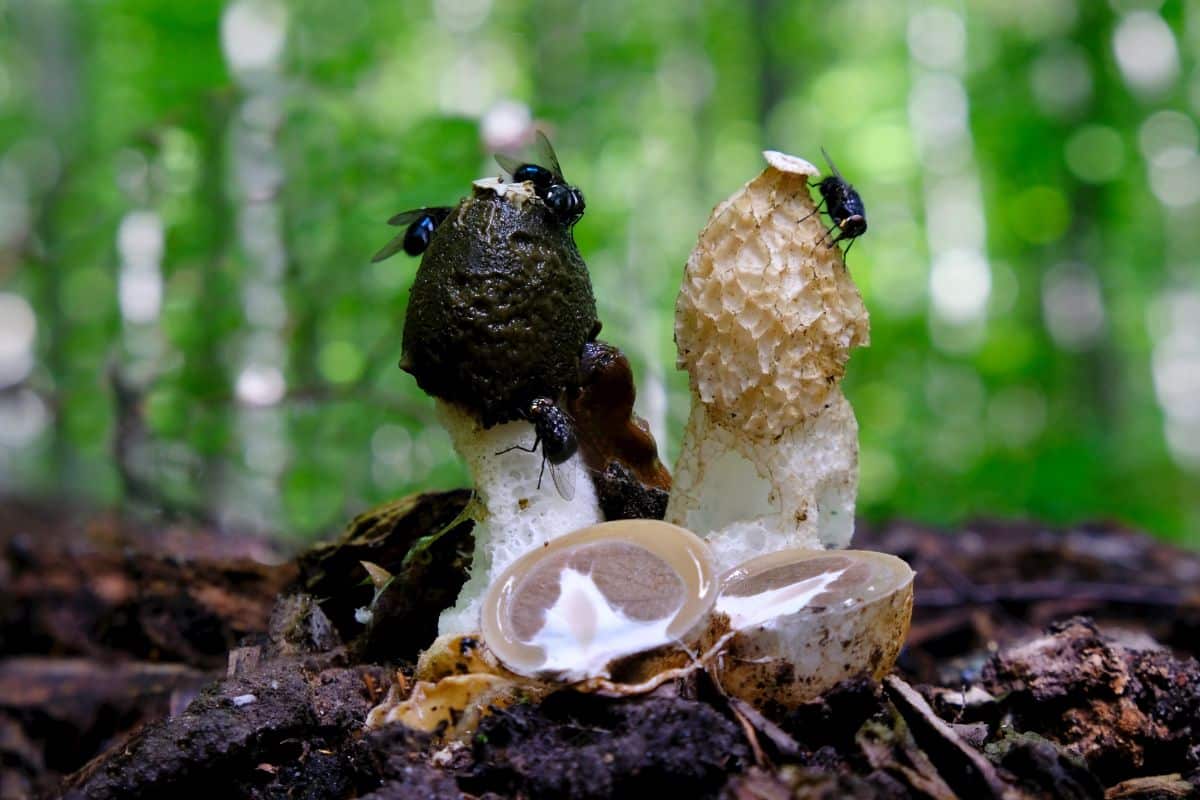
The stinkhorns are one of the top smelliest mushrooms. They smell of rotting meat or dung, a stench strong enough to find them by nose before you even see them. The smell comes from a slimy mass of spores called a gleba that coats the upper part of the fruiting body. The fungus draws flies to it, and the flies then carry the mushroom’s spores off on their feet. All stinkhorns start as a half-buried white ‘egg’ that splits open as the stalk shoots up. This happens incredibly fast, sometimes within an hour. Almost all the mushrooms in this group have the same rotting meat smell.
There are approximately 77 species of stinkhorns spread around the world. The highest distribution and variety are in the tropics, but there are quite a few that fruit in North America, including the Common Stinkhorn, Elegant Stinkhorn, and the non-native Octopus Stinkhorn.
2. Sulfur Knight (Tricholoma sulphureum): Coal Gas
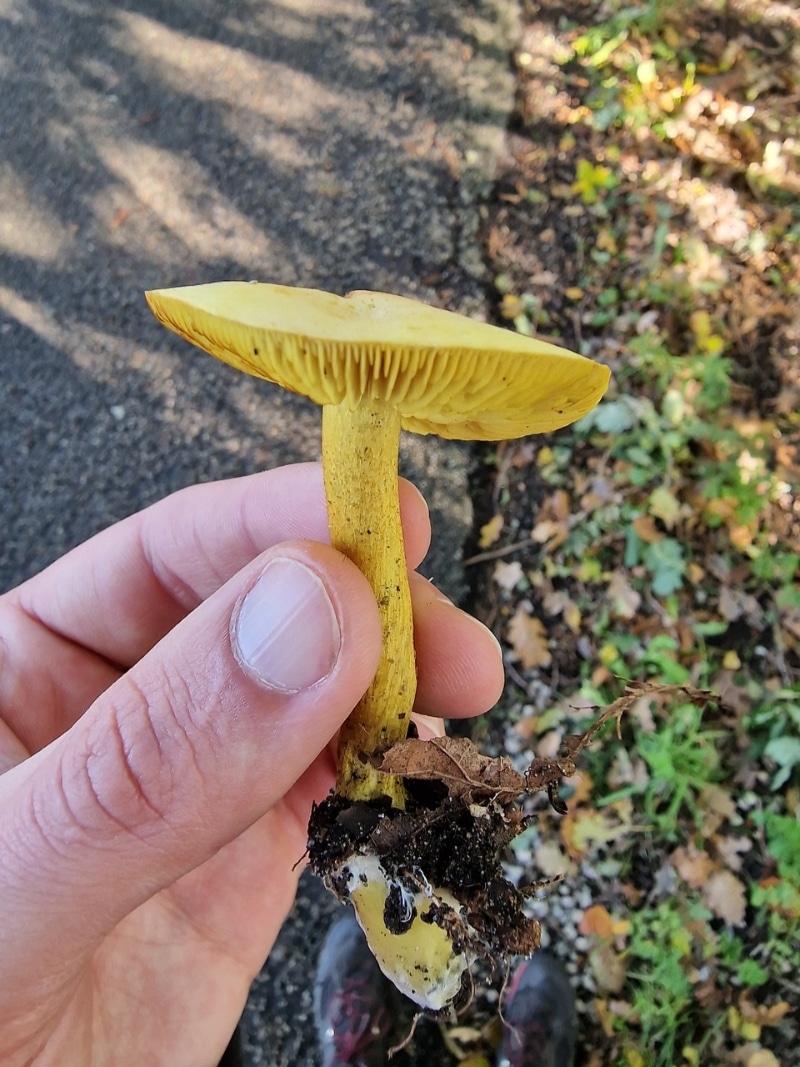
The sulfur knight is also called the gas works mushroom because it smells very strongly of coal gas. The whole mushroom is bright sulfur yellow, from the cap to the gills to the stem, and the smell alone differentiates it from other yellow mushrooms, and it is strong enough that no taste test is needed. The odor has been linked to a compound called skatole, which is also what gives human and animal poop its smell.
Sulfur knights grow with broadleaf trees, mainly oak and beech, and sometimes conifers across Britain, Ireland, and Europe, and they are also recorded in North America. This smelly mushroom is inedible and considered mildly poisonous because it can cause stomach upset if eaten.
3. Stinking Dapperling (Lepiota cristata): Burnt Rubber
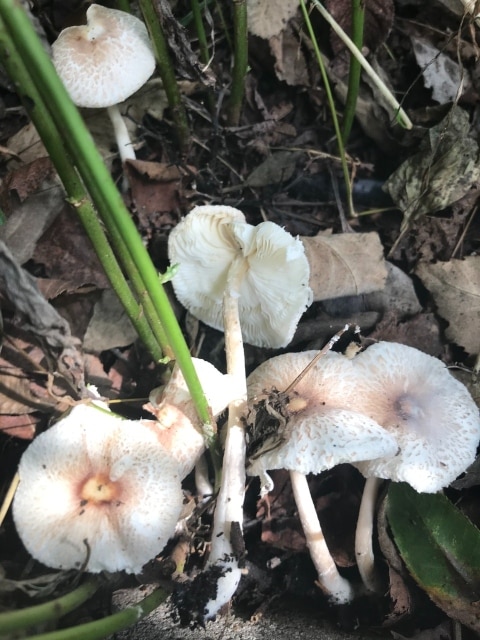
The stinking dapperling smells of burnt rubber or coal gas, and it is intense. But the smell helps differentiate it from other dapperling mushrooms. It is small, with a white cap covered in red-brown scales and white gills.
It grows in mixed woods and damp, shady gardens and grows across North America, Britain, Ireland, and Europe. This smelly mushroom is considered toxic and may contain compounds similar to those in deadly Lepiota species.
4. Stinking Russula(Russula foetens): Rancid Oil
The stinking brittlegill has a smell that morphs from awful to absolutely disgusting as it ages; it is one of the smelliest mushrooms! It starts out smelling rancid and oily, and then it becomes more like rotting fish. The stinking russula has a honey-brown cap and brittle, cream-colored gills, and fruits in large groups under both broadleaf and conifer trees.
It is found in North America, more often in the east, and is widespread across Britain and Europe. It has a close relative, Russula grata, which looks very similar but smells like bitter almonds instead of rancid oil. The smell is the quickest way to tell the two apart. The stinking brittlegill is considered inedible.
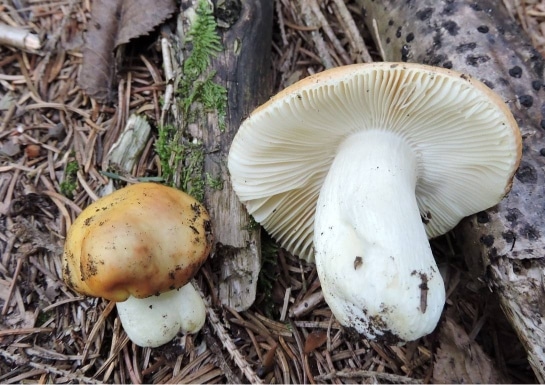
5. Yellow Stainer (Agaricus xanthodermus): Ink and Phenol
The yellow stainer has a terrible smell that gets worse when it is cooked. This is great, actually, because sometimes it gets confused with an edible species, but once that smell becomes apparent, it’s a sign this is not an edible mushroom. Yellow stainers smell like ink, phenol, or iodine, and the smell is strongest at the base of the stem.
It is called the yellow stainer because the flesh turns bright chrome yellow when the stem base is cut or scratched. The cap is white, and there is a ring on the stem. The yellow stainer grows in lawns and gardens and is common across North America, Britain, Ireland, and Europe. This smelly mushroom is the cause of many poisonings because it looks so much like edible meadow or horse mushrooms. It can cause cramps, nausea, vomiting, sweating, and diarrhea if eaten.
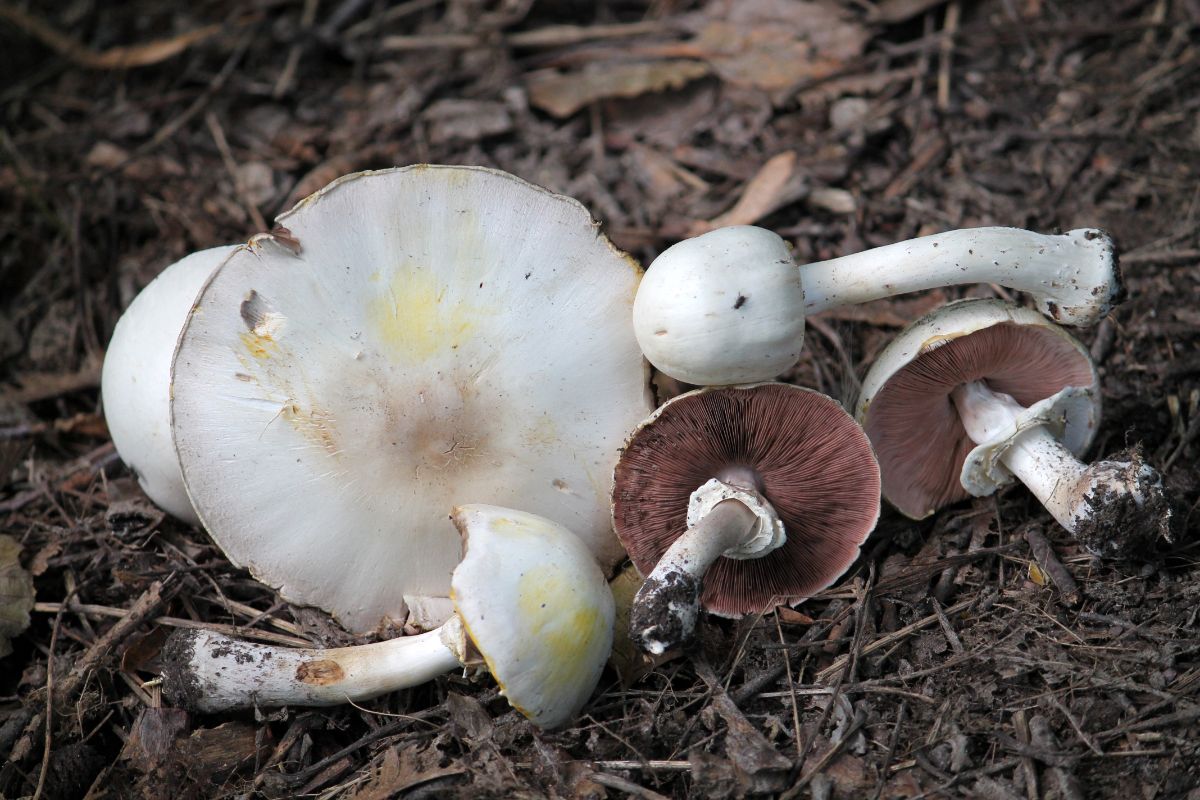
6. Fishy Milkcap (Lactifluus volemus): Fish
The fishy milkcap, also called the weeping milkcap, is a choice edible mushroom with a very strong odor. It smells strongly of old fish, and the smell gets stronger when the mushroom is handled or as it ages. Thankfully, the fishy smell mostly goes away with cooking.
The cap of this smelly mushroom is orange-brown and velvety, and it has crowded pale-colored gills. When the gills are cut, they bleed a heavy white latex that stains everything brown. It grows scattered in deciduous woods, mostly under oak, from summer into early fall. It is widespread in the eastern United States.
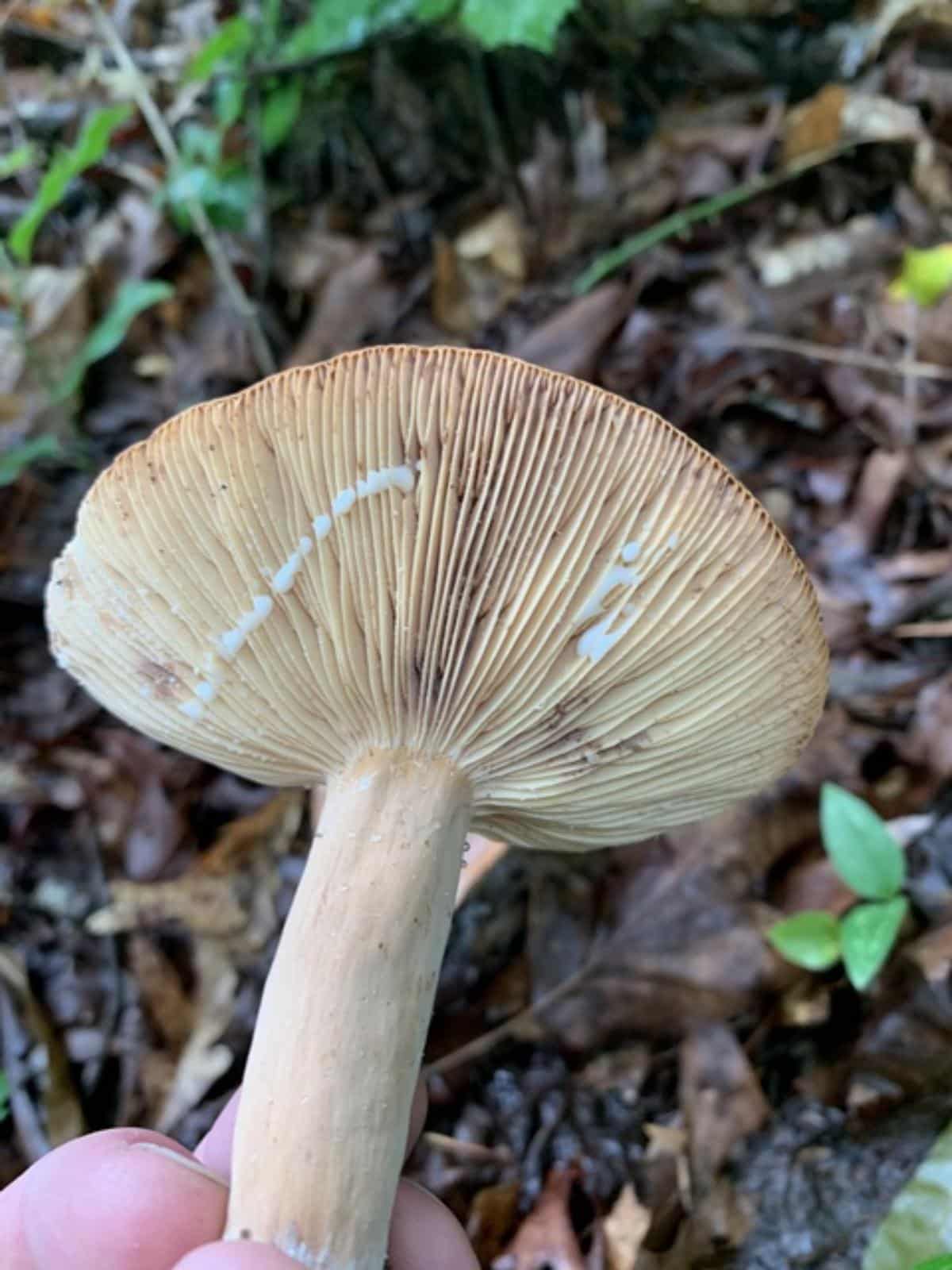
7. Shrimp Russula (Russula xerampelina): Shellfish
The shrimp russula, also called the crab brittlegill, actually shares a compound with real fish, and that’s what gives it its very distinctive smell. The compound trimethylamine gets stronger when the mushroom is dried and can stink up a herbarium collection if you’re not careful. This is an edible mushroom and is considered an excellent one.
Russula xerampelina is a European species, and in North America, the shrimp russulas are a group of related species that have not been fully sorted out. The shellfish smell is consistent across the group. Shrimp Russulas grow with conifers and hardwoods, from early summer through late fall.
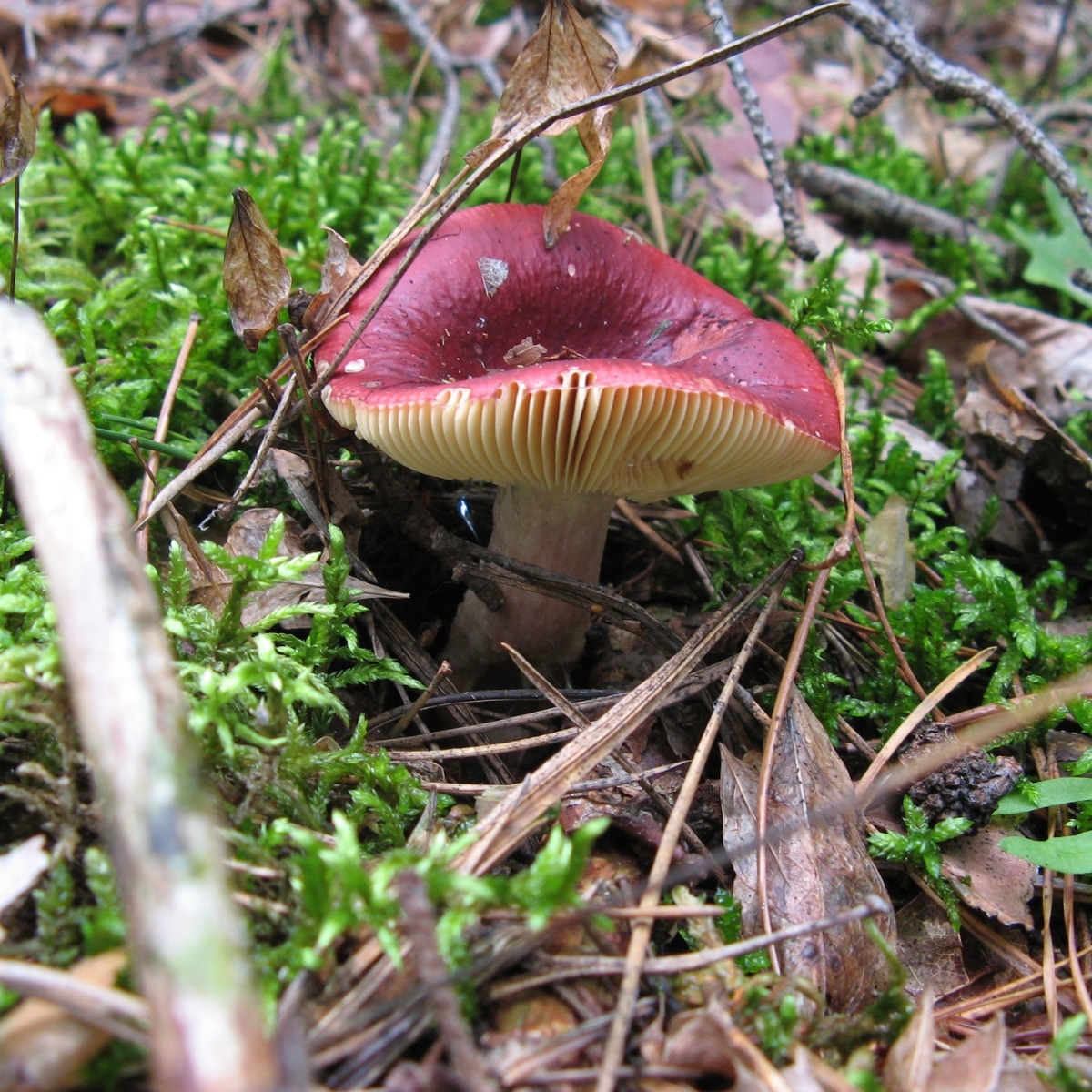
8. Poison Pie (Hebeloma crustuliniforme): Radish
The smell of the poison pie mushroom is most obvious when the flesh is crushed or cut, and the smell is that of radishes. This mushroom is cream to pale tan with a darker center and has crowded gills that release watery droplets when the mushroom is young, which dry to brown spots on the edges. This smelly mushroom is poisonous and causes vomiting, diarrhea, and stomach pain a few hours after eating.
It grows with hardwoods and conifers, either alone or in loose clusters, and even sometimes in arcs or fairy rings. It prefers grassy spots at the edges of woods. Poison Pie is common and widespread across North America, and fruits in late summer and fall across most of the country and in winter and spring in California.
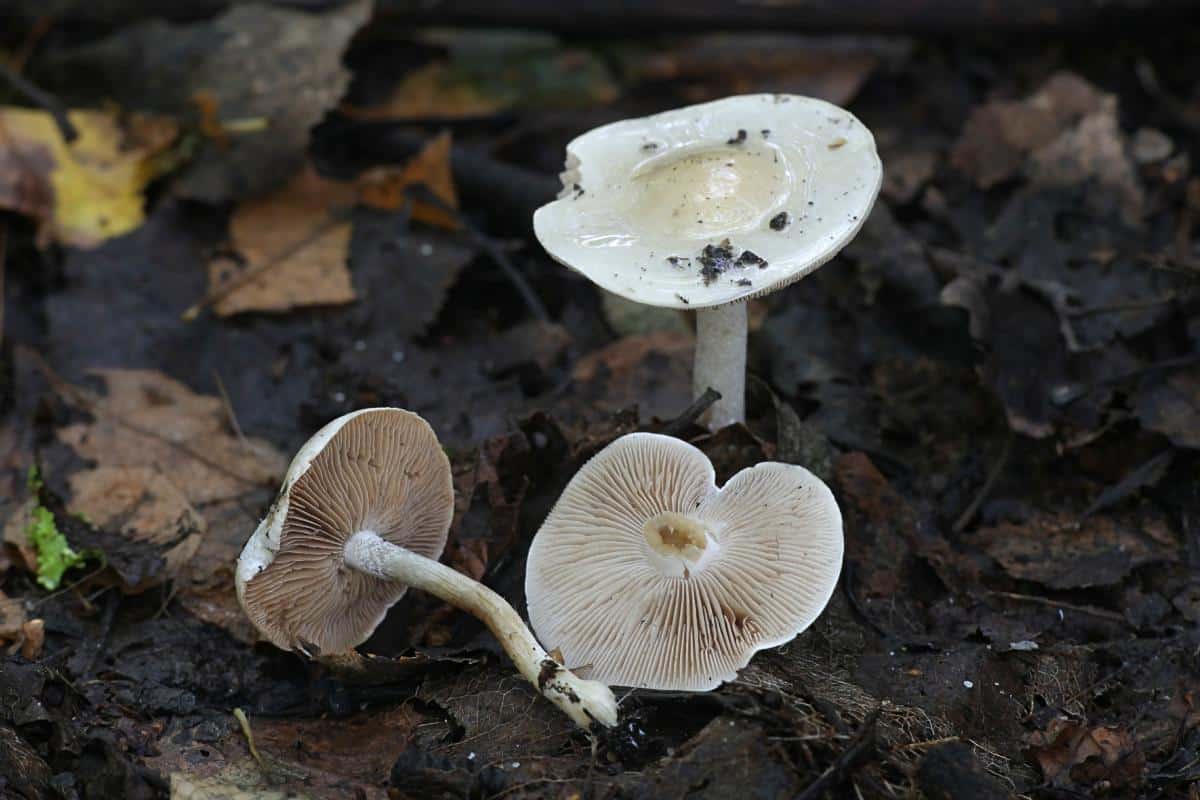
9. Sweetbread Mushroom (Clitopilus prunulus): Flour and Fresh Dough
The smell of this mushroom gives it its name and is one of the best ways to confirm its identification. The miller, also called the sweetbread mushroom, smells strongly of flour, or fresh dough, or a grain mill. Some people say it has a hint of cucumber scent, too. This mushroom is white to pale grey, with a matt, suede-like surface and a wavy, lobed edge.
It grows on the ground in grassy areas in summer and fall. It is widespread across North America and Europe. This species is edible, but it has a poisonous lookalike and should only be harvested by experienced foragers.
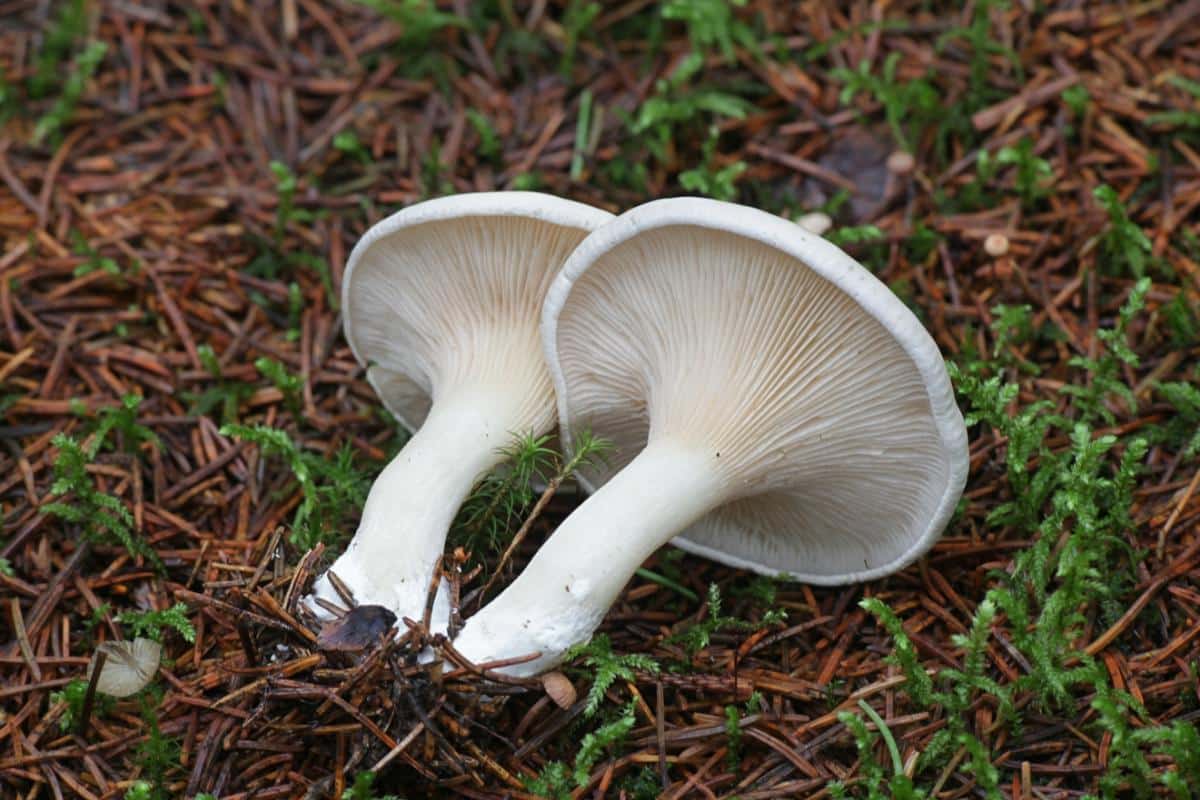
10. Curry Milkcap (Lactarius camphoratus): Curry
When the curry milkcap is young and fresh, it smells of almost nothing. You’d never guess what smell is waiting once it’s dried. When it is dried, though, it gives off a strong curry smell. Some people say the dried smell is more like maple syrup or burnt sugar. This is an edible species and is enjoyed for its unique scent. In Germany, the dried caps are crushed and used to flavor soups and sauces.
This smelly mushroom is reddish-brown, and its gills release a watery, mild latex when cut. The curry milkcap grows in groups in pine woods in eastern North America, where it and its close relatives, the candy caps, are gathered for the same sweet, maple-like smell.
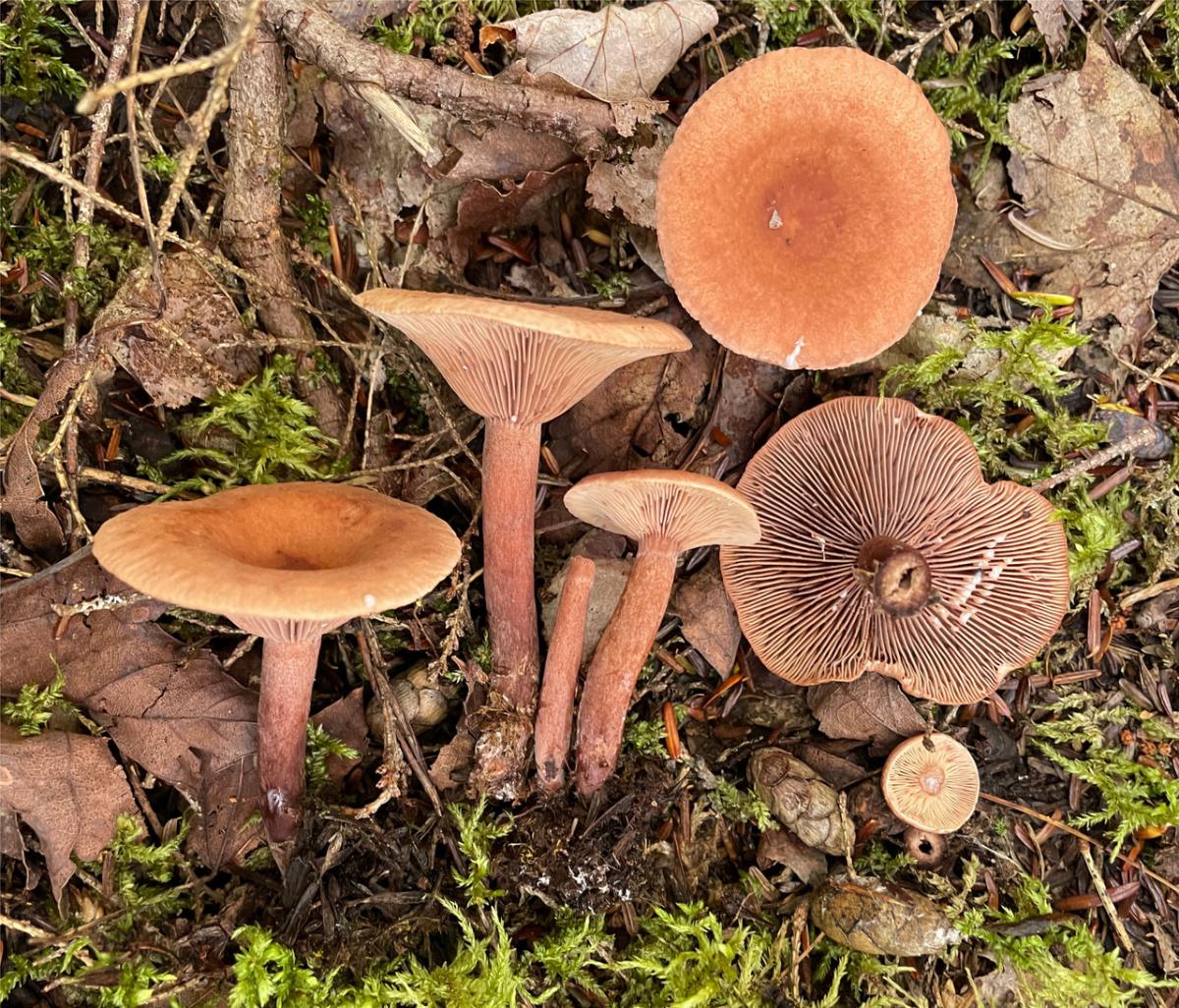
11. Candy Cap (Lactarius rubidus): Maple Syrup
The smell of young candy cap mushrooms is faintly sweet and nice. However, when it’s dried, the smell of maple syrup, fenugreek, or burnt sugar is so strong and lasting that dried caps can perfume a whole room. Some specimens in a herbarium have kept the scent for decades! The smell has been linked to the compound sotolon, also found in fenugreek.
Candy caps grow alone or scattered in mixed hardwood and conifer woods, in the winter on the West Coast. It is edible and most often used as a dried powder to flavor breads and candies. The aroma of maple syrup stays strong even after being baked in a cake.
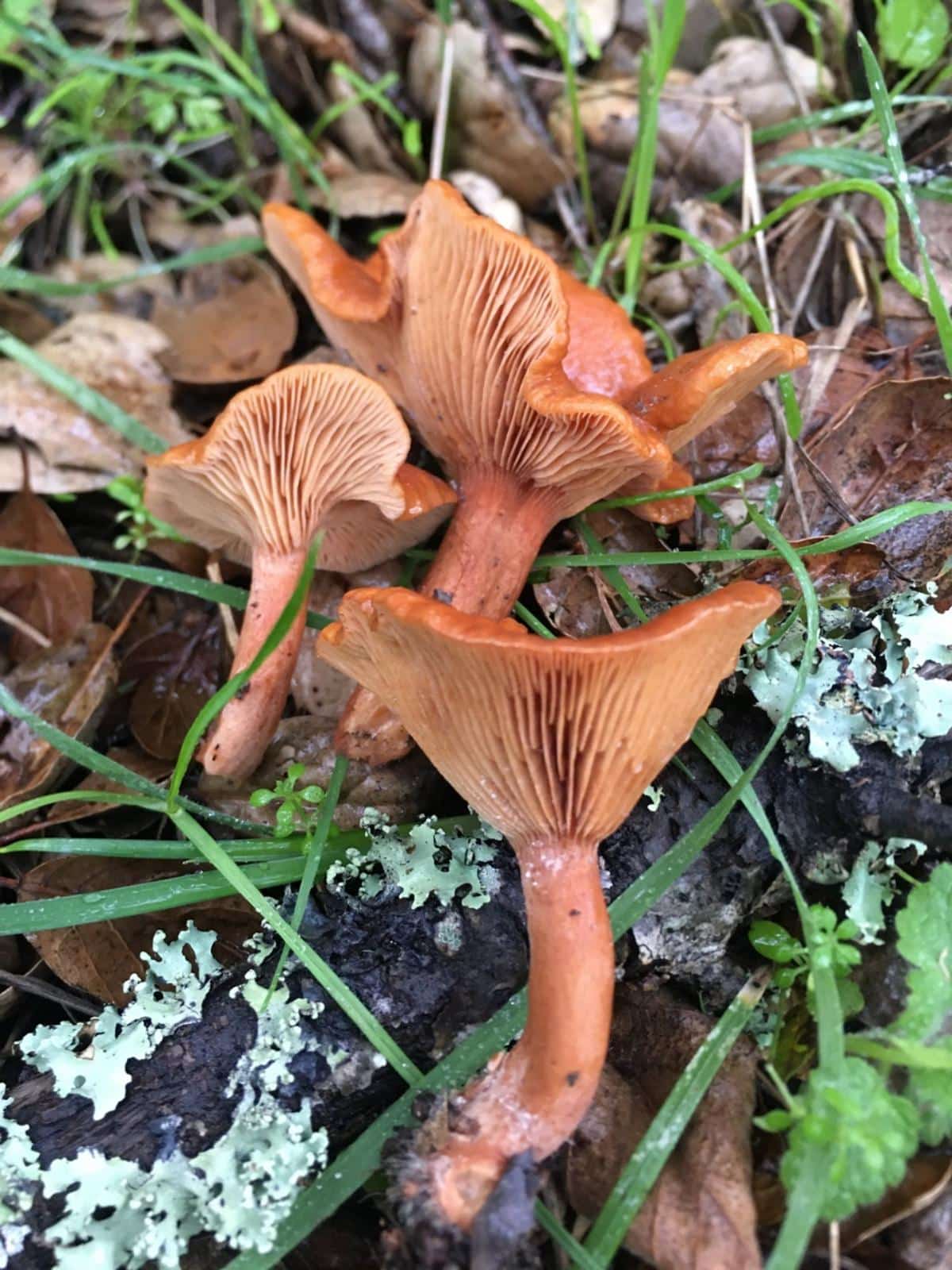
12. Geranium Fibercap (Inocybe griseolilacina): Geranium Leaves
The geranium fibercap is a small brown mushroom that smells musky or doughy when young and then like bruised geranium leaves as it matures. The geranium scent gets much stronger when the mushroom is dried.
Geranium fibercaps are smelly mushrooms that grow with hardwoods and conifers and fruit in the summer and fall. It grows across North America. It is poisonous, like others in the genus, which contain muscarine.
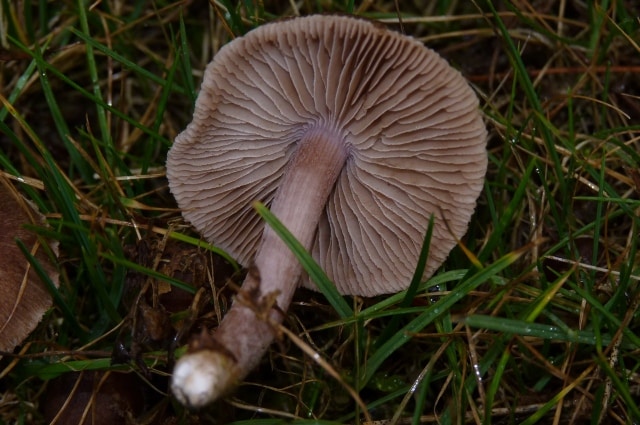
13. Coconut Milkcap (Lactarius glyciosmus): Coconut
The coconut milkcap smells very strongly of the coconut that is used in desserts, nutty and sweet. The mushroom itself is a drab, greyish lilac, nothing too fancy, but the smell is unmistakable. It grows with birch, and sometimes with alder and other broadleaf trees, on damp, peaty soils.
It is found across North America, Britain, Ireland, and northern and central Europe. The species name glyciosmus is from the Greek words meaning “sweet smell”. On the West Coast, this smelly mushroom has a relative, Lactarius cocosiolens, which also smells of coconut but has a slimy brown-orange cap and doesn’t grow with birch.
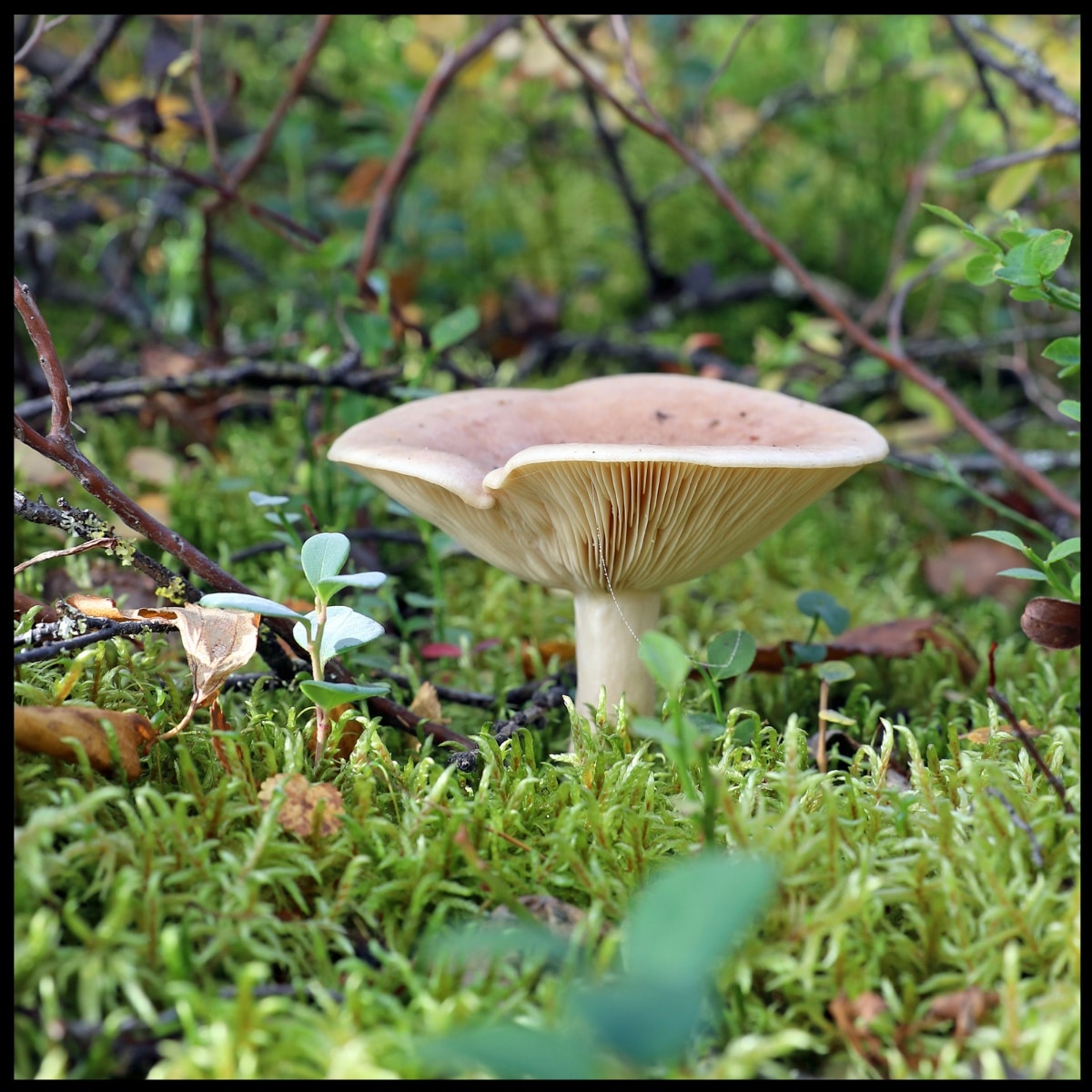
14. Aniseed Funnel (Clitocybe odora): Anise and Licorice
The aniseed funnel smells strongly of anise, or like black licorice, and is edible. Mostly it is dried, powdered, and used as a spice because the scent is quite pungent. This mushroom has some poisonous relatives, so be careful foraging for this one. The smell has been linked to the compound p-anisaldehyde, which is also found naturally in anise, star anise, and fennel.
The aniseed funnel is blue-green when fresh and young, but fades to brownish or whitish with age. With age, the smell fades away, sometimes disappearing completely.
It grows scattered on the leaf litter of hardwoods and conifers and is common across North America, Britain, Ireland, and Europe. This smelly mushroom is more common in northern mountain areas and the Midwest, and it is rare or absent in the Southeast and Southwest.
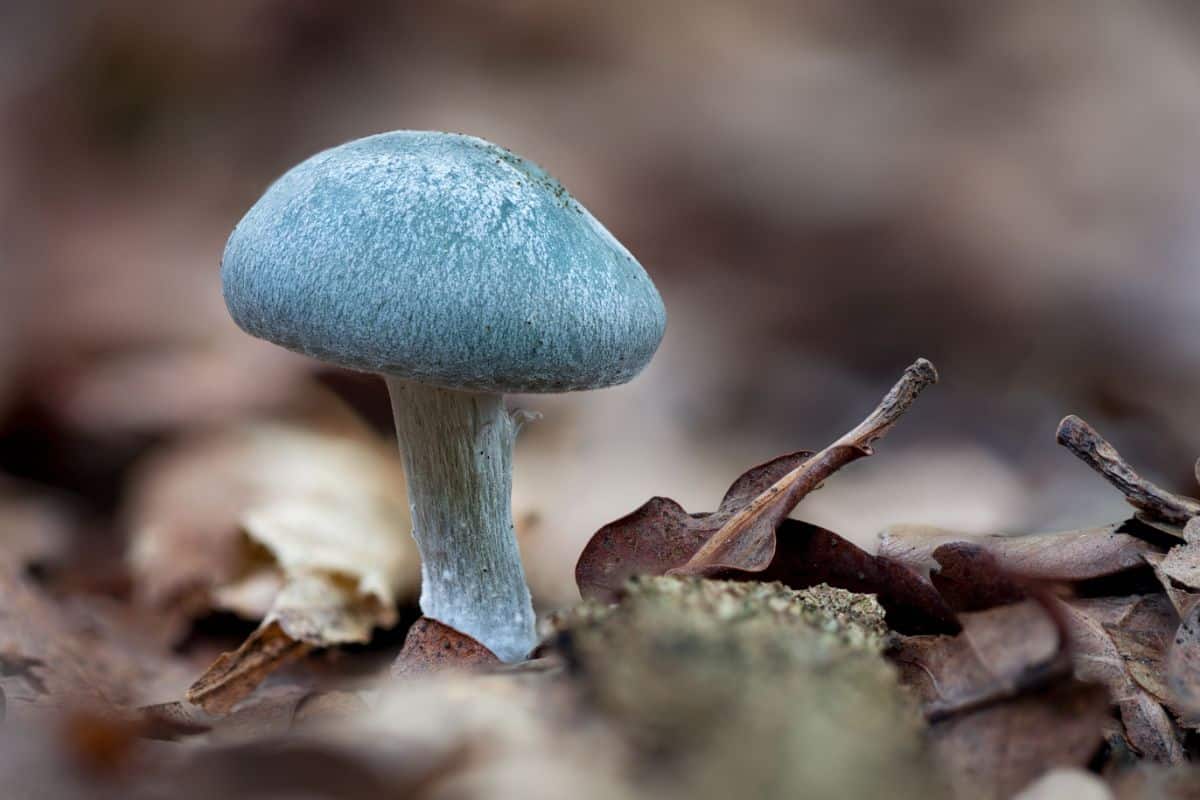
15. Oyster Mushroom (Pleurotus ostreatus): Anise
The common, widespread, and highly sought-after oyster mushroom has a mild, sweet, anise-like smell. The anise smell is one of the identifying features of this edible species.
Oyster mushrooms grow on dead and dying hardwood from fall through winter and again in spring. They are native to North America and grow worldwide; they are among the most widely cultivated mushrooms, too.
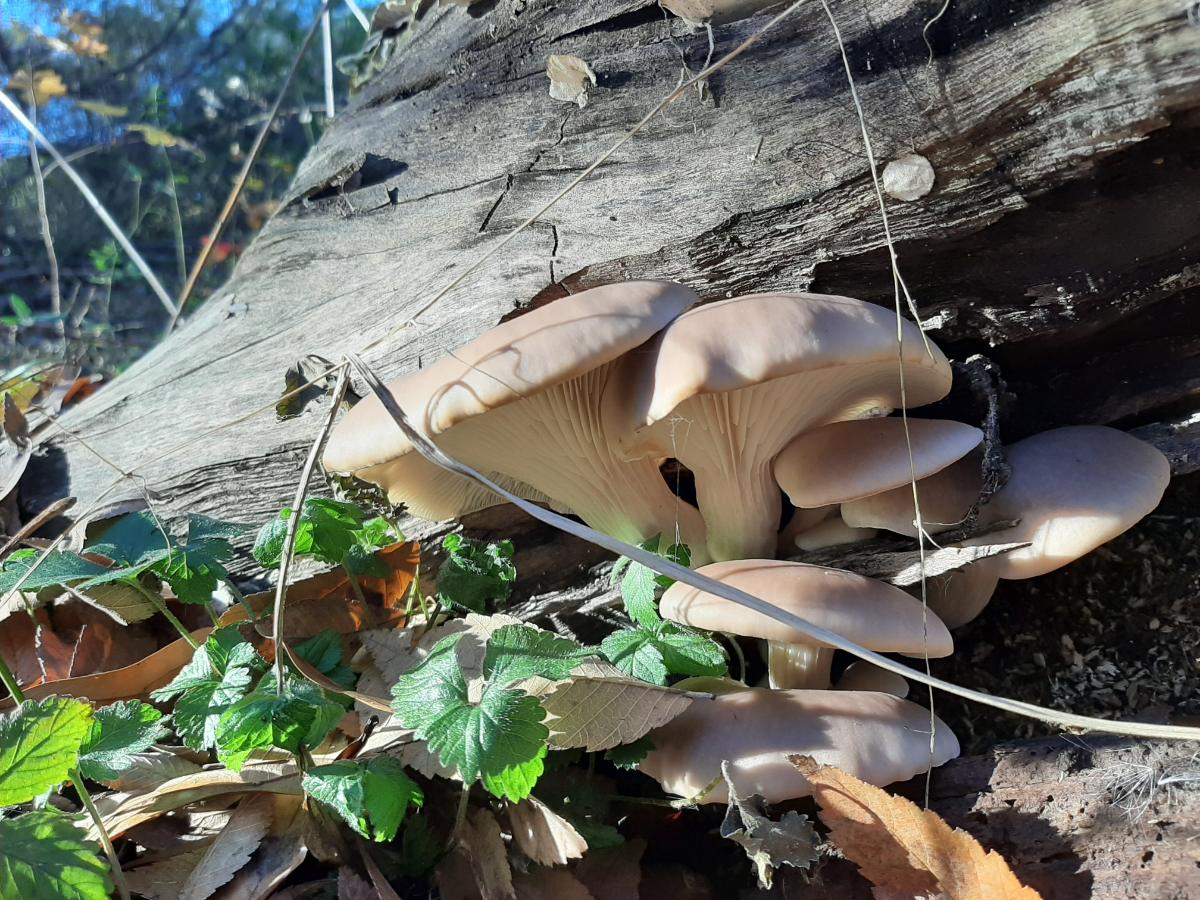
16. Garlic Parachute (Mycetinis scorodonius): Garlic
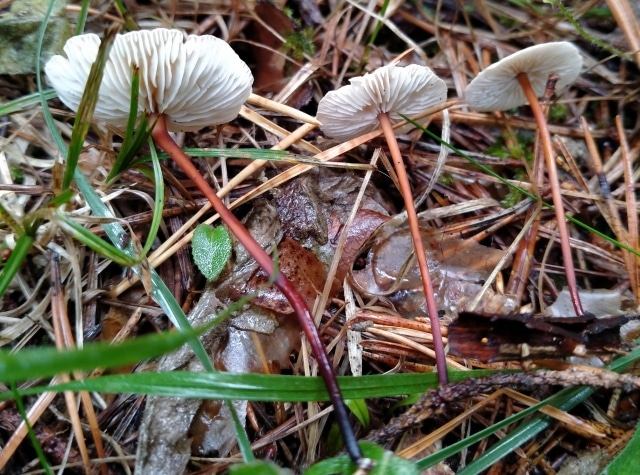
The garlic parachute smells so strongly of garlic and onion that it is possible to find the mushroom by scent before seeing it. It is tiny, with a brown cap that fades to tan and has a thin, wiry, reddish-brown stem.
This smelly mushroom grows on fallen conifer needles, and sometimes on the bark of living trees or on twigs and grass stems. It is widely spread east of the Great Plains and is rare or absent in the west. The garlic parachute is edible and can be used in place of garlic in cooking. It has two larger relatives in North America, Mycetinis copelandii in the west and Mycetinis olidus in the east, which smell of garlic too.
17. American Matsutake (Tricholoma species): Spicy Cinnamon and Dirty Socks
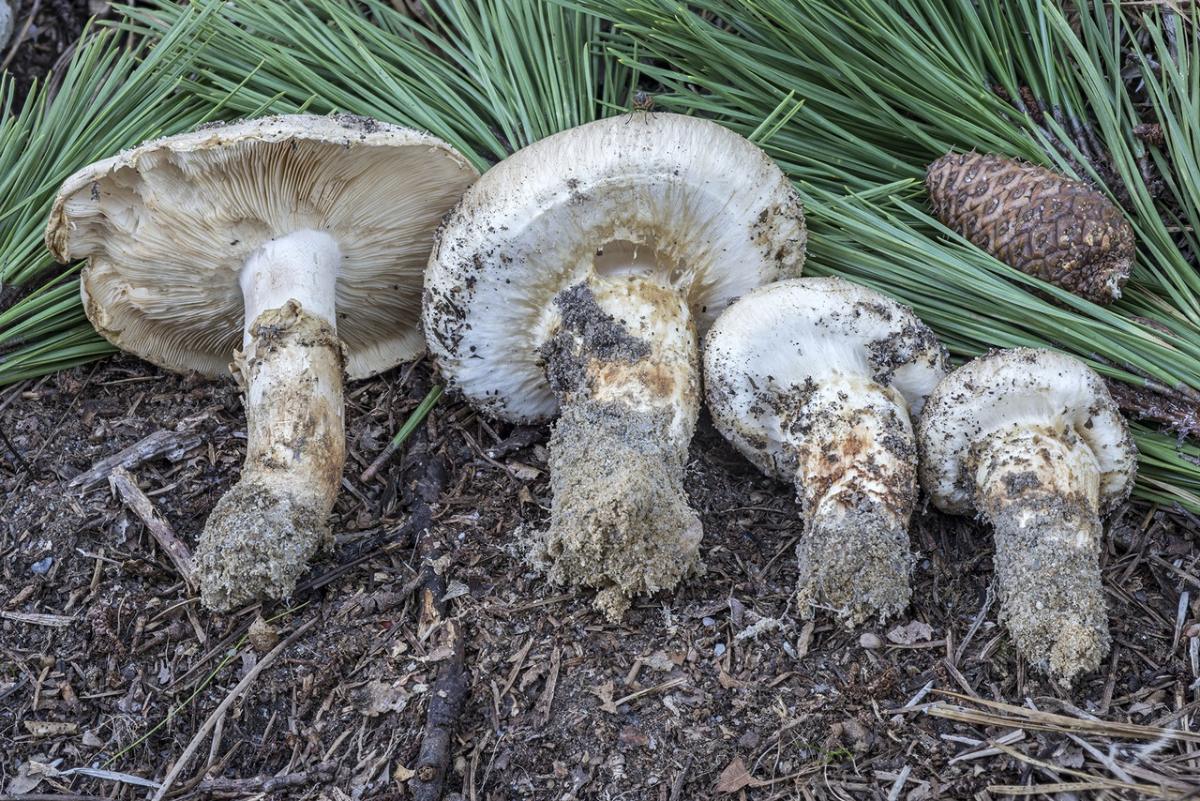
One of the key identifying features of matsutake, a widely sought-after and foraged species, is its unmistakable smell. It is very strong and spicy, often described as a mix between hot cinnamon candy and dirty socks. The mushroom is large and white, the flesh is firm, and the taste is slightly sweet.
Matsutake grows with conifers and oaks, from late fall into winter, scattered in soil and duff. The North American matsutake are T. magnivelare in the eastern states and Canada, and T. murrillianum in the west. Both are prized edibles.
18. The Prince (Agaricus augustus): Almond and Marzipan
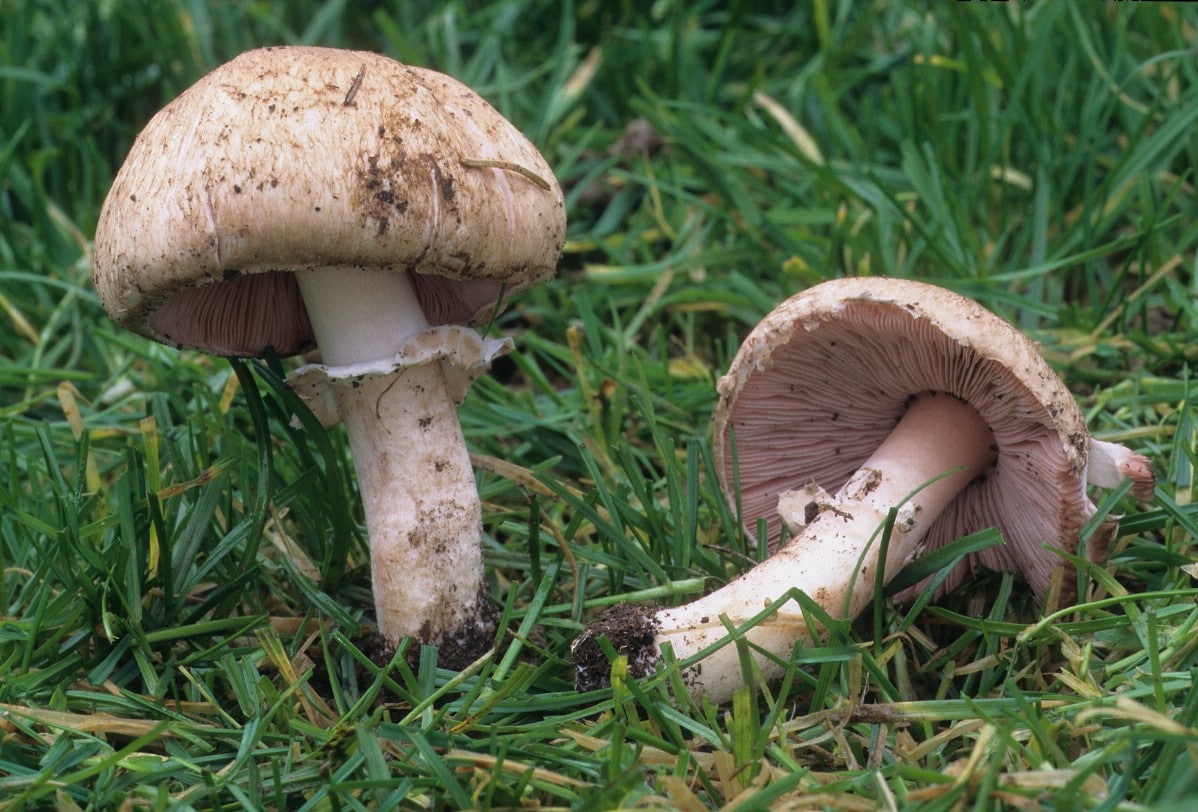
The prince is a choice edible wild mushroom with a firm texture, nutty flavor, and a distinct smell of bitter almonds, similar to marzipan or almond extract. The smell is strongest in fresh young caps. This is a large smelly mushroom with a cream-colored cap covered in reddish-brown scales and pink gills.
Prince agaricus mushrooms grow in small groups in open areas, usually under trees in parks and gardens. It is most common on the west coast and in Europe, Asia, and northern Africa. There are two other species in North America that are related and have that same marzipan smell – Agaricus julius in the Rocky Mountains, and Agaricus nanaugustus in the Midwest and eastern United States.
19. Golden Chanterelle (Cantharellus species): Apricot
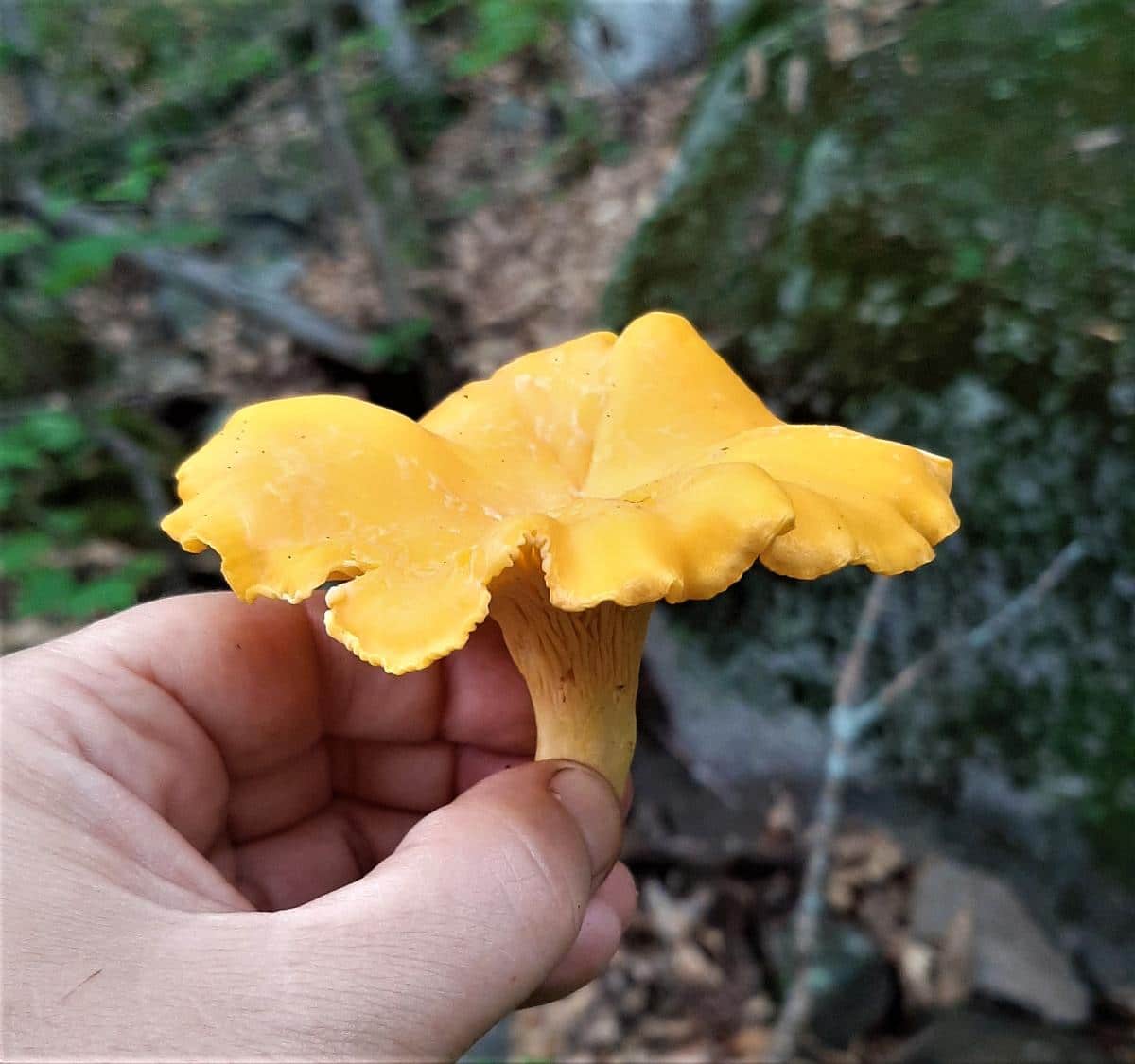
The golden chanterelle is one of the best wild edible mushrooms, and it smells wonderfully fruity, like an apricot. The fruity scent becomes stronger if the mushrooms sit in a bag or a closed container for a few minutes. Chanterelle mushrooms are yellow to golden and funnel-shaped, with blunt ridges running down the stem.
Chanterelles grow on the ground from summer into winter, depending on the region. There are many species of chanterelles in North America, and the strength of their scent varies. Some people say they smell more like a sweet perfume rather than fruity, but they almost always have a light sweet scent.
20. Cucumber Cap (Macrocystidia cucumis): Cucumber and Fish
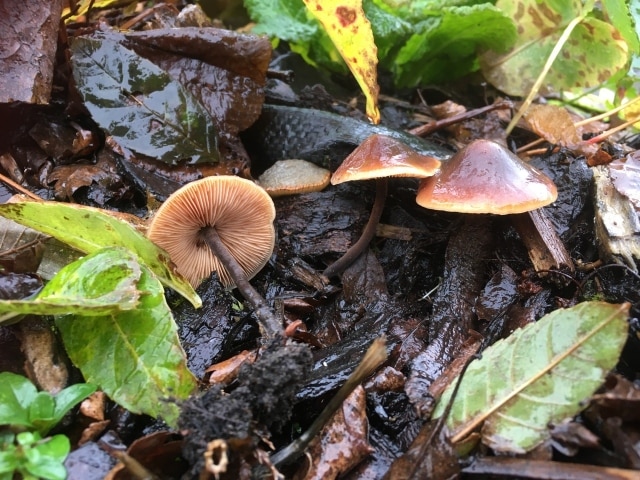
The inedible cucumber cap smells like fresh cucumbers, but sometimes it turns more fishy or cod-liver oil-scented. It is a small brownish-red mushroom, a classic LBM, that looks like many others, except for its distinctive odor.
Cucumber caps grow in groups on needle litter, wood debris, and soil, in gardens, parks, and along trails. These smelly mushrooms are found across North America and are also common in Europe, Australia, and New Zealand.
Honorable Mentions:
- Honey webcap (Cortinarius elatior) — honey sweet but not pleasantly so.
- Goatcheese webcap (Cortinarius camphoratus) — pungent goat or sweaty body or rotten potato .
- Almond waxcap (Hygrophorus agathosmus) — bitter almond and maraschino cherry.
- Nitrous waxcap (Neohygrocybe nitrata) — chlorine and nitric acid.
- Soap-scented tricholoma (Tricholoma saponaceum) — plain bar of soap.
- Sweet hebeloma (Hebeloma sacchariolens) — burnt sugar or butterscotch.
- Black truffle (Tuber melanosporum) — earthy, garlic, musk.
- Corn silk fibercap (Inocybe sororia, now Pseudosperma sororium) — fresh sweet corn.
- Pear fibercap (Inocybe fraudans) — strong ripe pear or pear drops.
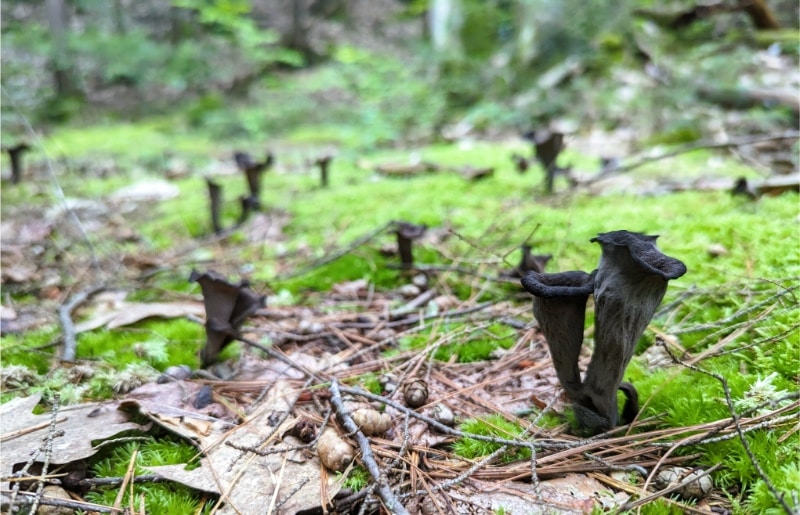
- Black trumpet (Craterellus cornucopioides/C. fallax) — deeply complex; smoky, fruity, and savory at once.
- Dryad’s Saddle — cucumber or watermelon.

Leave a Reply