
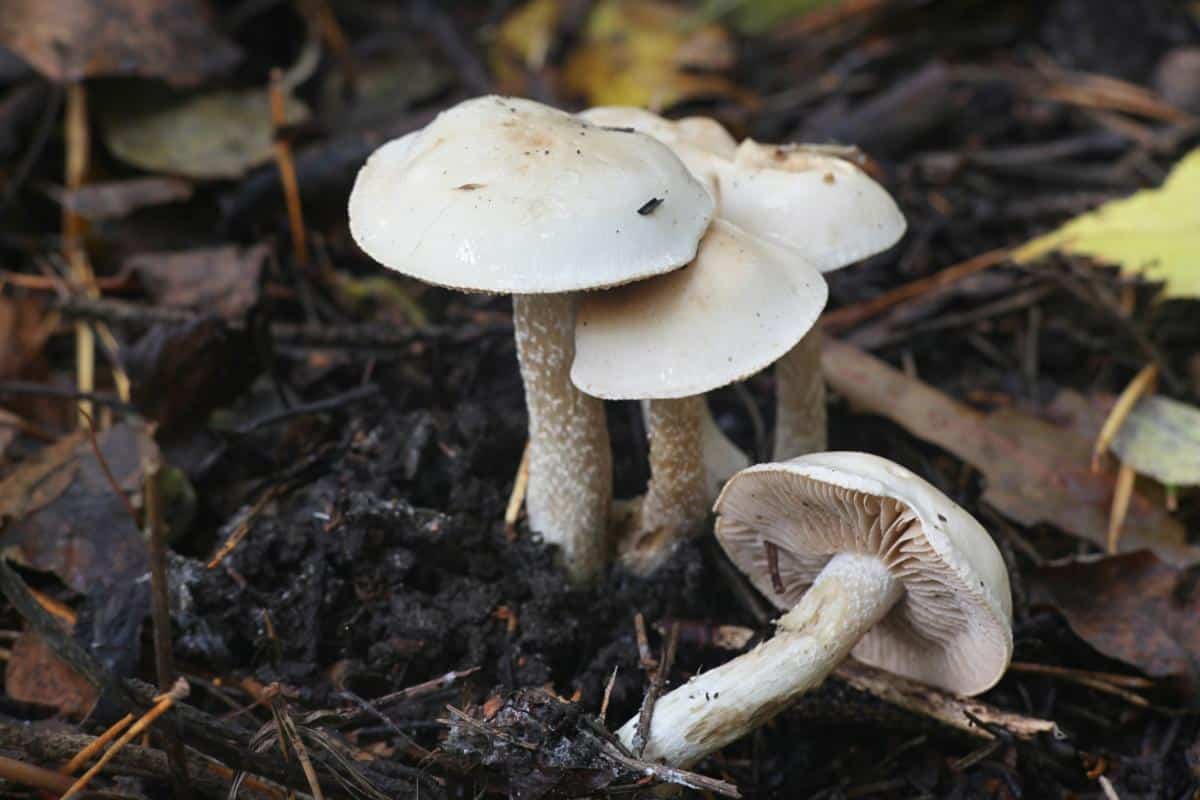
The poison pie mushroom (Hebeloma crustuliniforme) is an especially dangerous species due to its deceptively ordinary appearance. Don’t let bland looks fool you, though. This mushroom is trouble. In some places, these mushrooms are known as “fairy cakes” because they like to grow in vast fairy rings. This also draws attention to them and increases the chances of interaction with this mushroom.
Poison pie mushrooms are common and widespread throughout North America and can be found in 18 countries across Europe, and occasionally in Australia. It is not deadly, but you will seriously regret eating this species. It causes terrible gastrointestinal distress, including vomiting, diarrhea, and abdominal pain, several hours after eating.
- Scientific Name: Hebeloma crustuliniforme
- Common Names: Fairy cakes, poison pie
- Habitat: On the ground in forests, disturbed areas, yards, parks
- Edibility: Toxic
Jump to:
All About The Poison Pie Mushroom
The poison pie mushroom belongs to the genus Hebeloma. This genus has approximately seven individual species with similar appearances. The other Hebelomas are also toxic, or believed to be – they are either poisonous or too easily confused with poisonous members of the same genus.
The genus name is derived from ancient Greek ‘hebe‘, meaning youth, and ‘loma‘, meaning veil or fringe. This is a reference to the short-lasting veil (partial veil) covering the gills when the mushroom is young. The specific name “crustuliniforme” is from the Latin word “crustulum,” meaning “little biscuit.” This is a reference to its very biscuit-like or pie-like shape.
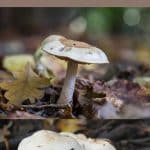
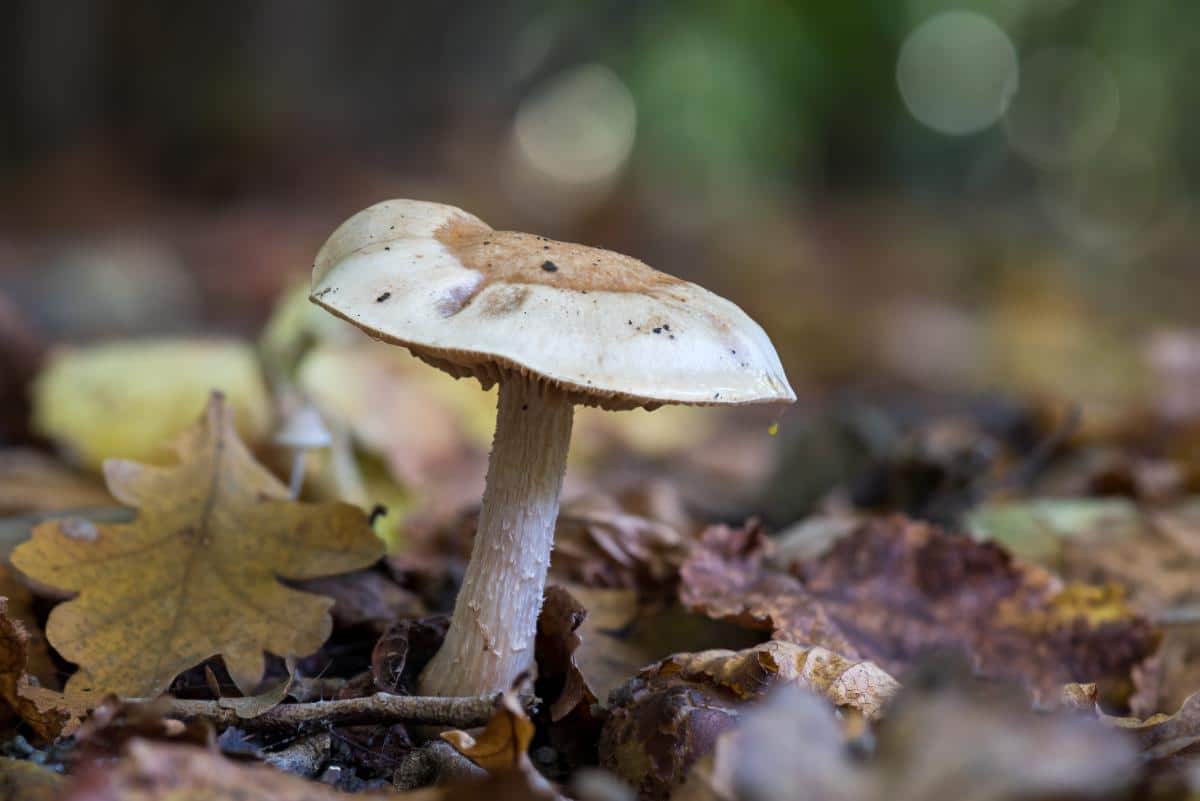
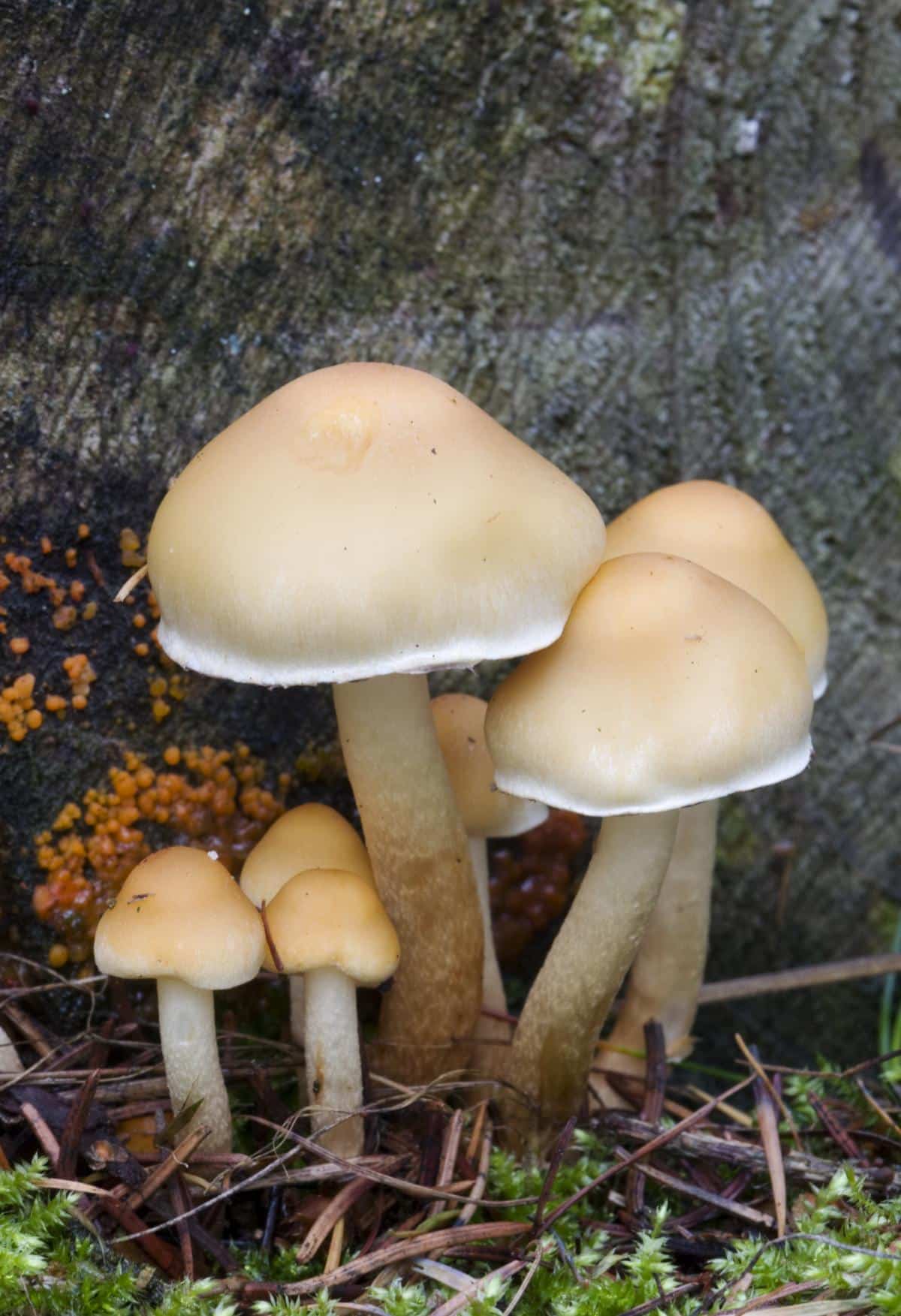
This mushroom has a pale cream to slightly brownish cap that typically measures between 1.2 to 4 inches in diameter. It really looks like a little hand pie sitting on the forest floor.
Poison Pie Poisoning
Though rarely fatal, eating this mushroom will result in extremely unpleasant gastrointestinal distress. The exact chemical compounds responsible for its toxicity aren’t exactly known. However, scientists believe it contains irritants that primarily affect the digestive system.
The symptoms often begin quite rapidly – sometimes within 15 minutes to a few hours after ingestion. The primary symptoms include nausea, vomiting, abdominal cramps, and diarrhea. These may persist for 24-48 hours, depending on the quantity of mushrooms consumed.
Compared to some of the more deadly species out there, like the death cap and destroying angel, the poison pie mushroom isn’t nearly as scary. However, most poisoning incidents occur because of the difficulty in distinguishing between wild mushrooms.
Poison Pie Mushroom Identification
Season
The poison pie appears most abundantly after fall rains, continuing through late winter in places with milder climates, such as California.
Habitat
The poison pie mushroom is a mycorrhizal fungus, which means it forms symbiotic relationships with both broadleaf and coniferous trees. It is most common near birch, beech, and oak trees. In North America, it is commonly associated with live oak (Quercus agrifolia) and conifers, particularly Monterey pine.
This mushroom doesn’t just grow in forests, though. It is often common in disturbed areas like recently cleared soils, woodchip-covered areas, forest edges, and grassy clearings within woods. It can be found in urban and suburban settings like parks and roadside verges where woodchip mulch is used for landscaping.
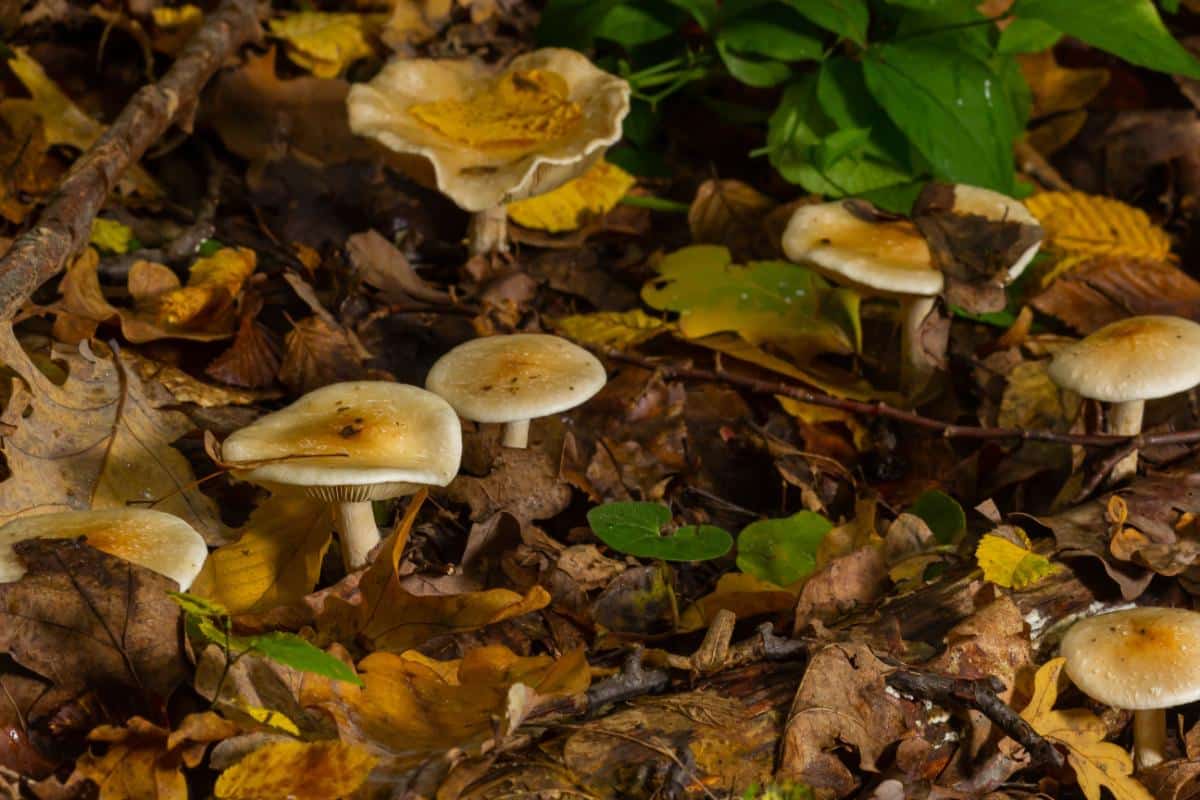
While they sometimes grow solitarily, poison pie mushrooms more commonly appear in scattered groups of 2 to 5 fruiting bodies. These mushrooms are often found in large numbers, particularly in broadleaf woodlands.
They have a habit of forming arcs or fairy rings. This circular growth pattern occurs as the mycelium (the mushroom’s underground network) expands outward from a central point. These mushrooms might also grow gregariously or in loose clusters, sometimes following the underground path of tree roots.
Identification
Cap
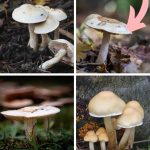
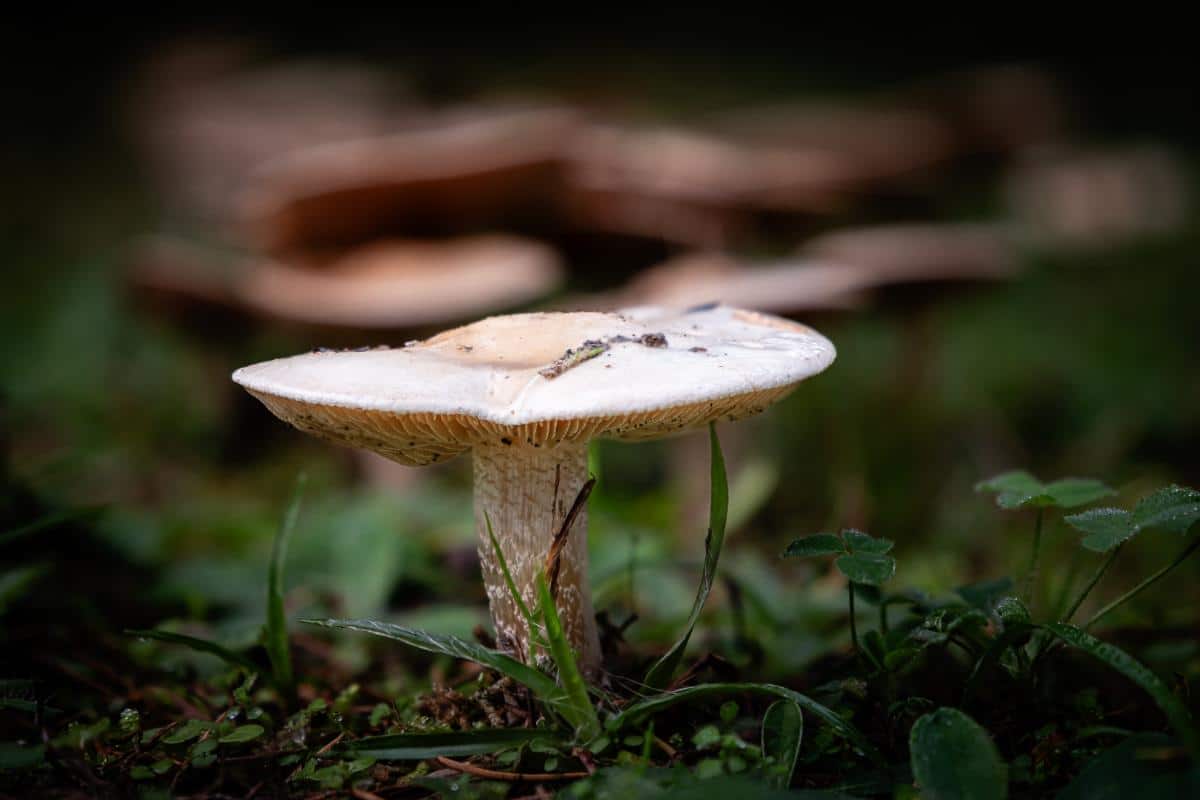
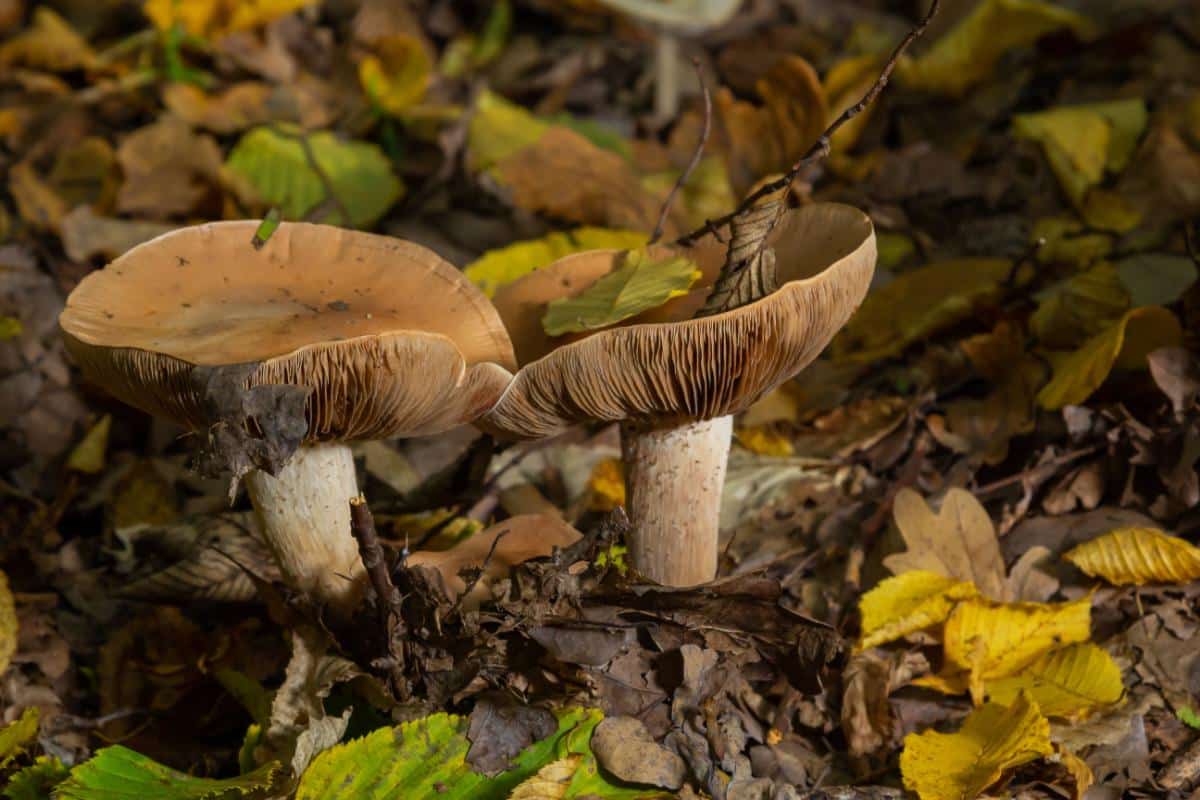
The cap of the poison pie mushroom is 1¼-4¼ inches in diameter, with some specimens reaching up to 3½ inches across. It starts out rounded, like a button mushroom, then gradually expands to become more flat. With age, it develops a broad umbo (a raised central area). Older specimens often have caps with the edges flipped up like a beach hat.
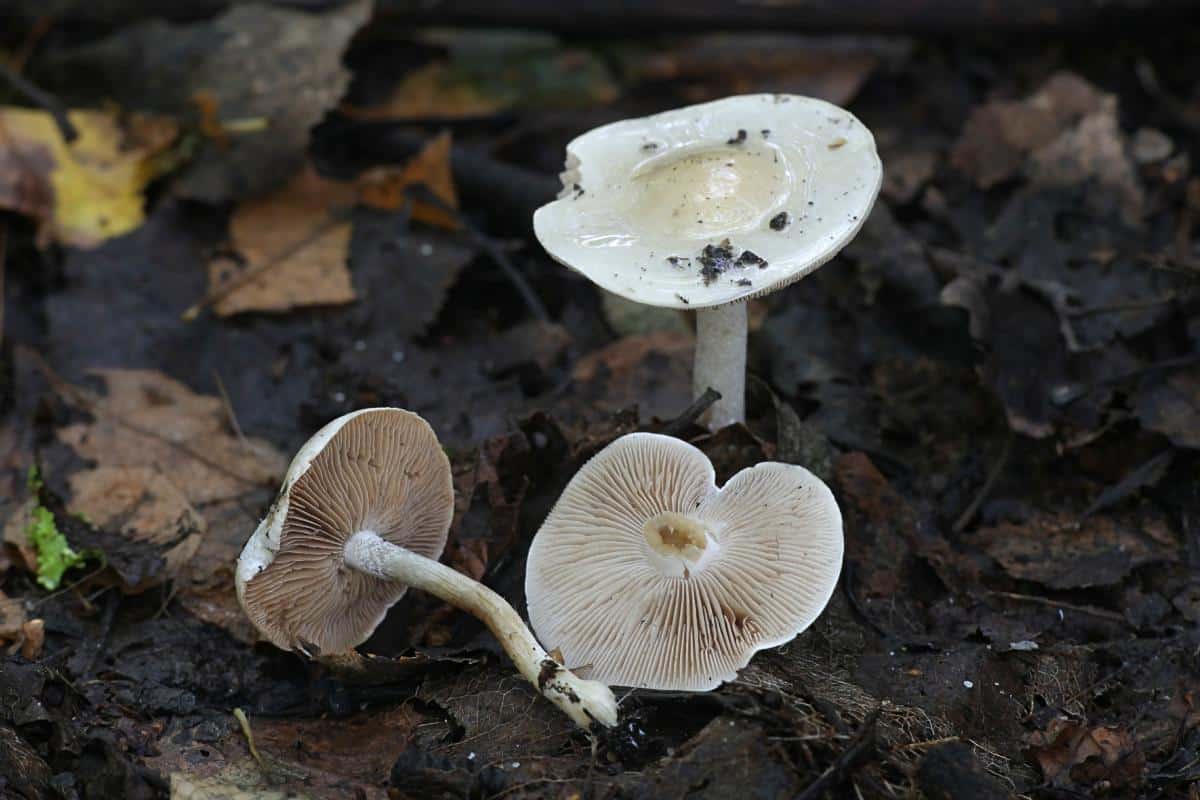
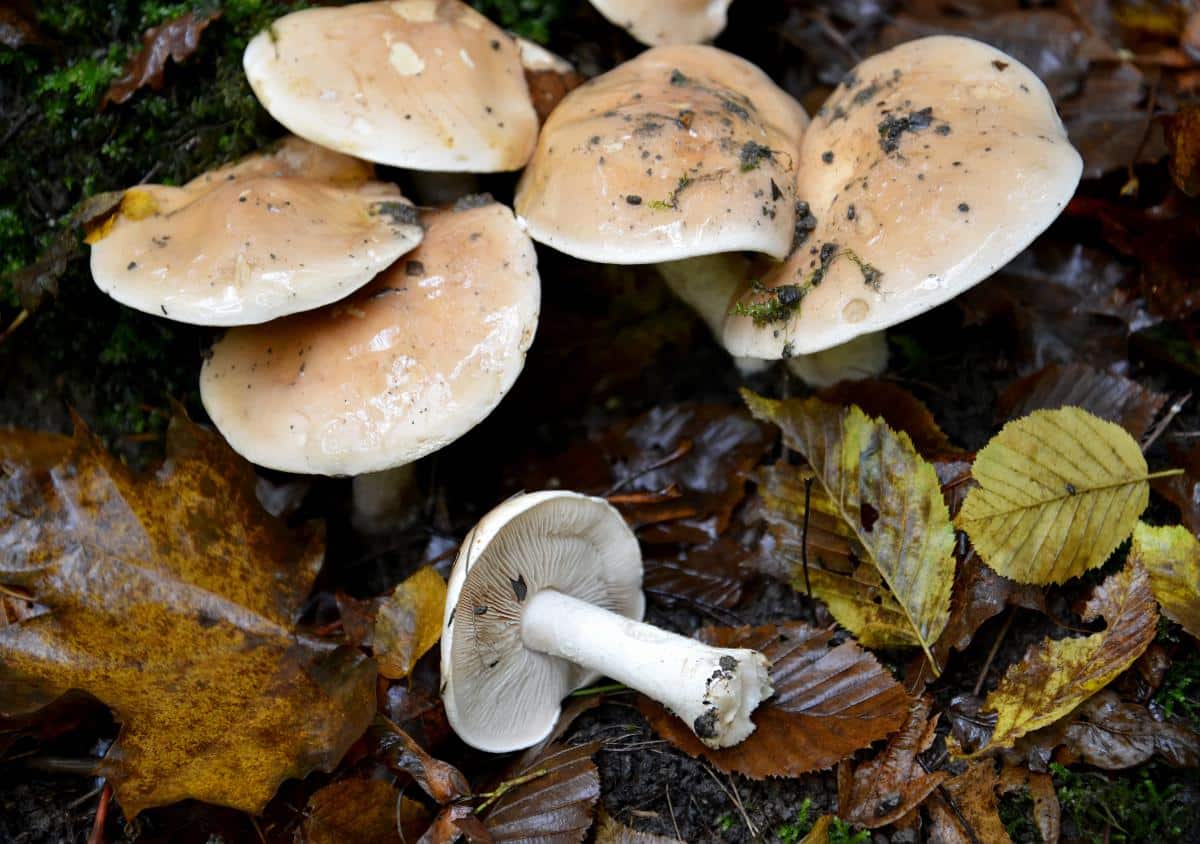
The surface of the cap is distinctly sticky or greasy, especially after it has rained or it’s damp out. The cap color ranges from off-white to pale tan or buff. It is usually darker brown toward the center, on the upraised central bump. The cap edge is often uneven or lobed and remains rolled under until the mushroom reaches maturity.
Gills
The gills of the poison pie mushroom start white or pale cream when young. They gradually turn to pale gray-brown as they mature. The gill edges retain their whiteness even as the rest of the gill surface darkens, which is an unusual and telling feature.
The gills are crowded and attached to the stem. Dark droplets form on the gills during damp conditions (look for this when it’s wet out). Once these droplets dry, they leave behind brown spots on the gill surface. The “weeping gills” feature is a valuable identification marker in the field.
Stem
The stem measures 1½- 5 inches long and approximately ¼- ½ inch thick. The stem is generally off-white to pale yellow in color. Sometimes, it has a pinkish-tan hue. The stem is usually equal in width for most of its length, with a slightly wider or bulbous base.
The upper portion of the stem is often mealy or covered with fine powdery granules. The stem does not have a prominent veil or ring, but younger specimens might occasionally have remnants of a cortina (a cobweb-like partial veil).
Odor and Taste
The poison pie mushroom has a distinctive odor. When crushed or cut, the mushroom smells strongly like radishes. These mushrooms have a markedly bitter flavor.
Flesh and Staining
The flesh of the poison pie mushroom is white and relatively thick. When damaged or bruised, the flesh may stain slightly brown.
Spore print
The spore print is rust-brown to dull brown in color.
Poison Pie Mushroom Lookalikes
Other Hebeloma species
Within its own genus, the poison pie mushroom is most frequently confused with Hebeloma sinapizans. Both species share the characteristic radish-like odor and overall look.
H. sinapizans tends to be larger and more robust than the poison pie, and it also doesn’t have the distinctive droplets or brown spots on the gill edges.
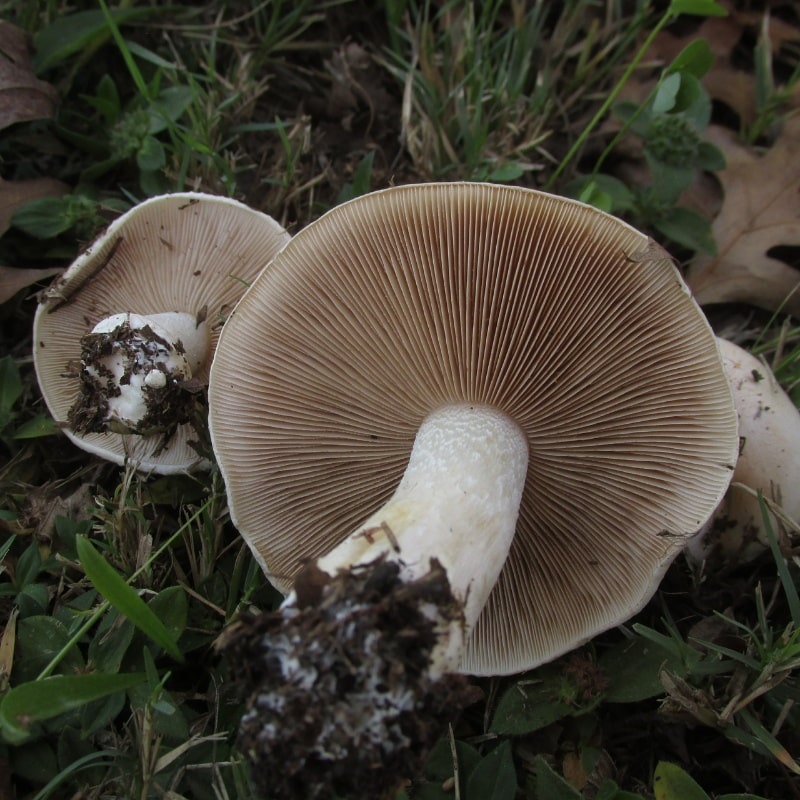
Tricholoma species
Tricholoma species, primarily Tricholoma muricatum and Tricholoma fracticum, which sometimes fruit together under Monterey pine, also look a lot like the poison pie. These Tricholoma species are also toxic and should be avoided. The best way to differentiate these is with a spore print. Tricholoma species have a white spore print.
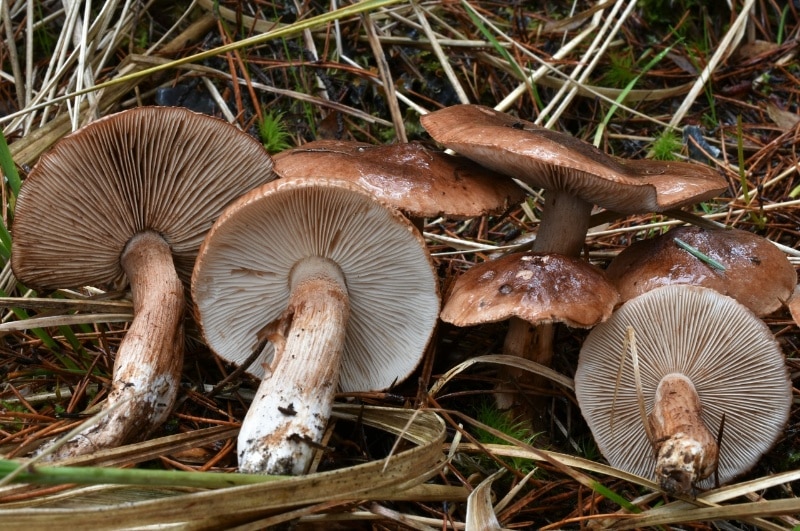
Meadow Mushroom (Agaricus campestris “group”)
This edible species has a similar shape and gill color to those of younger poison pie mushrooms. The meadow mushroom, though, has a chocolate-brown spore print (versus the rusty-brown of Hebeloma) and also doesn’t smell like radishes. Meadow mushrooms also have gills that are free from the stem, while the poison pie’s gills are attached to the stem.
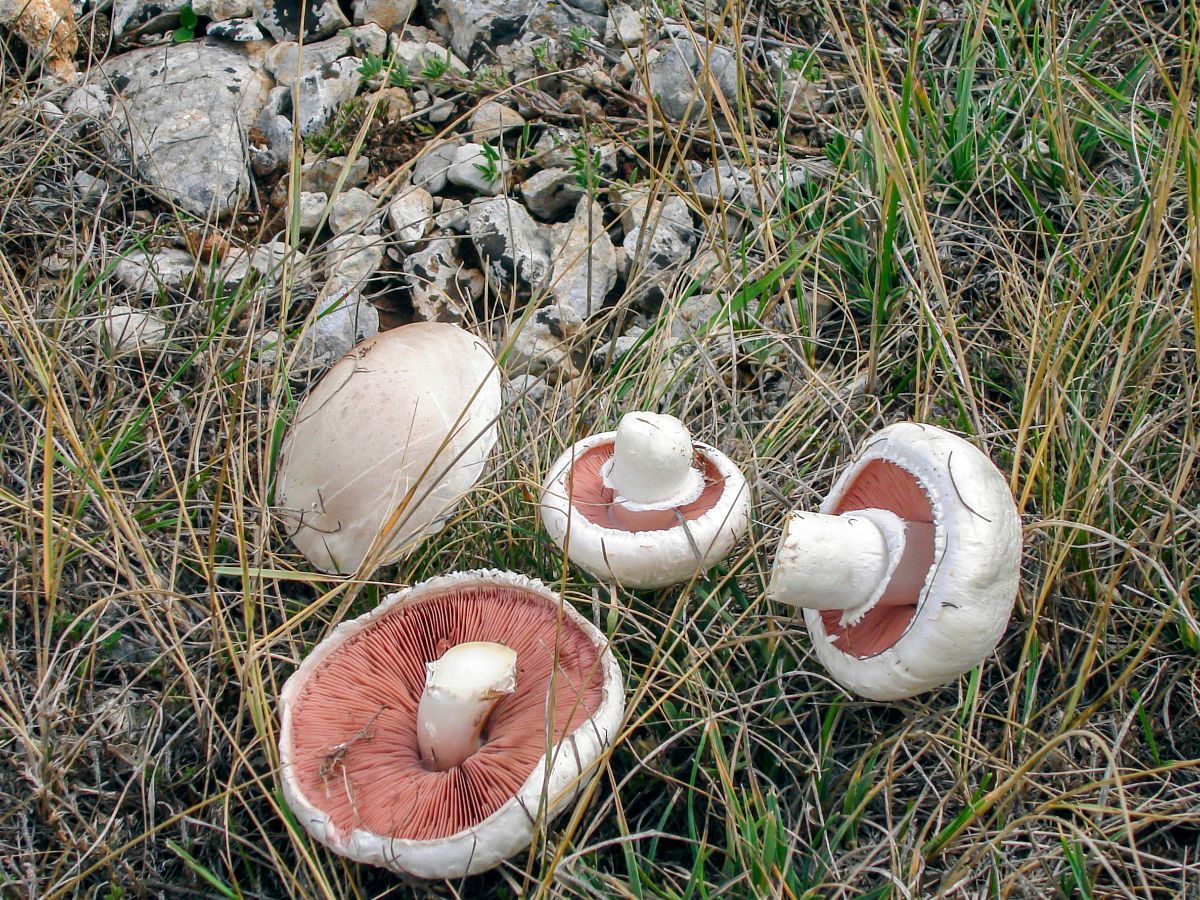
Honey Mushroom (Armillaria species)
The edible honey mushroom is occasionally mistaken for poison pie. Honey mushrooms also have golden-brown caps with sticky surfaces when wet. The key differences are that they grow in dense clusters on wood. And, many honey mushroom species have a ring on the stem that easily sets them apart. The smell is also a key difference. Armillaria has a sweet, nutty aroma, not anything radish-like. A final difference is the spore print — Honey mushrooms have white spores, while poison pie produces brown spores.
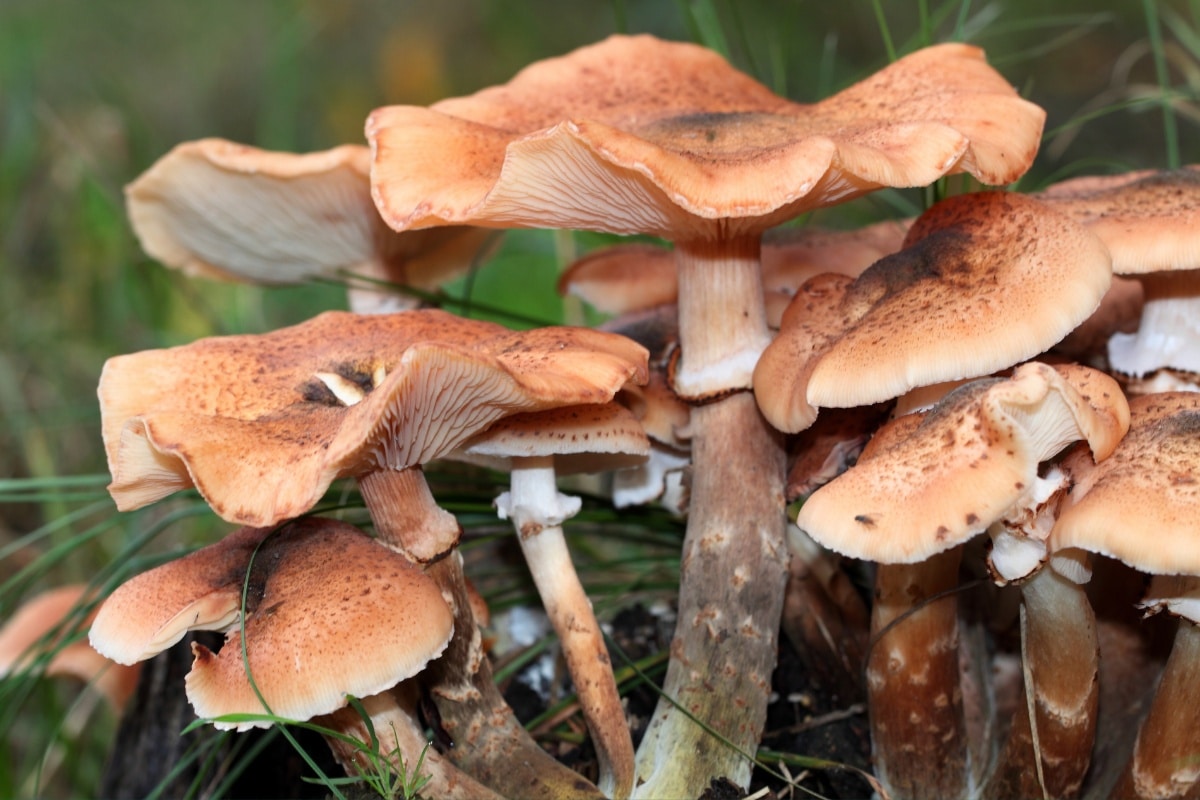
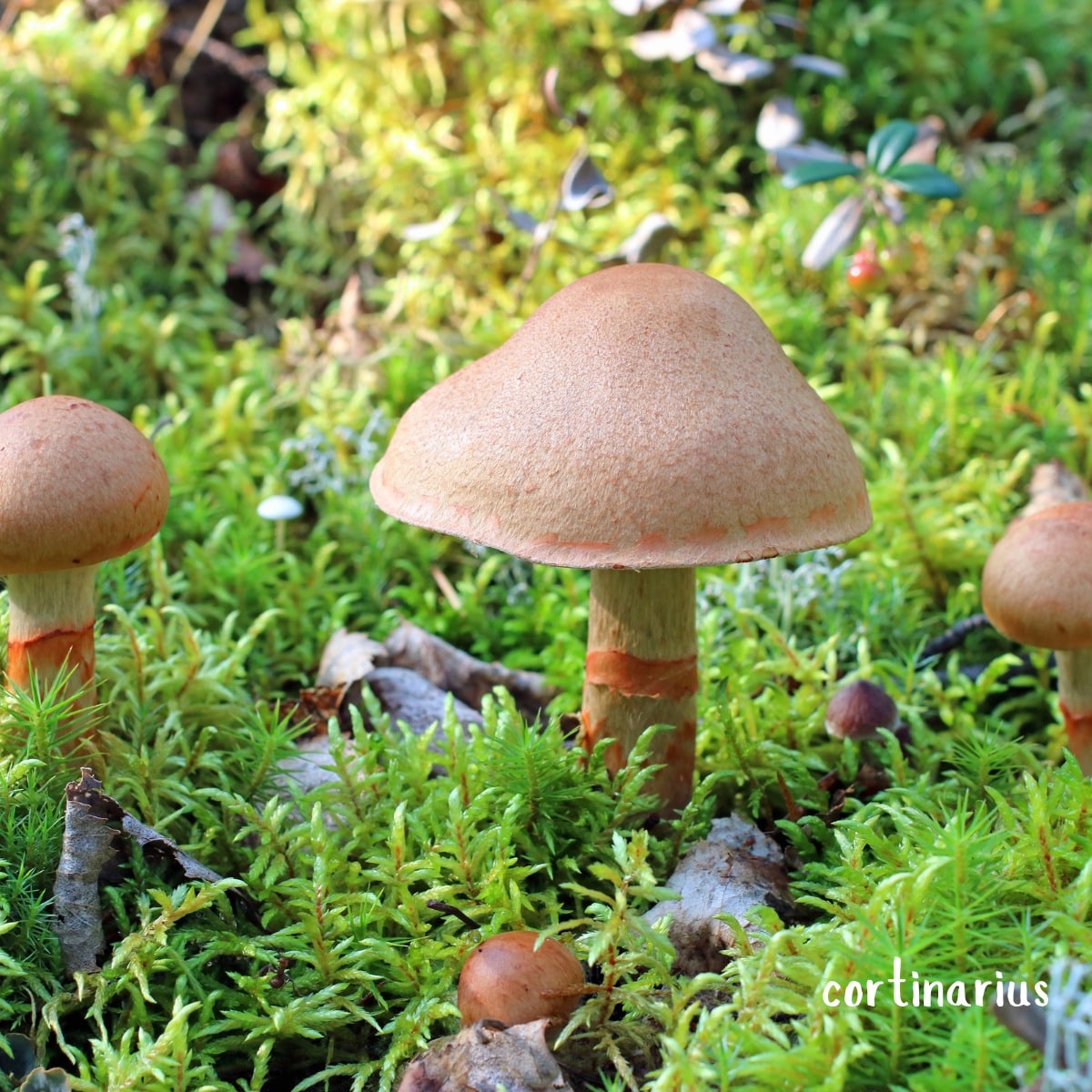
Webcaps (Cortinarius sp)
There are literally hundreds of Cortinarius species, and some of them look a lot like the poison pie. Many of them are brownish, medium-sized mushrooms with brownish gills that grow on the ground. Many Cortinarius species are toxic (or deadly), so they shouldn’t be collected for the table.
To tell these apart, pay attention to the stickiness of the cap and the smell. Most Cortinarius species have dry caps, although this doesn’t hold true for all of them. They also don’t smell like radishes as the poison pie does.
Common Questions About Poison Pie Mushrooms
What are the symptoms of poison pie mushroom ingestion?
Consuming poison pie mushrooms can cause gastrointestinal distress, including nausea, vomiting, abdominal cramps, and diarrhea. These symptoms usually begin within a few hours of ingestion and can last for 24-48 hours.
Where and when am I likely to encounter poison pie mushrooms?
Poison pie mushrooms are commonly found in forests, woodlands, and even urban areas with woodchip mulch. They show up after fall rains and can fruit even longer in winter in milder climates.
Are there any medicinal uses for poison pie mushrooms?
No, the poison pie mushroom has no recognized medicinal value.
Leave a Reply