


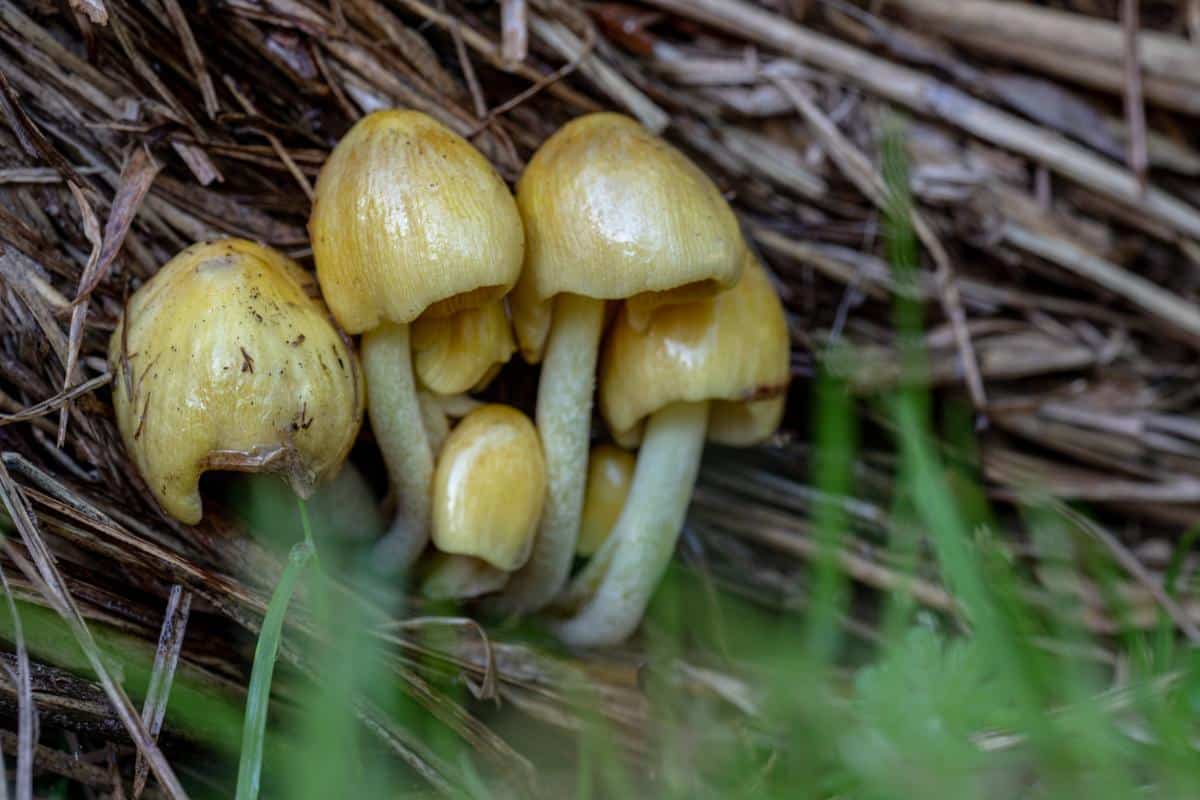
Take one look at this mushroom, and you can figure out super quickly how it earned its common name. The sunny side up mushroom (Bolbitius titubans) looks so much like an egg yolk perched on a slender stem, it’s a little disconcerting. This small, delicate mushroom with its bright yellow cap grows in lawns, parks, and pastures across North America.
Sunny side up mushrooms are short-lived — they usually appear and completely die off and meld back into the earth in just 24 hours, and oftentimes less than that. Their lifecycle is a quick one!
- Scientific Name: Bolbitius titubans
- Common Names: Sunny side up mushroom, yellow fieldcap, egg yolk fungus, egg yolk fieldcap
- Habitat: Lawns, dung, compost, roadsides, pastures
- Edibility: Inedible/Not worthwhile
All About Sunny Side Up Mushrooms
The name Bolbitius comes from Greek words meaning “of cow dung,” referring to one of the mushroom’s habitat preferences. The species name titubans means “staggering” or “wavering.” This is a reference to how the fragile mushrooms tend to lean and eventually topple over in what appears to be a slow-motion stumble.
The entire visible lifecycle of the sunnyside-up mushroom, from emergence to decomposition, happens in 12 to 24 hours. The mushrooms typically appear in the morning, expand and mature through midday, begin fading by late afternoon, and shrivel completely by the following morning.
The sunny side up mushroom was first described to science by French mycologist Jean Baptiste Francois Pierre Bulliard in 1789. The species was then transferred by Fries to its current genus in 1838.
Modern molecular studies have found at least three distinct genetic lineages within Bolbitius titubans, suggesting the fungus may eventually be split into multiple species as research continues. The variations in size, robustness, and color that led to specimens being given their own names (Bolbitius vitellinus, Bolbitius fragilis, and Bolbitius variicolor) now appear to be environmental responses rather than separate species.
The species previously separated out as Bolbitius vitellinus and Bolbitius fragilis have been largely merged under the name Bolbitius titubans in recent studies, as their distinguishing features were found to be inconsistent. However, some studies suggest Bolbitius variicolor may be distinct from the main B. titubans clade.
Sunny Side Up Mushroom Identification Guide
Season
This mushroom fruits from late spring through fall, though it is most common in summer and early autumn. In warmer climates with mild winters, the mushroom can appear year-round.
The species typically emerges within two days after rainfall, and individual fruiting bodies last only 12 to 24 hours, opening in the morning and shriveling by evening of the same day or the following morning.
Habitat
The sunny-side-up mushroom is a saprobic species that grows on decomposing organic matter. It breaks down nutrients from grass clippings, rotting straw, aged manure, and other plant materials. It never grows on trees or dead wood, always from the ground or very rotted matter.
This mushroom has a wide range of habitats. It might grow alone or in scattered masses or large troops. There is usually more than one. It grows on fertilized lawns, in pastures, along roadsides, on compost piles, and occasionally on damp woodchip mulch. And, it prefers open, sunny locations rather than shaded forest environments. The more nutrients available (like in dung), the more robust the growth and quantity of mushrooms will appear. Those growing in grassy areas tend to be smaller and more delicate.
Sunny side up mushrooms grow throughout North America. The species is also common throughout Europe and fruits in parts of Asia, Australia, and other temperate regions. This is a very widespread mushroom with a cosmopolitan habit.
Identification
Cap
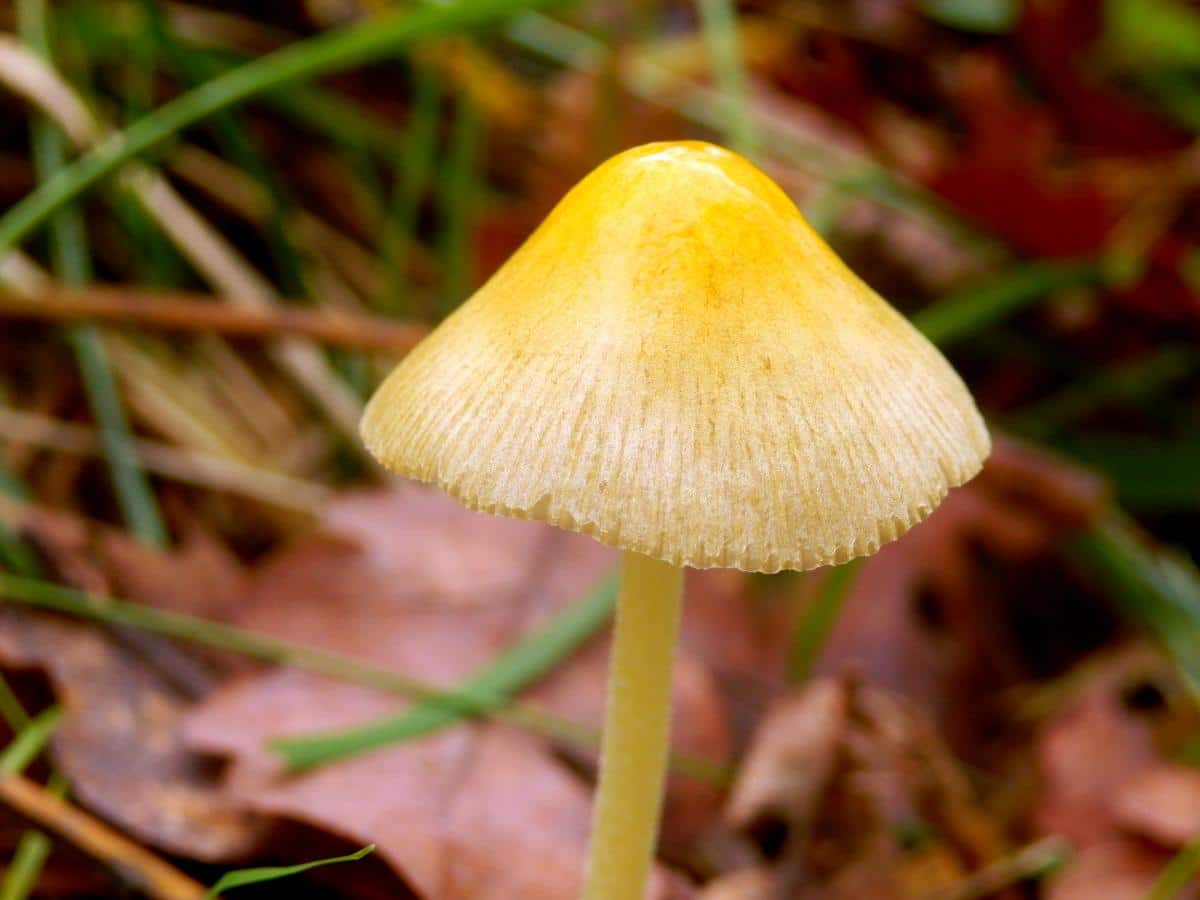
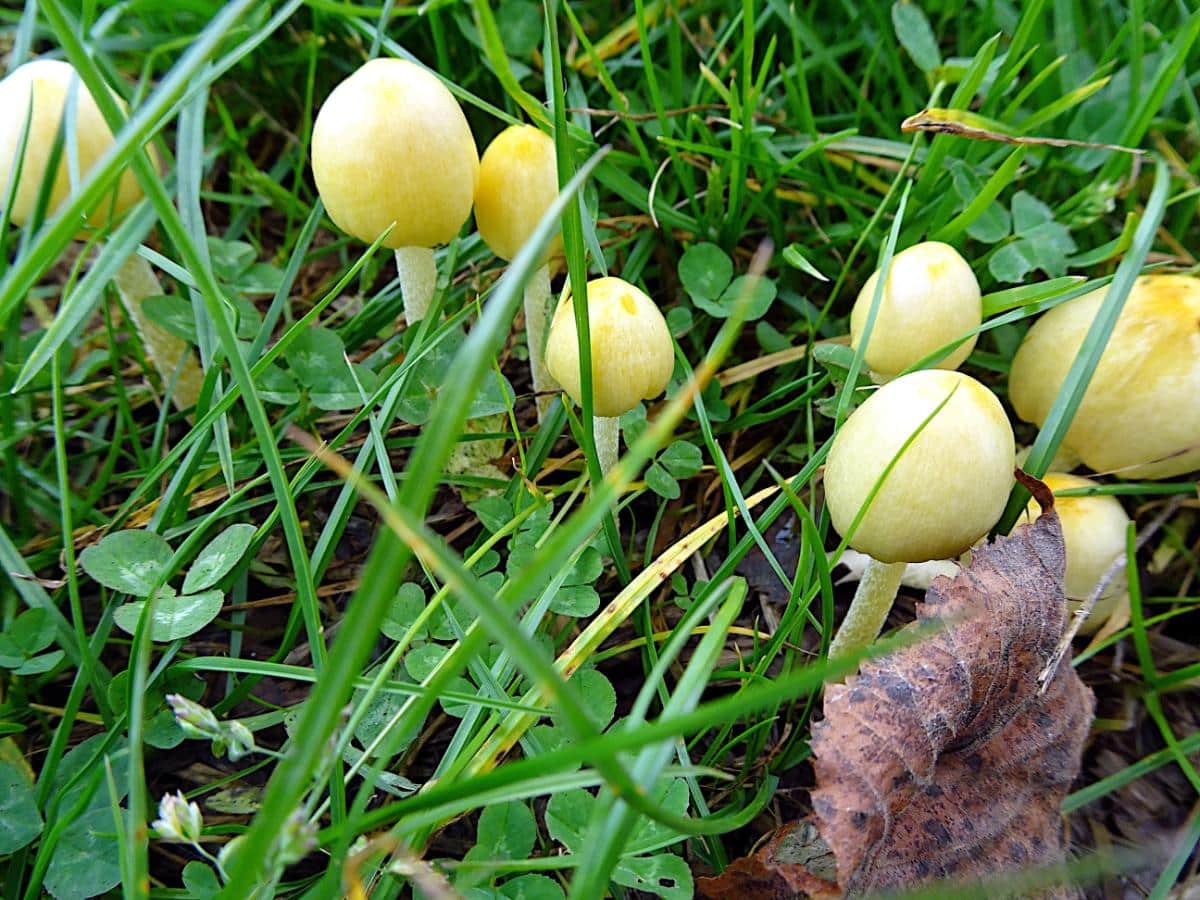
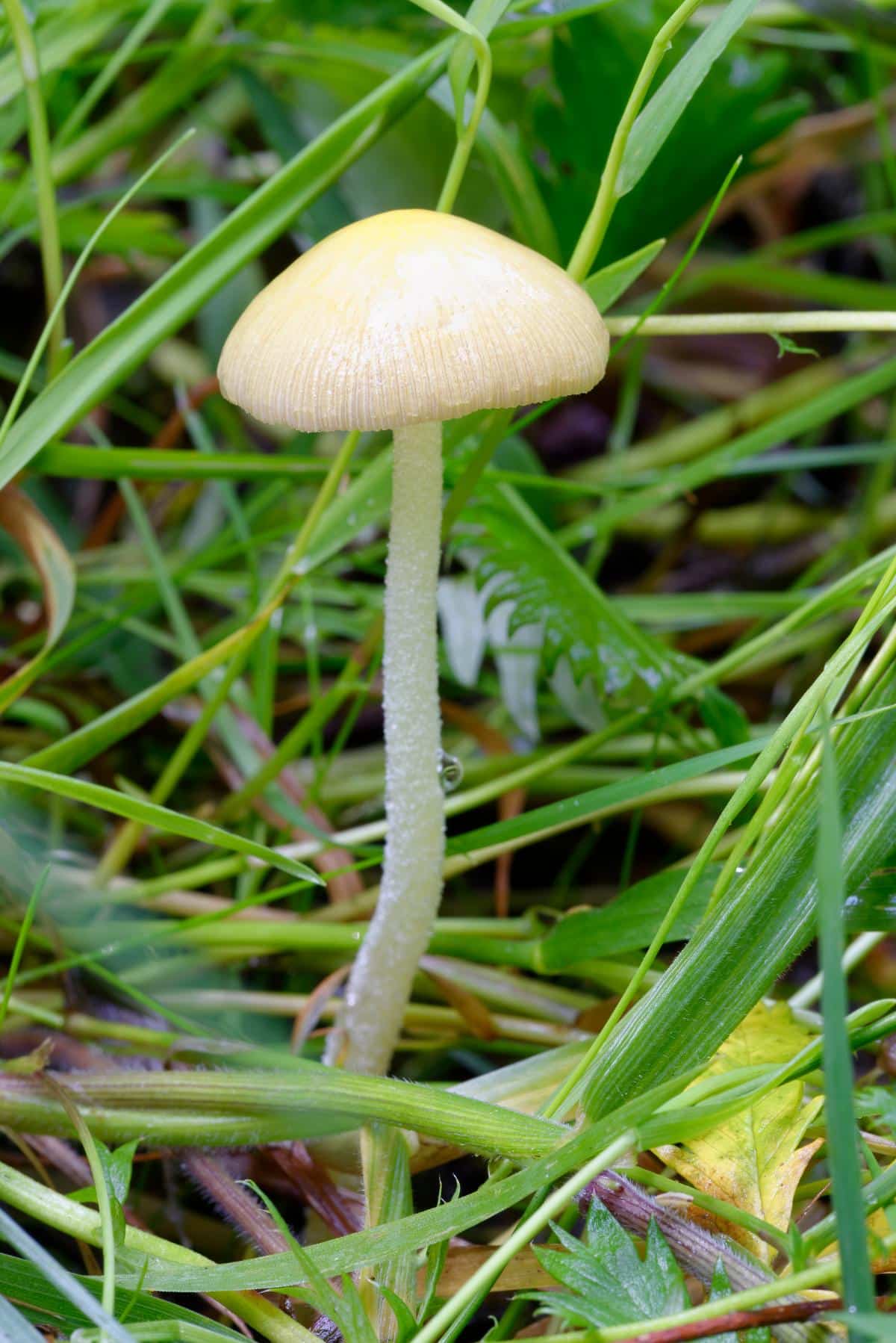
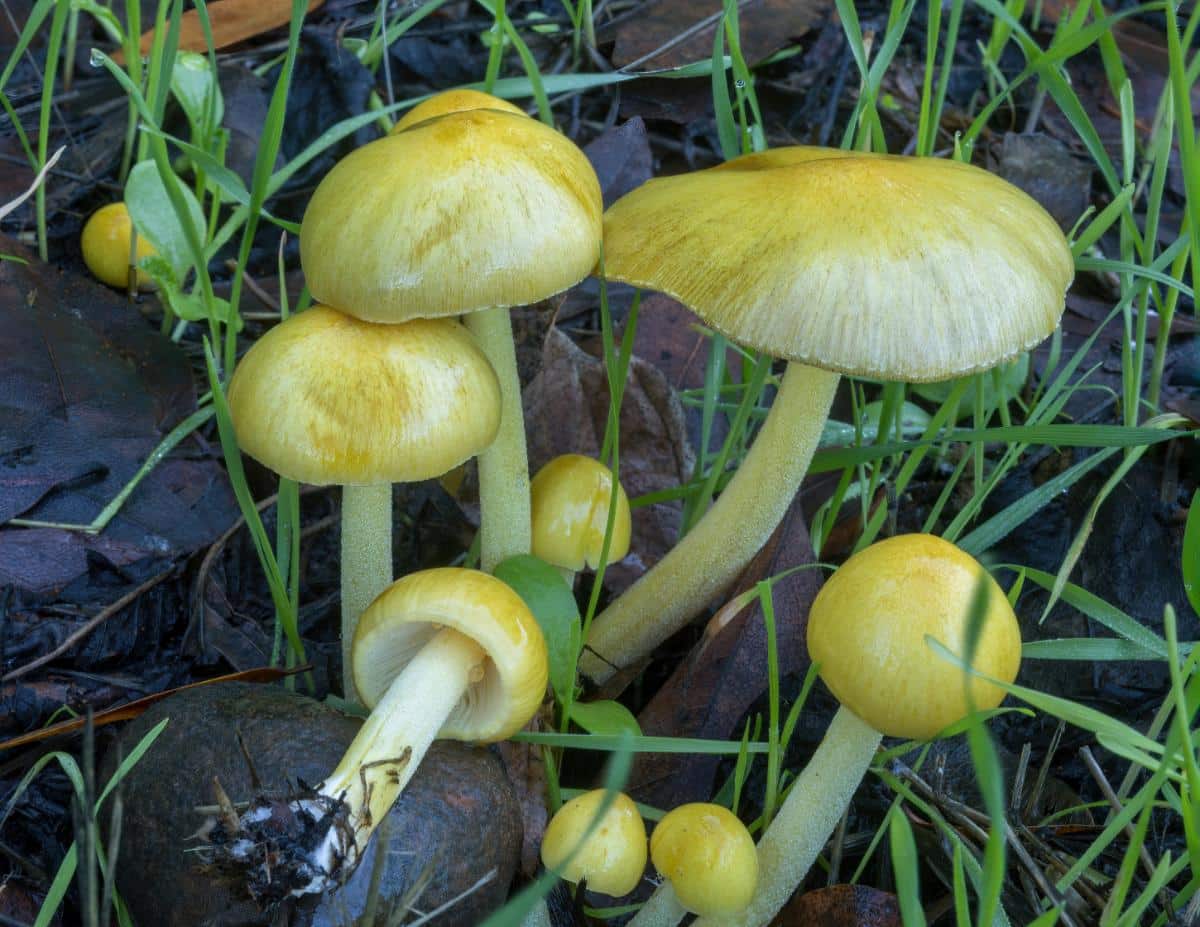
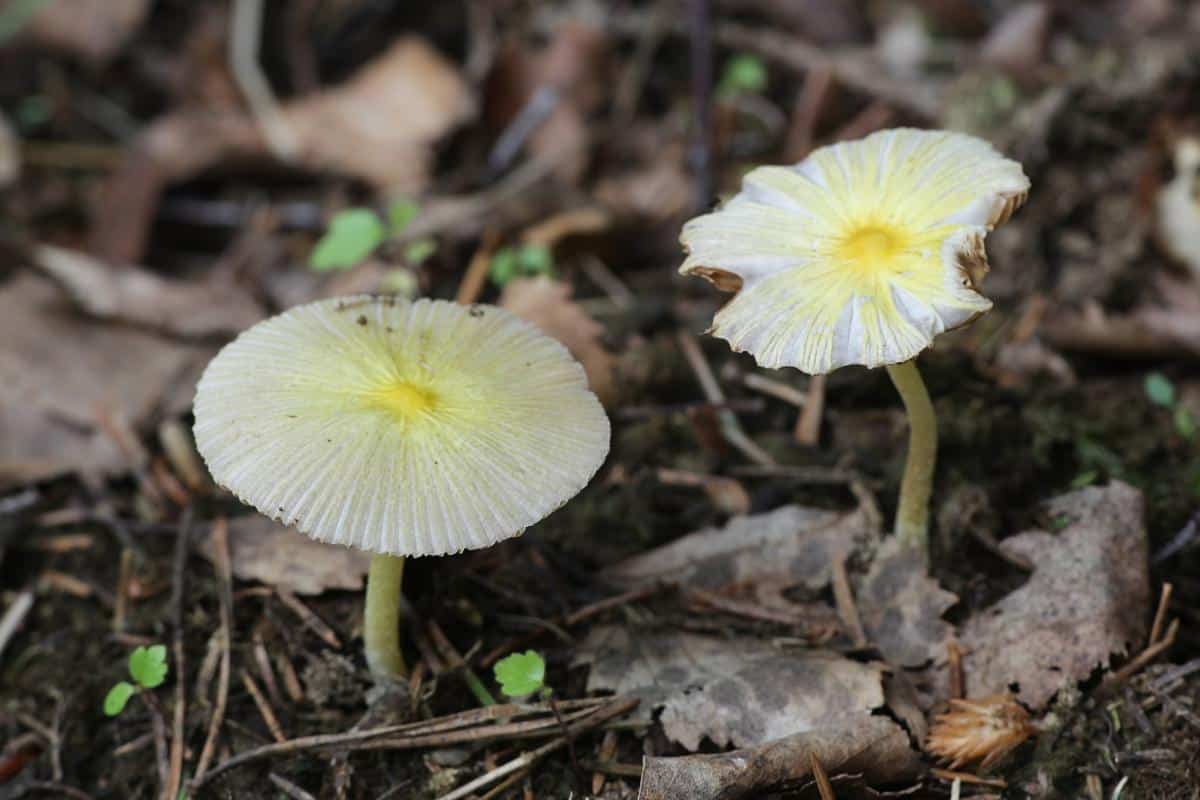
The sunny side up mushroom starts out with a small bell-shaped cap. The edges of the cap are tight to close around the stem, which makes it look like an egg yolk sitting atop a thin stem. With age, the cap opens up to become more bell-shaped and then flattens out. As the cap flattens out, the edges curl upward and create a depressed center – it looks a lot like a parasol at this stage. Although the center of the cap is lower than the curled gills, there may still be a slightly upraised bump in the very center — think of the raised egg yolk bump of a cracked egg.
The cap is 1 to 2.5 inches across at maturity; it is much smaller when young. The surface is smooth and extremely sticky or slimy when fresh, which is especially noticeable after it rains. In warmer weather, the cap has a silky, shiny appearance. Some specimens develop a pocketed or veined surface pattern as the sticky coating dries after it’s been wet or in particularly dry conditions.
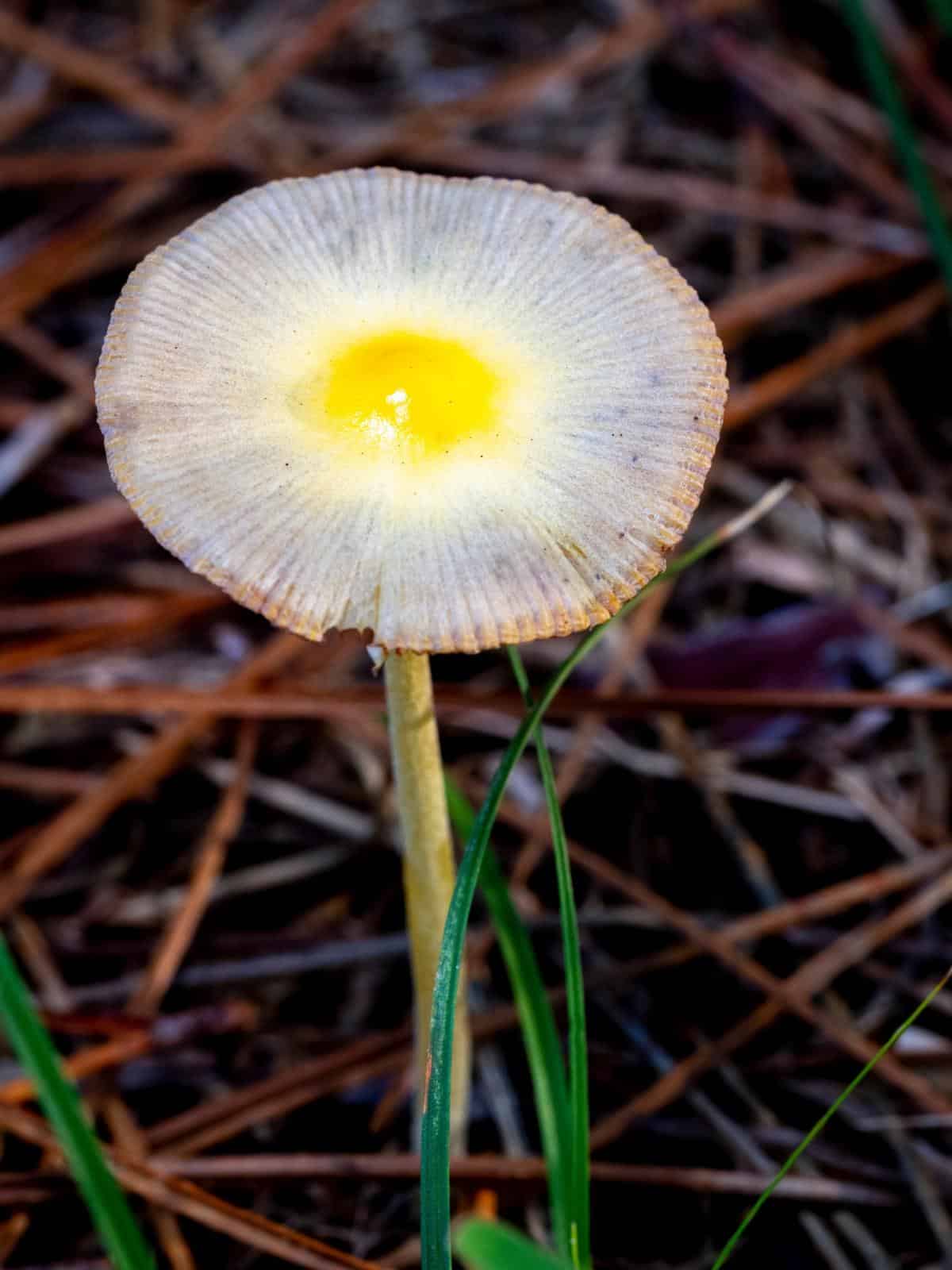
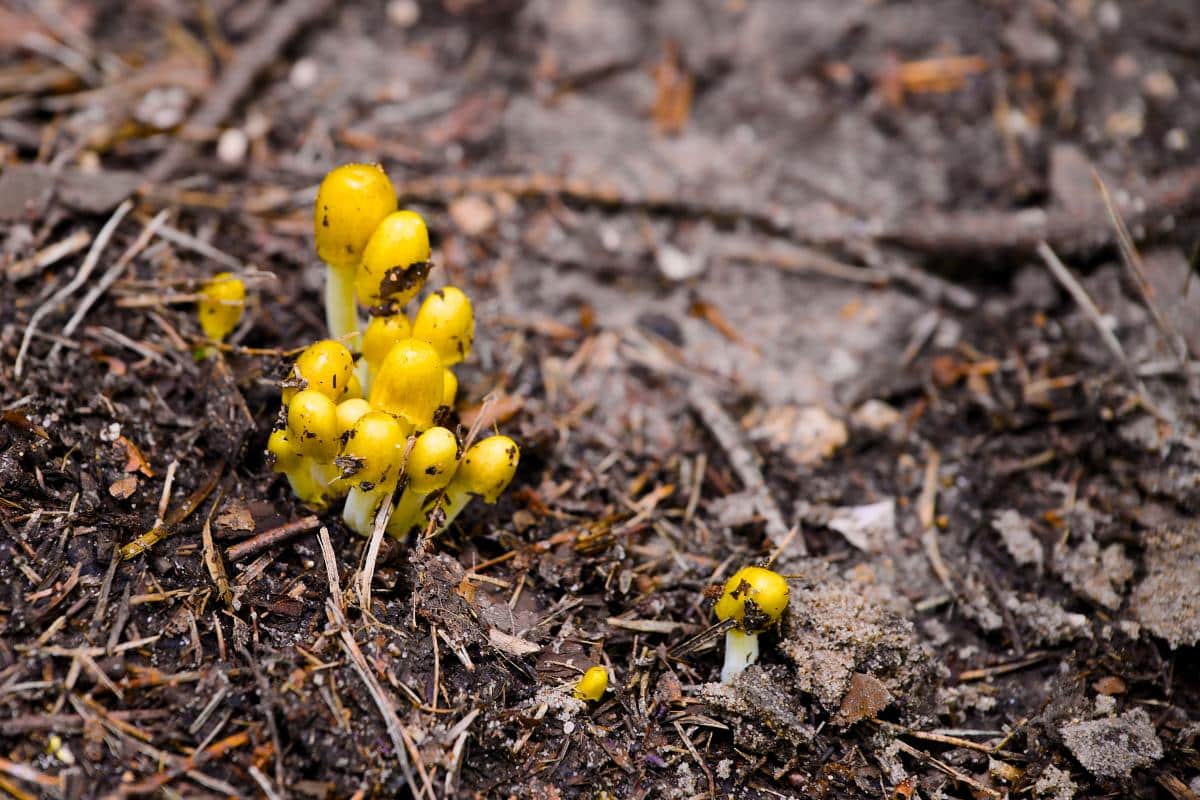
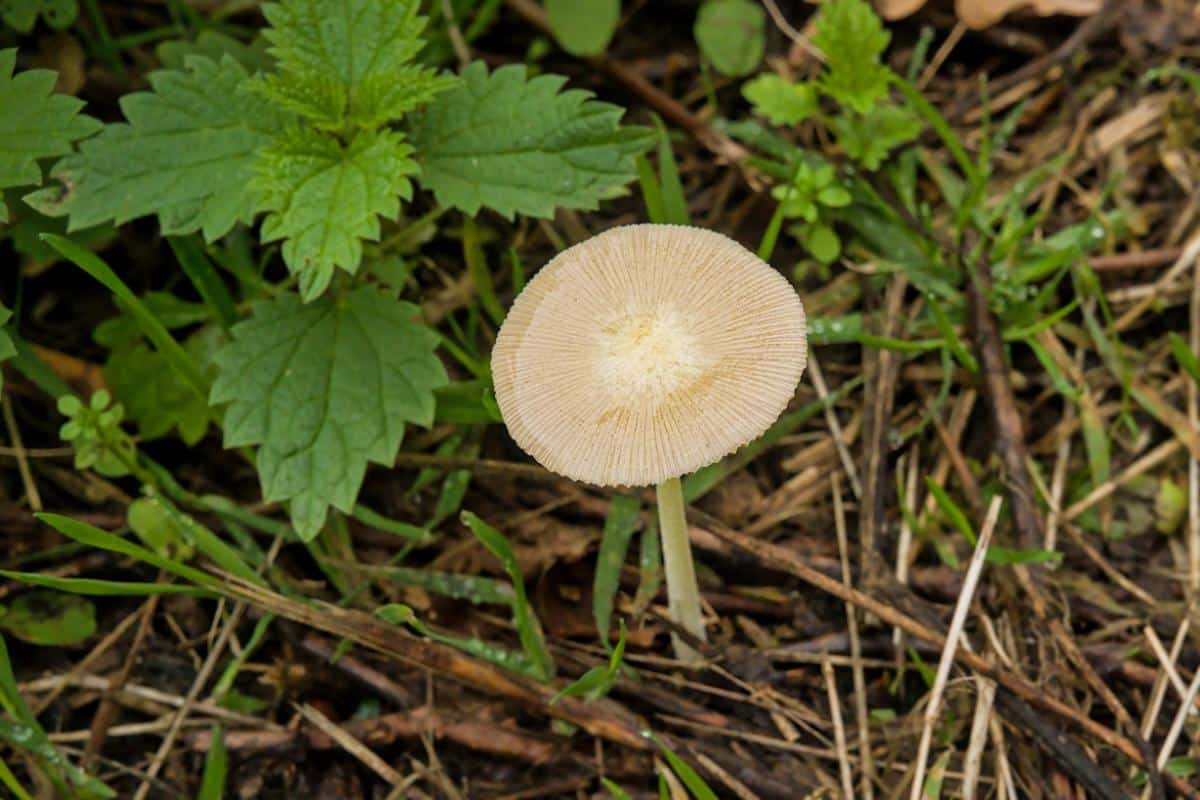
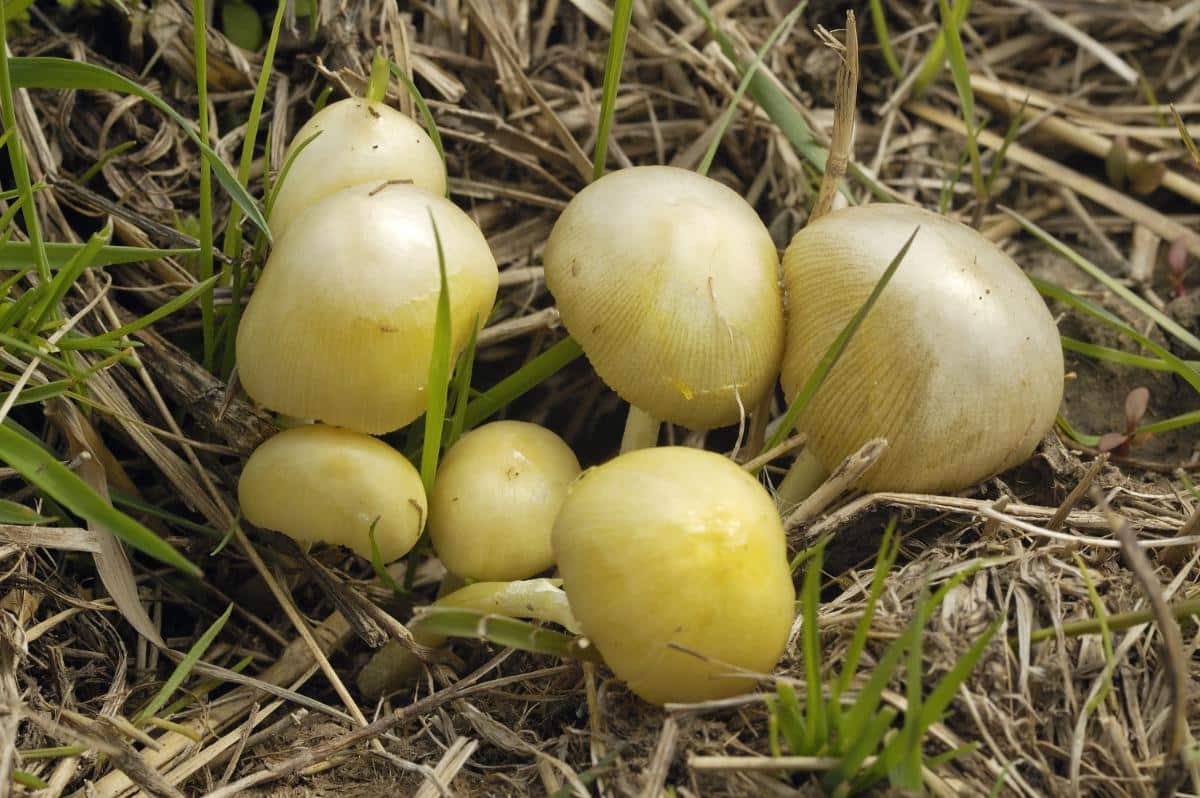
On young sunny side up mushrooms, the caps are bright yellow to greenish-yellow and might have brownish or grayish tones. As the mushroom ages, the color fades from the edges inward. It turns whitish, pale tan, brownish, or grayish over time. The center of the cap usually keeps its yellowish tint longer than the edges, so it looks like a yellow splotch in the center of an overall grayish-whitish cap. This is when it most resembles its common name — sunny side up eggs. The yellow can completely disappear, over time, and the cap will be a rather uninspired whitish tan.
The cap edge becomes deeply lined or grooved at maturity; it has striations radiating from the center nearly all the way to the edge. The flesh is extremely thin, fragile, and watery yellow in color. It can easy be pulled away from the edge.
The lifecycle of this mushroom is very short — it appears, matures, and disappears usually within 24 hours, and oftentimes, quicker than that. It starts out as a yellow egg yolk on a stick, then becomes a yellowish-tannish parasol, and finally a tannish-brownish upturned parasol in less than a day.
Gills
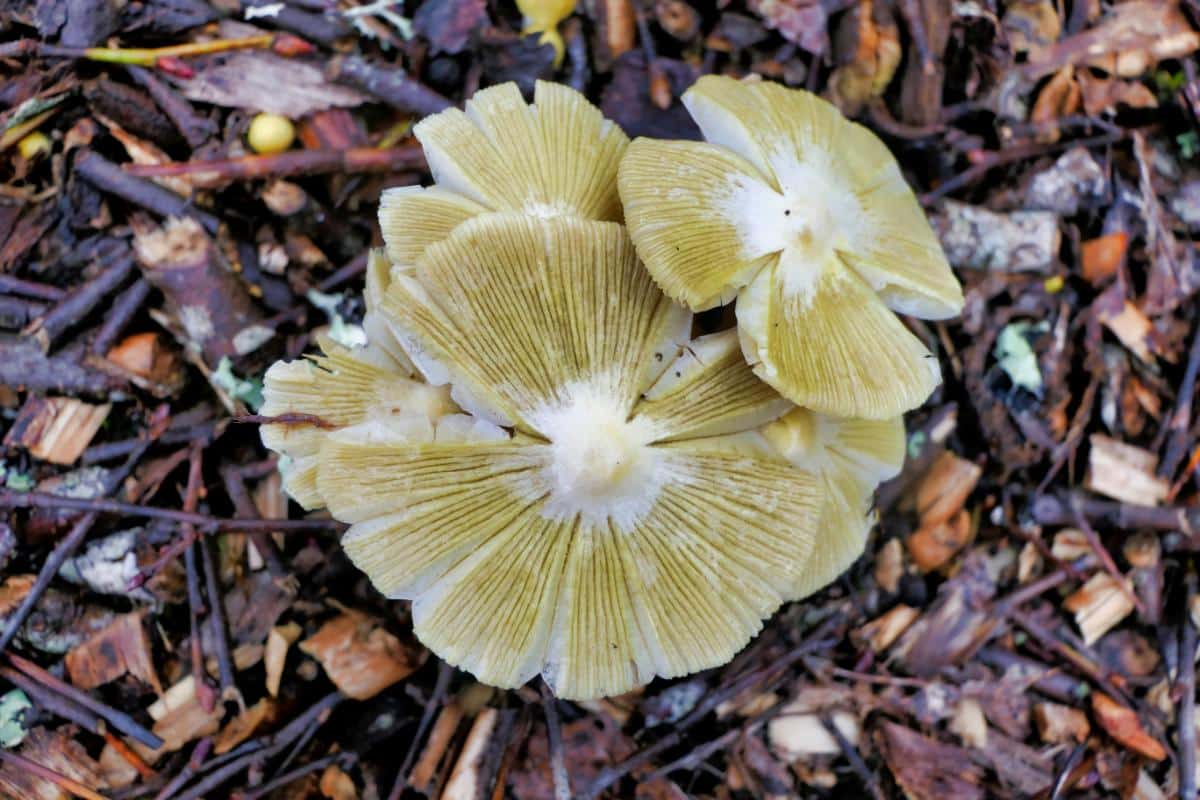
The gills are narrowly attached to the stem or look nearly free from it. They are closely spaced, and there are frequent short gills interspersed among longer ones. Gills of the sunny side up mushroom are extremely soft and fragile; they are easily damaged when handled.
Gills on younger mushrooms are whitish or pale yellowish. They change to yellow-brown to a dull cinnamon or rusty brown color with maturity. In wet weather, the gills may become somewhat gelatinous.
Stem
The stem is 1 to 5 inches long and very thin. It is quite slender in comparison to the cap. It is hollow, extremely fragile, and breaks very easily. It is white to pale yellow or yellow overall.
When the mushroom is young, the surface of the stem has a fine powdery or mealy coating near the top and sometimes downy fibers at the base. With age, though, the powders or fibers might disappear, and the stem will be smooth.
The extremely fragile stem cannot support the cap weight for long, and many times the mushrooms will start leaning progressively as they age. Eventually, most fruiting bodies topple over completely in what appears to be a slow-motion collapse.
Taste and Smell
The mushroom has no distinctive odor or taste.
Flesh Color and Staining
The flesh is insubstantial, thin, and watery, and is yellowish to whitish in color. When sliced or broken, it does not change color or stain.
Spore Print
The spore print is dull cinnamon brown to rusty brown.
Sunny Side Up Mushrooms Lookalikes
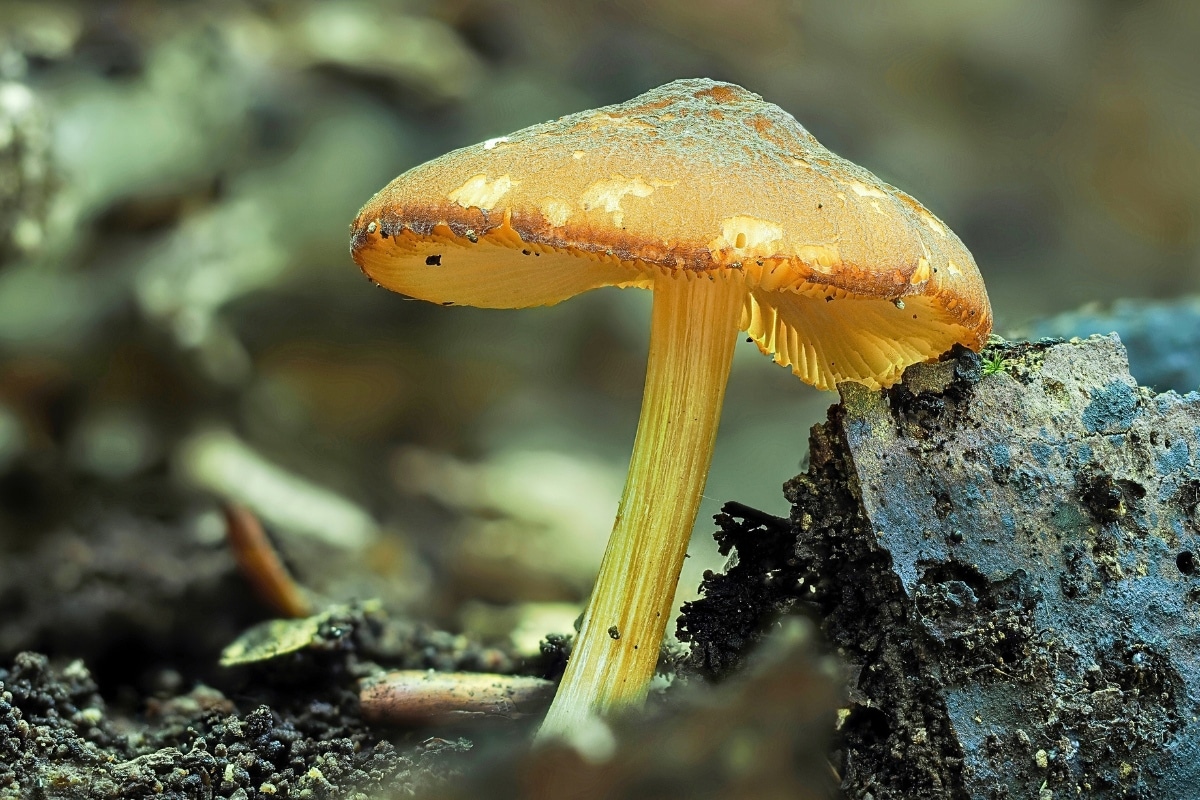
Yellow Shield Mushroom (Pluteus chrysophaeus)
The yellow shield is also a gilled mushroom with a deep egg-yolk yellow cap. At first glance, it looks very similar to the sunny side up mushroom. There are some key differences, though. The yellow shield grows on dead or decaying wood, not soil or dung. These mushrooms also last longer than the ephemeral Bolbitius.
The gills of the yellow shield are also pinkish, not yellowish. If there is any remaining doubt, a spore print will set them apart. The spore print of the yellow shield is pink.
Yellow Flowerpot Parasol (Leucocoprinus birnbaumii)
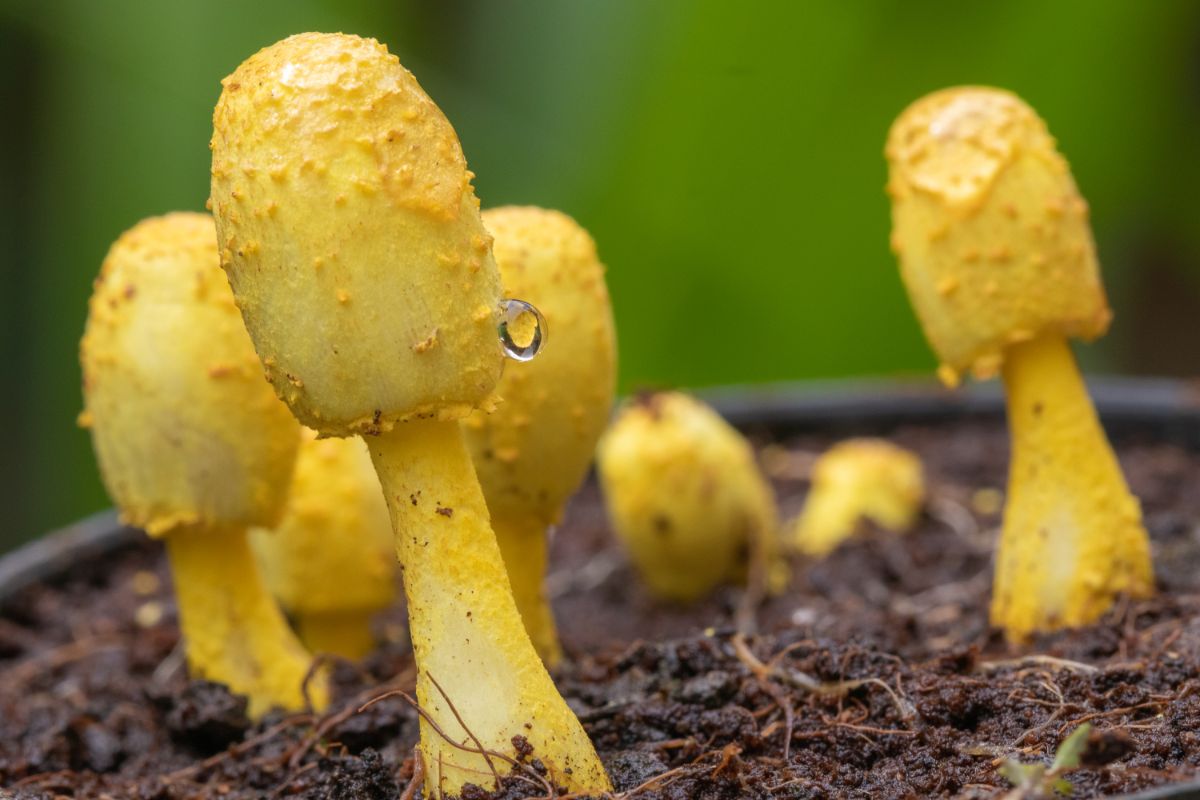
This tropical species shows up in greenhouses and potted plants, and is a semi-common surprise for many plant parents. The yellow flowerpot parasol is also bright yellow, thin, slender, and fragile, and has the same bell-shape to parasol shape transition. While the cap color matches that of a young sunny side up mushroom, there are a few key differences. The yellow flowerpot parasol has a prominent ring on the upper stem and white gills. It also has a white spore print rather than a cinnamon-brown one. This species is more common indoors, in potting soil and commercial growing media, rather than on grass or dung.
Milky Conecap (Conocybe apala)
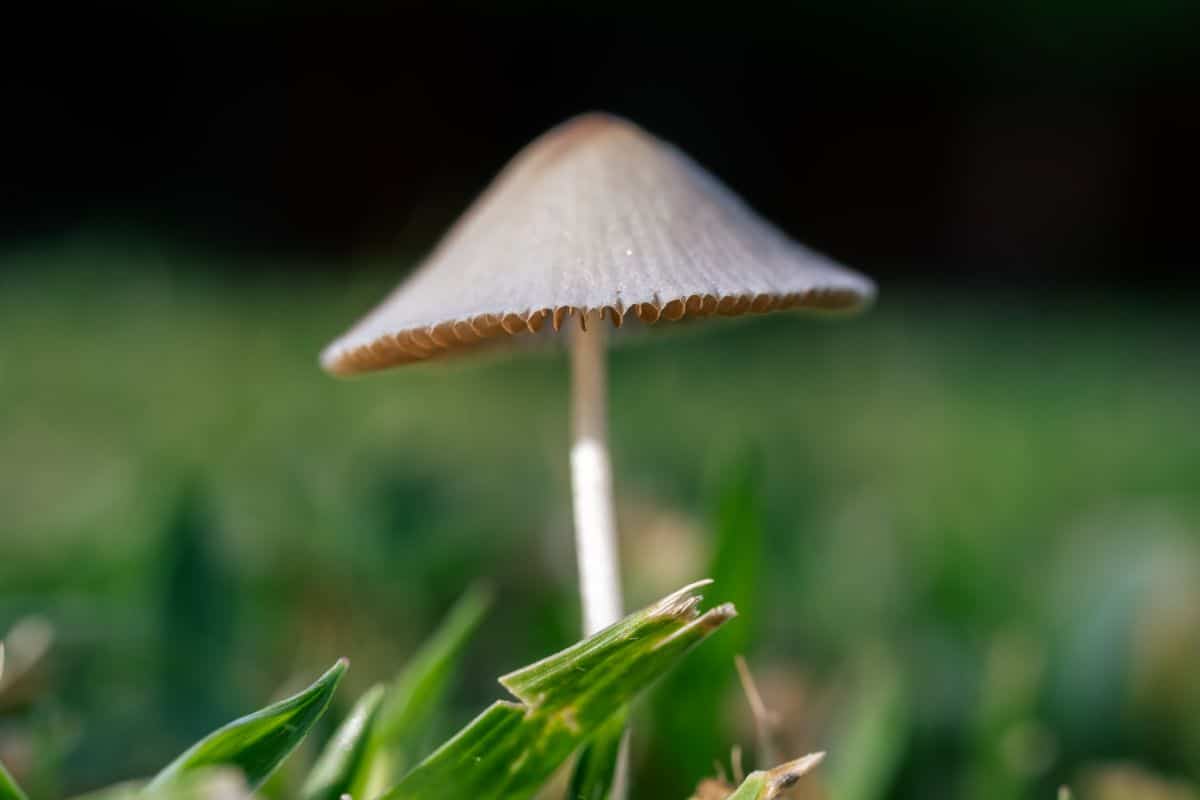
This small, fragile mushroom also grows in grassy areas, but it has a whitish to pale cream cap rather than the bright yellow of young sunny side up mushrooms. However, once the yellow cap of the sunny-side-up mushroom fades, these two can look quite a bit alike.
The key difference is the stem. Milky conecap stems don’t have fine scaly or powdery residue on them. And, the sunny side up mushroom usually does.
Deadly Galerina, aka Funeral Bell (Galerina marginata)
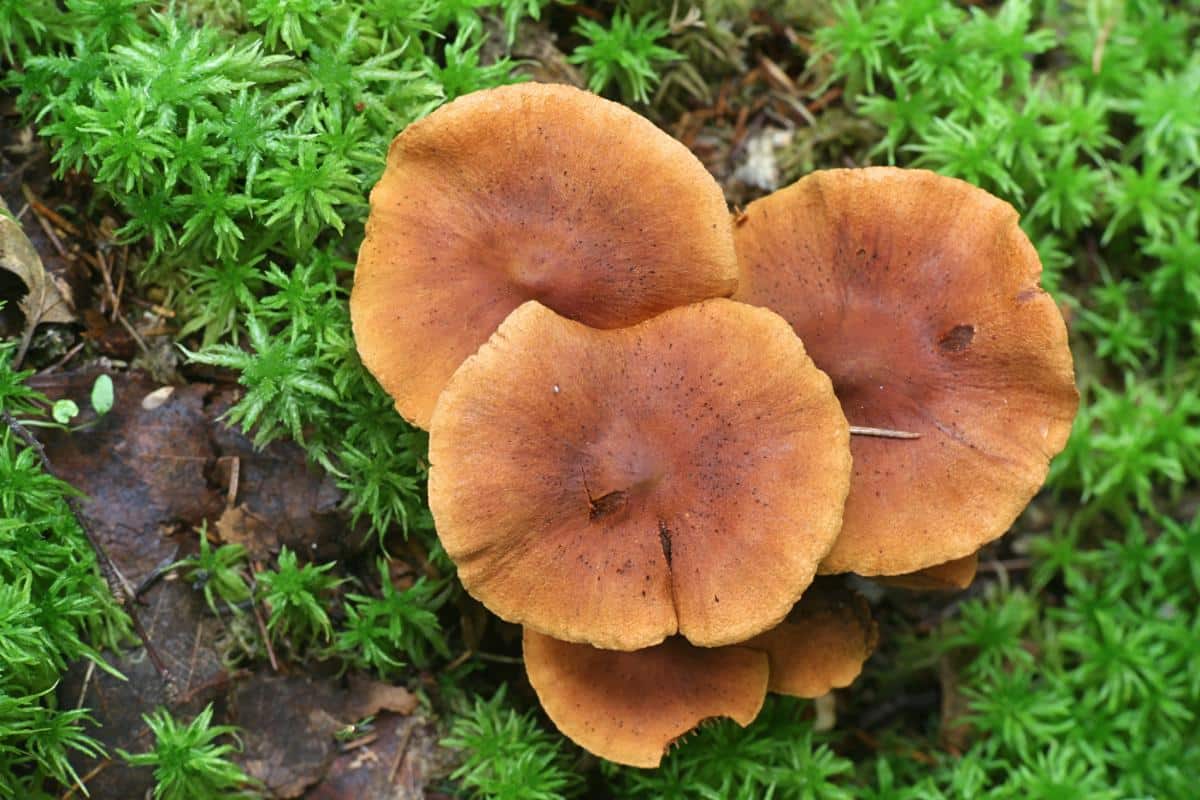
This extremely dangerous mushroom has a brown cap and brown spore print that could potentially be confused with mature, faded specimens of the sunny side up mushroom. The big difference is habitat: The deadly Galerina grows exclusively on decaying wood, including buried wood. Deadly Galerinas also typically have a small ring on the stem, but that may disappear with age.
Deadly Galerina’s tend to be deeper brown overall, and the cap is all the same color. They are also generally larger and more robust.
Other Bolbitius Species
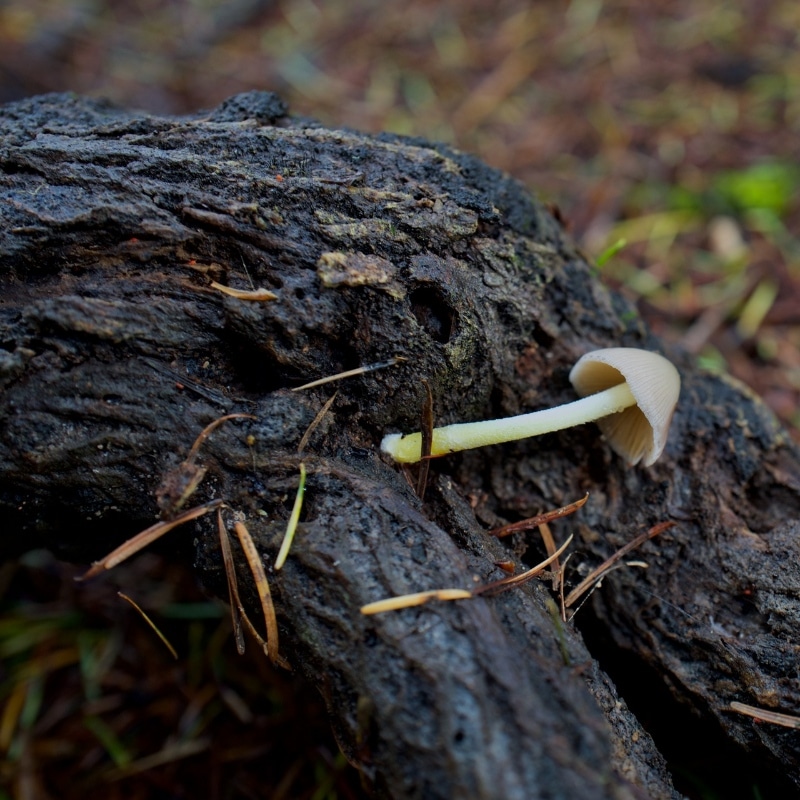
Several closely related species in the genus Bolbitius can be difficult to distinguish from the sunny side up mushroom.
- Bolbitius reticulatus has a more grayish-pinkish cap and has a whitish or yellowish stem. It grows primarily on rotting wood, sawdust, or humus rather than grass or dung.
- Bolbitius coprophilus also grows on dung but has pinkish to reddish-brown young caps that fade to grayish-brown with maturity.
Is The Sunny Side Up Mushroom Edible?
This mushroom is not poisonous, but it’s not eaten either. The mushrooms are extremely small, with caps rarely exceeding two inches in diameter and flesh so thin that it provides almost no substance. Also, the individual specimens shrivel and decompose so quickly that collecting and storing them is impractical. When sunny side up mushrooms are cooked, their watery flesh shrinks to nearly nothing. Their taste is also described as bland or absent.
The effort required to gather enough specimens for even a small serving far outweighs any potential benefit. Also, because the mushroom often grows on dung and heavily manured soil, it means they require thorough washing. But their fragile structure does not withstand cleaning well.
Common Questions About Sunny Side Up Mushrooms
How fast do Sunny Side Up mushrooms grow and die?
These are very short-lived mushrooms — they appear, and then die off, within a day or two. They change colors very quickly, from bright yellow to bland brownish-tan, which means a fresh flush can look completely different within hours.
Is Bolbitius titubans medicinal?
Bolbitius titubans has no known medicinal uses or applications in traditional or modern medicine.
Where are Sunny Side Up mushrooms found?
These mushrooms grow across North America, Europe, and parts of Asia and Australia. They appear in fields, gardens, lawns, and pastures — anywhere there is rich organic matter like manure or decomposing straw.
Leave a Reply