

Are you ready for this weirdo for-sure-an-alien fungus? Purple jellydisc (Ascocoryne sarcoides) is absolutely bizarre and a little creepy with its purple blobs of jelly oozing from rotting wood. While this seems strange enough, the purple jellydisc is actually even more eccentric because it literally shape-shifts throughout its life and, when mature, can be quite cute.
This mushroom is found in North America, Europe, and Asia, with sightings also recorded in Australia, Chile, China, Cuba, Iceland, Korea, and Taiwan. It grows on dead hardwoods, especially beech, but can also be found on oak and ash.
The purple jellydish mushroom isn’t edible, but it also isn’t toxic; it just doesn’t have any culinary appeal because of its size and texture. However, it does have some other properties that are extremely interesting to researchers — it produces a chemical similar to diesel fuel!
- Scientific Name: Ascocoryne sarcoides
- Common Names: Purple jellydisc, jelly drops
- Habitat: Dead hardwood
- Edibility: Inedible
Jump to:
All About Purple Jellydisc Fungus
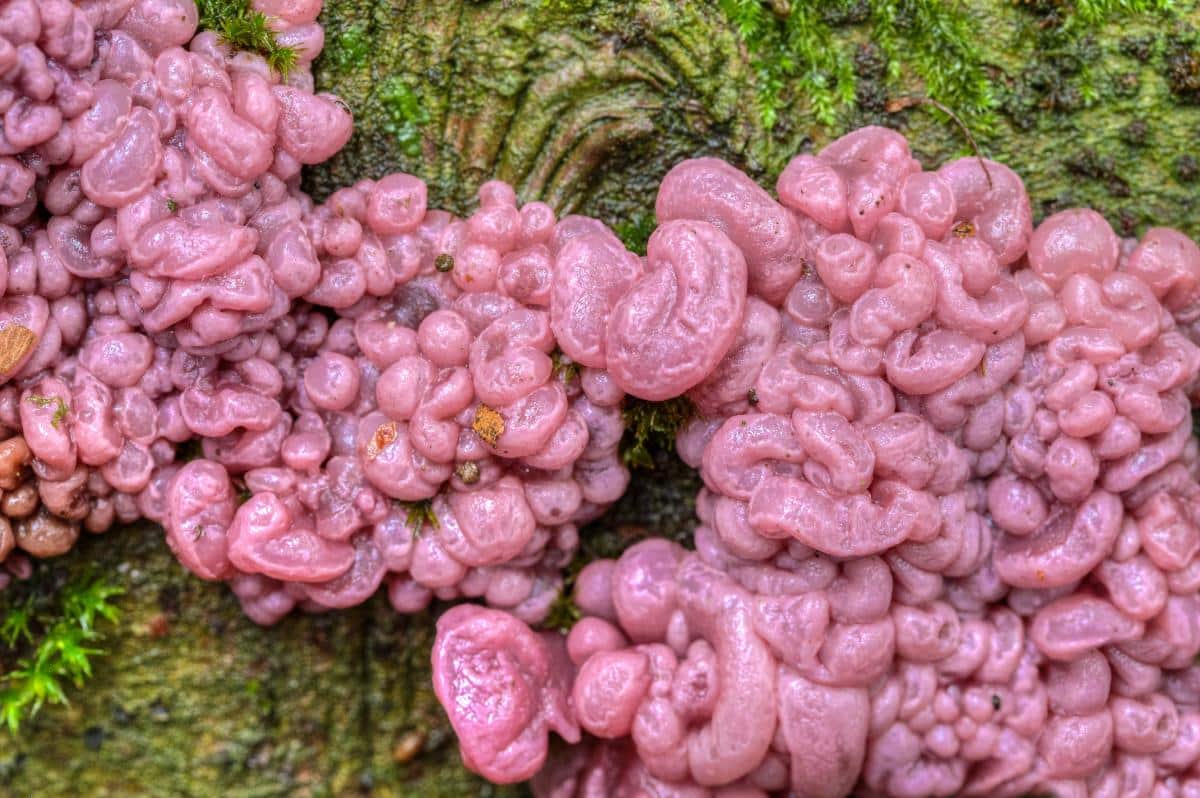
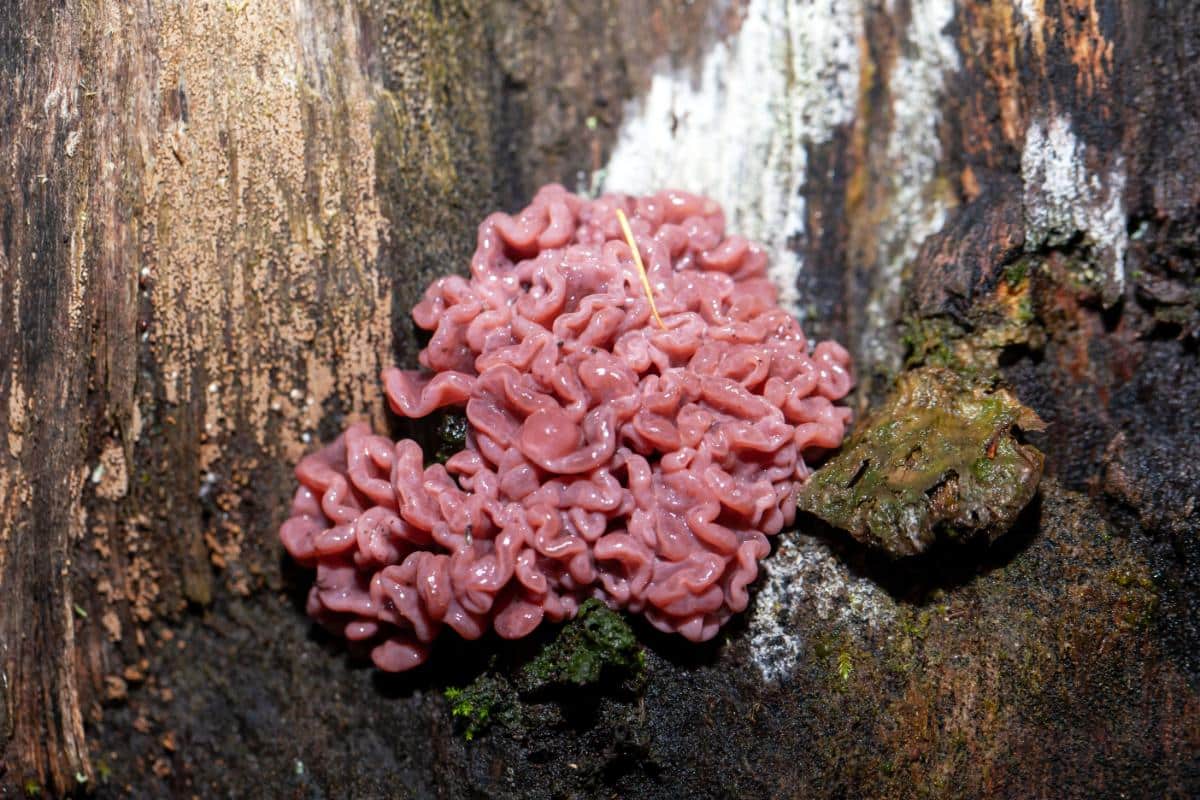
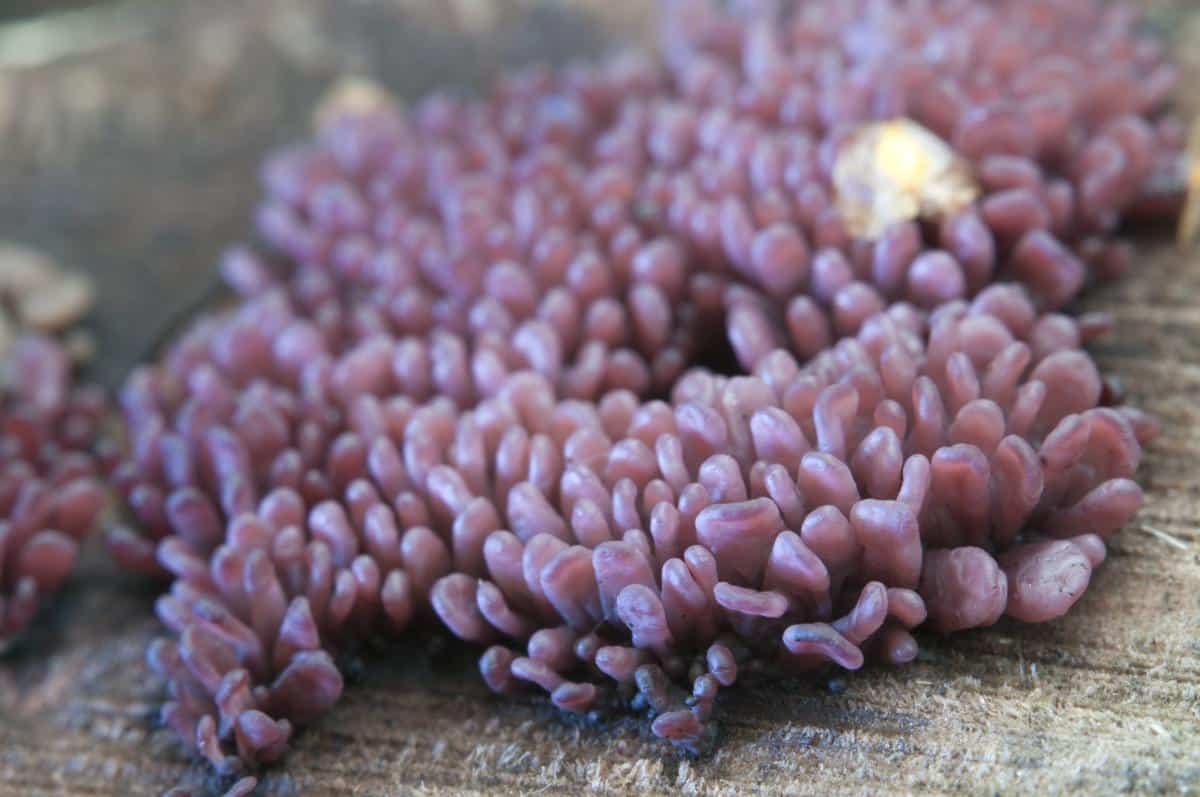
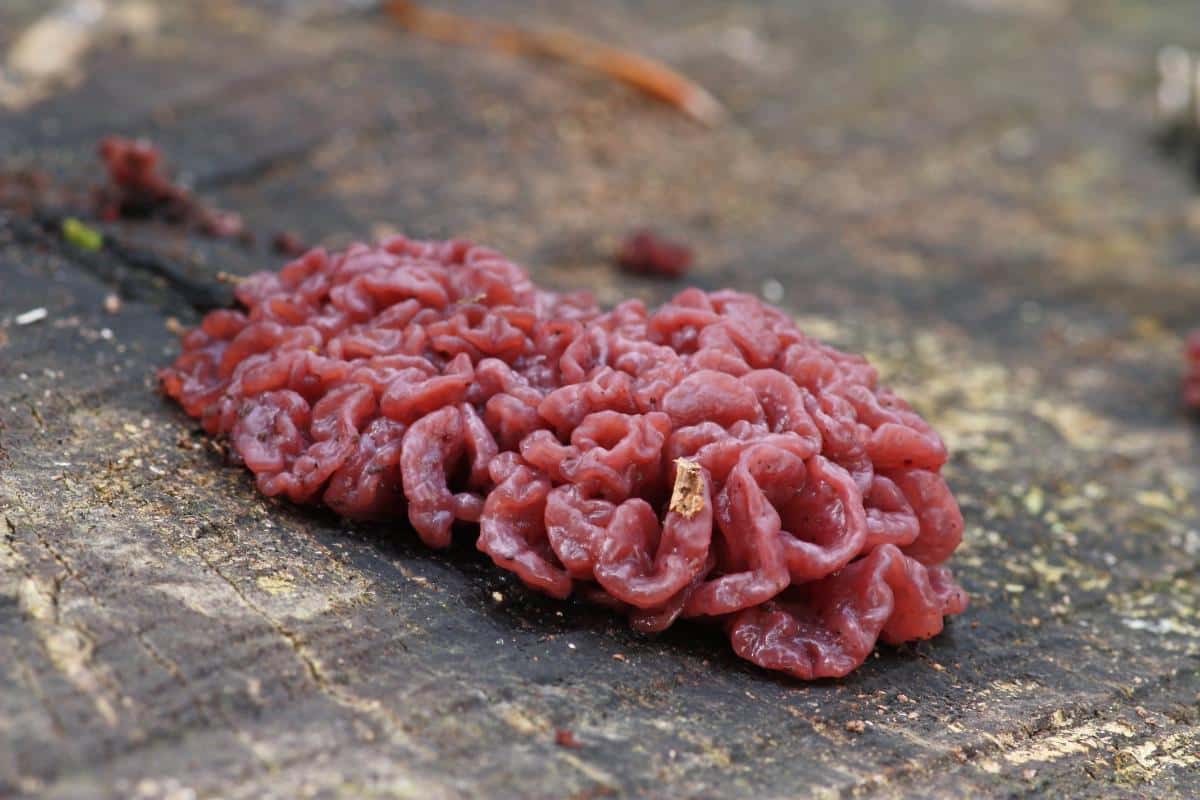
The purple jellydisc mushroom seriously looks like someone squeezed out pinkish-purple jelly onto dead wood. It is also commonly called jelly drops because of its wild appearance. Did someone leave a mess behind after eating a grape jelly sandwich in the forest?
The scientific naming for this species has been messy because the fungus takes two very different forms during its life cycle. Because of this, it has had many different names throughout its scientific history. When it is young, it looks like blobs of jelly, and when it is mature, it turns into cute little purple fairy cups.
The two very different forms were once thought to be separate species. This ability to switch between forms confused mycologists for years and led to the fungus being described under multiple names before scientists realized they were looking at the same species.
It finally found its final scientific name in 1967, when Canadian mycologists James Walton Groves and D.E. Wilson created a new genus for it called Ascocoryne. The genus name breaks down as “Asco-” for ascomycota (fungi that make sexual spores inside sac-like structures called asci) and “coryne” from Greek for “knotted rod.” The species name “sarcoides” means “fleshy” in Greek, so named because the pinkish-purple flesh of the fungus looks a bit like raw meat.
Despite its name and appearance, purple jellydisc is not a true jelly fungus. True jelly fungi are basidiomycetes, while this species is an ascomycete – a completely different group. Both developed the same gelatinous texture independently because it helps them survive freezing and drying by absorbing water quickly when conditions improve.
The purple jellydisc produces volatile compounds chemically similar to diesel fuel — this earned it the nickname “myco-diesel.”
Purple Jellydisc Fungus Identification Guide
Season
Purple jellydisc starts fruiting in mid to late November, when temperatures drop, and continues fruiting through autumn and winter. This species tolerates repeated freezing and thawing and is often found into late winter or early spring.
Habitat
This fungus grows on dead deciduous wood, primarily beech logs, but it can also be found on oak and ash wood. It grows on both fallen logs and standing dead branches. It fruits in dense in clusters that seem to ooze from the wood. Purple jellydisc always grows on wood; it never grows from the ground.
Identification Guide
Body
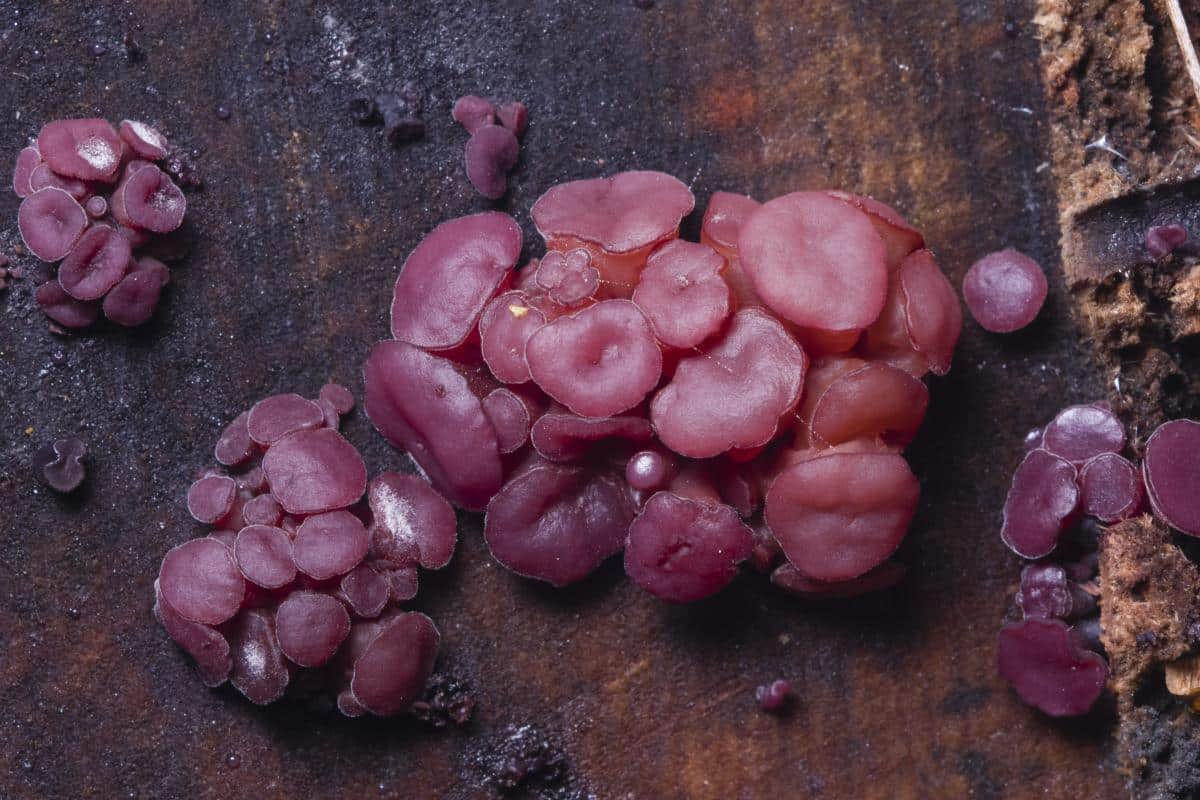
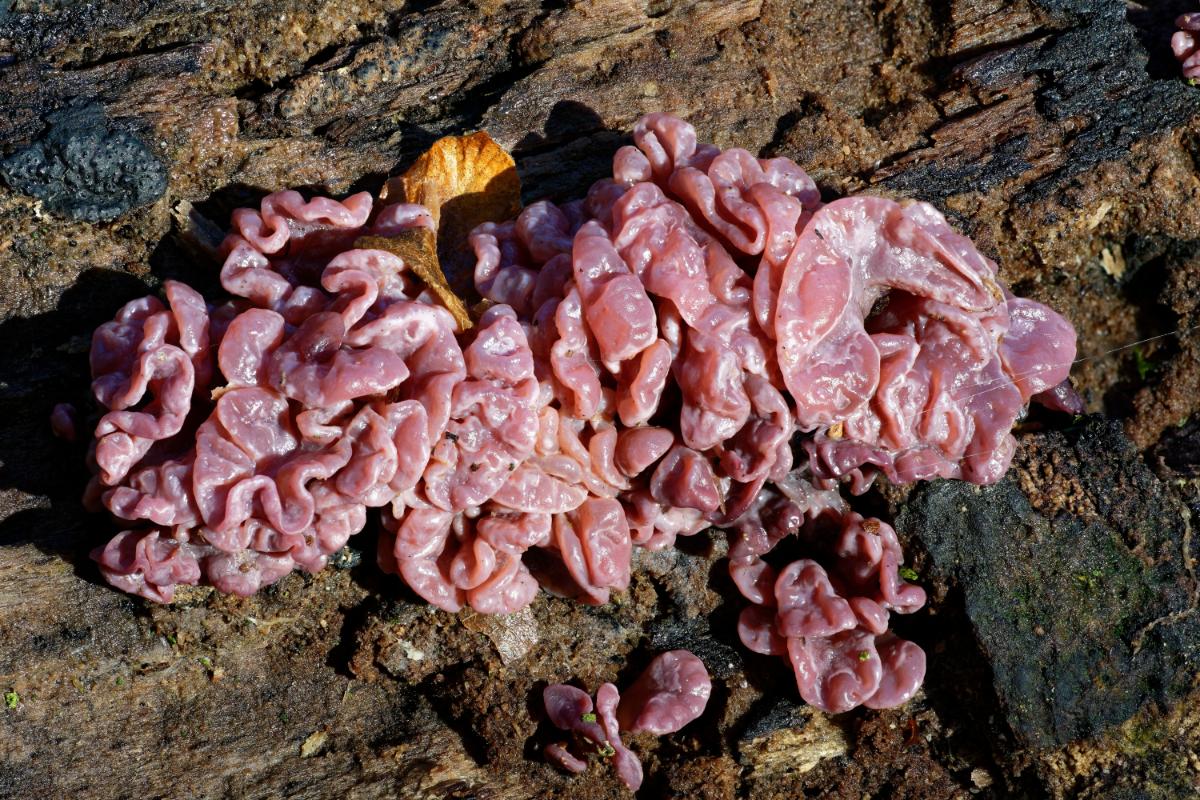
The individual fruit bodies are tiny – they grow from 0.2 to 0.6 inches across. Most often, though, they merge into much larger masses with dozens to hundreds of individual bodies combined into one larger conglomeration. The color ranges from pinkish-purple to lilac to wine or flesh-colored, and the color often fades with age.
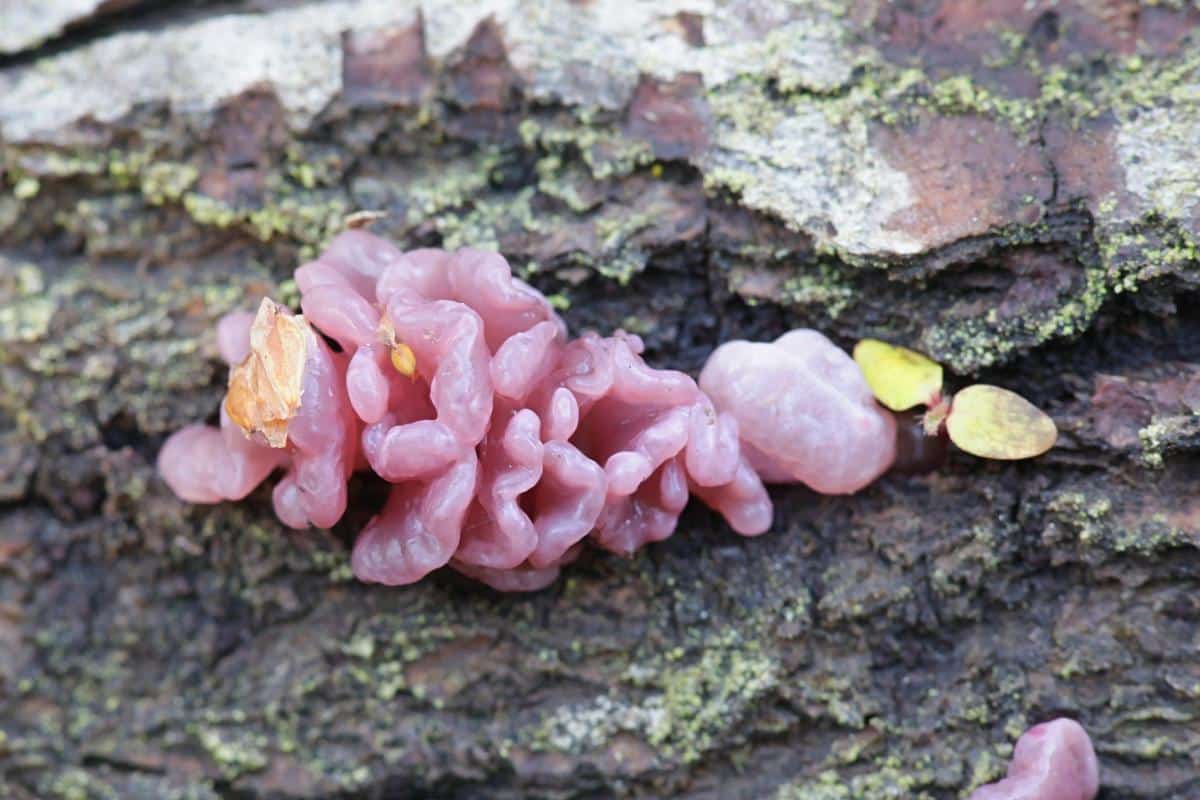
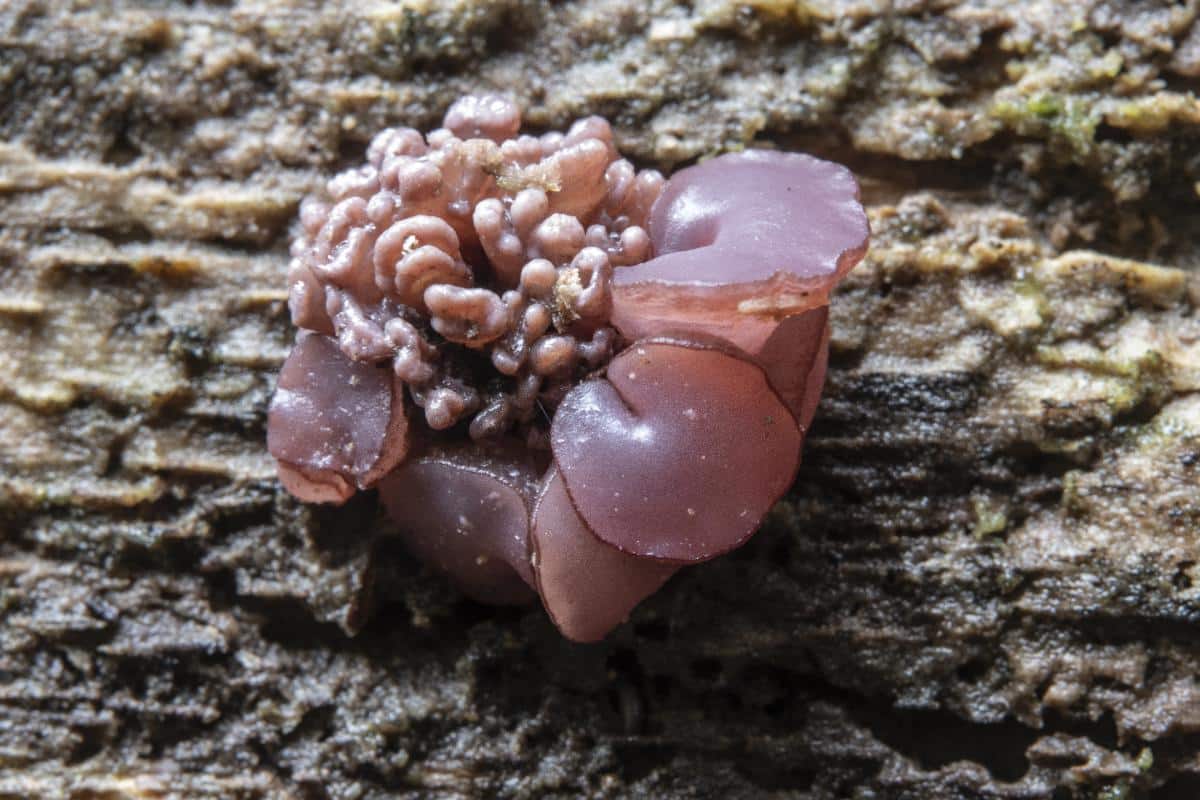
This mushroom has two different lifecycle stages with two completely different looks. It will either look like a jelly fungus or a cup fungus. When it is young, it looks like purple globs of grape jelly or tiny gelatinized purple fingers. The young fruitbodies are roughly sphere-shaped, which is why they look like little fingers. Sometimes, they form knobby fan-like clusters, a bit like coral.
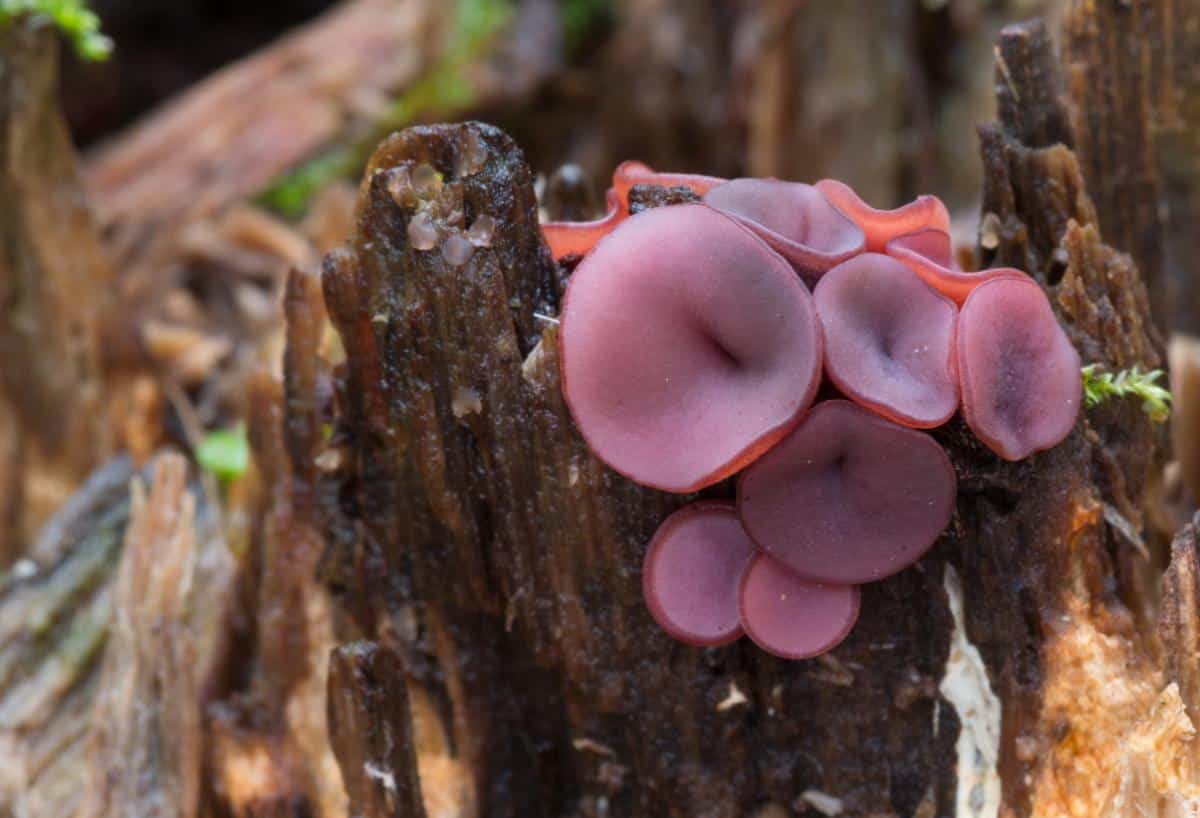
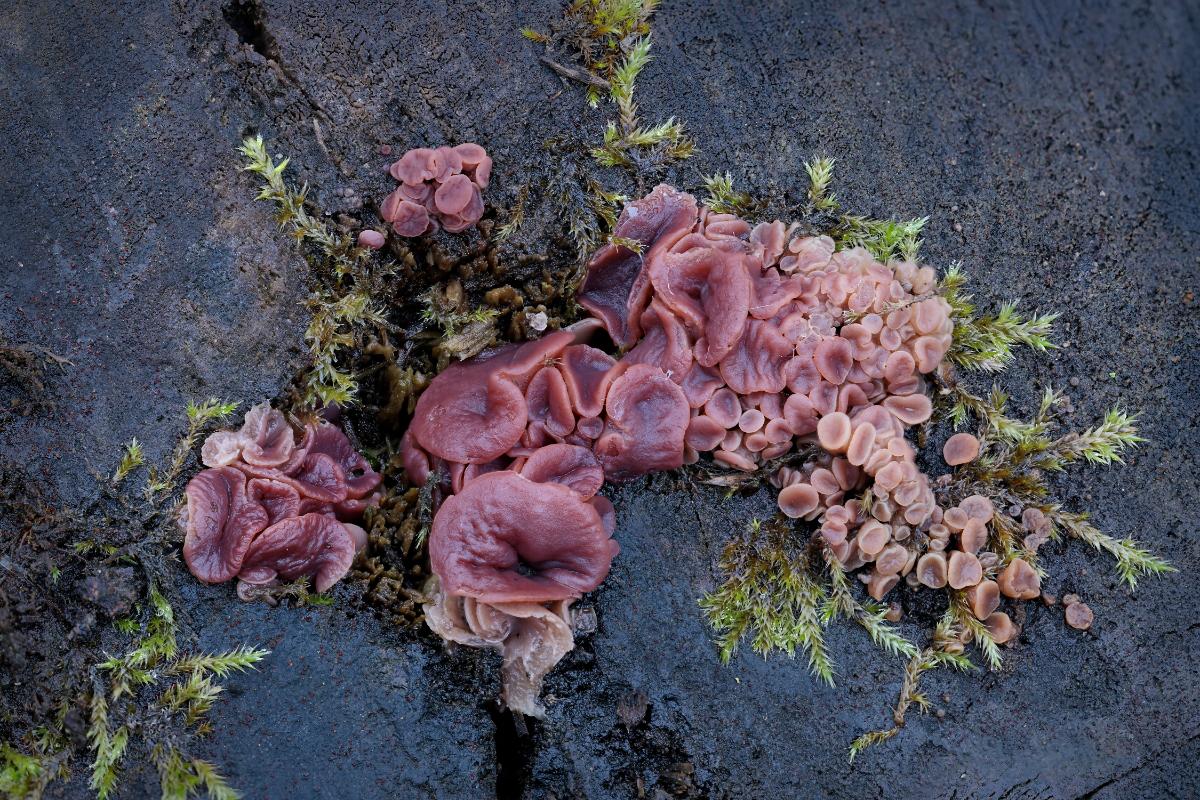
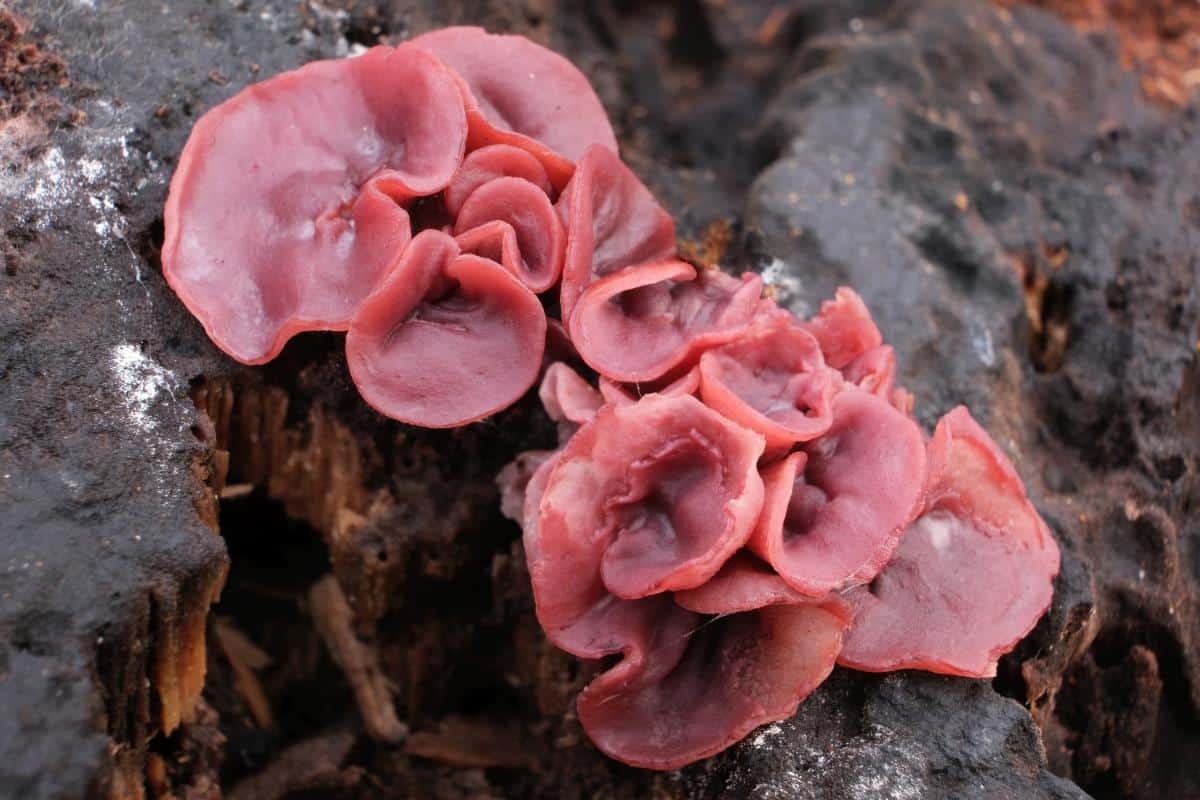
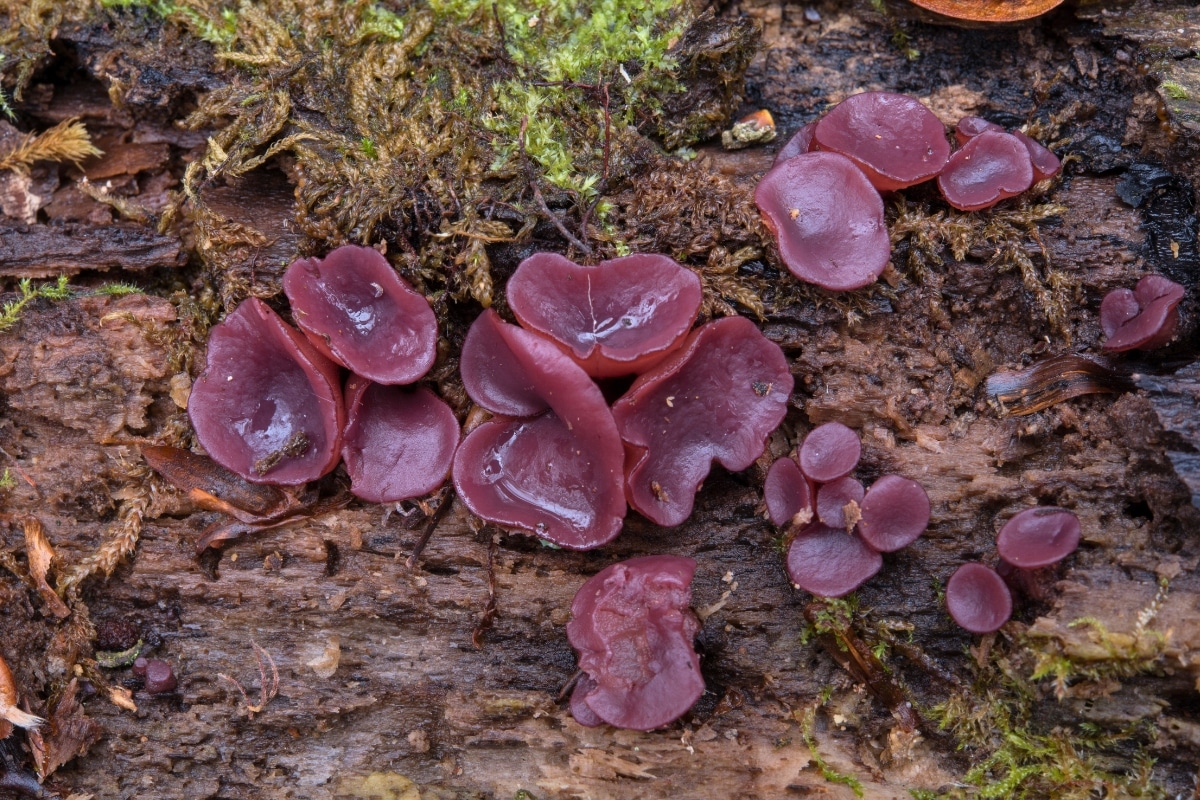
When it matures, it forms into a very shallow disc or a cup shape. The flesh is still gelatinous at this stage, too. The cup edges are wavy, and the upper surface is smooth. The surface might be glossy and smooth when moist, or slightly wrinkled. Under the mushroom, the surface might be smooth or very lightly fuzzy.
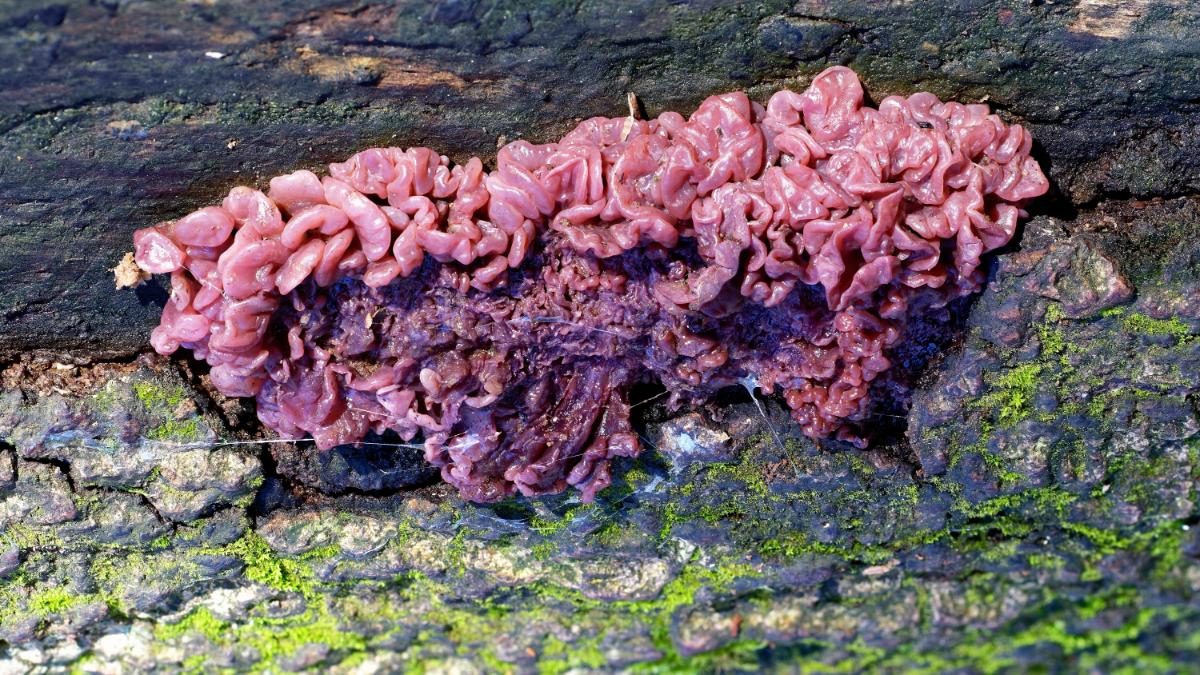
As the fungus matures, the individual specimens press against each other and fuse into irregular masses that can spread several inches across the wood. The mass, as a whole, is lumpy and jumbled. Both forms often appear on the log at the same time, so you can see it all squished together in both stages.
The purple jellydisc does not have gills or pores. It is an ascomycete cup fungus, which means it makes spores in microscopic sac-like structures called asci that line the inner cup surface.
There is also no stem on this mushroom. The bodies attach directly to the wood. Occasionally, specimens have a very short, rudimentary stem-like structure, but this is uncommon.
Taste and Smell
Purple Jellydisc has no distinctive odor or taste.
Flesh Color and Staining
The flesh matches the exterior – pinkish-purple and gelatinous throughout. The consistency is soft and jelly-like when fresh and moist. With age or when it’s especially dry out, it becomes somewhat rubbery. The flesh does not stain or change color when cut or bruised.
Spore Print
The spore print is white.
The life cycle of Purple Jellydisc:
- Asexual Stage (Anamorph)
The fungus produces club-, spoon-, or tongue-shaped purple blobs on the surface of the wood. These generate asexual spores called conidia that can spread to new logs and create genetic clones. - Sexual Stage (Teleomorph)
The fungus develops cup-shaped fruit bodies (apothecia) that start out rounded and then flatten out with wavy edges. These contain microscopic sacs called asci that produce sexual spores (ascospores). - Fruit Body Fusion
As the cups mature and press against each other, they merge into irregular, brain-like gelatinous masses that can persist for months through freezing and thawing. - Spore Release and Dispersal
Both sexual spores (from the cups) and asexual spores (from the blobs) are released into the air and they land on new dead wood to start the cycle again. - Note: Both the sexual and asexual forms can appear at the same time on the same piece of wood, or separately depending on environmental conditions.
Purple JellyDisc Mushroom Lookalikes
Budding Jellydisc (Ascocoryne cylichnium)
The budding jellydisc is probably the trickiest lookalike because it belongs to the same genus and has a similar purple color. The main difference is that the budding jellydisc is only ever cup-shaped. It does not form the brain-like, gelatinous blobs that the purple jellydisc forms when young.
Once the purple jellydisc achieves its cup-shaped stage, though, these two can look pretty much identical. The only sure way to tell them apart at this point is to examine their spores under a microscope.
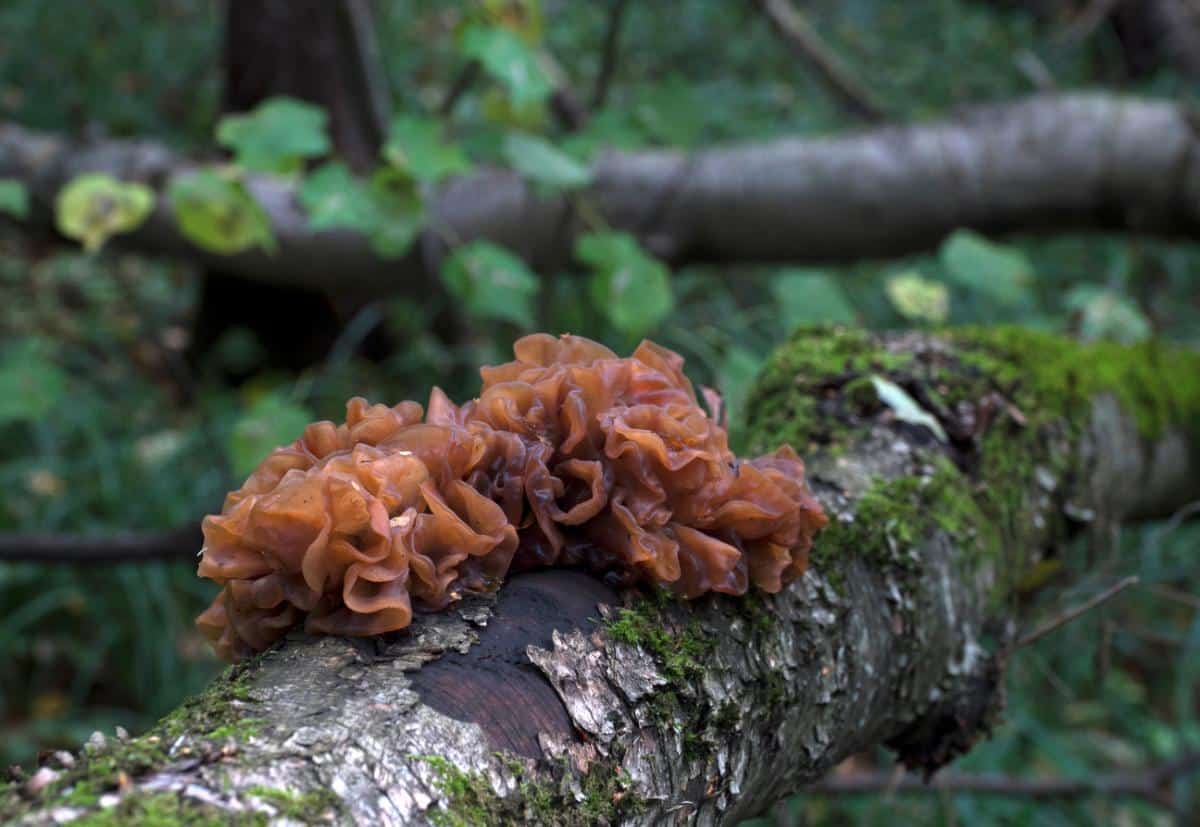
Leafy Brain (Tremella foliacea/Phaeotremella foliace)
The leafy brain fungus is sometimes confused with purple jellydisc because of its similar gelatinous texture and tendency to form jelly-like masses. The most obvious difference is color: the leafy brain fungus is reddish-brown rather than purple.
The leafy brain also grows considerably larger than the purple jellydisc and has a more leafy or folded look, rather than fingers or cup shapes.
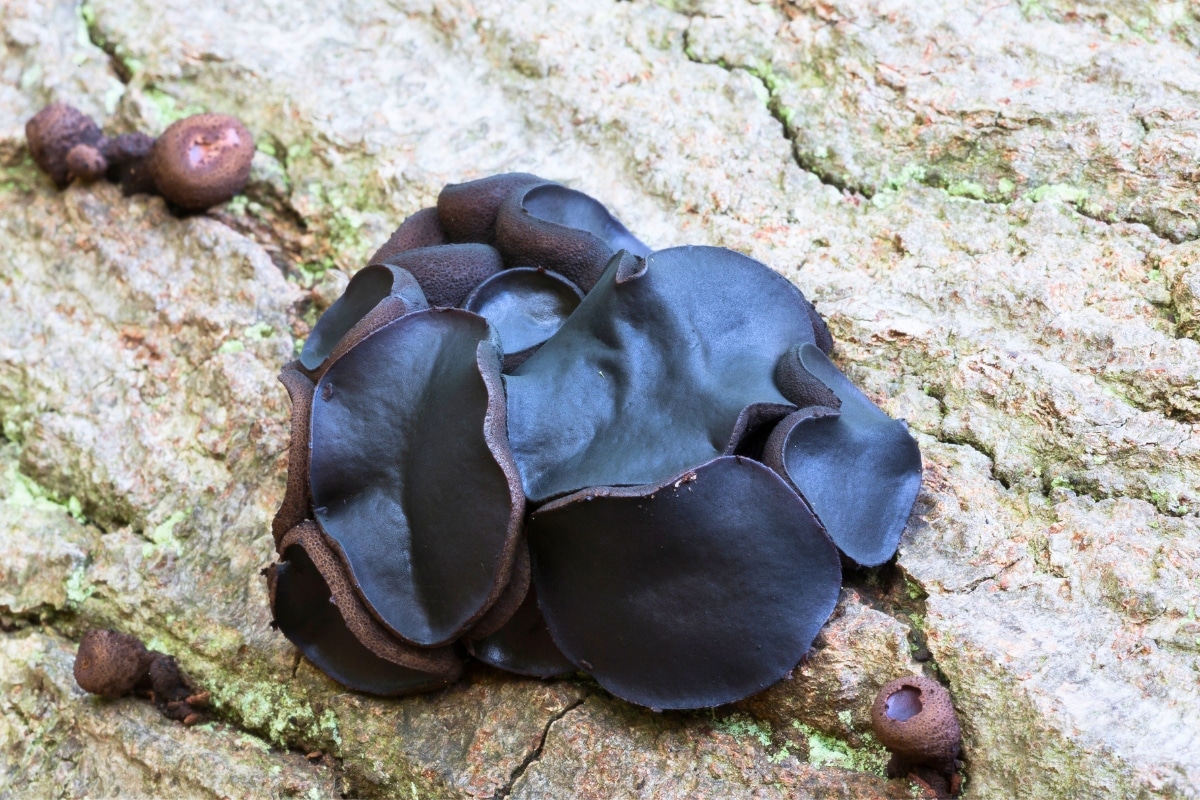
Black Bulgar (Bulgaria inquinans)
This is another gelatinous cup fungus that grows in similar habitats, especially on oak. The color difference is the most obvious way to tell them apart. Black Bulgar is dark brown to black rather than purple. It also tends to be larger, with caps ranging from 0.5 to 1.6 inches across. It is also only cup-shaped or licorice drop-shaped; it never looks like globs of jam as the purple jelly disc does.
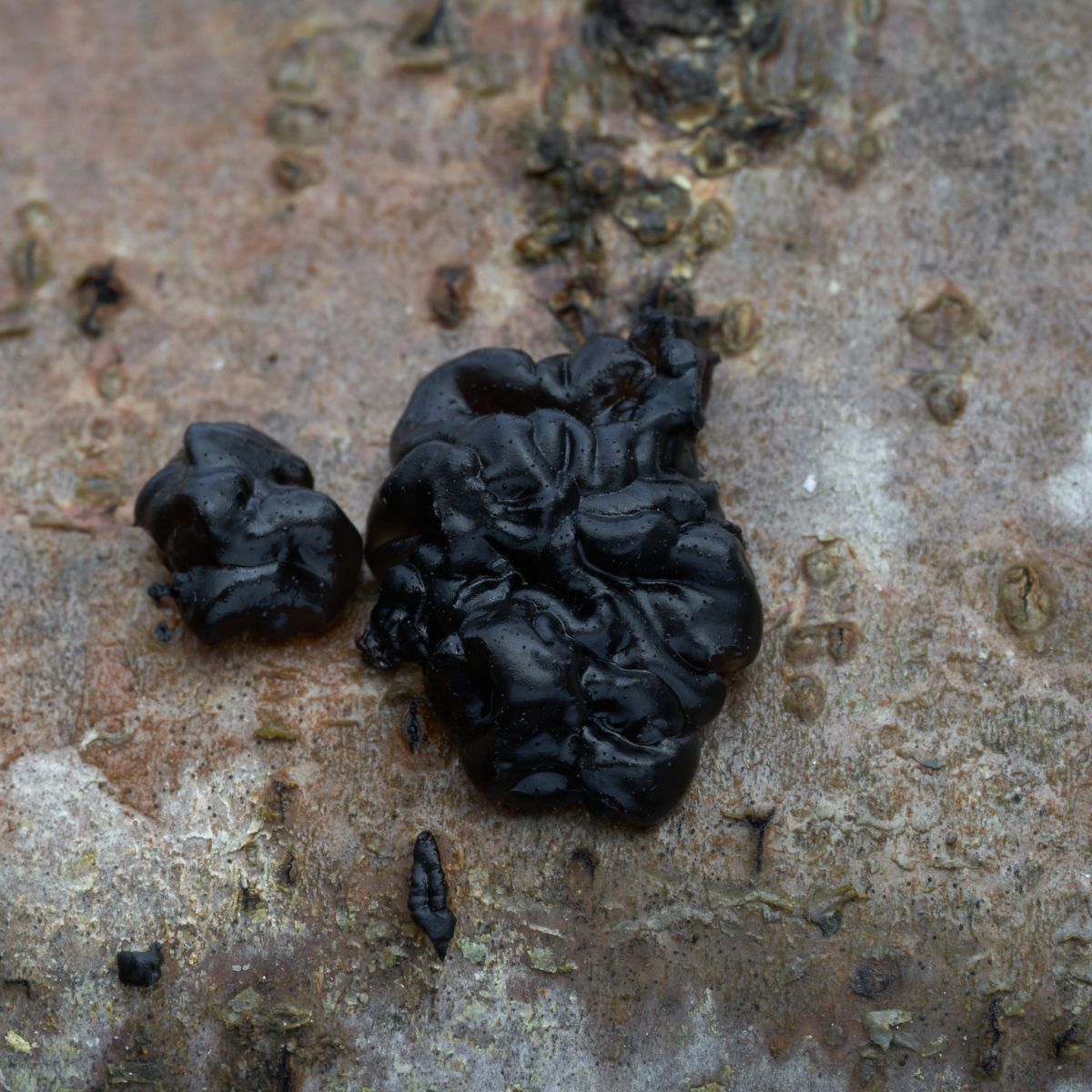
Black Witches’ Butter (Exidia glandulosa)
Black witches’ butter has the same gelatinous texture and can form irregular masses on dead wood, which can be confusing at first glance. But the color is completely different. Black witches butter is black or dark olive-brown, never purple. The fruit bodies are dense and lumpy, and the upper surface is covered with small pimples or wart-like bumps.
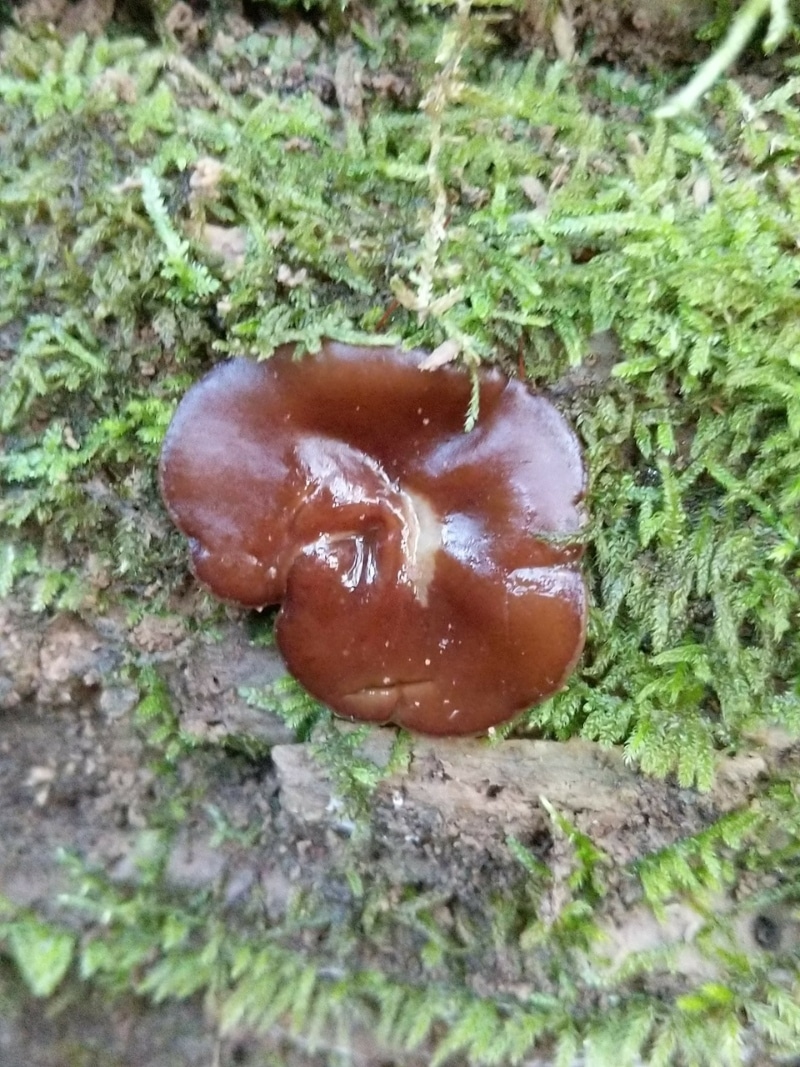
Copper Penny Fungus (Pachyella clypeata)
This fungus is also gelatinous, cup-shaped, and grows on decaying wood like the purple jellydisc. However, it is reddish-brown to dark brown rather than pinkish-purple and likes very soaked, wet wood. It is also cup-shaped from the beginning and is generally larger in size. This species may be limited to eastern North America, but how wide its distribution is unknown. It is easily confused with other Pachyella species.
Purple Jellydisc Medicinal Uses
Purple jellydisc contains a compound called ascocorynin, which has antibiotic properties. Lab studies found that ascocorynin can stop the growth of several bacteria, including Bacillus stearothermophilus, a common bacteria associate with food spoilage.
While these antibiotic properties are scientifically documented, there is no modern use of this fungus, and it should not be considered a practical source of antibiotics.
Culinary Uses For Purple Jellydisc Mushroom
Purple Jellydisc is not considered edible. While it is not known to be toxic, it has no culinary value. The fungus doesn’t have much of a taste, and its gelatinous texture isn’t great for cooking.
Purple Jellydisc Mycodiesel
Researchers made a very interesting discovery when they found that purple jellydisc produces a mixture of volatile organic compounds remarkably similar to diesel fuel. This mixture includes alcohols, ketones, and alkanes with 6 to 9 carbon atoms. Scientists nicknamed it “myco-diesel” and have been studying the fungus as a potential source of biofuel.
Purple Jellydisc Tree Protection
Field studies in northern Ontario found Purple Jellydisc frequently grows in trees affected by heart rot. Many fungi cause heart rot, but this find was surprising because ascomycetes rarely cause tree infections. Heart rot is usually caused by basidiomycetes.
Research is still ongoing, but it may be that when purple jellydisc colonizes black spruce heartwood, it actually protects the tree from further infection by rot-causing fungi. If this is true, it would make it one of the few fungi that might help trees rather than just decompose them.
Common Questions About Purple Jellydisc Mushrooms
Can you eat Purple Jellydisc?
No, it’s inedible. It’s not poisonous, but it has no taste and is very gelatinous and not great for eating.
When does Purple Jellydisc fruit?
Purple jellydisc mushrooms fruit from mid to late November through winter. The gelatinous texture lets it survive repeated freezing and thawing, so it often lasts for months.
Why does Purple Jellydisc have a gelatinous texture?
The jelly-like texture helps it survive harsh conditions by absorbing water. This means it can rehydrate quickly after it rains or after freezing or drying periods. This feature lets it persist through winter when other fungi can’t.
Leave a Reply