
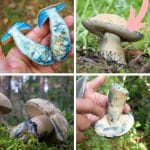
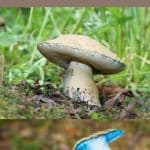

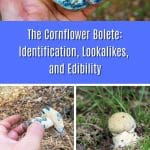
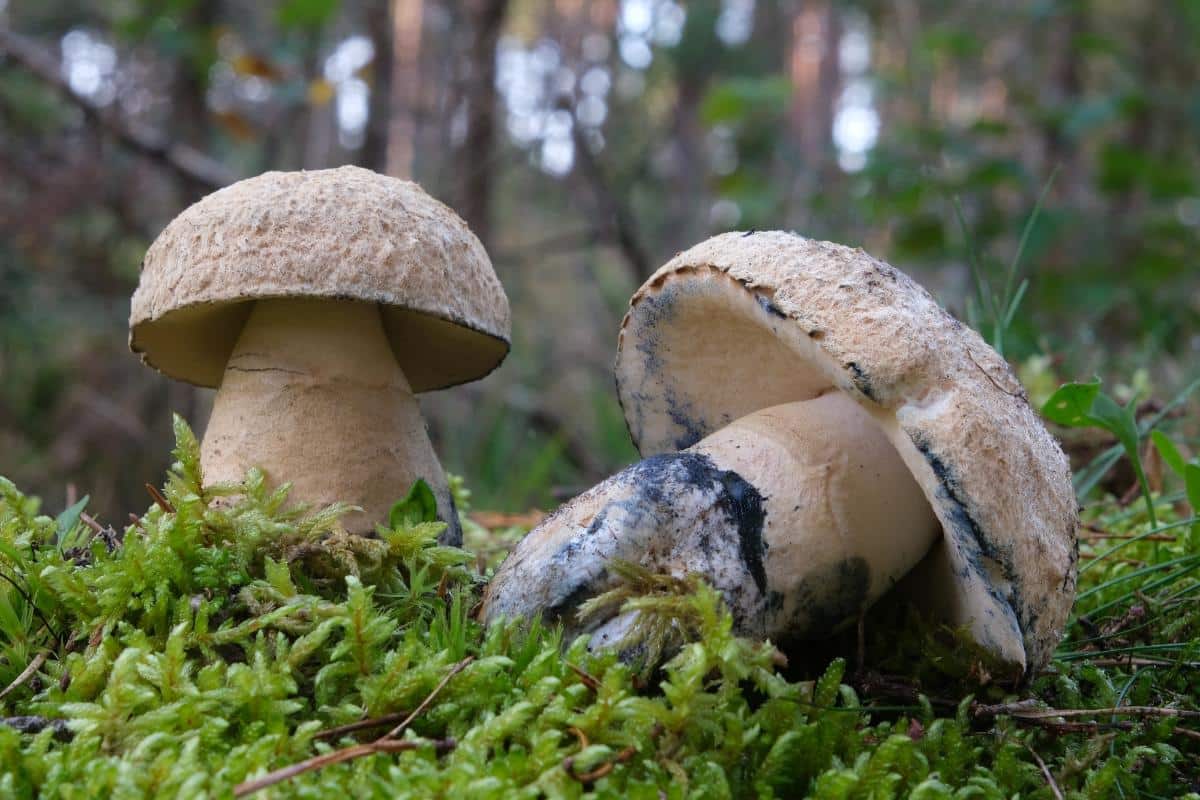
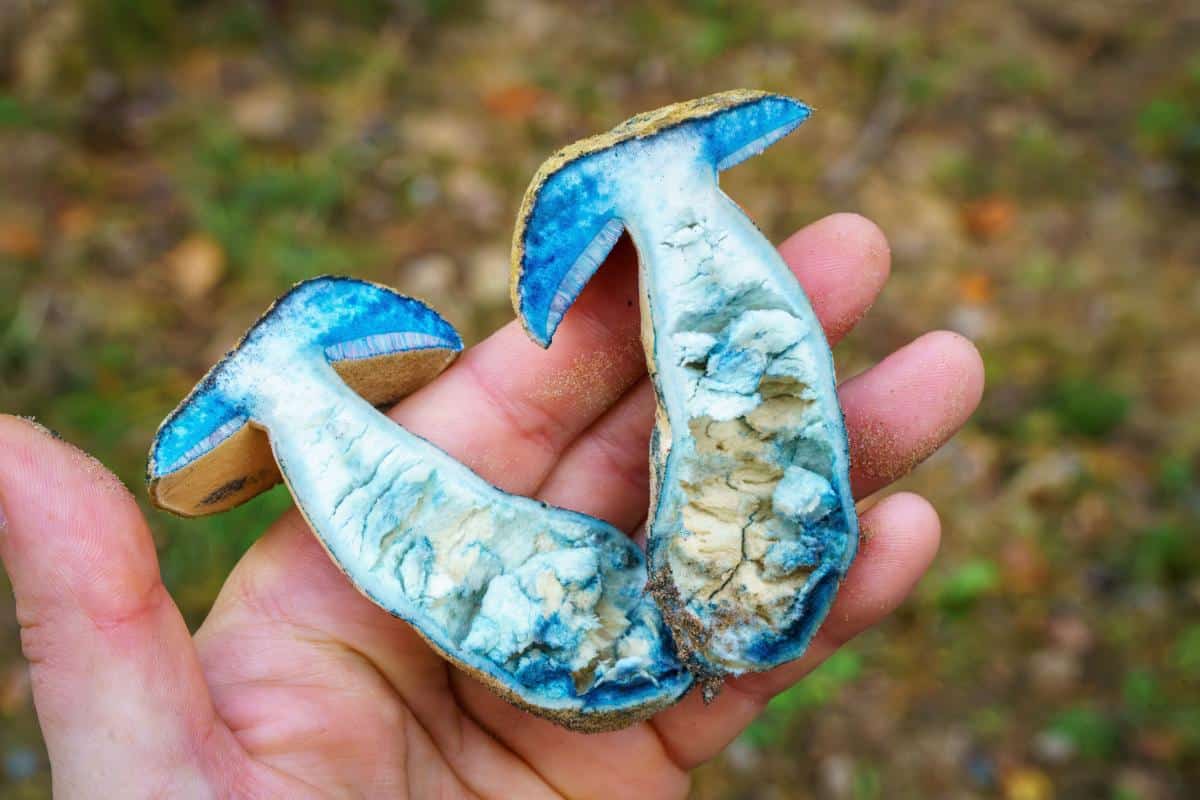
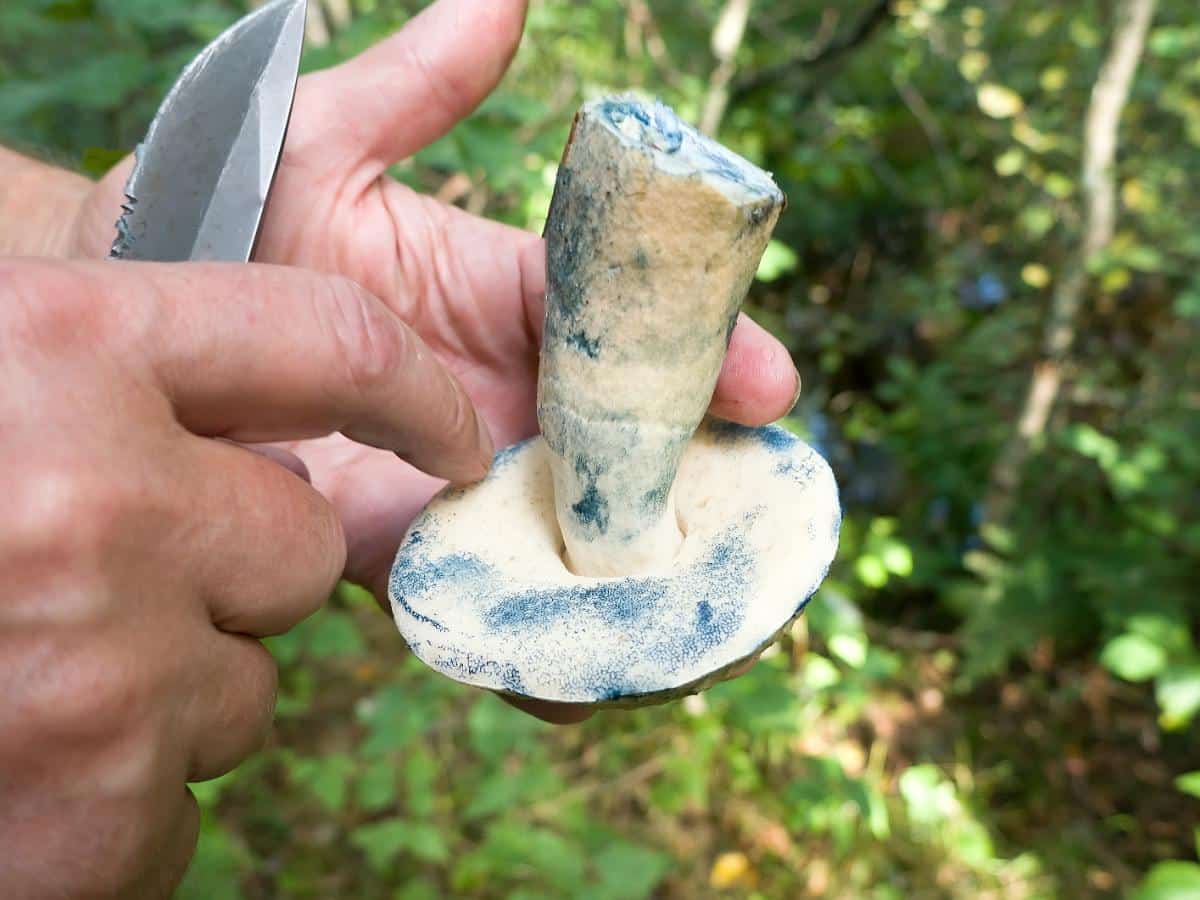
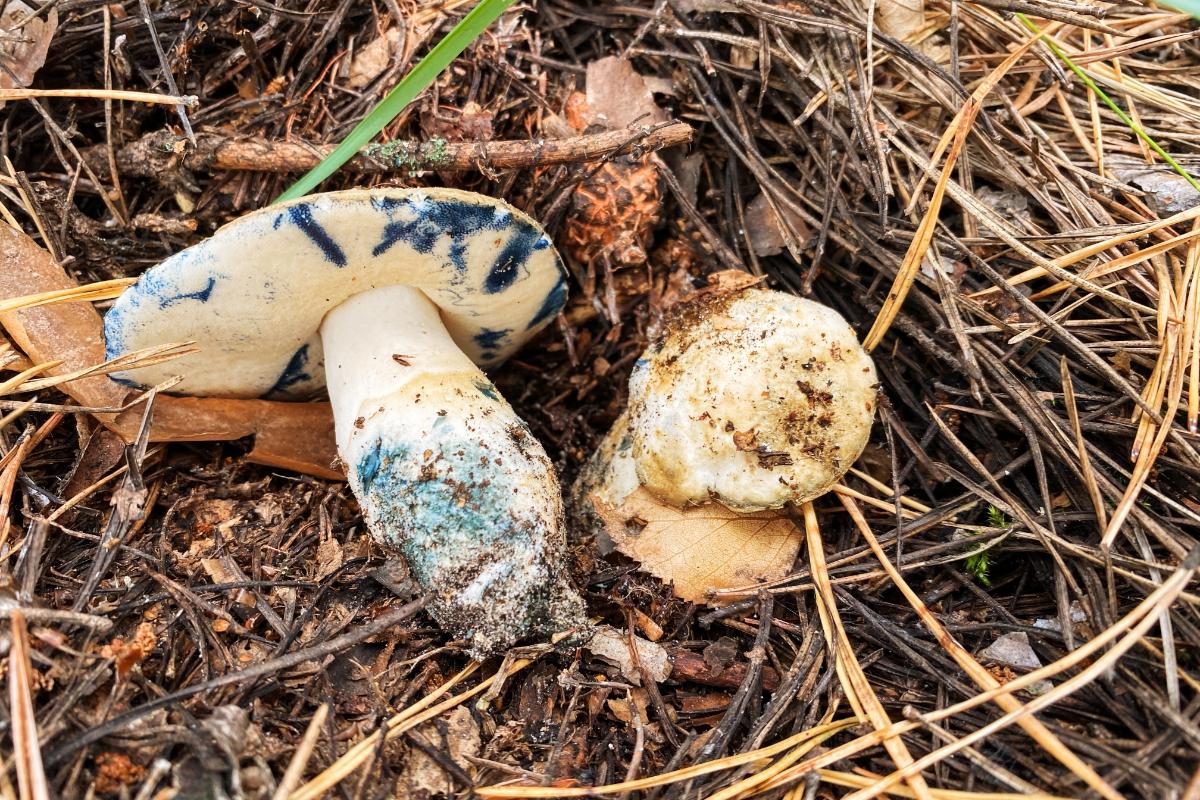
When you cut the cornflower bolete (Gyroporus cyanescens) in half, you see straight away how it earned its common name. The pale, straw-colored flesh turns an intense blue within seconds, and the color is very similar to that of the cornflower plant. The reaction is fast, and the deep, bright blue looks more like a chemical dye than anything natural. It’s a very cool mushroom to show kids and new foragers; the reaction is always complete awe.
Before it’s picked and cut, this mushroom is easy to overlook. It fruits from the ground, and is dry, yellowish, and rather unremarkable. But then, you break the cap or press the stem, and it is a stunning display of color.
The cornflower bolete grows across eastern North America, and it most often occurs in sandy soil at the edges of woodland, along road banks, and in other disturbed ground. This is an edible mushroom, and well-regarded by foragers. It’s also one of the few edible boletes that bruises blue — a direct exception to the commonly heard foraging rule that any blue-staining bolete should be left alone. And yet another example of how broad “rules” that we come up with are often inexact.
- Scientific Name: Gyroporus cyanescens
- Common Names: Cornflower bolete, bluing bolete
- Habitat: On the ground in disturbed, sandy areas
- Edibility: Edible
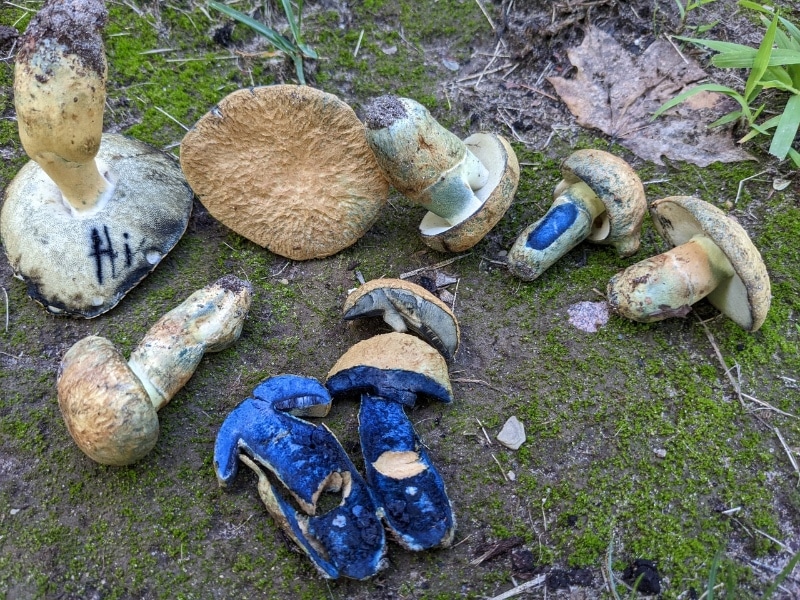
Gyroporus cyanescens by Melissa on Mushroom Observer
Jump to:
All About The Cornflower Bolete
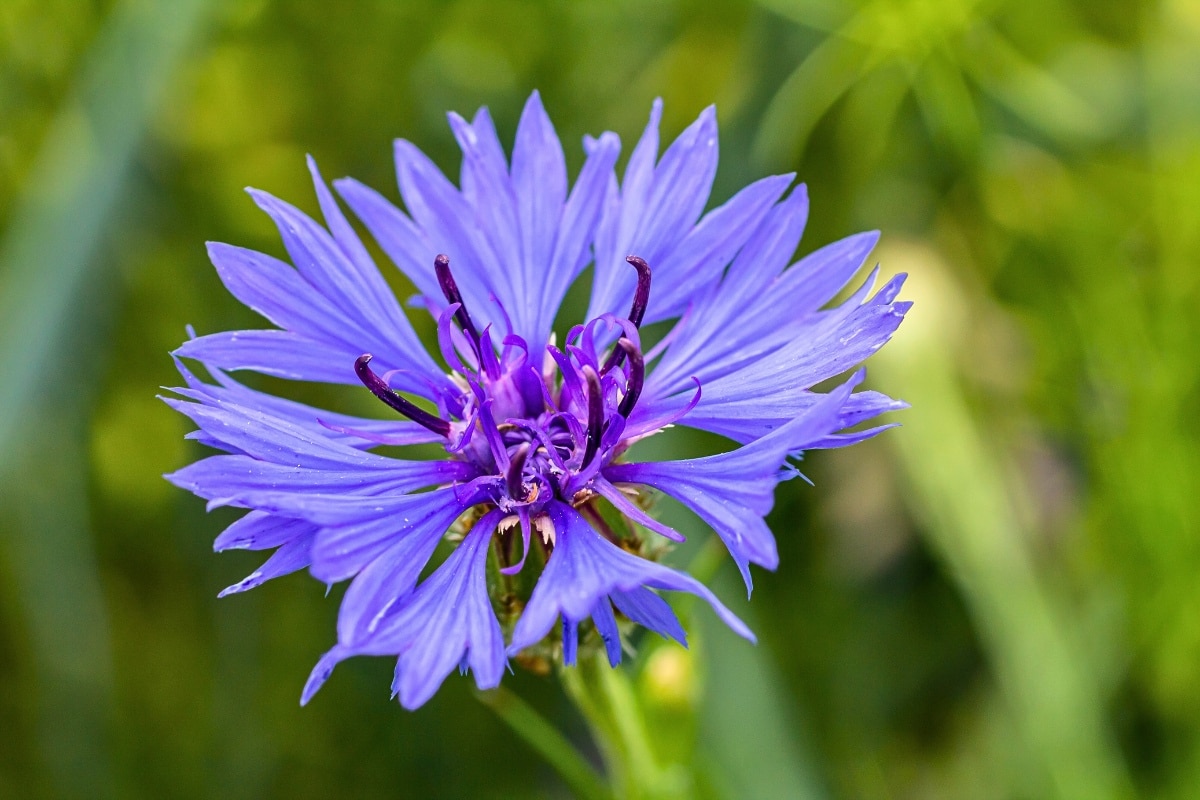
This mushroom is called the cornflower bolete because the color it turns when cut or bruised closely matches the color of the cornflower plant, aka bachelor’s buttons (Centaurea cyanus). It is also known as the bluing bolete.
The genus name Gyroporus comes from the Greek word gýros, meaning round, and porus. This refers to the round pores on the underside of the cap, which most of the boletes in this group share. The species name cyanescens comes from the Ancient Greek word kýanos, which means “dark blue.” This is a direct reference to the mushroom’s rapid bluing reaction when the flesh is exposed.
The cornflower bolete was first described to science in 1788 by the French botanist Jean Baptiste François Pierre Bulliard, who named it Boletus cyanescens. The species was later moved to its current genus by the French mycologist Lucien Quélet in 1886.
A variety called Gyroporus cyanescens var. violaceotinctus was described by the British mycologist Roy Watling in 1969. It was based on collections he made in Michigan. Its name means “having a violet tinge.” This species has a darker, more violet-blue staining reaction that sets it apart from the typical form.
Cornflower Bolete Identification
Season
The cornflower bolete fruits in summer and early fall.
Habitat
This mushroom grows on the ground, not on wood. It is found in deciduous and mixed forests and is most frequently found in sandy soil. It fruits in disturbed areas like road banks, path edges, and grassy areas at the margins of wooded areas. It often grows alone or in scattered groupings; it does not form dense clusters.
The cornflower bolete is ectomycorrhizal, meaning it forms a symbiotic relationship with tree roots. Or, so it is believed. There is still some uncertainty about whether it is strictly mycorrhizal or whether it may be saprobic, as well. It has a broad host range and has been found growing in association with birch, poplar, oak, pine, spruce, and beech. It does not appear to form consistent mycorrhizal associations with any particular tree, which is the reason why its mycorrhizal nature is questioned.
In North America, the cornflower bolete is found east of the Rocky Mountains, from eastern Canada to Florida and west to Minnesota. There are also occasional reports from the Pacific Northwest. In Europe, it grows across much of the continent and is most common in Scandinavia. It has also been recorded in parts of Asia, including Guangdong and Yunnan provinces of China, and in eucalyptus forests in Australia.
Identification
Cap
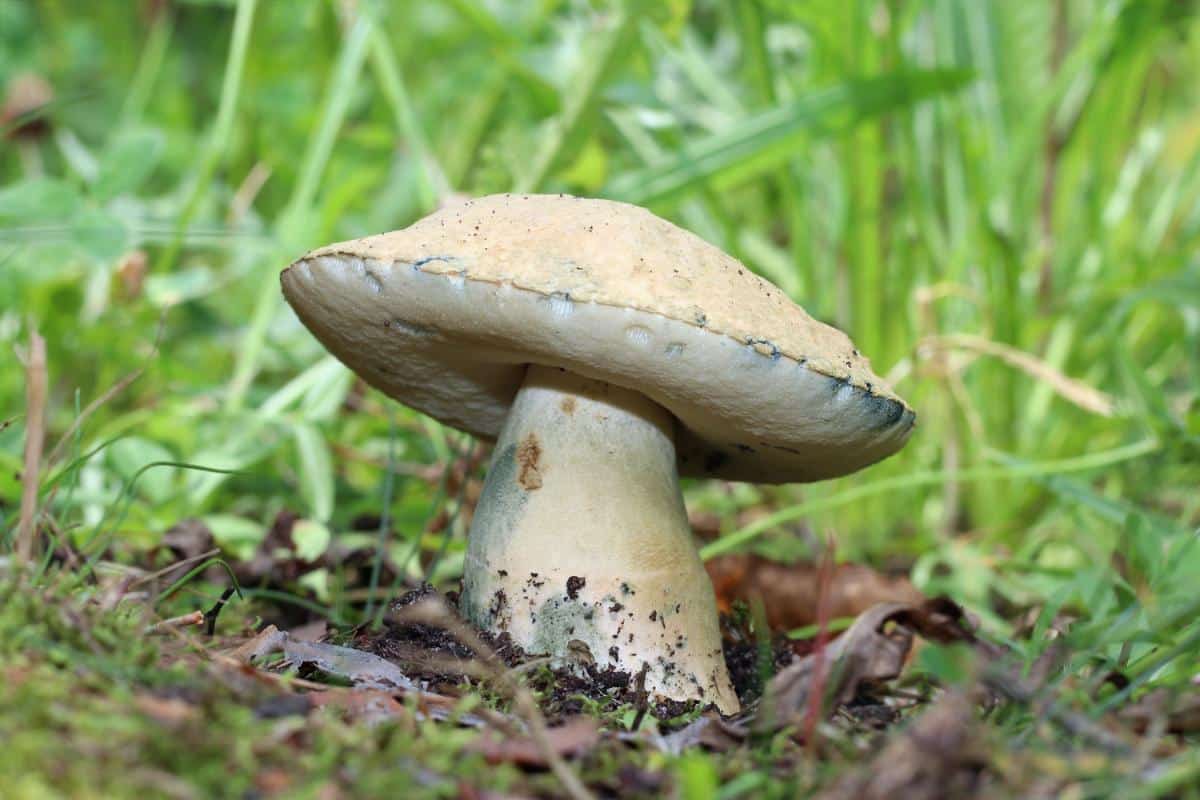
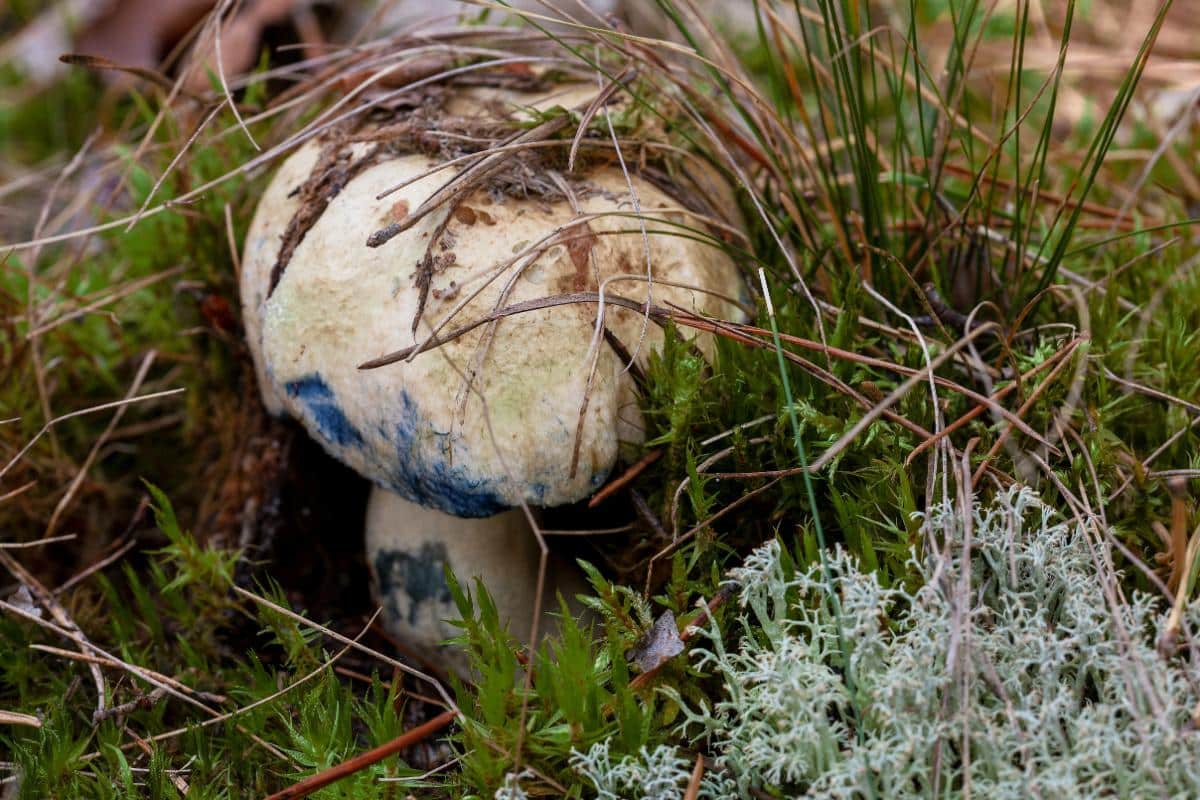
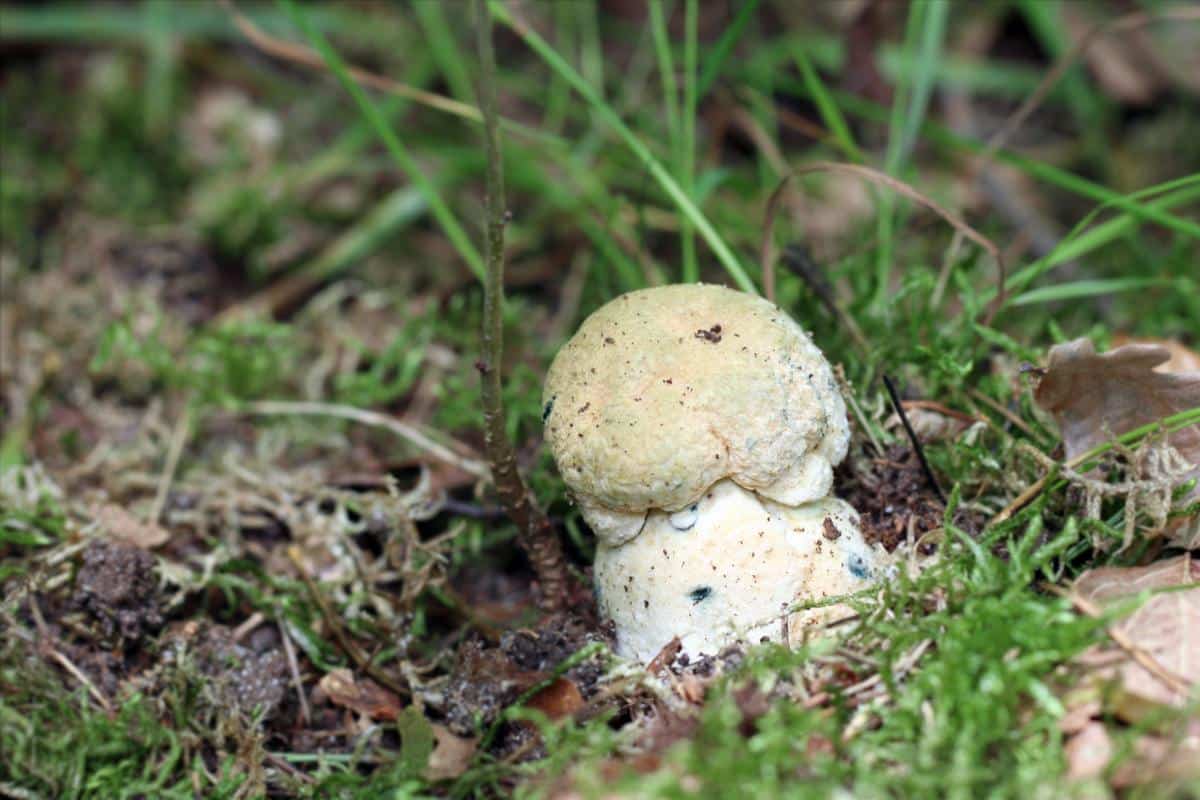
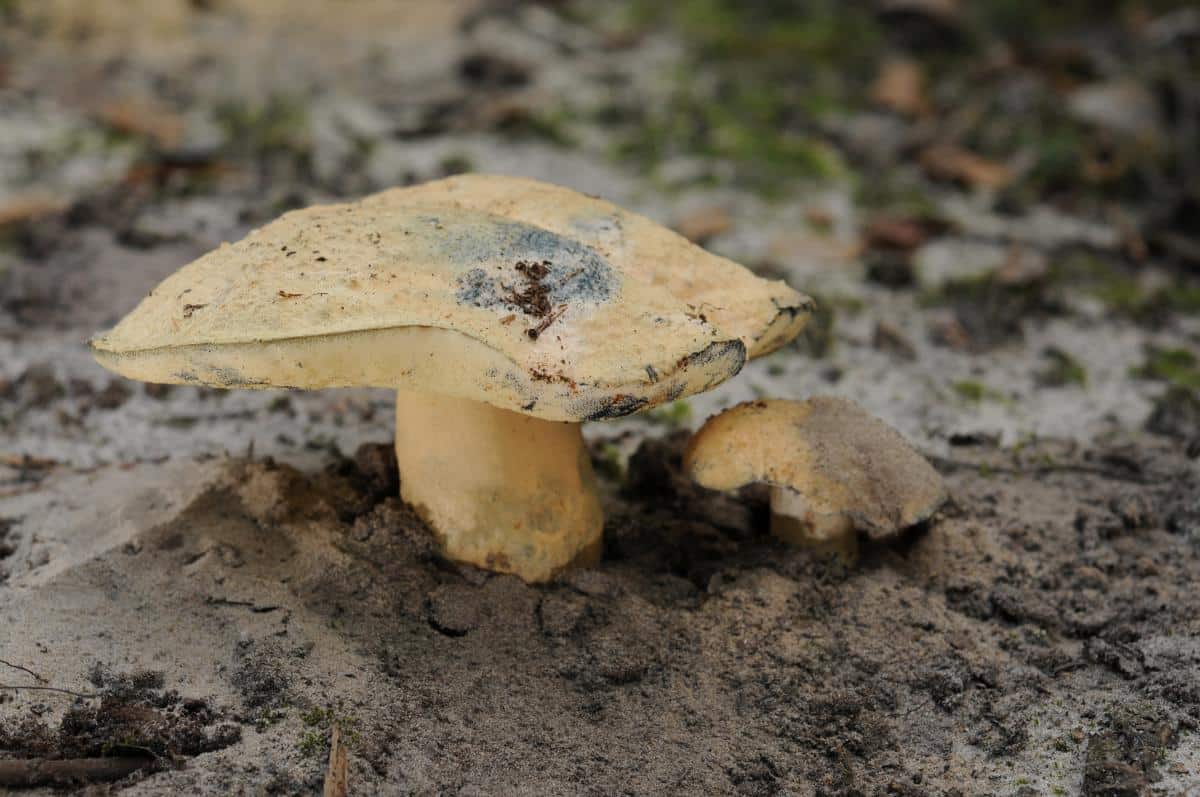
The cap is 1.5 to 4.7 inches across. It starts out rounded like a button mushroom when young and then flattens out with age. Sometimes it becomes shallowly depressed in the center. The surface of the cap is dry and ranges in color from buff to pale straw yellow to pale olive. There are also sometimes slightly darker streaks across the top of the cap.
The texture is coarse and roughened, matted, and sometimes fibrous. It is often uneven, and there will be pits and wrinkles across the surface making it look cracked. The edge of the cap starts out curled inward and may split as it matures.
Pores
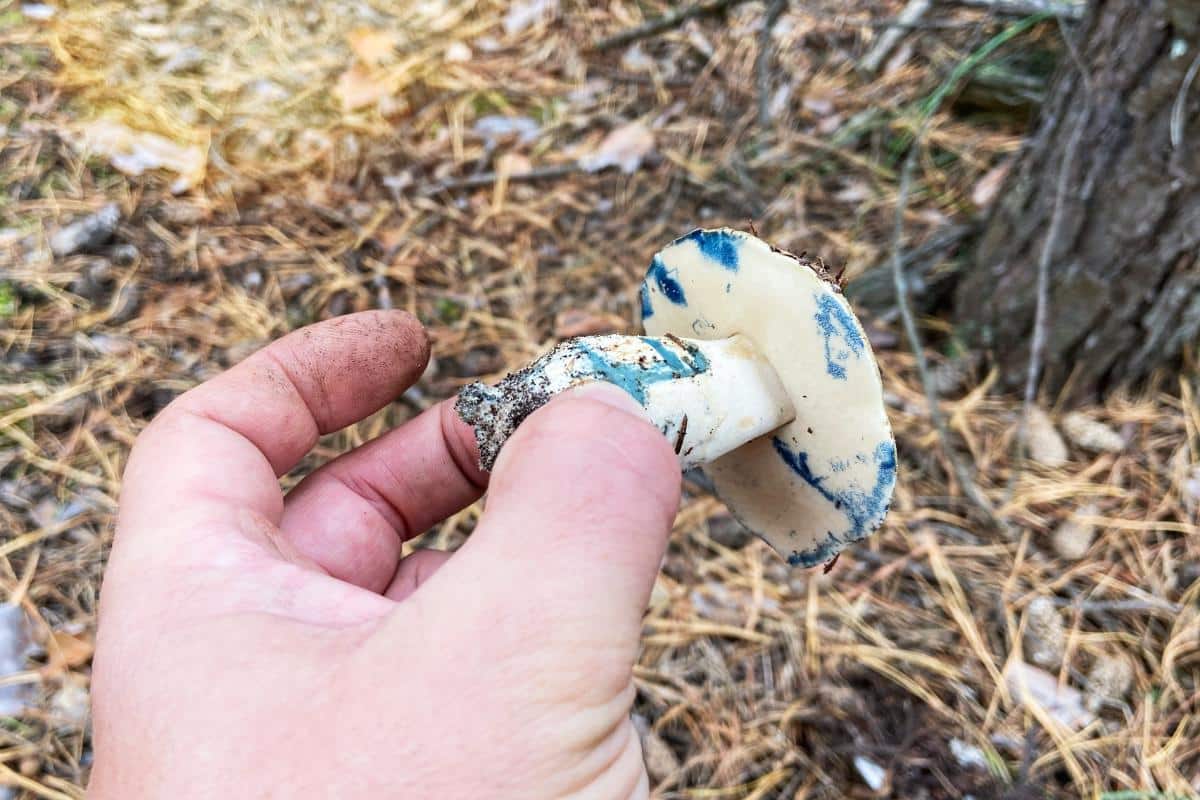
The pore surface on the underside of the cap is white to pale yellowish, and it sometimes has faint olive or tan tones. When cut or bruised, the pores change very quickly from greenish yellow to greenish blue or full blue. It happens within moments, so watch it closely.
Stem
The stem is 1.5 to 4.7 inches long and up to 1.2 inches thick. It’s about the same color as the cap or slightly paler and also has the same texture. The stem is brittle — it snaps easily rather than bends — and it hollows out as the mushroom matures.
Young cornflower boletes usually have a soft, cottony pith in the center of the stem. The pith develops into cavities, and by the time the mushroom is quite old, the stem might be hollow. The surface of the stem is dry and often has the same cracked appearance as the cap. Also, the stem does start out with a covering of coarse hairs that disappear with age.
Taste and Smell
The taste and smell of this mushroom are not distinctive.
Flesh Color and Staining
The flesh of the cornflower bolete is white to pale yellow and is brittle in texture. When cut or injured, the flesh bruises an intense blue within seconds.
The variety Gyroporus cyanescens var. violaceotinctus stains dark lilac to indigo rather than the standard bright blue.
A separate variety collected in North Carolina reportedly does not bruise at all.
Spore Print
The spore print is pale yellow.
Cornflower Bolete Lookalike Species
Chestnut Bolete (Gyroporus castaneus)
The chestnut bolete is a close relative in the same genus with a similar shape and the same brittle, hollow stem and pale yellow spore print. However, the key difference is color. The chestnut bolete is a warm reddish-brown, not straw yellow, and it does not bruise blue at all.
Gyroporus phaeocyanescens
This is a smaller species with a dull brownish-yellow cap rather than the straw yellow of the cornflower bolete. Like the cornflower bolete, the flesh of this species turns blue when injured. However, the pore surface does not change color — the pores stay yellow even after being damaged. If you are in doubt, press your thumb into the pore surface to see if it changes color.
Gyroporus umbrinosquamosus
This mushroom is found along the Gulf Coast and looks similar in overall shape and color to the cornflower bolete. The most important difference is that it doesn’t bruise blue at all. The flesh stays white or yellow rather than turning blue.
Blue-Staining Slippery Jack (Suillus tomentosus)
This bolete also bruises blue, but more slowly and less dramatically. There are some other differences that help tell these two apart. The cap of this mushroom is yellowish-tan, but it is streaked with reddish dots and stains. The pore surface is also brownish rather than the white to pale yellow of the cornflower bolete.
Bitter Russula (Russula fellea)
If only the top of the cap is visible, the pale straw-yellow cap of a young bitter russula mushroom can look like the cornflower bolete. However, when you turn the mushroom over, you’ll know immediately it’s not a bolete. The underside of the bitter russula has gills, not pores. Also, this mushroom doesn’t turn blue.
Ben’s Bitter Bolete (Caloboletus marshii)
This bolete also stains blue when cut, but only partially, unlike the cornflower bolete, which bruises blue throughout all parts of the fruit body. Ben’s bitter bolete does not stain blue at the base of the stem. The overall bluing reaction is also weaker.
Cornflower Bolete aka Blueing Bolete Edibility
The cornflower bolete is edible and choice. It has a meaty texture and a mild, nutty flavor. The blue color that develops after cutting mostly disappears after about two minutes of cooking. When you dry the mushrooms, it concentrates the taste and makes a great addition to winter soups and stews.
This mushroom is also beloved because it is rarely riddled with larvae or insects, which are a common issue with boletes in general. For some reason, the insects avoid this one, and that is great for the forager!
The one practical challenge with these is cleaning. When the cornflower bolete is growing in sandy soil — its preferred habitat — it can hold a lot of grit that’s hard to remove. The best way to remove the grit is to wash them in a bowl of water. This allows the sand to sink to the bottom, which makes the process easier.
Many people say not to soak or hardily wash boletes because they are basically sponges, especially because of the pore surface. However, washing is fine, and it doesn’t hurt the mushrooms. If you plan to fry them, you will want to airdry them for a few hours before using. Or, if you intend to sauté them, do a dry sauté to get rid of the excess water before adding fats or seasonings.
Where Does That Blue Come From
The bluing reaction of the cornflower bolete comes from a compound called gyrocyanin. When the mushroom tissue is broken and exposed to air, gyrocyanin oxidizes and turns blue. This chemistry is different from the bluing reaction in most other boletes. Gyrocyanin is specific to the Gyroporus genus.
The variety Gyroporus cyanescens var. violaceotinctus is used in mushroom dyeing. Depending on the mordant used in the dyeing process, it produces colors ranging from light yellow and beige to gold and brownish-orange.
A separate variety collected in North Carolina does not bruise at all — the flesh stays white when cut, without any color change. This non-staining form has been documented but is less commonly encountered.
Common Questions About the Cornflower Bolete
Is the cornflower bolete safe to eat even though it turns blue?
Yes. The cornflower bolete is edible and is considered choice. The blue staining is not a sign of toxicity. Many foragers use bluing as a warning sign with boletes, but the cornflower bolete is one of several exceptions to that rule. The blue color also disappears largely within two minutes of cooking.
Why does the cornflower bolete turn blue?
The color change comes from a compound called gyrocyanin. When the mushroom tissue is broken and exposed to oxygen in the air, gyrocyanin oxidizes and turns an intense blue.
Is the cornflower bolete medicinal?
There is no research into the potential medicinal properties of the cornflower bolete.
Leave a Reply