
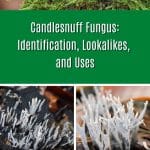
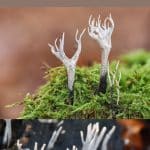
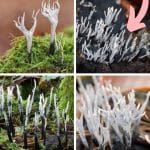
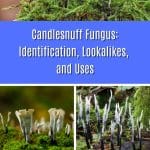
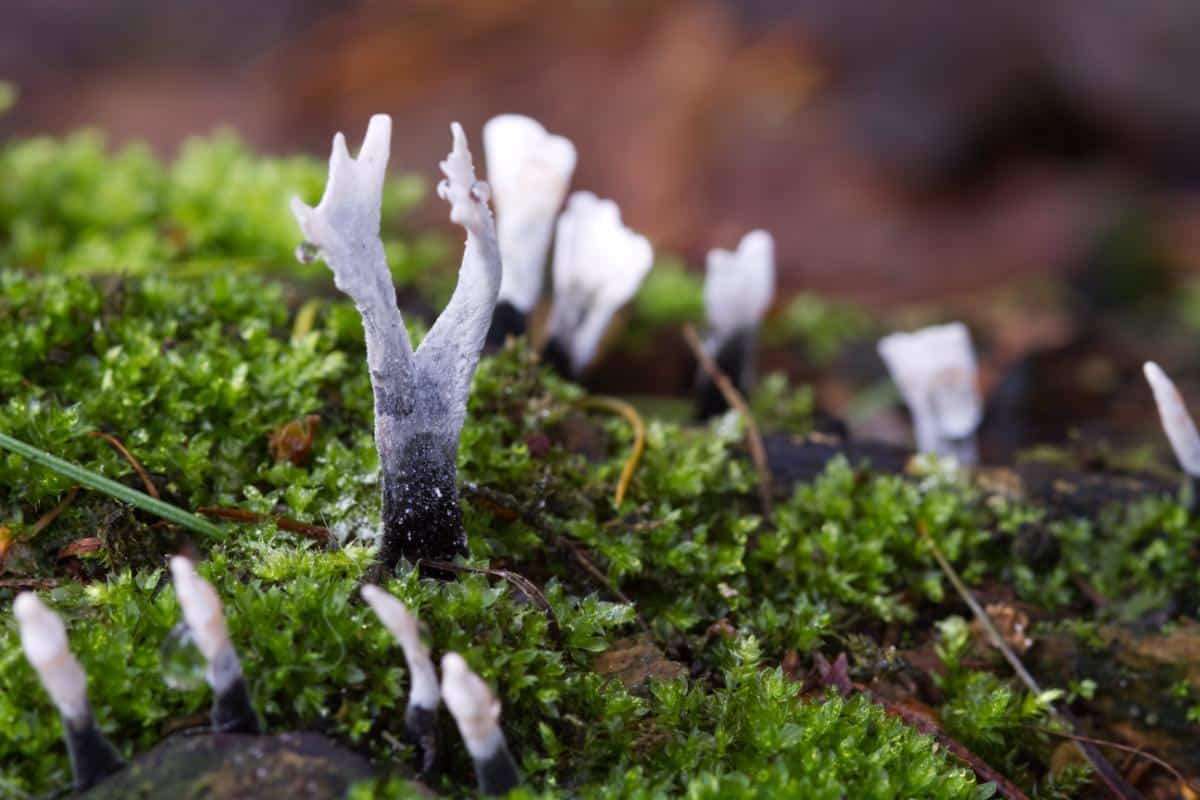
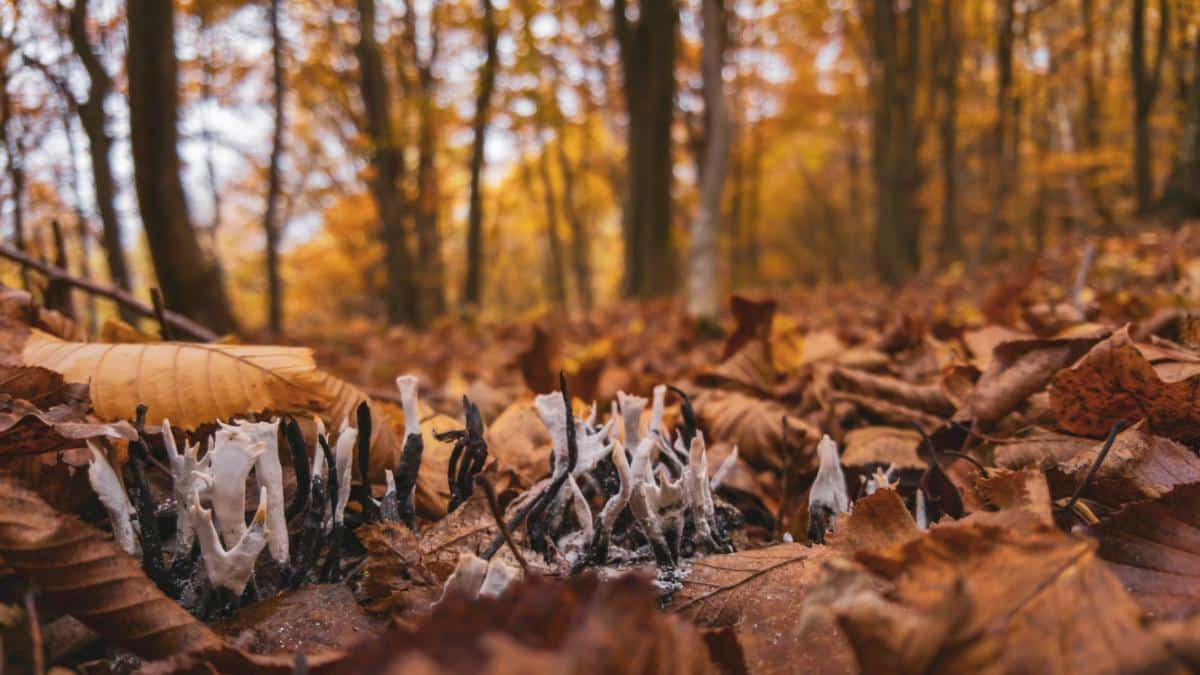
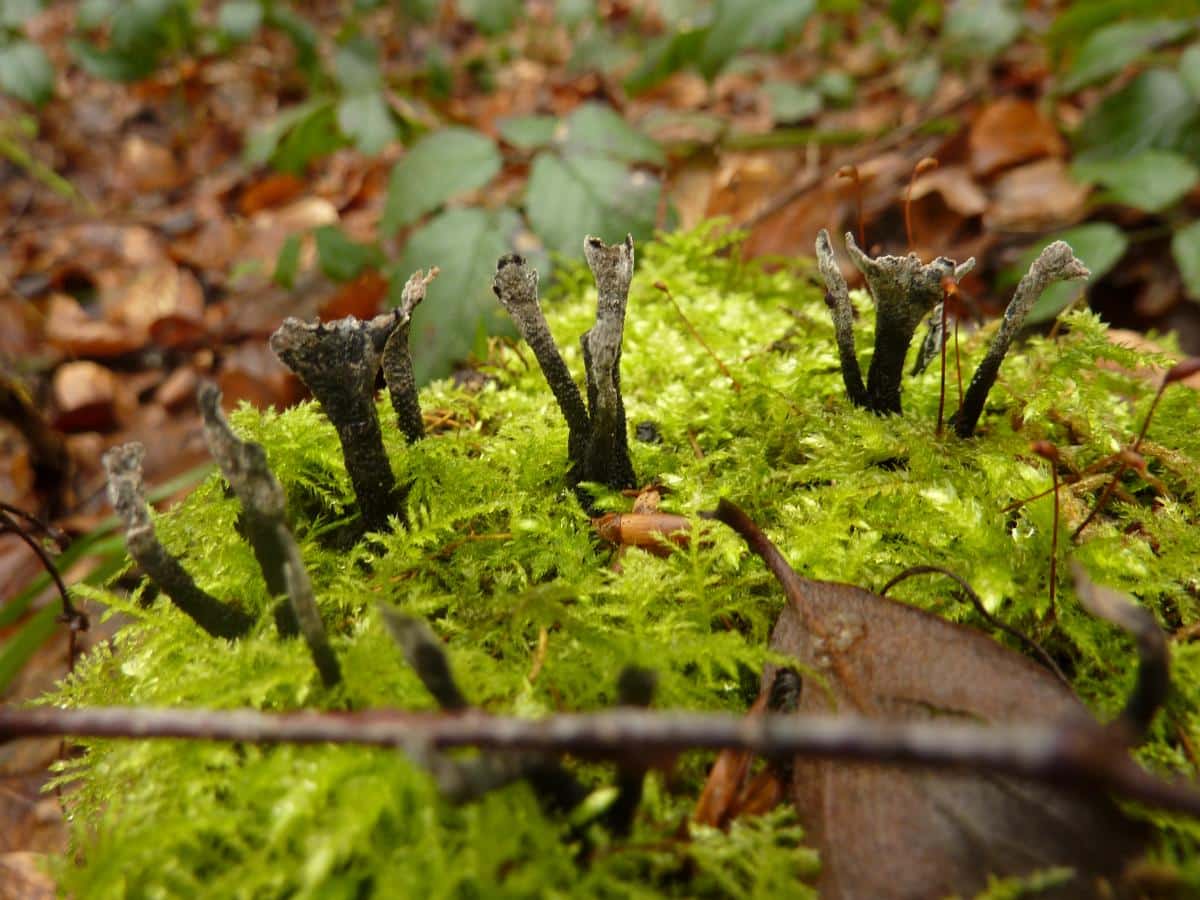
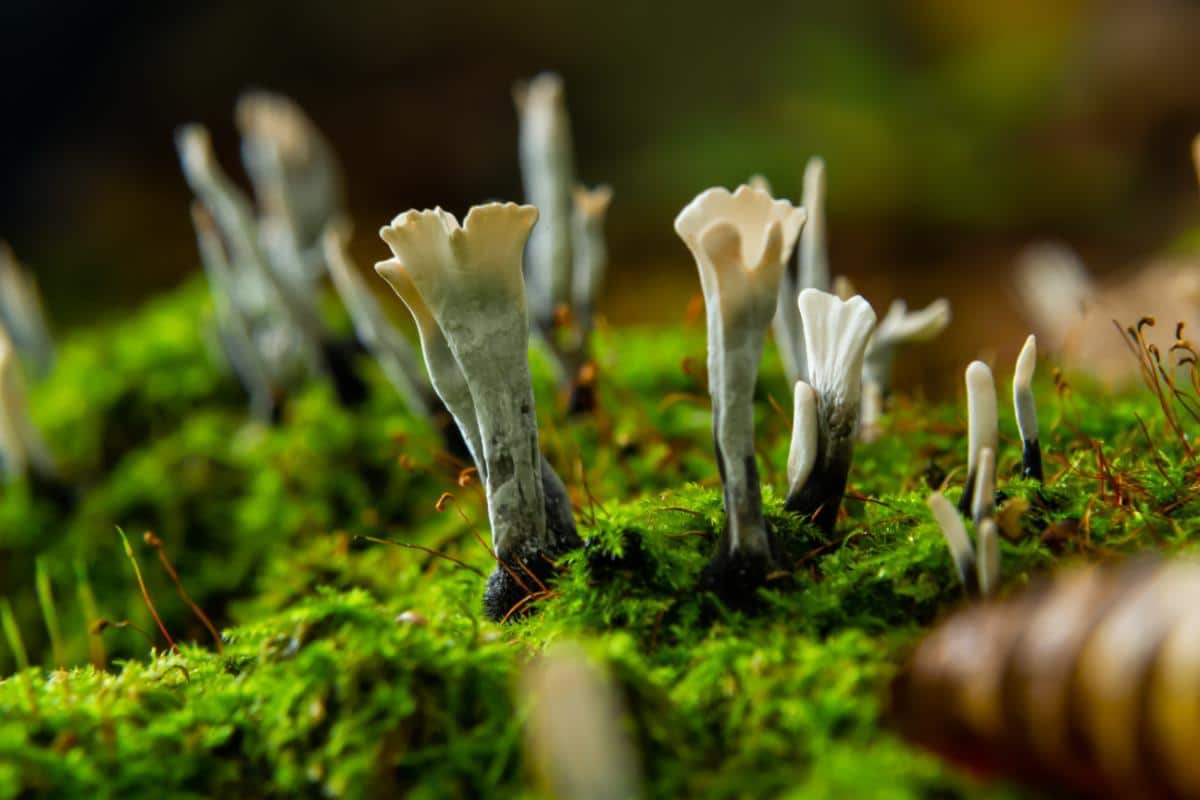
In autumn, on rotting hardwood stumps, you might see tiny black stalks with white powdery tips growing in dense clusters like a handful of spent matches. These are candlesnuff fungus (Xylaria hypoxylon), and they are very common in North America. These mushrooms aren’t edible; they’re too small and have no taste, but they are super fun to find. Like little antlers growing out of a rotten stump.
- Scientific Name: Xylaria hypoxylon
- Common Names: Candlesnuff fungus, candlestick mushroom, stag’s horn, carbon antlers
- Habitat: Dead and decaying hardwood
- Edibility: Inedible
All About Candlesnuff Fungus
The candlesnuff fungus looks like a candlestick and also glows faintly like a candle at night. This mushroom is bioluminescent, but its glow is not strong. The light comes from the mycelium, not the fruiting bodies, and is hard to see, especially with the naked eye.
Other names for this mushroom include carbon antlers, stag’s horn fungus, and candlestick fungus. The name “stag’s horn” has caused some confusion over the years because it’s also applied to the yellow stagshorn fungus (Calocera viscosa), which isn’t closely related.
This species was first described to science in 1745 as Clavaria hypoxylon. Then, in 1824, it was reclassified to its current name Xylaria hypoxylon. The genus name Xylaria comes from the Greek xylon, meaning wood. The species name hypoxylon combines hypo– (beneath) with xylon (wood).
As is common in recent decades, DNA research has found that collections labeled Xylaria hypoxylon from around the globe are not all the same species — some are not even that closely related. This has led to the determination that specimens from eastern North America that were long identified as X. hypoxylon may belong to a separate but related species, Xylaria vasconica. Suffice to say, Xylaria hypoxylon is a species complex that still needs sorting out.
Because of the confusion and the fact that the species look virtually identical, this guide covers both Xylaria hypoxylon and Xylaria vasconica.
Candlesnuff Fungus Identification
Season
This fungus grows year-round, but it is most visible from late summer through winter.
Habitat
Candlesnuff fungus is a saprobe, which means it breaks down dead wood. The mushroom grows on the dead wood of hardwood trees, most often on rotting stumps, fallen logs, and large dead branches. The fruiting bodies grow in scattered groups or in dense clusters. It is not uncommon to find very large groups on a single stump.
Xylaria hypoxylon grows on the west coast of the United States, and even though there are reports of it on the east coast, that species is most likely Xylaria vasconica.
Identification
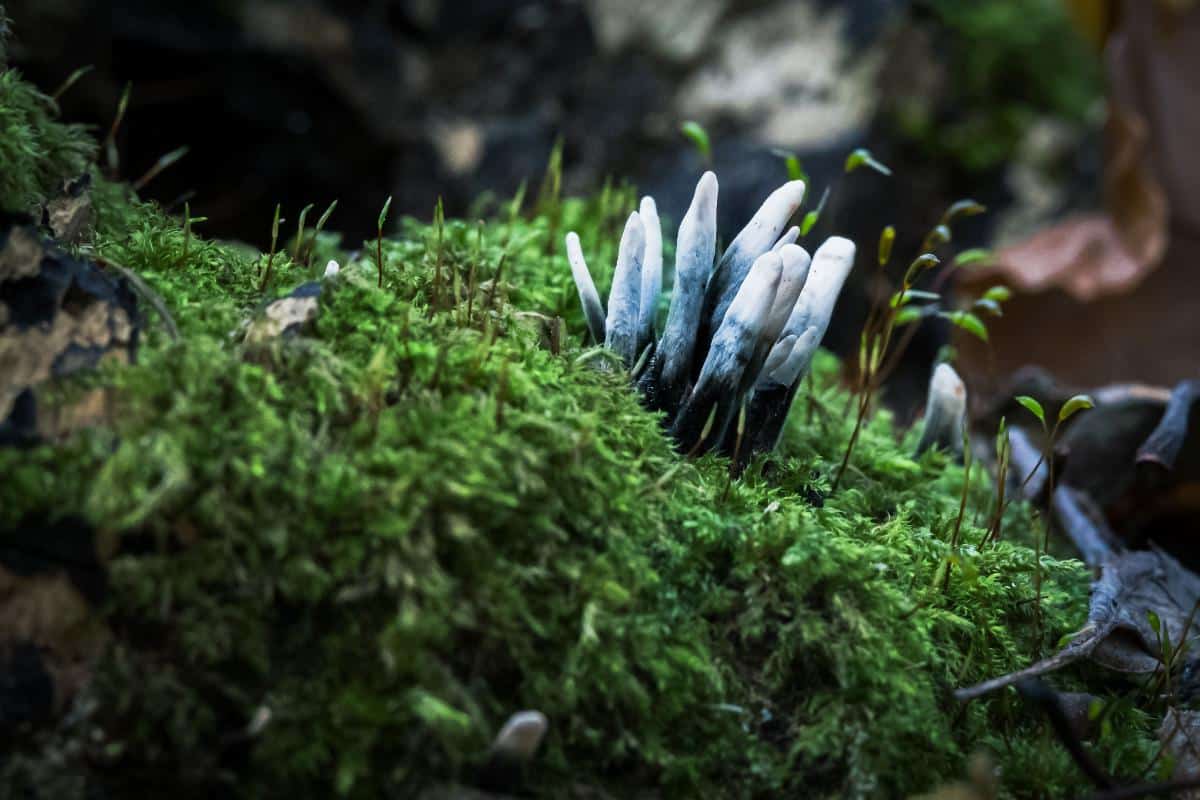
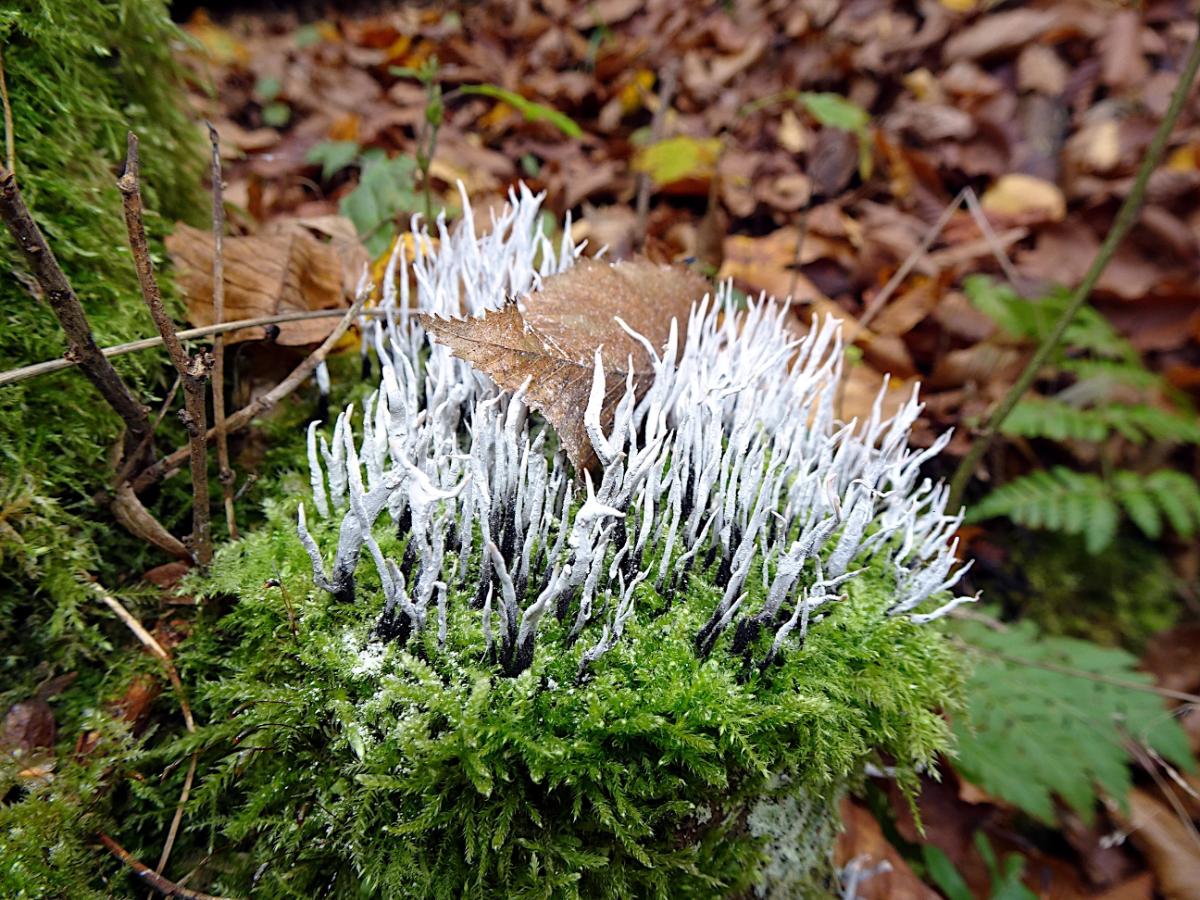
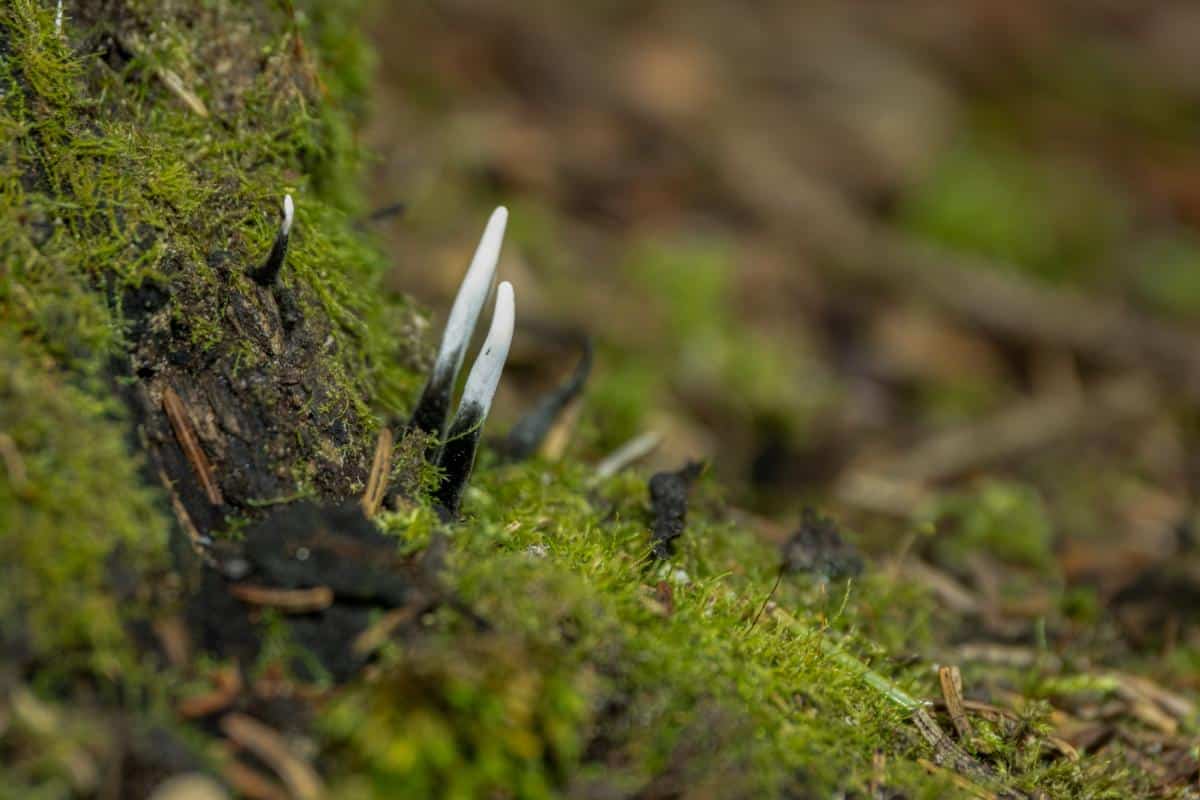
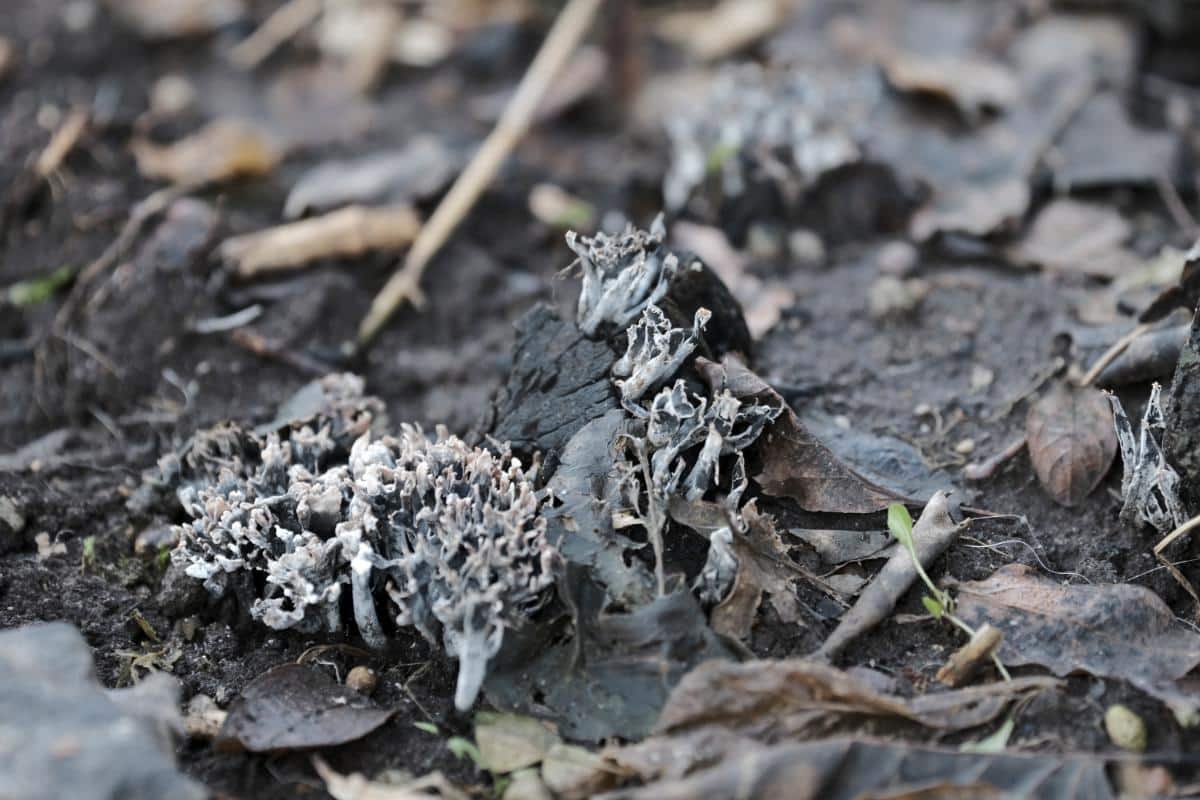
The candlesnuff fungus has no cap, gills, or pores. It belongs to a group called the flask fungi (pyrenomycetes), and its fruiting bodies are small, upright, and elongated. They grow 3/4 to 4 inches tall and can be 1/2 inch wide, though most are considerably narrower.
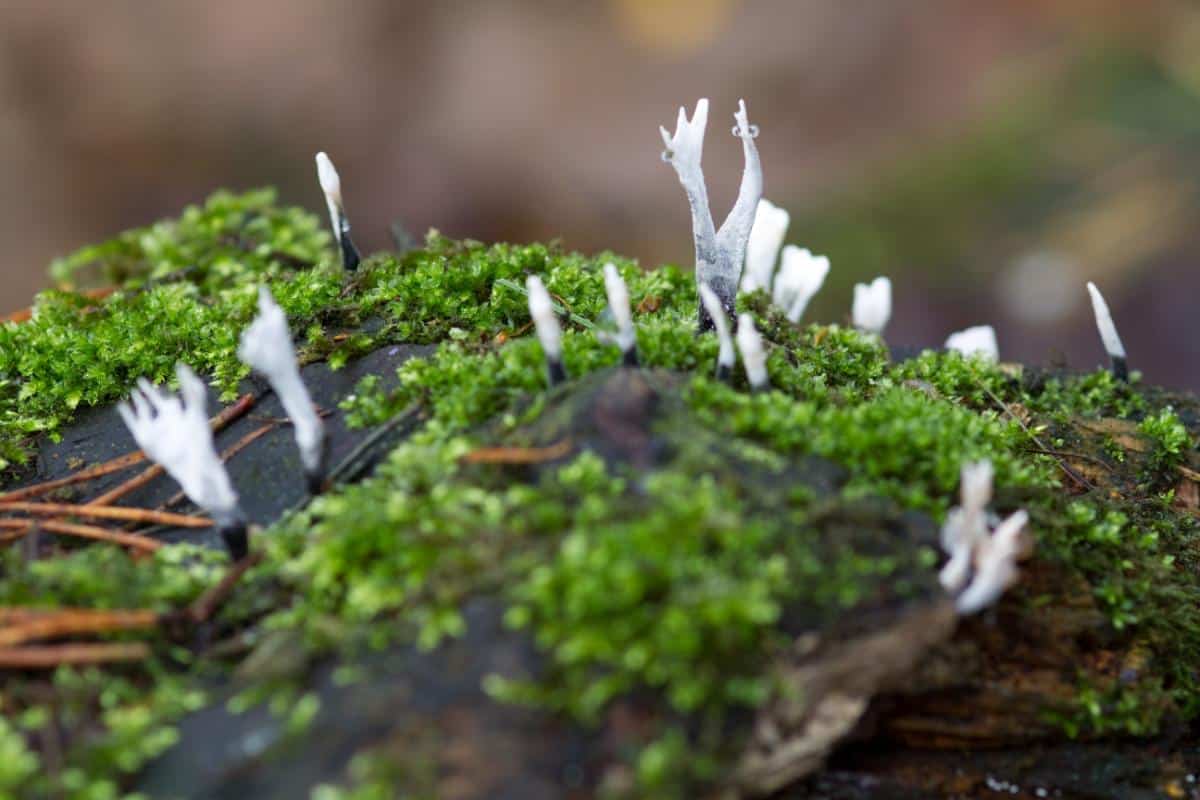
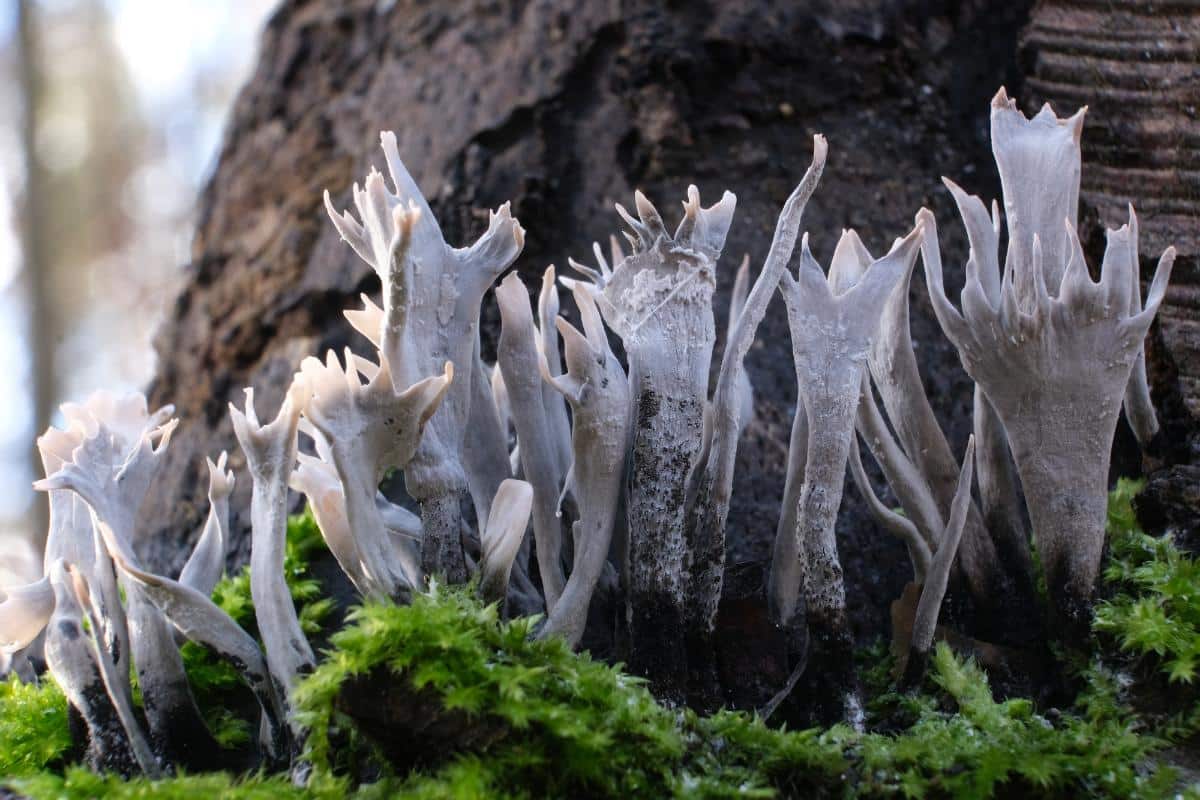
The shape of the candle snuff fungus is quite variable. Sometimes, the bodies are narrowly cylindrical with a pointed tip. Other times, the body branches near the top into flattened forks that look like moose or deer antlers. It’s not uncommon to find several different body forms growing side by side on the same stump.
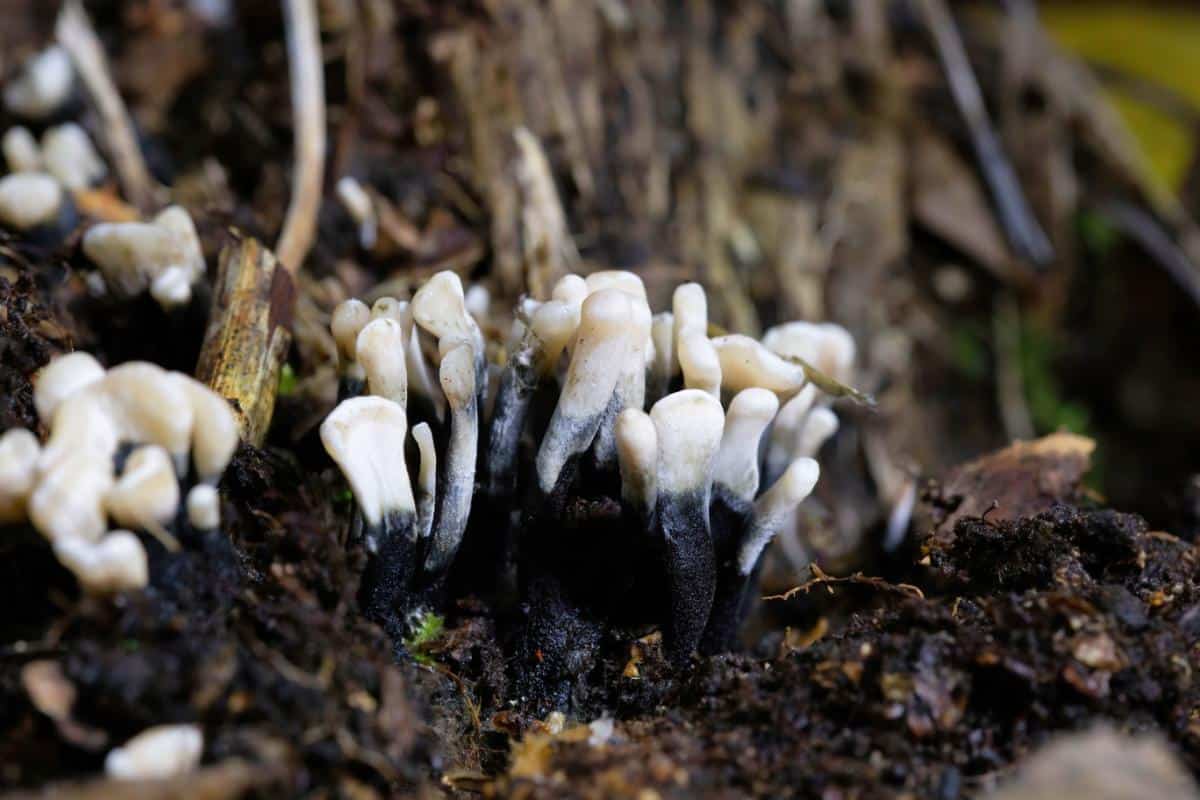
This fungus has two different stages that significantly change its outward appearance. In the asexual stage, the upper portion of the stalk is white to gray and powdery. The top of the tip is narrowed and whitish to yellowish, and does not have the powdery coating. And, the bottom of the stalk is dark brown to black and sometimes slightly fuzzy. Finally, a root-like structure at the base of the stalk anchors the fruiting body to the wood.
In the mature sexual stage, the white disappears entirely, and the whole surface turns black, hard, and finely bumpy.
Taste and Smell
This mushroom has no distinctive odor or taste.
Flesh Color and Staining
The interior flesh is white and tough at both stages of growth. It does not change color when cut or handled.
Lookalike Species
Dead Man’s Fingers (Xylaria polymorpha)
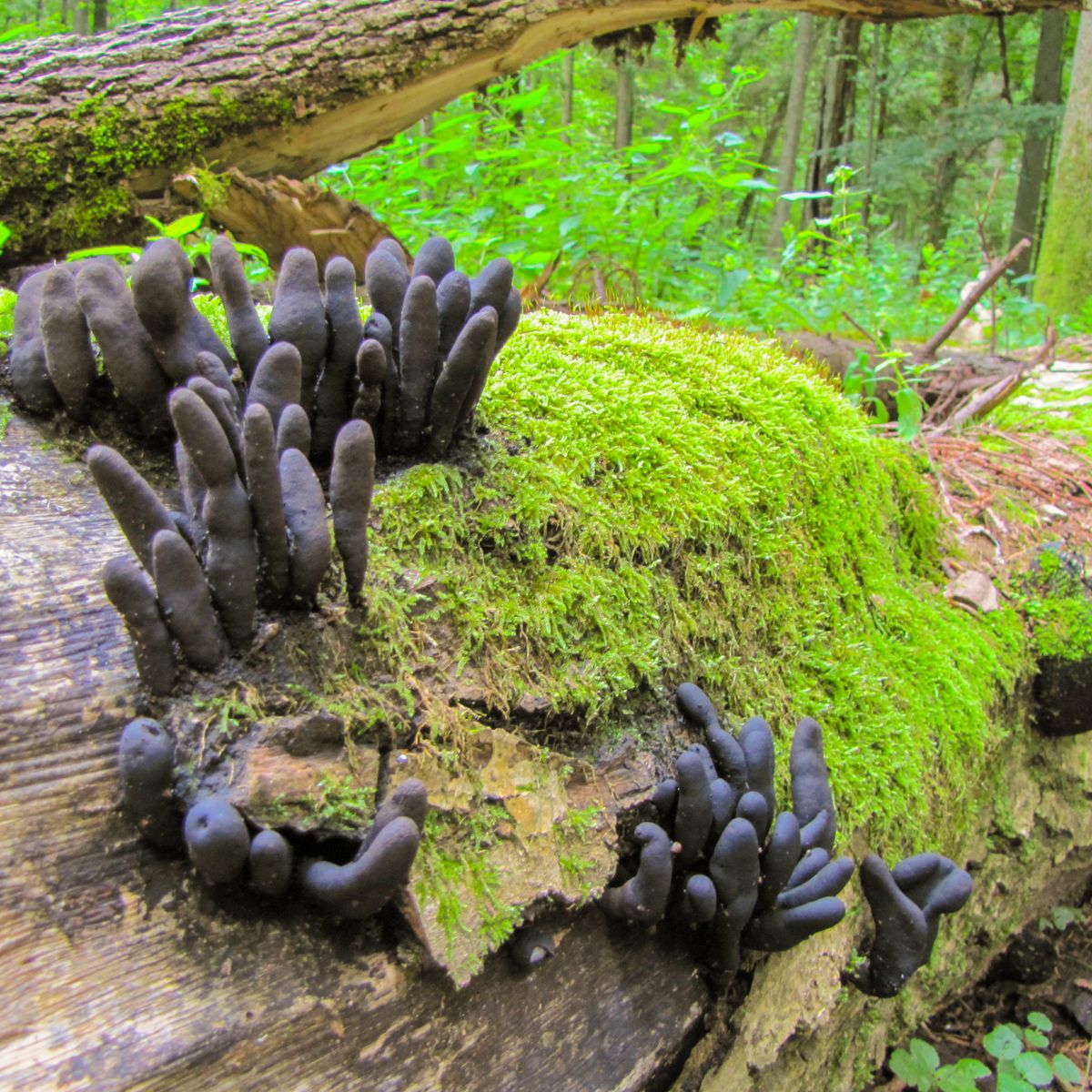
These dead man’s fingers are the most common lookalike. This cousin to the candlesnuff fungus is also long and somewhat slender, and grows from the ground. When the candlesnuff fungus is in its mature stage and has shed its white coloring, the all-black body looks quite a bit like dead man’s fingers.
There are several differences that are pretty clear with close inspection, though. Dead man’s fingers are noticeably thicker, and they do not branch. The bodies of this mushroom are blunt and finger-shaped and grow in tight clusters at the base of hardwood stumps. Also, when dead man’s fingers are in their asexual stage, they are bluish-white rather than powdery white.
Beechmast Candlesnuff (Xylaria carpophila)
Like the candlesnuff fungus, the beechmast candlesnuff is long, slender, and has branching white tips. However, it grows exclusively from the outer husks of fallen beech nuts (beech mast) buried in leaf litter. It never grows from stumps or logs. It’s also much more slender and thread-like than the candlestick fungus. These seem to be uncommon in North America, but do occur sometimes.
Dead Moll’s Fingers (Xylaria longipes)
Dead moll’s fingers are very similar but they are more club-shaped, thicker, and don’t branch. They also usually grow singly rather than in clusters. This species grows most often on dead branches and stumps of sycamore and beech.
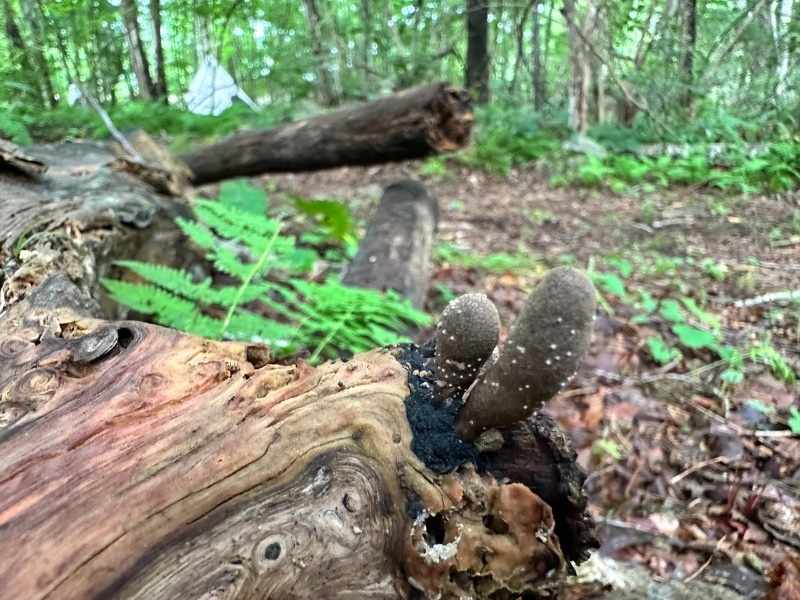
Xylaria longipes by DThomas on Mushroom Observer
Xylaria longiana
Xylaria longiana looks nearly identical to candlesnuff fungus. It has the same black stalks with white powdery tips in spring and the same hard black surface by late summer. It grows on the dead wood of oaks and is found east of the Rocky Mountains; this is a direct overlap with candlesnuff territory.
The main difference is size. X. longiana is a bit smaller and more slender, with fruiting bodies that rarely branch the way candlesnuff does. The only reliable way to tell them apart, though, is under a microscope.
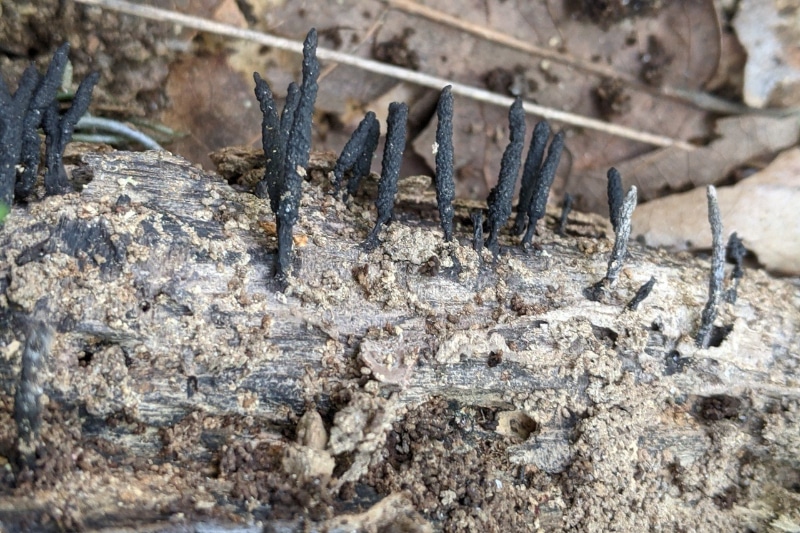
Xylaria longiana by Aidan Marshall on Mushroom Observer
Yellow Staghorn, aka Jelly Antlers (Calocera viscosa)
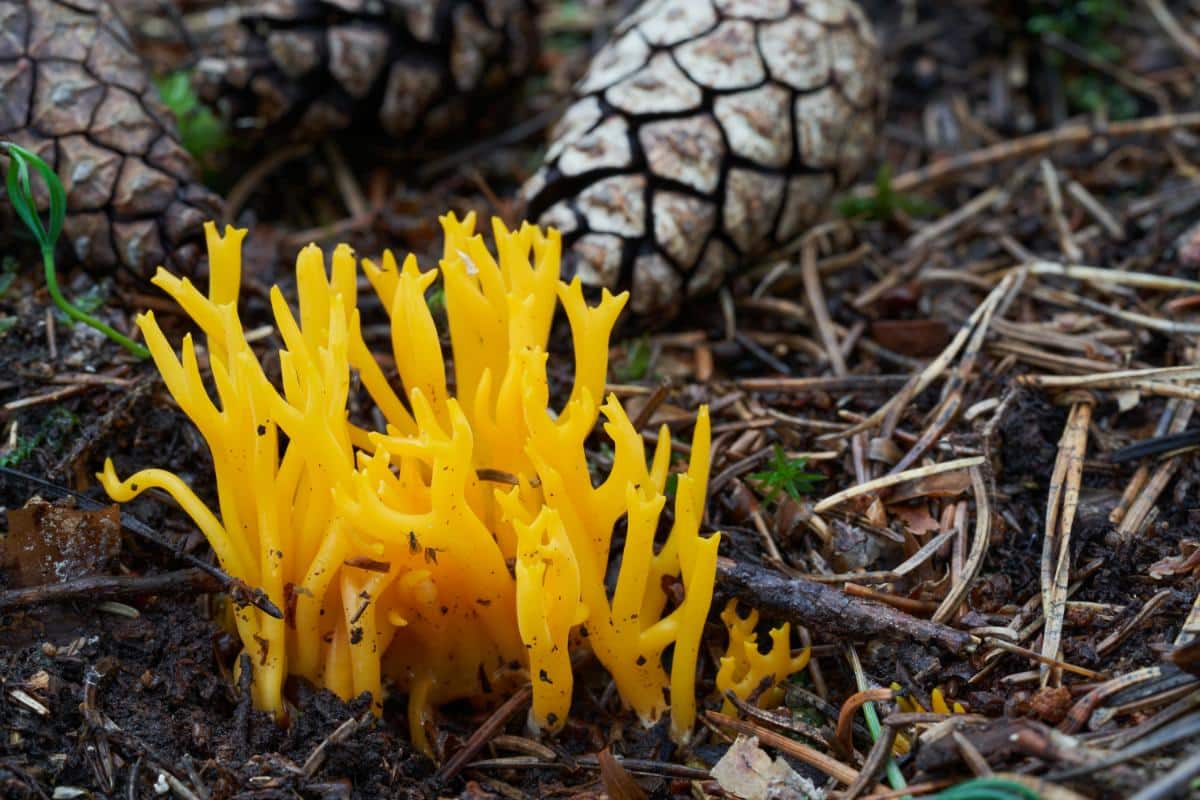
The yellow staghorn has a similar branching antler shape to the asexual stage of candlesnuff. The color is usually enough to differentiate them, though. Yellow stagshorn is bright egg-yolk yellow to orange, is slightly sticky, and grows only on dead conifer wood.
Candlesnuff Fungus Medicinal Uses
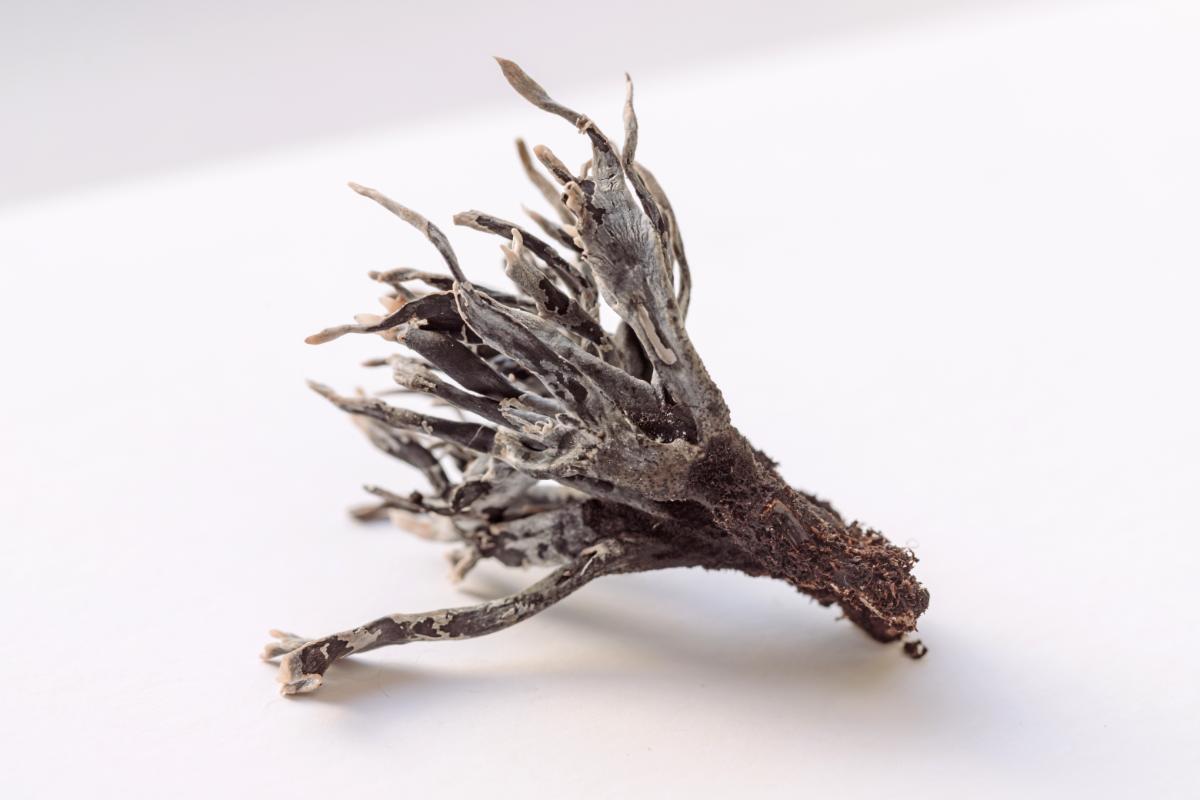
Candlesnuff fungus has no recognized medicinal uses, but it’s been studied in labs and has some properties worth noting. Researchers have discovered several compounds in the fungus that kill or slow cancer cells in test-tube experiments. These include compounds that have potential in fighting against liver cancer. A protein extracted from the fungus also had anti-tumor effects in similar lab tests, and extracts have shown some ability to inhibit certain bacteria.
Candlesnuff Fungus Edibility
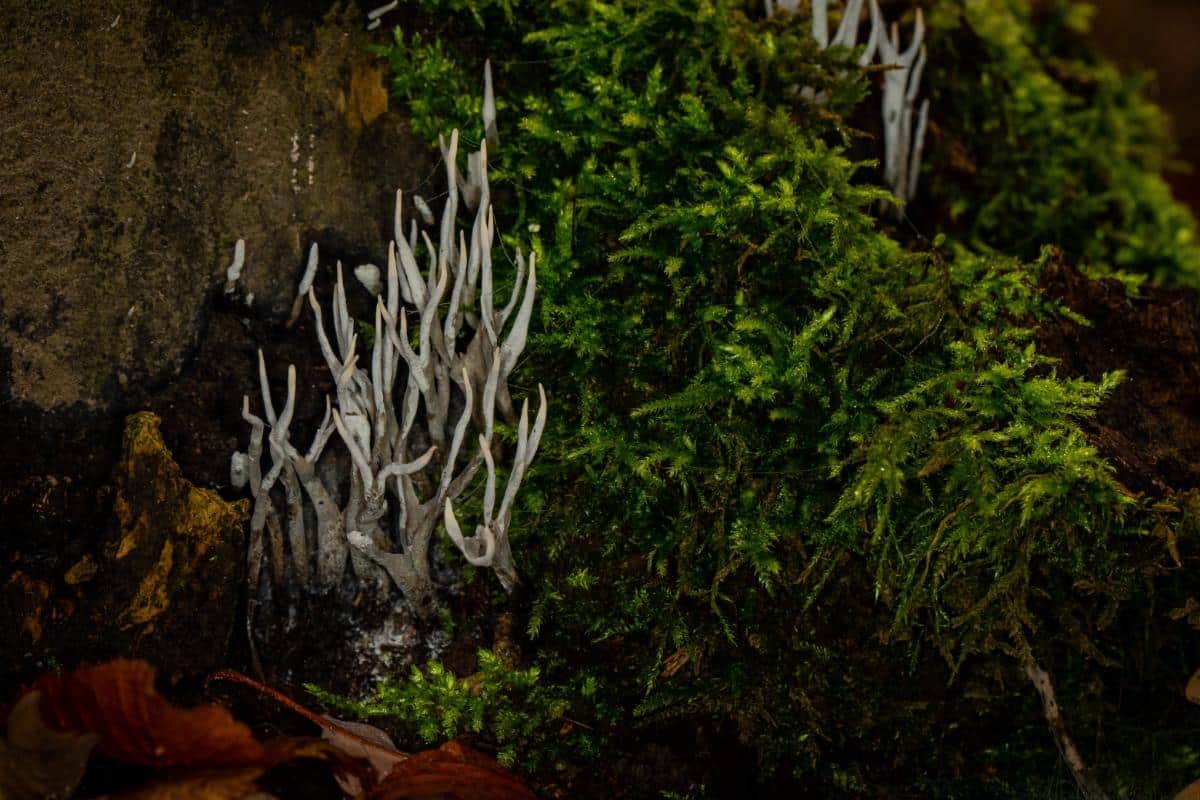
This mushroom isn’t poisonous, but it also isn’t eaten. The fruiting bodies are too small, too tough, and too insubstantial to have any culinary value. No traditional use as food has been documented.
Common Questions About Candle Snuff Mushrooms
Is the candlesnuff fungus edible?
The fruiting bodies of this species are tiny, tough, and have no flavor. They aren’t poisonous, but they also aren’t considered edible.
Is Candlesnuff fungus rare?
No, this is one of the most common fungi in temperate deciduous forests.
Does candlesnuff fungus glow in the dark?
This mushroom does glow, but the glow is extremely faint. It requires near-total darkness to see.
Leave a Reply