
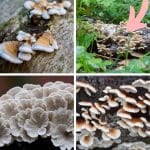
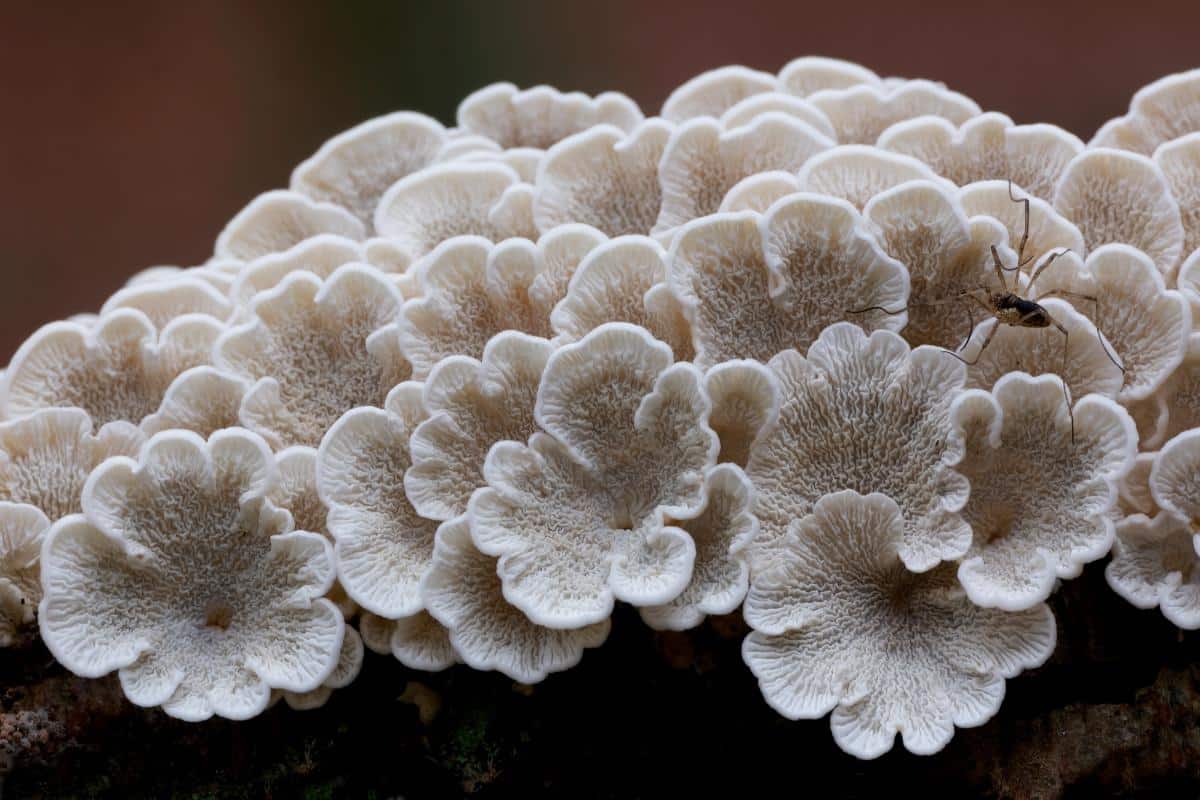
The crimped gill mushroom (Plicaturopsis crispa) is a cute, little shelf fungus that grows in dense, overlapping tiers on dead wood across North America. Its fan-shaped caps look a lot like other small bracket fungi, but underneath, there is a surprise waiting. Instead of “normal” gills, pores, or a smooth surface, there is a network of pale, forked, crimped folds that look like gills. Those crimped folds are how this mushroom got its common name, and it’s the feature that separates it from almost everything else it grows alongside.
- Scientific Name: Plicaturopsis crispa, syn: Plicatura crispa, Trogia crispa
- Common Names: Crimpled gill
- Habitat: Dead hardwood
- Edibility: Inedible
Jump to:
All About Crimped Gill Mushrooms
Crimped gill mushrooms are widespread across North America, and are a somewhat common find in the cooler weather of late winter and early spring. They also grow in Europe, Asia, and Australia. It is a saprotrophic species, which means it breaks down dead wood, and it is often one of the first fungi to colonize a recently dead branch.
The species was first described to science in 1794 and was named Merulius fagineus. Later, it was moved into the genus Cantharellus, then later on into Trogia. In 1922, the British mycologist Carleton Rea moved the species into Plicatura, creating the name Plicatura crispa.
The word Plicatura is from the Latin word plicare, which means “to fold,” a reference to the folded gill-like spore surface. The species name crispa comes from the Latin for “curly” or “crisped,” referring to the crimped gill-like folds on the underside.
In 1964, the English mycologist Derek Reid established that the crimped gill was distinct enough from the other Plicatura species to warrant its own genus. He created Plicaturopsis to put it in. This name means “resembling Plicatura.” So, the full name now means folded and curly resembling Plicatura.
Synonyms for Plicaturopsis crispa include Merulius fagineus, Merulius crispus, Cantharellus crispus, Trogia crispa, and Plicatura crispa. Trogia crispa is the name most likely to appear in older field guides.
Identification
Season
Crimped gill is a year-round species. It is most visible in late winter and spring.
Habitat
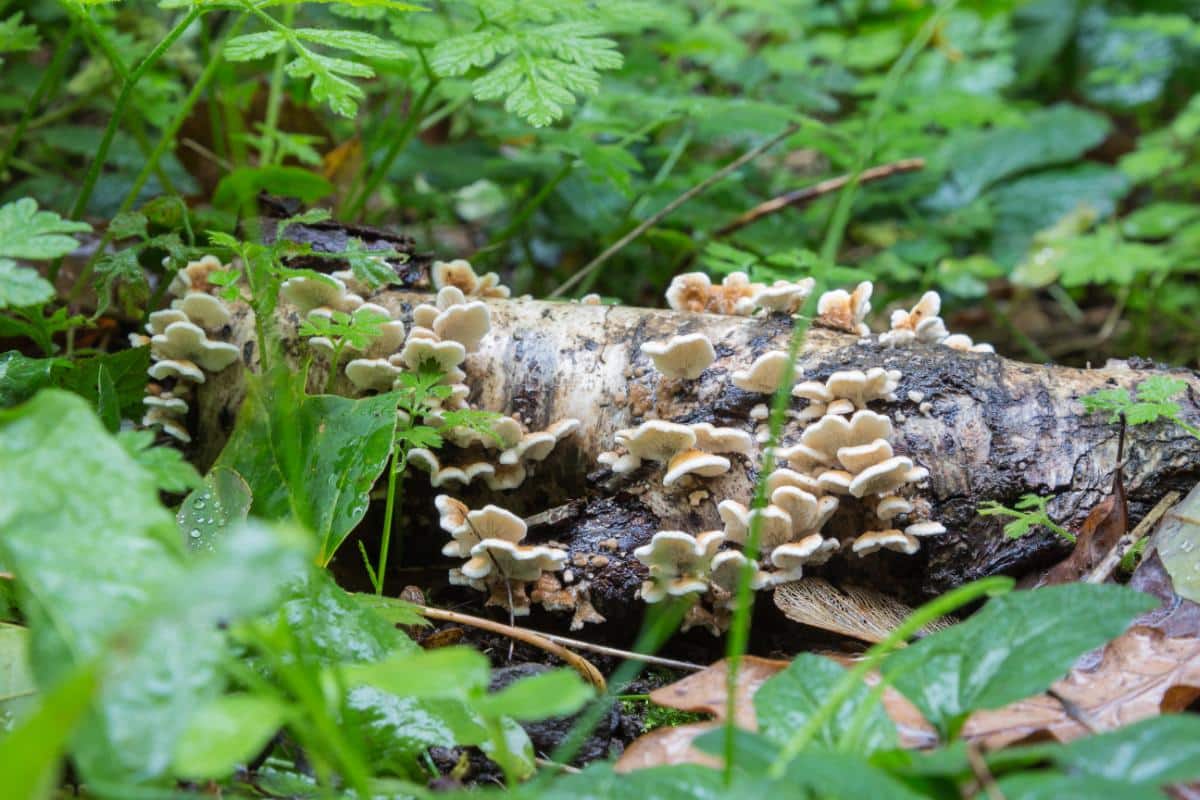
This species grows on the dead wood of hardwood trees, including fallen branches, dead standing trunks, and cut stumps. It grows in forests, parks, and cemeteries, and is often found in high humidity areas such as river valleys and lake shores.
It can grow singularly, but more often it is growing in dense groupings or clusters. The caps often stack on top of, or overlap, each other. It is rare to just see one. These mushrooms always grow on wood, never from the ground.
This species has a wide distribution. It has been recorded in Europe, Asia, Australia, and North America. In Britain, it was previously scarce outside of Scotland, but its range has expanded dramatically this century, especially since 2010. On the Fungal Records Database of Britain and Ireland, 78% of all records date from after the year 2000, many of them from areas with no previous records of the species.
Identification
Cap
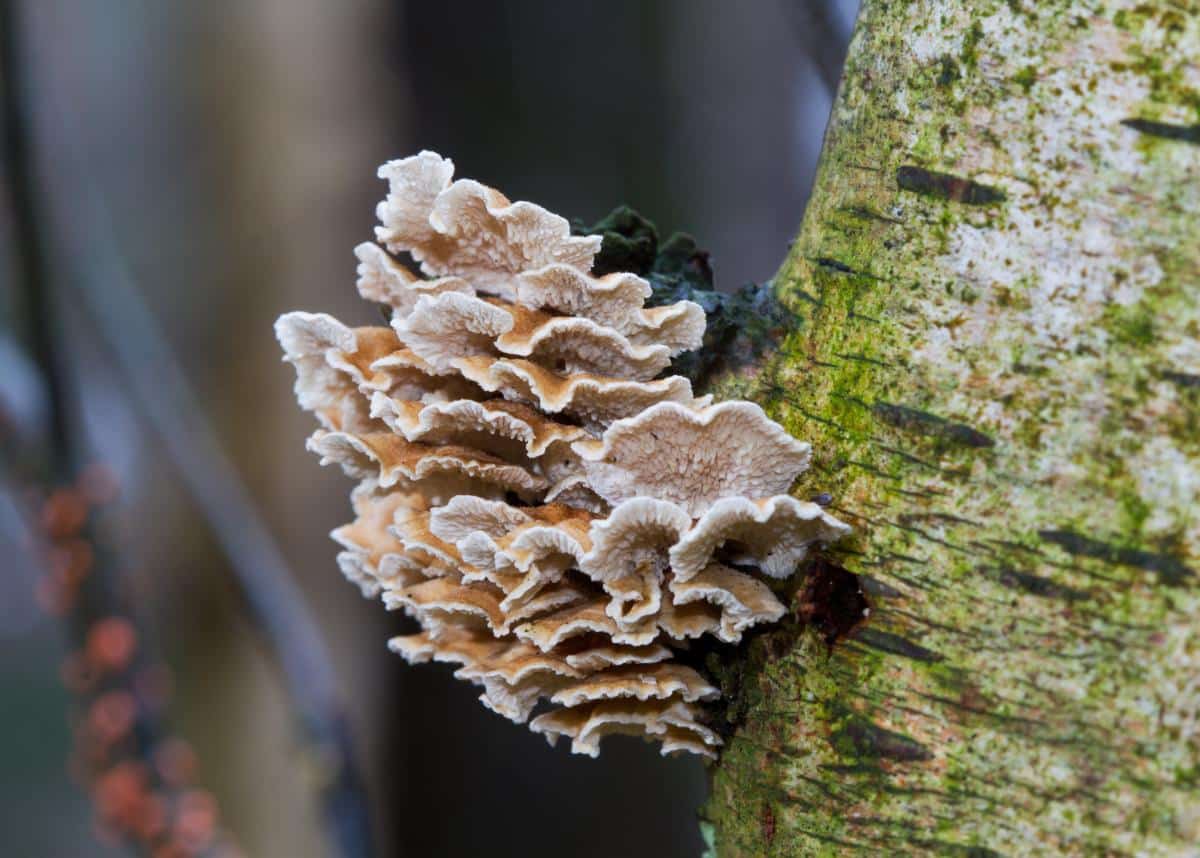
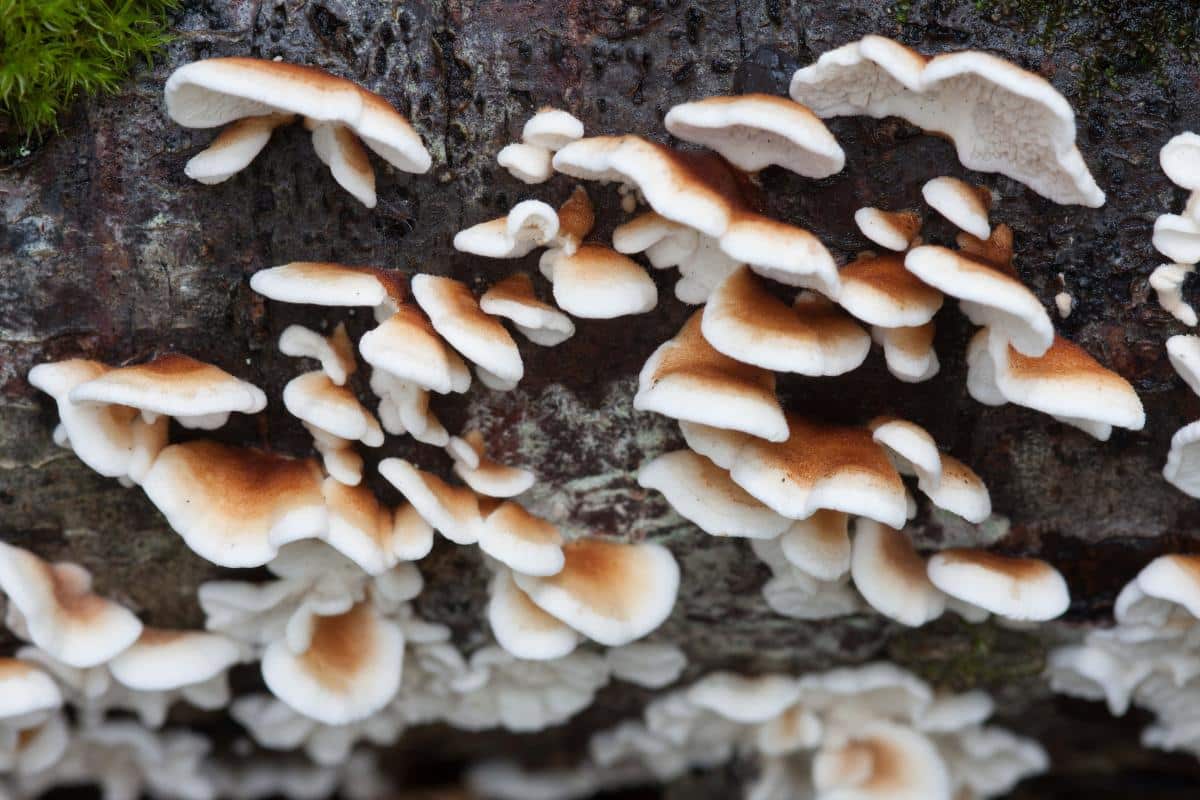
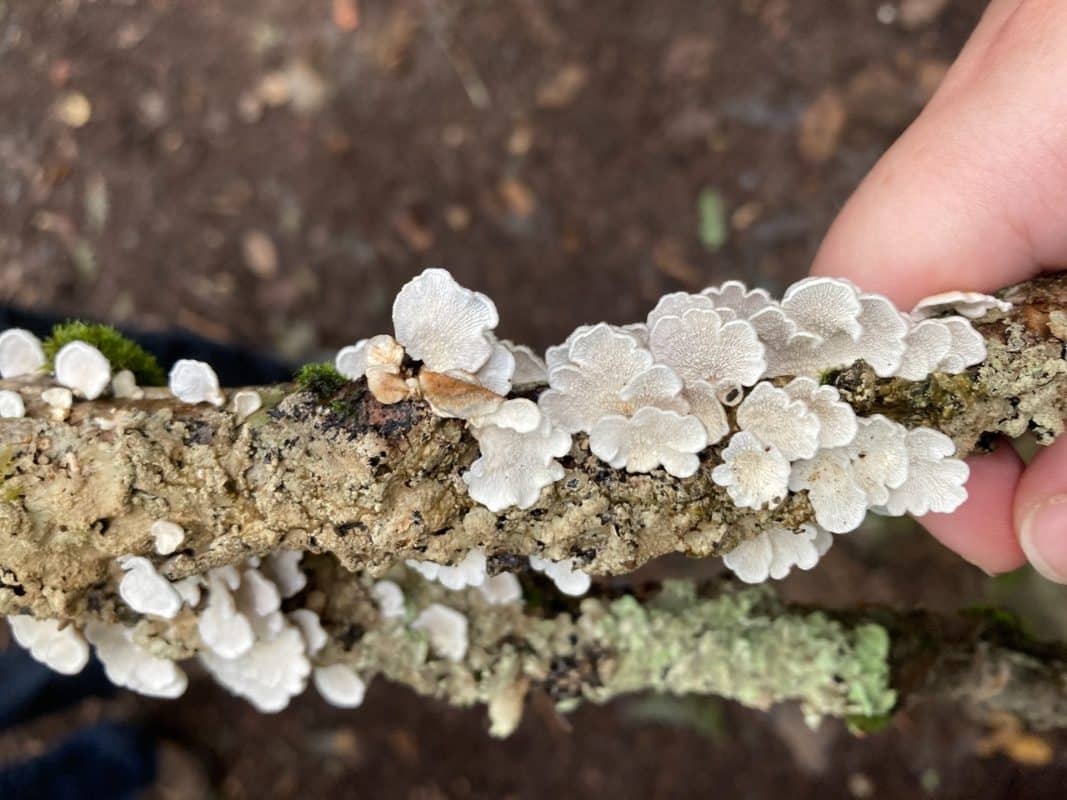
The cap is very small, only 0.4 to 1 inch across, and fan-shaped or semi-circular, like a small bracket or shell. It attaches to the wood at a single point rather than across a broad base. The surface of the cap is finely velvety and has concentric bands of color in yellow-orange, reddish-brown, and yellow-brown. The edges of the cap are usually paler, with a whitish edge.
The fruiting bodies grow in dense, overlapping clusters, like stacked roof tiles, and can cover large areas of dead wood. When wet, the flesh is soft and flexible, but it is not fragile. When it is dry out, the cap curls up.
Folded “Gills”
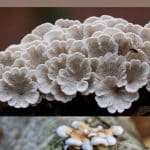
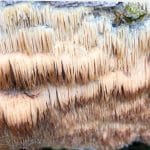
The underside of the cap doesn’t have true gills or pores. They look like gills at a glance, but they are not anatomically structured like gills. Instead, the spore-bearing surface is made up of pale, forked folds or wrinkles. They often look like shallow veins. These are arranged so they radiate outward, and sometimes they branch or fork slightly. The folds are white to pale cream and sometimes have a slight greenish tinge.
The crimped gill is sometimes colonized by Serratia marcescens, a bacterium that produces a red pigment. When this happens, the pale folds on the underside will have red or pinkish marks. This creates a very striking contrast; it almost looks like the mushroom is bleeding. Serratia marcescens is an opportunistic species that affects a range of hosts, including humans.
Stem
There is no stem. The fruiting body is attached directly to the wood at a single narrow point, which may look like a very short, rudimentary stub.
Taste and Smell
This mushroom does not have a distinctive taste or smell.
Flesh Color and Staining
The flesh is thin, papery, and white. It does not change color or stain when cut or handled.
Spore Print
The spore print is white.
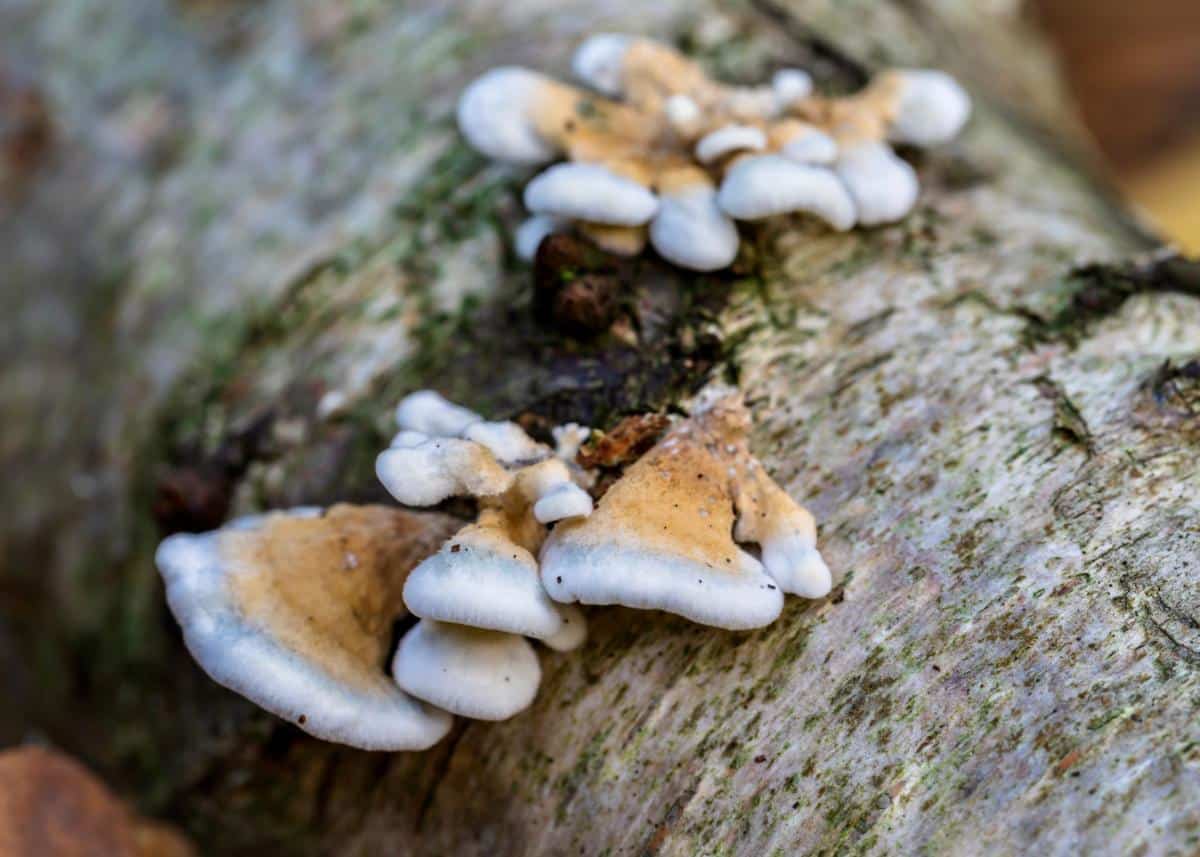
Plicaturopsis crispa by Molly on Mushroom Observer
Crimped Gills Lookalike Species
Split Gill (Schizophyllum commune)
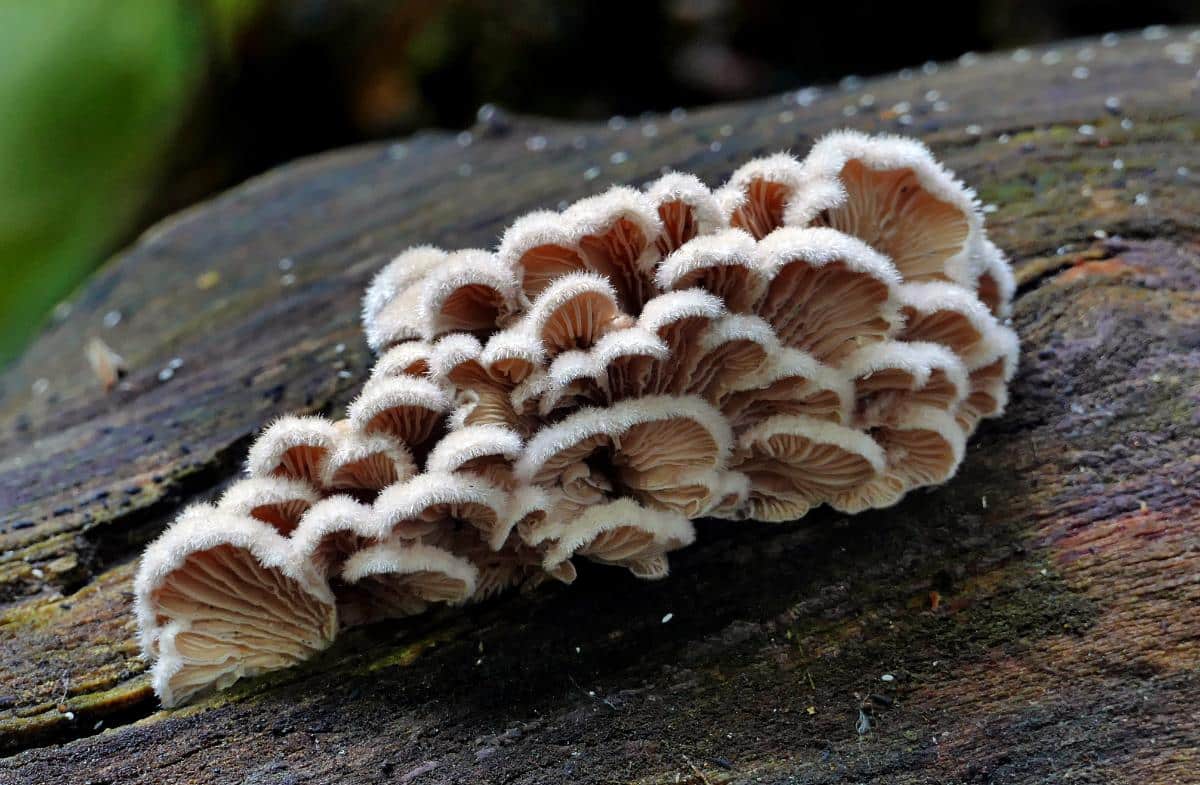
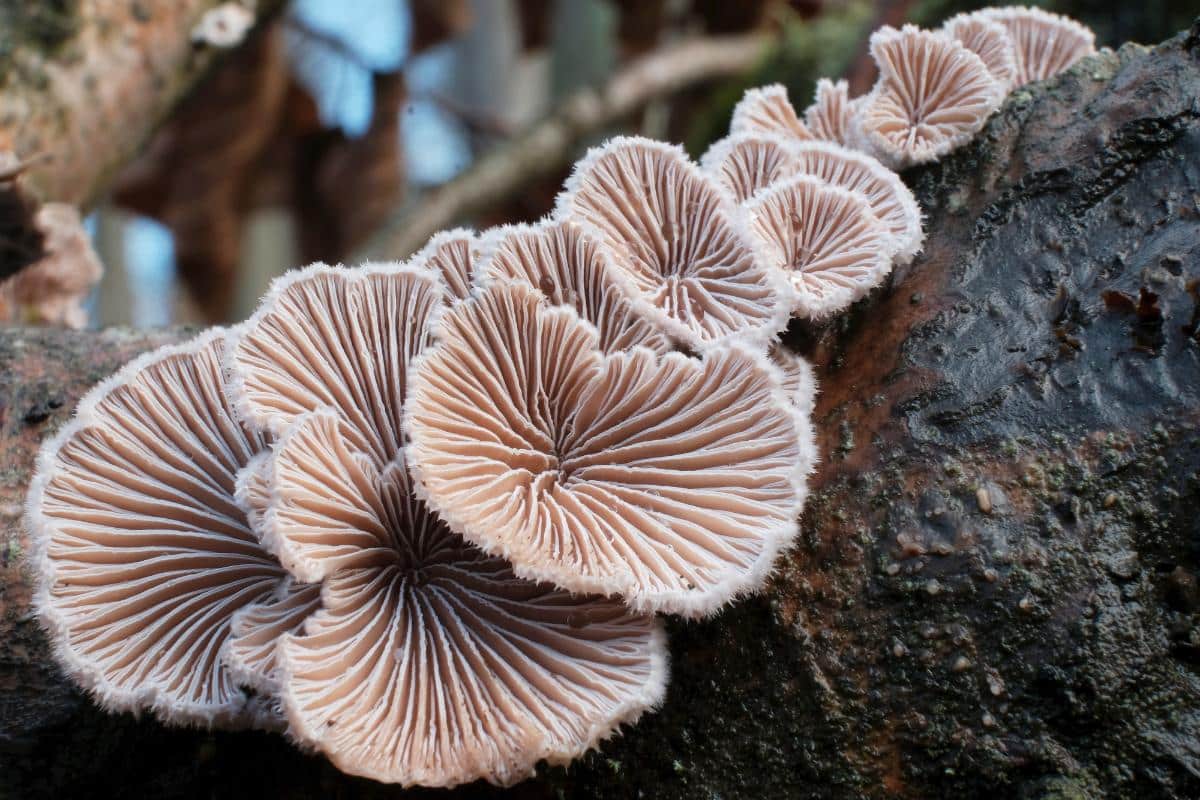
The split gill also has false gills on the underside of a bracket-like cap, like the crimped gill. This can cause a lot of confusion. To separate these two, you need to closely investigate the folds of the false gills on each species. With the split gill, each “gill” is split down the middle lengthwise, giving it a distinctive forked channel appearance. The split gill is also whitish to grayish overall and has a much rougher, hairier cap surface, compared to the more brownish, orange-zoned cap of the crimped gill.
Parchment Fungi (Stereum spp.)
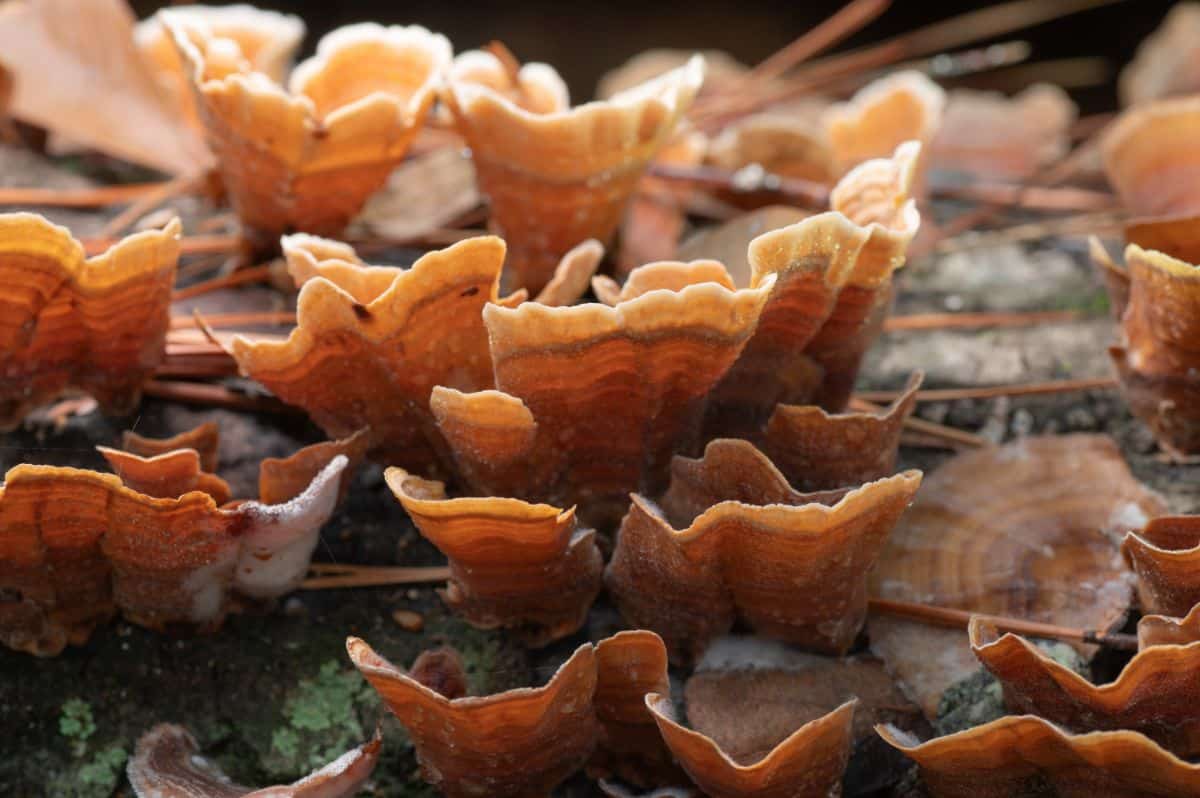
From above, the crimped gill looks a lot like various parchment fungi. They both grow in overlapping tiers on dead hardwood, and both have zoned, brown cap surfaces. The primary difference is the underside. Stereum species have a smooth, flat, undersurface with no ridges, folds, or pores of any kind.
Oysterlings (Crepidotus spp.)
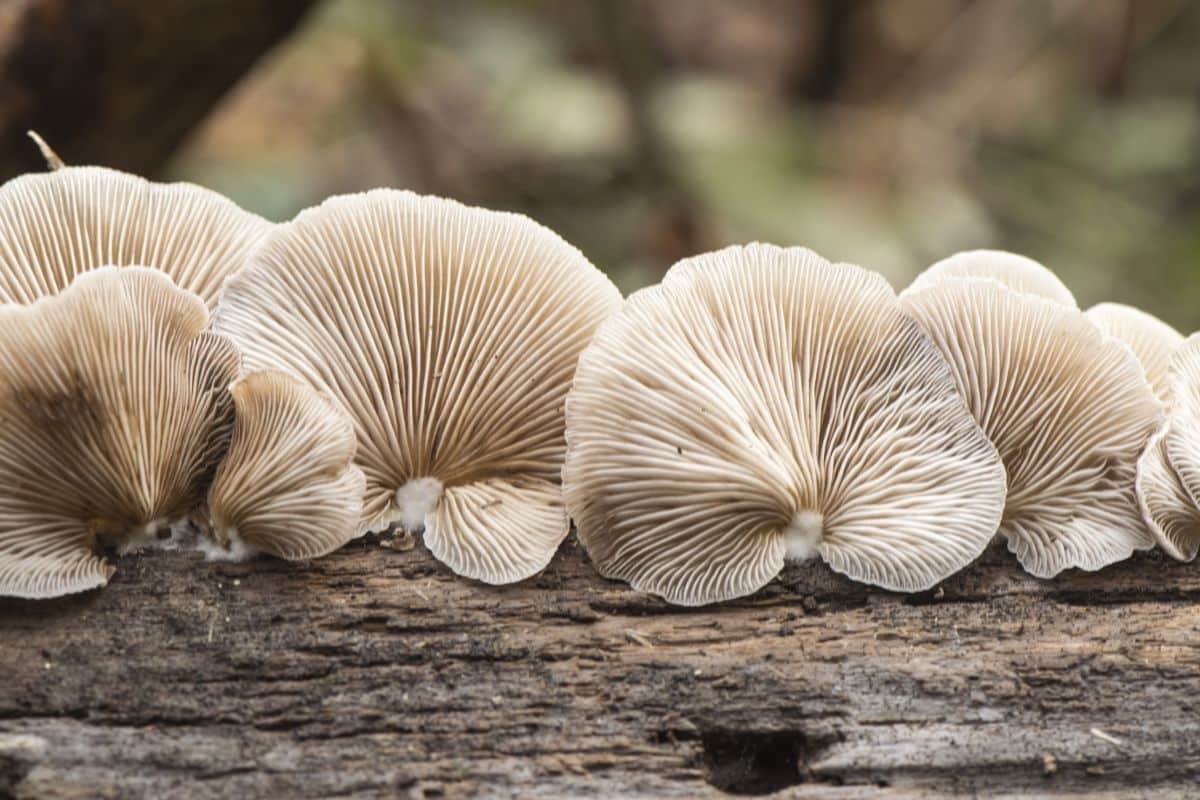
There are several small Crepidotus species that also grow on dead wood and can look similar to the crimped gill from above. The key difference, like with the Stereum species, is the underside. Crepidotus species have true, well-formed gills.
White Mosscap (Plicatura nivea)
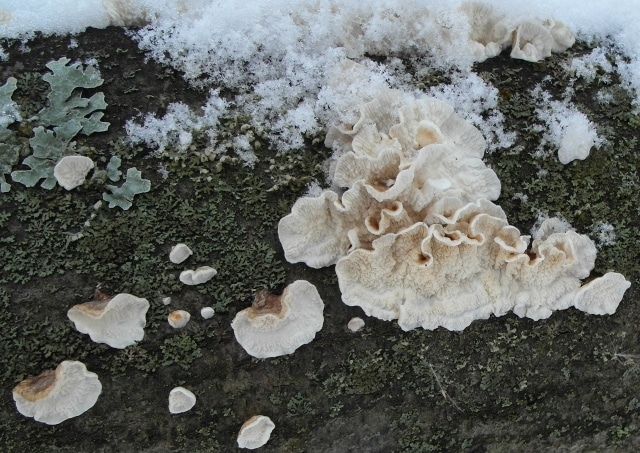
These close relatives look so similar that some researchers think they should be placed in the same genus. The main visual difference is color. The white mosscap is white to pale cream overall (though not always), with a smooth to slightly velvety cap surface that lacks the orange-brown zoning of the crimped gill. It sometimes grows more as a crust, spreading across the wood and the caps may be very small or underforme. It also grows primarily on alder. The color difference alone is usually enough to separate them.
Trembling Phlebia (Phlebia tremellosa)
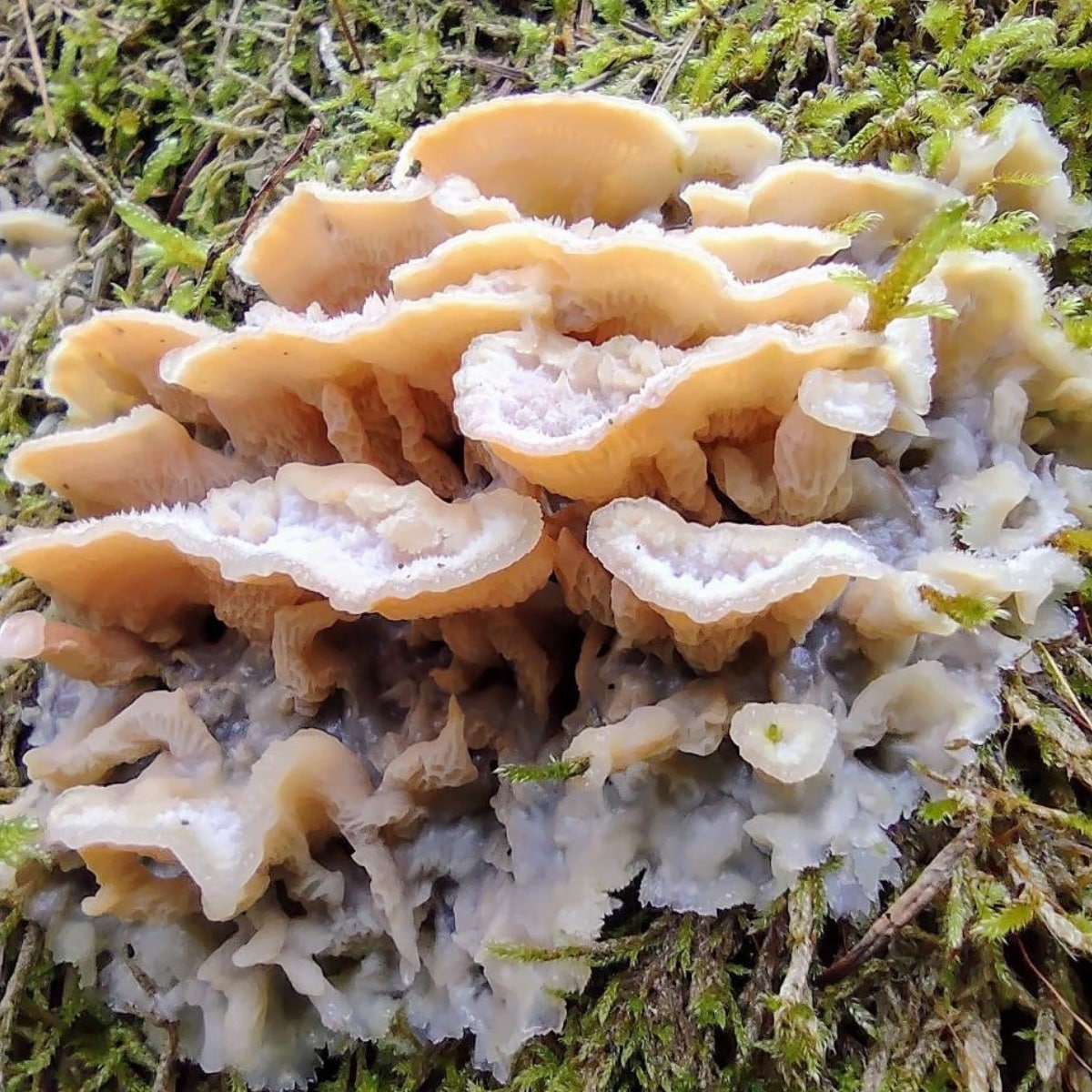
This is also a small, fan-shaped bracket that grows in overlapping tiers on dead hardwood. They also have unique undersides. The underneath of the trembling Phlebia can look a lot like the wrinkled lines of the crimped gill, which is confusing. There are several key differences, though. Trembling Phlebia is larger, has a whitish cap, and is quite gelatinous.
The underside is more like an irregular network of folds and pockets with a rubbery, jelly-like feel, than the long wrinkly lines of the crimped gill. Trembling phlebia is grows up to 4 inches long, compared to the crimped gill’s cap width of roughly half an inch to 1 inch. The texture alone is usually enough to tell these two apart.
Common Questions About Crimped Gill Mushrooms
Is the Crimped Gill Fungus medicinal?
There are no known or documented medicinal uses for the crimped gill.
Is the crimpled gill mushroom edible?
The crimped gill is listed as inedible in guides, but it is not toxic or poisonous. The flesh is thin, papery, and small, and there is no culinary value.
Leave a Reply