
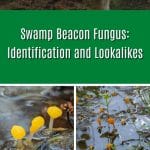
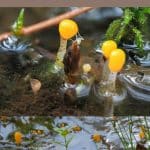
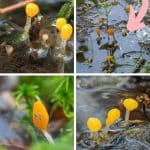
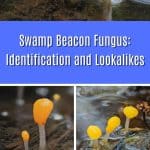
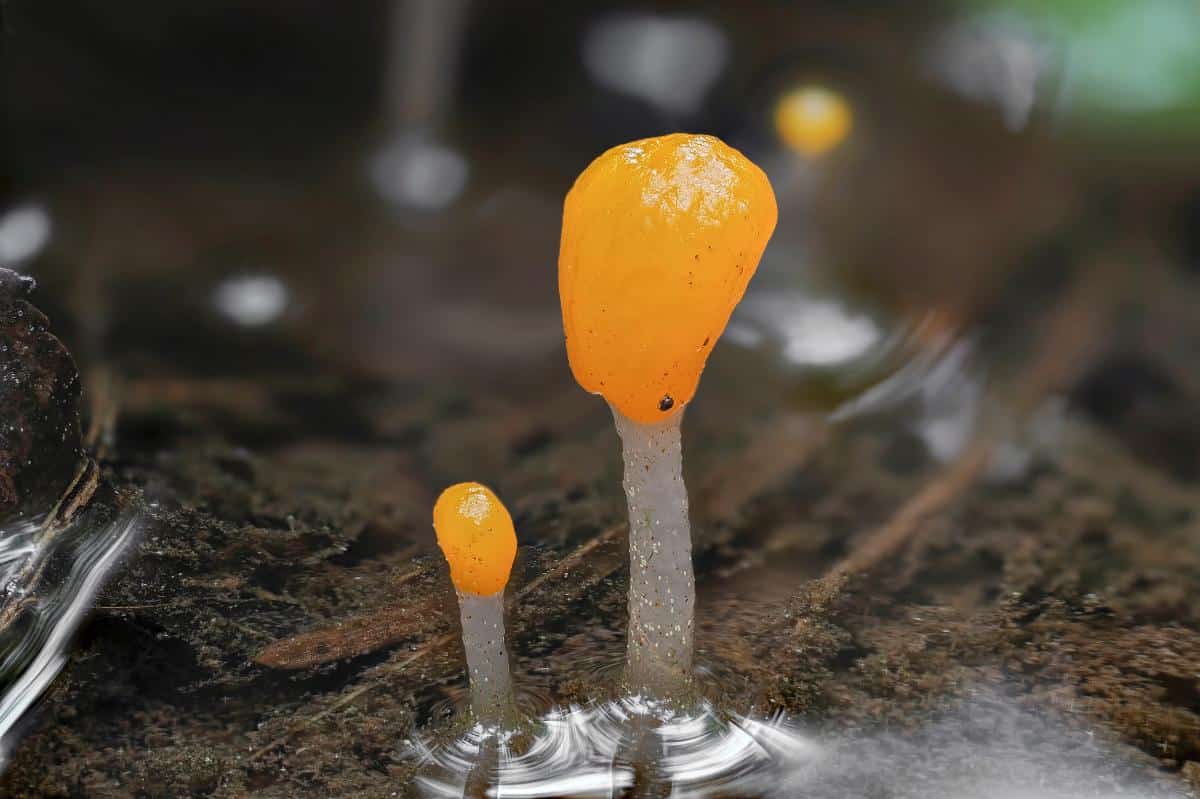
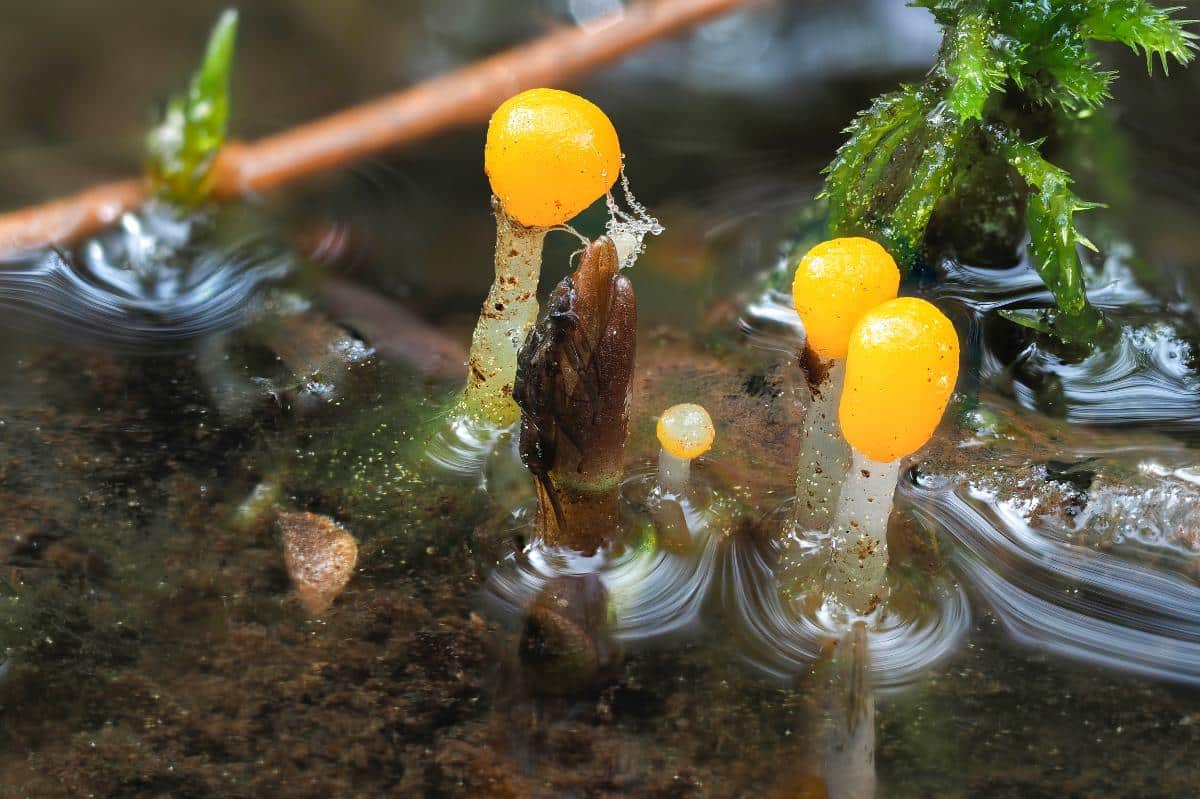
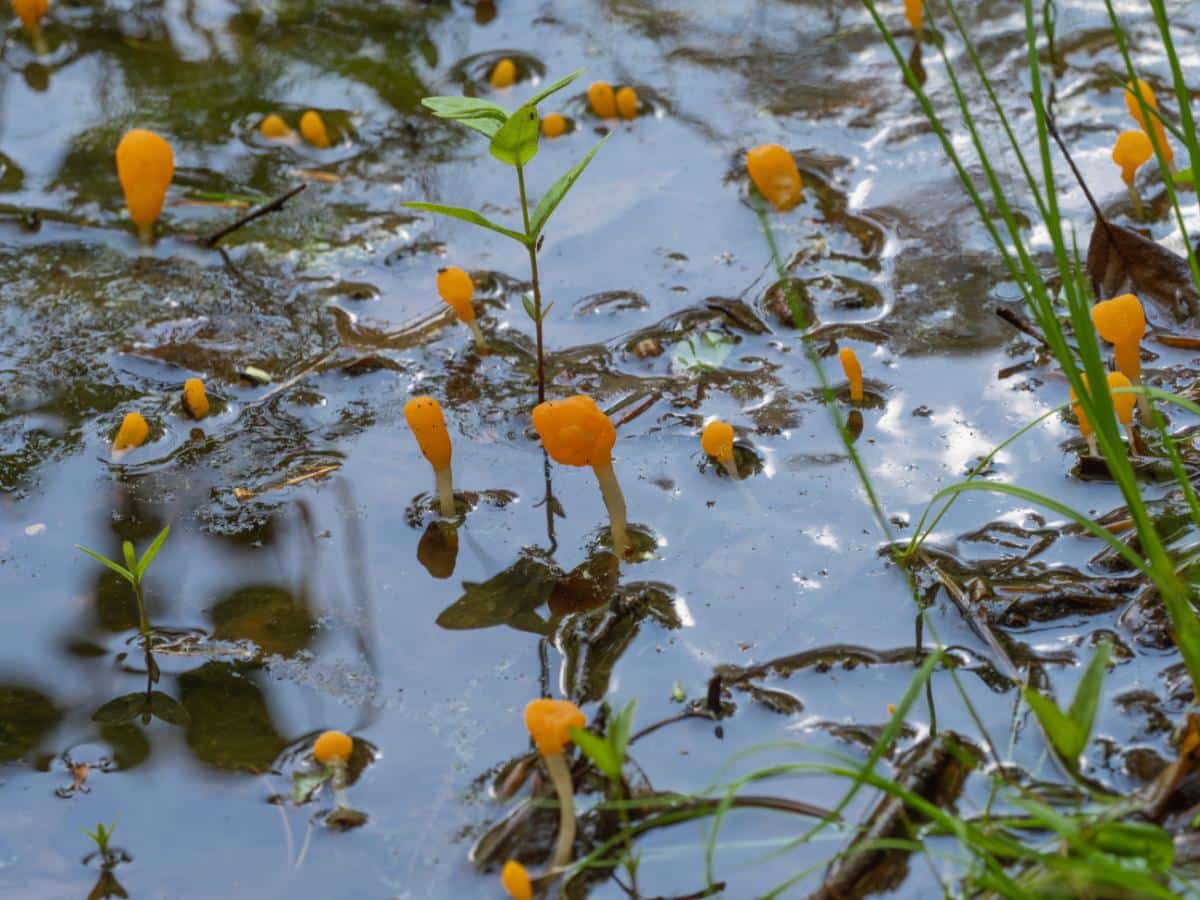
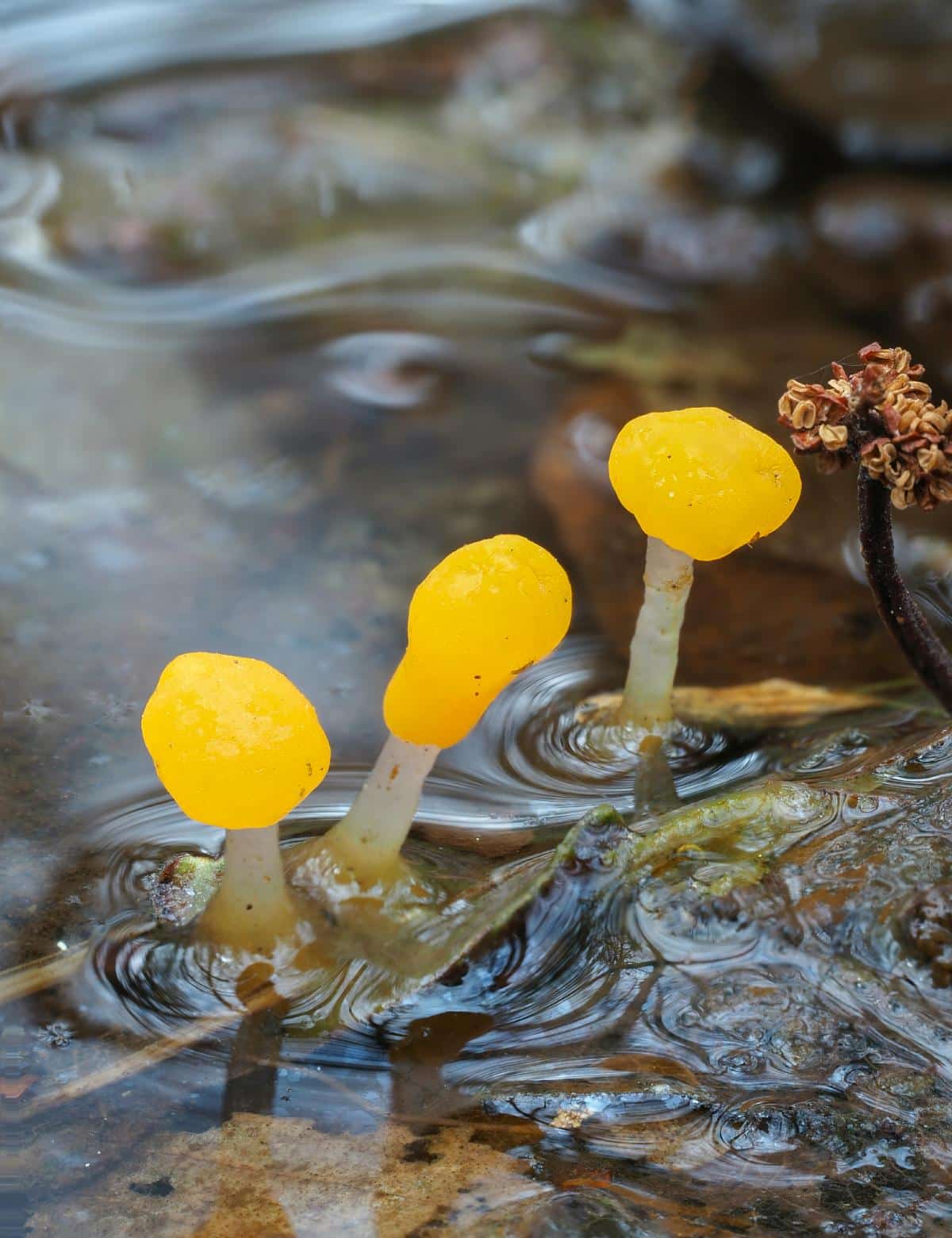
In spring and early summer, the shallow pools and waterlogged ditches in bogs can be full of tiny yellow clubs poking up out of the water. These little egg-yolk colored clubs are swamp beacon fungi, and they look like smooth, bright yellow tongues or matchsticks emerging from the water. Swamp beacons are one of the few fungi in the world that grow directly in or right at the edge of standing water.
The swamp beacon is a small ascomycete fungus that grows across North America, Europe, and parts of Asia. It is a decomposer and breaks down dead leaves, mosses, and plant stems that sink into the shallow water. Without fungi like this one, that organic matter would just pile up rather than cycling back into the ecosystem.
- Scientific Names: Mitrula elegens, Mitrula paludosa, Mitrula phalloides
- Common Names: Swamp beacon, bog beacon, matchstick fungus
- Habitat: Boggy and swampy areas with lots of organic matter
- Edibility: Inedible
All About The Swamp Beacon
In the United States, the common name for this mushroom is swamp beacon. In the UK and Ireland, it is called the bog beacon. What the actual species are in North America is a little more confusing. There are conflicting reports across even the most well-studied mycologists, and if you look at iNaturalist or Mushroom Observer sightings, it gets very confusing. It doesn’t help that the species are very hard to tell apart.
For the purposes of this identification guide, we are not going to name a specific species. They are at least four who all look similar and can be called the swamp beacon or bog beacon; their distribution might be determined by geography. For the most part, the only way to tell these apart now is under a microscope.
- Mitrula paludosa – possibly a European only species, or doesn’t occur in North America. But also reported widely as occurring in North America on iNaturalist and Mushroom Observer
- Mitrula elegens – a western North American species only? Also widely reported on the east and west coasts on iNaturalist and Mushroom Observer
- Mitrula lunulatospora – this might be the eastern only North American species
- Mitrula borealis — grows in mountainous regions
The swamp beacon is an ascomycete. This means that it fires its spores into the air rather than dropping them from gills. Inside the yellow head, there are thousands of tiny tube-shaped cells that each hold eight spores. When the spores are ready, pressure builds up inside the cells until they burst. This shoots the spores out like a cannon. The reason the yellow head sits up above the water is specifically to get those spores into the moving air, where they can travel to find new places to land and grow.
The genus name Mitrula comes from the Latin word mitr-, a reference to a mitre. This is the tall, pointed headdress worn by bishops and refers to the shape of the mushrooms’ yellow, pointed head. The species name paludosa comes from the Latin word for swamp, marsh, or bog. Put together, the scientific name essentially means “little headdress of the bog.”
The swamp beacon was first described to science by Swedish mycologist Elias Magnus Fries in 1821, and he gave it its current name, Mitrula paludosa. Since then, it was reclassified several times, but then finally landed back where it started.
Swamp Beacon Identification
Season
The swamp beacon fruits in spring through early summer.
Habitat
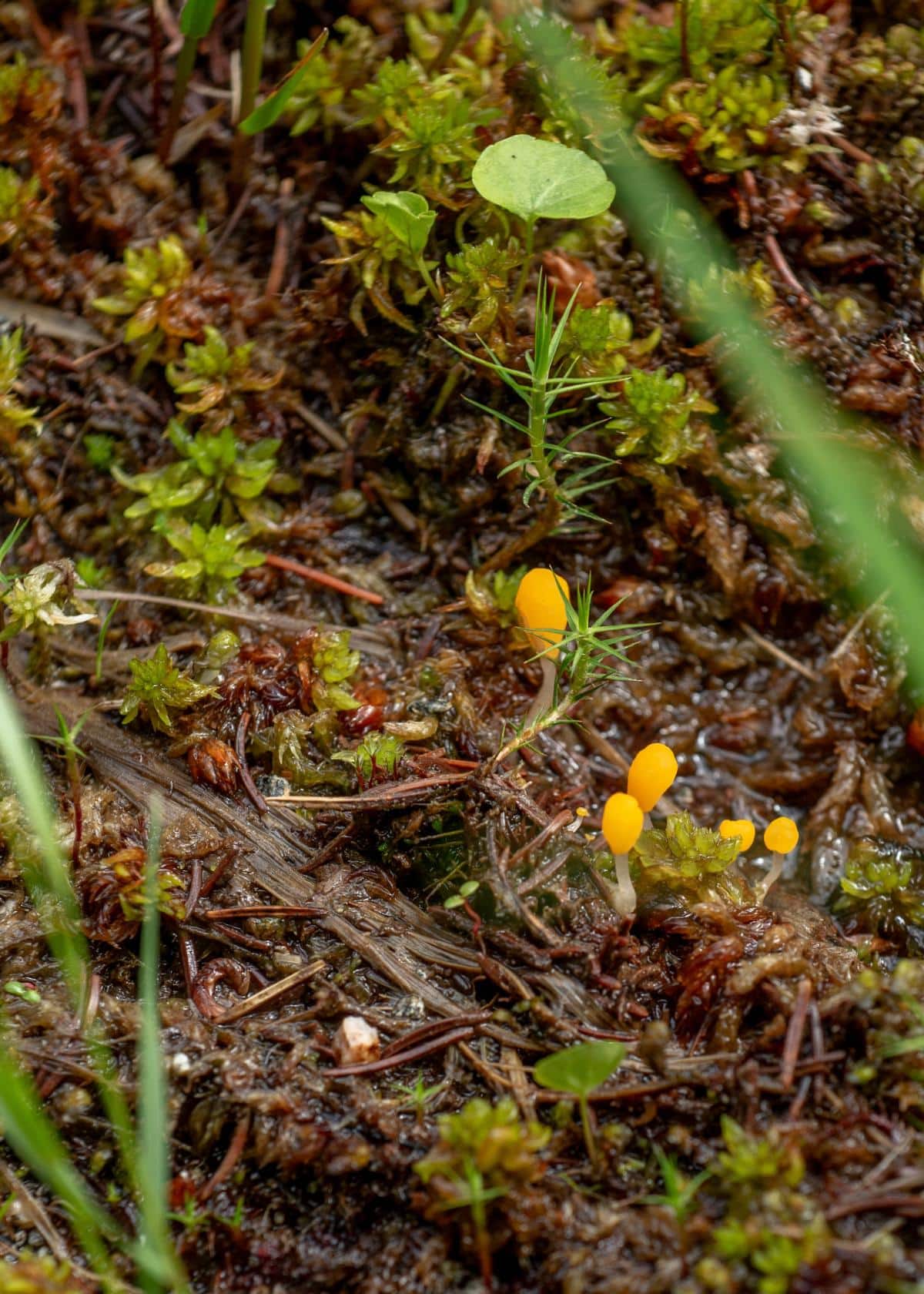
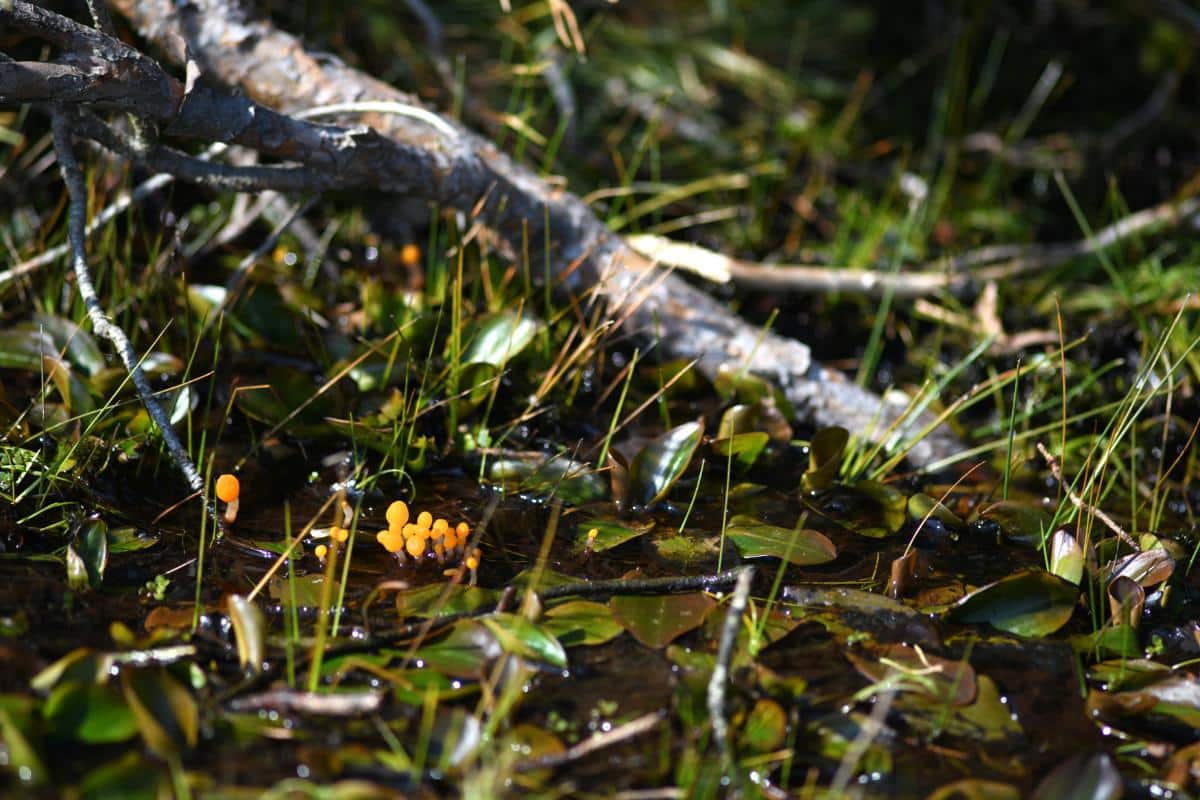
This fungus grows on dead leaves, plant stems, mosses, and algae in standing or slow-moving water. It is found in bogs, marshes, swamps, wet ditches, slow-moving streams, and at the waterlogged edges of pools and lakes. It often grows directly in shallow standing water, not at the edge of it. The stems are often partially submerged while the yellow caps sit just above the water surface.
Identification
Cap
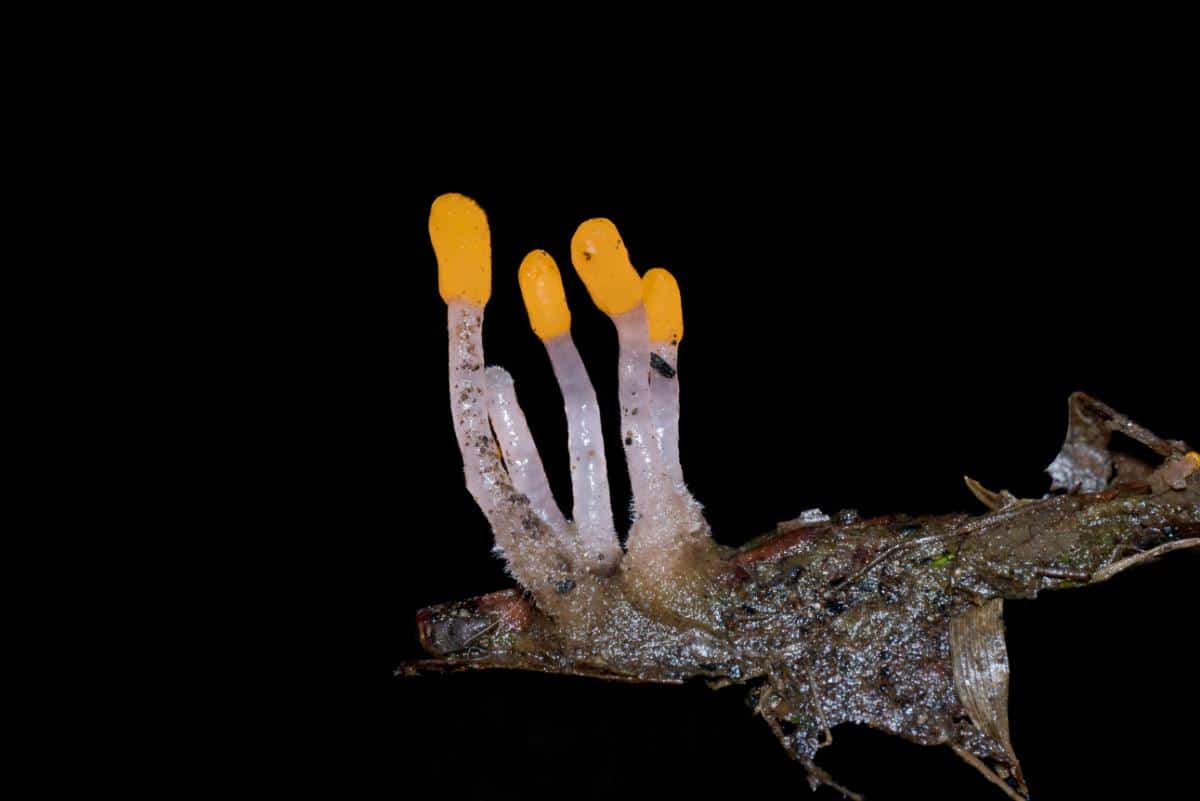
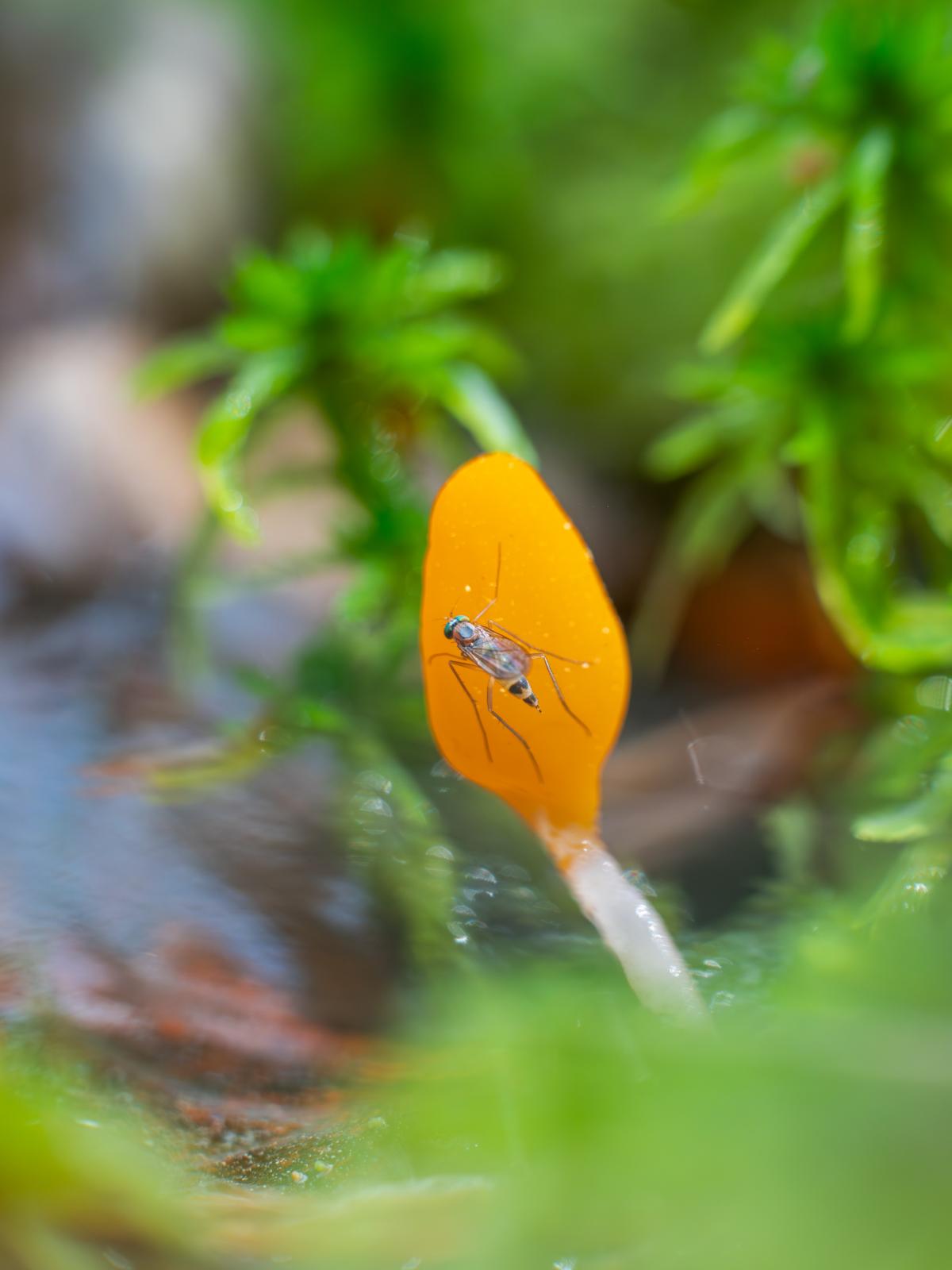
The cap, or top portion of this fungus, is called the fertile head. It is smooth and bright yellow to orange-yellow. Its shape can vary quite a bit; it might be rounded, oval, or club-shaped. The head is tiny, only about 0.4 inches tall and 0.2 inches wide. It is like a very thin, bright yellow tongue sticking out of the water. The head is attached directly to the top of the stem, with no separation between the two.
Gills or Pores
Swamp beacon fungi have no gills or pores. It is an ascomycete — a spore-shooter. The spores are produced across the surface of the yellow head and shot out into the air.
Stem
The stem is white to translucent and is sometimes faintly tinged with pale pink. It is smooth, untapered, and relatively slender, and grows up to about 1.6 inches tall. The stem is the largest part of the fruiting body overall.
Taste and Smell
Bog beacon has no distinctive taste or smell.
Flesh Color and Staining
The flesh is thin and pale. It does not stain when cut or handled.
Spore Print
The spore print is white.
Swamp Beacon Lookalike Species
Water club mushroom (Vibrissea truncorum)
These two can grow in the same kind of habitat, and are both small aquatic fungi with a yellow to orange or reddish head on a pale stem. The key difference is color. The head of water club mushroom tends toward orange or reddish-orange rather than the clean, bright yellow of the swamp beacon.
Also, water club mushrooms grow specifically on submerged or partially submerged wood — rotting logs and branches in streams — rather than on dead leaves and plant debris. Its stem is also white to bluish-gray, darkening to brown at the base, while bog beacon’s stem is clean white to translucent throughout. In North America, water club mushrooms grow in the Pacific Northwest and the Atlantic Northeast.
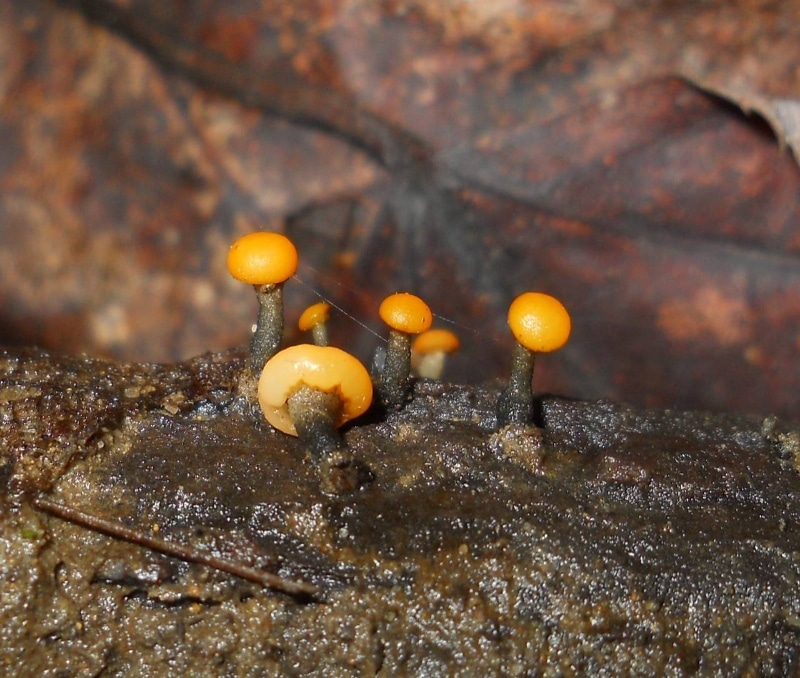
Vibrissea truncorum by Hamilton on Mushroom Observer
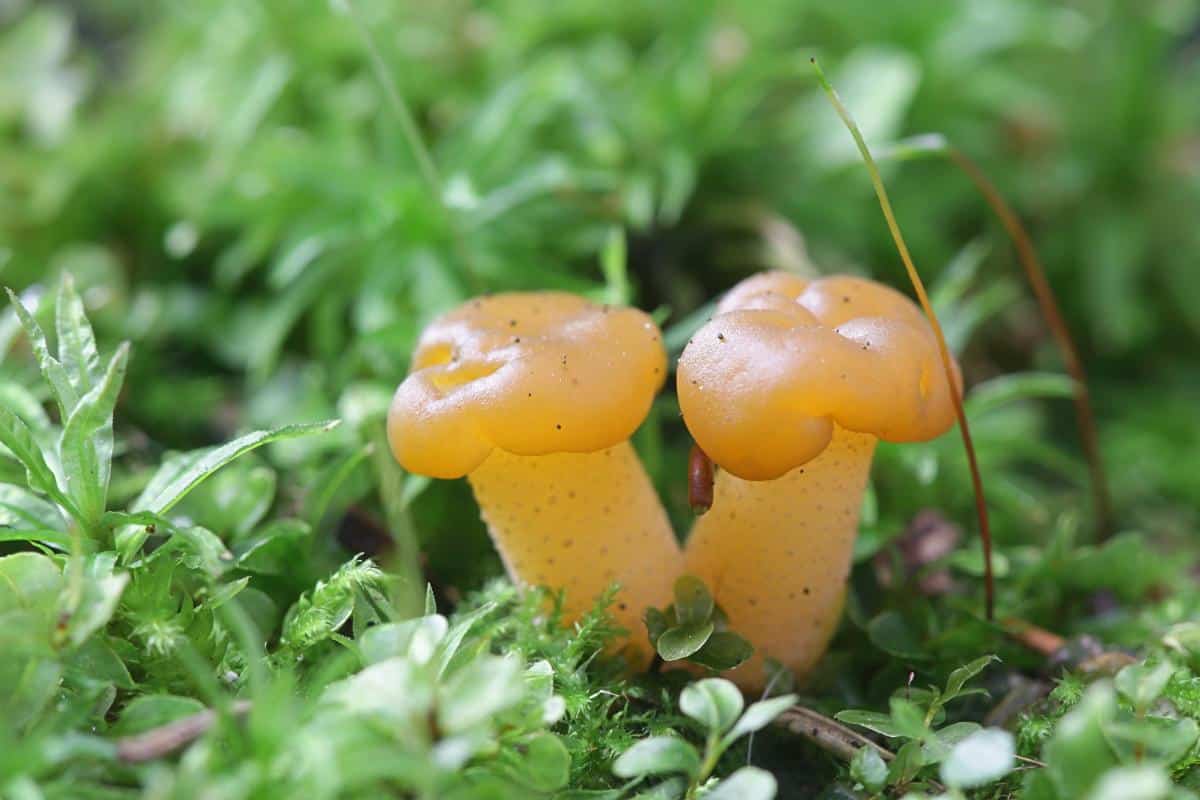
Jelly Babies (Leotia lubrica)
Jelly baby fungi are a similar small size, have a yellow to ochre head, and grow in damp environments. The two can look alike at a quick glance. The differences are pretty obvious when you look closely, though. Jelly babies grow in soil and leaf litter, not in standing water. The head of the jelly baby is also gelatinous and slimy, with a lobed or wrinkled edge that rolls under. This is very different from the smooth, neat cap of the bog beacon. The stem of the jelly baby is also the same ochre-yellow color as the cap.
Common Questions About Swamp Beacon Fungi
Are there any medical uses for the swamp beacon fungus?
There are no known medicinal uses for the swamp beacon.
Is the swamp beacon mushroom edible?
The swamp beacon is not toxic, but it is not collected for food. The bodies are so tiny, they’re not worth foraging, and they do not have any flavor.
Is the swamp beacon mushroom poisonous?
No, the swamp beacon is not poisonous or toxic.
Leave a Reply