

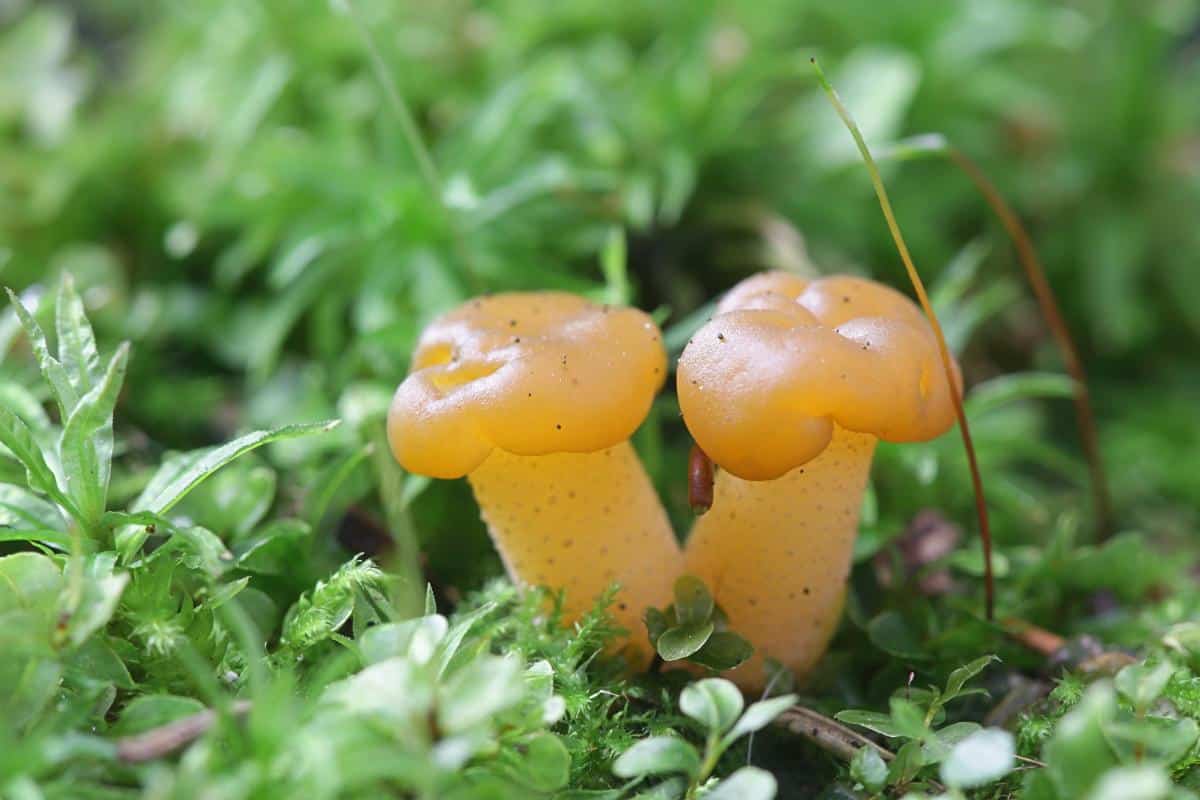
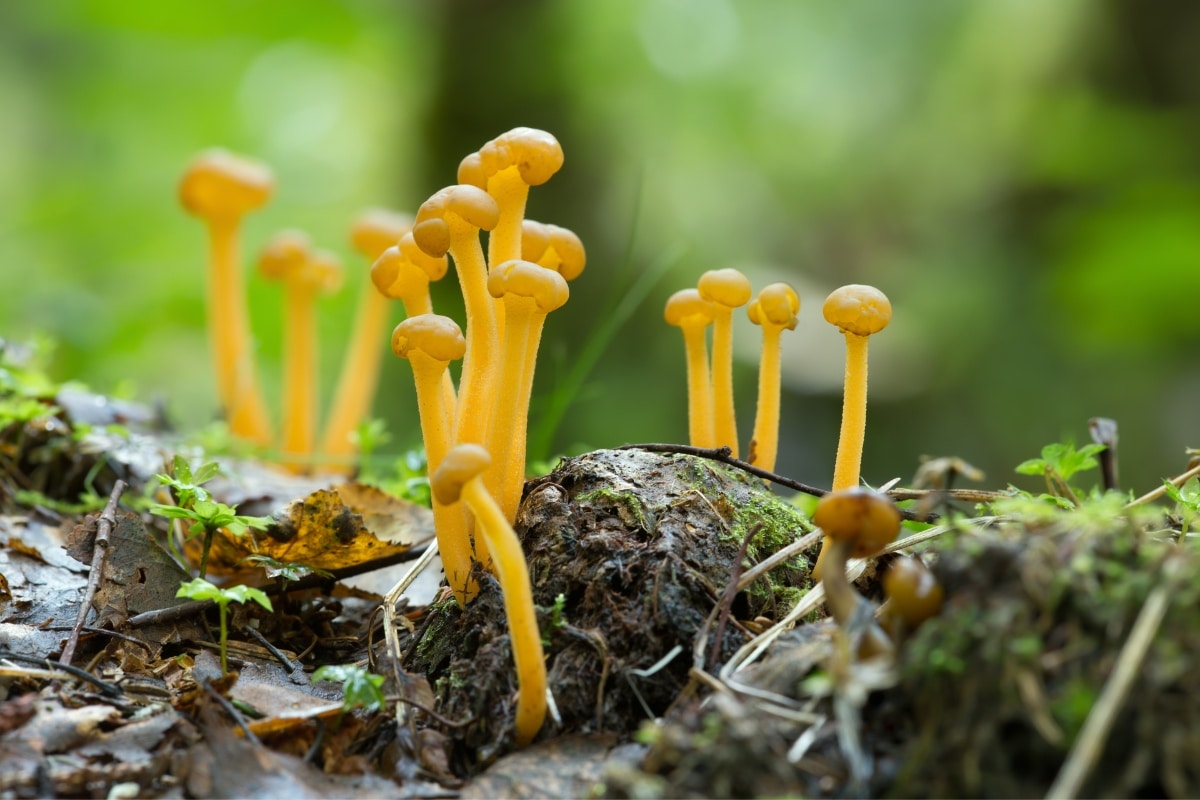
Minuscule jelly baby mushrooms (Leotia species) look like tiny gummy candy mushrooms popping up from the forest floor. They’re also called jelly bellies because they look unnervingly like the little candies. Don’t pick them up and eat them, though! They’re not dangerous, but you’d be in for an unpleasant texture surprise.
They’re gelatinous and rubbery, more like a gumdrop than a jelly bean, and are quite bland. There are three primary jelly baby species in North America (or two, or dozens, research is still continuing on the specifics). In the field, though, there are three overall “looks” that separate the accepted 3 species.
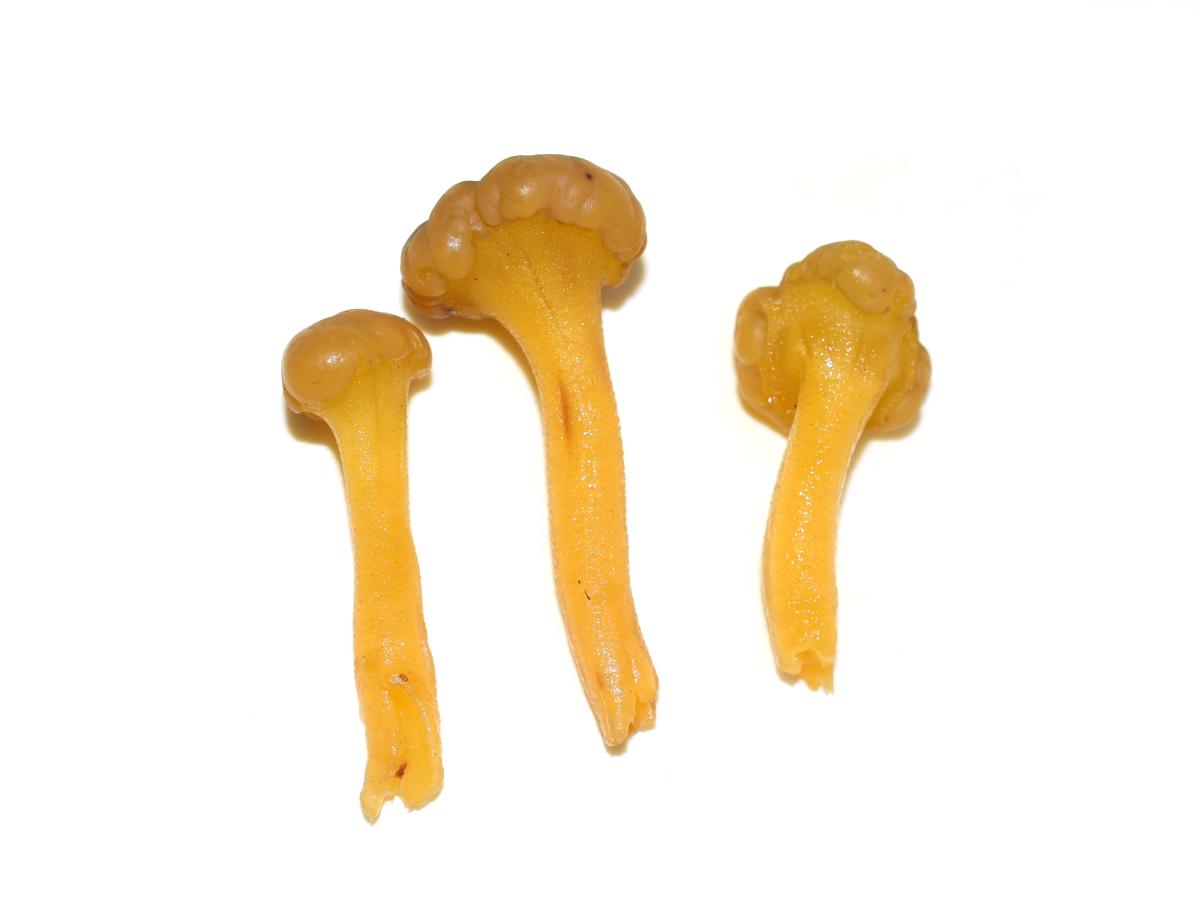
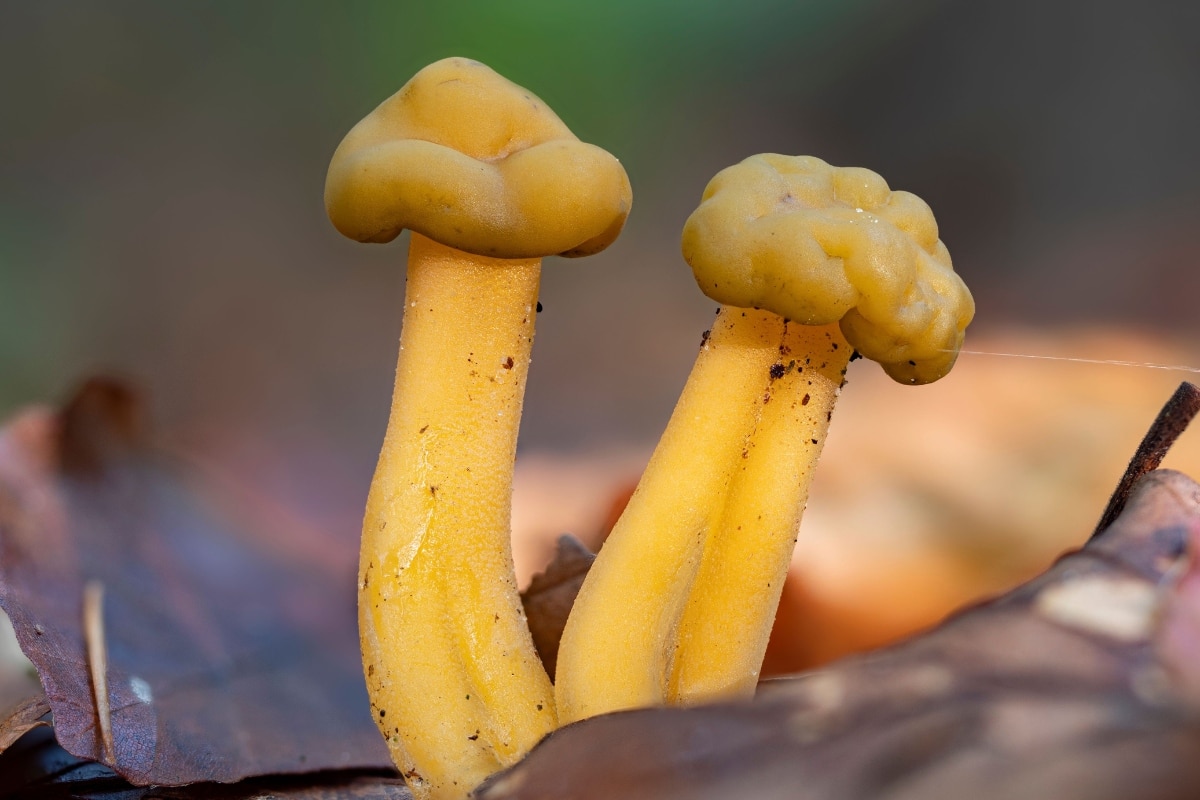
Jellybabies generally have a yellow-orange to olive-green to dark green cap that is 0.4-1.6 inches wide. The cap is an irregular circular shape, sometimes appearing lumpy or lobed. Their caps have a smooth underside instead of gills. Their stems grow up to 3 inches tall, and the cap surface is often sticky or slimy when fresh.
- Scientific Name: Leotia species
- Common Names: Jelly babies, jelly bellies, lizard tuft, ochre jelly club, slippery cap, green slime fungus, chicken lips, jelly drops, and gumdrop fungus.
- Habitat: On the ground in moss, often under ferns
- Edibility: Inedible
Jump to:
All About Jelly Baby Mushrooms
The jelly baby mushroom (Leotia lubrica) is the type species of the genus Leotia. Its scientific name comes from the Latin word “lubrica,” which means slimy – a reference to its outer texture, though “sticky” or “gummy” describes it better than slimy.
The mushroom’s name comes from its striking resemblance to jelly baby candies. Its soft, rubbery texture and rounded, lumpy shape look just like the sweet treats. The whole fruiting body feels gelatinous and springy, though, like a gumdrop.
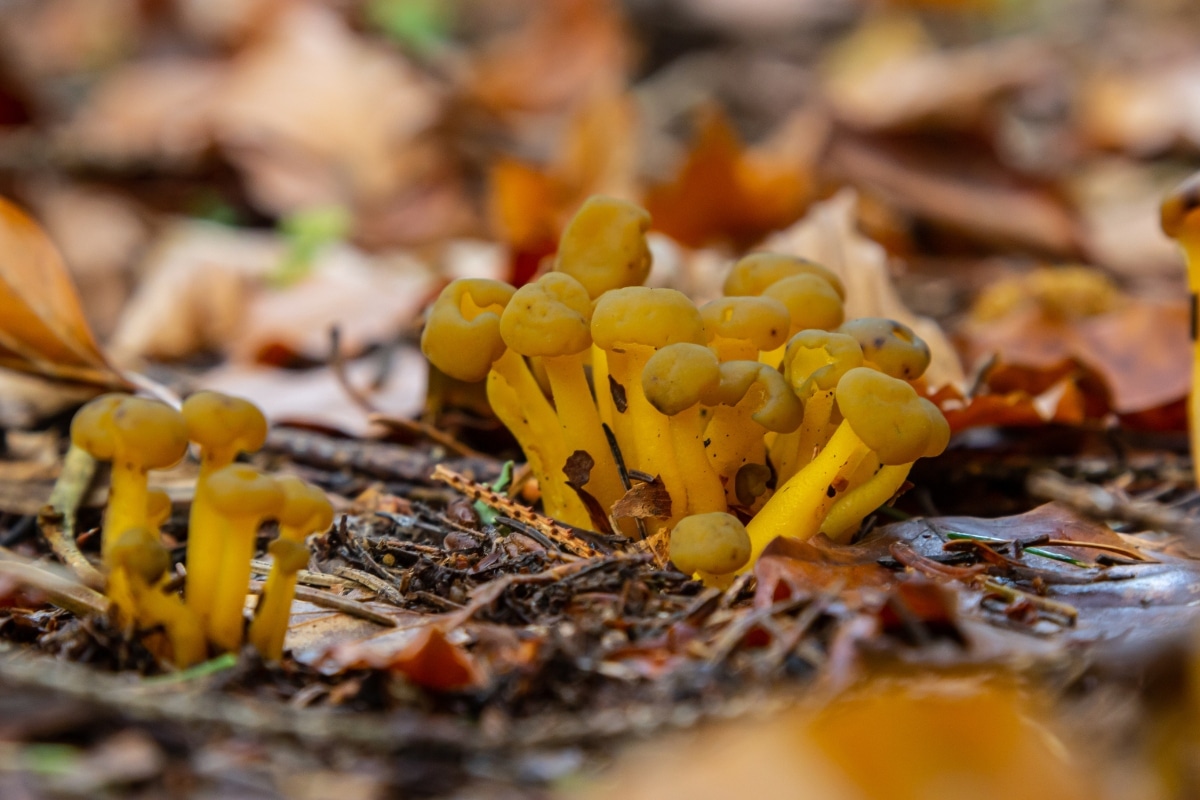
Jelly baby mushrooms often grow in large troops on the forest floor. They’re quite small and can blend into the moss and needle litter, so you have to be paying attention, but once you see one, look for others. These mushrooms might have yellowish-orange or deep olive-green caps and stems – it varies a bit between species.
The Three “Accepted” Jelly Baby Mushroom Species
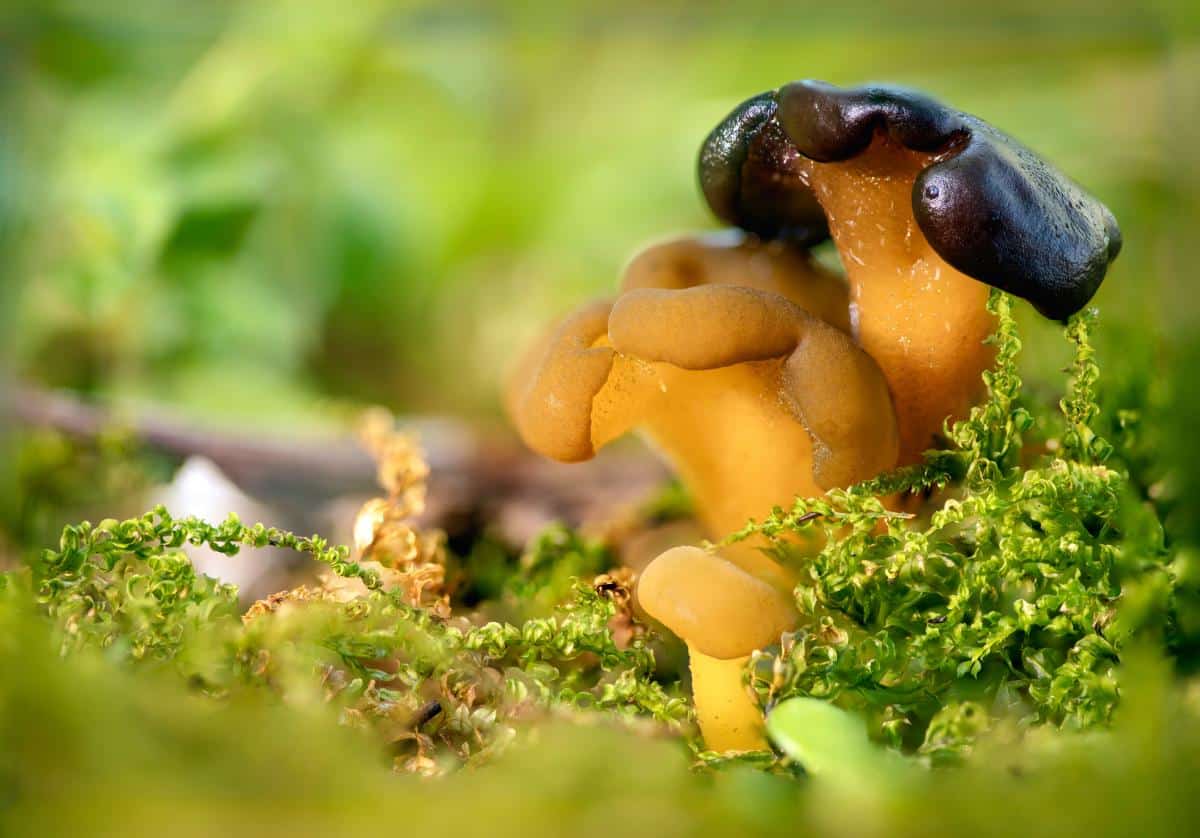
- Jelly babies (type species) (Leotia lubrica) – Olive-ish green or yellowish-green cap and yellowish, lighter colored stem.
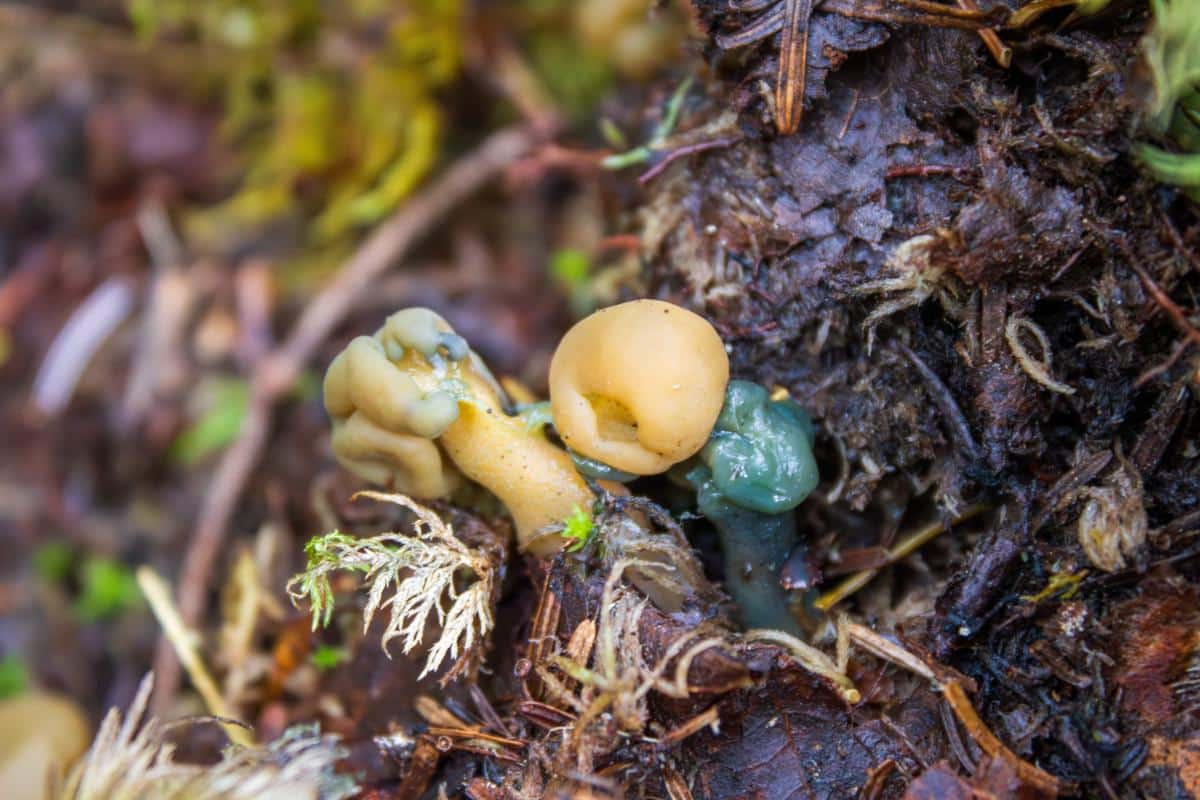
- Green Jelly Club (Leotia atrovirens) – Olive-ish green or yellowish-green cap and greenish stem.
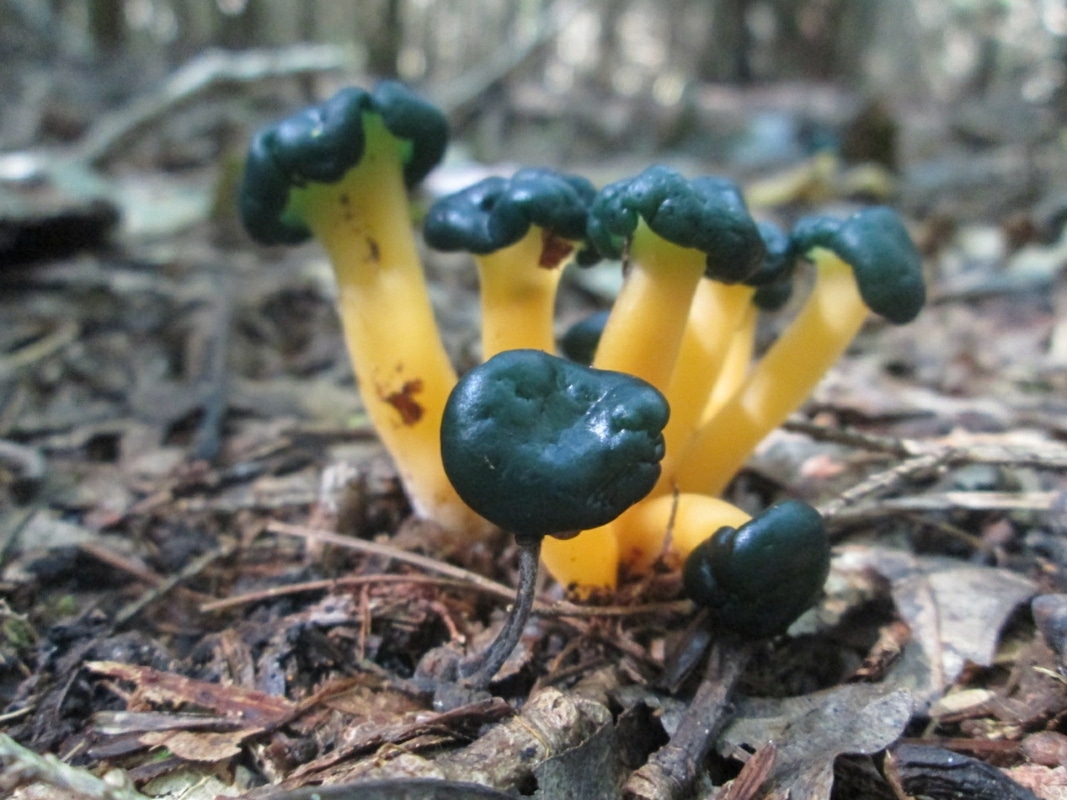
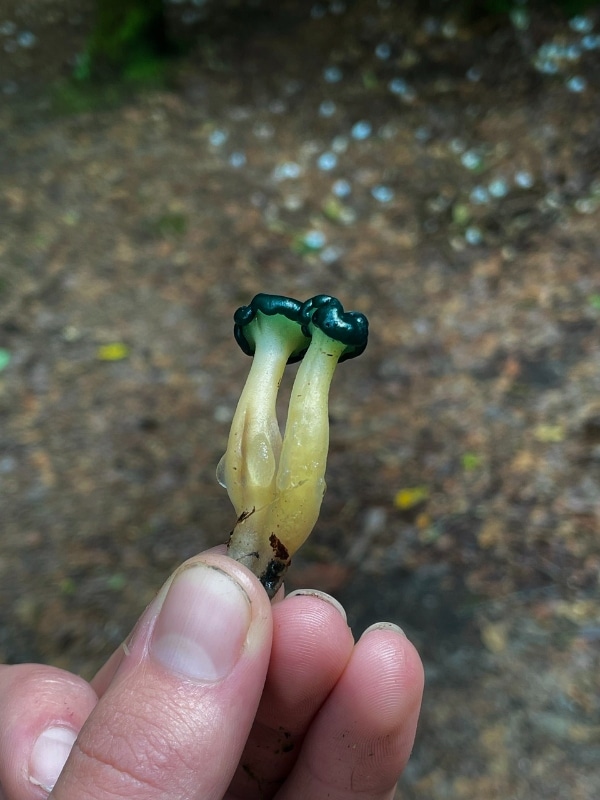
- Chicken lips, Jelly baby, Green jelly drops (Leotia viscosa) – Dark green cap and yellow stem
For now, these are the species, but they will most likely change a lot in the future. Some experts think the greenish stem color of L. atrovirens might come from another fungus that infects L. lubrica to change the stem color. The only real difference in physical appearance between the two is the stem color. It can sometimes be difficult to tell these two apart if their colors are faded, especially with older specimens. This has yet to be proven for certain, though.
In addition to that, a DNA study done in 2004 indicates that L. viscosa, L. lubrica, and L. atrovirens are polyphyletic species – polyphyletic means they are a collection of organisms that are grouped together but don’t share a single, immediate common ancestor. Instead, they evolved separately from multiple lineages. Four major well-supported groups were found, and they do not fully correlate with the three commonly recognized species. What we identify as the type species, Leotia lubrica, might be at least two distinct species. And, if this is accurate, than it is likely that L. lubrica and L.atrovirens are indeed different species.
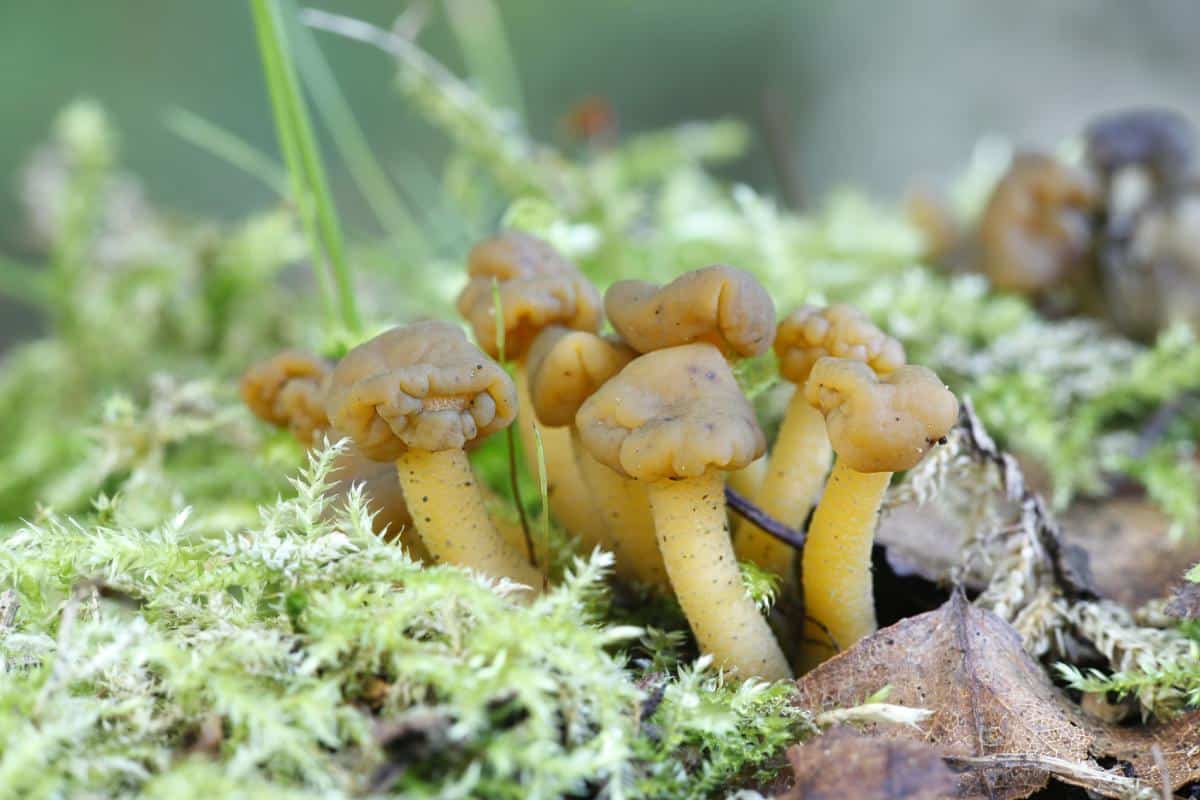
The study suggests that the color of the mushroom is not a reliable character alone for determining species in this group. The color of the stem, though, does seem to correlate with the major recognized groups, but the features of the spores and spore sacs are too variable to be informative. The most distantly related Leotia species, L. atrovirens, differs from all others by having stems without gel tissue in their outer layers.
Leotia mushrooms are saprotrophs, and were believed to be only saprotrophs until pretty recently. A new study in 2014 discovered that they can be mycorrhizal, too. At least a few are, for certain. The study was done with Leotia cf lubrica specimens in Costa Rica and it was found that they formed mycorrhizal associations with Comarostaphylis arbutoides, a woody shrub in the heath family.
Jelly Baby Mushroom Identification Guide
This guide is for jelly baby mushrooms in general. Further down, the specifics of each species are detailed.
Season
These gelatinous fungi fruit from late spring through fall. Areas with mild weather might have jelly babies in winter, too.
They tend to fruit after rainy periods. Wet weather also really brings out their jelly-like texture.
Habitat
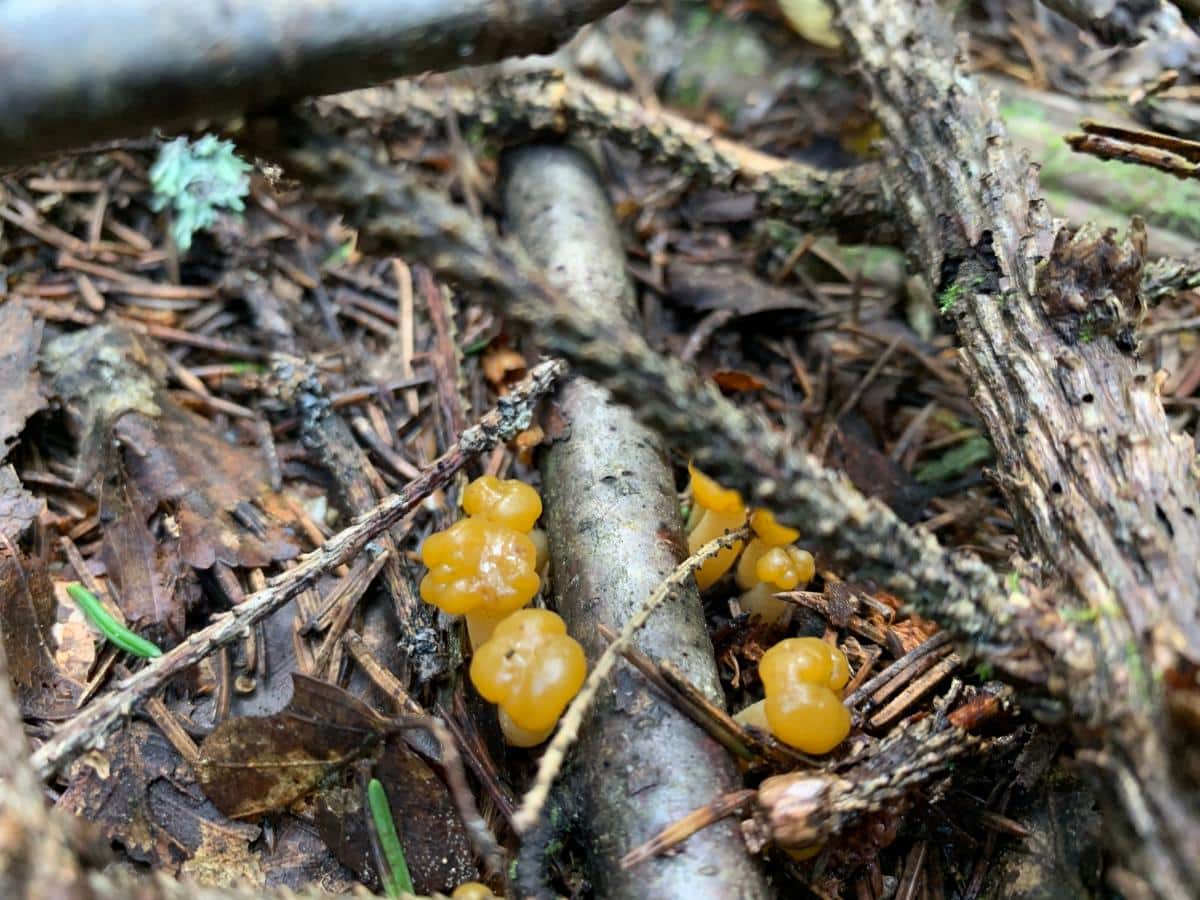
Jelly babies grow in damp woodlands. They usually grow in groups in soil under hardwoods and conifers, but are more common under hardwoods. They are most often in mossy areas.
These mushrooms almost always grow from the ground, not from wood or trees. However, they have been known to fruit on severely decomposed wood, so don’t rule that out either. Jelly baby mushrooms are commonly found growing along paths and trails and underneath ferns. When you’re out hiking, look for them alongside the trail where there are lots of ferns and moss or plant debris.
Jelly baby mushrooms tend to grow in large groups or clusters. They might grow so close together that many connect at their bases. Young mushrooms sometimes grow right from the bases of older ones. While groups are more common, it is also possible to spot lone specimens in the wild.
Jelly baby mushrooms are common throughout North America. They’re most common near American Hophornbeam, Hackberry, American Linden, Northern Red Oak, and Red Mulberry.
Identification
Cap
The jelly baby mushroom’s cap is typically ½-1½ inches across, though some can grow up to 1½ inches in diameter. Young jelly babies emerge as tiny cone-shaped growths and then develop a distinct, rounded, and bulging bowl-shape. When the mushroom is still quite small, the top of the cone-shaped body begins growing and forms a small ball-shaped head. It is at this point that the cap becomes differentiated from the rest of the body.
As the mushroom grows, the ball-like cap (head) expands even more, and it looks more like a club. Around the edge of the cap, the flesh is wavy with irregular lobes that curl inward. The cap’s surface has a wrinkled or convoluted appearance, which becomes more obvious as the mushroom ages.
The whole fruiting body has a gelatinous consistency. It is sticky or gummy, and wet weather makes this texture even more noticeable.
Stem
The stem grows between 2 and 8 inches long and ¼-½ inch wide. It is mostly cylindrical, but sometimes it looks flattened or has shallow furrows on its surface. There are often tiny pale flakes or granules covering the stem. The inside of the stem is either hollow or filled with a gelatinous substance.
Pores
Underneath the cap is the same gelatinous, smooth flesh as the cap. There are no gills and no pores like a polypore or bolete. It is the same color as the stem.
Flesh and Staining
The mushroom’s flesh stays gelatinous throughout.
Taste and Odor
The mushroom has no distinctive smell or taste.
Spore print
The spore print is white to transparent.
Key Identification Points:
- Size: Fruiting bodies grow 2-6 inches tall, with caps spanning 0.4-1.2 inches
- Habitat: Grows in damp deciduous woodlands and near moss, sometimes by conifers
- Texture: Gummy, squishy, can be sticky or slimy
- Colors: Yellows and greens
- Season: Late summer through fall, especially after rain
- Distribution: Throughout North America
The Three Jelly Baby Mushrooms, In Depth
Leotia lubrica (Jelly Baby, type species)
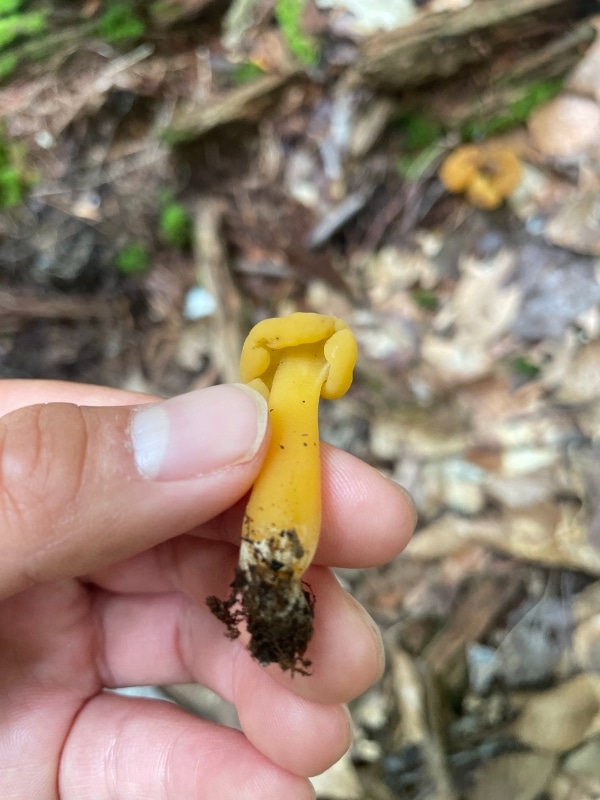
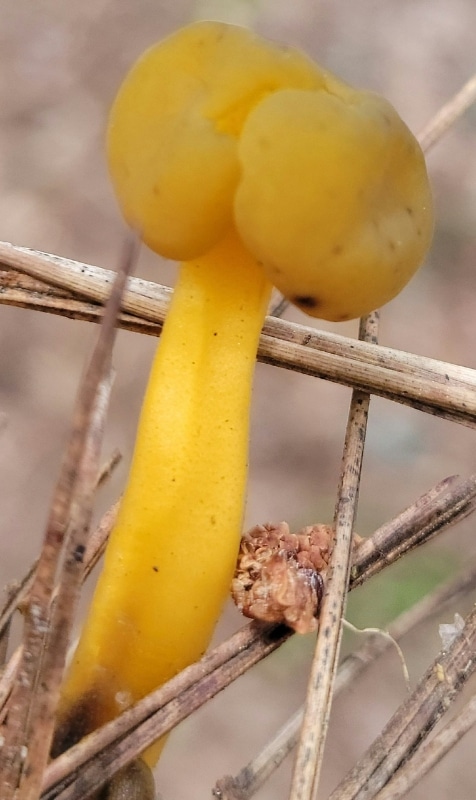
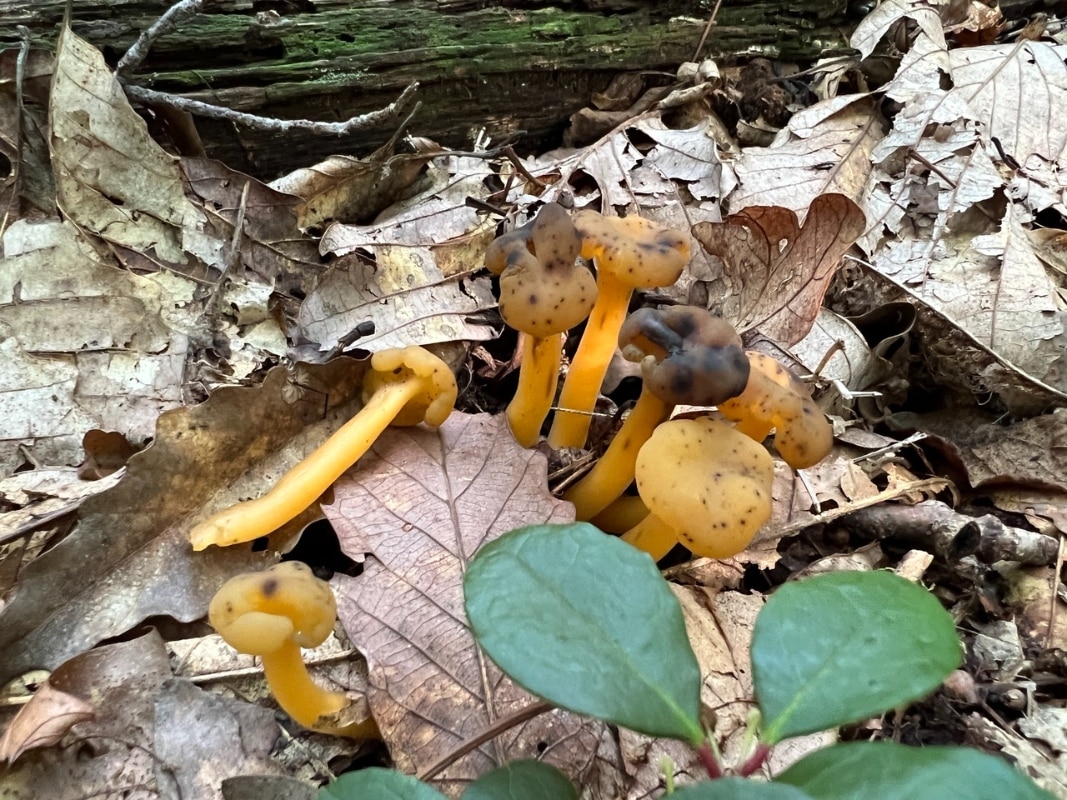
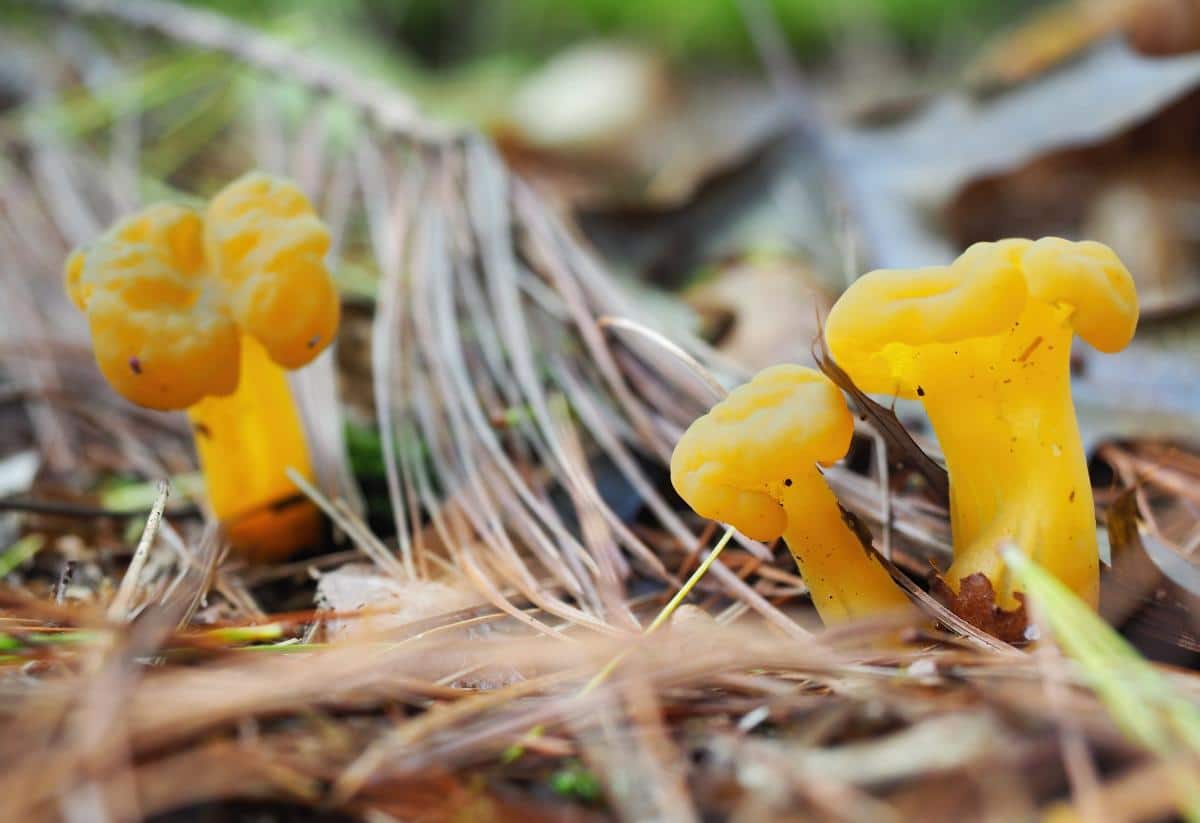
This species has an olive-ish green, brownish-yellow, buff, or yellowish-green cap. The cap is lumpy or misshapen with age or irregularly rounded and with maturity, 1⁄2–1+1⁄4 in wide. The entire mushroom, but especially the cap, can be sticky, clammy, or slimy, especially in wet weather. This jelly baby mushroom averages 1/2 – 3 1/8 inches tall.
The stem is usually yellowish and looks more yellow than the cap. Stems of this species are often covered with tiny pale flakes and might be hollow or filled with gelatinous material. When the flesh of the mushroom is damaged, it slowly turns dark green. It has no distinguishable taste or smell.
With age, the caps of this mushroom can darken significantly until they are quite dark green to almost black. At this stage, they start looking like L.viscosa.
Leotia atrovirens (Green Jelly Club)
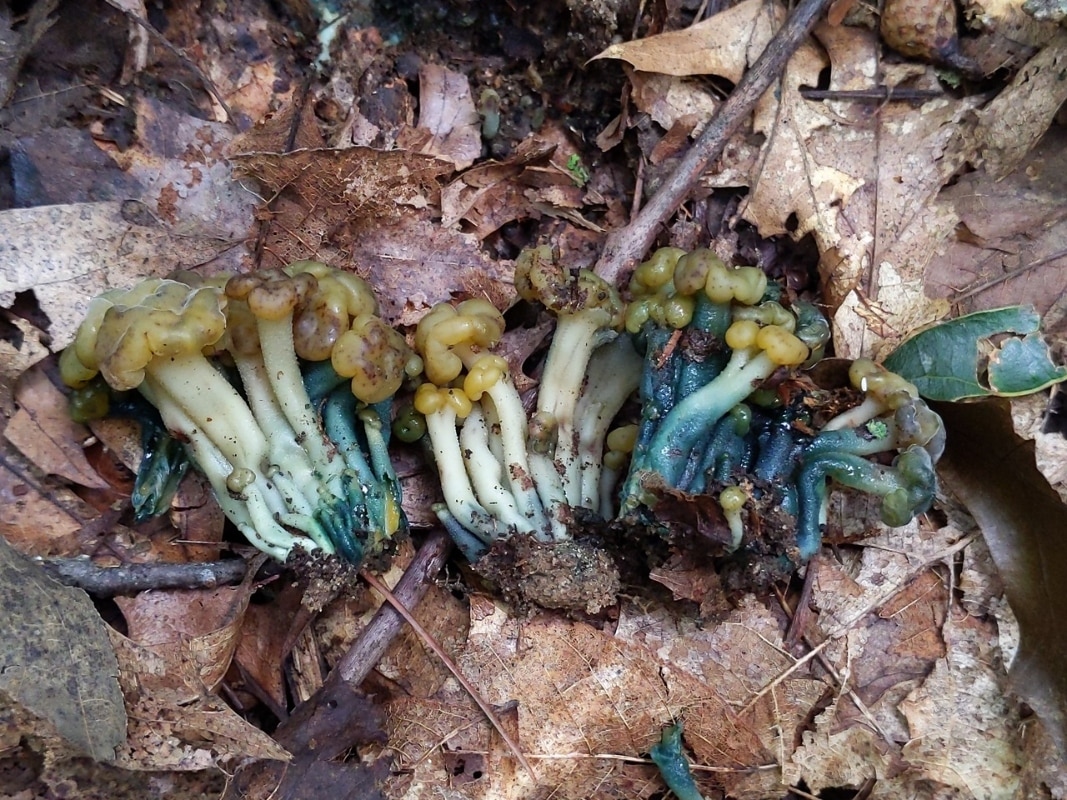
The cap of this species is about ¼-½ inch across, and its stem grows up to 1¾ inches tall. The cap is green, but as it matures, it becomes dark green. The cap is lumpy and can be slimy or sticky. It has a pale green to dark green stem – that’s what sets it apart from L. lubrica, which has a yellowish stem.
The stem is smooth or covered in tiny fibers. It is usually hollow with age or filled with gelatinous material when young and fresh. This jelly club mushroom doesn’t have a distinguishable taste or smell.
The jury’s still out among mycologists on whether L. atrovirens stands alone as a species or if it’s just L. lubrica with a fungal parasite (Hypomyces leotiicola, which induces green pigmentation in the host fruiting bodies) that turns it green. These mushrooms fruit between July and October in soil, mosses, or rotting wood, usually under conifers trees.
Leotia viscosa (Green Jelly Drops)
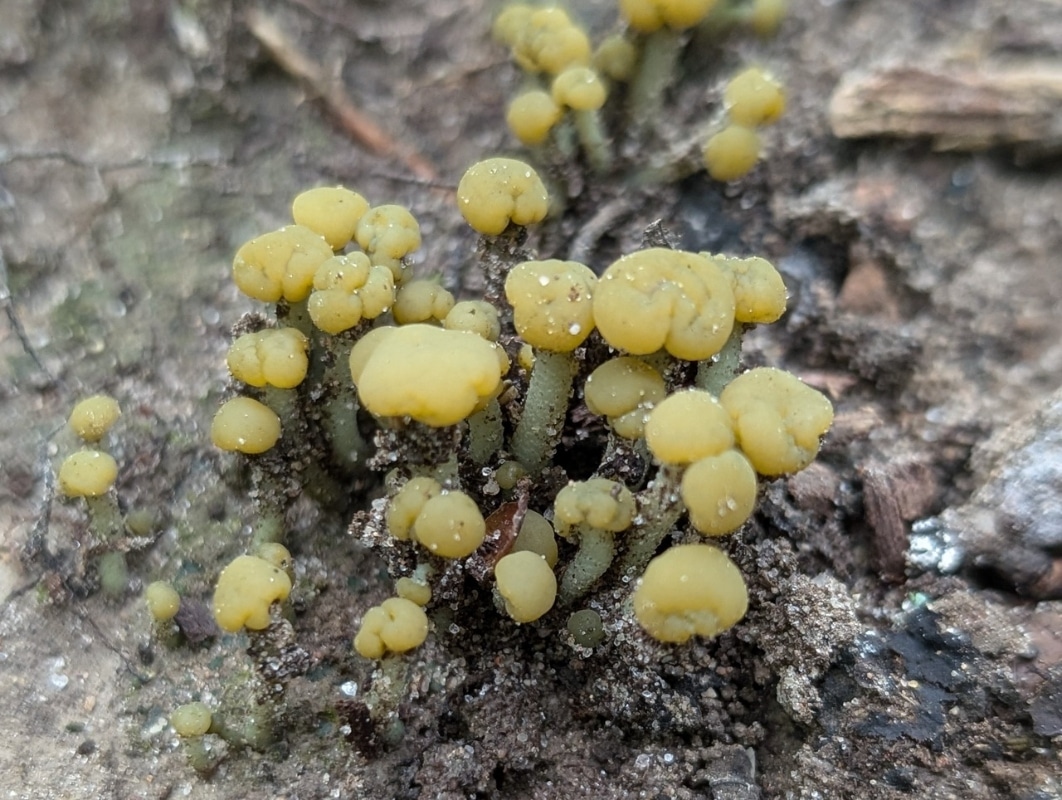
This Leotia species has a dark green cap atop a yellow or yellowish stem. It grows up to 2.5 inches tall, and the contrasting green cap and yellow stem make it stand out. The cap is rounded and lumpy or irregular around the edges and is sticky or clammy, especially when wet.
The surface of the stem is smooth, and the stem may be hollow or filled with gelatinous material, depending on the age and freshness. It grows singularly or in large groups in leaf litter, soil, or on rotten wood. It fruits from late winter to spring.
Jelly Baby Mushroom Lookalikes
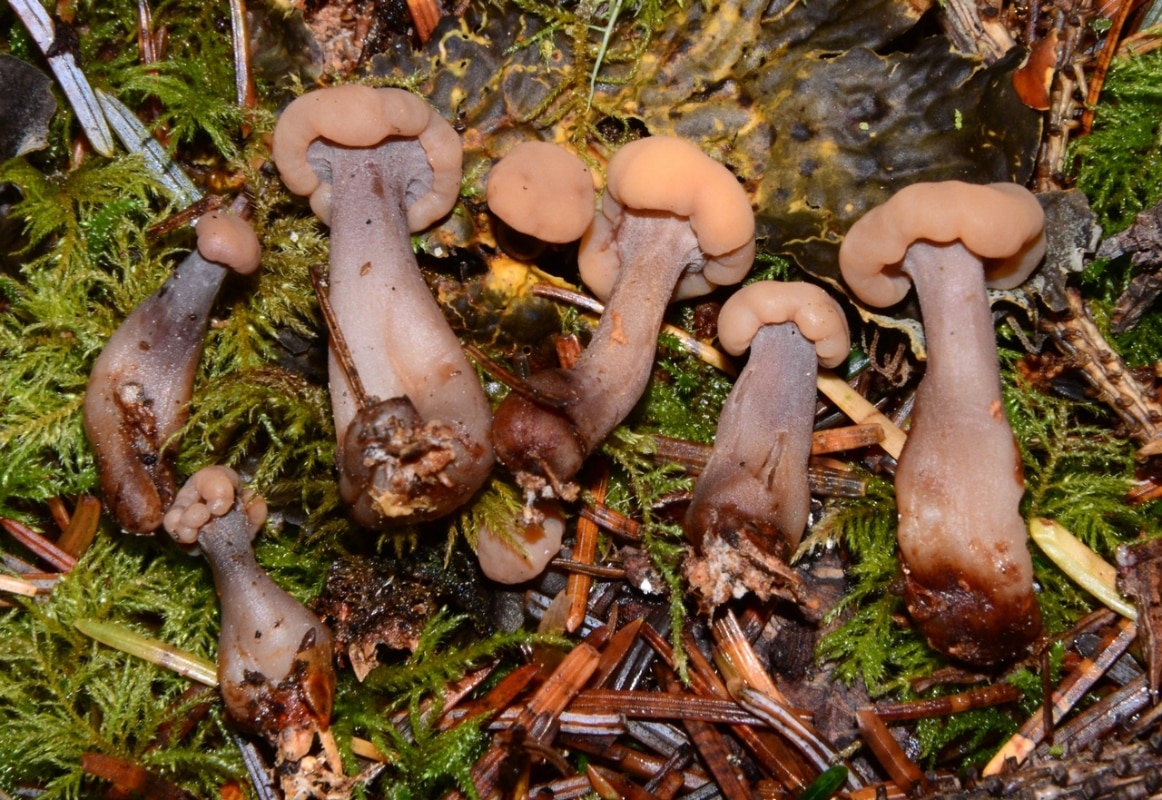
Cinnamon jellybaby (Cudonia confusa)
This gelatinous little mushroom is also commonly called a jelly baby, because it is small and has a rubbery texture. It grows up to 1⅛ inches tall and has a cinnamon to reddish-brown head that’s ¼-½ inch across. Its stalk matches the color of the cap.
While this species is similar in texture and growth style, its coloring is very different from any of the Leotia jelly baby species.
Cudonia circinans
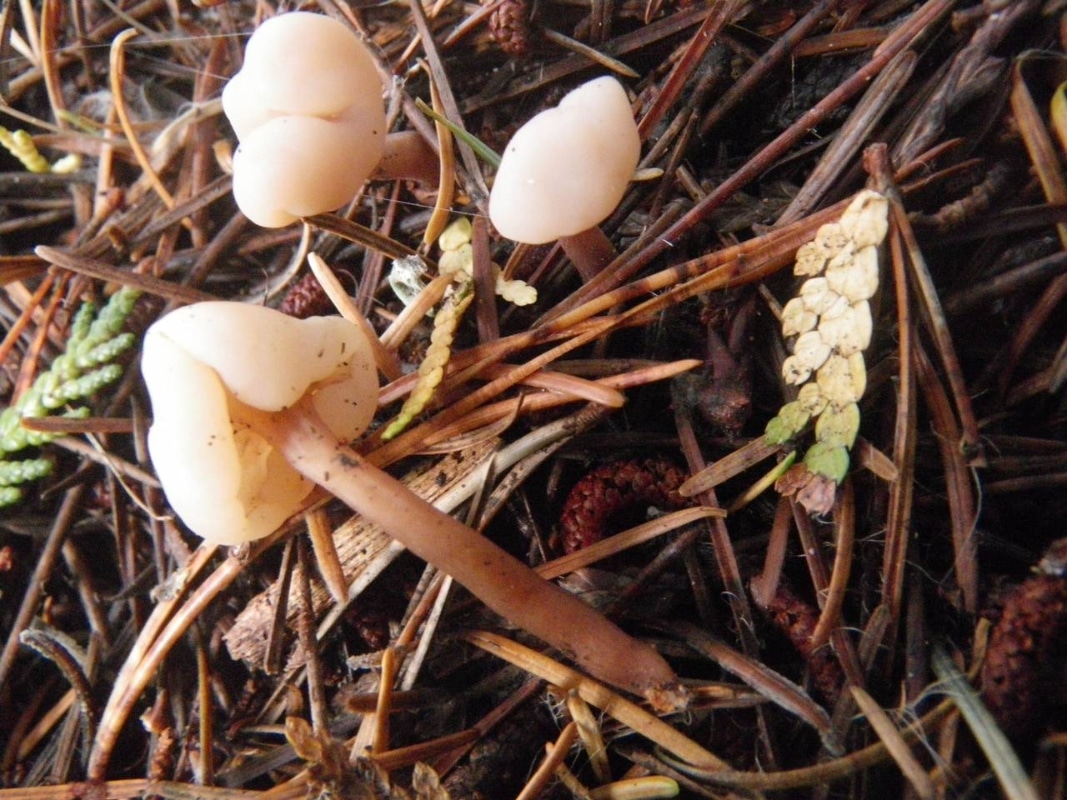
The beige C. circinans is also rubbery but firm, small, and grows on the ground. Its flesh is more rubber-like than gelatinous, like Leotia. The primary difference is the coloring. The pale pinkish to buff bodies of C. circinans are significantly different than any Leotia species. It grows around conifer species, especially Sitka spruce.
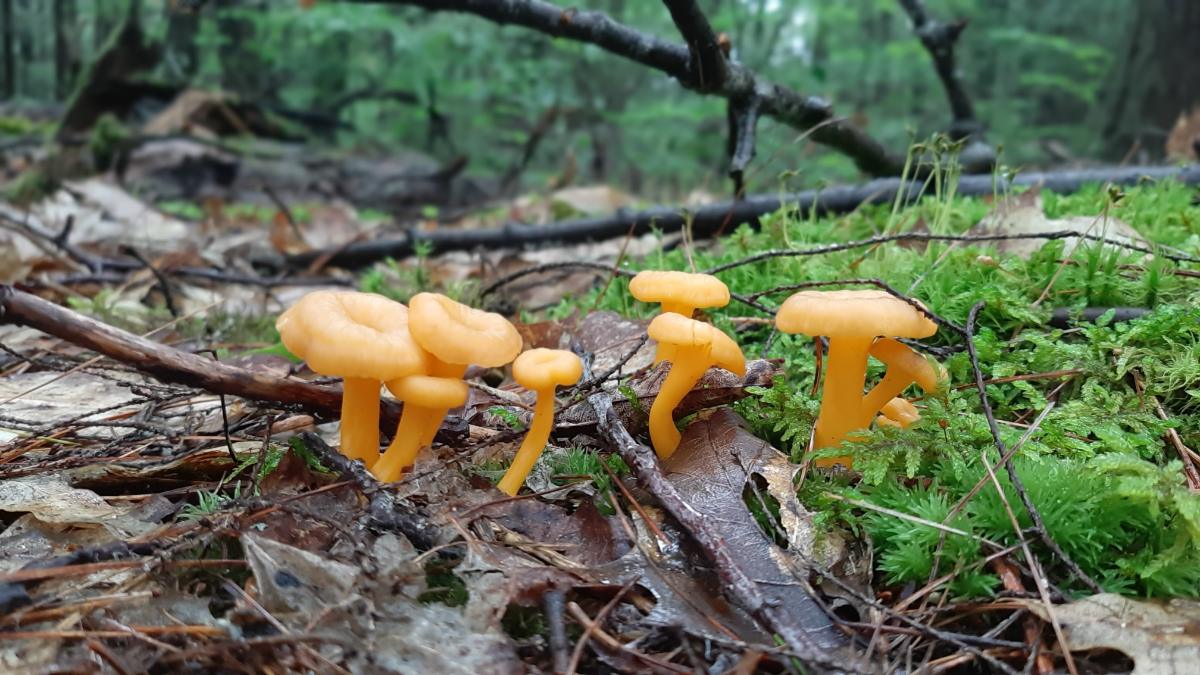
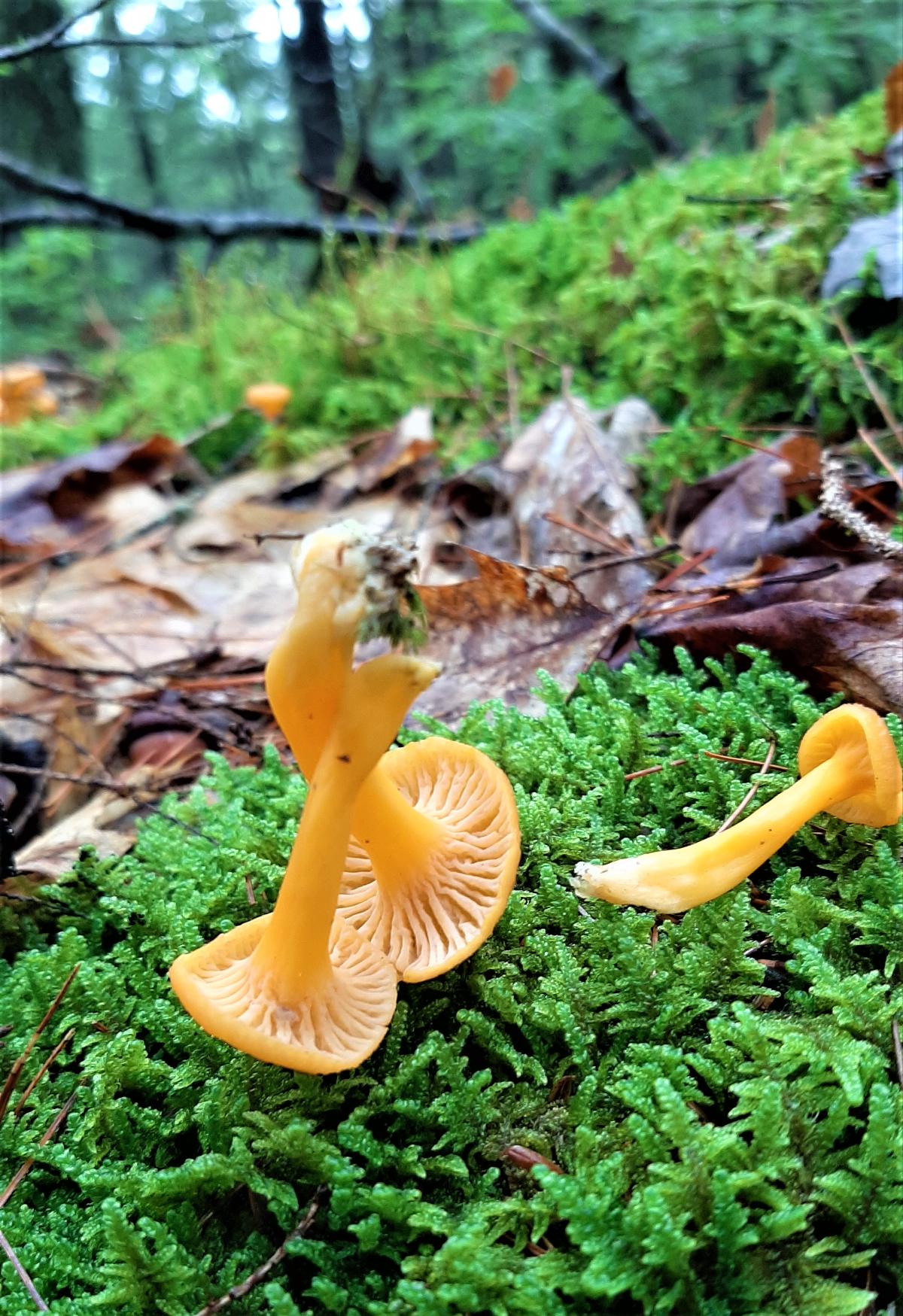
Yellowfoot/ Winter Chanterelle Cantharellus (Craterellus tubaeformis)
Yellowfoot mushrooms have a similar appearance at first glance. They’re small, bright mushrooms growing on the ground. The cap can be yellowish or yellowish-brown, and when they’re young and haven’t got to their full form, they look like full-grown Leotia. The flesh of yellowfoot mushrooms isn’t gelatinous or rubbery, though, and there is never any green coloring or tints on their caps or stems.
Fully mature yellowfoots have a funnel-shaped cap with ridges running down its underside and a hollow, tube-like stem. They grow up to 4 inches (sometimes larger) and have dry, pale yellow to white flesh.
Jelly Baby Mushroom Edibility
Field guides can’t seem to agree about whether you should eat jelly babies. These mushrooms won’t kill you if you eat them (they’re not deadly or dangerous), but they don’t taste like much of anything. Most people agree they’re too slimy or gummy and have no flavor, so there’s no point in eating them.
Charles McIlvaine is the only mycologist who thought jelly babies were good eating. But this comes from a guy nicknamed “Ole Ironguts” who would eat mushrooms that most people considered inedible or poisonous.
Scientists recently found that jelly baby mushrooms contain small amounts of monomethyl hydrazine – the same toxic compound that’s in the poisonous false morel (Gyromitra esculenta). The mushroom isn’t deadly poisonous, but these chemicals might make you think twice about eating it.
Common Questions About Jelly Baby Mushrooms
Are jelly baby mushrooms safe to touch?
Jelly baby mushrooms are safe to touch. Their gelatinous texture makes them interesting to feel. It’s not dangerous to touch most mushrooms, even the most toxic ones. They have to be ingested to be cause issues.
Can you eat jelly baby mushrooms?
Jelly baby mushrooms are technically edible but they lack flavor and have a slimy, rubbery texture. Additionally, some contain low levels of potentially harmful compounds.
Where and when can you find jelly baby mushrooms?
Jelly baby mushrooms are commonly found in damp woodland environments, often growing among moss or on soil and around ferns. They typically appear from late summer through fall, especially after rainy periods. They’re widespread across North America.
Do jelly baby mushrooms have medicinal properties?
There is no research into the medicinal properties of jelly baby Leotia mushrooms.
Leave a Reply