
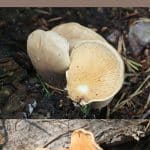
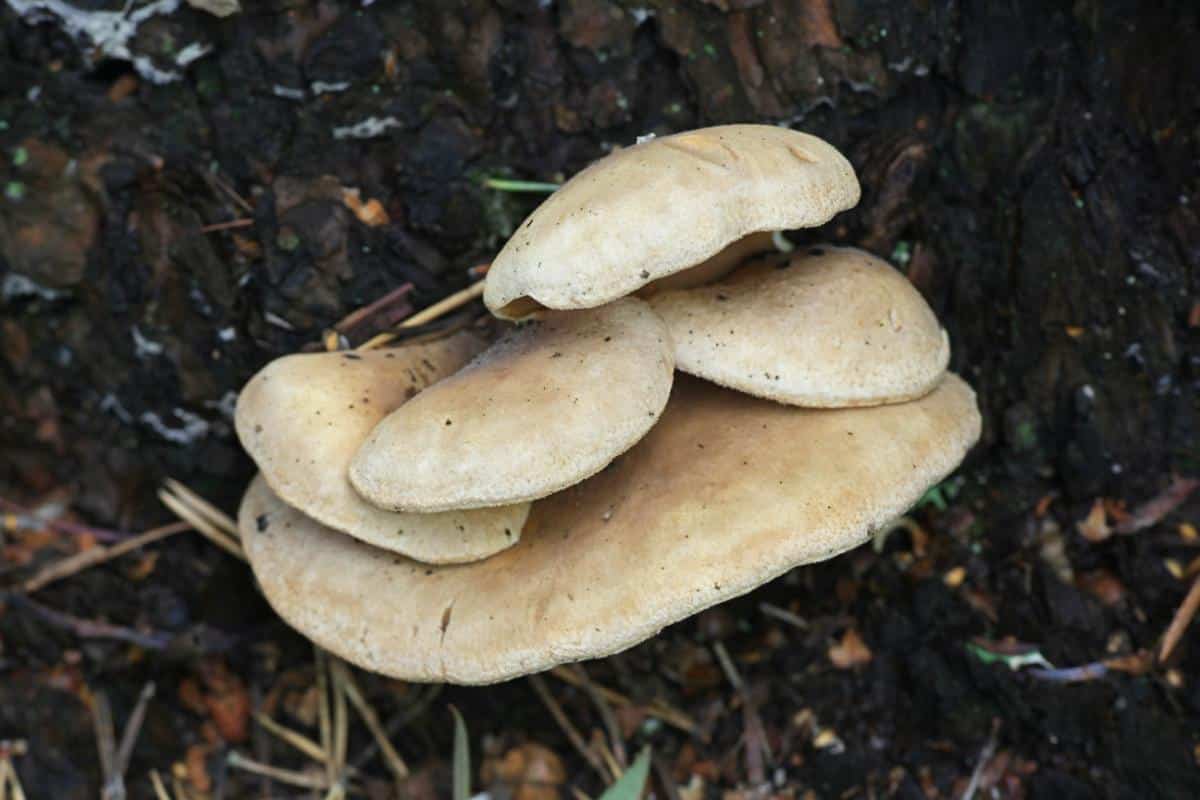
The oyster rollrim mushroom (Tapinella panuoides) is a common species across North America. It looks quite a bit like the edible oyster mushroom (Pleurotus) and often gets confused with it. This mushroom will cause gastrointestinal distress if eaten, though, so you don’t want to make that mistake. It isn’t deadly poisonous, but you will seriously regret eating it.
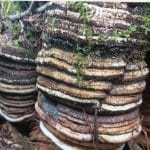
This mushroom grows in tight clusters on dead conifer wood in the same shelf-like formations as the edible species. The overlapping groups of oyster rollrim mushrooms can cover substantial portions of fallen wood, and while the mushroom is rather dull and brownish, it’s hard to miss. It is a saprotrophic species that breaks down dead wood and is an important part of the forest ecosystem.
- Scientific Name: Tapinella panuoides, formally Paxillus panuoides
- Common Names: Oyster Rollrim, Oyster Pax, Stalkless Paxillus, Fan Paxillus
- Habitat: Dead conifer logs and trees
- Edibility: Toxic, not deadly
Jump to:
All About Oyster Rollrim Mushrooms
The oyster rollrim mushroom was first described to science as Paxillus panuoides by Elias Magnus Fries in 1838. More recently, through DNA analysis, it was found that the mushroom belonged to a different evolutionary lineage than other Paxillus species. Some older field guides still list it under the Paxillus name. Don’t be surprised if you see this species still listed under its old name.
The scientific name “Tapinella” comes from the Latin word “tapinus,” which means humble or low. This is a reference to the mushroom’s squat growth habit. The species name “panuoides” translates to “similar to a Panus species,” which is another group of mushrooms this one closely resembles. Some common names for this species include Oyster Rollrim, Oyster Pax, Stalkless Paxillus, and Fan Paxillus.
Oyster RollRim Mushroom Identification Guide
Season
This species fruits from late spring through fall. Its peak fruiting time is during the warm, wet months of summer and early autumn. In milder climates, it may continue fruiting into early winter. The individual fruiting bodies live for several weeks before deteriorating, so it’s not uncommon to find both fresh and older, decaying specimens on the same log.
Habitat
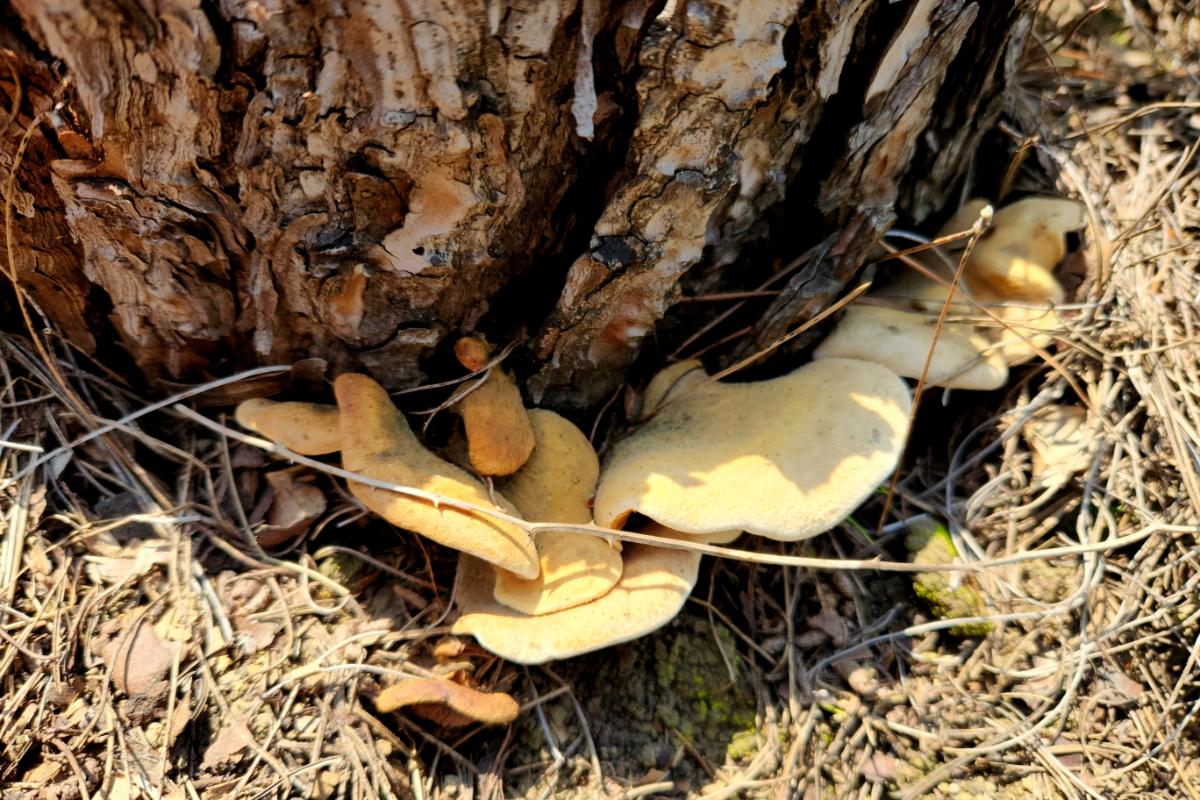
This mushroom grows exclusively on dead conifer wood and is most common on pine, spruce, and fir. The oyster rollrim mushroom grows on fallen logs, stumps, buried roots, and occasionally on lumber. It’s also been documented growing on fenceposts and from sawdust.
It grows in dense, overlapping clusters that can number from a dozen to hundreds of individual caps. It always grows on wood, never from the ground. The species grows in both natural forests and areas where humans have left fallen trees or debris.
Identification
Cap
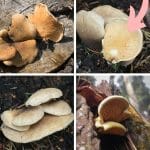
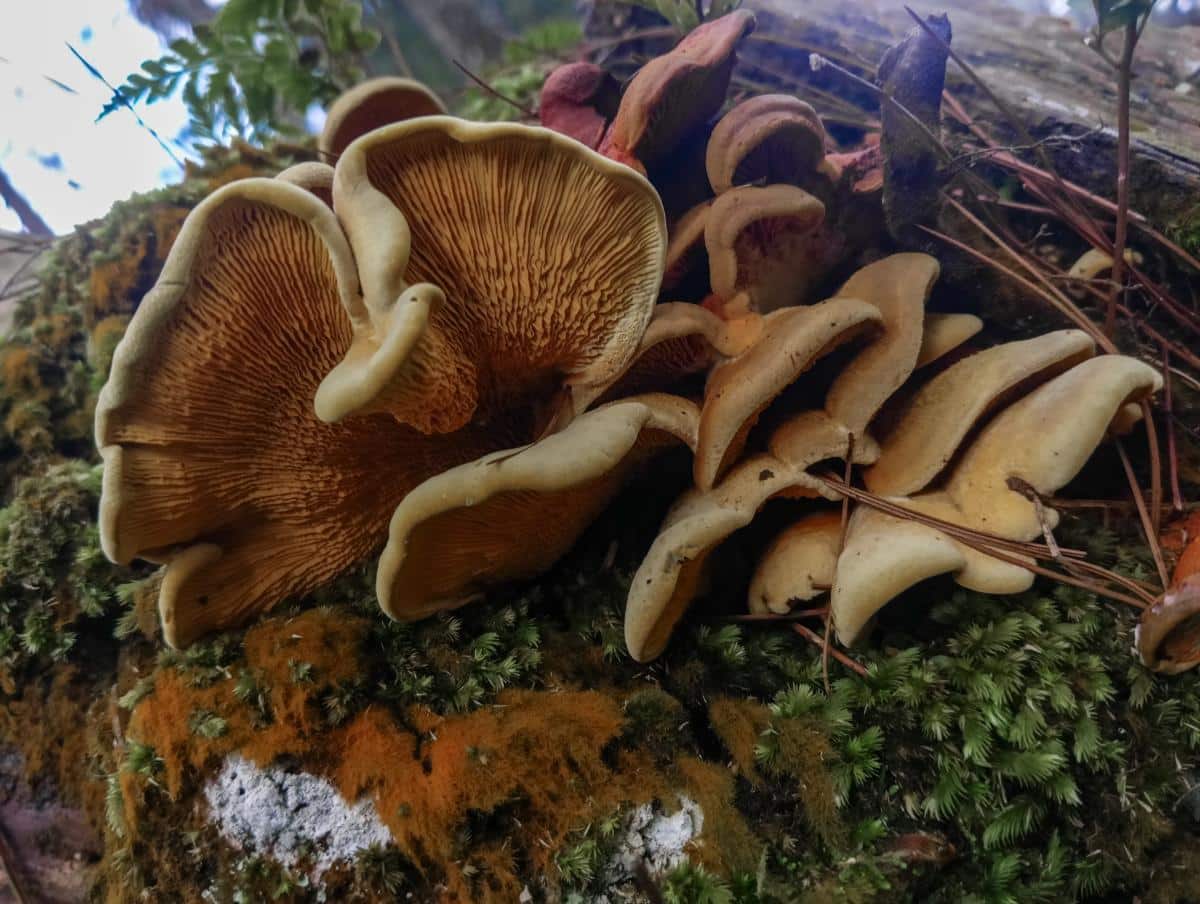
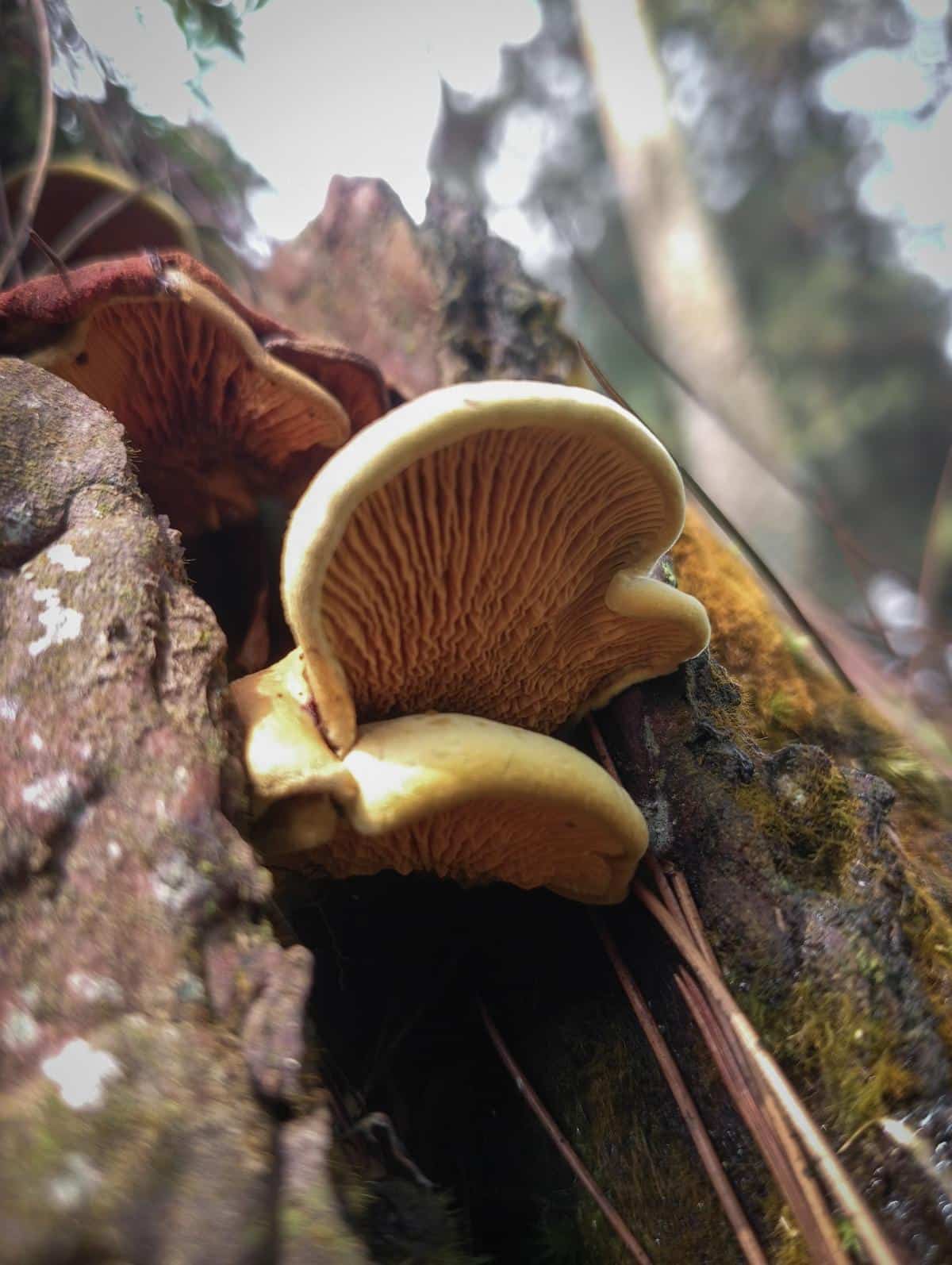
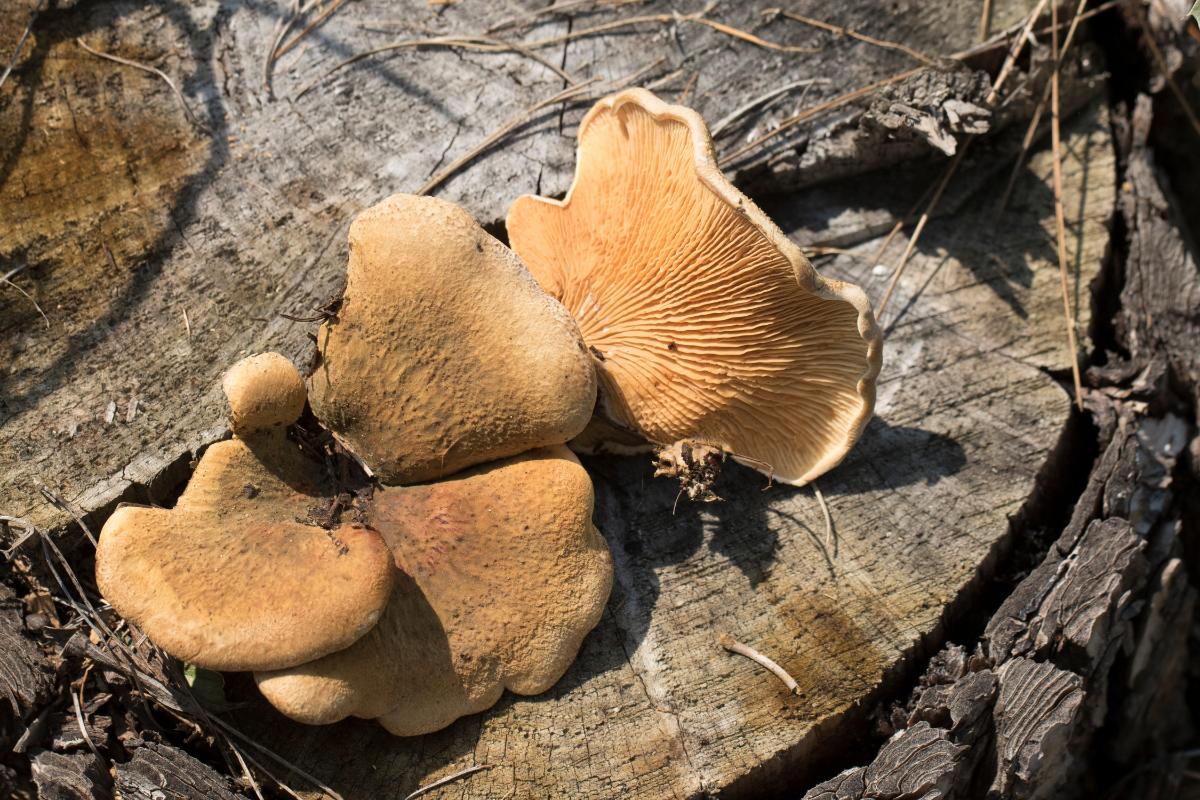
The cap is 1.5 to 5 inches across and looks like a fan, shell, or kidney in shape. The caps on young mushrooms have edges that are tightly rolled under (a “rolled rim”). With age, the edges stretch and straighten out, but not always entirely. As it grows, the edges of the cap become irregular and uneven, and resemble more of a baseball mitt. When it is young, the cap is much more scalloped-looking.
The cap surface is dry to slightly tacky, and it ranges in color from yellowish-brown to dark reddish-brown or olive-brown. Younger mushrooms are fuzzy, almost velvety, with fine hairs all over the cap. But, with age, the fuzziness starts to disappear and will only be lightly hairy or might be entirely bald. In dry weather, the caps often develop cracks.
Gills
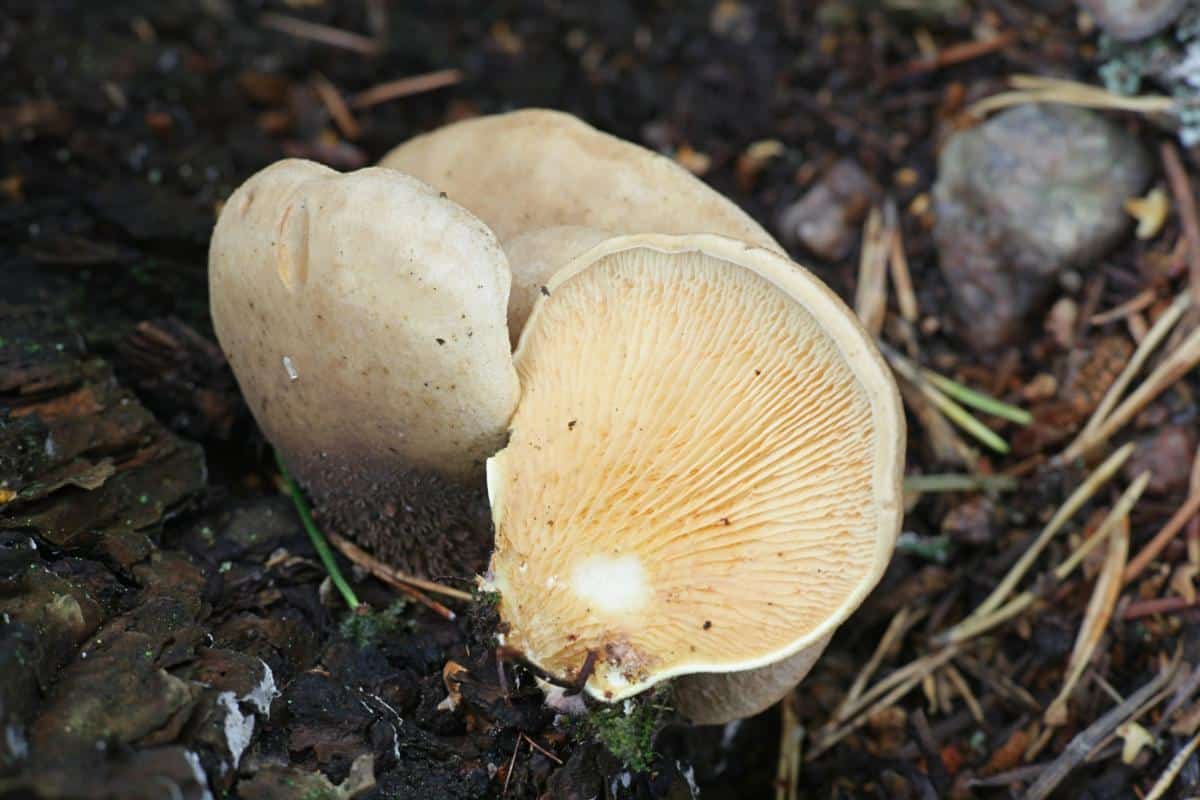
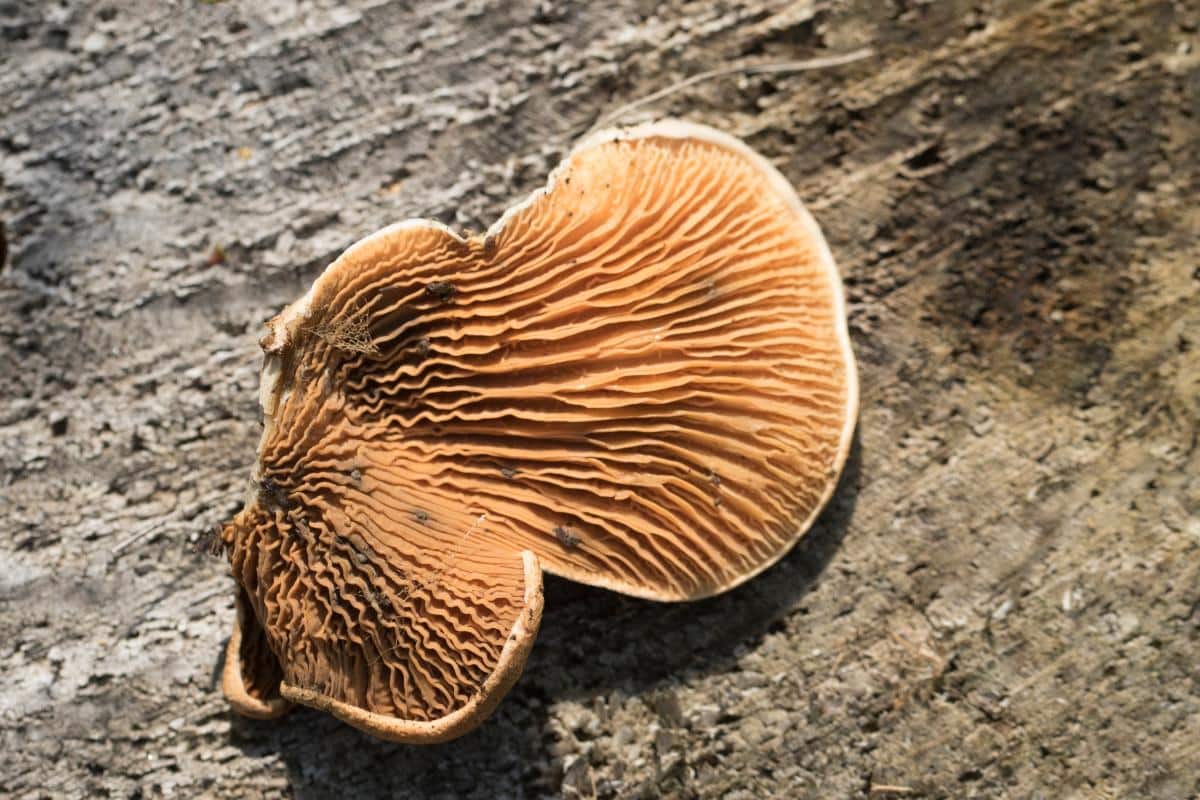
The gills are close together and cover the entire underside of the cap. They are yellowish when young and darken to brown or olive-brown with age. The gills fork frequently and connect with cross-veins, which makes them often look like they’re corrugated or crimped. This is especially noticeable at the bottom of the cap, where it attaches to the wood. The gills are really packed together here. The individual gills can be pulled off from the cap flesh fairly easily.
Stem
With this species, there is often no stem, but there might be a very short, rudimentary lateral stub where the cap attaches to the wood. If it’s there, this stub-like stem is less than an inch long and will match the cap color or be slightly paler. The stem will also sit off-center or at the edge of the cap. If there is no stem (most common), then the bottom of the cap attaches directly to the wood.
Taste and Smell
The oyster roll rim might have a slightly aromatic smell, but it also might have no distinctive scent at all. It does not have a distinctive taste.
Flesh Color and Staining
The flesh is white to yellowish-brown and does not change color when cut or bruised.
Spore Print
The spore print of the oyster rollrim mushroom is yellowish-brown to brownish.
Oyster Rollrim Mushroom Lookalikes
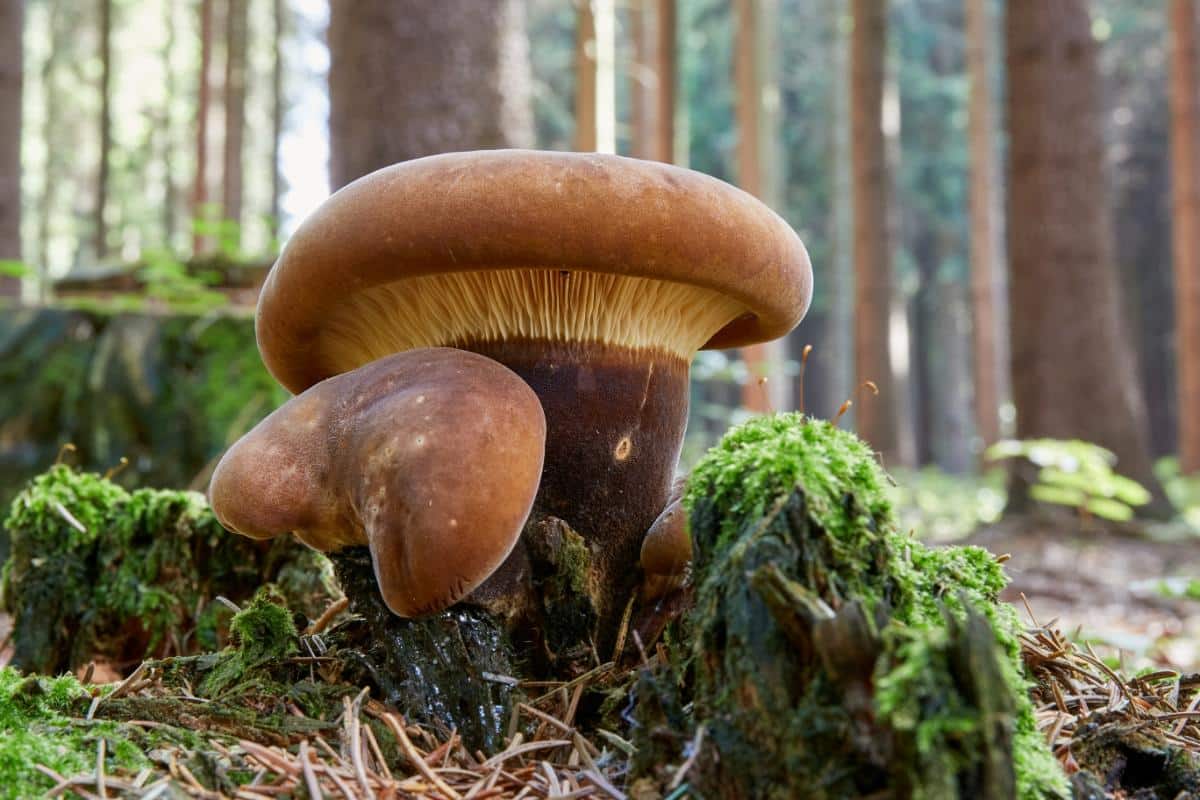
Velvet Roll Rim (Tapinella atrotomentosa, previously Paxillus atrotomentosus)
This cousin to the oyster rollrim has an extremely fuzzy cap — velvety and soft. The velvet roll rim also has a distinctive stem that is equally as velvety as the cap.
Brown Roll Rim (Paxillus involutus)
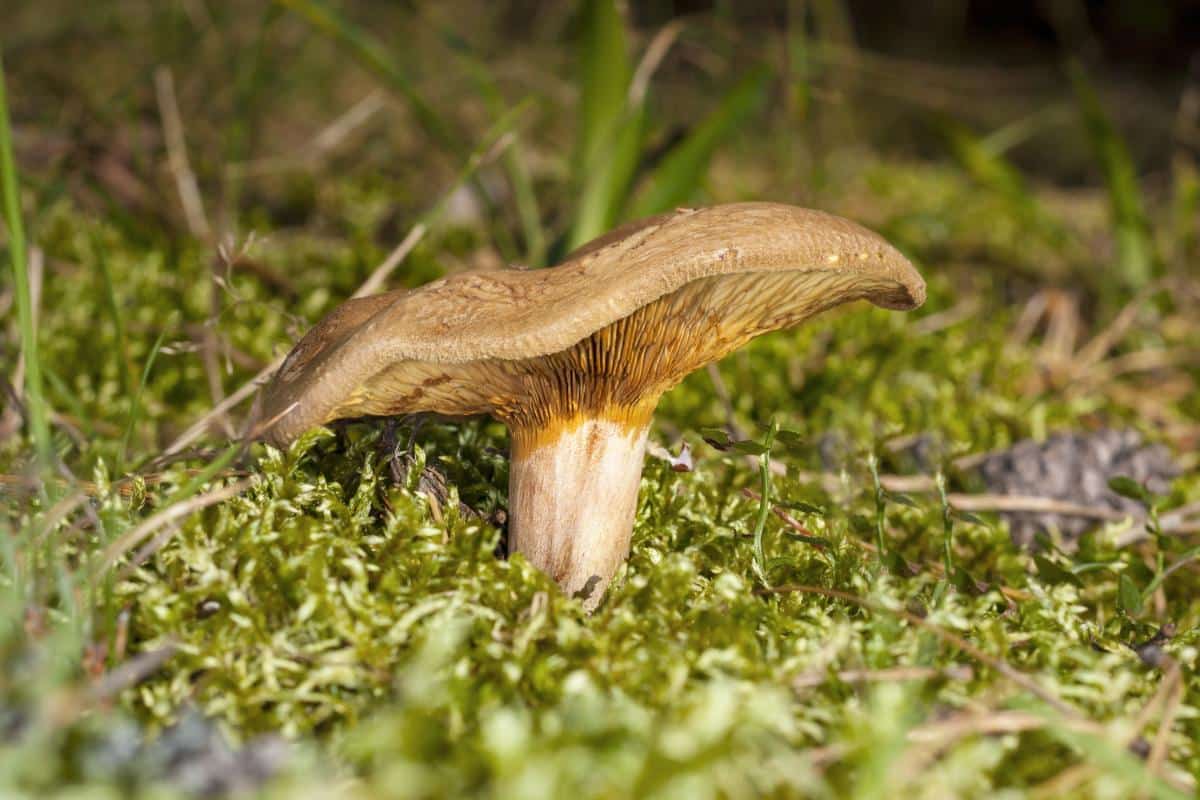
The brown roll rim mushroom looks somewhat similar to its relative, the oyster rollrim, but there are some very obvious key differences. The primary difference is that brown roll rims grow on the ground from extremely decomposed wood or forest debris. They do not grow on trees.
It also has a distinctive stem and the cap and stem bruise to brownish or reddish-brown when you handle or cut them.
True Oyster Mushrooms (Pleurotus species)
The true oyster mushroom grows in similar clustered formations on dead wood and shares the same general shape and growth pattern as the oyster rollrim. They commonly get confused because of this. However, they are pretty easy to tell apart once you know the main differences.
The true oysters are more grayish to white than brown — they are never dark brown. They also have white to cream-colored gills, and several species have a distinct anise smell. And, if you’re still uncertain, you can do a spore print. True oyster mushrooms have white to pale lilac-gray spore prints instead of brown ones.
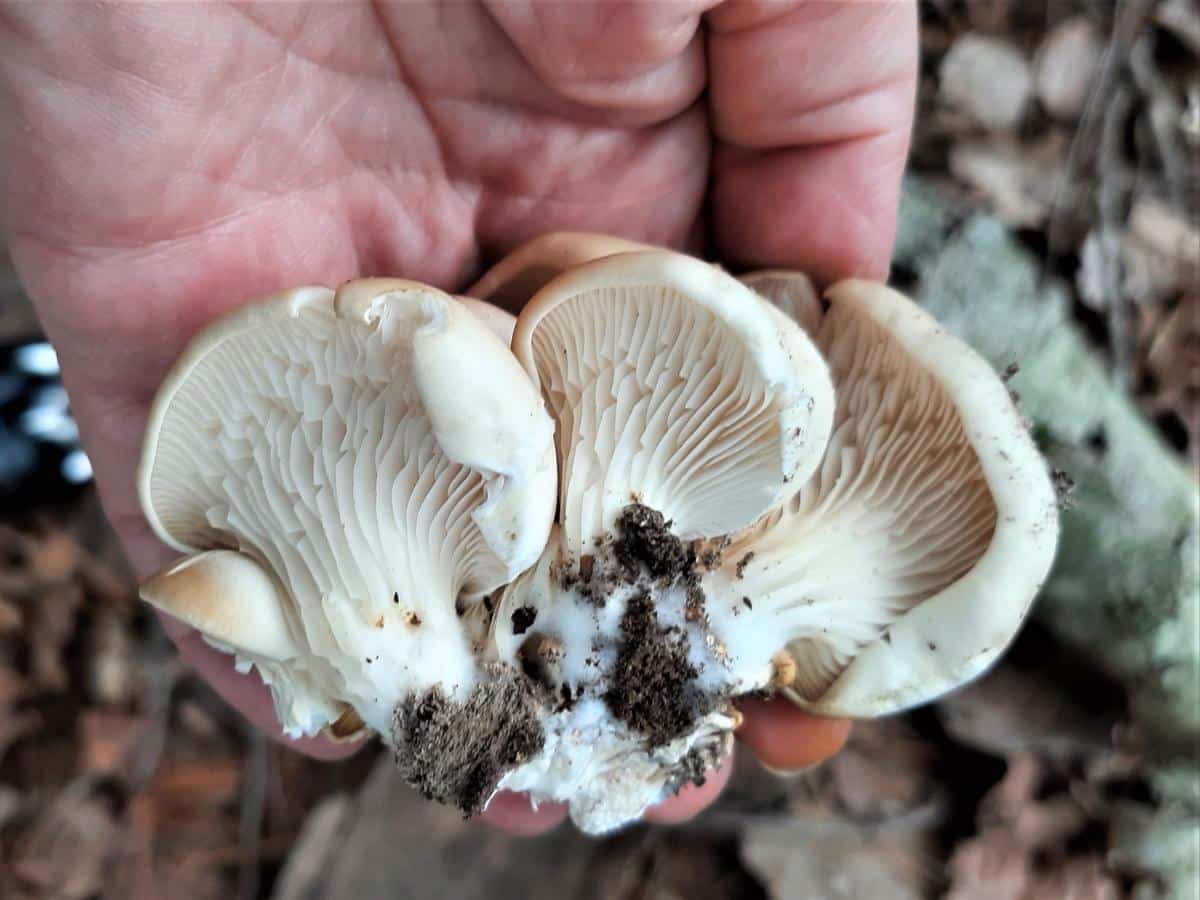
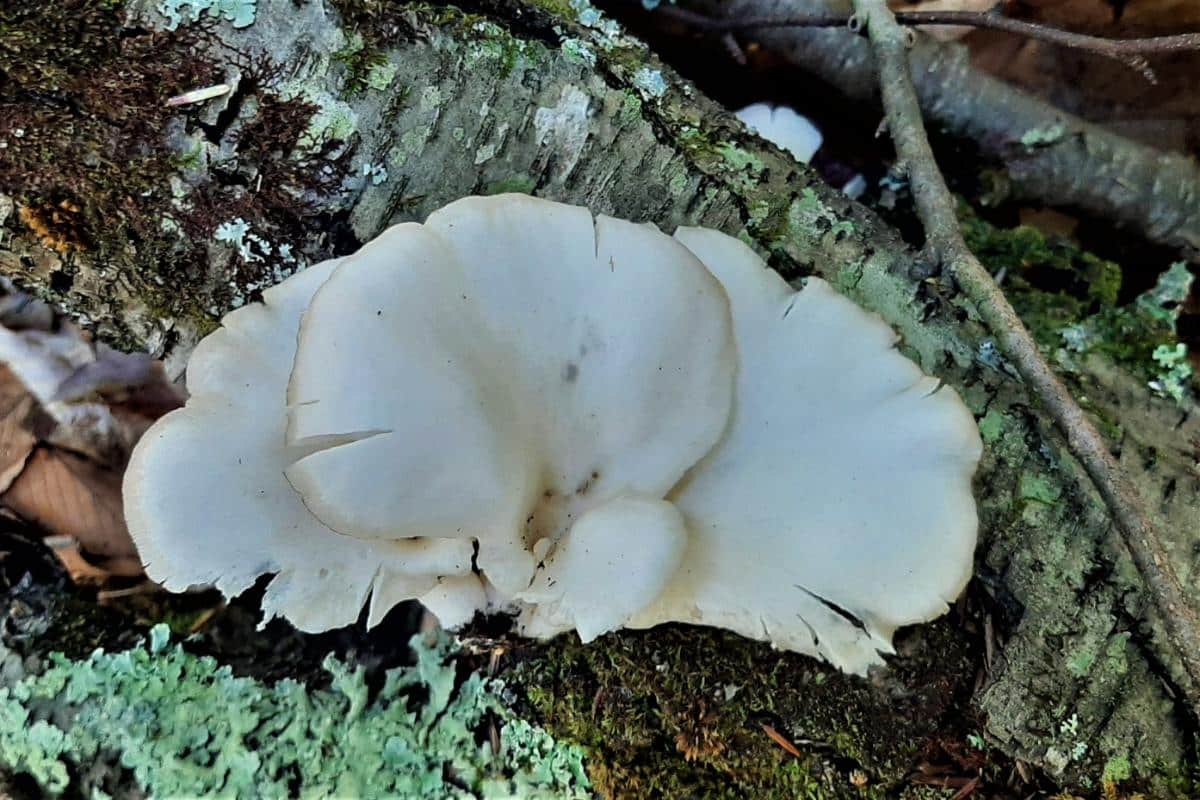
Angel Wings (Pleurocybella porrigens)
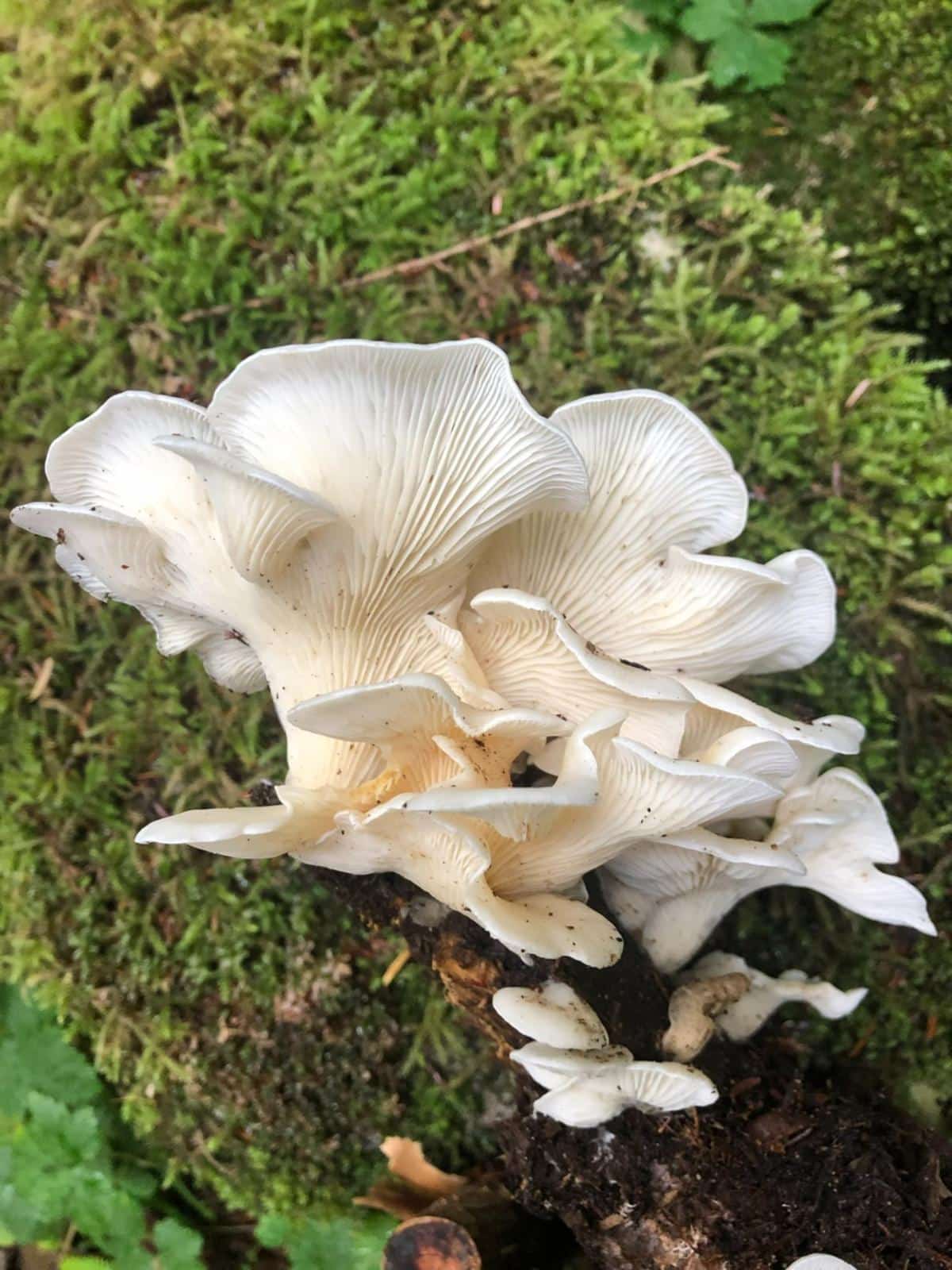
Like true oysters, angel wing mushrooms are shell-shaped and grow in overlapping clusters on conifer logs. They are very white, though, never brown, and their flesh is thin and white.
Angel Wings also have smaller caps (typically under 3 inches), a much thinner, more delicate texture, and a white spore print.
Late Fall Oyster (Panellus serotinus)
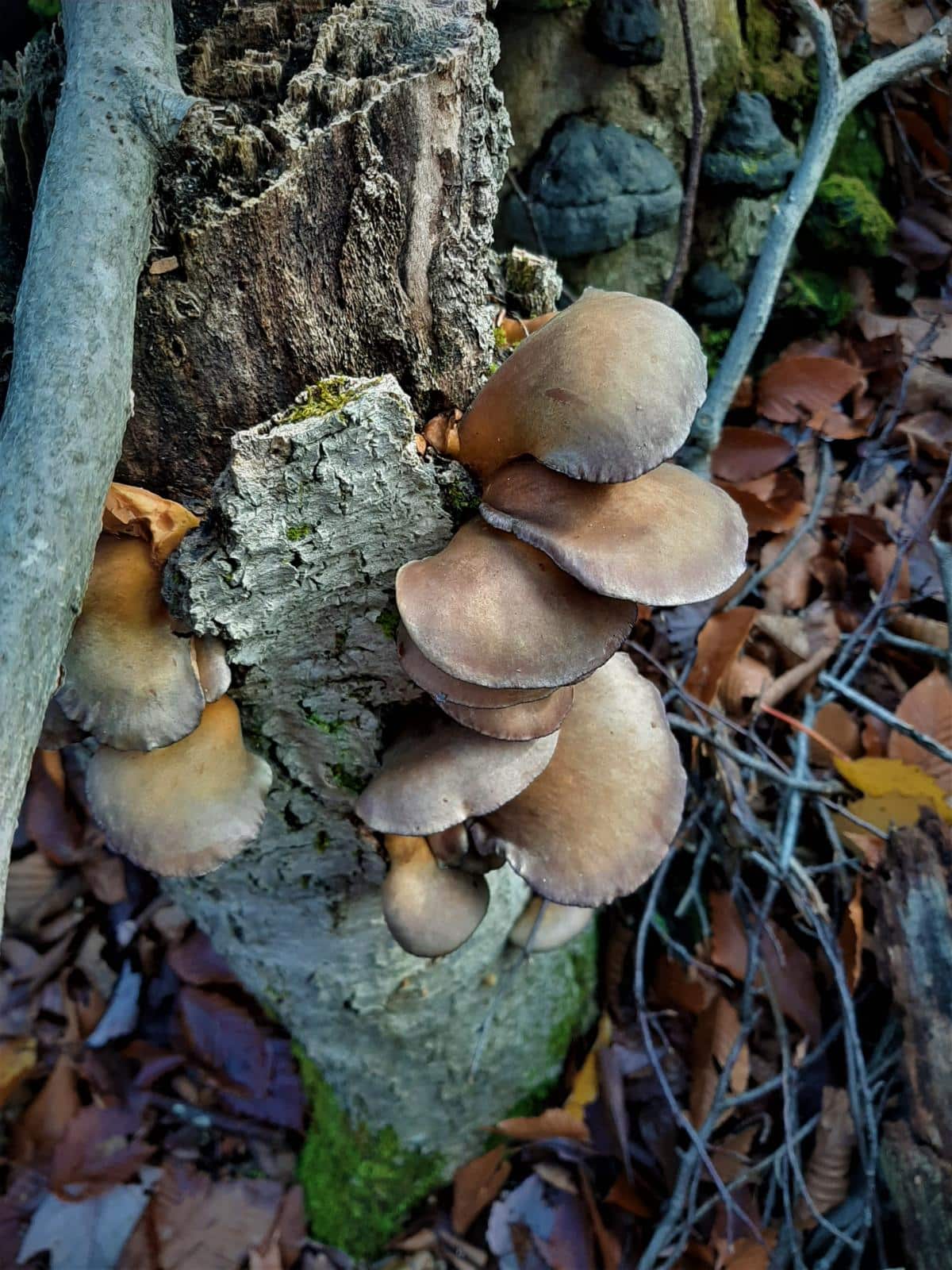
The late fall oyster is an edible species that fruits in clusters on hardwood logs in late fall and early winter. It has a shell or fan-shaped cap that is more similar in color to the oyster rollrim than other oyster-like mushrooms. The late fall oyster mushroom has yellowish to olive-green caps, and it has a gelatinous layer on the surface that peels away easily.
While the overlapping, shelf-like growth pattern resembles the oyster roll rim, they can be separated by where they’re growing (hardwoods versus conifers), the presence of a gelatinous cap layer, and the greenish color of the cap.
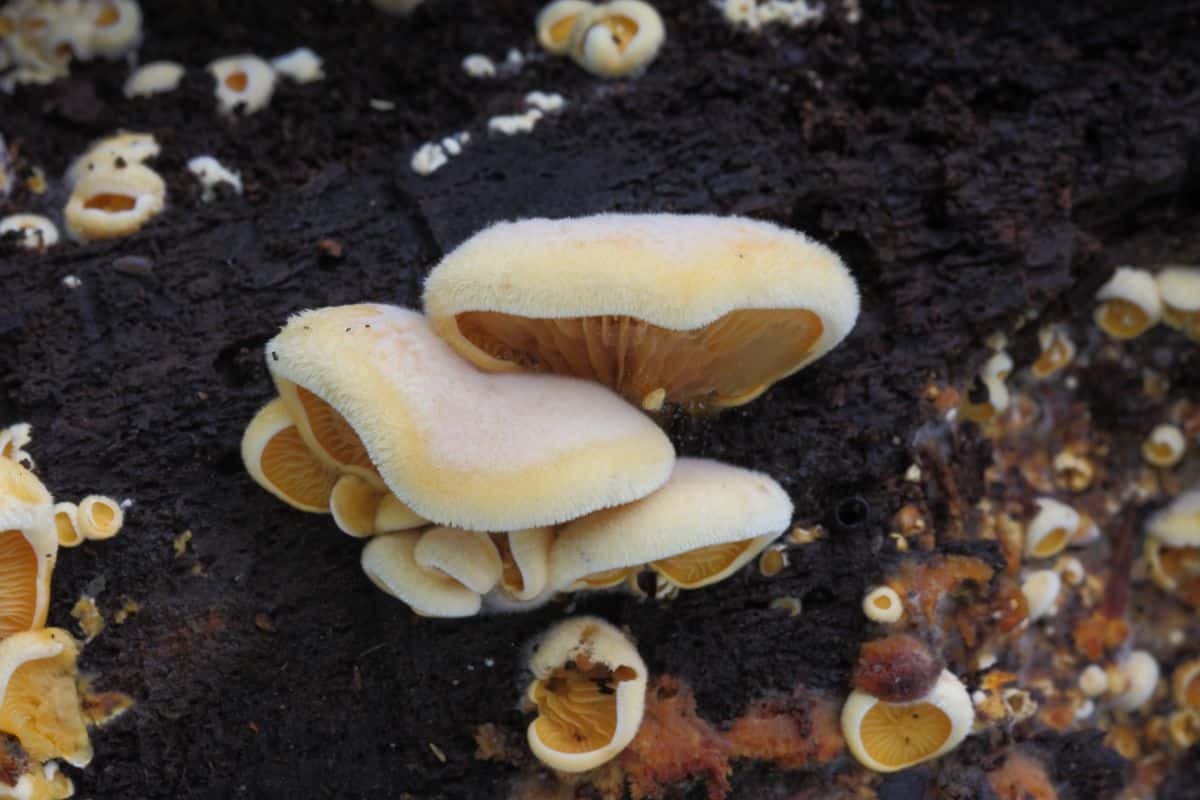
Orange Mock Oyster (Phyllotopsis nidulans)
The orange mock oyster has much brighter coloring than the oyster rollrim mushroom. It is bright orange to apricot and has a fuzzy cap. It also smells like rotten cabbage or skunk, so if you’re in doubt, smell it!
The reason they get confused is that both species have orange gills that fork and cover the entire underside, where they attach to the wood. The spore print is also another difference: the mock oyster has a pink to tan print, while the oyster roll rim has an ochre print.
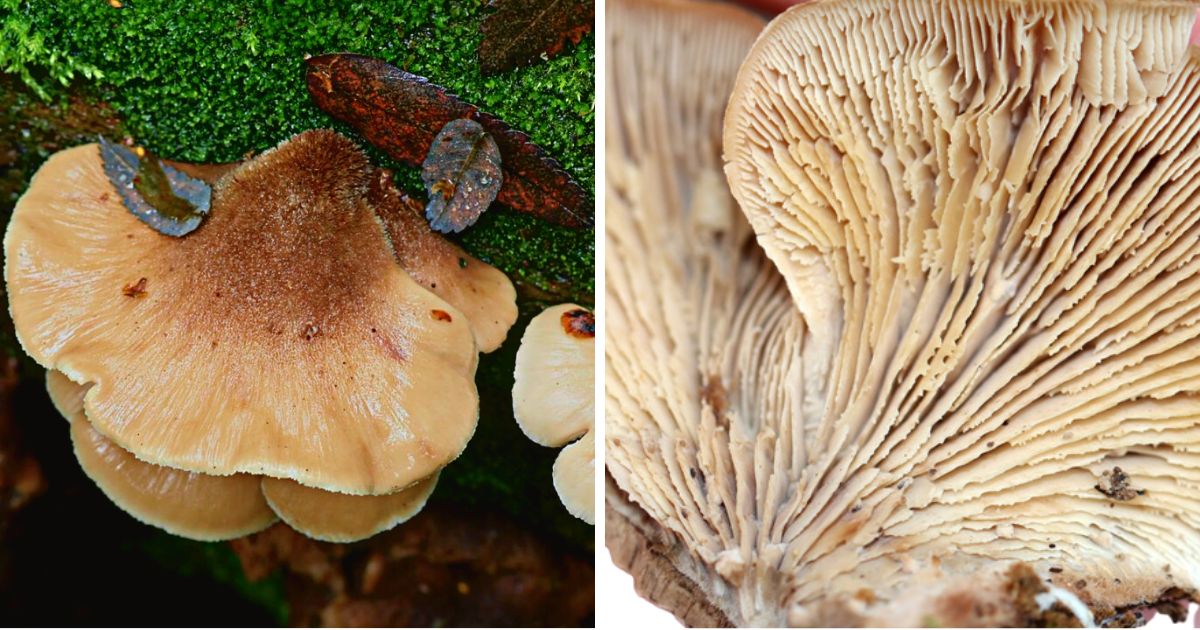
Bear Lentinellus (Lentinellus ursinus)
Both these species grow on dead wood in overlapping clusters and have a similar size, color, and shelf shape. One key difference straight away is that the bear lentinellus grows primarily on hardwoods, while the oyster roll rim is usually on conifers.
The bear lentinellus is typically cinnamon or reddish brown with darker brown coloring toward the center and paler beige at the edges, and the center is usually quite hairy. The oyster roll rim, in contrast, is more uniformly tan to buff brown or ochre throughout. The gills of the bear lentinellus are coarsely serrated, with jagged edges that look like saw teeth — this is quite different from the oyster roll rim’s gills, which have smooth, even edges. The bear lentinellus also has an extremely acrid, peppery flavor that burns the tongue.
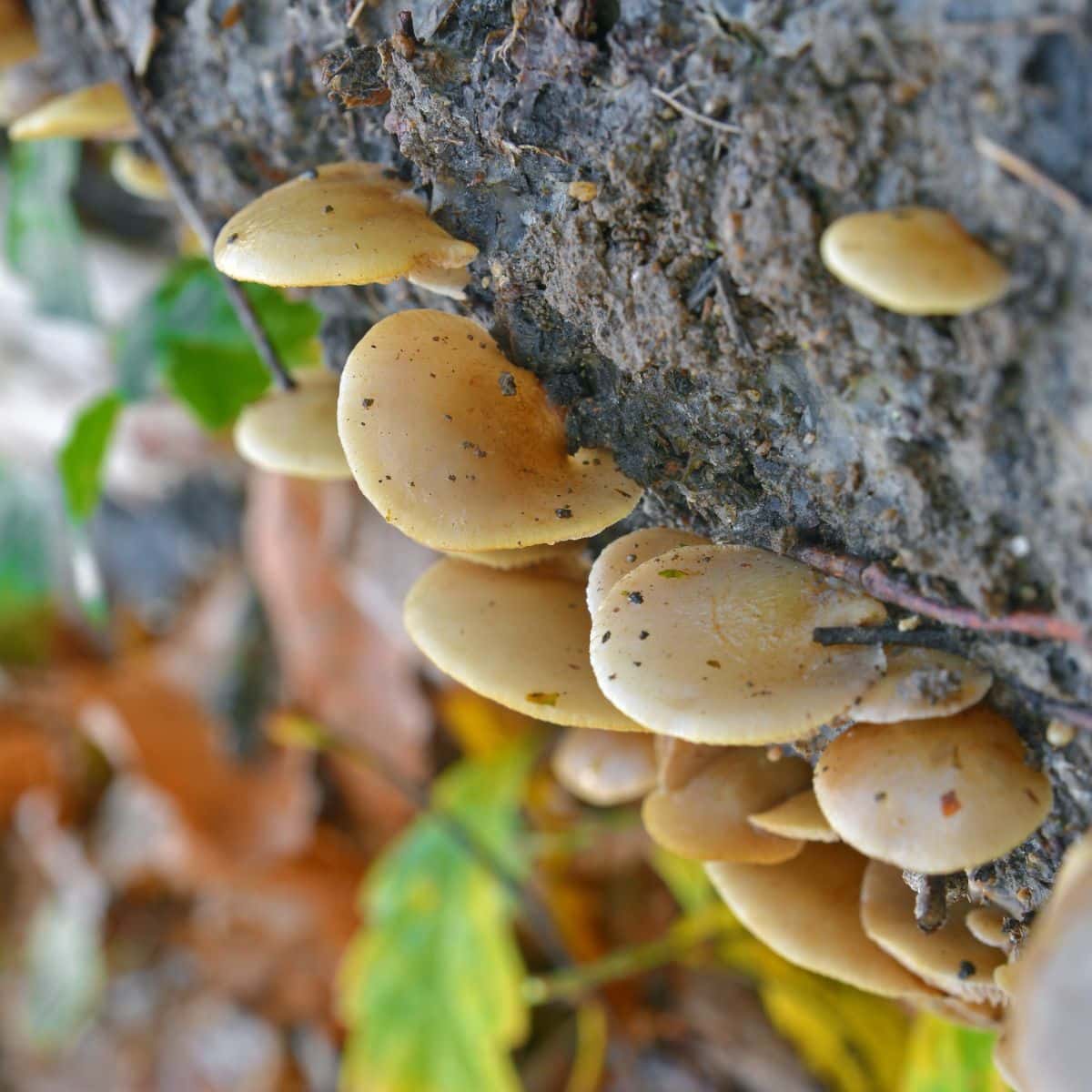
Peeling Oysterling (Crepidotus mollis)
The peeling oysterling is also shell-shaped, grows on wood, and with age, is the same brownish ochre color as the oyster rollrim mushroom. However, the peeling oysterling is much smaller; it rarely gets larger than 2 inches across. A key identifying feature of the peeling oysterling is the cap skin: there is a gelatinous cuticle that peels away easily from the cap flesh and can be stretched to double its length before tearing.
The peeling oysterling also has softer, more gelatinous gills. And, it grows mainly on hardwoods, especially oak and beech, while the oyster roll rim prefers conifers.
Oyster Rollrim Mushroom Edibility
The oyster rollrim is not edible, and many experts report it as toxic. It isn’t deadly or even that dangerous, but it will cause gastrointestinal issues. Those symptoms will usually resolve within 24 hours.
Dyeing With The Oyster Rollrim
This mushroom is used in natural dyeing because it produces a range of colors, including purples, grays, olives, and greenish-browns. The colors you get depend on what mordants you use.
Common Questions About Oyster Rollrim Mushrooms
Can you eat the oyster roll rim?
No, the oyster roll rim can cause digestive upset when its eaten. The mushroom contains atromentin and other phenolic compounds that lead to gastrointestinal problems.
When and where does the oyster roll rim grow?
The oyster roll rim grows on dead conifer wood throughout North America and Europe. It typically fruits from late summer through fall, though in warmer climates it can grow through winter and into early spring.
Leave a Reply