
The delicate rosy oysterling might catch your eye because it kind of looks like the sought-after edible oyster mushroom. But it gained the oysterling nickname for a reason — it’s a small mushroom, much smaller than true oysters. It’s a cool find in its own right, though, because it’s super cute.
This saprotrophic fungus has distinctive pink to gray fruiting bodies that are often quite slimy or glossy, especially after it has rained. The rosy oysterling grows across North America and is also found in Chile, Argentina, eastern Australia, and New Zealand.
- Scientific Name: Scytinotus longinquus or Panellus longinquus
- Common Names: Rosy oysterling
- Habitat: Decaying and dead hardwood
- Edibility: Unknown
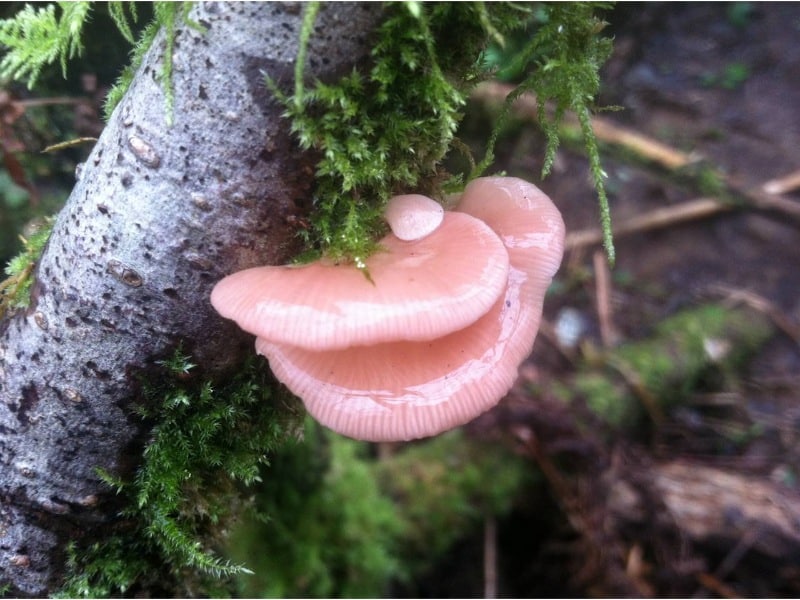
Scytinotus longinquus by Robin Hudson on Mushroom Observer
Jump to:
All About The Rosy Oysterling Mushroom
The rosy oysterling is a shell-shaped mushroom that resembles the much sought-after oyster mushroom (Pleurotus), except it is significantly smaller and pinkish in color. The common name really explains it all!
Miles Joseph Berkeley first described this fungus as Agaricus longinquus in 1847. The species went through several taxonomic changes. Scientists moved it to Pleurotus as Pleurotus longinquus. The moved around mushroom then became Pleurotopsis longinqua based on its physical features. DNA analysis in 2012, however, prompted researchers to move it again to the genus Scytinotus. This switch was not universally approved, and so to this day, you will see it under whichever name the author prefers.
Species Fungorum and Index Fungorum accept Panellus longinquus as the official scientific name. However, MycoBank uses Scytinotus longinquus. Don’t be surprised to find this species under either name.
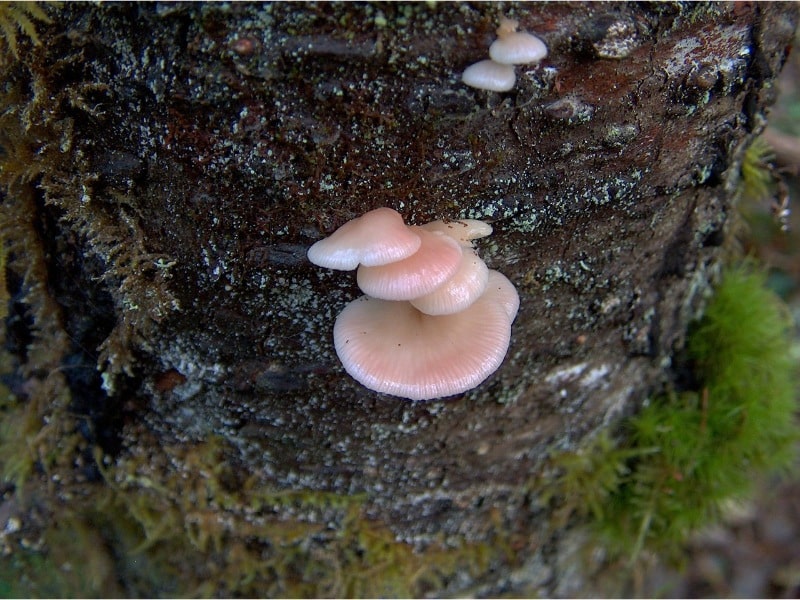
Scytinotus longinquus by Bea Wharton on Mushroom Observer
Rosy Oysterling Identification Guide
Season
The mushrooms grow in greatest numbers during cool, wet fall months. Their peak growth occurs after the first light frost as temperatures rise again. In warmer climates, these fungi are found between October and February.
Habitat
Rosy oysterling mushrooms grow on dead and decaying hardwood trees. They are most frequently on alder (Alnus rubra), maple, and other deciduous trees. Sometimes, it grows on pressure-treated wood. More rarely, it fruits on coniferous trees like Western Hemlock (Tsuga heterophylla).
This mushroom prefers logs or trees that are missing their bark. The log might be completely debarked or partially debarked. They grow as single specimens or small groups. Rosy oysterlings commonly grow in overlapping clusters.
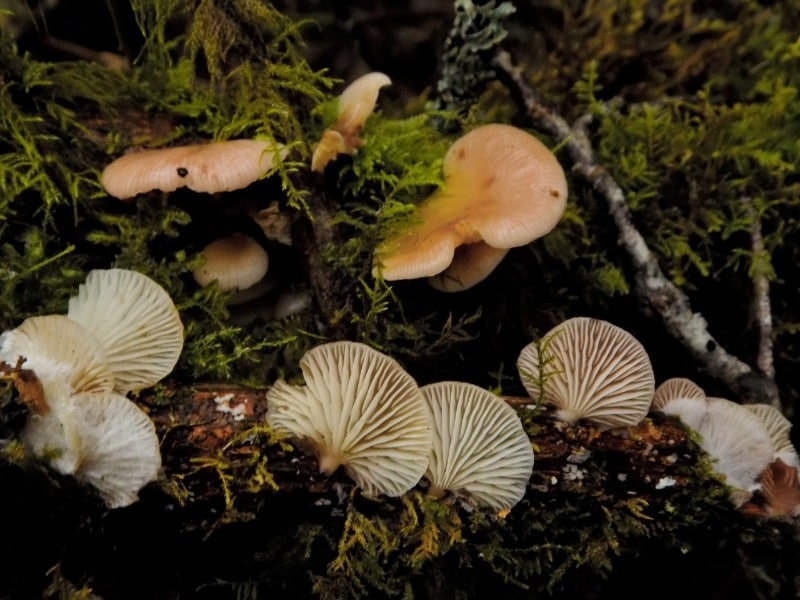
Scytinotus longinquus by Rand Workman on Mushroom Observer
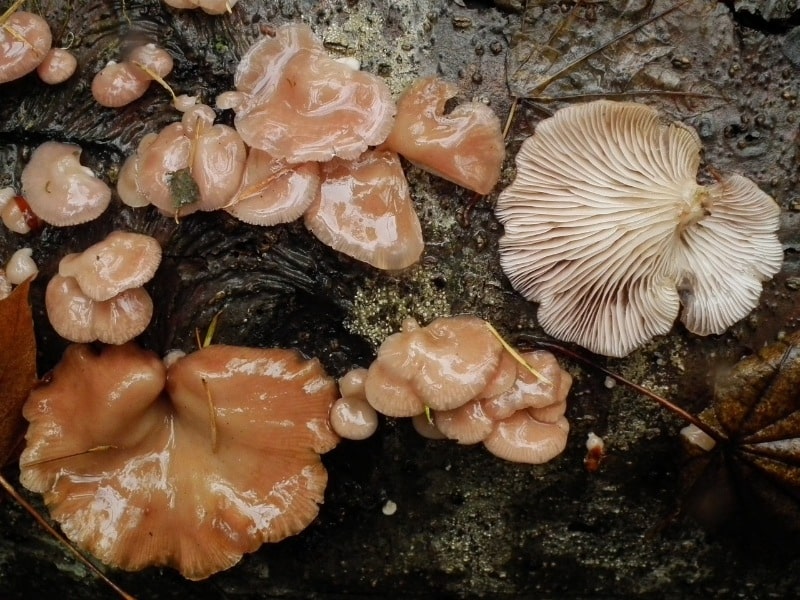
Scytinotus longinquus by BlueCanoe on Mushroom Observer
Identification
Cap
The rosy oysterling’s caps measure 1.2-2.0 inches in diameter. When the mushroom is young, the caps are rounded like a button mushroom. With age, the caps become fan-shaped or kidney-shaped. The cap colors range from peach to ivory when they first appear and then develop pinkish hues later. Caps may have a purple-brown discoloration that appears with age.
The cap is hygrophanous, which means that when it is wet, they appear translucent. When the caps are dry, they are normal-looking and not translucent at all.
Gills
The gills are closely spaced when the mushroom is very young, then they spread apart as the mushroom matures. The young gill’s color ranges from whitish to peach, and they might develop a grayish tint after drying. They are decurrent, which means they run slightly down the stem. The gills are also translucent, like the cap when it is wet.
Stem
The mushroom’s stem might be completely absent or a small stub. If it is there, it will grow laterally (growing from the side) and reach only up to 0.3 inches in length – a very short, stout stump. The stem is pinkish, and the surface is finely velvety with tiny fibers covering it.
Texture
The mushroom’s texture becomes gelatinous, especially in wet conditions. The cap turns viscid (sticky) in moist conditions and shows concentric wrinkles as it dries.
Taste and Smell
This mushroom has a mild taste and smell – they are not distinctive features. Some specimens may give off an earthy mushroom smell.
Flesh and Staining
The mushroom’s flesh is extremely thin, firm, and fibrous texture. It has white to pale pinkish-tan coloring and does not change color when cut or bruised.
Spore print
The spore print is a dingy yellowish-cream color.
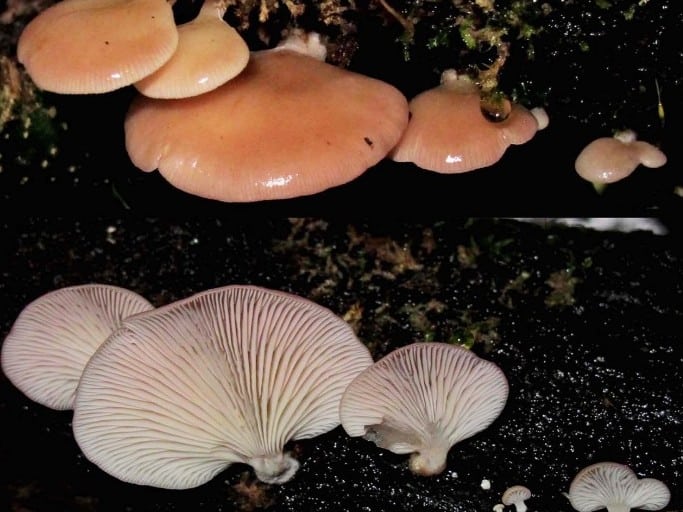
Scytinotus longinquus by Richard Hartland on Mushroom Observer
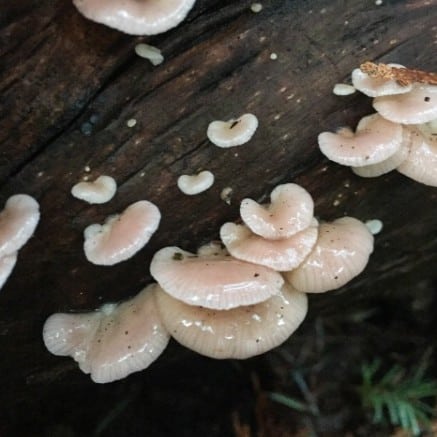
Scytinotus longinquus by astro al on Mushroom Observer
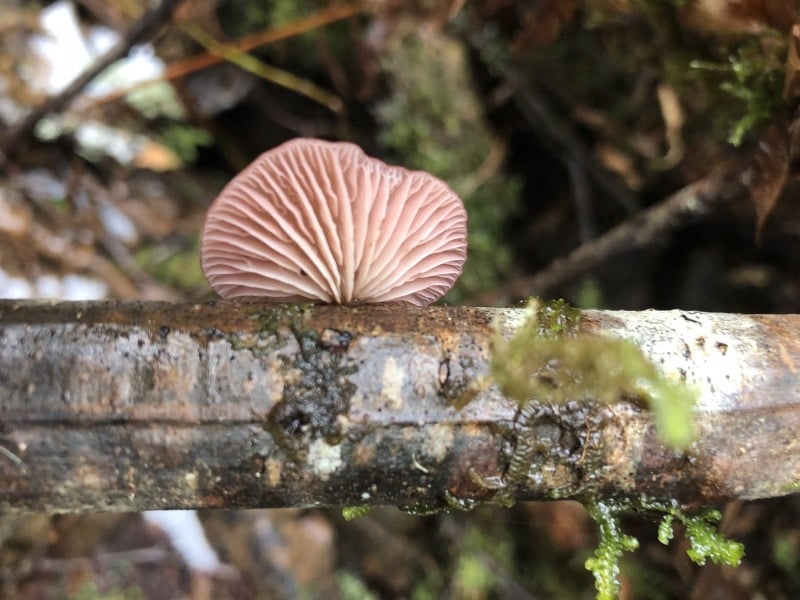
Scytinotus longinquus by smilacina on Mushroom Observer
Rosy Oysterling Lookalikes
Bitter Oyster (Panellus stypticus)
The genus Panellus has several species that are shell-shaped and also have stems that are non-existent or grow from the side. The bitter oyster mushroom is shaped the same but is different from rosy oysterling because of its ochraceous brown color, tough texture, and strong bitter taste. It is not rosy pink, gelatinous, or slimy.
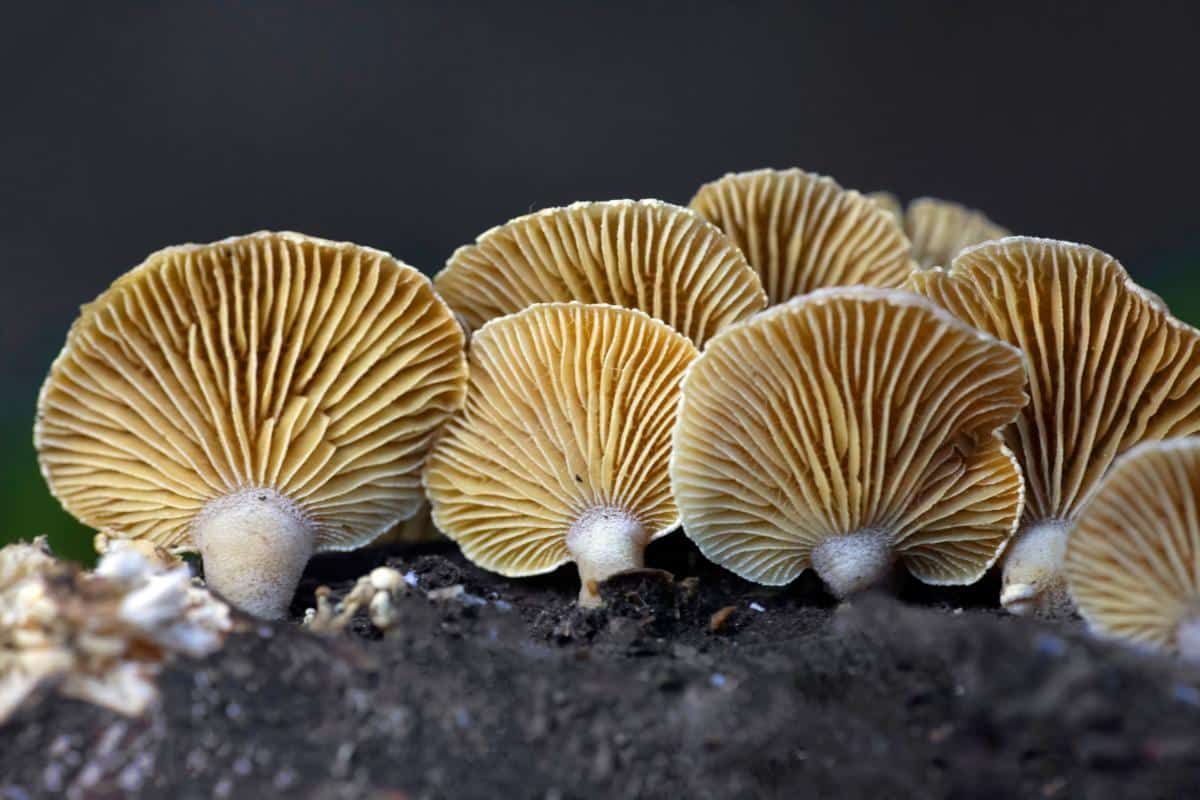
Oyster mushroom (Pleurotus ostreatus)
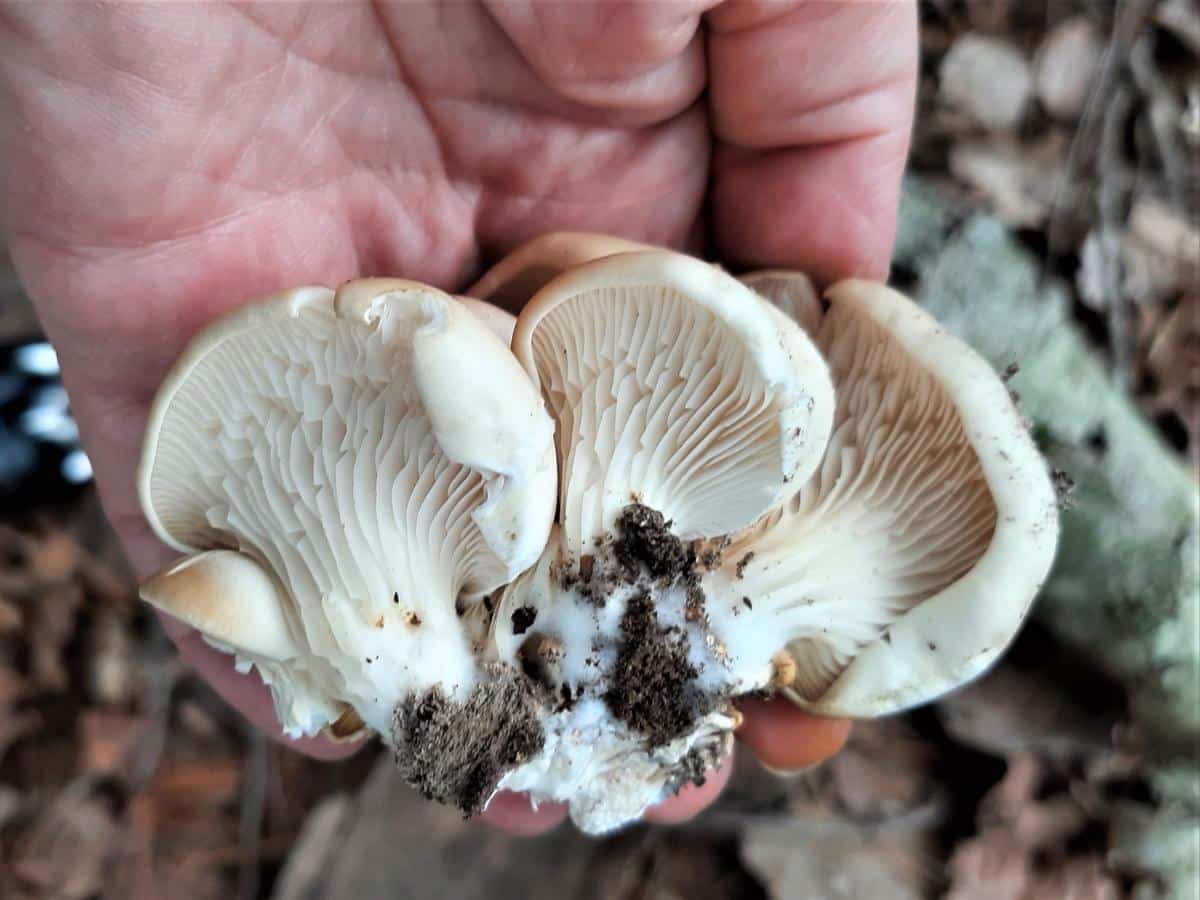
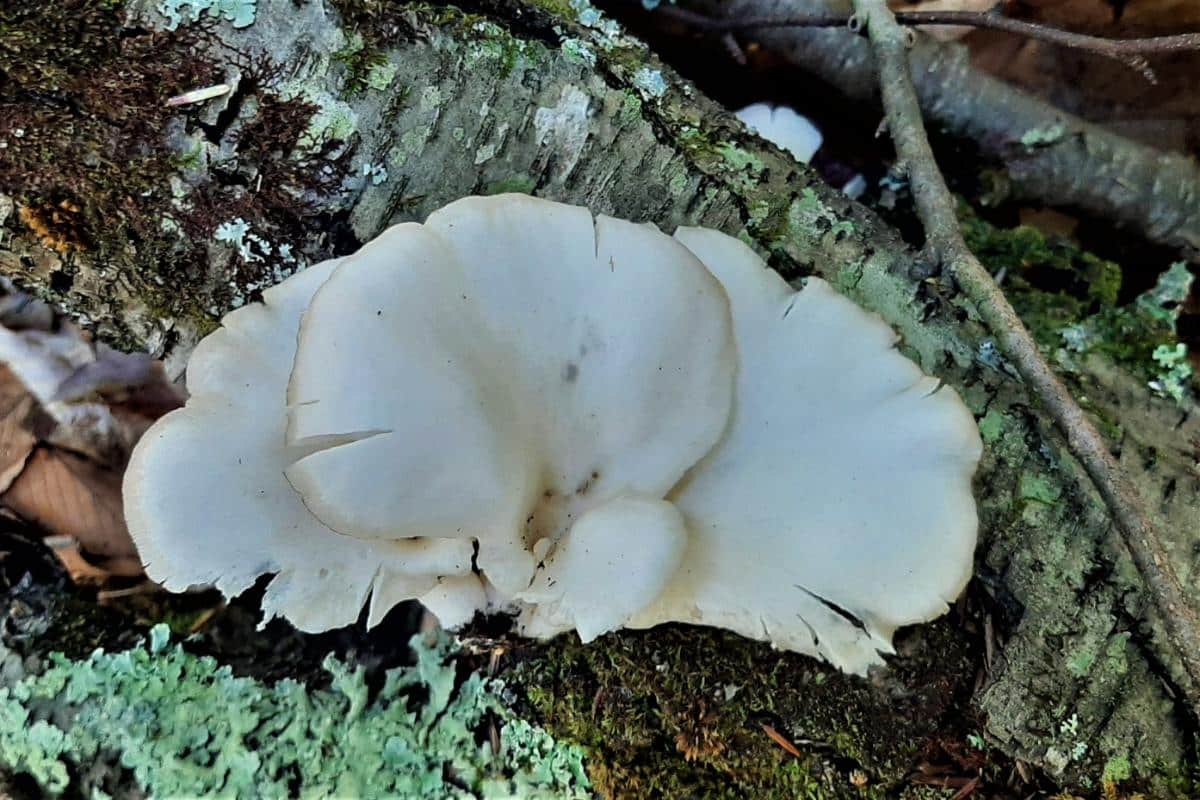
People often mix up true oyster mushrooms with rosy oysterlings. Both have similar shell-like shapes, but oysters are grayish in color instead of lilac/pink. You can also tell them apart by looking at their gills. Oyster mushrooms have almost pure white gills, while rosy oysterlings develop purplish or tan gills as they age. Oyster mushrooms also have thicker cap flesh and a more visible stem.
Additionally, oyster mushrooms get much, much bigger than rosy oysterlings. If the mushroom is more than a couple of inches wide, it’s not a rosy oysterling.
Peeling Oysterling (Crepidotus mollis)
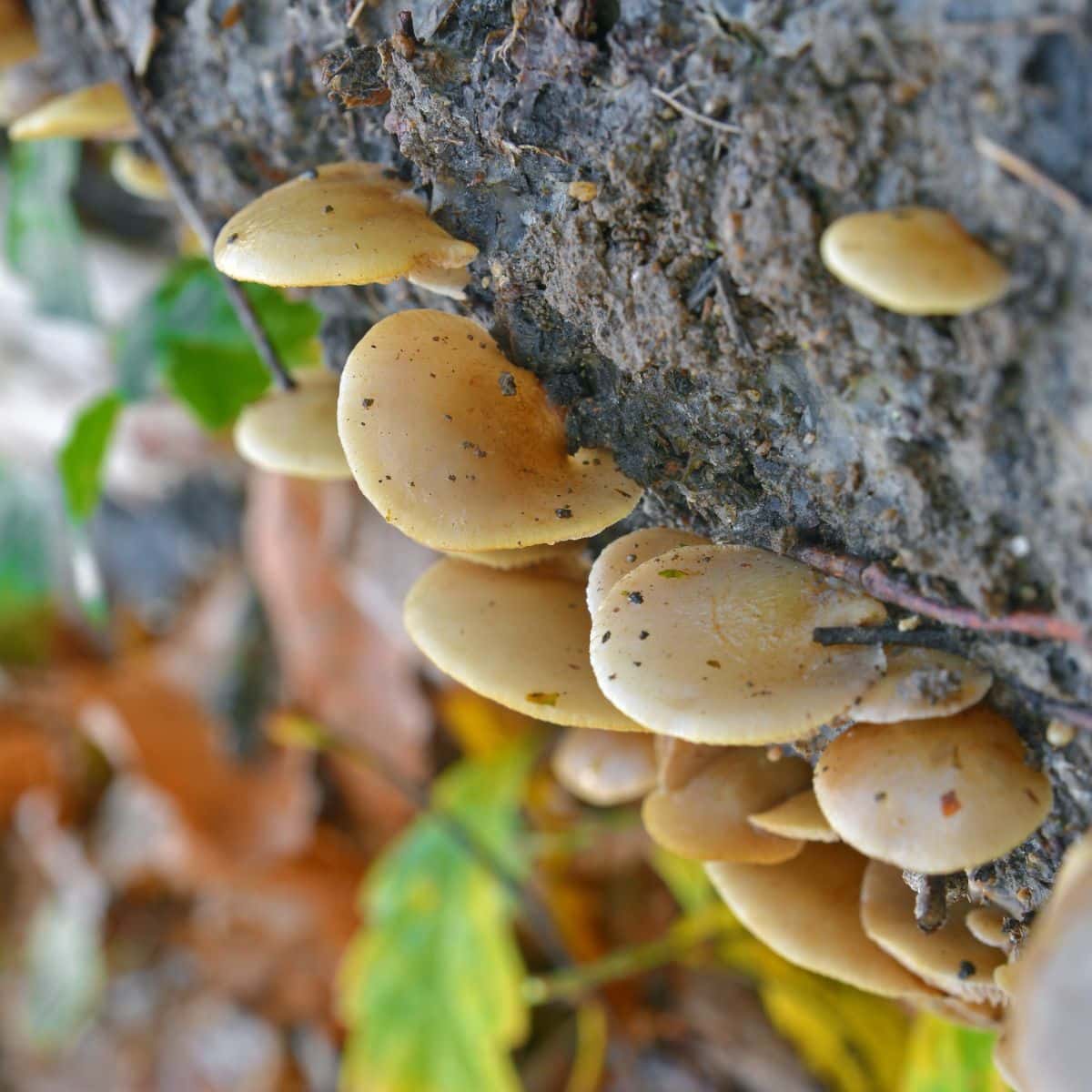
This species looks quite similar at first glance (hence the similar common names). It grows on dead wood and has a similar half-shell shape. The peeling oysterling also has soft, rubbery, and flabby flesh and is quite small and pale tan to whitish to grayish. The most distinctive feature of the peeling oysterling, which is what gives it its common name, is a gelatinous cuticle that readily peels away from the cap.
The peeling oysterling isn’t ever pink or pinkish, so that’s a quick way to differentiate them. However, when the rosy oysterling is old or in low light, it can be the same whitish, creamish, or grayish color as the peeling oysterling. Then, it gets more difficult.
The two species can be reliably distinguished by their spore prints: Crepidotus mollis produces medium-brown spores, while the rosy oysterling is yellowish.
Flat Oysterling (Crepidotus applanatus)
The flat Crepidotus has a flattened cap and a more fibrous texture compared to the rosy oysterling. It is also usually quite brown or tan and not as gelatinous.
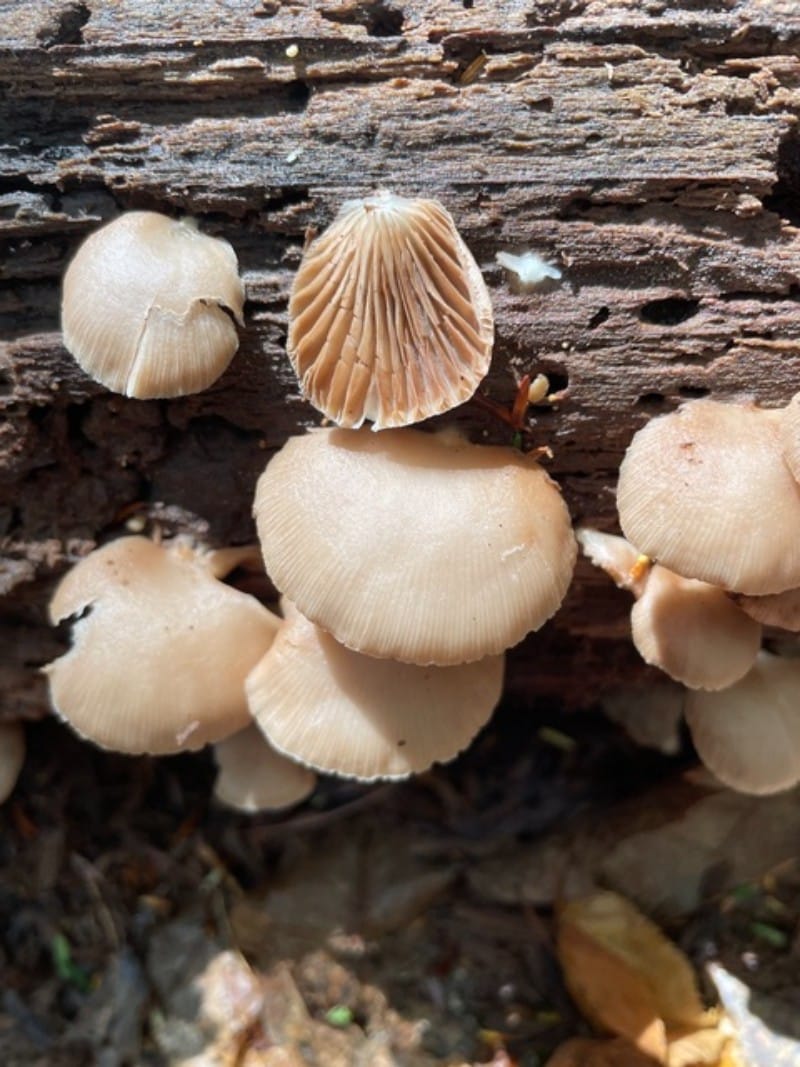
Crepidotus applanatus by Molly Kephart on Mushroom Observer
Rosy Oysterling Edibility
No one knows for sure if rosy oysterling is safe to eat. Expert opinions vary substantially, and some sources say it might be edible after proper cooking. Others believe it could be mildly toxic. Most trusted mycological sources list its edibility status as “unknown”.
People who have tried rosy oysterling describe different experiences. Some say it has no distinct taste, while others find it notably bitter. Since it seems people have eaten it and not died, it is probably not a poisonous species.
More likely, it is so small and insubstantial and gelatinous that it doesn’t warrant enough interest for eating. And whether it is bitter or has no distinct flavor, neither is appealing.
Research hasn’t proven whether this mushroom is safe. You should be extremely careful.
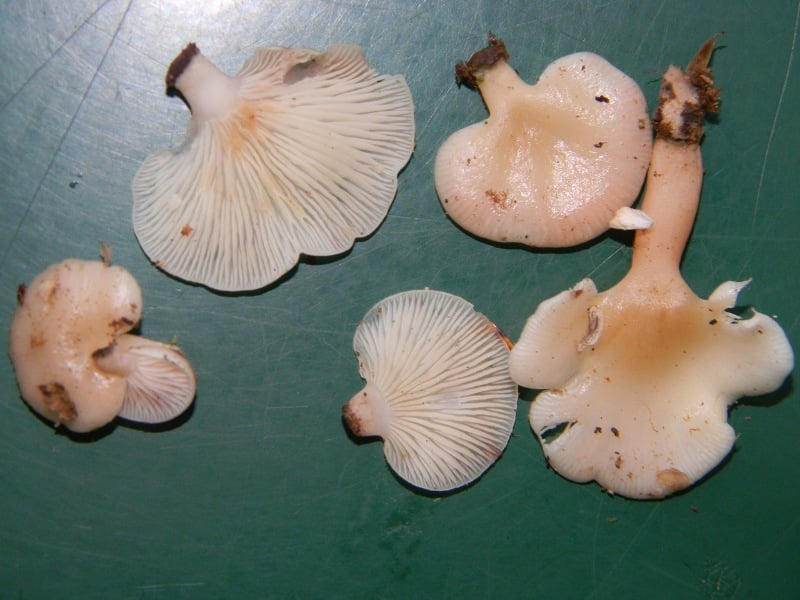
Scytinotus longinquus by Tim Sage on Mushroom Observer
Common Questions About Rosy Oysterlings
Where and when can I find rosy oysterlings?
Rosy oysterlings are found in North America, South America, Australia, and New Zealand. They’re most common during cool, wet fall months, growing on decaying hardwood trees. Look for them in temperate forest ecosystems, particularly along coastal regions.
Are rosy oysterlings edible?
The edibility of rosy oysterlings is currently unknown, and caution is strongly advised. While some sources suggest they might be edible after cooking, others indicate potential mild toxicity. Due to the lack of conclusive research on their safety, it’s best to avoid eating them.
How do rosy oysterlings differ from true oyster mushrooms?
Rosy oysterlings are smaller and thinner than true oyster mushrooms. They are more delicate with pinkish to grayish caps and purplish or tan gills. True oyster mushrooms have grayish caps and pure white gills.
Do rosy oysterlings have any known medicinal properties?
Specific studies on rosy oysterlings are limited, and there are no known medicinal uses for this mushroom.
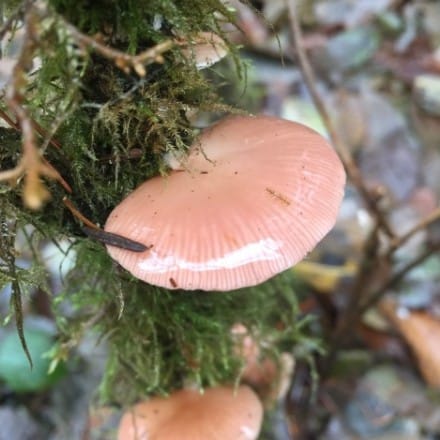
Scytinotus longinquus by tom cervenka on Mushroom Observer
Leave a Reply