
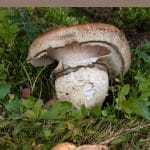
Mock matsutake, also known as False Matsutake, can be confusing to identify. It closely resembles the true matsutake and often grows in the same places, but it is not the highly sought-after pine mushroom. In North America, the two main mock matsutake species are Catathelasma ventricosum and Catathelasma imperiale. These are mostly separated by region, though there is some overlap.
It’s important to know the difference between Catathelasma species and true matsutake if you are looking for the elusive edible mushroom. Matsutake mushrooms are some of the most prized and expensive mushrooms in the world. People love them for their rich umami flavor, strong aroma, and possible health benefits.
It’s also important to know about mock matsutake if you are buying fresh or dried matsutake from a forager or supplier. You want to be sure you are getting what you paid for. Since it can be hard to tell them apart, you need to pay close attention.
Mock matsutake is also an edible species, but its flavor isn’t as good as the true matsutake. And, it is tougher texture-wise. People who forage this mushroom often dry it and use it to flavor or bulk up a soup or stew.
Catathelasma imperiale faces environmental pressures across Europe and appears on conservation watchlists. The IUCN Red List of Threatened Species currently lists it as “near threatened”. It is on the Red List in Austria, Sweden, Finland, Estonia (regionally extinct), Slovakia, Poland, and two regions in Russia. It is legally protected in Poland.
- Scientific Names: Catathelasma ventricosum and Catathelasma imperiale
- Common Names: Mock matsutake, false matsutake
- Habitat: On the ground in association with conifers
- Edibility: Edible
Jump to:
All About Mock Matsutake Mushrooms
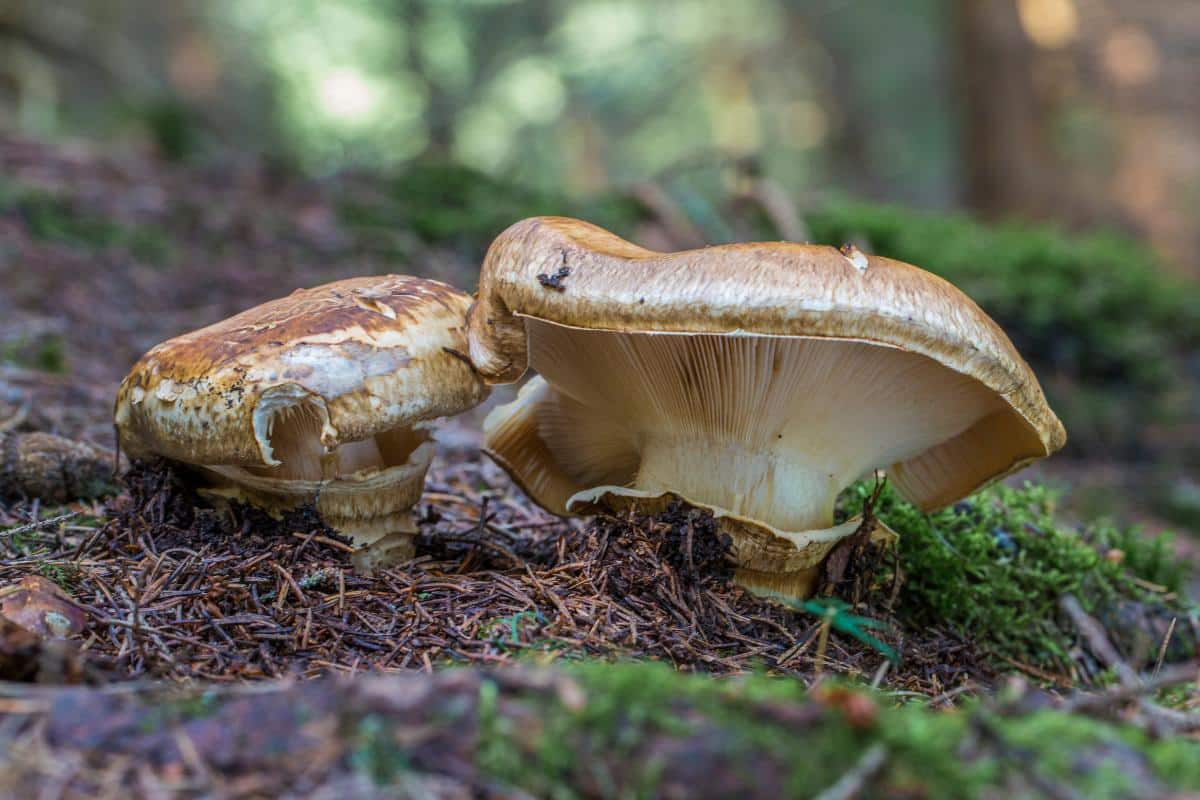
Mock matsutakes belong to the genus Catathelasma. They earned their nickname “mock matsutake” or “false matutake” because people often mistake them for the prized matsutake mushroom (Tricholoma murrillianum group) at first glance.
The American mycologist Ruth Harrison Lovejoy first described the genus Catathelasma in 1910, with C. evanescens as the type species. The name is said to come from Ancient Greek words: “kata” (downwards) and “thelasma” (the act of suckling). How this pertains to the mushroom is unclear – possibly the spike-like stem resembled a nipple or udder to the namer. Catathelasma imperiale is known as the Imperial Mushroom because of its size.
The similar appearance and shared habitat under conifers make mock matsutake and true matsutake easy to confuse. One sniff, though, reveals the truth. Mock matsutake lacks the distinctive spicy-sweet cinnamon odor of true matsutake. Instead, Catathelasma smells more mealy or cucumberish – a very different smell indeed!
These mushrooms are edible, though not as flavorful as true matsutake. People gather several species for food in China, Guatemala, and Russia.
Overview of Catathelasma species
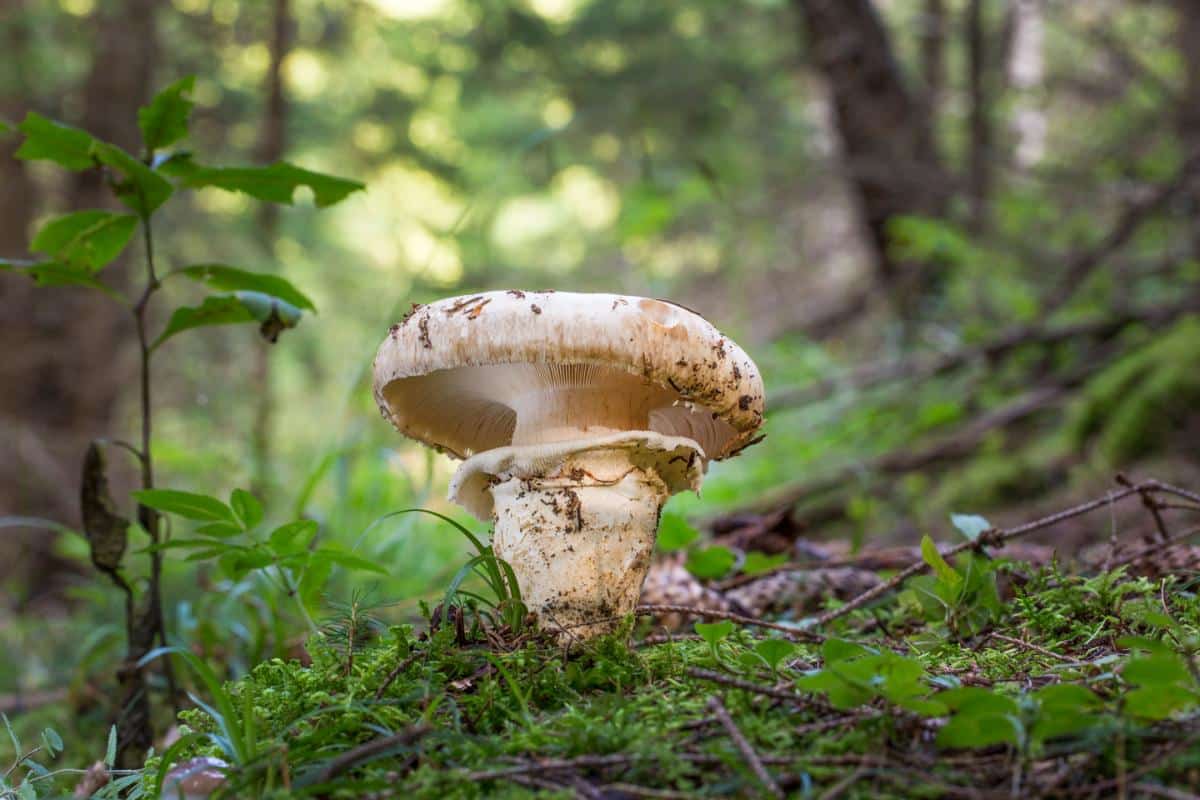
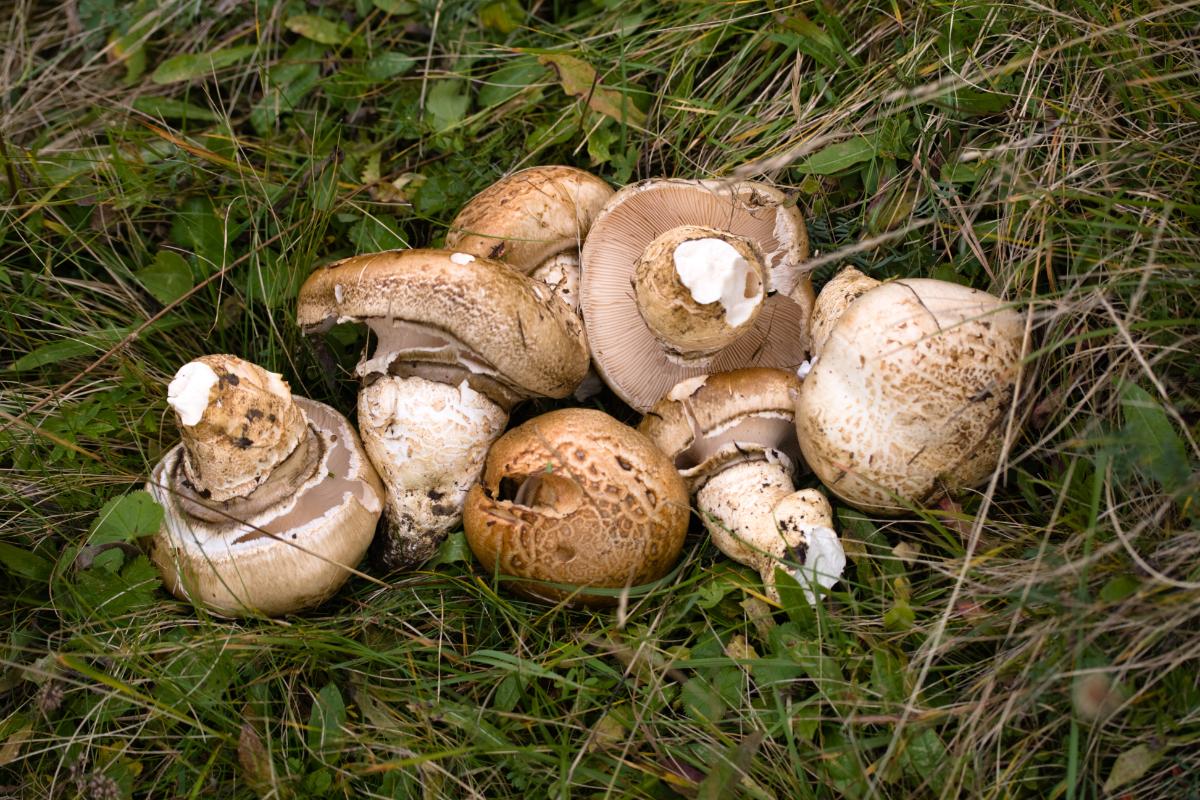
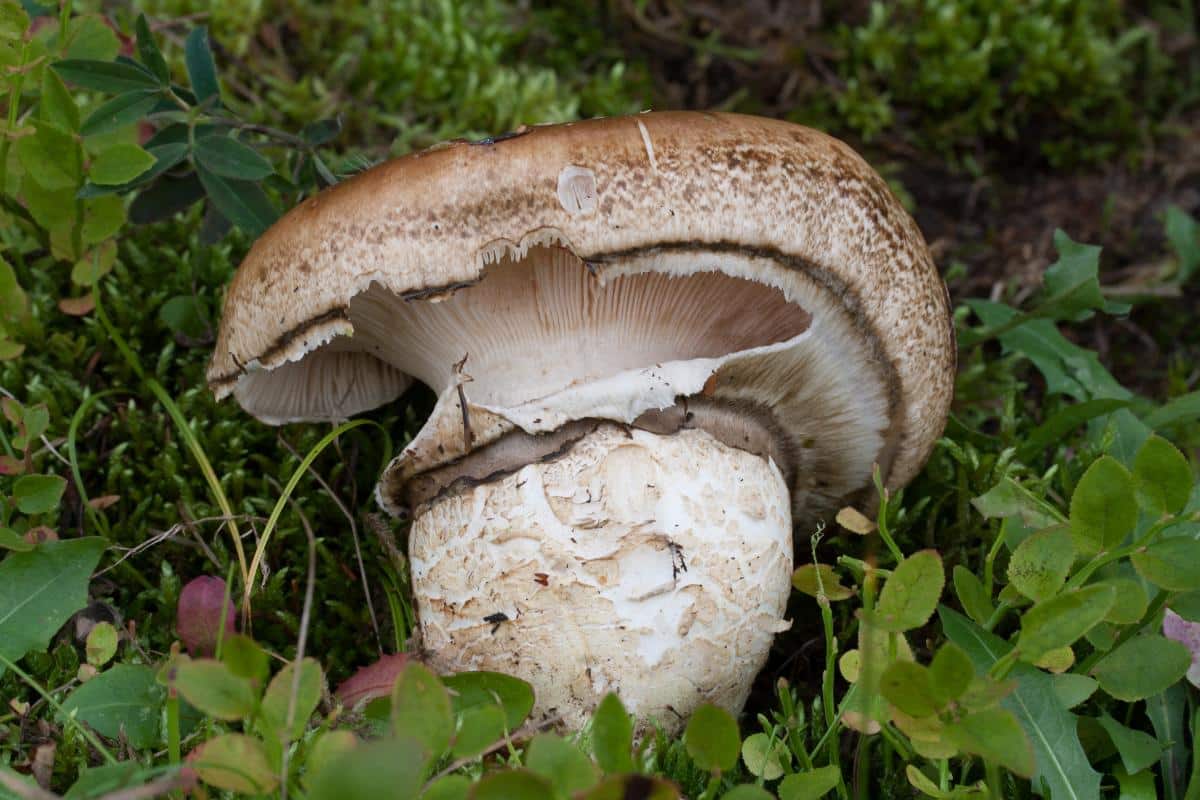
Catathelasma mushrooms are chunky and white, with gills that run down the stem (that’s called decurrent). They have a unique double veil, which leaves two rings around the stem. The stems get skinnier toward the base and often look like they’re partially buried in the ground. North America has about five species, but C. ventricosum and C. imperiale are the most common. The three other species of Catathelasma that appear in North America are extremely rare, some with only one or two recordings.
- Catathelasma ventricosum aka Catathelasma ventricosa (Cat Mushroom, Swollen-Stalked Cat Mushroom) – Grows under conifers, has a double ring around the stem, and a mild or slightly unpleasant smell and taste. Primarily in northeastern North America, but also reported from the west coast and the Rocky Mountains (possibly incorrectly).
- Catathelasma imperiale (Imperial Cat) – Grows under conifers, has a double ring around the stem, and a strongly mealy taste and smell. Grows on the West Coast and the Rocky Mountains. Not reported on the East Coast.
Key Identification Features of Mock Matsutake
This guide covers identification for Catathelasma ventricosum and Catathelasma imperiale.
Season
The primary season for these mushrooms is late summer through fall. Mock matsutake starts fruiting as summer temperatures cool down. The western North American season runs from September through January. October usually sees the most growth.
These mushrooms don’t need heavy rainfall to fruit and often pop up during dry spells when other mushrooms struggle. The season typically brings multiple flushes, and cold weather often triggers substantial fruiting.
Habitat
Mock matsutake form mycorrhizal relationships with conifer trees – this means they can only grow in areas where their preferred conifer species exist. They thrive in sandy, low-nutrient soils called spodosol or podzol (just like true Matsutake). These mushrooms are commonly found growing with lodgepole pine (Pinus contorta), Douglas fir (Pseudotsuga), hemlock (Tsuga), and true fir (Abies) species. Pure stands of these conifers, especially lodgepole pine, are the best places to look for these mushrooms.
These mushrooms grow on the ground, never from trees or wood. They may grow singly or in close groupings or scattered over an area.
Mock matsutake grows from Northern California through Oregon, Washington, and into British Columbia. They also fruit in the Rocky Mountain region, particularly in Colorado, at elevations between 9,000 and 11,000 feet. The eastern part of North America has these fungi, too, though not as abundantly. People have found populations in northeastern states like Vermont, New Hampshire, Massachusetts, Maine, and Connecticut.
Identification
Cap
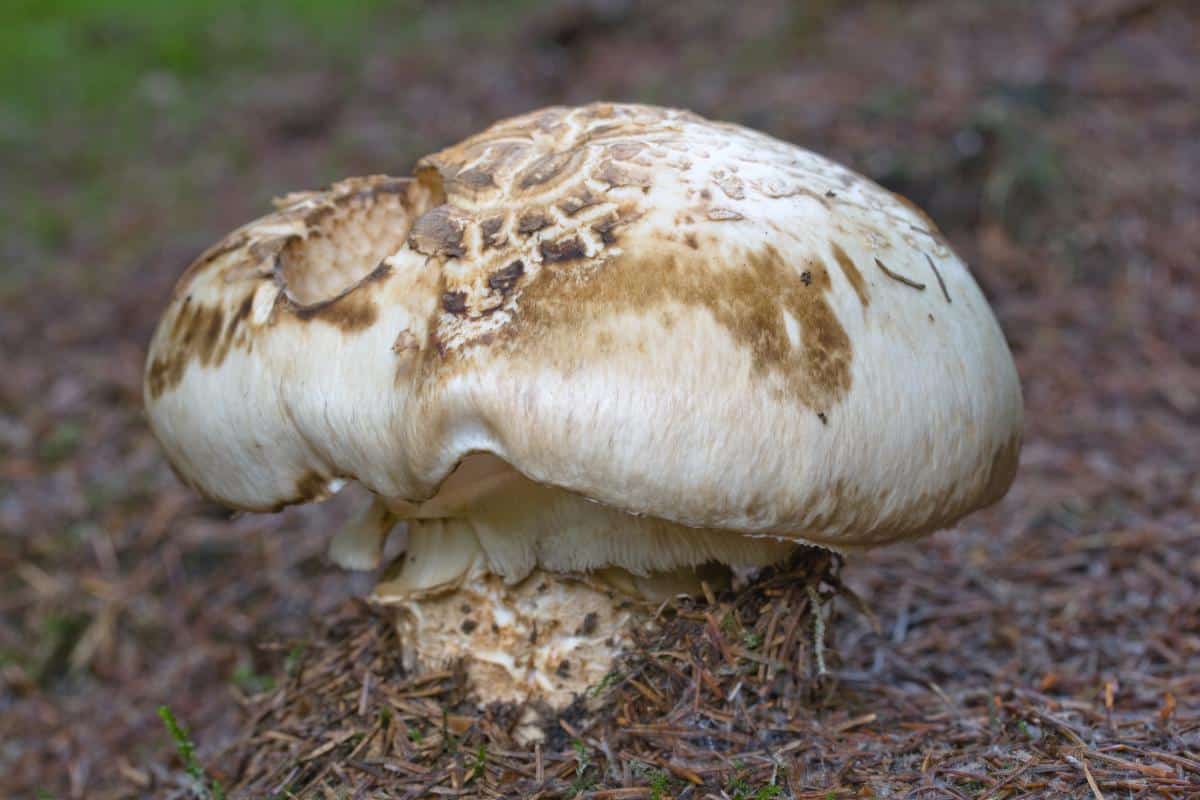
Mock matsutake caps average from 2 to 10 inches in diameter. The cap starts out rounded, like a button mushrom and the edges of the cap are rolled under. With age, the cap opens up more and flattens out. They start out white but develop yellowish to orange-brown stains with maturity. The cap texture is dry and smoother compared to the true matsutake’s scaly surface.
Gills
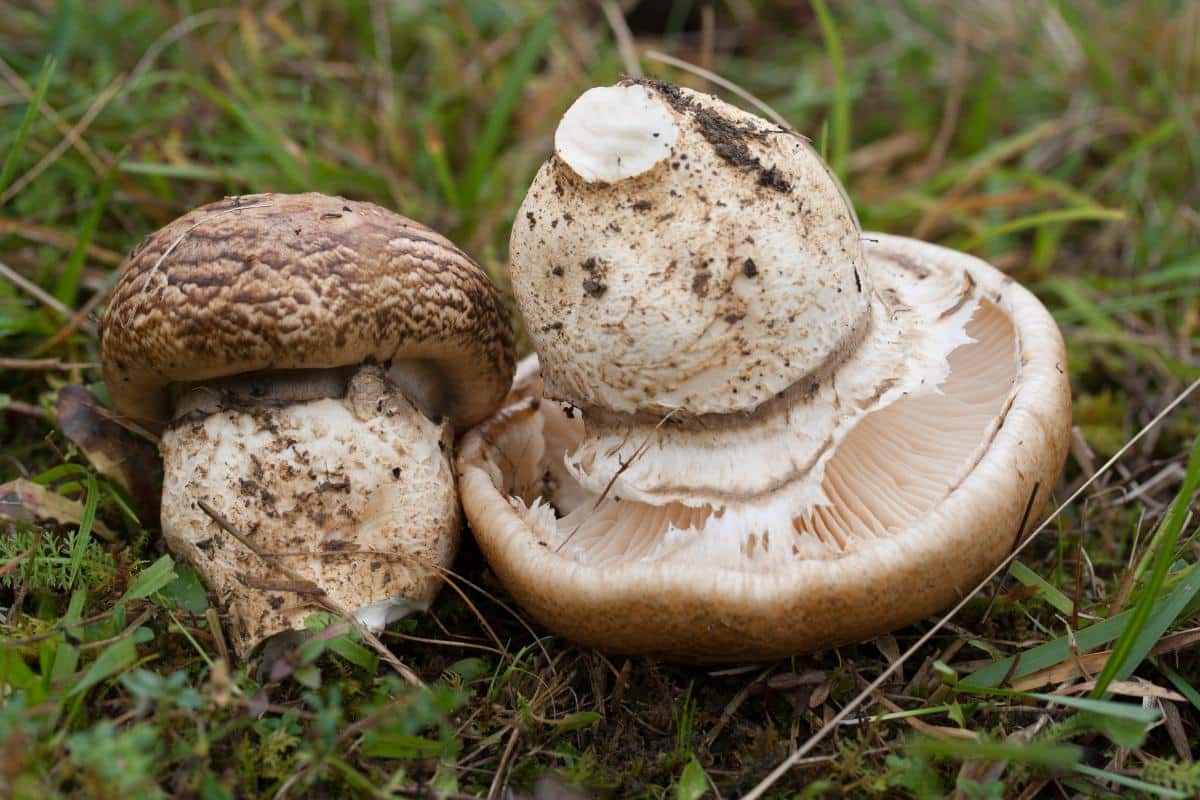
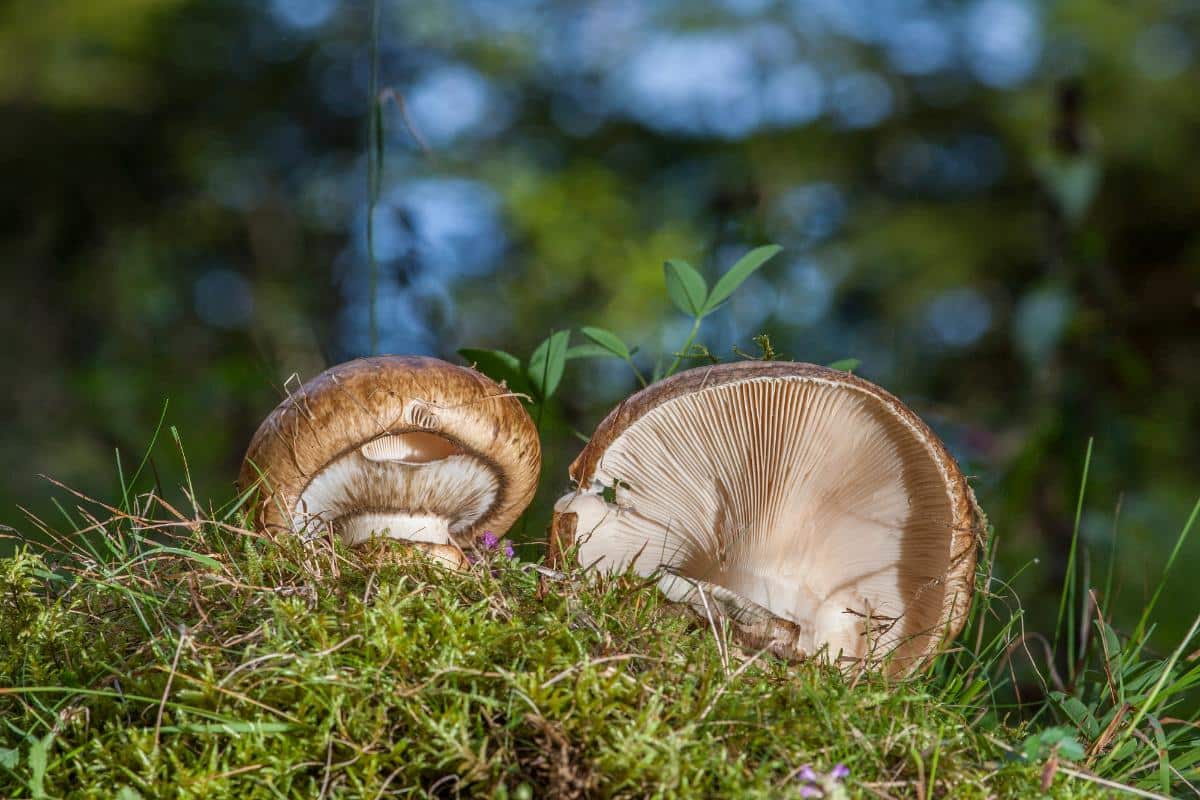
The gills of mock matsutake are white, crowded, and thick. The gills run down the stem (decurrent). The gills can develop orange-brown stains as they age.
When the mushroom is just emerging, the gills are covered by a partial veil. This veil is cottony and easily pushed aside to see the gills. With age, as the mock matsutake grows, the cap stretches to naturally break the partial veil.
Stem
The stem is thick and sturdy and averages 1.5 to 6.5 inches long and .75-2.5 inches wide. The stem gets narrower at the base, giving it a peg or tent stake-like appearance. The stem also has a distinctive double ring around the upper portion. This is a remnant of where the partial veil broke, leaving behind fibers around the stem. This double ring (annulus) makes it easy to separate from true matsutake, which has just one ring around the upper stem.
Odor and Taste
The mushrooms smell mealy or floury. Its taste is mild and also mealy or mild.
Flesh and Staining
Mock matsutake’s flesh is white and does not change color when cut.
Spore Print
The spore print is white.
The Two Primary Catathelasma Species
Swollen-Stalked Cat (Catathelasma ventricosum)
This mock matsutake species has a whitish to pale gray cap that measures 3-12 inches across. Its stem grows up to 6 inches long and 2 inches wide, with a noticeable bulge in the middle. The gills run down the stem (decurrent), and there is a double ring around the upper stem.
Imperial Cat (Catathelasma imperiale)
The imperial mushroom has s a brownish cap that grows 3-15.7 inches across. The stem narrows toward its base and is often buried deep into the soil. This mushroom has a mealy or cucumber-like smell and gills that run down the stem andsometimes fork.
How to Tell Mock Matsutake Apart from True Matsutake
These mushrooms look very much alike from an initial investigation. You really have to pay attention to the details to tell them apart. Both true matsutake and mock matsutake are large white dense mushrooms with white gills, a whitish tapering stem with a ring, that grow in association with conifer trees. They also both have thick, dense, white flesh that does not stain.
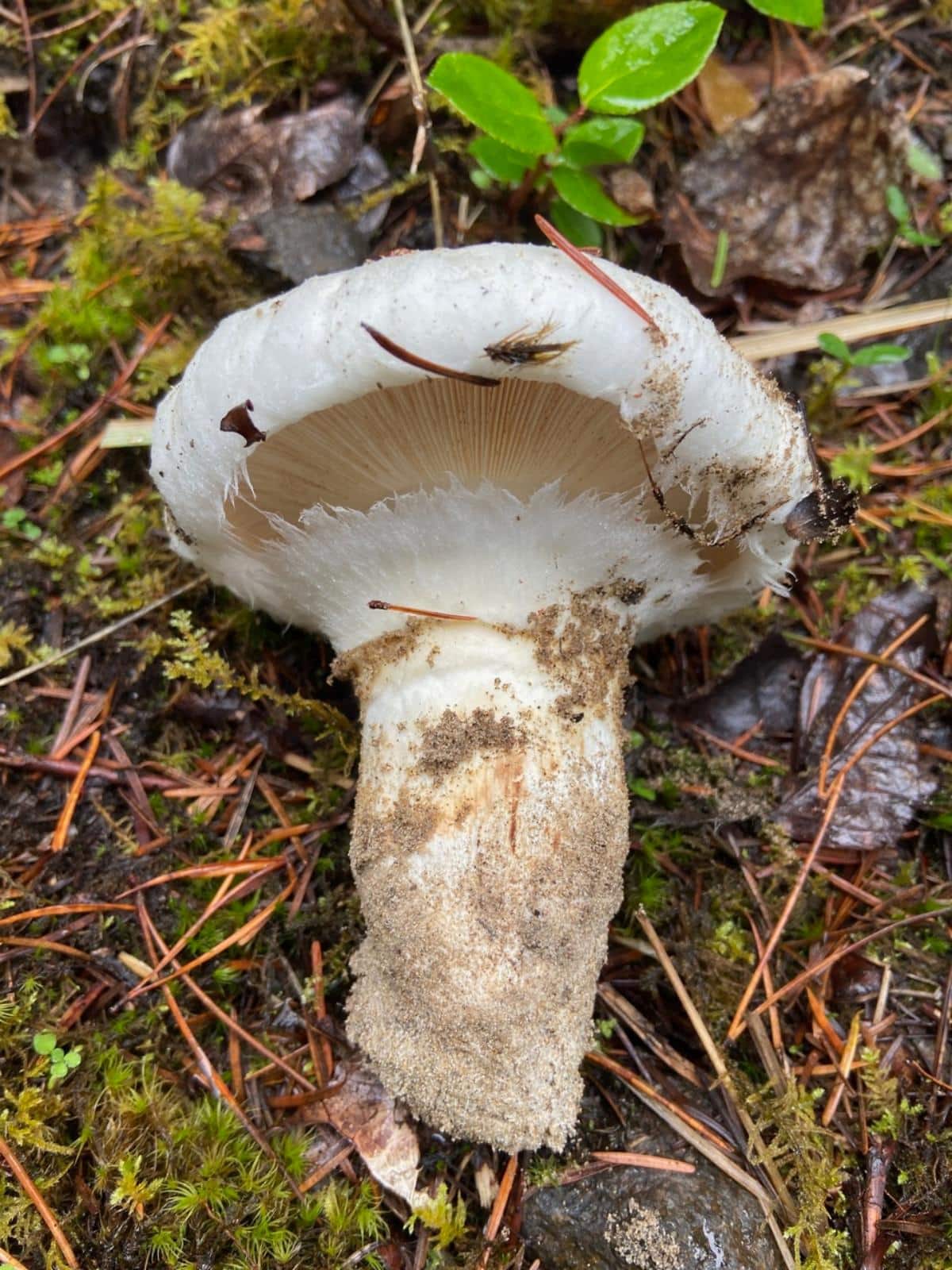
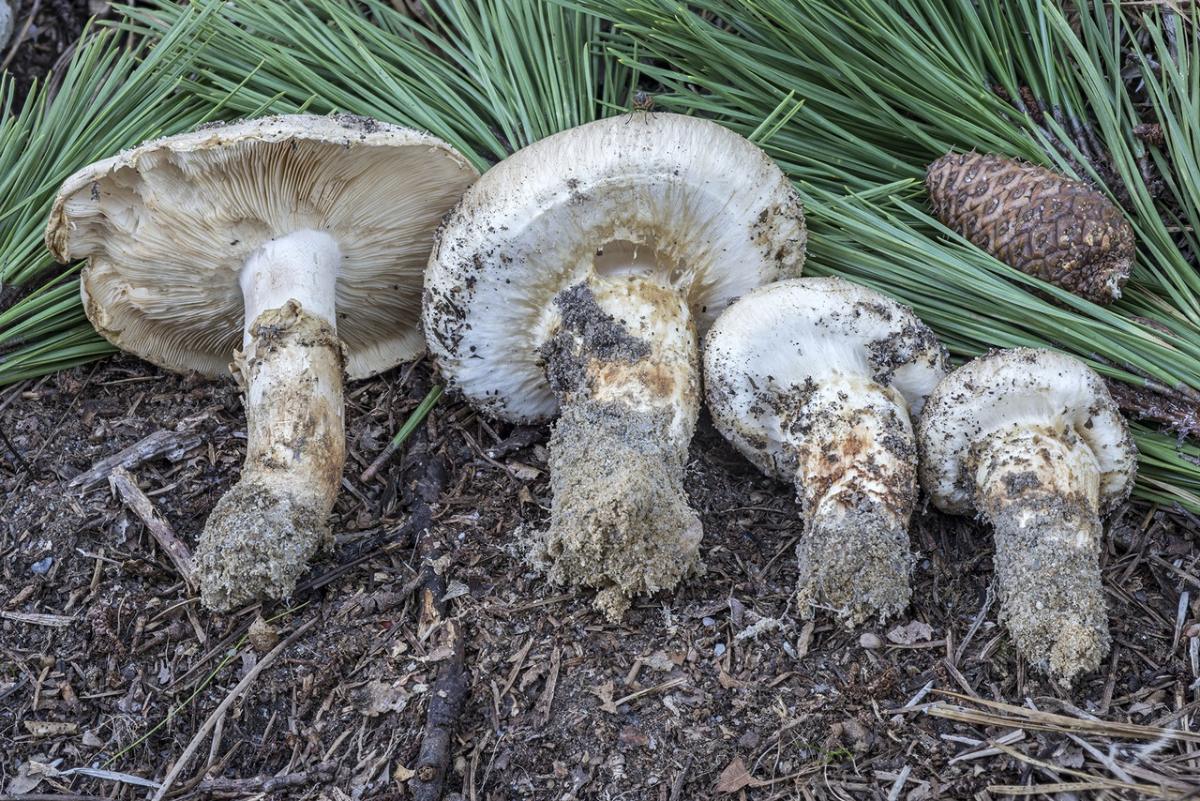
True and mock matsutake (Catathelasma) have five distinct differences:
- Smell test.: True matsutake has an often very strong to overpowering spicy-sweet pungent cinnamon aroma that’s unmistakable. David Arora describes it as a cross between cinnamon hot candies and old gym socks (that’s quite a smell!). Mock matsutake has a mealy or cucumberish smell without any spicy notes. Some people’s noses don’t work all that well, though, and they can’t smell the spicy gym socks odor. It’s also possible that the true matsutake isn’t a particularly stinky one — smell can vary in strength.
- Stem rings: True matsutake have a single, tough cottony ring around the upper stem, while mock matsutake has a distinctive double ring structure. This is generally very reliable, but it is possible for stse rings to degrade and fall off over time, so it can’t be used as the sole determining factor.
- Gill attachment: The mock matsutake’s gills run down the stem, while the true matsutake’s gills connect at right angles or with a small notch at the top of the stem. They do not run down the stem atall.
- Stem taper: Mock matsutake stems narrow sharply toward their base, like a sharp tent stake. True matsutake stems also taper towards the base, but it is a gentle taper. This structural difference makes mock matsutake appear more deeply rooted in the ground (again, like a tent stake).
- Size: Mock matsutake is usually larger than its counterpart and has a deeper brown color on its surface. This can vary, though, of course, with age and environment.
Mock Matsutake Edibility
Mock matsutake is edible and has a dense texture and mild, indistinct flavor. Some specimens can taste bitter, so be sure to do a taste test first before cooking them up. It is also pretty tough and needs to be cooked very well. These mushrooms don’t have the spicy-aromatic qualities that make true matsutake a worldwide delicacy.
The best way to cook these is to keep it simple and not expect too much flavor. They work well in soups, stews, or a quick sauté. Their firm texture actually makes them pretty good for grilling or roasting, too. Just don’t drown them in heavy ingredients like butter or cream, or you’ll lose what little flavor they have.
Many people report mock matsutake being too tough to eat, even after cooking for extended periods. And, even after boiling for a time first, before sauteeing. This, sadly, is often the case when the mushroom is quite old or past prime, or just feeling tough. In this case, they’re best dehydrated and powdered.
If you’ve had a bad experience, look for a younger specimen that should be more tender. Many, many mushrooms turn quite tough with age, including many highly prized edible species like chicken of the woods, so it’s to be expected.
Safety is a vital concern with these mushrooms. Mock matsutake also looks similar to some poisonous species, including deadly Amanita mushrooms. The lethal Amanita smithiana shares some physical features but lacks the mock matsutake’s distinctive double ring and mealy odor (see lookalikes for more information on this one).
Mock matsutake will keep in a paper bag in the fridge for about a week. For long-term storage, your best bet is to slice them into quarter-inch pieces and dry them in a food dehydrator at 115°F. If you want to freeze them, it’s better to sauté them first—freezing them raw makes the texture weird.
Mock Matsutake Medicinal Uses
Research has not yet explored Catathelasma’s medicinal potential extensively. However, Catathelasma ventricosum is used in traditional Chinese herbal medicine for combatting cancer.
Mock Matsutake Other Lookalikes
Tricholoma Species
Other Tricholoma species (beyond the true matsutake) also resemble the mock matsutake. The key difference is the stem rings – Tricholoma species will only have a single ring (or none).
Peppery Milkcap (Lactifluus piperatus) and other white milkcap species
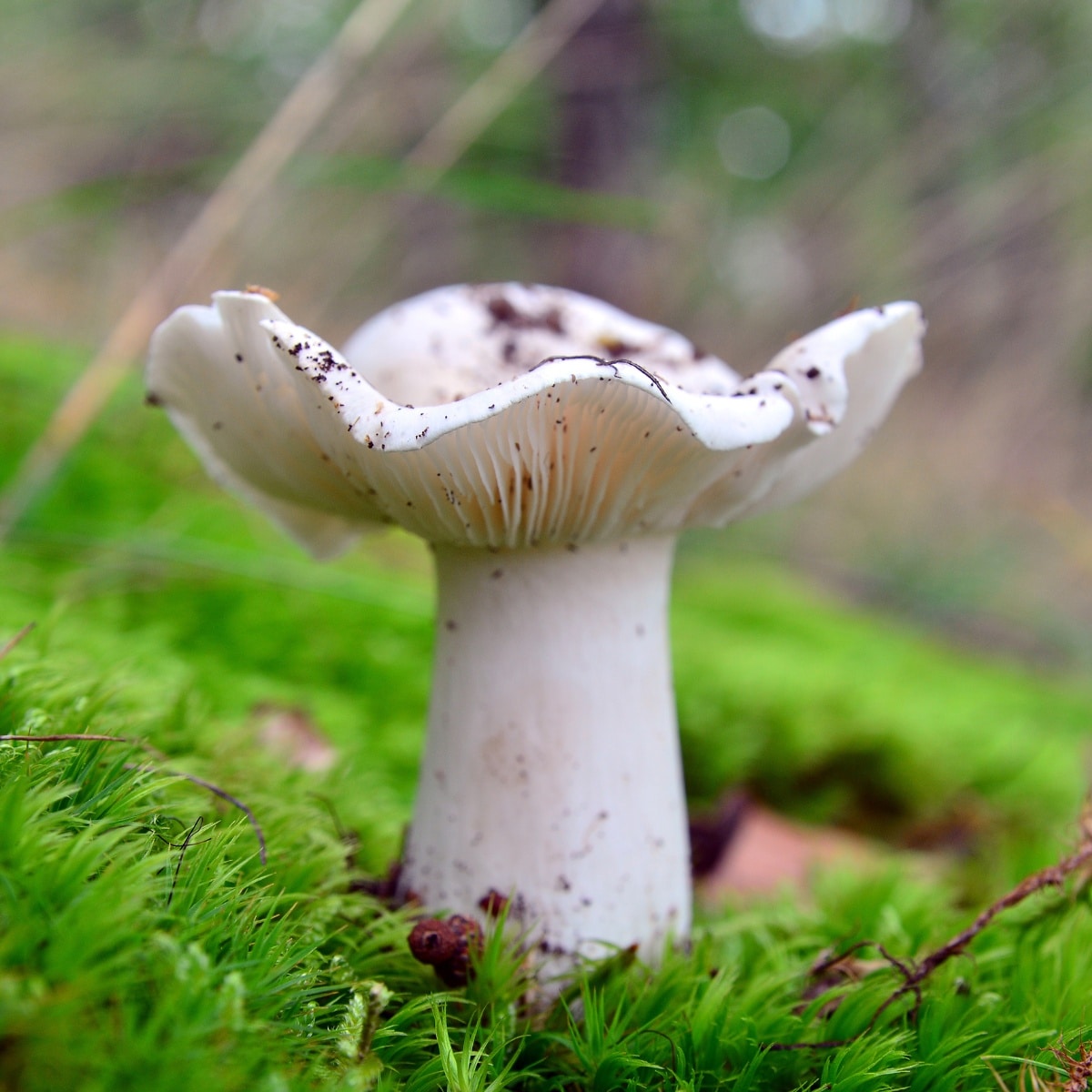
The peppery milkcap is also a large mushroom with a white cap and white gills that grows in mixed forests. It can be easily mistaken for mock matsutake until you look closely. When you cut the milkcap’s gills, they release a white (spicy!) liquid. If you cut the gills, you can tell if you have a false matsutake or a milkcap. There are other large white milkcaps that also look like mock matsutake, so always be sure to check the gills. Milkcap gills will release liquid when cut.
Milkcaps also won’t have the double ring around the upper part of the stem like the mock matsutake. Or, the veil covering the gills when young.
Short-Stemmed Russula/Stubby Brittlegill (Russula brevipes) and other Russula species
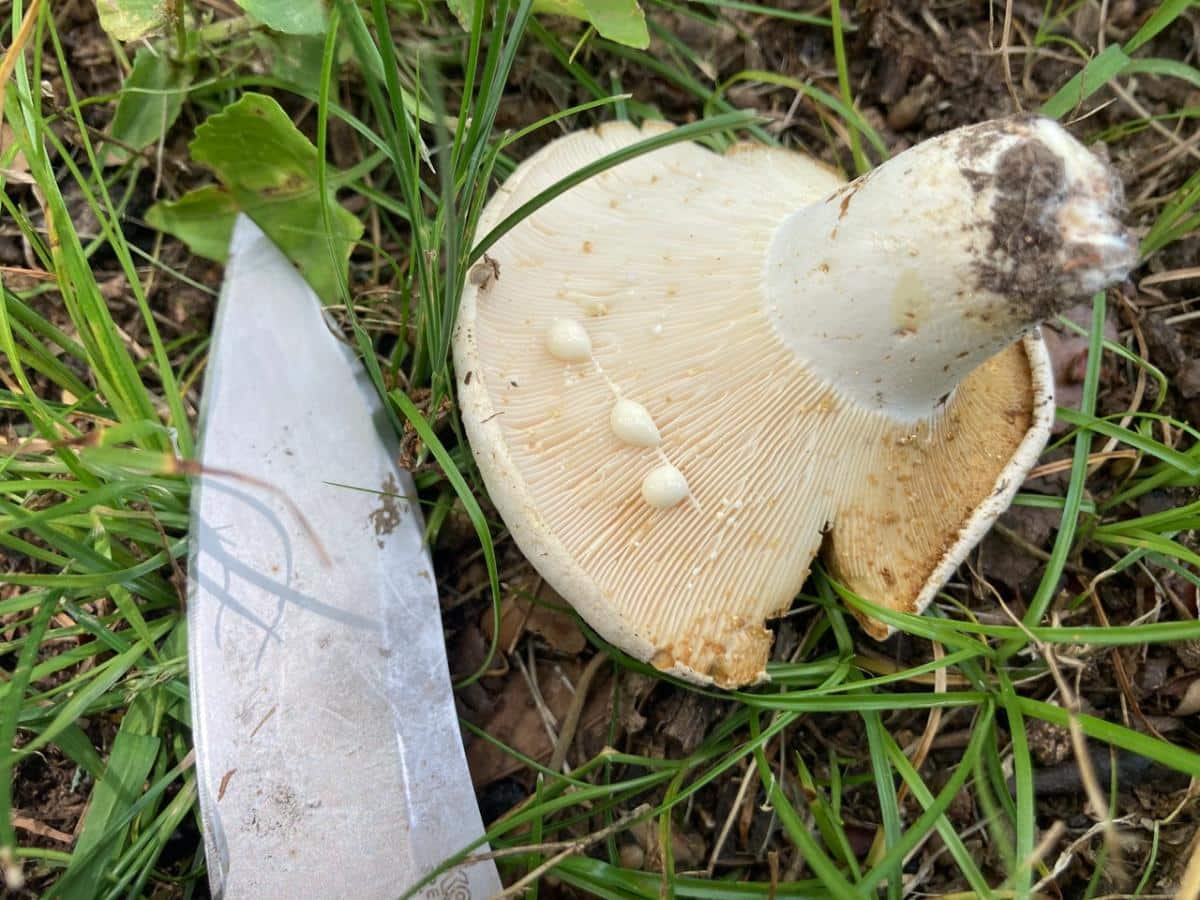
This large white mushroom looks a lot like mock matsutake, but there are some clear signs that it isn’t. The features that are the same are that it grows under conifer trees, has a white cap and gills, and is often partly buried in the needle layer. The main differences are the absence of a veil or rings around the stem, and that it is very fragile.
The cap and stem of the Russula species break apart very easily (which is why it’s called brittlegill). This is the opposite of mock matsutake, which is very solid and doesn’t crumble easily. There are also other big, white Russula mushrooms that can be confused with false matsutake mushrooms. The easy test is to bend the stem – if it breaks, it is not matsutake. And, check for the rings around the upper stem.
Smith’s Amanita (Amanita smithiana)
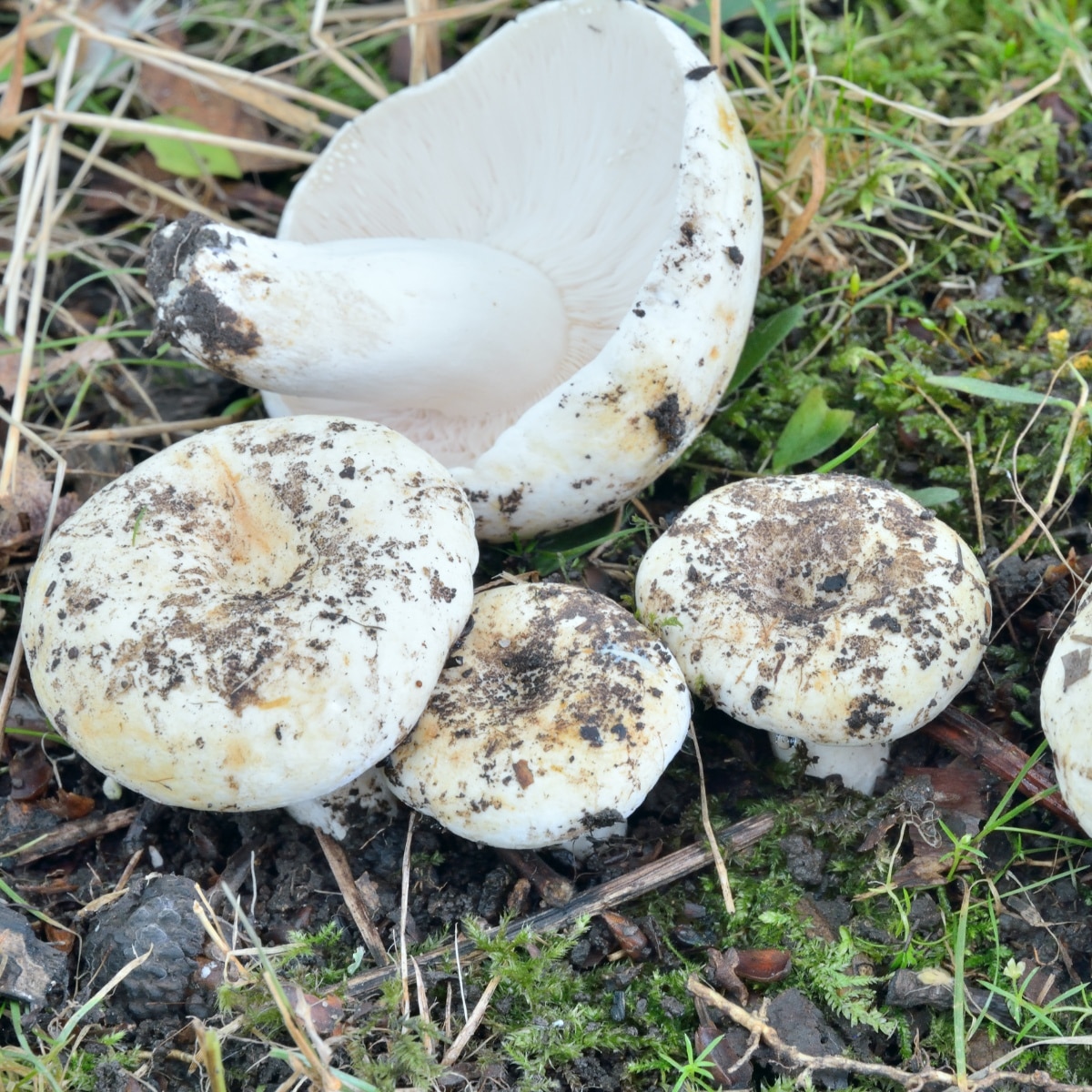
Be very wary of this lookalike. Smith’s Amanita grows in the Pacific Northwest and often causes poisonings for those looking for the true matsutake and mock matsutake. At first glance, it looks very much like mock and true matsutake, and it may seem even more similar to someone who has been searching the woods without success for weeks. Hope can sometimes lead us to make risky mistakes. But with a little knowledge, you can easily tell them apart.
Smith’s amanita has a white cap, white gills, and a white universal veil that leaves a white skirt around the top of the stem. It also grows deeply rooted in forest floors with conifer trees. All of these features are similar to mock matsutake. And, to make it even more confusing, this amanita can grow right next to false and true matsutake. So, even experienced gatherers might confuse it while picking from a large matsutake patch and not see the amanita nearby.
Smith’s amanita will make you very sick, but it is not usually deadly. The poisoning is strong, causing bad vomiting, diarrhea, stomach pain, and tiredness that lasts for 4-7 days. If not treated, it can cause kidney failure.
These are the key differences:
- The stem of the amanita is fragile – if you squeeze it, it will break or crush. You can’t do this with the strong, thick stem of the mock matsutake. Always check the stem by breaking it.
- Because the amanita stem is fragile, it is hard, if not impossible, to dig up Smith’s amanita without breaking the bottom part. Mock matsutake stems can handle a lot of digging and won’t break.
- The amanita stem is usually longer than the cap is wide. Mock matsutake stems and caps are about the same length.
- The surface of the amanita cap has white, cottony bits left from a veil. These bits often hang down from the edge of the cap.
- The smell of this amanita is awful. It smells like rotting meat, not floury or mealy like false matsutake.
- The stem, like the cap, has white cottony bits left from a veil.
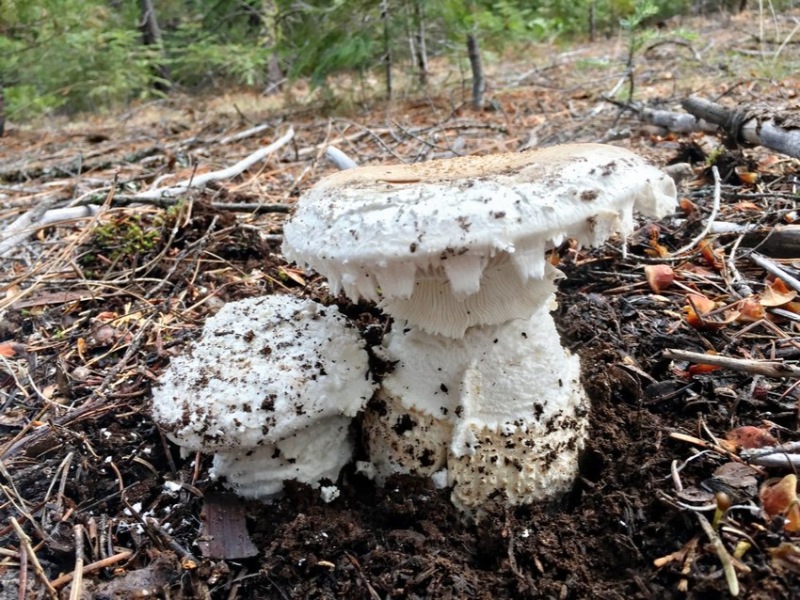
Giant Sawgill and Trainwrecker (Neolentinus ponderosus & Neolentinus lepideus)
The Train Wrecker and Giant Sawgill mushrooms are both large whiteish mushrooms with white gills and white stems, and are easily confused with mock matsutake. The Neolentinus species, though, have brown scales on their caps and sometimes on their stems too.
Scaly sawgill and trainwrecker mushrooms also grow on wood; they do not grow from the ground like mock mastsutake. Another key difference is their gills. The Neolentinus species have serrated gills, like a bread knife. Mock matsutake mushrooms’ gill edges are always smooth.
Common Questions About Mock Matsutake
Are mock matsutake mushrooms edible?
Yes, mock matsutake mushrooms are edible. However, they lack the prized spicy-aromatic quality of true matsutake. Some people report bitter specimens and others say they are really tough, but this depends a lot on the age and quality of the mushroom.
Where can I find mock matsutake mushrooms?
Mock matsutake grows in conifer forests throughout the Pacific Northwest, from Northern California to British Columbia. They also occur in the Rocky Mountain region and some northeastern states. They typically grow in association with lodgepole pine, Douglas fir, hemlock, and true fir species.
When is the best time to forage for mock matsutake?
The fruiting season for mock matsutake typically begins as summer temperatures start cooling. In western North America, you can find them from September through January, with peak fruiting usually occurring in October. They often appear during relatively dry periods when other mushrooms aren’t thriving.

Leave a Reply