
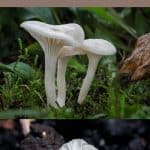
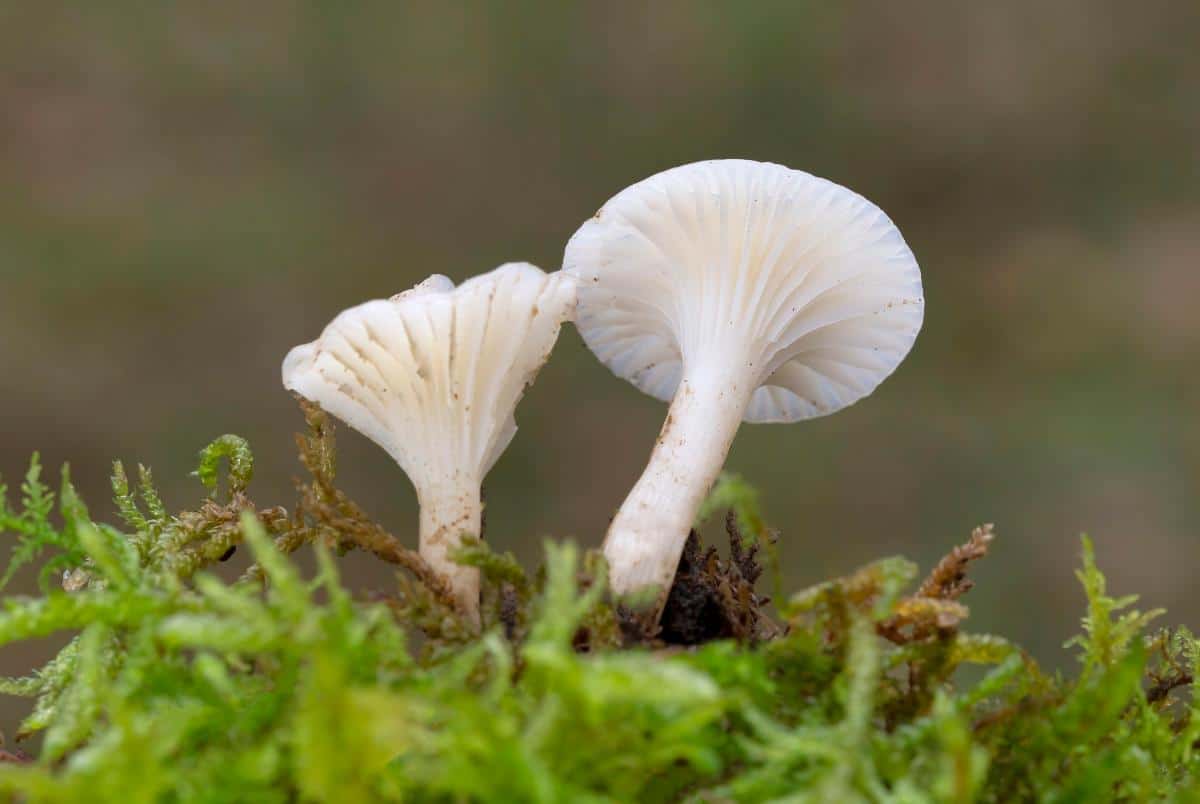
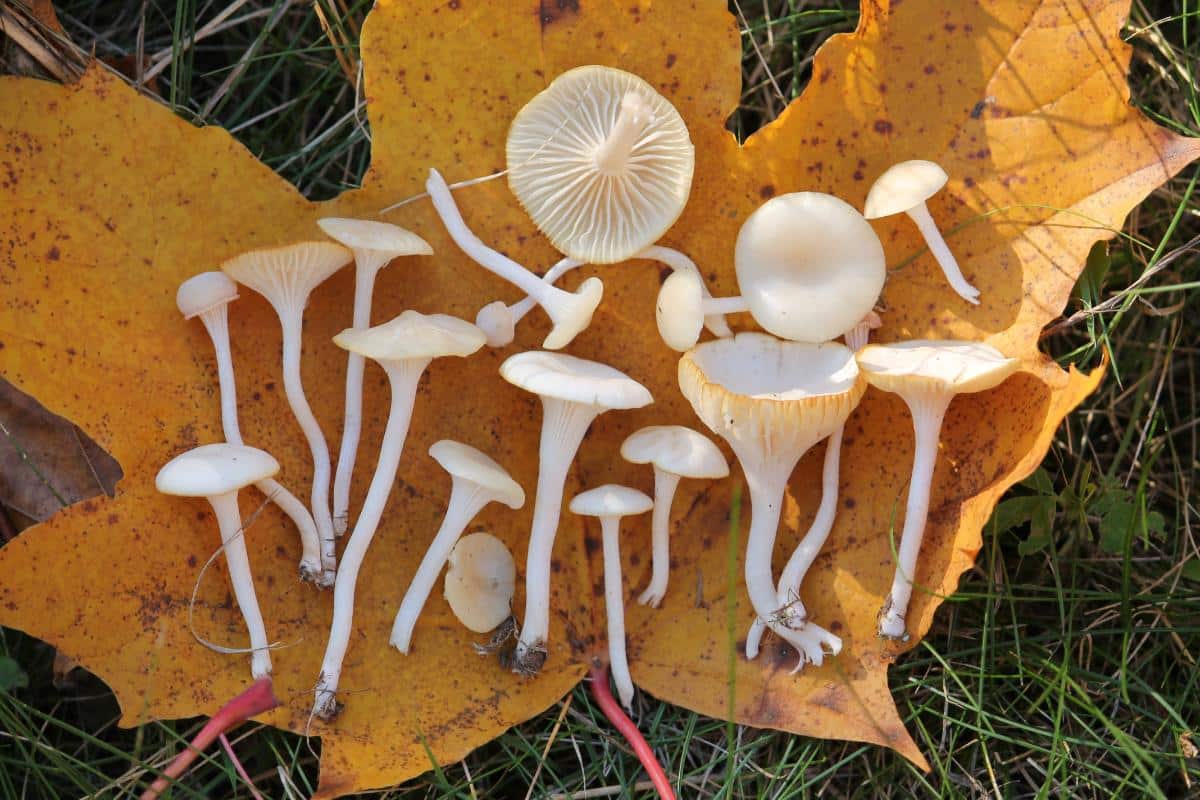
The all-white, aptly named, snowy waxcap mushroom (Cuphophyllus virgineus) grows across North America in fields, lawns, and wooded areas. It is a pretty adaptable species with a very distinct look. Snowy waxcaps are edible and have a slightly nutty flavor when cooked. These mushrooms do have some tricky lookalikes, so be very diligent in your identification if you choose to eat these.
- Scientific Name: Cuphophyllus virgineus
- Common Names: Snowy Waxcap
- Habitat: On the ground in wooded areas, lawns, and fields
- Edibility: Edible
Jump to:
All About The Snowy Waxcap Mushroom
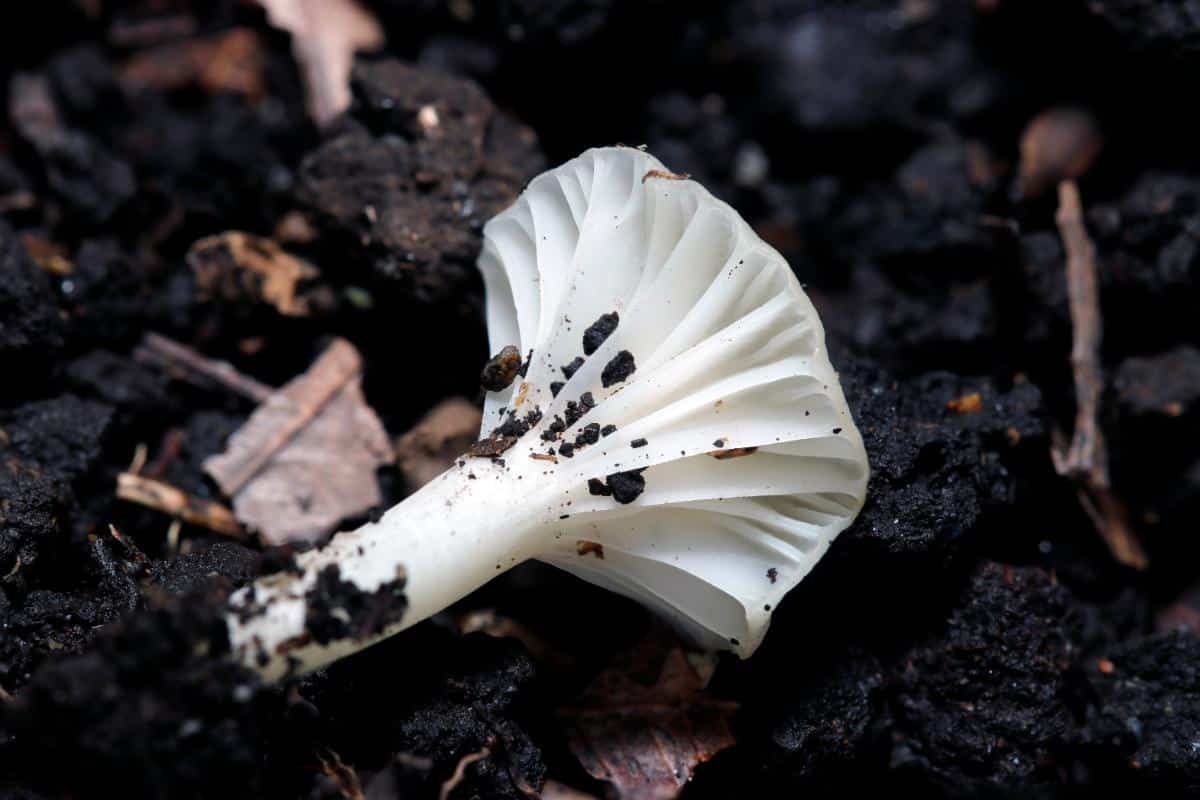
Cuphophyllus virgineus belongs to the Hygrophoraceae family, which is a group of waxcap mushrooms. Waxcaps are known for their waxy-looking, often brightly colored caps. Cuphophyllus mushrooms differ from most other waxcaps because they have fruit bodies that are not sticky and are usually white, grey, or brown. They also have gills that often run down the stem—a trait called decurrent gills.
The snowy waxcap easily earns its common name — it’s pure white, and its flesh has a waxy feeling. The scientific name is also pretty spot on – Cuphophyllus comes from Greek words “Kyphos” meaning curved and “Phyllon” meaning leaves. This is a reference to the mushroom’s curved gills. The Latin word “virgineus” means pure white. So, Cuphophyllus virgineus is the pure white mushroom with curved gills.
This mushroom has had several scientific names before being placed in the genus Cuphophyllus in 2011. It was first described to science as Agaricus virgineus by Austrian naturalist Franz Xaver von Wulfen in 1781. Later, it was moved to the genus Hygrocybe in 1969, which is the group where most other waxcap species are classified. In 1989, Russian mycologist Alexander Kovalenko gave it its current name, Cuphophyllus virgineus. A DNA analysis in 2011 confirmed that the species belonged in the genus Cuphophyllus rather than Hygrocybe sensu stricto (meaning in the strict or narrow sense as defined by experts).
Hygrocybe virginea, Camarophyllus virgineus, Hygrophorus virgineus, and Hygrocybe nivea are synonyms.
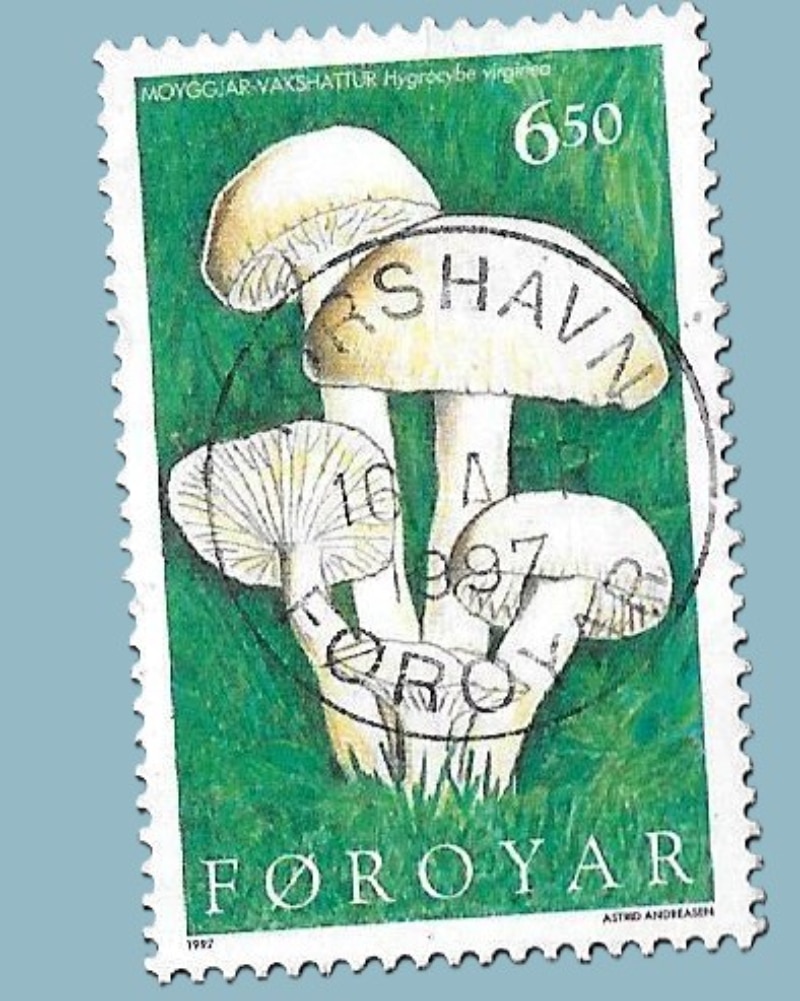
The snowy waxcap mushroom was featured on a postage stamp in the Faeroe Islands in 1997.
Recent studies suggest that waxcaps may form relationships with mosses rather than with trees or break down organic matter, as many other mushrooms do.
These fungi are also endophytic – they live inside plants. Recent studies show that the snowy waxcap lives within ribwort plantain (Plantago lanceolata) plants, and is transmitted through seeds. Interestingly, they get nitrogen from outside sources, just like mycorrhizal fungi do, and the extensive root system of the ribwort plantain helps them access nitrogen-rich sources.
The presence of these mushrooms could also tell us about environmental health by showing how healthy the soil is. The use of chemicals, air pollution, and ecological changes like increased tall plant growth or too many trees can drive them away. Some research shows they take about 50 years to return to areas that used chemical farming.
Snowy Waxcap Identification Guide
Season
Snowy waxcaps show up from late summer through early winter, with autumn being their prime month.
They often show up after it rains and when the soil feels damp but not soaked. They like it cool, usually appearing when temperatures are around 50-60°F.
Habitat
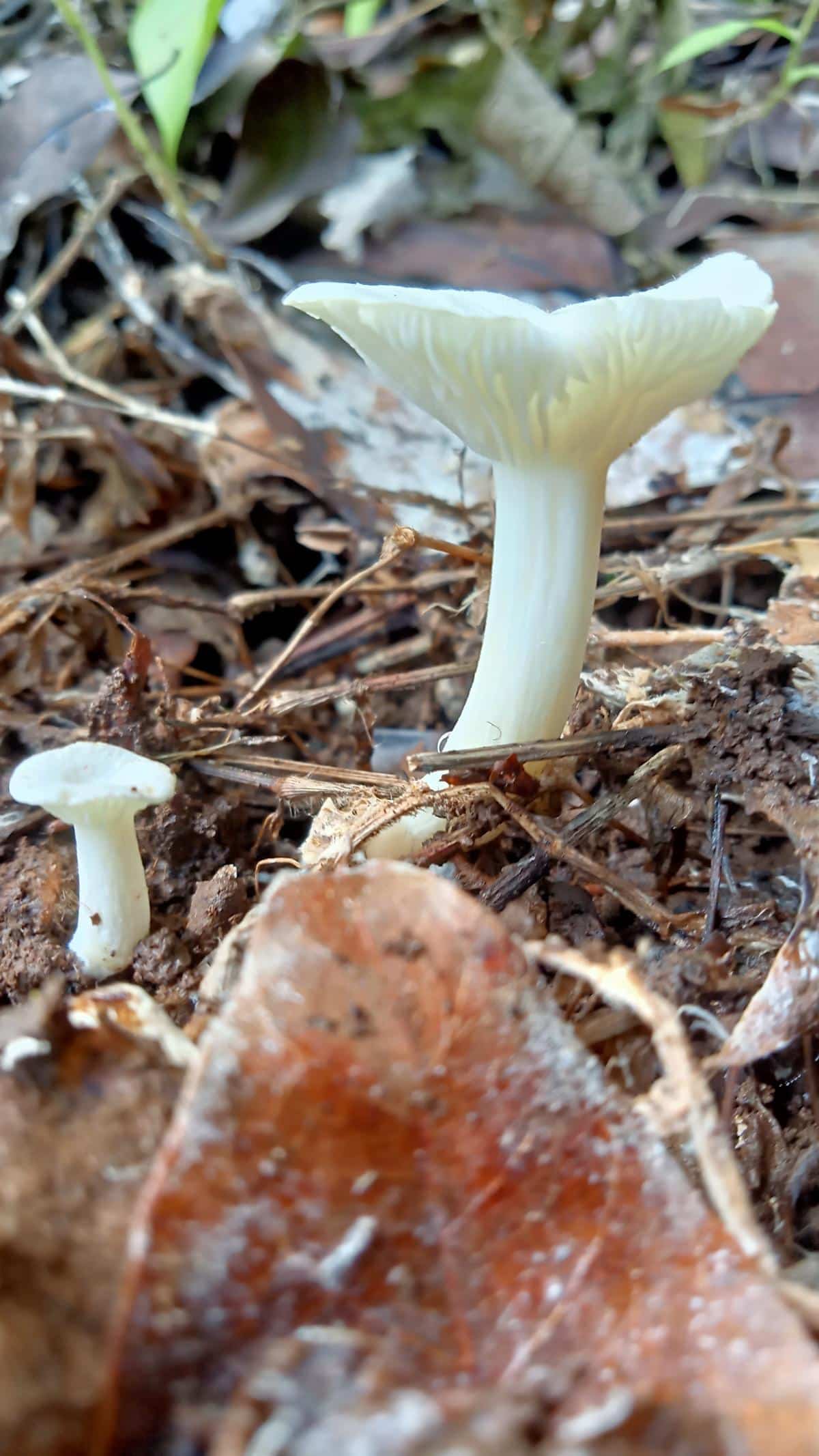
North American snowy waxcap mushrooms grow in woodlands and grasslands. They fruit alone or in loose groups on the ground under hardwood and pine trees. They never grow on trees or wood.
In Europe, the snowy waxcap mushroom prefers grasslands poor in nutrients. They are most common in meadows, pastures, and lawns that haven’t been treated with fertilizers or pesticides. They also love well-drained soil where animals graze, or people mow regularly.
These mushrooms are quite adaptable; they are suited to different environments. They’ve been found in churchyards and old lawns, spots that often remain unchanged from the time before intensive farming. The regular mowing and clearing of grass clippings creates just the right low-nutrient environment for these mushrooms.
They prefer acidic ground, meaning soil with a low pH, and do best where nutrients are scarce. Unlike other fungi that form mutualistic partnerships with tree roots, Cuphophyllus virgineus is believed to form associations with mosses and tiny soil organisms instead.
Identification
You can easily identify a snowy waxcap by learning its unique features. This beautiful mushroom has several reliable traits that set it apart from similar-looking ones you might find outdoors.
Cap
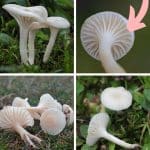
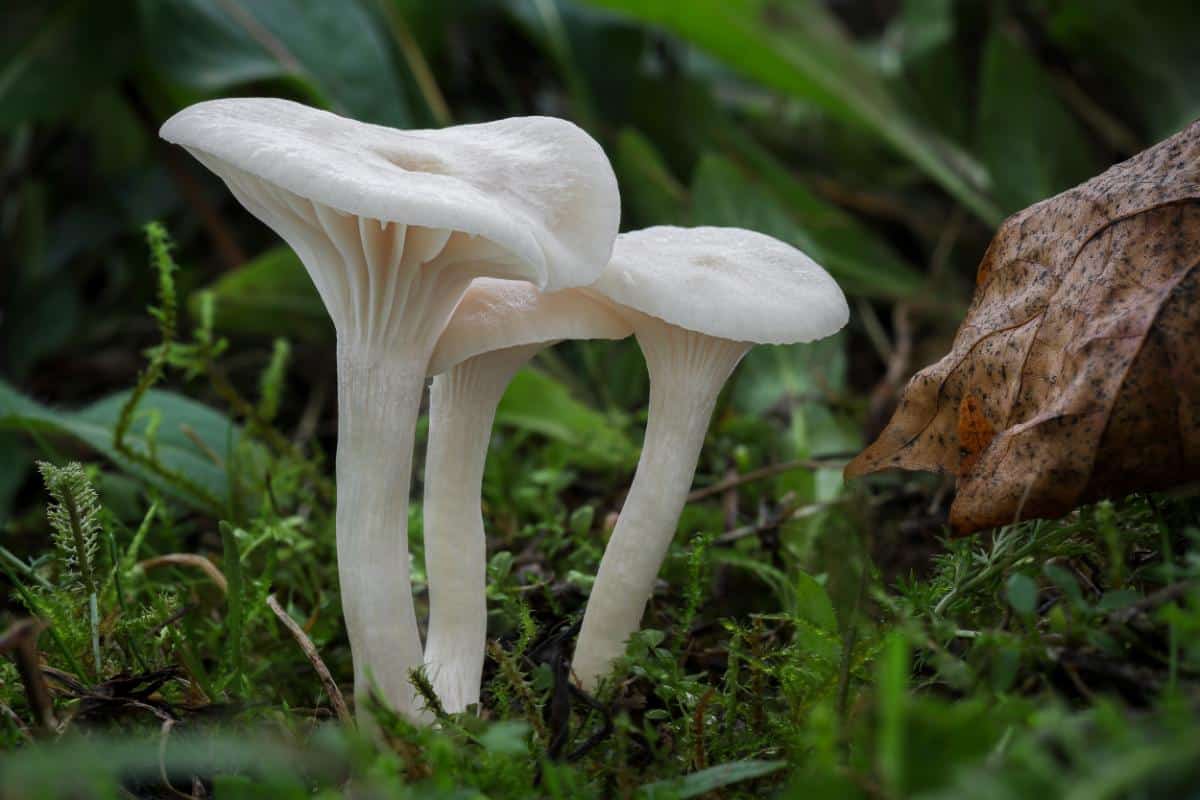
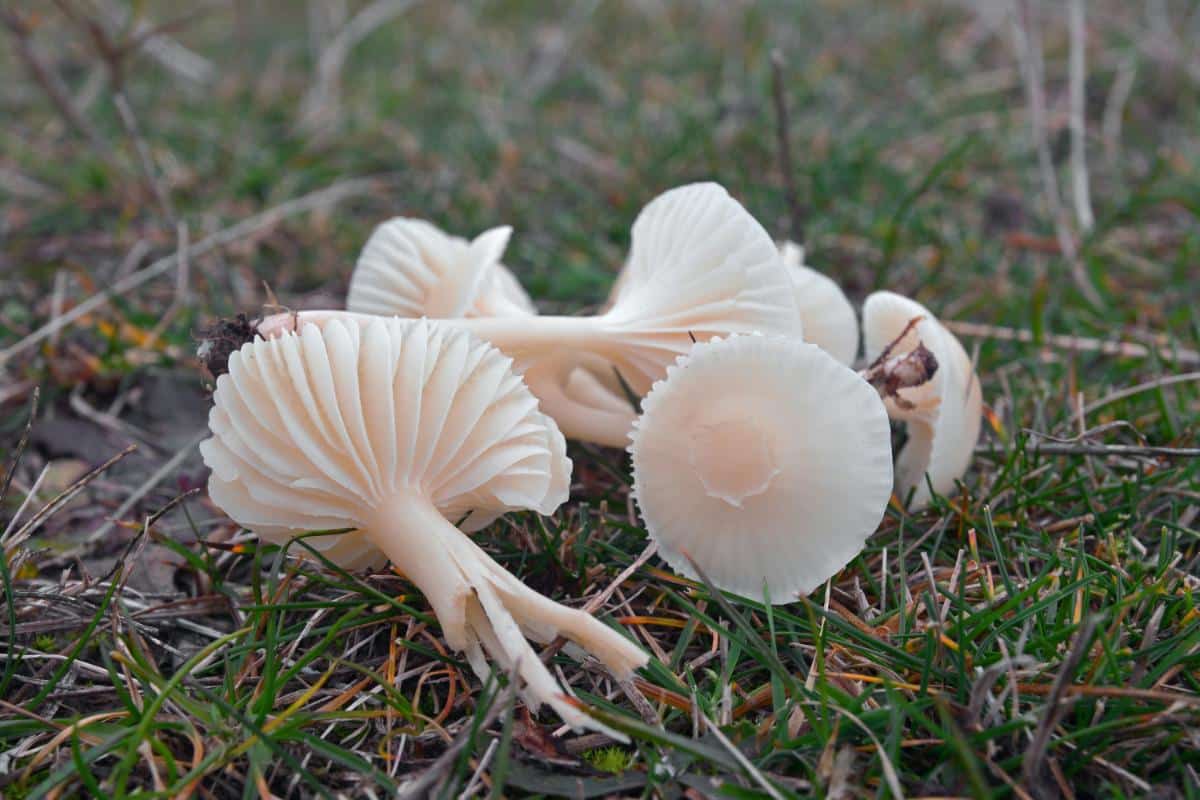
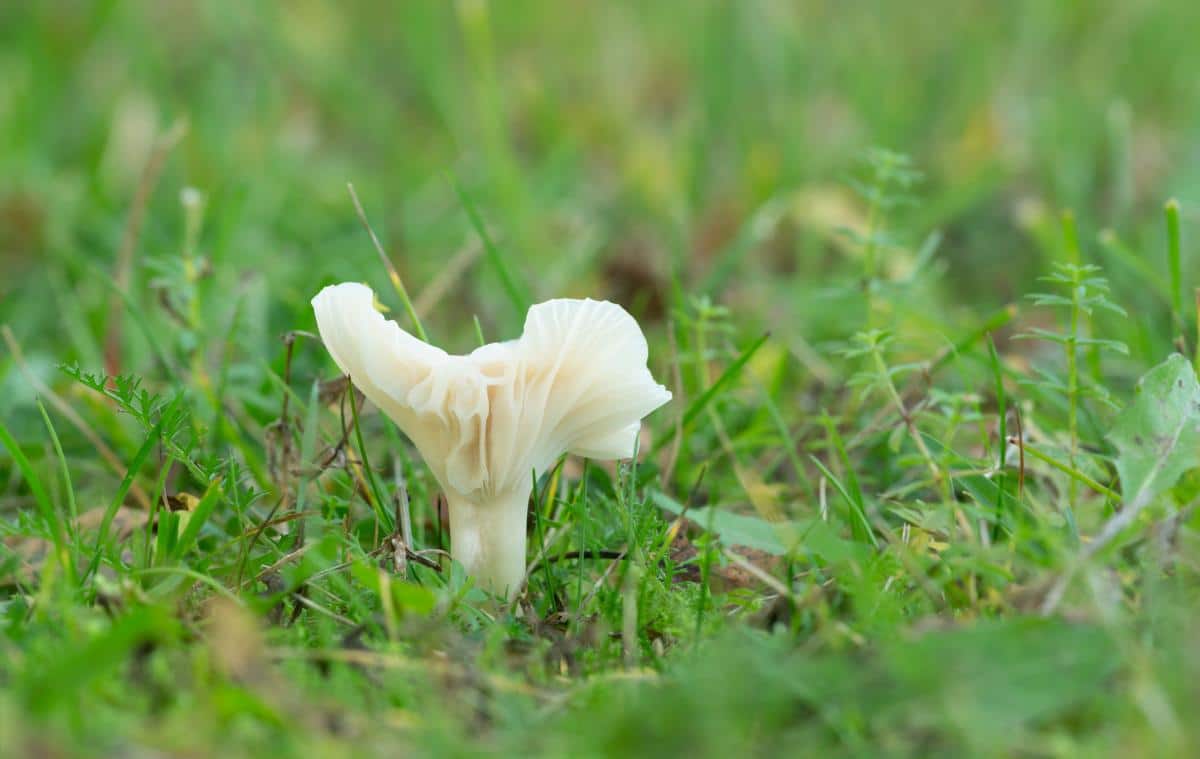
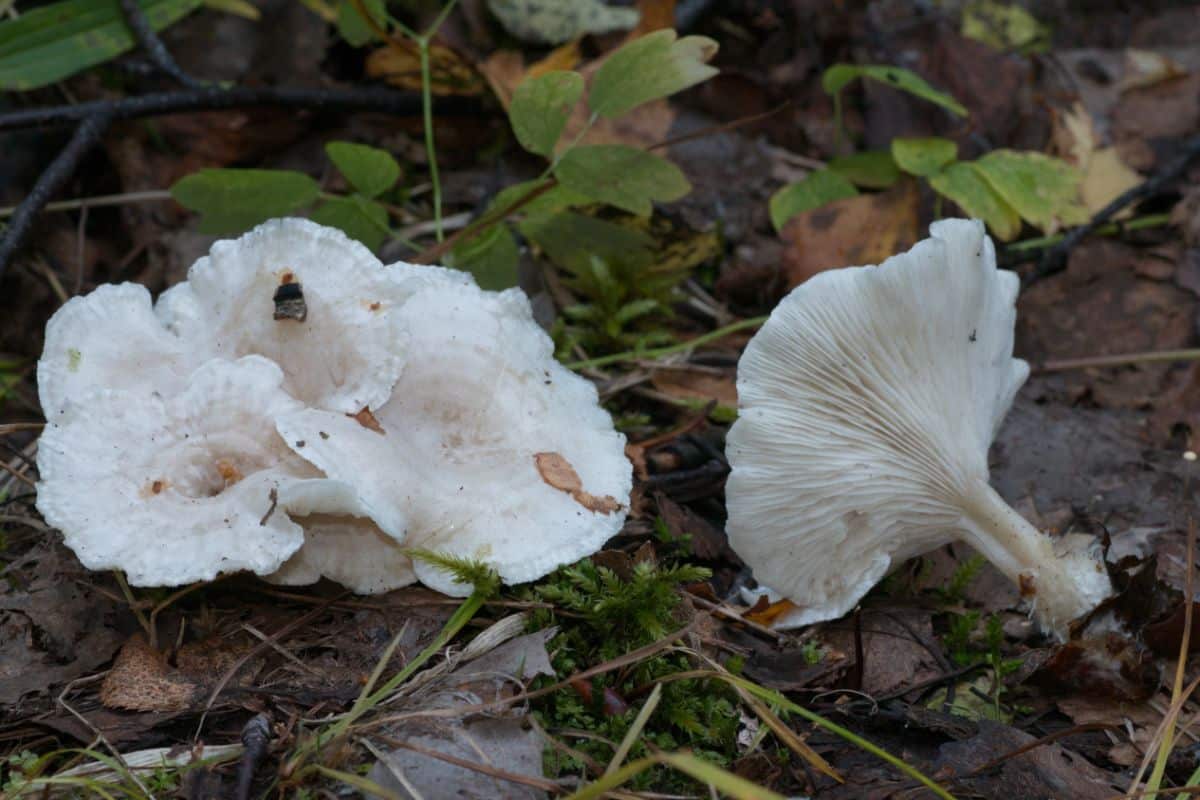
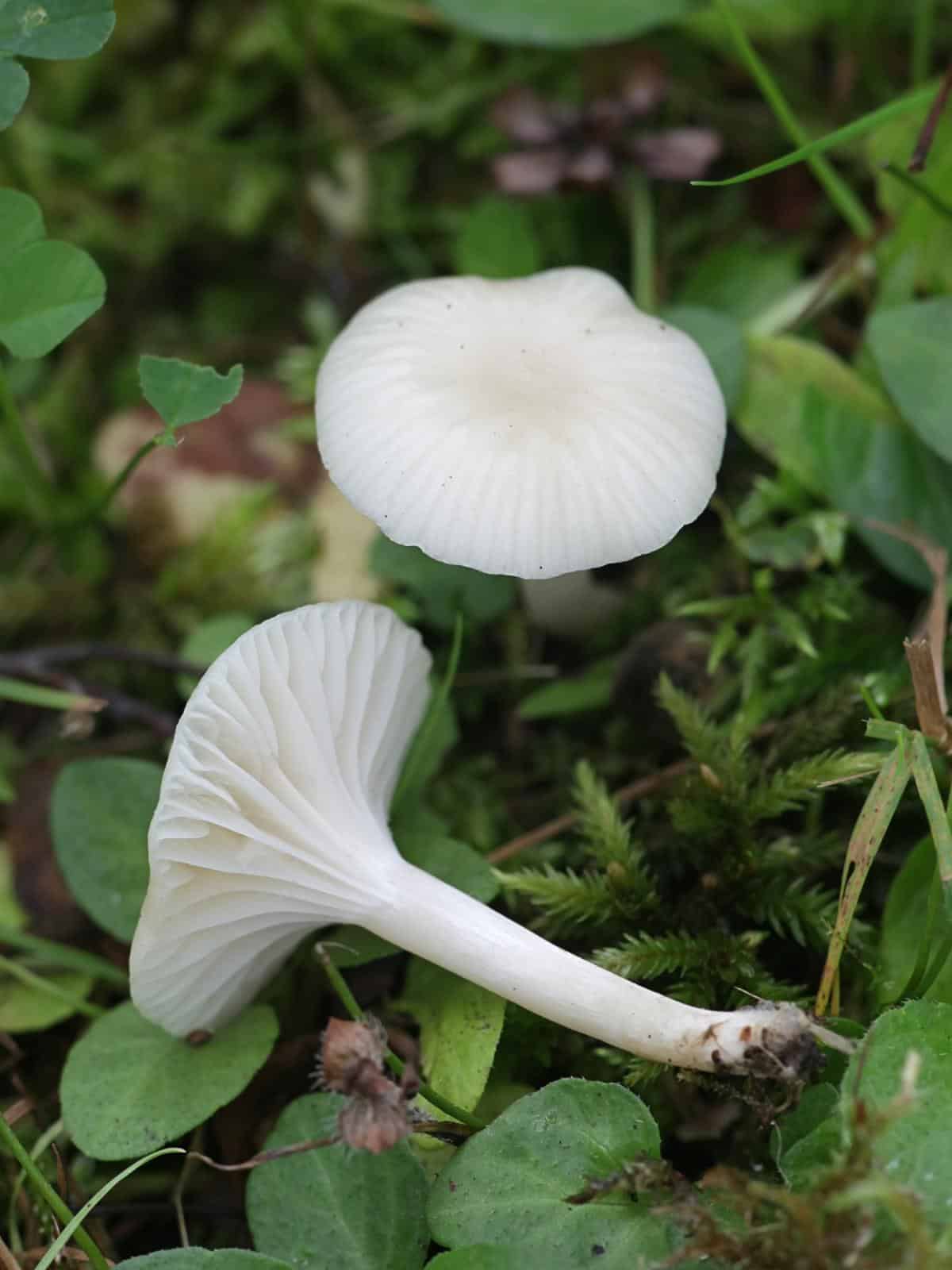
The snowy waxcap’s cap measures 2 to 6 inches across; it is a small to medium size mushroom. The caps of the young mushrooms are rounded like a button mushroom and sometimes have a raised bump called an umbo at the center. With maturity, the cap flattens and might sink slightly in the middle. The edges of the cap often curl upward with age to expose the gills underneath, like an upturned umbrella showing its ribs.
The cap is an ivory to creamy-white color, and it might have a darker brown or yellowish spot in the center. Its surface feels greasy or waxy, especially when wet, but won’t stick to your fingers. The cap surface is smooth and also somewhat translucent when wet (hygrophanous). It often has a striate margin, which means you can see the imprint of the gills around the edges of the cap.
Gills
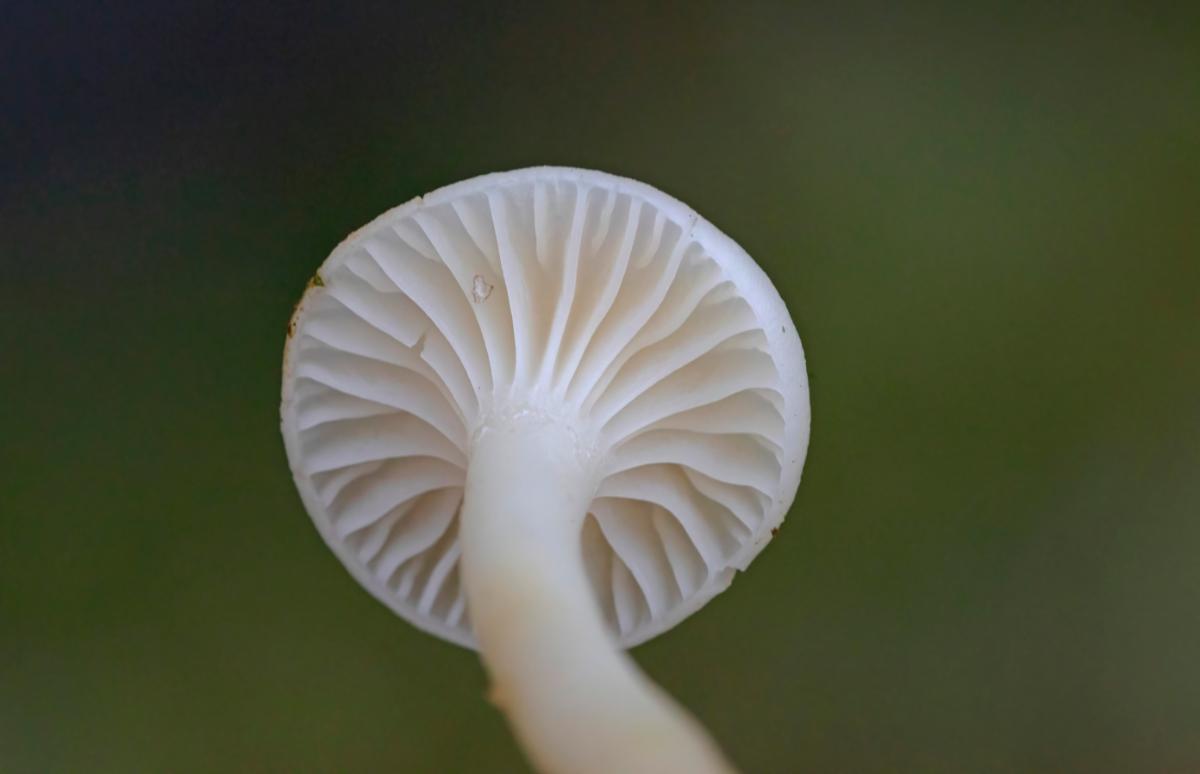
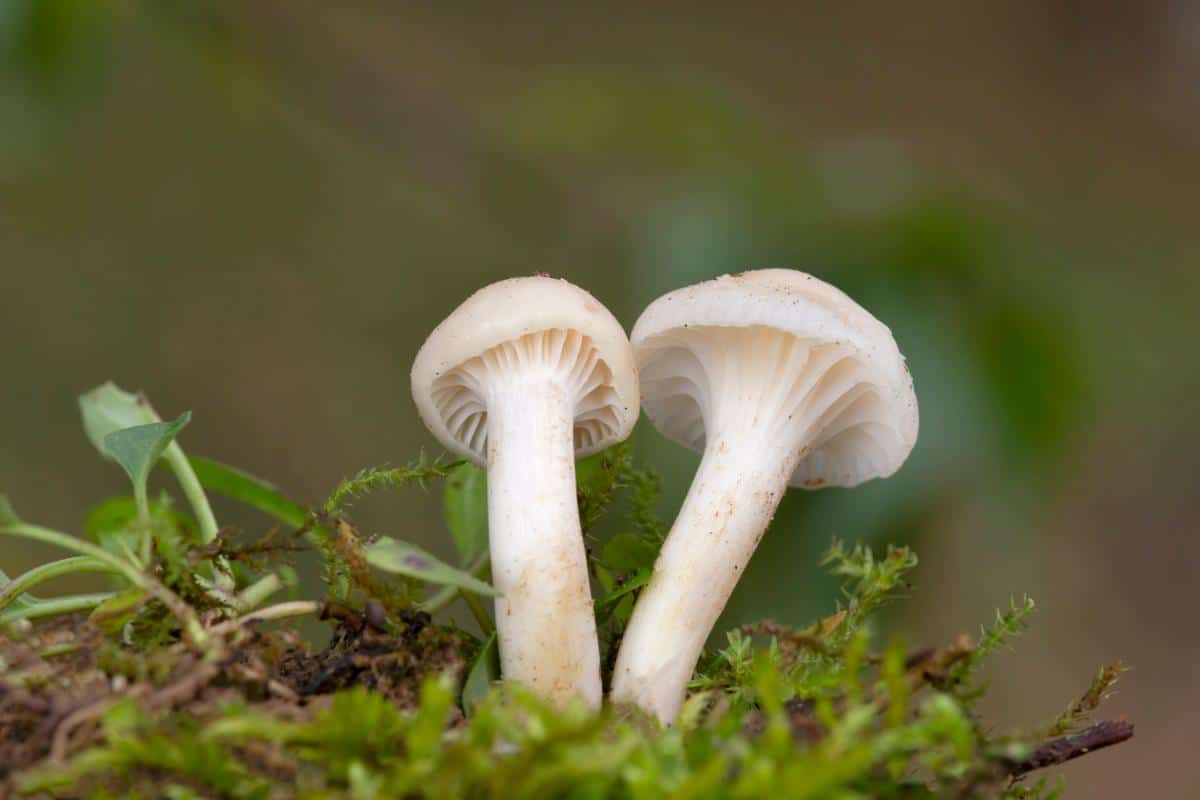
The snowy waxcap’s gills are spaced far apart from each other and run down the stem instead of stopping at the cap’s edge. This is called decurrent. These gills start out pure white, but with age, turn ivory. Sometimes the gills turn pale yellow in older mushrooms. There are many smaller gills (short-gills) between the main ones that don’t reach the stem.
Stem
The stem is 2 to 4¾ inches tall and slender. It often bends or curves rather than growing straight up. The stem is the same white color as the cap and may darken near the base as it ages. It also feels waxy, just like the cap. Snowy waxcap mushroom stems start out solid inside but become hollow as they mature. The stem does not have any decorations (such as a ring or scales) and is smooth.
Odor and Taste
The snowy waxcap mushroom doesn’t have much of a smell. It tastes mild, sometimes unpleasant, or a bit bitter.
Flesh and Staining
The flesh of this mushroom is white and waxy, and it does not change color when cut or bruised.
Spore print
The snowy waxcap has a white print.
Parasitized Snowy Wax Caps
Snowy waxcap mushrooms sometimes host a parasitic mold called Marquandomyces marquandi that turns their gills violet. If you spot a white waxcap with purple-tinted gills, you’re still looking at a snowy waxcap – just one that caught this parasite.
Snowy Waxcap Lookalikes and How to Tell Them Apart
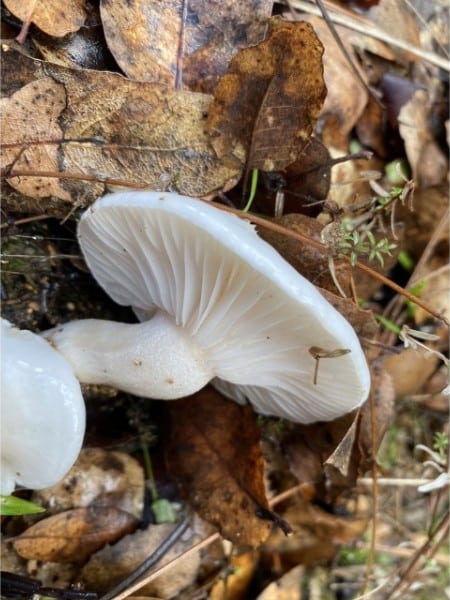
Ivory Waxcap (Hygrophorus eburneus)
The mushroom often gets mixed up with the snowy waxcap because it is also white, waxy-feeling, and grows on the ground in woodlands. It is also around the same size, and you’ll know it’s an ivory waxcap by how sticky or slippery it is. The cap is sticky and when wet, covered with a thick layer of slime – it’s almost impossible to hold onto. It also has more closely spaced gills.
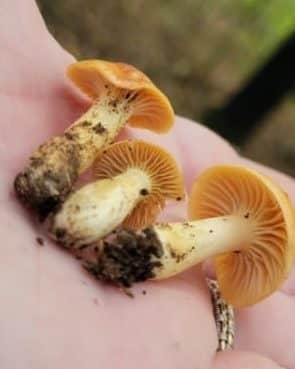
Meadow waxcap (Cuphophyllus pratensis)
The meadow waxcap is bigger than the snowy waxcap mushroom and has a brownish to buff to orangish cap that is usually easily distinguished from the snowy waxcap’s white cap. However, when the snowy waxcap has a yellowish or brownish center spot, it can be confusing. The gills of the meadow waxcap are light orange, and again, usually this is enough to tell them apart. But you have to investigate closely. It helps if there is more than one specimen to compare.
Cedarwood Waxcap (Cuphophyllus russocoriaceus)
The cedarwood waxcap looks just like the snowy waxcap mushroom at first glance – it has a white to ivory colored cap, gills, and stem, and grows on the ground. There’s one clear giveaway, though – its smell. This waxcap has a strong sandalwood or “Russian leather” scent. T

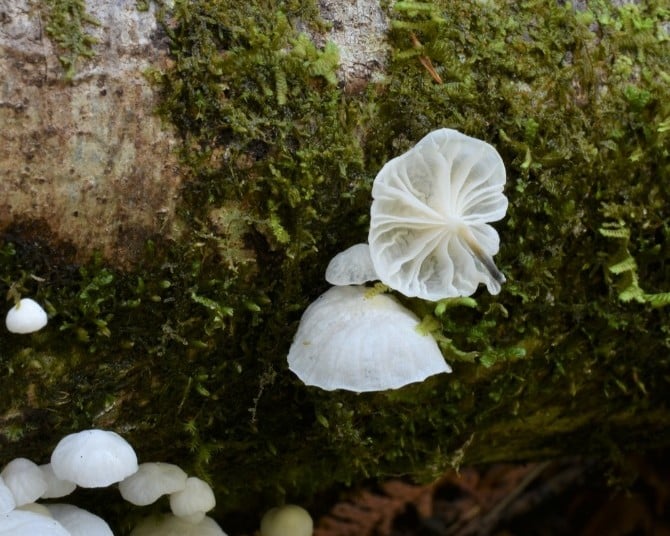
White Marasmius (Marasmiellus candidus)
These two mushrooms are both white, smallish, and have widely spaced gills. They vary, though, in overall size and habitat. The White Marasmius is distinctly smaller; it only grows to 0.5-1 inch in diameter. It has a thin, wiry stem rarely exceeding 1 inch in length. In contrast, the snowy waxcap is more robust.
White Marasmius has a dry, non-waxy texture, and it typically grows on woody debris or plant material. It does not grow from the ground.
Fool’s Funnel/Ivory Funnel (Clitocybe dealbata/Clitocybe rivulosa)
The ivory funnel might look similar at first, but it has gills that are very close together, and there is no waxy texture. The cap also stays flattish or develops a well in the center and it doesn’t become see-through when wet. Ivory funnels also have a very unpleasant odor.
This is a toxic species — it contains muscarine. While it won’t usually kill you, the side effects are not pleasant. Be very careful about this species when looking for snowy waxcaps.
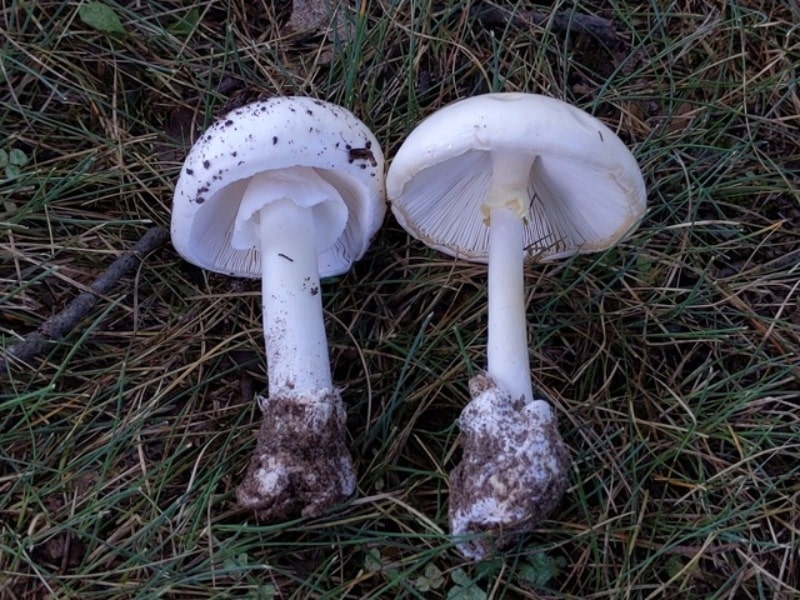
Destroying Angel (Amanita bisporigera, Amanita ocreata)
The Destroying Angel is also an all-white mushroom, but it has a lot of differences. It is significantly larger, with a cap up to 4 inches across and a stem measuring 2-5 inches long. It has a distinctive white ring or skirt around the upper stem, although this sometimes falls off. The destroying angel also has a bulbous stem base that is enclosed in a cup-like volva. Its gills are white and densely packed. This deadly mushroom contains lethal amatoxins and grows primarily in woodland areas near trees.
Snowy Waxcap Mushroom Edibility
The snowy waxcap mushroom is edible and gets high marks from people who have eaten it. It has a rich, mushroomy flavor and develops a subtle, nutty taste when cooked. It picks up flavors from other ingredients nicely, too. The texture is soft yet firm, and its flesh stays thin except right at the cap’s center. These mushrooms can be dried for later use.
Ecological Role of Snowy Waxcap Mushrooms
These mushrooms could be vital bioindicators of grassland health and help scientists monitor ecosystem changes over time. The snowy waxcap is a sign that the soil has not been disturbed much and that there are no artificial fertilizers or chemicals. Ecologists are checking waxcap populations to evaluate how valuable grasslands are for conservation. The decreasing numbers in many areas indicate that modern farming practices are harming their habitats.
Common Questions About The Snowy Waxcap Mushroom
Are snowy waxcap mushrooms safe to eat?
Yes, snowy waxcaps are considered edible and good. However, it’s crucial to be 100% certain of your identification because there are some dangerous white mushrooms that can look similar.
Where can I find snowy waxcap mushrooms?
Snowy waxcaps are commonly found in woodlands or grasslands, possibly in association with specific mosses.
When is the best time to look for snowy waxcaps?
The best time to search for snowy waxcaps is during autumn, typically between August and November. They usually appear after periods of rain when the soil is damp but not waterlogged.
Leave a Reply