


The club foot mushroom (Ampulloclitocybe clavipes) is pretty easy to spot thanks to its chunky, swollen stem base. It pops up all over North America, except for the southwest and the lower Rockies, where it’s either missing or super rare. Most of the time, you’ll find it hanging out under conifers, but it’s not too picky and sometimes shows up under hardwoods, too.
- Scientific Name: Ampulloclitocybe clavipes
- Common Names: Club foot mushroom, Club-footed funnel cap, Club-footed Clitocybe, and Clavate-stalked Clitocybe
- Habitat: On the ground with conifers
- Edibility: Inedible/questionable (non-toxic)
Jump to:
All About The Club-Footed Mushroom
The name ‘clavipes‘ is Latin for ‘club foot’—’clava’ means club, and ‘pes‘ means foot. It’s a pretty literal description of the mushroom’s most obvious feature: that chunky, club-shaped stem. The genus name, Ampulloclitocybe, is a bit more of a mouthful. It comes from ‘ampula‘ (like a little flask) and ‘clitocybe‘ (which means ‘with a sloping head’). To put it all together, this mushroom is “the little flask with a a sloping head that has a club foot.”
This mushroom has many common names, including club foot, club-footed funnel cap, club-footed clitocybe, and clavate-stalked clitocybe (clavate is the scientific word for club-shaped).
The species was originally described as Agaricus clavipes by Christiaan Hendrik Persoon. Later, in 1871, Paul Kummer moved it to the genus Clitocybe, where it remained known as Clitocybe clavipes for over a century.
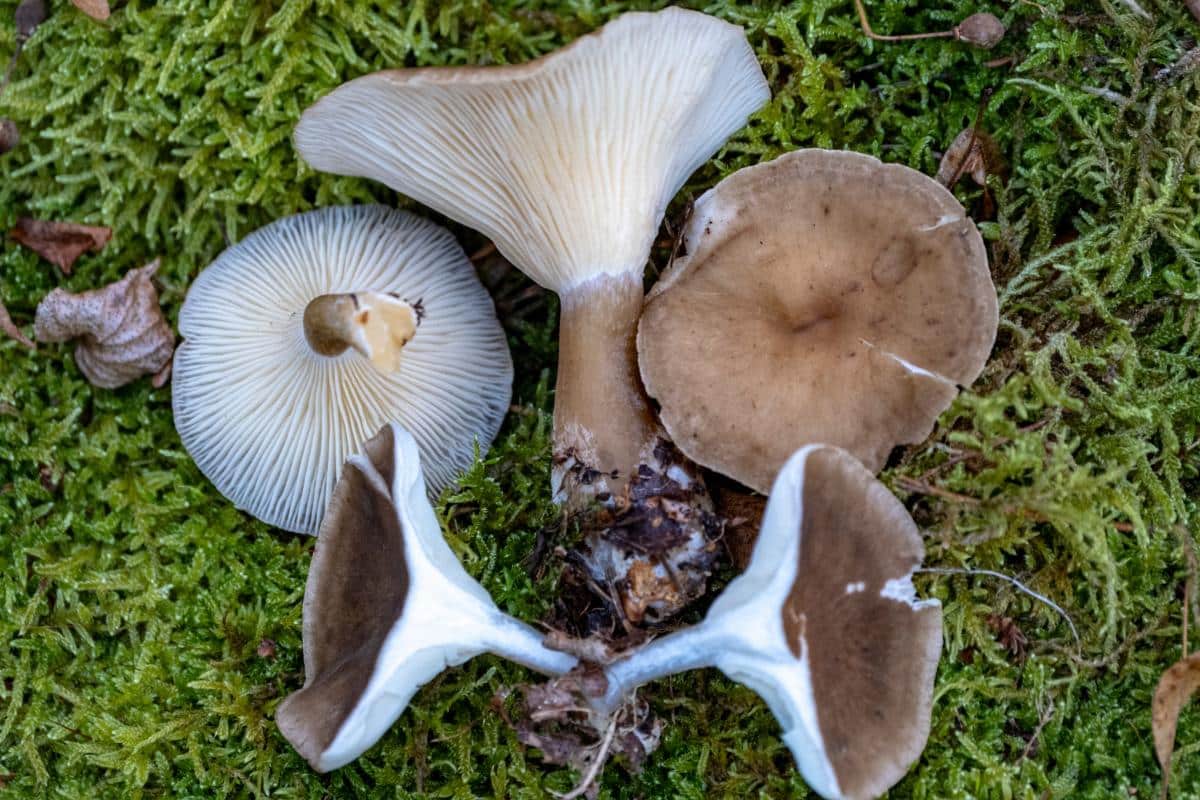
Ampulloclitocybe clavipes by David A Riggs on Mushroom Observer
In November 2002, Scott Redhead and colleagues established the genus Ampulloclitocybe for this mushroom after research showed that Clitocybe clavipes is only distantly related to other Clitocybe species. DNA analysis indicated closer relationships with Rimbachia bryophila, Omphalina pyxidata, and Clitocybe lateritia.
As a side note, and just an interesting story of timing — The Finnish mycologist Harri Harmaja had actually independently proposed the genus name Clavicybe for this same mushroom. Since Redhead’s publication preceded Harmaja’s by two months (!)—November 5 versus December 31, 2002—Ampulloclitocybe took priority according to taxonomic naming rules.
You may still see this mushroom in older guidebooks (pre-2002) listed as Clitocybe clavipes.
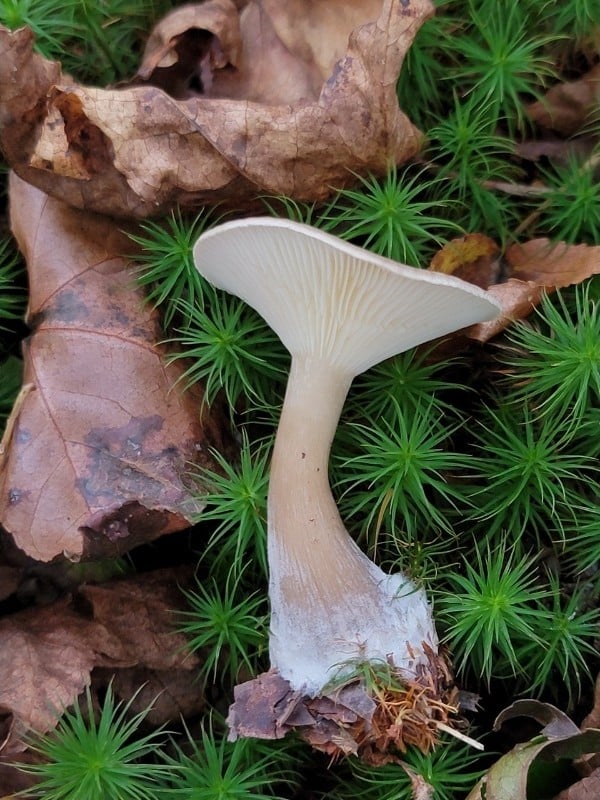
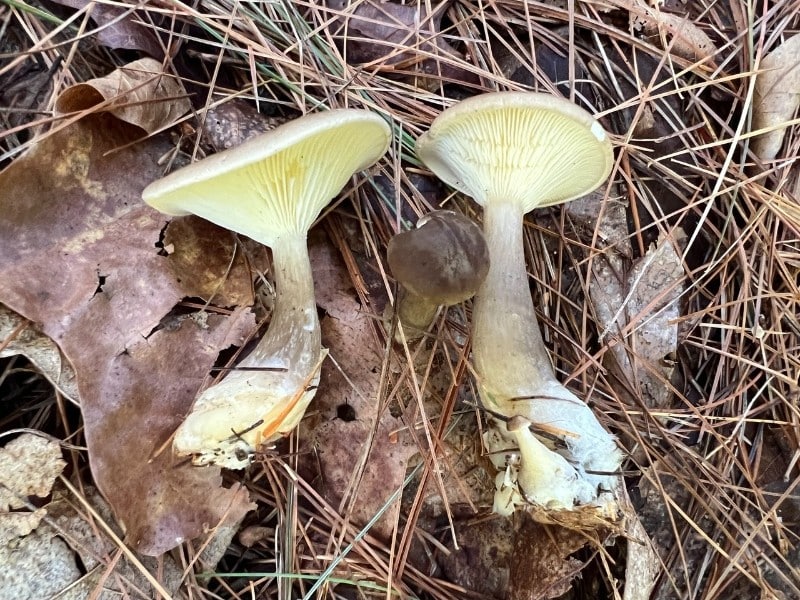
Ampulloclitocybe clavipes by Brandon on Mushroom Observer
Club Foot Clitocybe Identification Guide
Season
These mushrooms fruit from mid-summer through fall, usually July through November.
Habitat
The club foot mushroom grows under conifers and often shows up in pine plantations. However, this adaptable species also appears in deciduous forests, often under beech trees. The ecological role of the club foot mushroom remains somewhat debated among mycologists—some consider it saprobic (decomposing organic matter), while others classify it as mycorrhizal (forming symbiotic relationships with trees).
You might also find club foot mushrooms in scrubby areas, meadows, rough grasslands, or even along the side of the road. Sometimes they pop up solo, sometimes in scattered groups, and occasionally you’ll stumble on a whole crowd of them. One thing to remember: they always grow from the ground, never from wood or trees.
The club-footed Clitocybe commonly appears under pine plantations in eastern North America. It occurs less frequently in the Pacific Northwest but does grow there. It also seems either absent or very rare in the lower Rocky Mountains and the southwestern United States.
These mushrooms also grow in Europe, northern Asia, Central America, and Australia.
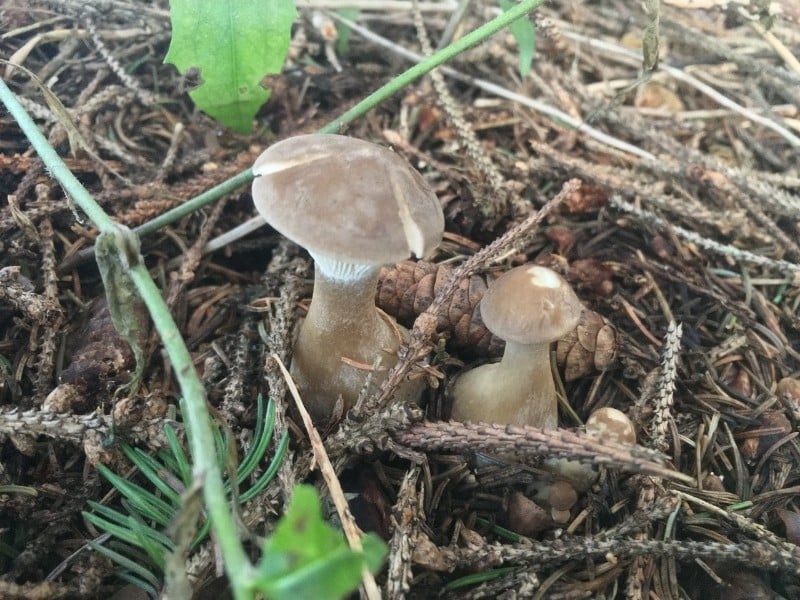
Ampulloclitocybe clavipes by Sergey Halifax on Mushroom Observer
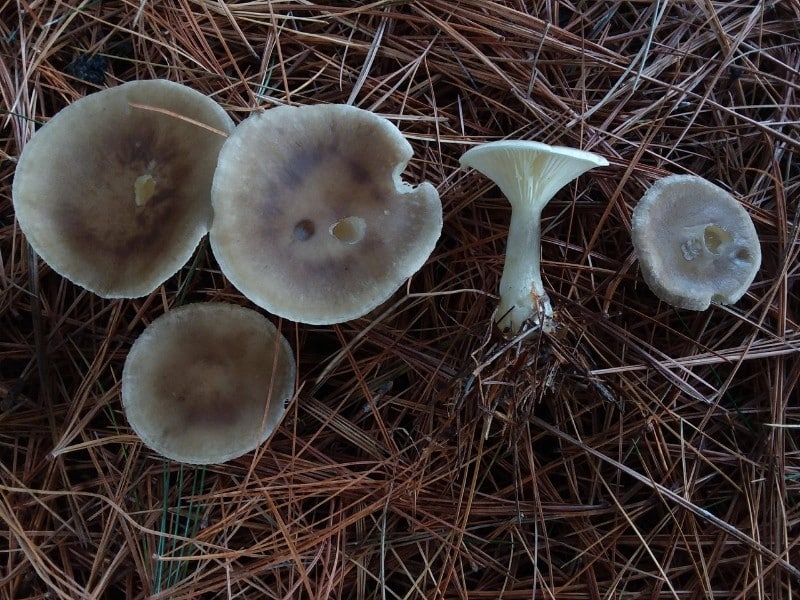
Ampulloclitocybe clavipes by Two Gnomes on Mushroom Observer
Identification
Cap
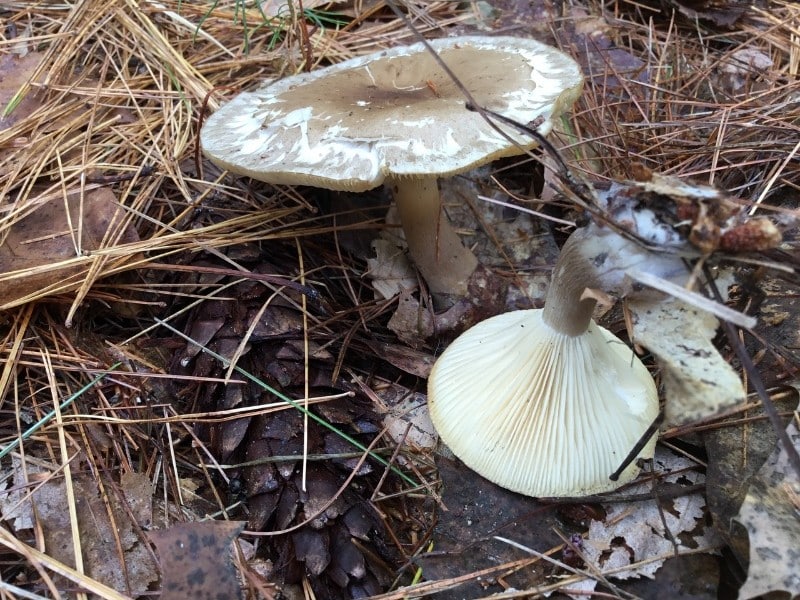
The cap of the club foot mushroom is 1⅝–3⅛ inches in diameter. It starts out rounded, like a button mushroom except with a small central bump, or nipple. As it grows, the cap flattens out and then becomes indented in the center to look more like a vase. The cap is gray-brown and sometimes has subtle olive tints. The edges of the cap are noticeably paler than the center of the mushroom.
The cap surface is smooth, sometimes with tiny fibers if you look closely. It usually feels a bit moist, and if it’s been raining, the cap can get kind of greasy.
Gills
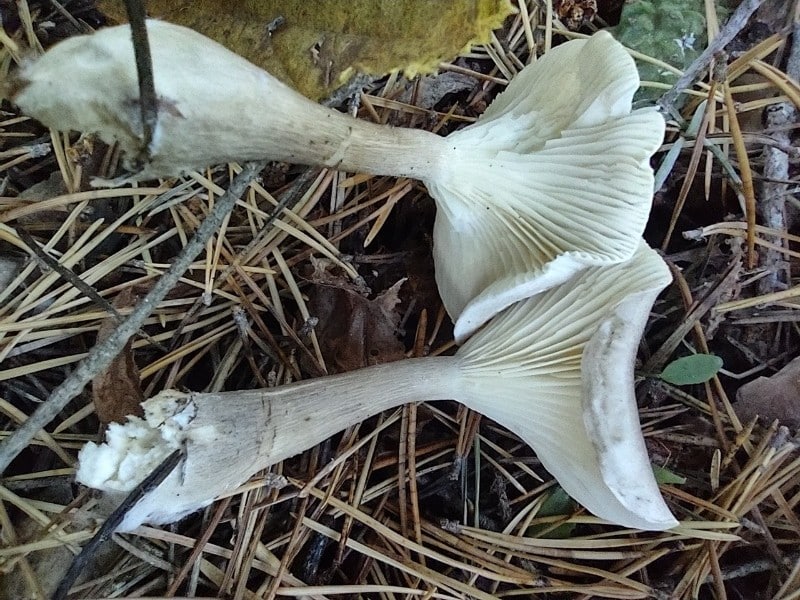
The club foot mushroom has strongly decurrent gills; this means that they run down the stem. These gills are cream colored to slightly yellow and contrast markedly with the rest of the mushroom. The spacing between gills is moderate, and there are smaller gills appearing between the regular ones. With age, the gills turn brownish.
Stem
The stem is usually distinctively club-shaped with a markedly bulbous base. This key defining feature can vary quite a bit, though. The stem isn’t always as pronouncedly club-like, especially when the mushroom is old. It measures 1–2¾ inches tall and ⅜–⅝ inches wide. The surface of the stem is sometimes covered in very thin, silky fibers and typically matches the cap’s color.
The stem is tough on the outside, but if you slice it open, the base is spongy and soft—almost cottony inside. This is a great way to tell club foot mushrooms apart from their lookalikes. Just cut the stem lengthwise and check for that cottony center at the bottom.
Odor and Taste
The smell of the club foot Clitocybe is all over the place, but it’s usually a little sweet. People say it smells like either bitter almond, orange blossom, cinnamon, or even grape bubble gum. It’s definitely fruity or at least mildly fragrant. The taste, on the other hand, is pretty bland and nothing to write home about.
Flesh and Staining
The flesh of the club foot mushroom is predominantly white, though it may appear slightly yellow at the base. It does not change color when cut or bruised. The flesh in the cap is dense-ish, but in the center of the stem, the flesh is spongy.
Spore print
The club foot mushroom has a white spore print.
Key Features:
- Gray-brown cap
- Color lighter around the cap edges
- Cream to light yellow gills that run down the stem
- Bulbous stem base (club-foot)
- Stem is spongy in the middle
- Grows on the ground
- Sweet smell
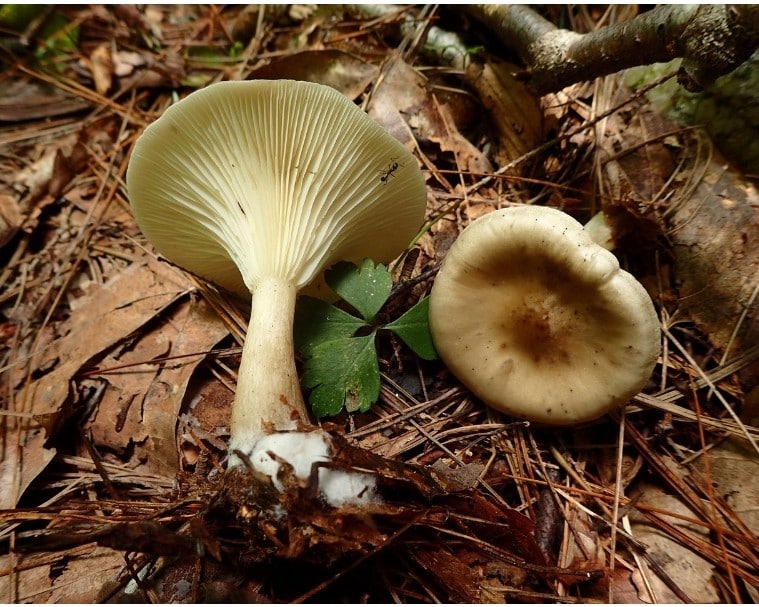
Ampulloclitocybe clavipes by Sarah Prentice on Mushroom Observer
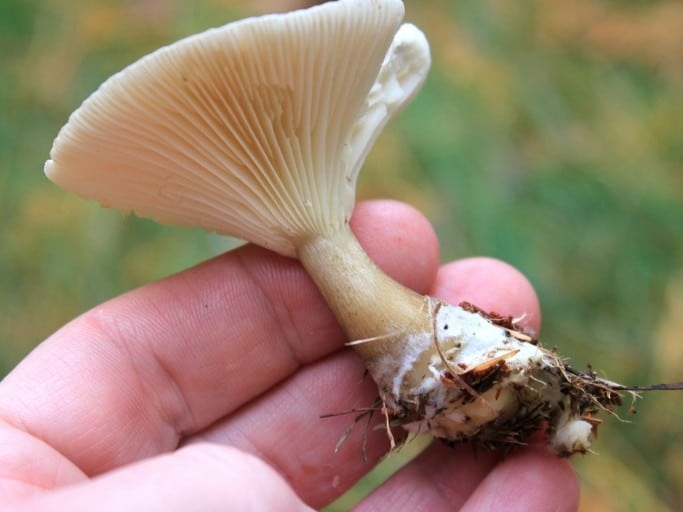
Ampulloclitocybe clavipes by BIMa on Mushroom Observer
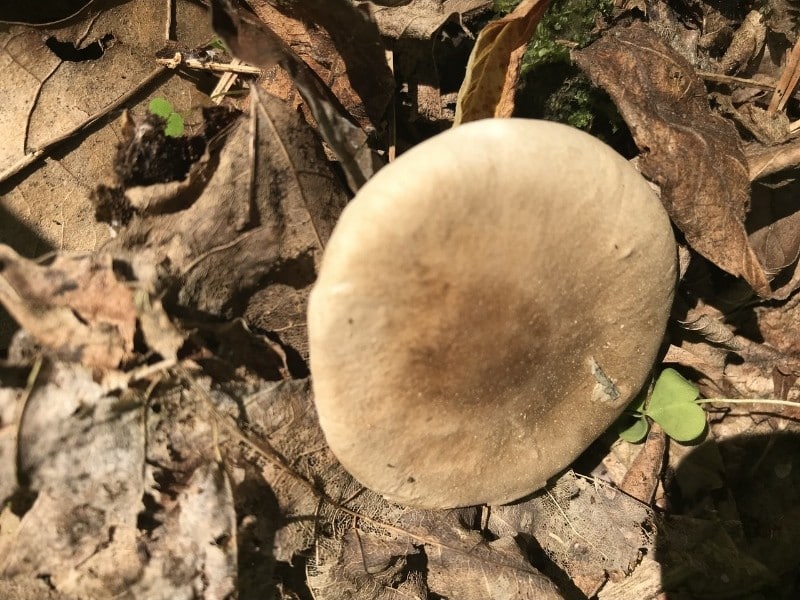
Ampulloclitocybe clavipes by JC on Mushroom Observer
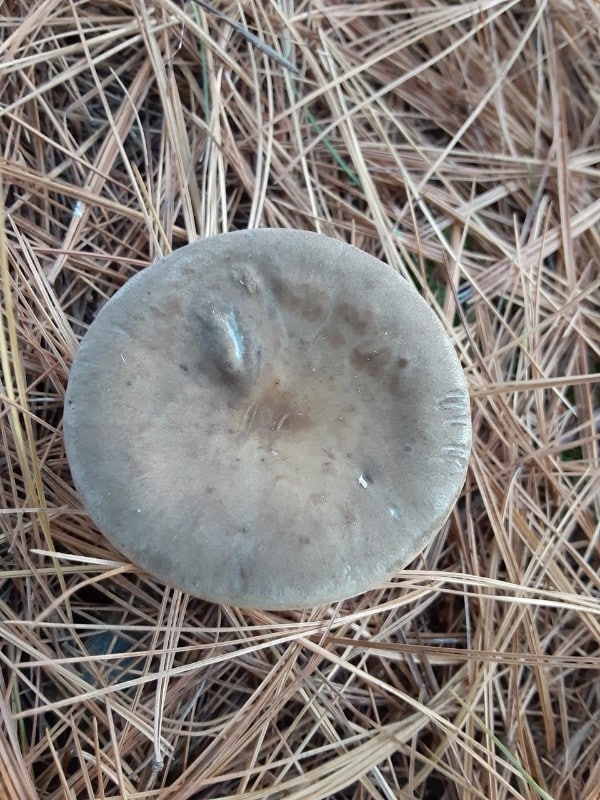
Ampulloclitocybe clavipes by Daniel Wilson on Mushroom Observer
Club Foot Mushroom Lookalikes
Clouded Agaric (Clitocybe nebularis)
The clouded agaric (Clitocybe nebularis) can look a lot like the club foot mushroom since it’s also gray-brown and grows in the same places. The big giveaway is the stem—the clouded agaric doesn’t have that chunky, clubbed base. Plus, it usually smells pretty bad, while the club foot is mild or even fruity.
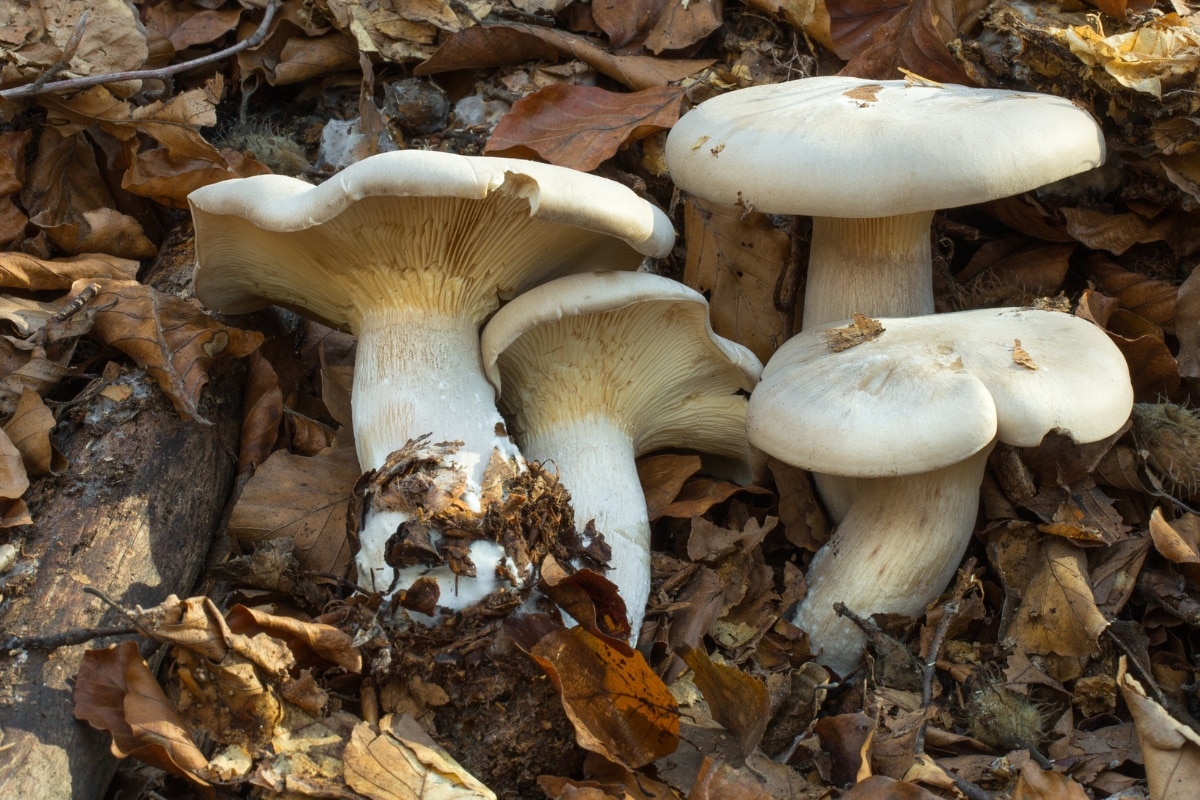
Ampulloclitocybe avellaneialba
This close relative looks similar at first glance, but there are some big differences. Its cap is (usually) much darker—dark brown to almost black—and the gills are white and run down the stem. It’s also bigger and, unlike the club foot, it grows on wood or woody debris instead of straight from the ground.
This species also only occurs in the Pacific Northwest, parts of northern California, and the northern Rocky Mountains.
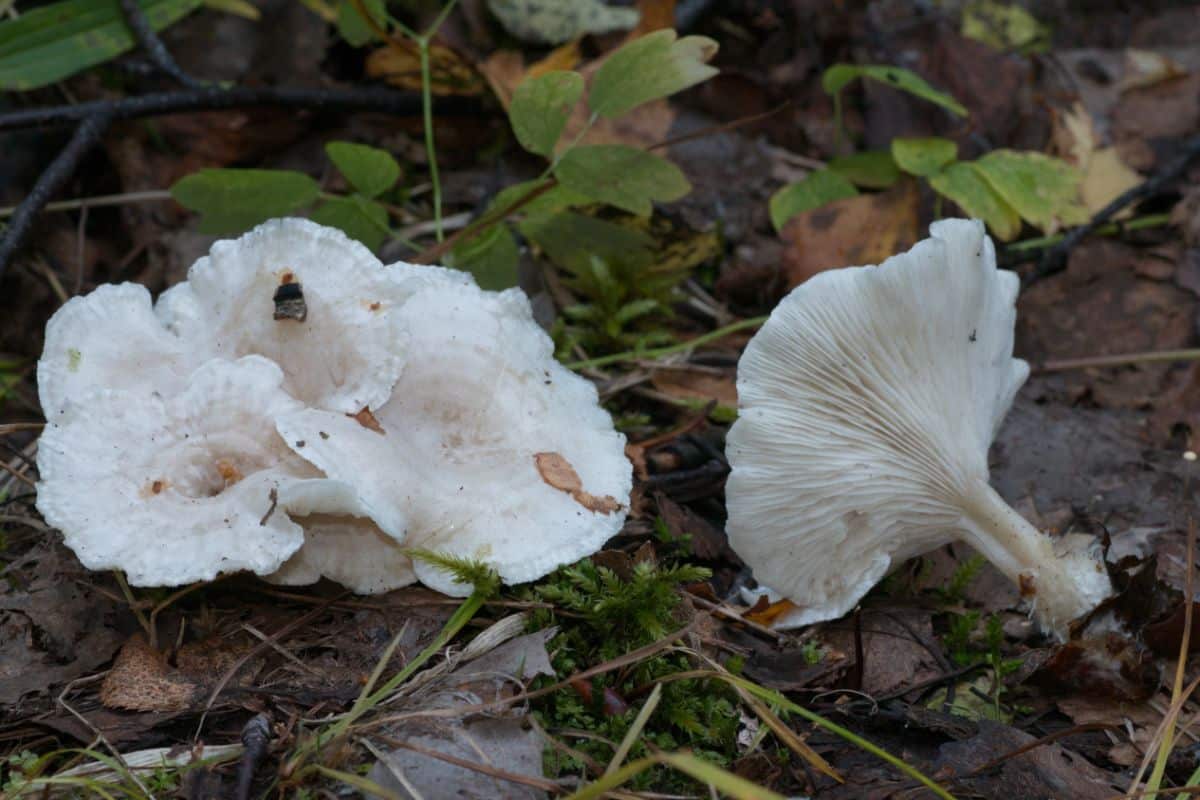
Ivory Funnel aka Fool’s Funnel (Clitocybe dealbata)
The Ivory Funnel is a little white mushroom with a funnel-shaped cap that also grows on the ground. The main differences: its cap is pure white (no brown or gray at all), the stem is short and stubby, and it doesn’t have that clubbed foot at the base. It also doesn’t really smell like anything.
The Ivory Funnel contains dangerous levels of muscarine, which make it poisonous and potentially deadly. Symptoms of poisoning include excessive sweating, salivation, and tear production, followed by more severe symptoms with larger doses.
Club Foot Clitocybe Edibility
Technically, the club foot mushroom is edible (it’s not toxic), but hardly anyone actually eats it. Most people say it’s like chewing on wet cotton, which doesn’t sound very appealing. On top of that, it doesn’t have much flavor, so there’s really no reason to put yourself through eating mushroom-flavored cotton balls.
The biggest concern with edibility involves the club foot mushroom’s interaction with alcohol. The species contains toxins that create a disulfiram-like reaction when consumed with alcoholic beverages. This reaction typically occurs when alcohol is consumed within seven hours after eating the mushroom.
The effects begin quickly—within five to ten minutes—and include facial flushing, throbbing sensations in the head and neck, and puffy hands. The unpredictable alcohol interactions can occur up to five days after consumption.
Even if you skip the alcohol, club foot mushrooms can still cause stomach problems. Symptoms usually show up within half an hour to four hours and can include nausea, cramps, diarrhea, and sometimes vomiting. Some people are fine, others get sick, so if you’re thinking about eating it, be careful.
Ampulloclitocybe clavipes by Paul Vezina on Mushroom Observer
Club Foot Mushroom Medicinal Uses
Ampulloclitocybe clavipes contains several bioactive compounds with promising medicinal properties. Scientists have identified compounds called clavilactones with significant antimicrobial activity. These compounds demonstrate effective antibacterial activity against various bacteria, including Bacillus subtilis, B. cereus, and Sarcina lutea.
The antifungal capabilities of the club-footed clitocybe are equally impressive. Laboratory studies confirm that all clavilactones extracted from this species effectively inhibit the growth of problematic fungi such as Cladosporium cladosporioides and C. cucumerinum.
Studies show that polysaccharides extracted from mycelial cultures of Ampulloclitocybe clavipes and administered to mice significantly inhibited the growth of two cancer types—Sarcoma 180 tumors by 70% and Ehrlich solid cancers by 60%.
Ampulloclitocybe clavipes by M.riel on Mushroom Observer
Common Questions About The Club Foot Mushroom
Is the club foot mushroom safe to eat?
While technically edible, the club foot mushroom is not recommended for eating. It can cause gastrointestinal issues and has a potentially dangerous interaction with alcohol. Also, it just doesn’t taste good, texture-wise or flavor-wise. It won’t kill you to eat it, but it won’t be that enjoyable either.
When and where can I find club foot mushrooms?
Club foot mushrooms are most commonly found from July to November in North America. They prefer wooded areas under conifers, but can also be found in deciduous forests, scrublands, and occasionally along roadsides.
Are there any medicinal uses for the club foot mushroom?
Research has shown that compounds from the club foot mushroom have antimicrobial properties. Additionally, polysaccharides extracted from this mushroom have demonstrated potential anticancer effects in laboratory studies, though more research is needed.
Leave a Reply