
Spotting a bright orange shelf of mushrooms on a tree is enough to make any forager do a happy dance. But if that tree happens to be in your own yard, the excitement probably fades fast. Chicken of the woods is a big, bold warning sign for your tree. While mushroom hunters are thrilled to find these for dinner, for the tree, it means an infection has been quietly tunneling through the heartwood for years.
The mushroom is the fruiting body of the fungus as a whole, just a tip of the fungal iceberg, so to speak. By the time it shows up on the outside of the tree, the decay inside has already progressed far enough that the structural strength of the wood is compromised. What is actually happening, though, and how does the decay progress?
Jump to:
- What Chicken of the Woods Is Doing Inside the Tree
- Heart Rot Versus Butt Rot: Which Do You Have
- Why the Mushroom Means the Decay Is Already Advanced
- Structural Failure and the Wind Question
- How Long Does the Tree Have
- What to Do When Chicken of the Woods Appears on a Yard Tree
- Preventing Infection in the First Place
What Chicken of the Woods Is Doing Inside the Tree
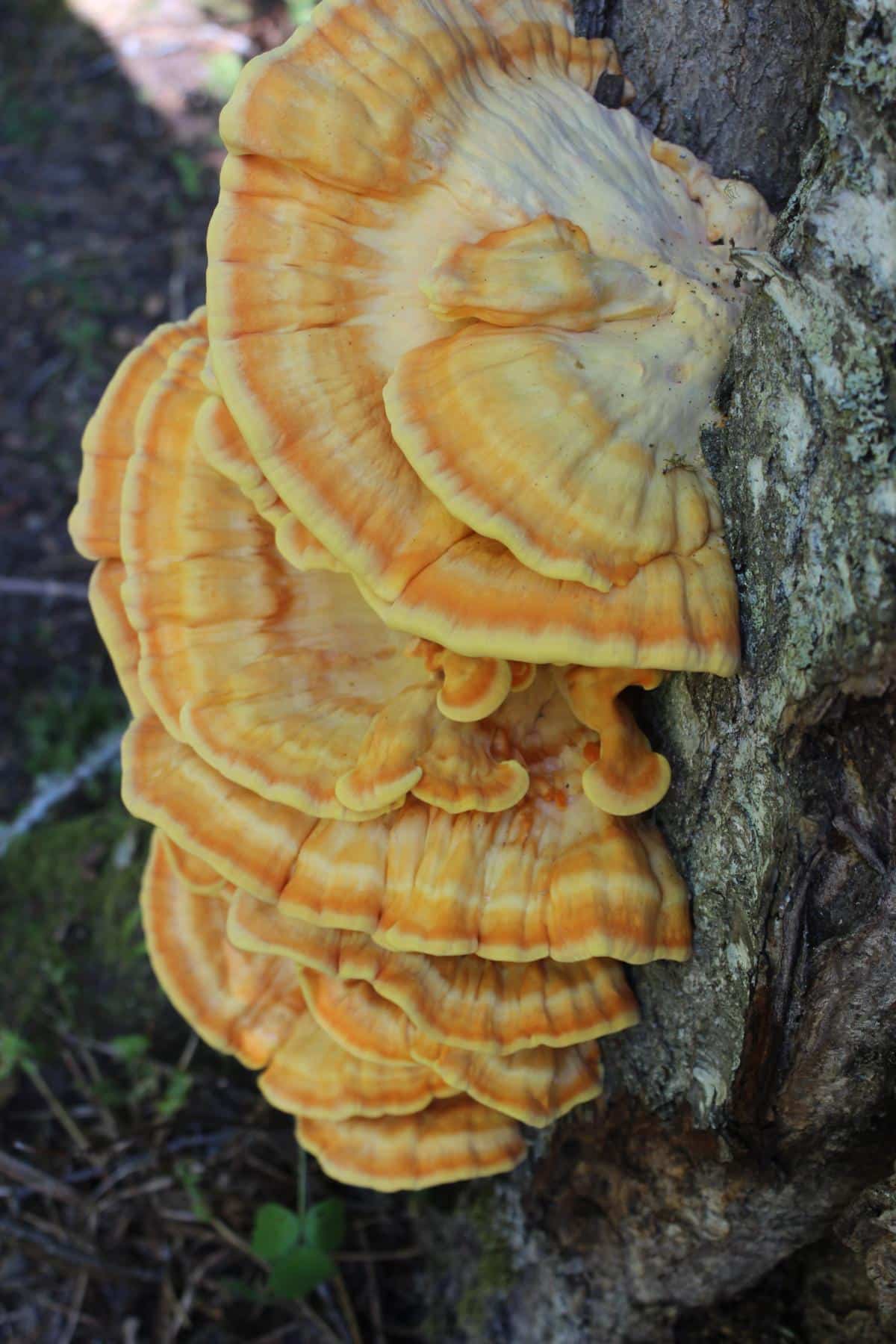
Chicken of the woods is what’s known as a brown rot fungus. There are two species of chicken of the woods that show up on yard trees in eastern North America. Both these species attack the heartwood of hardwoods, primarily oaks.
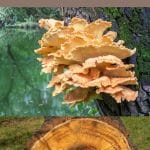
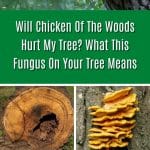
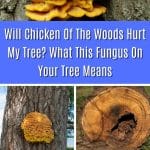
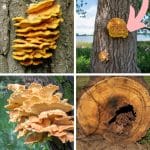
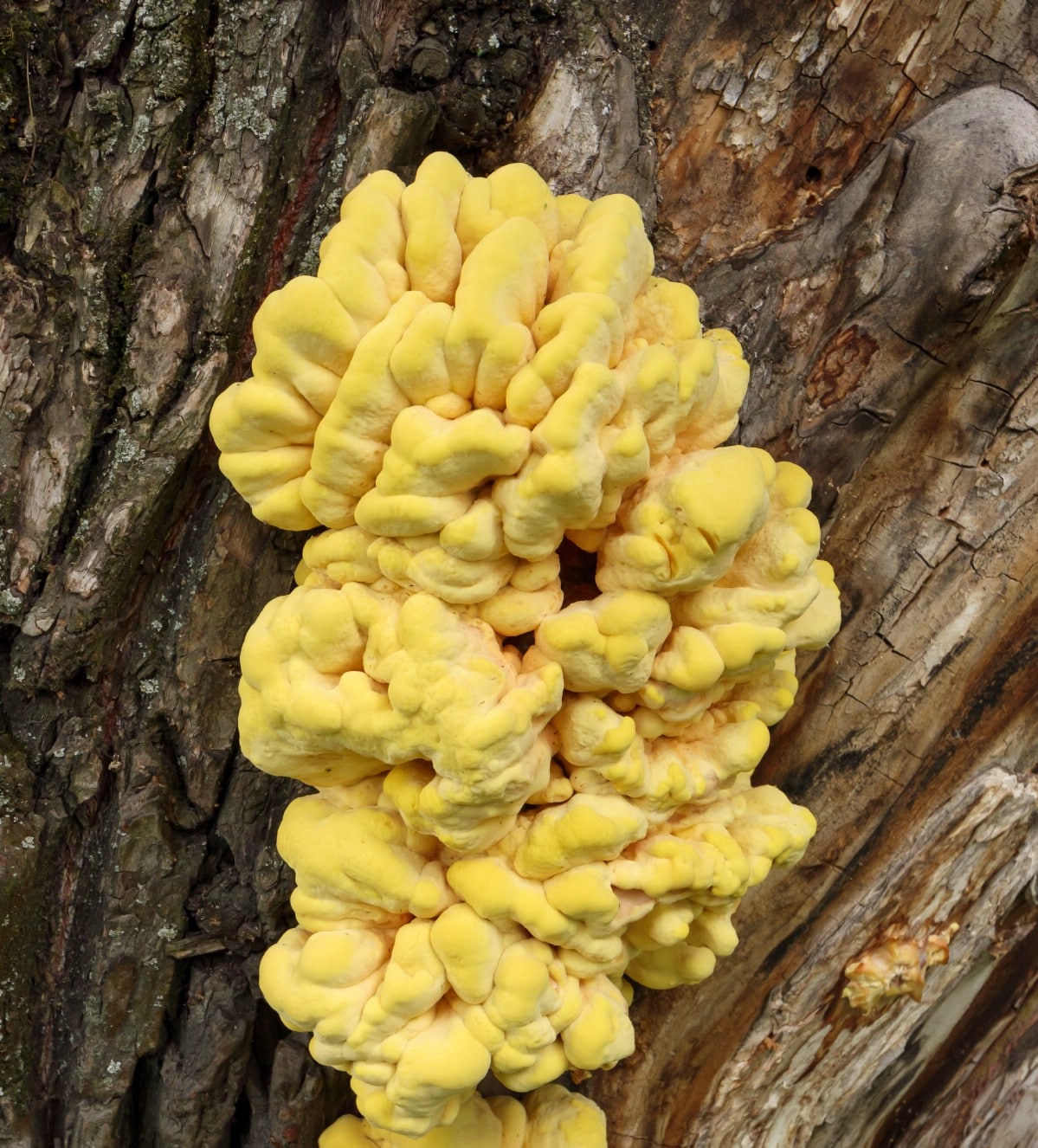
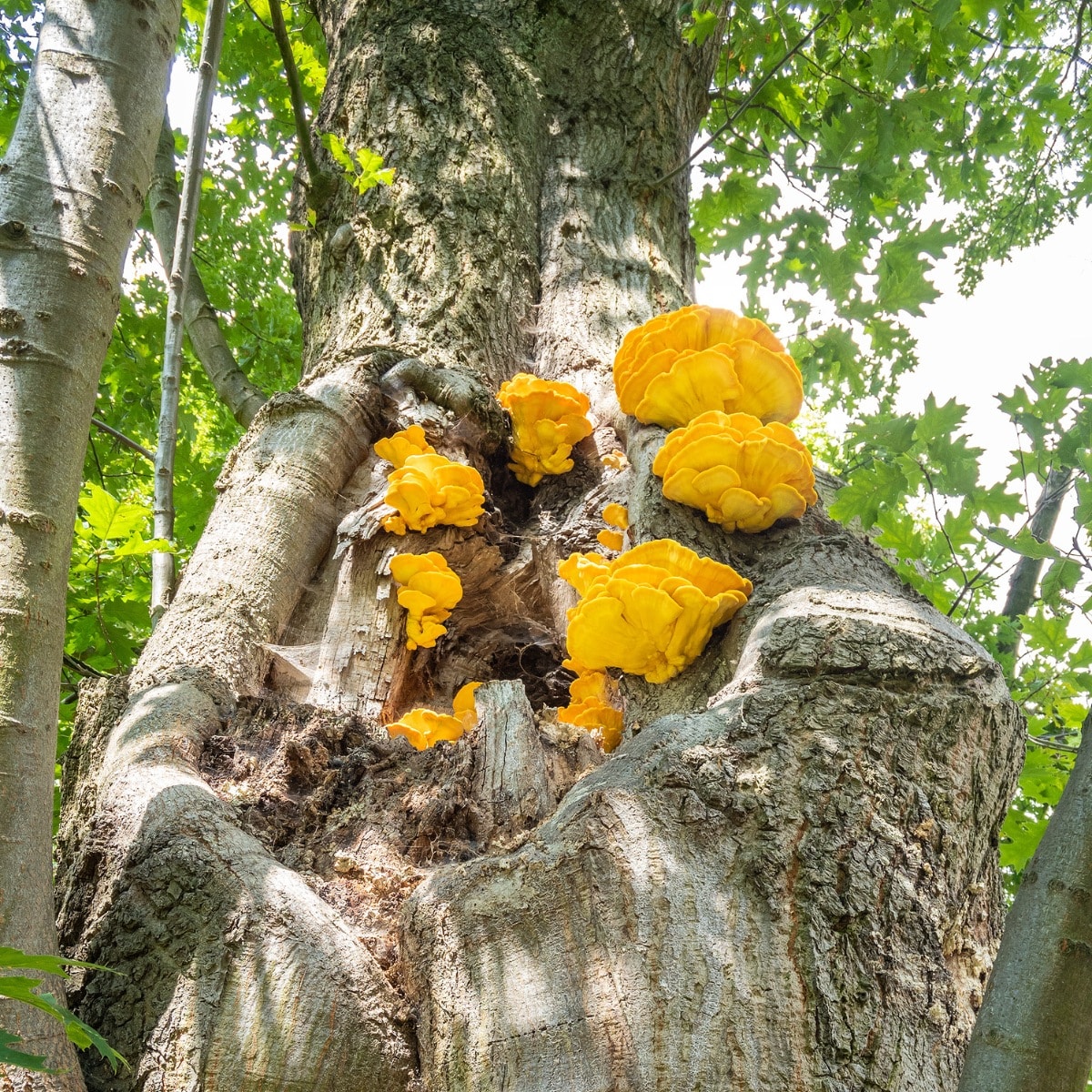
- Laetiporus sulphureus has bright yellow and orange shelves and grows on the side of a living tree or on dead wood. It often appears high up on a tree.
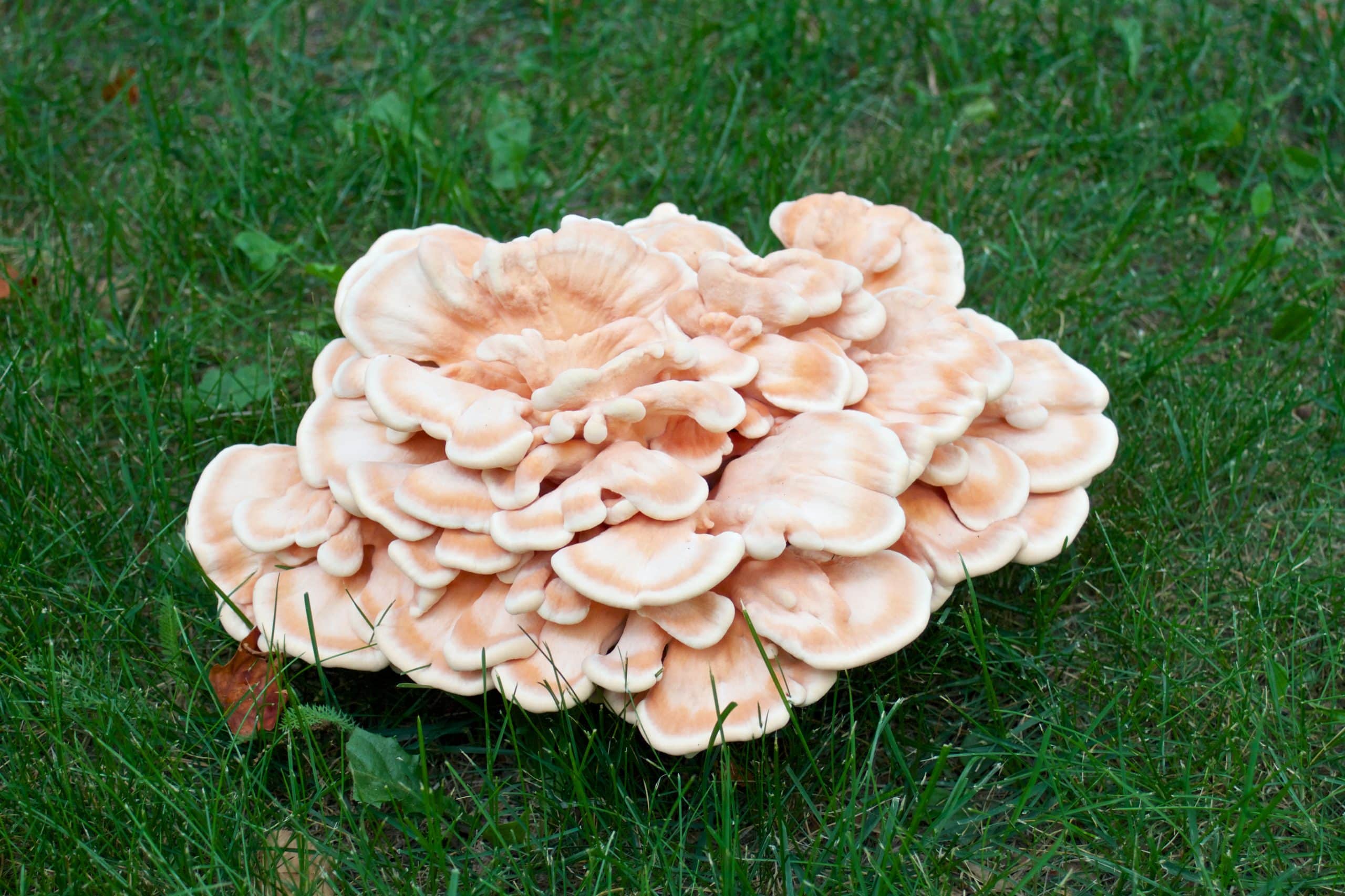
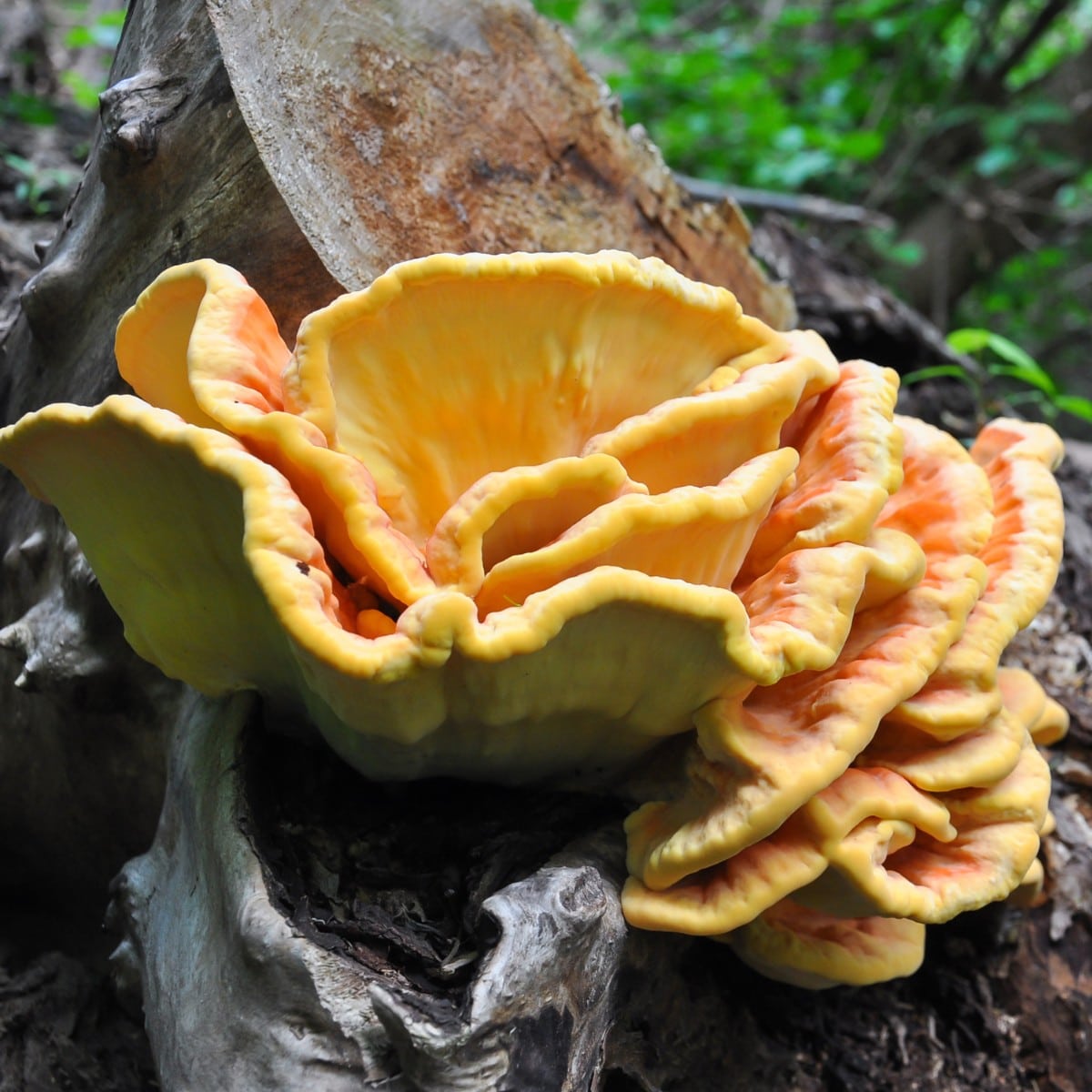
- Laetiporus cincinnatus is a paler salmon-orange color and forms rosettes at the base of the tree or several feet out from the base.
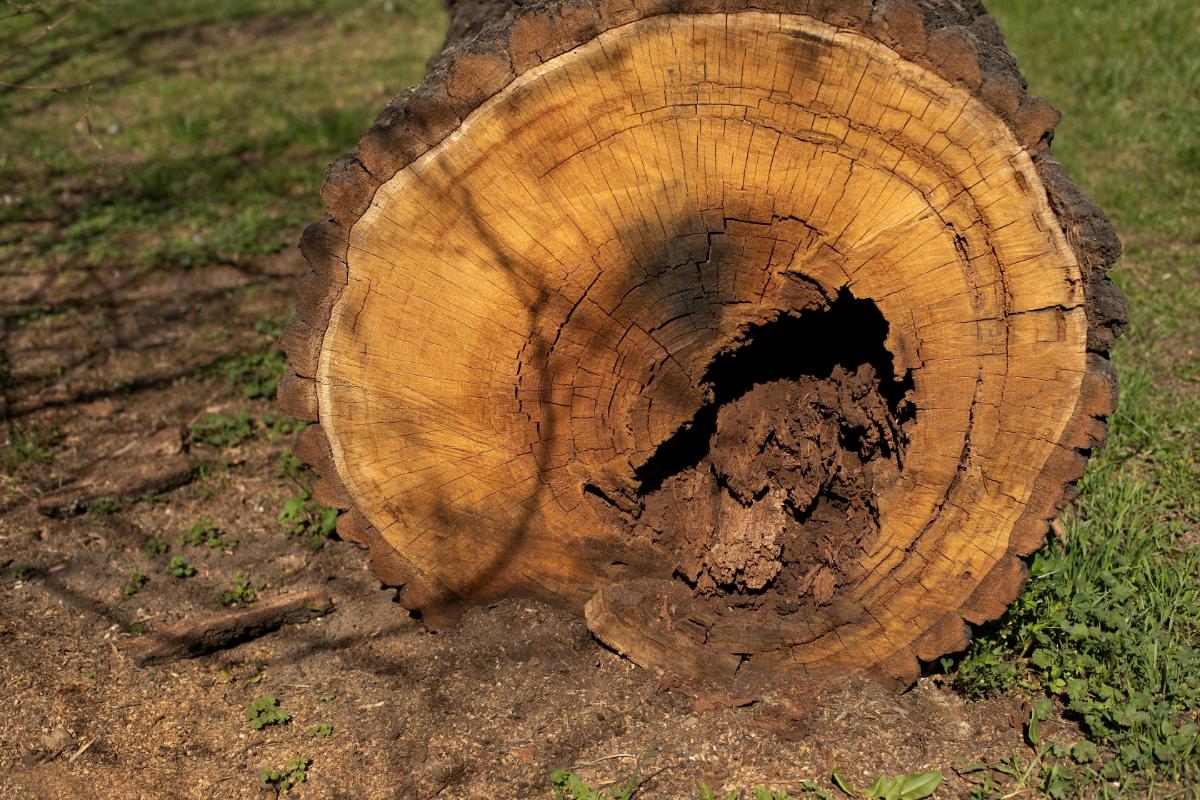
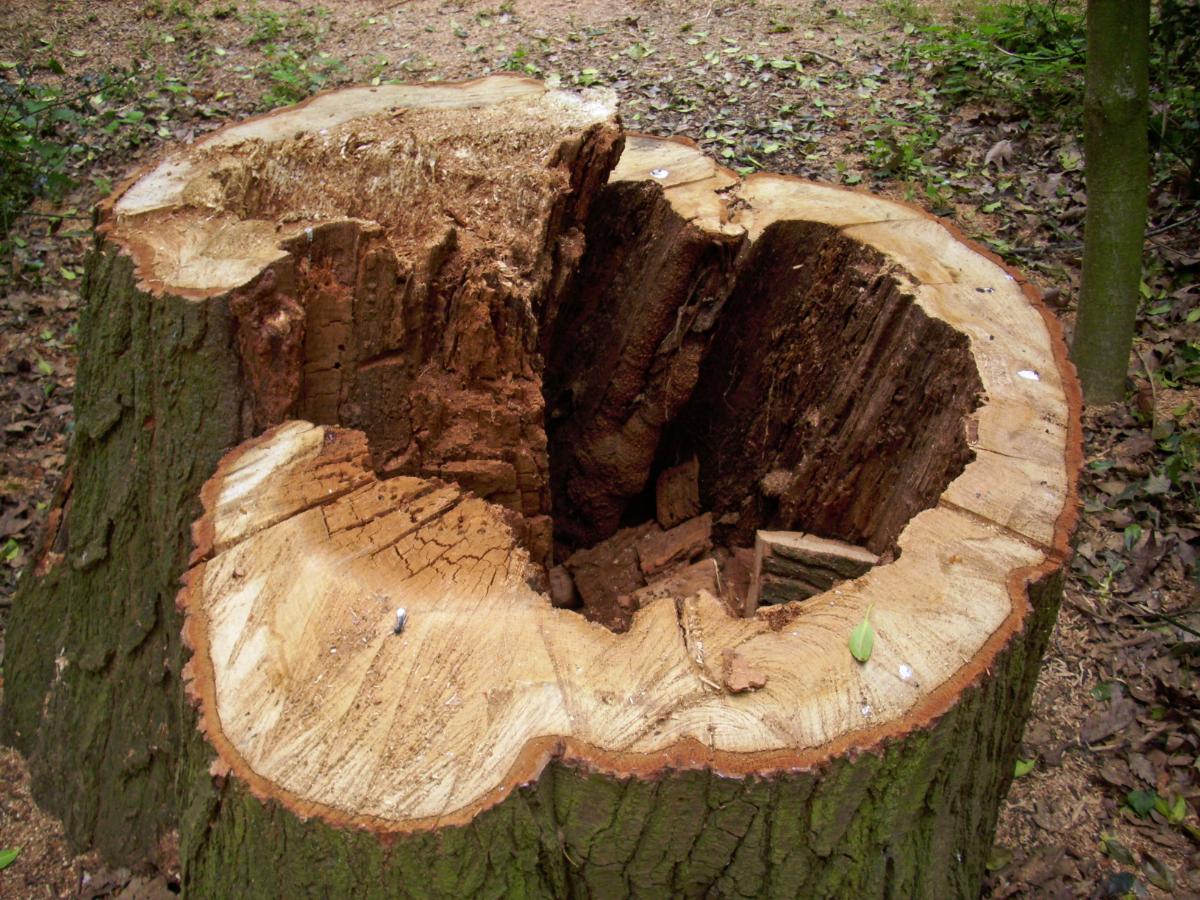
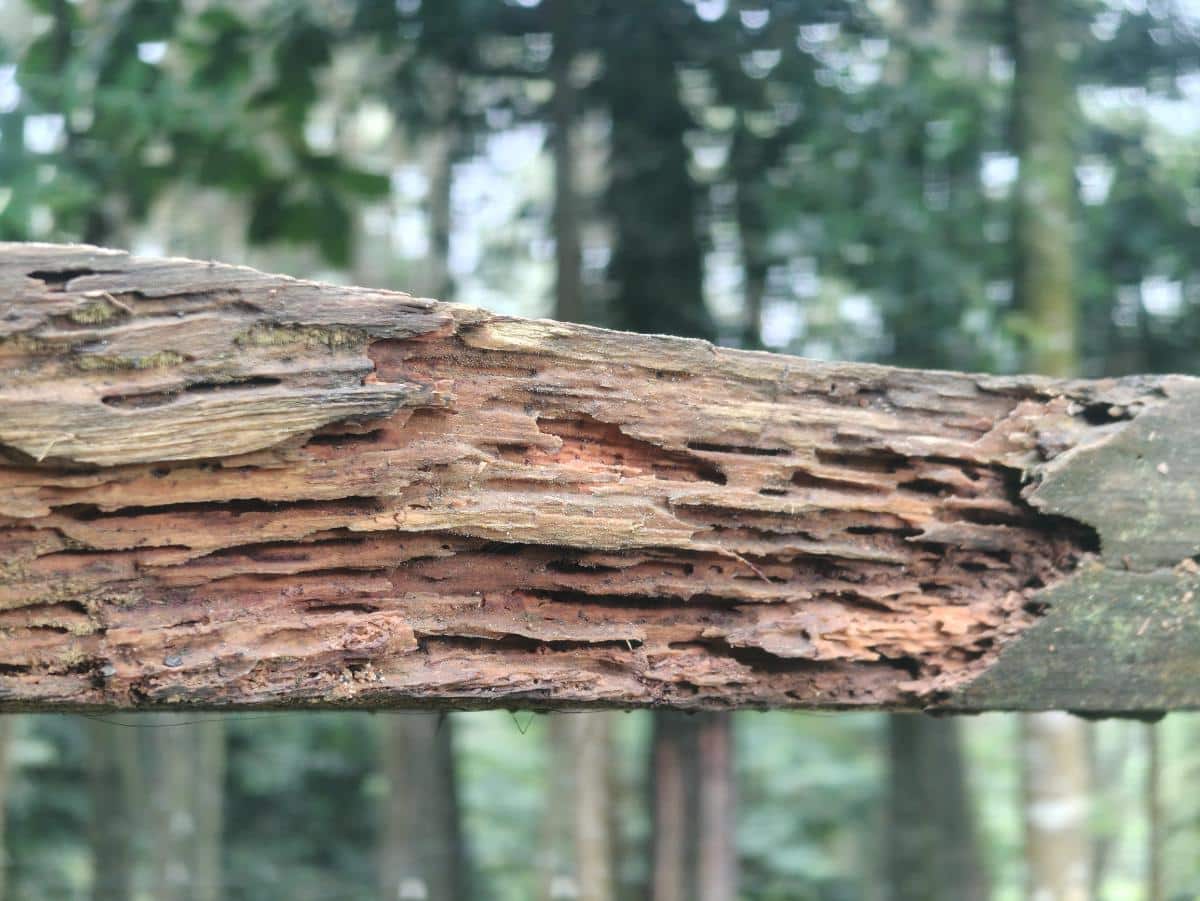
Brown rot fungi go after the cellulose and hemicellulose in wood; this is the stuff that gives wood its flex and strength. Once the fungus breaks that down, what’s left behind is brittle, dark, and cracks apart into chunky, cube-like pieces. It’s like the tree’s insides have turned into a stack of old, crumbly building blocks.
A tree with advanced brown rot can look healthy from the outside, with a full canopy and unbroken bark, but it is significantly weaker on the inside. Brown rot is a common cause of a tree coming down suddenly in a storm.
Heart Rot Versus Butt Rot: Which Do You Have
The two main chicken of the woods species attack different parts of the tree. The location of the fruiting bodies and their color will tell you which one you’re dealing with and where the decay is concentrated. Both species are common reasons that trees fall over or break in the wind. Knowing whether the roots or the butt of the tree are affected, versus the trunk above ground, determines which failure you might see.
Laetiporus sulphureus: heart rot of the trunk
Laetiporus sulphureus is a heart rot fungus, and it attacks the inner heartwood of the trunk and large branches. This chicken of the woods grows as overlapping yellow-orange shelves directly on the trunk or where the trunk flares up from the ground. They can also grow very high up on the tree, or in a position that would have been high on the trunk before the tree fell.
The heartwood is a solid core inside the trunk, and it gives the tree strength to handle strong winds, like a backbone. When it’s hollowed out, the trunk can snap. The snap might happen at the base, or twenty feet up, depending on where the fungus established itself.
Laetiporus cincinnatus: butt and root rot
This species goes after the roots and the trunk of the tree right at ground level or just below it. Its fruiting bodies are pale orange or salmon-pink rosettes with white undersides. They show up at the soil line next to the trunk, or sometimes several feet out on top of a buried root. Sometimes it looks like a giant mushroom bouquet just sprouted out of your lawn.
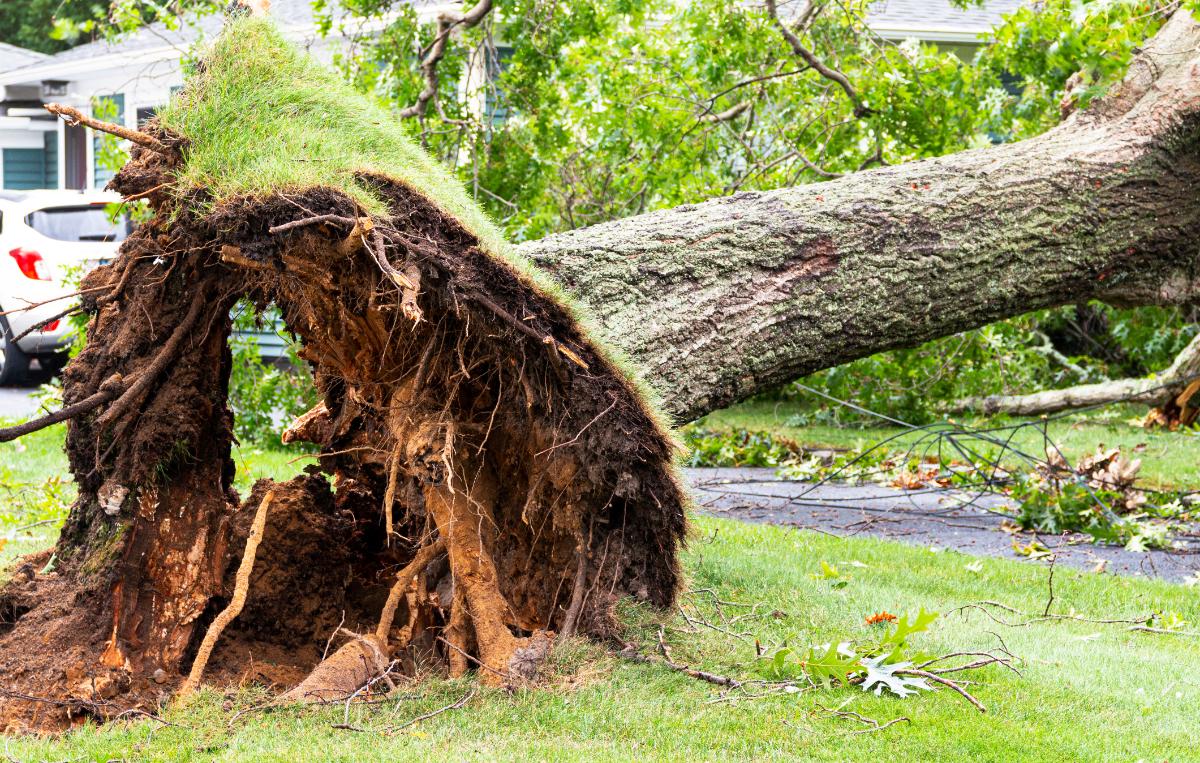
A tree with butt rot fails in a different way than one with trunk rot. Here, the base of the tree loses its grip first, and the whole tree tips over, roots and all, before the trunk ever gets a chance to snap.
Why the Mushroom Means the Decay Is Already Advanced
The mushroom is the last part of the fungal infection to show up. The mycelium, the white thread-like network that does the actual wood decay, has been spreading inside the tree for years before the first mushroom fruiting body pushes out. The mushrooms do not appear until well after the mycelium has attacked the tree. By the time the chicken of the woods mushrooms appear, the tree’s health is already compromised.
The extensive decay can be present without any external signs. Because Laetiporus species attack heartwood and not sapwood, the tree’s outer growth keeps going while the inside hollows out. This means the tree keeps growing as usual, leafing out, and looking essentially fine on the outside while the heartwood inside is being progressively hollowed and weakened. The presence of fruiting bodies indicates that extensive decay is already present in either the roots or the trunk.
Other clues that your tree might be rotting inside include a swollen base, cracks or seams in the bark, big dead branches up in the canopy, or cavities where squirrels or birds have moved in. If you spot any of these, it’s time to call in a qualified tree risk assessor.
Structural Failure and the Wind Question
An infected tree usually fails in one of two dramatic ways: either the trunk snaps somewhere along its length, or the whole tree topples over because the roots can’t hold on anymore. Both these things usually happen during high winds, and both can come with zero warning. Mature oaks with advanced L. cincinnatus at the base have been known to fall over in a single storm.
How much risk your tree poses depends on how close it is to your house, driveway, sidewalk, or even your neighbor’s place. If a tree has serious decay, anything within 1.5 times its height is in the danger zone. That means a 60-foot oak could hit something up to 90 feet away, which, in most yards, covers just about everything.
How Long Does the Tree Have
There is no published timeline for how quickly a Laetiporus-infected tree will fail. There are too many variables that can play a part, including tree species, tree age, where the rot is, how much decay there is, the soil conditions, wind exposure, and even the tree’s own ability to fight off the infection.
Trees can actually put up with a surprising amount of decay, and some live for decades with chicken of the woods inside. Lots of mature trees have some internal rot, and just spotting a mushroom doesn’t mean disaster is right around the corner. If the tree keeps adding enough new wood each year to keep up with the decay, it might hang on for many, many years.
You can’t judge the amount of decay just by looking. The size of the mushrooms outside doesn’t tell you much about what’s going on inside. A tree with a tiny rosette at the base might be completely hollow, while one with huge shelves could still be mostly solid. Some infected trees last for decades, while others might come down in the very next storm.
What to Do When Chicken of the Woods Appears on a Yard Tree
Get a tree risk assessment
If you spot chicken of the woods mushrooms, it’s time for a thorough tree risk assessment. Arborists have ways, most of them minimally invasive to the tree, to figure out how much wood is decayed and exactly where, all without cutting the tree down.
Document the fruiting bodies
The location and number of mushroom fruiting bodies should be documented with photos. This helps confirm the species (L. sulphureus on the trunk versus L. cincinnatus at the base or on roots), tracks the development of the infection over seasons, and gives the arborist information about where to focus the assessment. Photos are also useful if the mushrooms get knocked down by a lawnmower or weather before the arborist can see them in person.
Removing the mushroom
Cutting off the mushrooms does not stop the infection. The fruiting bodies are just temporary. It is the mycelium that causes the wood decay inside the tree, and it cannot be removed with fungicides or any other treatment. There is nothing that can be done to cure a tree once root rot or butt rot is established.
If you’re interested in eating them, then definitely remove them. Even if it doesn’t help the tree, at least you’ve got a nice meal. To learn more about harvesting chicken of the woods mushrooms, check out How To Prepare Chicken of the Woods Mushrooms: Cleaning, Prepping, and Cooking.
Maintain tree health
If the arborist says your tree is safe to keep, your job is to help it stay as healthy as possible so it can keep growing new wood to balance out the decay. That means keeping a big ring of mulch or wood chips around the base for moisture control, managing pests and diseases, improving soil quality, and pruning to cut down on how much the canopy sways in the wind.
Removal of the tree
Sometimes the assessment shows the decay is just too far along, and the tree is a real risk to people or property. In that case, removal is usually the safest choice. But if the tree is out in the woods, far from buildings or people, it’s fine to leave it. The cavities left by the decay are perfect nesting spots for wildlife.
Preventing Infection in the First Place
The chicken of the woods mushrooms cannot infect a tree without an already available entry point. The fungi sneak in through wounds, including pruning cuts, damage from frost, broken branches, and damage to the roots.
There are a few simple ways to reduce the risk of infection. The main way is to prevent wounds from happening, which allows the chicken of the woods access. Prune sparingly and only during the dormant season, don’t dig or build trenches near the tree’s root zone, and don’t change the soil around established trees. Putting a layer of mulch around the base of the tree will help with moisture control, and it also keeps lawnmowers and string trimmers from chewing up the bark, which is one of the most common ways trees get injured in yards.
These steps will not protect a tree that is already infected, since the mycelium is established before any visible sign appears. However, they do lower the chances that a healthy tree will pick up a new infection.

Leave a Reply