


In North America, morel names are abundant, often bizarre, and more common than for just about any other edible mushroom in North America. The same morel that one forager in Vermont calls a honeycomb mushroom is a hickory chicken six states away, and a merkel or a molly moocher in the next valley over.
These regional nicknames have been around for centuries and have a long tradition. Most of the morel names come from how the mushroom looks, how it tastes, where it grows, when it fruits, and from the family stories passed down in the places where people hunt them every spring.
The Word “Morel” Itself
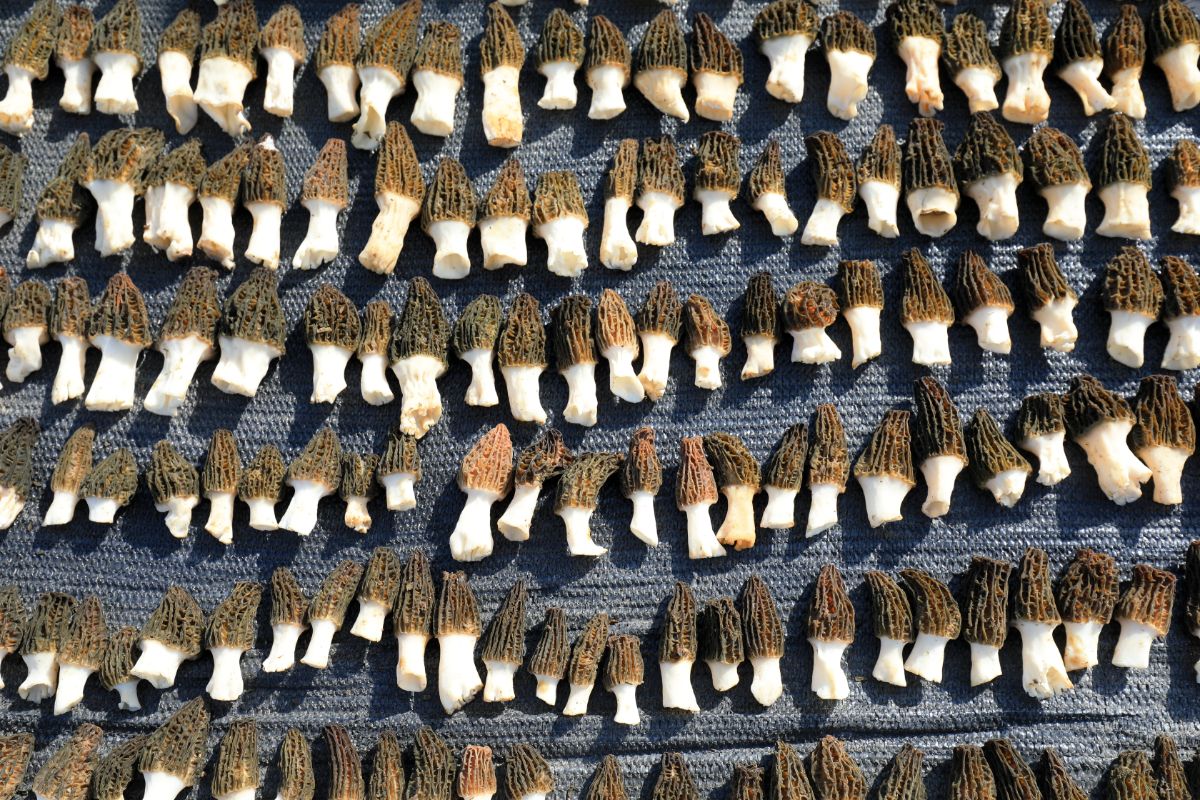
The word morel came into English from the French, but it started in German. The Old High German word morha means “edible root” or “tree root,” and the diminutive of that word, morhila, was used as the morel name. It’s possible the early Germans were thinking of the morel’s shape when they named it, how it pushes up from the soil, like a small root or knob (That same German root gave the modern German word for carrot, Möhre — morels and carrots share the same linguistic origin.)
The Old High German word morhila eventually developed into the Middle High German word morchel, which is the morel name still used in modern German today. Morels are called Morcheln. The yellow morel is the Speisemorchel, or edible morel. The black morel is the Spitzmorchel, or pointed morel.
The French borrowed the word morchel from the Germans, and by the 1500s, they had reshaped it to fit French pronunciation and called the mushroom morille. In the 1670s, English speakers heard the French word morille, and over the next century or so, they slowly changed the pronunciation of the morel name. The double “L” in the middle softened, the final “e” fell away, and the word became the one still used today: morel. The path was German morchel, French morille, and finally, English morel.
Want to learn more about morel species and how to find them?
United States Morel Names
Merkel and Miracle (Appalachia)
The southern Appalachians, especially West Virginia and parts of western Virginia, use the morel names merkel, or miracle. The name comes from a folk pronunciation of the word miracle, smoothed out by a strong Appalachian dialect. The story behind it is that a family living in the mountains was saved from starvation by eating morels that grew around their house. After that, the mushrooms became known as miracles, and then after many generations, miracles became merkels in local speech.
There may be a German connection at work here, also. The genus name Morchella and the old German word morchel are close enough to merkel that the morel name could have a separate origin and was brought over by German-speaking settlers.
Haystack (Appalachian)
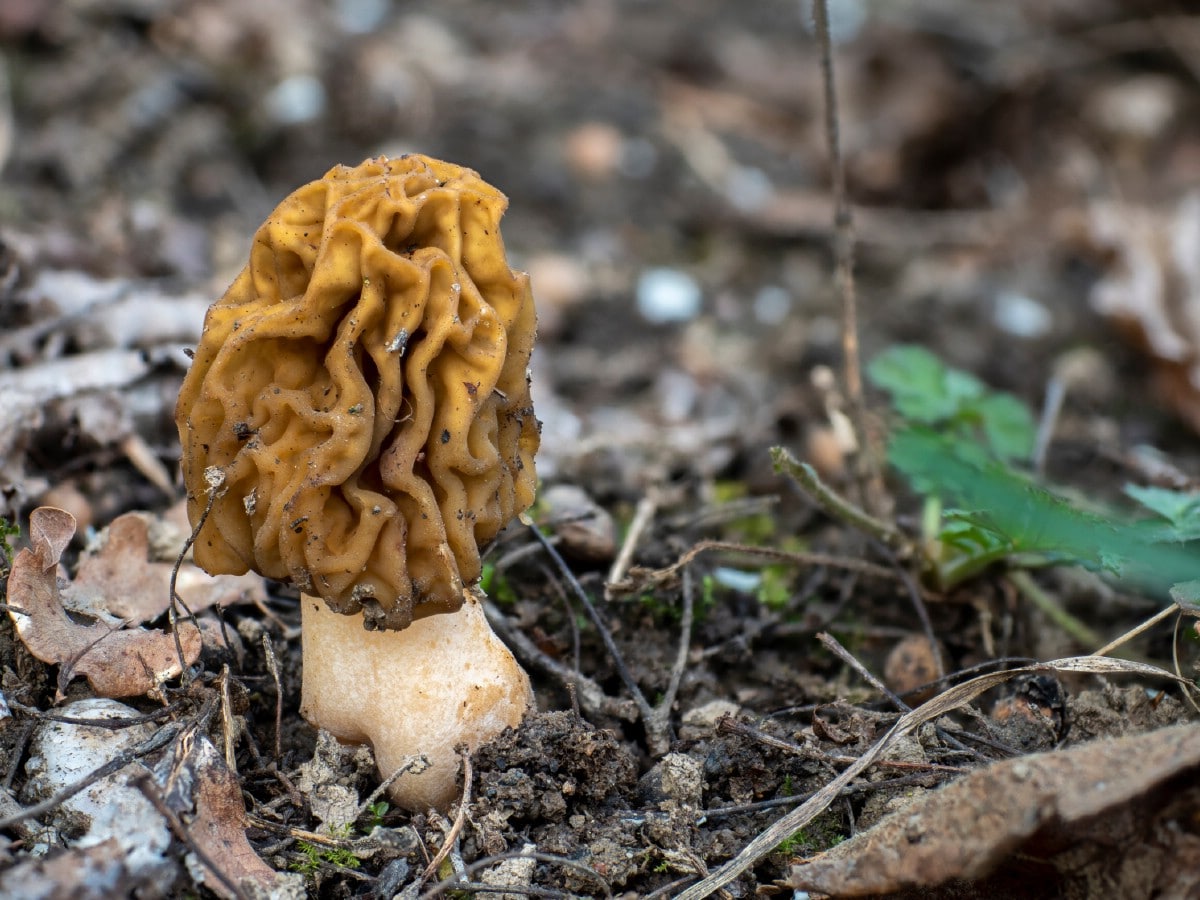
The morel is often called a haystack because the upright cone shape of the cap has a passing resemblance to a small piled-up haystack in the field.
Snakehead (Appalachian)
The snakehead morel name refers to the cap shape from a different angle. The long, conical, slightly drooping head of a black morel looks a bit like the head of a snake.
Molly Moocher (West Virginia/Appalachian)
The molly moocher name is unique to central Appalachia. No one knows exactly where the name came from, but there are several theories.
The simplest theory is that molly moocher is a localized transformation of the words “morel mushroom” said quickly together in a thick brogue. Another theory revolves around a second meaning for the word moocher. Most people know this word as meaning taking things from other people. But, it can also mean to walk slowly without much purpose, which is what morel hunting looks like to anyone watching. The name might have stuck because of how foragers move through the woods.
Another theory links the morel names to Molly Pitcher, who was a Revolutionary War folk hero. Molly Pitcher carried water to soldiers on the battlefield and is remembered as someone who brought relief in a difficult time. In that vein, morels arrive in early spring after a long winter of scarcity, and the connection is that the mushroom, like Molly, brings welcome relief when it shows up.
The entire name Molly Moocher could be a combination of the Molly folk hero name and the word moocher, meaning someone who walks without purpose.
Muggins and Muggles (West Virginia)
In parts of West Virginia, morels are also called muggins or muggles. Neither has a documented etymology; the names may be further transformations of molly or merkel in local speech.
Dryland Fish (Ozarks and Appalachia)
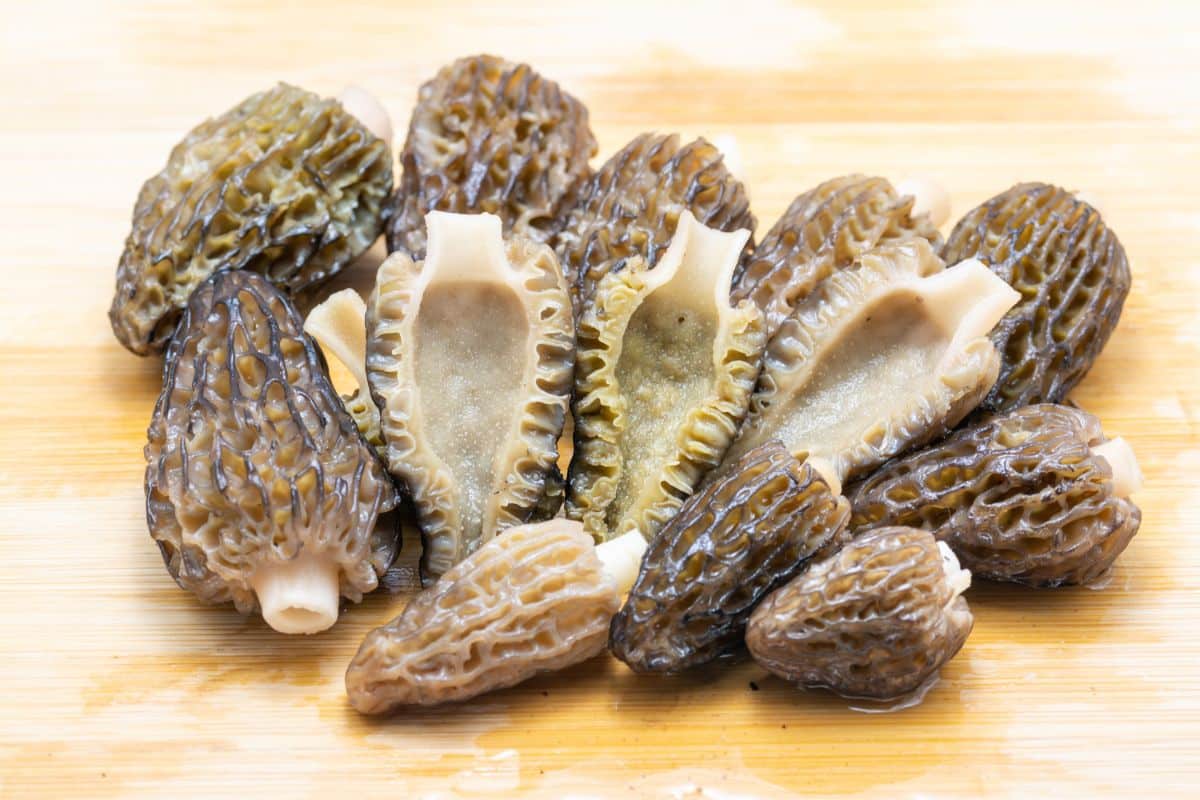
The dryland fish, also written dry-land fish or dry land fish, is the morel name in the Ozarks of Missouri and Arkansas, and in parts of West Virginia and Kentucky. There are two explanations, and both are likely correct. The first is a visual comparison. When a morel is sliced lengthwise, the outline of the cap and stem looks like a small, scaly fish. The second is a culinary comparison. When dredged in cornmeal and fried the way many southern households cook river fish, the mushroom tastes faintly fishy. Foraging for morels is called land fishing in the same regions.
Hickory Chicken (Tennessee and Kentucky)
The hickory chicken is the morel name in eastern Tennessee, eastern Kentucky, and the surrounding hill areas. The name comes from two features of the morel. The first is habitat. Morel mushrooms grow well around hardwoods, including hickory, and the association between the tree and the mushroom is well-known. The second association is what the mushroom tastes like when it is sliced, dredged in flour, and pan-fried. The flour-fried preparation gives the mushroom a chicken-like flavor.
Peckerhead (Midwest/Widespread)
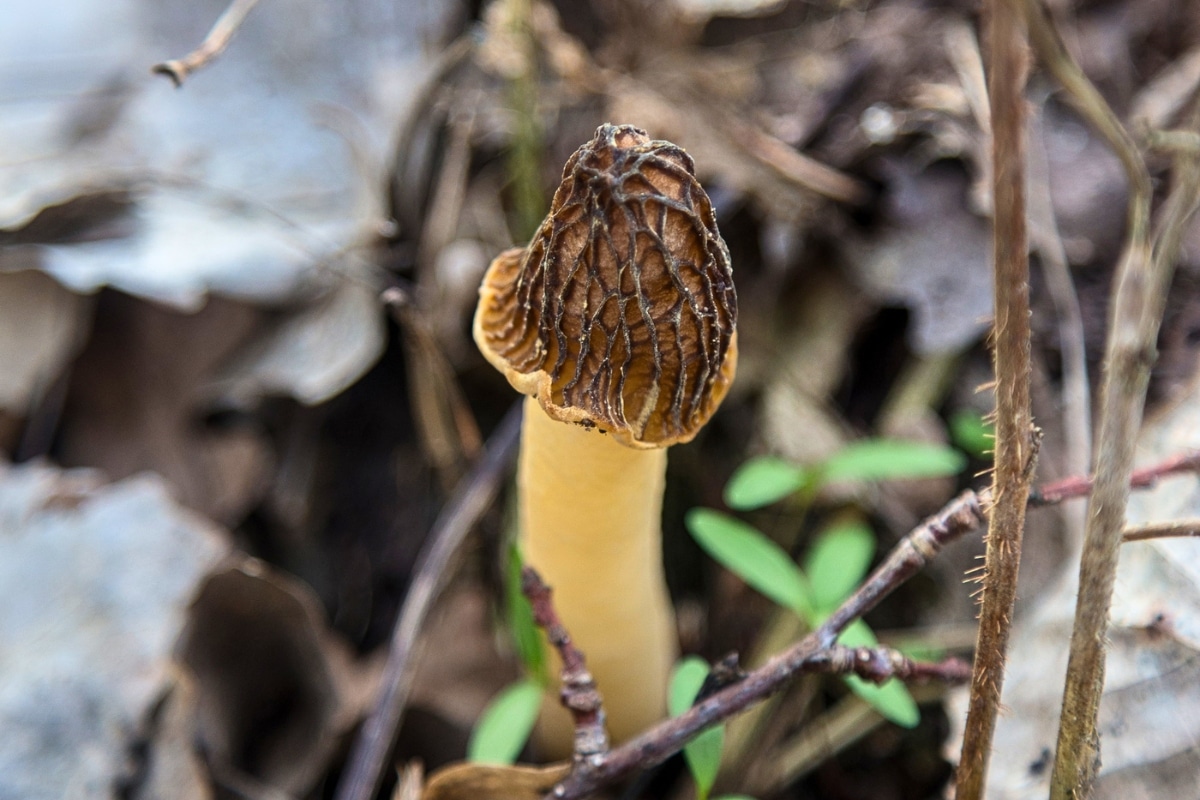
The peckerhead is a regional name for the half-free morels, Morchella punctipes east of the Rocky Mountains and Morchella populiphila in the Pacific Northwest. The half-free morels have an exaggerated, elongated stem and a small cap. By maturity, the stem can grow to two or three times the height of the cap, and the resulting silhouette gives the mushroom its earthy nickname. This morel name is common among Midwestern foragers. The name dog pecker morel is another version of the same idea.
There is also a possible double meaning. The half-free morel was first formally described by the New York State mycologist Charles Peck in 1903.
Mikai Thi (Omaha-Ponca)
The Omaha-Ponca name for morels is Mikai thi, pronounced roughly “mee-KYE thee.” The Omaha and Ponca are two Indigenous nations that live on the Great Plains. The word Mikay means “star,” and thi means “sore.” The literal translation is “star sore.” The Omaha and Ponca collected morels and ate them boiled.
Sponge Mushroom and Honeycomb Morel
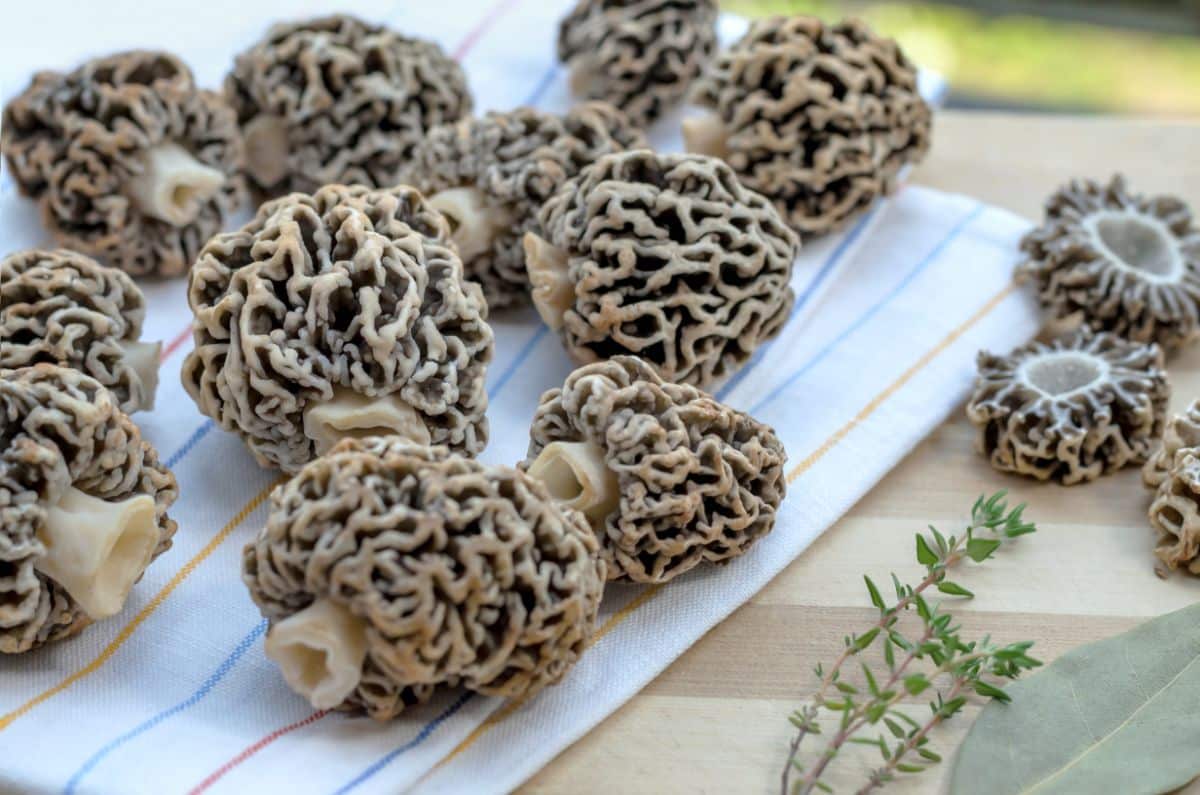
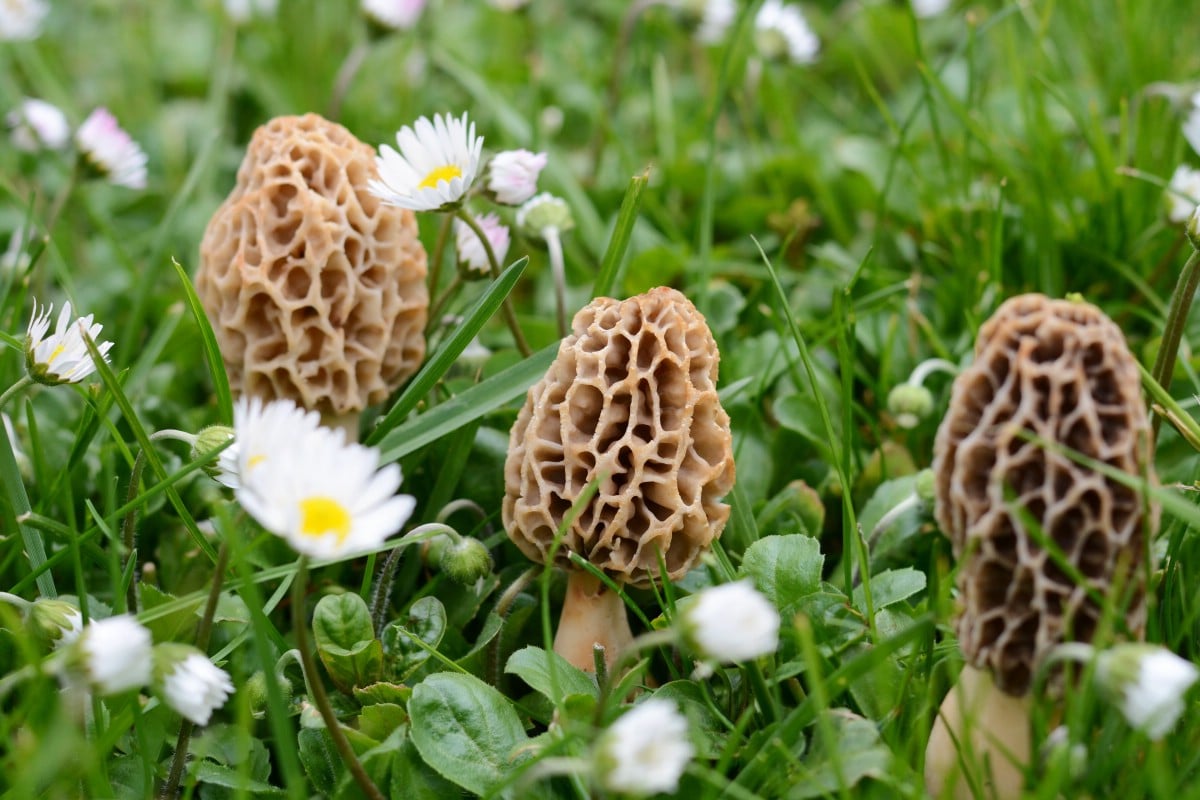
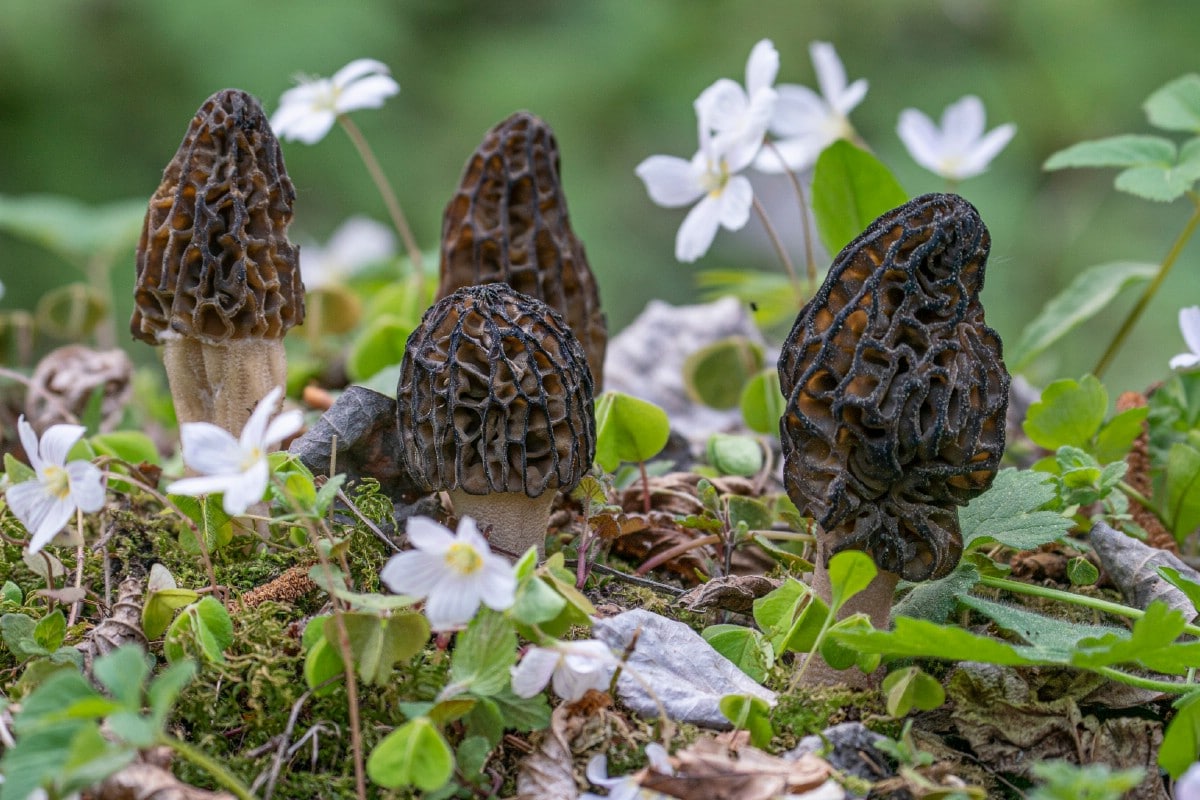
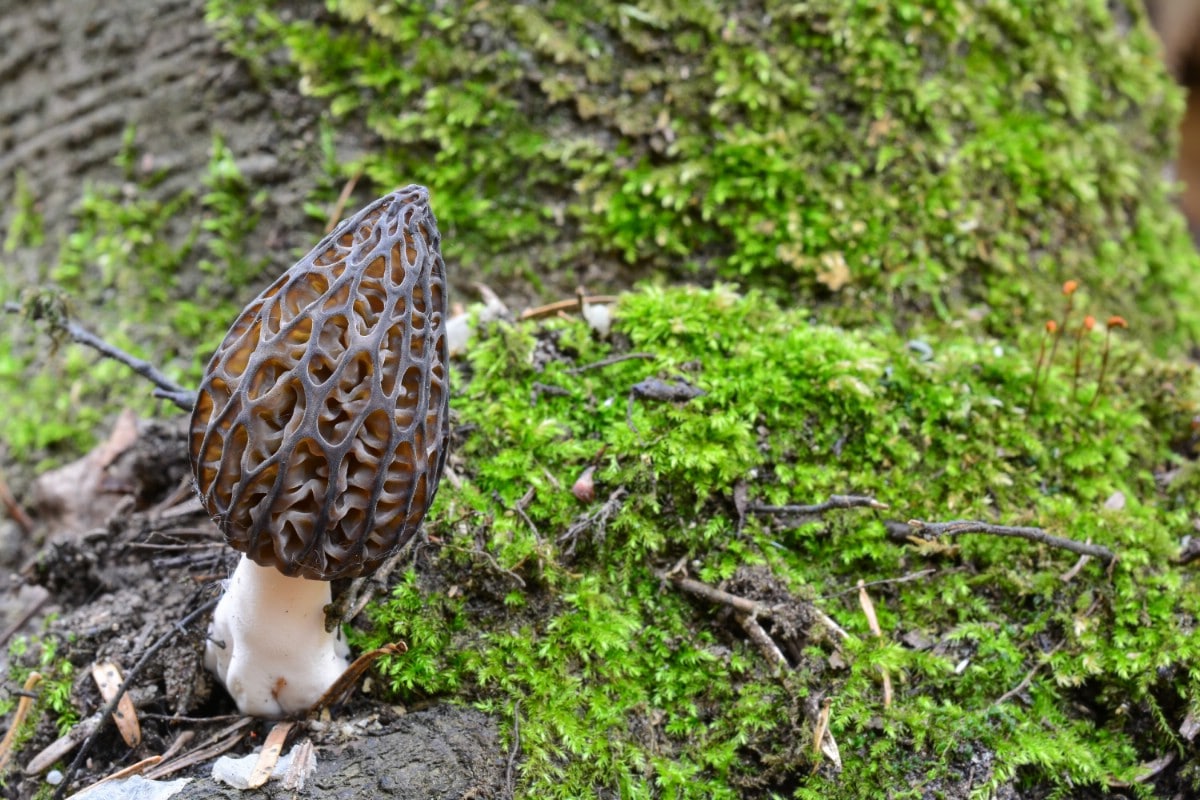
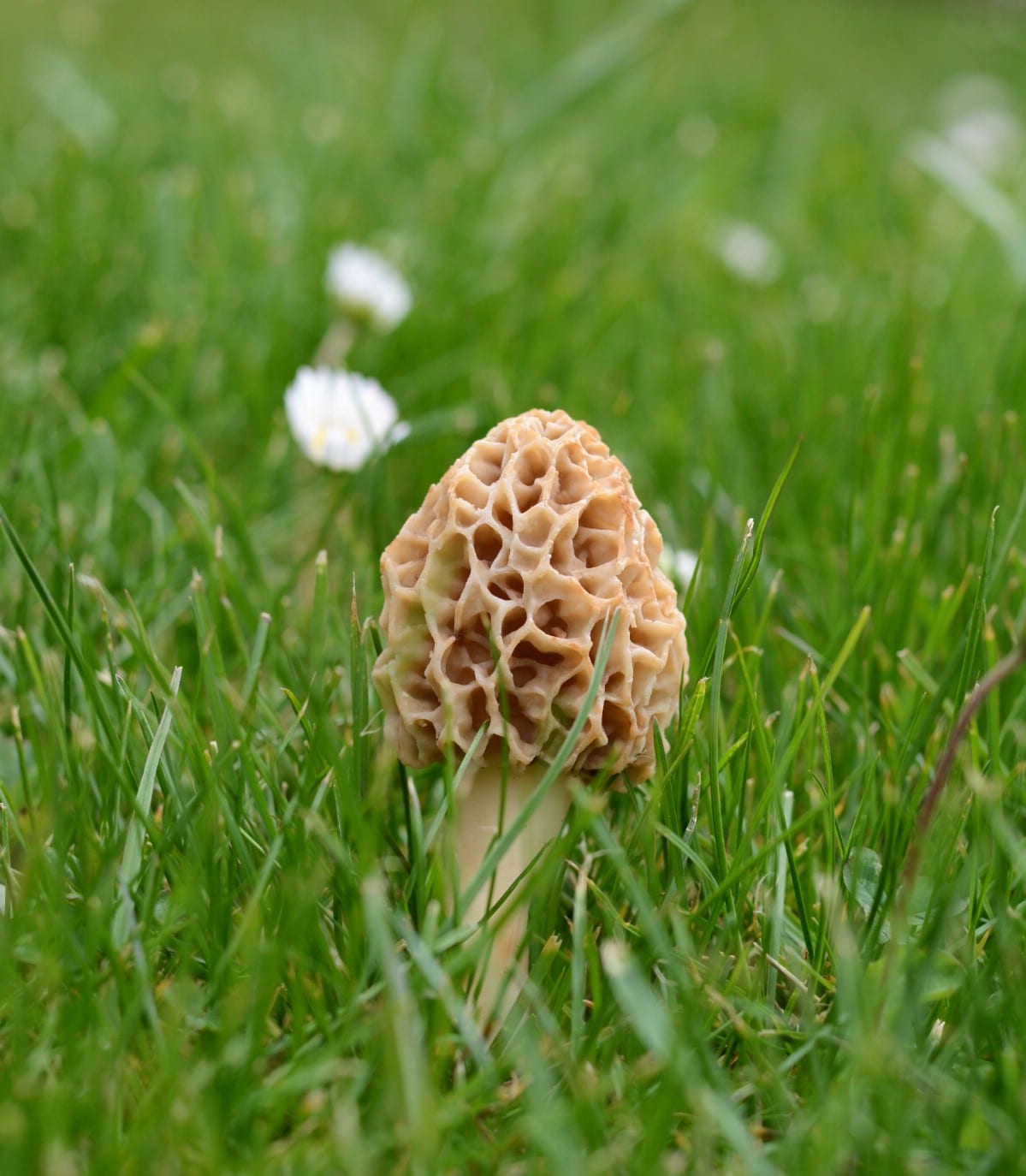
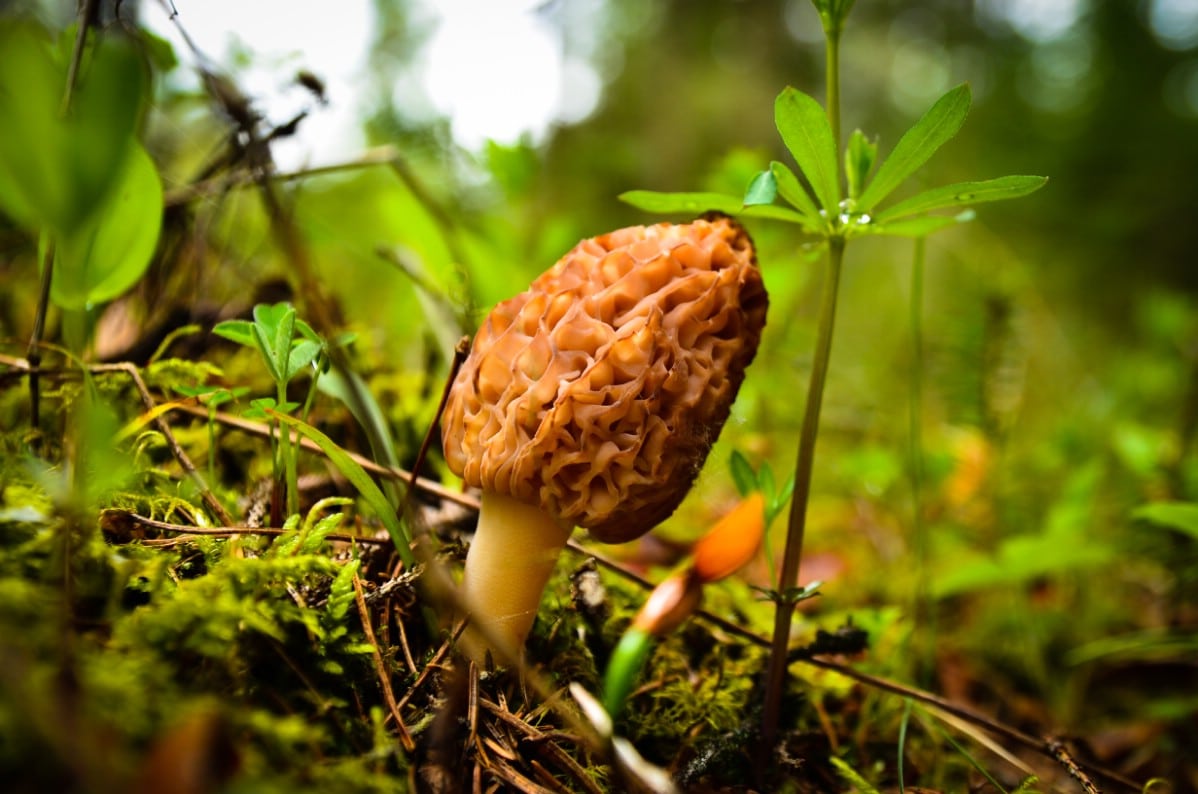
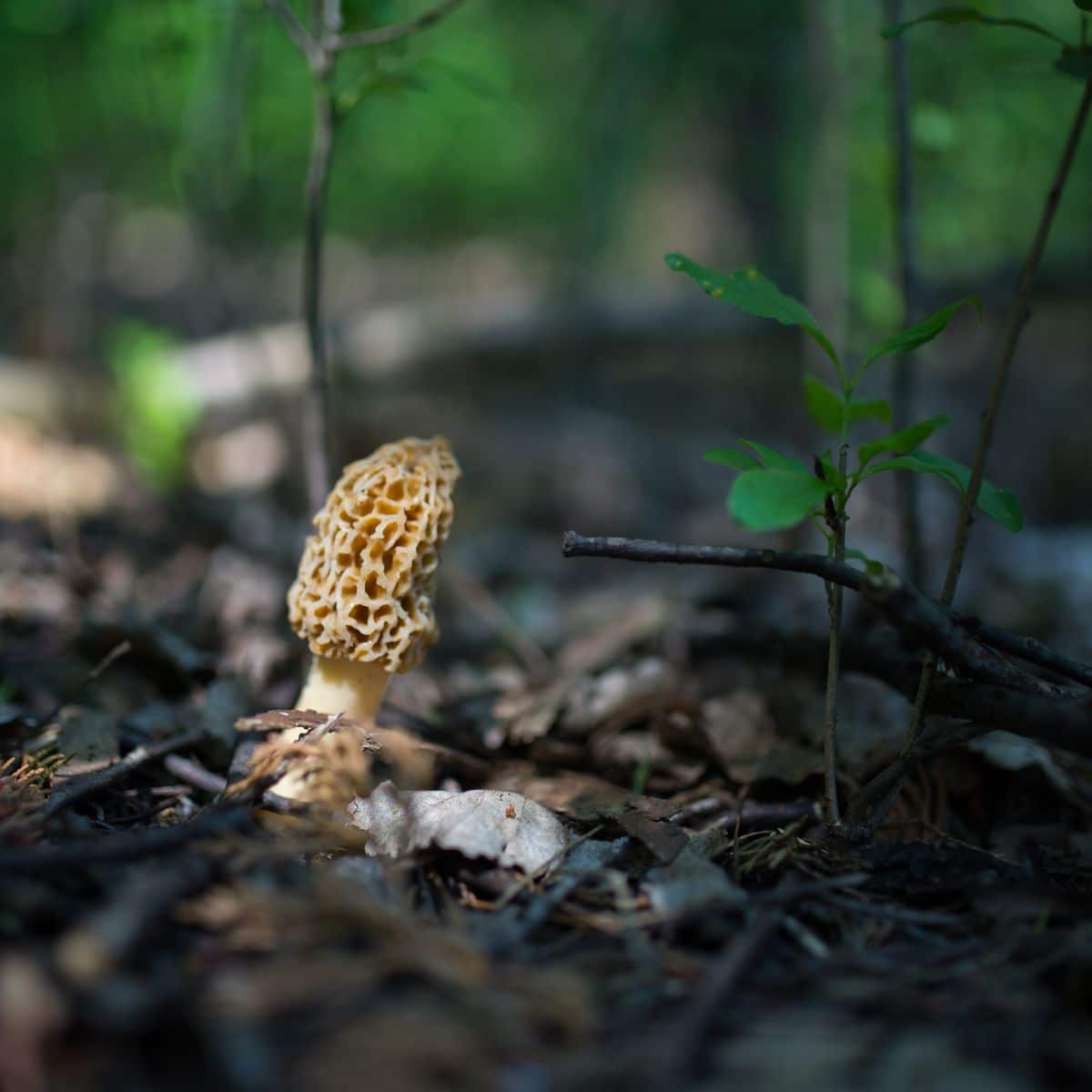
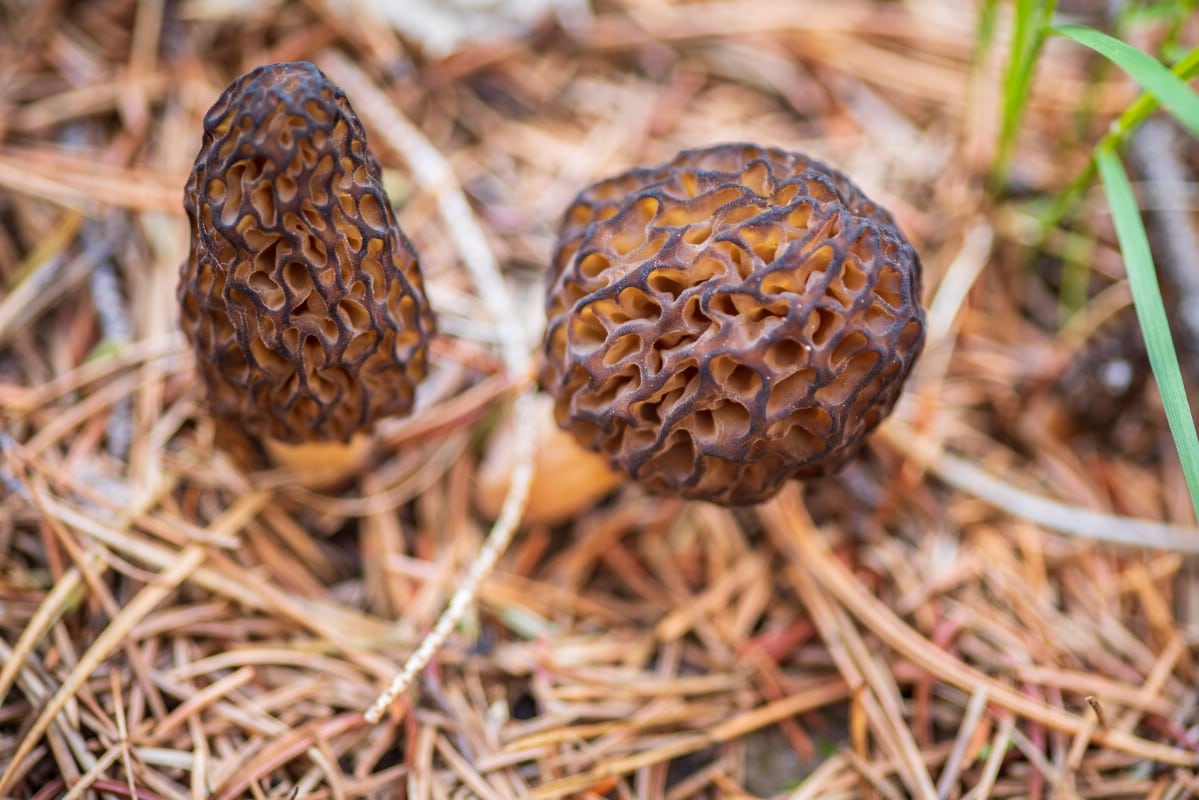
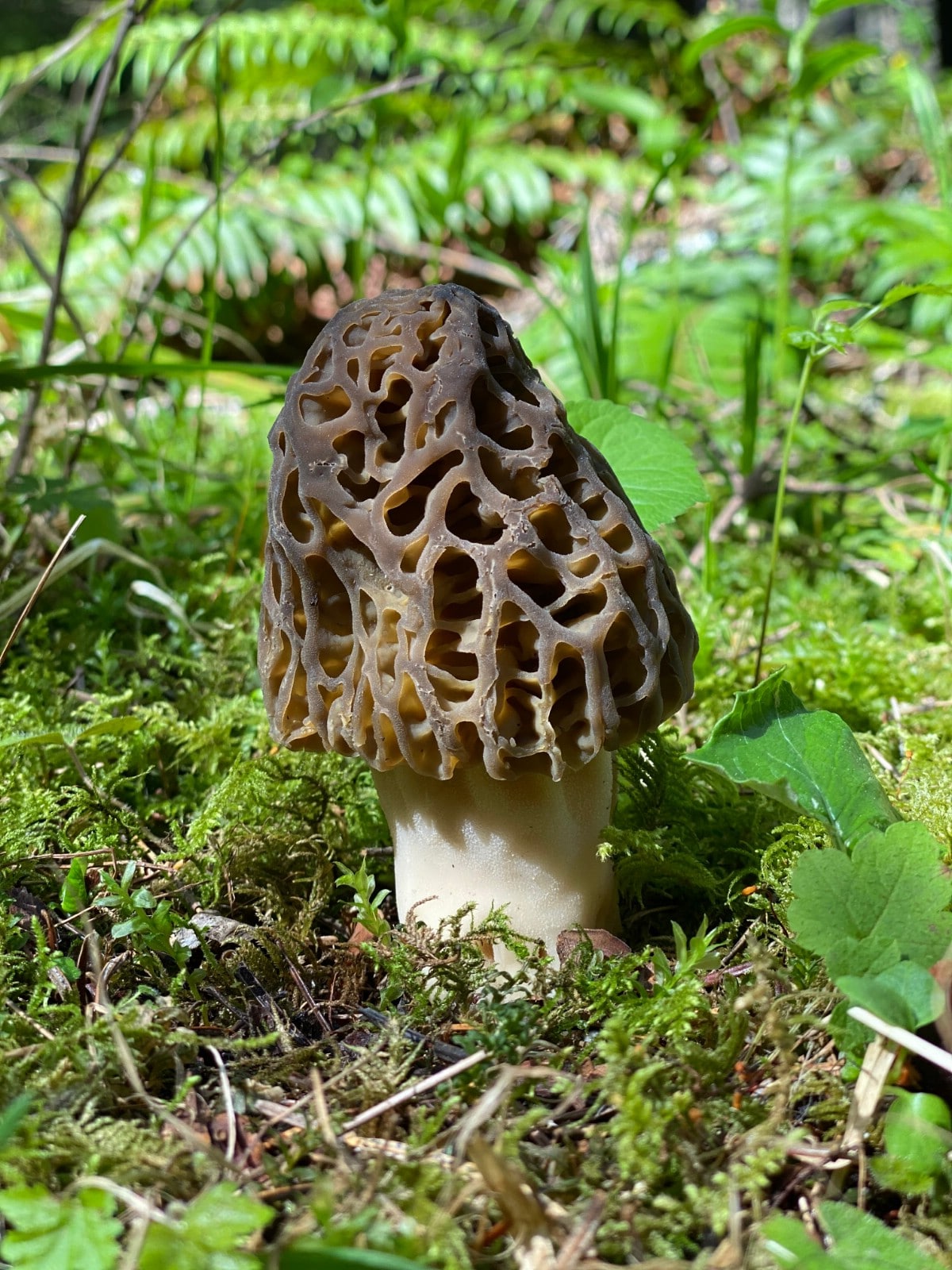
The sponge mushroom is one of the more widely used English names for the morel, based solely on the appearance of the cap. The deep pits and ridges resemble the surface of a sea sponge. The honeycomb morel references the same visual. The pattern of pits and ridges also looks like the cells in a beeswax honeycomb.
Sponge mushroom and honeycomb morel names are widely used across North America. The deep pits and ridges resemble the surface of a natural sea sponge. The honeycomb morel references the same visual; the pits and ridges look like the cells in a beeswax honeycomb. The names go back at least to the 1800s in British field guides and were brought to North America by English-speaking settlers.
May Mushroom
The May mushroom is what some North Americans call the yellow morel (Morchella esculenta) because of its consistent fruiting in that month. The actual fruiting season runs from February to July, depending on where the forager is, with the morel arriving later as the season moves north.
Pine Cones
The morel cap is sometimes described as resembling an inverted pine cone, with the same overall conical shape and the same pattern of ridges and deep pits running down the surface. The comparison appears in many North American field guides and foraging accounts, though “pine cones” is not in widespread use as a stand-alone common name for the morel.
International Morel Names
Gugu Shamu (Tibetan Plateau)
The morel is called the gugu shamu, or cuckoo mushroom, on the Tibetan Plateau. The name comes from the time of year morels show up. The morels fruit in spring at about the same time the cuckoo bird returns to the high country, and the two arrivals are linked together in the naming. The connection between the cuckoo and the morel is also recorded in the USDA Forest Service publication on morel ecology and management.
Guchi chyau (Nepal)
The word guchi refers specifically to the morel and is used across Nepal and South Asia, where it appears as guchi, gucchi, gucchhi, and other spellings depending on the region. The word chyau is the Nepali word for mushroom.
Gucchi (Northern India)
In northern India, morels are widely called “gucchi“, but local dialects have their own variants. In the Bhaderwahi dialect of the Doda district of Jammu and Kashmir, the morel is called thunthoo. In Kashmiri, it is called kani ghuch.
Yang Du Jun (China)
In Chinese, the morel is called yang du jun (羊肚菌). Yang (羊) means sheep or lamb. Du (肚) means stomach or belly, and Jun (菌) means fungus or mushroom. The full name translates as “sheep stomach mushroom.” The name comes from the resemblance between the pitted, honeycombed surface of the morel cap and the lining of a sheep’s stomach (rumen).
Amigasatake (Japan)
The Japanese name for morels is amigasatake( 編笠茸). Ami refers to a woven net or mesh; Gasa is a traditional broad-brimmed conical straw or sedge hat worn by farmers, travelers, and Buddhist pilgrims in old Japan; and Take means mushroom. The full name translates as “woven mesh hat mushroom.” The name refers to the cap of the morel, which has the conical shape of an amigasa hat and the mesh-like pattern of the woven mesh on the surface.
La morille (French)
In French, the morel is la morille. The word has been in use in French since at least the 1500s. The French borrowed it from the Old High German morchel and reshaped it to fit French pronunciation. Morille is the standard French name for any species in the genus Morchella.
La spugnola (Italian)
The name la spugnola comes from the Italian word spugna, meaning sponge. Morels are called this because of the sponge-like looking surface of the cap.
Colmenilla (Spanish)
The name colmenilla comes from the word colmena, which means beehive. Morels are called this because the honeycomb-patterned cap looks quite a bit like a beehive. In some parts of Spain, the French name la morille is used.
Múrgola (Catalonia)
In the Catalan language of northeastern Spain, southern France, Andorra, and the Balearic Islands, the morel is called múrgola. The name is closely related to the French word for morel, morille, and the Spanish word morilla. It is possible the word was borrowed from one of them and then adapted to Catalan.
Mazorca and mazorquita (Spain)
Mazorca is the Spanish word for an ear of corn or any cylindrical, ridged seed head. Mazorquita is the diminutive form of that word. Both names are used for the morel because the pitted, ridged cap resembles a small ear of corn.
Smardze (Polish)
The Polish name for the morel is smardz (plural smardze). The most common theory among Slavic etymologists, though not firmly proven, says the root of this word means “to wrinkle,” “to shrivel,” or “to shrink up,” referring to the wrinkled, pitted look of the morel cap.
Smorchok (Russian)
The morel is smorchok (сморчок) in Russia, which translates as “common shrunken mushroom.” The name comes from a Russian root meaning “shriveled” or “wrinkled,” and is a reference to the appearance of the cap.
Kucsmagomba (Hungary)
In Hungary, the morel is called kucsmagomba (KOOCH-ma-gom-ba). This is a combination of the words ” kucsma, ” which is a thick, low-crowned fur hat traditionally made from the pelt of a young lamb and worn by Hungarian shepherds and herdsmen in cold weather, and “gomba,” which means mushroom. The literal translation is “fur hat mushroom.” It got this name because the shape of the cap is the same rounded, ribbed look as a worn shepherd’s kucsma.
Zbârciog (Romanian)
The morel is called zbârciog, pronounced: “zbur-CHOG.” The word has the same root as the Romanian verb meaning “to wrinkle” or “to shrivel,” which is a reference to the wrinkled, pitted surface of the cap.
Morilla (Latin America)
Morilla is the most widely used name for the morel across Latin America. The word is the Spanish form of the French morille. It is used in Mexico, Argentina, Chile, and most other Spanish-speaking countries.
Cagarria (Latin America, Spain)
Cagarria is a Spanish name for the morel used in both Spain and parts of Latin America, particularly Chile. The origin of the word is debated, but it is recorded as dating back to the 1800s.
Elotitos (México)
In Mexico, one of the regional names for morels is elotitos, which translates as “little corn cobs.” The name comes from the resemblance between the morel cap, with its rows of pits and ridges, and a small ear of corn. Elote is the Mexican Spanish word for fresh corn on the cob; the name elotitos is the diminutive form.
Viejitos (México)
Another Mexican regional name for the morel is viejitos, which translates as “little old men.” The name refers to the wrinkled, deeply pitted cap, which looks like the wrinkled face of an elderly person.
Choclos (Chile)
Choclos means corn cobs in Chilean and Andean Spanish, from the Quechua word chuqllu. The name references the resemblance between the morel cap, with its rows of pits and ridges, and a small ear of corn.
Potos (Chile)
Potos is a Chilean colloquial term for the buttocks or rear end. The name calls out the rounded, lobed shape of some morel caps.
Moras (Chile)
Moras means blackberries in Spanish. The morel got this name because its bumpy, multi-lobed texture looks similar to a cluster of blackberries.



Leave a Reply