
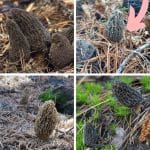
Burn morels are morels that fruit prolifically in conifer forests on the west coast in the spring after a fire. The fruiting is usually concentrated in the first year, and then, by the second year, the morel fruiting drops off sharply. By year three, the morels are mostly gone. This is a pattern that occurs across conifer forests from the Sierra Nevada to interior Alaska.
What foragers lump together as “burn morels” is several species with overlapping but distinct behaviors. Because they often show up in huge numbers, burn morel locations are highly coveted in the foraging world, and many people spend a long time looking for them. Other morel species are also highly sought after, but burn morels are the dream.
Curious about all the morel species — Learn about the different types and where and when they fruit — The 18 Morel Mushroom Species of the United States
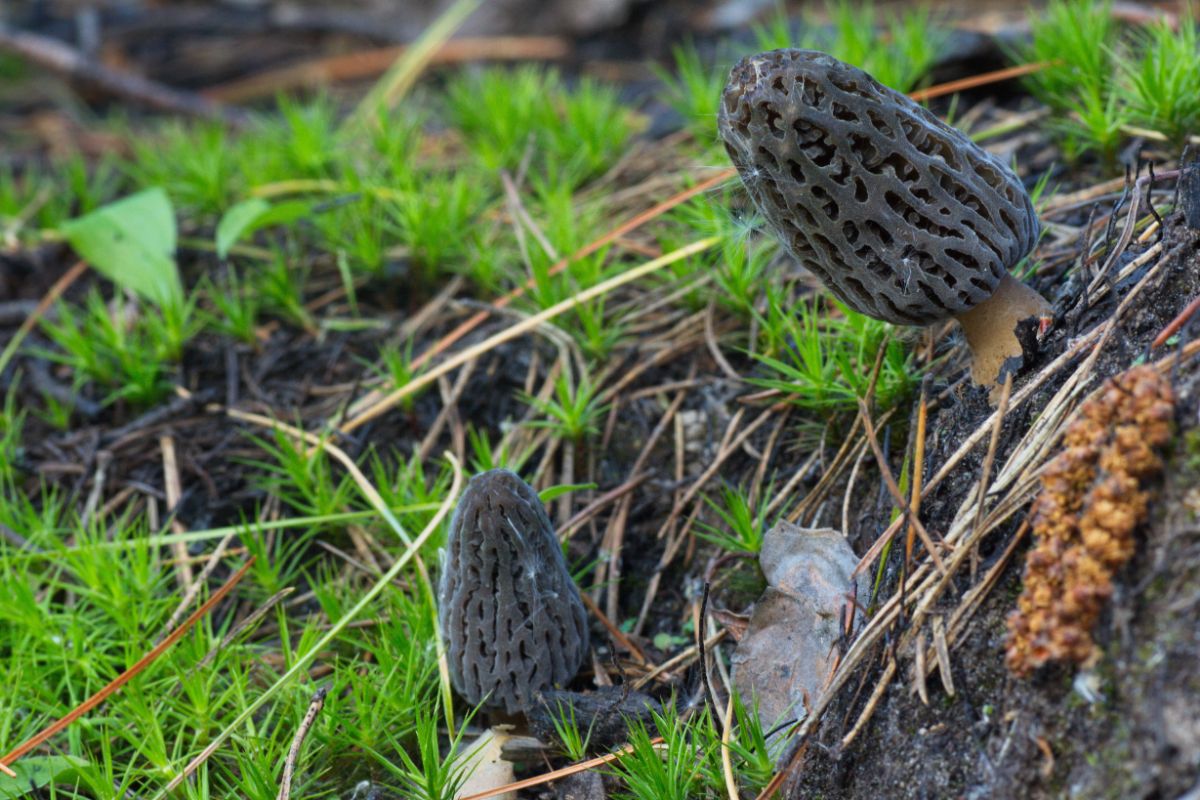
What Are Burn Morels?
The Signature Burn Morel Species: Morchella tomentosa
The burn morel that most western pickers chase is Morchella tomentosa. To commercial pickers, it is known as the gray morel (important to note that foragers in the eastern states call another morel species, Morchella esculentoides, the gray morel — confusing!).
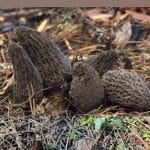
The young specimens of this species are black, but both the cap and stem are covered in fine grayish hair, which gives them an extremely fuzzy appearance. With age, though, the hairs fade and almost disappears. The cap also fades to gray, tan, yellow, or whitish, especially in full sun. There is a lot of variance in color with this species, depending on what stage you find it in. If you see a fuzzy morel, though, it’s this one, as it’s the only one to look like that when young.
Morchella tomentosa grows from Colorado to northern California and Alaska, and almost exclusively fruits at high elevations in burned conifer forests. The fruit body is 1 to 4 inches tall, and the stem is usually swollen at the base.
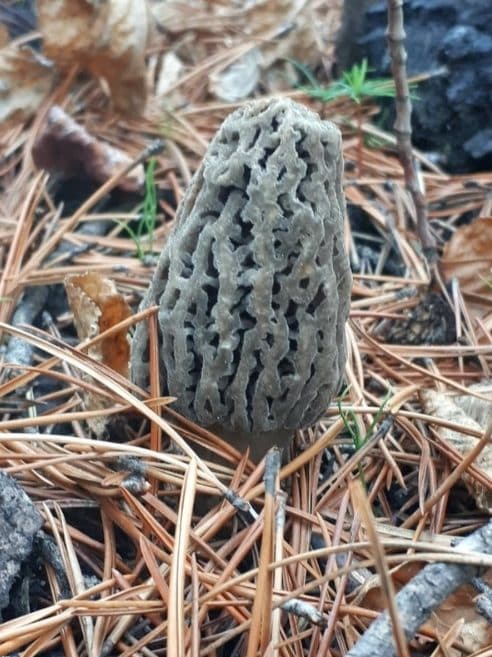
Morchella tomentosa by murkmann on Mushroom Observer
Other Burn Morel Species
The other three burn morels in western North America are all black morels and grow in the same conifer burn sites as M. tomentosa. They look almost identical to one another and can’t always be reliably told apart in the field.
Morchella sextelata – A burn-site black morel with a conical cap up to 3 inches tall, yellowish-brown when young and almost black at maturity, and indistinguishable from M. septimelata without DNA testing.
Morchella septimelata (M. eximia) – A burn-site black morel that looks the same as M. sextelata and grows in the same fire-affected conifer forests at elevations of 3,300 to 6,600 feet, separable from its lookalike only by DNA.
Morchella capitata (M. exuberans) – A burn-site black morel, sometimes called a greenie or pickle for its olive-toned young pits. It has a layered, chambered stem, which is different from other morels.
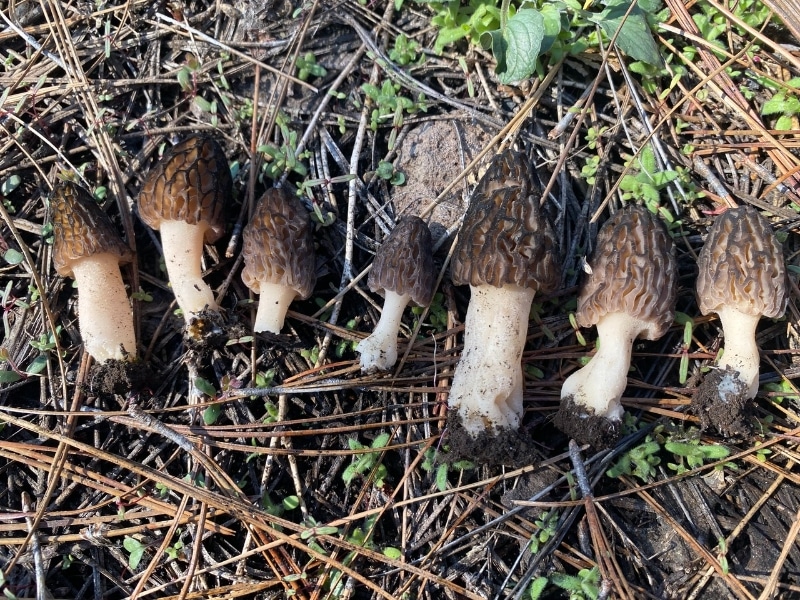
Morchella eximia group by ecthelionv on Mushroom Observer
How Many Burn Morels Fruit After a Fire
Just how prolific is a burn morel flush? The numbers from research studies are astounding. Burn morels can fruit in densities far higher than morels in unburned forest, sometimes by orders of magnitude. Field studies across the western US and Canada have measured how many morels actually fruit on a burn site, and the results give a sense of just how dramatic that flush can be.
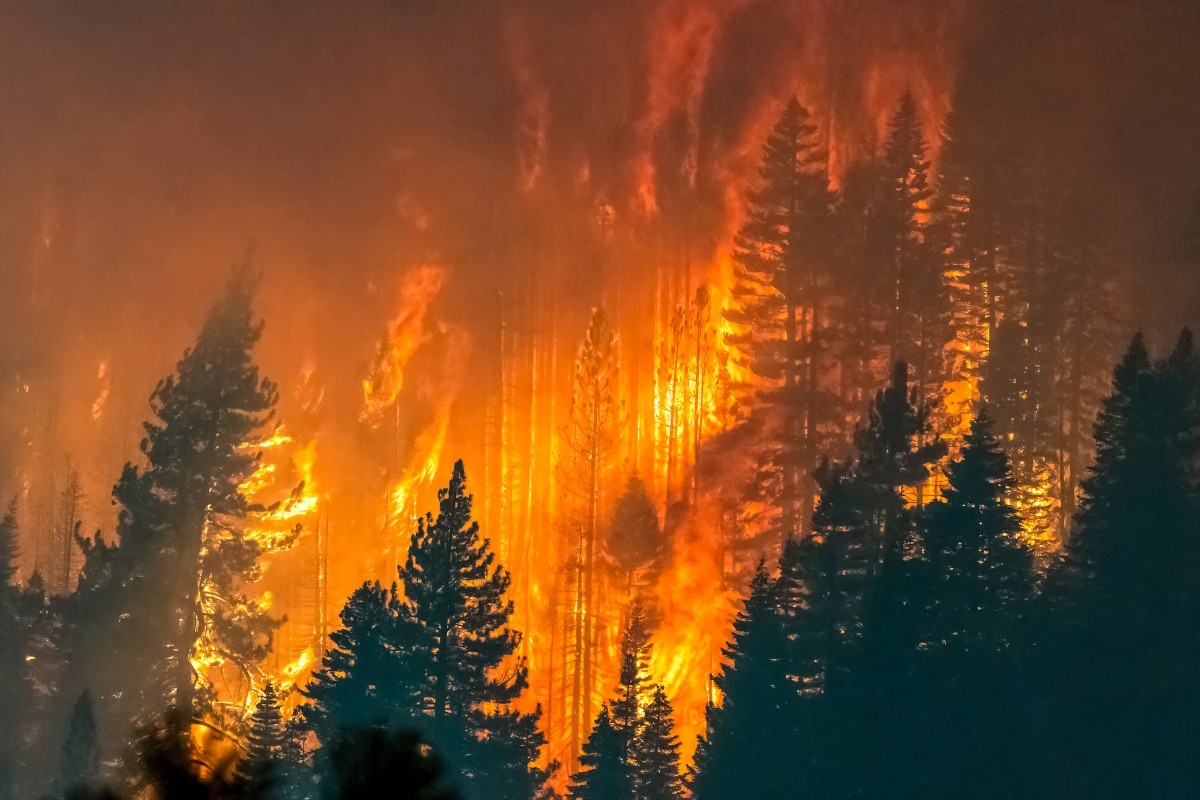
The most detailed study was done at the 2013 Rim Fire in California’s Sierra Nevada. A team at the University of Montana had been studying a long-term forest research plot in Yosemite when the fire burned through it in September 2013, killing more than 70 percent of the trees. The team surveyed 1,119 contiguous plots the following May to count the morels that came up.
The average across the burned plot was 1,693 morels per hectare. If that number is scaled to include all the white fir and sugar pine forests that burn in Yosemite each year, that works out to roughly a million morels per year in that one forest type alone. The morels grew in tight clumps, with most morels within 23 feet of another one, and the best ground was completely blackened by fire.
A team in northeastern Oregon counted 80 to 4,350 morels per hectare in their study, and researchers in the Northwest Territories of Canada estimated about 10 kilograms per hectare in a burn there. The biggest numbers come from a study in British Columbia, where morels reached 16,827 per hectare in spots where the forest ground had been 71 percent consumed by fire.
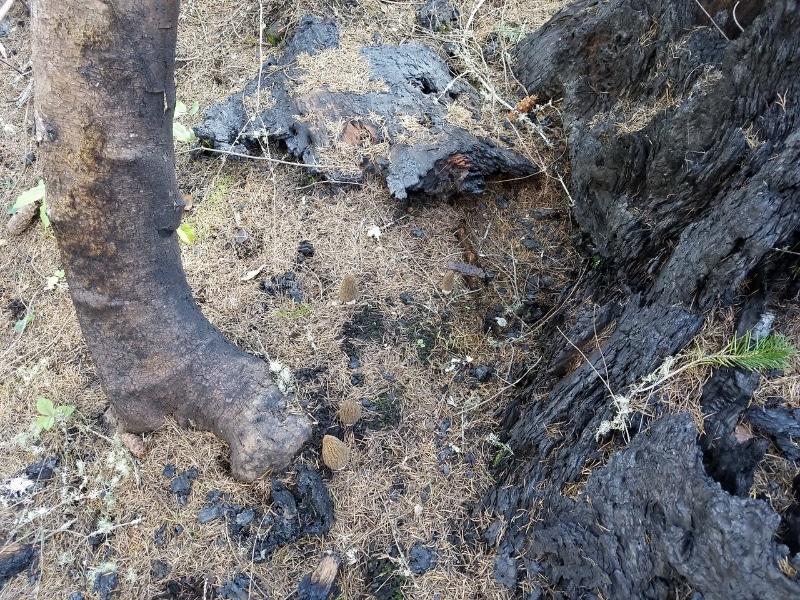
Morchella eximia group by Insporeations on Mushroom Observer
Why Burn Morels Fruit So Heavily After a Fire
Researchers have a few ideas about why burn morels go off the way they do, but no one has a complete answer, yet. One idea is about the food supply of morels. Living trees feed sugars into the soil through their roots, and morels can tap into that supply. When the trees die in a fire, that sugar pipeline shuts off. The fungus may switch over to feeding on dead organic matter and pour everything it has into fruiting before the resources run out.
A second idea is about soil chemistry. A fire raises soil pH, which then releases a pulse of nutrients, and that wipes out a lot of the soil microbes that compete with morels. The post-fire soil is briefly an open buffet for any fungus that can take advantage of it.
A third idea is mechanical. The duff layer on a forest floor is thick and dense. It might be physically blocking morel fruit bodies from pushing up through to the surface. A fire burns the duff off and clears the path.
One big part of the burn morel timing puzzle is their sclerotia. Morels form dense underground bundles of mycelium called sclerotia. These act as energy storage bunkers and are what fruiting bodies emerge from. When there is a fire, it appears to trigger many morel sclerotia to fruit all at once, in a very short window of time. Once the sclerotia have fruited out, the site is tapped. And, before the cycle can repeat, a new generation of mycelium has to grow in and build fresh sclerotia.
A 2026 study sequenced the genomes of 18 fire-loving mushroom species from burn sites in California, including the burn morel, Morchella eximia. The researchers then compared these species to their close relatives that do not respond to fire. The fire-loving fungi all carry extra copies of genes that break down the tough carbon compounds left behind in soil after a wildfire. These genes help the morels feed on burnt material that most other soil organisms cannot use.
They also found that burn morels grow more slowly than non-fire-loving species. This is important because in a burned forest, competing fungi and microbes have been killed off, so the slow growth doesn’t matter because there isn’t as much competition.
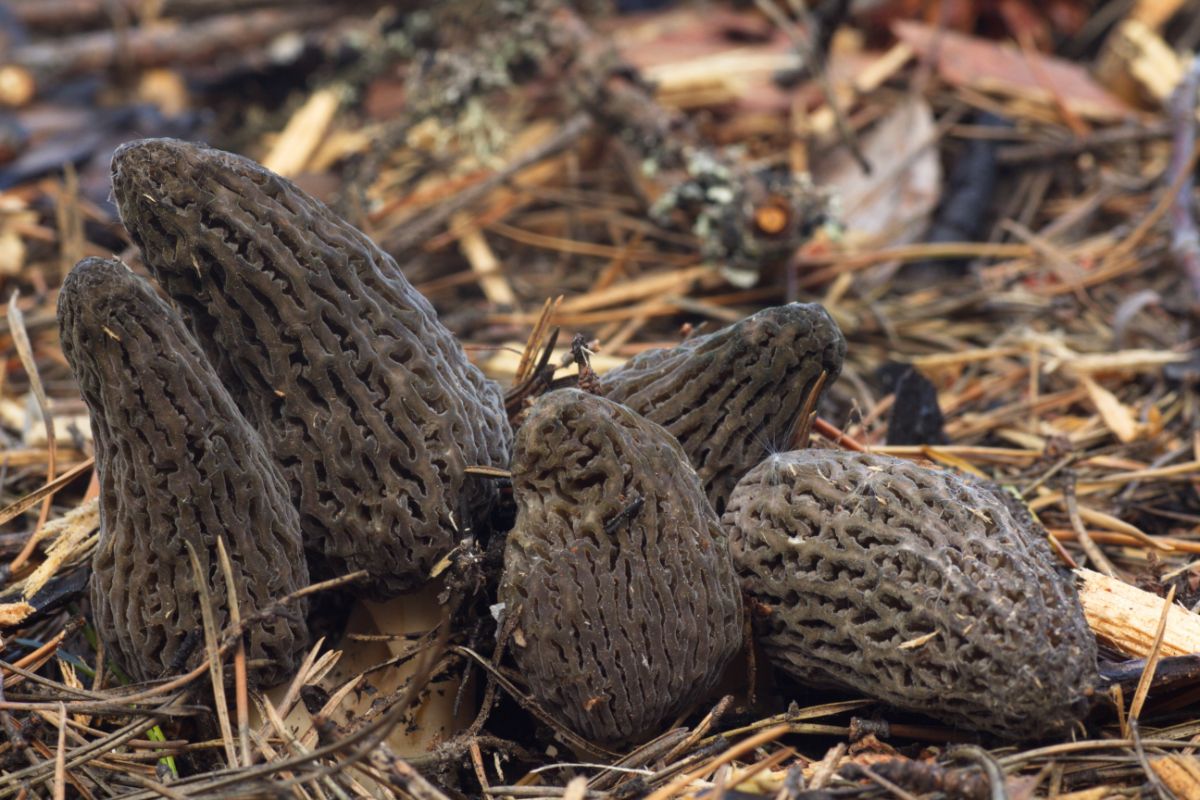
Burn Severity and Where Morels Fruit
Burn morels like a specific type of fire; they won’t show up after just any fire. The fire needs to be hot enough to remove the duff layer and damage the trees, but not so hot that the soil itself is sterilized.
In 2008, researchers at Kootenay National Park in British Columbia investigated which part of a fire actually triggers the morel flush. Was it the loss of the duff layer, the death of the trees, or both? They ran an experiment in an unburned forest next to a burn site. They found that when they removed the duff layer but left the trees alone, no morels showed up. This led them to conclude that morels need a fire to damage trees and remove the forest floor debris.
In another study with morels at higher elevations, it was found that the gray morels do the same thing. The biggest flushes came from areas that burned at a moderate intensity. The patches of forest that burned the hottest didn’t fruit as well, and neither did the coolest.
The way to understand the ground after a fire is to look for dead conifer needles resting on top of fire ash. Any needles that are on top of the ash fell from the trees after the fire moved through. This means the fire was hot enough to kill the trees and burn off the duff, but cool enough that the fallen needles didn’t get incinerated on the spot. In the spots where everything burned, needles and all, the morels did not show up in as large numbers.
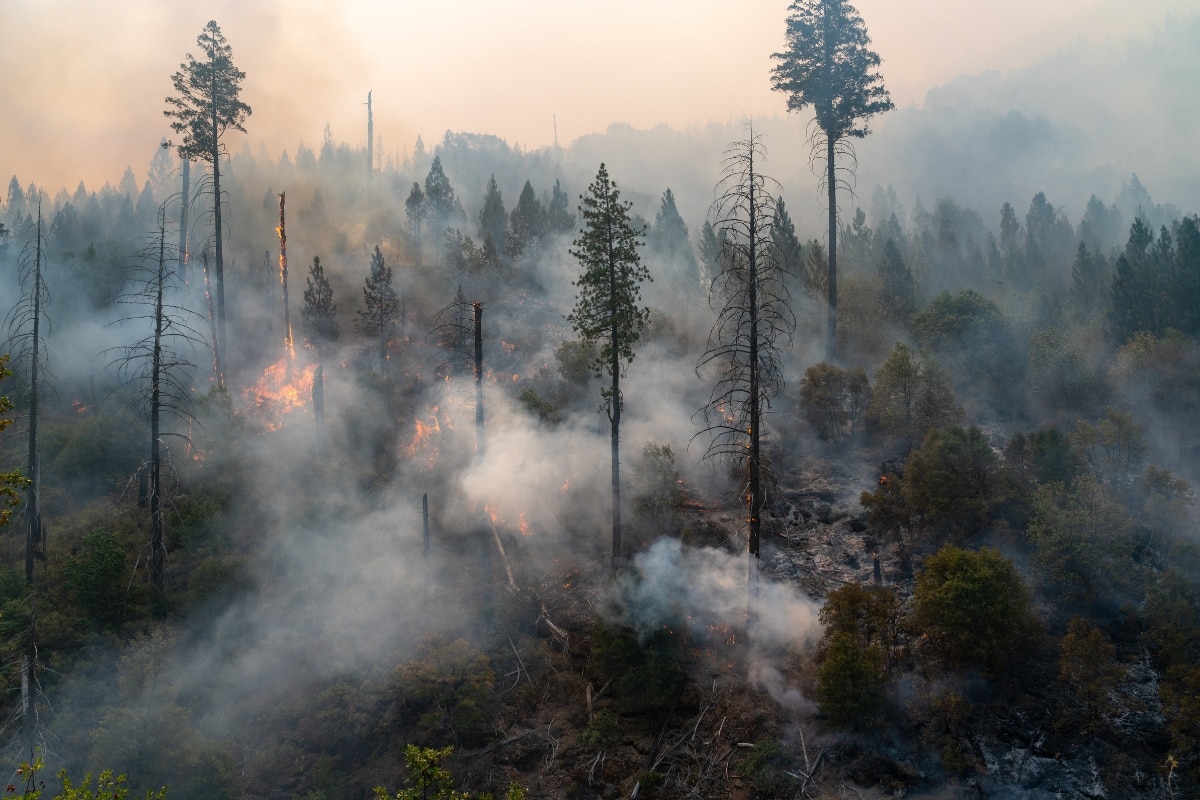
Where To Look
Morels tend to concentrate in two spots inside a burn site. The first is on ground with little or no duff left. The second is ground right up against the trunks of standing burned trees. The base of a burn morel sits just below the surface of the mineral soil, where the ash layer ends.
The morels usually show up on South-facing slopes because they warm up first in the spring. They’ll be there about 1 to 3 weeks after the snow melts, and when the soil temperatures are around 50°F.
If you find one, be sure to look for others not too far away. Research has shown that morel patches tend to sit close together, usually within 23 feet of each other. Finding one morel means more morels are likely within a 25-foot radius.
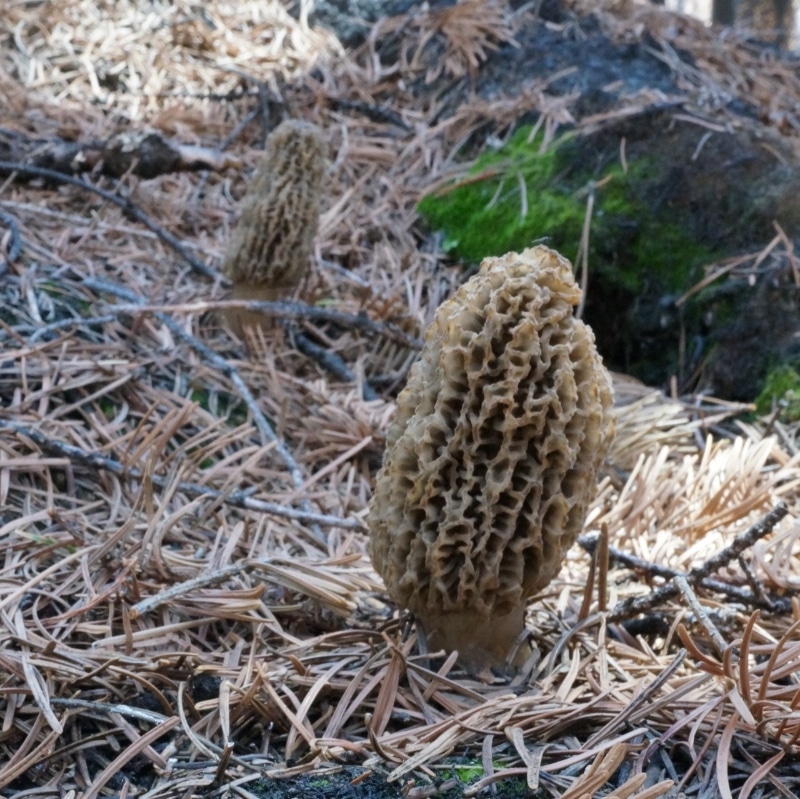
Morchella tomentosa by laddycanns on Mushroom Observer
Indicator Species
Other fungi show up at fresh burn sites around the same time as morels. Some of them show up earlier in the spring and act as a signal that morels are on the way.
The pixie cup, Geopyxis carbonaria, is the most useful of these for morel hunters. The fruit bodies are small reddish-brown goblets up to three-quarters of an inch wide, with a whitish fringe around the rim. They grow on soil where brush and duff have recently burned, sometimes in huge numbers. They fruit earlier in the spring than morels and if they are growing, then there is a high likelihood morels will fruit in the same place. So, if you see these cup fungi, check back often to see if morels show up too.
A few other fungi that show up in the same post-fire community include Pyronema, Anthracobia, Peziza, Tarzetta, Aleuria, and Caloscypha fulgens. Most of the small cup fungi are orange, yellow, or brown. They fruit from the blackened ground in the first few weeks after snowmelt.
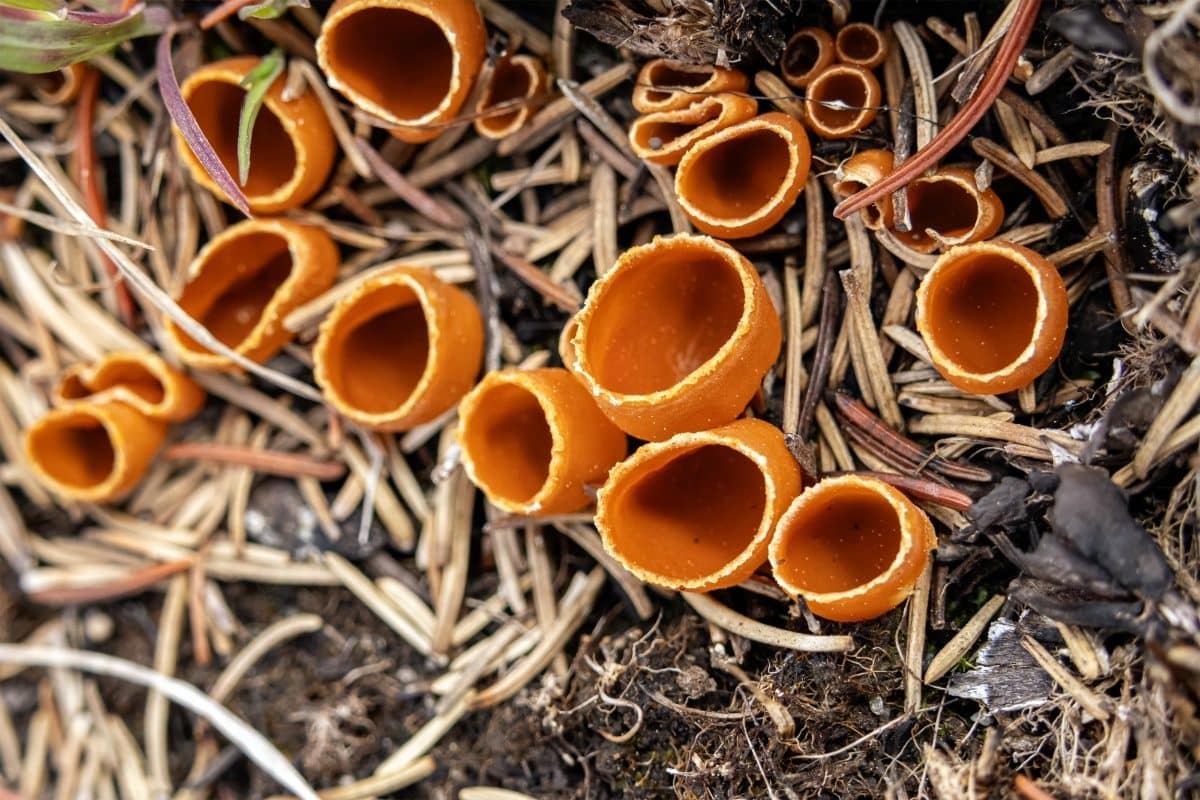
ID 439754496 © Anna Richard | Dreamstime.com
Common Questions About Burn Morels
How long after a wildfire do burn morels fruit?
Burn morels fruit the spring after a wildfire, once the snow has melted and the soil has warmed to around 50°F. At low elevations on south-facing slopes, that can be as early as March. At higher elevations, the flush runs into June and early July.
How many years does a burn site keep producing morels?
The first spring after a fire is the biggest flush. The second spring, the morel fruiting drops off sharply. By the third or fourth year, most burns produce a small fraction of what they did in year one.
Are burn morels safe to eat?
Burn morels are edible and excellent. All morels are toxic raw and cause stomach upset if not cooked. You may want to avoid burn morels from sites with heavy soil contamination, since the fungus can take up metals and other compounds from the ash.
Do all morel species fruit on burns?
No. Burn morels are a small group of morel species that fruit after fires. Most yellow morels and most other black morels do not fruit in burn sites.


Leave a Reply