
What do you think of when you think of mushrooms? Something small, brownish, and bland-looking growing on the ground or from a tree. While it’s true that many mushrooms are some shade of brown, there are also tons of mushrooms with brilliant colors and intricate, beautiful shapes. There are so many beautiful mushrooms! Mushrooms can be brightly colored, in reds, yellows, greens, and even smurf blue. And they often aren’t the typical “mushroom shape.”
Mushrooms are often thought of as plain and brown, even boring. This is because the mushroom we see all the time, the common button mushroom, is just that. It tastes great, but it’s not all that exciting to look at. The world of fungi, though, is widely variable, with mushrooms in many colors, shapes, and sizes.
If you were of the opinion that mushrooms are boring, prepare to have your mind blown! Some of these beautiful mushrooms glow in the dark, some look like coral or sea creatures, and others seem almost painted by hand.
Jump to:
- 1. Blue Pinkgill (Entoloma hochstetteri)
- 2. Scarlet Waxcap (Hygrocybe coccinea)
- 3. Indigo Milk Cap (Lactarius indigo)
- 4. Lion’s Mane (Hericium erinaceus)
- 5. Green Pepe (Mycena chlorophos)
- 6. Scarlet Elf Cup (Sarcoscypha coccinea)
- 7. Amethyst Deceiver (Laccaria amethystina)
- 8. Parrot Waxcap (Gliophorus psittacinus)
- 9. Violet Coral Fungus (Clavaria zollingeri)
- 10. Orange Peel Fungus (Aleuria aurantia)
- Honorable Mention: Fly Agaric (Amanita muscaria)
1. Blue Pinkgill (Entoloma hochstetteri)
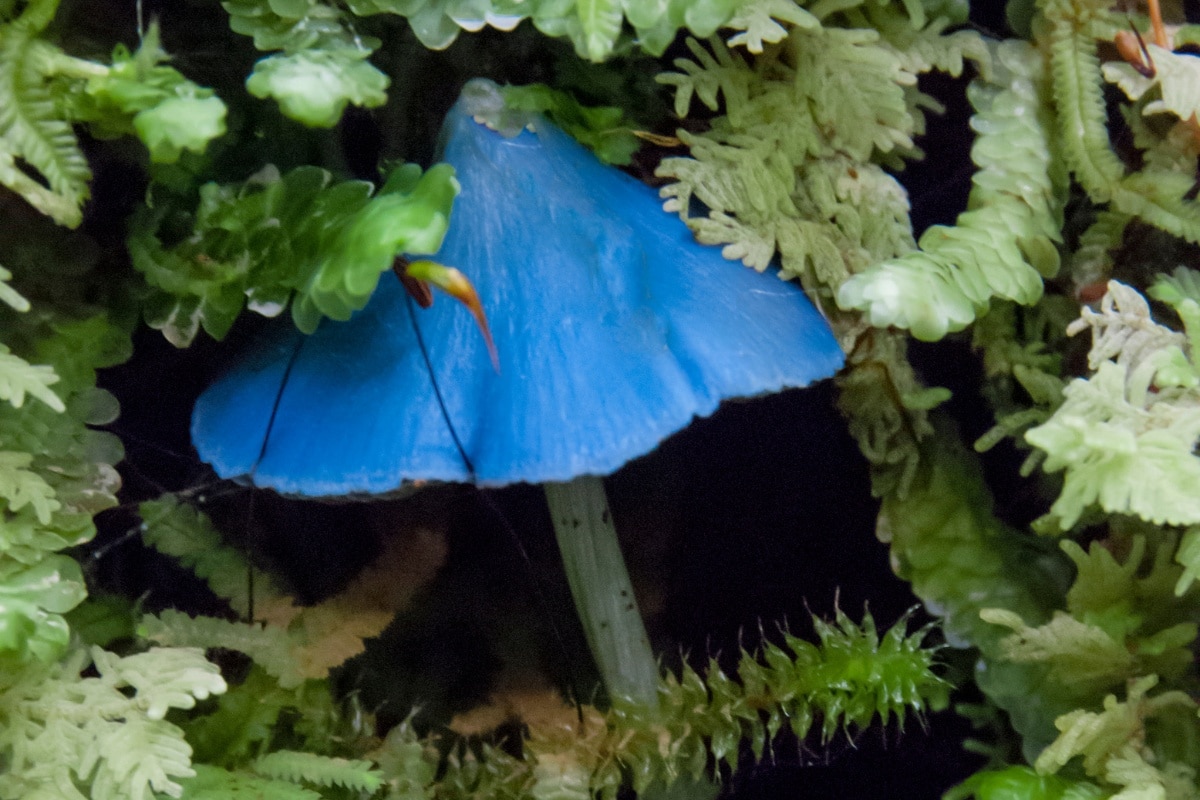
There aren’t a lot of blue mushrooms out there. And because of this, the blue ones are very celebrated. And the super-brilliantly blue ones are adored among lovers of beautiful mushrooms.
The blue pinkgill mushroom is deep, vivid blue in a way that seems almost unreal. And, also, very magical. They have a small cap and slender stem, and both are that intense shade of blue.
When you encounter this species, you might have to do a double-take to verify it is real. The color is so bright, it looks painted on. That brilliant blue color does fade with age, though, and older specimens tend to be washed out-looking.
This mushroom is from New Zealand. In Māori, the mushroom is known as werewere-kōkako because its blue coloring matches the wattle of the kōkako bird.
Researchers are exploring whether the genes that give these beautiful mushrooms their blue color could be used to produce a natural blue food dye.
2. Scarlet Waxcap (Hygrocybe coccinea)
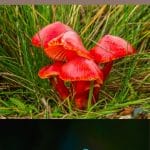
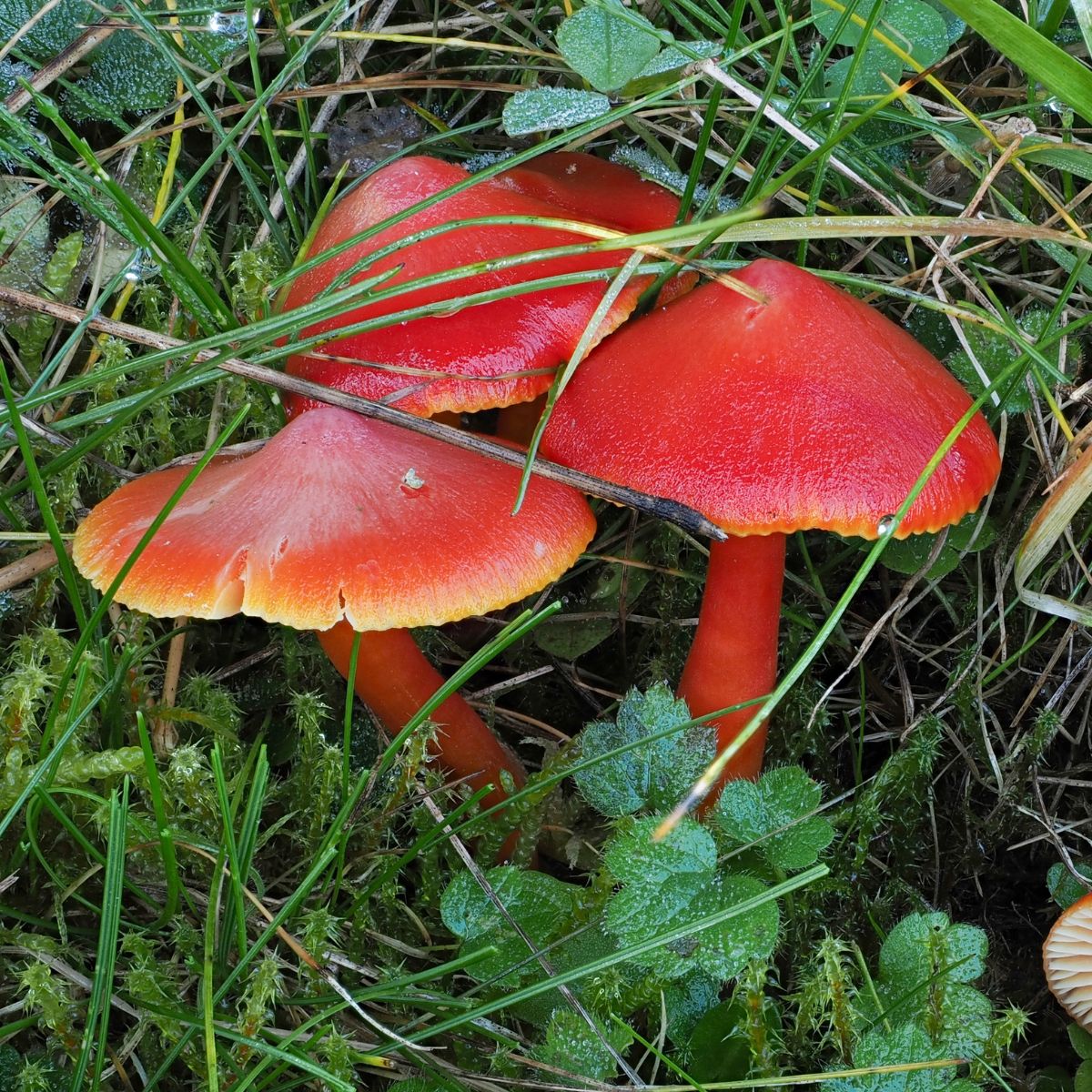
This is a small mushroom with big, bright coloring. Scarlet waxcap mushrooms have brilliant red caps and stems that look like smoldering flames emerging from the ground. The surface of the cap is shiny or slightly waxy, especially when wet, which makes it look polished. The gills are pinkish orange to orange or might be dullish red in color and provide a nice contrast to the striking red of the cap and stem.
These mushrooms usually grow in grassy areas like meadows and pastures. They rarely appear as single entities and you are often treated to a whole carpet of bright red, waxy-looking disks in the meadow.
3. Indigo Milk Cap (Lactarius indigo)
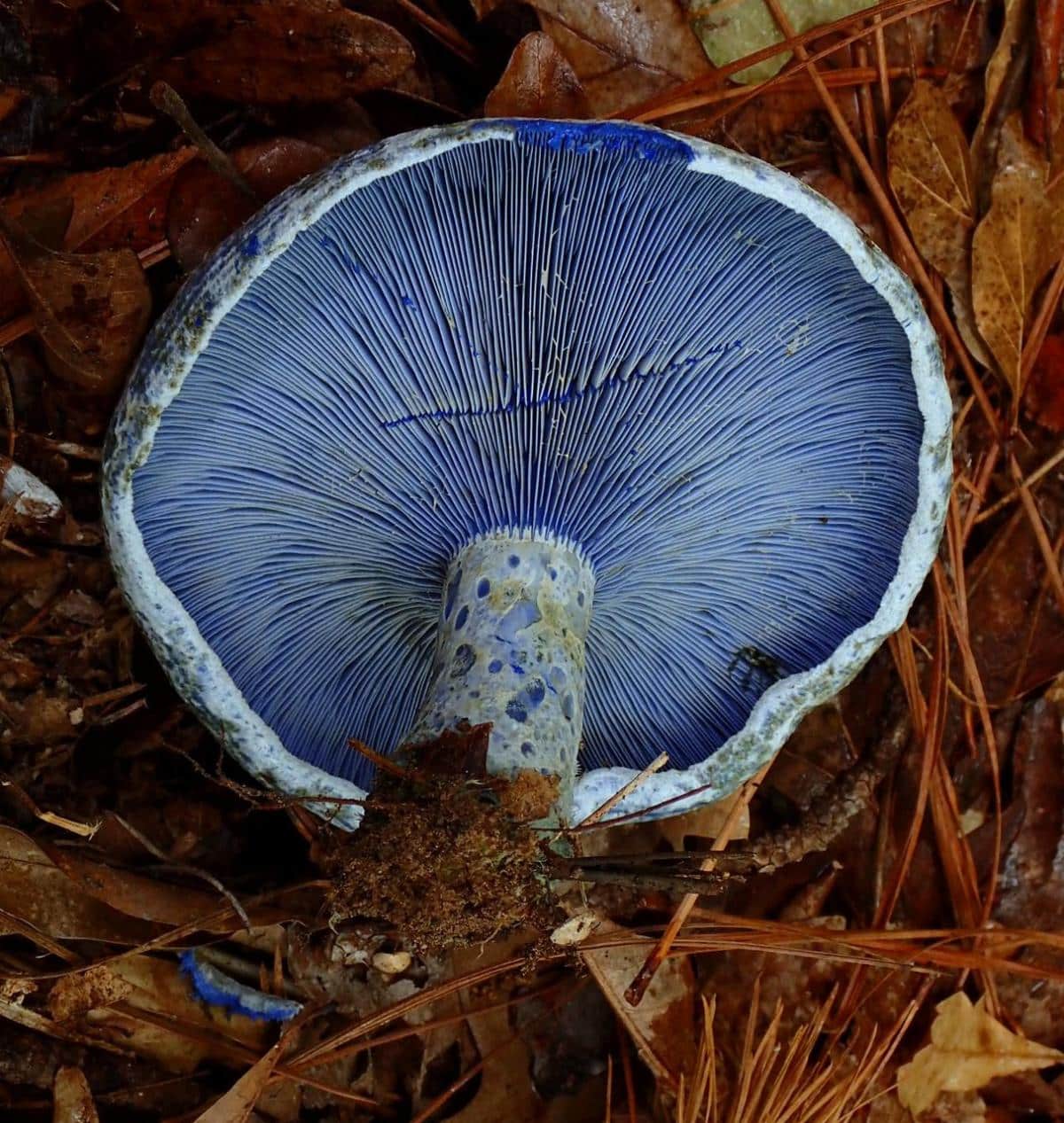
The indigo milk cap is another mushroom beloved for its strong blue coloring. When the mushroom is cut or broken, it releases a liquid so bright blue that the only way to describe it is smurf blue. As the liquid comes into contact with air, it slowly turns green. This is such a fun mushroom to find and cut in half. It is such a show, and kids in particular love it. Be careful, though, that blue will get everywhere!
The prettiness of this mushroom isn’t just about its color. The deep blue cap usually has darker blue concentric rings in the center that look like they were painted on. Each ring is uniform and consistent, like ripples from a rock thrown in a tide pool.
4. Lion’s Mane (Hericium erinaceus)
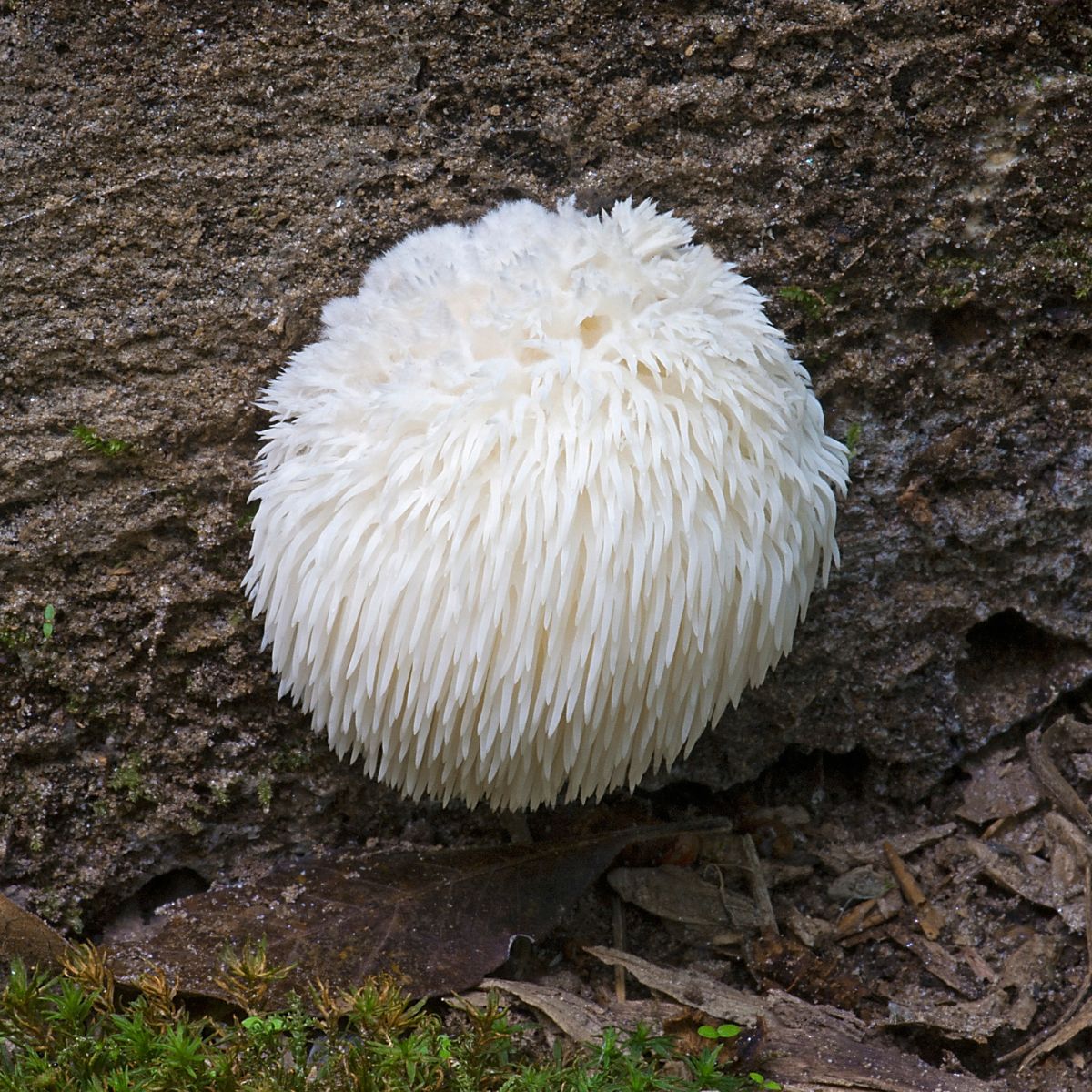
Lion’s mane easily breaks the mold for what people think a mushroom should look like, or does look like. It doesn’t look like a typical mushroom in any way. The body of lion’s mane is a big, rounded white mass with tons of white, dangling strands that resemble hair or icicles. This mushroom grows on tree trunks and looks like a soft, frozen waterfall.
The long, flowing, white spines make this mushroom look gentle and elegant. It looks like it could be a sea creature, a piece of coral, or a straight-up alien. No other mushroom looks like this, and that makes lion’s mane even more unique and beautiful.
Note: There are several species in the Hericium family with similar attributes, but each one has its own unique growth pattern.
5. Green Pepe (Mycena chlorophos)
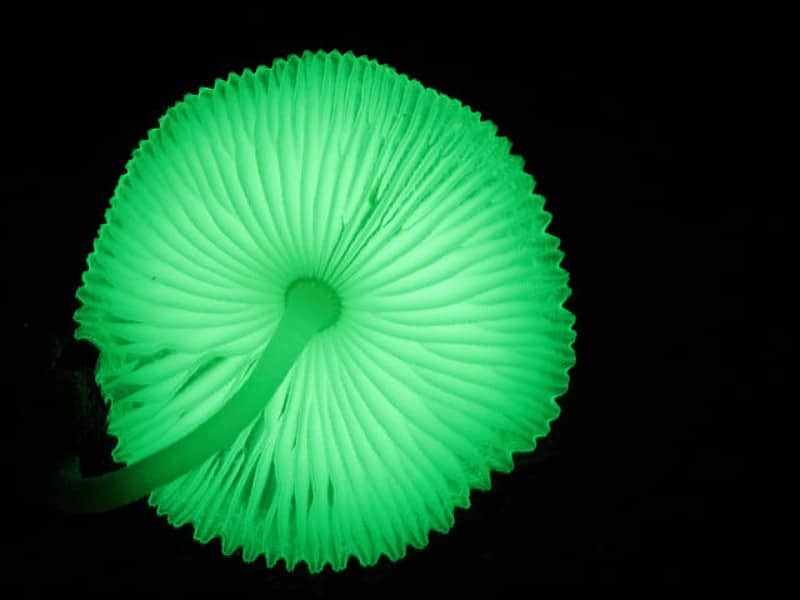
This mushroom is small and pale during the day, and not much to look at. It looks like many other mushrooms with a whitish cap and stem and a small brown patch in the center. But look at this one at night, and it is a totally different story. The mushroom is bioluminescent, and at night it glows with a soft green light.
What makes the green pepe beautiful is the glow itself. When you see mushrooms light up in the dark forest, it is nothing short of magical. They’re like tiny lanterns on the forest floor, muted and dreamy and ethereal.
In Japan, the mushroom is called yakō-take, which means “night-light mushroom.”
6. Scarlet Elf Cup (Sarcoscypha coccinea)
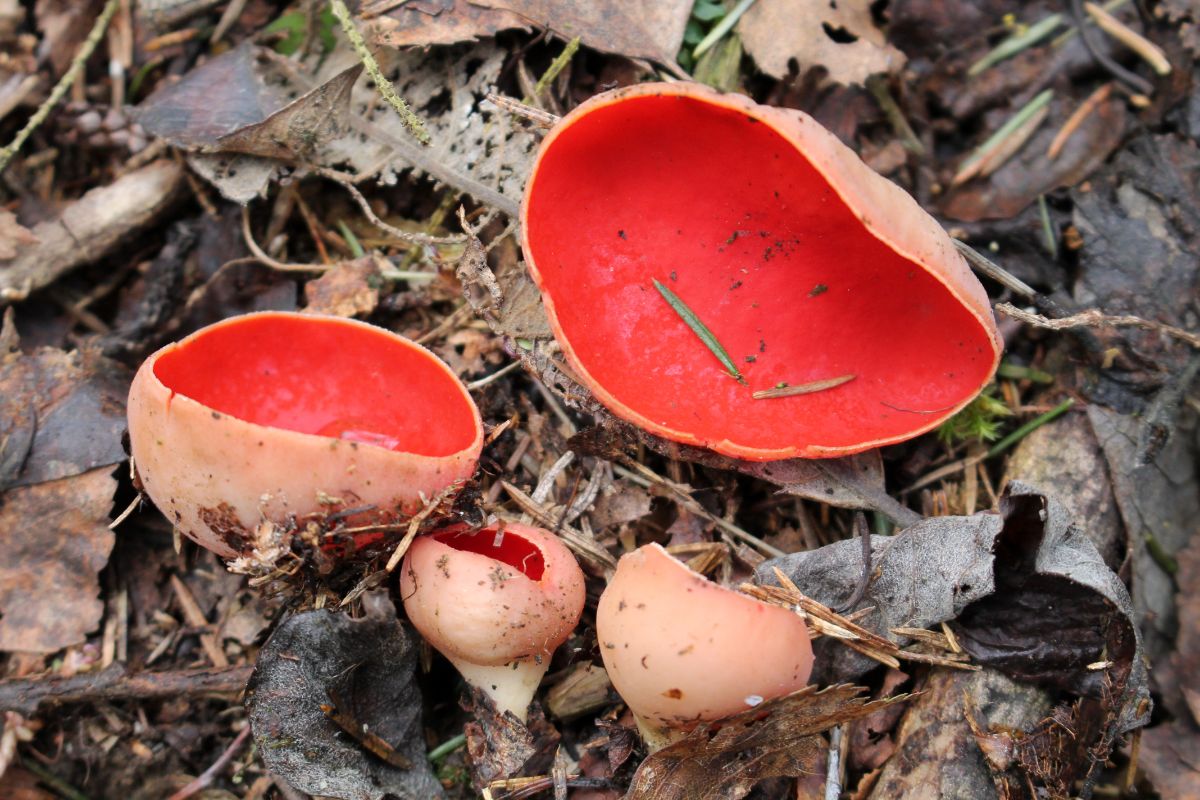
The scarlet elf cup is such a bright shade of red that it is startling. This small, cup-shaped mushroom with a bright red, polished interior grows on damp wood in late winter or early spring. Most plants are rather colorless at this time, and that only makes the scarlet cup stand out even more.
Its beauty isn’t just about its color, though. This mushroom really does look like a small goblet, a perfect cup for elves to drink out of. And, a fancy one, too, with that brilliant coloring. Finding this mushroom in the forest is usually enough to lift anyone’s spirits — who can resist that splendid color when the rest of the world is gray and brown?
Interestingly, scarlet elf cups aren’t always that color, though. Some of these elf cups have reduced or absent pigmentation and may be yellow, orange, or even white.
7. Amethyst Deceiver (Laccaria amethystina)
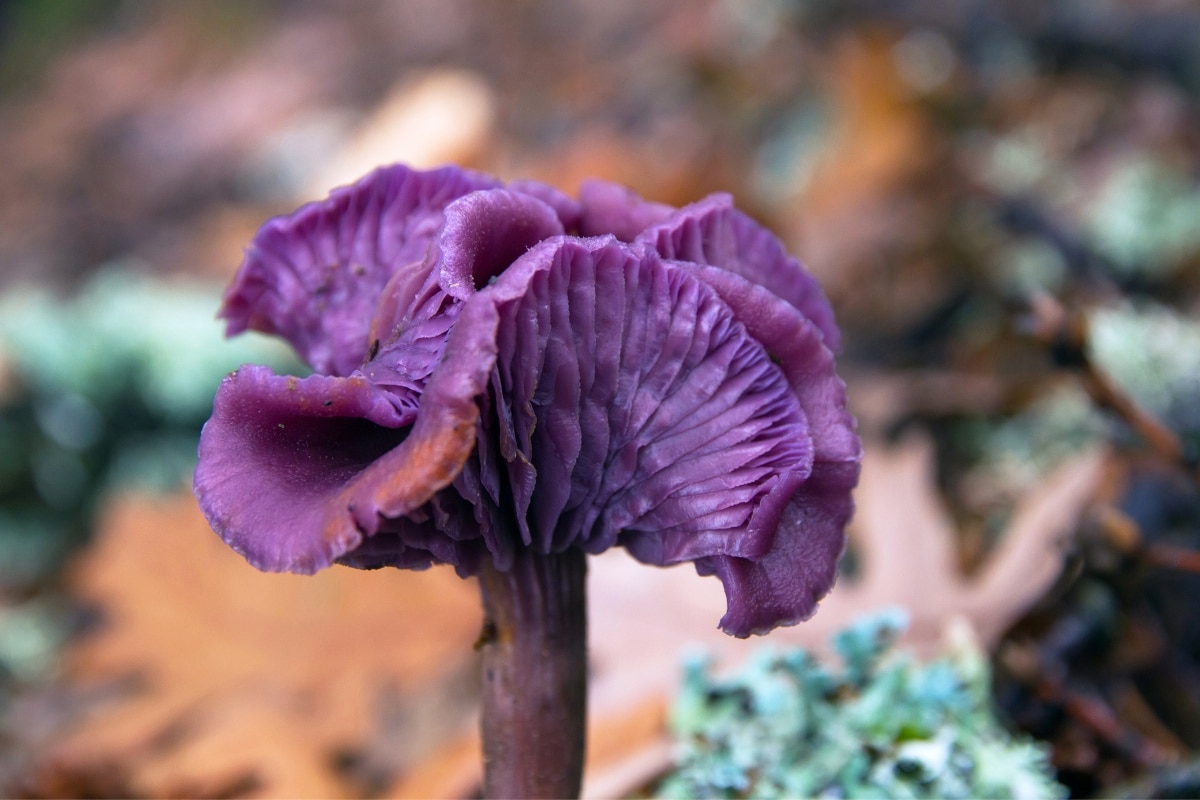
The rich purple color of the amethyst deceiver is surprising and attractive. When the mushroom is fresh, its cap, gills, and stem are all shades of violet or lavender. With age, though, the colors do fade. However, when you find it young and still in its bright purple phase, it’s a sight to behold.
The purple tones of the amethyst deceiver are calming and elegant, giving it a refined look. It’s not super splashy, and it’s highly decorative; it is just as purple as purple can be. Even though it is small, it easily catches the eye.
It is called the deceiver because once the colors fade, it’s harder to identify because it starts to look like other similar species.
8. Parrot Waxcap (Gliophorus psittacinus)
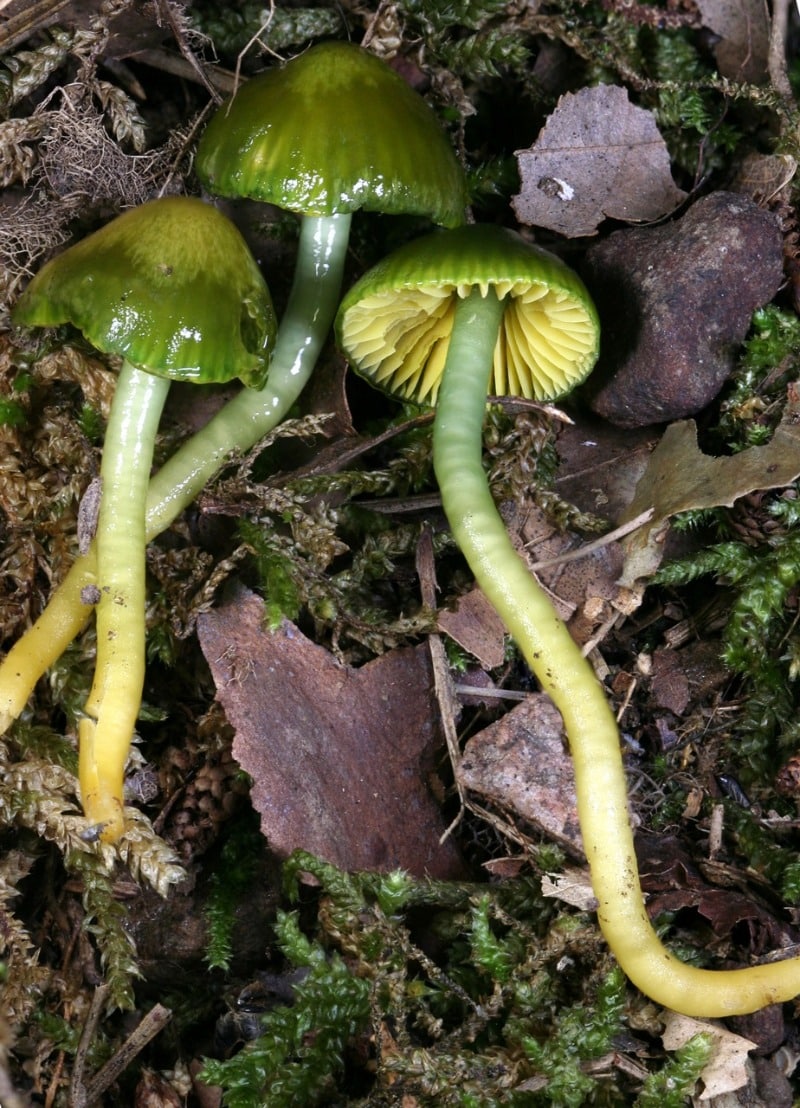
The parrot waxcap is a playful mix of bright green, yellowish, and sometimes pinkish colors. Its cap is smooth and shiny and often looks wet or slimy. And, the stem is as green and slimy as the cap.
As the mushroom matures, the colors change and turn more yellowish. The fading happens from the center outwards, so it isn’t uncommon to find green and yellow specimens that are in the middle of their color change. It isn’t as striking looking when it’s all yellow and can often be confused with other similar species.
When it is young, though, the green cap of this mushroom, with its yellow or reddish tones, truly makes it look tropical and lively. This waxy cap mushroom really lives up to its parrot-inspired common name.
9. Violet Coral Fungus (Clavaria zollingeri)
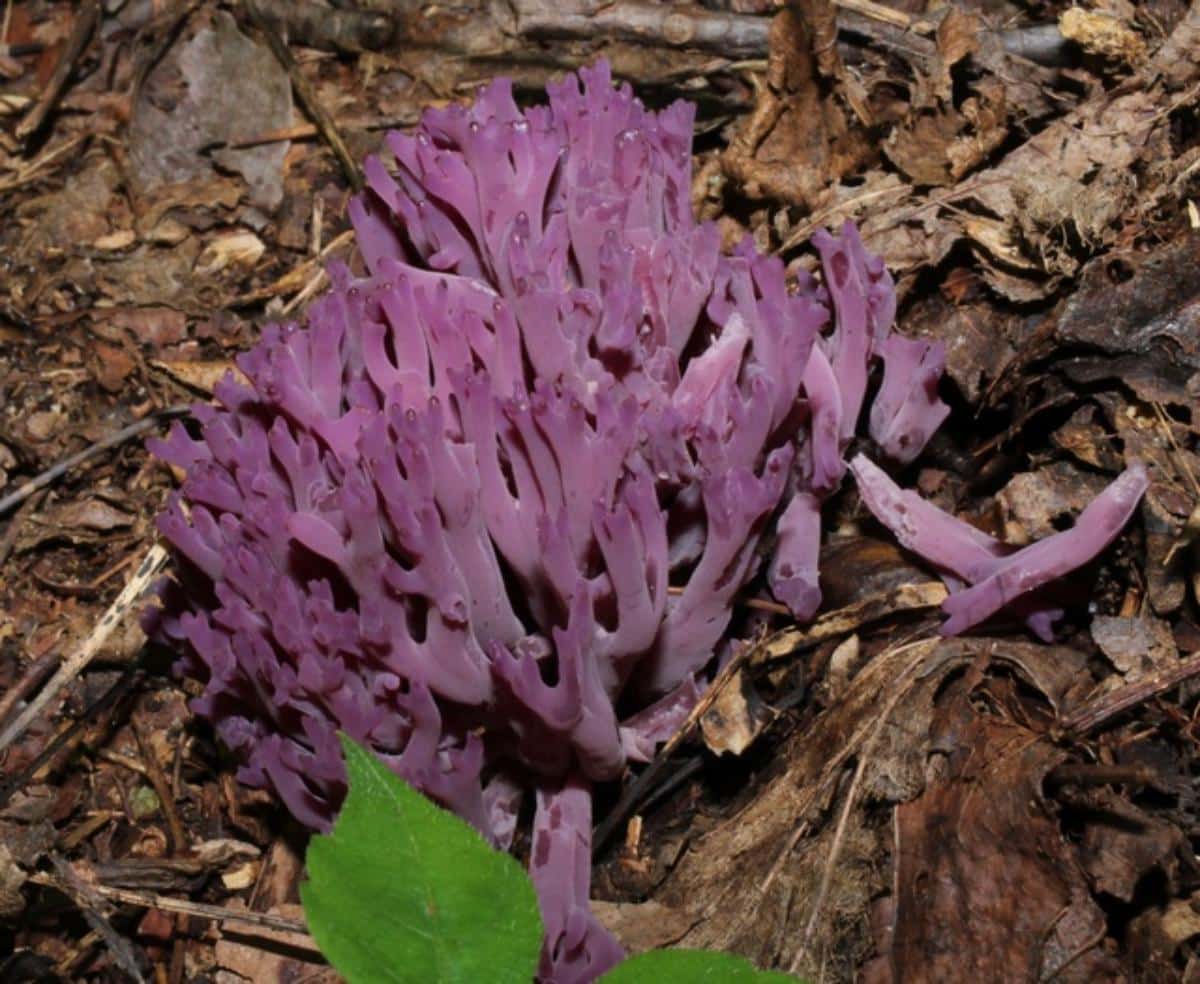
The violet coral fungus has multiple branching structures that literally resemble underwater coral. Its color ranges from lavender to deep, striking purple, and it looks like someone moved coral from the ocean to the forest floor. The branches are slender and tubular with little nubby extensions at the tips. This mushroom is especially beautiful because of its unusual shape and brilliant purple coloring. It is fragile and artistic, like a natural sculpture.
10. Orange Peel Fungus (Aleuria aurantia)
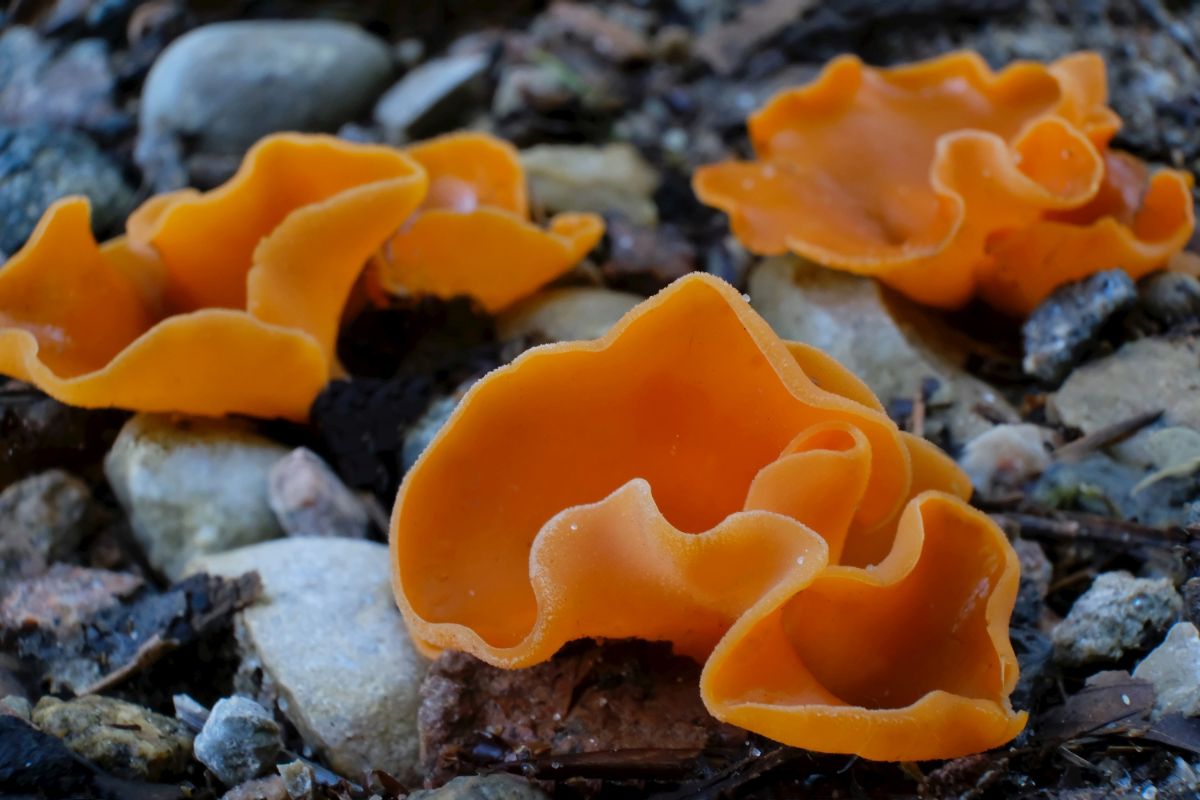
Mushroom or orange peel? The similarity between the two is uncanny! The orange peel fungus looks exactly like its name suggests. When you know this mushroom exists, you might find yourself inspecting a lot of orange peels, hoping it’s the mushroom instead!
This mushroom is bright orange and shaped like a curled-up bowl or a piece of fruit peel. It often grows directly on soil, paths, or disturbed ground, which makes it even more noticeable. The orange of this species is almost glowing; it looks like a splash of paint on the forest floor. It is edible, but the flesh is so fragile and meager that it isn’t commonly collected.
Honorable Mention: Fly Agaric (Amanita muscaria)
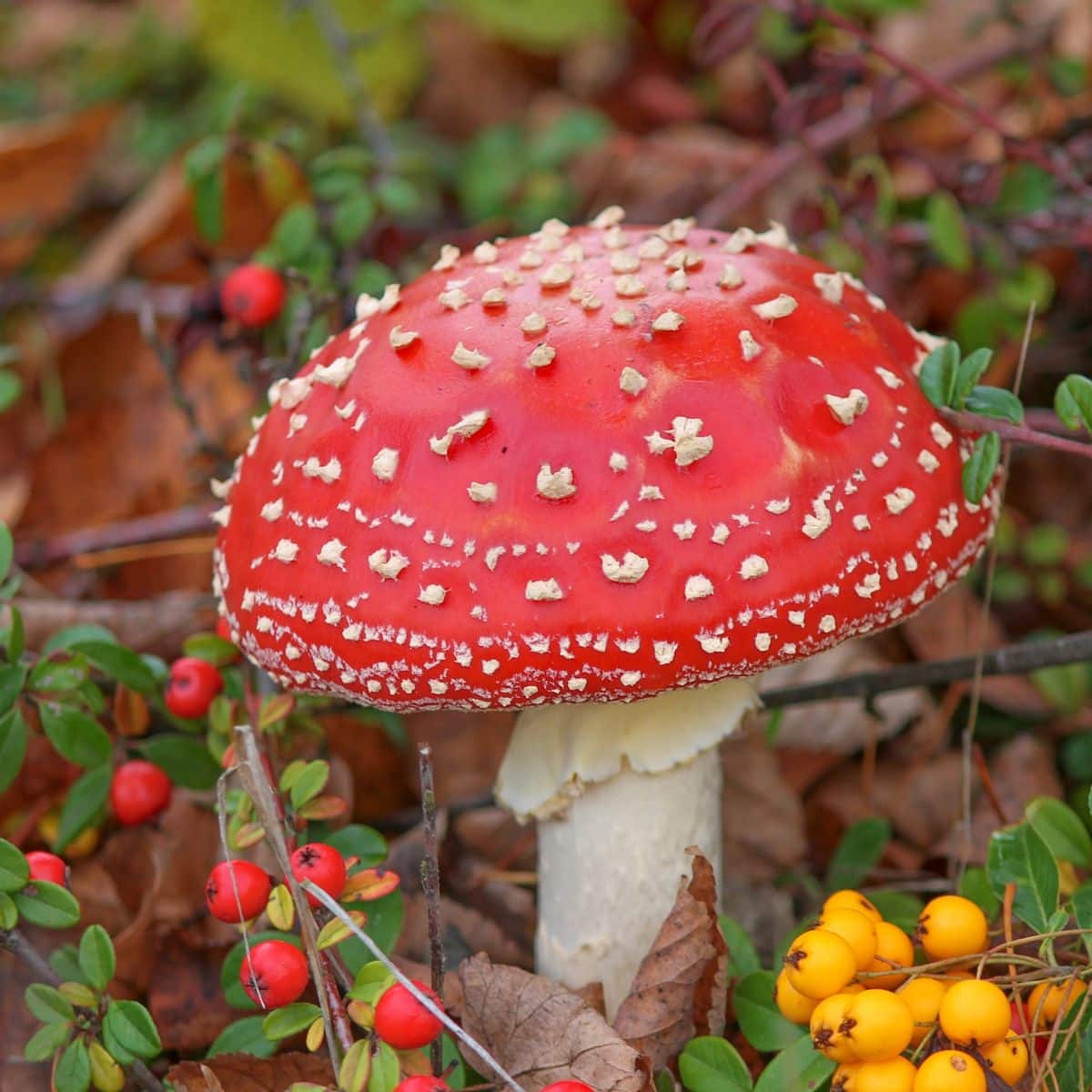
No guide on beautiful mushrooms would be complete without the fly agaric. The fly agaric is among the most recognizable mushrooms in the world; its bright red cap covered in white spots is unmistakable. It is widely featured in fairy and folk tales, books, and video games. Photos and drawings of this stunning mushroom can be found all over the world.
We didn’t include it in the top ten because, even though it is spectacular-looking, its widespread appearance in literature and online makes it rather commonplace nowadays. Because it is iconic, it is almost unremarkable. Everyone knows this mushroom is beautiful, and it is always great fun to find.
What makes the fly agaric beautiful is its bold contrast of colors. The bright red cap, white warts, and white stem create a striking impression that is impossible to ignore. These mushrooms stand out strongly in green forests or snowy landscapes. Even people who know nothing about mushrooms often recognize this one.

Leave a Reply