

Cooking is not a good or trustworthy way to make poisonous mushrooms safe to eat. Believing that cooking can remove toxins is a very dangerous mindset and can lead to life-threatening consequences.
Many of the most dangerous mushroom toxins are heat-stable. These heat-stable toxins can survive boiling, frying, baking, drying, and even pressure cooking. In some cases, cooking actually reduces toxin warning signs (like bitterness) and this makes the possibility of poisoning even more likely.
It is never okay to eat unknown mushrooms with the belief that if they’re poisonous, the cooking process will remove all toxins. This is very dangerous thinking, which can then lead to poor decision-making and even potentially death.
Jump to:
Why People Think Cooking Makes Poisonous Mushrooms Safe
The belief that cooking will make poisonous mushrooms safe usually comes from three ideas:
- Cooking kills bacteria and so will make any mushroom safe. (This is true for foodborne illness but not toxins)
- Some traditional recipes call for parboiling certain wild mushrooms, and that makes them safe to eat. This applies to a very select few mushrooms, and even then, it can be problematic, like in the case of the beefy false morel.
- A few toxins can be removed with cooking, which is confusing. (As with most mushroom topics, there is no one-size-fits-all answer)
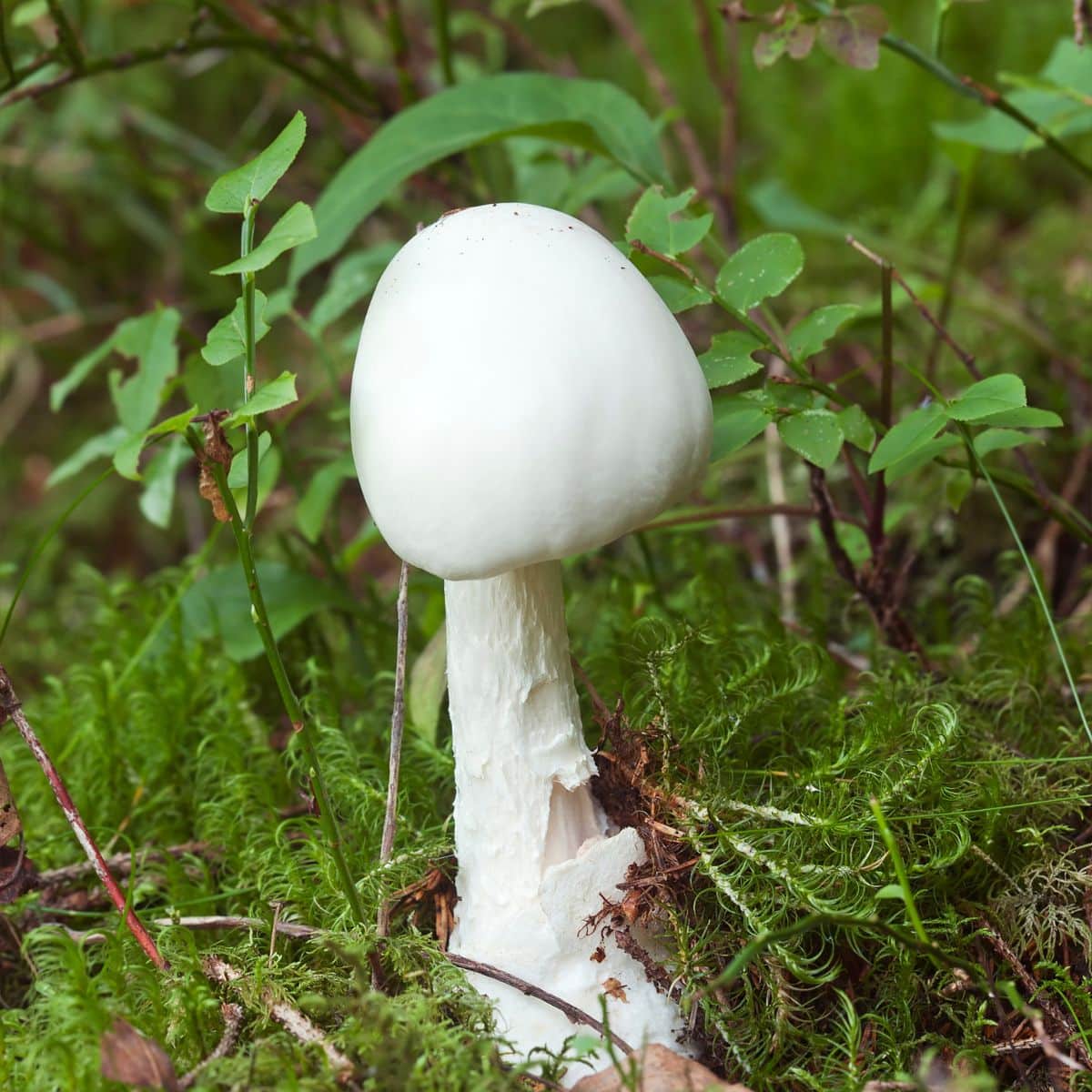
Here’s the truth — the chemistry of the specific toxin matters. The majority of lethal mushroom poisons do not break down with heat. Also, not all mushrooms have the same toxins, which means they can’t all be treated the same way, anyway. Cooking affects them differently, but it still doesn’t make poisonous mushrooms safe as a stand alone rule.
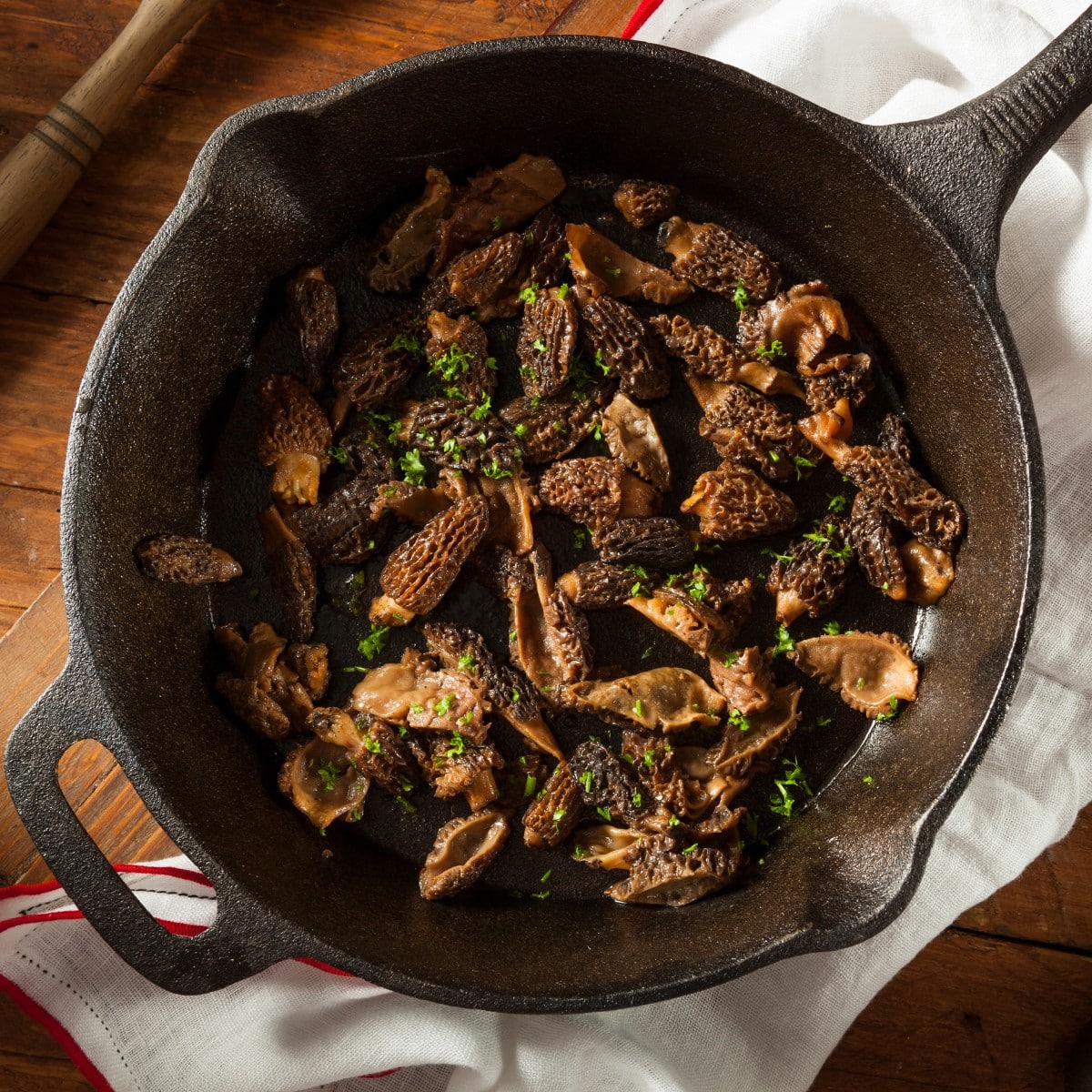
Destroying angels are a great example. They contain amatoxins and are deadly poisonous raw and cooked. On the other hand, morels are also poisonous. They contain toxins that can kill you if the mushroom is eaten raw or undercooked. However, once cooked properly, the morel is perfectly fine to eat. In this case, the cooking does make poisonous mushrooms safe. The toxin in the mushroom species makes a huge difference, and it varies widely.
This is why mushroom experts harp on the importance of identification. And, being absolutely sure of your identification. And, also, do not ever eat anything you yourself cannot ID, no matter what the experts say.
What Cooking Can Do (and Why That’s a Problem)
- Cooking may improve the taste and smell of the mushroom. It can remove bitterness or other bad tastes that would otherwise warn you. (though, it’s important to note, not all poisonous mushrooms taste bad!)
- Cooking softens the texture of the mushroom and may bring out more flavor, making it easier to eat more.
- Cooking some mushrooms does make poisonous mushrooms safe, but only certain ones. This might give people a false sense of safety since it works with some species.
None of these means you make poisonous mushrooms safe, as a whole. It must be handled on a case-by-case basis. Identify the mushroom first. Then, research it to see if it’s safe. Truly, the only way to make poisonous mushrooms safe is to identify them! If it’s a dangerous one, then you’ll know to throw it out, and that is the ultimate safety.
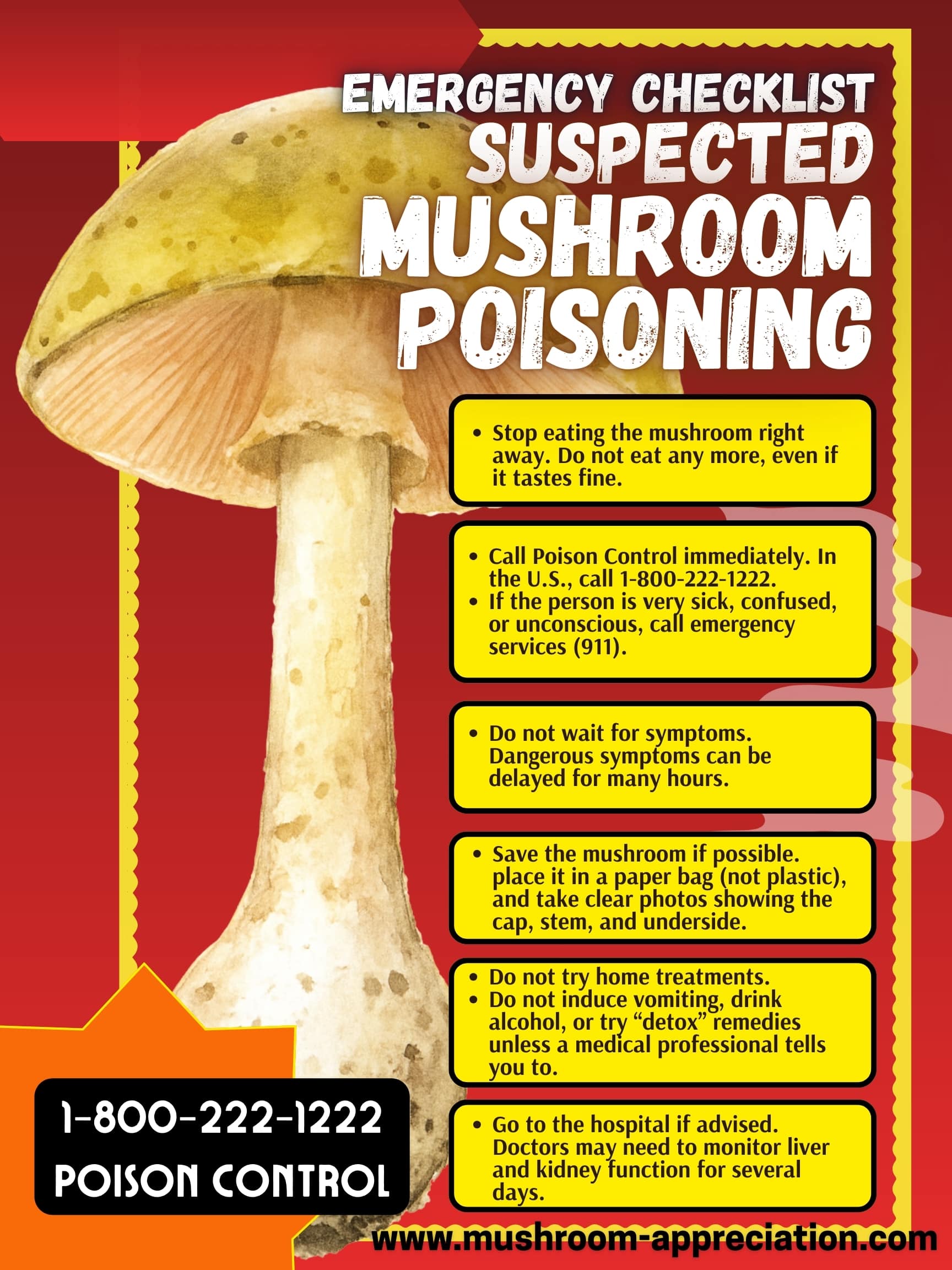
7 Poisonous Mushrooms That Stay Dangerous When Cooked
Death Cap (Amanita phalloides)
- Toxin: Amatoxins
- What cooking does: Nothing helpful
Why it’s deadly
Amatoxins are extremely heat-stable. They are not destroyed by boiling, frying, drying, or freezing. Even a small amount of amatoxin poisoning can cause delayed liver failure. These mushrooms are also super dangerous because there is often a brief time when symptoms improve (a faux “recovery phase”) that can lead people into thinking they’re fine and don’t need care.
Cooking a death cap mushroom does not make it safer. In fact, cooking does not change anything about the toxins inside it. Death caps are among the most common species foraged and eaten by mistake. Usually, people aren’t thinking cooking will make poisonous mushrooms safe, they have just harvested the wrong mushroom and mistaken it for an edible one.
In multiple cases (and especially recently), death cap mushrooms have been mistakenly collected by people who thought they were edible mushrooms. The mushrooms were thoroughly cooked and eaten as part of a regular meal. Those who ate them usually experienced vomiting and diarrhea several hours later after the meal. And then, this sick time was immediately followed by a brief period of apparent recovery.
Then, days later, they developed severe liver failure and needed intensive medical care. In some cases, they needed emergency liver transplantation. In other cases, the patients died. Cooking doesn’t reliably make poisonous mushrooms safe, and in this case, that is a very dangerous mistake.
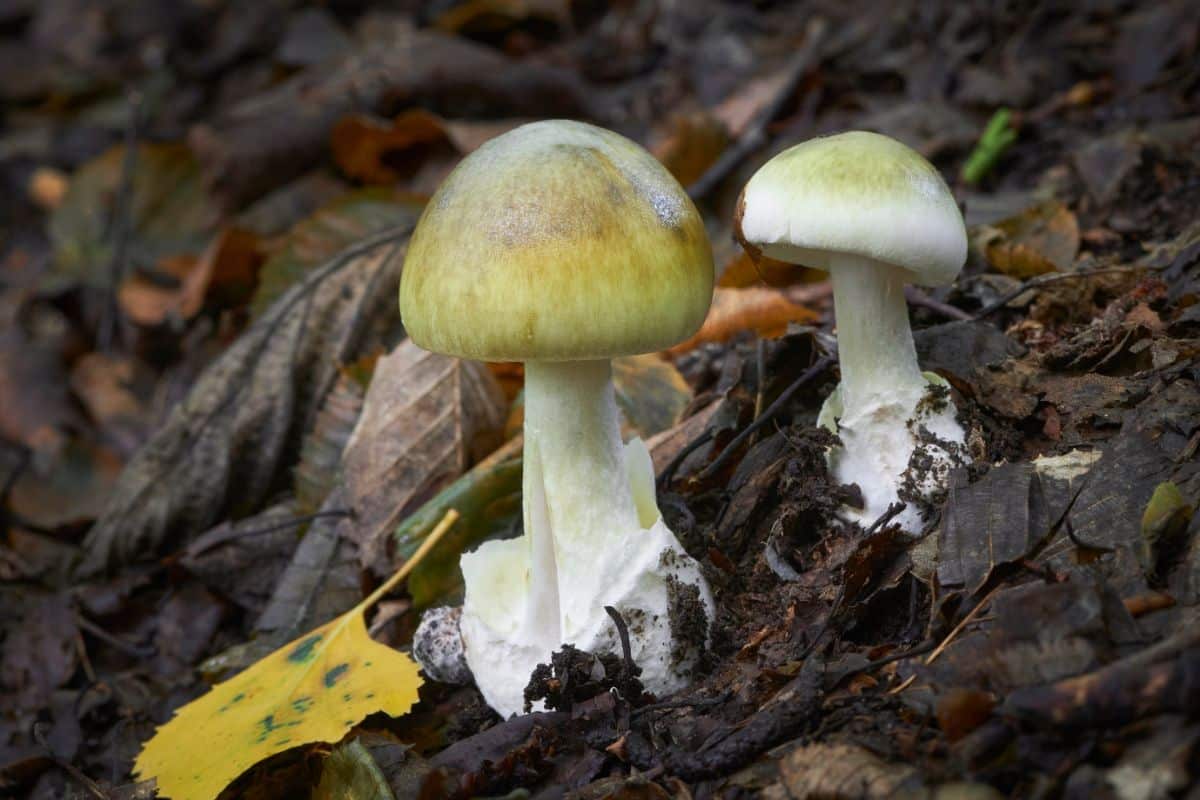
Destroying Angels (Amanita virosa, A. bisporigera)
- Toxin: Amatoxins
- What cooking does: Nothing helpful
Why it’s dangerous
The destroying angel has the same amatoxins as the death cap. These mushrooms have caused fatal poisonings after being thoroughly cooked and eaten by experienced foragers who misidentified them.
In one case, a woman in the United States became severely ill after foraging and eating wild mushrooms she had collected. About nine hours after eating the cooked mushrooms, she developed intense nausea, repeated vomiting, abdominal cramps, and profuse watery diarrhea. When she went to the ER, she was already suffering from early signs of acute liver injury.
After laboratory testing, it was determined she’d eaten and been poisoned by Amanita bisporigera, a member of the deadly “destroying angel” group of mushrooms. Poisoning by these toxins can lead to liver failure, especially if not treated early and intensively. Sadly, in this case, the woman did not survive the poisoning. This is an unfortunate reminder of how misconceptions about how to make poisonous mushrooms safe can be very serious.
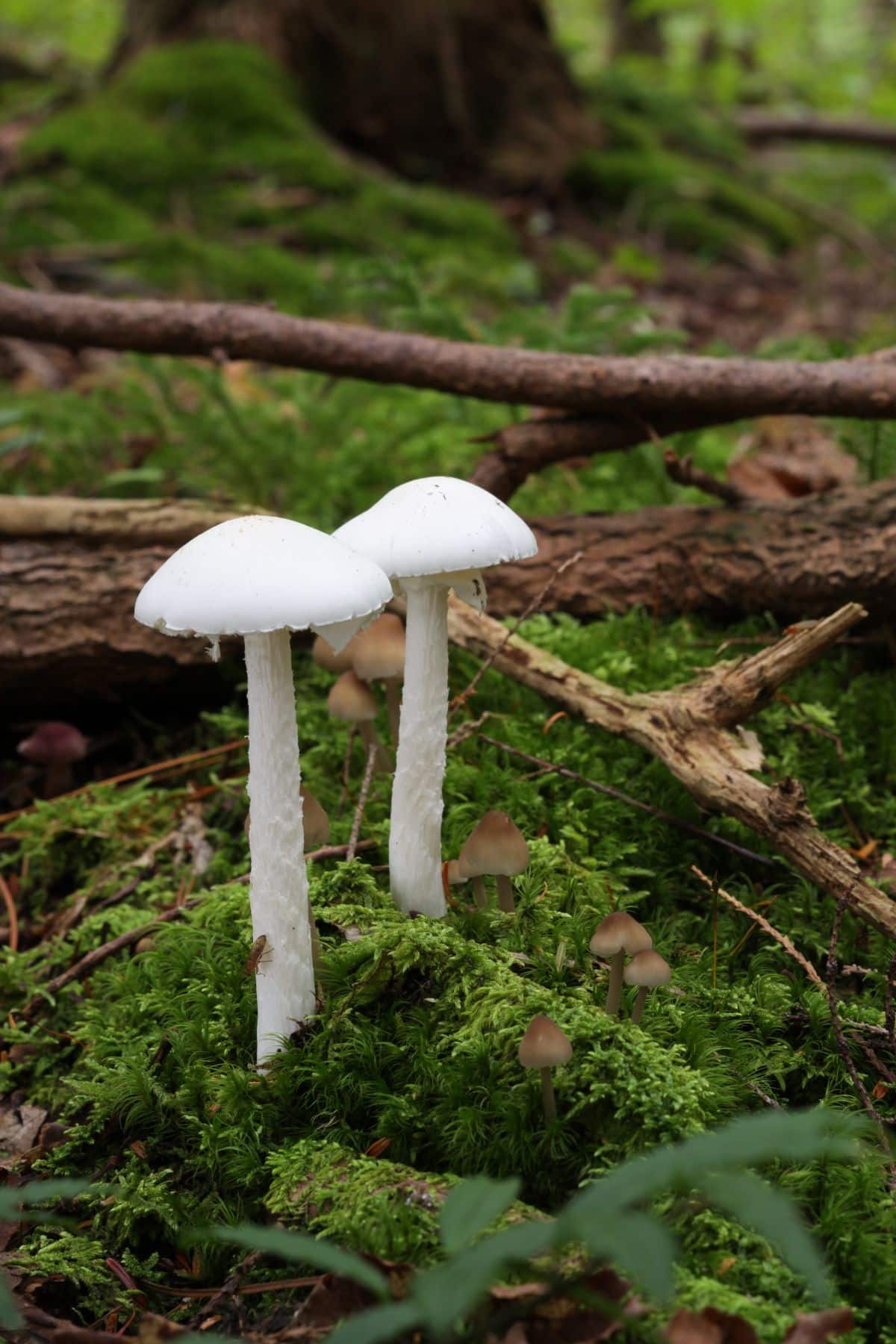
Deadly Galerina aka Funeral Bell (Galerina marginata)
- Toxin: Amatoxins
- What cooking does: Nothing helpful
Why it’s dangerous
This small brown mushroom is often mistaken for an edible species. Like with the other amatoxin-containing mushrooms, cooking does not neutralize the toxin in the deadly Galerina, and poisoning can be fatal.
Some people have collected deadly galerina mushrooms because they thought they were edible honey mushrooms. They thoroughly cooked the mushrooms in a stew and ate them without any issues. At first, they only experienced mild stomach discomfort. Within 10–12 hours, however, they began vomiting and developing severe diarrhea.
Over the next day, the symptoms escalated to dehydration and confusion, and all of them required hospitalization. Laboratory tests later confirmed they’d eaten Galerina marginata, the deadly Galerina.
Despite being fully cooked, the mushrooms were just as deadly as if eaten raw. Several of the family members required liver function monitoring and intensive medical care. One of the adults needed an emergency liver transplant. Even small, inconspicuous brown mushrooms like Galerina marginata can be deadly, and cooking is no protection against their toxic compounds.
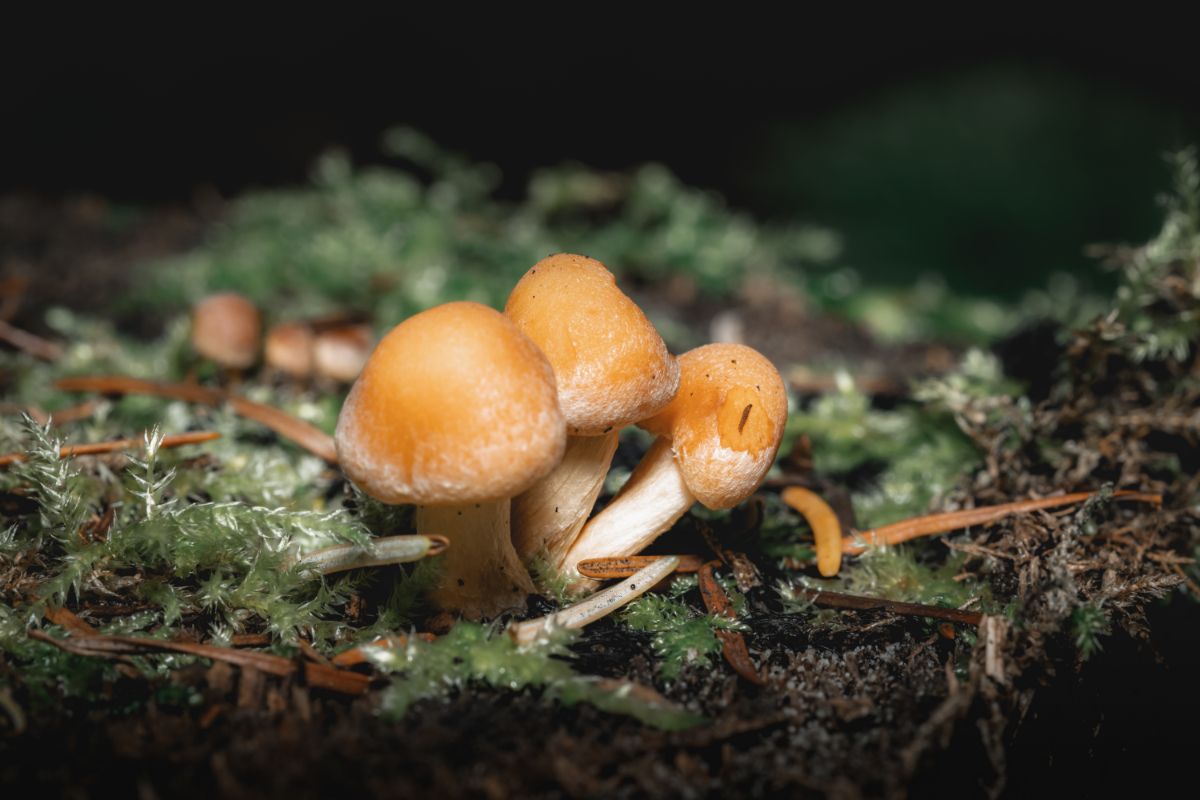
Fool’s Webcap (Cortinarius orellanus)
- Toxin: Orellanine
- What cooking does: Nothing helpful
Why it’s dangerous
Orellanine is highly heat-stable and extremely deadly. This poisoning is among the worst. It is extremely common for the symptoms to be delayed days to weeks after eating the mushrooms. This makes it hard to pinpoint what the initial cause of the symptoms is (can you remember what you ate a week ago??). Orellanine poisoning causes irreversible kidney failure.
Unlike many toxic mushrooms that cause rapid gastrointestinal distress, webcaps often produce no immediate symptoms. The mushrooms can be thoroughly cooked and eaten, and you think all is fine. This absence of early warning signs has repeatedly led people to believe the mushrooms were safe.
In documented cases around the world, people (even experienced foragers) ate cooked webcap mushrooms by accident. They felt completely normal for several days to more than two weeks. But, during this symptom-free period, the toxin orellanine was silently damaging the kidneys.
Orellanine toxin is not dissipated by boiling, frying, or drying . Once eaten, the toxin accumulates in the kidney tissue. There, it interferes with metabolism and gradually destroys the organ’s filtering structures.
When symptoms finally appear after eating orellanine containing mushrooms species, they are often vague and nonspecific. People experience increasing fatigue, intense thirst, frequent urination, or, later, reduced urine output. Because these signs do not resemble typical food poisoning, people often delay medical care. And many victims do not make the correlation between their symptoms and eating the mushrooms because the symptoms happened so long after the meal.
By the time patients sought treatment, they often had severe and irreversible kidney failure. In many cases, the damage was permanent, leaving patients dependent on long-term dialysis or requiring a kidney transplant.
What makes webcap poisonings particularly dangerous is this combination of delayed onset, irreversible organ damage, and resistance to cooking. Even when a person gets prompt medical care after the symptoms appear, it may not prevent permanent injury, because the toxin has already done its damage. This is a great reminder that just because there aren’t any signs of illness, it does not mean a mushroom is safe.
In the late 1950s in Poland, a group of foragers cooked and ate wild mushrooms they thought were safe. Days passed with no symptoms, but then fatigue, intense thirst, and decreased urination began. By the time they reached the hospital, several had developed permanent kidney failure. The culprit was Cortinarius orellanus, the deadly webcap.
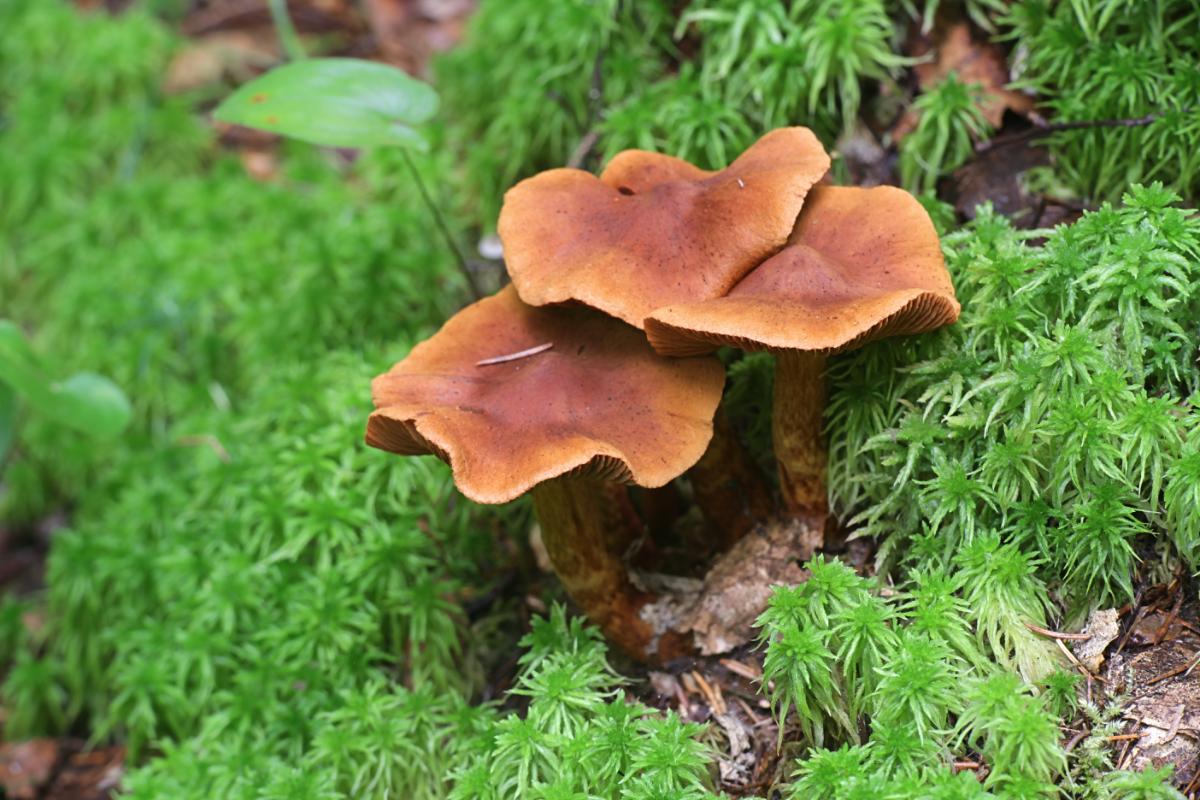
Inky Cap (Coprinopsis atramentaria)
- Toxin: Coprine
- What cooking does: Nothing helpful
Why it’s dangerous
Coprine isn’t as dangerous or deadly as the other toxins already discussed. But it is a very unpleasant experience that may leave you wishing you were dead. It is only problematic if you drink alcohol a few days to a week beforehand and after eating the inky cap mushrooms. Its toxin is specifically triggered by alcohol. If you don’t drink, you should experience any of these effects.
Coprine is activated if alcohol is consumed hours or days later after eating the mushrooms. It causes severe flushing, nausea, vomiting, and heart palpitations. Cooking the mushrooms does not prevent the alcohol reaction.
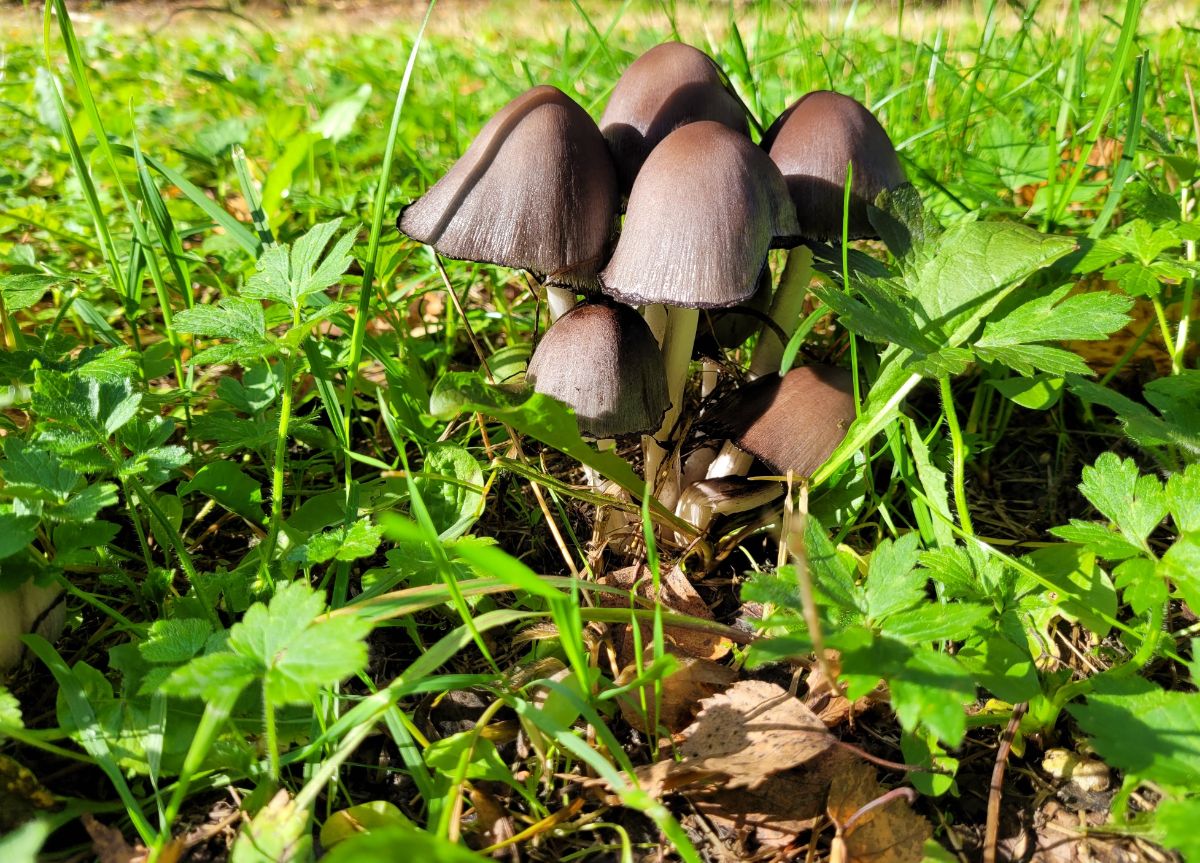
False Morel (Gyromitra esculenta)
- Toxin: Gyromitrin (converts to monomethylhydrazine)
- What cooking does: Reduces—but does not reliably eliminate—risk
Why it’s dangerous
Gyromitrin is a partially volatile compound. Boiling can reduce the toxin levels, but never consistently or entirely. This toxin is tricky because it rarely affects you the first time or a few times that you eat the mushroom. Gryomitrin builds up in the system, sometimes taking years to cause problems. Because of this, many people still eat this mushroom because it is “fine.” They haven’t experienced symptoms in the years they’ve been eating it, and so it is assumed to be entirely safe.
Everyone who eats this mushroom regularly knows it must be cooked in order to make it edible. The primary method is to boil the mushrooms for 10-15 minutes, then drain the water and rinse the mushrooms. Then, repeat this a second time. This pre-treatment of the mushrooms does remove a lot of the toxins and does make the mushrooms safer. However, it does not make them completely safe.
There is no way to tell how much of the toxin, or if all of it, has been removed. A lot may depend on how much toxin was in that particular mushroom when picked (toxin levels vary significantly by location in the world and age of the mushroom). Not all Gyromitra esculenta mushrooms have the exact same amount of gyromitrin in them.
Gyromitrin builds up in the body over time. It may take several months of eating the mushroom regularly, or even years, before there is any sign of problems. The symptoms of gyromitrin poisoning are nausea, seizures, and, finally, severe liver damage. This is not something to take lightly, even if right now you can eat the mushrooms just fine without any side effects.
Poisonings and deaths have occurred around the world after long-term consumption of these mushrooms. Some countries ban its sale entirely. In regions where these mushrooms are traditionally prepared by repeated boiling, people still suffer serious poisonings.
Despite careful cooking and being able to eat them many times previously without issue, some people had seizures and liver damage. There have been fatalities, too. Studies also show that people who have eaten them repeatedly have been linked to long-term neurological damage. The toxin gyromitrin is only partially reduced by heat, and the amount that remains after cooking is unpredictable, making this mushroom inherently unsafe.
Many people around the world still do eat these. It’s rare that it will kill you immediately or even soon after you first eat it. The primary issue with this toxin is when it builds up in your system over years and decades.
This is one of the most dangerous “cooking makes it safe” myths. Many people will debate this – that’s fine. Just be sure to do your own research before ever deciding to eat this species.
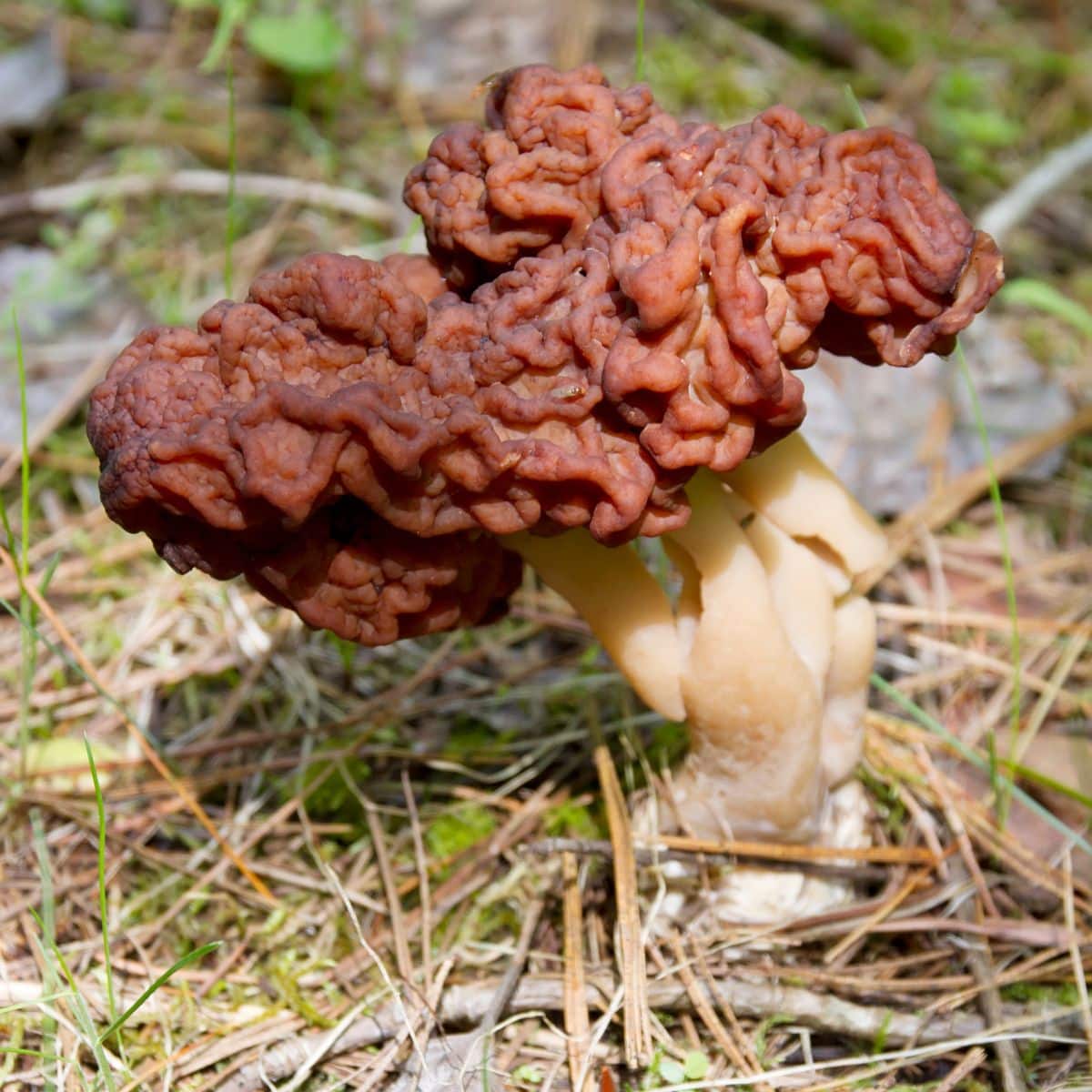
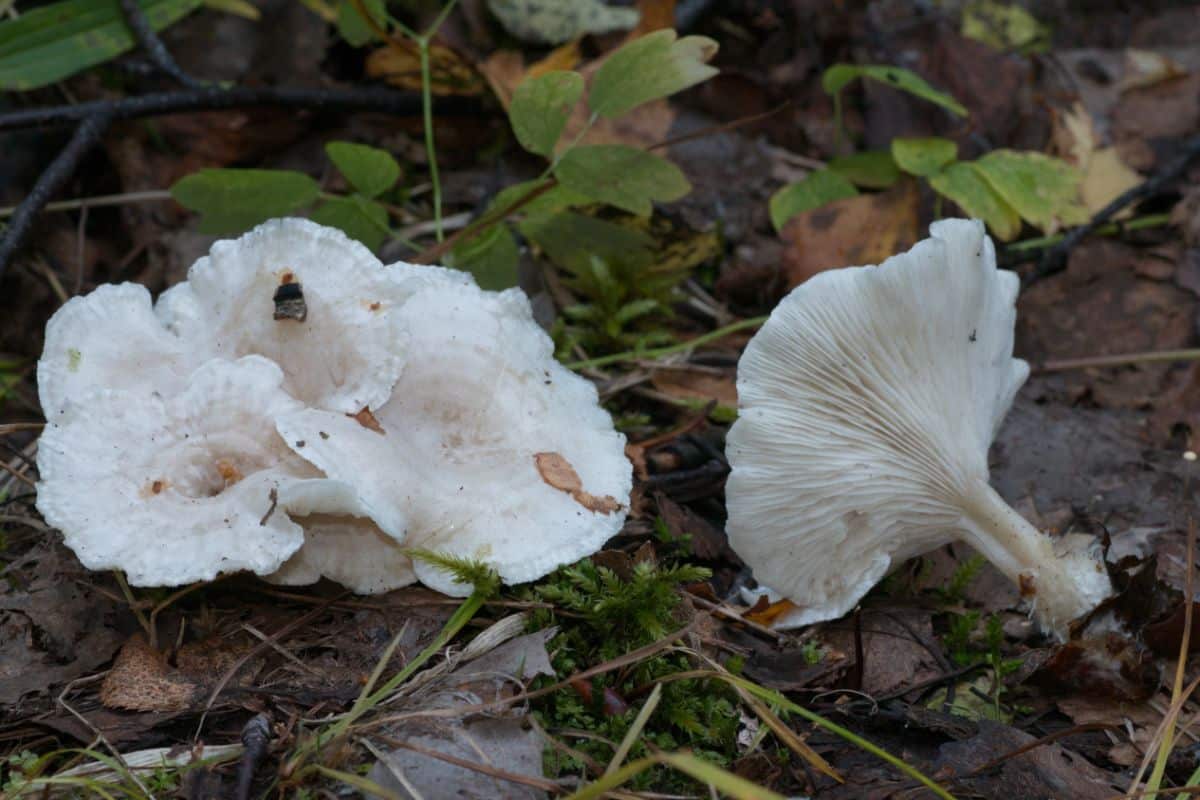
Muscarine-Containing Mushrooms (Inocybe, Clitocybe)
- Toxin: Muscarine
- What cooking does: Nothing helpful
Why it’s dangerous
The symptoms of muscarine poisoning include excessive sweating, salivation, vomiting, slowed heart rate, and breathing difficulty. And, muscarine is not destroyed by heat or cooking.
In the United States, a woman collected several small, brown mushrooms from a wooded area and cooked them for dinner. The mushrooms (which were later identified as Clitocybe species) contained muscarine. Within an hour of eating the cooked mushrooms, she and her husband began experiencing profuse sweating, excessive salivation, nausea, vomiting, and dizziness. They went to the hospital, but sadly, she died just 7 hours after eating the mushrooms.
In Malyasia, there are quite a few reported cases of death or extreme illness after eating Clitocybe species. There are also cases of from India and China.
The rapid onset of symptoms is different from other mushrooms with delayed toxins like orellanine. However, the reaction can still be severe, particularly for children or those with preexisting heart conditions.
The Bottom Line
- Heat does not neutralize most mushroom toxins.
- Deadly species remain deadly after cooking.
- Delayed symptoms are common and extremely dangerous.
- Misidentification is the leading cause of mushroom poisoning.
Only eat wild mushrooms that have been positively identified as edible by an expert, and never rely on:
When in doubt, don’t eat it.


Leave a Reply