


Nearly every fungus reproduces by releasing spores. A spore is a single cell, and its role is to travel away from the fungus that made it until it reaches a place where it can grow. A spore that lands in a suitable place will grow threads (hyphae) and spread through the wood or soil to create an underground network. For many fungi, that network can’t fruit on its own, so it has to meet a compatible network grown from another spore before the two can create the next mushroom.
In order for the mushroom to reproduce, the spores need to release themselves from the fungus, and then they need something else to carry them somewhere new. Because very few spores make it through the journey, a single mushroom may release more than a billion spores in one day.
Jump to:
- All About Spores
- Ballistospory: Spore Catapult of Gilled Mushrooms
- Ascus Discharge: Spore Launch in Cup Fungi and Morels
- Impact Dispersal: Spore Release in Puffballs and Earthstars
- Sporangium and Peridiole Discharge: Spore Cannon Dispersal
- Mycophagy: Animal Spore Dispersal
- Beetle Dispersal: The Pouch Fungus
- Aquatic Dispersal: Waterborne Spores
- Sweepstakes Dispersal: Why Wind-Dispersed Fungi Make So Many Spores
- Common Questions About Mushroom Spores
All About Spores
A spore is about four ten-thousandths of an inch long, and it has no way to move itself, so it starts life in an awkward place. The tiny spores are stuck to the gills, pores, or teeth of a fruiting mushroom, and they’d be stuck there forever if not for some creative techniques developed by the fungus to release them.
Some fungi shoot their spores away from themselves with such force that they punch through the still air. Others release the spores to something that already moves, like a raindrop, a beetle, a squirrel, the wind, or a stream.
In mushroom-forming fungi, reproduction begins when mature spores leave a mushroom and travel to new places. Most spores land where they cannot grow, but if one reaches suitable material, it sends out a thin fungal thread called a hypha.
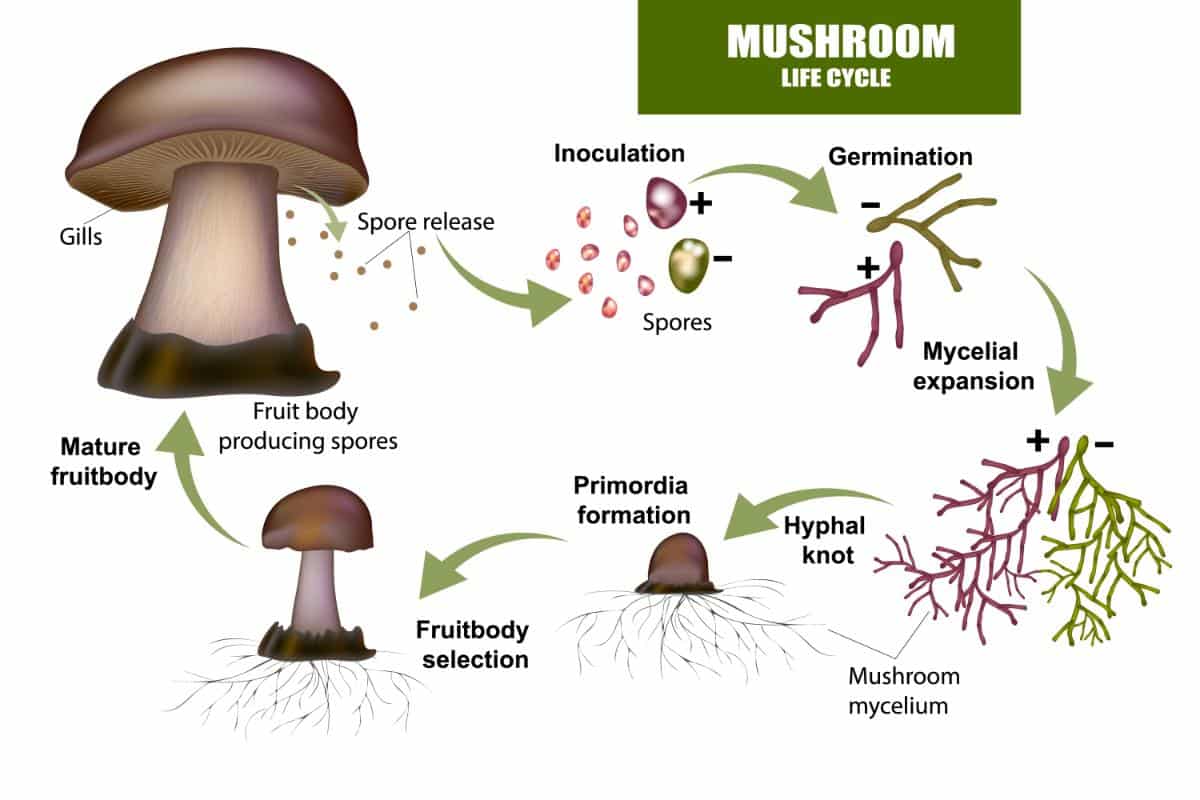
The hypha grows, branching again and again until the threads form a network called mycelium. This hidden network is the main body of the fungus. The mycelium may grow for years without making a mushroom.
In many species, one mycelium must meet another compatible mycelium before sexual reproduction can continue. When two meet, their threads join, creating a network that carries genetic material from both partners. Then, when the moisture, temperature, and other conditions are right, this joined mycelium grows a mushroom. The mushroom is a temporary reproductive structure that makes and releases the next generation of spores.
Each new spore has a mix of inherited traits from each parent. Once released, they travel by air, water, or animals, and the cycle begins again if one reaches a place where it can grow. Some fungi also make asexual spores. These spores form without genetic material from a second fungus, so they grow into new mycelia that are close genetic copies of the parent.
Ballistospory: Spore Catapult of Gilled Mushrooms
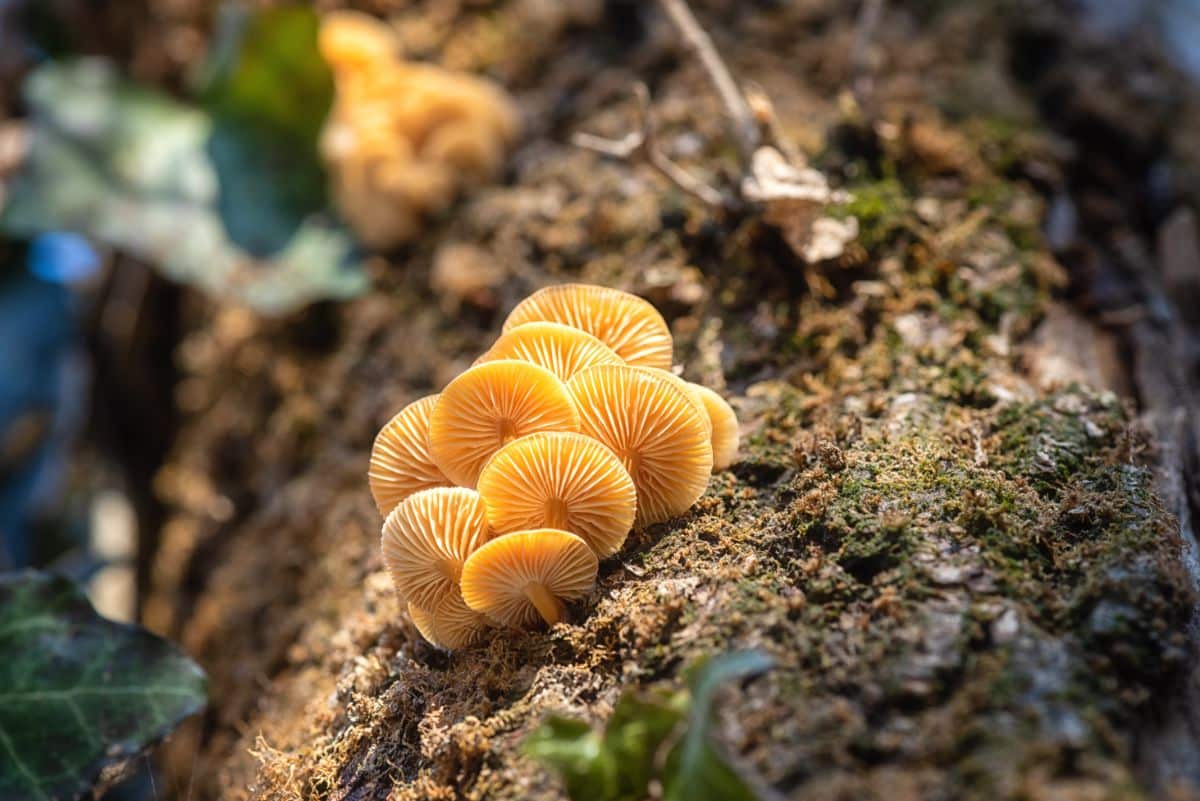
A gilled mushroom makes spores along the flat sides of its gills. Each spore rests on the tip of a tiny stalk, but the stalk doesn’t connect to the center of the spore. Instead, it joins at a small point near one end. This off-center position helps launch the spore when it is ready to leave.
About a minute before release, sugars on the spore begin drawing water vapor from the humid air beneath the cap. The water gathers beside the attachment point and forms a dense droplet and other simple sugars. At the same time, a thin layer of water forms on the opposite side of the spore. The larger droplet is called Buller’s drop, named after A. H. R. Buller, whose research helped explain how mushrooms use it to launch their spores.
The spore launches when those two bodies of water touch. Their surface tension collapses instantly, which causes the spore’s center of gravity to jump, and the spore is thrown off its stalk at an acceleration 10,000 times or more than the force of gravity. At least 30,000 species of mushrooms, yeasts, and other fungi use this surface-tension catapult.
The spore doesn’t shoot all the way out from under the cap yet, though. The expulsion sends it sideways, and even though it’s shot out with such force, it still doesn’t go far. Because the spore is so small, the surrounding air slows it almost at once. Its flight ends at less than 1/25 of an inch, and gravity then begins pulling it down. It now has to move its way carefully through the deep ravine between the gills.
In order for it to even get this far, that short flight has to end in exactly the right place. The spore needs enough room to clear the gill that made it, but it must stop before striking the gill on the opposite side, where it will likely get stuck again and end its journey.
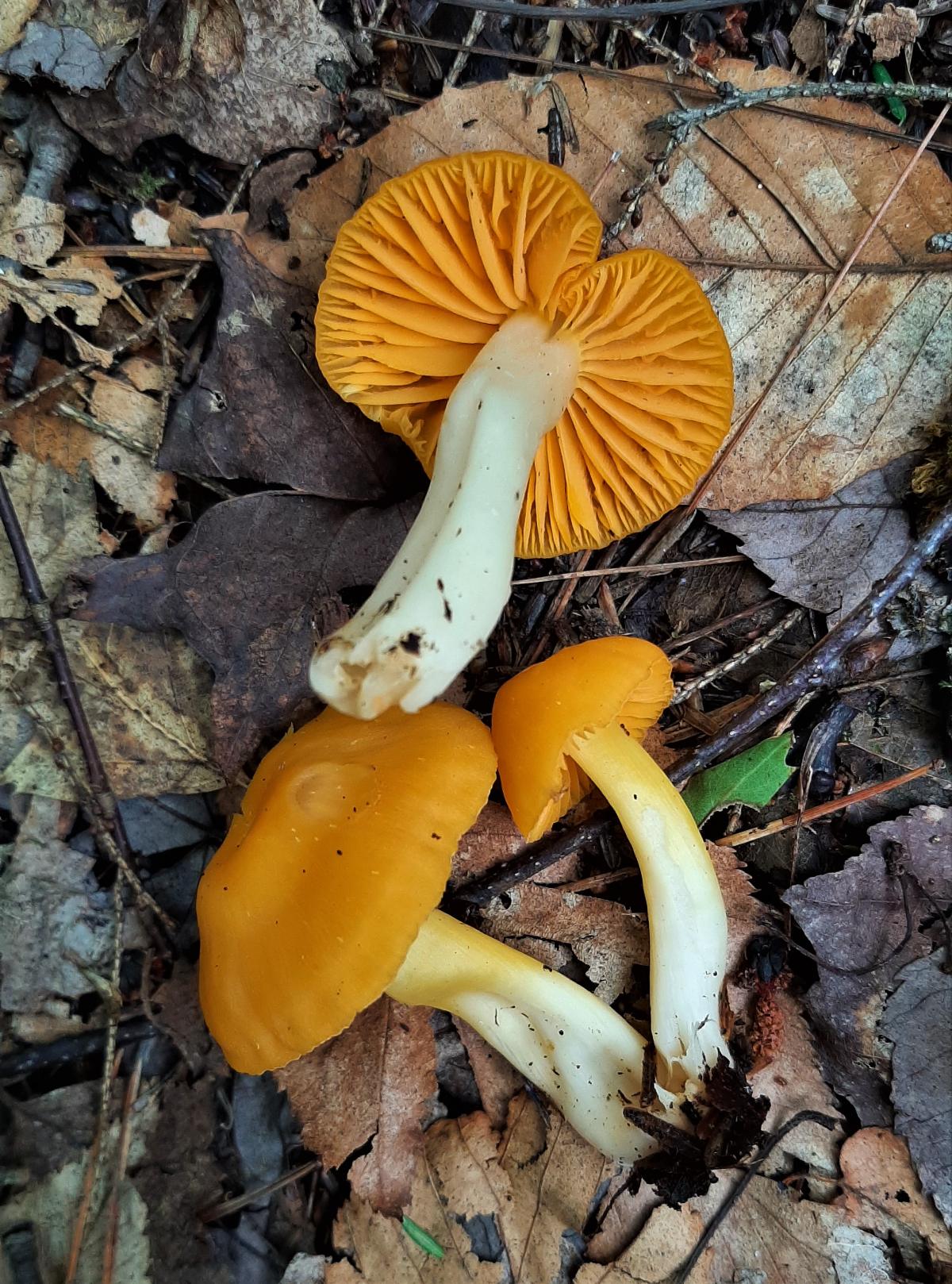
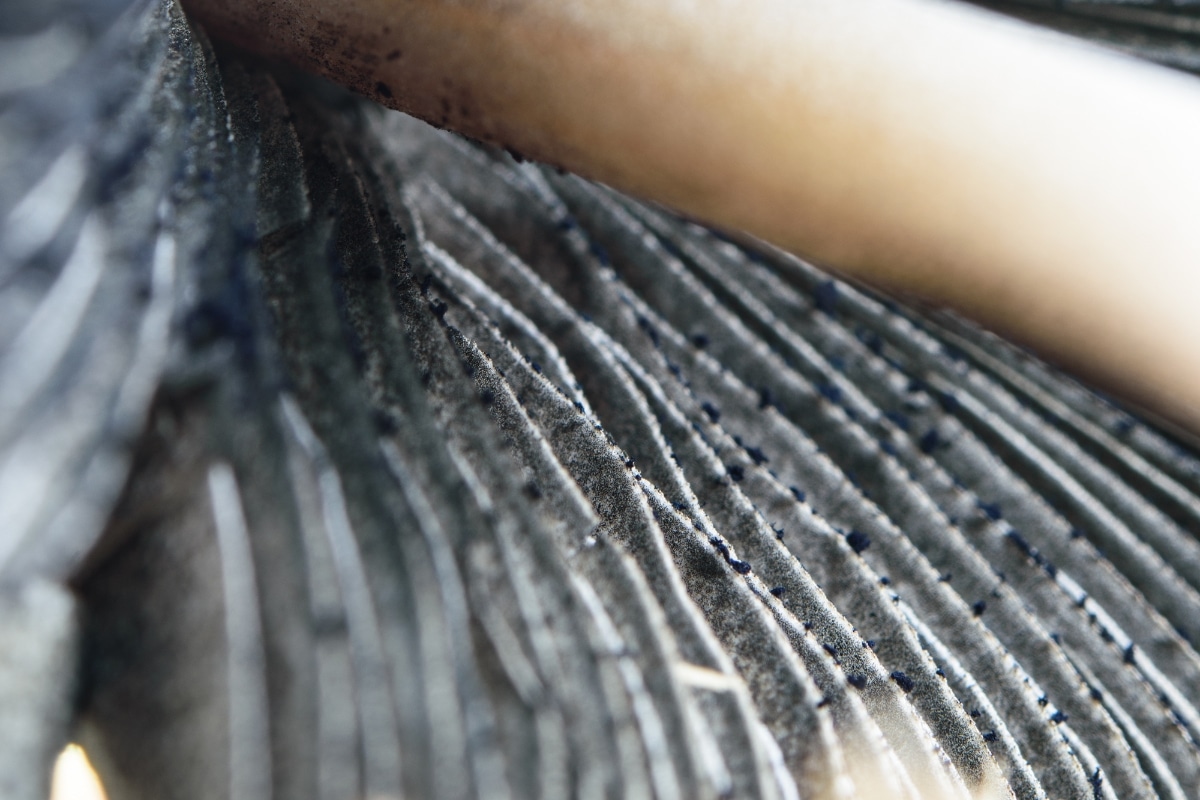
The space between gills closely matches the distance their spores travel because the mushroom must balance two needs. The gills must sit far enough apart for each spore to clear the surface that made it without striking the gill across from it. A wider gap between the gills would make the spore release easier, but it would waste space where the mushroom could have grown another gill and made more spores. By packing in as many gills as possible and leaving only the space needed for release, the mushroom makes as many spores as it can and still gives each one a clear path to fall.
The launch also depends on a balance of moisture and air movement. When the air is humid, it supplies the water vapor needed to build Buller’s drop, but liquid water on the gill could dissolve or wash away the sugars that draw the droplet together. The air must also remain nearly still because a passing breeze could push the newly launched spore into a neighboring gill before gravity has time to pull it down.
The cap helps create the still air needed by sheltering the gills beneath its broad surface. Many mushrooms also form partial veils across their gills when they’re young, which protects the spore surfaces.
Once a spore drops free of the gill, something has to move it out of that calm pocket, and fungi make their own wind to do this. Water constantly evaporates from the cap, and that evaporation draws heat from the mushroom and the surrounding air. As a result, the air beneath the cap may become about 2 to 4 degrees Fahrenheit cooler than the air around it.
Cool air is denser than warm air, so it sinks and spreads outward from beneath the cap. This movement creates a current of about 1.6 inches per second. A person would barely notice air moving at that speed, but it is enough to carry nearly weightless spores beyond the edge of the mushroom cap. Then, once the spores leave the sheltered space under the cap, the current can lift them 4 inches or more into the surrounding air, where stronger air movements can carry them farther.
Researchers have observed this current even in a closed room with no outside draft, which means the mushroom itself created the airflow. The spores also escaped through gaps as low as half an inch. A mushroom therefore does not need to rely on a breeze or grow tall in order for its spores to be released.
The spore release won’t work unless the gills hang straight down, though, and a mushroom will correct its own posture to keep them there. Buller tested this by tipping a field mushroom by about five degrees, and that change cut the mushroom’s spore dispersal in half.
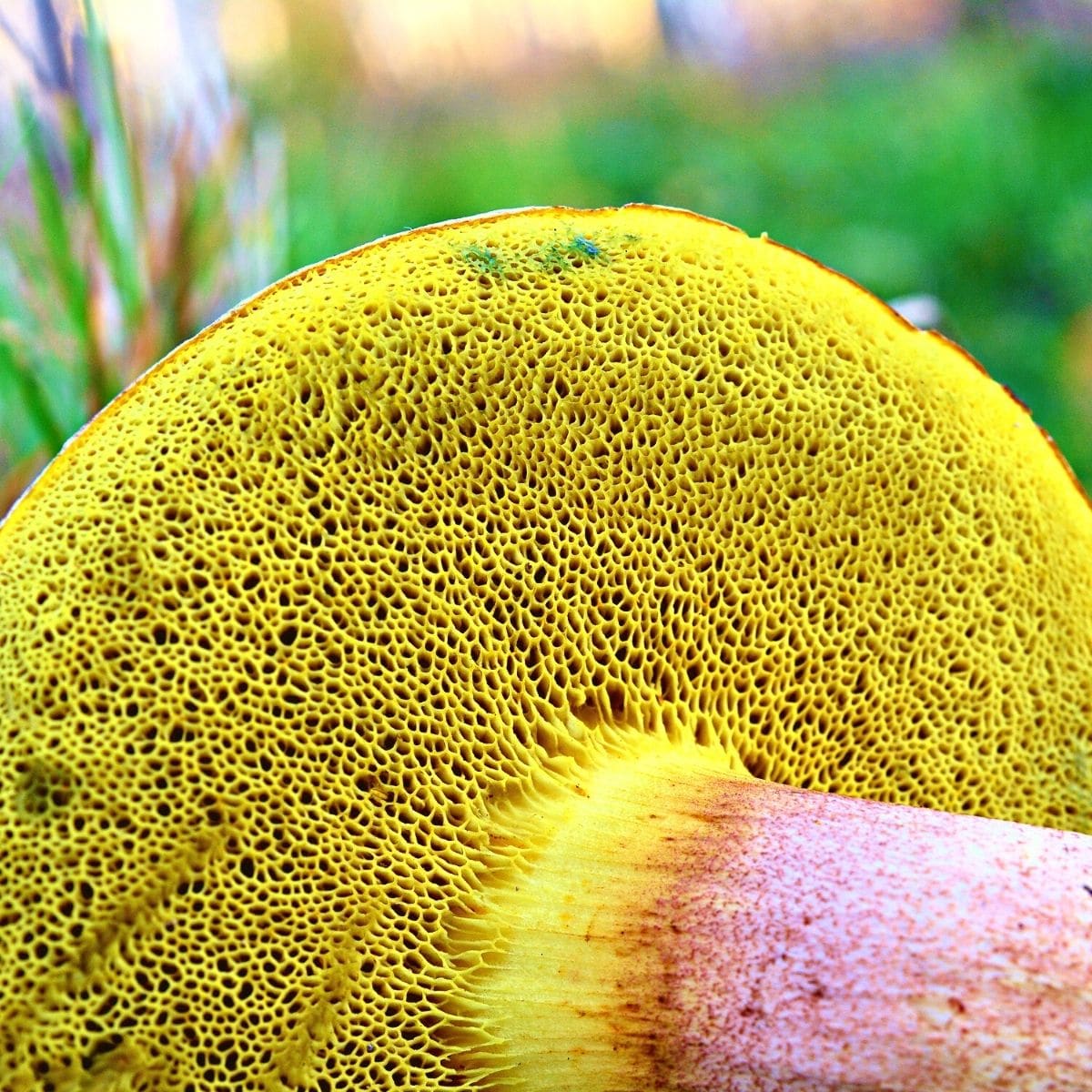
Boletes and most polypores use the method as gilled mushrooms, but they make their spores inside narrow tubes rather than on exposed gills. In a bolete, there are thousands of these tubes packed beneath the cap, and polypores have a similar layer of tubes on the underside of its fruiting body.
The inner walls of each tube are lined with microscopic cells that make spores. When a spore matures, it is launched away from the tube wall and into the open center of the passage. Gravity can then pull it down the tube and out through the bottom. The tubes must point downward so the spores have a clear path out. Once they fall from the pores, air flow beneath the cap or shelf carries them away.
If a mushroom grows tilted, it readjusts by growing the lower side of its stem faster than the upper side until the cap swings back toward level. How a mushroom senses which way is down is not entirely known. One hypothesis suggests the nuclei act as tiny weights that settle and register gravity.
In 1993, scientists grew Flammulina velutipes mushrooms aboard the Space Shuttle Columbia and compared them with mushrooms growing on Earth. In the near weightlessness of orbit, the mushrooms had no clear gravity signal to follow, and their fruiting bodies pointed in random directions. Unfortunately, the experiment did not measure how much this affected spore dispersal.
Ascus Discharge: Spore Launch in Cup Fungi and Morels
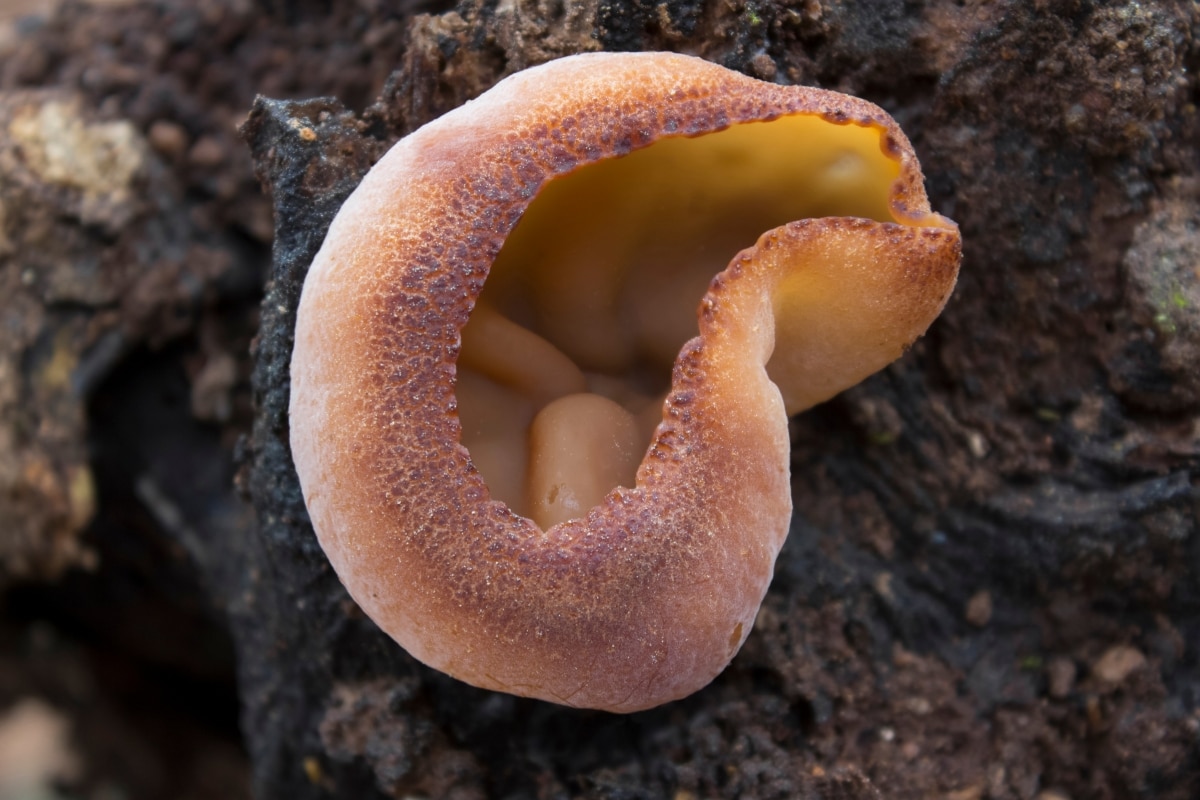
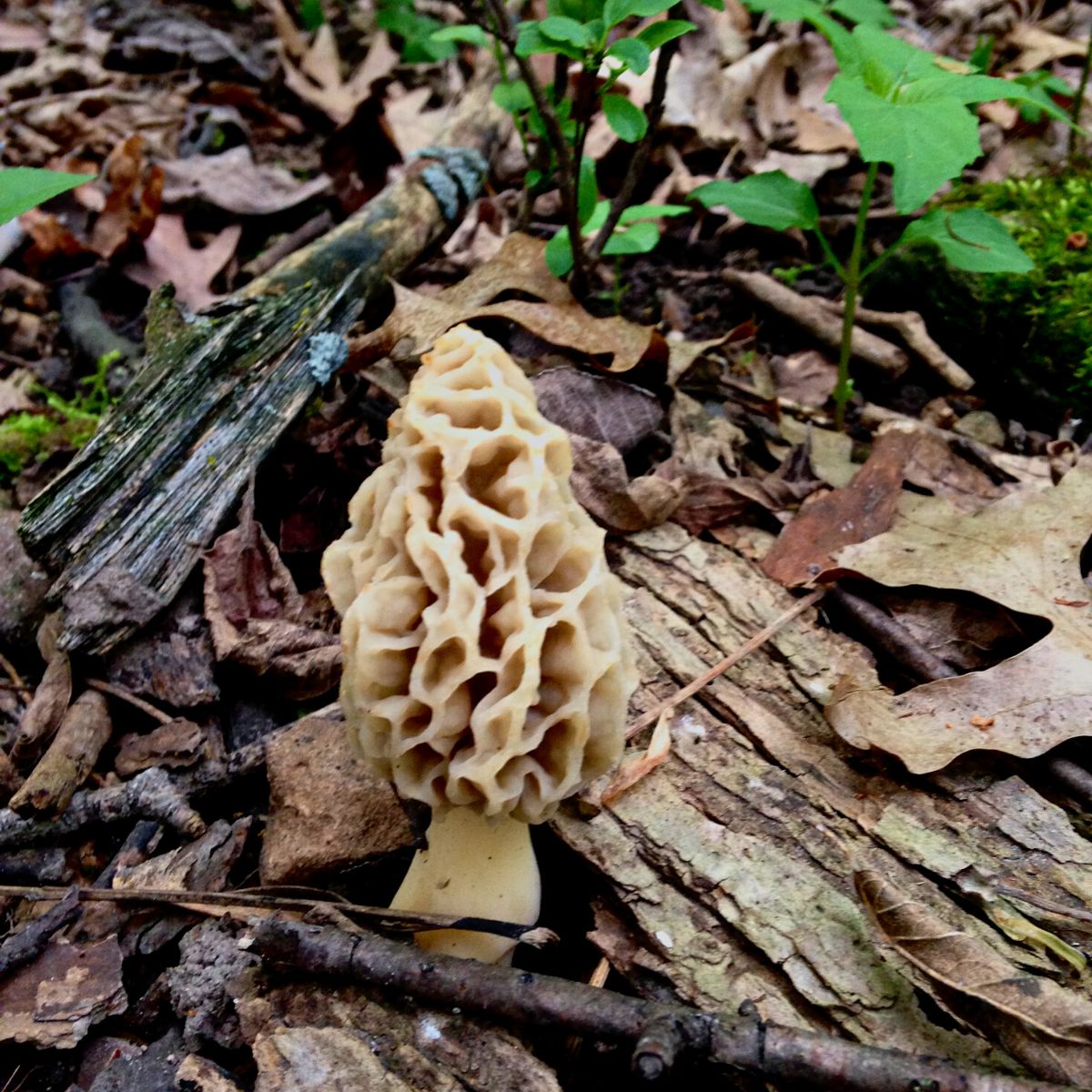
Cup fungi, morels, and their relatives build their spores inside a sealed cell called an ascus. In most species, the ascus holds eight spores in a row. The ascus uses water pressure to make the spores release. The fungus absorbs water until the pressure inside is high enough to blow open a lid at its tip or force the spores out.
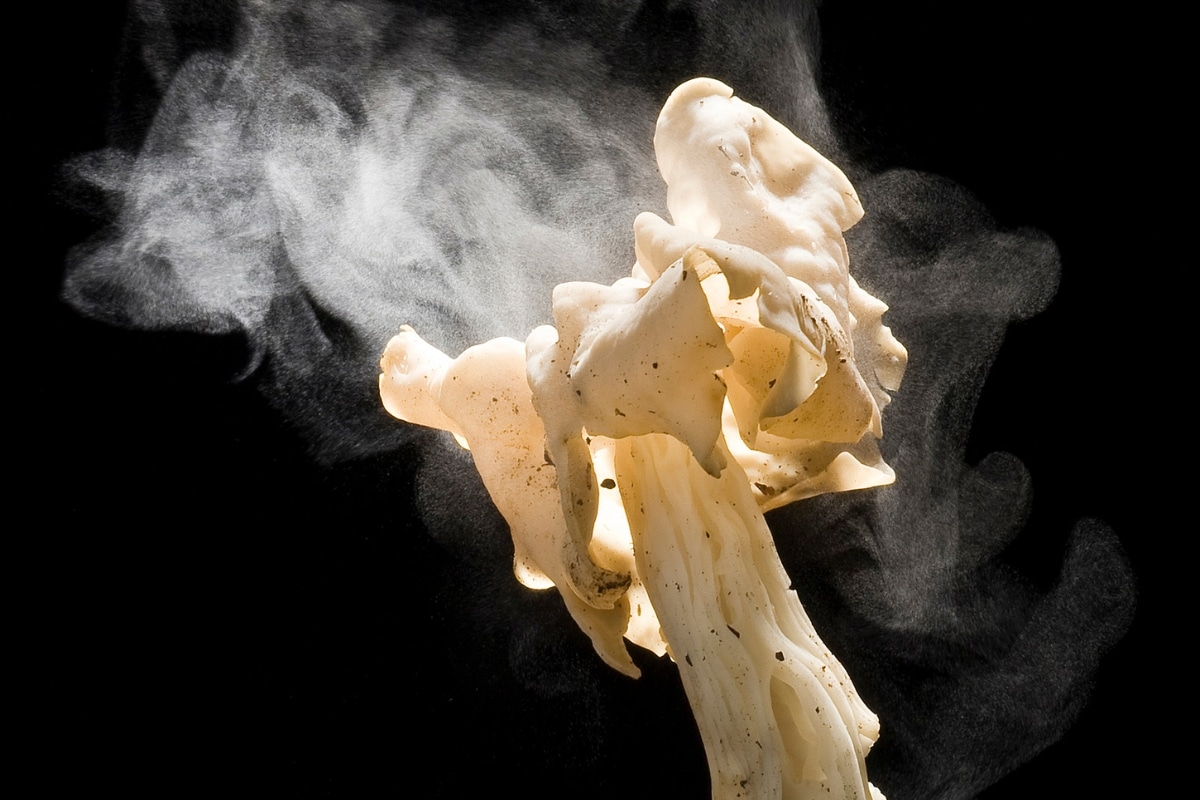
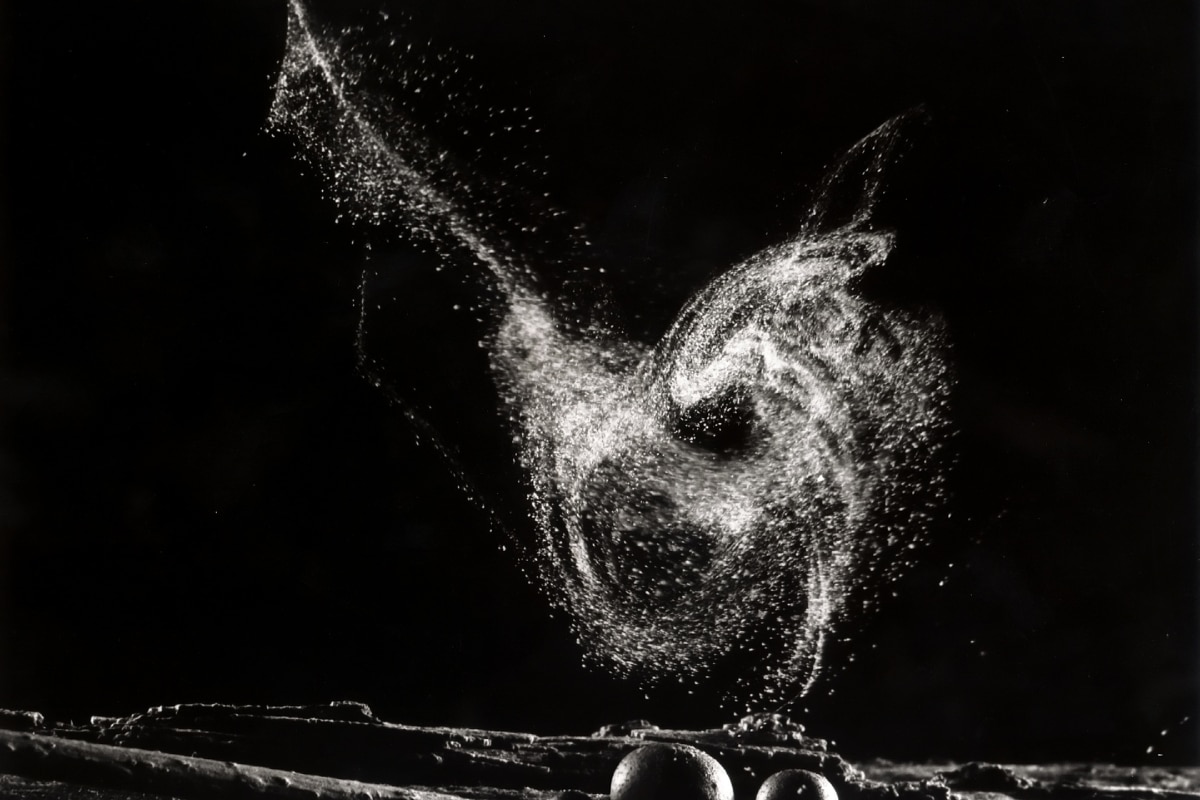
This launch sends spores many times farther than a gill can, and it also affects the shape of the fruiting body. The spores of these fungi are on an open surface facing the sky, which is why they take the form of cups, saddles, and pitted caps. These fungi may look very different, but each shape lets spores shoot upward without striking another part of the fungus. When one ascus bursts, it can trigger its neighbors. The response often spreads until thousands are firing together.
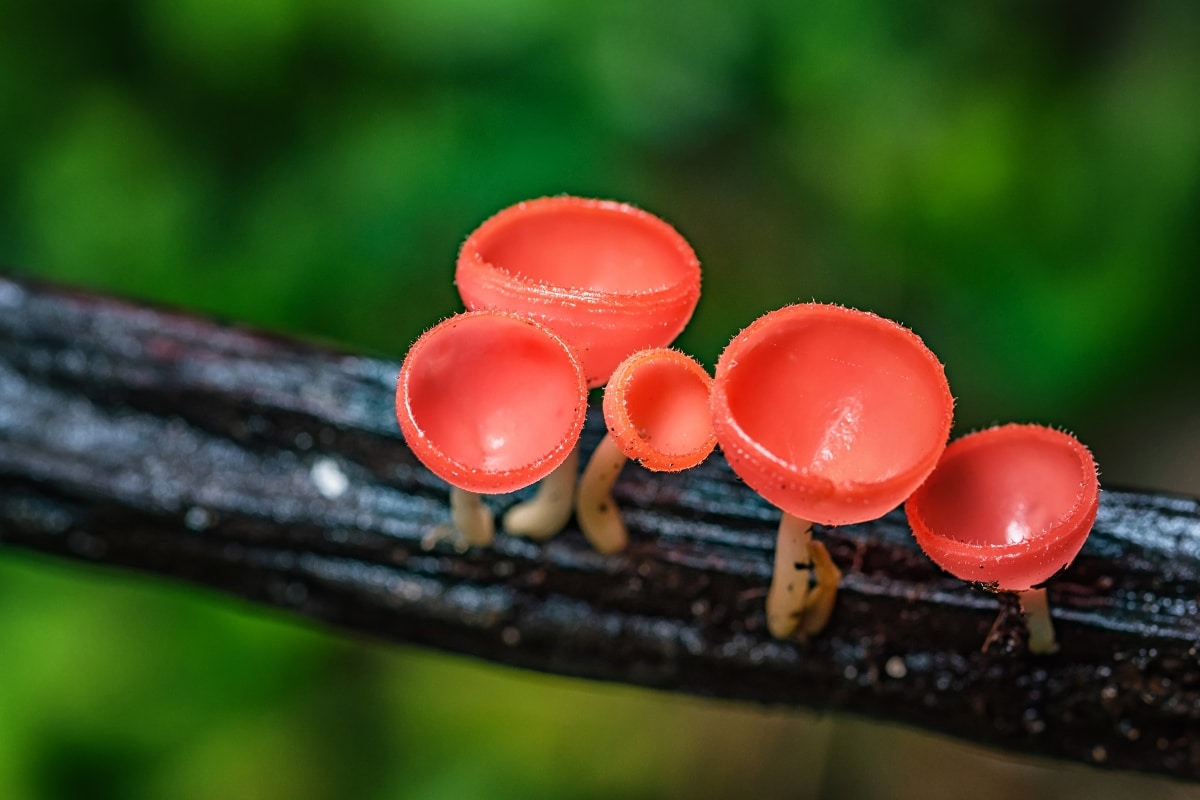
With some species, like the Peziza cup fungus, a light touch or wind across the cup may be enough to begin the reaction. Together, the spores rise as a cloud that can be seen even without a microscope, and the many tiny bursts make a faint hissing sound.
Other fungi make asci that release spores without shooting them into the air. The fungus that creates Dutch elm disease has an ascus wall that breaks down instead of bursting under pressure. The spores are freed, but they stay close to the fruiting body because nothing launches them into open air. Insects then pick up the spores and carry them to another tree.
Impact Dispersal: Spore Release in Puffballs and Earthstars
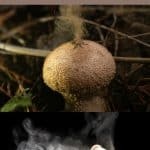
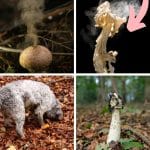
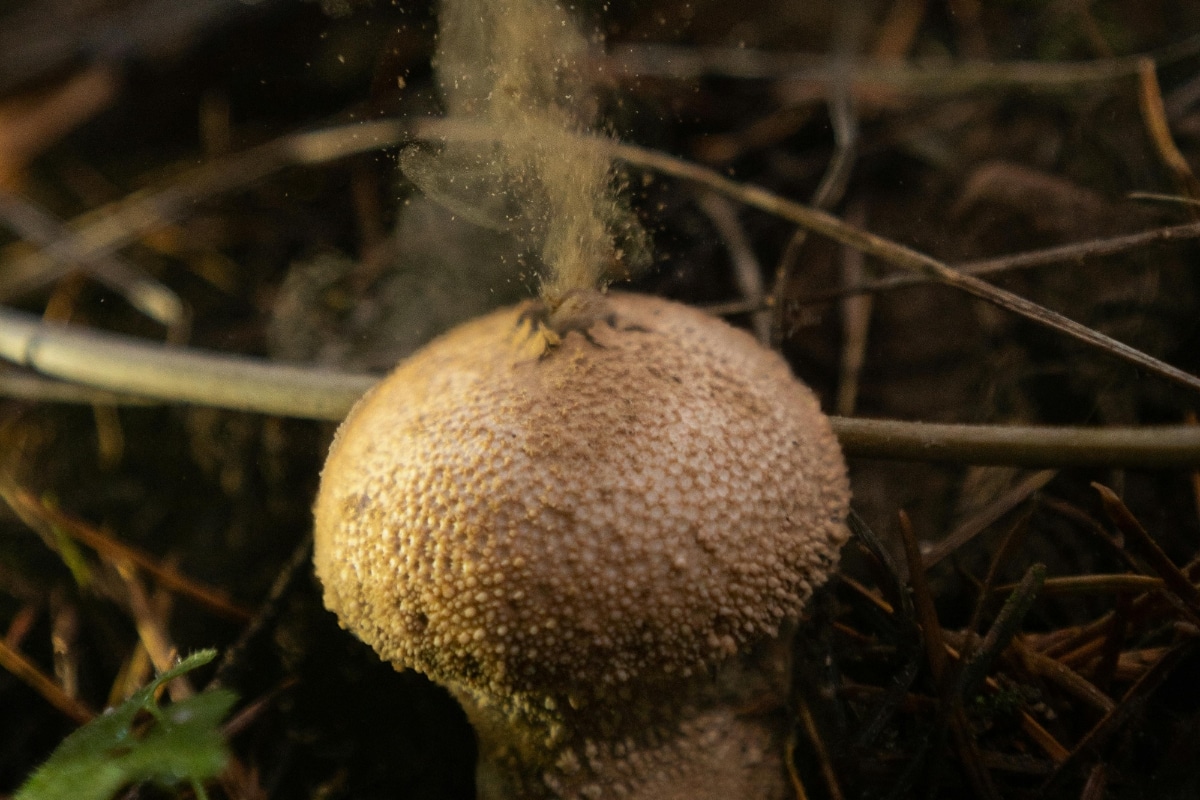
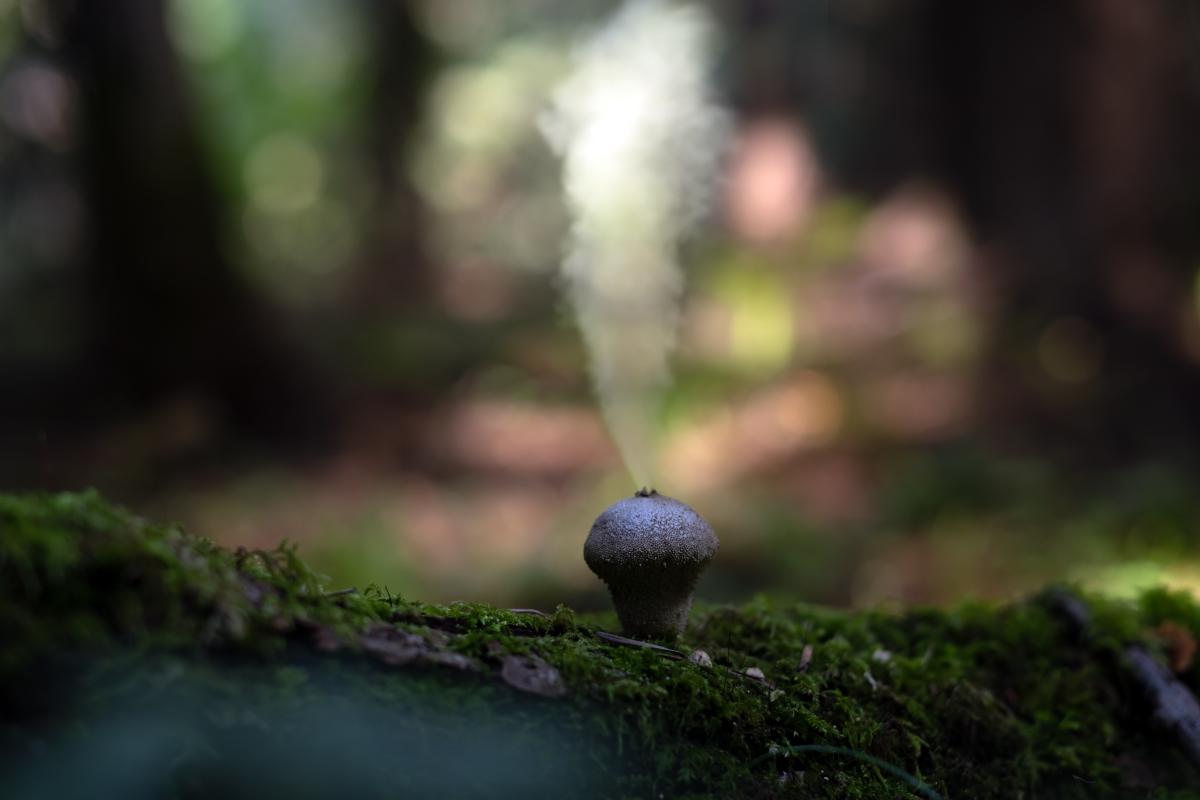
A puffball’s spores aren’t exposed at all; they form inside a closed body. These are called statismospores, and they can’t go anywhere until an outside force moves them. As a puffball matures, its firm white interior breaks down into dry dust. Then, a small hole opens in the top of the wall, and when rain or animals hit the body, it sends a puff of spores several inches into the air, where the wind takes over. A giant puffball can get very big, up to 20 inches across, and holds trillions of spores.
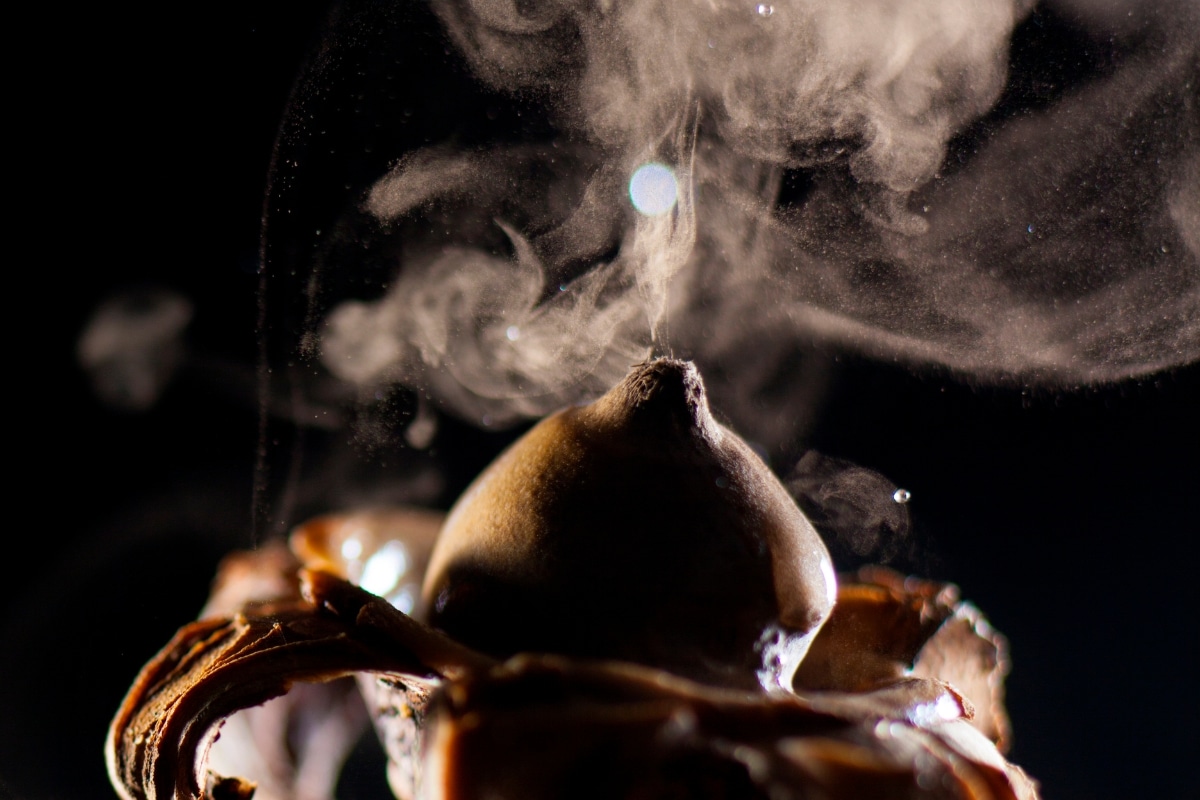
Earthstars use a similar process, but with an extra step. Their outer wall splits into pointed rays that fold back and lift the inner spore sac off the ground. When a raindrop strikes that sac, it dents it, and spores puff out through a small mouth as it rebounds. In some earthstar species, those rays are hygroscopic, which means they open in wet weather and curl shut as they dry. The false earthstar is also called the barometer earthstar because its rays react so dependably to changes in moisture.
Earthballs use a simpler method. As an earthball matures, its tough outer skin splits, leaving a ragged opening that exposes the dry spores inside. This allows raindrops and wind to loosen them and carry them away.
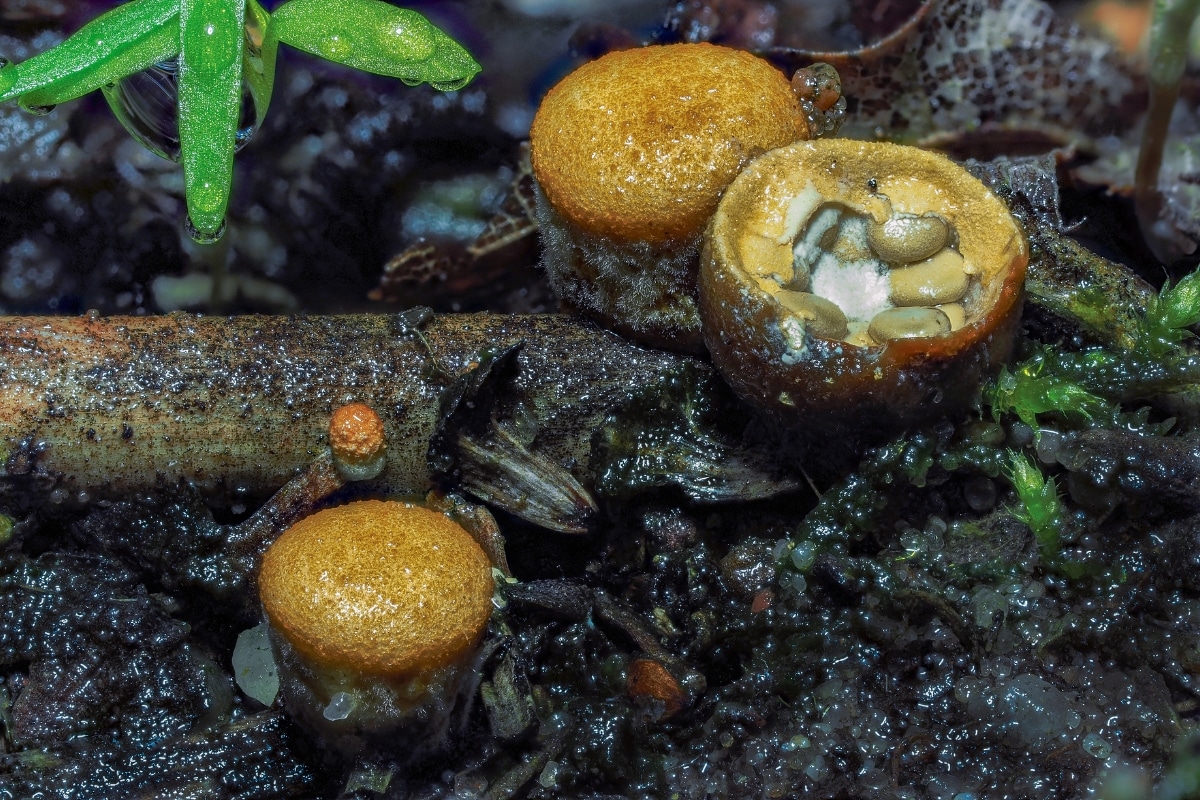
Bird’s nest fungi have a tiny, cup-shaped fruiting body about a fifth to a half inch across, with several packets of spores that sit in it like eggs in a nest. The cup walls are shaped so that a raindrop striking at the right angle throws the packets out. These spore packets can travel from a few inches to a couple of feet away. Each packet has a thin cord with a sticky mass on the end. When that mass hits a twig, the cord wraps around it and holds the packet against wood the fungus can eat. These spore packets are also eaten by small animals, and the spores can pass through digestion intact.
Sporangium and Peridiole Discharge: Spore Cannon Dispersal
Some fungi build a spore launcher instead of waiting for rain or animals to spread their spores. The fungus Pilobolus grows on herbivore dung, and it needs to get its spores to clean grass a grazing animal will eat, far away from the dung pile where it is growing. It has a stalk about an inch tall that swells at the top like a water-filled balloon, and on top of that sits a single black spore case like a hat.
The balloon works as a lens. It focuses light onto pigments at its base, and the stalk bends until the spore case points toward the brightest thing around, usually the sun. Pressure inside builds to about seven times atmospheric pressure, then the spore case launches away at over 20,000 times the force of gravity. They can be flung as far as 6 to 10 feet away.
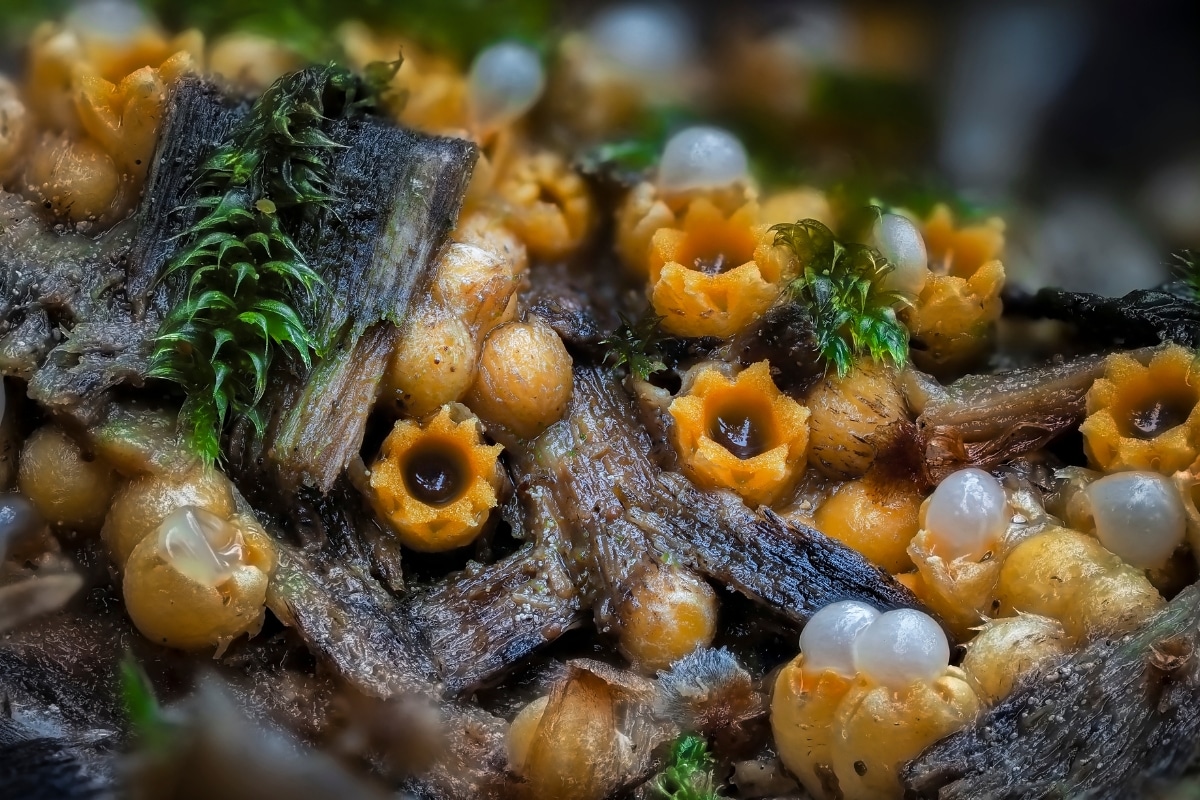
The shotgun fungus (Sphaerobolus) fires a spore packet through the air. The fungus is tiny, with each fruiting body only about 1/25 to 1/8 of an inch across. It grows in groups on dung, rotting wood, and landscape mulch.
As the fungus ripens, its outer wall splits into several lobes and exposes one dark, sticky packet containing its spores. Beneath that packet is a small inner cup filled with cells that store sugar, and as the sugar levels rise, water is drawn into the cells. There, pressure builds for about five or six hours until the inner cup suddenly turns inside out and throws the packet with an audible pop. The empty fruiting body left behind looks like a miniature earthstar.
The fungus points its spore packet toward the brightest nearby surface before firing. In a forest, that light may guide the packet toward open space, but when these grow in a garden, it may direct the shot toward a light-colored house or car. Once the packet hits the surface, it sticks firmly, which has made artillery fungus a problem for many homeowners because it is so hard to remove. The spores inside may remain alive for several years after the packet lands.
Mycophagy: Animal Spore Dispersal
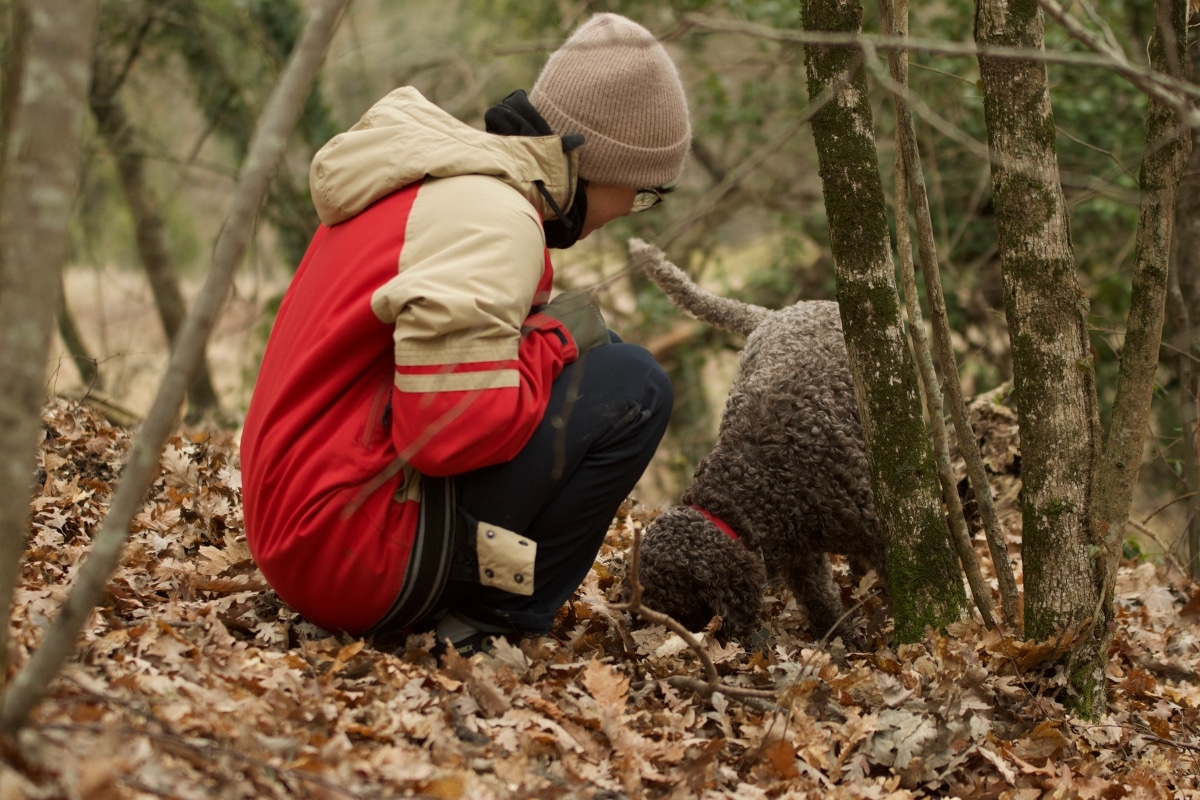
Some fungi, like truffles, live underground where there are no raindrops, animals, or breezes to distribute the spores. Instead, nearly every truffle depends on an animal. Ripe truffles give off a powerful smell that attracts certain animals, and when the animal digs the truffle up and eats it, the thick spore walls are able to survive digestion. The spores then spread in the animal’s droppings. Voles, squirrels, chipmunks, deer, and birds are all animals that eat and spread truffle spores.
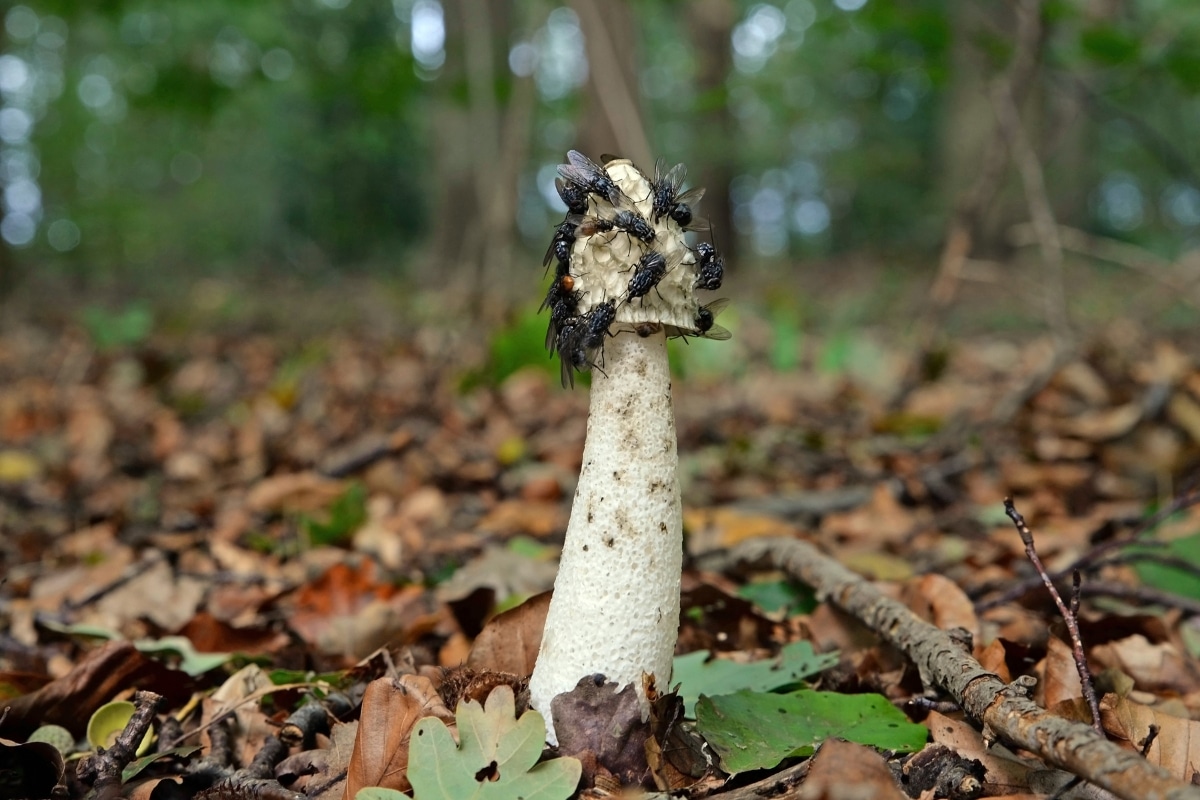
Stinkhorn spores are in a sticky slime called the gleba and rely on flies and other insects to spread them. The mushrooms have a super-strong smell, a mix of compounds found in rotting meat and feces. When blow flies arrive for what smells like a carcass, they feed on the stinkhorn slime. Then, they deposit spore-laden liquid droppings somewhere else.
Beetle Dispersal: The Pouch Fungus
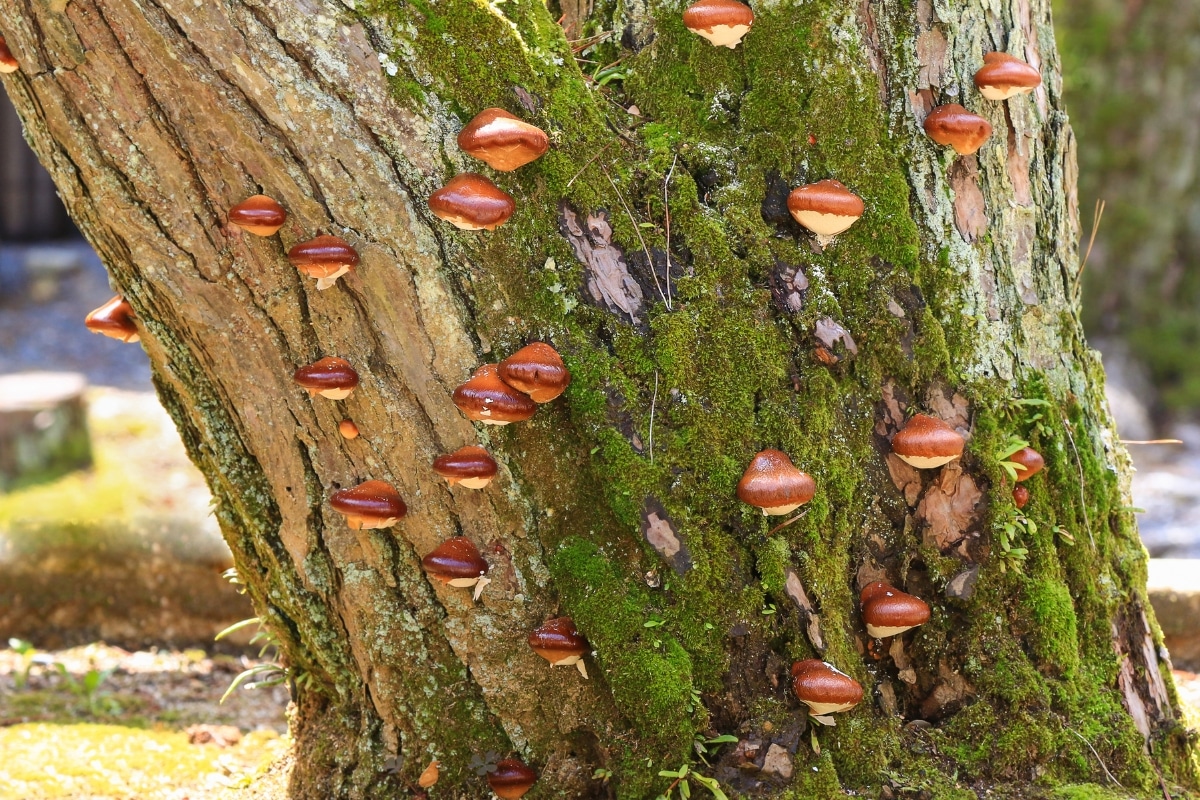
The pouch fungus(Cryptoporus volvatus) grows on conifers, and it looks like a small puffball stuck to the bark. It’s small, about half an inch to two inches across, and its pore surface hangs inside a sealed chamber under a flap of tissue, which means that when its spores fall from the tubes, they have nowhere to go.
As the mushroom matures, a small opening forms in that flap, and wood-boring beetles crawl in to feed on the tubes and the spore mass. When a beetle later bores into a fresh tree, the spores it’s carrying go with it. The white-headed woodpecker also helps spread spores because it drills into the pouches, looking for the beetles inside.
A 1980 study of these fungi found that even after 34 days without rain, the spore dispersal rate did not slow down. The pouch may keep the fungus from drying out, and that lets it keep releasing spores during the dry weeks when bark beetles are active.
Aquatic Dispersal: Waterborne Spores
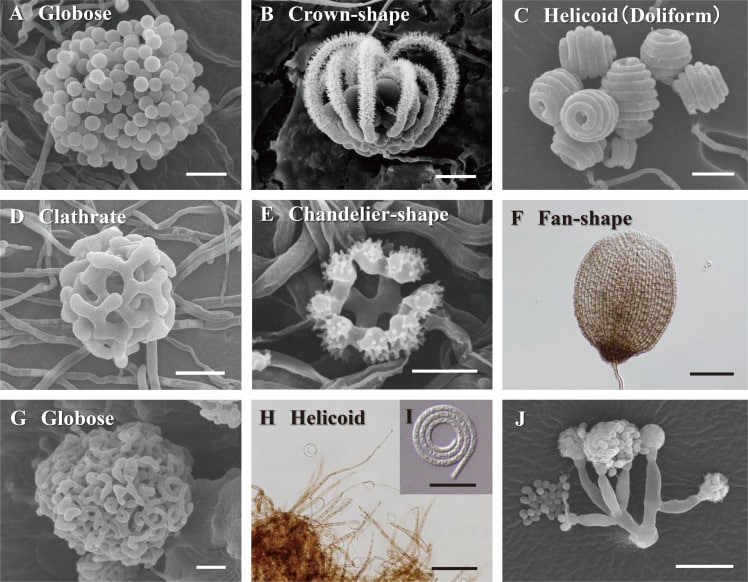
More than 300 species of these fungi live in aquatic habitats, with many growing on fallen leaves in cool, well-aerated streams. Their spores are suited to moving and settling in water. Some have four arms spreading from a central point, while others are long and threadlike. These shapes are thought to slow the spores in the current and give them more chances to catch against a surface.
The stream carries each spore away from the leaf where it formed until one of its arms or threads catches on another leaf or twig. Other water-dispersed fungi make spores with water-resistant walls. Instead of sinking into the current, those spores remain on the surface and travel downstream like tiny boats.
Sweepstakes Dispersal: Why Wind-Dispersed Fungi Make So Many Spores
When wind carries the spores, the mushroom has no control over where they land. Many of the spores end up near the fungus that released them, while many others fall on surfaces that are too dry or don’t have enough food. Scientists call this sweepstakes dispersal because success depends on the fungus scattering enough spores that a small number land in the right place. A wind-dispersed mushroom improves those odds by making an enormous number of spores.
For many, though, landing on suitable material may still be only the first step. With the striated bird’s nest fungus, a spore that lands in a good spot still can’t reproduce on its own. It must grow through the wood or soil until it meets another compatible mycelium network. Because most spores never reach a suitable surface, and fewer still meet a compatible partner, only a tiny share are able to reproduce.
Animals make dispersal less random. A squirrel that eats a truffle or a fly that feeds on a stinkhorn can carry many spores at once and leave them in droppings, soil, or decaying material where the fungus may be able to grow. Since this method gives each group of spores a better chance of reaching a useful place, an animal-dispersed fungus can make fewer spores than one that depends on wind. Without these forms of spore transport, the fungus can expand only as fast as its underground mycelium grows.
Common Questions About Mushroom Spores
How do mushroom spores spread?
Mushrooms release spores through several methods. Some launch spores with water pressure, while others depend on wind, raindrops, streams, insects, or larger animals to carry them away.
How far can a mushroom spore travel?
The distance a spore travels depends on the weather, landscape, and type of spore. Many can go quite far when they are dispersed by wind.
Why do mushrooms make so many spores?
Because so many spores land somewhere unsuitable to reproduction, a mushroom may release millions or billions of spores so that at least a few have a chance to reach a place where they can grow.
Do all fungi release spores into the air?
No. Truffles depend on animals to dig them up and eat them, while stinkhorns attract flies that carry their sticky spores away. Some aquatic fungi make spores that travel through streams rather than through the air.
References:
- Lepp, H. Spore release and dispersal. ANBG https://www.anbg.gov.au/fungi/dispersal.html
- Utah State University Intermountain Herbarium. Dispersal — https://artsci.usu.edu/herbarium/activities_fun-stuff/fun-facts-about-fungi/dispersal
- Dressaire, E., Yamada, L., Song, B., & Roper, M. (2016). Mushrooms use convectively created airflows to disperse their spores. PNAS 113(11):2833–2838 — https://pmc.ncbi.nlm.nih.gov/articles/PMC4801285/
- Harrington, T. C. (1980). Release of airborne basidiospores from the pouch fungus, Cryptoporus volvatus. Mycologia 72:926–936 — https://faculty.sites.iastate.edu/tcharrin/files/inline-files/Cvolvatus.pdf
- Cornell Mushroom Blog (Tarango, C. A., 2019). Flying fungi — https://blog.mycology.cornell.edu/2019/02/03/flying-fungi/

Leave a Reply