


Most people think of Italy when they think of a truffle, but there are quite a few incredible edible truffle species in North America, too. Truffles aren’t much to look at, they’re like small lumpy potatoes buried in the dirt. But these aromatic little fungi balls are literal forest treasures. They can be hard to find because they’re always underground, but with some training and the help of a good truffle sniffer, they can be unearthed.
North America has hundreds of native truffle species, and many of them are considered excellent for their special scents. Some belong to the genus Tuber, which is the same group that includes Europe’s famous black and white truffles. Others are closer relatives of the morel than of Tuber. They grow from northern California to British Columbia in the West, and from New Mexico to Florida and north into Québec in the East.
- Scientific Names: Tuber, Leucangium, Imaia, Kalapuya, Geopora
- Common Names: Truffle
- Habitat: Underground mycorrhizally with host trees
- Edibility: Excellent
All About North American Truffles
The word truffle comes from the Latin word tuber, meaning swelling or lump. The word applies to several unrelated truffle genera; it does not belong to one particular genus. Truffles have been eaten for thousands of years. The first mention of truffles is in Neo-Sumerian inscriptions from 2000 BC about the eating habits of their Amorite enemies.
Interest in native North American truffles began picking up in the 1980s. For years, they were considered a niche forest product because the truffles were (and still are, by some) considered inferior to European species.
Commercial harvesting of Oregon white truffles took off in the Pacific Northwest during the 1980s. The harvest has since become an established regional industry. In 2006, the Oregon Truffle Festival debuted in Eugene and is an annual gathering deliberately scheduled for late January to align with the fungi’s peak ripening season.
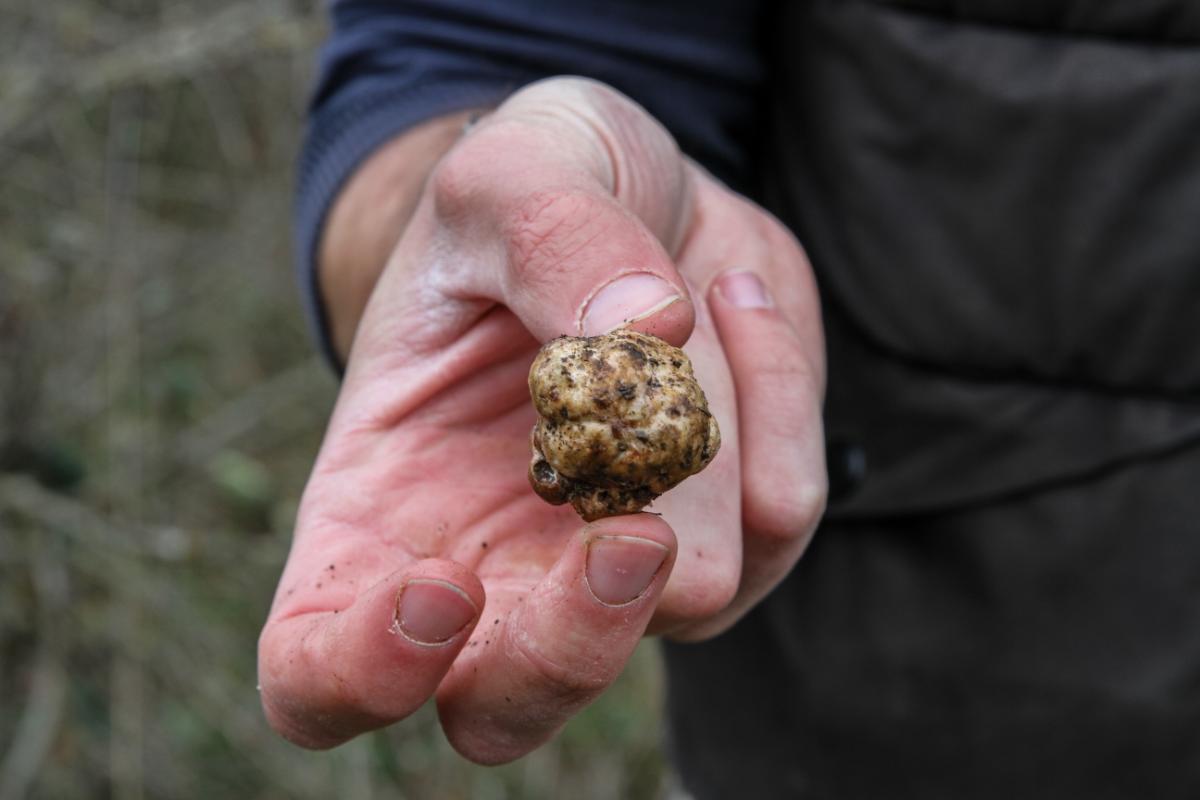
It took longer for native truffles to catch on in the Southeast. For decades, pecan growers in the southern states dismissed the pecan truffle (Tuber lyonii) as a persistent orchard nuisance. Today, it has changed and some orchard owners harvest the truffles as a secondary crop.
For centuries, nobody knew where truffles came from, but there were lots of theories. Plutarch thought lightning, warmth, and water in the soil made them grow. In early 2nd century AD, the poet Juvenal said it was thunder and rain that caused them to appear. Cicero, in 61 BCE and 56 BCE, called them children of the earth, and the botanist Dioscorides thought they were a kind of root.
In the 1700s, the French pharmacist Joseph Geoffroy suggested that truffles were fungi. Later, the Italian botanist Pier Antonio Micheli supported the idea by describing their spores, and then in 1831 the Italian doctor Carlo Vittadini sorted out the species in an 1831 book called Monographia Tuberacearum.
In the early 1880s, King Wilhelm I of Prussia asked the botanist Albert Bernhard Frank to find a practical way to farm truffles. Frank never figured it out, but while he was trying, he found that the fungus and the tree roots were joined together and feeding each other. He named that partnership mycorrhiza in 1885.
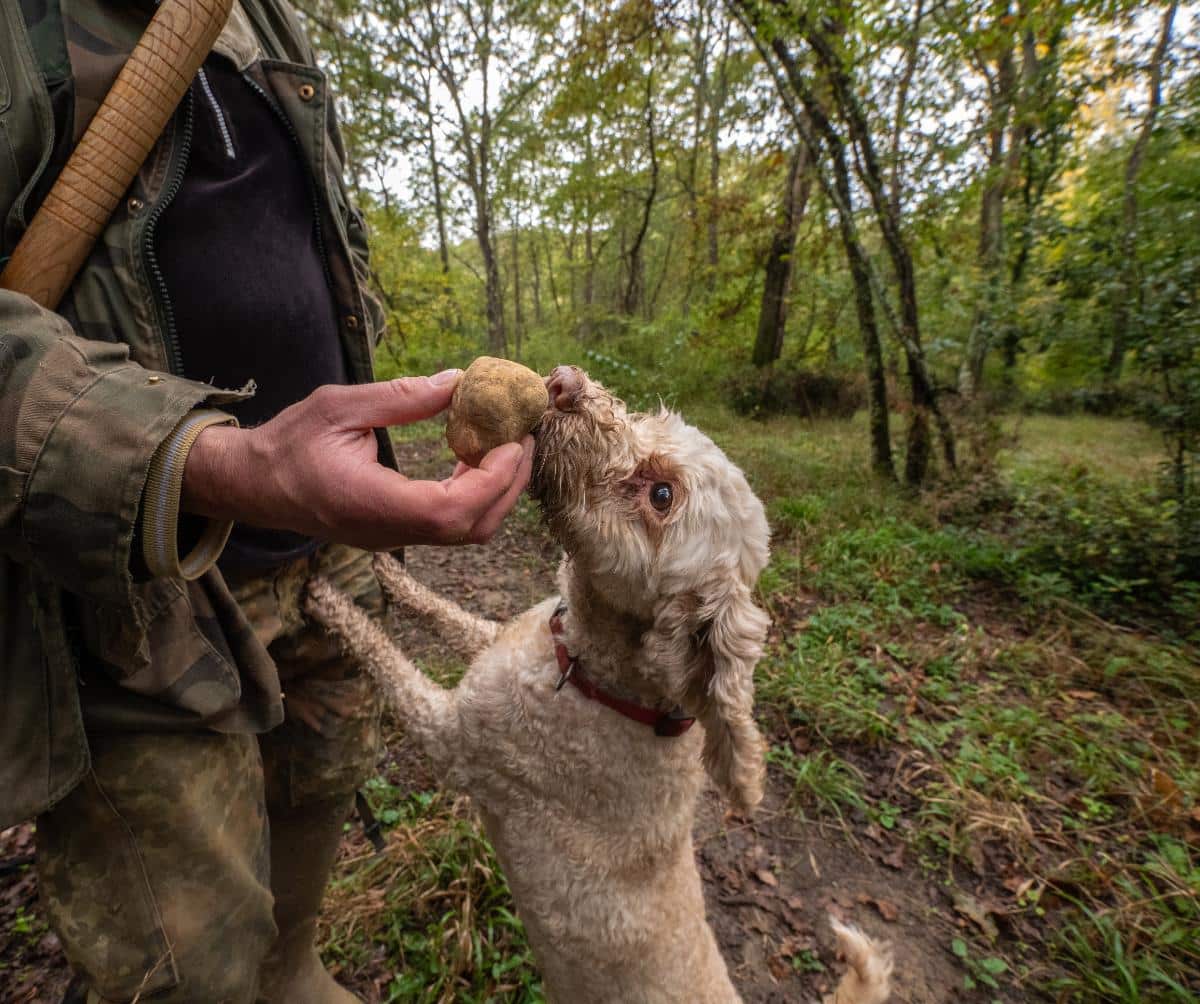
Finding wild truffles was always a problem, and for a long time, pigs were used to find them by their strong scent. Pigs have a great nose for truffles, but they will eat them if they get to them first. More recently, trained dogs have taken the place of pigs. They can also find truffles by scent, and they won’t eat the harvest. In 1985, Italy banned the use of pigs because their digging damaged the truffle mycelium, and the damage reduced truffle production in those areas for years. A 1990 study found that the compound both animals pick up on is dimethyl sulfide.
North American Truffle Identification Guide
Season
Each species has its own fruiting window, and most of those windows fall in the wet months. In North America, a truffle of some kind fruits in nearly every month of the year, so the season depends on which one is being hunted and where.
The western species grow through fall, winter, and spring. The Oregon black truffle and the Oregon brown truffle fruit from September through February. The Oregon winter white truffle fruits from October through February, and the Oregon spring white truffle from January through June. The fuzzy truffle fruits from midwinter into early spring in coastal forests and in late summer and fall in the Sierra Nevada.
The eastern species fruit from midsummer into early winter. The pecan truffle starts forming near the end of July in Florida and Georgia, and peak production is in August and September. The season continues into December when the soil stays moist, and in the far south of the range it runs as late as February.
In the Midwest, ripe Tuber canaliculatum turns up from August through November, and the Blue Ridge truffle from September through November.
Habitat
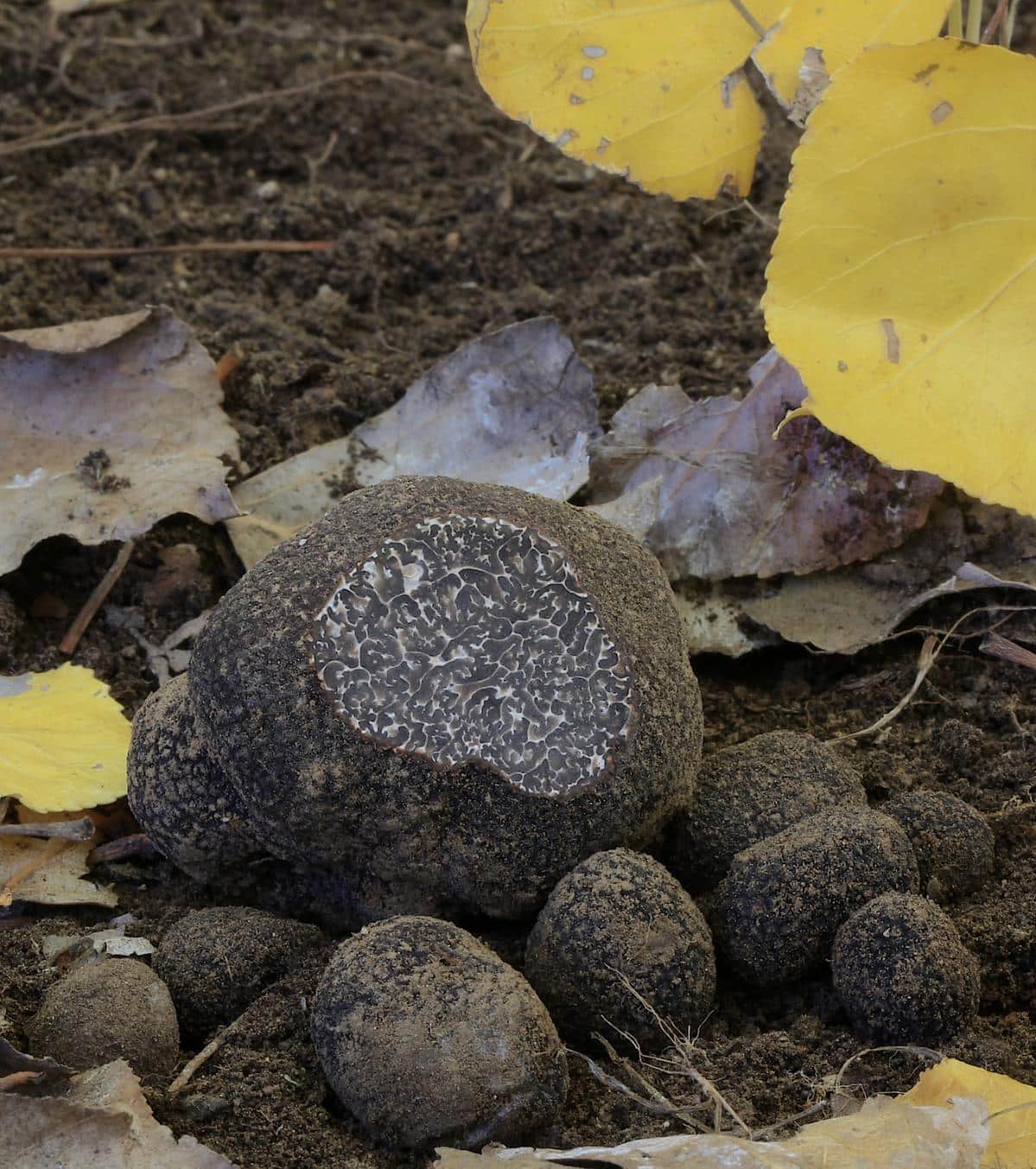
Most truffles are ectomycorrhizal and live in partnership with tree roots. In this mutually beneficial exchange, the fungus supplies the tree with water and essential soil nutrients, while the tree provides the fungus with sugars produced through photosynthesis. Without a suitable host tree, these truffles cannot grow.
Truffles usually grow just a few inches beneath the surface of the soil and are nestled under layers of duff and leaf litter. The depth varies by species. Trained dogs can locate Oregon black truffles buried up to ten inches deep.
Truffles are also adaptable to a variety of terrains. They frequently grow in low-lying ground near rotting logs, along old road banks, and in both loose and compacted soil.
Fruit Body
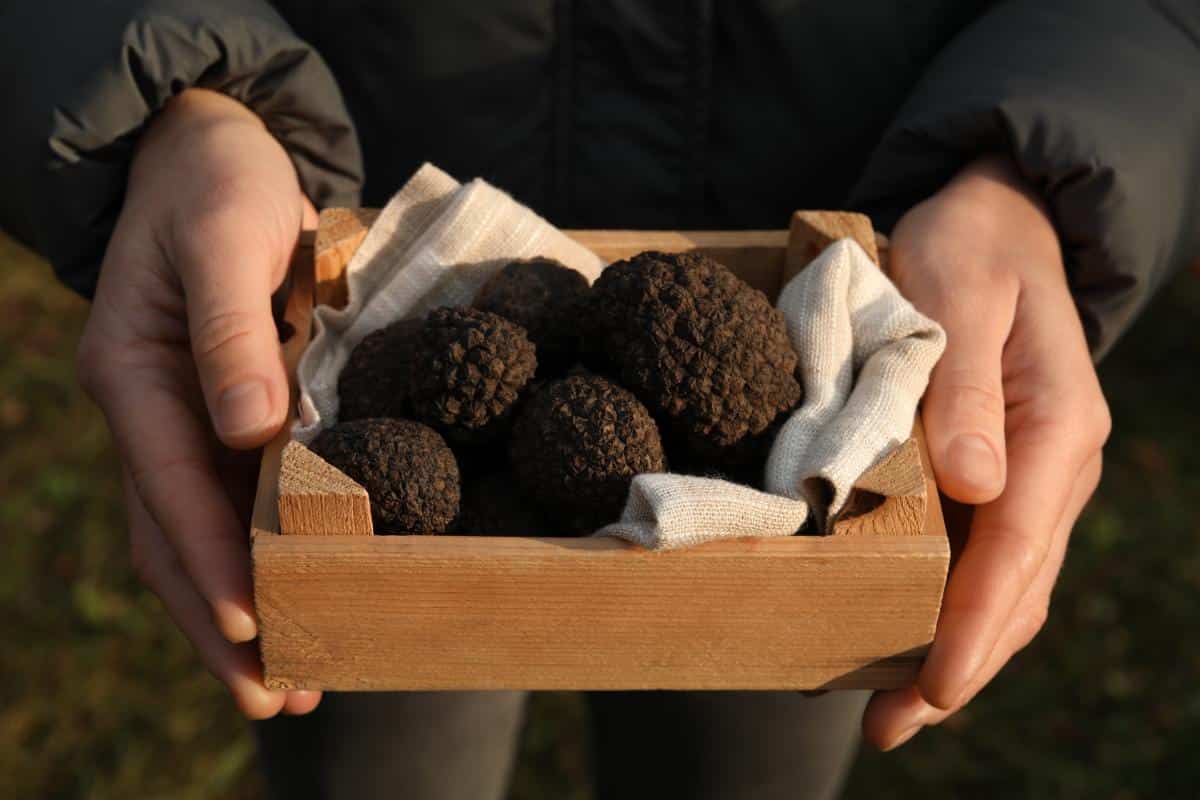
A truffle has no cap, gills, or stem. The whole fungus is a lump of tissue with an outer skin called the peridium and an inner mass called the gleba, which is where the spores form. It can be round, lobed, or potato-like.
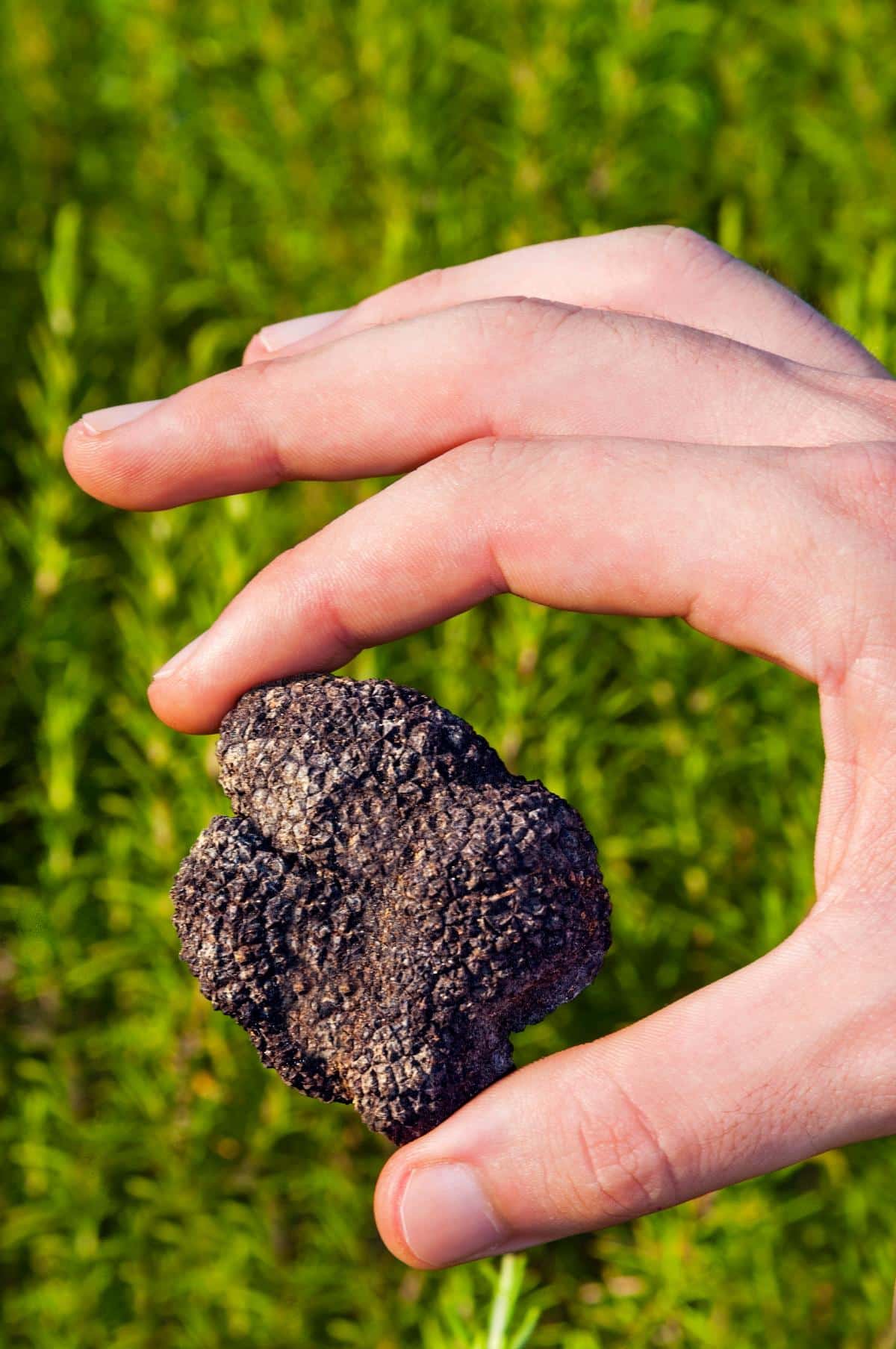
Some species are smooth all around, while others have warts of different sizes and shapes. One type is covered in coarse hairs. Truffles vary in size from that of a marble to a fist. Most edible species are between 0.2 and 3 inches across.
Taste and Smell
When truffles are young, they don’t have a strong smell. But a ripe truffle has a strong smell because of its volatile compounds. There is a wide range of smells among the various species.
The Oregon white truffles smell like garlic, spices, and cheese. The odor develops one to three days after harvest, though, not in the ground. The Oregon black truffle smells of pineapple when young and turns pungent with age. The Oregon brown truffle smells like garlicky cheese, and the fuzzy truffle has only a faint aroma and a mild taste.
The pecan truffle is nutty and earthy, and Tuber canaliculatum is sweet with a musty edge.Tuber cumberlandense smells like cabbage and onion, and Tuber canirevelatum smells like garlic or cilantro. The Blue Ridge truffle has been called spicy-sweet, fruity, and potato-like.
Flesh Color and Staining
The inside of a truffle starts out white or pale and firm. They don’t bruise or stain when handled. The interior darkens naturally as the spores mature, but cutting a fresh truffle does not cause an immediate color change.
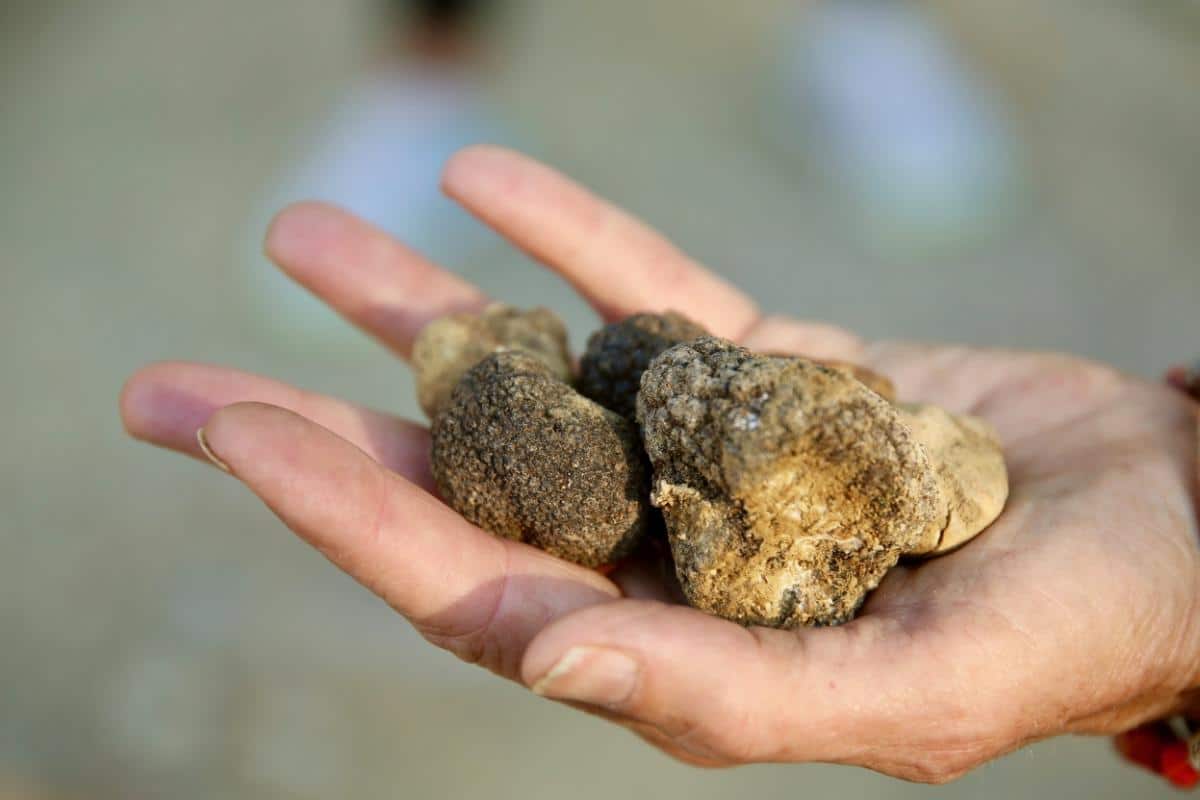
The Foraged Truffles of North America
The Oregon Truffles
The four gourmet truffles of Oregon all grow with Douglas-fir. They live on the west side of the Cascade Range and in the coastal ranges, from northern California to southern British Columbia. They range from sea level up to about 2,000 feet.
White truffles grow best in young to early mature Douglas-fir stands planted on old pasture land. They also grow in Christmas tree plantations as young as five years old. The fuzzy truffle grows under pines and other conifers, and it has been recorded under aspen and eucalyptus.
Oregon Winter White Truffle (Tuber oregonense)
This truffle is round to potato-shaped and ranges from the size of a marble to the size of a golf ball, roughly 0.2 to 2 inches across. A few reach 3 inches wide.
The young Oregon winter white truffle has a white to beige skin, though it may also have yellow, olive, or reddish-brown tints. At full maturity, the outside is reddish brown, and the surface is cracked into fissures. Its aroma is stronger than that of the Oregon spring white truffle, and it fruits from October through February. This species has been harvested commercially in the Pacific Northwest since the 1980s.
Oregon Spring White Truffle (Tuber gibbosum)
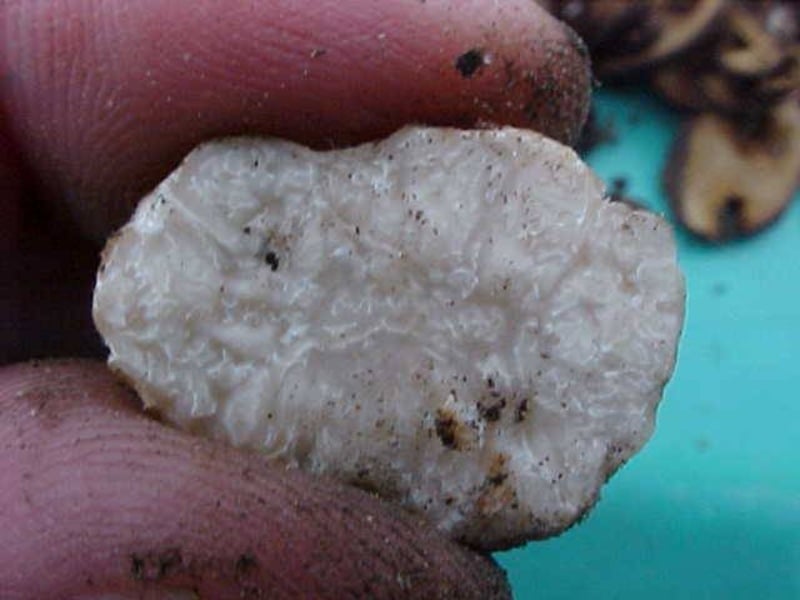
This truffle looks nearly identical to the white winter truffle, but it grows from January through June. The skin is thin and nearly clear, pale olive to brown-yellow with brown mottling, and the furrows across the surface can have small, hair-like growths.
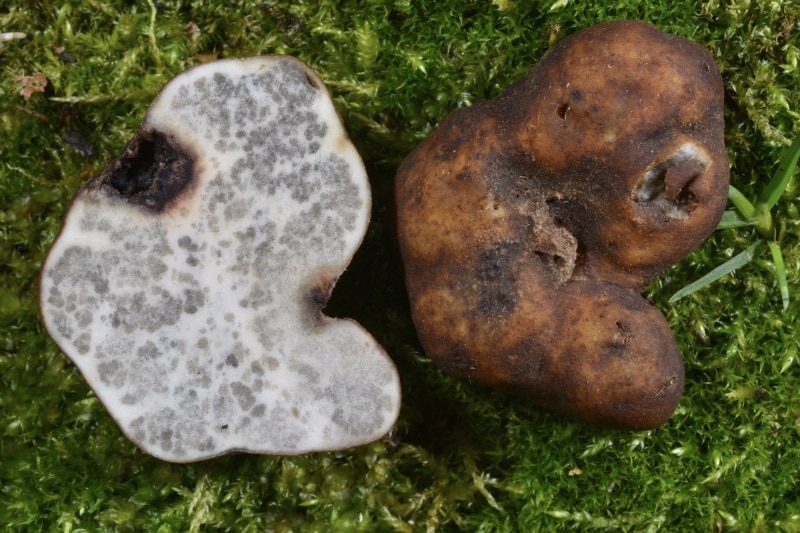
Oregon Black Truffle (Leucangium cascadiense)
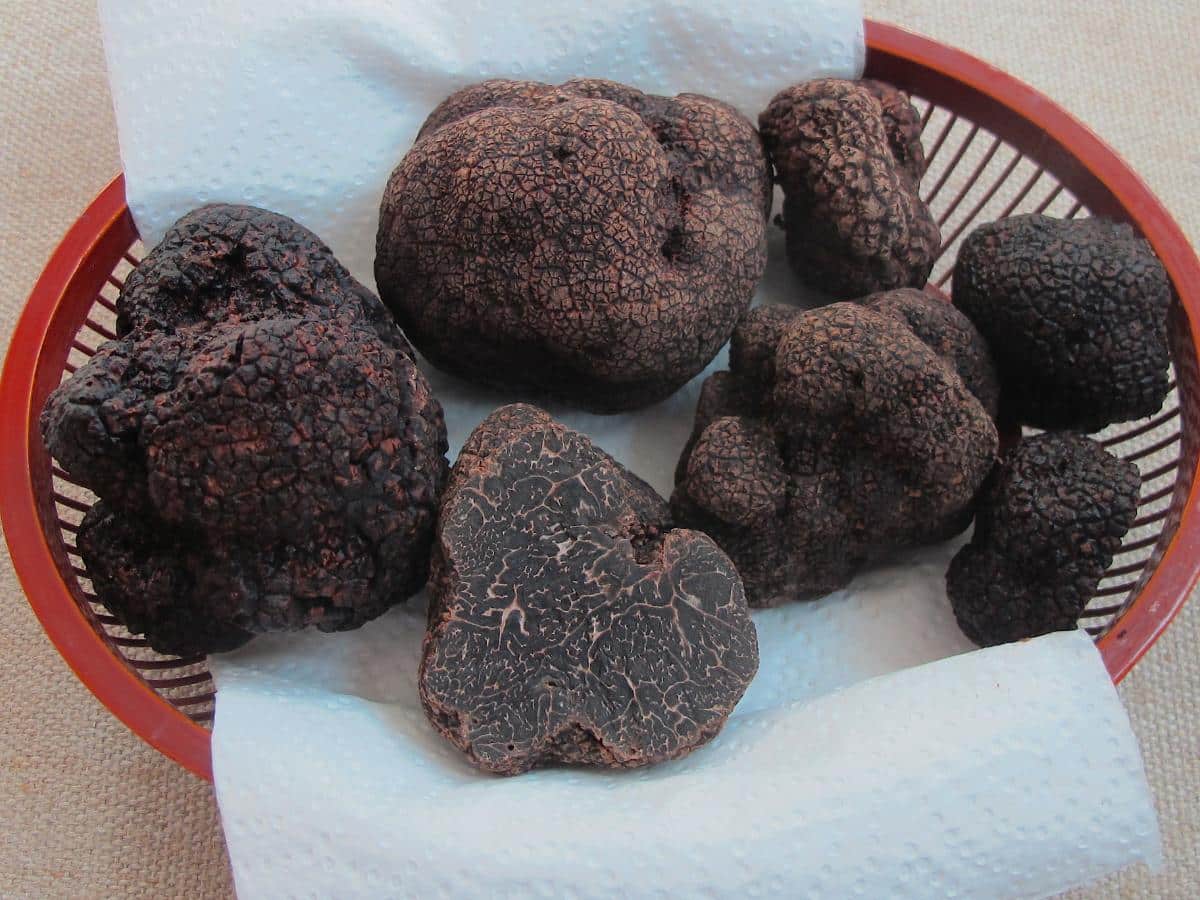
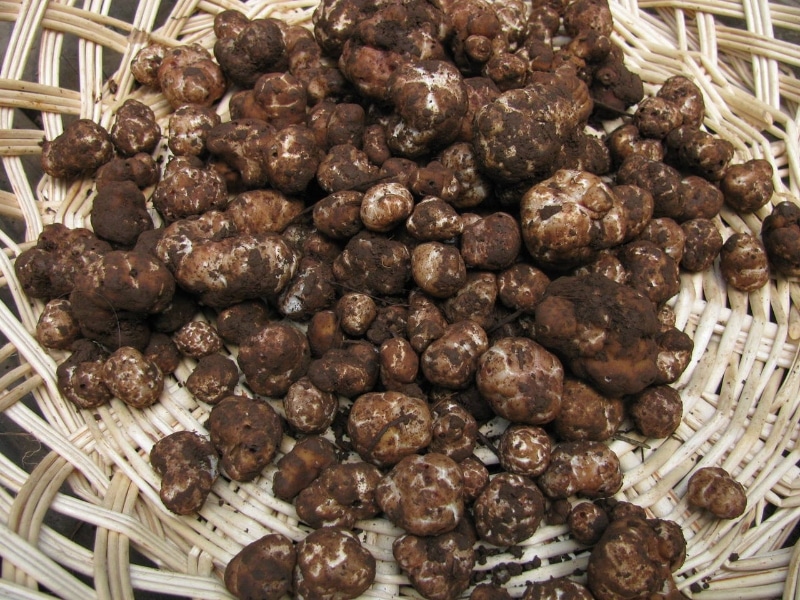
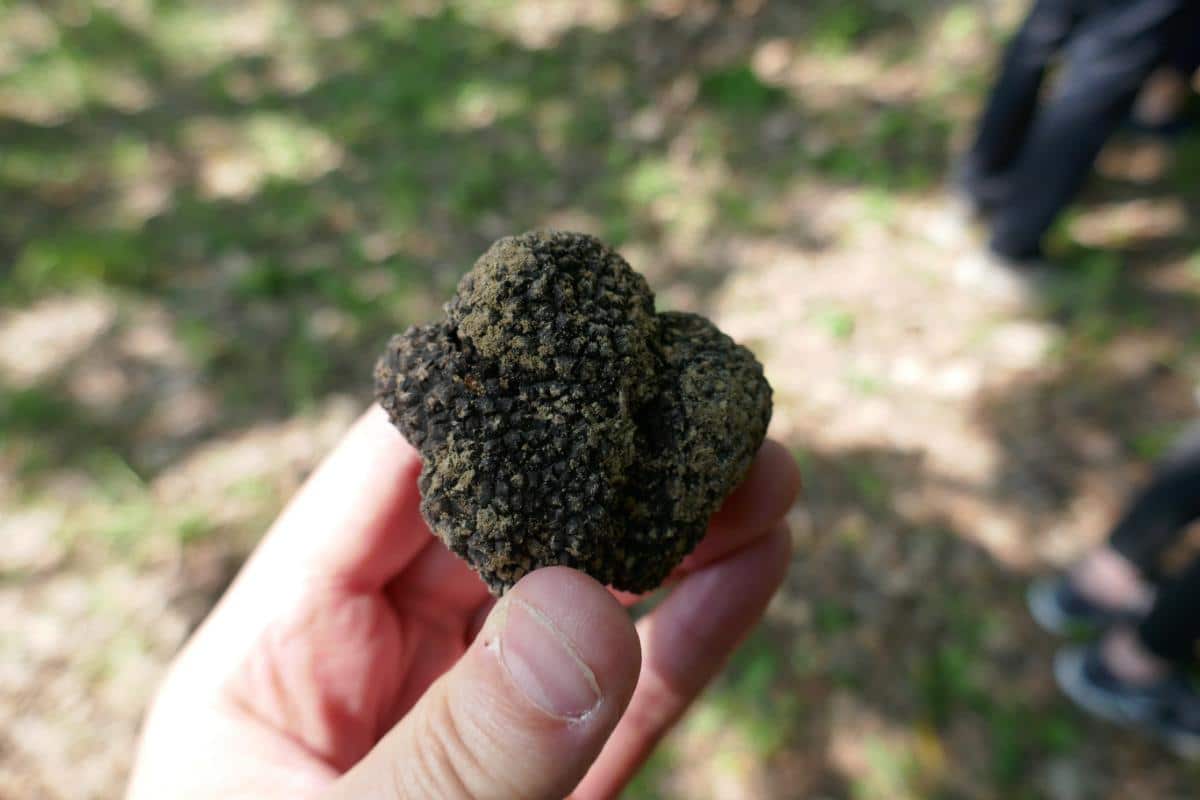
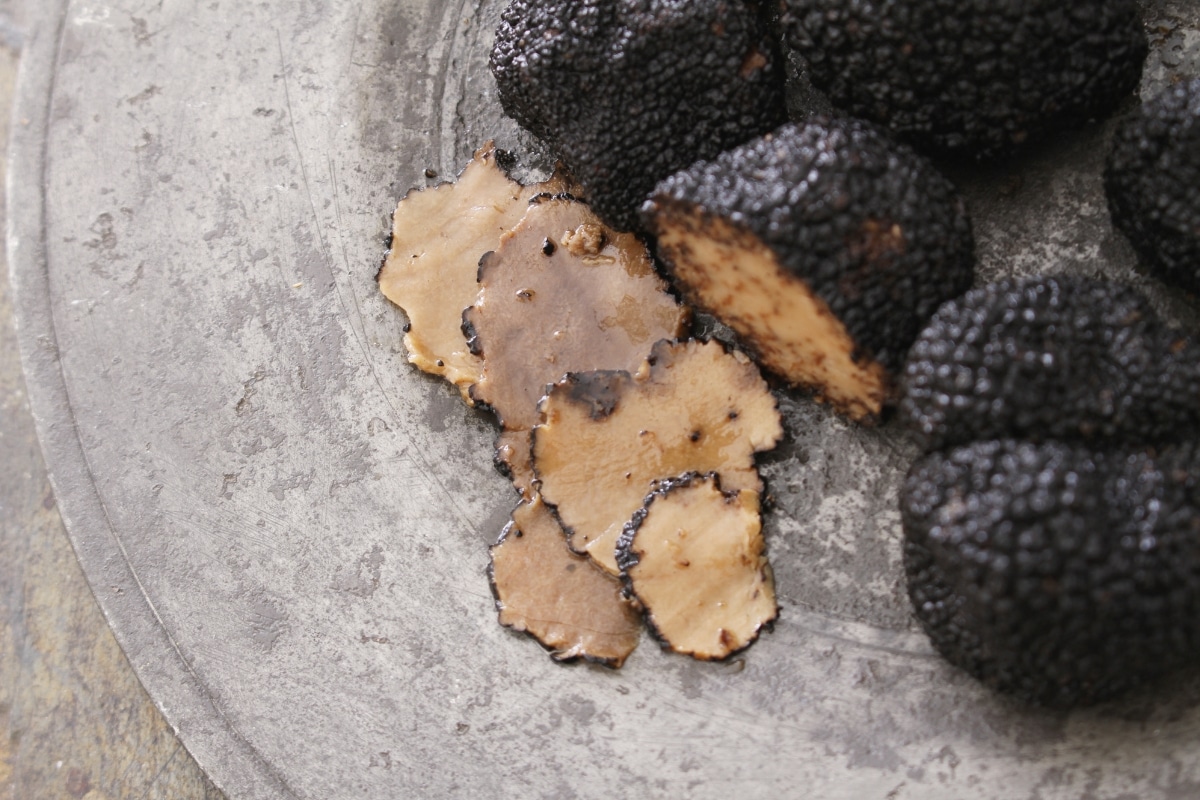
Some chefs have paid as much as $800 a pound for this truffle. The Oregon black truffle stands out for its unique, tropical, pineapple-like scent. It forms a potato-shaped fruiting body between one and five inches wide, and its skin is coal-black with small, pyramid-like warts and smooth areas. Inside, the flesh is gray with marble-like white veins. While officially updated to Leucangium cascadiense in 2025 to distinguish it from the European species Leucangium carthusianum, it is still widely called by the former name.
Oregon Brown Truffle (Kalapuya brunnea)
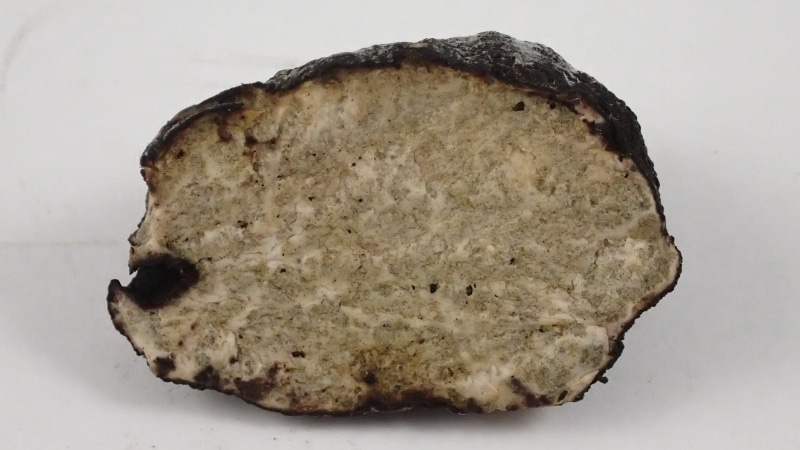
This species grows in the same Douglas-fir ground and the same months as the Oregon black truffle, and it was long presumed to be an undescribed Leucangium species. It produces small fruiting bodies that are 0.5 to 2.4 inches across. The outer skin starts out light yellowish-brown, then matures to deep reddish-orange. It is granular to warty, and the larger warts have smaller warts on top of them. The interior is whitish and then develops grayish-brown mottling.
Its garlicky Camembert smell and its brown skin separate it from the coal-black Oregon black truffle. The genus name honors the Kalapuya people, whose homelands cover the range of the fungus.
More North American Truffles
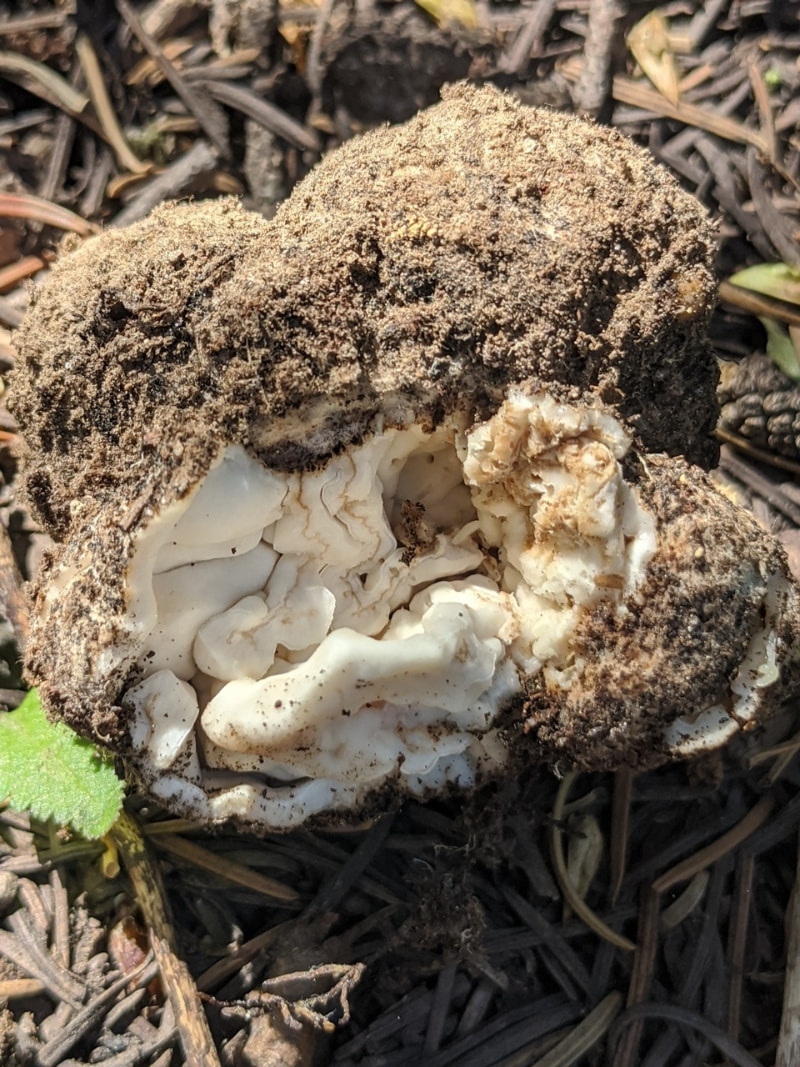
Fuzzy Truffle (Geopora cooperi)
Also known as the pine truffle, the fuzzy truffle grows as a round, cushion-shaped, or lumpy fruiting body ranging from 1 to 3 inches wide. Its exterior has a distinct brain-like texture and is thickly coated in coarse, felt-like brown hairs. The interior is different from that of Tuber truffles. Instead of a solid, marbled mass, the fuzzy truffle has convoluted folds of pale whitish and light brown tissue. Also unlike other truffles, the flesh may stain lightly yellow when cut. It has a mild taste and a subtle, faintly aromatic scent. Some people note hints of fermented cider.
The species is widely distributed throughout western North America, particularly in the subalpine areas of the Pacific Northwest, the Sierra Nevada, and the Rocky Mountains. It forms ectomycorrhizal associations primarily with conifers, including pines, Douglas-fir, true firs, hemlocks, and larches, though it has also been recorded growing beneath aspens and eucalyptus trees.
The fuzzy truffle can fruit almost year-round, depending on elevation and moisture. In mountain and subalpine habitats, its peak season is from late winter through summer immediately following the snowmelt. At lower elevations, it appears most abundantly from summer into late autumn.
Pecan Truffle (Tuber lyonii)
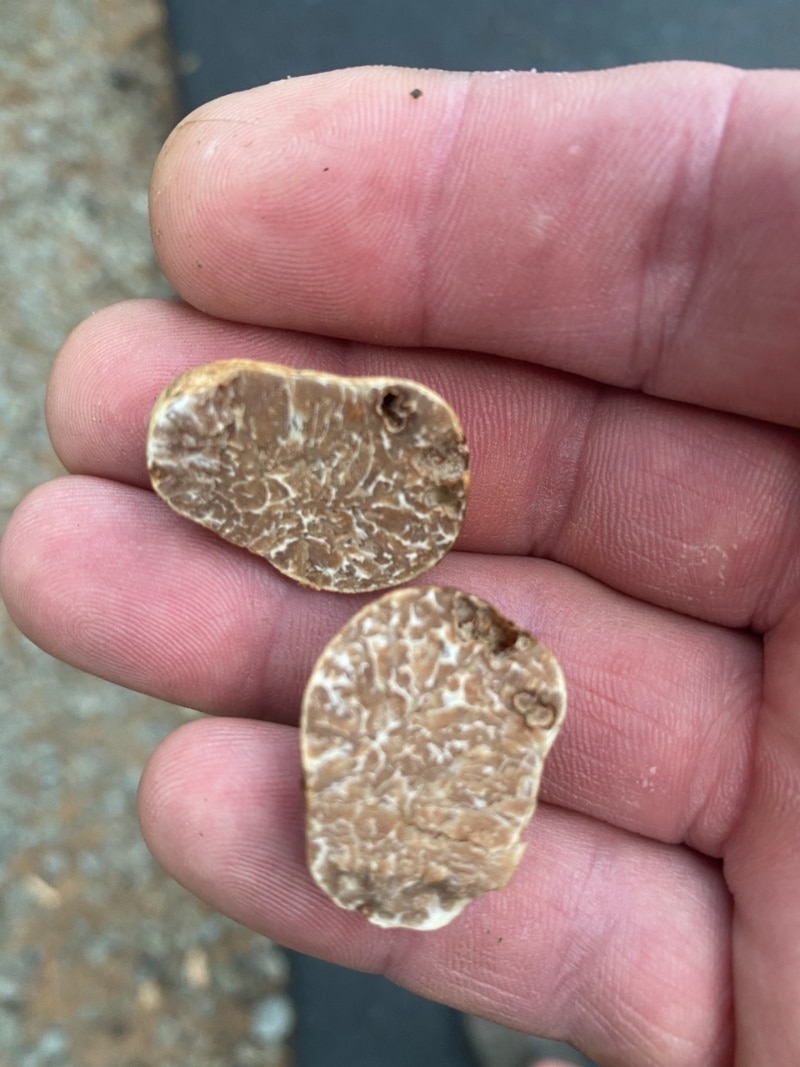
The pecan truffle is a widespread native species that sells for $150 to $300 a pound. It produces round to irregular, lobed fruiting bodies with shallow or deep furrows and typically measures between 0.4 and 1.6 inches across.
Its smooth, hairless skin ranges in color from yellowish-tan to warm orange-brown or dark chocolate brown. When you cut one open, it is pale beige to deep brown with a distinct network of marble-like white veins. It has a rich, nutty, and savory-earthy aroma.
The pecan truffle occurs across much of the central, southern, and eastern United States. Its name comes from its close association with pecan trees. It also forms ectomycorrhizal associations with hickories and oaks. The species typically fruits from mid-summer through early winter, and its peak harvest time is around the same time as the autumn pecan harvest, August through November.
Appalachian or Michigan Truffle (Tuber canaliculatum)
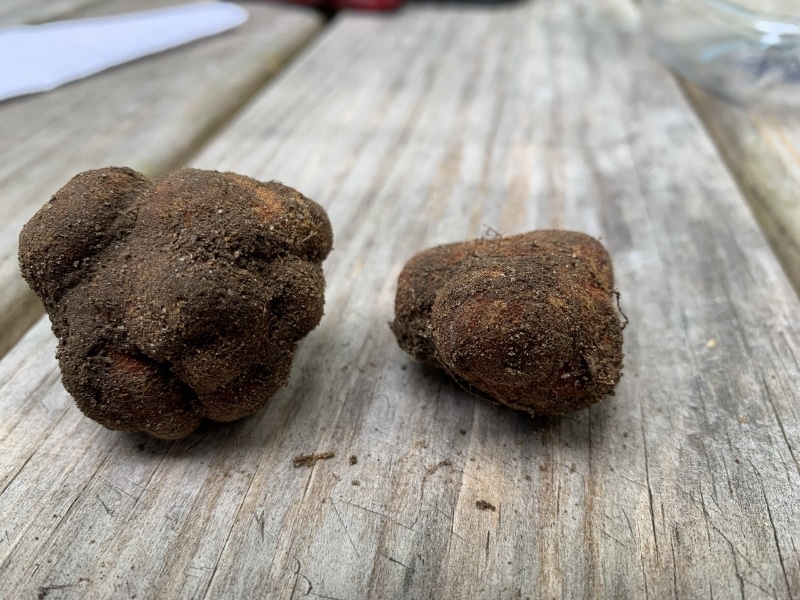
This truffle ranges from 0.8 to 4.7 inches across and has oval to irregularly lobed fruiting bodies that are wrapped in a striking brick-red to reddish-cinnamon skin. The skin is textured with fine, low-profile warts. The interior is firm, waxy, and pale off-white when it is young, then turns to a deep charcoal-black with fine white veins. Its aroma is sweet, musky, and earthy, and it becomes stronger as the truffle ripens.
This species forms symbiotic relationships with oak, birch, and hickory, as well as eastern white pine and spruce trees. It grows throughout the Appalachian Mountain range, from Quebec south to Kentucky and west into the Great Lakes region.
This species keeps unusually well. In cold storage, it can remain firm and aromatic for more than a month.
Cumberland Truffle (Tuber cumberlandense)
This species was formally described in late 2024 after being known informally for years as Tuber sp. 66. The Cumberland truffle is endemic to eastern North America. It averages between 0.4 and 2 inches across and weighs up to an ounce. Its fruiting body ranges in color from pale maize to buff-yellow. The skin of this truffle doesn’t have warts, but mature specimens develop a distinctly lumpy, deeply ridged, and wrinkled texture. The interior is light brown to beige and marbled with a network of fine white to tan veins.
The species smells like fresh garlic and radish with an aroma of cooked cabbage, onion, and mustard. Before the characteristic surface folds develop, small Cumberland truffles can be difficult to tell apart from pecan truffles. They grow in association with white oak, hickory, and hazelnut. The native range is concentrated along the Cumberland Plateau of Tennessee, Kentucky, and Ohio. It is also often an opportunistic species in orchards planted for European black truffles (Tuber melanosporum).
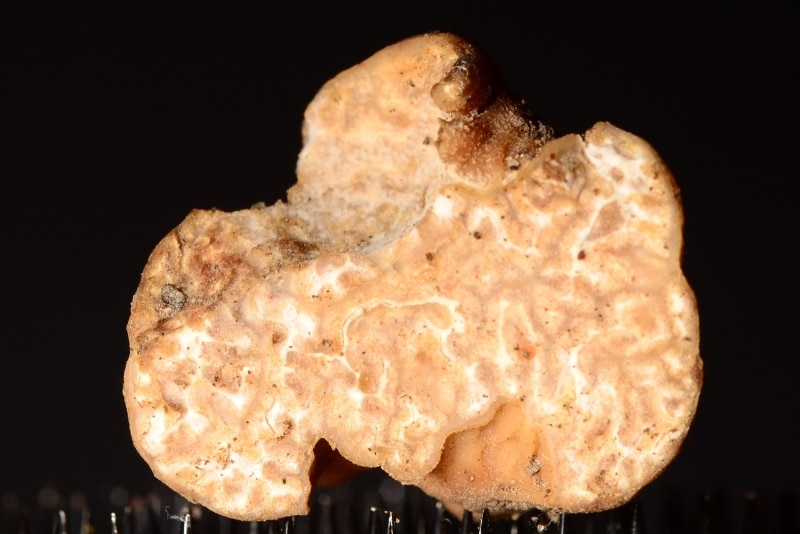
Tuber canirevelatum
Tuber canirevelatum is a tiny, highly aromatic truffle named after the trained truffle dogs that first discovered it. It produces small, egg-shaped fruiting bodies that measure just 0.4 to 0.8 inches across, and its exterior is coal-black to deep dark brown and densely covered in coarse, prominent warts. When sliced open, the firm interior is light to dark gray with a network of fine white veins.
This truffle smells strongly of garlic and fresh cilantro. So far, it has only been documented in the hardwood forests of eastern Tennessee. Its small size makes it extremely difficult for a person to find without a trained dog.
Blue Ridge Truffle (Imaia pachyascus/Imaia gigantea)
This is the largest native truffle species documented in North America. While it typically measures between 1.4 and 2.2 inches across, some specimens can reach nearly 6 inches in diameter. When it is young, the skin is a pale yellow to brownish-orange color that darkens at maturity to a deep orange-brown. As it expands, the surface cracks and becomes covered in prominent, rounded warts.
The interior is moist and divided into numerous pockets. It starts out pale white and darkens to brown. The spore chambers are separated by network-like veins.
The Blue Ridge truffle grows in the Appalachian Mountains, ranging from Pennsylvania south through North Carolina and Tennessee. It typically fruits during late summer and autumn under hardwood trees like beech, oak, birch, and hickory, and also with hemlocks.
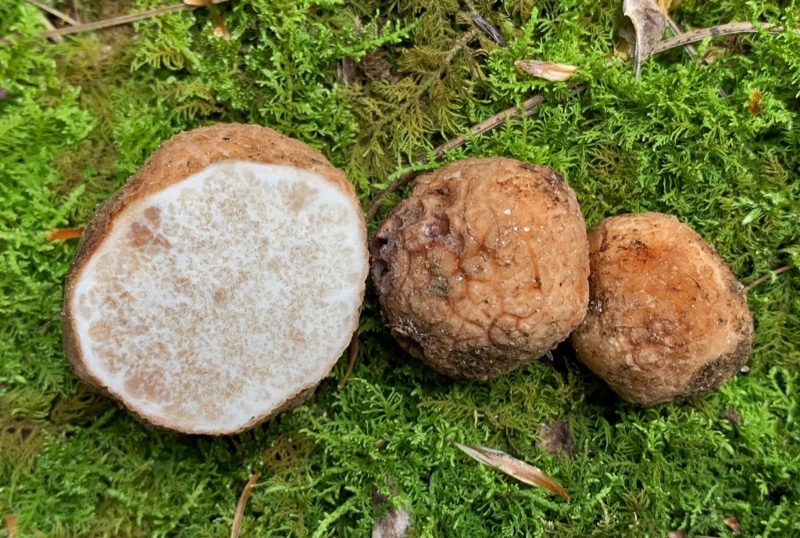
Leucangium oneidaense
This species was formally described in 2025 and is the first species of the genus Leucangium ever documented in North America east of the Rocky Mountains. A citizen scientist in Oneida County, New York, uploaded an iNaturalist observation that led researchers to investigate the truffle. Genetic sequencing confirmed that it was a new species. A few years later, a second specimen was identified in Massachusetts.
Leucangium oneidaense has a coating of dense, felt-like external hairs and skin without the coarse, pyramid-shaped warts characteristic of its western relative, the Oregon black truffle (Leucangium cascadiense). It forms ectomycorrhizal associations with eastern hemlock. Only a handful of collections are known, so it should not be harvested. Leave any specimens found in the wild where they are.
Imaia kuwohiensis
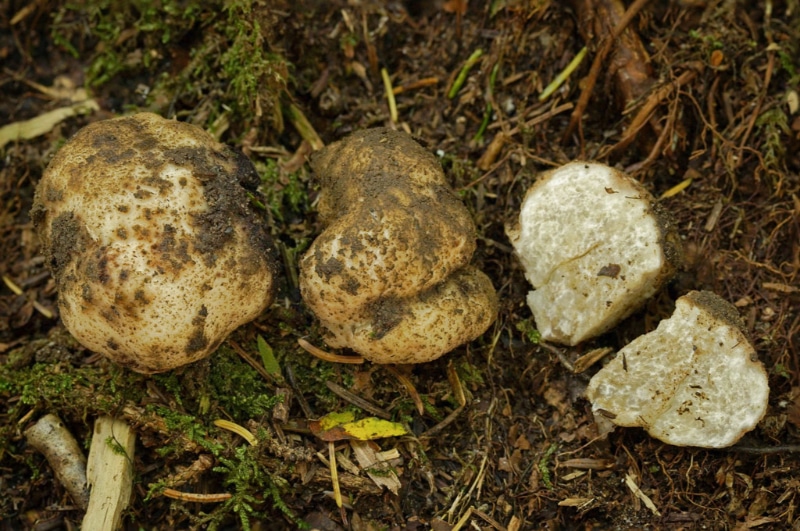
Imaia kuwohiensis is an exceptionally rare underground fungus endemic to the Southern Appalachian Mountains. It was only recently described to science in 2025. The species name is from the Cherokee word Kuwohi, which means “mulberry place.” This is a tribute to the highest peak in the Great Smoky Mountains.
This truffle has a pale exterior studded with dark, contrasting warts. Like its sister species, it belongs to the morel family (Morchellaceae) rather than true truffles. Its interior is made up of pocketed spore chambers rather than a solid, marbled mass. Its high-elevation habitat is threatened by climate change and forest die-offs, and the species itself is considered threatened.
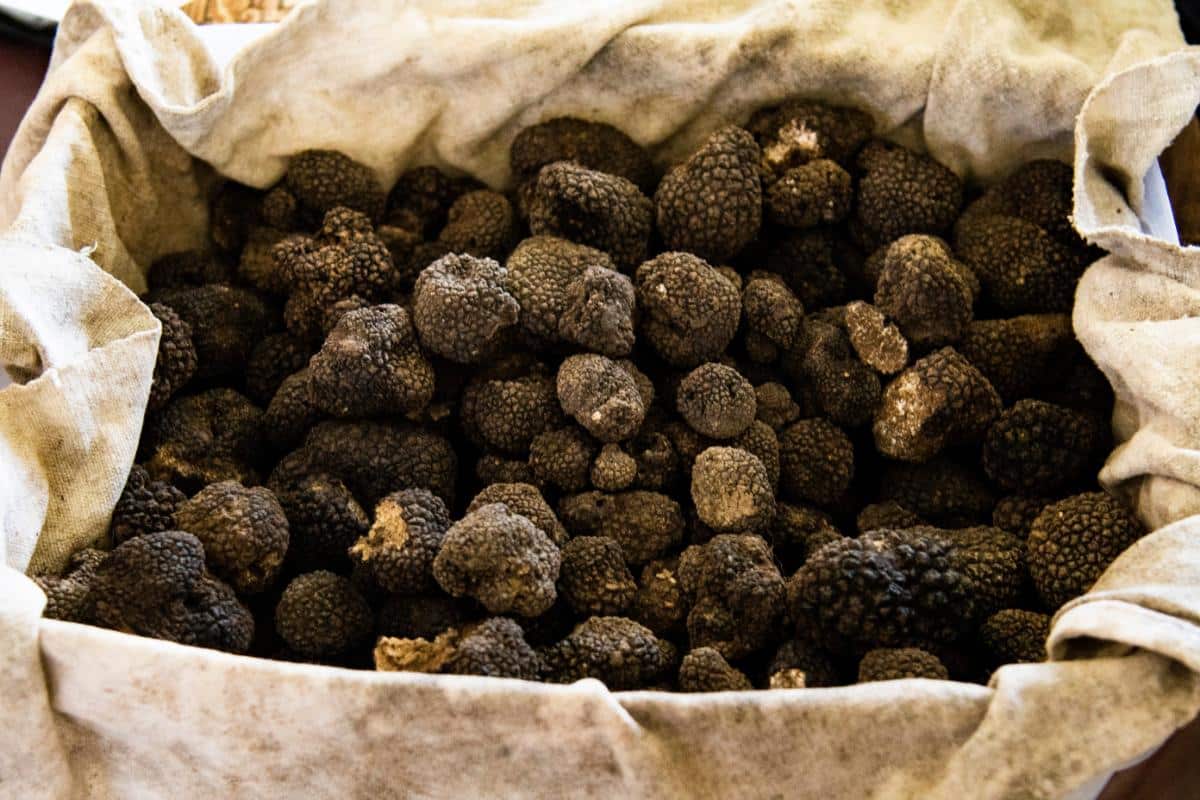
Farmed European Truffles
The Périgord black truffle (Tuber melanosporum) is a highly prized European species brought to North America in the late 20th century. The first commercially successful harvest was in Tennessee in 2007. Since then, domestic truffle farming, or trufficulture, of this species has expanded to California, Oregon, North Carolina, and Arkansas. These truffles sell for several hundred dollars a pound and up.
Other prized European species like the Summer truffle (Tuber aestivum) and the bianchetto truffle (Tuber borchii) are now actively cultivated across North American. Native wild truffles can also turn up in these orchards. The host trees and managed soils provide ideal conditions for some native truffles. The Cumberland truffle (Tuber cumberlandense) was first discovered after it showed up in one of these European-style orchards.
North American Truffle Lookalike Species
Earthballs (Scleroderma species)
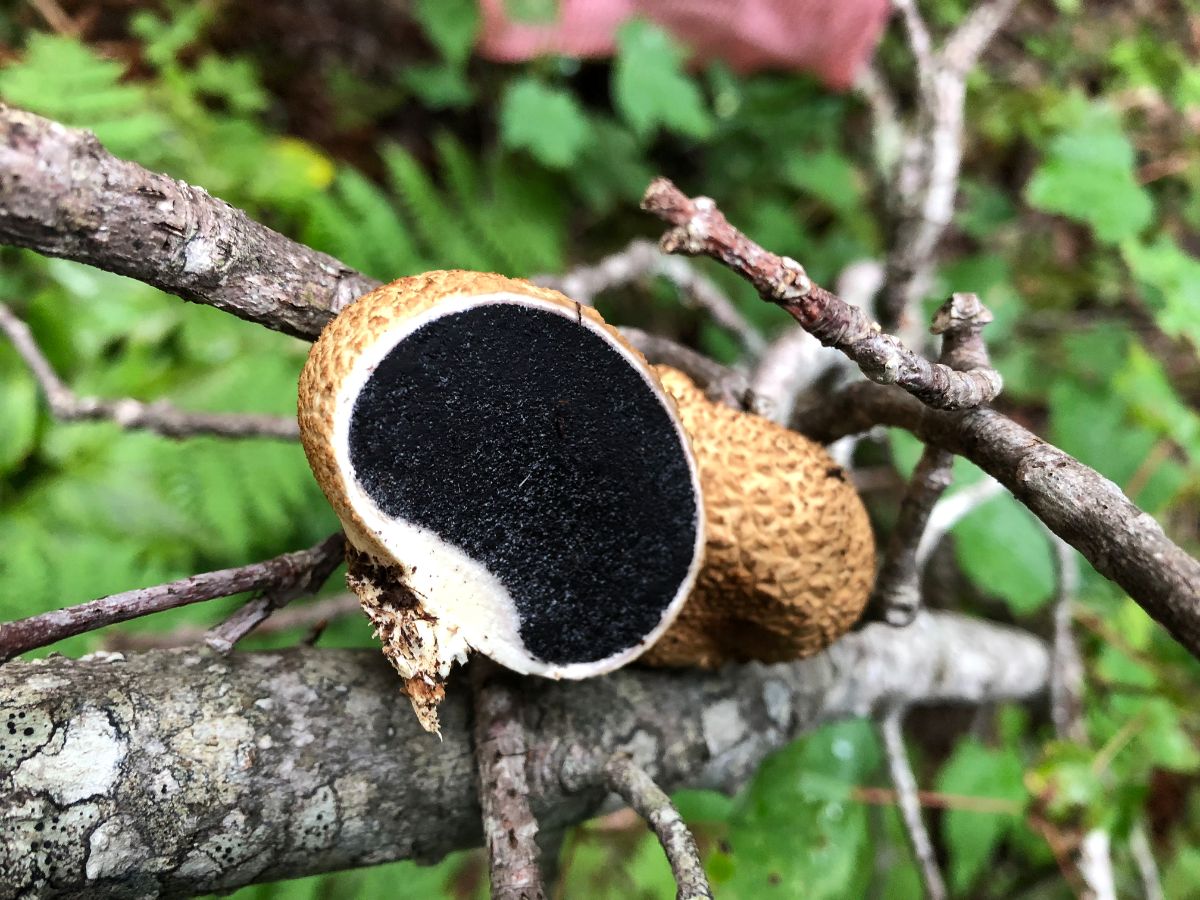
Earthballs are the lookalikes most likely to be confused with truffles. They grow in the same woods, and they are round and half buried. Earthballs often have hard, scaly, yellow to yellow-brown to brown skin. They are toxic and should never be eaten.
The inside of earthballs is purple-gray to purple-black and mottled when it is young. With age, the interior turns into blackish powder. A truffle is never powdery inside. Earthballs also have whitish cords of mycelium hanging off their base, which no true truffle has.
Deer Truffles (Elaphomyces species)
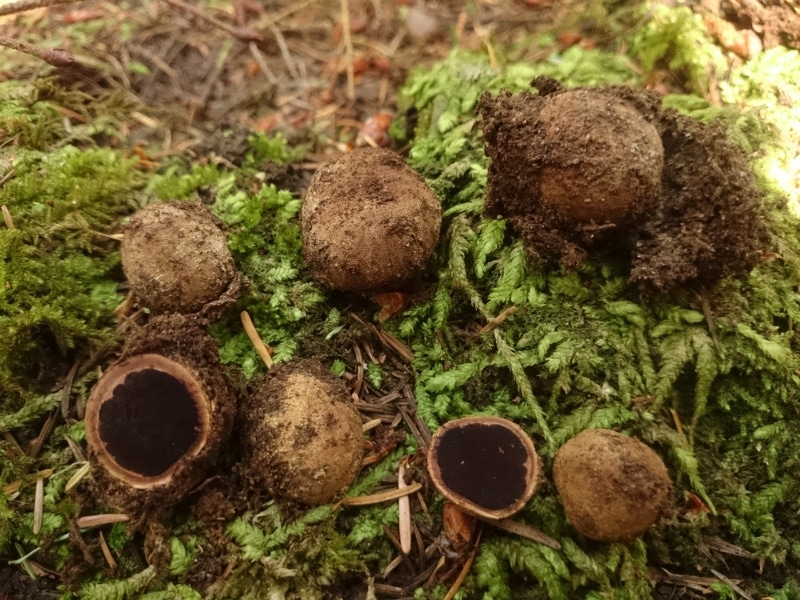
Deer truffles also grow underground, but they are considered false truffles. The common species Elaphomyces granulatus is irregularly rounded, with a potato-like body that is 0.8 to 2 inches across. Its skin is thick, leathery, and reddish-brown and is densely covered in coarse, granular warts.
The inside of a deer truffle changes as it ripens. When it is young, it is pale, moist, and solid, but as the spores mature, the interior breaks down completely into a dry, dusty, purple-black spore mass.
Deer truffles are among the most widespread underground fungi in the Northern Hemisphere. They form ectomycorrhizal root associations with a wide range of host trees, particularly conifers like pines, spruces, and firs, as well as hardwoods such as oaks and beech.
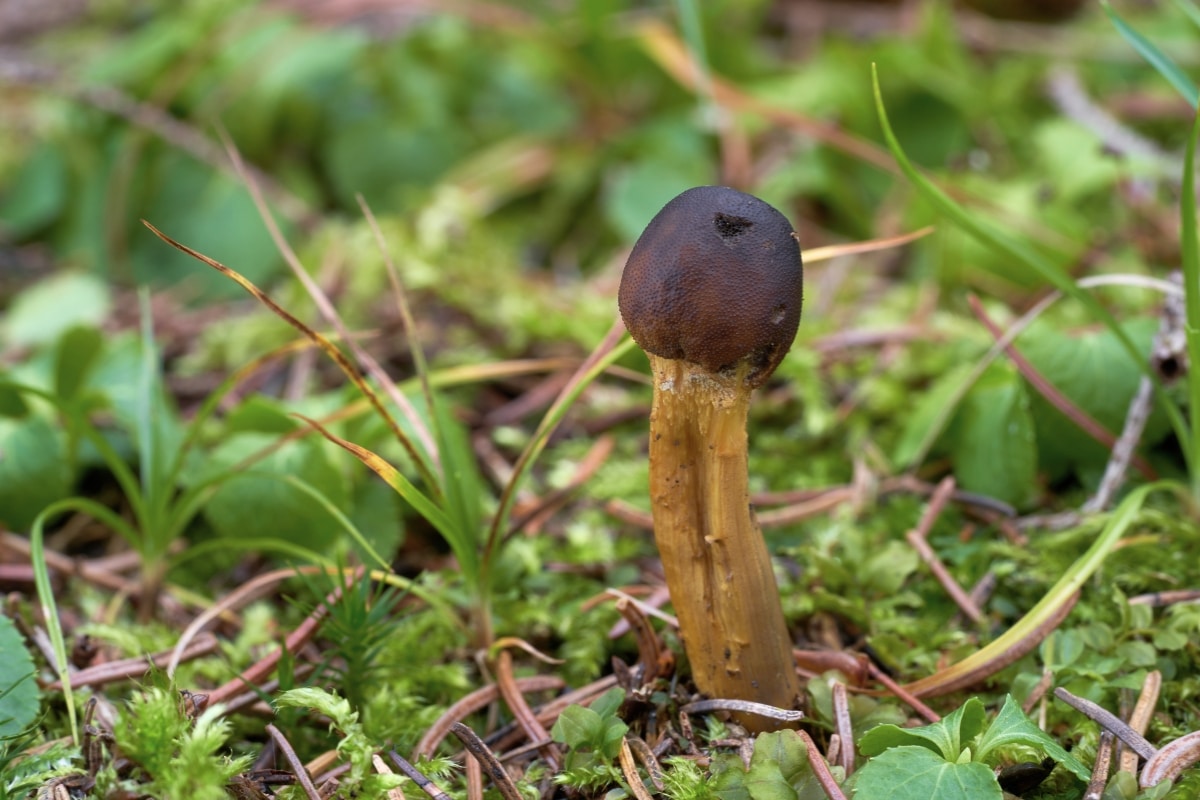
White-tailed deer, caribou, wild boars, squirrels, and chipmunks eat these truffles and spread the spores in their droppings. Deer truffles are also the exclusive underground host for parasitic club fungi, like the drumstick truffle club (Tolypocladium capitatum).
Hymenogaster Species
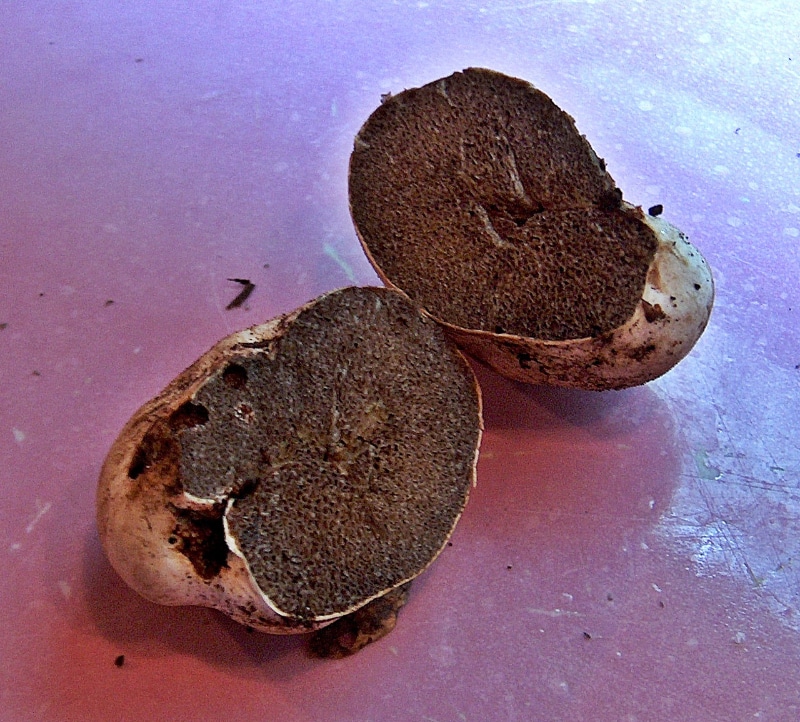
Hymenogaster species grow in pecan orchards and with oaks and are also called false truffles. They have small, rounded to irregular fruiting bodies, typically measuring 0.2 to 1 inch across. The outer skin is thin, pale off-white to tannish and often bruises yellow, reddish-brown, or purplish when handled. They have a radish-like odor, and the inner tissue is porous, like a brown sponge. The easiest way to tell a Hymenogaster from a pecan truffle is to cut it open.
These false truffles form ectomycorrhizal associations with hardwoods like oaks, hickories, and pecan trees, as well as select conifers from late spring through autumn. Because of their soft, spongy texture and unpleasant radish-like odor, they are considered inedible.
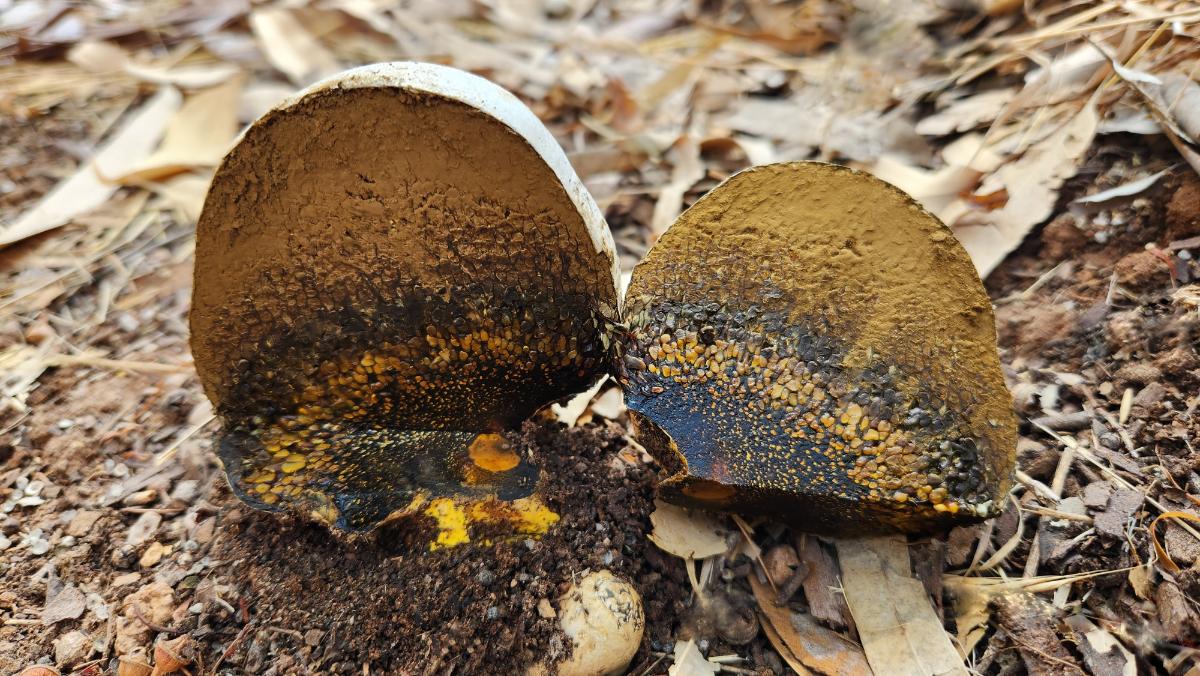
Dead Man’s Foot (Pisolithus species)
Also known as the dyeball or horse dung fungus, this fungus produces club-shaped fruiting bodies that resemble weathered horse manure or a dark foot protruding from the soil. The dead man’s foot is club-shaped to irregularly shaped and dark brown or yellowish-brown. It has a stout, woody root-like base and can reach several inches across and up to eight inches tall.
Inside are pea-sized chambers called peridioles. They range from pale yellow and amber near the base to dark cinnamon-brown toward the top. As the outer rind breaks down, the chambers eventually turn into reddish-brown spore dust.
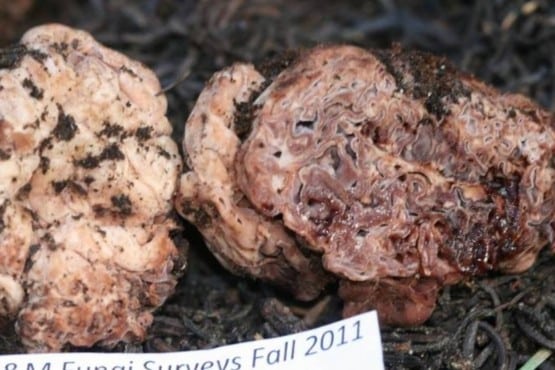
Brain False Truffle(Hydnotrya cerebriformis)
This is the closest visual lookalike to the fuzzy truffle. It forms irregularly lobed, brain-like fruiting bodies measuring 0.4 to 2 inches across. Its exterior ranges from warm yellowish-brown to dark reddish-cinnamon. Both have brown, textured skins, but the hairs are different. The brain false truffle has very short, fine hairs, while the fuzzy truffle has long, coarse, felt-like bristles.
The interior of the brain false truffle is maze-like with folded tan to reddish-brown tissue surrounding open internal chambers that connect to the outside air through deep surface folds. Hydnotrya cerebriformis also has a powerful, pungent odor of crushed garlic or cooking gas that intensifies with age. It fruits in the mountain conifer forests of western North America, with pines, Douglas-fir, and true firs.
Harvesting Truffles
Wild truffles grow underground beneath leaf litter and soil, so finding them takes some practice. Pigs were once commonly used to find truffles. Today, most truffle hunters use trained dogs. A trained truffle dog can detect the volatile aromas of a ripe specimen from over a hundred yards away. And it can pinpoint the location without eating the harvest or damaging the soil.
Another way to find truffles if you don’t have a trained dog is to pay attention to the Sullia flies. They routinely lay their eggs directly above buried truffles. It takes patience to dig up the truffles, and it should always be done with as little disturbance as possible. Heavy shovels or broad raking can slice the fungus and ruin its market value and the habitat for future truffle harvests.
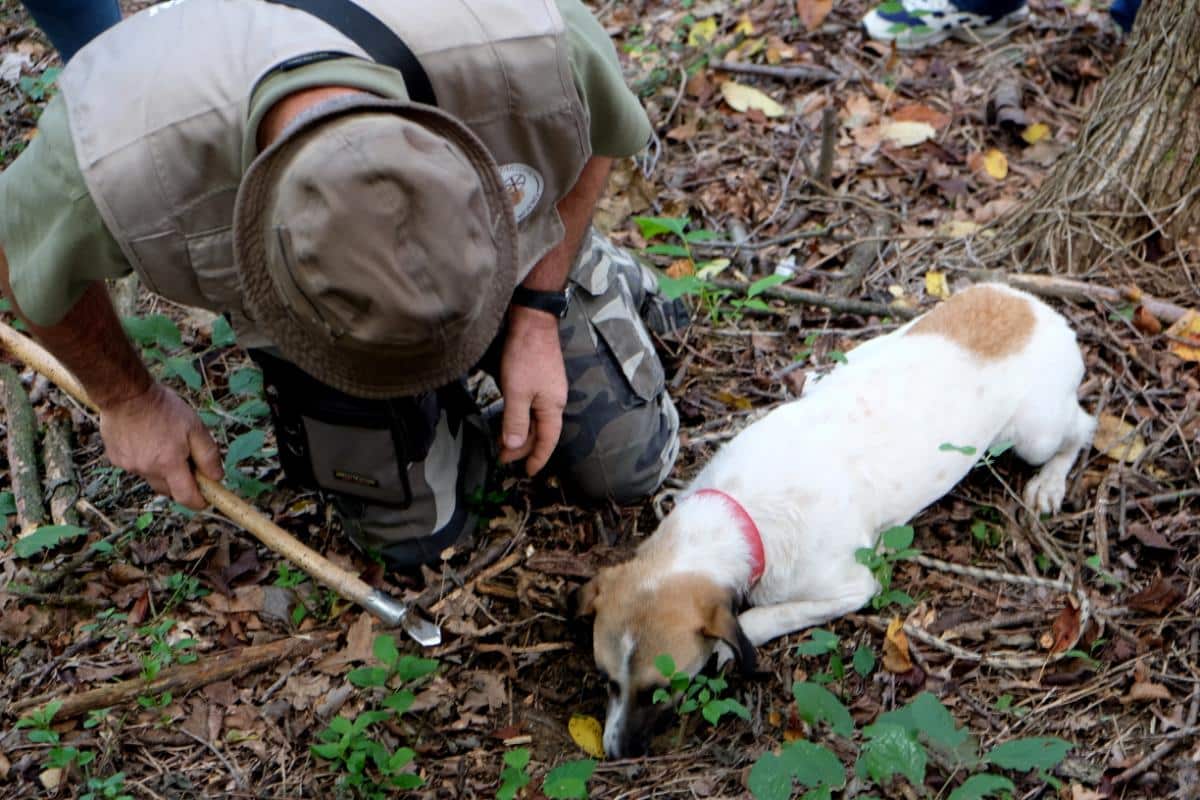
Use a small hand trowel to pull back the surface duff carefully. Most native species are just a few inches beneath the surface, though some can be up to ten inches deep. Gently loosen the earth around the fruiting body and pull it out. This also ensures the truffle isn’t damaged, which can affect the price if it is going to be sold.
After harvesting, replace the soil and leaf litter. Replacing the leaf litter protects the delicate mycorrhizal roots from drying out or dying from exposure. Brush off loose dirt and store the truffles in a cool, airtight container lined with paper towels. The towels absorb excess moisture while the sealed container helps retain the aroma.
A truffle good for harvesting is firm, like a pencil eraser, and solid all the way through. As it gets overripe, the flesh starts to break down. If it is soft, squishy, spongy, or waterlogged feeling, or if your thumb leaves a permanent dent in the skin, the truffle is past its prime and starting to rot.
The interior of the truffle should always be firm, with a clear marbled vein pattern. An overripe truffle may have mushy or waterlogged flesh, and the marbling may be blurred or gone. If the flesh weeps liquid or turns to slop when cut, it is unusable.
Overripe truffles also attract truffle flies, beetle larvae, and other insects. Check the exterior for small pinholes or soft, collapsed spots. If you cut the truffle and find active tunneling, maggots, or patches of white or green mold, the specimen is decaying and no longer suitable for harvest.
Don’t wash a fresh truffle with water. Water causes the outer skin to rot quickly and ruins its scent. Instead, use a soft brush or an old toothbrush to dry-brush away dirt and leaves.
Medicinal Uses of North American Truffles
Truffles currently have no accepted medical uses. Most scientific research has focused on European and desert species and not native North American ones. Studies have found that truffles have beneficial compounds like antioxidants, natural plant sterols, and healthy fats. In laboratory studies, extracts from summer and white truffles successfully killed cervical, breast, and colon cancer cells. In one experiment, a simple water extract of the Périgord black truffle helped lower blood sugar in diabetic rats.
Culinary Uses of North American Truffles
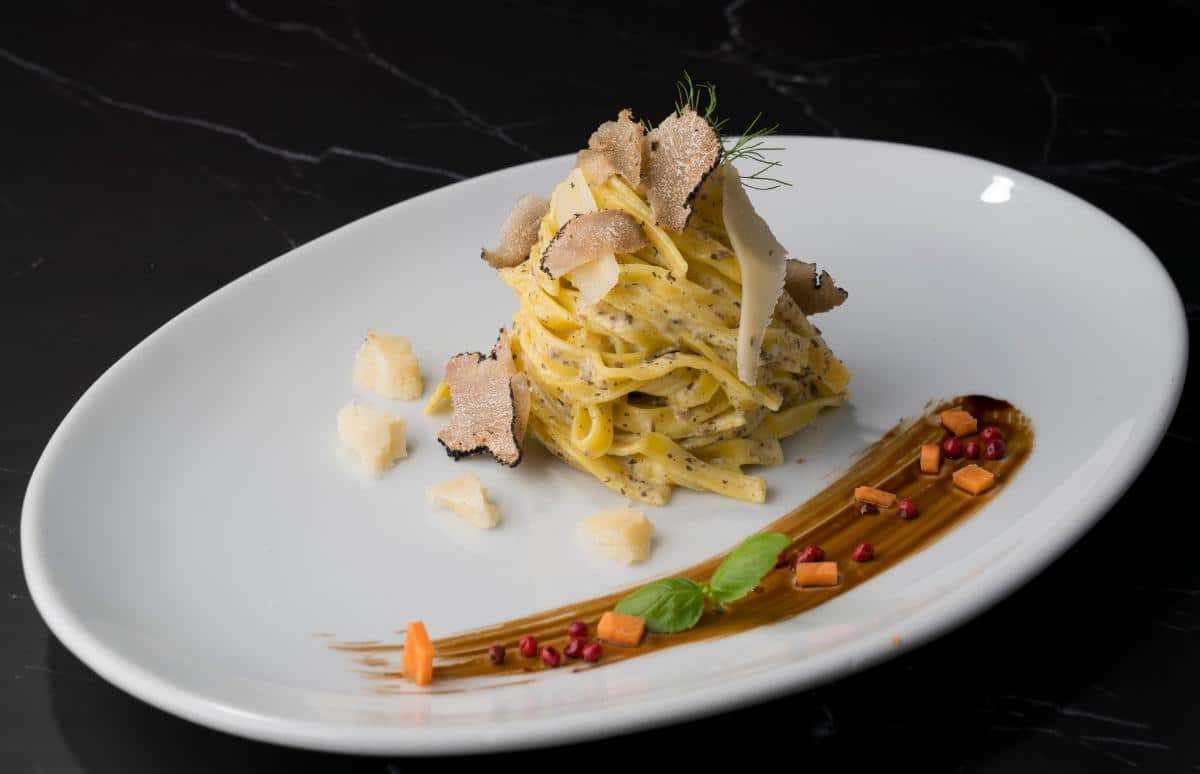
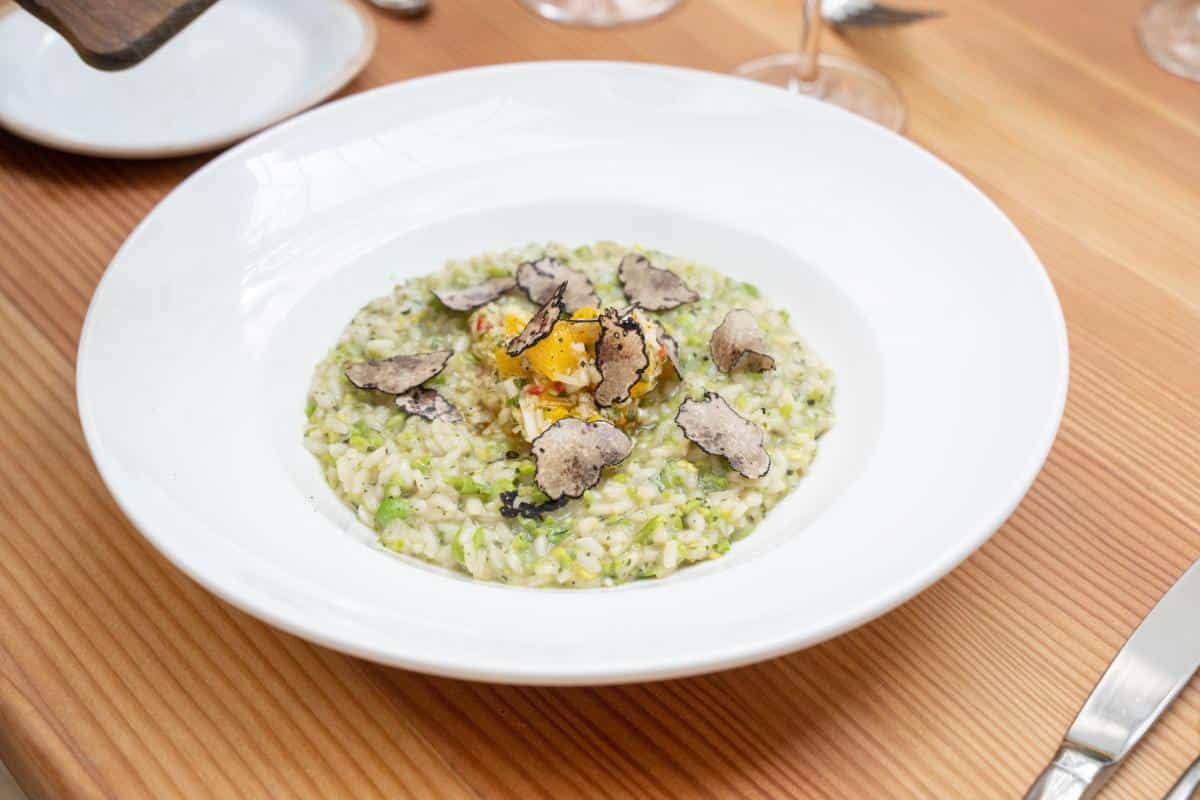
Because heat destroys the volatile compounds that give truffles their flavor, they should not be cooked. Instead, they should be sliced paper-thin over warm, fat-rich dishes like buttered pasta, creamy risotto, or softly scrambled eggs. Fats carry the truffle flavor well because they absorb and retain the oils, while the gentle heat of warm food releases their aromatic scent.
Fresh truffles are extremely perishable and generally retain their potent scent for only about a week after harvest. They are best stored in the refrigerator inside a sealed, airtight container lined with paper towels to absorb excess moisture. The container should have plenty of extra air space, and the truffles themselves must be kept dry and separated so they do not touch each other and spoil. The Appalachian truffle is an exception and can stay firm and aromatic in the refrigerator for more than a month.
Native North American truffles are much less expensive than imported European species. Fresh pecan truffles typically sell for $10 to $20 per ounce. However, pricing varies widely among native varieties, with highly coveted harvests like the Oregon black truffle fetching far higher sums.
Check the label on truffle oil carefully. Most bottled truffle oils do not contain actual truffles. Many are flavored with 2,4-dithiapentane, a synthetic compound that mimics the aroma of black truffles.
Interesting Truffle Facts
- The northern flying squirrel eats the truffle Tuber oregonense, and it makes up the bulk of the squirrel’s diet at some points in the year.
- Within the order Pezizales, underground fruiting bodies evolved at least fifteen times separately. That is why the truffles collected in North America fall into three different families. Tuber dates back to the end of the Jurassic, about 156 million years ago, while the Blue Ridge truffle and the two Leucangium species belong to the same family as the morels.
- Some flies in the genus Suillia can smell the same volatile compounds that dogs and pigs do. They lay their eggs above buried truffles, and if you watch closely, you can see them hovering just above the ground.
- A trained dog can smell ripe truffles from over a hundred yards away, and it leaves unripe ones alone because immature truffles give off no aroma.
- The Blue Ridge truffle grows in only two places on earth: the Appalachian Mountains and Japan. That split between eastern North America and eastern Asia happens with many plants as well, and it is called the Asa Gray disjunction.
Leave a Reply