



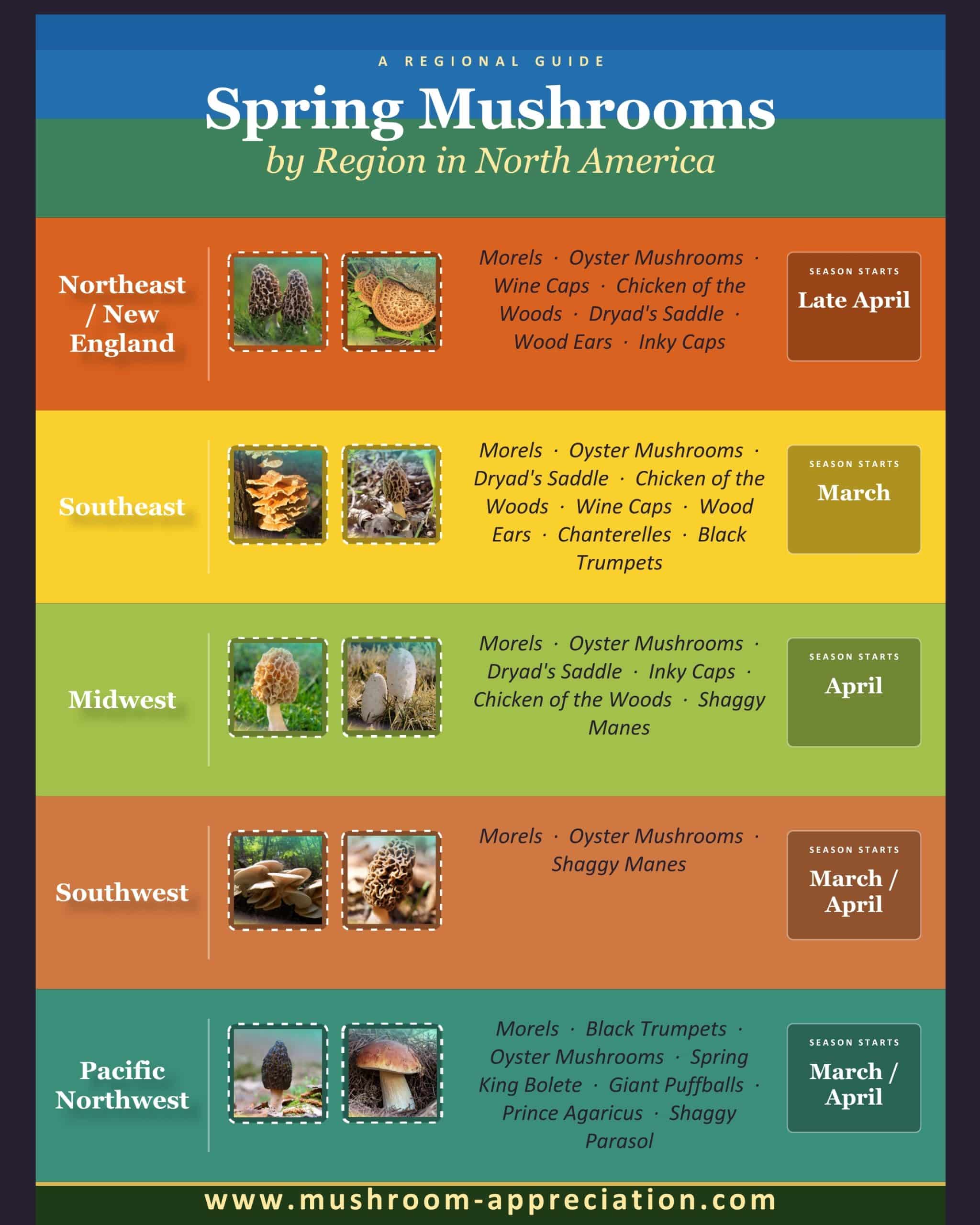
The dead logs and rotting stumps that looked empty all winter start showing signs of life in early spring, and if you want to start foraging for wild mushrooms, this is a great place to start. The fruiting season varies dramatically from one part of North America to another — what’s already past peak in Tennessee may not have started yet in Michigan, and what’s growing in a Pacific Northwest mountain forest may not exist at all in New England.
The key to successful mushroom foraging is knowing what grows when and where in your region, and focusing on those species. This guide covers what mushrooms grow in spring in all regions across the United States.
Jump to:
New England
Spring foraging in New England is slower and more erratic than in other regions. Spring mushroomsare impacted by soil and air temperatures, which vary, and rainfall is unpredictable. The season usually starts in April and runs through mid-June, but varies widely year to year.
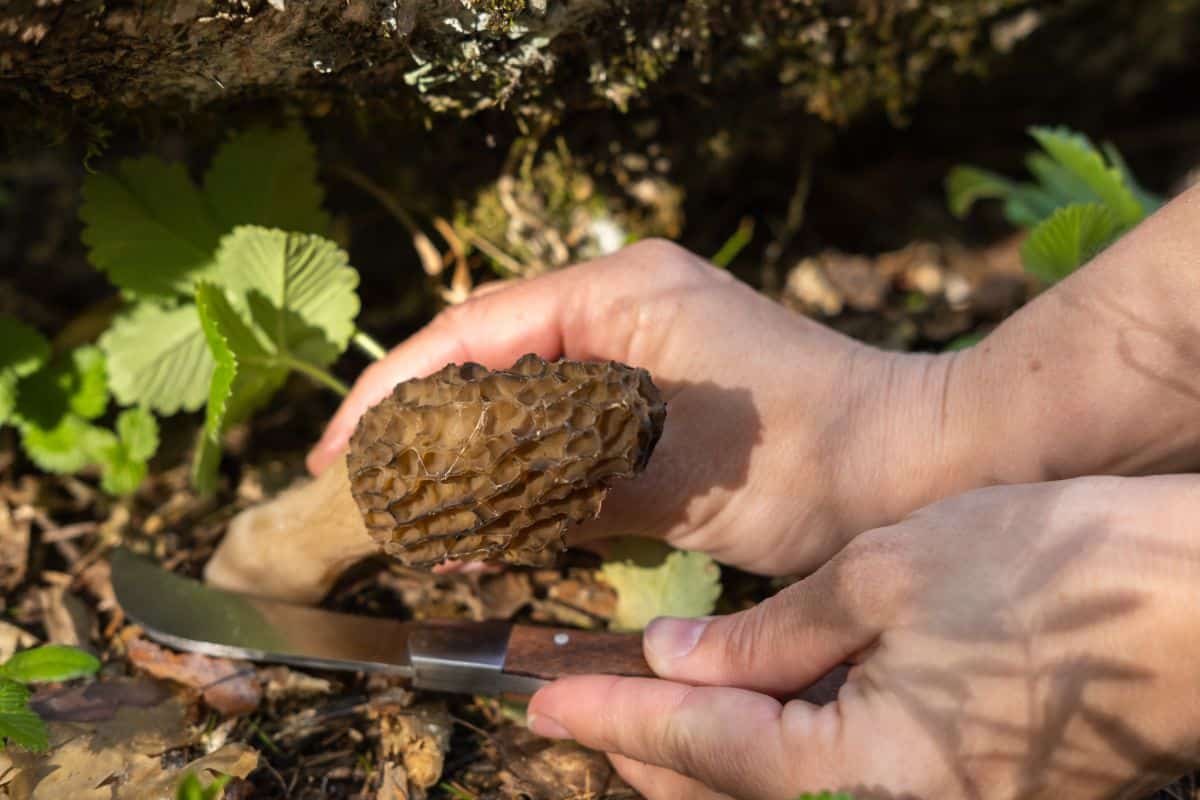
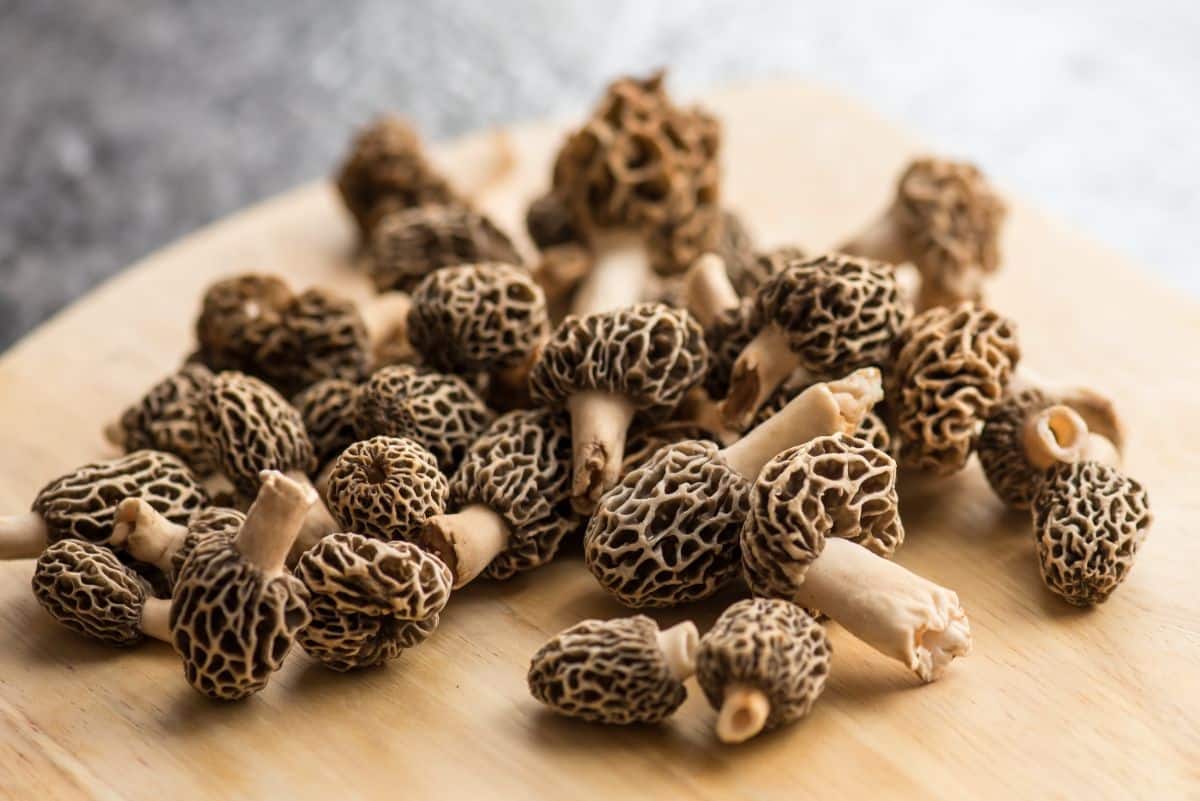
Morels
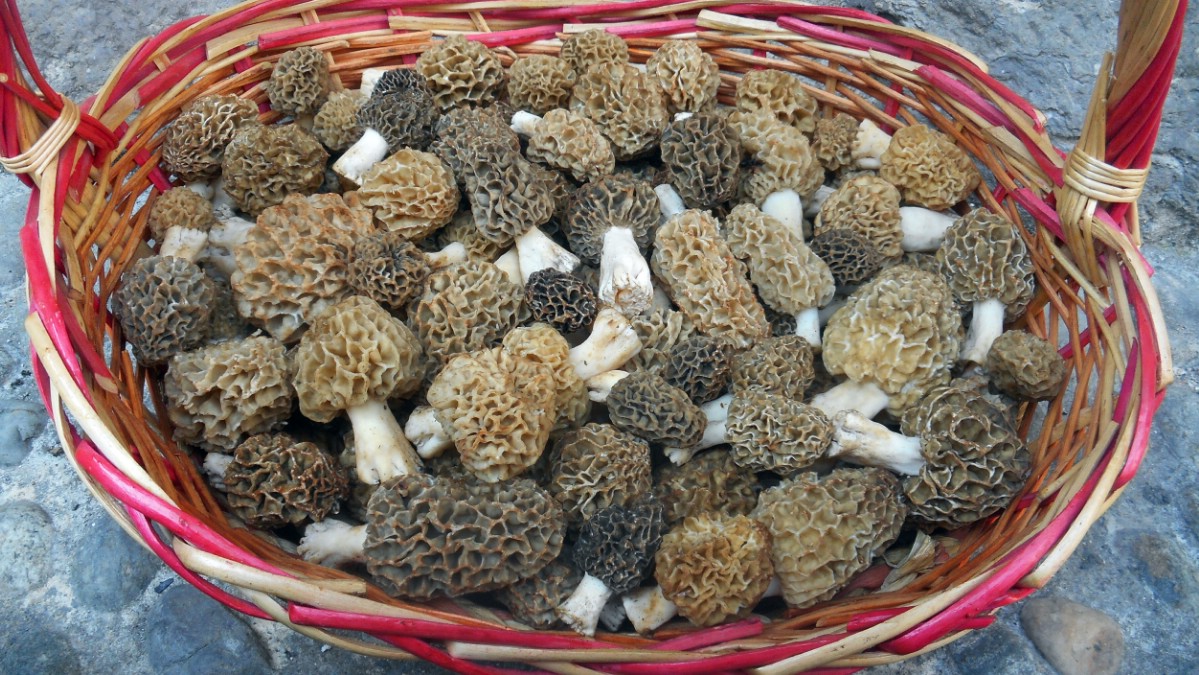
Morels appear from mid-April to early May, depending on where you are located. Many people time morel season to be when the lilacs are blooming, though it is not perfectly reliable. More southern states will see the morels earlier, then they will work themselves up through the northeast. You can track the season’s recorded findings of them on The Morel Report.
Where to look: Dying ash, elm, and big-toothed aspen stands. The species Morchella septentrionalis is specific to ash and aspen north of the 45th parallel. Also, old apple orchards are prime in the region.
→ [Full morel identification guide]
Oysters
Oyster mushrooms fruit on dead deciduous hardwood when the spring temperatures finally warm up. The gray oyster is the most common species, but there are also aspen oysters and golden oysters, which are becoming increasingly more common across the region.
Golden yellow oysters are invasive, fruit in massive colonies, and should be foraged with abandon; do not worry about foraging rules with these ones.
Where to look: Dead deciduous hardwoods. Beech and aspen are common hosts for gray oyster. The aspen oyster fruits specifically on quaking aspen.
→ [Full oyster mushroom guide]

Dryad’s Saddle
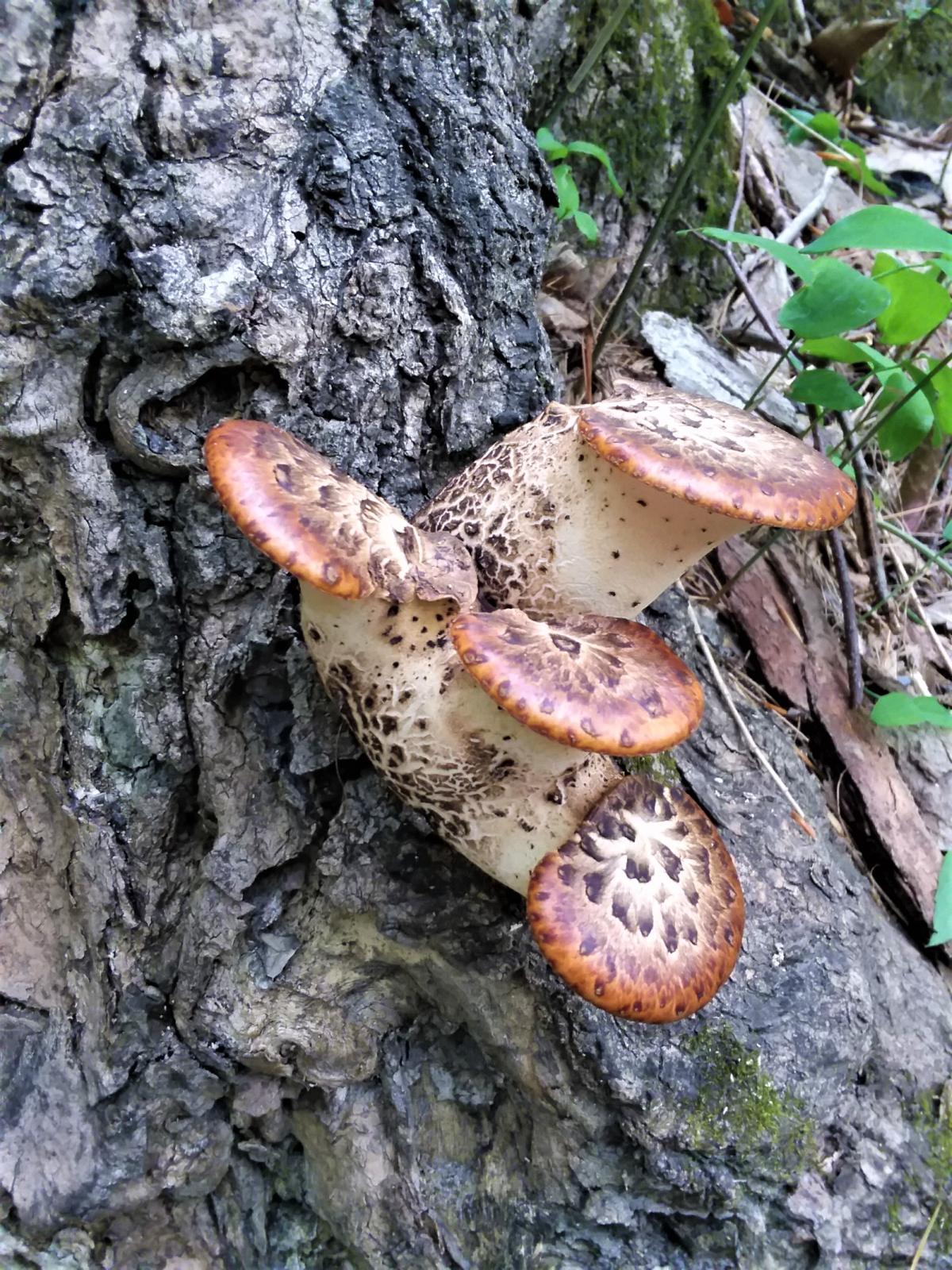
Dryad’s saddle is one of the more reliable spring finds in New England. It fruits early, often before morels, and easy to spot because it grows as large shelves on dead trunks. This mushroom has a beautiful brown feathering pattern on its cap, and it smells like watermelon rind.
These must be foraged when they’re young, because they get very tough with age. Many people report them as inedible, but this is only because they’ve foraged them at too late a maturity.
Where to look: Dead and dying elm, box elder, and maple. It returns to the same tree or stump year after year.
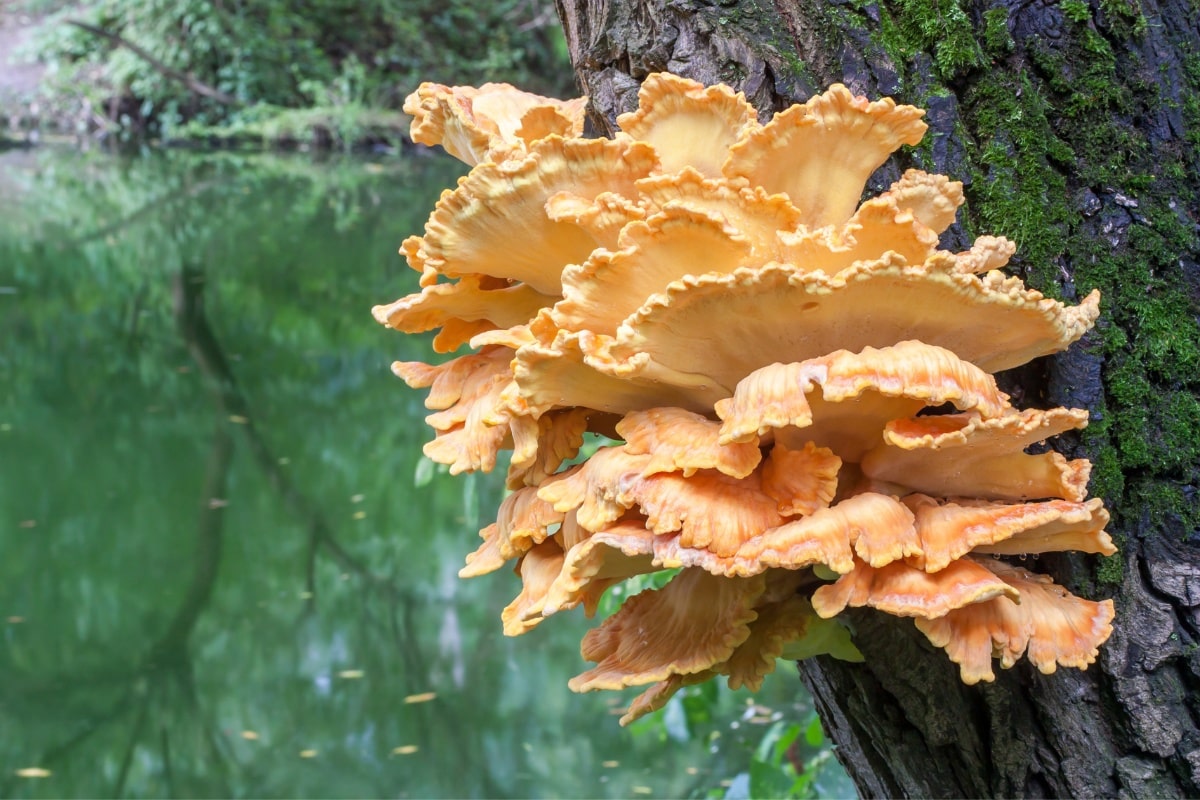
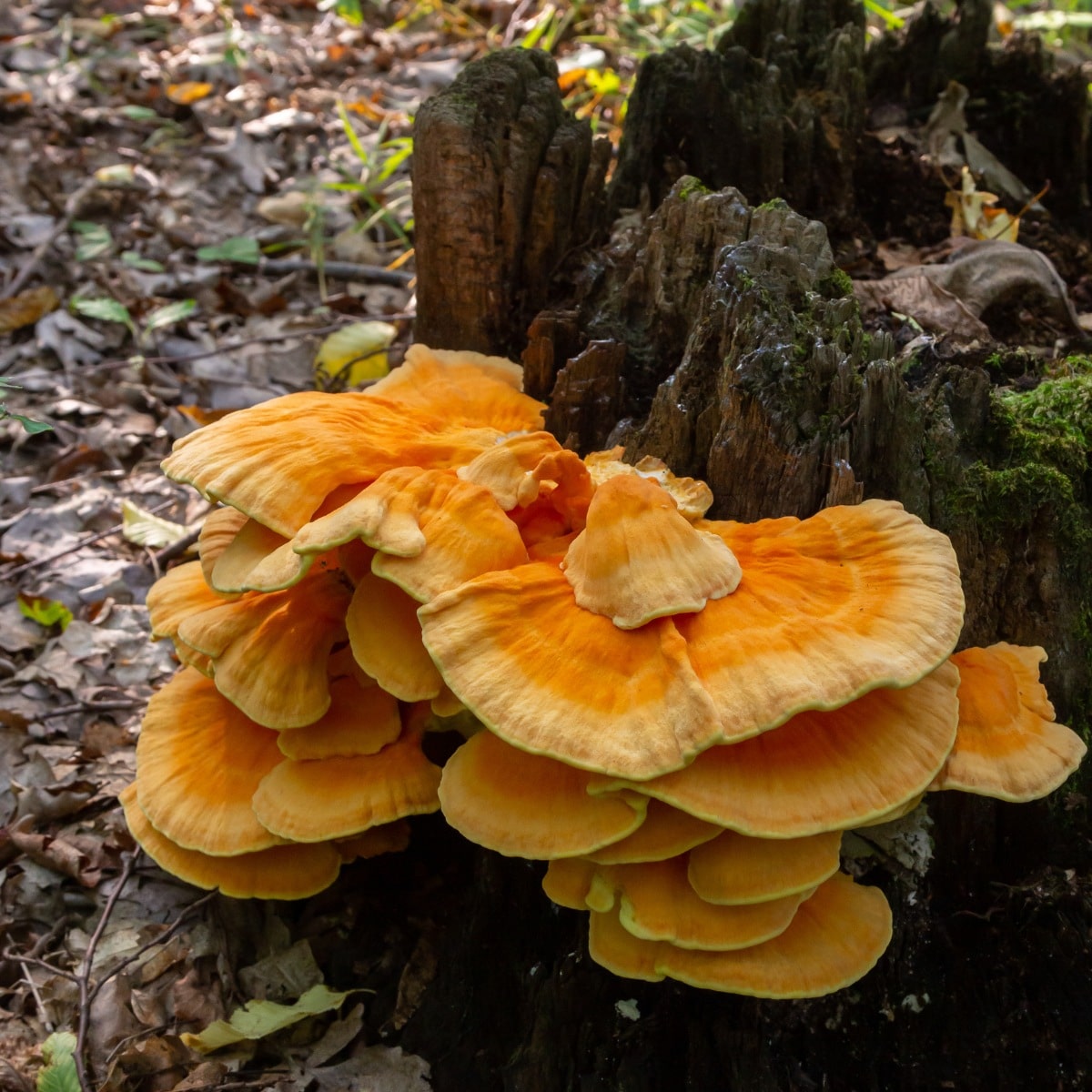
Chicken of the Woods
Chicken of the woods is primarily a late summer and fall species in New England. However, it will show up in spring if it wants to (chicken of the woods has a mind of its own). It’s not as common, but it definitely isn’t unusual. When it does show up in spring, it’s often a smaller fruiting.
Where to look: Dead and decaying hardwood trees. The same tree usually grows mushrooms year after year.
→ [Full chicken of the woods guide]
Wine Caps
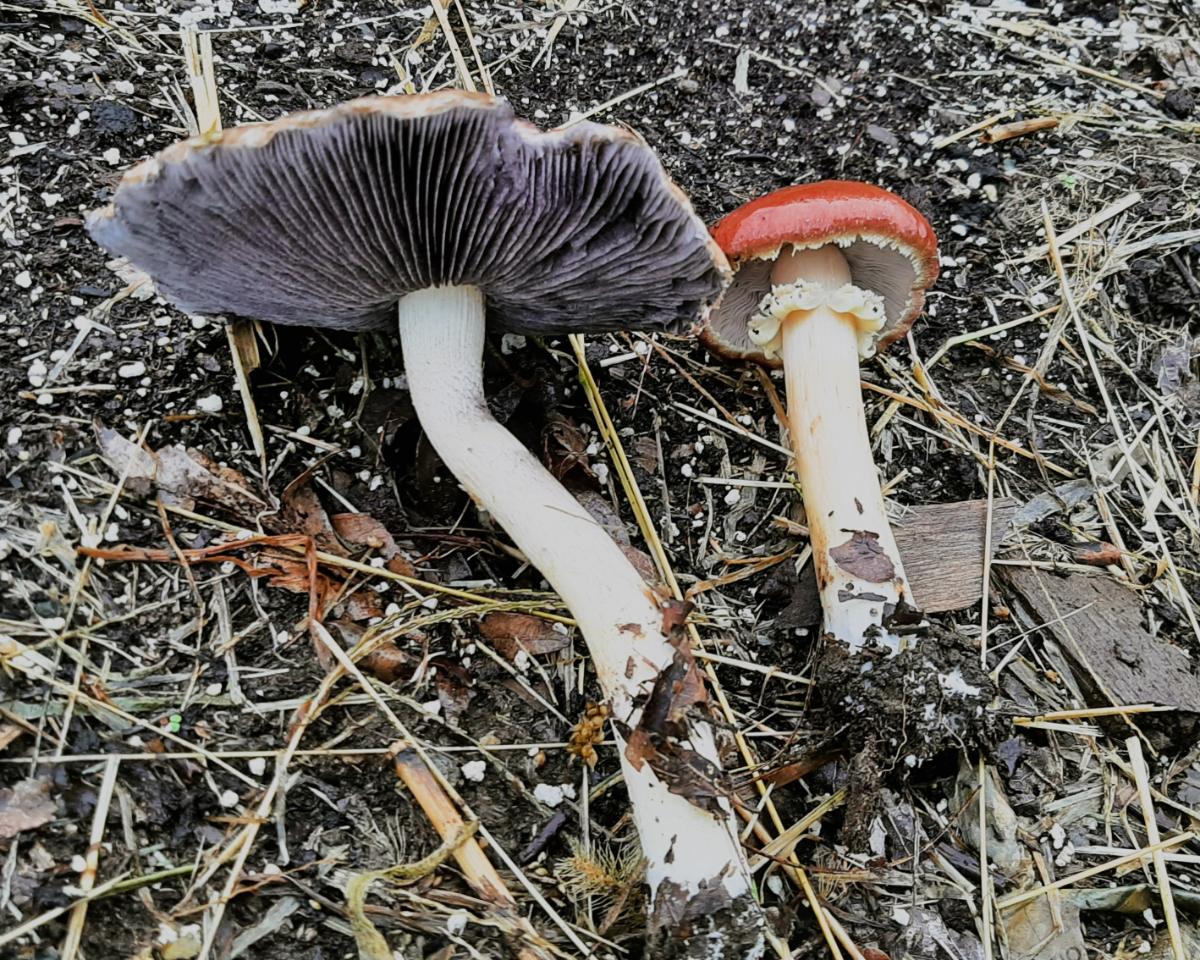
Wine caps fruit in spring and again in fall. They grow in wood chips and mulch in parks and gardens, and are one of the most accessible spring finds for urban and suburban foragers. They have burgundy caps, a cog-wheel stem ring, and they are similar in taste to portobello mushrooms.
Where to look: Wood chips and mulch in parks, gardens, and trail edges. Not a forest mushroom.
Wood Ear Mushrooms
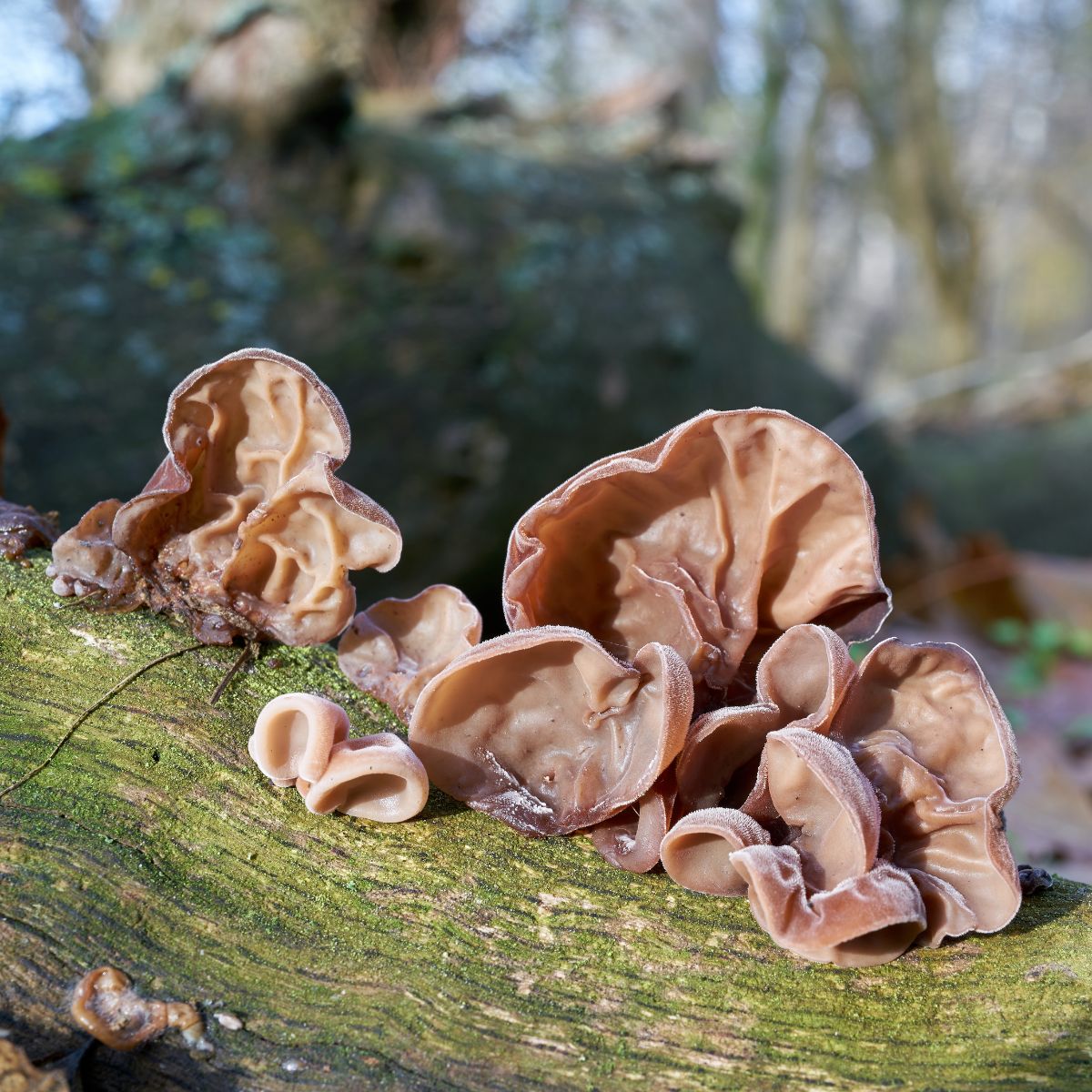
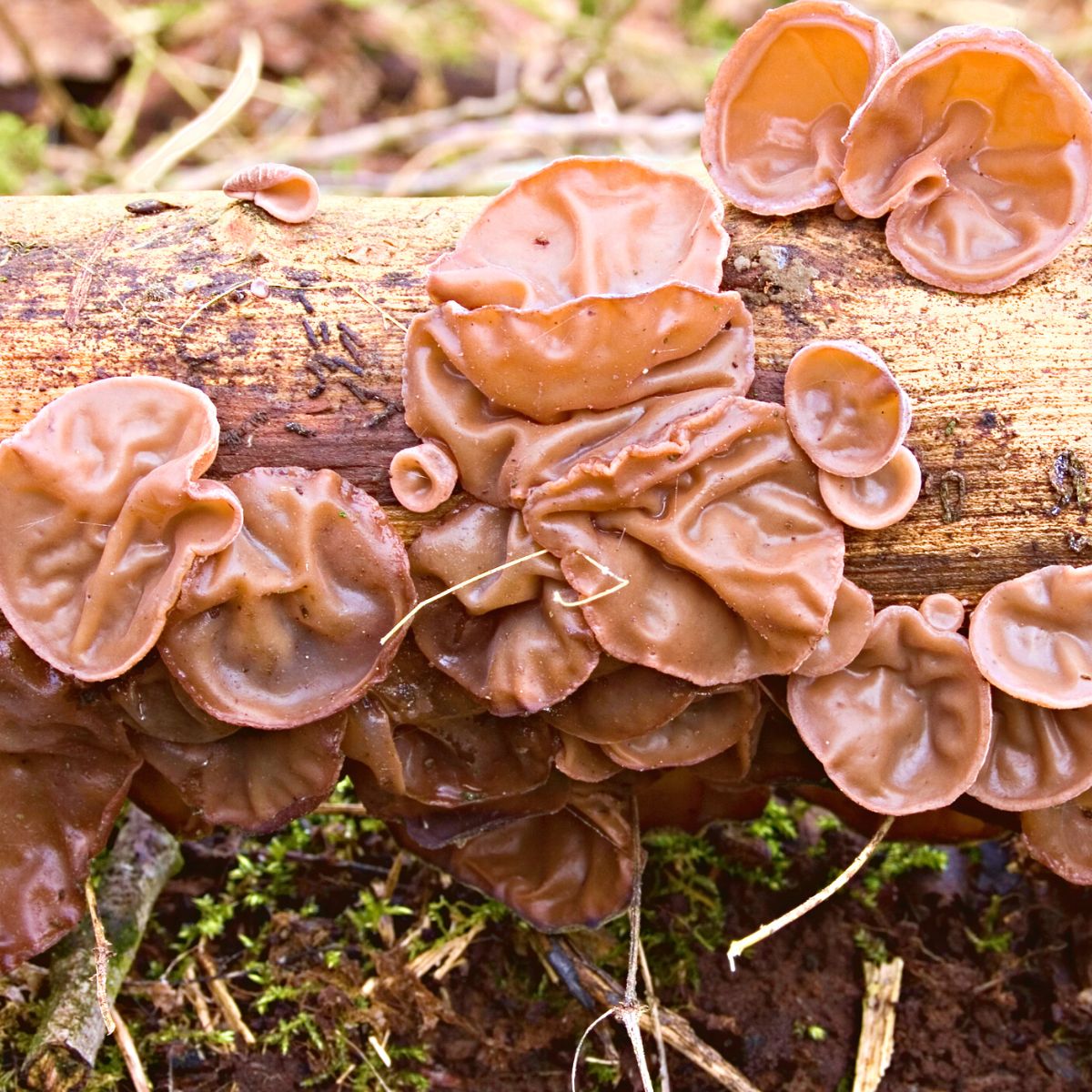
The wood ear is a jelly fungus with a gelatinous, rubbery texture. The fruiting bodies are brown and ear-shaped and wet and pliable after it rains. They harden during dry periods, then will reconstitute when it rains again. They grow through spring, summer, and fall. Wood ears are used most often in soups, ramen, and stir fries where their texture is highlighted.
Where to look: Dead and decaying hardwood logs and stumps. They often grow on elder trees but they fruit on a wide range of deciduous species.
Inky Caps
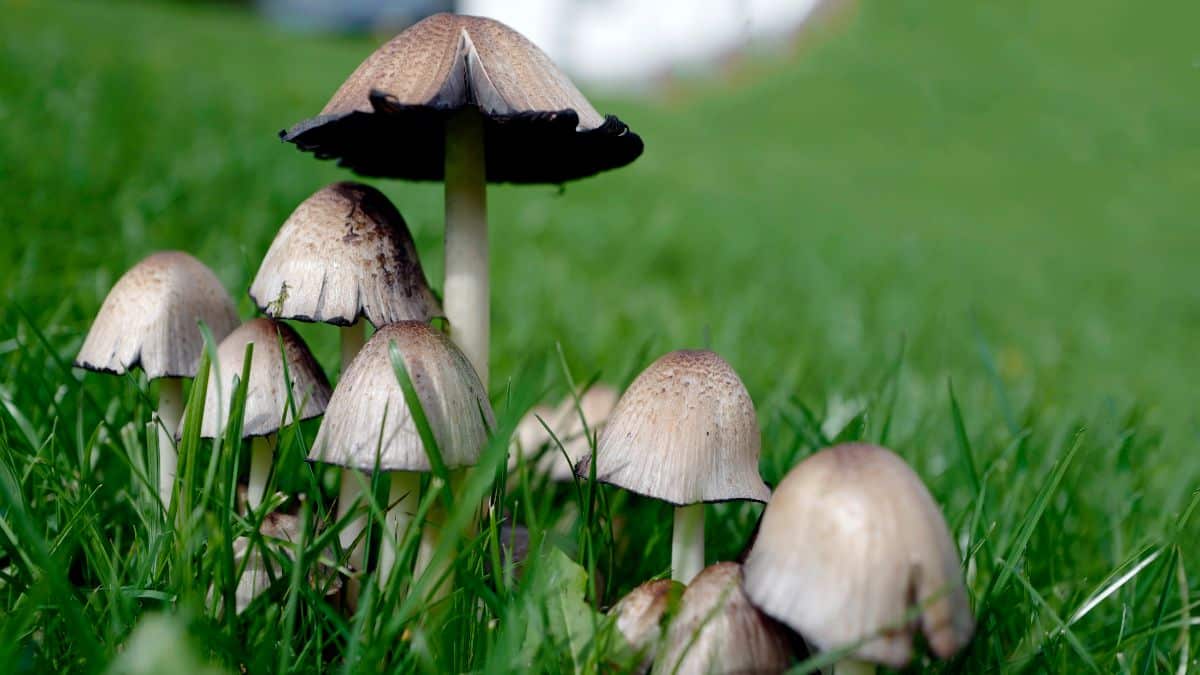
Inky caps are a small mushrooms with a very short lifespan. They appear in clusters (often massive ones) after heavy rain. The most common types in New England are the common inky cap and the mica cap. They have a very brief lifespan — 24 to 48 hours — and must be harvested when they’re young. The caps should still be bell-shaped and have pale gills. Inky caps decompose (deliquesce) into black ink as they mature, which is how they get their name. They literally turn to goo. They’re delicious when young, though.
Note that some of the species in this group become toxic when consumed with alcohol; do not drink alcohol 3-5 days before or after eating these.
Where to look: Wood chips, disturbed ground, lawns, and the base of dead hardwood trees. They grow in dense clusters and appear most often two to three days after significant rainfall.
Southeast (Tennessee, Arkansas, Missouri, and the South)
Spring mushroom foraging in the southeast is a treat. Mushrooms grow in spring in great numbers and include morels, chicken of the woods, oysters, and dryad’s saddle early in the season. Then, in late spring, from May to June, chanterelles and black trumpets show up with the warmer weather.
Morels
Morels are the first major species to appear. They fruit in very early spring, from mid-March to mid-April, depending on where you are in the Southeast. Recently, morels have been showing up consistently in early March. The season starts in the southernmost states and moves north week by week as temperatures climb. You can track the season’s recorded findings of them on The Morel Report.
Where to look: Dying elm and ash trees, old apple orchards, tulip poplar groves, and south-facing slopes. Start at lower elevations and move upward as spring progresses.
→ [Full morel identification guide]
Chicken of the Woods
Chicken of the woods is a late summer species in many areas, but in the southeast, it commonly shows up in spring. Chicken of the woods is one of the best wild edible mushrooms because of its dense, meaty flavor. Also, when you find a fruiting, there is often a lot of mushroom to harvest.
Where to look: Dead and decaying hardwood trees and stumps. Always inspect the condition before picking. Old specimens go tough and are not worth harvesting.
→ [Full chicken of the woods identification guide]
Oysters
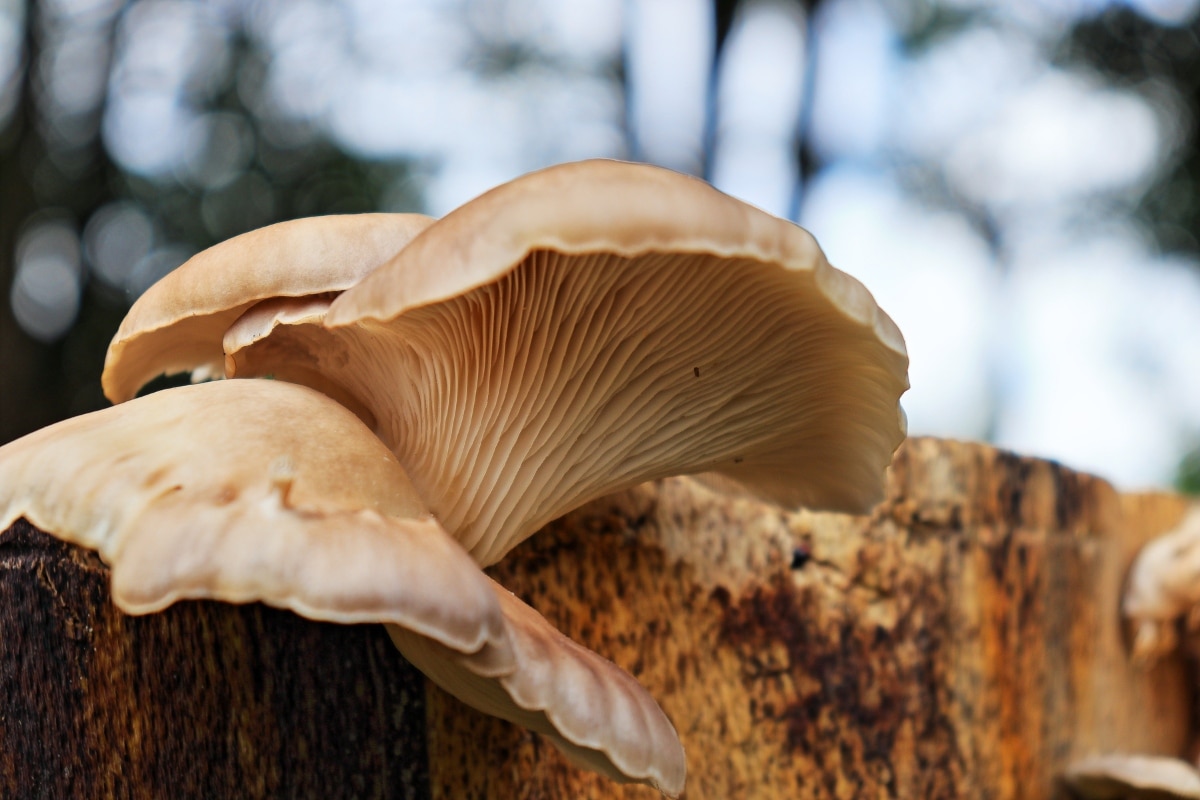
Oyster mushrooms fruit year-round on dead hardwood in the southeast, but they are most common and abundant in spring. Gray oysters often appear before morels in many areas. Oysters are one of the most beginner-friendly finds in North America. There are no dangerous lookalikes that grow on wood in shelf formation in this area.
In more recent years, golden yellow oyster mushrooms have been spreading throughout the southeast. These are invasive and should be foraged with abandon.
Where to look: Fallen hardwood logs, standing dead trees, and wood along stream banks. Look for shelf-like clusters on deciduous trees.
→ [Full oyster mushroom guide]
Dryad’s Saddle
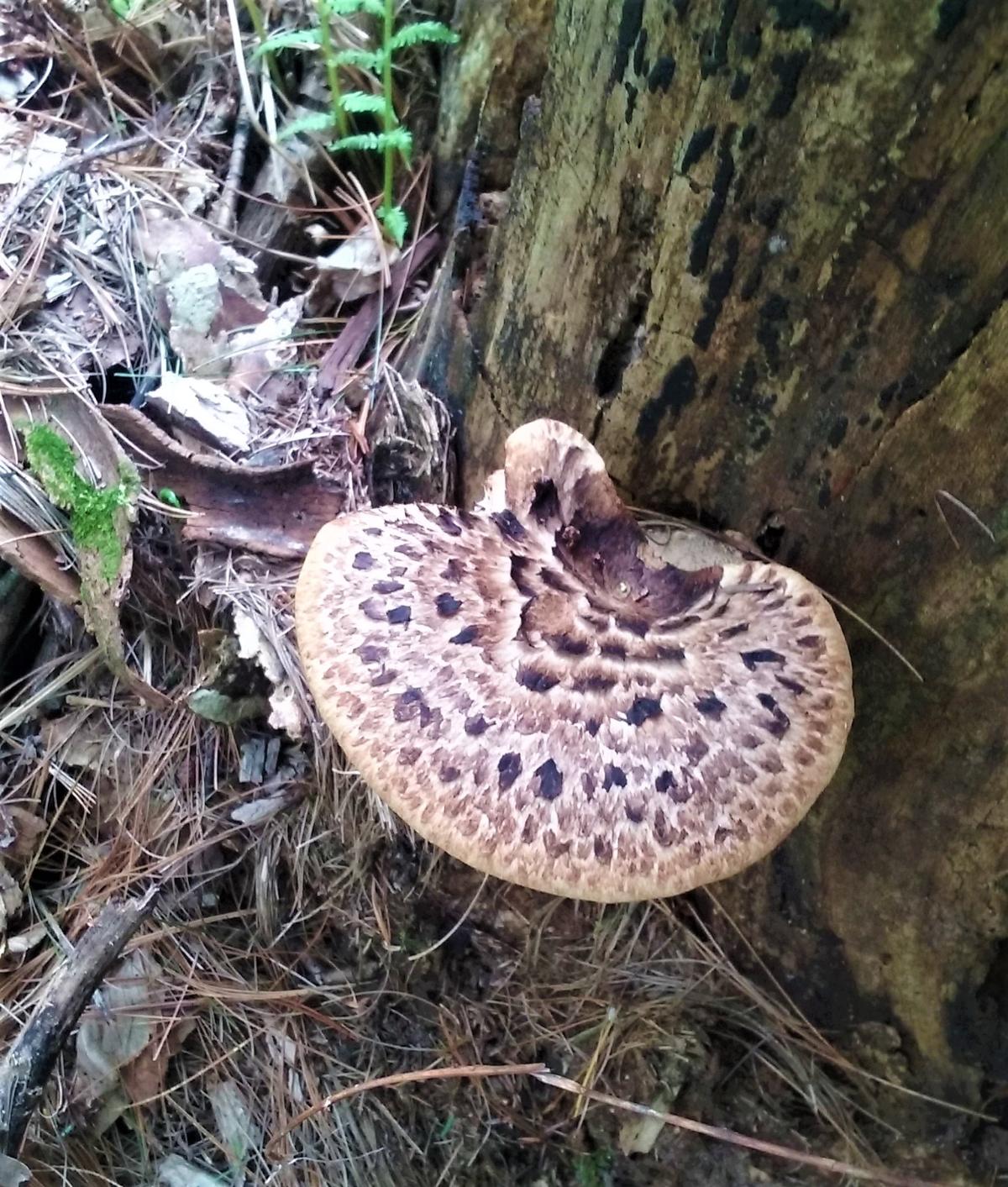
Dryad’s saddle appears on dead wood at roughly the same time as morels, and often a bit earlier. The caps of this species are covered in dark brown scales arranged like a pheasant’s feathers, and the pore surface smells like watermelon rind. Only the young, tender specimens are the ones worth picking. They get very tough with age.
Where to look: Dead and dying elm, box elder, and maple trees. The same woods where morels grow will usually have dryad’s saddle too.
Wine Caps
Wine caps fruit in spring and, then again, in fall. They grow in wood chips and mulch and feed on decomposing organic matter and are very common in gardens and landscaped areas. They can also be planted and grown, if you want them.
The caps are deep burgundy-red and the color fades to grayish burgundy with age. Wine cap stems are white and have a distinctive cog-wheel-shaped ring. The gills start out pale gray and turn dark purplish-gray with maturity. These mushrooms are similar in size to a portobello mushroom, and actually taste similar, too.
Where to look: Wood chips and mulch in parks, gardens, landscaped trail edges, and other disturbed urban and suburban areas. Not a forest mushroom.
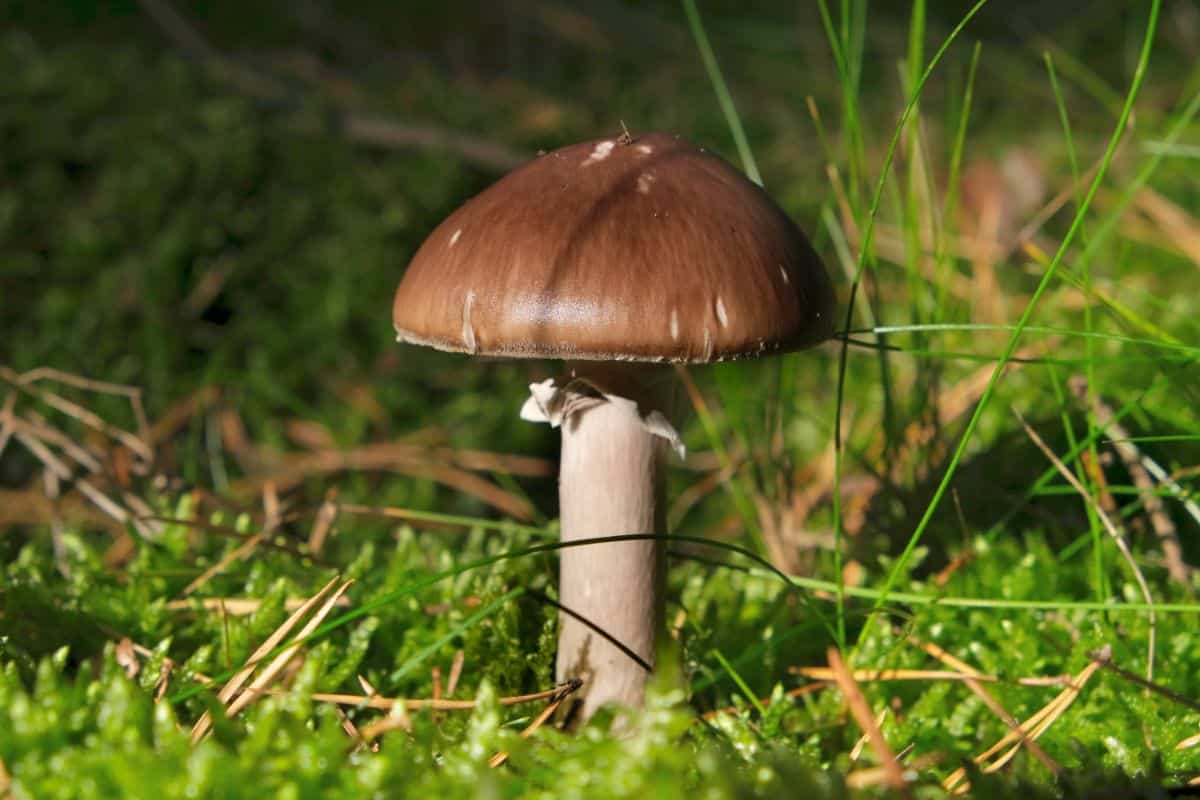
Wood Ear Mushrooms
Wood ears are a jelly fungus that grows directly on dead wood. The fruiting bodies are brown, often strikingly ear-shaped, and rubbery. During dry periods, they shrink to a hard crust and then revive again quickly after it rains. These mushrooms fruit through spring, summer, and fall. Their texture is rubbery and chewy and they are most commonly used in soups and stir fries where that texture holds up well.
Where to look: Dead and decaying hardwood logs and stumps. They commonly grow on elder trees, though they fruit on a wide range of deciduous species. Look on the underside and sheltered faces of fallen logs.
Chanterelles
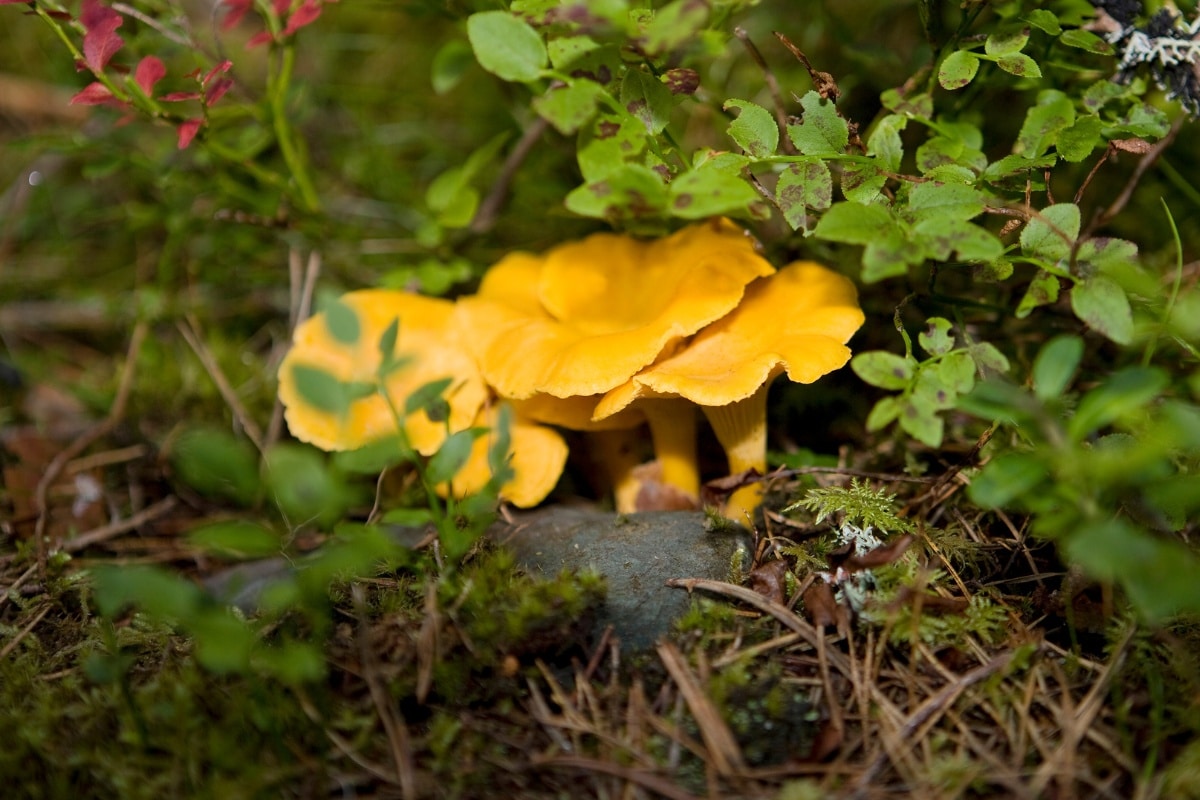
Chanterelles might show up in late-spring in the Southeast; they won’t be around in the start of the season. They start appearing in May and into June as the weather warms. Chanterelles grow from the ground in hardwood forests. They have golden yellow caps, forking false gills on the underside, and a faint apricot scent and are among the top edible mushrooms species.
Where to look: In hardwood forests, especially under oak. They grow scattered or in loose groups, not tight clusters. Look on north-facing slopes and areas near streams.
→ [Full chanterelle identification guide]
Black Trumpets
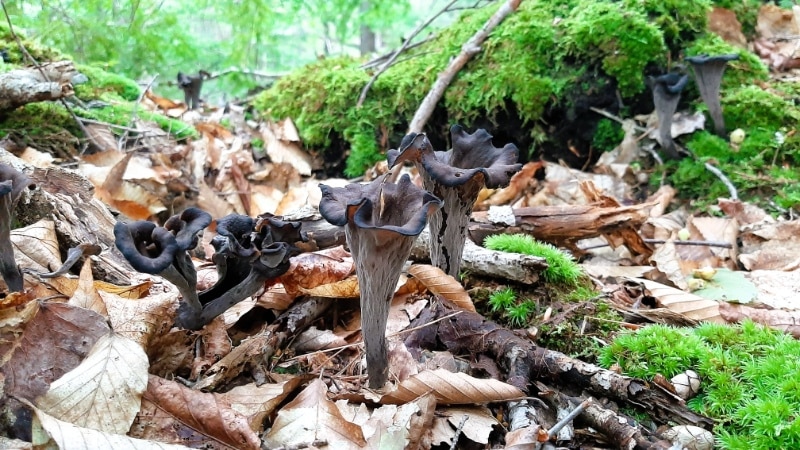
Black trumpets are another late-spring find. They won’t be in full swing yet, but will be getting started towards the end of spring, in May and June. They are one of the harder mushrooms to spot. Black trumpets have dark, thin, funnel-shaped fruiting bodies that blend into the leaf litter almost perfectly. The flavor is concentrated and deeply savory, even a small amount is a great find because their flavor is so intense. These mushrooms fruit in large groups, so finding one usually means there are many more within a few feet.
Where to look: Mixed hardwood forest floors, especially under oak and beech. Look carefully and slowly. Getting low to the ground and looking across the forest floor at a low angle helps. Mossy areas and the edges of stream banks are the best places to look.
→ [Full black trumpet identification guide]
Midwest (Ohio, Indiana, Illinois, Michigan, Wisconsin, and surrounding states)
Spring mushroom foraging in the Midwest is often fantastic, but can also be very erratic. So much depends on how much snow there was in winter and spring rainfall. It can vary widely year to year. The spring mushrooms won’t start fruiting until the soil and air temperatures warm up. Once the temperatures are up, though, there are some tremendous edible mushrooms out in the woods to find. In great years, mushrooms grow in spring in huge numbers.
Springtime mushroom hunting in the Midwest generally begins in April and extends until mid-June.
Morels
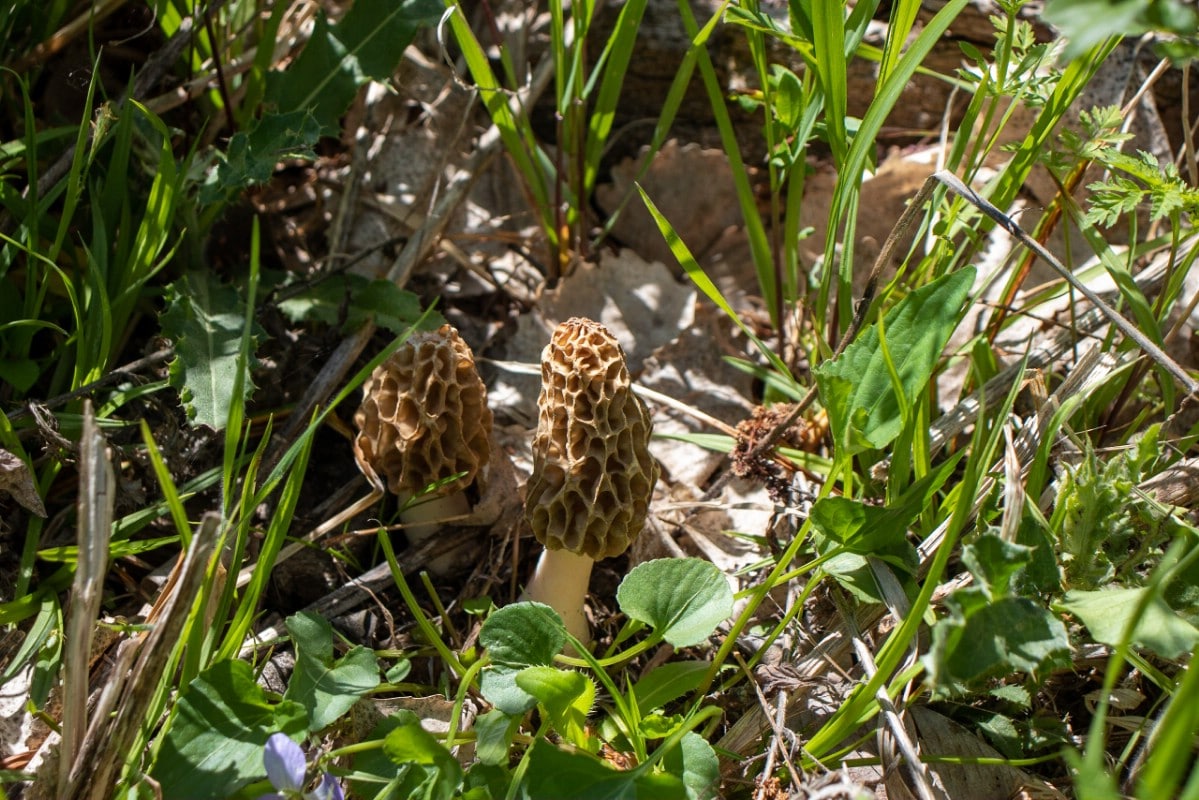
Morels are the start of the mushroom foraging season in the Midwest. The season starts in Ohio, Missouri, and Kansas in mid-March, then moves into the upper states a couple of weeks after that. It picks up through April and tapers off in May. Some northern regions don’t see morels until May or early June. You can track the season’s recorded findings of them on The Morel Report.
Where to look: Dying elm and ash trees, tulip poplars, old apple orchards.
→ [Full morel identification guide]
Oysters
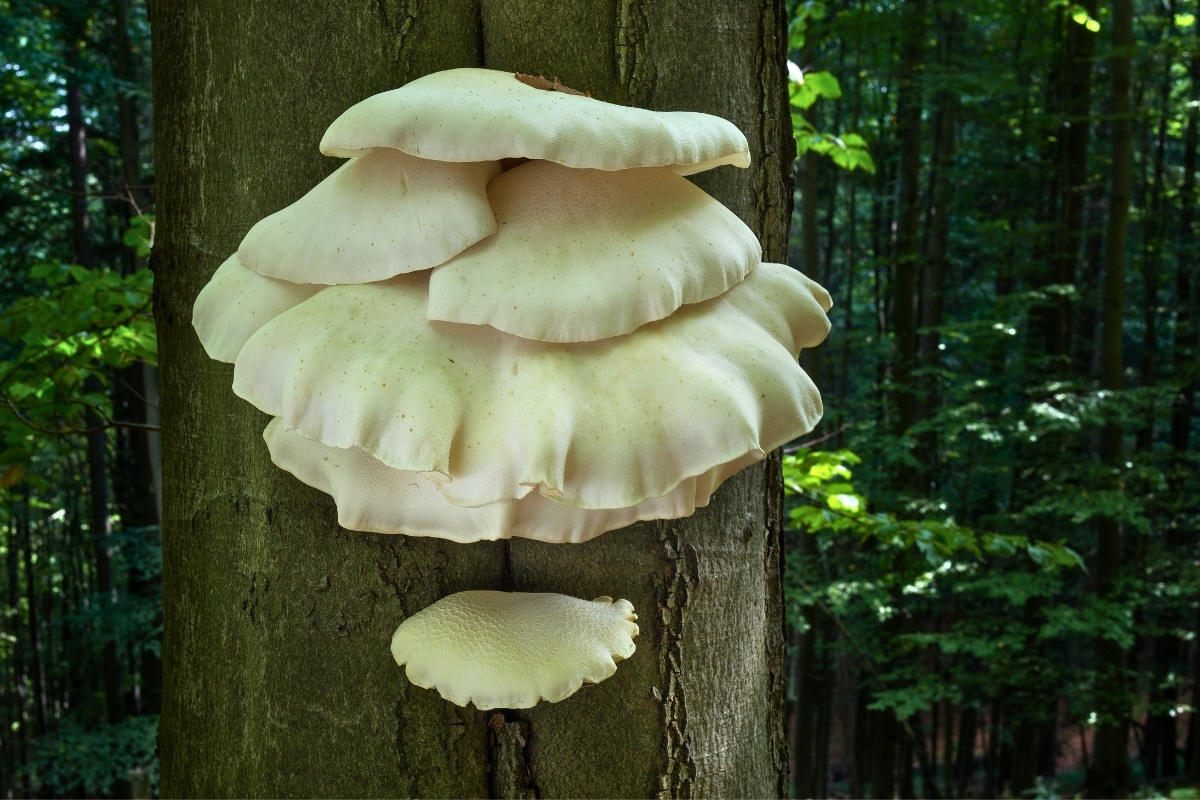
Oyster mushrooms grow on dead deciduous hardwood in early spring. The gray oyster is the most widespread in this region and is found earlier in the season than most other species. The aspen oyster fruits primarily on quaking aspen.
Golden yellow oysters are also becoming more common, often in places where gray oysters used to be found. They are invasive and should be foraged with abandon. They often grow in massive colonies.
Where to look: Fallen deciduous logs along stream banks, standing dead trees. Gray oyster favors beech, aspen, and cottonwood. Golden oysters strongly prefer dead elms.
→ [Full oyster mushroom guide]
Dryad’s Saddle
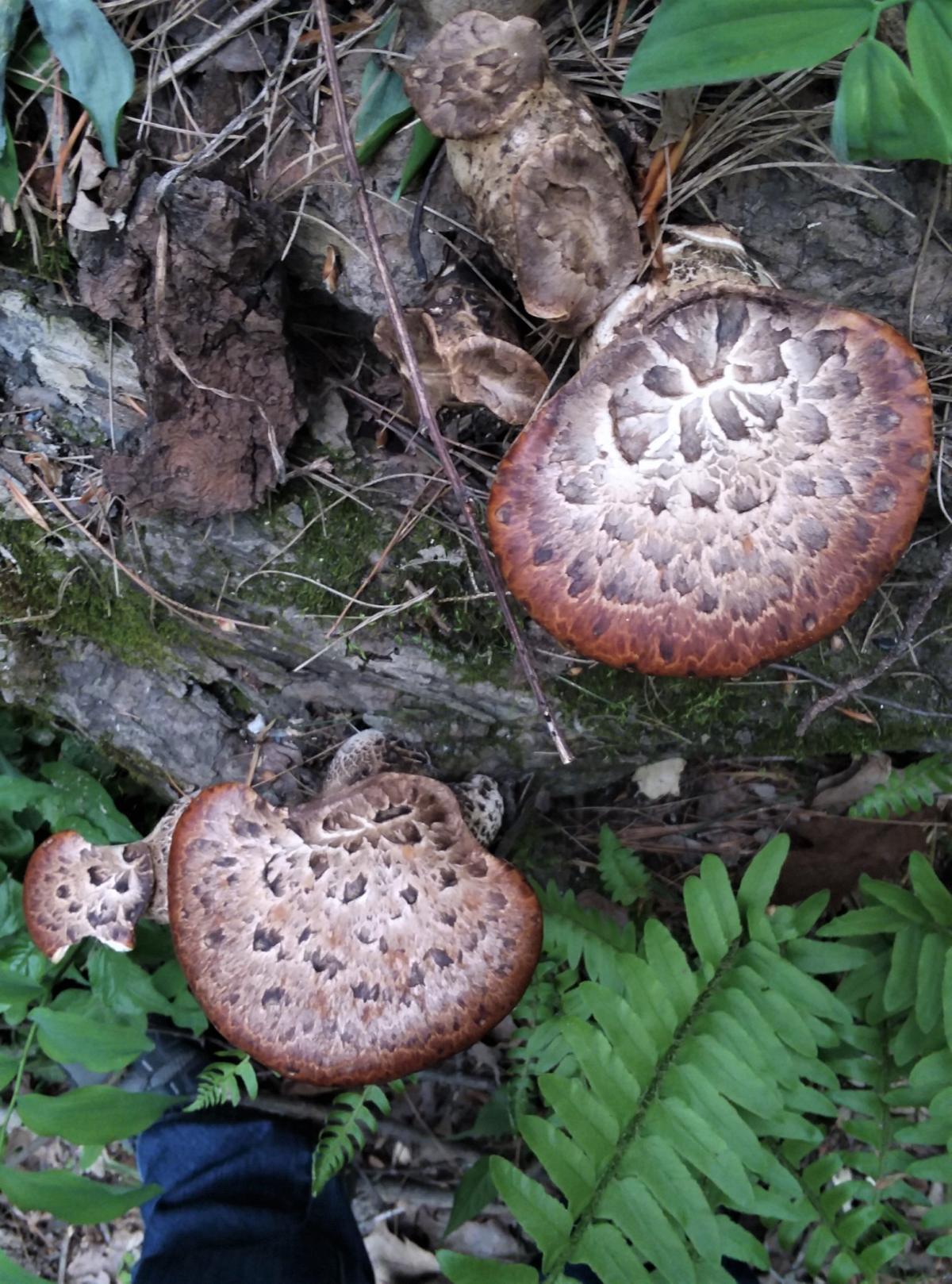
Dryad’s saddle grows on dead wood and often appears in massive numbers on dying box elder and elm trees. They fruit around the same time as morels, usually a week or so before. Young dryads’ saddles are the best — they are tender and meaty. You can test the freshness of the mushroom by cutting the cap. If it cuts easily, it’s still young and tender. Older specimens are leathery and tough and not good eating.
Where to look: Dead and dying elm, box elder, and maple. Search the same habitat as morels.
Chicken of the Woods
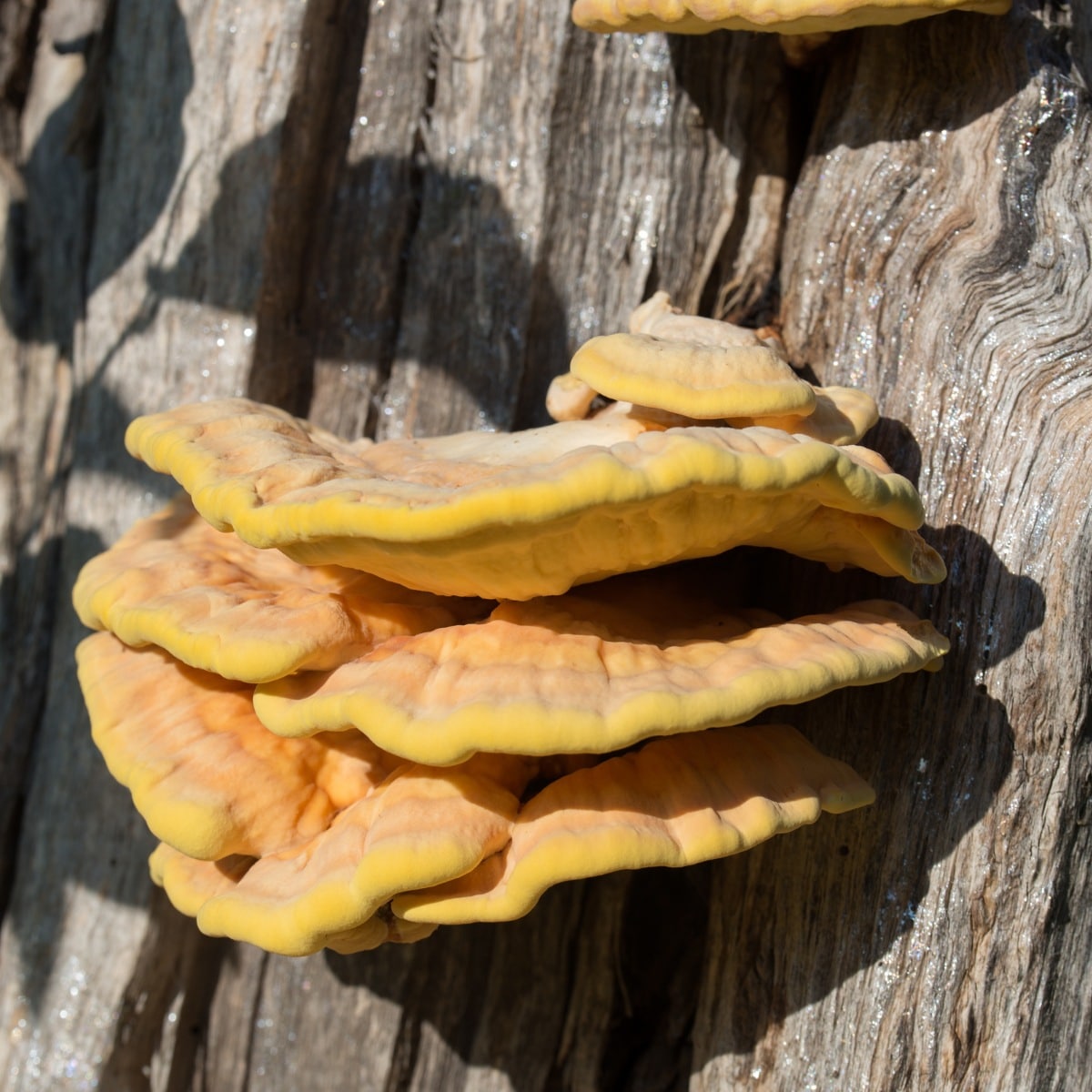
Chicken of the woods fruits from late spring through fall. The first appearances in spring are less common but not unusual – always be on the lookout for chicken of the woods! It grows on decaying wood, never on the ground or in soil. These mushrooms are excellent when young and tender, but get very tough with age.
Where to look: Dead and decaying hardwood trees and stumps. Inspect the flesh before picking; if it is dry, it’ll be tough to eat. This mushroom often returns to the same tree or stump every year, so mark the spot.
→ [Full chicken of the woods identification guide]
Wine Caps
Wine caps grow in mulch and wood chips in spring and again in fall; they like the cooler temperatures. The caps are deep burgundy-red, and it is very much like a portobello mushroom in looks and taste. The stem has a distinctive cog-wheel-shaped ring, and the gills are pale gray to dark purplish-gray.
Where to look: Wood chips and mulch in parks, gardens, trail edges, and other disturbed urban and suburban areas.
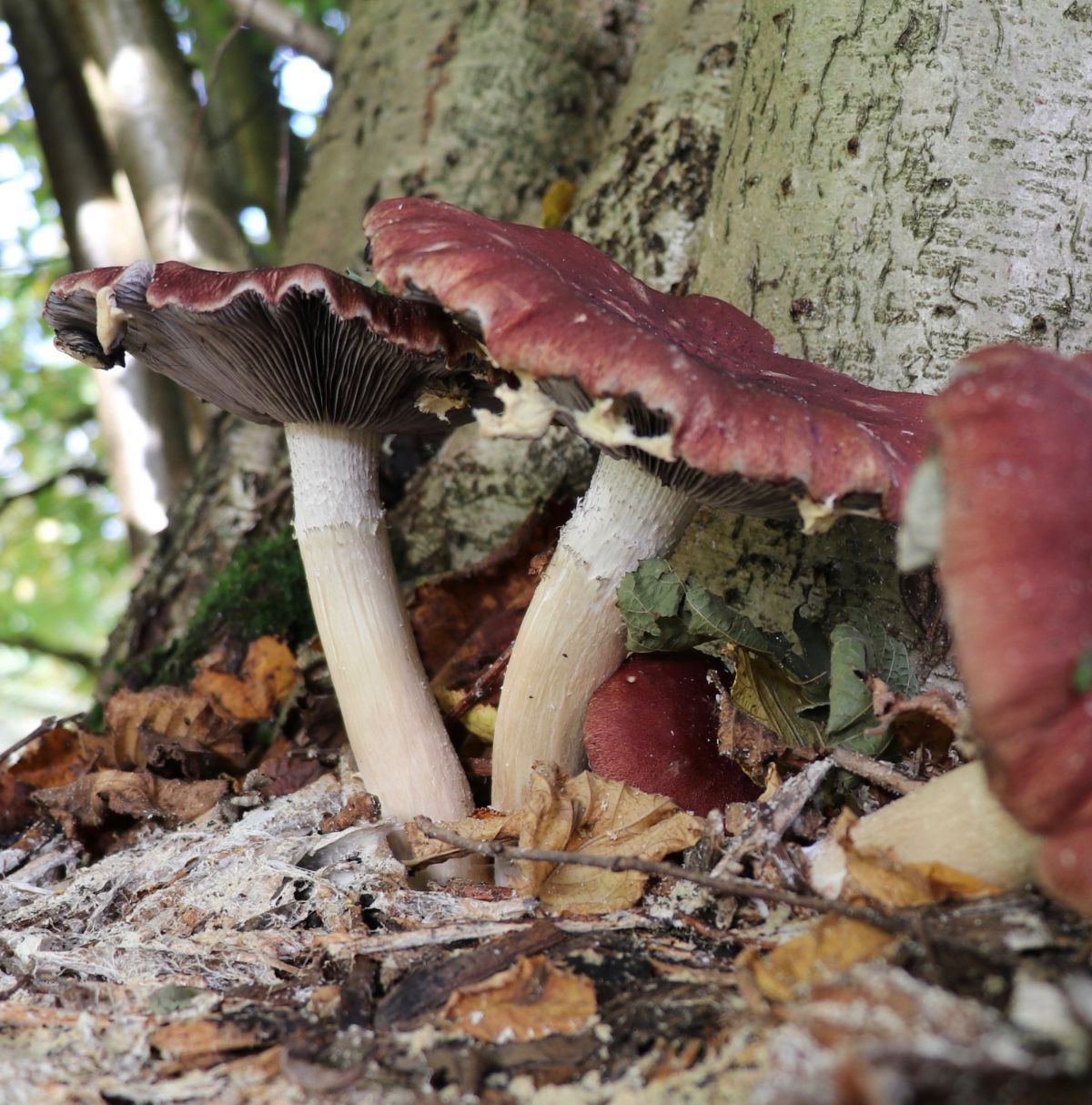
Inky Caps
Inky caps come up in clusters after heavy spring rain and disappear just as fast. The most common types in the Midwest are the common inky cap and the mica cap. These are both edible when young and harvested while the caps are still bell-shaped and the gills are still pale. As the mushrooms age, they deliquesce (decompose) into black ink and are not edible any more. If you forage these, plan on cooking them the same day as they will turn to inky goo within hours.
Note that some of the species in this group become toxic when consumed with alcohol; do not drink alcohol 3-5 days before or after eating these.
Where to look: Wood chips, disturbed soil, decomposing wood buried in lawns, and the base of dead hardwood stumps. They grow in tight clusters and are most reliably found two to three days after a good rain.
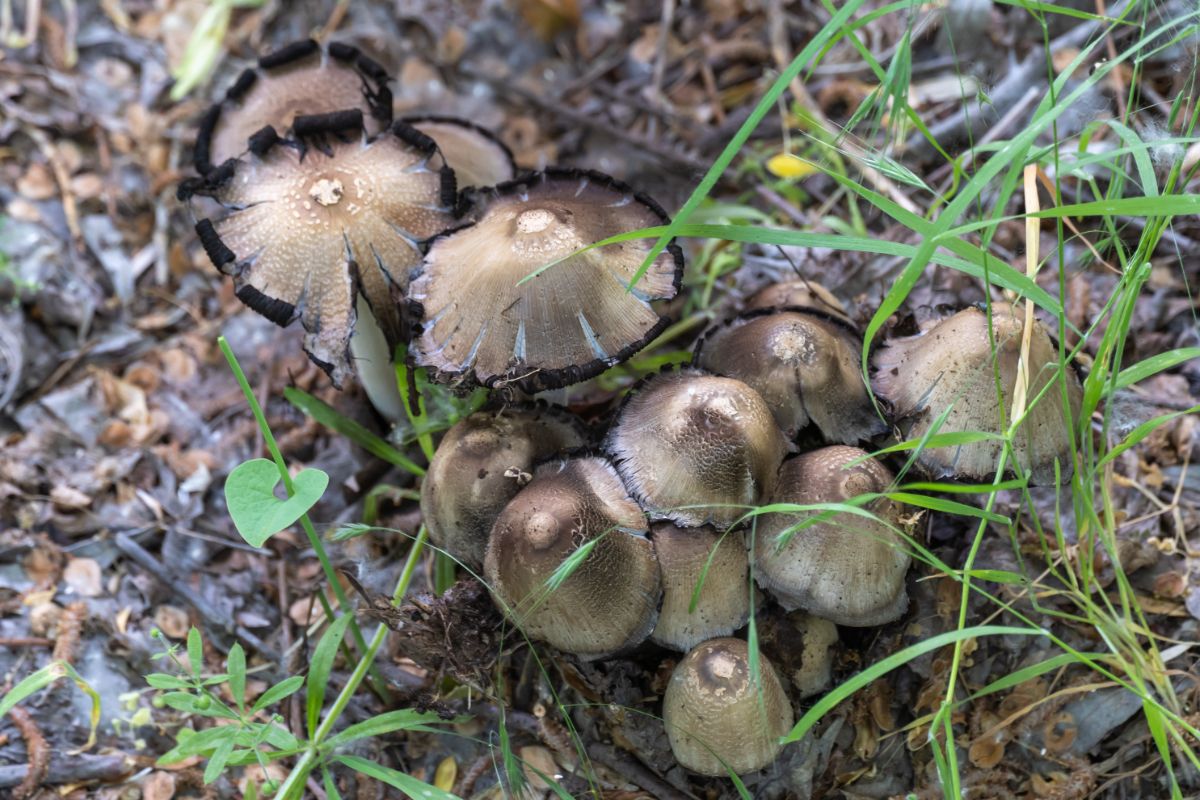
Shaggy Manes
Shaggy manes are striking mushrooms. They are tall, white, and covered in shaggy scales. These mushrooms grow in compacted and disturbed ground after heavy rain and can appear in large numbers almost overnight. The harvest window is short with these, like with inky caps. They deliquesce (turn into black goo) from the bottom up, turning to black ink within a day or two of emerging. Only forage young specimens with firmly closed caps and plan on cooking them the same day.
Where to look: Trail edges with compacted soil, disturbed ground, roadsides, the edges of fields, gardens and landscaped areas, and mowed areas near woodland. They do not grow in dense forest. After a significant spring rain is the time to check these spots.
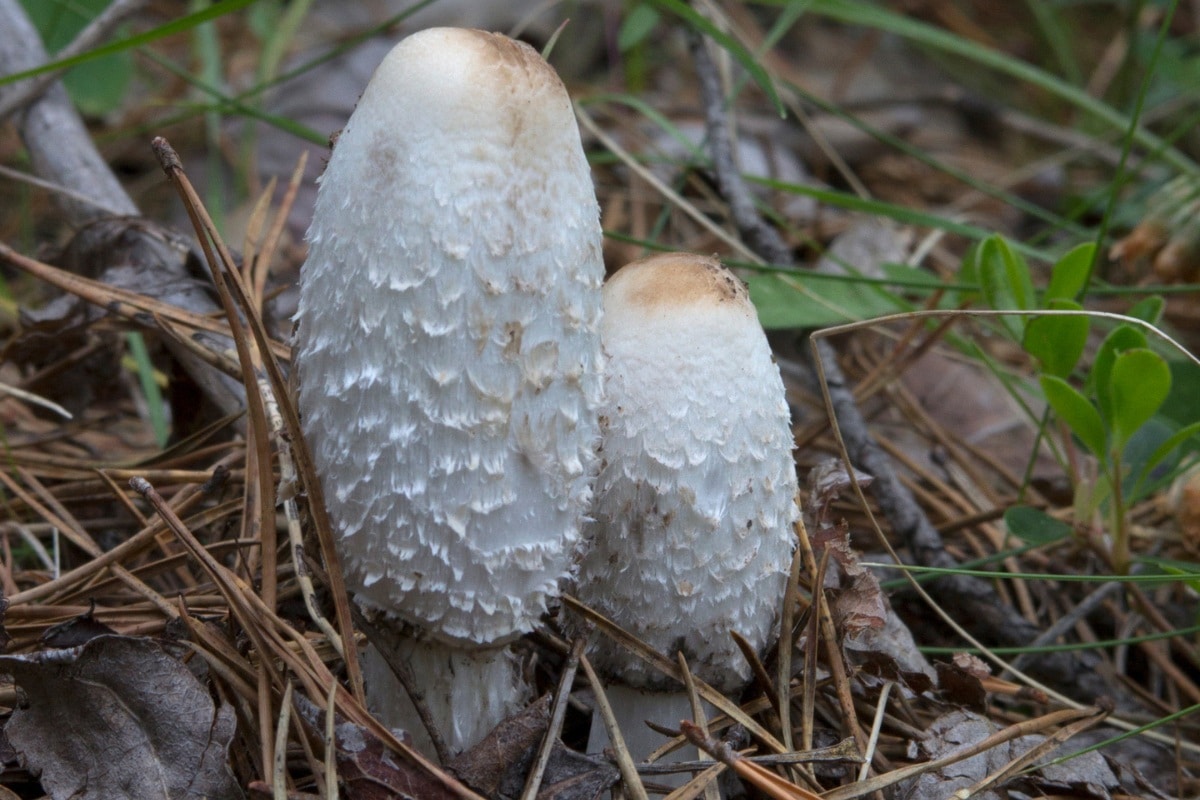
Southwest (New Mexico, Arizona, Colorado, Utah, Nevada)
Spring foraging in the Southwest means waiting for the snow to melt and heading to the mountains. In the low desert, there is not much to find. The species list for this region is short, but the finds are good when the conditions align. Which mushrooms grow in spring depends entirely on the winter weather.
Morels
Morels are the primary spring target for most foragers. The season starts in mid-April at lower elevations but picks up in May and June when the higher elevations warm up, and the snow has melted. Yellow morels fruit in riparian areas in the high desert from late March to early May. In the mountains, burn sites can be especially productive for burn morels, often for several years after a fire. You can follow their progression at The Morel Report.
Where to look: Burn sites in mountain conifer forests as soon as the ground thaws. Cottonwood washes, riverbeds, and creek bottoms at lower elevations. Start low and follow the snowmelt uphill.
→ [Full morel identification guide]
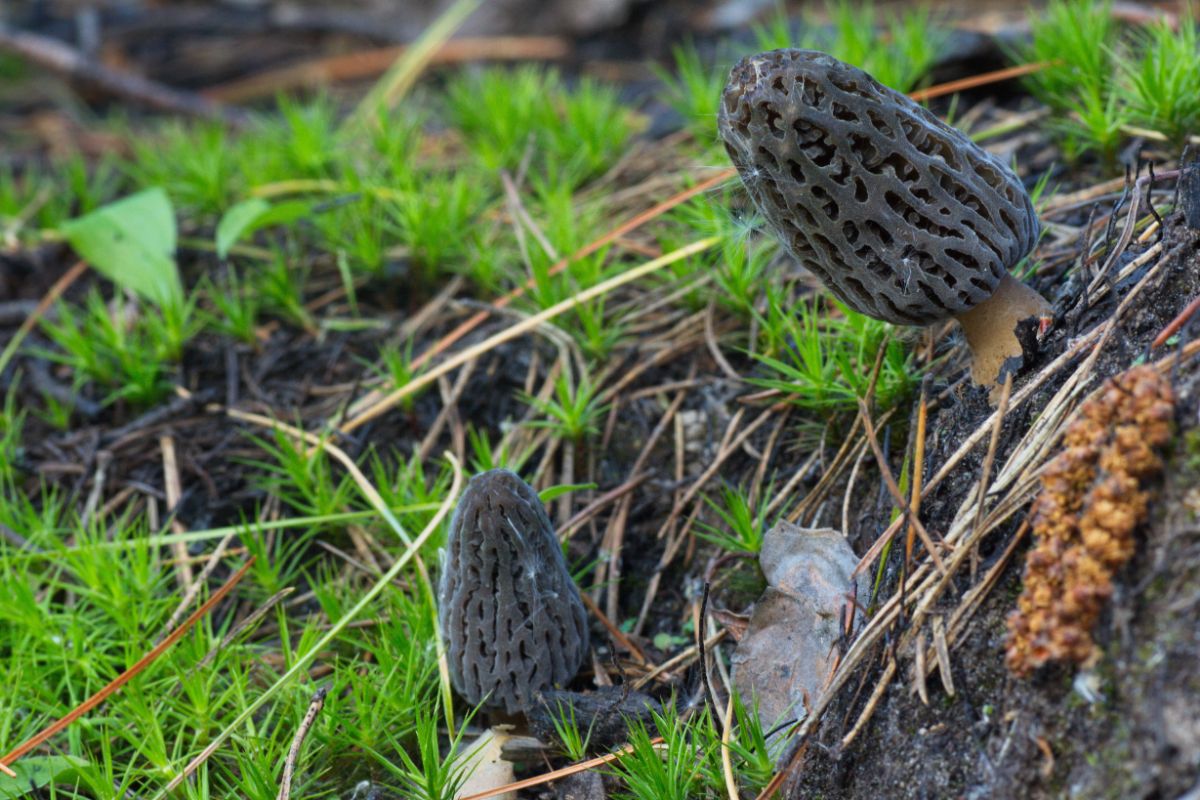
Oysters
Oyster mushrooms fruit on dead wood in spring when there is enough rain and mild temperatures. They don’t like extreme heat. Finding a good log near a water source is the key.
Where to look: Cottonwood washes, riverbeds, and creek bottoms. Look for fallen and standing dead cottonwood near water.
→ [Full oyster mushroom guide]
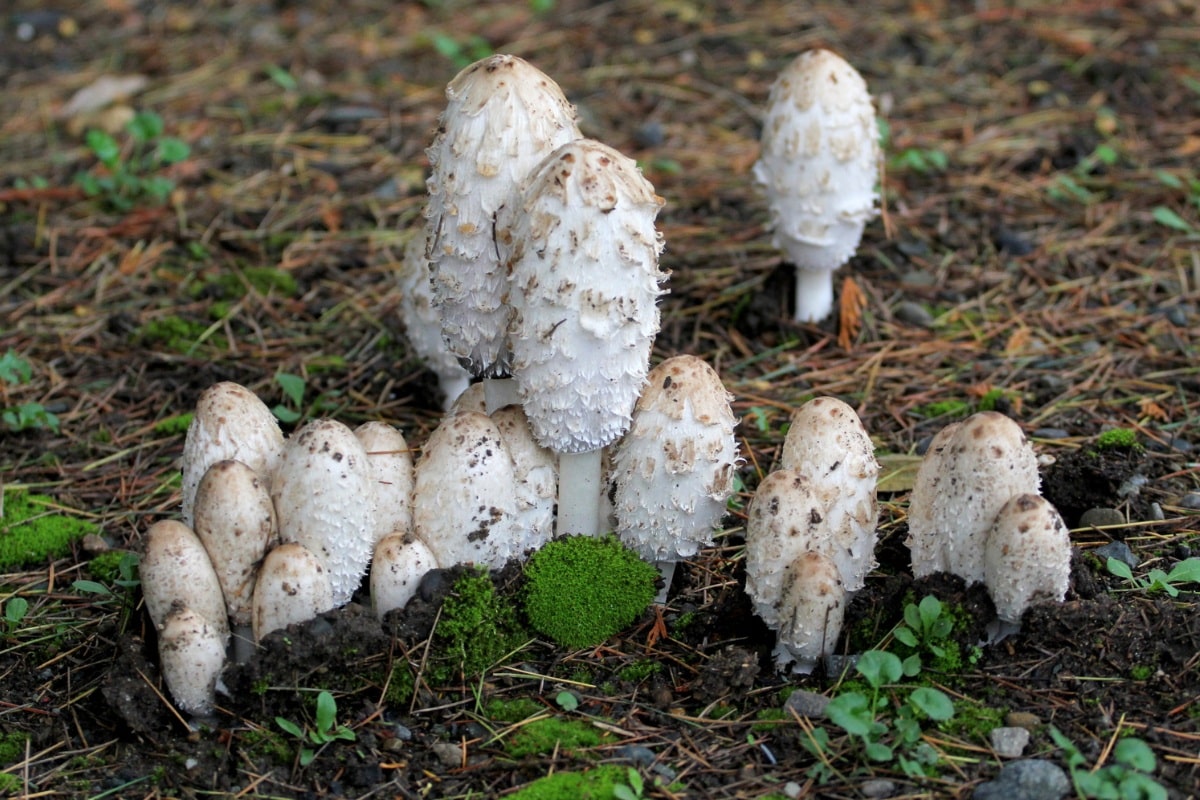
Shaggy Manes
Shaggy manes pop up in spring after rain in open and disturbed areas. They are a great edibles species, but have a very short harvest window. The clock starts running as soon as they emerge because they will turn to black ink quickly. If you see these, harvest them immediately, and plan on cooking them the same day, too.
Where to look: Disturbed ground and landscaped areas. Look along trail edges, roadsides, and in parks after spring rain.
Pacific Northwest (Washington, Oregon, Northern California)
The Pacific Northwest has the most species diversity of any region. Many mushrooms grow in spring, including morels, oysters, puffballs, black trumpets, king boletes, and shaggy manes.
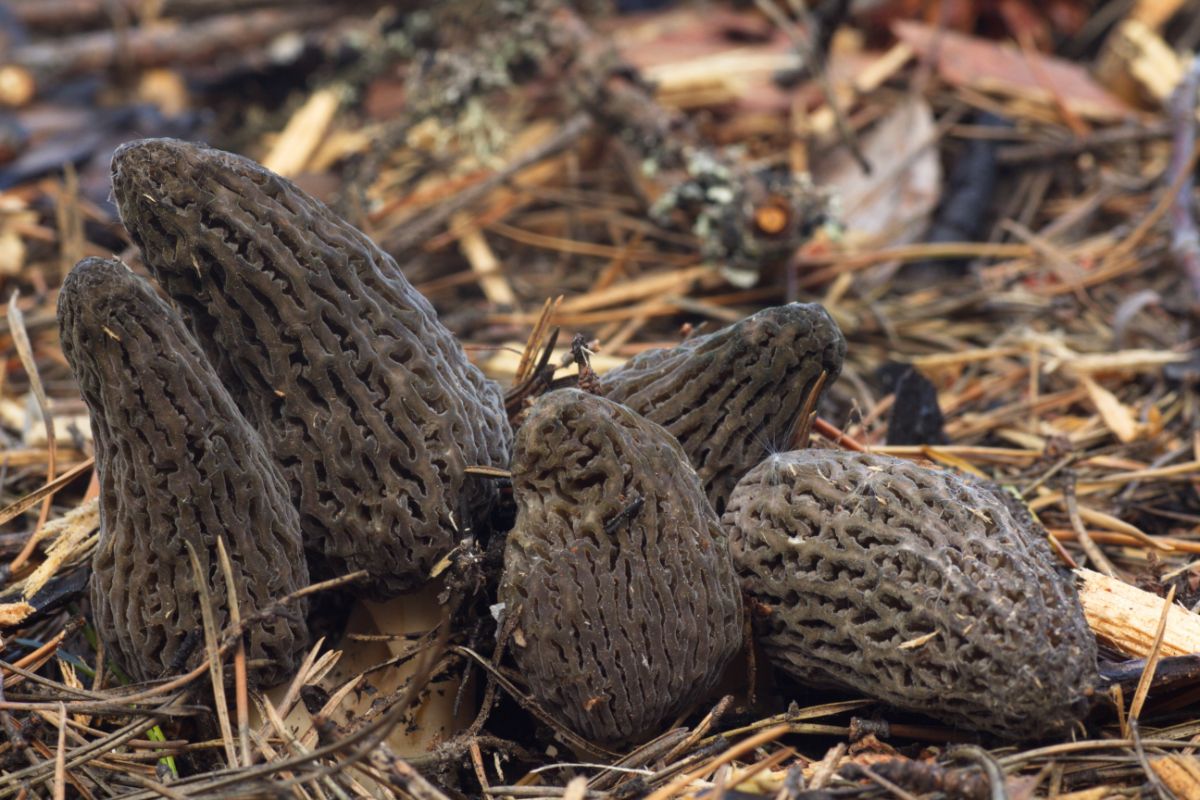
Morels
Morel season starts at lower elevations in mid-to-late March, and then moves to higher elevations. Morels can still be found in July at higher sites. There are four species of black morels that grow exclusively in burned-out conifer forests here. They fruit in the spring after a fire and often for several years afterward. You can follow their progression at The Morel Report.
Where to look: Burn sites in conifer forests, around oaks, Douglas fir, ponderosa pine, Pacific madrone, and cottonwood river bottoms. Start at low elevations and follow snowmelt uphill as the season progresses.
→ [Full morel identification guide]
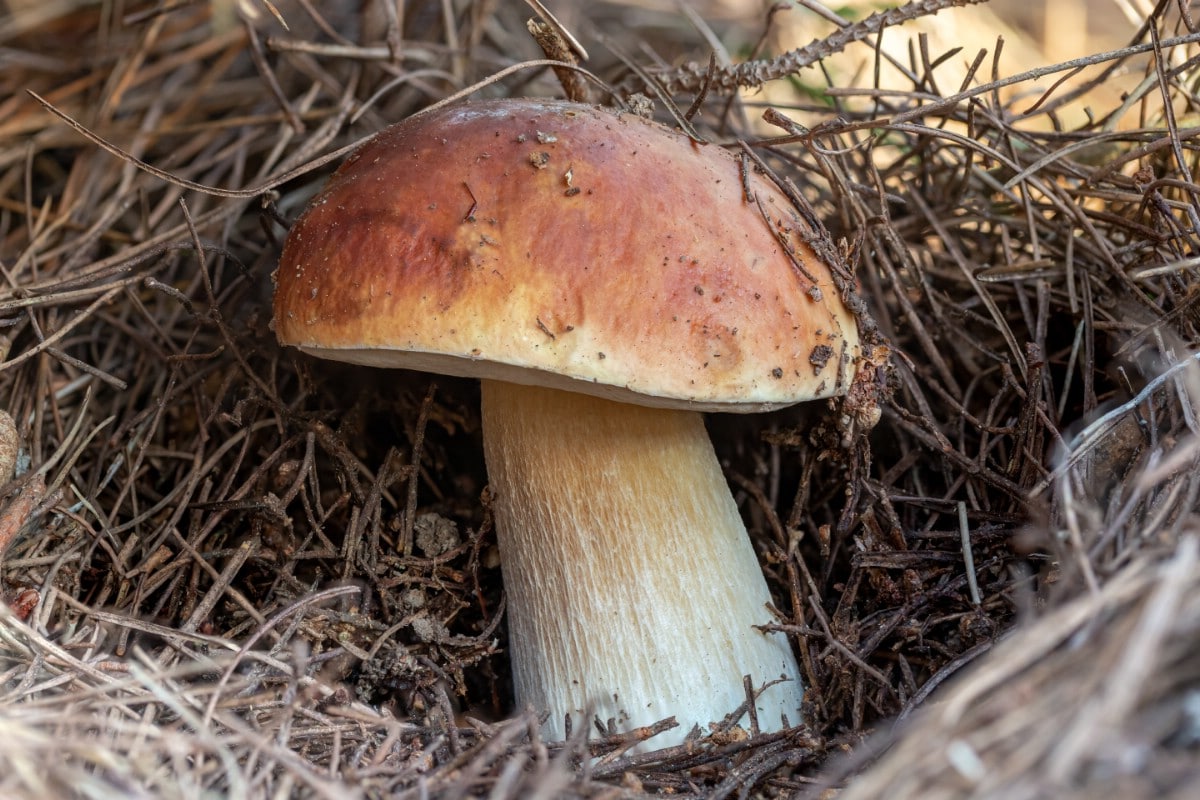
Spring King Bolete
The spring king bolete only fruits in California and the Pacific Northwest. It has a mild, nutty flavor, like the regular king bolete, and a firm texture. It fruits in mountain conifer forests, and its growth depends on snowmelt and spring rain.
Where to look: Mountain conifer forests of the Cascades and Sierras. Look at snowmelt edges and recently thawed ground.
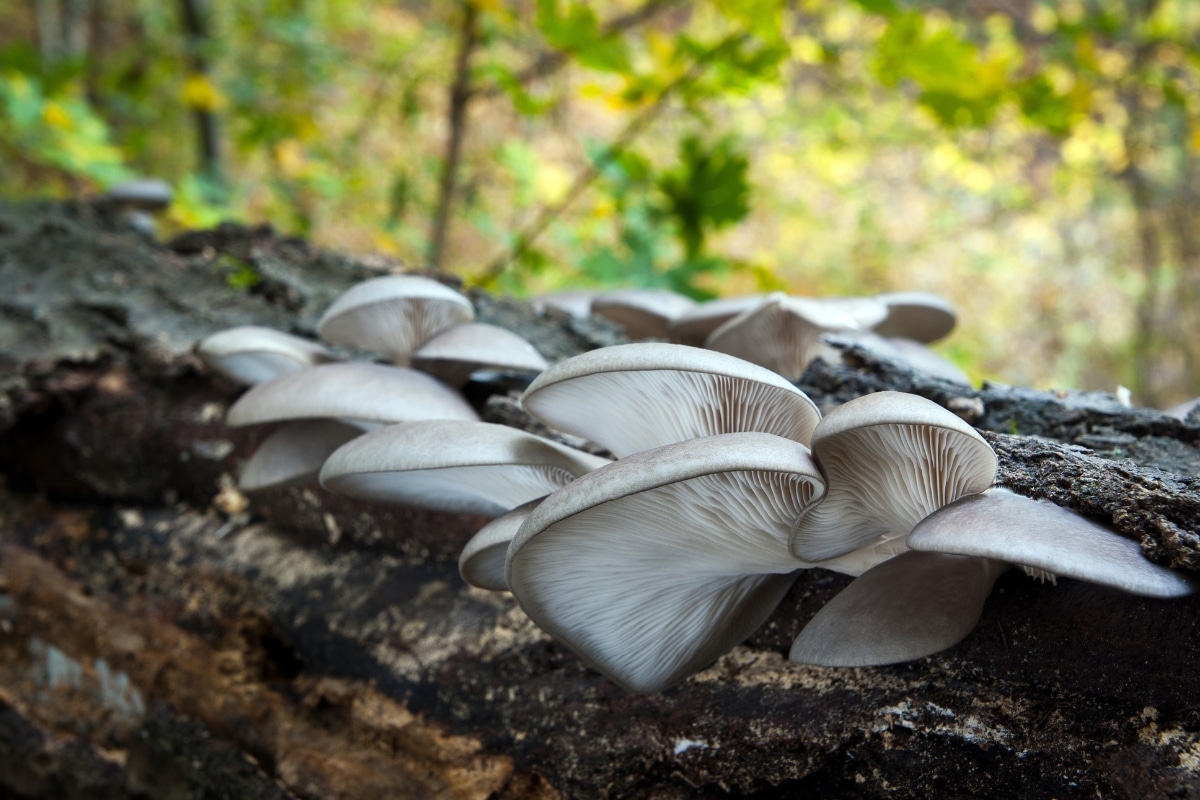
Oysters
Oyster mushrooms of several species grow in the PNW at different times. The gray oyster has been fruiting all winter and continues into early spring. The aspen oyster, known as the spring oyster, fruits primarily on quaking aspen in the spring. The phoenix oyster starts appearing as the weather warms, fruiting from mid-April through September.
Where to look: Gray oyster: dead cottonwood and deciduous hardwoods. Aspen oyster: quaking aspen and cottonwood. Phoenix oyster: dead hardwoods.
→ [Full oyster mushroom guide]
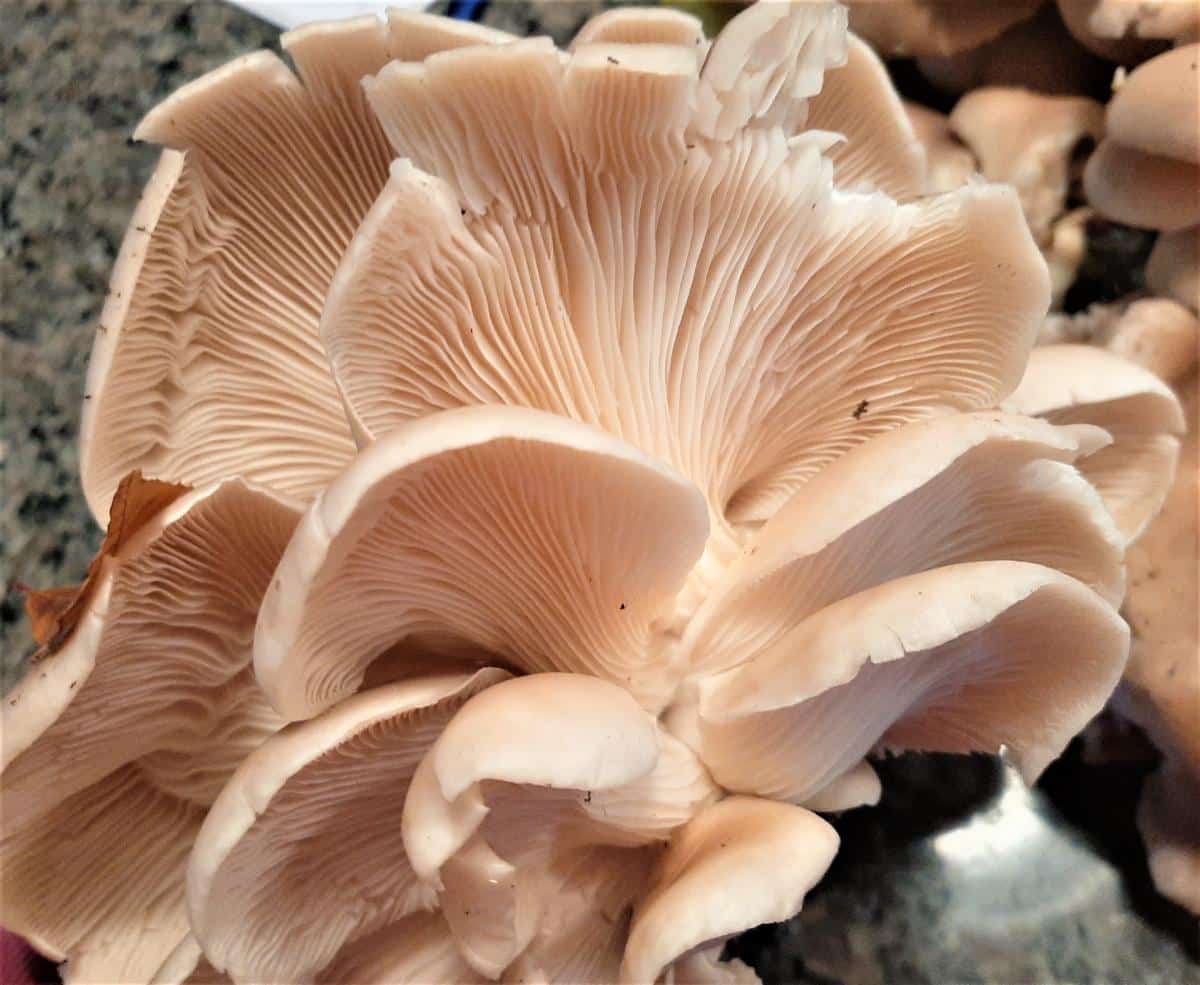
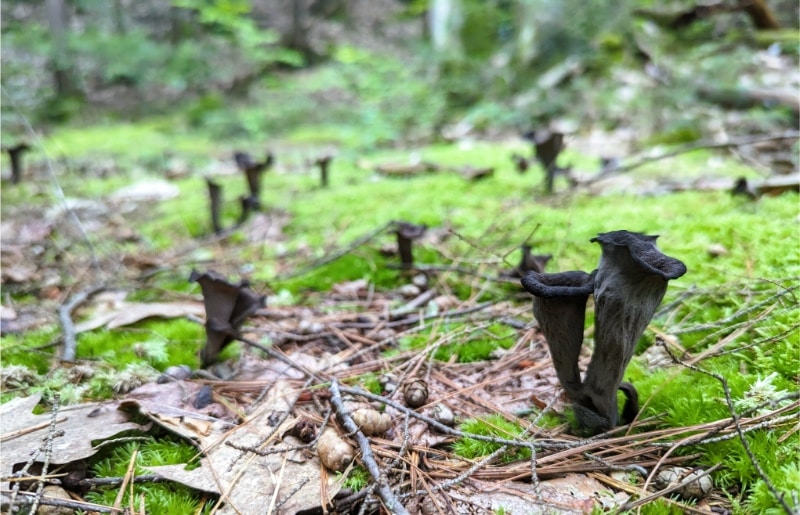
Black Trumpets
Black trumpets are still worth searching for in early spring on the West Coast. The prime season runs through winter, but they fruit into early spring and may be around until March. They grow in large groups on the ground and can be tricky to spot because they are so dark colored.
Where to look: Mixed woodland floors, especially under oaks. Look carefully and slowly, as they are very hard to see against the duff.
→ [Full black trumpet identification guide]
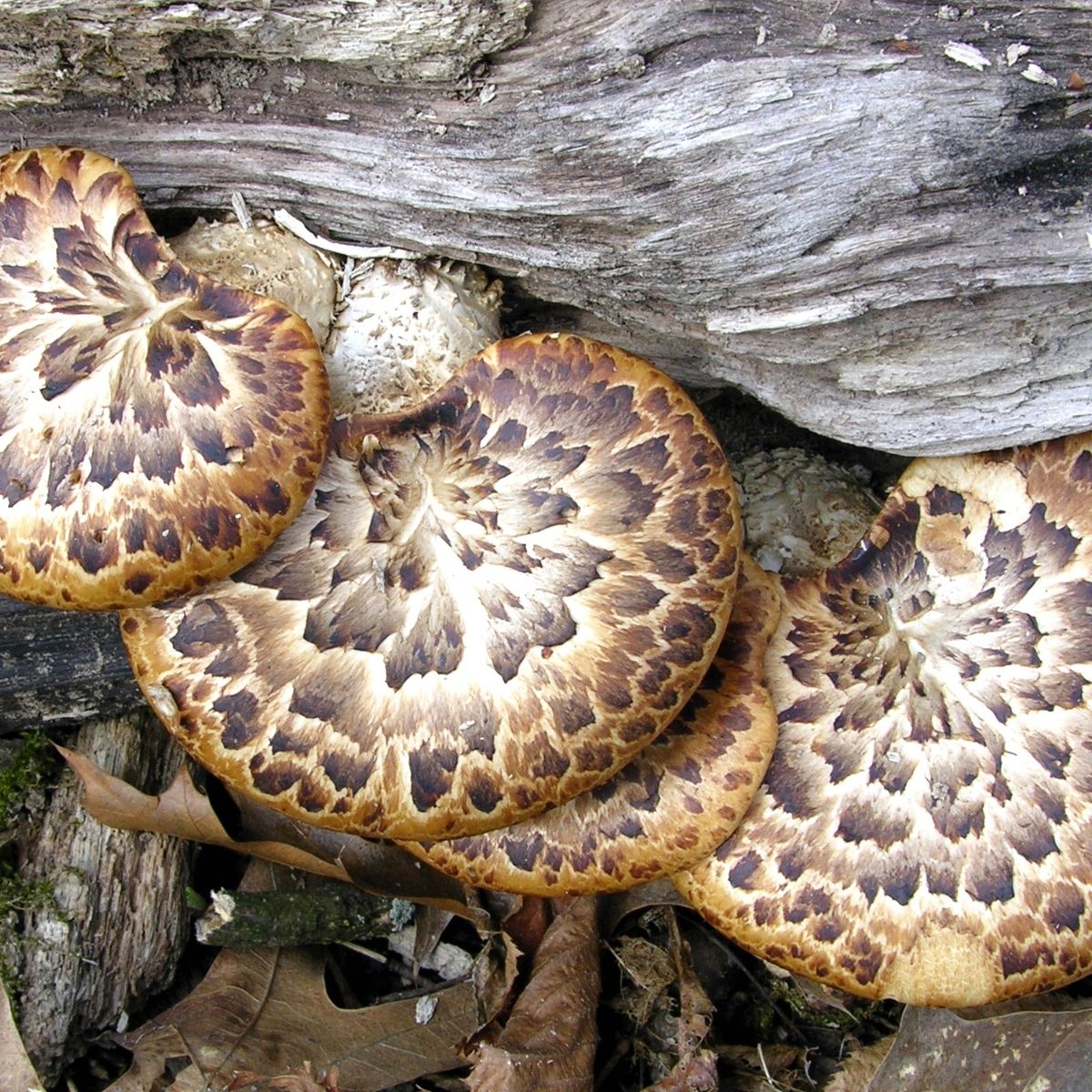
Dryad’s Saddle
Dryad’s saddle grows on dead elm, box elder, and maple in the Pacific Northwest. It is less commonly foraged here than in the Midwest and East because of the richer alternatives available, but it is present and edible when young. Harvest only the young specimens that are still easy to slice through. When they mature, they get very tough.
Where to look: Dead and dying elm, box elder, and maple trees. It returns to the same spot year after year.
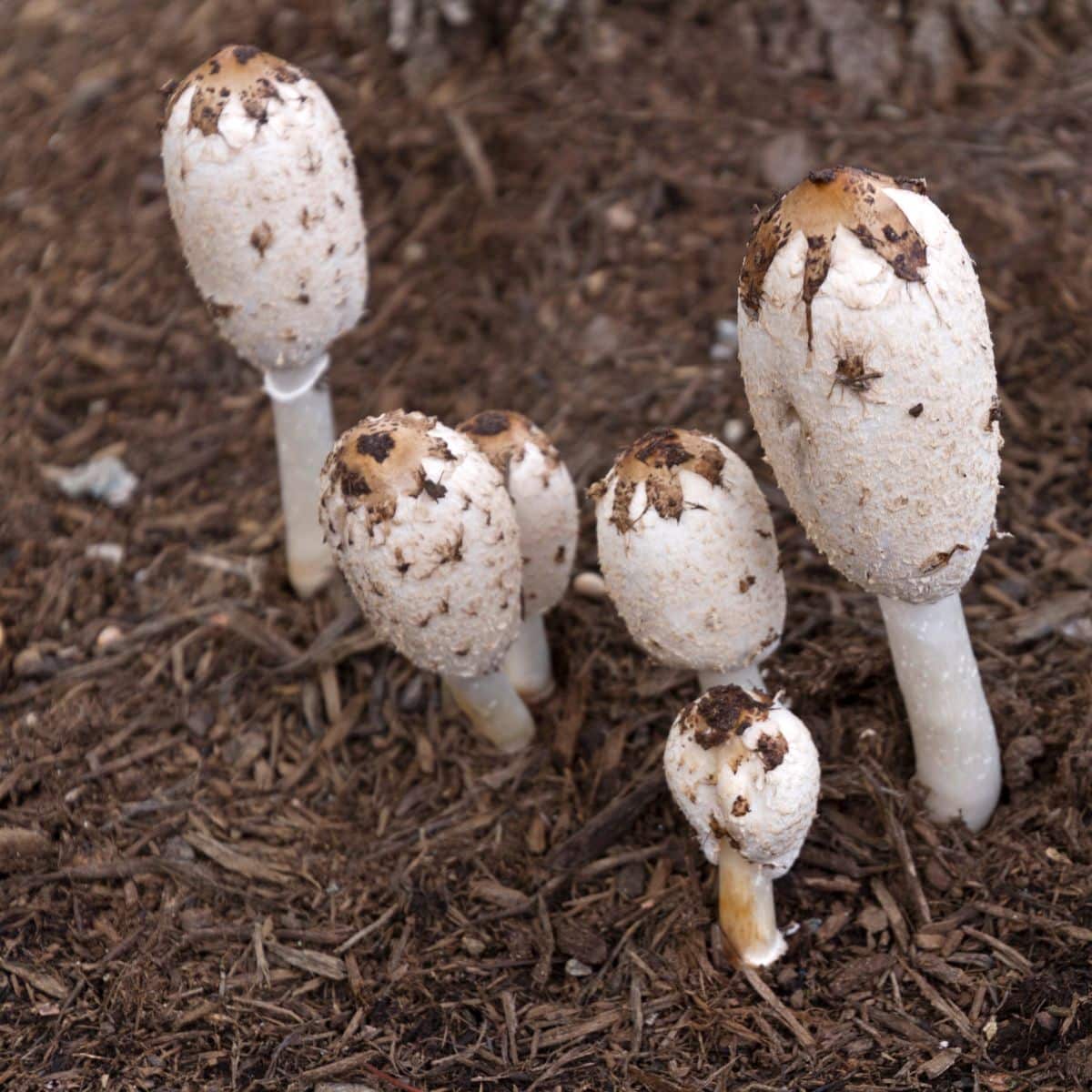
Shaggy Manes
Shaggy manes fruit in the spring after heavy rains. They grow in disturbed areas and open ground and are common in lawns, meadows, and along roadsides. The harvesting time for these mushrooms is very short. Basically, if you see them, pick them immediately and plan on cooking them the same day. They turn into a black inky gooey mess very quickly.
Where to look: Disturbed ground, compacted trail edges, lawns, and roadsides. Not found in the deep forest.
Puffballs
Puffballs appear at the tail end of spring, between May and June. There are two sculpted species that are the most common:
- Calbovista subsculpta – blunt pyramid-shaped scales
- Calvatia sculpta – pointed pyramid-shaped warts.
Both of these species grow with conifers. They have little flavor on their own but take on the flavor of anything they are cooked with.
Where to look: With conifers in mountain areas. Look at snowmelt sites and forest clearings from May onward.
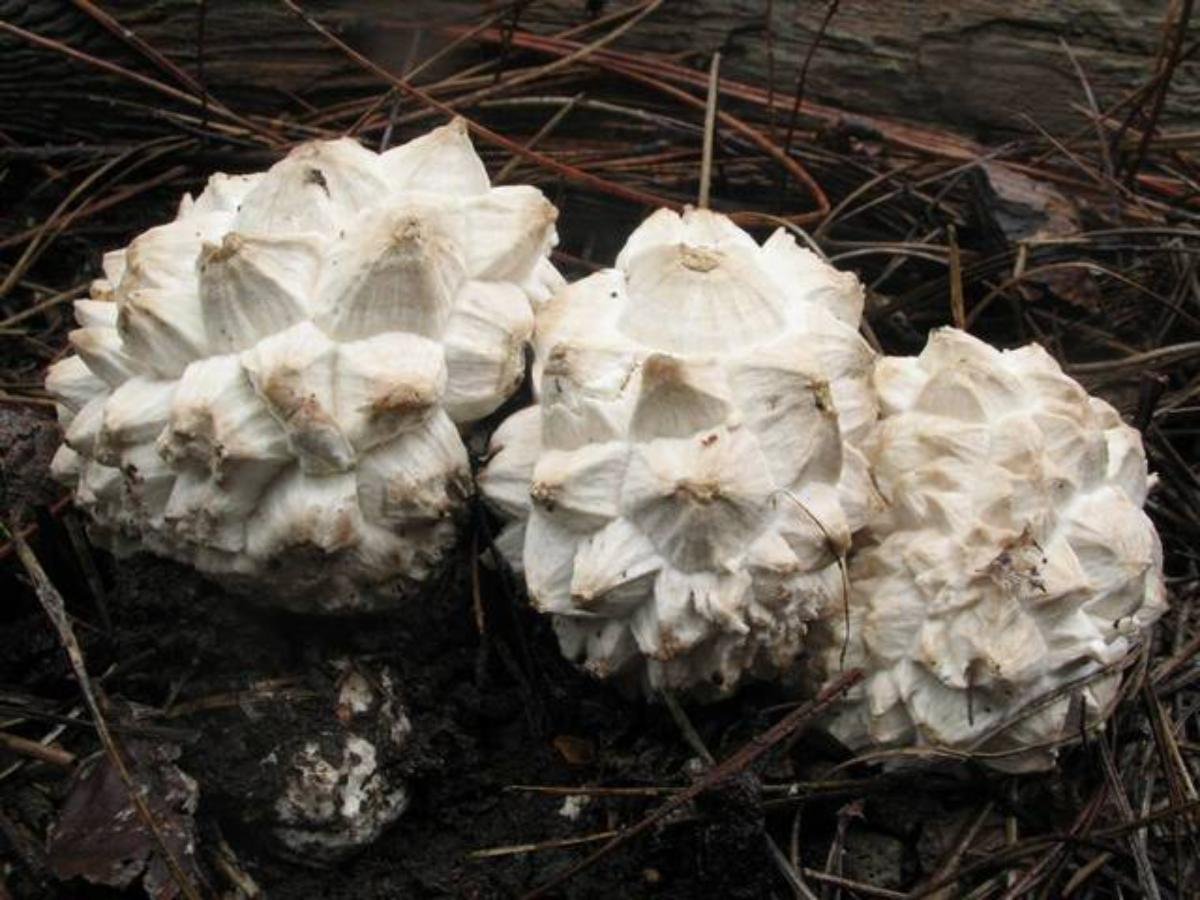
Calvatia sculpta by Byrain on Mushroom Observer
Shaggy Parasol
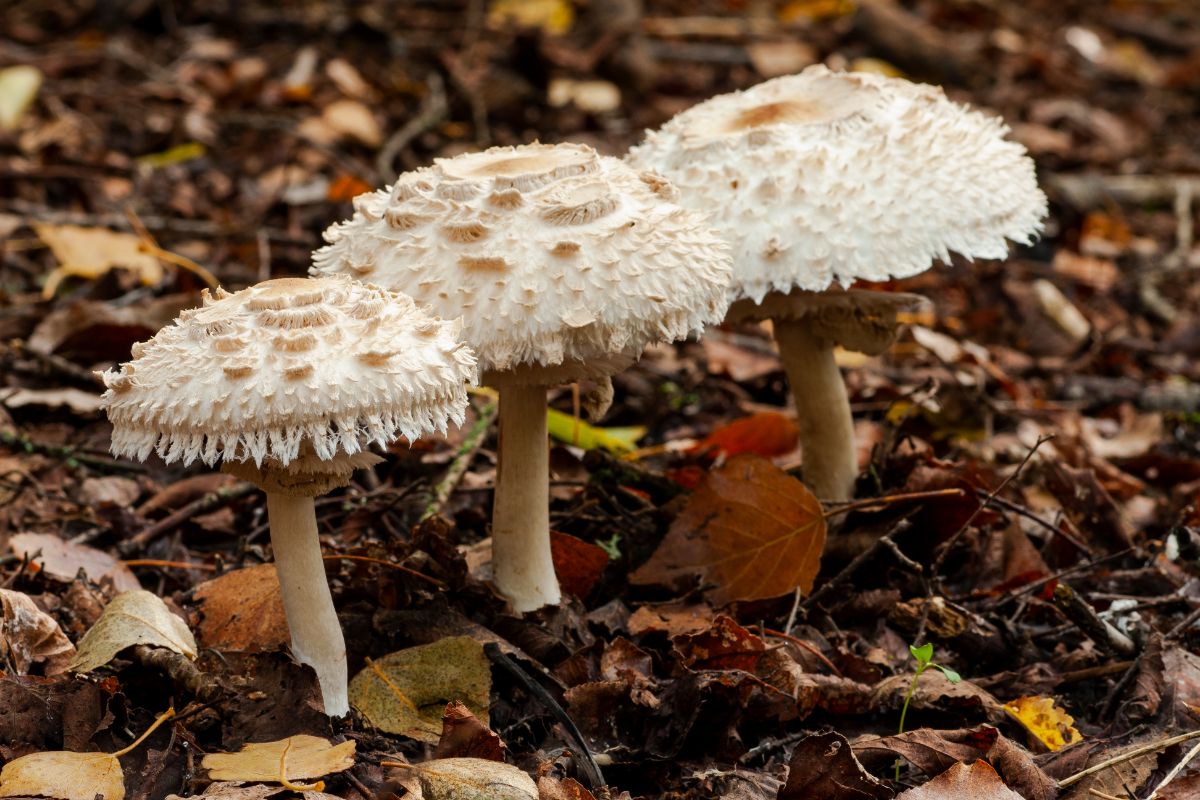
The shaggy parasol fruits from April through June in open, grassy areas. It gets really large, sometimes reaching 8 inches across. The cap is white with brown scales, and the overall look is of a big, shaggy mushroom umbrella. It has a toxic lookalike, the green-spored parasol, so be very mindful when harvesting this one. Do a spore print to be sure.
Where to look: Meadows, fields, lawns, and gardens. It grows in open and disturbed spaces, not in dense forest. It often forms fairy rings.
Prince Agaricus
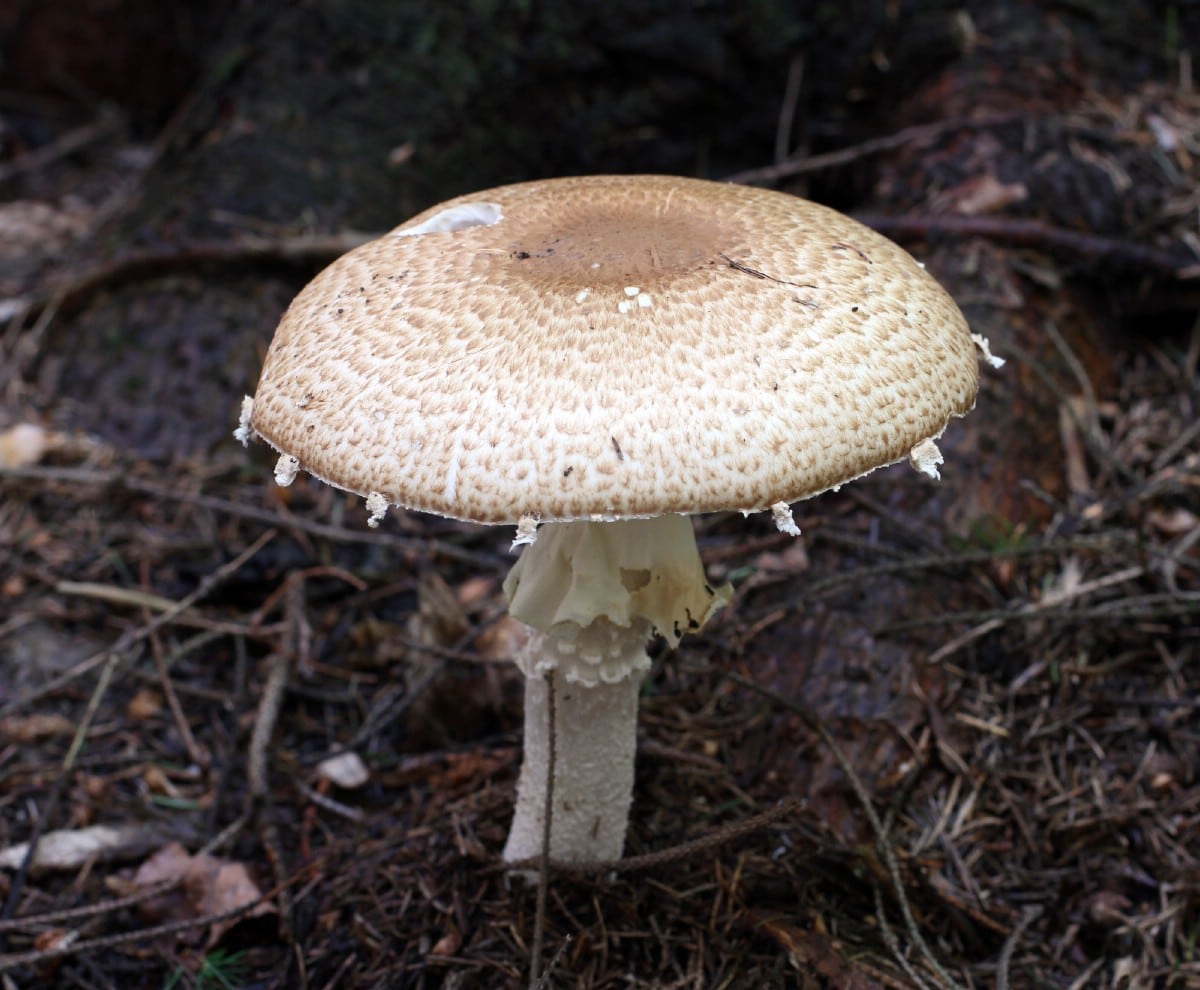
Prince agaricus is a large, gilled mushroom with a distinctive sweet marzipan-almond scent that makes it hard to miss and easy to confirm. It fruits in May and June before the weather gets too hot. The caps can reach up to 14 inches wide and are white with dark brown scales. The almond scent fades when the mushrooms are cooked, and they are dense and meaty.
Where to look: Around conifer trees in disturbed urban and suburban areas. Parks, forest edges, and roadsides. It is rare to find it in the deep forest.
→ [Full prince agaricus guide]
When to Go Out Foraging in Spring
The best time to go out looking for mushrooms at any time of year is a few days after it rains. Mushroom growth is triggered by moisture, and the best foraging happens two to three days after rainfall. In spring, this is especially true. If your region is having a dry spring, chances are the foraging is not going to be great.
When it comes to deciding when to go out, the soil temperature is more important than the actual calendar date, particularly for morels. Once the ground reaches around 50 degrees F consistently, the mushrooms will begin to fruit. A soil thermometer is a simple and inexpensive investment, especially if you’re determined to find morels. If the overnight temperature drops below freezing, things slow down considerably.
Learning when mushrooms grow in spring takes a lifetime because it is constantly changing. The best practice is to take notes every year, including the year’s weather conditions, what mushrooms were found, and at what time. The reality is, though, that every year will be different, even if only slightly, because the weather is never exactly consistent. So, you need to pay attention to the weather, soil temperatures, rainfall, and what other mushrooms are fruiting.

Leave a Reply