
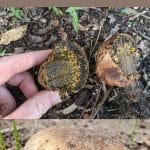
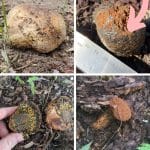
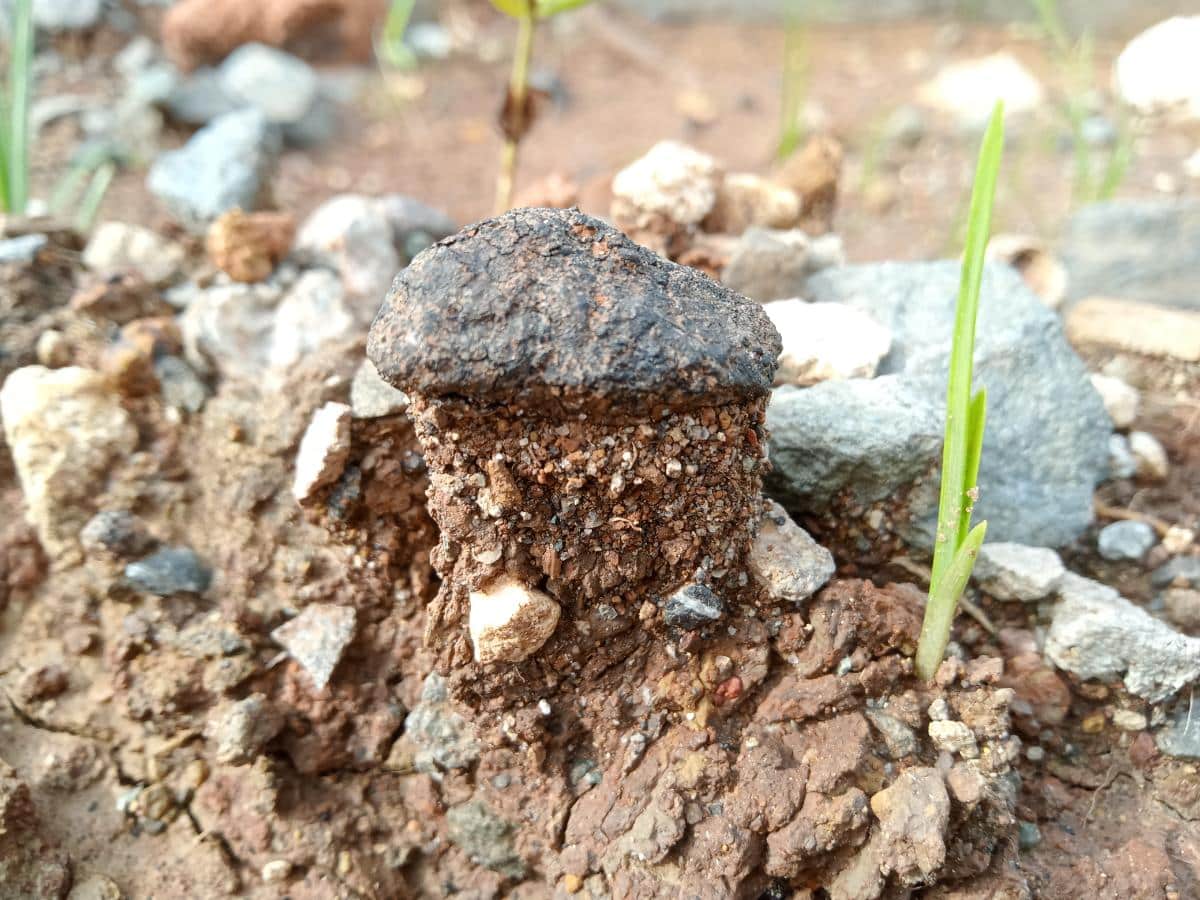
Dead man’s foot (Pisolithus arrhizus) is an ungainly, odd-looking thing that erupts from the ground with enough force to crack paved surfaces. It’s dark and lumpy and easily mistaken for a pile of animal poop or a rock or a stump — it does not look like a mushroom at all (in the traditional sense).
Because of its bizarre look, it often gets overlooked, even though it is most often found on roadsides, in gravel, on sandy ground, in ditches, and on lawns, and lots of other places where people are also common. These are also the places dogs use as bathrooms, so many a mushroom might get passed by because it could actually be poop.
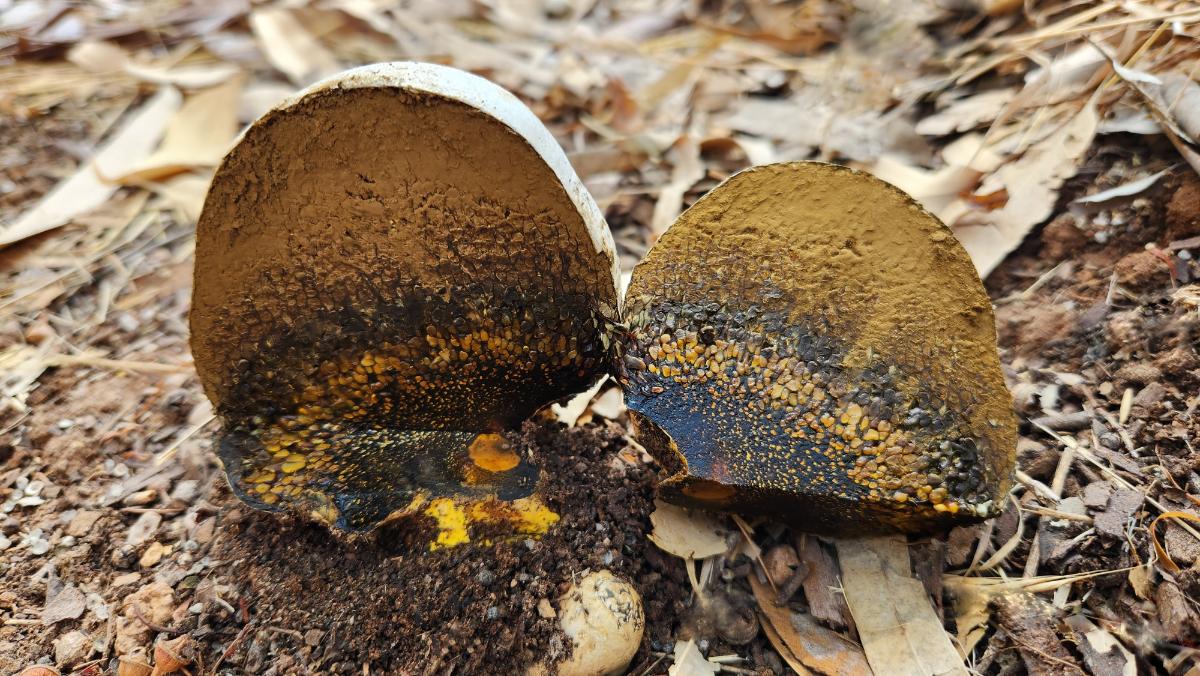
Dead man’s foot has been given several common names, all built around how bad it looks. Many say it’s ugly. Ugly and weird on the outside, and also incredibly weird and a bit gross on the inside. When you cut one open at the right stage, the inside is a mass of pea-sized spore sacs embedded in black tar-like gel. Mycologist David Arora described the interior as looking like Rice Krispies in tar. We think that is a kind description as opposed to what we think it looks like…
Dead man’s foot isn’t thought to be edible (not that you’d want to try eating it anyway), but it might have medicinal properties, and it is great for dyeing textiles. It also has a well-established role in commercial forestry and land restoration.
- Scientific Name: Pisolithus arrhizus aka Pisolithus tinctorius aka Pisolithus arenarius
- Common Names: dyeball, dog turd fungus, horse dung fungus, bohemian truffle
- Habitat: On the ground around specific trees
- Edibility: Unknown
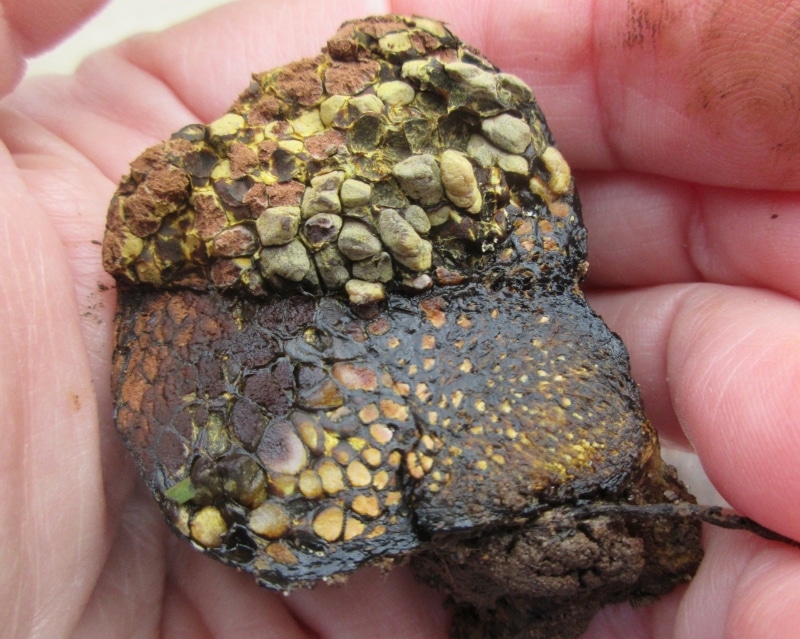
Pisolithus arhizus by weed lady on Mushroom Observer
Jump to:
All About Dead Man’s Foot Fungus
The dead man’s foot goes by several names, including dyeball, dog turd fungus, horse dung fungus, and bohemian truffle. In South Africa, foragers call it Perdebal, an Afrikaans term meaning horse ball or horse dung. The name bohemian truffle comes from parts of Europe where the young fruiting bodies were historically used for flavoring, similar to truffles.
This horse poop-looking, dead man’s foot resembling fungus starts out looking like a walnut- to baseball-sized puffball. Then, it stretches and distorts as it matures into something closer to a dusty stump sticking out of the ground. It’s strong enough to crack asphalt, and it will — fruiting bodies regularly erupt through pavement. They generate enough internal pressure to crack asphalt and push through road surfaces and sidewalk joints.
The genus name Pisolithus comes from two Greek words: piso, meaning pea, and lithos, meaning stone — a reference to the pea-shaped spore sacs inside the fungus. The species name arrhizus means ‘having no roots,’ from the Greek a- (without) and rhiza (root). Together, the name means something close to ‘rootless pea-stone.’
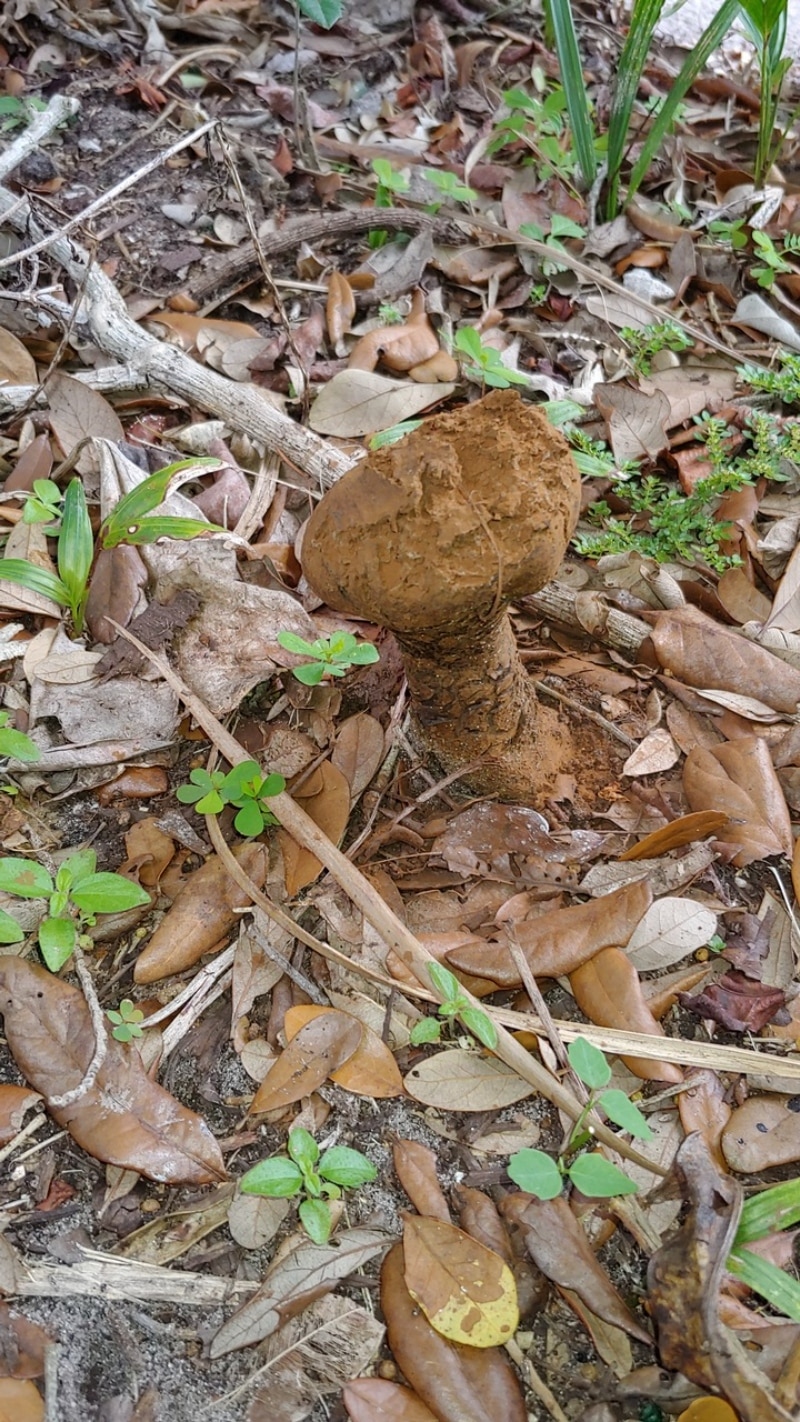
Pisolithus arhizus by DraftPort on Mushroom Observer
The dead man’s foot was first described to science in 1786 by Italian mycologist Giovanni Antonio Scopoli. He classified it as a puffball and named it Lycoperdon arrizon. In 1801, Christiaan Hendrik Persoon moved it into the earthball genus Scleroderma. American mycologists Coker and Couch renamed it Pisolithus tinctorius in 1928; the name tinctorius was a reference to its use in dyeing fabric. Finally, in 1959, German mycologist Stephan Rauschert gave it the current name, Pisolithus arrhizus. Many field guides still list it as P. tinctorius, and both names remain in wide use – you may see either name in field guides.
Other synonyms include Scleroderma tinctorium, Lycoperdon capsuliferum, Polysaccum olivaceum, and Polysaccum pisocarpium, among others.
Recent research has added another layer of complexity to this fungus. Studies by Martin et al. (2002) and Lebel et al. (2018) suggest that North American specimens widely called P. arrhizus may be more accurately named Pisolithus arenarius. It is thought that the true P. arrhizus (also spelled P. arhizus) is only in Europe, Africa, and Japan. Until DNA research on North American collections is complete, many sources continue using P. arrhizus or P. tinctorius for the American material, and this article follows that convention.
All the Pisolithus-type fungi found worldwide were once considered a single species until molecular research began untangling them. At least eleven distinct types have been identified. Some associate exclusively with one host plant — Cistus in the Mediterranean, Afzelia in Africa — while others, including the North American species, have a broad host range.
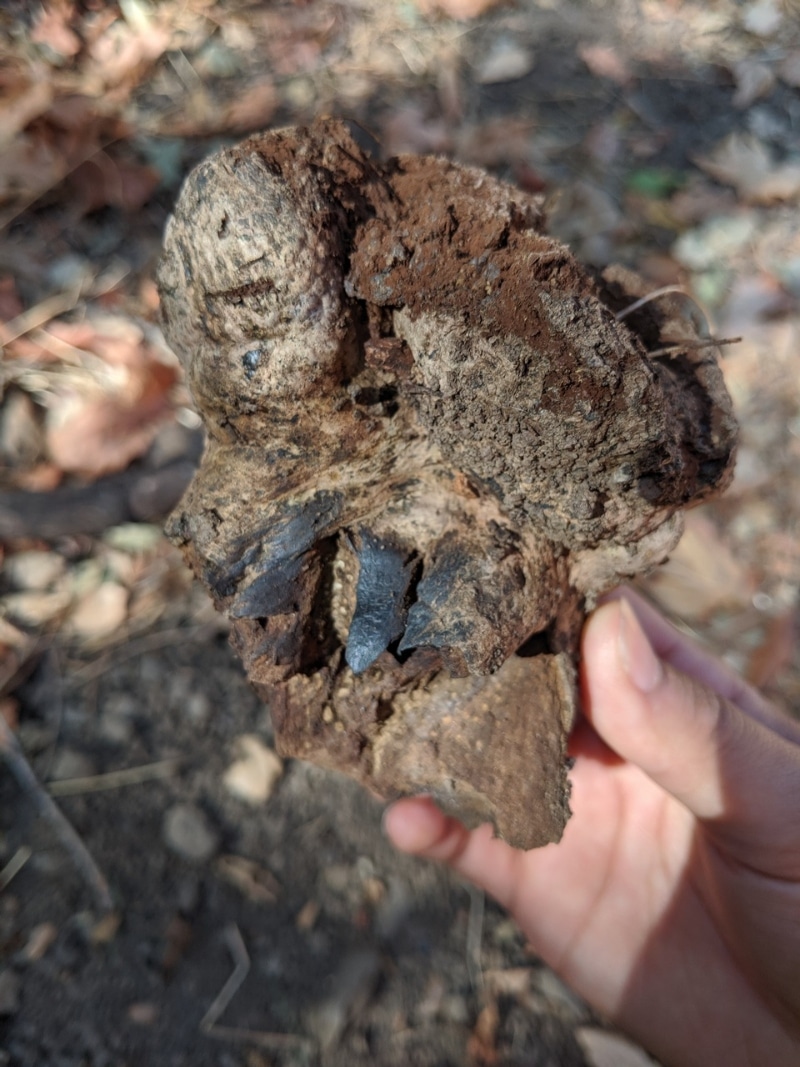
Pisolithus arhizus by Lynn on Mushroom Observer
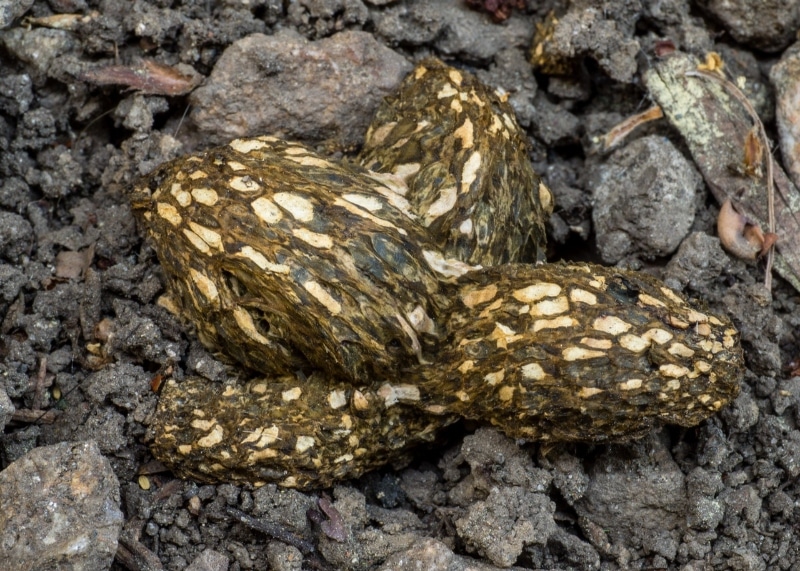
Pisolithus arhizus by ruzasava on Mushroom Observer
Dead Man’s Foot Identification Guide
Season
This species fruits in summer and fall. In warmer climates, it may also show up in winter.
Habitat
Dead man’s foot fungus is mycorrhizal, meaning it forms relationships with specific trees. It grows with pines, oaks, cedars, birch, Douglas-fir, hemlock, willow, poplar, and beech. It emerges from the ground, never from wood or on trees. Often, it appears alone, but it also grows in small groupings or is scattered around a similar area.
This species grows in poor, dry, disturbed soils. It is commonly found along roadsides, on gravel and sandy ground, in ditches, and on lawns. It can, and will, bust up through pavement in your driveway, along the sidewalk, or anywhere else it deems it wants to grow. It is a heavy-duty weightlifter!
In North America, it’s most common on the West Coast and in the Southeast. It has concentrations in coastal pine and oak habitats such as the New Jersey Pine Barrens, Cape Cod, and across Florida, Alabama, and South Carolina. The dead man’s foot also grows across southern Europe, as well as in Africa and Japan.
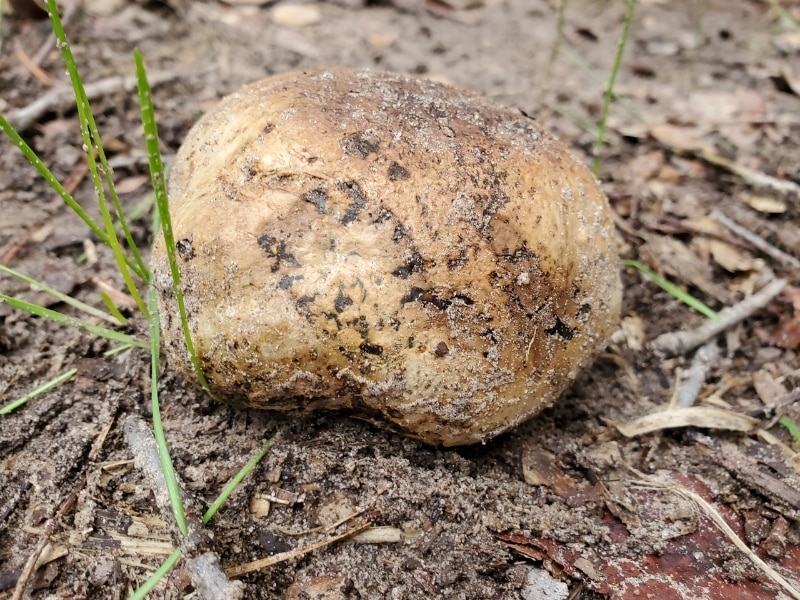
Pisolithus arhizus by memoriesofthepark on Mushroom Observer
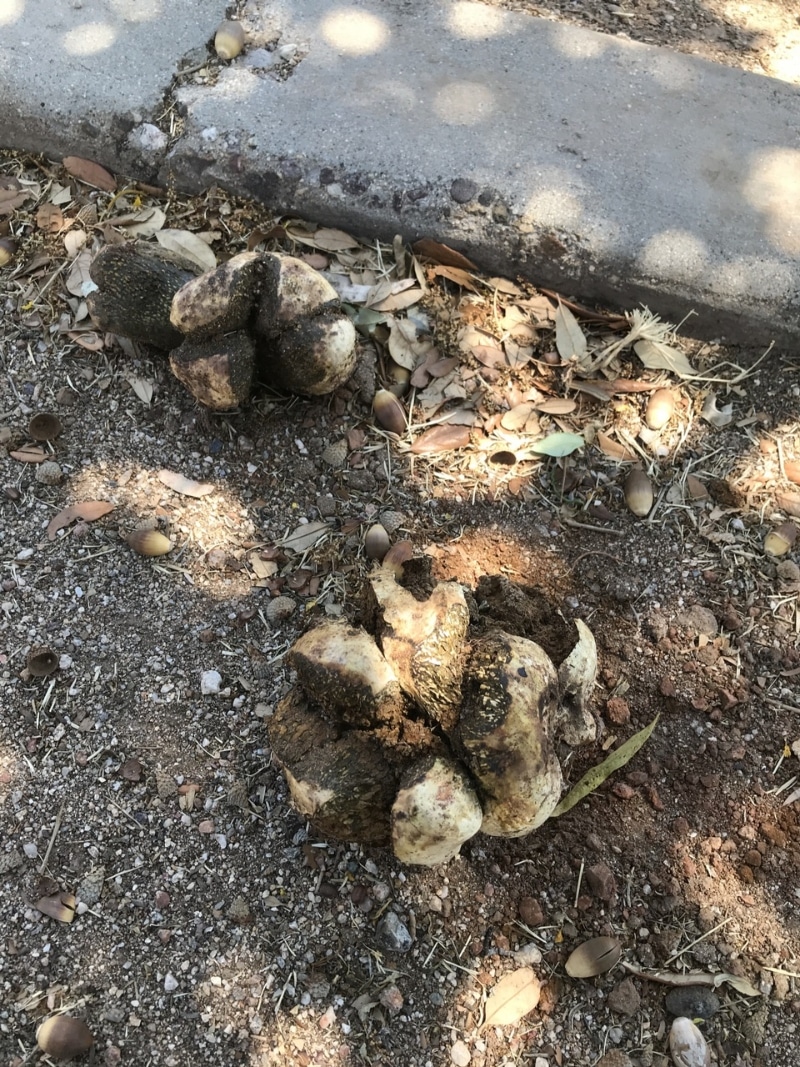
Pisolithus tinctorius by William Wimmer on Mushroom Observer
Identification
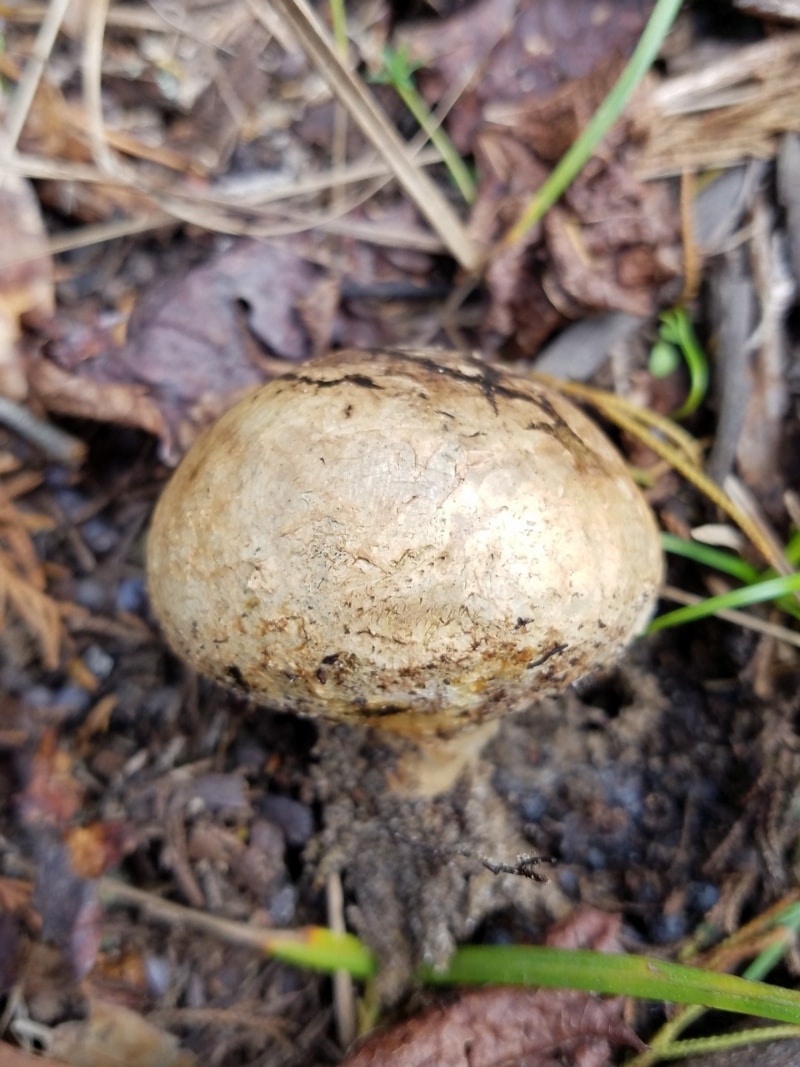
Dead man’s foot does not have a cap, stem, or gills. It grows as a ball, like a puffball. In fact, when it’s young, it looks a lot like a dark brown puffball. The fruiting body is 2 to 12 inches tall and 1.5 to 8 inches wide; it can get quite big.
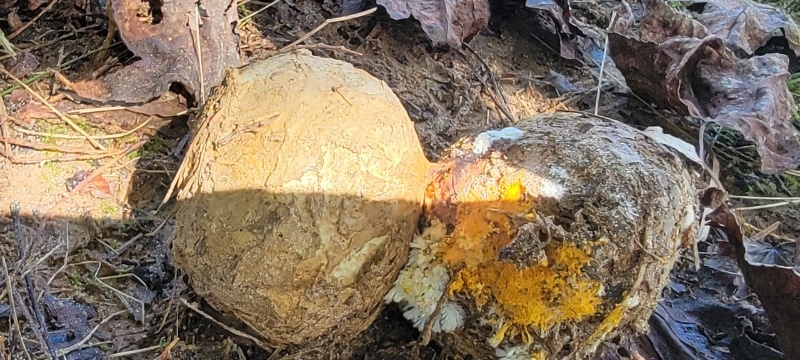
When the mushroom is young, it is round or club-shaped and has a thin outer skin that’s whitish, yellow-brown, or dull olive-brown. At this stage, it looks a lot like horse poop on the pavement or in the yard — dark brown, club-shaped, lying on the ground. The skin is very thin — thin enough to ooze black gel when it is squeezed. The young mushroom is firm, wet inside, and will stain your hands thoroughly.
The interior of the dead man’s foot fungus — called the gleba — is packed with pea-sized spore packages called peridioles. These spore packages are embedded in a black, tar-like gel when the mushroom is young. Near the base of the fungus, the spore packages are white or pale yellow. Higher up, they’re darker. If you cut one open at this early stage, the inside looks like small pale beads suspended in black liquid.
As the fungus matures, it stretches and distorts into shapes that have inspired the imagination of many a mycologist. The shape has been compared to a stump, a molar tooth, a spinning top, a dead man’s foot, and just an amorphous lump. There is a lot of variation in the form these fungi can take!
The top of the ball cracks open with age and releases a cinnamon-brown spore dust. As the interior loses its wetness, it turns completely dry inside, slowly. The decomposition starts at the top and works its way down as the interior breaks down. Old specimens can remain standing for months, slowly collapsing into a brown powder.
There’s no true stem. The base tapers into a thick, rooting structure that extends into the ground. There are yellow mycelial cords — rhizomorphs — that attach at the base and can often be easily seen.
Taste and Smell
This mushroom does not have a distinctive smell when young.
Flesh Color and Staining
The flesh at the base of the fungus is yellowish to brownish. The black gel inside the mushroom stains skin and clothing immediately on contact.
Spore Print
The spore print is cinnamon-brown.
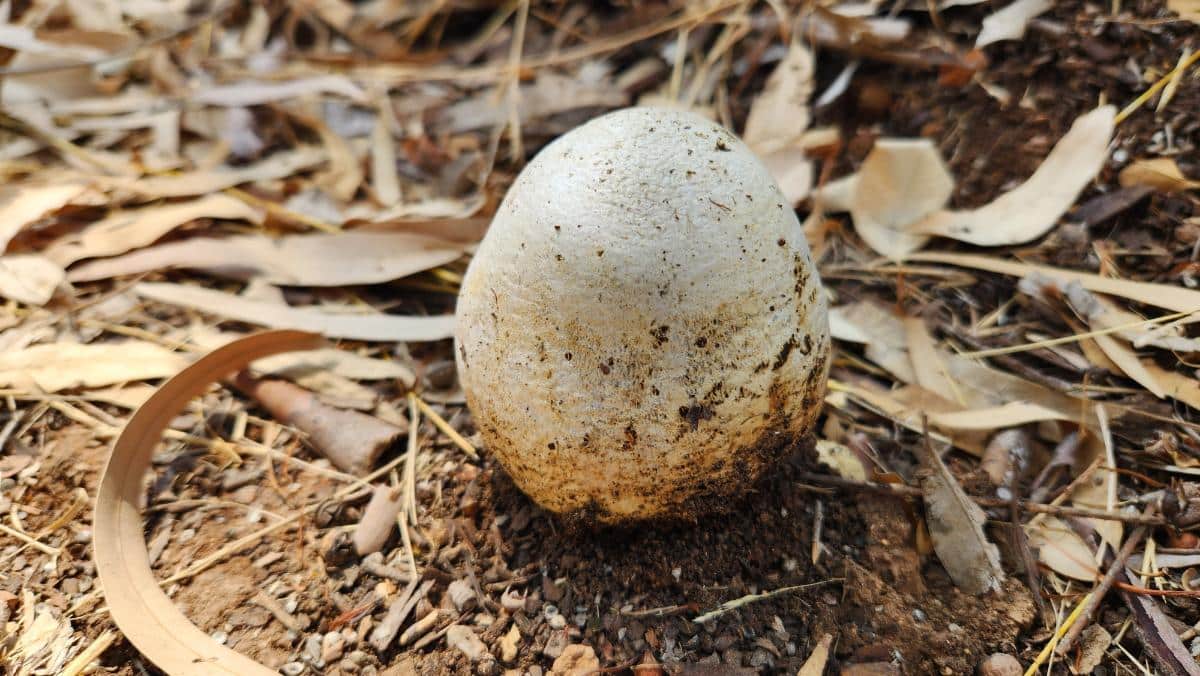
Pisolithus arenarius by Philly4071 on Mushroom Observer
Pisolithus arhizus by RayZ on Mushroom Observer
Dead Man’s Foot Lookalikes
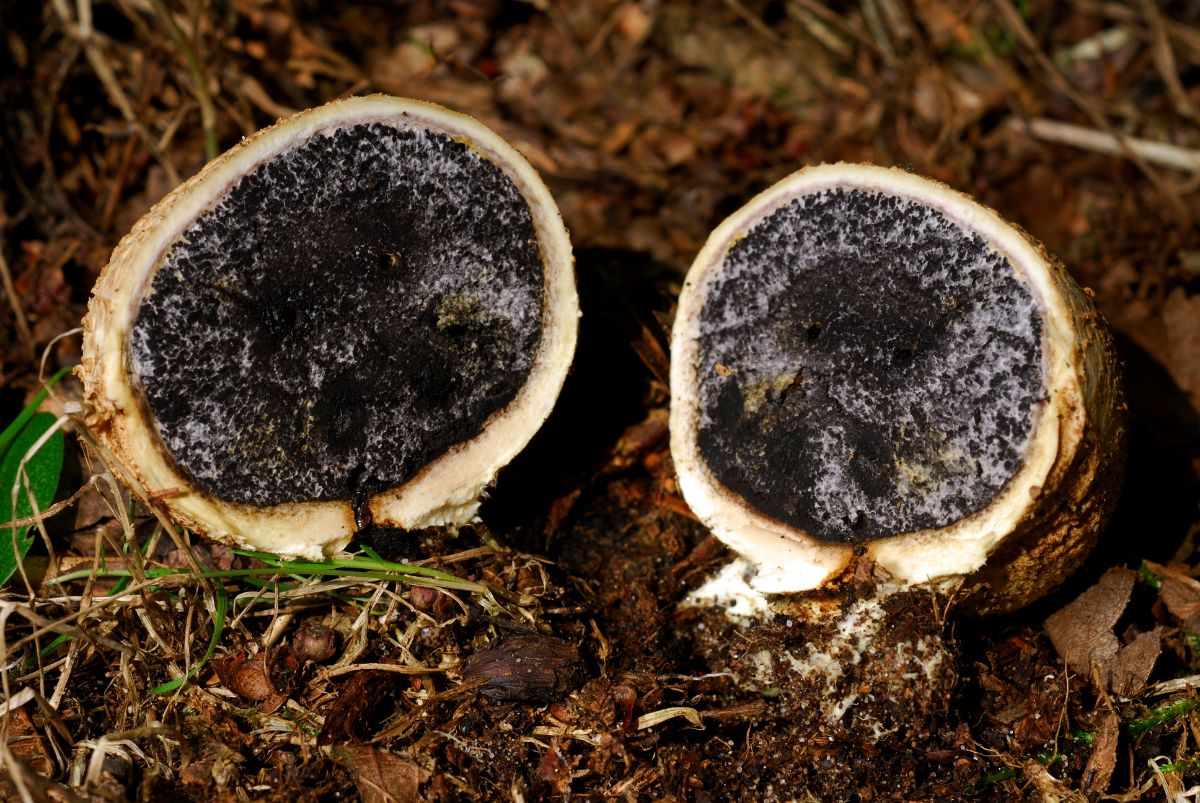
Earthballs (Scleroderma species)
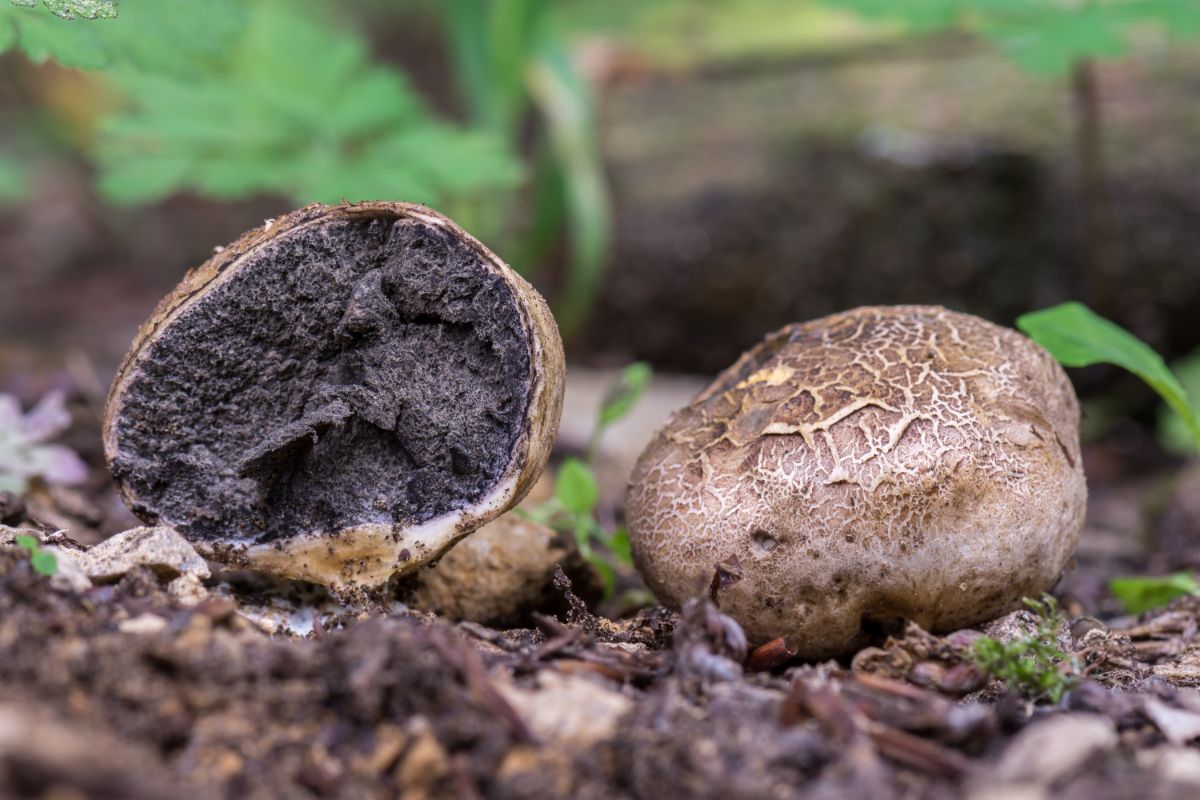
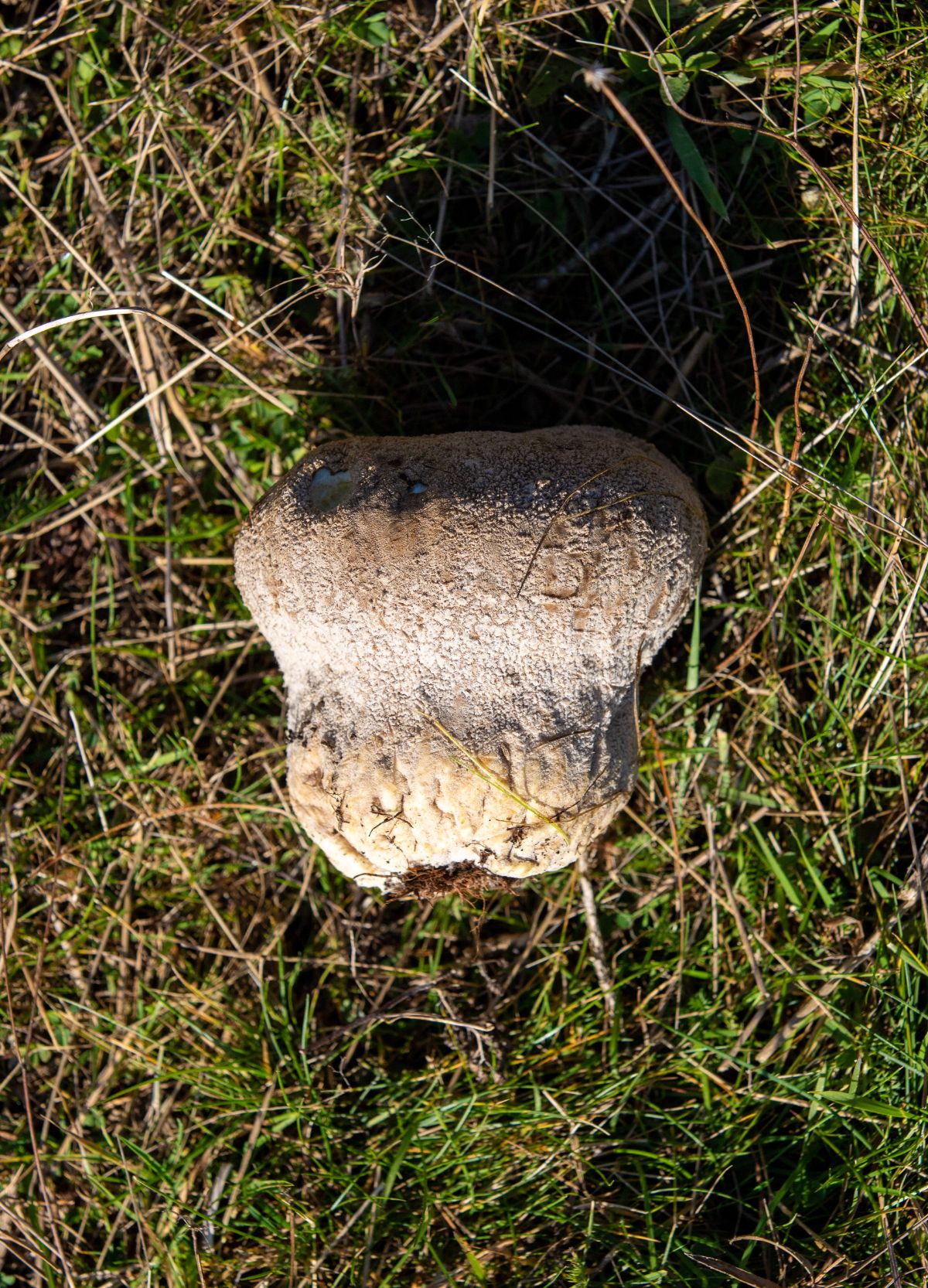
Earthballs are the most frequently confused species. Both of these fungi are rounded, like balls, and grow in disturbed ground. The key difference is their skin. Most earthballs have a thick, tough outer layer that is rough and warty and yellowish-brown to ochre in color. This is very different from the thin, smooth, dark skin of the dead man’s foot.
When you cut open an earthball, the interior turns purplish-black immediately; it’s solid rather than gel-filled with peridioles. There’s no tar, no beaded interior, no yellow mycelial cords at the base, and it doesn’t ooze when squeezed.
True puffballs (Calvatia and Lycoperdon species)
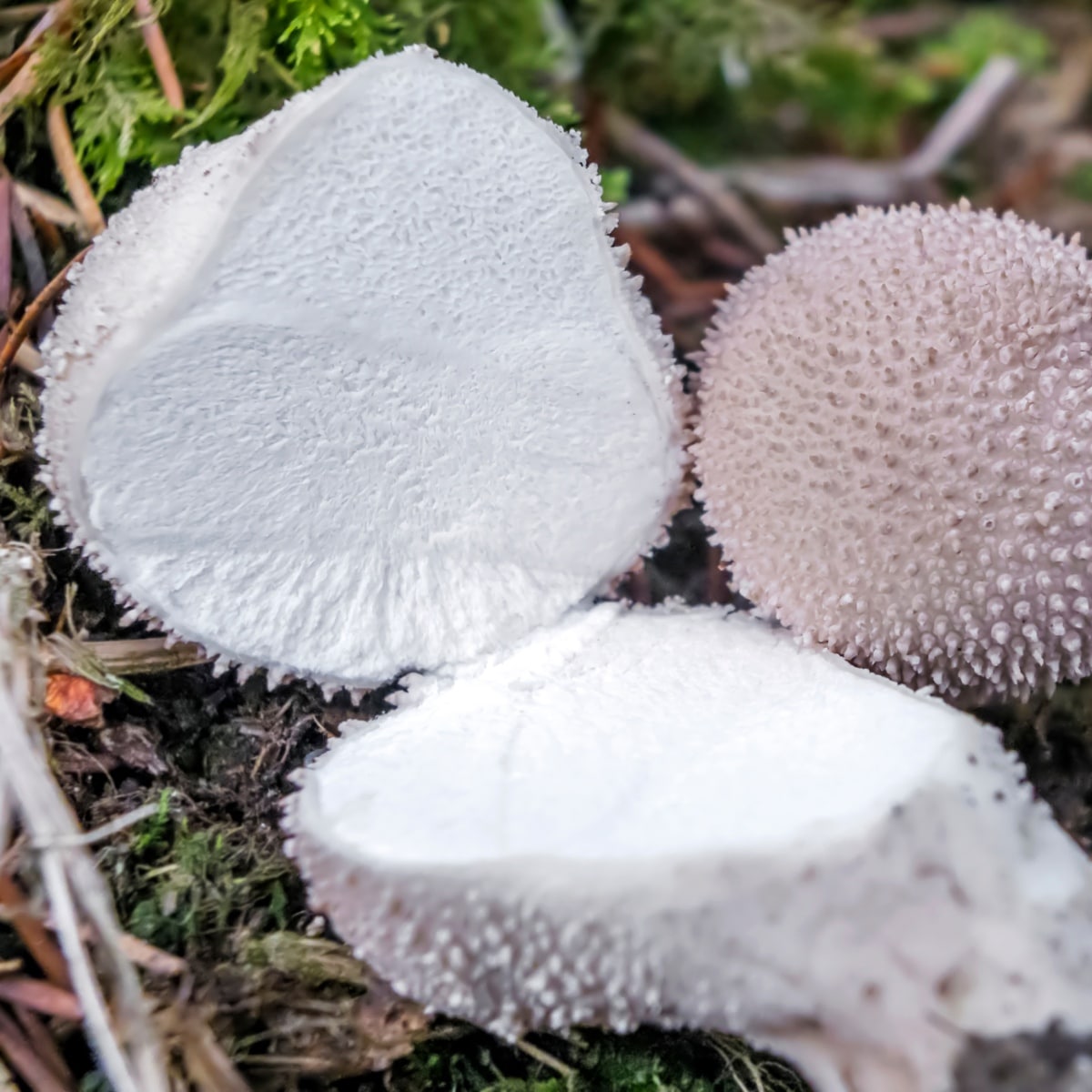
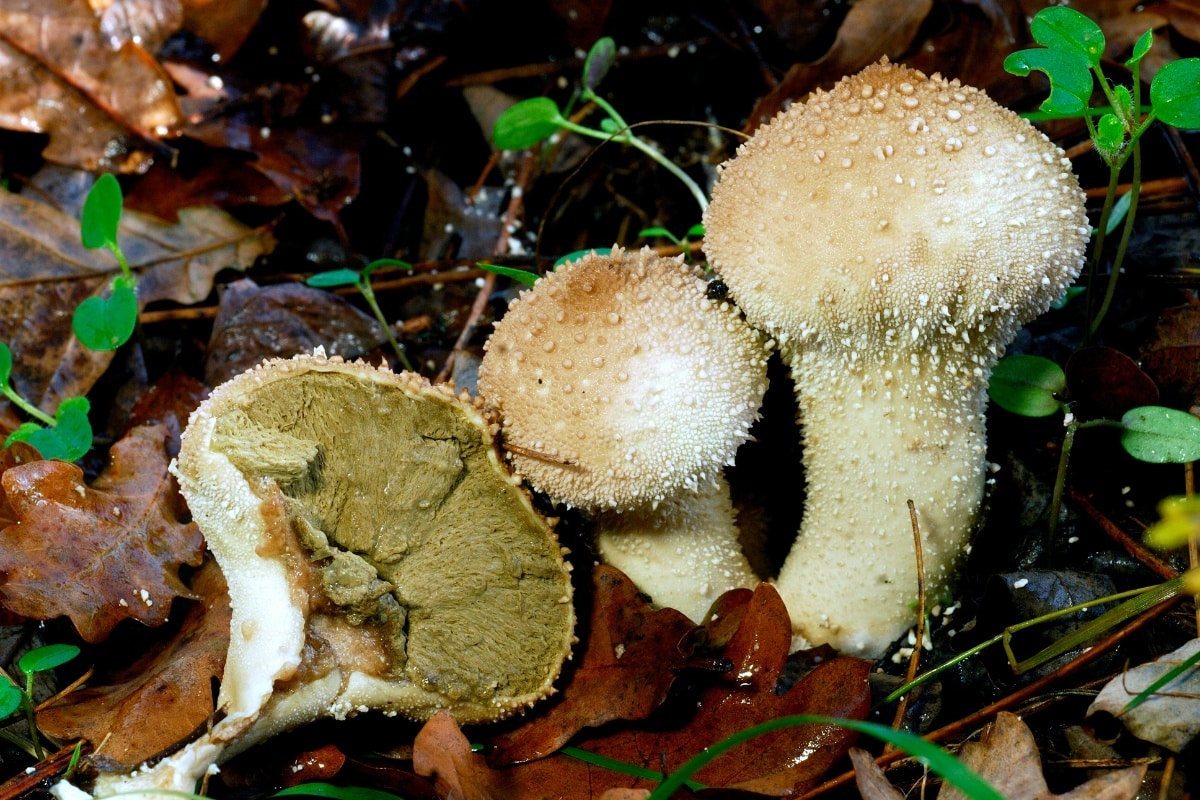
Young dead man’s foot can look like a puffball before it matures. True puffballs, though, have white to cream interiors when young. They look like marshmallows inside. There is no black tar gel, no peridioles, and the flesh is softer and thicker. Cut it open, and the difference is clear immediately.
Dead Man’s Foot Medicinal Uses
Dead Man’s Foot produces a triterpene compound called pisosterol. In 2004, a study found that pisosterol blocked the growth of seven tumor cells in lab tests. The strongest results were against leukemia and melanoma. A 2008 follow-up confirmed the effect in mice. Tumor growth was reduced by roughly 40% at the tested doses.
A 2020 study found that pisosterol stopped tumor cell growth and triggered cell death in brain cancer cells. The study also found, through animal testing, that the treatment negatively affected the liver and kidneys, though these effects were considered potentially reversible. Other research has looked at whether compounds from this fungus can fight bacteria and fungi.
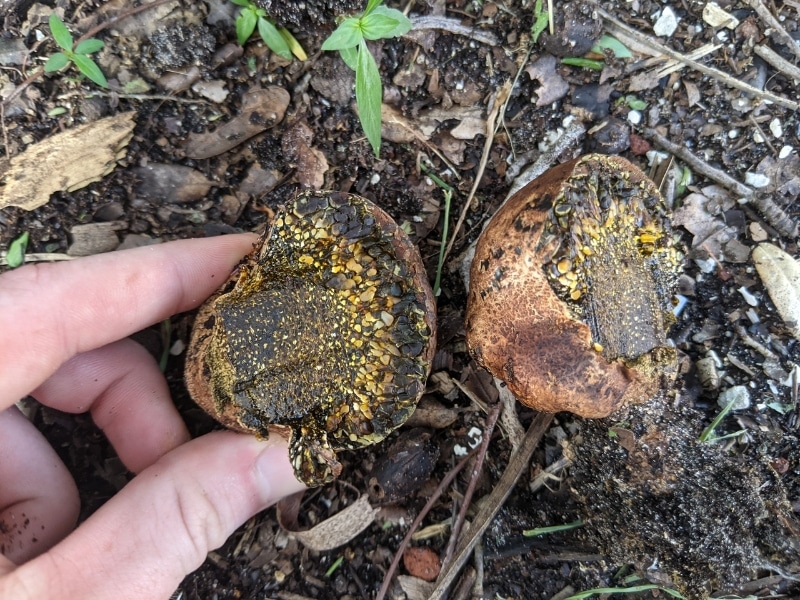
Pisolithus arenarius by Aidan Marshall on Mushroom Observer
Dead Man’s Foot Fungus Culinary Uses
Most sources classify this species as inedible, though there are reports that it is edible when young. In parts of Germany, small amounts of the young fruiting body were historically used to add a truffle-like flavor to food — the origin of the Bohemian Truffle name.
Dead Man’s Foot & Tree Plantations
Pisolithus spores (sold commercially as Pisolithus tinctorius) are a standard ingredient in mycorrhizal inoculant mixes used in commercial tree planting. The fungus partners with tree roots and helps seedlings pull water and nutrients from the soil that most other fungi can’t. It tolerates drought, high acidity, and elevated metal concentrations. It’s been used to establish trees on mine tailings, degraded roadsides, and stripped or contaminated land where other mycorrhizal species fail. It doesn’t disappear once the trees are established, either. It stays competitive against other fungal partners even as the trees mature.
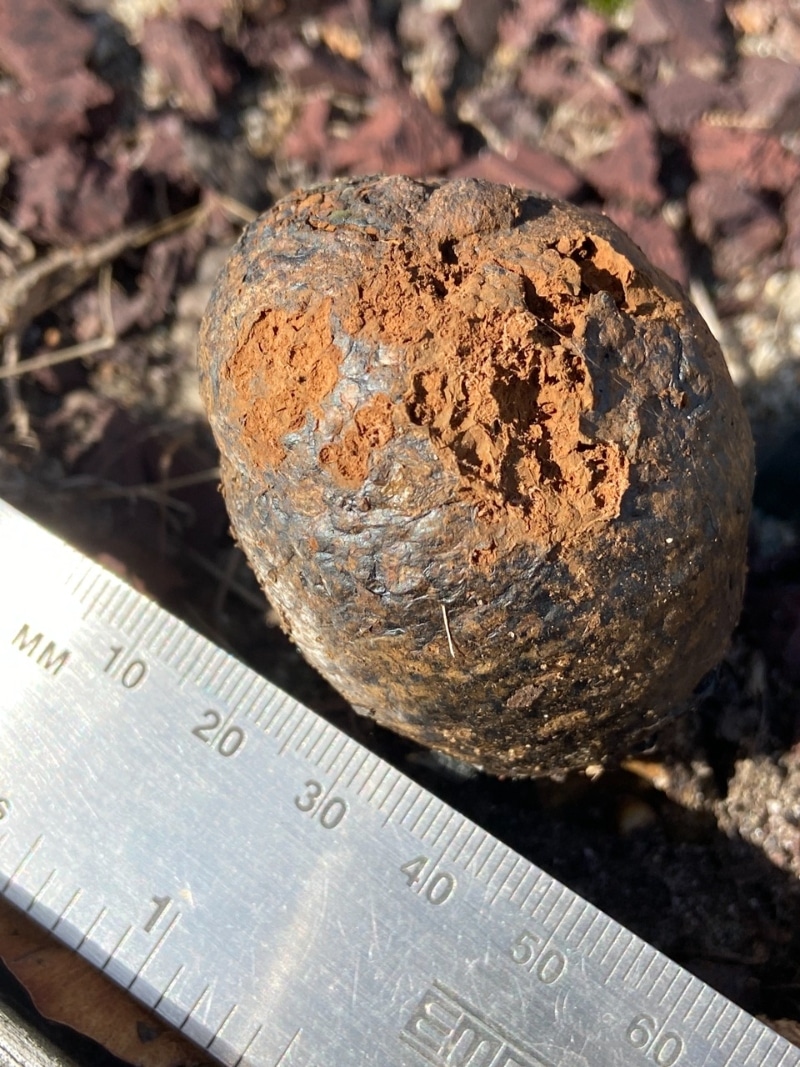
Pisolithus arhizus by Michael on Mushroom Observer
Dyeing With Dead Man’s Foot Fungus
The use of dead man’s foot fungus for dyeing goes back at least to 1729, when botanist Pier Antonio Micheli mentioned its use for dyeing wool. It is one of the earlier documented fungal dyes in European literature.
Whether it was used before Micheli’s time isn’t known. But, the black gel stains everything it touches — skin, clothing, hands — and the fungus grows across a large portion of the world, so the property was almost certainly noticed long before it was written down. The dye in dead man’s foot comes from pulvinic acid derivatives, which are in the black gel.
It is still used today as a natural dye. Here are some accounts of how to use it:
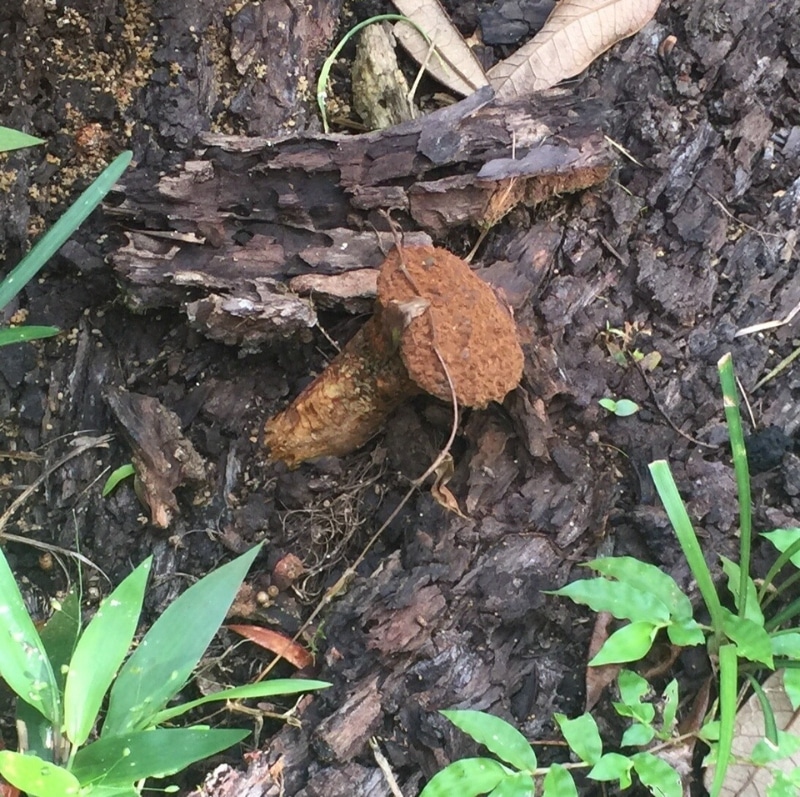
Pisolithus arhizus by Marilo on Mushroom Observer
Common Questions About Dead Man’s Foot Fungus
Is dead man’s foot edible?
Most sources advise against eating this mushroom at any stage. There are some reports of it being used culinarily, but there isn’t any clear documented information. Some guides advise it might be poisonous.
Why does dead man’s foot grow through pavement?
The fruiting body of this mushroom is so intense, it generates enough internal pressure to crack asphalt and push through road surfaces and sidewalk joints. It’s not unusual to find it coming up through driveways, path edges, and gravel lot.
What is the black gel inside dead man’s foot?
The black gel is a tar-like substance that holds the pea-sized spore packages suspended safely while they develop. As the mushroom matures, the spore packages break down from the top downward into cinnamon-brown spore dust.

Leave a Reply