
In the world of fungi, there are actually only a small number of poisonous mushrooms that will outright kill you. However, the ones that will kill you are extremely dangerous, and possibly surprising to many, extremely varied. There are colorful, striking mushrooms with deadly toxins, as well as bland, boring, innocent-looking species that are equally as dangerous.
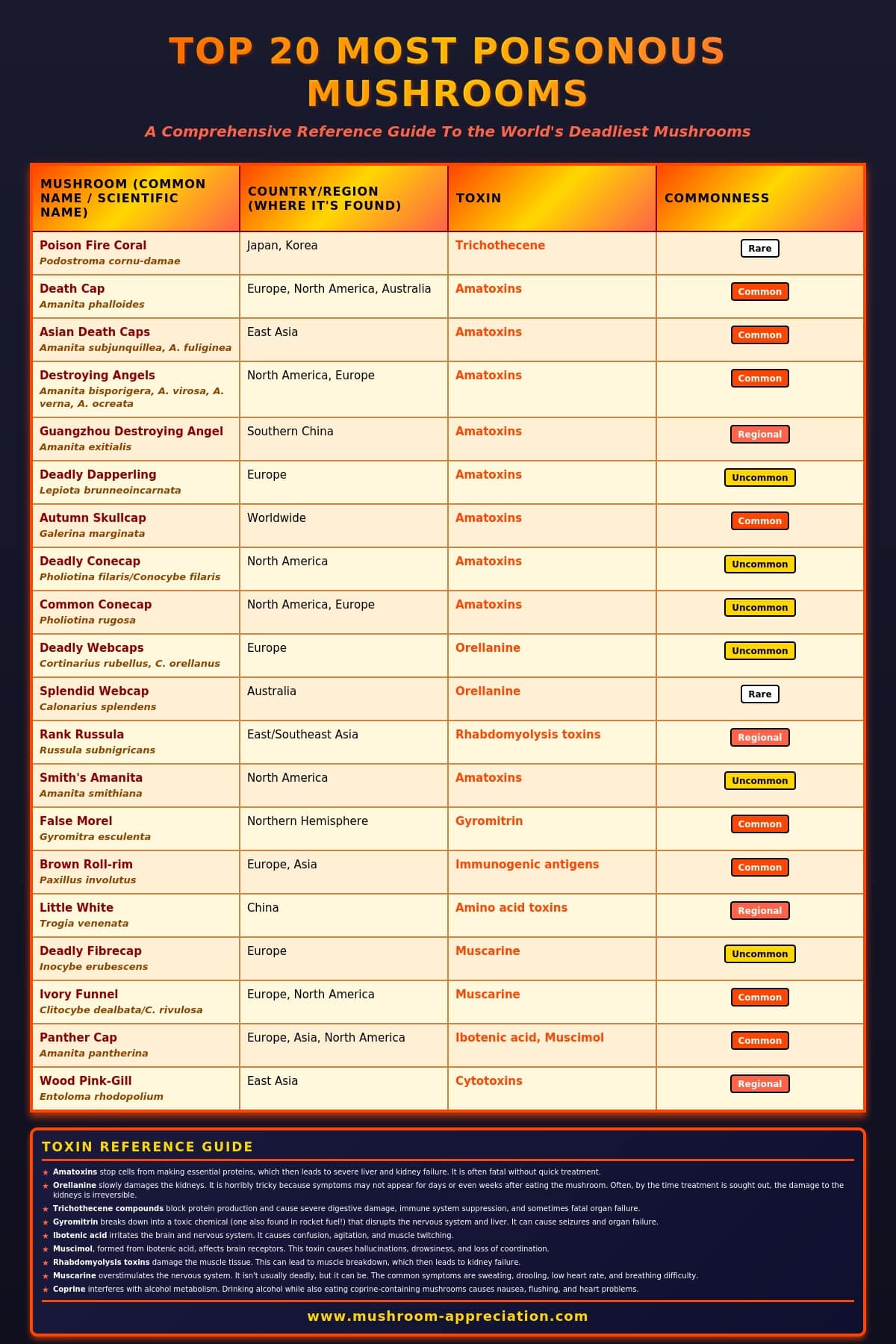
Poisonous mushrooms could be ranked in many ways — from the ones that cause the most deaths, or the most common species, or the most deadly ones. We’ve opted for the most deadly. This is not about how “sick” they make you, but how reliably they cause death or cause irreversible organ failure when eaten. Many of these poisonous mushrooms are rather rare or only exist in small corners of the world, but some very serious contenders are also extremely common and widespread.
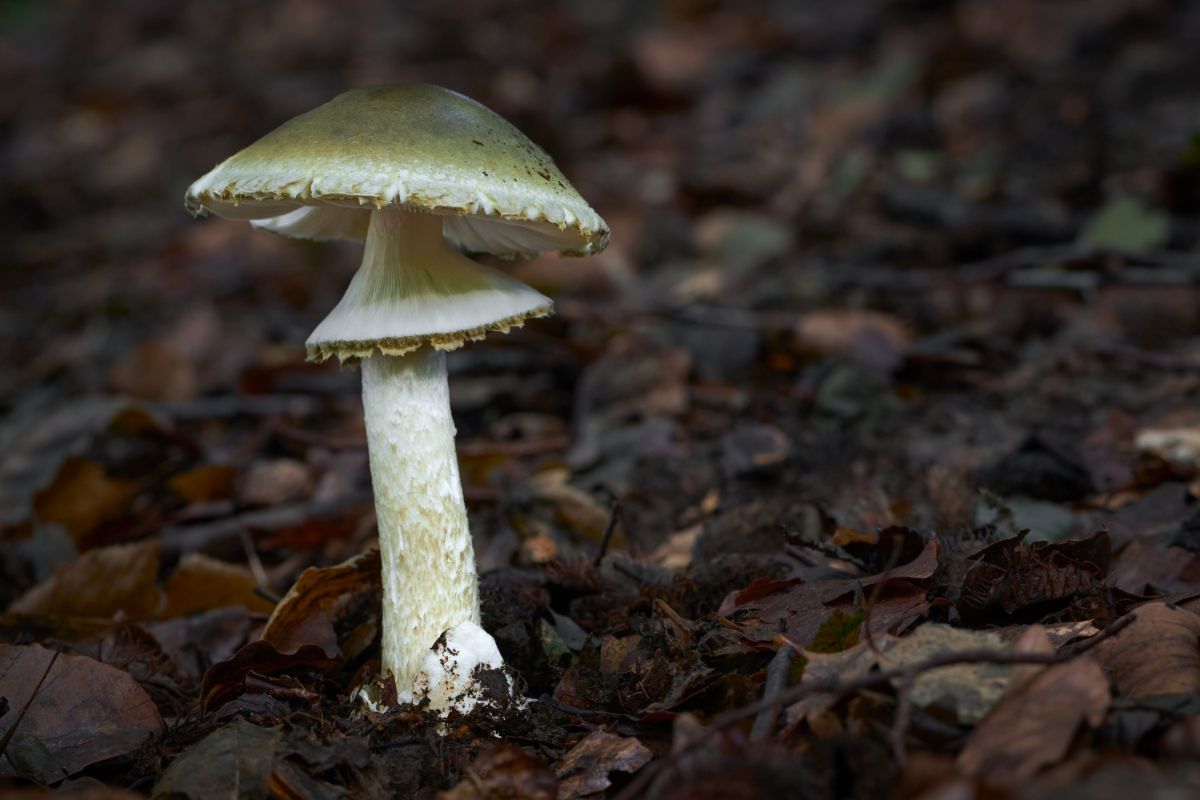
This means that if we ranked by death or poisonings, Amanita phalloides (the aptly named death cap) is on top. The primary reason for this is simply that it is immensely widespread all over the world and is actually continuing to spread. But when we rank solely by toxicity, Podostroma wins. It hasn’t killed as many people as the death cap, but that is because it has limited distribution, and it is also somewhat uncommon where it does grow.
We did not create this list to scare people! Yes, poisonous mushrooms are dangerous and you must be diligent if you decide to forage wild mushrooms, but there is no need to be afraid. If you take the time to learn the species, always double or triple-check your finds before eating anything, and don’t make rash decisions, you will be fine. Wild mushroom foraging is a wonderful and rewarding activity, and like any hobby, takes patience and a dedication to learning.
Jump to:
- The Primary Toxins of Poisonous Mushrooms
- 1. Poison Fire Coral (Trichoderma cornu-damae)
- 2. Death Cap (Amanita phalloides)
- 3. Asian Death Cap (Amanita subjunquillea)
- 4. Destroying Angels (Amanita bisporigera group, A. virosa, A. verna, A. ocreata)
- 5. Guangzhou Destroying Angel (Amanita exitialis)
- 6. Deadly Dapperling (Lepiota brunneoincarnata)
- 7. Deadly Galerina (Galerina marginata)
- 8. Deadly Conecap (Pholiotina filaris)
- 9. Common Conecap (Pholiotina rugosa)
- 10. Deadly Webcaps (group: Cortinarius rubellus and Cortinarius orellanus)
- 11. Splendid Webcap (Calonarius splendens)
- 12. Rank Russula (Russula subnigricans)
- 13. Smith’s Amanita (Amanita smithiana)
- 14. Beefy False Morel (Gyromitra esculenta)
- 15. Brown Roll-rim (Paxillus involutus)
- 16. Little White (Trogia venenata)
- 17. Deadly Fibrecap (Inocybe erubescens and related Inocybe species)
- 18. Ivory Funnel (Clitocybe dealbata / Clitocybe rivulosa)
- 19. Panther Cap (Amanita pantherina)
- 20. Wood Pink-Gill (Entoloma rhodopolium)
- Top Poisonous Mushrooms Honorable Mentions
The Primary Toxins of Poisonous Mushrooms
- Amatoxins stop cells from making essential proteins, which then leads to severe liver and kidney failure. It is often fatal without quick treatment. Learn more about amatoxins here.
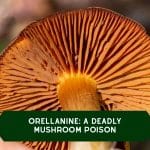
- Orellanine slowly damages the kidneys. It is horribly tricky because symptoms may not appear for days or even weeks after eating the mushroom. Often, by the time treatment is sought out, the damage to the kidneys is irreversible.
- Trichothecene compounds block protein production and cause severe digestive damage, immune system suppression, and sometimes fatal organ failure.
- Gyromitrin breaks down into a toxic chemical (one also found in rocket fuel!) that disrupts the nervous system and liver. It can cause seizures and organ failure.
- Ibotenic acid irritates the brain and nervous system. It causes confusion, agitation, and muscle twitching.
- Muscimol, formed from ibotenic acid, affects brain receptors. This toxin causes hallucinations, drowsiness, and loss of coordination.
- Rhabdomyolysis toxins damage the muscle tissue. This can lead to muscle breakdown, which then leads to kidney failure.
- Muscarine overstimulates the nervous system. It isn’t usually deadly, but it can be. The common symptoms are sweating, drooling, low heart rate, and breathing difficulty.
- Coprine interferes with alcohol metabolism. Drinking alcohol while also eating coprine-containing mushrooms causes nausea, flushing, and heart problems.
1. Poison Fire Coral (Trichoderma cornu-damae)
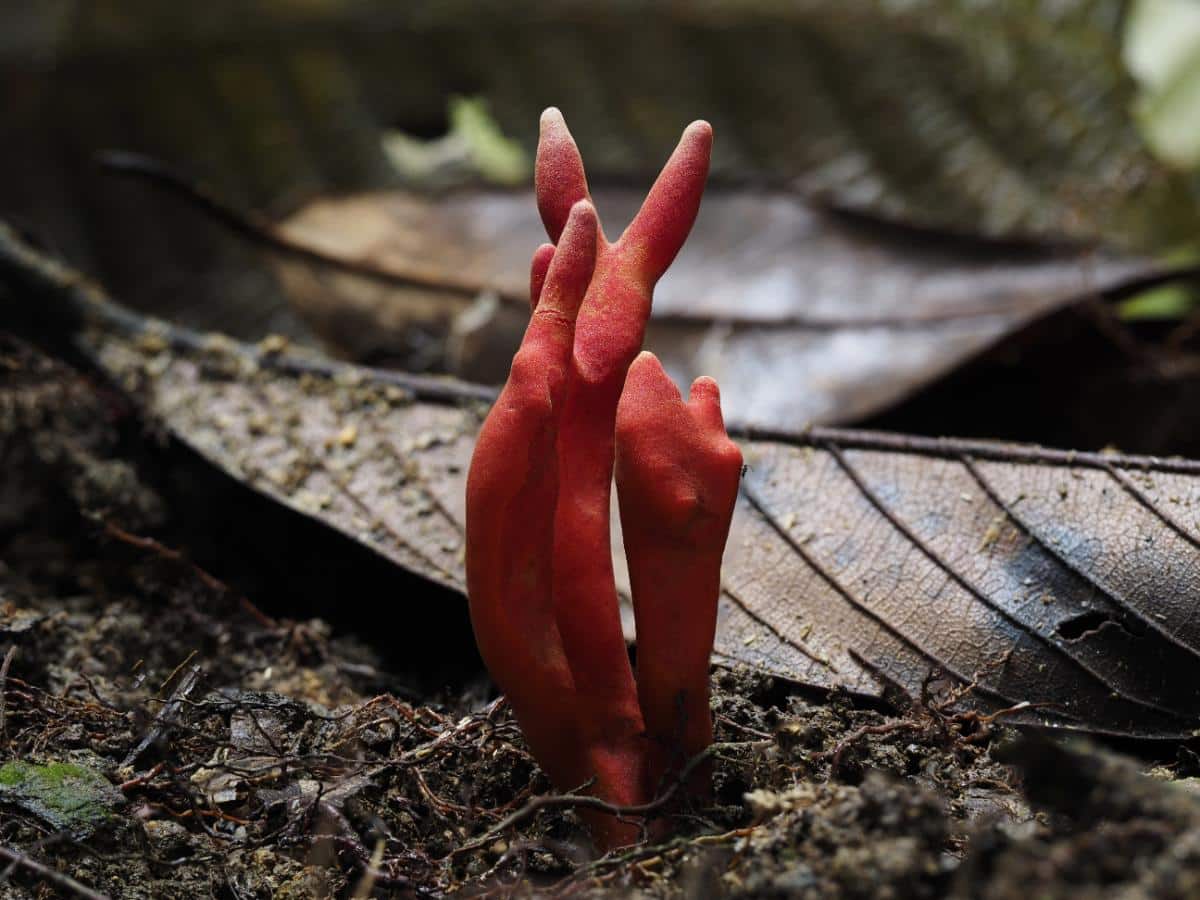
The poison fire coral is gorgeous, with bright red to orange, finger-like or coral-shaped arms that look like flames on the forest floor, or small antlers. This species grows on soil or decaying wood and it was once believed to grow only in mountain regions of South Korea and Japan, but it has also been found in Indonesia, Papua New Guinea, and Australia.. It is rare, but its striking color can attract attention, and to the inexperienced eye, it resembles the very valuable Cordyceps mushroom. This mushroom contains extremely powerful toxins (trichothecene mycotoxins), which attack cells all throughout the body.
This is one of the few mushrooms where poisoning can happen not only from eating it, but also from touching it and then touching the mouth or eyes. For the majority of poisonous mushrooms, they are only toxic if you actually eat them.
The symptoms of touching or eating these mushrooms include severe organ failure, skin peeling, hair loss, and death. This is one of the most feared mushrooms in the world. It has not caused as many deaths as some of the other species, simply because it is not that common.
- An Elderly Man with Fatal Respiratory Failure after Eating a Poisonous Mushroom Podostroma cornu-damae
- Identification of trichothecene-type mycotoxins in toxic mushroom Podostroma cornu-damae
- Two Cases of Mushroom Poisoning by Podostroma Cornu-Damae
- Four Cases of Successful Treatment after Podostroma Cornu-Damae Intoxication
2. Death Cap (Amanita phalloides)
The death cap is by far one of the most dangerous mushrooms in the world. The main reason is that it is easily confused with edible mushrooms, and so people eat it by accident. And, unfortunately, making a mistake with this one can be very serious. This is the mushroom Erin Patterson is alleged to have poisoned her family with in Australia.
Death cap mushrooms have smooth greenish, yellow-green, or olive caps that are about 2 to 6 inches wide. Their gills are white and crowded, and don’t connect to the stem. The stem is white and 3 to 6 inches tall. It has a ring near the top of it, and around the base of the stem is a cup-like structure called a volva.
These poisonous mushrooms grow near oak, chestnut, and beech trees. It is native to Europe but is now also common in North America, Australia, and parts of Asia because it hitched a ride with some imported trees.
The death cap contains amatoxins, which attack the liver and kidneys. The symptoms often appear several hours after eating, and then there is a period of seemingly improving health. Because of this faux recovery time, treatment is often delayed, and that is also what makes this mushroom so dangerous. By the time a person seeks help, it may be too late.
- Amanita phalloides poisoning: Mechanisms of toxicity and treatment
- From the forest to the ICU and back: an investigative work-up of Amanita phalloides poisoning
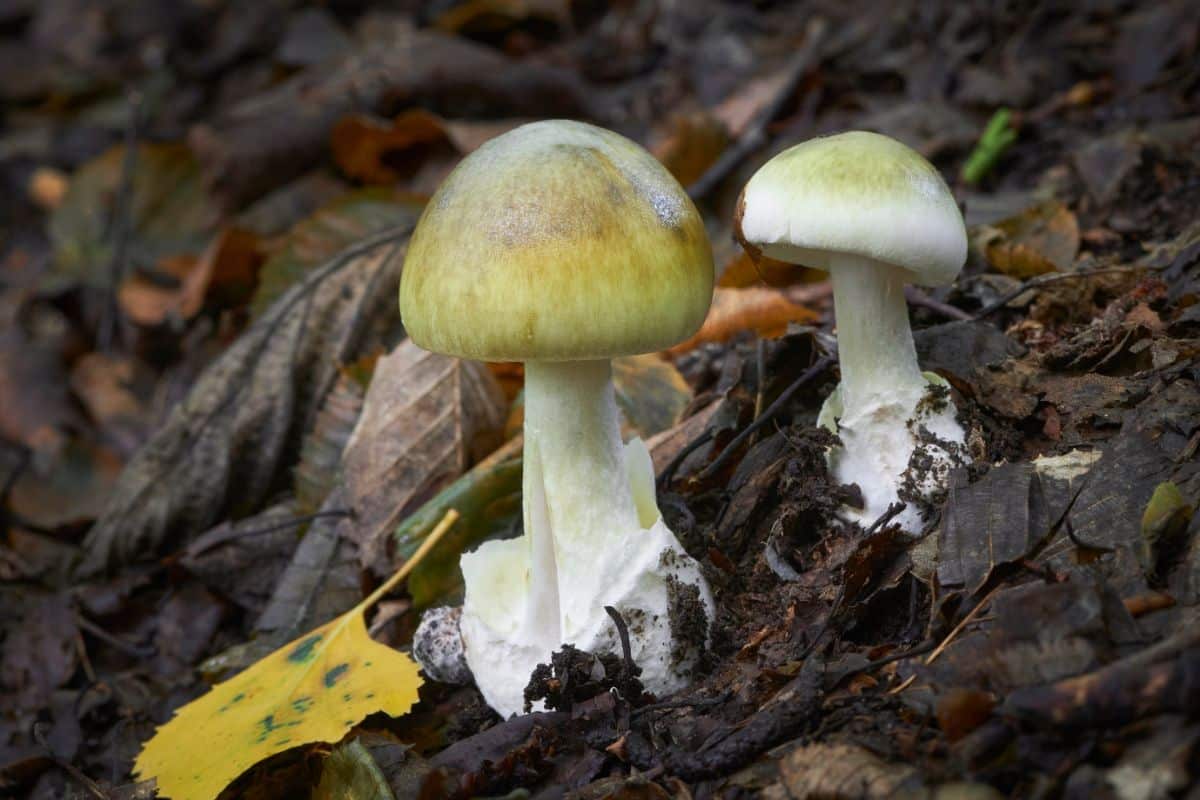
3. Asian Death Cap (Amanita subjunquillea)
The Asian death cap closely resembles the European death cap, and it is equally as dangerous. Also, like the European death cap, it is widespread and can be confused with edible species. These poisonous mushrooms grow across East Asia, especially in China, Japan, and South Korea. It grows in association with hardwood trees and is fairly common in some regions, especially during warm, wet seasons.
Like its relative, the Asian death cap has a pale yellow to yellow-green cap, white gills, and a yellowish stem. There is a white ring around the upper part of the stem (though it might disappear with age), and around the base of the stem is a white cup (sac).
This species contains amatoxins, the same powerful liver-destroying poisons found in other deadly Amanita mushrooms. It has caused numerous fatal poisonings in Asia, particularly when mistaken for edible mushrooms. The symptoms commonly appear hours after eating, and by then, serious liver damage has already begun.
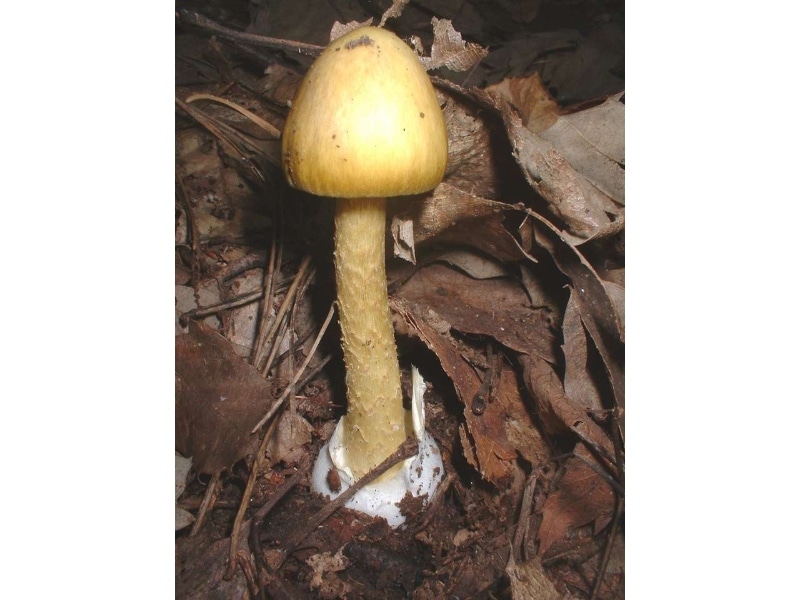
4. Destroying Angels (Amanita bisporigera group, A. virosa, A. verna, A. ocreata)
Destroying angels are objectively beautiful mushrooms — their pure white caps, gills, and stems look stately and very angelic. However, they are also extremely dangerous. These mushrooms grow in forests across North America and parts of Europe, and they usually show up in late summer and fall.
The destroying angel is pure white with caps about 2 to 5 inches wide and white stems 4 to 7 inches tall. In addition to white caps, gills, and stems, destroying angels have a fragile white ring around the stem and a white cup (or sac) around the base of the stem.
Like the death cap, destroying angels contain amatoxins. They are especially dangerous because they look similar to edible white mushrooms. The majority of poisoning cases happened because beginners mistook them for edible species. They earned their ominous name because of their high fatality rate.
- Multiple fatal mycetism caused by Amanita virosa in Mexico
- Toxicological profile of Amanita virosa
- Acute liver failure caused by Amanita verna: a case series and review of the literature
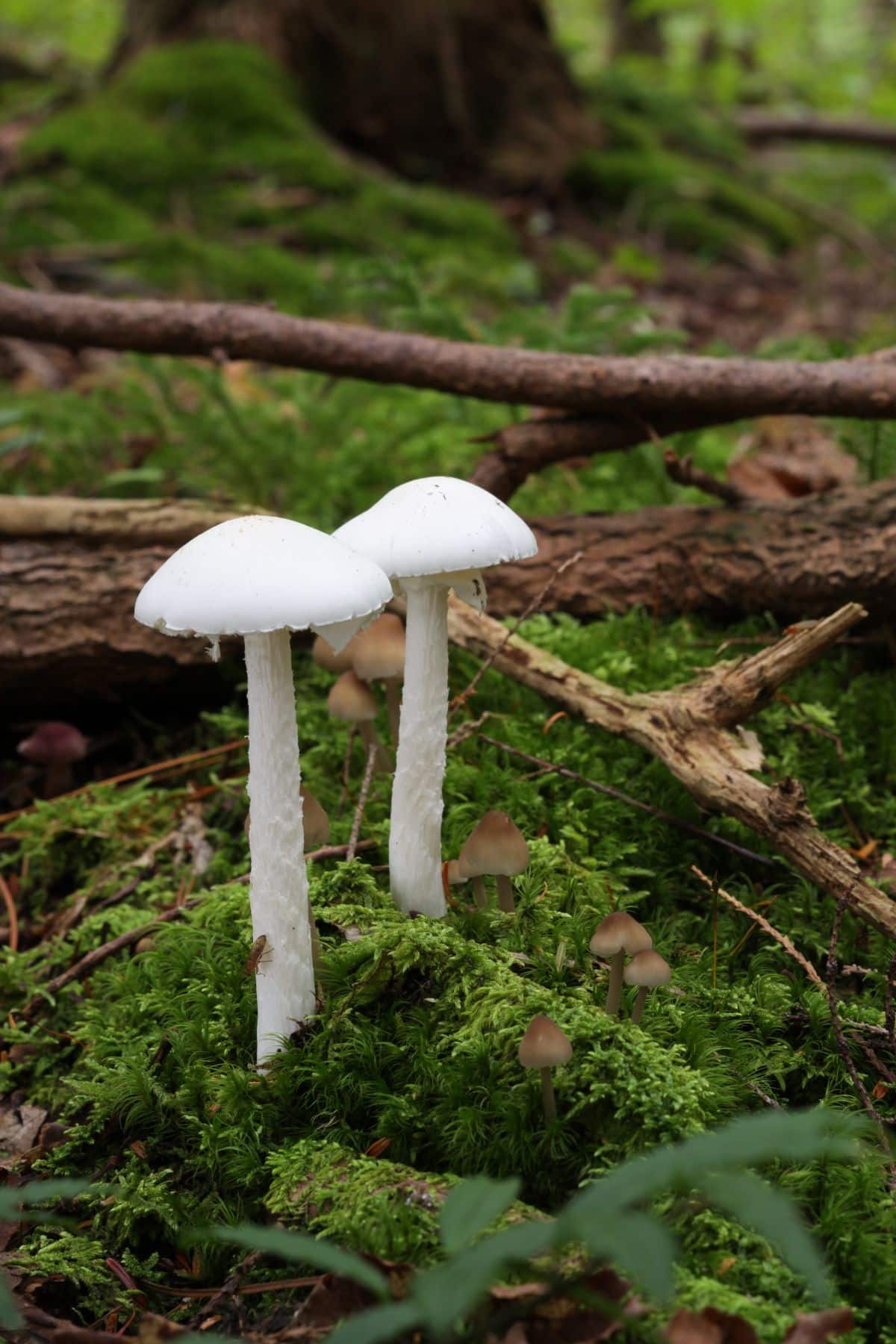
5. Guangzhou Destroying Angel (Amanita exitialis)
You might be seeing a trend here. There are some extremely dangerous Amanita mushrooms in the world! Like its relations, the Guangzhou destroying angel is an all-white mushroom. It has a smooth white cap, white gills, and a slender white stem. Like other destroying angels, it has a ring around the upper part of the stem and a cup-shaped sac at the base of the stem. This species grows mainly in southern China, especially in the Guangzhou region. It grows in warm, humid forests and is locally common during the rainy season.
This mushroom also contains amatoxins, which cause severe liver damage. The Guangzhou destroying angel is responsible for multiple fatal poisonings in China and is considered one of the deadliest mushrooms in Asia. And, like with the other destroying angels, most cases occur when it is mistaken for edible white mushrooms.
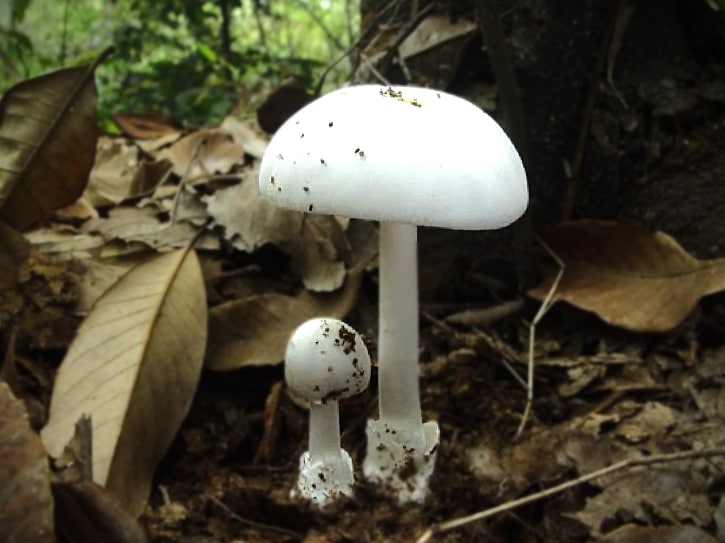
6. Deadly Dapperling (Lepiota brunneoincarnata)
The deadly dapperling is a small, pretty, and extremely poisonous mushroom. It looks like a couple of edible mushroom species, and has been foraged on due to mistaken identity. Unfortunately, it can be a deadly mistake. It grows in grassy areas, gardens, parks, and forest edges, and sometimes appears in urban areas as well. This species grows in Europe and parts of Asia. While it is not the most common mushroom, it is encountered often enough to cause repeated poisonings.
The cap of the deadly dapperling is white with reddish-brown to pinkish-brown scales that form a beautiful concentric design on it. Caps on this mushroom small and the decorations vary with age — more mature mushrooms usually have more spread out scales (this is because as the cap grows, the fibers stretch and break apart more). The stem is thin, white to pale pink, and usually less than 2 inches tall.
This mushroom contains amatoxins, the same powerful liver-destroying poisons also found in death caps and destroying angels. Even a small amount can cause severe illness or death. And, the symptoms may take 6 to 24 hours to appear, which often delays treatment.
Other deadly dapperlings include Lepiota subincarnata, Lepiota castanea, Lepiota helveola, Lepiota brunneolilacea
- Acute hepatic and kidney injury after ingestion of Lepiota brunneoincarnata: Report of 2 cases
- A Case Study: Rare Lepiota brunneoincarnata Poisoning
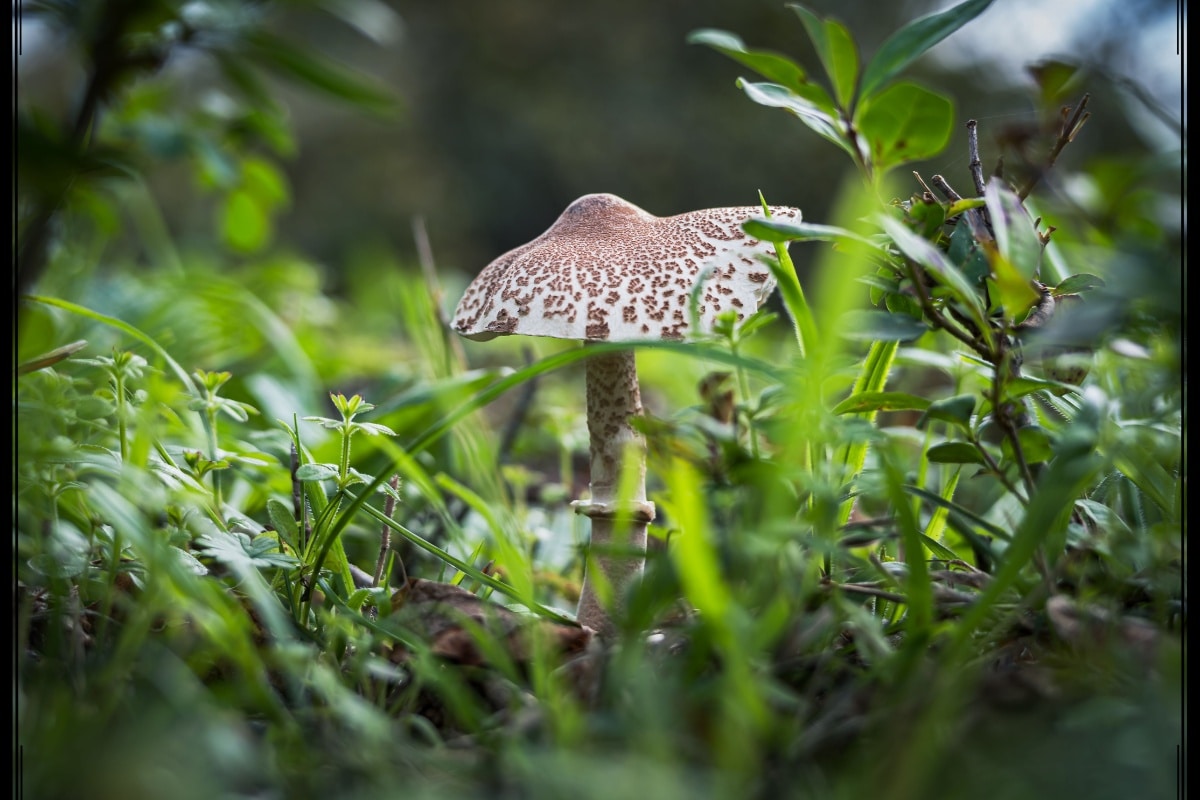
7. Deadly Galerina (Galerina marginata)
The deadly Galerina (also known as the funeral bell!) is a small brown mushroom that looks harmless enough, but make no mistake, this one will kill you if eaten. Even eating one cap can be deadly. Most often, these poisonous mushrooms get mixed in with edible species during foraging. They can grow right next to honey mushrooms and velvet shanks. Sometimes, it is confused with psychedelic mushrooms, so if you ever go searching for those, make sure you know the deadly Galerina very well.
Deadly Galerinas have a light to medium yellow-brown bell-shaped cap and the cap is smooth, or sticky when wet. The gills are also brownish and the stem is thin and about 2 to 4 inches tall. When the mushroom is young, there is a white fibrous ring around the upper part of the stem, but this may disappear with age.
This mushroom grows on dead conifer logs but it will also grow on dead deciduous wood. It is found across North America, Europe, and Asia. The deadly Galerina contains the same amatoxins as death caps and destroying angels. There is a deceptive recovery period after the first symptoms that leads people to believe they’re getting better, but kidney damage is well on its way.
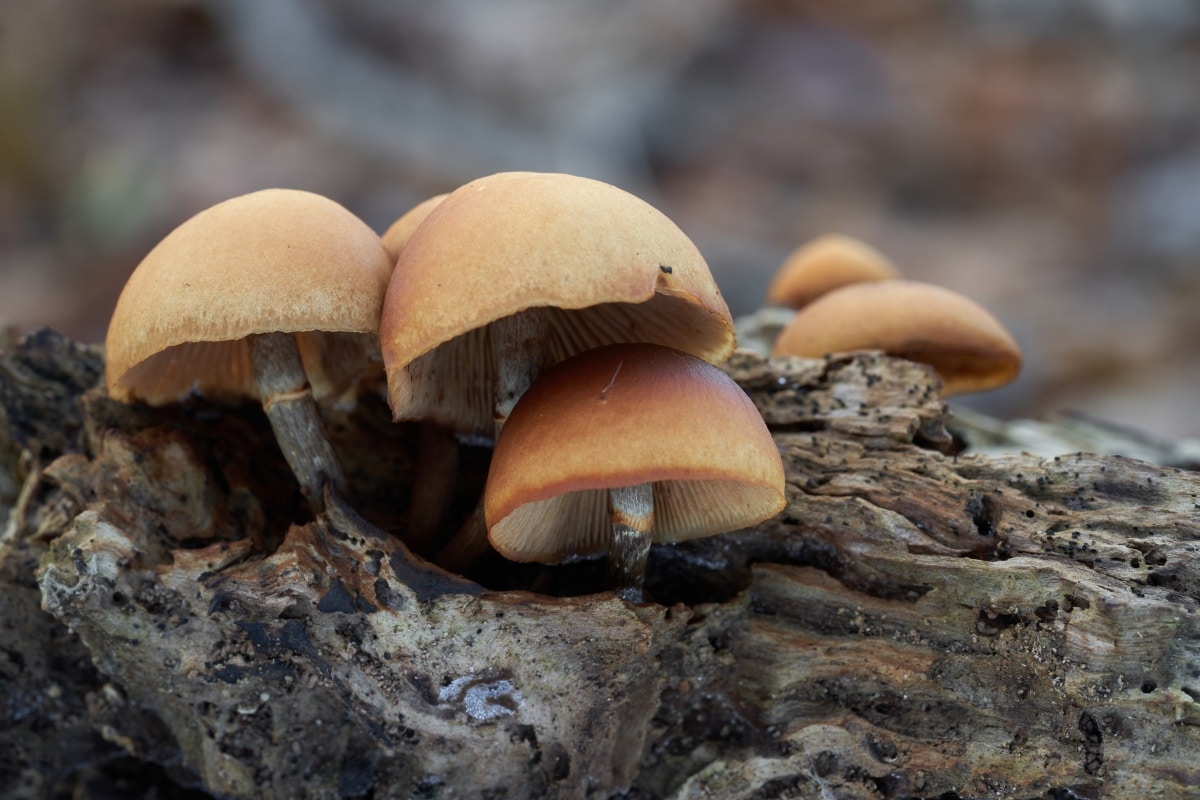
8. Deadly Conecap (Pholiotina filaris)
The deadly conecap is a small but highly poisonous mushroom that grows in grassy areas, like lawns, meadows, gardens, and parks. It is not common, but its choice of habitat makes it more widely encountered than other species, which increases its dangerousness. It is most common in the Pacific Northwest and parts of Canada.
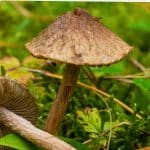
The cap of the deadly conecap is light brown to tan and shaped like a cone or bell. It is small, like many other lawn and mulch mushrooms, with a thin, fragile stem 1 to 3 inches tall. It is rather plain-looking, and nothing jumps out about it that would make one think it is so dangerous.
This mushroom contains amatoxins, the same deadly liver poisons found in death caps and destroying angels. Eating even one mushroom can cause severe liver damage. Several fatal poisonings have been documented in North America, including cases involving children who ate mushrooms from their lawn.
9. Common Conecap (Pholiotina rugosa)
The common conecap is a small, plain-looking brown mushroom that closely resembles many harmless lawn and garden species. It is also very toxic. These poisonous mushrooms grow across North America, Europe, and parts of Asia.
Because it fruits in human-centric places like yards and gardens and looks unremarkable, it is often mistaken for an edible mushroom or collected by accident with another edible mushroom. It is also a prime suspect in accidental ingestion because it appears in places that children and dogs hang out.
Common conecaps have smooth, light to medium brown bell-shaped caps. These are small mushrooms with caps 0.5 to 1.5 inches wide and thin, pale brown stems 1 to 3 inches tall. The stem has a faint ring around the upper section.
Despite its ordinary appearance, the common conecap is filled with amatoxins, the same powerful liver poisons found in death caps and destroying angels.
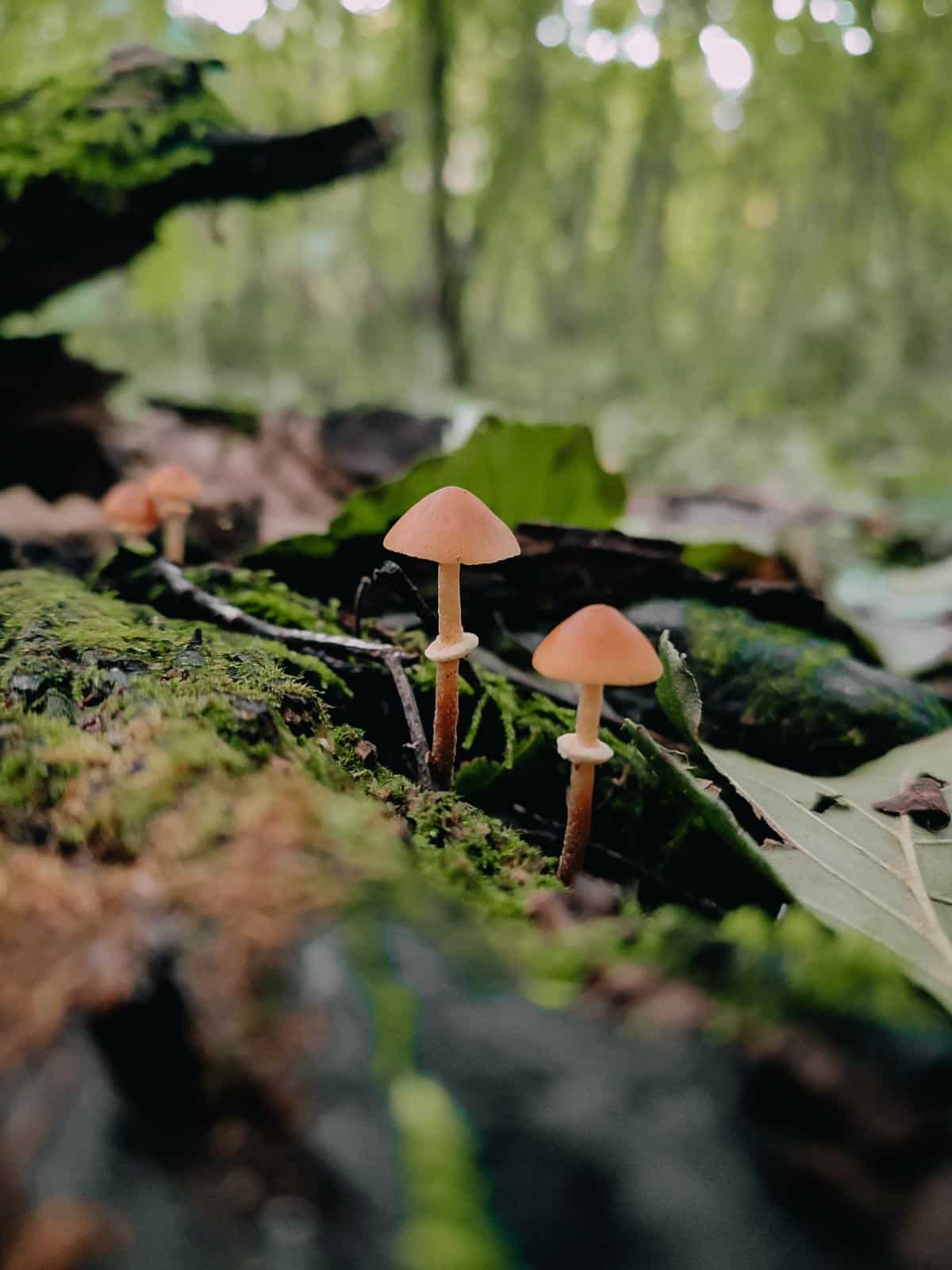
10. Deadly Webcaps (group: Cortinarius rubellus and Cortinarius orellanus)
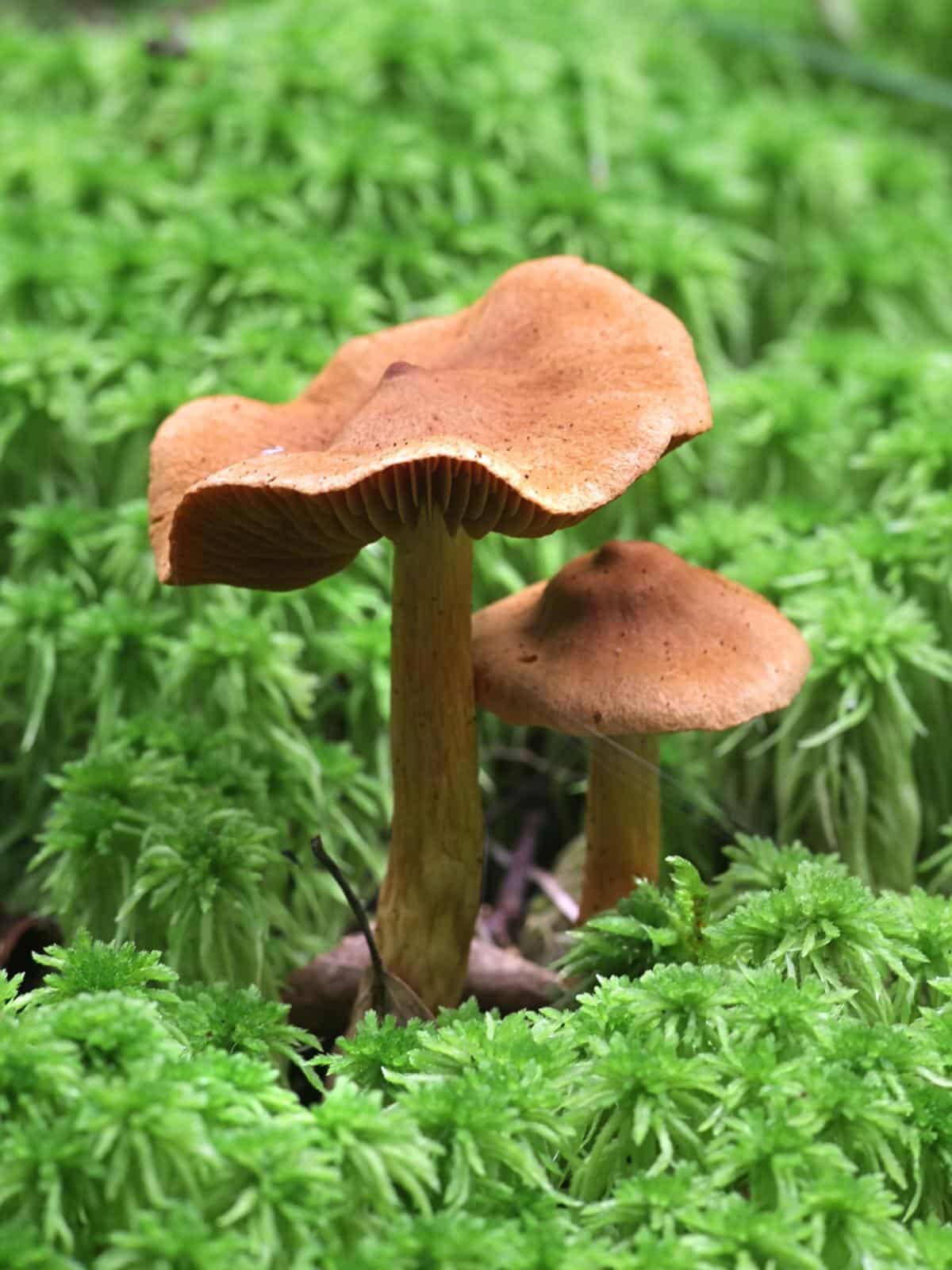
The deadly webcap lives up to its name with a poison that is extremely cunning. It may take many days and even weeks to show up, and by then, it is often too late; the damage has been done. There are likely a lot more mushroom poisonings due to this species than are reported — it’s hard to think that the poison is from the mushroom when the symptoms appear 3 weeks after eating it.
This mushroom grows in conifer forests in Europe and has been documented in Washington, Canada, and possibly Maine. It is responsible for the second documented orellanine poisoning in North America. It is also known by the synonyms C. speciosissimus, C. orellanoides, and C. rainierensis.
Deadly webcaps have rusty brown to orange-brown caps and a slender brownish stem. On young mushrooms, the gills are covered by a cobwebby veil called a cortina. With age, this usually disappears, but there is almost always an orangish “tide line” on the stem where it once was.
The primary difference between the fool’s webcap and the deadly webcap is growth habitat. The fool’s webcap grows in deciduous forests, not with conifers. Fool’s webcaps are common in Europe, and rare to unknown in North America, but it does grow there. Also, likely brought in with tree imports from Europe. It is less common than some other poisonous mushrooms, but extremely dangerous.
The deadly webcaps contain orellanine, a toxin that damages the kidneys. The toxin orellanine causes slow kidney damage, like super slow to the point you don’t notice until it is way too late. Many cases have resulted in permanent kidney failure or death. In some historical cases, poisoning was not linked to the mushroom until much later due to the delayed effects.
11. Splendid Webcap (Calonarius splendens)
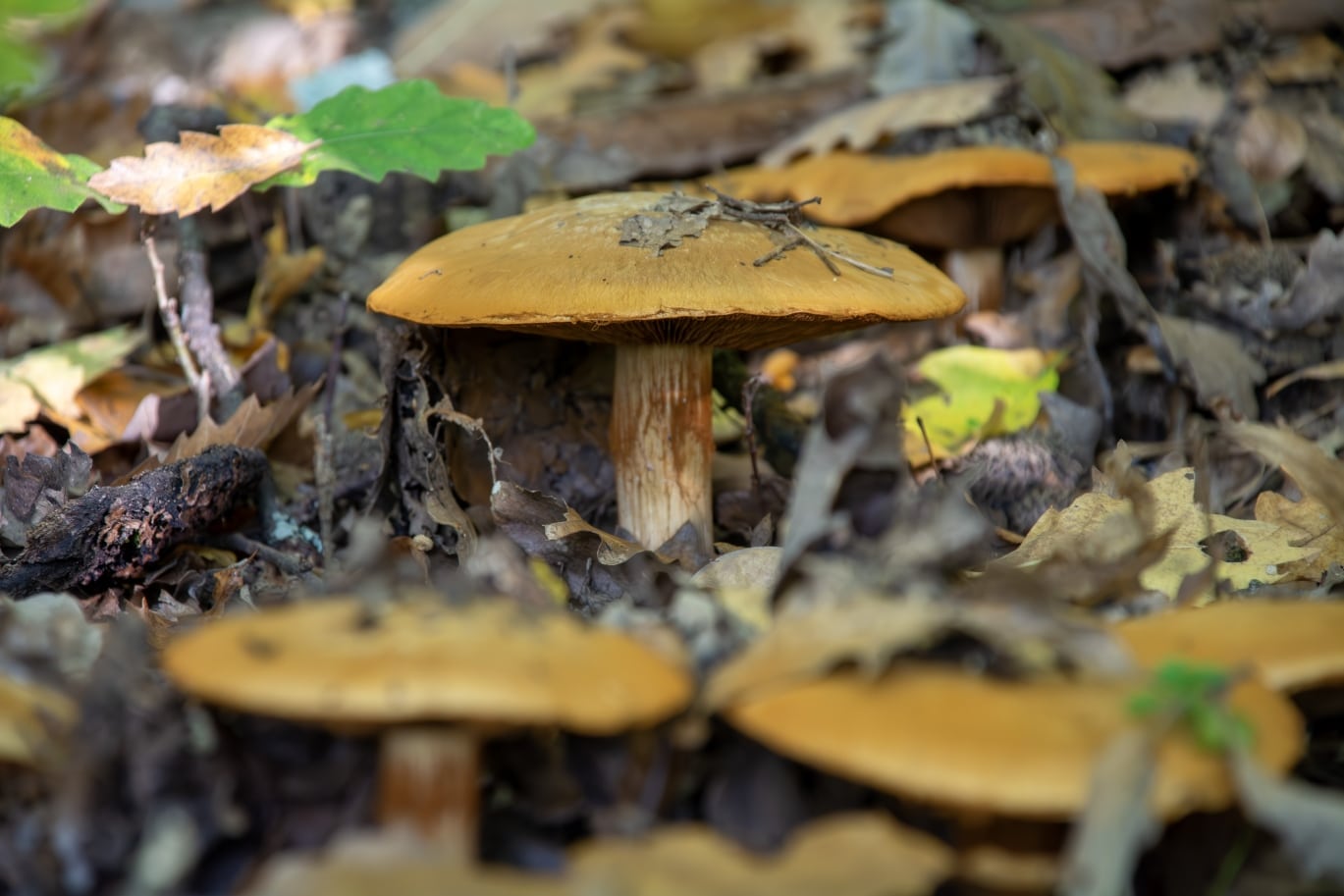
This pretty mushroom is brightly colored and highly dangerous. It occurs primarily in Europe and is related to the deadly webcaps listed above. The splendid webcap isn’t extremely common, but it has been collected when misidentified as an edible species. It grows on the ground near oak and beech trees.
The cap of this mushroom is vivid yellow to yellow-green and the surface is smooth and slightly sticky when wet. These mushrooms have thick, yellowish stems 2 to 5 inches tall. When the mushrooms are young, the gills are covered by a cottony fiber called a cortina. With age, this breaks apart and leaves a ring or ring-mark around the upper stem.
This mushroom contains orellanine, the toxin that damages the kidneys and has seriously delayed symptoms sometimes up to 3 weeks.
ID 346522817 @ Ikadjodjiro | Dreamstime.com
12. Rank Russula (Russula subnigricans)
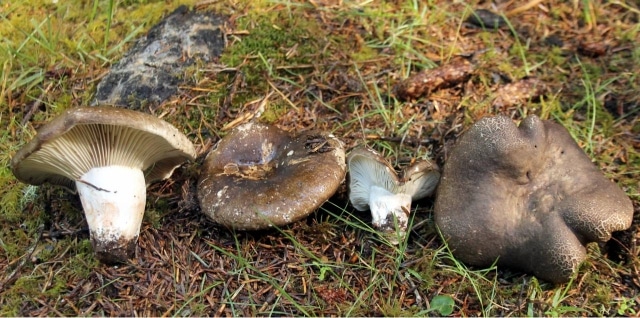
The rank Russula is a benign-looking mushroom with seriously damaging toxins. It is found in East and Southeast Asia, and its toxins break down muscle tissue, which then leads to organ failure. The rank Russula is particularly dangerous because there are edible Russula species that can look similar, like the blackening Russula (Russula nigricans) so it is often collected by accident. It is also very common in some regions.
Rank Russula mushrooms have gray to dark gray caps when young and as the mushroom ages or is damaged, the cap and flesh turn pinkish or light red. This mushroom grows on the ground in forests, usually near hardwood trees, and fruits alone or in small groups.
The toxins in this mushroom cause rhabdomyolysis, a condition where muscle tissue breaks down rapidly. This breakdown releases substances into the bloodstream that can lead to kidney failure and death. In China and Japan, there have been several deaths, sometimes involving people who believed the mushroom was safe to eat after it was cooked.
- A Case of Mushroom Poisoning with Russula subnigricans
- A Case of Severe Mushroom Poisoning With Russula subnigricans
13. Smith’s Amanita (Amanita smithiana)
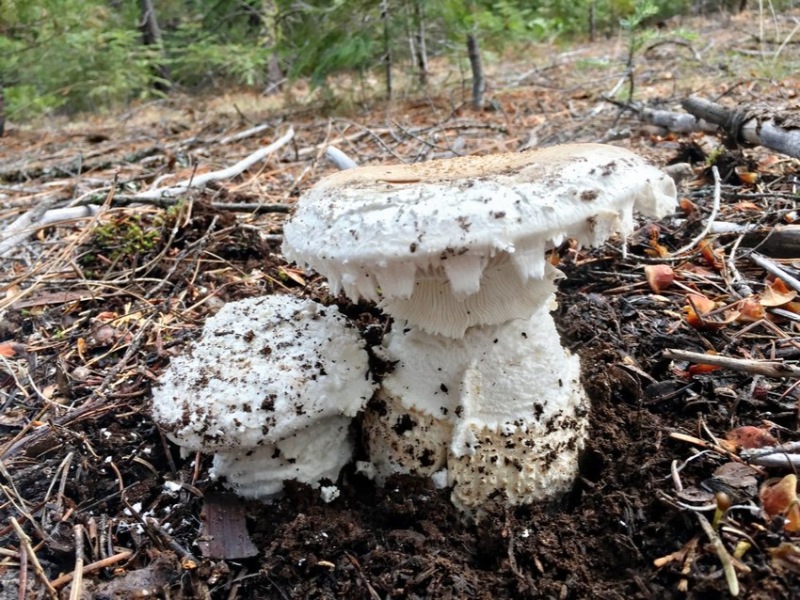
In the Pacific Northwest, this mushroom is sometimes confused with the edible and highly valued Western matsutake. It contains amatoxins, like the other dangerous Amanita species, and can seriously damage the kidneys. Smith’s Amanita can be very common in the PNW during fall and winter, the same time matsutake are fruiting.
Like the destroying angels, this Amanita is all white, stately, and quite beautiful. The cap is white and covered with scaly patches left behind by the universal veil. The stem is also white and scaly, like the cap. Around the upper stem is a white ring, and the base of the stem is swollen and shaggy.
With age or heavy rainfall, the scaly patches on the cap of Smith’s Amanita can get washed away, and that’s when it gets mistaken for matsutake.
- Amanita smithiana mushroom ingestion: a case of delayed renal failure
- Laboratory confirmation of Amanita smithiana mushroom poisoning
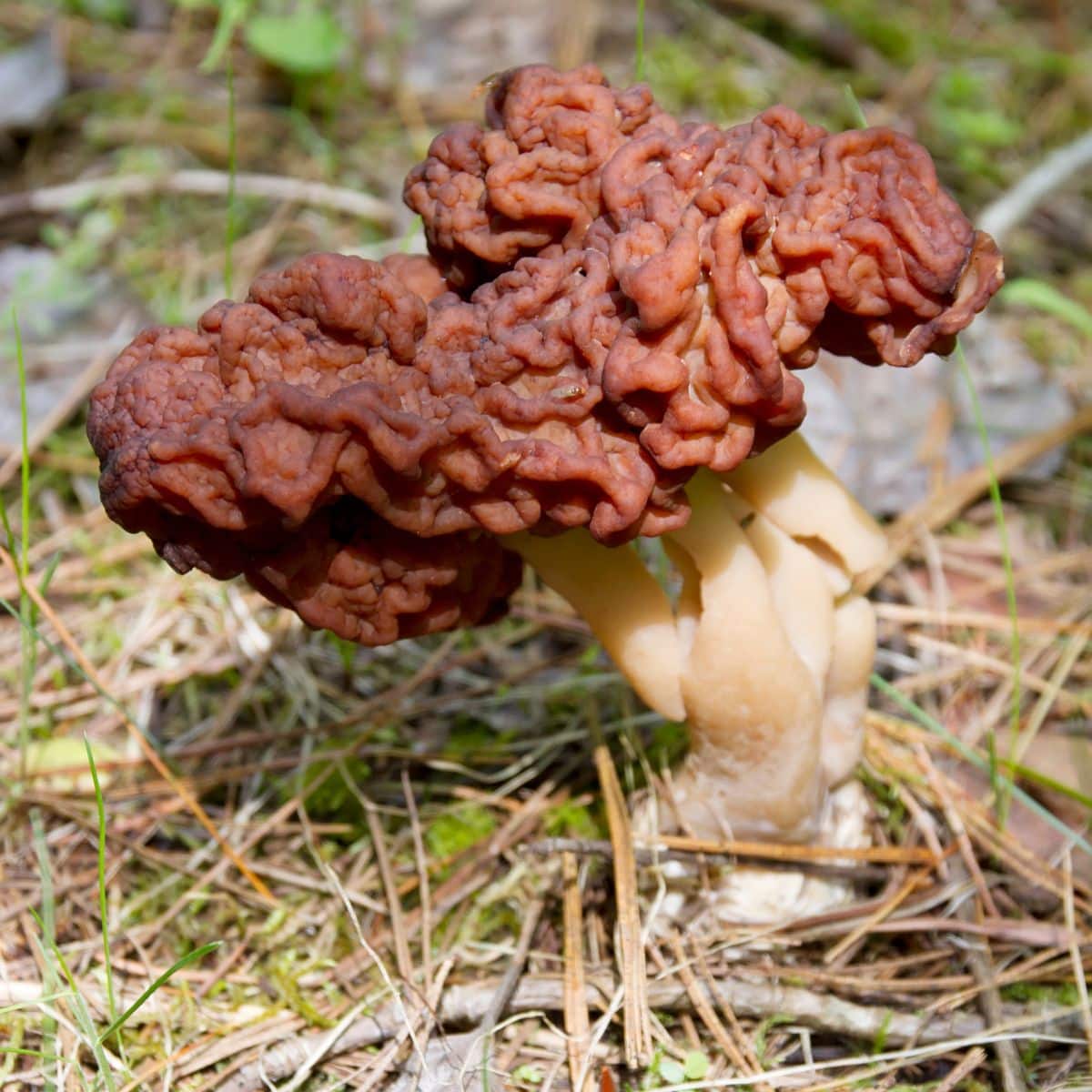
14. Beefy False Morel (Gyromitra esculenta)
The beefy false morel is complicated and can cause a lot of uproar in certain parts of the online mushroom world. The issue is that it has been eaten for centuries, and it is highly valued in many areas as a great edible. Yet, here it is on the poison list because more recent studies show that the toxin in it is not removed with cooking and that it, in fact, builds up in your system over years and even decades.
There will always be people who eat this species, after doing the proper double-boiling, but this is not proven to be reliable for removing all the toxins. The toxin in this mushroom, gyromitrin, breaks down into monomethylhydrazine, a compound also used in rocket fuel. Symptoms of poisoning include severe vomiting, seizures, liver failure, and sometimes death. In many regions in Europe, the beefy false morel was sold in markets. But, after repeated outbreaks of poisoning, they are now banned.
The beefy false morel fruits in spring at the same time as true morels, which is another way it gets eaten, usually by mistaken identify. The cap is deep reddish-brown and irregularly shaped. It is wrinkled and looks a lot like a brain. The stem is pale white, and hollow or chambered, This species occurs in Europe and North America.
- A 19-year longitudinal assessment of gyromitrin-containing (Gyromitra spp.) mushroom poisonings in Michigan
- Nearly one-fifth of toxin remains in false morels despite boiling recommendation
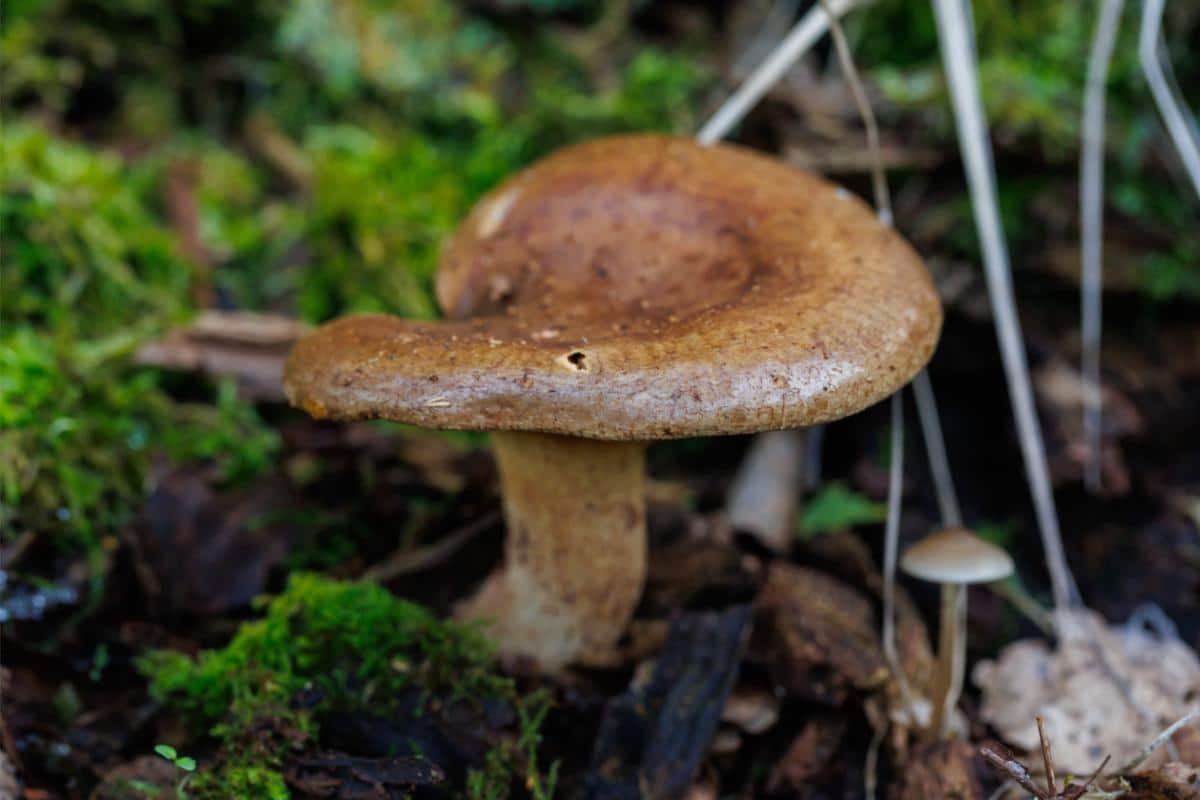
15. Brown Roll-rim (Paxillus involutus)
This is a chunky brown mushroom with a dangerous secret. It is poisonous, but it might not hurt you the first few times you eat it. Because of this delayed toxin build-up, it was once thought to be edible and was widely foraged. However, the brown roll rim mushroom causes your body to attack its own red blood cells, over time, and that might lead to kidney failure and death.
Brown roll-rim mushrooms are medium to large mushrooms with a smooth brown to olive cap. The cap edges roll inward, especially when the mushroom is young. The gills are yellowish to brown and run slightly down the stem. Stems of this mushroom are solid, thick, and often darker near the base. This mushroom grows with birch, beech, and other hardwoods from late summer through fall, and it is widespread across Europe, Asia, and North America.
- Severe hemolysis caused by antibodies against the mushroom Paxillus involutus
- Fatal immunohaemolytic anaemia after eating the mushroom Paxillus involutus
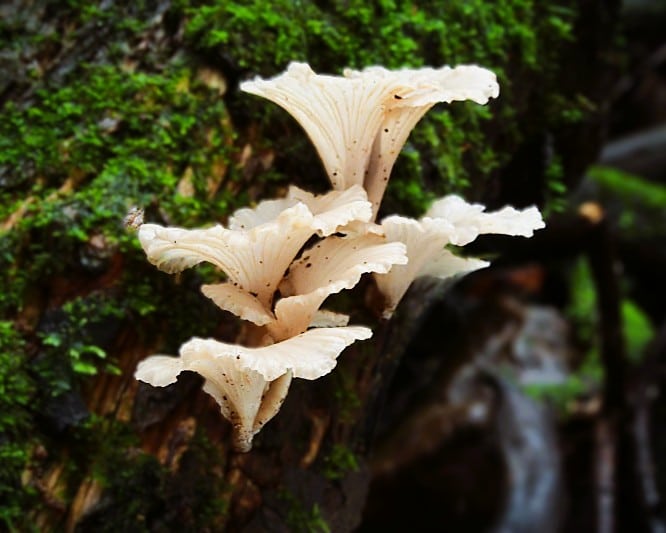
16. Little White (Trogia venenata)
Little white is a tiny, pale whitish mushroom with a thin cap and thin, fragile stem. It is rather plain-looking and small as to be easily overlooked, but it also resembles the edible oyster mushroom, which is how it gets eaten. It grows on decaying wood in warm, humid forests and is most commonly found in parts of southern China and Southeast Asia. This is a very tiny mushroom, but its toxin is huge.
This mushroom became infamous after being linked to hundreds of sudden deaths in rural China. Scientific investigations found that people who ate it collapsed from heart rhythm disturbances. It was discovered that this mushroom contains unusual amino acids that interfere with cardiac function.
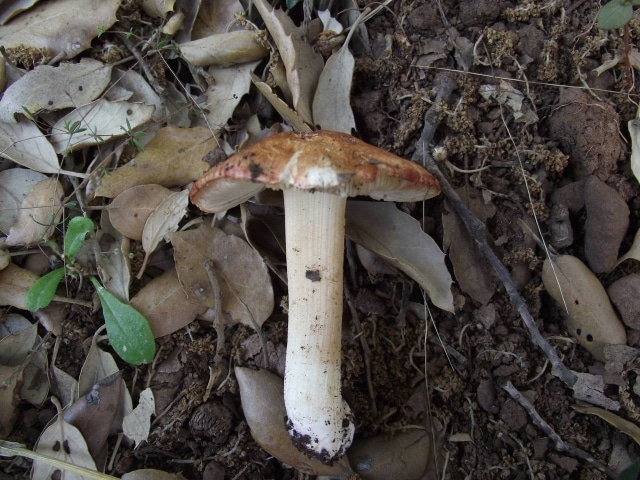
17. Deadly Fibrecap (Inocybe erubescens and related Inocybe species)
This is another small, seemingly innocent mushroom. It grows in soil in forests, parks, and grassy areas across Europe and parts of Asia. Several Inocybe species look very similar and share the same toxins. The deadly fibrecap contains high amounts of muscarine, a toxin that overstimulates the nervous system. Poisonings cause sweating, drooling, slowed heart rate, breathing difficulty, and, in severe cases, death.
This mushroom is pale cream to reddish colored with caps 1 to 3 inches wide. The cap often cracks with age. The gills are crowded and light colored, and the stem is fibrous and brittle.
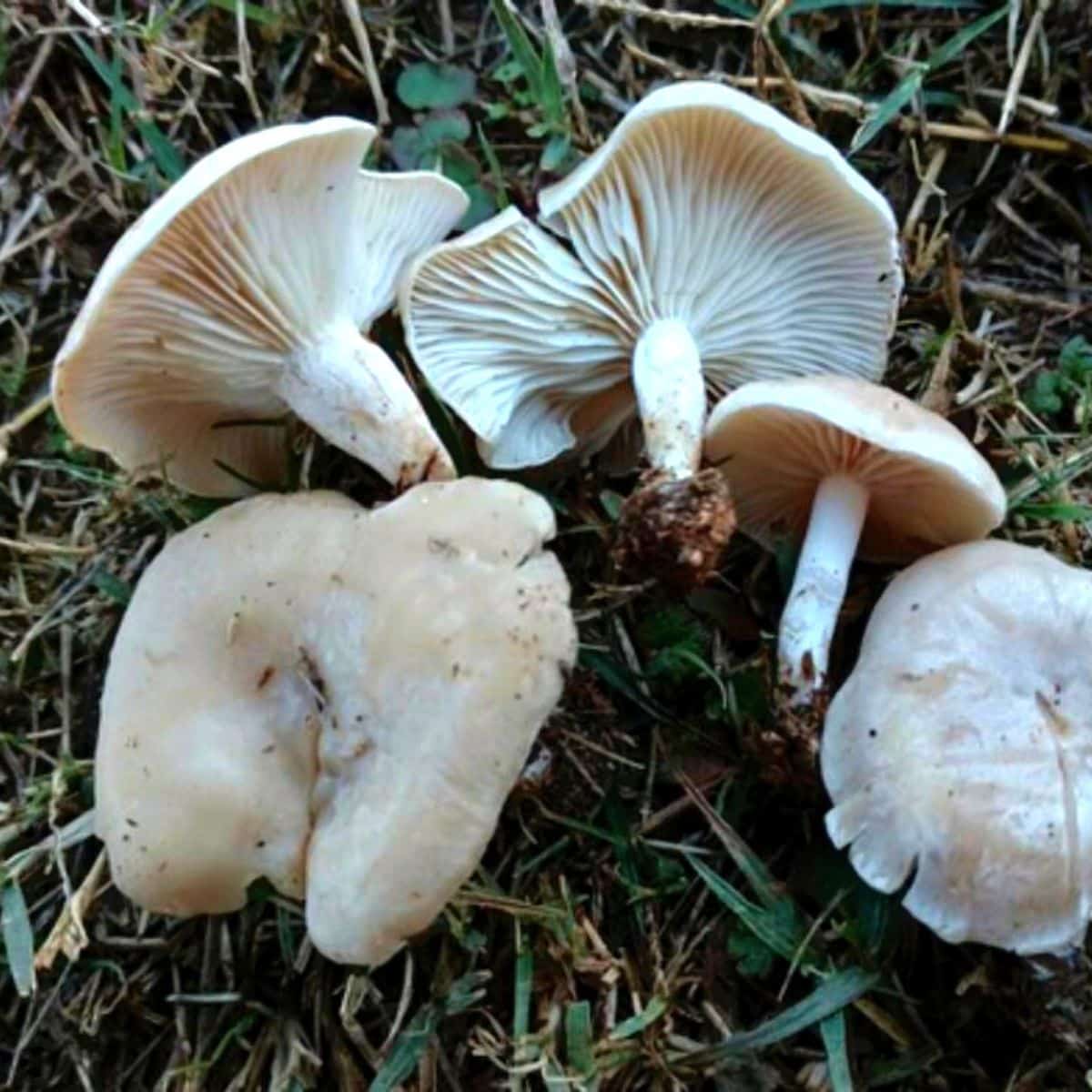
18. Ivory Funnel (Clitocybe dealbata / Clitocybe rivulosa)
These small, white to pale cream-colored, funnel-shaped mushrooms grow in lawns, meadows, parks, and grassy areas. They are common and often form fairy rings. Because they grow in lawns, ivory funnel and fool’s funnel are often eaten by children or mistaken for edible field mushrooms, which makes them extra dangerous.
Ivory Funnel mushrooms also contain muscarine, and poisoning symptoms include sweating, vomiting, blurred vision, slowed heart rate, and breathing problems.
The caps of these mushrooms are 1 to 2 inches wide, white, and have a sunken center that creates a shallow funnel shape. The gills are also white and run down the stem. The white stems are slender and fragile.
- Muscarinic Toxicity Among Family Members After Consumption of Mushrooms
- Death Following Ingestion of Clitocybe Species Mushroom
19. Panther Cap (Amanita pantherina)
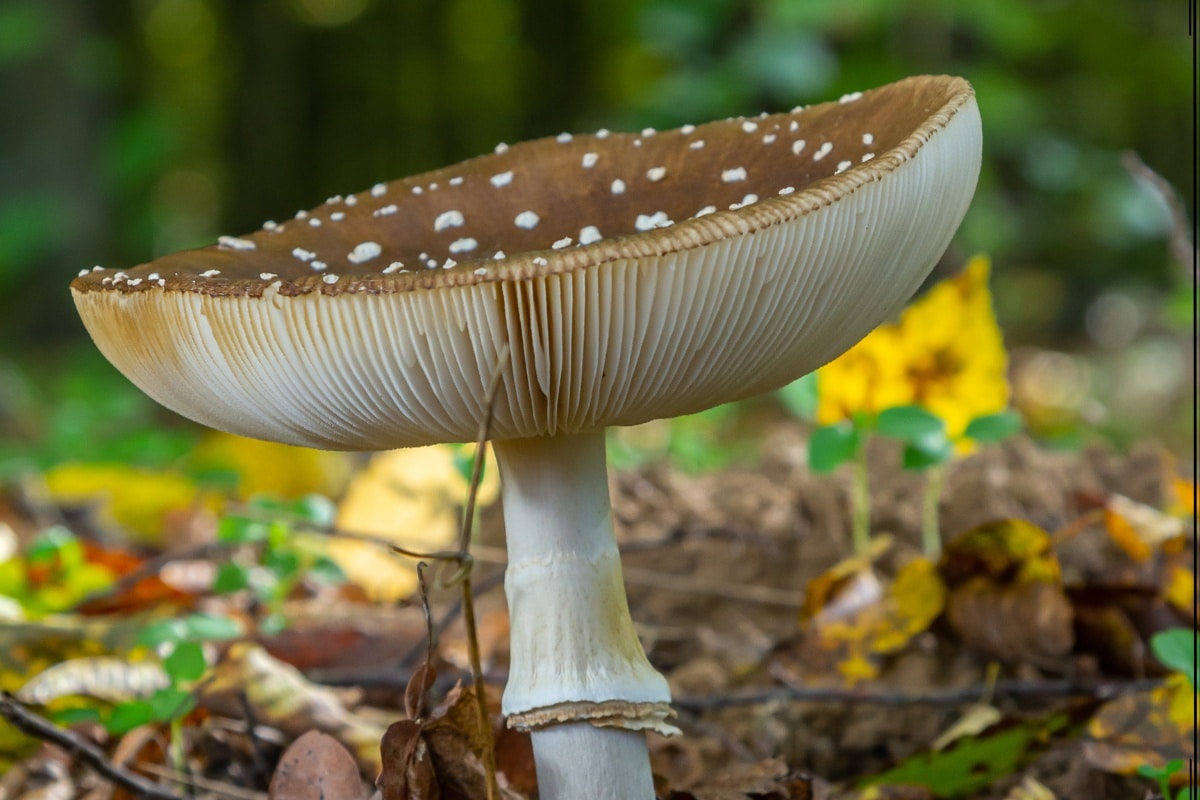
The beautiful, striking panther cap is another dangerous Amanita species. It grows conifers and hardwoods across Europe, Asia, and North America in summer and fall. It is uncommon but widely distributed. This species contains ibotenic acid and muscimol, toxins that affect the brain.
The cap is 2 to 5 inches wide, brownish, and covered in white warts. The gills are white, as is the stem. The stems have a white ring around the upper part, and the base of it is swollen.
Eating the panther cap causes hallucinations, confusion, seizures, and potentially coma. There are some historical records that suggest it was used in ritual practices in some cultures for its psychoactive properties, but dosing was extremely dangerous.
- Coma and confirmed epileptiform activity induced by Amanita pantherina poisoning
- Loss of Consciousness and Prolonged Convulsions Due to Amanita Pantherina Intoxication
20. Wood Pink-Gill (Entoloma rhodopolium)
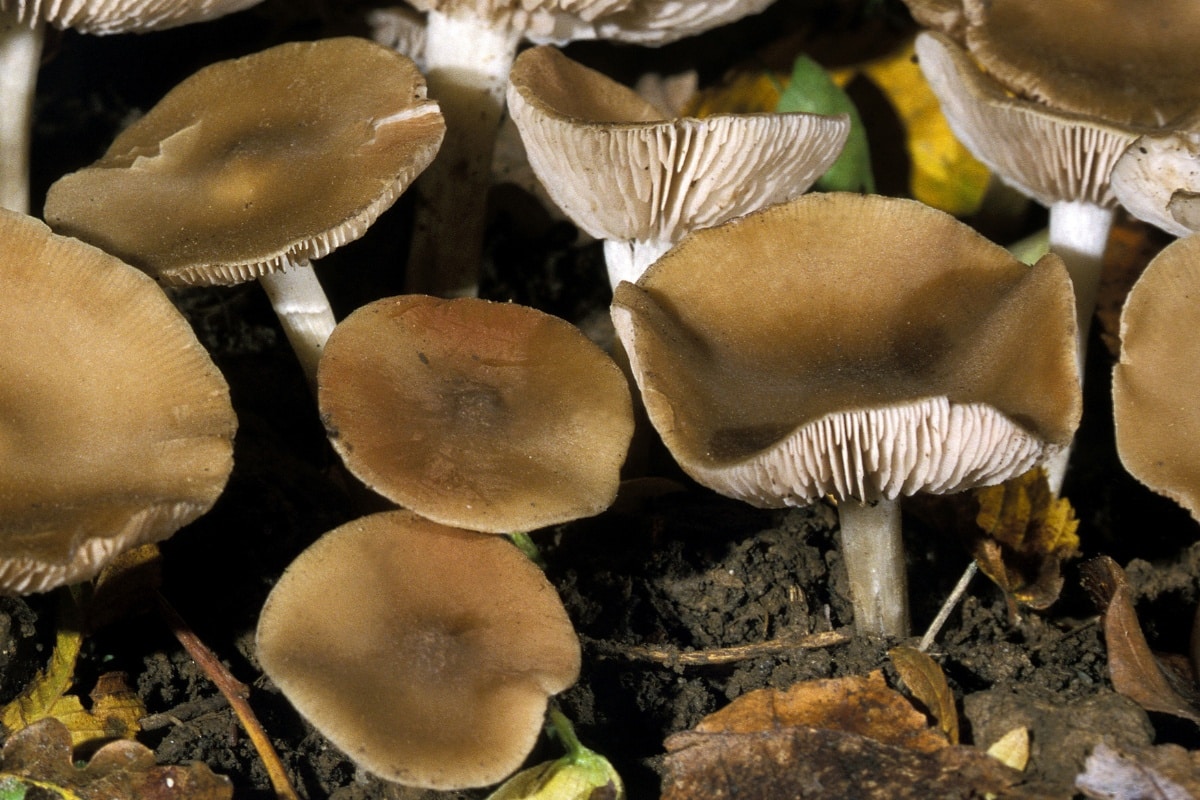
This mushroom causes severe gastrointestinal poisoning and has been responsible for mass poisoning events in Japan and Europe. It is a grayish to brown mushroom with pale to pink gills. It often gets foraged by mistake because it resembles edible species.
This species grows in Europe and parts of Asia and is moderately common during late summer and fall. Symptoms of poisoning from this mushroom include intense vomiting, diarrhea, dehydration, and weakness.
Top Poisonous Mushrooms Honorable Mentions
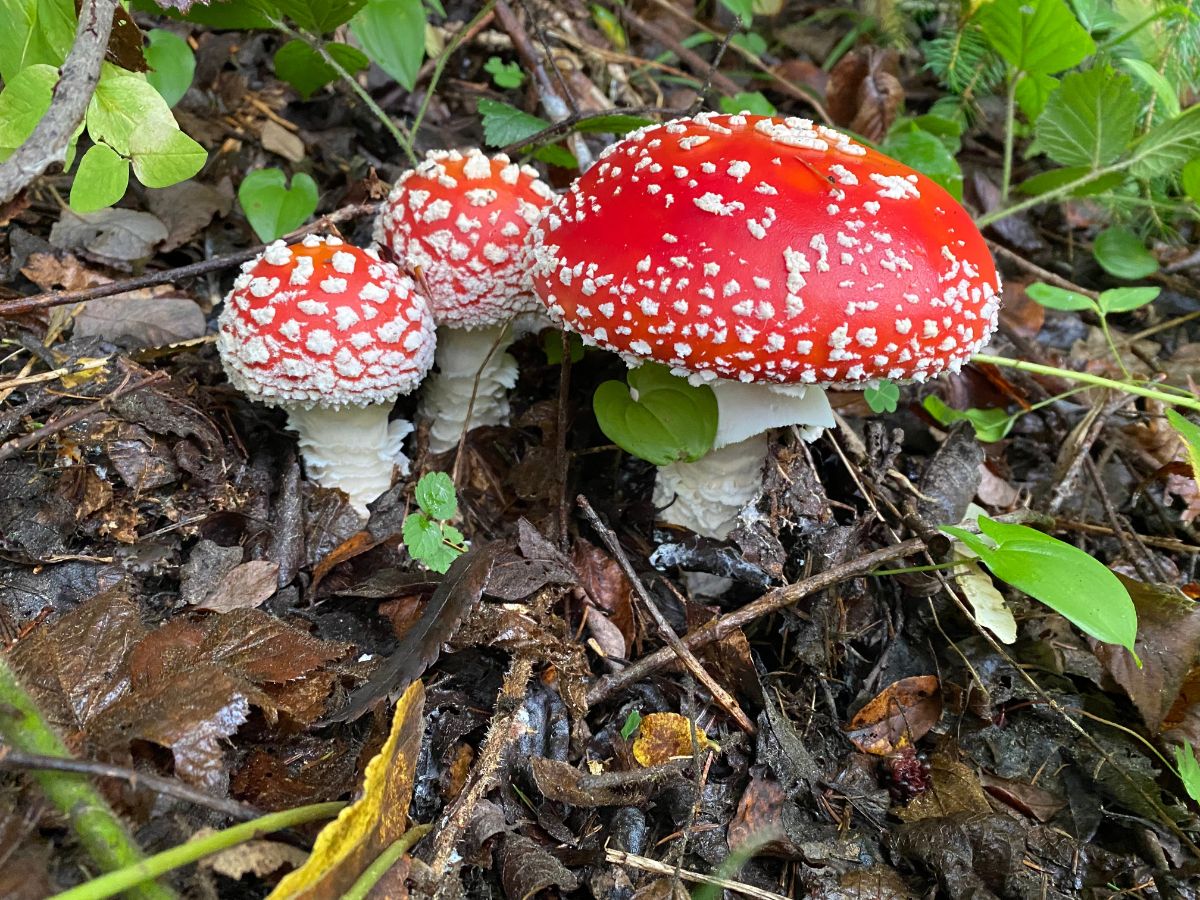
Fly Agaric (Amanita muscaria)
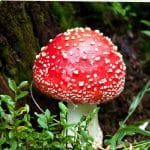
This super common Amanita species often gets eaten in the hopes of psychoactive results. There are processes to make it “more edible” but it still has neurotoxic properties and may land you in the hospital.
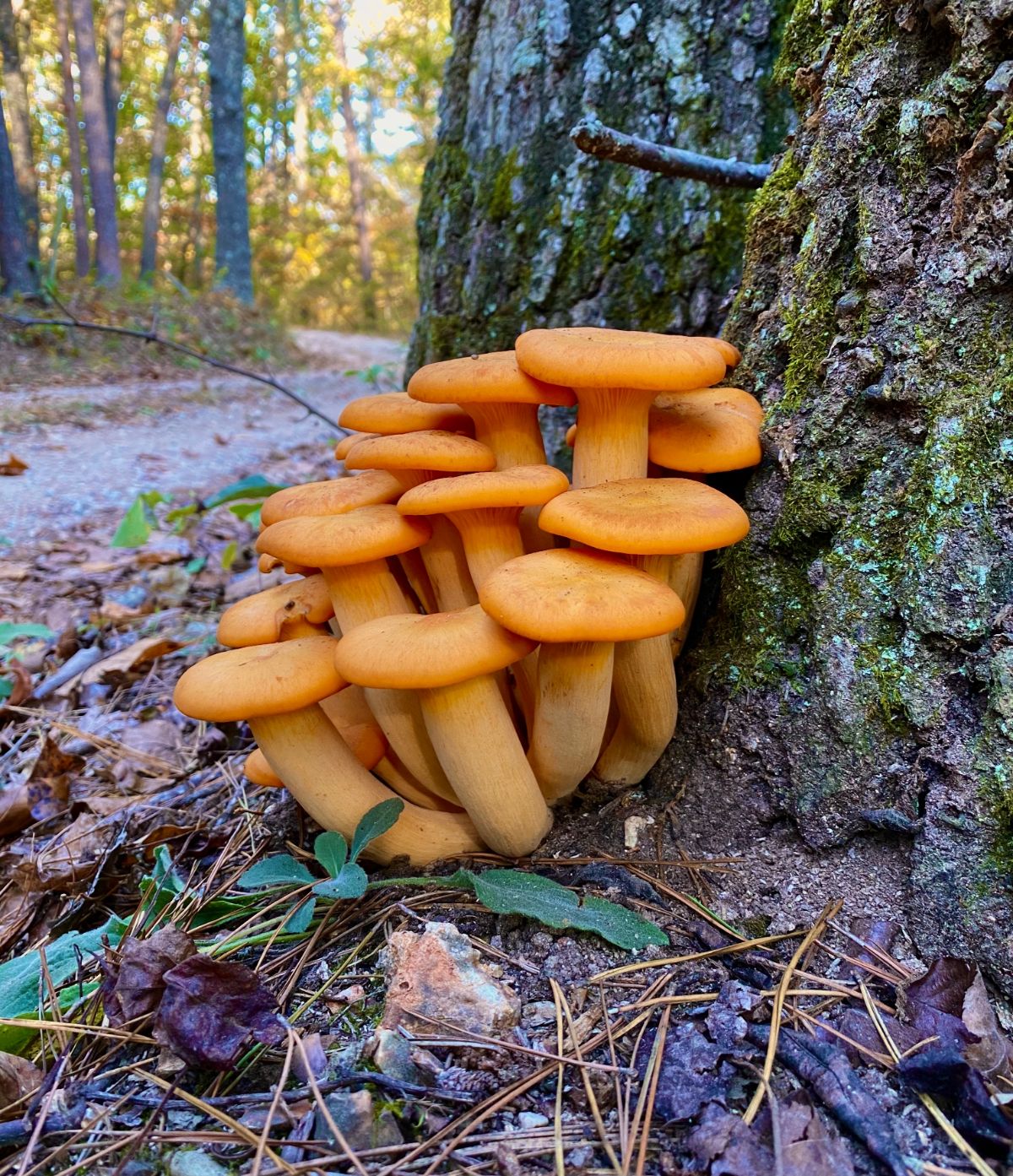
Jack-o’-Lantern (Omphalotus illudens, Omphalotus japonicus, and relatives)
The widespread jack o’lantern mushroom is often mistaken for chanterelles. The toxins in it cause severe gastrointestinal distress (and severe is actually an understatement!).
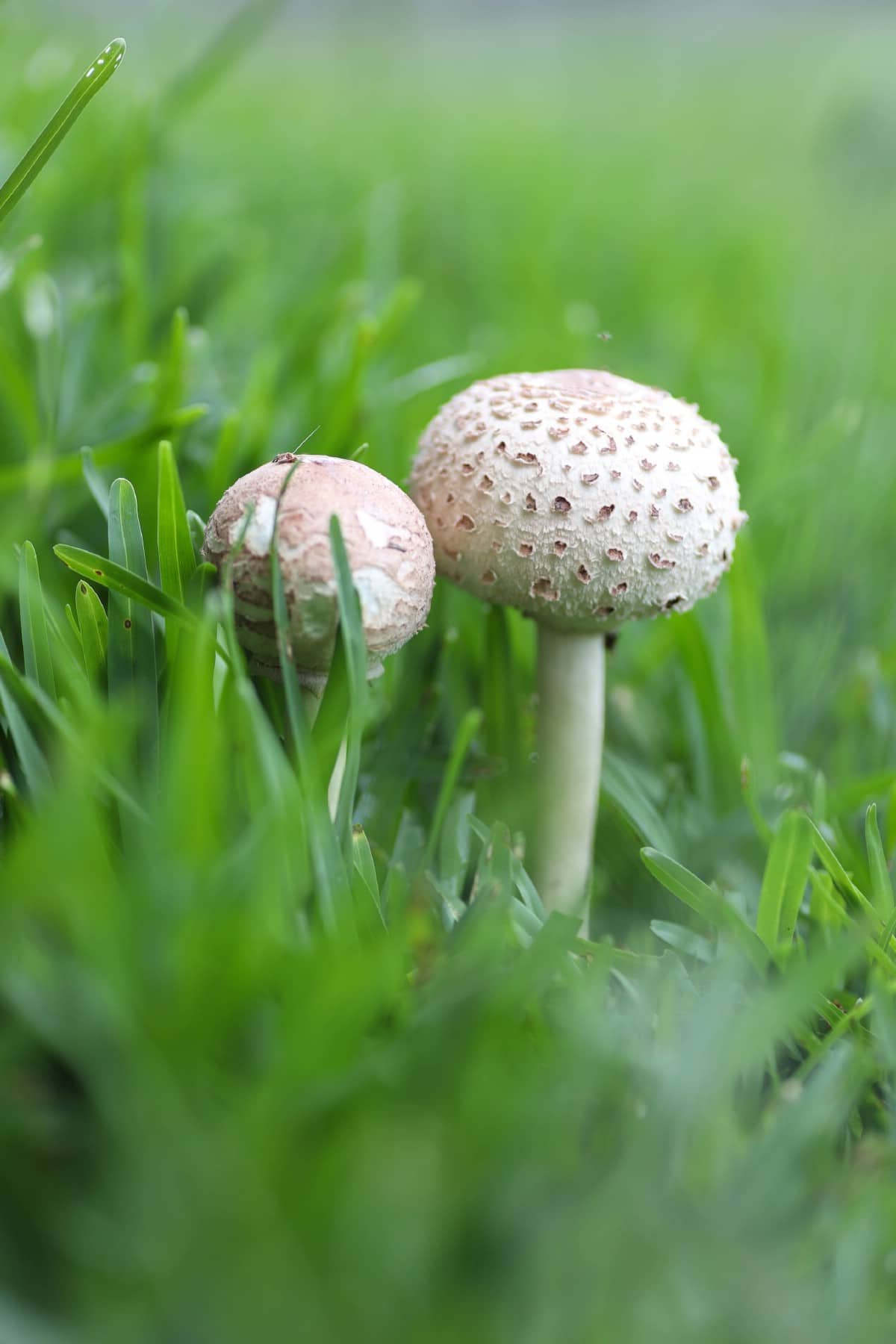
Green-spored Parasol (Chlorophyllum molybdites)
These are the most commonly eaten poisonous mushrooms in the United States. They aren’t deadly but will cause really bad gastrointestinal issues. The green spored parasol is also called “the sickener” and it gets eaten because it grows in lawns and parks and resembles the edible shaggy parasol.
Burnt Knight (Tricholoma ustale)
This is one of the mushrooms most often linked to poisonings in Japan. Eating it causes stomach and intestinal problems. Scientists have found that Japanese populations contain a toxin called ustalic acid and, at high doses, it can be deadly. It is not yet known whether Tricholoma ustale found in North America is toxic.
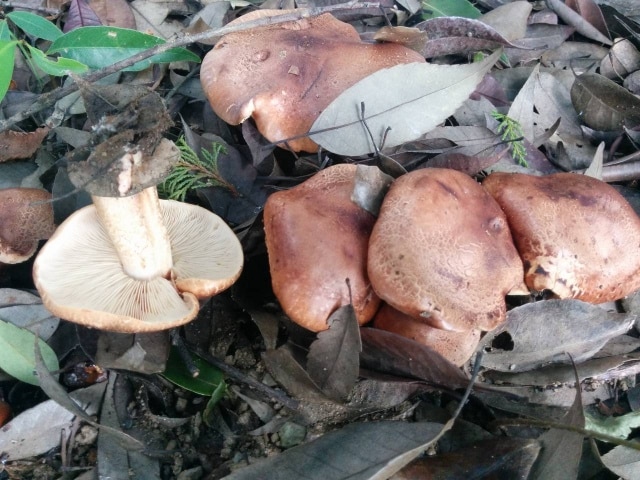
Tricholoma ustale by lxjfx on Mushroom Observer
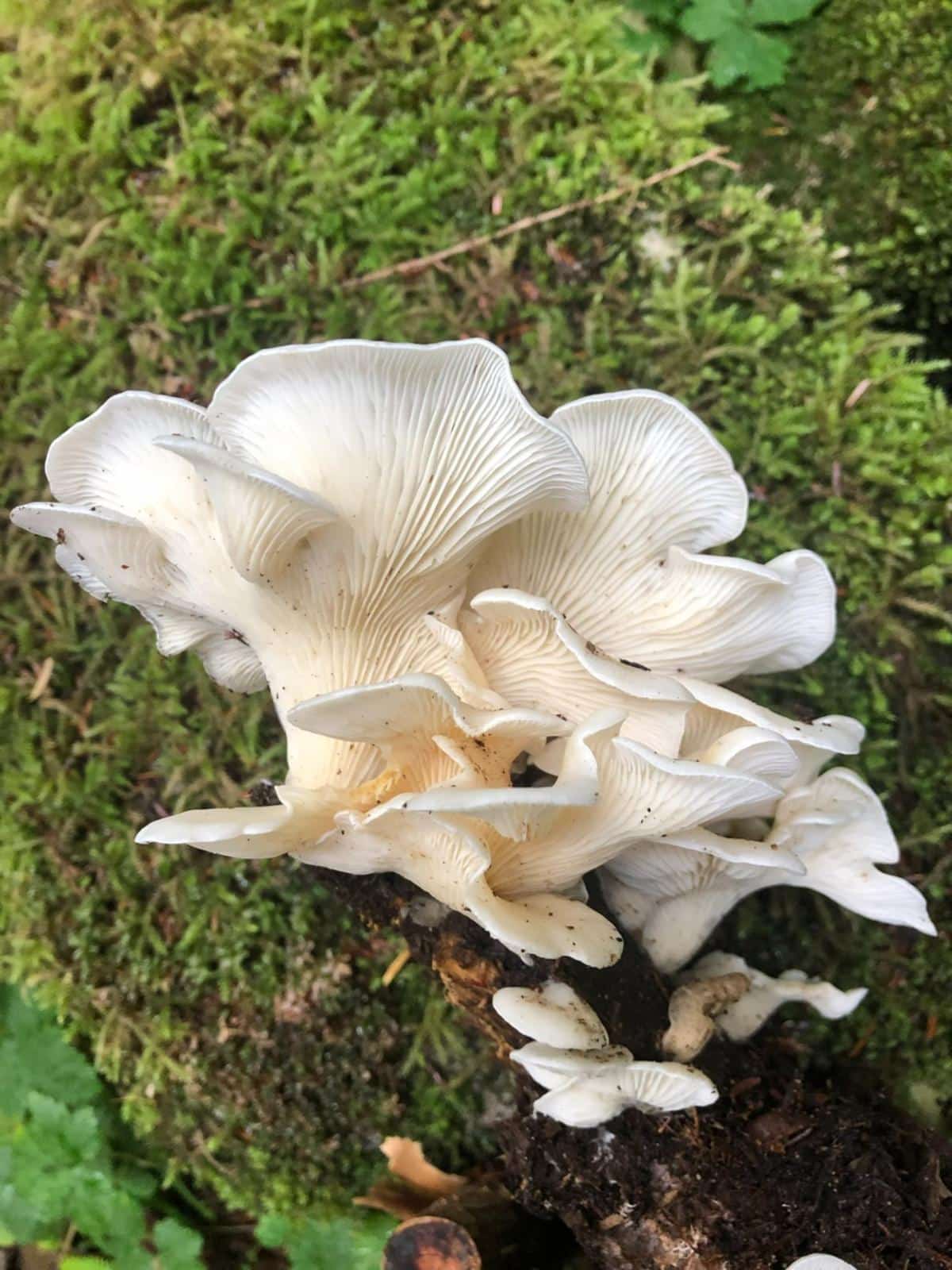
Pleurocybella porrigens (Angel Wing)
This is a complicated one. This mushroom has killed people in Japan, but it is widely eaten around the world to this day and there are no other reported deaths. We recommend reading this to get a full understanding.
For a very thorough examining of poisonous mushrooms reports in Canada and the US from 1983 to present day, check out this article by Michael Beug: Mushroom Poisoning in Canada and the United States

Leave a Reply