
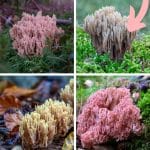
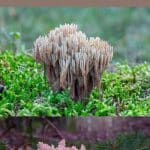
Coral mushrooms look like something that belongs in a tide pool. The fruiting body branches upward in dense clusters of fingers and forks, like the sea coral it is named for. These corals range in color from bone white to butter yellow to bright red. The smallest are a couple of inches tall, and the largest are big, heavy heads that grow up to a foot wide. The genus Ramaria has the largest and fleshiest of these coral fungi, and is commonly encountered. However, it is not the only coral fungus out there.
The genus Ramaria is a hard group to figure out on its own, as well as apart from other types. There are around 200 species worldwide, and many are so close in color and shape that a microscope and a chemical spot test are the only reliable way to tell them apart. Some are good edibles, and several cause stomach upset, so care matters when foraging for them. The Ramaria species below are the ones most likely to be found in North America.
- Scientific Name: Ramaria species
- Common Names: Coral mushrooms
- Habitat: Primarily growing from the ground, with a few exceptions
- Edibility: Varies
Jump to:
All About Ramaria Coral Mushrooms
These mushrooms get their common name from their coral-like branching. The genus name Ramaria comes from the Latin ramus, meaning “branch”, and a suffix that means “furnished with.” So a Ramaria is a fungus furnished with branches, which is what they are.
Most of these species started under a different name. Many were placed in the genus Clavaria, and for a long time Ramaria was treated as a smaller group inside Clavaria. It was raised to full genus rank in 1918. More recently, DNA studies have found that Ramaria is not one tidy family tree. The coral shape has turned up more than once in unrelated lineages, so Ramaria is what scientists call polyphyletic, a grab bag of branched fungi that are not all close relatives.
These corals are eaten in many parts of the world. In Veracruz, Mexico, the pink-tipped coral has two local names. It is called escobea for broom and pechuga for chicken breast. It sells in Japan as nedzumi-take and is gathered in Korea and Nepal. The yellow coral and the red coral are sold in markets in central Mexico.
Not all coral mushrooms are edible, though, and any foraging should be done with caution. The inedible ones won’t kill you, but they might cause extreme digestive upset.
Ramaria Coral Mushrooms Identification Guide
Season
These corals fruit when the ground is damp. In most of North America, that means summer and fall. On the West Coast, the season runs later, into fall and winter.
Habitat
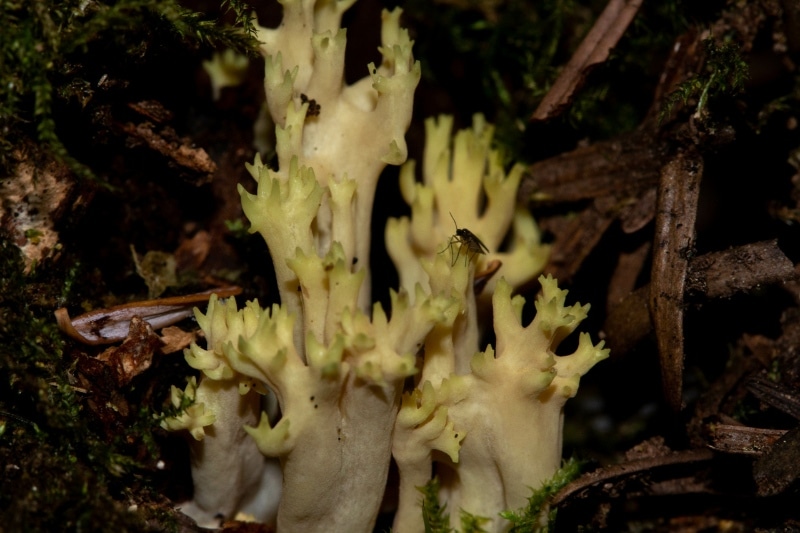
Most Ramaria are mycorrhizal. They trade with tree roots, swapping minerals for sugar. That is why they grow near trees and emerge from the soil, not from wood. A handful of species break this rule. The upright coral grows on dead and buried wood, and the gelatinous coral fruits around fallen logs. The genus is widespread across North America. Many of these species also grow in Europe, Asia, and other temperate regions.
Identification
Form and Branches
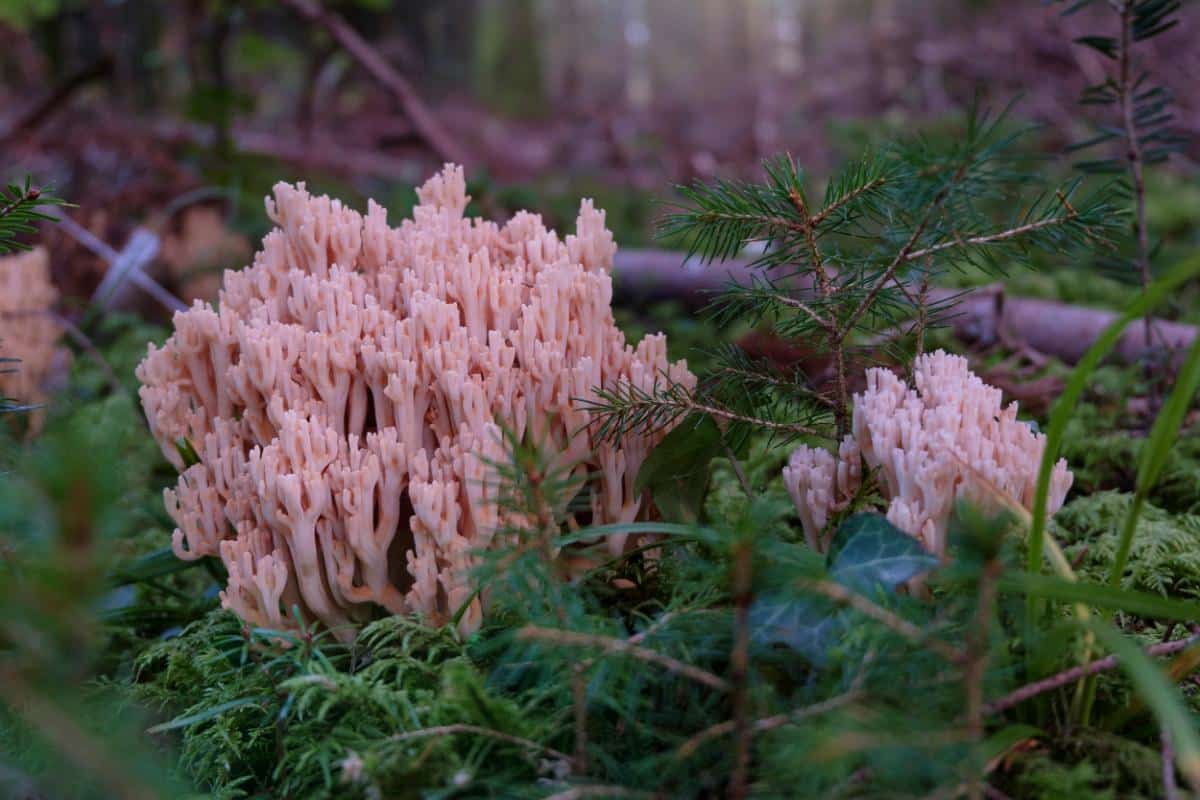
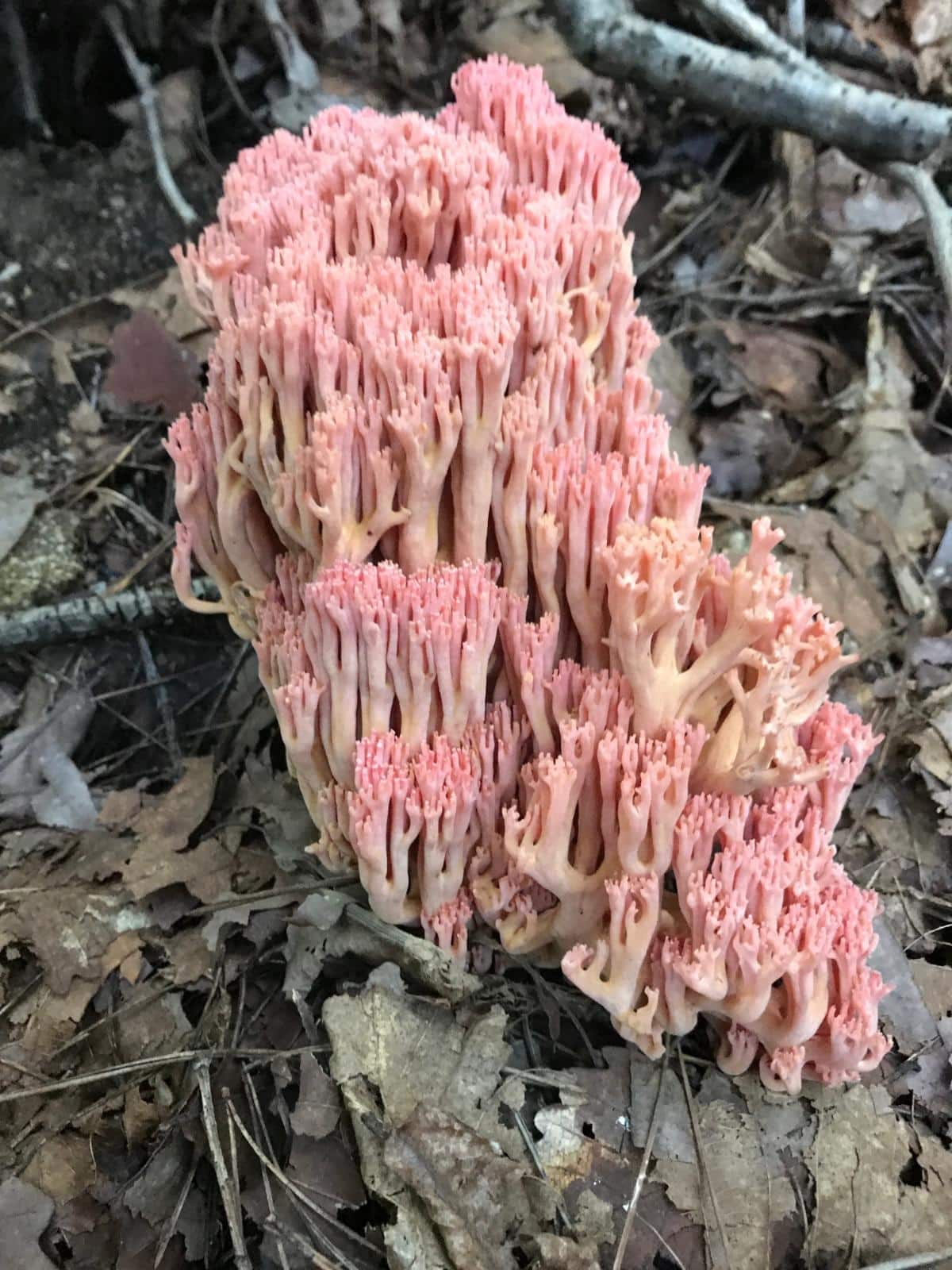
A coral has no cap. The fruiting body is a branched mass that grows from a thick base, splitting again and again into smaller branches that end in fine tips. It looks remarkedly like ocean coral. The smallest species grow as clumps just a couple of inches tall, and the largest are heads close to a foot wide. The branch tips in many species are brighter than the rest of the fungus, since the rest of it is usually much paler. The tips vary in shape by species; some are pointed, some are blunt or rounded, and some divide into little clusters of branchlets.
Gills or Pores
There are no gills and no pores. The spores grow on the smooth outer surface of the branches.
Base
The base takes the place of a stem. It is thick and pale, sometimes a single stout column and sometimes a cluster of stalks that hold up the branches above. In some species, the roots take hold deep in the soil or in buried wood. The flesh of the base can remain firm and white, or stain brown, red, or wine-colored when handled.
Taste and Smell
Most coral mushrooms have a mild smell or none at all. A few have distinct smells. The fuzzy-footed coral smells sweet, and the upright coral has a faint smell of aniseed. Several of the inedible species taste bitter, but not all of them, so it can’t be used entirely to determine edibility. Taste, though, is part of how foragers sort out coral mushrooms, since a bitter coral is not one you’d want to eat.
Flesh Color and Staining
The flesh in most species is white. Some stain when bruised and some do not, so it is worth checking. The upright coral turns wine-red where it is handled, and the bigfoot coral stains brown with age. Also, the base of several species reddens or browns when bruised.
Spore Print
The spore print is yellow to ochre, a dull orange-brown, in most species.
The Most Common North American Ramaria Species
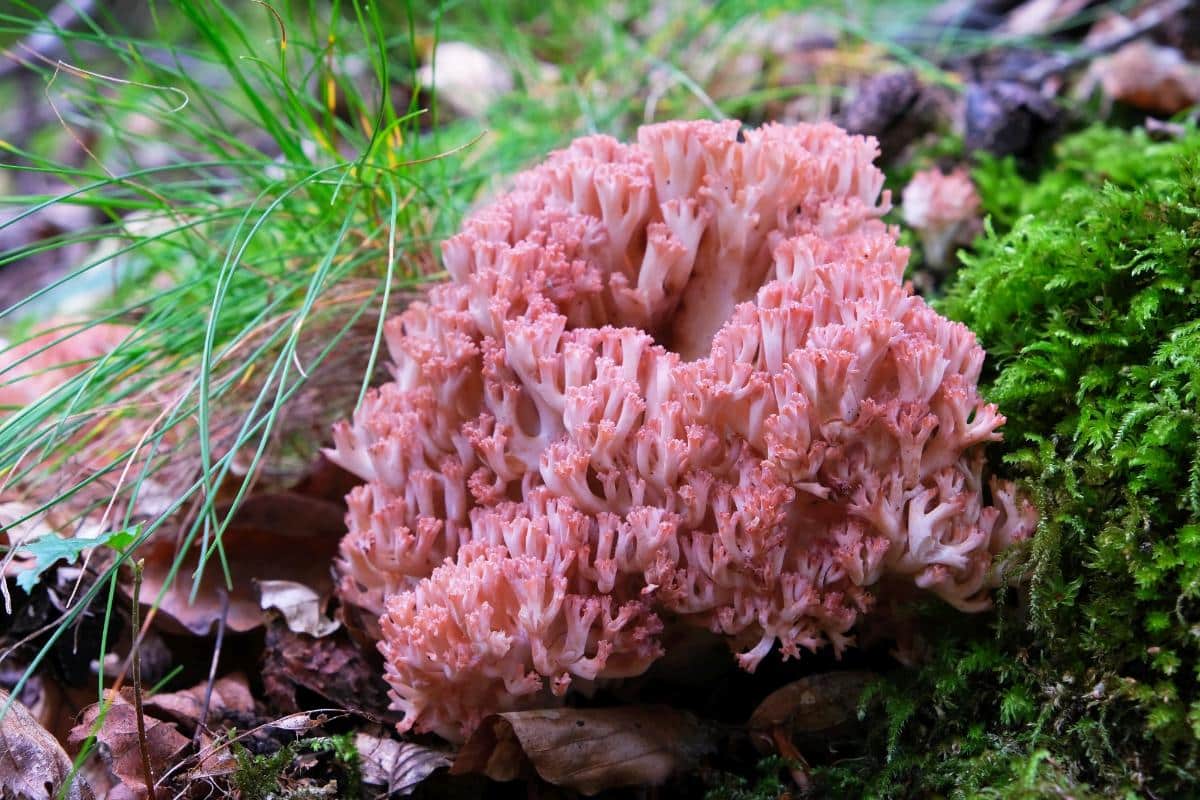
Pink-tipped coral/Cauliflower coral (Ramaria botrytis)
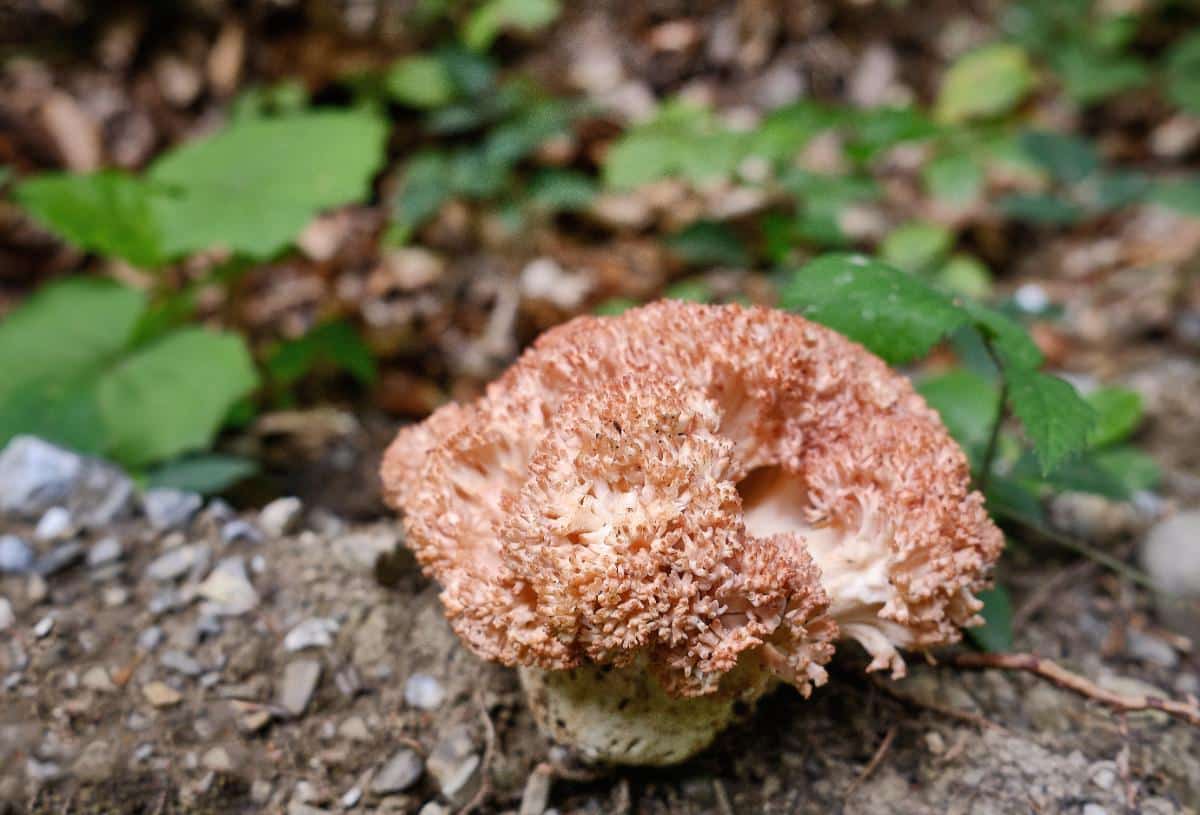
The pink-tipped coral looks like a cauliflower head, with a stout white base and short, crowded branches tipped in pink to purplish-red. The fruiting body grows up to about 8 inches tall and as much as a foot wide. It grows on the ground under hardwoods, mostly beech, across North America, and is most common in the southeast and along the Pacific Coast. The flesh is firm and white and smells faintly fruity. The color of this one does fade with age, which makes it harder to identify older ones.
- Ramaria rubripermanens
This western coral looks a lot like the pink-tipped coral and fools many people. It has the same whitish to light yellow branches with pink to red tips, but the red stays longer and the branches do not stain. The fruiting body grows to about 6 inches tall. It grows on the ground in the western United States and Mexico and fruits in spring and fall. The flesh smells sweet, and it is edible. Telling it apart from the pink-tipped coral for certain means checking the spores.
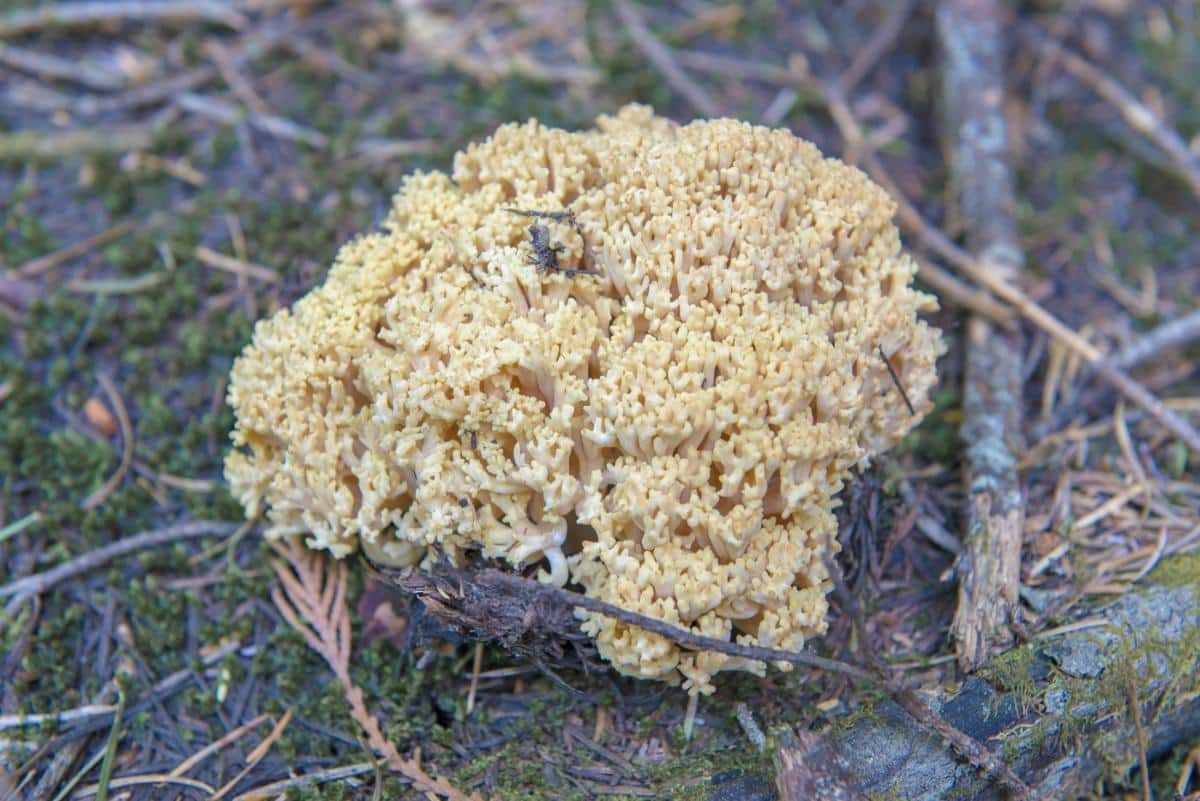
Yellow coral (Ramaria rasilispora)
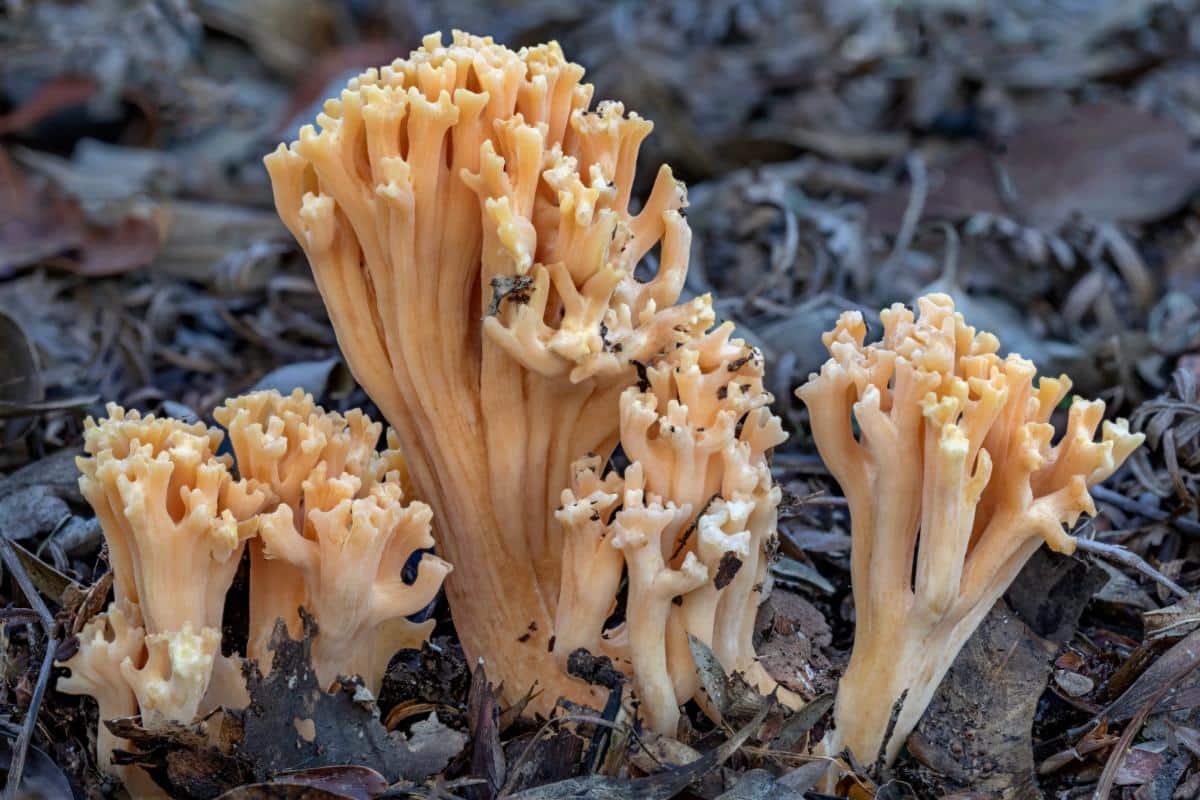
The branches of the yellow coral mushroom are yellow to apricot and grow from a thick whitish base. With age, though, the yellow tips darken to brown. A big one can be a foot tall and wide! This species grows on the ground in conifer forests in western North America south to Mexico and north to Alaska, and it fruits in spring and summer. The flesh has no strong taste or smell. It is a popular edible where it grows.
Bigfoot coral (Ramaria magnipes)
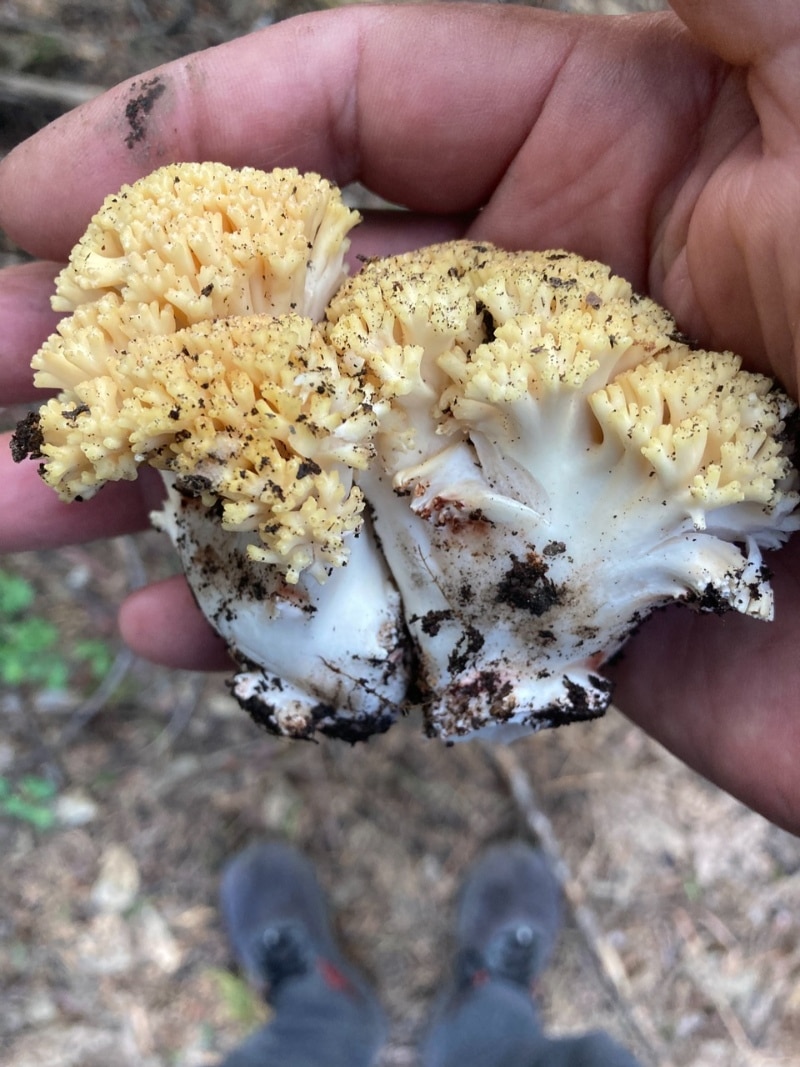
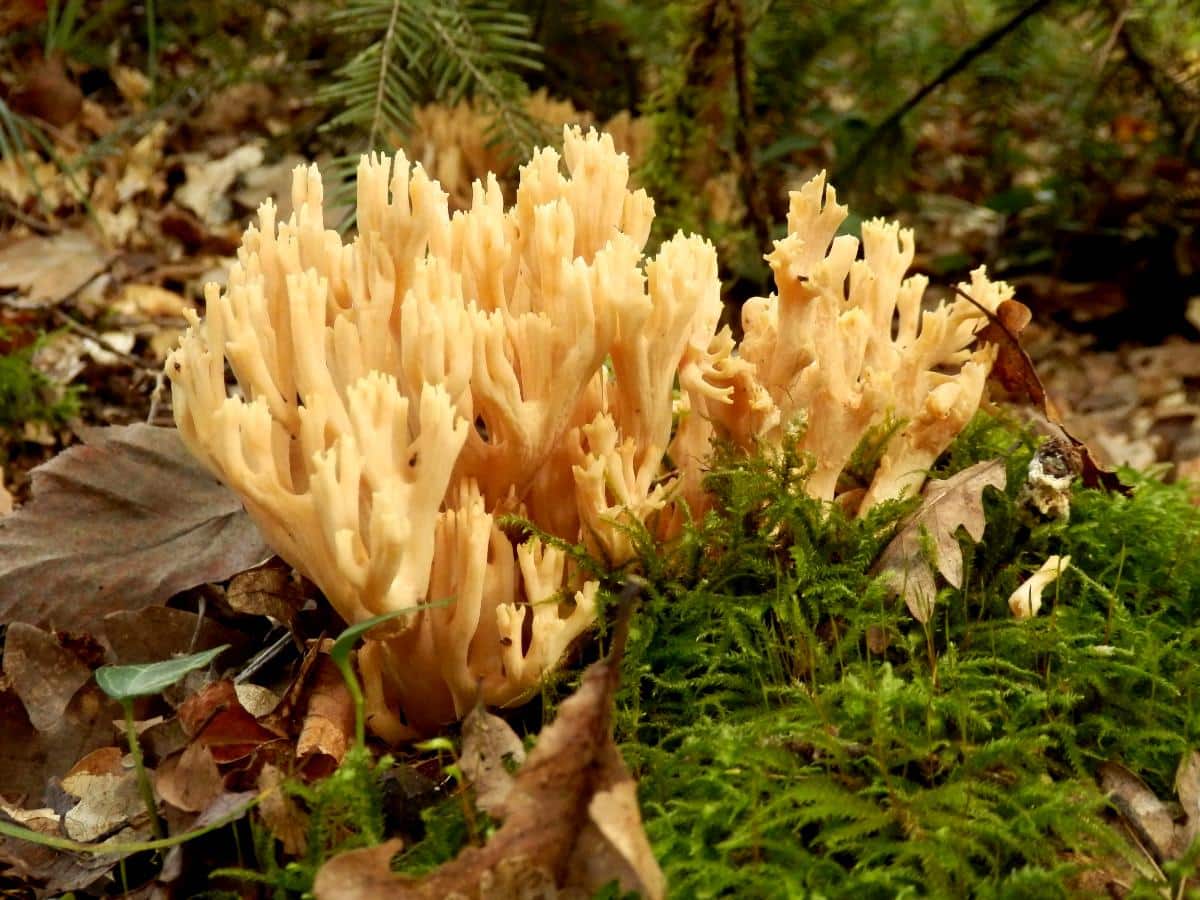
This large yellow coral earns its nickname from a huge white stalk that roots deep into the soil. The fruiting body grows up to about 10 inches tall and is light yellow to pale orange, with a stalk that stains brown with age. The flesh smells faintly of beans. This species fruits in spring in the mountains of the West, often at the edge of melting snow. It grows in the same places as the yellow coral, sometimes side by side, and the two look very similar. The bigfoot coral is brighter when fresh and has a bigger rooting stalk, but telling them apart for certain means checking the spores under a microscope. It is edible when young and cooked, but can have a laxative effect on some people.
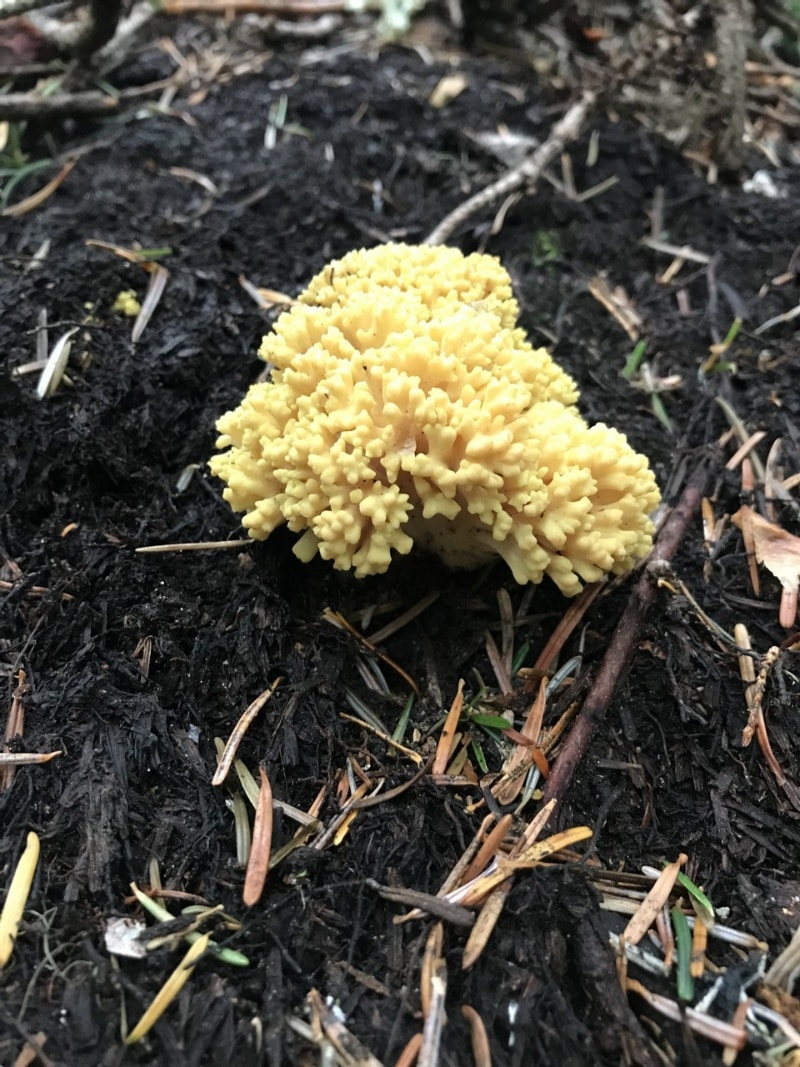
Red coral (Ramaria araiospora)
This is the brightest of the West Coast corals, and it is extremely bright and noticeable when it is young. It is radiant red to magenta when fresh, then fades to coral pink and then to a dull orange with age. The branches are slender, and the base is whitish and finely fuzzy. The fruiting body of this coral mushroom grows up to about 5 inches tall, and it grows under tanoak and other hardwoods, or under conifers like western hemlock, along coastal California and the Pacific Northwest in fall and winter. It is foraged and sold in markets in Mexico.
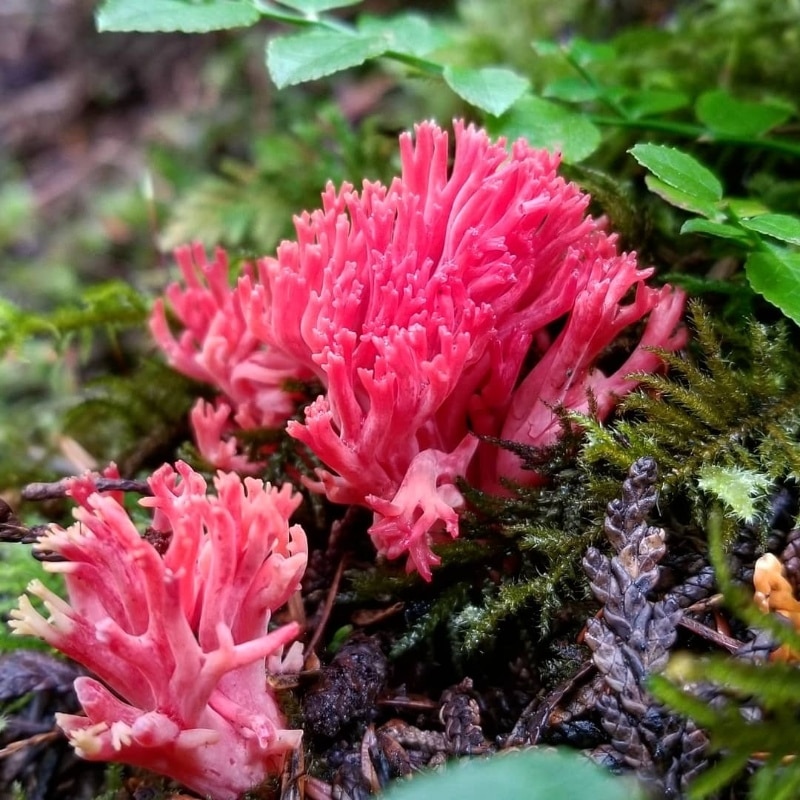
Orange coral (Ramaria largentii)
The branches of the orange coral are decidedly orange and sometimes they have even brighter orange tips when they’re young. The flesh is orange, too. The base is white on the lower half and golden yellow higher up. It grows on the ground in conifer forests across the West, from the Pacific Northwest into the Rockies.
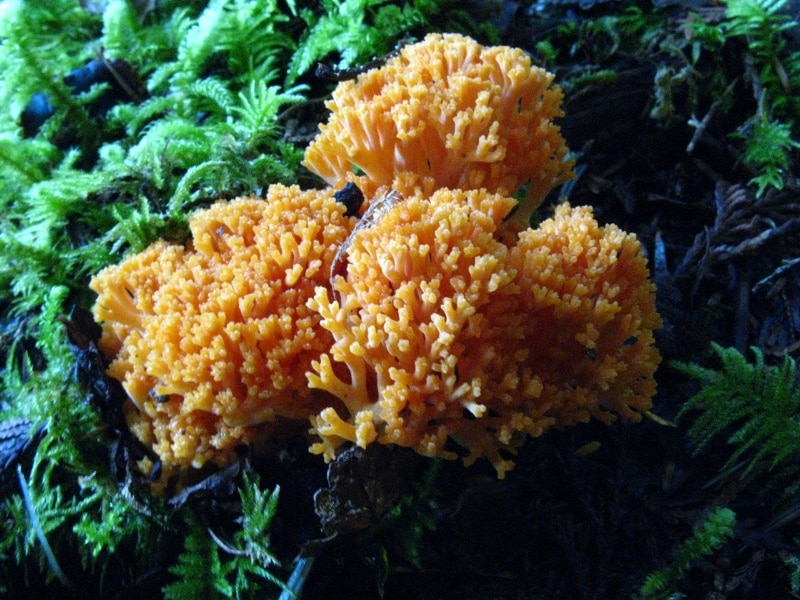
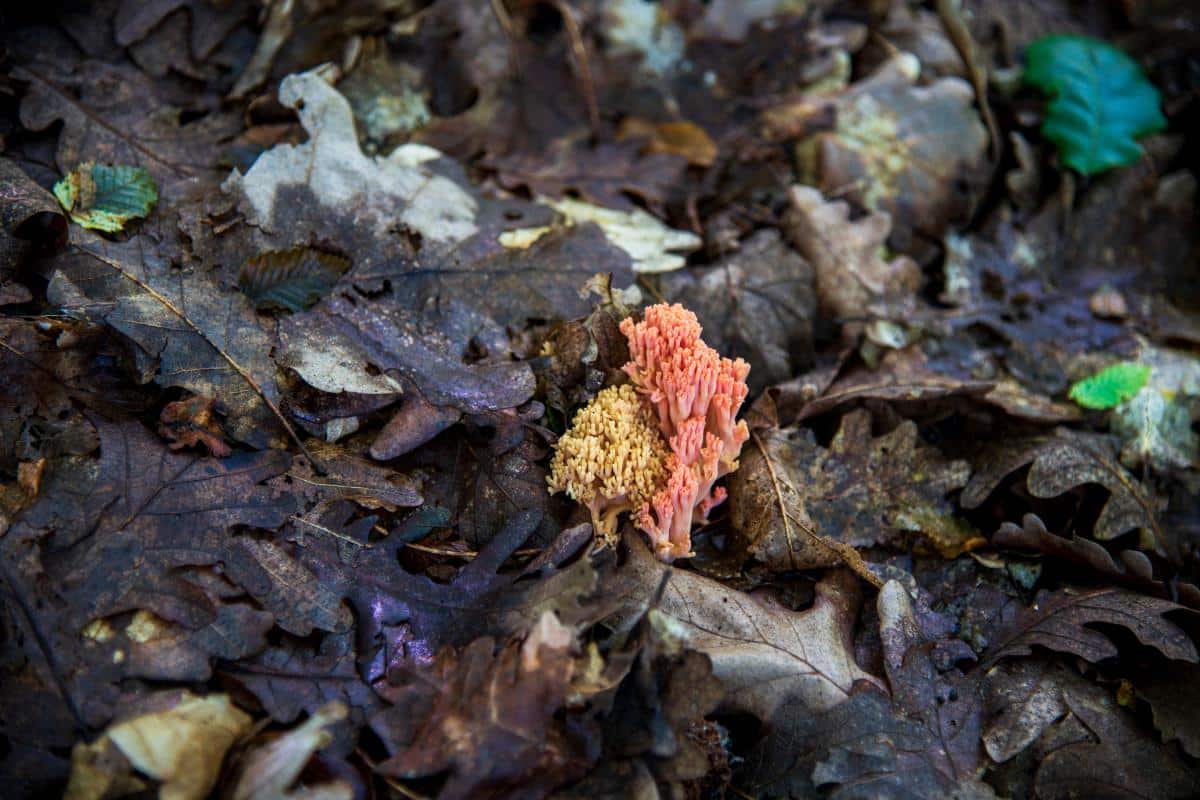
Salmon and yellow-tipped corals (the Ramaria formosa group)
This is a group of pink-bodied, yellow-tipped corals that are often listed in guides under the European name Ramaria formosa. However, the true R.formosa is only a European species, and the North American ones are different species. These include the species R. leptoformosa, R. neoformosa, R. raveneliana, and R. rubricarnata.
The salmon coral is pinkish with yellow branch tips when young. With age, it fades to a washed-out tan. The fruiting body grows up to 8 inches tall, and it tastes bitter. The true salmon coral is a European species that causes stomach upset and should not be foraged. It is not exactly known, but it is believed that the North American species are also toxic.
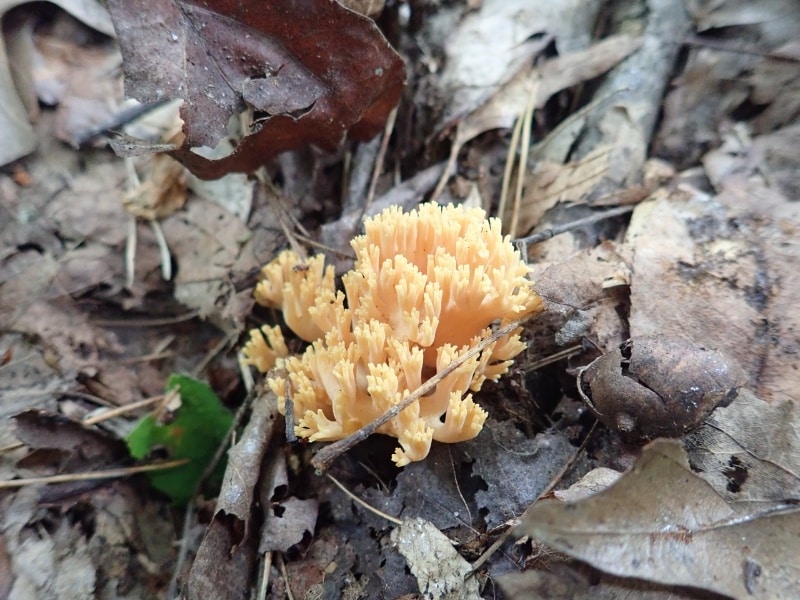
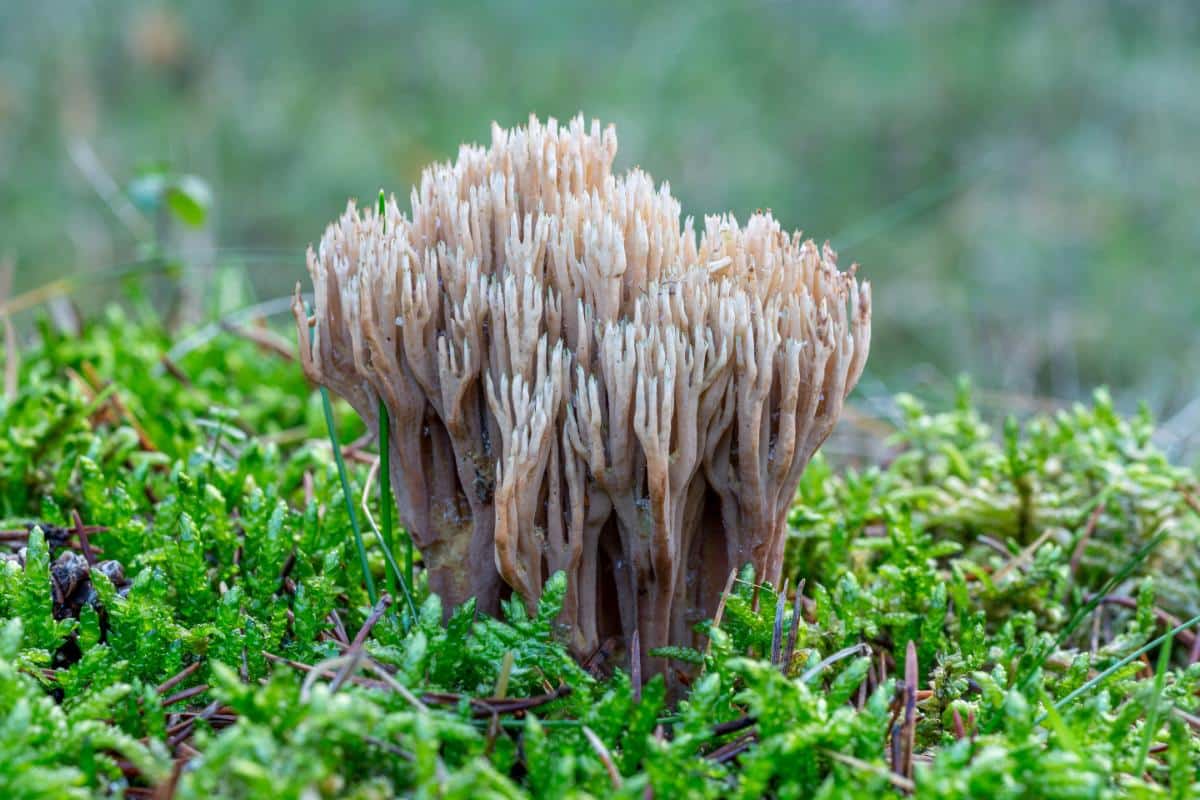
Upright coral (Ramaria stricta)
This is one of the few Ramaria that grow straight out of wood (most of the genus grows from soil). The branches are pale cream to buff, tough and rubbery, and they fork over and over into sharp upright tips that all point the same way. The fruiting body grows up to about 4 inches tall, and it grows on dead and buried wood, mostly under beech but also under conifers, and in wood-chip mulch in gardens. The surface turns wine-red when it is bruised, and the older ones smell faintly of aniseed. It is inedible, with bitter, thin flesh. This species grows across North America but is more common west of the Continental Divide.
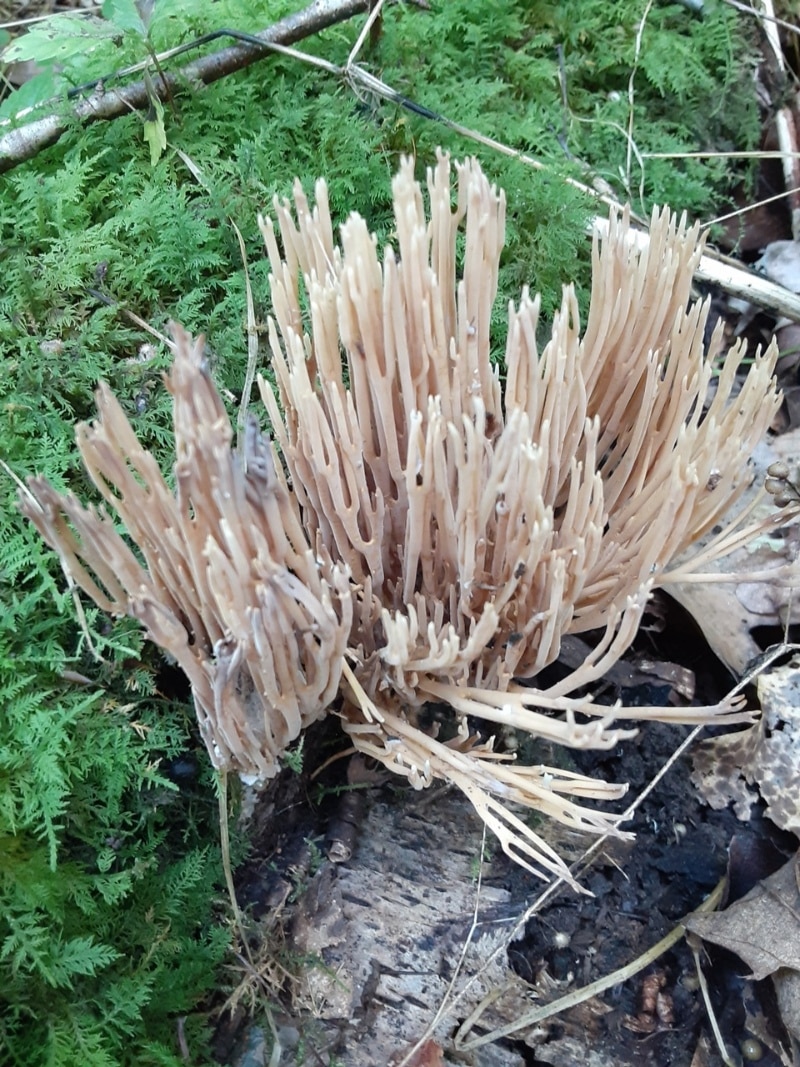
Gelatinous coral (Ramaria gelatinosa)
The gelatinous coral looks and feels different from the rest. It is a medium-sized coral with orange to orange-brown branches, yellow tips when young, and a base that is white to light yellow or light orange. The flesh is soft and jelly-like instead of firm, and in the Pacific Northwest form it is translucent with a yellow band near the top of the stalk. It grows on the ground around fallen wood, in North America and Europe. It is inedible and may be poisonous, since the jelly-fleshed corals cause diarrhea in most people.
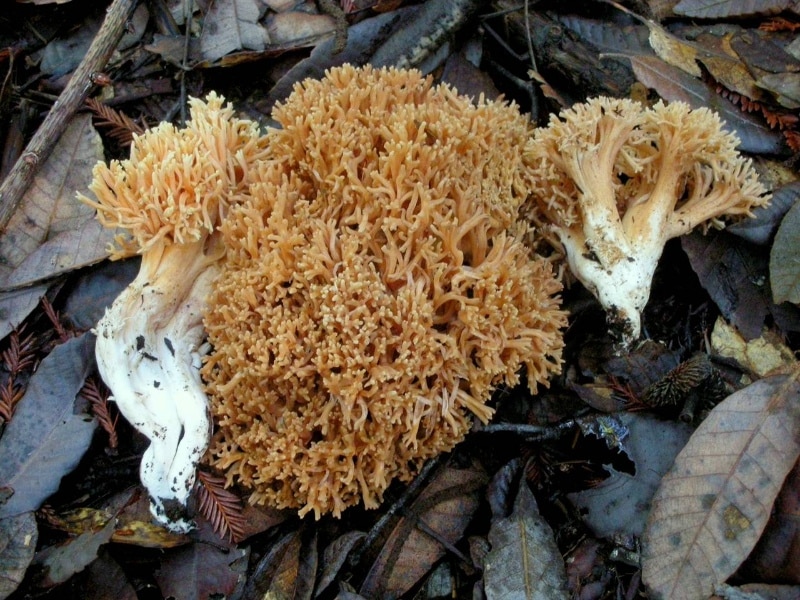
Fuzzy-footed coral (Ramaria cystidiophora)
This coral is named for its fuzzy white stalk. The branches are yellow, sometimes brighter at the tips, and the whole mushroom smells sweet. It grows on the ground in the Pacific Northwest. The sweet smell and fuzzy base make it one of the easier yellow corals to know, though several color varieties exist, including a peach-toned one.
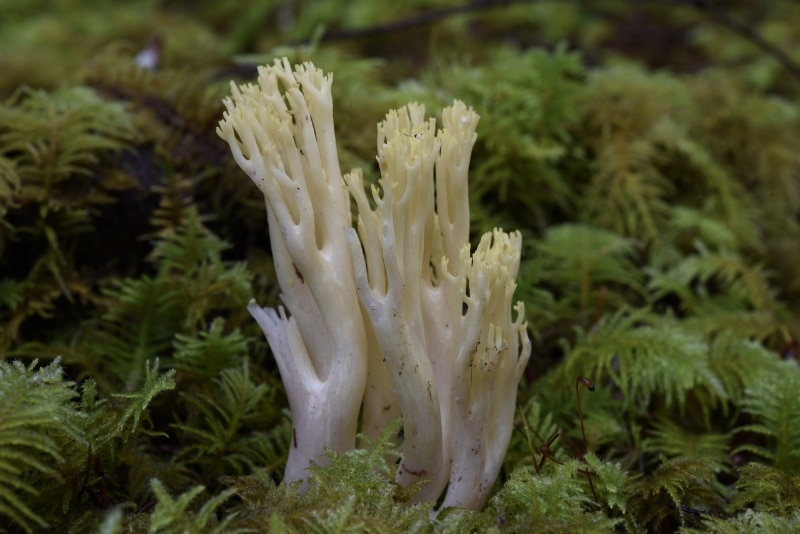
Ramaria Coral Lookalikes
The Ramaria corals have a yellow to ochre spore print, while most of the other coral fungi have a white one. Spore print color, along with size and where the coral grows, sorts them from Ramaria.
Crown-tipped coral (Artomyces pyxidatus)
This species has a tiny crown at the tip of each branch, a ring of three to six points around a small cup-shaped dip. No Ramaria has this. The crown-tipped coral grows straight out of dead hardwood logs, is cream to tan, and has a white spore print instead of the yellow to ochre of Ramaria. It tastes peppery. It is a widely foraged edible, though like other corals it can upset your stomach.
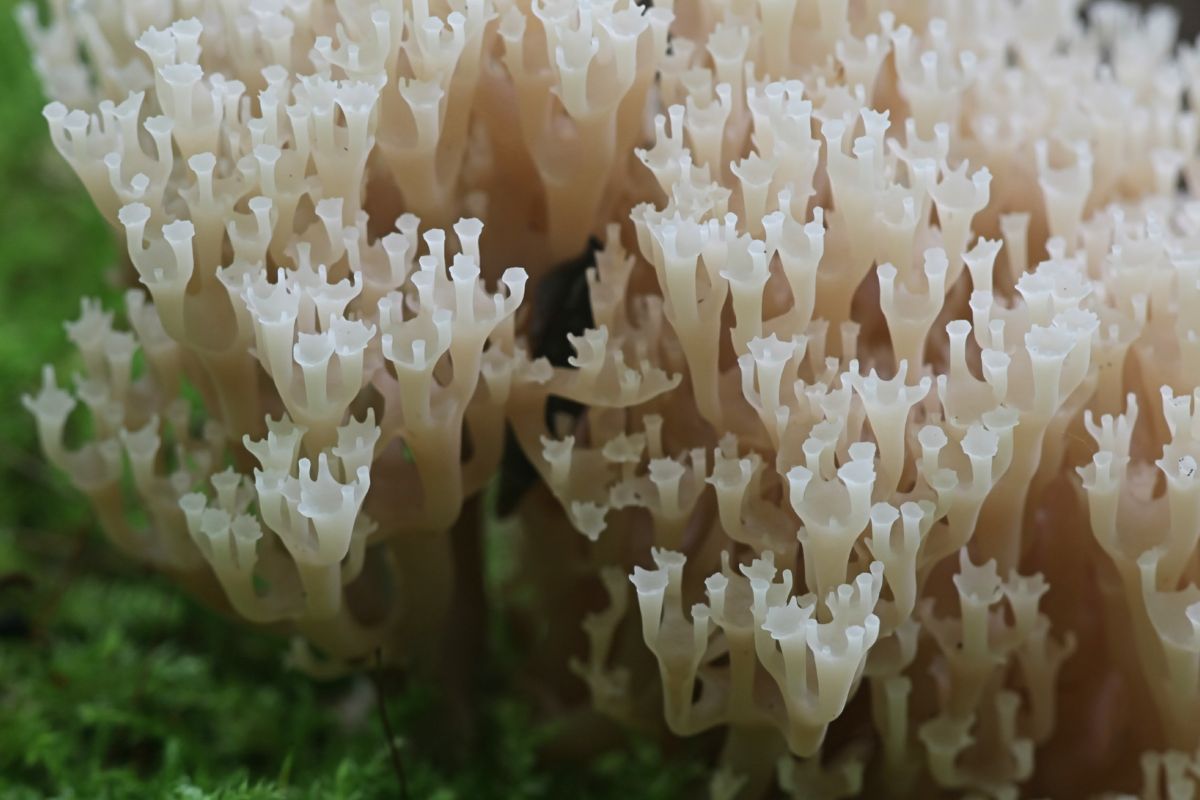
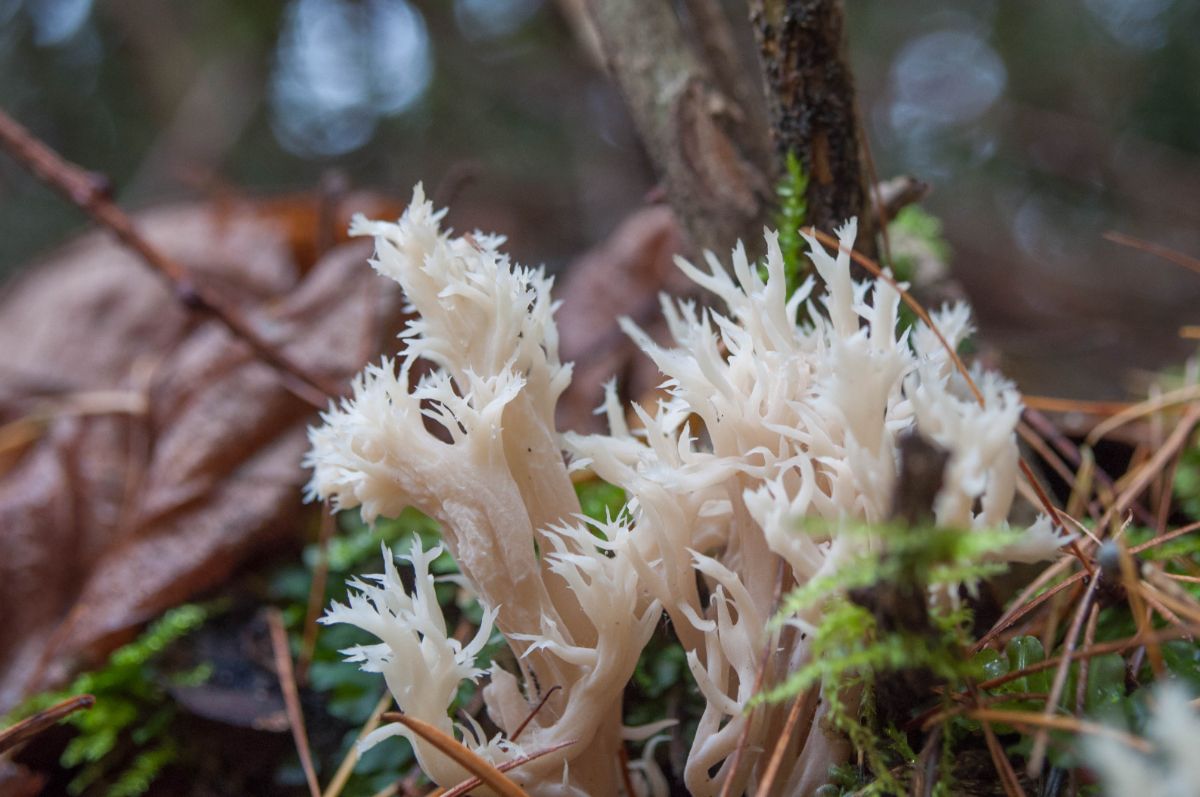
White coral/Crested coral (Clavulina cristata,Clavulina coralloides)
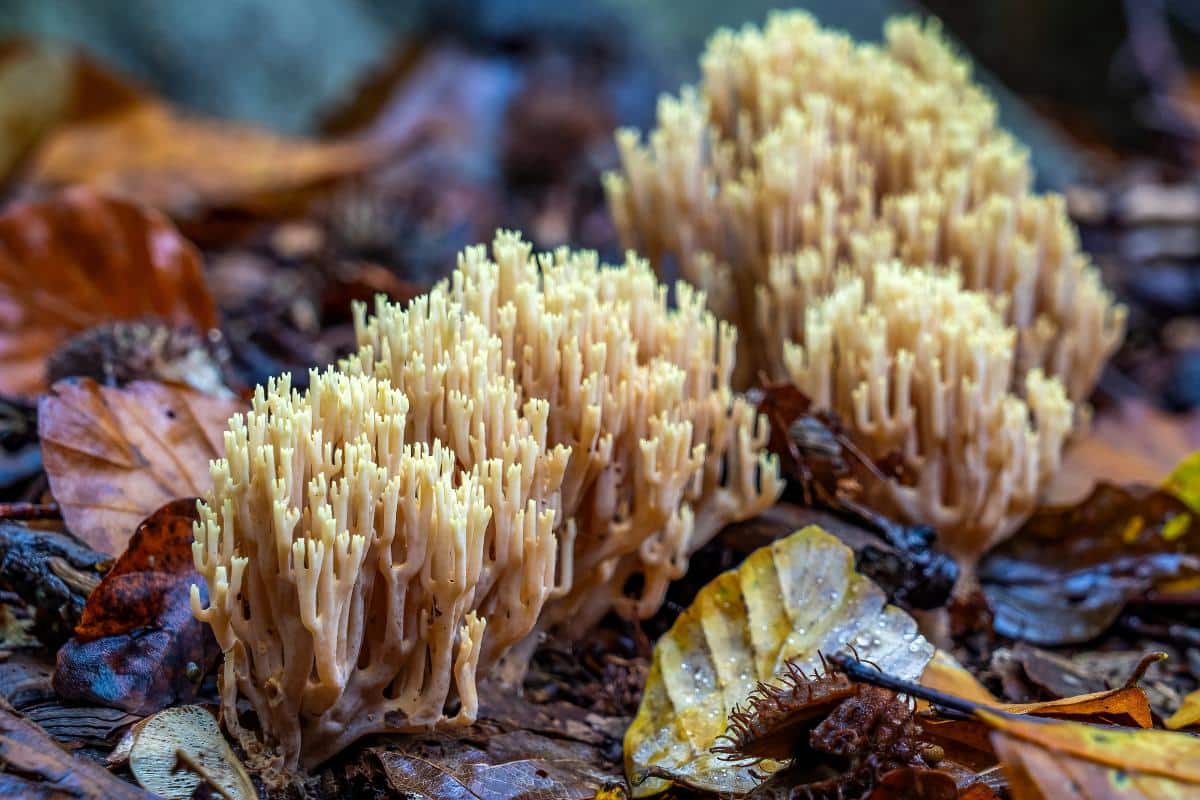
The coloring of the crested coral is white to cream, not the bright colors of most Ramaria. Its branch tips are cristate, which means they split into tiny points like a comb or a feather. it is smaller and more delicate than Ramaria species, growing only up to 3 inches tall. It grows on the ground under conifers and hardwoods, and has a white spore print.
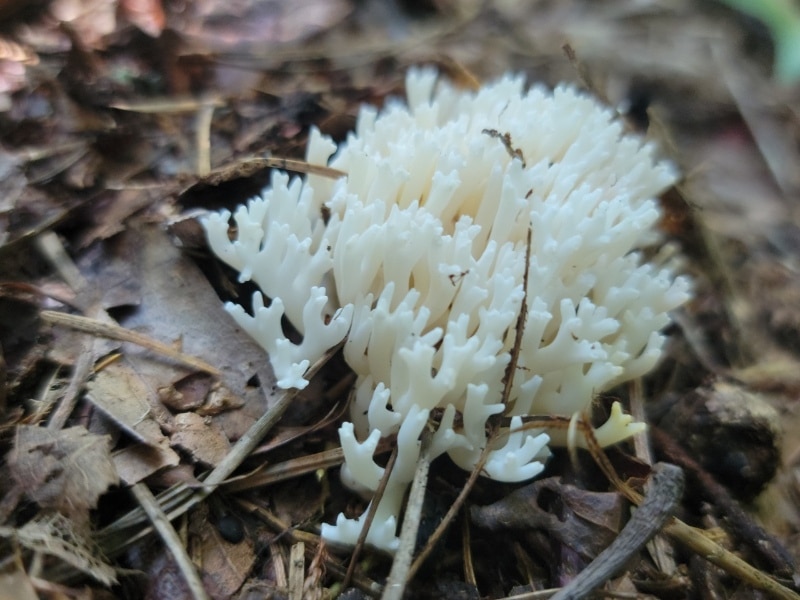
Ivory coral (Ramariopsis kunzei)
This is a small white coral that is brighter white than the crested coral, with blunt branch tips instead of toothed ones. It grows about 2 to 3 inches tall and has a white spore print. It grows on the ground and ranges from white to pale yellow, and it develops a pink tinge with age.
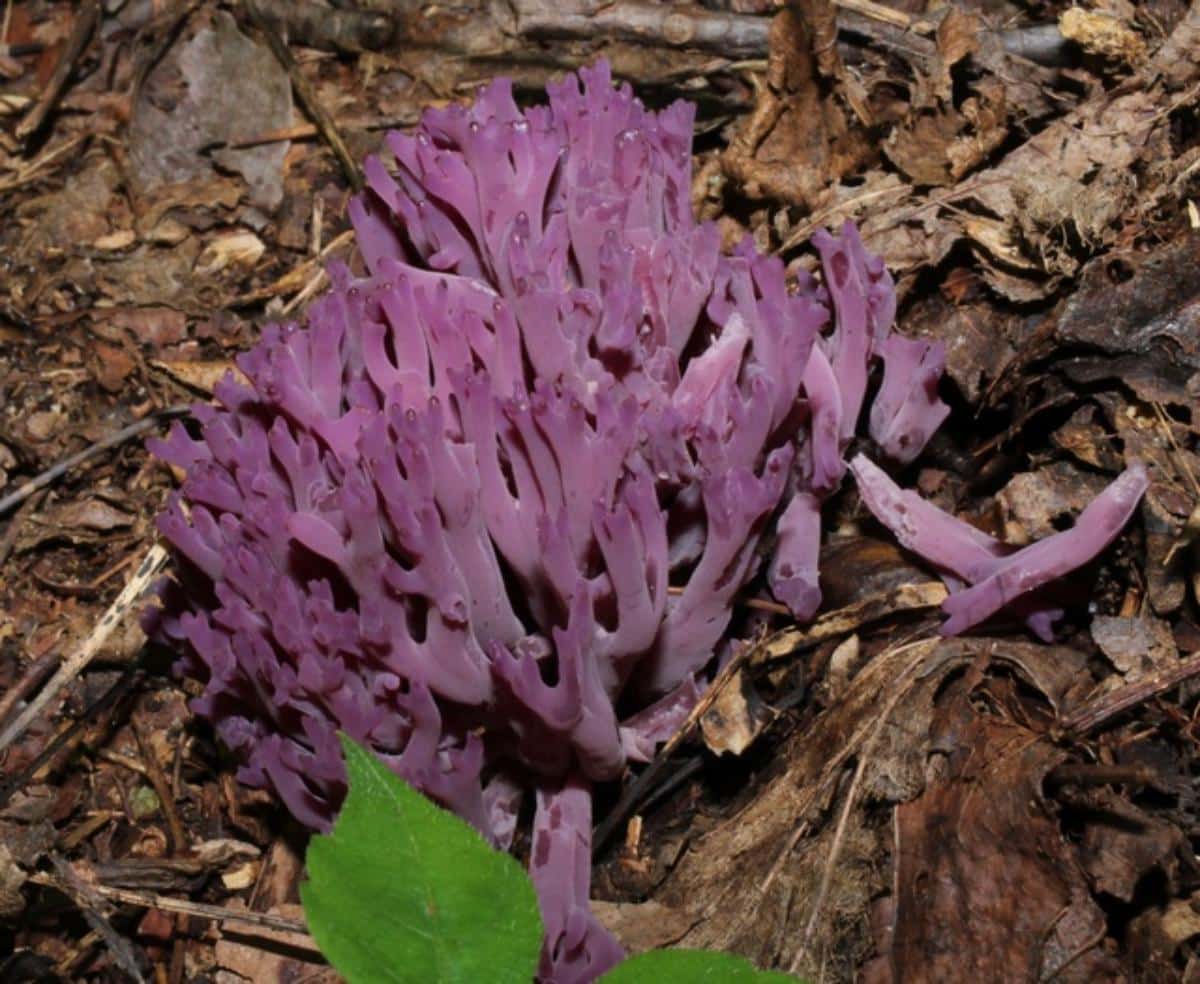
Fairy clubs (Clavaria spp)
Most fairy clubs are single, unbranched spindles instead of branched corals. They are more fragile, too. There is one primary branched one, the violet coral (Clavaria zollingeri). It is deep violet with forked branches and grows up to about 4 inches tall. It grows on the ground in woods and old grassland and is fairly common in eastern North America. No common Ramaria is violet, so a purple coral is most likely a Clavaria. The one purple Ramaria, Ramaria purpurissima, is large and rare. It grows in old-growth conifer forests in the West.
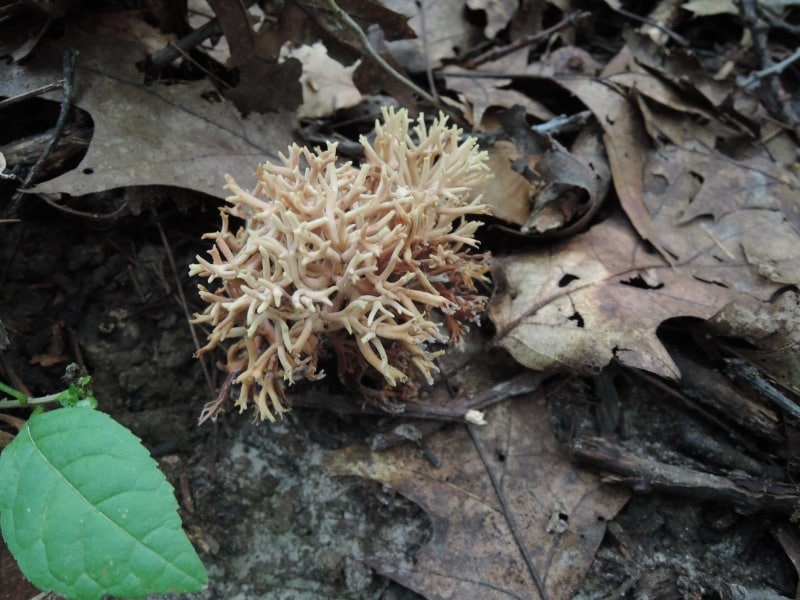
Wood corals (Lentaria)
These are small and tough, and they grow on wood and buried debris instead of in soil. They are whitish to pale buff or light brown with white tips, and they have a white spore print. They look most like the one wood-growing Ramaria, the upright coral. That coral is yellower, tastes bitter, and has an ochre spore print. It is the less common of the two.
Green-staining coral (Ramaria abietina, now Phaeoclavulina abietina)
This coral was a Ramaria until it got moved to Phaeoclavulina after DNA studies. It bruises green where it is handled, which is how it gets its name. It is a small coral, about 1 to 2 inches tall, and dingy yellow-green to light olive. The slender branches fork several times and end in forked or crested tips. It has a short stalk and grows in rows or loose groups in conifer duff, in North America and Europe. On the West Coast, it fruits from fall into winter, and inland, it fruits in summer and early fall. It is inedible and has a sweet taste that then turns bitter.
Ramaria Coral Mushroom Medicinal Uses
These corals have no proven medical use. The most-studied one is the pink-tipped coral. In lab tests, extracts of it slowed or killed several drug-resistant bacteria that cause strep infections and listeria. Other lab studies found that it is high in antioxidants and contains a compound that blocks an enzyme linked to blood pressure.
Edibility of Coral Mushrooms
Several Ramaria are good to eat. The pink-tipped coral is rated as choice by many cooks for its mild, slightly fruity taste. The yellow coral, the red coral, the bigfoot coral, and Ramaria rubripermanens are eaten as well. When foraging for corals, pick the young, firm ones, since old corals turn bitter or mushy. The thick base and main branches need longer cooking than the fine branch tips. They can also be dried for storage.
Just because a species is edible, it doesn’t mean everyone can eat it. The pink-tipped coral gives some people a laxative effect, and so does the bigfoot coral. The pink-tipped coral also soaks up arsenic from the soil, so corals growing near roads or polluted ground are best skipped. It’s best to avoid old, faded corals because they are hard to identify and easy to mistake for the bitter or mildly poisonous species.
There are some foragers who eat coral fungi without ever pinning down the exact species. The general rules of thumb they follow are to pick young, firm ones, skip anything bitter or jelly-like, and cook them well. This is problematic for several reasons, and we do not recommend doing this at all. Most mycologists and very experienced foragers balk at how laissez-faire some people are about eating coral mushrooms.
The primary problem is that if you aren’t identifying it, you don’t actually know what you’re eating. And, because so many of these species look similar, it’s hard to know if you’re foraging an actually edible species or a toxic one. It is true that no coral mushroom is deadly, but a person is playing roulette with their stomach if they eat them without knowing the species.
Taste is also not a reliable indicator of edibility. If it’s bitter, of course, it probably won’t taste good cooked and is usually avoided. But not all toxic species taste bitter; that is not something that reliably goes hand in hand.
Coral Mushrooms Toxicity
No Ramaria causes deadly poisoning. The danger in the genus is gastrointestinal distress, and the salmon coral is the species most likely to cause it. It causes nausea, vomiting, diarrhea, and cramps. The gelatinous coral and other jelly-fleshed corals are listed as inedible and possibly poisonous because they cause diarrhea in most people who eat them.
Common Questions About Coral Mushrooms
Are coral mushrooms (Ramaria) edible?
Several coral species are, but many are not because they are bitter or toxic. The best-known edibles are the pink-tipped coral, the yellow coral, the red coral, and the bigfoot coral. If you don’t know the exact species (which can be difficult to determine), then there is a chance you’ll be eating a toxic one.
Taste is not a determiner of edibility. The prime edible ones are somewhat distinctive looking which makes them safer and easier to forage.
Are any coral mushrooms poisonous?
There are no deadly Ramaria mushrooms, but some can cause gastrointestinal distress. The salmon coral, a pinkish coral with yellow tips, causes nausea, vomiting, and diarrhea. The gelatinous coral and other jelly-fleshed corals give most people diarrhea.
Ramaria aren’t the only type of coral fungi, though. However, it is the most problematic group. All other coral mushrooms are generally safe, with some causing stomach upset, but not as bad as with the toxic Ramaria species.
How do you tell Ramaria apart from other coral fungi?
The most reliable method to separate Ramaria species from other coral mushrooms is with a spore print. Ramaria mushrooms have a yellow to ochre print, while most other coral fungi, like Clavaria, Clavulina, and Ramariopsis, have a white one.
Are non-Ramaria corals toxic?
Mostly no. The corals that cause trouble are almost all Ramaria, like the salmon coral, or the jelly-fleshed ones that give people diarrhea. Other coral genera , like Clavaria, Clavulina, and Artomyces, are edible or harmless. A few give sensitive people mild stomach upset, and several are just too tough or bland to eat.
Leave a Reply