
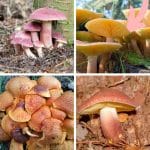
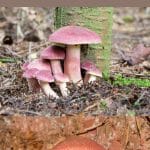
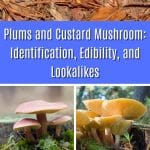
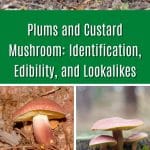
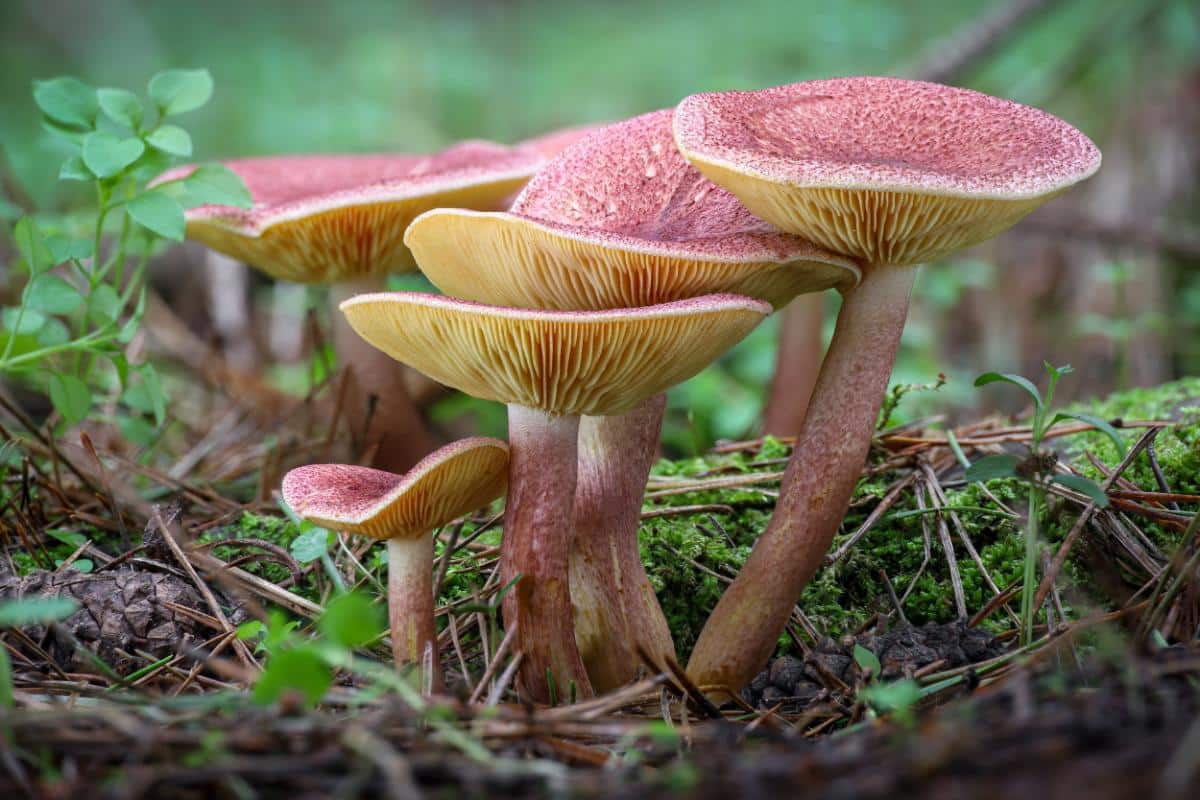
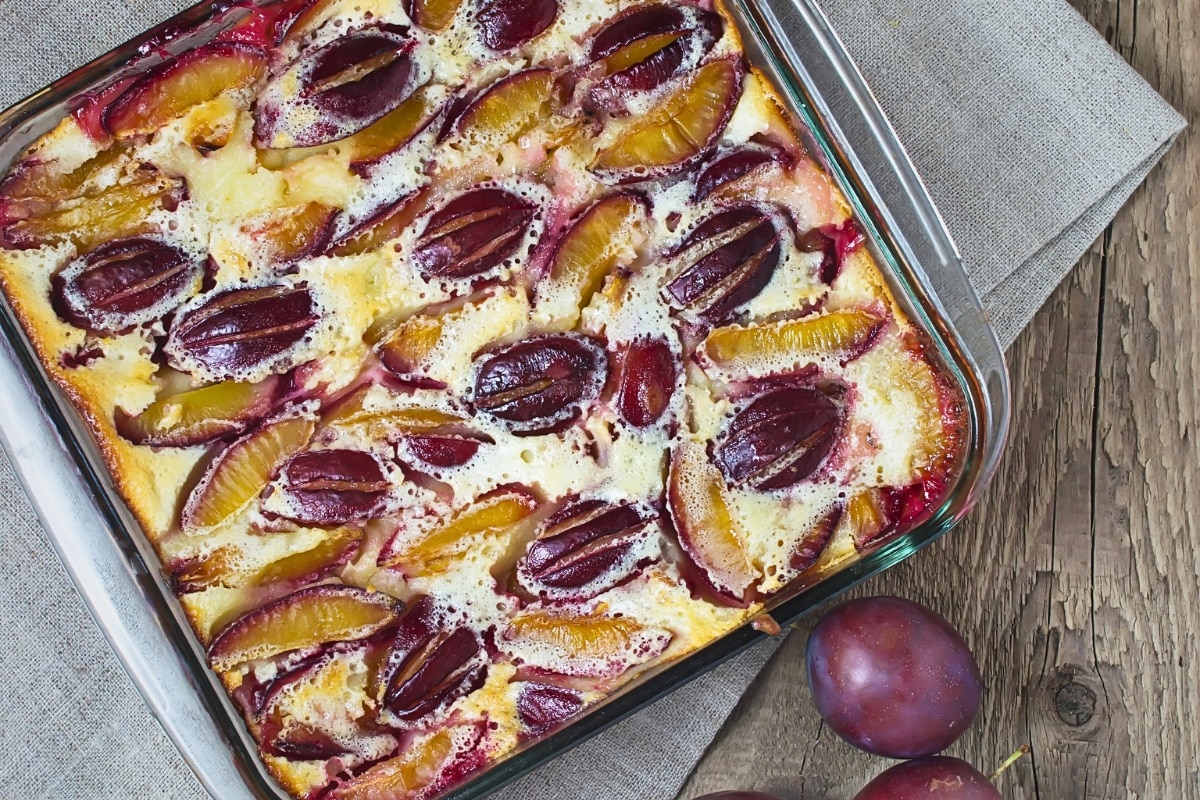
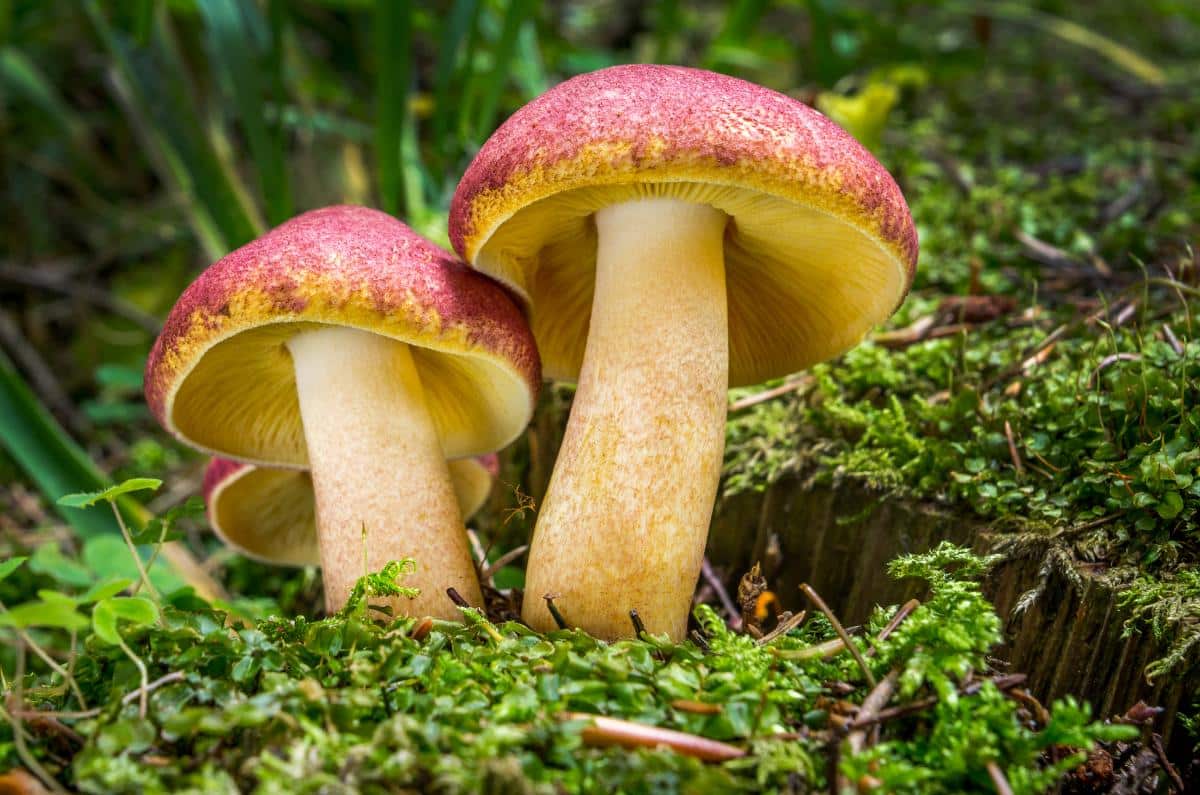
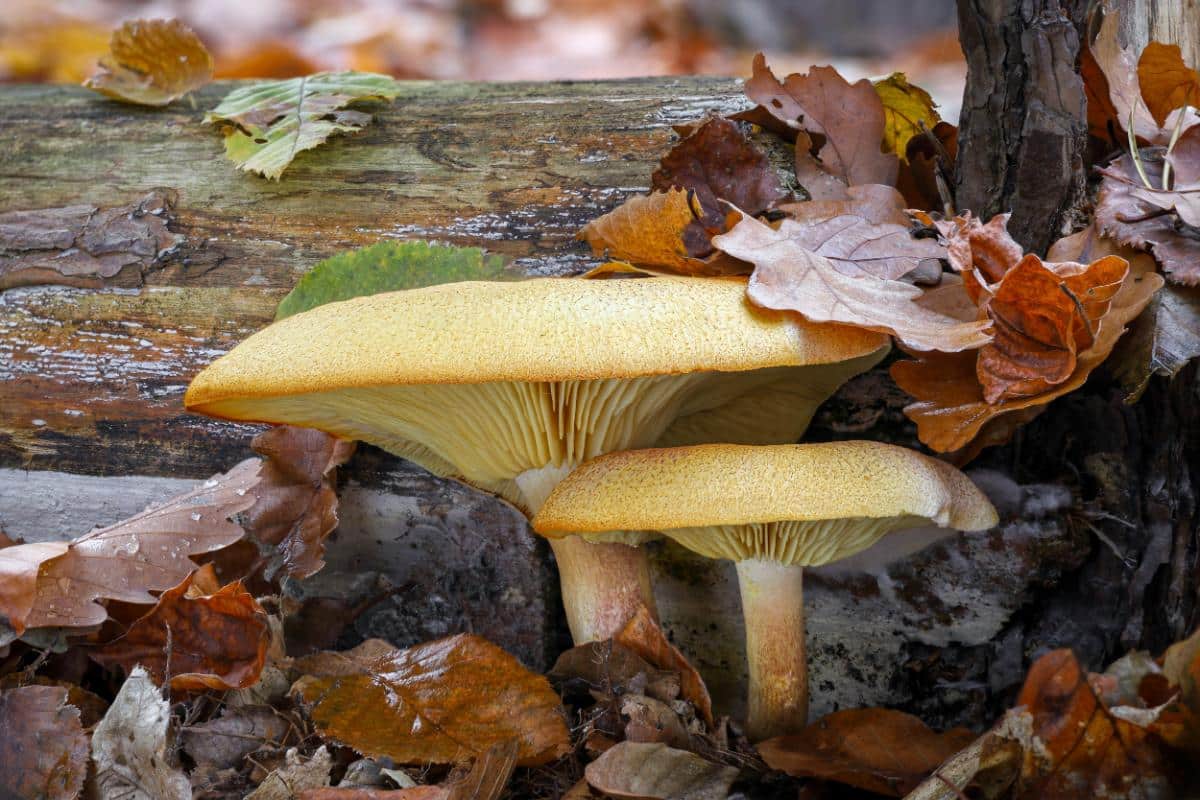
Plums and custard (Tricholomopsis rutilans) sounds like an edible mushroom, but unfortunately it is not. It is way too bitter to be enjoyable. It is a beautiful mushroom, though, and a lot of fun to see. The cap is bright yellow and covered in a dense coat of tiny purple-red scales, and the gills underneath are an egg-yolk yellow that is very distinctive. The two colors reminded early mushroom experts of the old British dessert of stewed plums poured over custard, and that is how the mushroom got its name. It grows on rotting conifer wood, on old stumps, and on buried roots.
This is a saprobe fungus, which means it feeds on dead wood. It grows across North America and through much of Europe, and it can grow in very large groups on the forest floor beneath pine and spruce trees.
- Scientific Name: Tricholomopsis rutilans
- Common Names: Plums and custard, red-haired agaric, variegated mop, variegated tricholomopsis, strawberry mushroom.
- Habitat: On dead conifer wood
- Edibility: Inedible
Jump to:
All About Plums and Custard Mushroom
Plums and custard mushrooms aren’t edible, but they’re not toxic or poisonous either. Their flesh is just too bitter to eat.
The species was first described in 1770 by the German naturalist Jacob Christian Schaeffer, who called it Agaricus rutilans. The new genus name Tricholomopsis means “looks like a Tricholoma,” which is another genus of gilled mushrooms. The species name rutilans comes from the Latin and means becoming red or ruddy, a reference to the reddish coloring of the cap.
Plums and custard, it turns out, isn’t a single species. A 2015 DNA study found that what’s called Tricholomopsis rutilans is a cluster of at least five separate lineages, and the genetic gap between European and North American collections is wide. The North American species haven’t been given their own formal names yet, so for now the name covers mushrooms on both continents.
Plums and Custard Identification
Season
This mushroom fruits from summer into fall, roughly May through November. In warm regions, it can start earlier and last longer.
Habitat
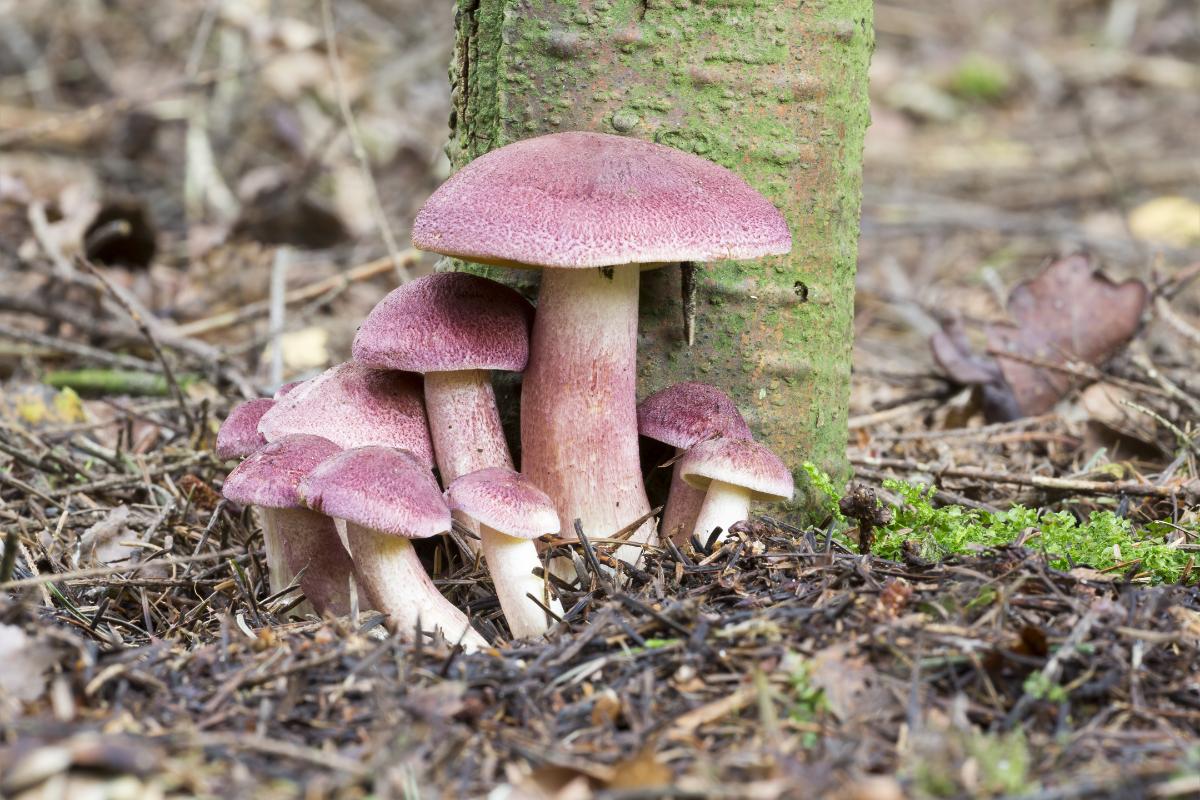
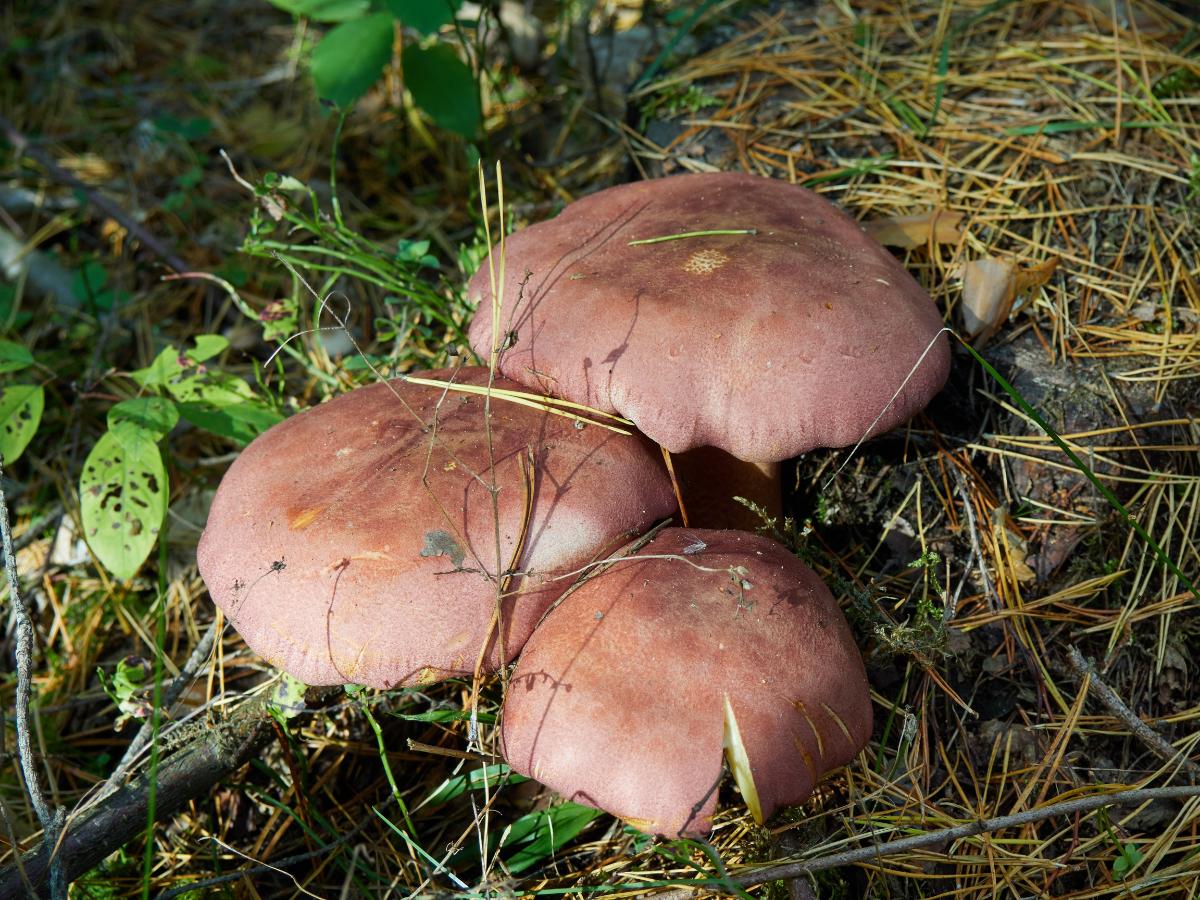
Plums and custard grows on dead conifer wood. It feeds on stumps, fallen trunks, buried roots, and other rotting softwood, but never on a living tree. The most common hosts are spruce and pine, but it can, rarely, grow on broadleaf trees. This mushroom has been known to grow in a fairy ring, a rough circle of fruiting bodies spreading out from buried, rotting roots.
It’s native to North America and grows widely across the continent. These mushrooms also grow in Europe, and it has also turned up in Australia, New Zealand, and Costa Rica, where it was probably carried in by accident on planted pines.
Identification
Cap
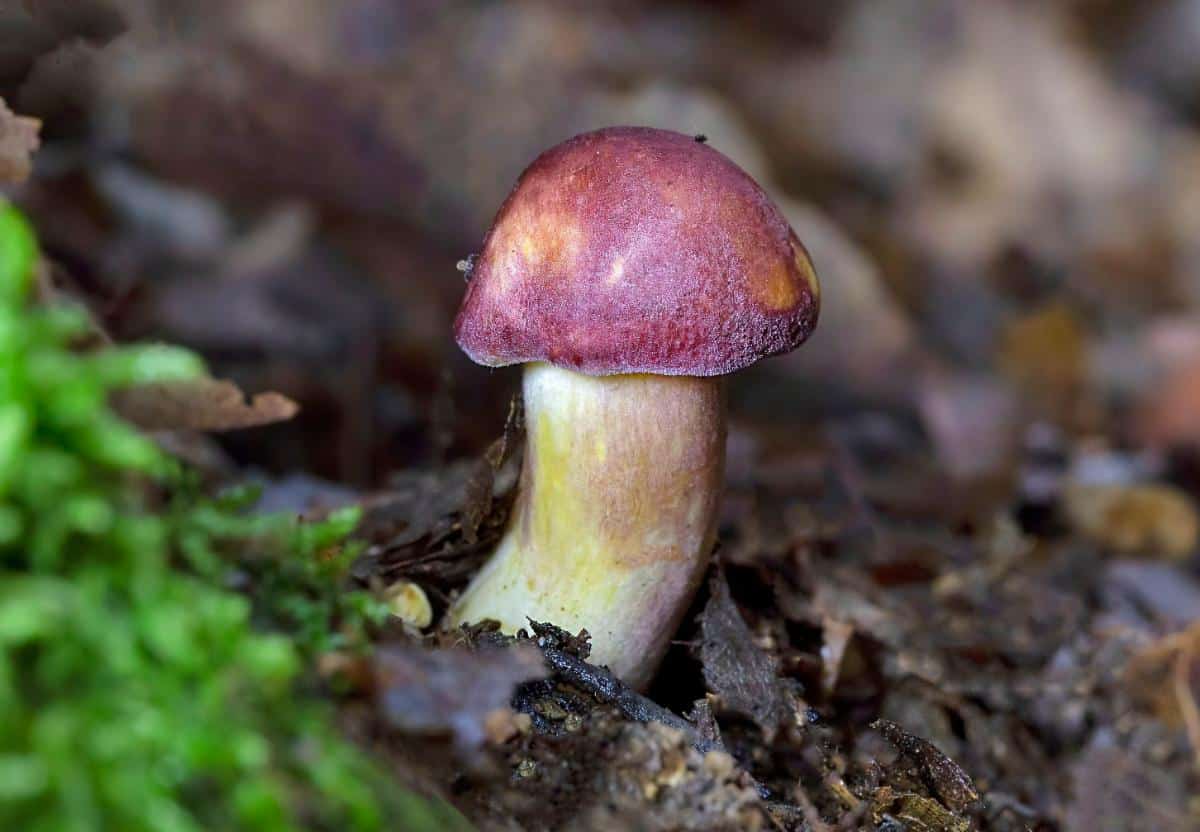
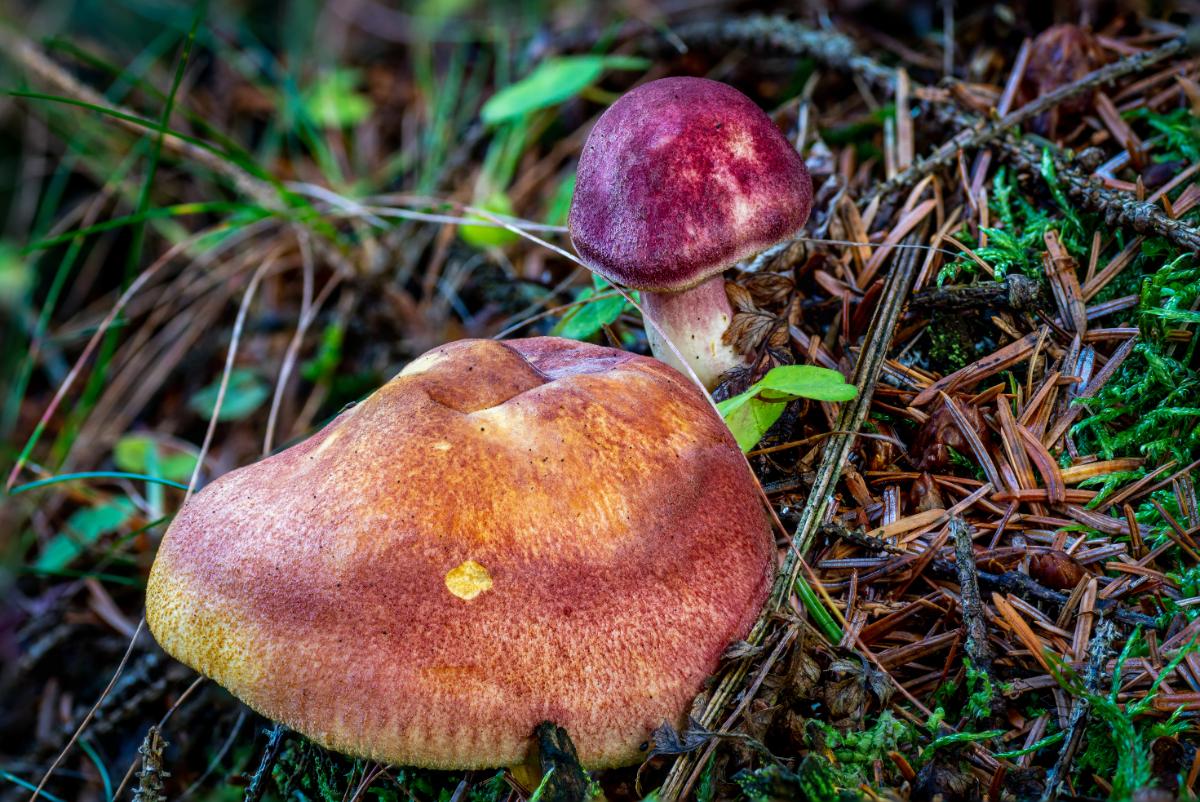
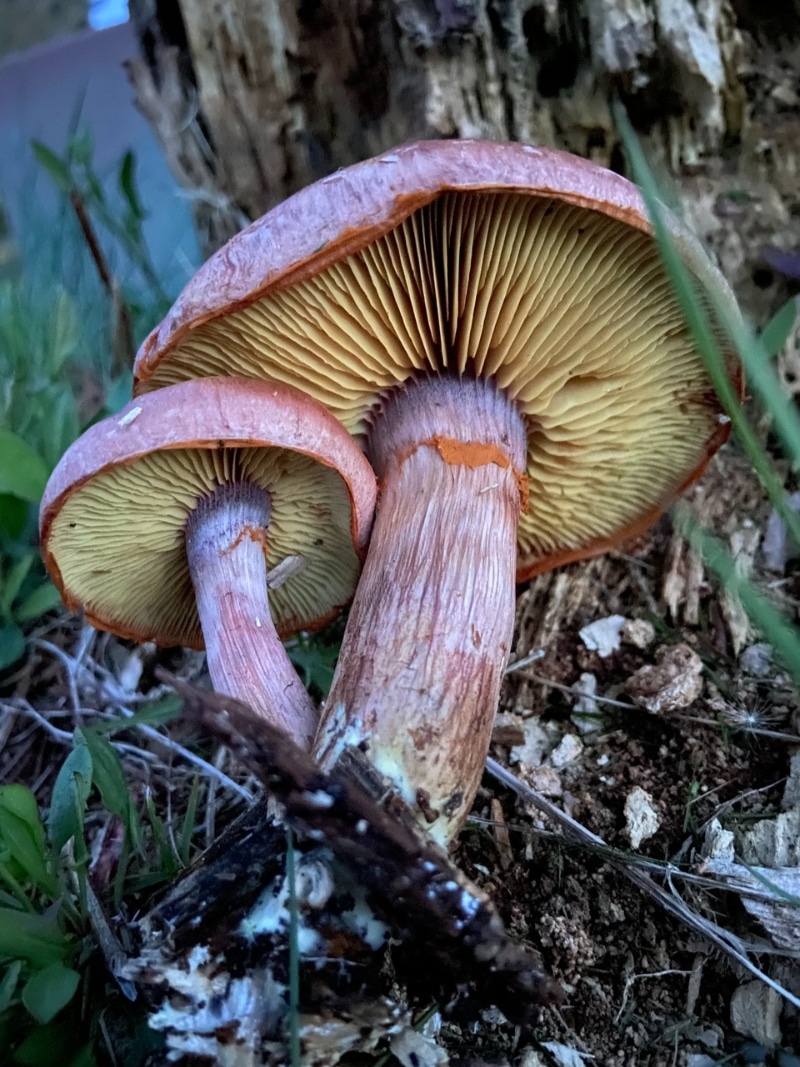
The cap is about 2 to 5 inches across, and when it is young, it is rounded like a bell. As it grows, the cap flattens, and sometimes there is a low bump or a shallow dip in the center. The cap surface is bright yellow, but most of that yellow is hidden under a thick layer of fine purple-red to brick-red scales. These scales are packed tightest at the center of the cap and thin toward the edge. In dry weather, the cap can crack into a network of scales, like crazy paving, and the bright yellow flesh underneath peeks through the gaps.
Gills
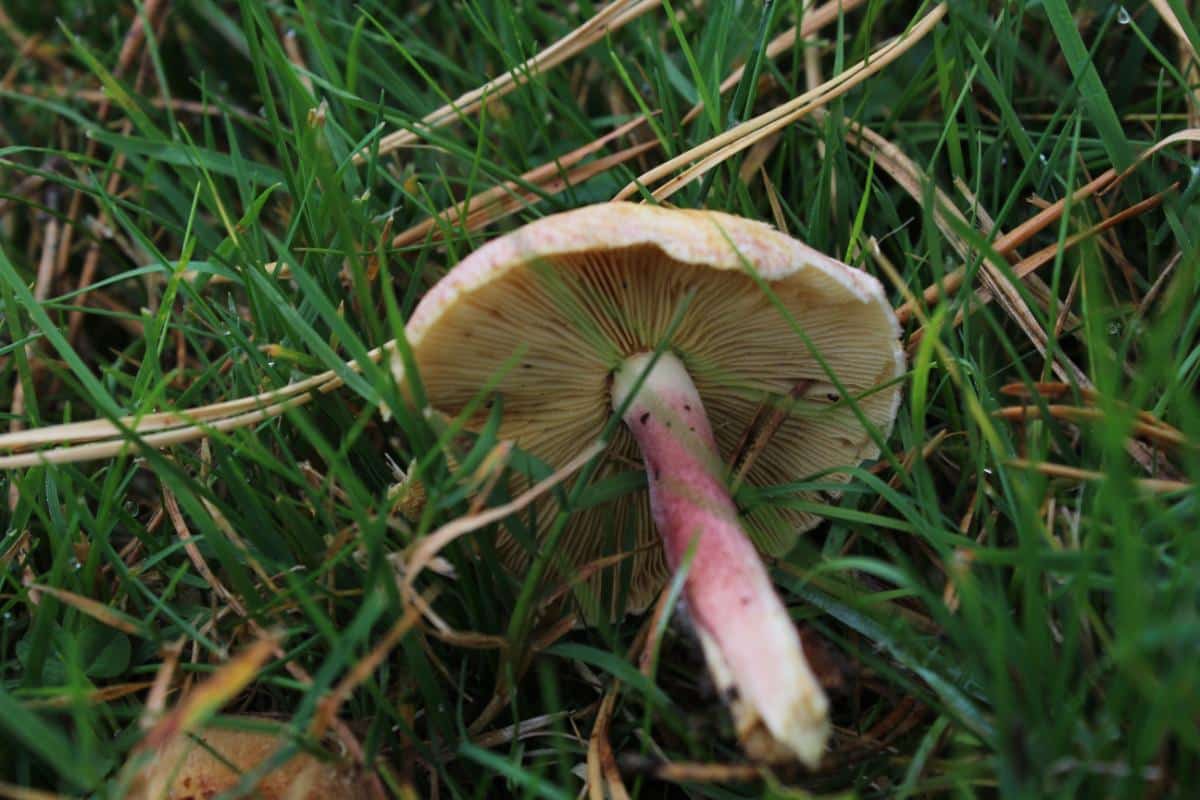
The gills are egg-yolk yellow, broad, and crowded. They are attached to the stem, with some shorter gills mixed in that do not reach all the way to the stem.
Stem
The stem is about 1.5 to 4 inches tall, and it curves where it grows from the stump or trunk. The base is also yellow and covered in purple-red scales, just like the cap. Toward the top of the stem, though, it is just yellow without the scales. With age, the stem can turn yellow all over.
Taste and Smell
Plums and custard smell like damp, rotting pinewood. The flesh tastes bitter.
Flesh Color and Staining
The flesh is pale yellow to cream and thin in the cap. It does not stain when cut or bruised.
Spore Print
The spore print is white.
Plums and Custard Mushroom Lookalikes
Prunes and custard (Tricholomopsis decora)
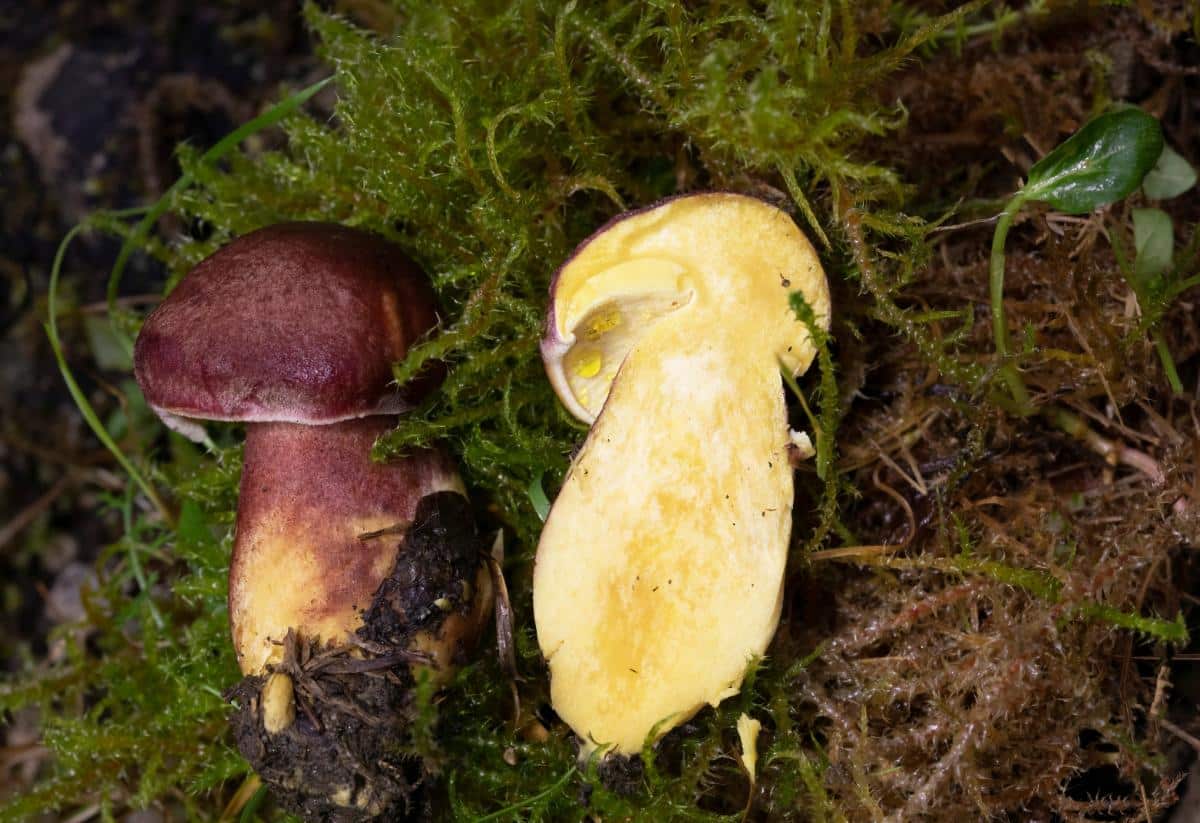
This is a close relative and the most likely source of a mix-up. Prunes and custard grows on conifer wood also, but its cap is golden yellow to yellow-ochre with fine gray-brown scales, not the bright wine-red of plums and custard. It’s smaller and far less common, and in many areas it only grows in higher ground and mountain forests. The clearest difference is color: plums and custard are red and yellow, while prunes and custard are brown and yellow.
Yellow-gilled Gymnopilus (Gymnopilus luteofolius)
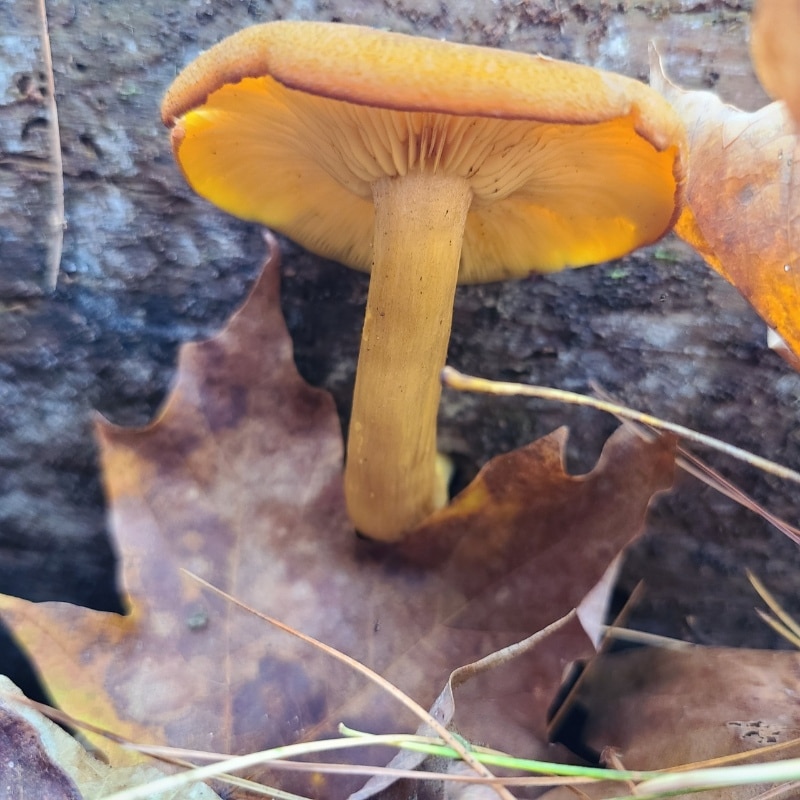
This species also grows in clusters on wood, including conifer wood, and its young caps can be purplish with small scales. The gills of this mushroom are yellow, which adds to the confusion, but its gills turn rusty as the spores mature, so that helps tell them apart. When this species is young, the gills are covered by a brown webbing, which falls away as the mushroom grows. But there might be a brown ring around the upper stem or some trace left over from the webbing, even with age.
Yellow-gilled gymnopilus tastes bitter. If there is any doubt about the species, do a spore print. This one has a rusty orange-brown spore print, very different from the white spore print of plums and custard.
Common Questions About Plums And Custard Mushrooms
Is plums and custard medicinal?
No, there are no medicinal uses for this species.
Are plums and custard mushrooms edible?
No, they are very bitter. But, they aren’t toxic or poisonous, either, just unpalatable.
Leave a Reply