
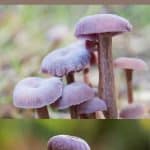

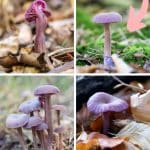
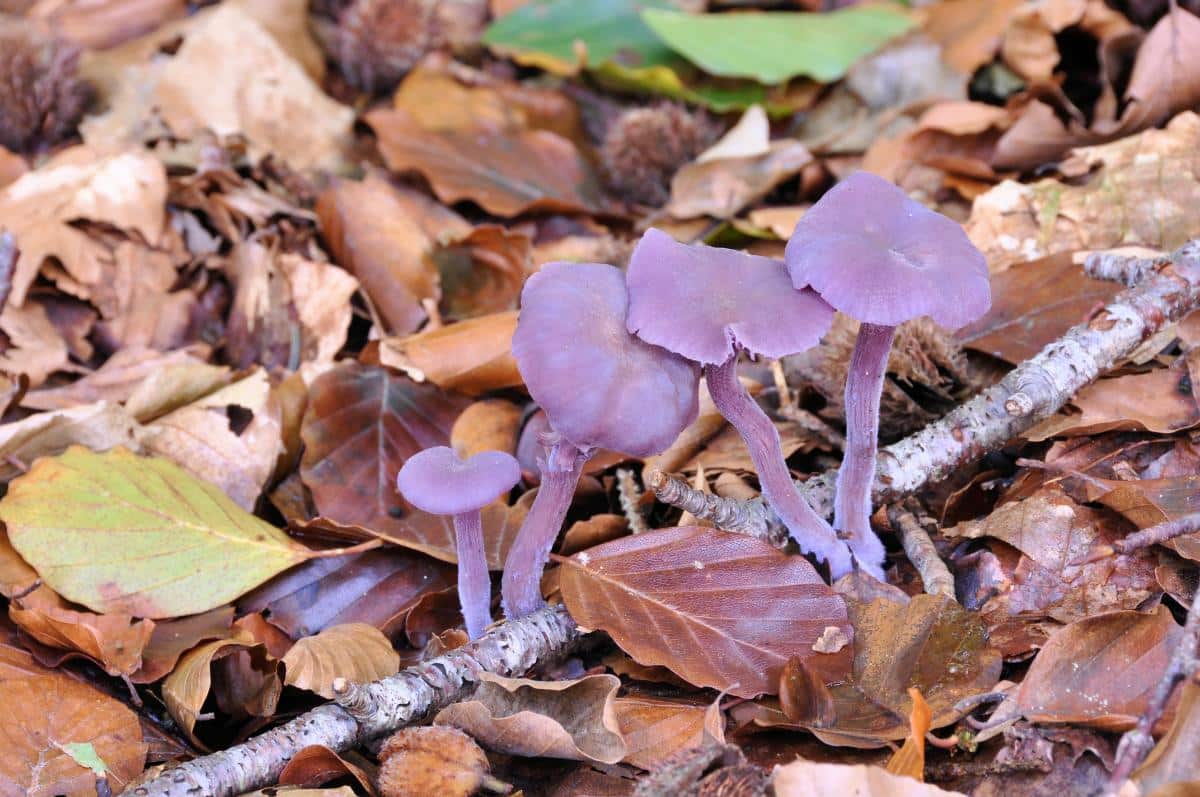
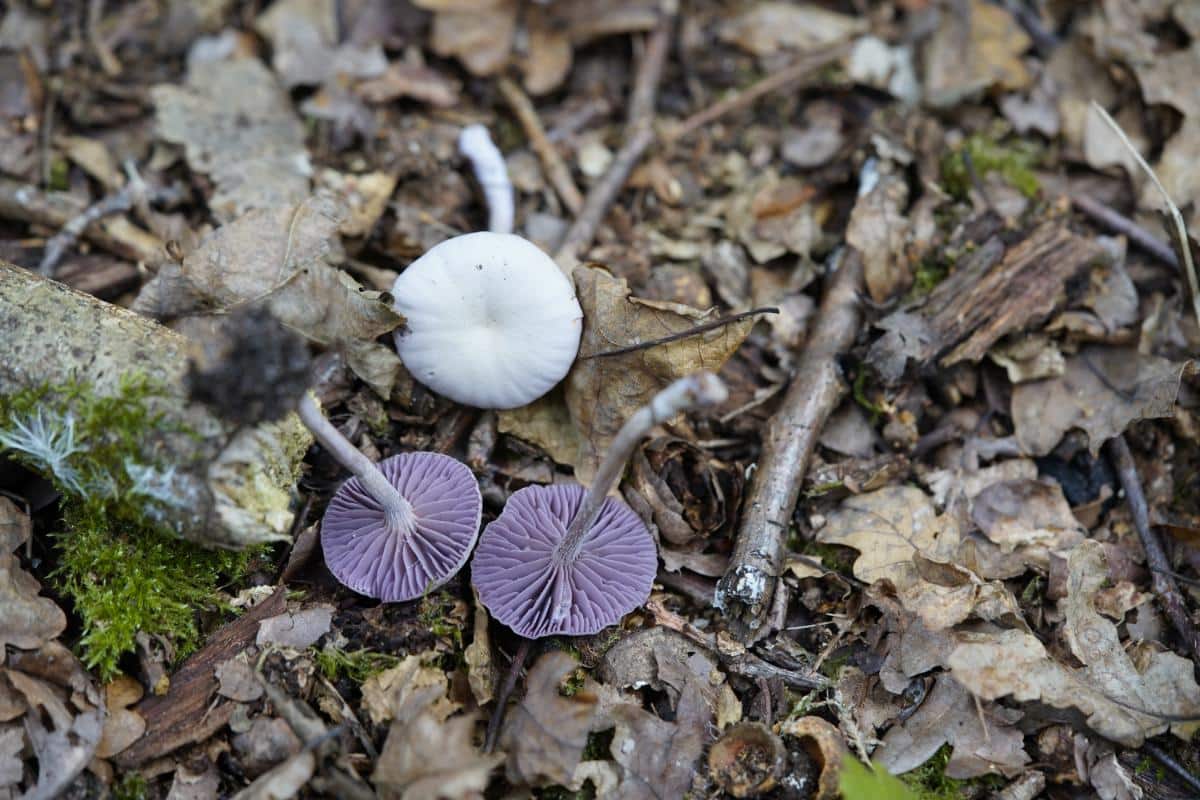
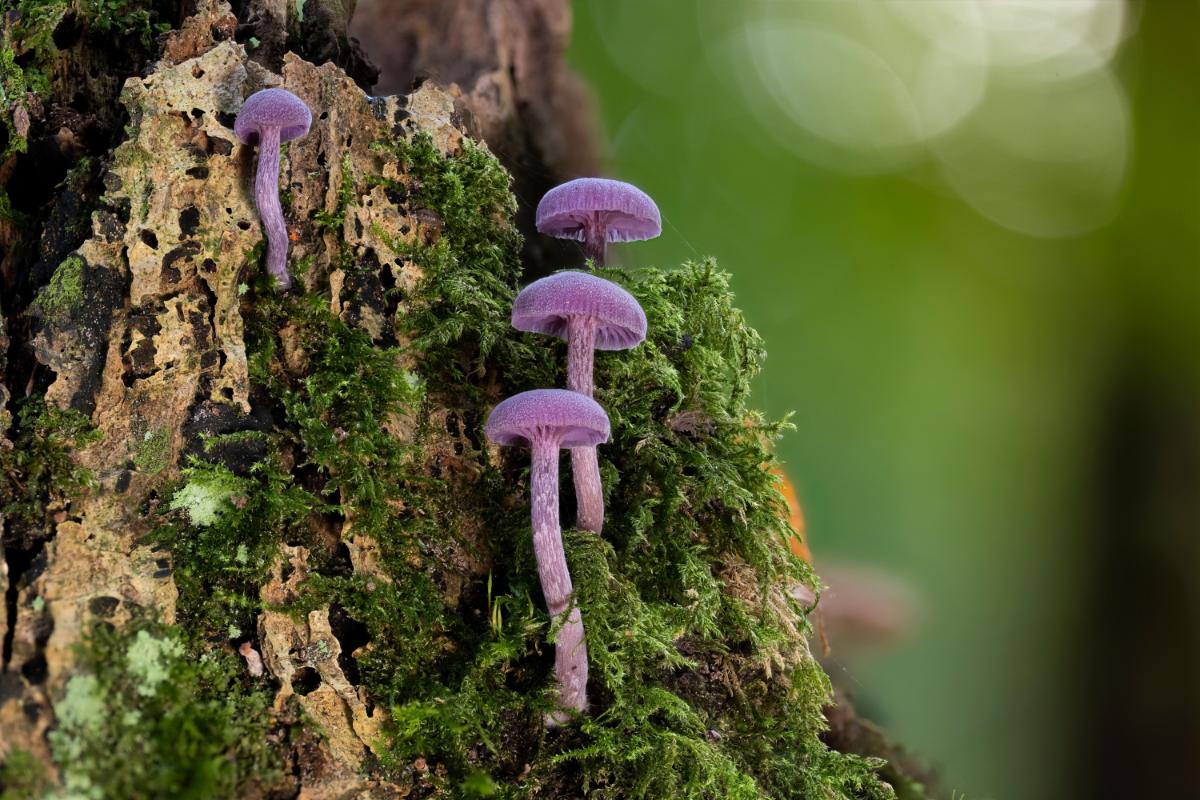
Finding the amethyst deceiver (Laccaria amethystina “complex”) when it is young and bright purple is a treat. Unfortunately, it doesn’t stay that vivid color as it gets older and is often overlooked because it is rather pale and bland-looking. Seeing a young one and an old one side by side, it is hard to believe they are the same mushroom.
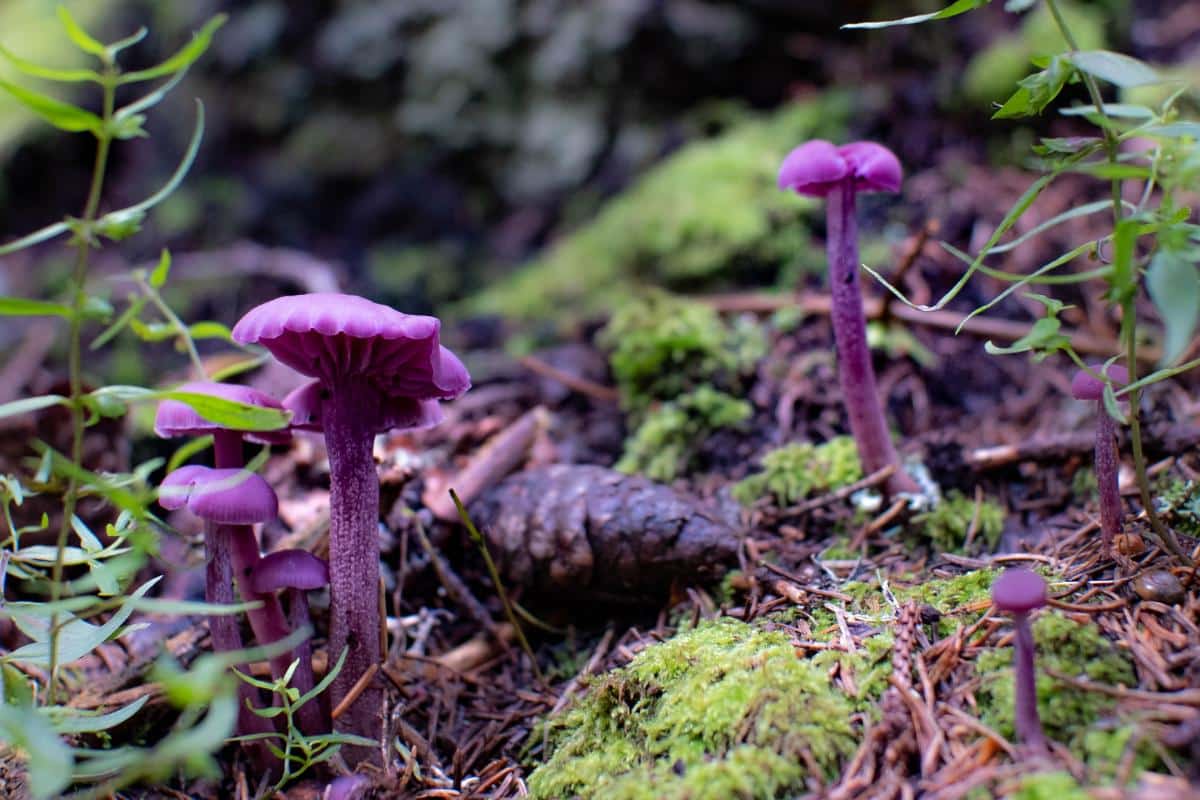
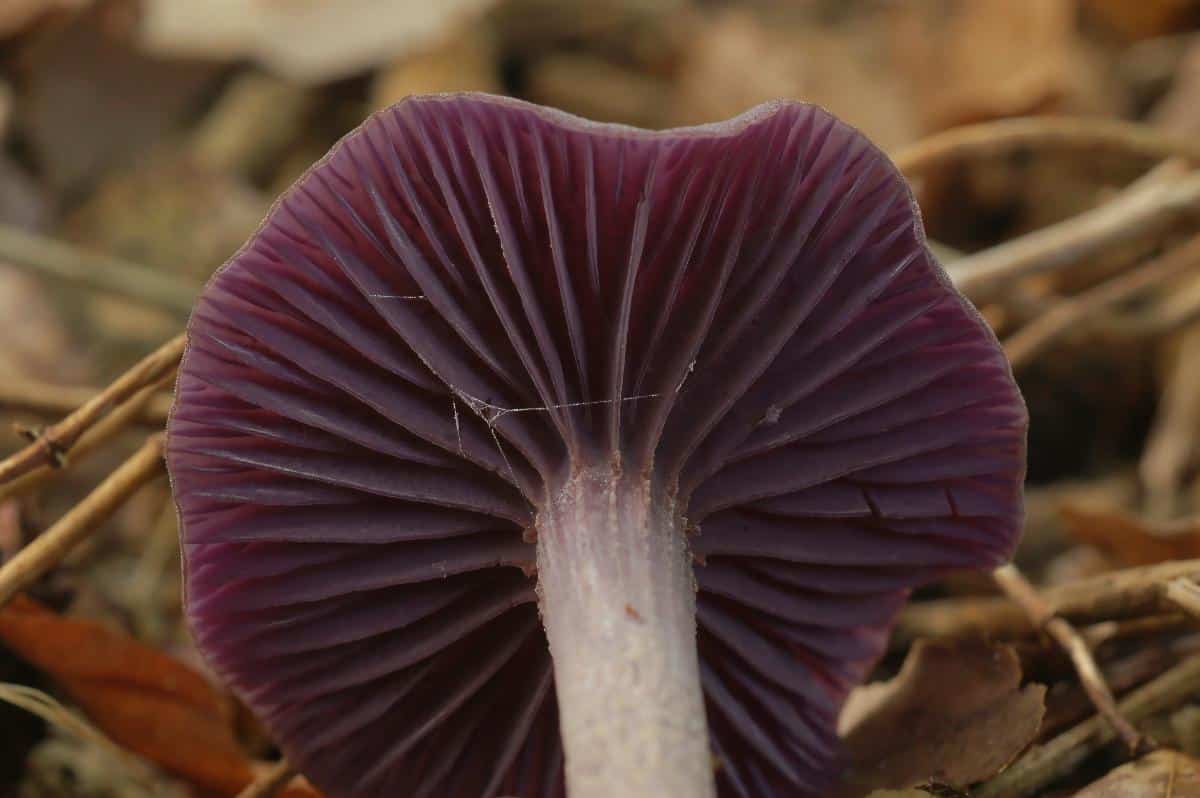
When the amethyst deceiver is very young, its cap, gills, and stem are all the same deep violet color. Within just a day or two of drying out, though, the entire mushroom fades to a pale buff or grayish tone. It is called the deceiver because of the dramatic color change. This mushroom is an excellent example of how gill color is not an indication of spore print color. The gills are bright purple when the amethyst deceiver is young, but the spore print is always white.
- Scientific Name: Laccaria amethystina “complex”
- Common Names: Amethyst Deceiver, Amethyst Laccaria
- Habitat: Mycorrhizal
- Edibility: Edible, with cautions
All About The Amethyst Deceiver
This mushroom has had several names over the years. It was thought to be a variety of Laccaria laccata and was called Laccaria laccata var. amethystina. The two species look alike and grow in the same habitat. The species name amethystina comes from the Latin word for amethyst, the purple gemstone. This is a direct reference to the deep violet color of the fresh cap. The genus name Laccaria comes from a word meaning lacquer or varnish, referring to the shiny look of the type species, Laccaria laccata.
Several purple Laccaria species in North and Central America were once lumped together under the name Laccaria amethystina before the mycologist Gregory Mueller separated them in 1984. One of these, Laccaria amethysteo-occidentalis, grows west of the Rocky Mountains under conifers. Another, Laccaria vinaceobrunnea, grows along the Gulf Coast with live oak. A third, Laccaria gomezii, grows in the cloud forests of Central America and northern South America. Each of these species was once identified as Laccaria amethystina before microscopic study separated them.
The close relative, Laccaria laccata, is also commonly called the deceiver since both species fade and change color as they dry out. But that one is just “the deceiver,” while this one is “the amethyst deceiver.”
This mushroom is an ammonia fungus. That is the name for fungi that fruit heavily right after a sudden load of nitrogen hits the soil. This often happens from a decomposing animal, a latrine site, urine, or fertilizer. A patch of amethyst deceivers can mark a spot where the soil was recently loaded with nitrogen and can be a useful marker in forensic work for finding disturbed ground. Its close relative Laccaria bicolor is also an ammonia fungus.
The genus Laccaria contains around 100 species found in both temperate and tropical regions. Several of them, not just Laccaria laccata and Laccaria amethystina, are also called deceivers because they fade and change color with age.
Amethyst Deceiver Identification
Season
The amethyst deceiver fruits from late spring through summer in eastern North America. Its western counterpart, Laccaria amethysteo-occidentalis, fruits later in the year, from October through February.
Habitat
This is a mycorrhizal fungus, which means it grows in partnership with the roots of trees. It grows alone or scattered, or in small groups, and it fruits in the leaf litter and moss under the trees. It does not grow on the wood, though. This mushroom is often found growing near its close relative, the deceiver.
Identification
Cap
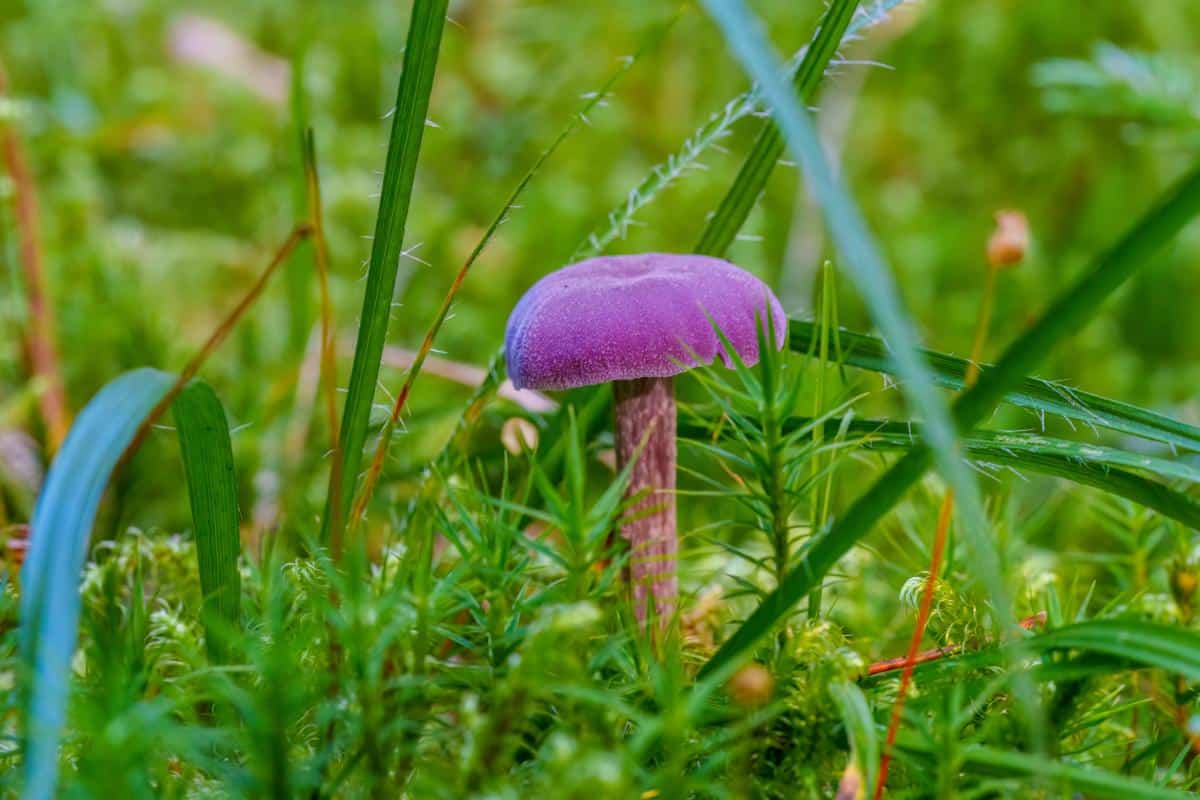
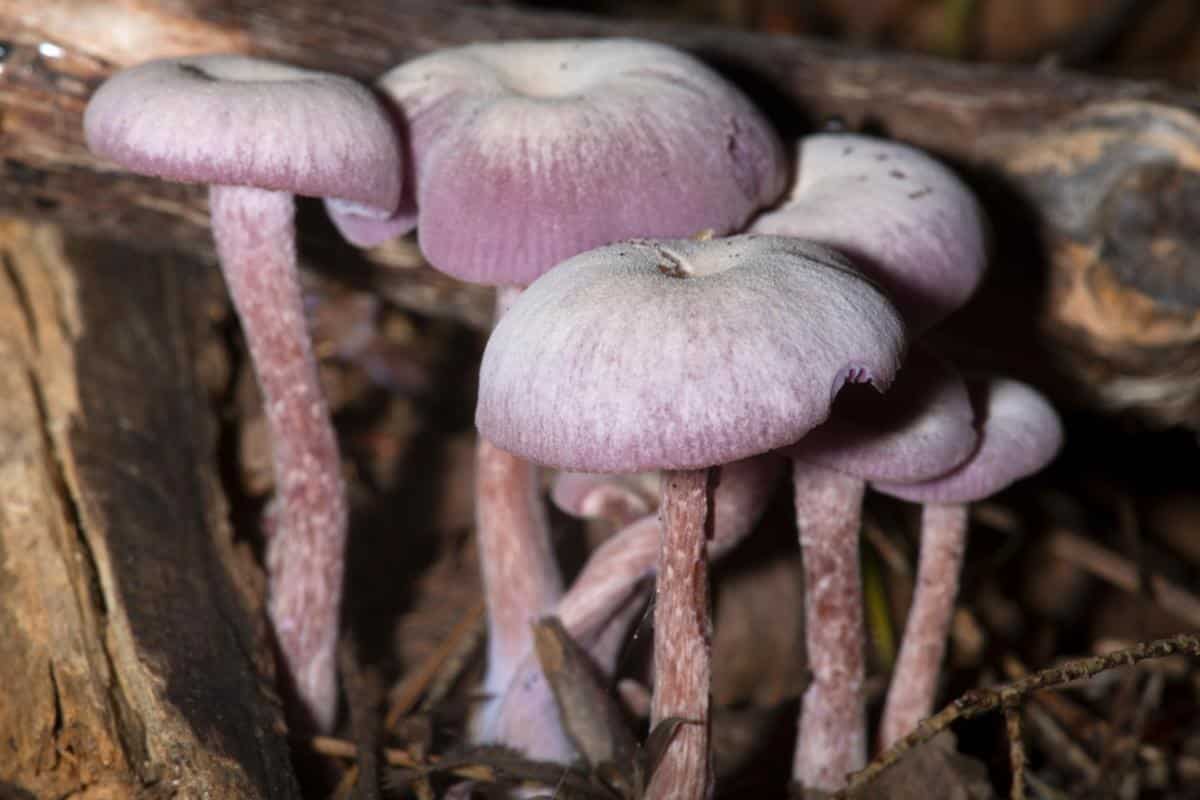
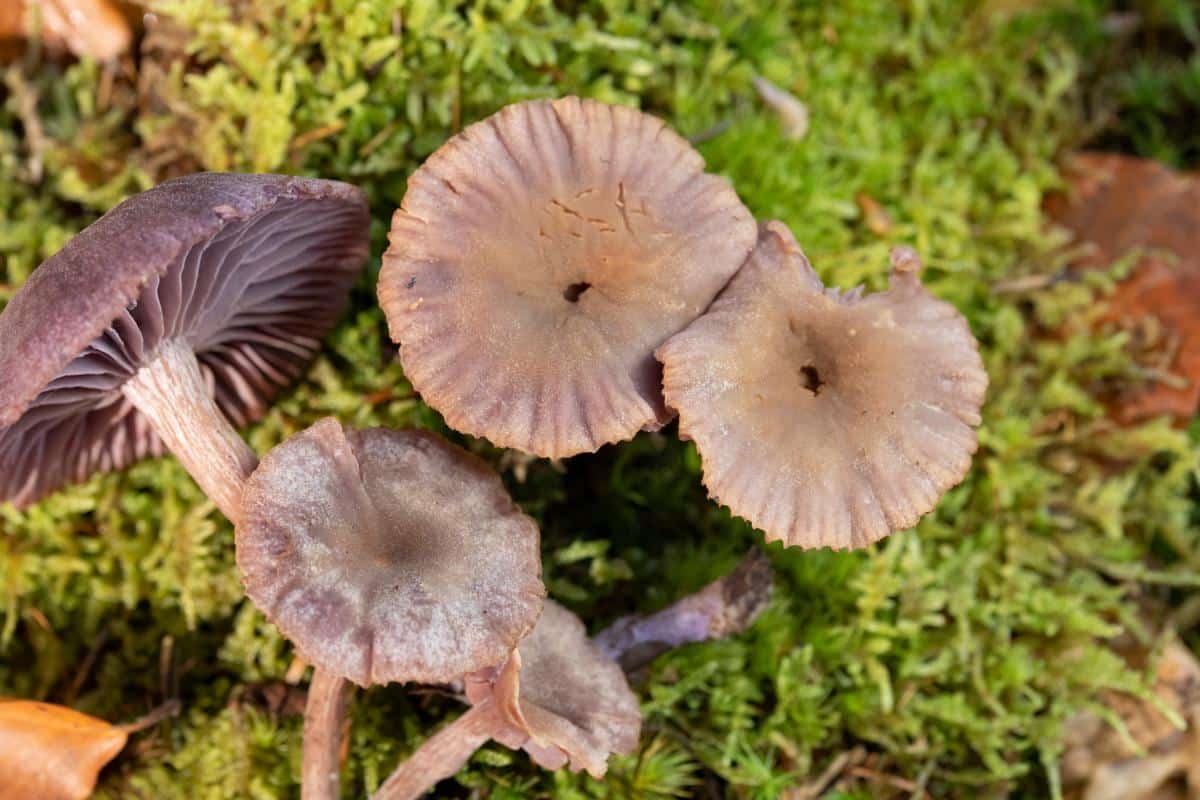
The cap starts out rounded like a button mushroom and flattens with age. It also develops a central depression as it ages, like a belly button. Most of these species have caps under 1.5 inches wide, though the western species can grow larger. The edge of the cap is even or rolled inward when young, and it develops faint lines only at maturity.
The surface is finely hairy to scaly, or nearly smooth, depending on the age and the species. Amethyst deceivers are bright to deep purple when fresh and wet, and all of them fade as they dry, but the faded color varies by species. Some fade to buff or pale brown, while others fade first to wine red or reddish brown, and one fades to a dull orange-brown.
Gills
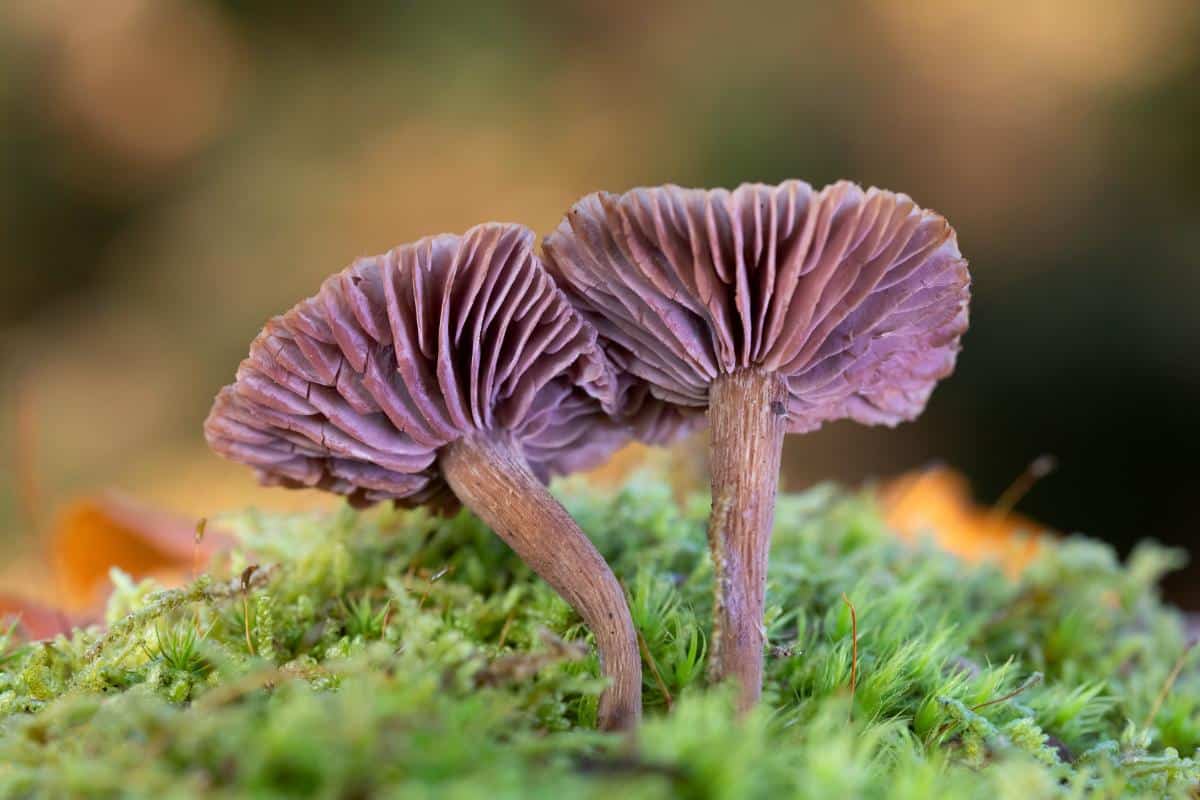
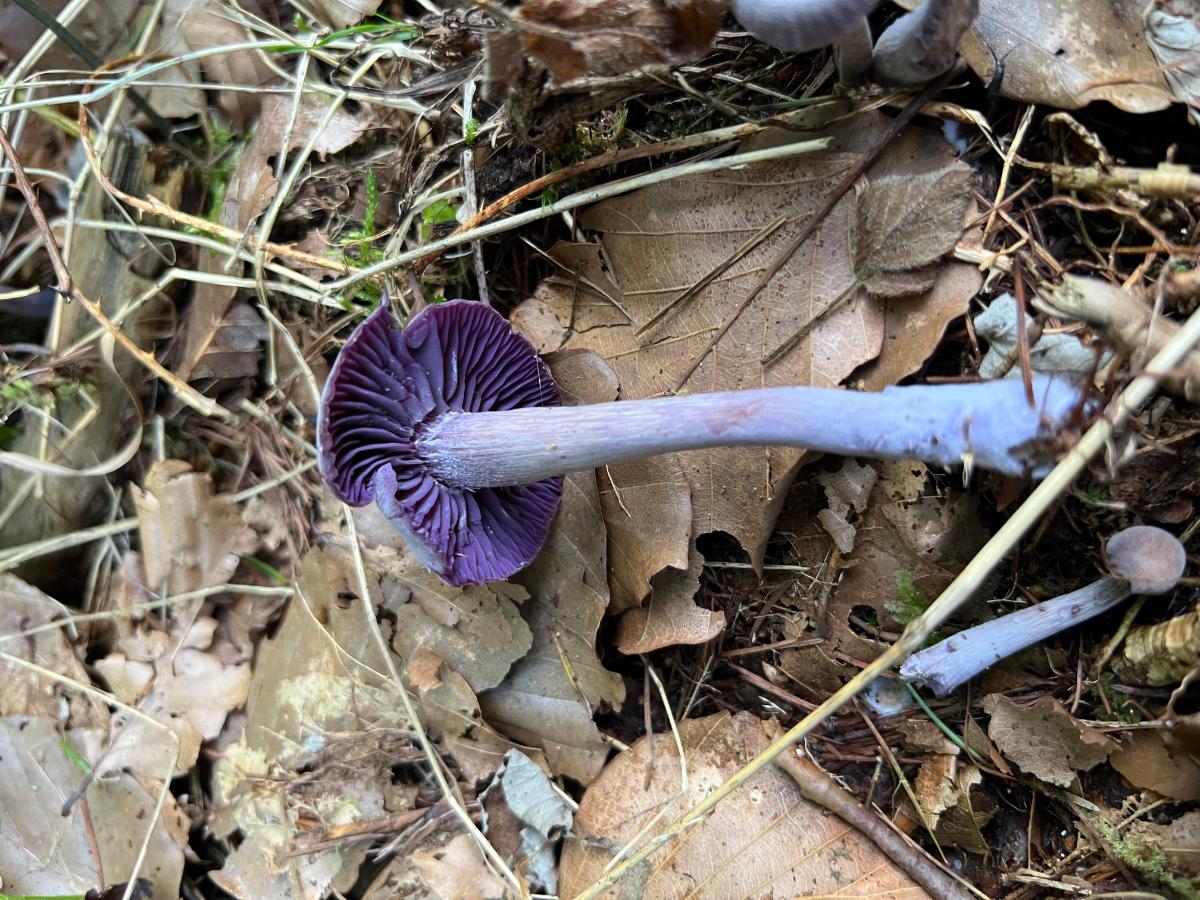
The gills are thick, waxy, and widely spaced in most of these species. There are shorter gills mixed in between the full-length ones, as well. The gills attach to the stem in a shallow notch and pull away from it slightly. In fresh specimens, the gills match the cap’s purple color, but they lose that color before the cap fades completely. Usually they still remain purple, though, just not as bright.
Stem
The stem is thin, tough, and fibrous, and it is roughly equal in width or slightly swollen at the base. It is finely to coarsely hairy or scaly and matches the cap in color. The stem twists along its length in many specimens. The stem length varies by species and can range from under an inch to nearly 3 inches. There is lilac to whitish fuzz that covers the base where the stem meets the soil.
Taste and Smell
There is no distinctive taste or smell.
Flesh Color and Staining
The flesh is thin and the same color as the cap or a little paler. It does not change color when it is cut or bruised.
Spore Print
The spore print is white.
Amethyst Deceivers In North America
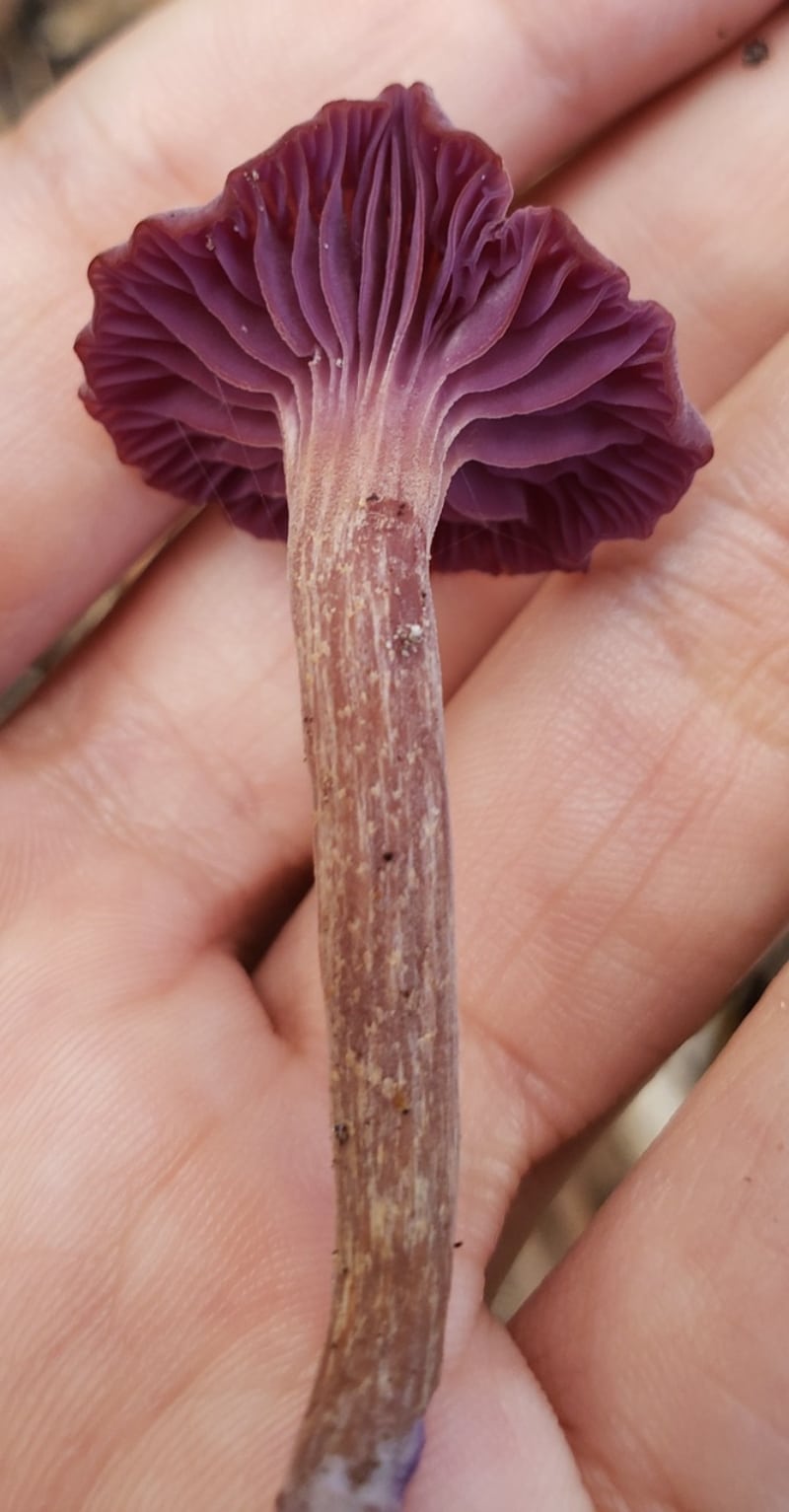
Laccaria amethystina
This amethyst deceiver grows across eastern North America under oaks and beech trees, and it also grows widely across Europe and Asia. Its cap grows up to 2.25 inches across, and it starts out rounded before flattening with age and developing a dip in the center.
Laccaria amethysteo-occidentalis
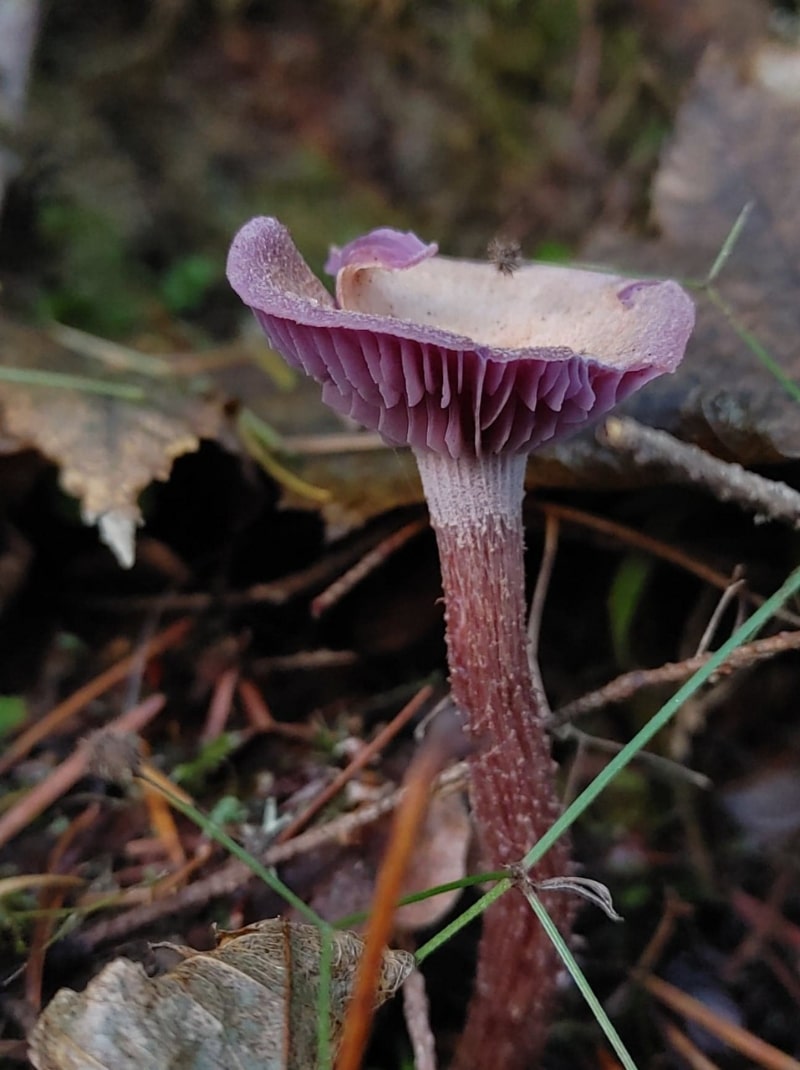
This species grows in western North America under conifers, mainly pine. Its cap and stem are larger overall than Laccaria amethystina. Its purple color fades to a wine-red tone as it dries, not to the buff or brown tone of Laccaria amethystina.
Laccaria vinaceobrunnea
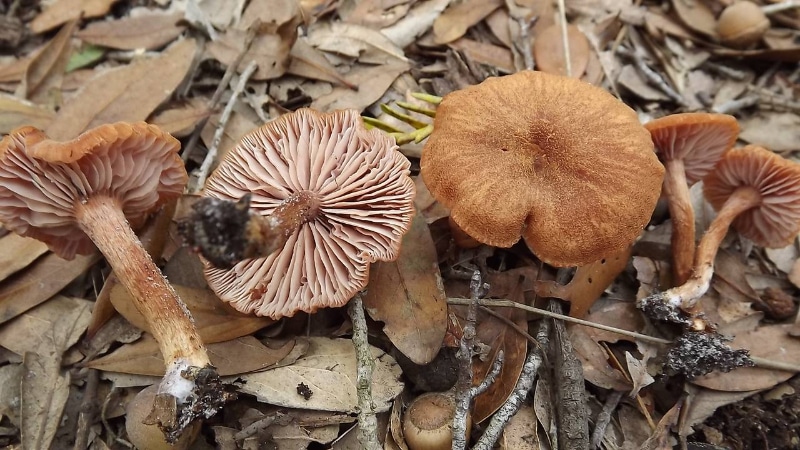
Along the Gulf Coast of the southern United States, this species grows with southern live oak. With age, it fades to wine-red or reddish-brown. Older specimens fade further to a dull orange-brown or buff.
Laccaria gomezii
In the cloud forests of Central America and northern South America, this amethyst deceiver grows with oak trees. Its cap is darker purple than the others’, and its gills attach to the stem and run down it slightly. They are also closely spaced.
Amethyst Deceiver Lookalike Species
The Deceiver (Laccaria laccata)
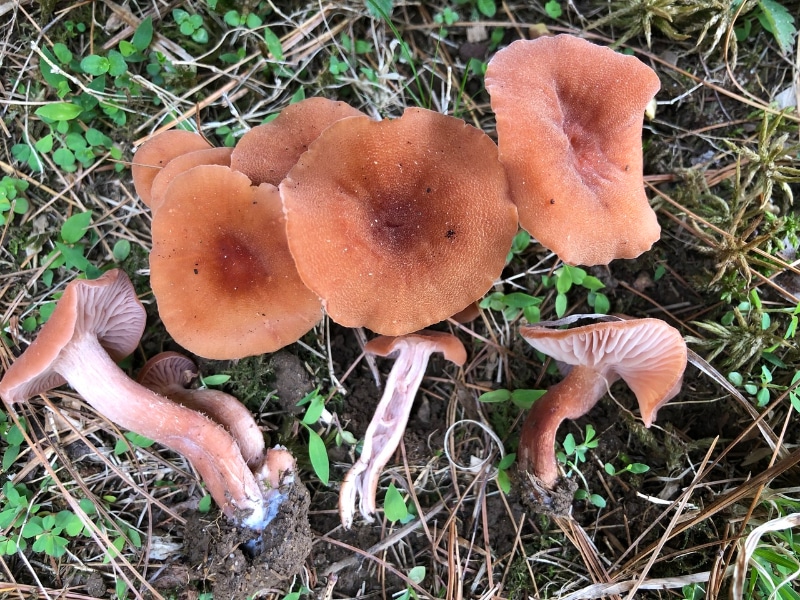
The most likely mushroom to be confused with the amethyst deceiver is its own close relative known simply as the Deceiver. The two species grow in the same habitat and often grow side by side in the same patch of leaf litter. The deceiver is orange-brown, pinkish-brown, or salmon colored, though, and not purple. However, a faded amethyst deceiver and a faded deceiver can look nearly identical once both have dried to a pale buff color. Once they are both faded like this, there is no reliable way to differentiate them except with a microscope.
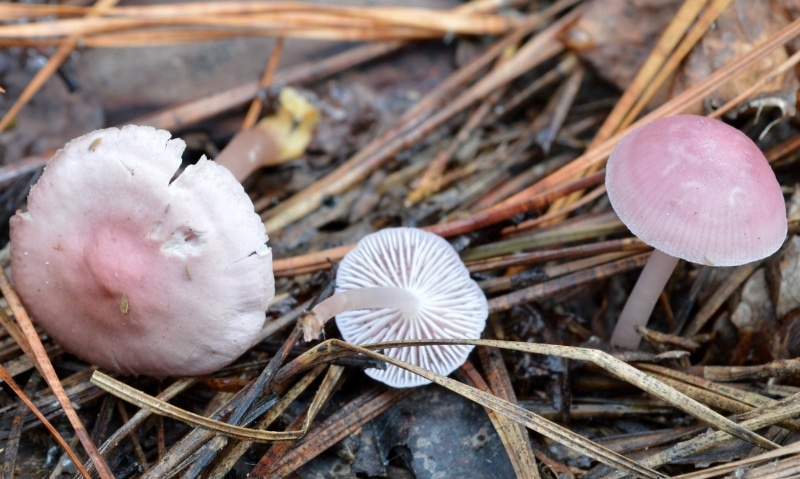
Lilac Bonnet (Mycena pura)
This lookalike has a similar violet-to-lilac color and grows in the same kind of habitat as the amethyst deceiver. However, it has a distinct radish-like smell that the amethyst deceiver doesn’t, and its gills are pale in color, not the dark purple of the amethyst deceiver. The stem of the lilac bonnet is also thin and brittle, not tough and fibrous. This species contains a small amount of the toxin muscarine and should not be eaten.
Cortinarius species
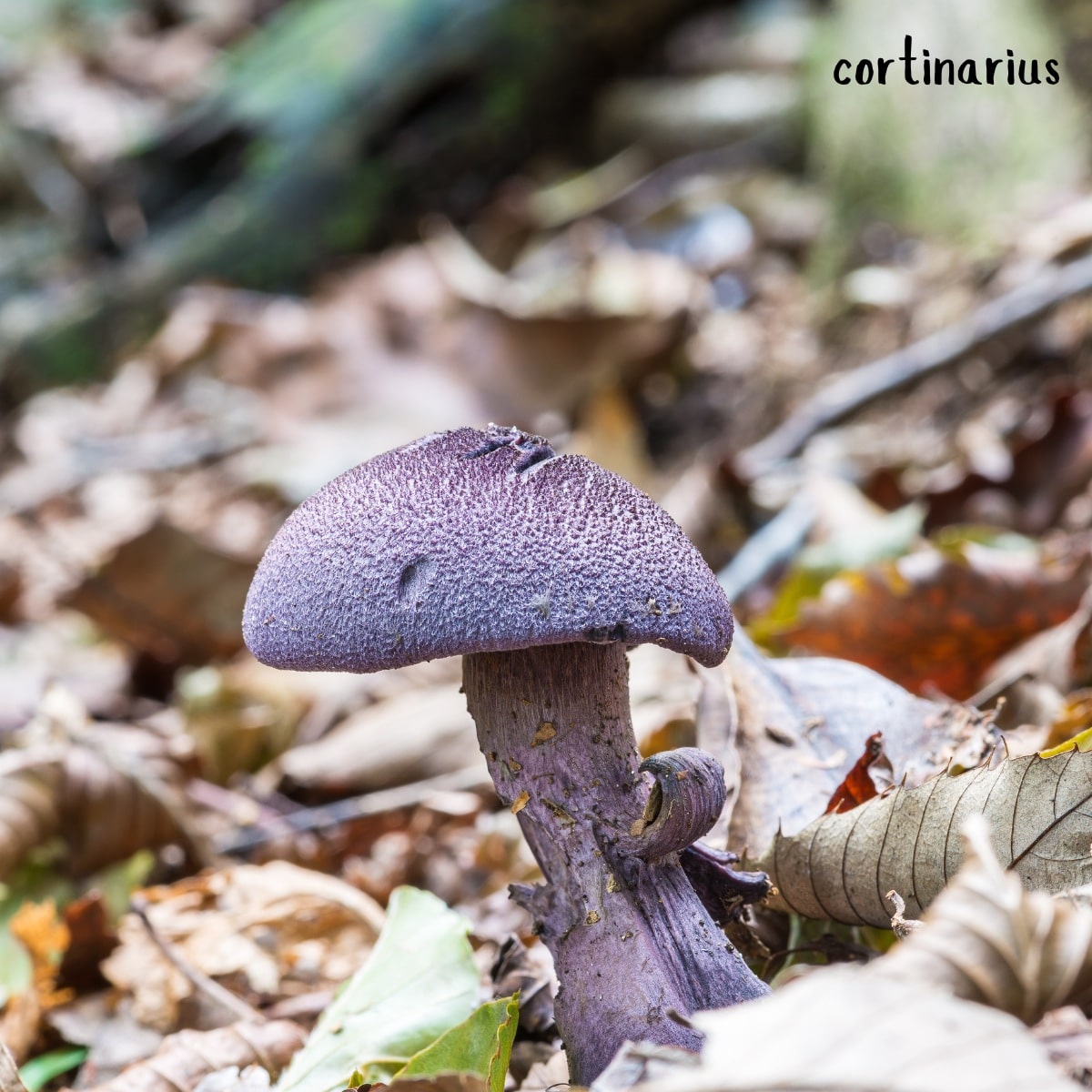
There are some purple Cortinarius species that look like the amethyst deceiver at a glance, since both are small purple mushrooms. However, the young gills of Cortinarius species are covered by a cobweb-like veil called a cortina, a feature the amethyst deceiver never has. These mushrooms also have a rusty brown spore print, and their gills turn rusty brown as the mushroom matures. If there is any doubt, a spore print will tell them apart.
Lilac Fibrecap (Inocybe lilacina, or Inocybe geophylla var. lilacina)
This small lilac to purple mushroom, which grows in the same woodlands as the amethyst deceiver, is poisonous. It grows under both hardwoods and conifers in summer and fall. It contains muscarine, a toxin that causes heavy sweating, drooling, stomach pain, blurred vision, and labored breathing.
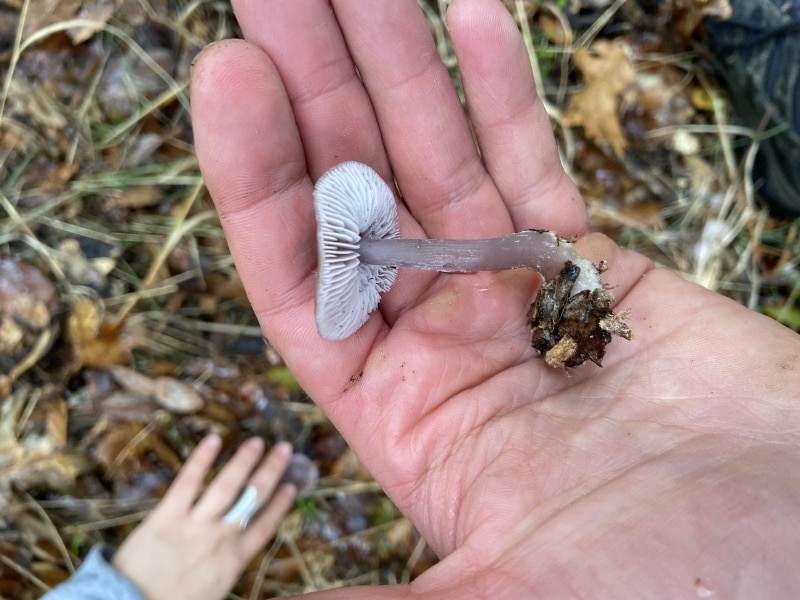
The gills are the clearest way to tell these two species apart. The amethyst deceiver has purple gills that match its cap, while the lilac fibrecap has pale gills that are whitish to gray when it is young. And they turn brown as the mushroom ages. The lilac fibrecap also has a brown spore print, and its cap is silky with fine radial fibers, with a small raised bump at the center instead of a depression.
Amethyst Deceiver Culinary Uses
The amethyst deceiver is not toxic, but it is one of a small number of mushrooms known to hyperaccumulate arsenic. It pulls arsenic out of the soil and concentrates it in the fruiting body at levels far above the surrounding environment. Most foragers treat this mushroom as an occasional food, not a staple. Take this into consideration before eating this mushroom.
This species is edible, though it is not considered a choice mushroom. Only the caps are worth collecting, since the stems remain tough and fibrous even after being cooked. The caps are small, so it takes a lot of them to make a meal.
The flavor is mild, faintly mushroomy or a little nutty. Because the taste is so gentle, they are usually not used as a standalone ingredient and are best combined with other things, or cooked with garlic and butter to give them a lift. They work well folded into an omelet, stirred through risotto, or sautéed and served on toast. They can also be pickled in oil or vinegar.
The caps need a good cleaning because leaf litter and grit get caught in them easily. The caps also dry well and keep for a long time once dried.
Because of the potential for arsenic accumulation and the mushroom’s small size and blandish taste, most people don’t find it worth collecting or eating.
- Roasted vine tomatoes, Puy lentils & amethyst deceivers https://thebigfatmushroomhunter.wordpress.com/2012/10/20/recipe-amethyst-deceivers/
- Oil-pickled amethyst deceivers https://totallywilduk.co.uk/2020/11/05/oil-pickled-amethyst-deceiver-mushrooms/
- Omelet https://www.mushroomstalkers.com/blog/miscellaneous/amethyst-deceiver-edibility-and-lookalikes/
Common Questions About The Amethyst Deceiver
Is the amethyst deceiver edible?
Yes, the amethyst deceiver is edible, but it is also an arsenic hyperaccumulator, so where it grows and how often it is eaten both matter.
Does the amethyst deceiver mushroom have medicinal uses?
There are no recognized medicinal uses.
Why is the amethyst deceiver called a “deceiver”?
The name comes from the way the mushroom changes color as it dries. When fresh and damp, it is a deep purple all over. As it loses moisture, it fades to a pale buff or grayish tone and looks like a completely different mushroom.
Leave a Reply