
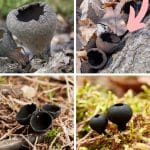
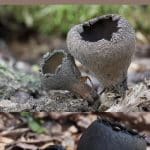

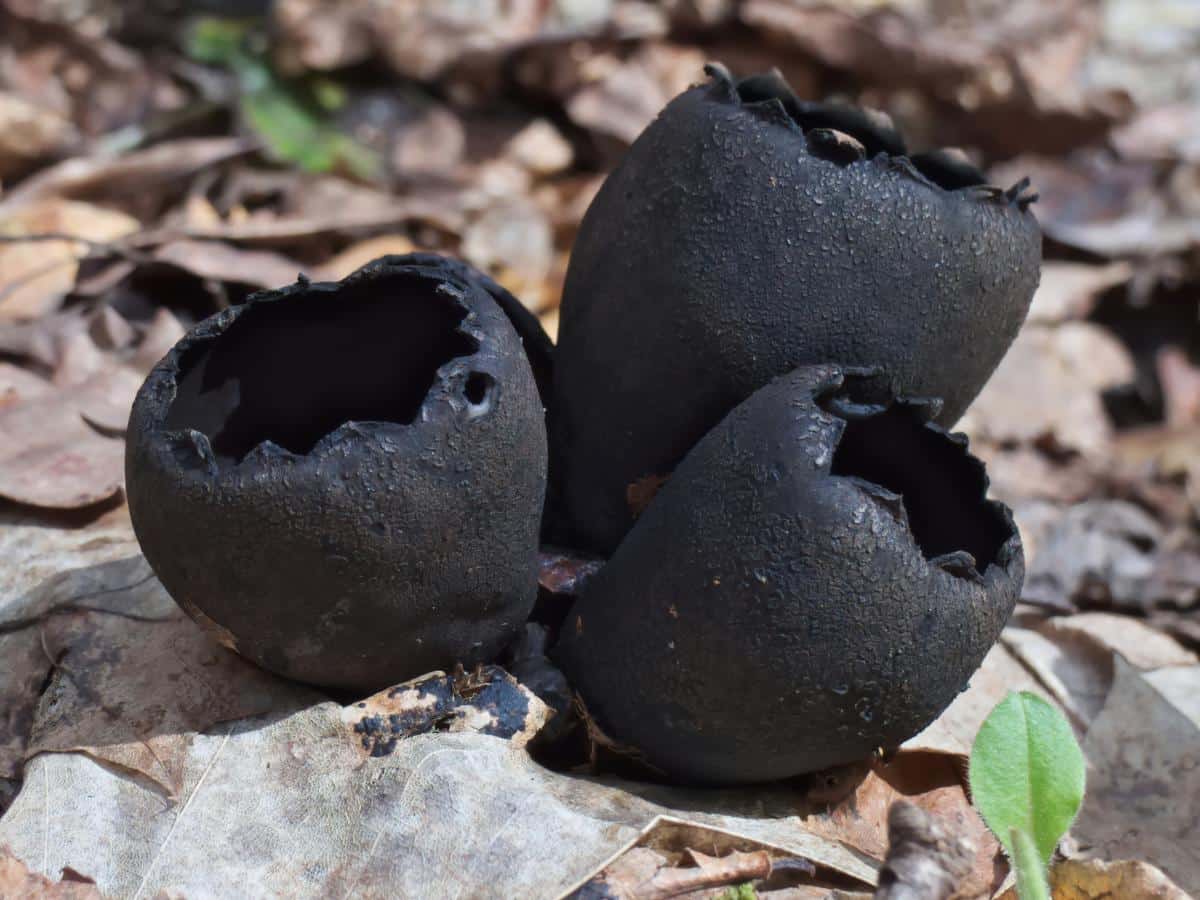
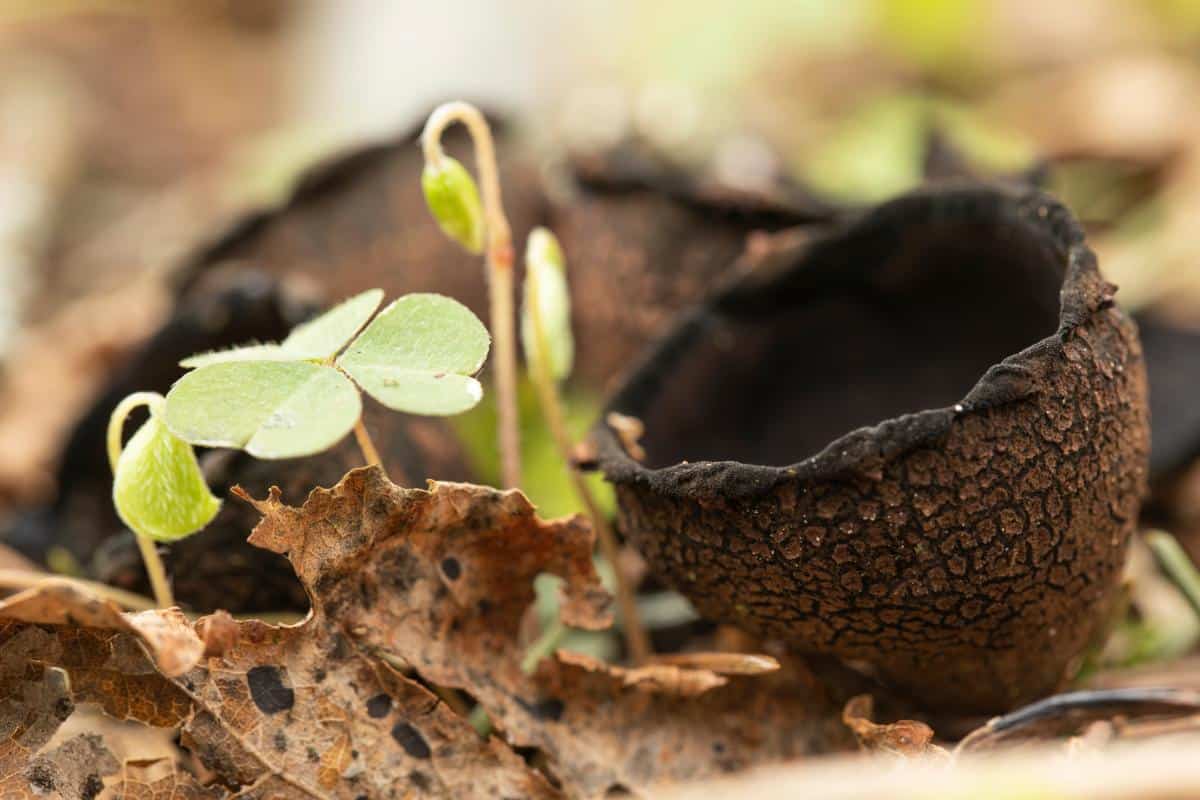
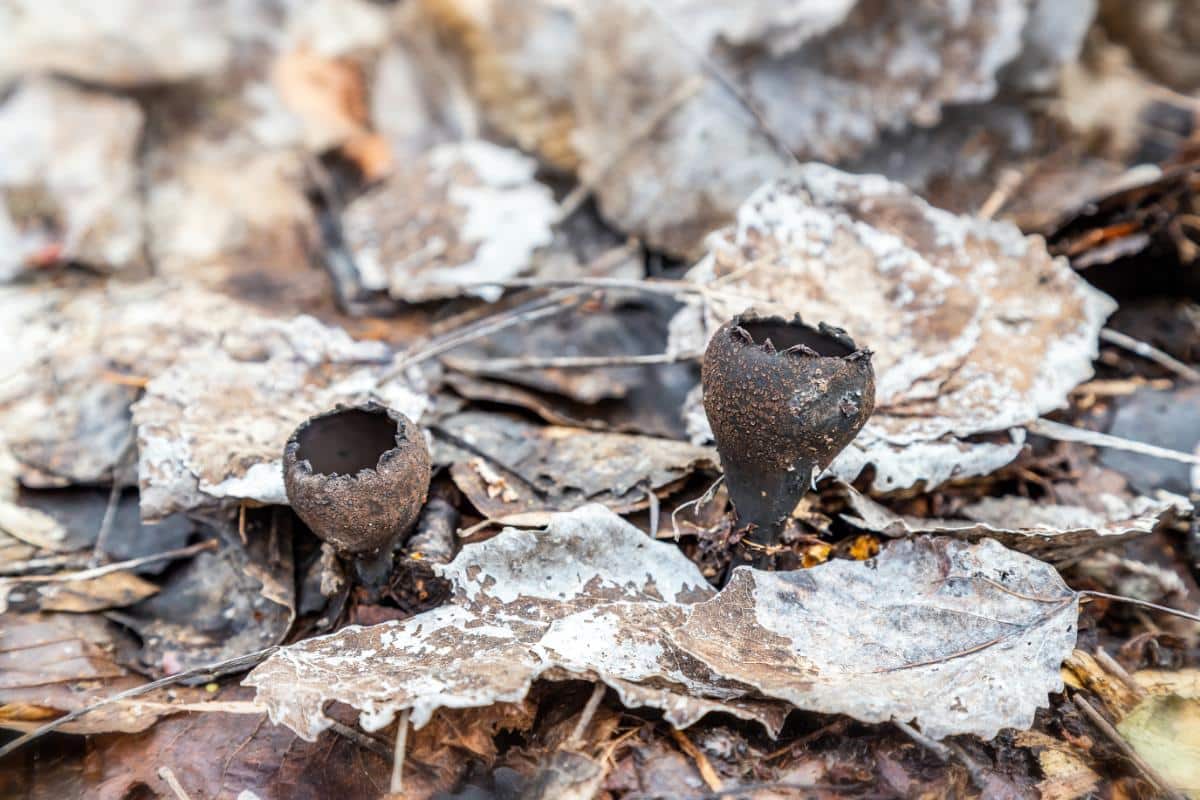
Devil’s urn is a dark cup fungus that looks like a tiny goblet that got dropped in the forest. It fruits in early spring on decaying hardwood, especially oak. It isn’t poisonous, but its tough, leathery flesh makes it a poor edible mushroom. It grows across eastern North America, as well as in Europe, Japan, and China.
- Scientific Name: Urnula craterium
- Common Names: Devil’s urn, crater cup, gray urn
- Habitat: Decaying hardwood sticks and small logs, often buried, especially oak
- Edibility: Not poisonous, but not recommended because of its tough texture
Jump to:
All About The Devil’s Urn Fungus
This species was first described to science in 1822 and named Peziza craterium. Later, it was moved to Urnula, but this was challenged in 1896, when Heinrich Rehm transferred the fungus to Geopyxis. Elsie Kupfer later analyzed it and found that devil’s urn belonged in a separate genus unrelated to Geopyxis, and so the original Urnula name was restored.
The genus name Urnula means “little urn,” a reference to the deep cup. The species name comes from the Latin cratera, which is an ancient bowl used for mixing wine and water. Other names for this fungus include Cenangium craterium, Geopyxis craterium, and Sarcoscypha craterium.
Devil’s urn has an unusual double life that suits its demonic name, though this relationship wasn’t known when it got its common name. Its asexual form infects living trees and kills stem tissue, while the black urn-shaped fungus we see spends its life feeding on dead wood. A mature devil’s urn can release hundreds or thousands of spores at once. Wind can trigger it, or even if you blow gently across the cup, it may trigger a visible cloud that resembles a puff of smoke.
Devil’s Urn Identification
Season
Devil’s urn fruits from March through May, usually soon after the snow melts. It is one of the first fleshy fungi to appear in spring and has sometimes been found beneath melting snow. Its tough fruiting bodies can live for several weeks.
Habitat
Devil’s urn is widely distributed east of the Rocky Mountains. It is common in some Upper Midwest oak forests and occurs in hardwood forests across much of northern North America.
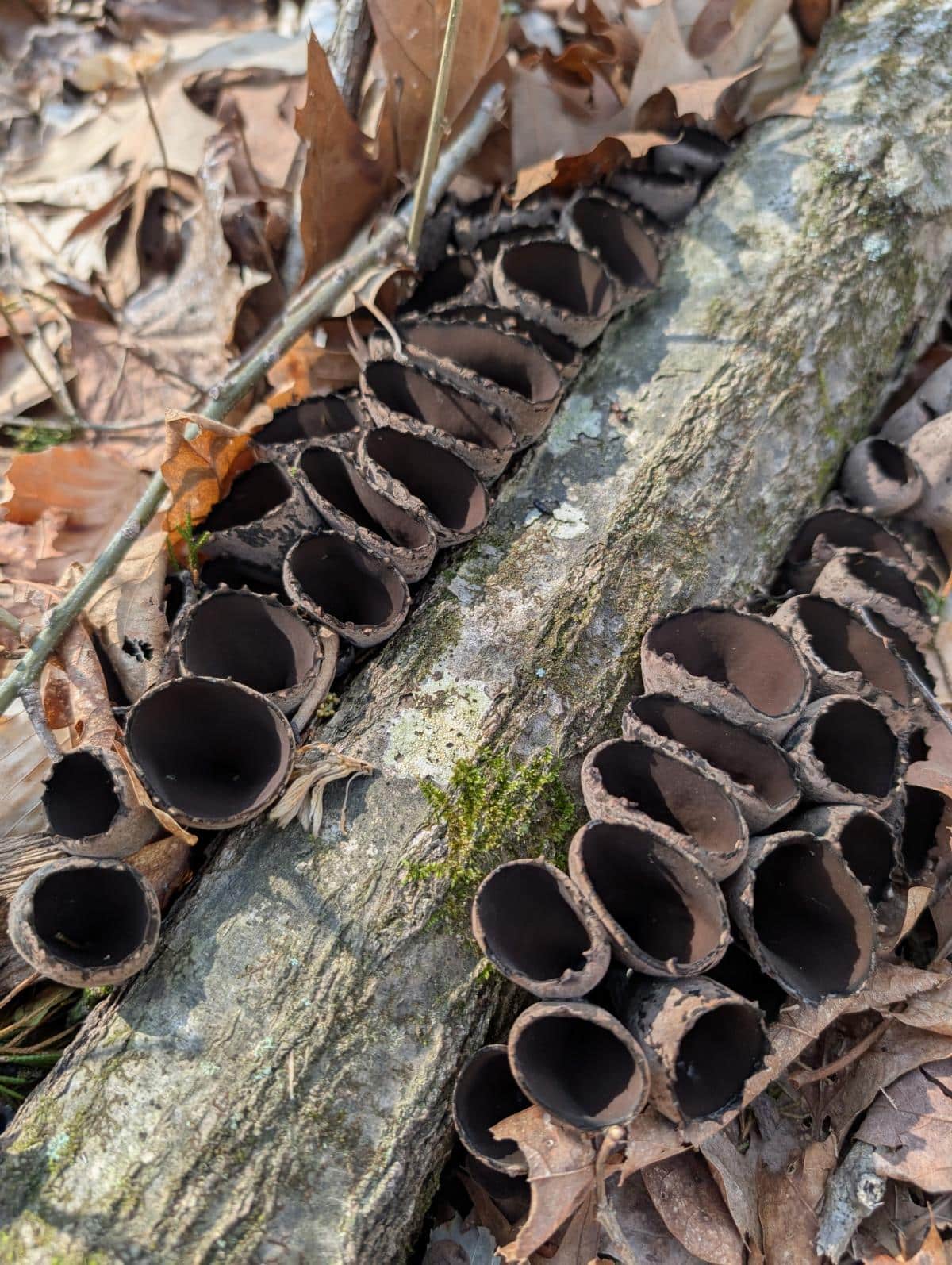
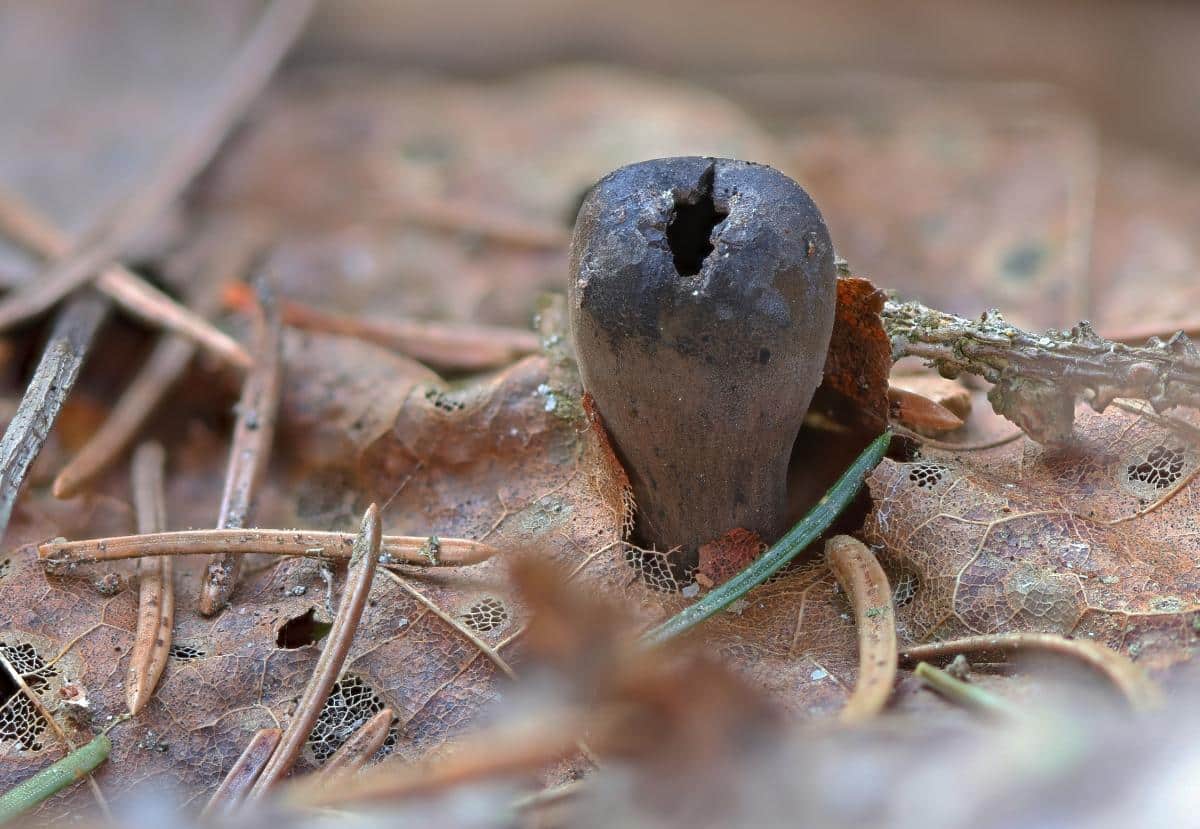
The fungus grows alone, scattered, or in clusters on decaying hardwood sticks and small logs. It is common on oak but will also grow on other hardwoods. Sometimes it looks like it is growing from the ground because the wood is buried beneath leaf litter, but the fungus develops an extended base that brings the cup to the surface. Despite the ground-dwelling appearance, the fruiting body remains attached to wood.
This species is listed as critically endangered in the Czech Republic.
Identification
Fruiting Body
The devil’s urn fungus ranges in size from 1.2 to 4.5 inches across and up to 2.8 inches wide. It starts growing in winter as a tube-shaped roll of tissue inside a dense black fungal mass on an oak branch. These young structures may be more than 0.4 inches long but only about 0.12 to 0.16 inches wide. They expand slowly through winter, then grow rapidly in spring.
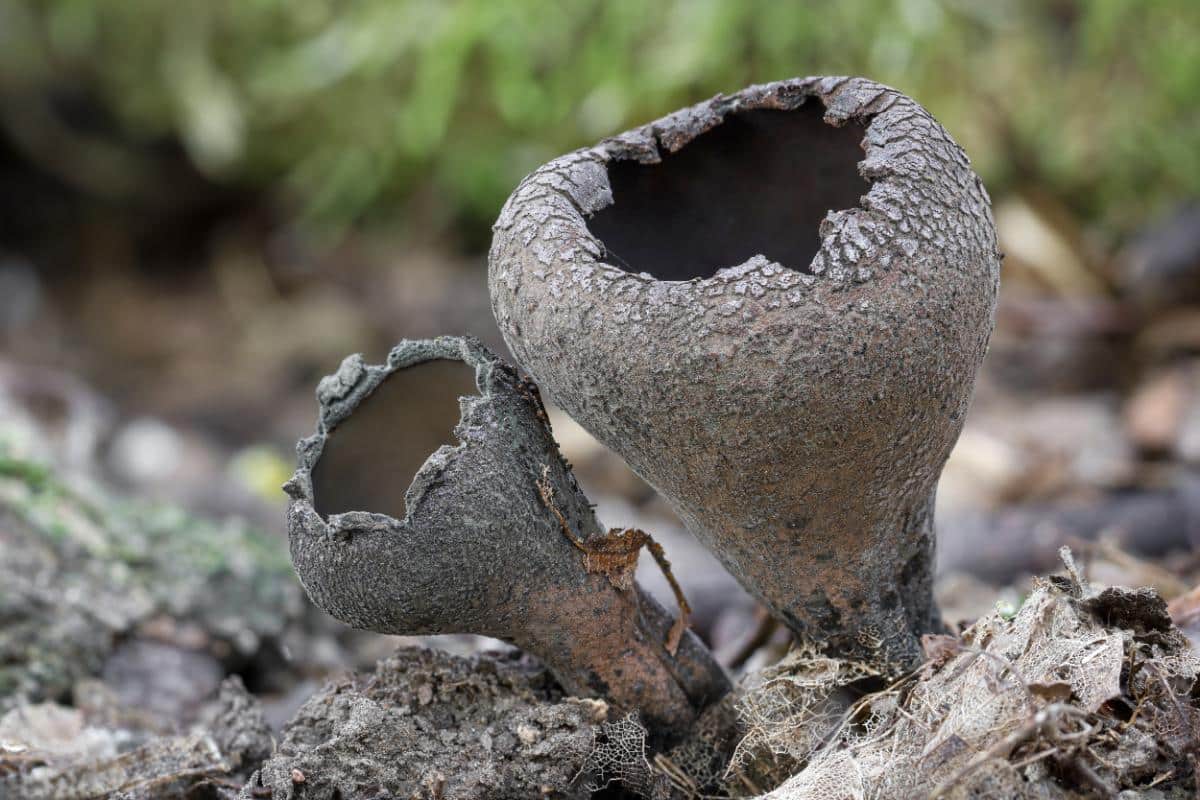
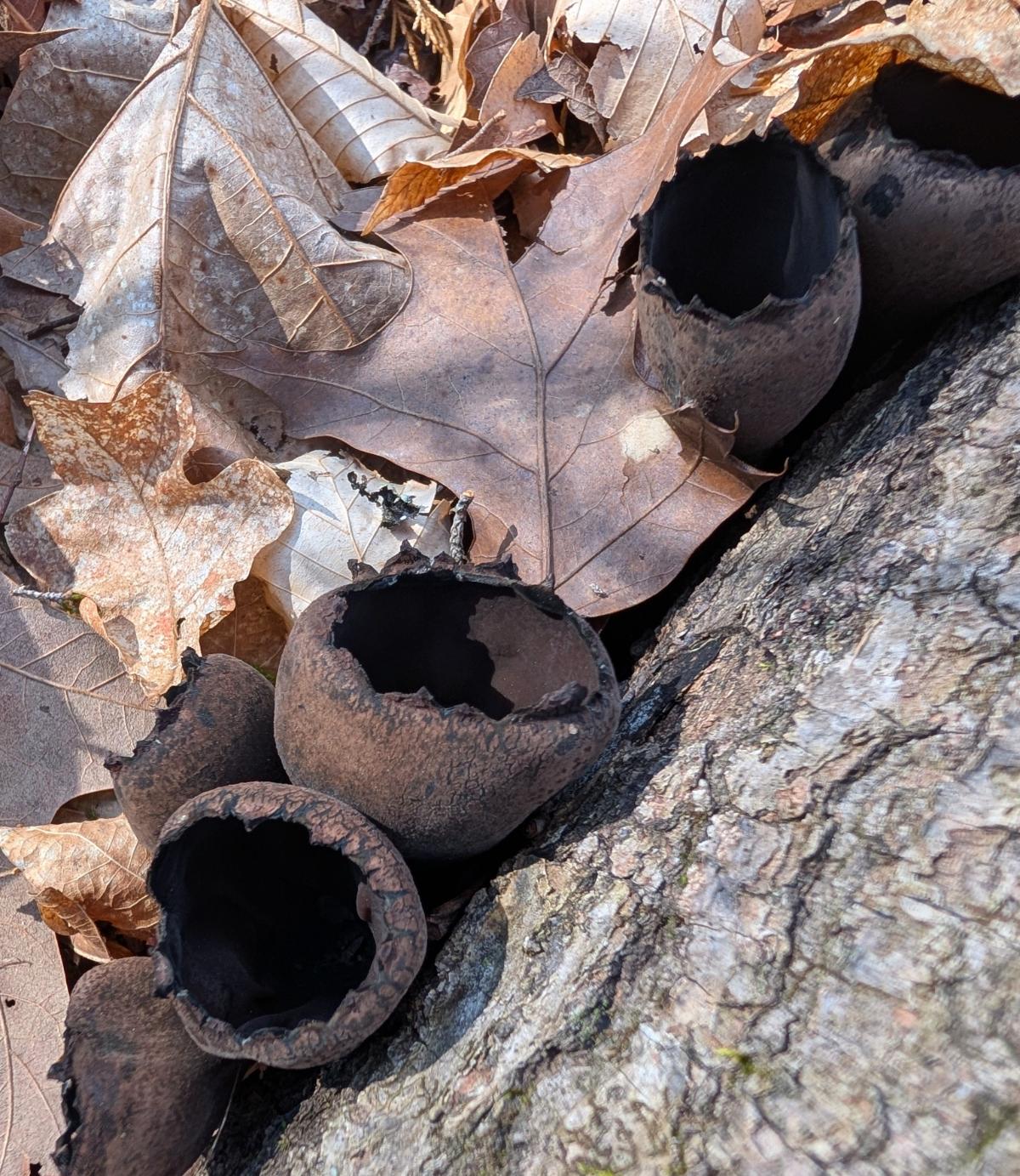
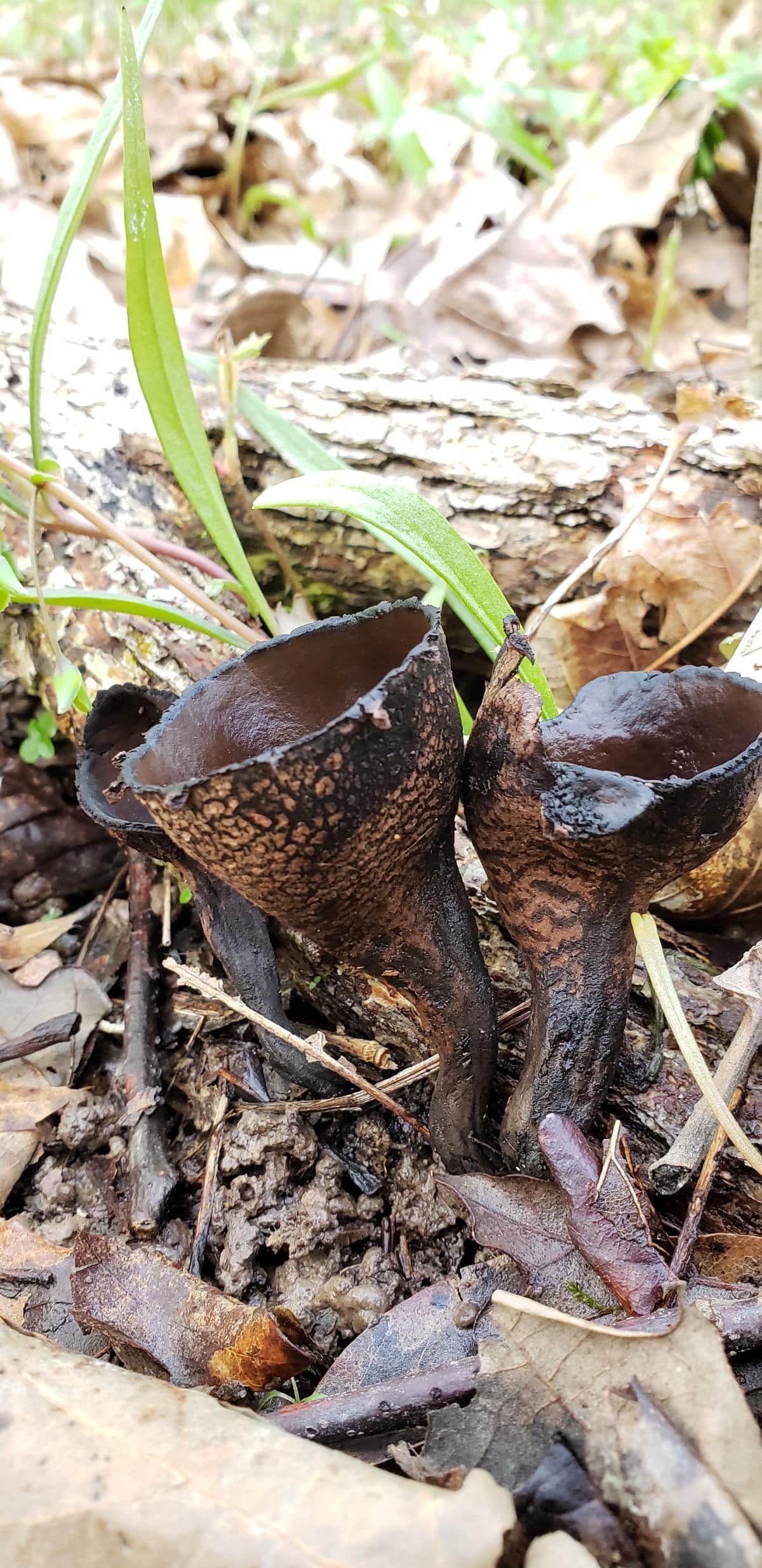
The young fruiting body is closed or shaped like a deep urn. As it expands, the opening widens, and the body becomes a goblet or broad cup. The rim of the cup may remain rolled inward for a while, then it becomes smooth, torn, or ragged. The mushroom’s color ranges from brown through gray to black. Its exact coloring is influenced by age and environmental conditions.
Inner and Outer Surfaces
The smooth inner surface is the fertile part of the cup where spores develop. It ranges from dark brown or gray to nearly black and may be slightly paler than the outside coloring.
The outer surface ranges from brownish black to black. It may feel velvety, rough, scaly, or scurfy, and might be covered in small flakelike patches. As the fungus ages, fine cracks may appear in chevron-shaped or netlike patterns. Some young or pale specimens have been described as pinkish brown or pinkish gray before darkening.
Stem
Devil’s urn has a tapering base rather than a sharply separated true stem. This base is black and becomes fuzzy near the point where it meets the wood. This stem-like base ranges from 1.2 to 2.4 inches tall.
Taste and Smell
The odor is not distinctive. It tastes bland or slightly tangy.
Flesh Color and Staining
The flesh is white and tough, and it does not change color when sliced.
Devil’s Urn, The Tree Pathogen
The urn-shaped part that we can see is the sexual stage of the fungus. In this form, it feeds on dead hardwood. However, this fungus also has an asexual stage called Conoplea globosa (formerly known as Strumella coryneoidea), which infects living trees and causes Strumella canker. To confirm this, researchers infected oak trees with Urnula, and the trees developed cankers. This verified that the urn mushroom and the fungus causing cankers on the tree are two forms of the same fungus.
The asexual form enters through wounds in the tree and attacks the living tissues beneath the bark. The resulting canker is elongated and perennial. Its hosts include oak, hickory, basswood, beech, American chestnut, and other hardwoods. When experiments were done, it was found that the asexual spores didn’t germinate, so their exact purpose is still unclear. They may be reproductive cells that help the fungus mate before it forms its sexual stage. It’s still unknown how the fungus spreads from one living tree to another.
Devil’s Urn Lookalike Species
Several dark cup fungi resemble devil’s urn, but location, season, substrate, cup depth, and flesh texture help separate them.
Urnula padeniana
Urnula padeniana differs from the devil’s urn in range and internal texture. It occurs in western North America, mainly in coastal forests and possibly the Sierra Nevada, and is not found in eastern North America. It fruits from midwinter through spring on rotten or buried wood.
Its cups are more uniformly black and less crusty than those of devil’s urn. The interior also contains rubbery or gelatinous black tissue that fills the tapered base and cup wall. Fruiting bodies of this species are about 1.2 to 2.4 inches tall and about 1.2 to 1.6 inches across. Its edibility is unknown.
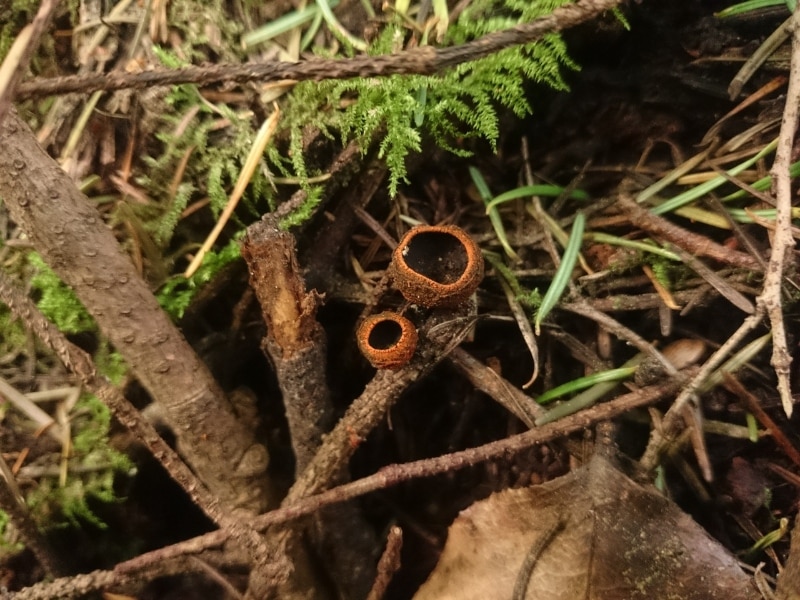
Corona Cup (Plectania melastoma)
The corona cup fungus has rusty orange granules across its black outer surface. Devil’s urn does not have this orange coating. Its cup is also smaller and shallower.
The fungus grows among mosses on well-rotted conifer wood, especially in Sitka spruce forests. It fruits in spring in coastal conifer forests. Its edibility is unknown.
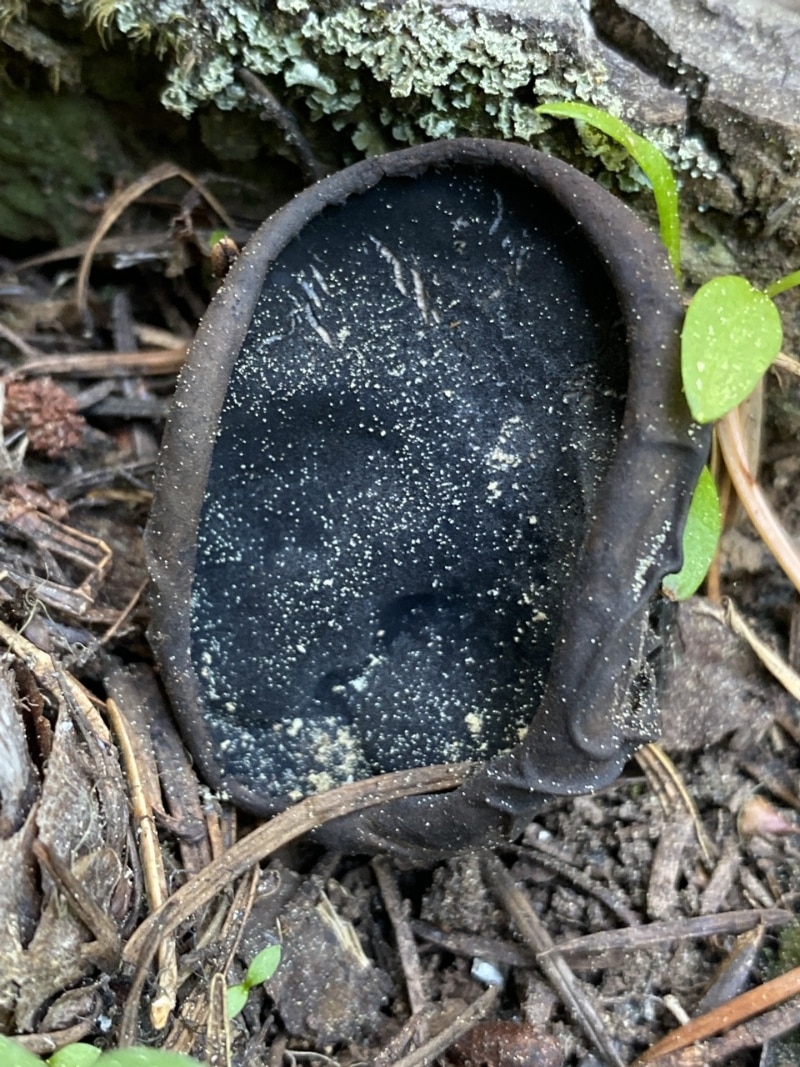
Ebony Cup (Pseudoplectania nigrella)
Ebony cup fungi are black to blackish-brown cups or saucers with a felted exterior. The cups are more uniformly black and don’t develop the crusty, cracked surface that devil’s urn can. It grows in soil or well-rotted conifer wood rather than hardwood. It fruits during spring along the coast and in the Sierra Nevada and Cascade ranges. Its edibility is unknown.
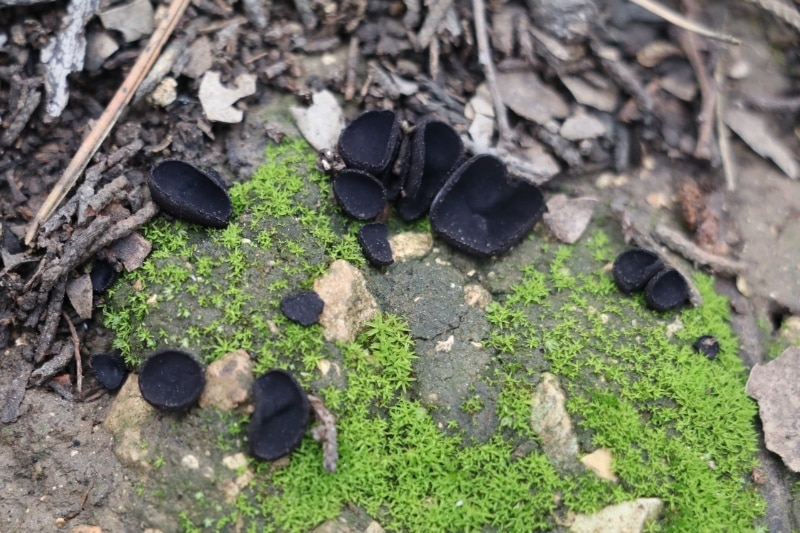
Black Jelly Drops (Bulgaria inquinans)
Black jelly drops look like their name and form shallow cups that flatten or become convex, unlike the devil’s urn, which retains a deeper goblet shape. They have rubbery or gelatinous flesh, no true stem, and a smooth, shiny black upper surface. The black jelly drop also fruits later, mainly during late summer and autumn. This fungus grows in clusters on decaying oak, tanoak, and other hardwoods.
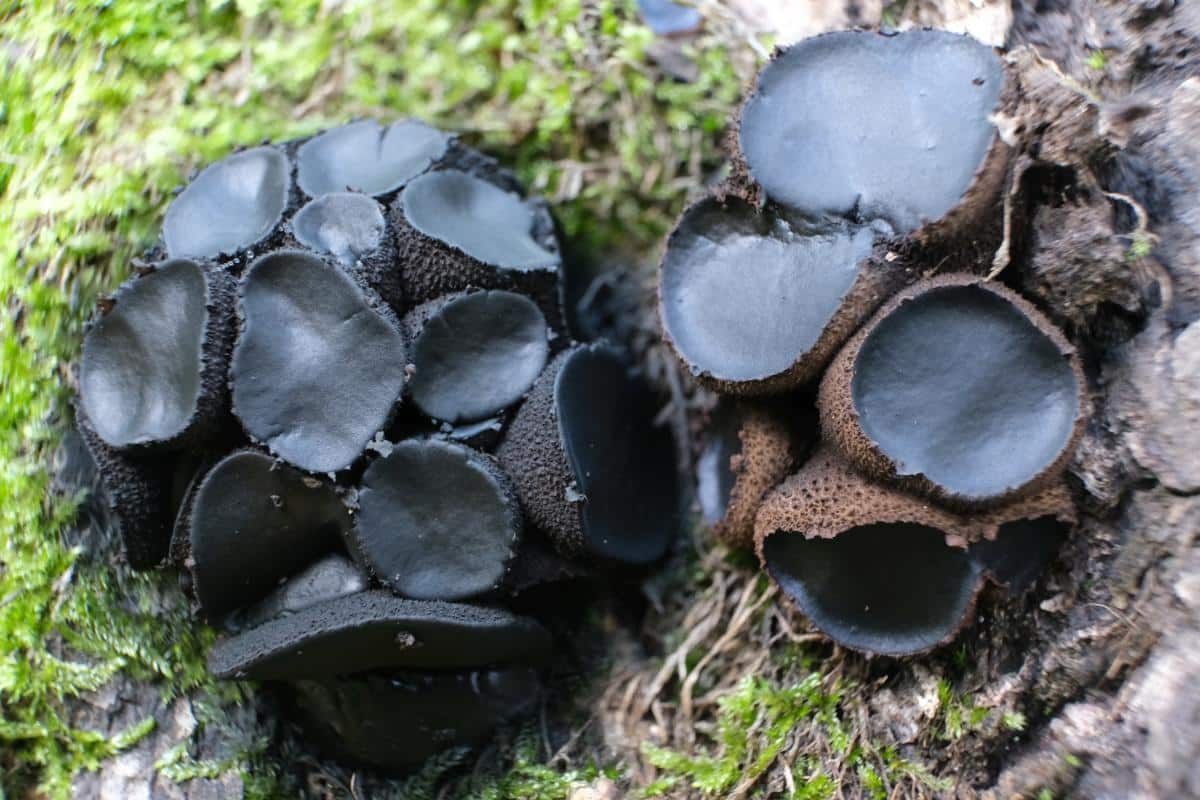
Pseudosarcosoma latahense
Pseudosarcosoma latahense is a smaller but otherwise similar dark cup fungus. However, it is only known from the Pacific Northwest and does not share habitat with the devil’s urn.
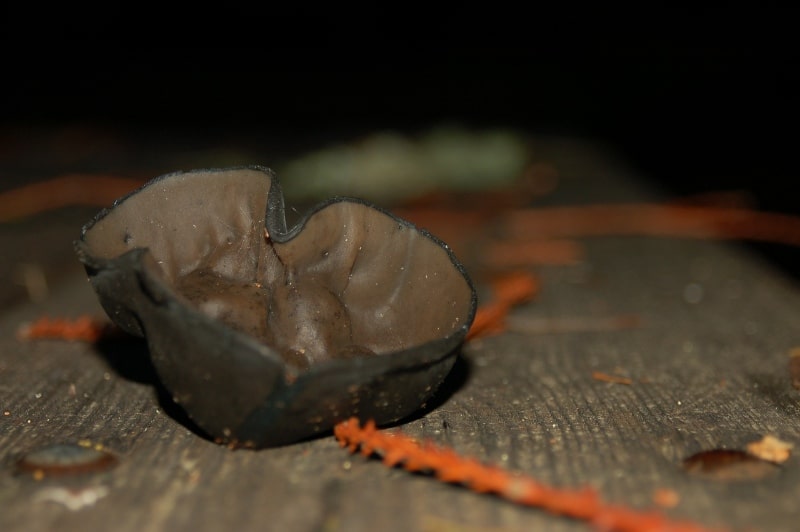
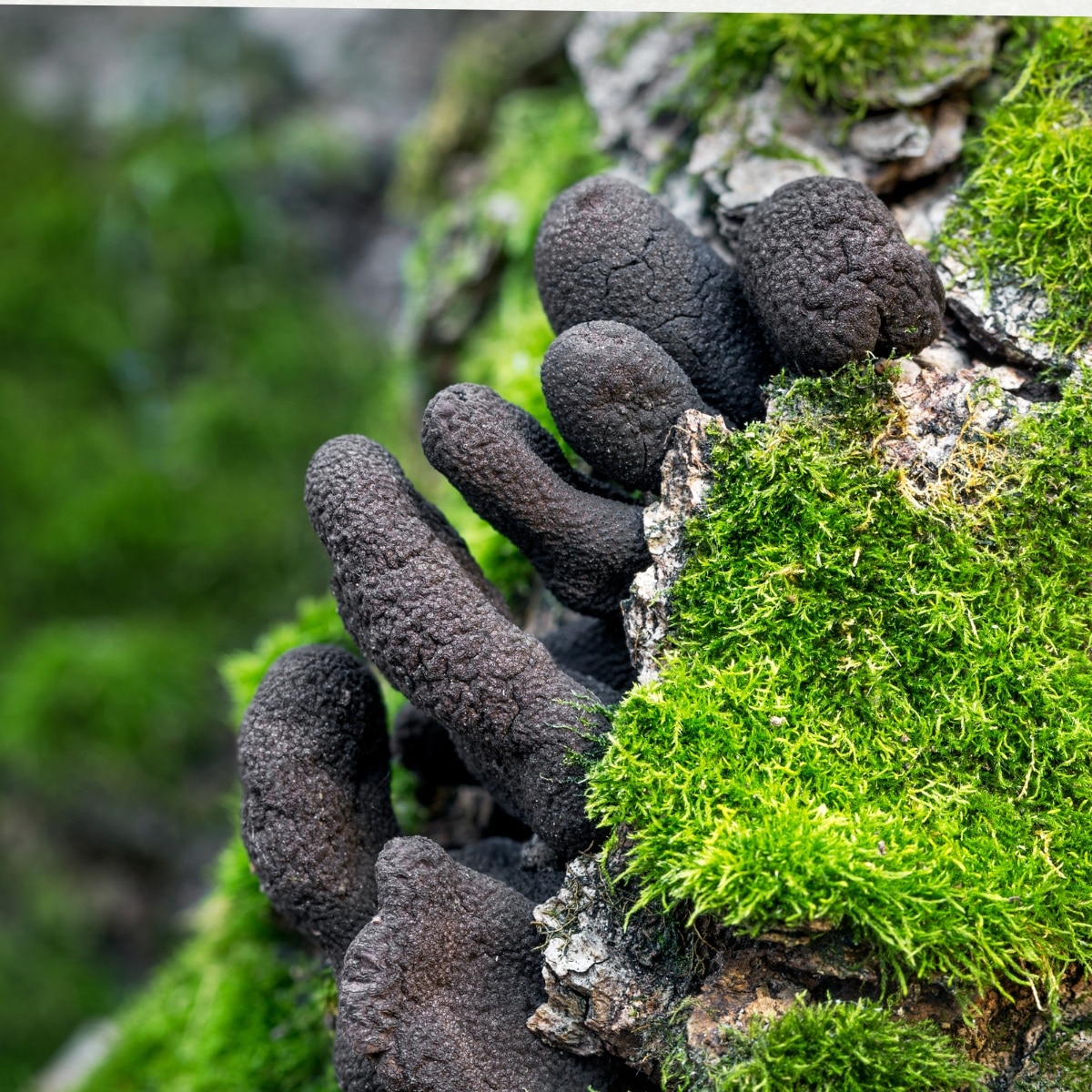
Dead Man’s Fingers (Xylaria polymorpha)
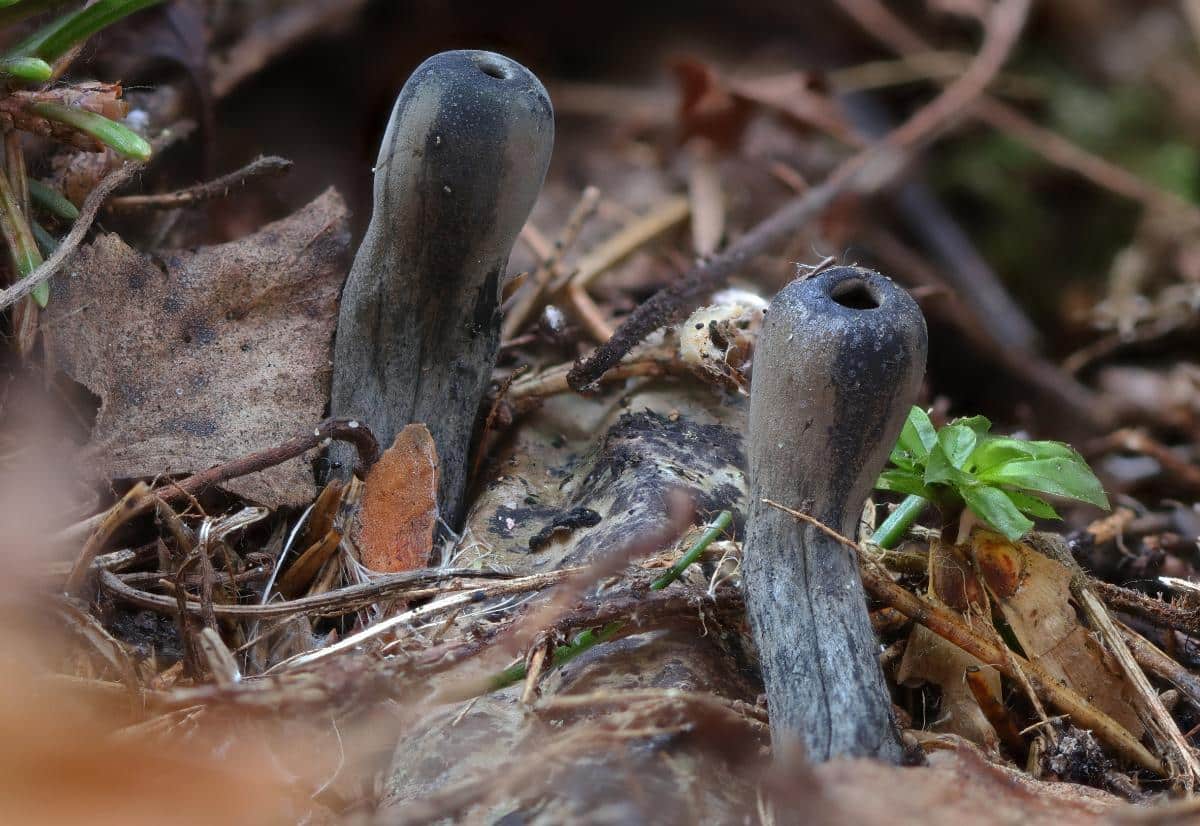
Dead man’s fingers resemble only the young, unopened stage of devil’s urn. It forms solid clubs or finger-shaped bodies rather than hollow cups. The mature dead man’s fingers grow about 1.6 to 5.5 inches tall, and have a dark, dry, wrinkled exterior and a very tough white interior.
The fungus grows on decaying hardwood stumps and logs, sometimes from buried wood, and is widespread east of the Rocky Mountains. It usually fruits from spring through late summer or autumn.
Devil’s Urn Edibility and Toxicity
Devil’s urn has no known human toxicity, but it is inedible or not recommended because the flesh is tough and leathery. The flavor is said to be mediocre to slightly tangy.
Common Questions About Devil’s Urn
Why does devil’s urn look as though it grows from soil?
The fungus grows from buried sticks or small logs. Its dark base extends upward through the leaf litter and forms the cup at the surface, while the lower end remains attached to wood.
Can devil’s urn damage living trees?
The urn itself grows on dead wood, but the same fungus has an asexual form called Conoplea globosa that causes cankers on living hardwoods. Its full route of transmission between trees remains unknown.
Does devil’s urn have medicinal uses?
No human medicinal use has been established.
Leave a Reply