
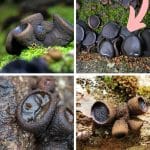
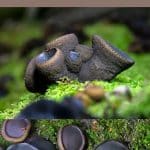
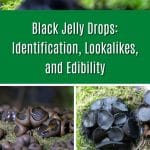
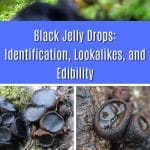
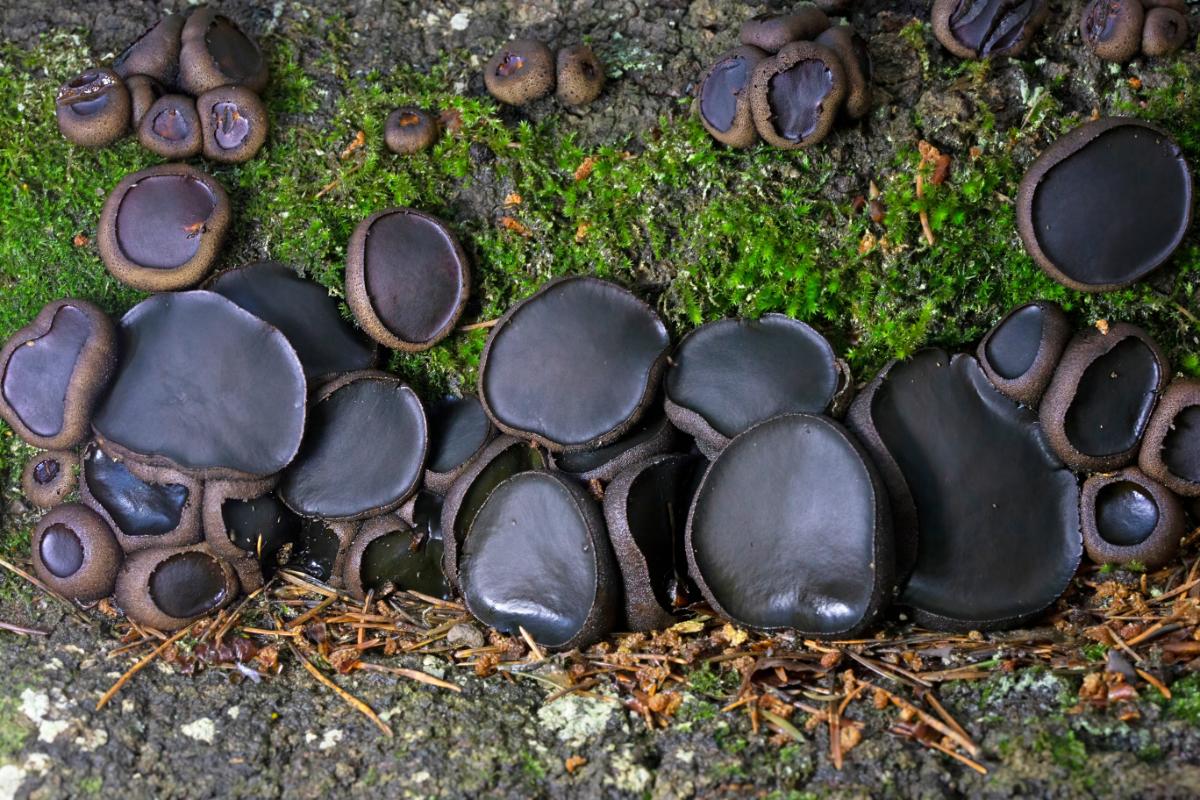
When you find black jelly drops (Bulgaria inquinans), you may think you’ve discovered someone’s black licorice gumdrop stash in the forest! These fungi are jet-black, rubbery discs that cluster on the bark and wood of fallen oak logs and look, for all the world, like the candy that gives them their common name. Black jelly drops aren’t toxic or poisonous, but they aren’t commonly eaten either. They are extremely rubbery in texture and, on top of that, they stain the fingers jet-black when handled.
Black jelly drop mushrooms grow across North America. When the conditions are right, dozens of fruiting bodies can erupt from a single log, covering it in polished black buttons that look more like rubber or candy than a fungus.
- Scientific Name: Bulgaria inquinans
- Common Names: Black Bulgar, Rubber Buttons, Black Jelly Drops, Bachelor’s Buttons, Poor Man’s Licorice
- Habitat: Dead and decaying oaks and other hardwoods
- Edibility: Inedible
All About Black Jelly Drops
These odd little jet black gumdrops were first formally described to science by the Dutch-German mycologist Christiaan Hendrik Persoon in 1800. He named them Helvella inquinans. Samuel Frederick Gray moved it to its current genus, Bulgaria, in 1821.
Black jelly drops have quite a few common names, including Black Bulgar, Rubber Buttons, Poor Man’s Licorice, and Bachelor’s Buttons — the last of these names is a nod to the way the young fruiting bodies resemble small, round, dark buttons before they open into flat discs.
The genus name Bulgaria comes from the Latin word bulga, meaning a leather bag or wallet. This is a reference to the pouch-like shape of the young, unopened fruiting bodies. The species name inquinans is from the Latin word meaning to stain or to defile. This name was given because of the black spores that rub off on anything that touches them when the mushrooms are mature.
Black Jelly Drops Identification Guide
Season
Black jelly drop fungi fruit from late summer through autumn. Their peak fruiting time is from August through November. In milder years and in sheltered locations, the fruiting bodies can persist into early winter.
Habitat
This mushroom grows on dead and decaying hardwood. It prefers oak but will also grow on beech, ash, and other broadleaf hardwoods. It usually grows on fallen logs, cut stumps, and branches — rarely does it grow on standing trees unless the wood is already dead.
Black jelly drops may appear alone, but more often they are in dense clusters or large groupings. Many times, the clusters are so dense that the mushrooms overlap. They always grow on wood, never from the ground.
It is found across Europe and North America, and has been recorded in parts of Asia and North Africa.
Identification
Cap
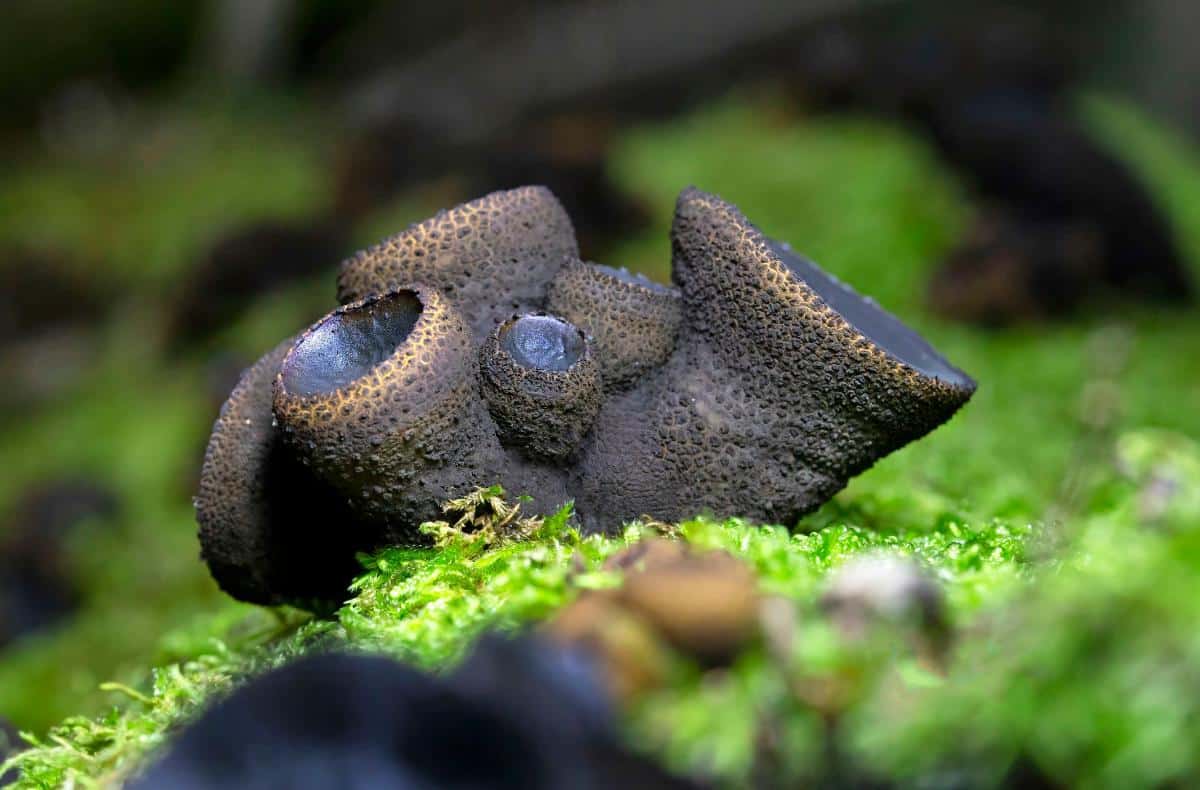
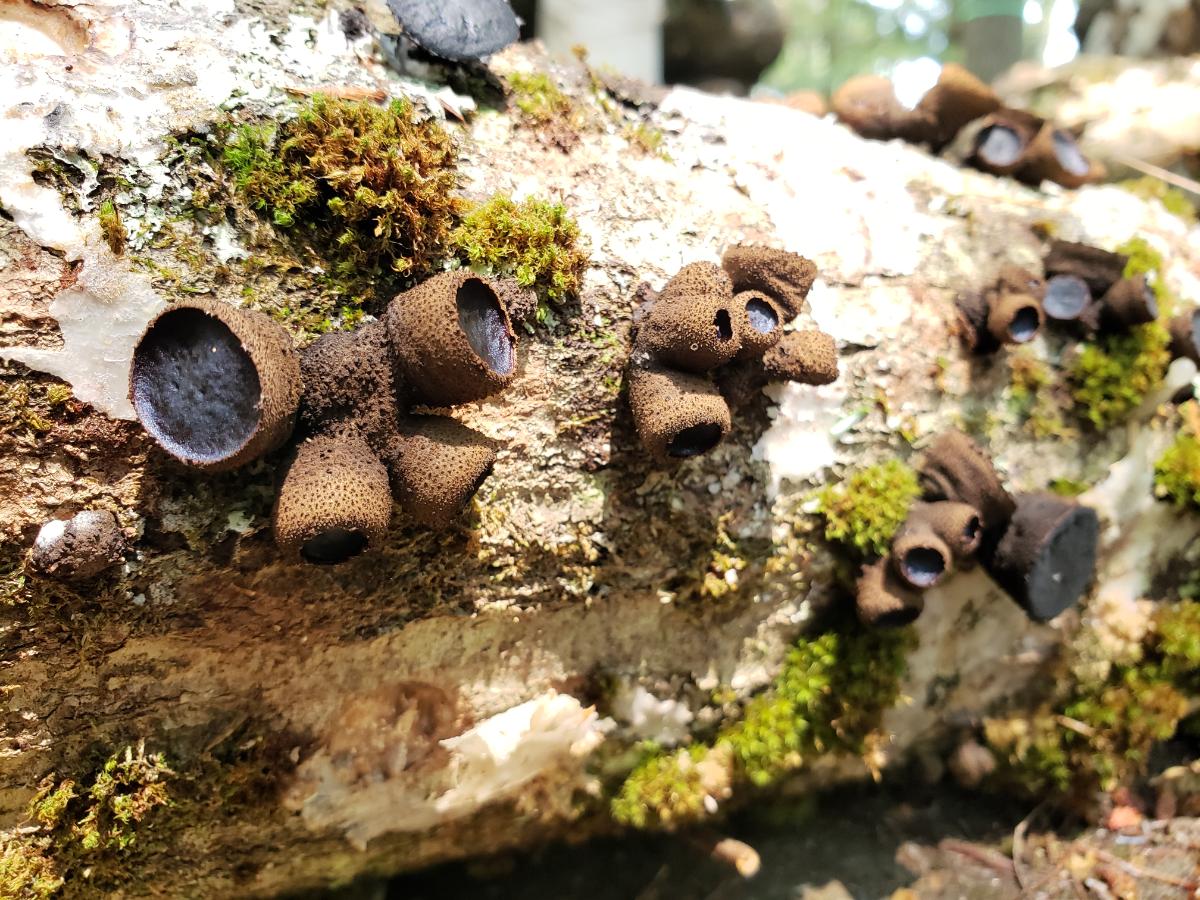
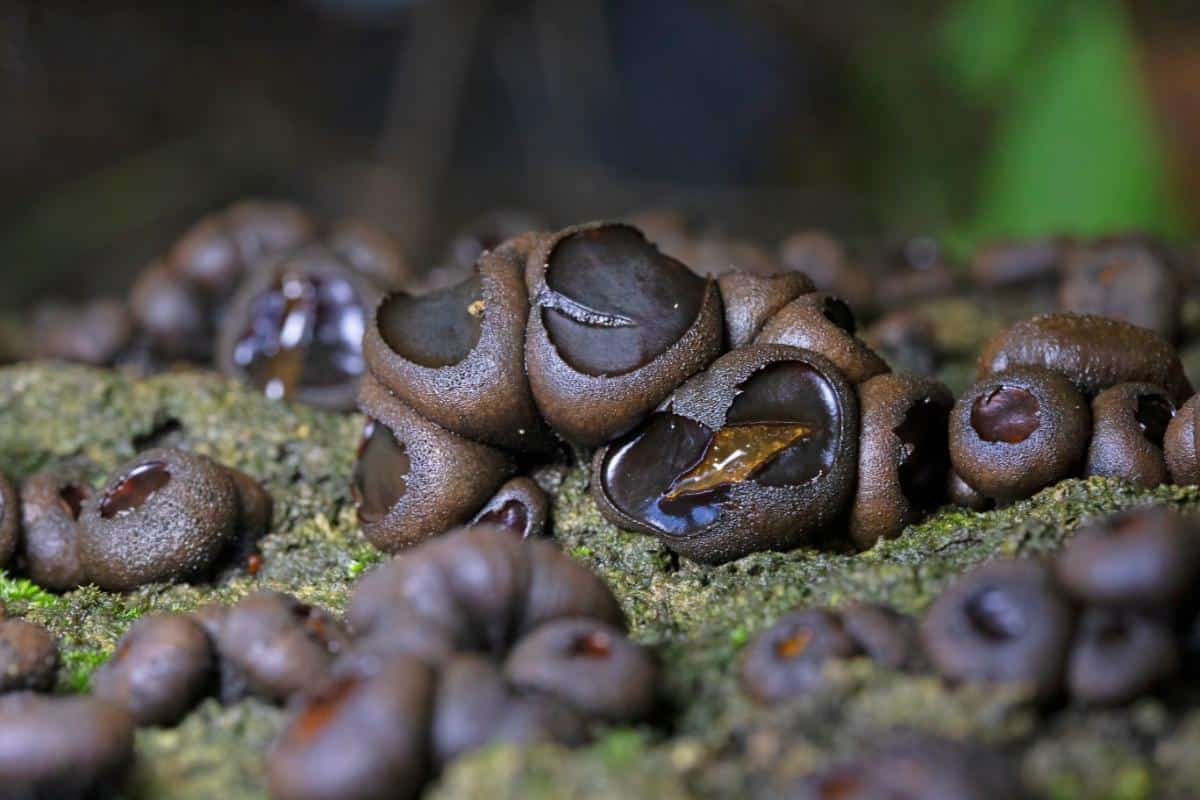
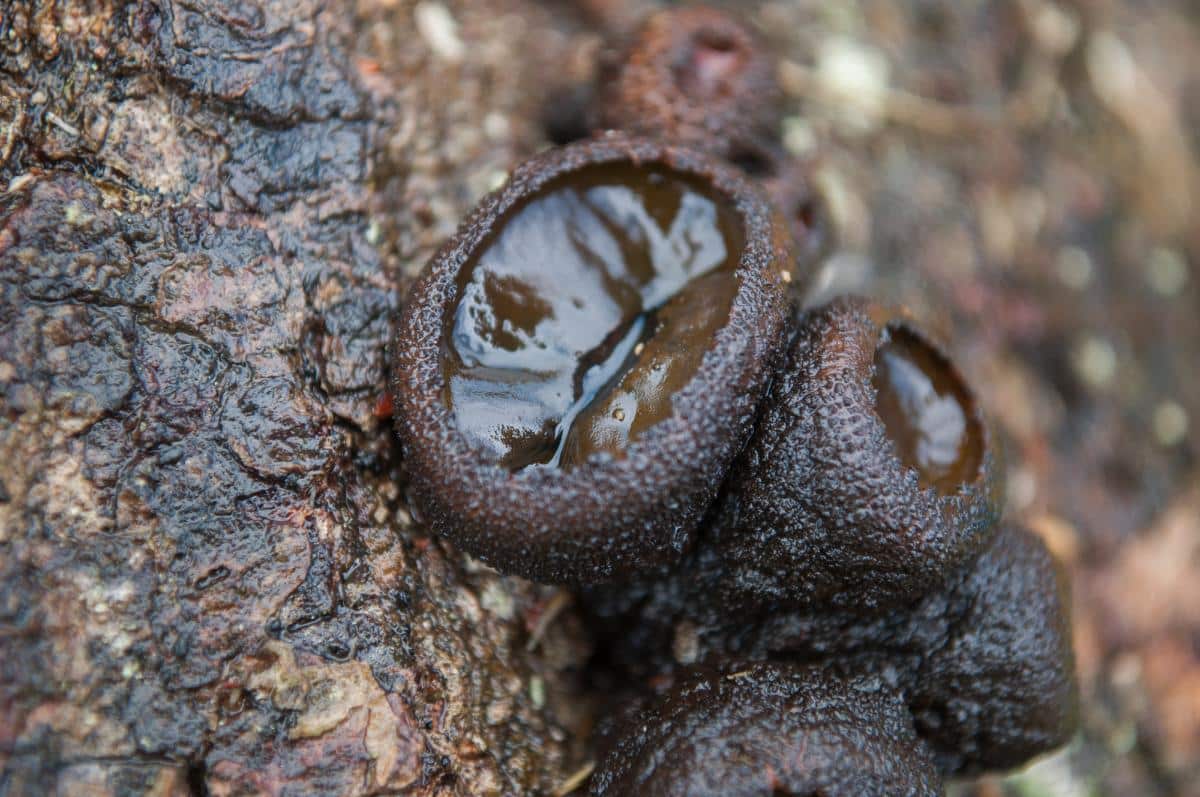
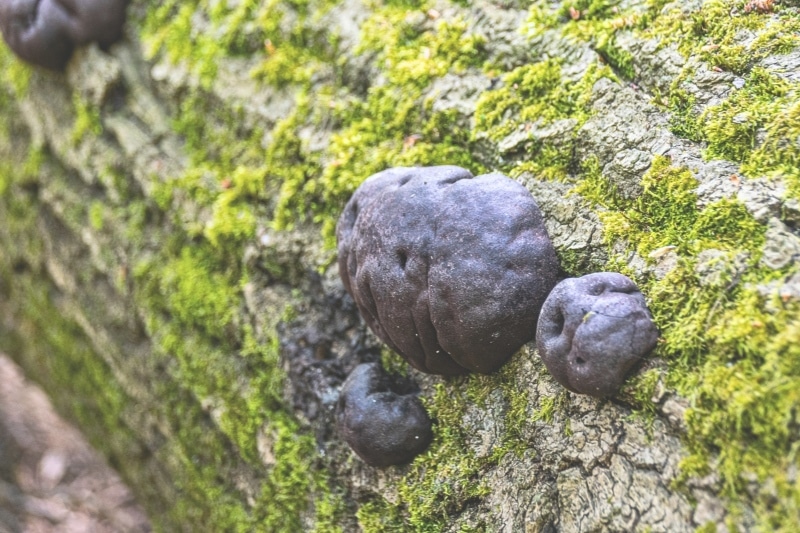
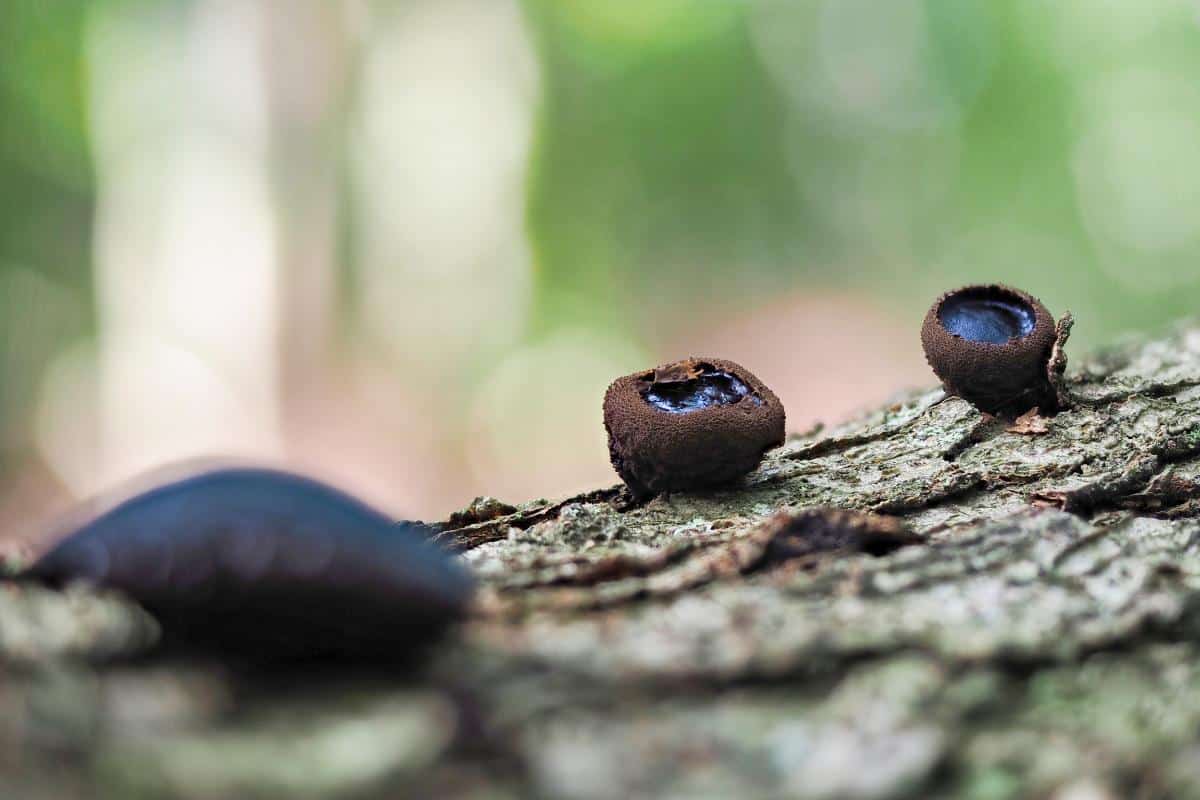
The black jelly drop fungus has several looks over its lifetime. The fruiting body, when it is young, looks like a closed, spherical button with a rough, brown exterior. The “cups” are very closed up at first, with only a small opening at the top. They look a bit like chalices at this stage.
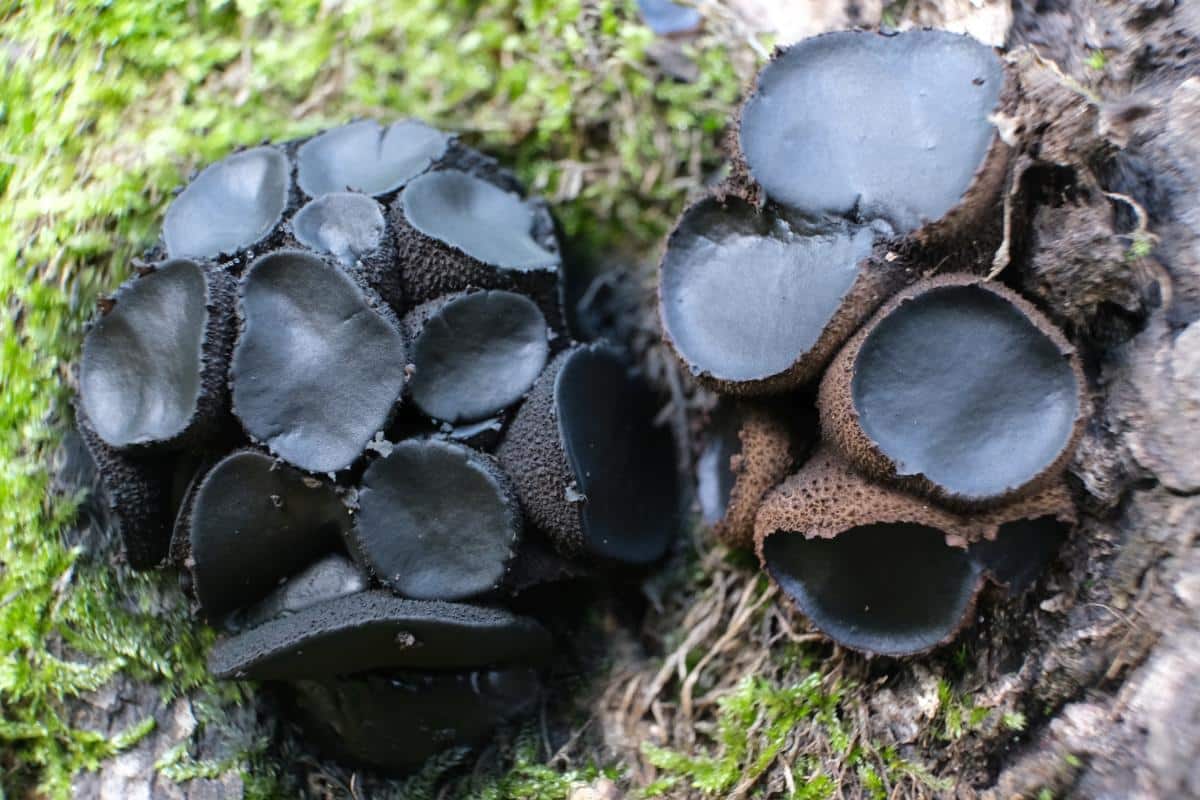
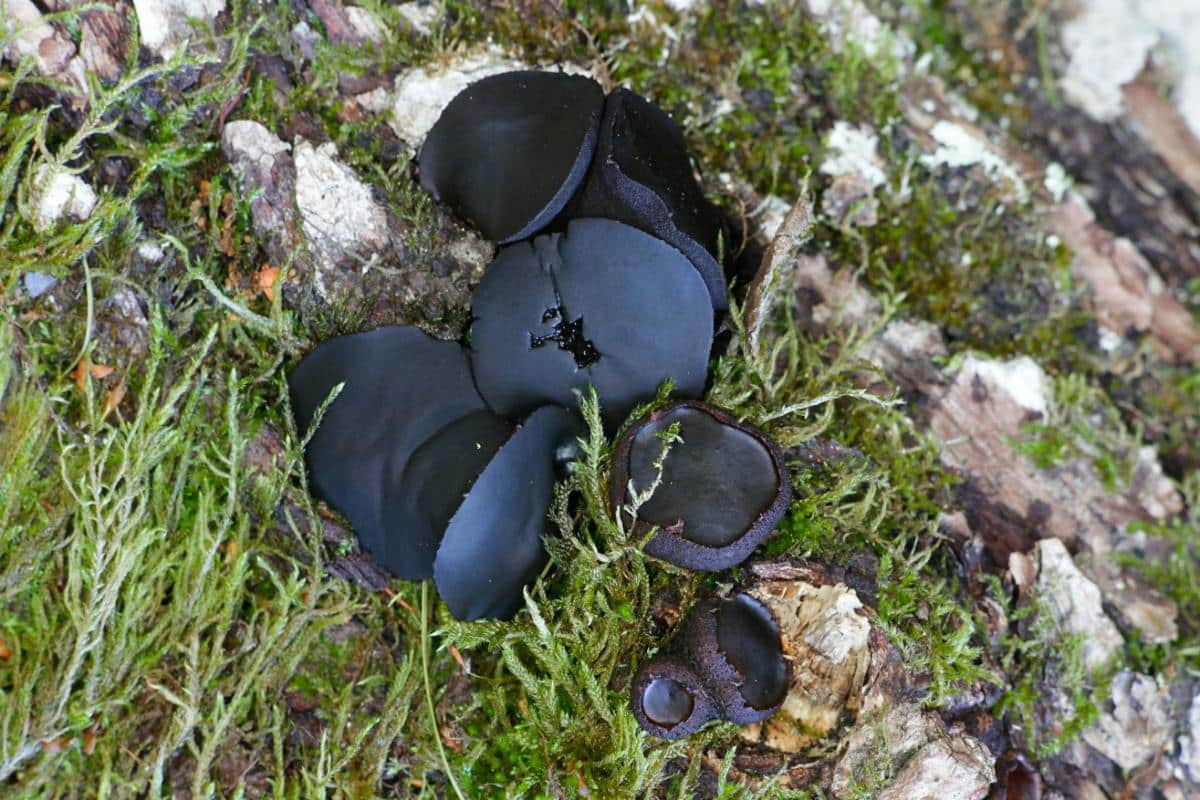
As the button grows, the opening at the top becomes wider, and the mushroom takes on more of a cup shape. At maturity, the cups have pushed upwards and outwards to form a flat disc, like the top of a gumdrop. The caps are small, .05 inches to 1.5 inches across, though some specimens can reach up to 2 inches in diameter.
The upper surface — the fertile inner face — is flat to slightly concave in maturity and dark ochre-brown to jet black. The surface is also smooth and has a faint shine. The outer surface is darker brown, rough, and granular, especially when young. With age, the outer surface may darken to black, and it will retain its bumpiness. The disc “cap” becomes more pronounced with age and can curl slightly at the edges when it is especially dry out.
Gills or Pores
This mushroom doesn’t have gills or pores. It is a cup fungus in the class Ascomycetes, and its spores are produced on the smooth black inner surface of the disc.
Stem
Black jelly drops don’t have a true stem. The fruiting body is attached directly to the wood. Or, it might have a very short, stubby base where it connects to the wood.
Taste and Smell
The taste is mild and not distinctive. The smell is faint and not notable.
Flesh Color and Staining
The flesh is rubbery and elastic in wet conditions, and toughens to a leathery texture when dry. It is dark brownish-black in color. The black spores will stain fingers, clothing, and any surface they come into contact with.
Spore Print
The spore print is black.

Lookalike Species
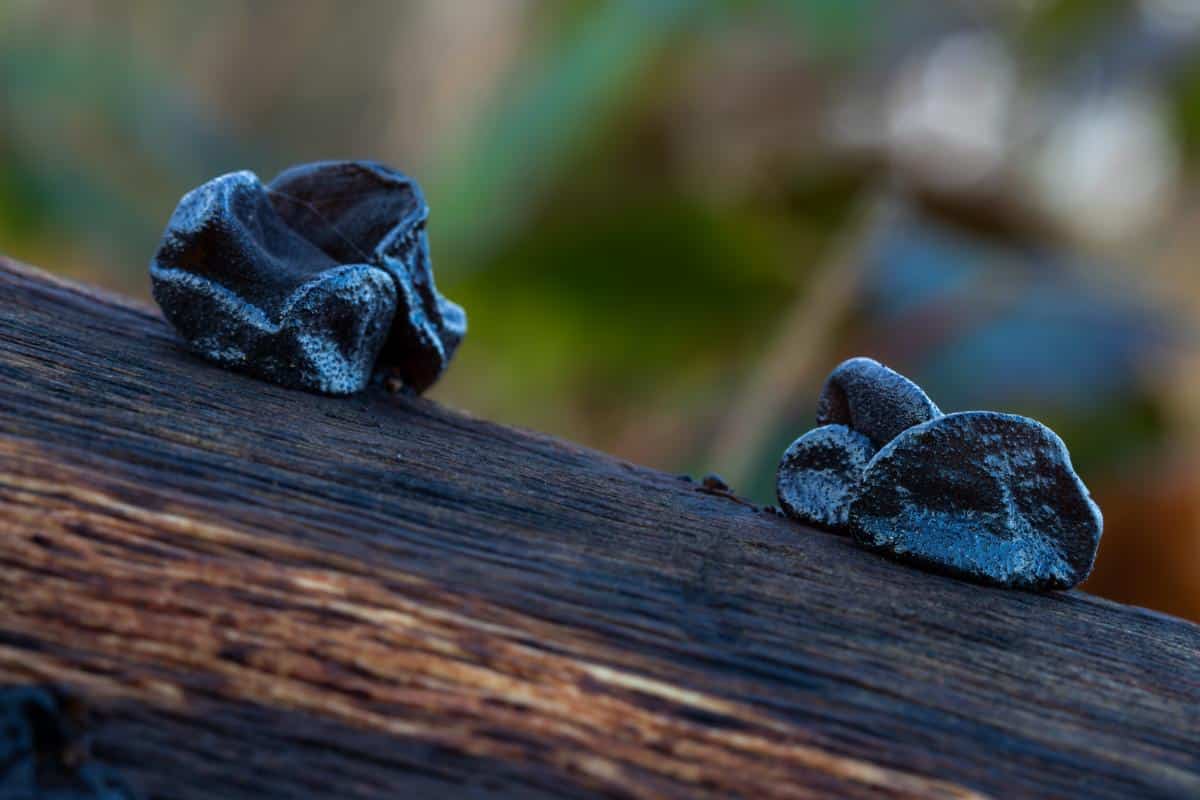
Black Witch’s Butter (Exidia glandulosa and Exidia nigricans)
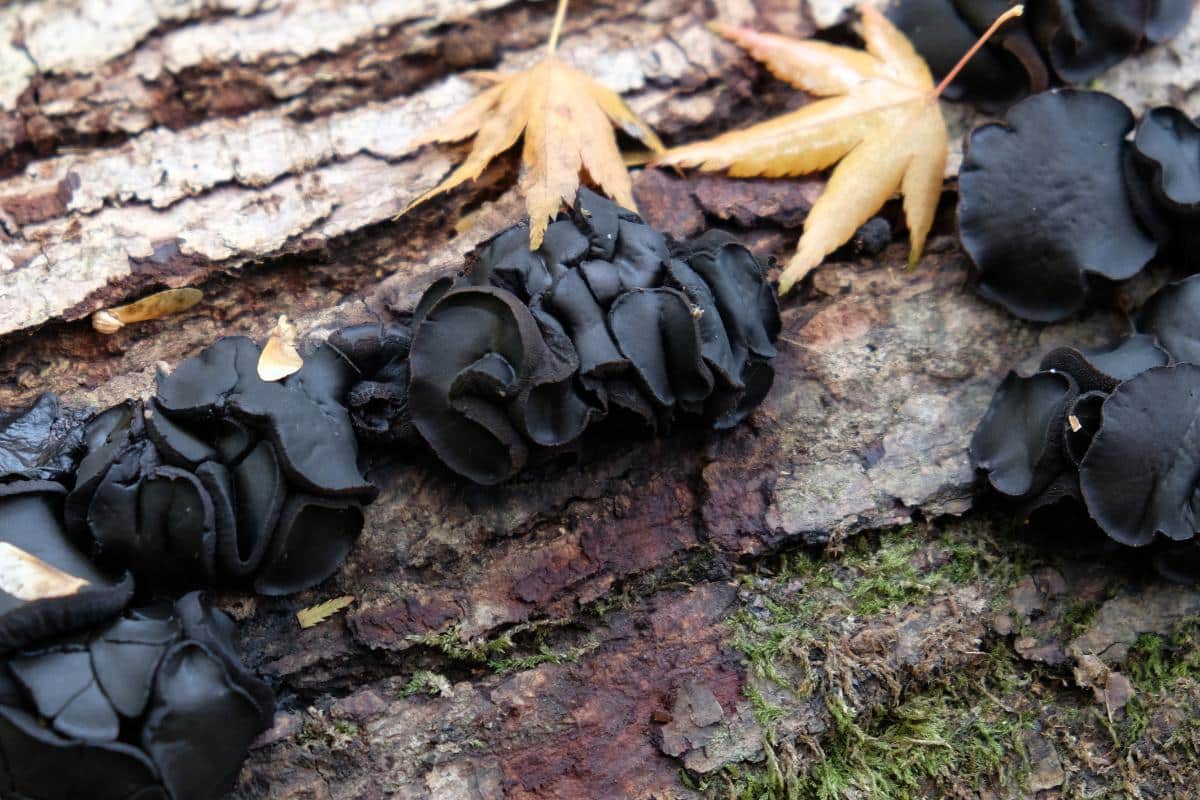
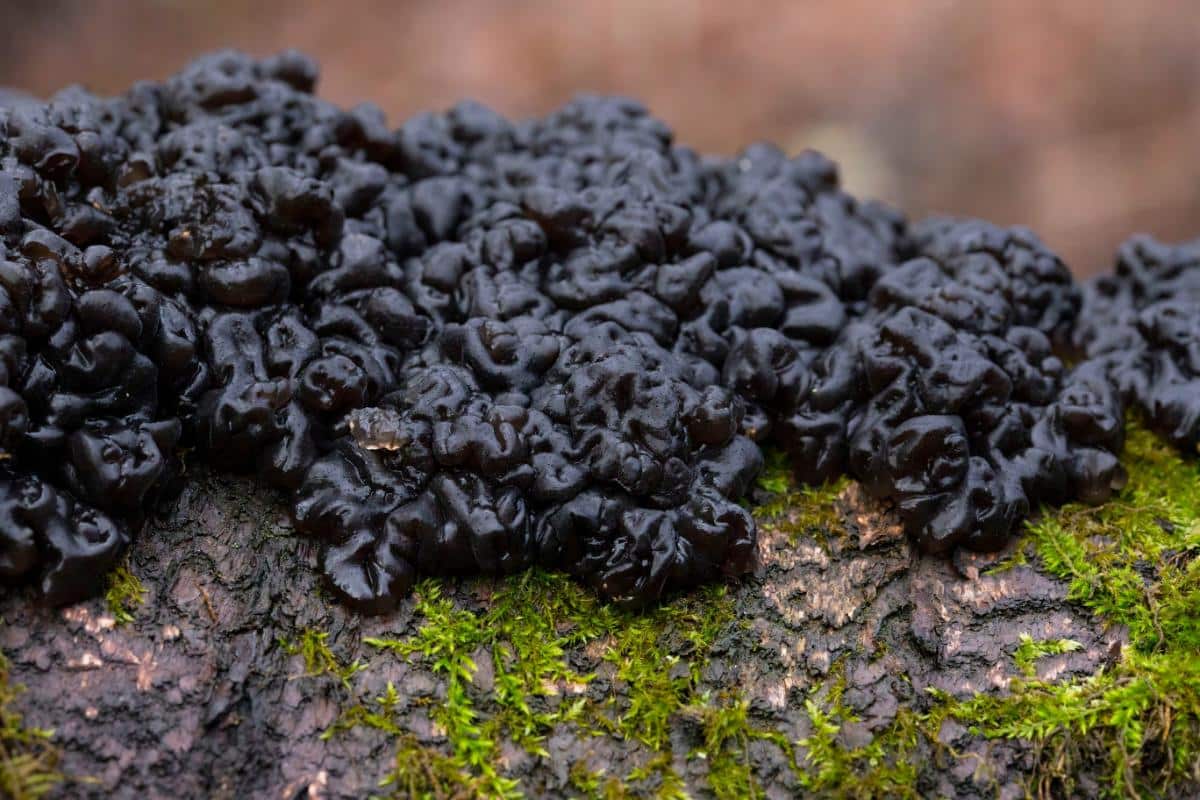
This is the lookalike most likely to cause confusion. Sometimes, they grow side by side on dead oak. Both black witch’s butter and black jelly drops are jet black, glossy, and grow on hardwood.
There are some significant differences, though. The key difference is shape: black witches’ butter forms irregular, lobed, brain-like masses that don’t have the same distinct cup or disc form as black jelly drops. The witches’ butter is also softer and more translucent when wet, and collapses to a thin dark crust when it dries.
Rubber Cup Fungus (Galiella rufa)
The rubber cup fungus has the same rubbery, gelatinous texture as black jelly drops and grows in the same habitat — on dead hardwood in autumn. Before the black jelly drops develop their flattened disc-shaped cut, these two can look a lot alike.
The key differences are in color. The inner fertile surface of the rubber cup is a dull brownish-red to reddish-tan, not very dark brown or black. The outer surface of the rubber cup fungus is also distinctly different. It is covered in a rough, shaggy, dark brown exterior that gives it a more ragged appearance compared to the smoother, granular outside of black jelly drops.
The rubber cup fungus also has a more pronounced cup shape, and it keeps that shape. It does not flatten out into a disc as it matures. Finally, a mature black jelly drop will leave black spore stains on the fingers — the rubber cup fungus does not stain.
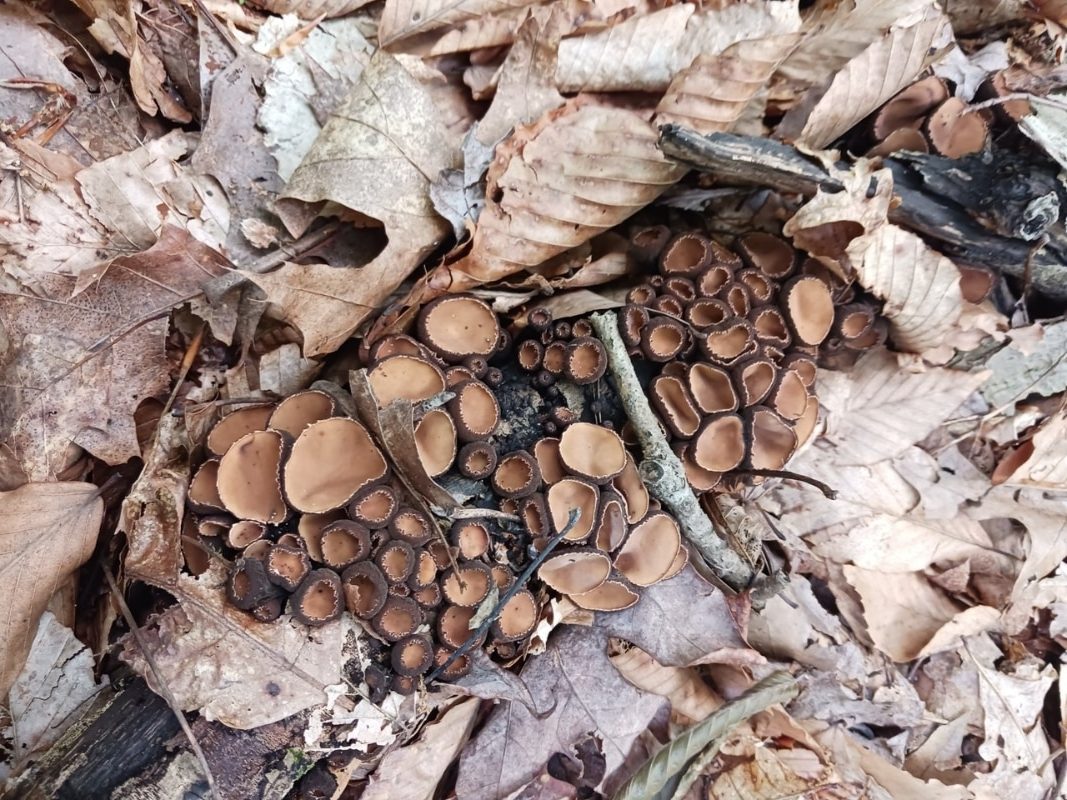
Rubber Cup Fungus (Galiella rufa) by Matthew R. Desko on Mushroom Observer
Devil’s Urn (Urnula padeniana & Urnula craterium)
This is a dark cup fungus that also grows on dead oak wood, and can easily be confused with black jelly drops. The interior of the devil’s urn is also dark brown to grayish-black, and its outer surface is a little bumpy. Up close, though, it’s easy to see their differences.
The devils urn has a deep, urn-shaped or goblet form with a distinct stem. It keeps that cup shape even in maturity, unlike the jelly drops that flatten out. Overall, it has a much more structured appearance. It also doesn’t stain your hands black when handled.
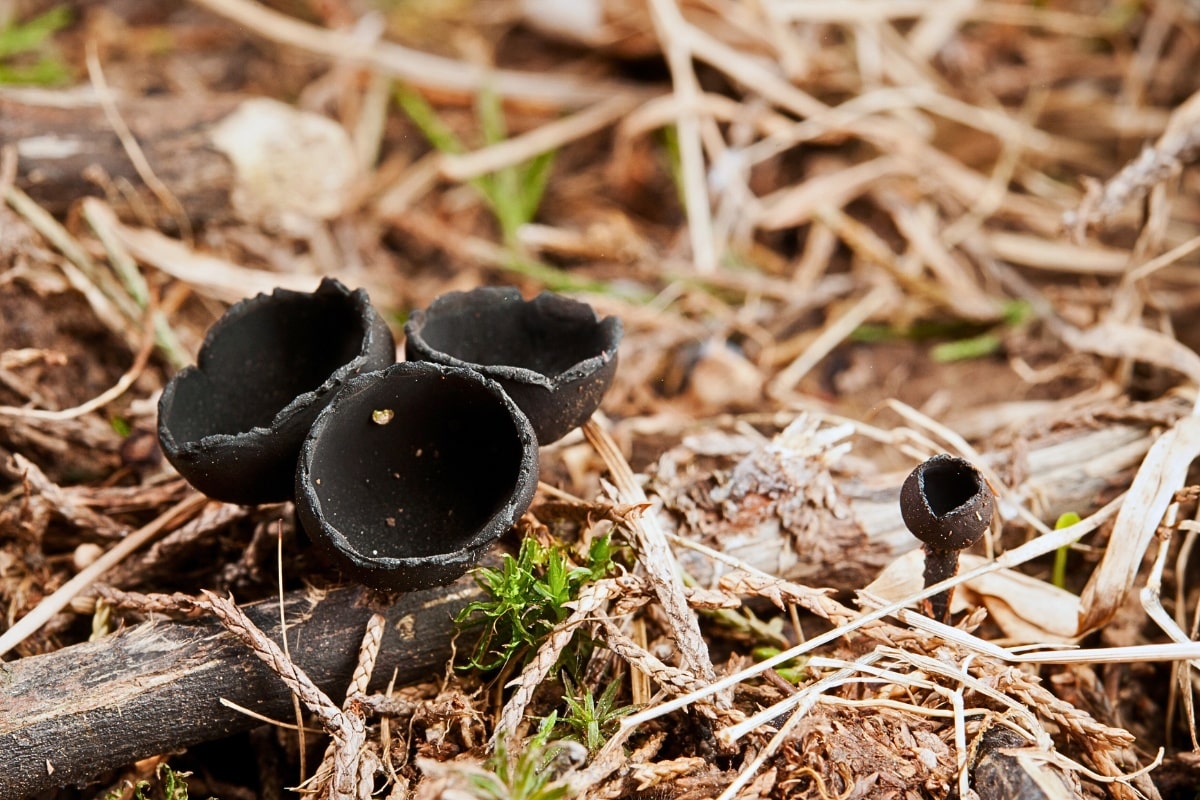
Plectania/Pseudoplectania species
These fungi also are often black and are cup-shaped, like black jelly drops when they’re young. They can be really tricky to differentiate. The key differences are that many Plectania have a distinct stem, and if there is a stem, it’s not black jelly drops. The outer surfaces of most of these species are also the same color as their interior; there is no color contrast. Finally, most of these species keep their cup-shape and don’t become flat on top, although this can happen with some species with age.
A final tell is the spores. Plectania species have white spore prints and they will not ever stain your hands black. Pseudoplectania and Plectania differ primarily in spore shape—macroscopically, it can be difficult to tell them apart.
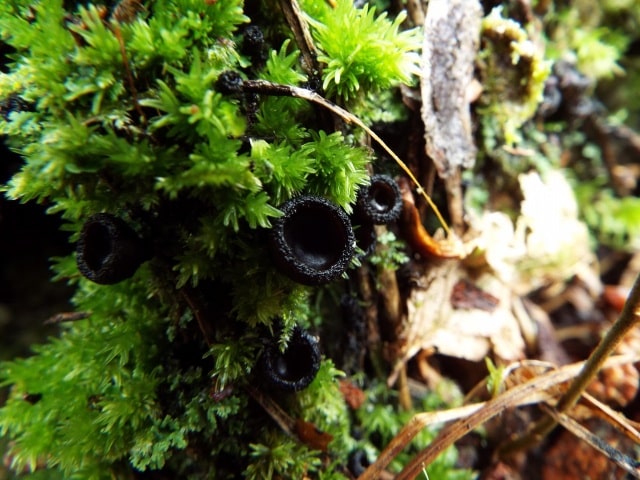
Coal Fungus (Daldinia concentrica)
Coal fungus, also known as King Alfred’s Cakes or Cramp Balls, is another black fungus found on dead wood. It forms hard, round, carbon-black balls, though, that sit on the wood like lumps of coal. They are solid and woody with no cup or disc shape. Coal fungus also lives for months or even years as a hard, dried structure, while black jelly drops soften, collapse, and deteriorate fairly quickly.
Medicinal Uses of Black Jelly Drops
Black jelly drop fungi contain bulgarein, the black pigment that gives the mushroom its color and stains the fingers of anyone who handles it. Research has found that bulgarein acts as a DNA intercalator which means it might have potential in antiviral and anticancer compounds.
Other researchers tested extracts from Bulgaria inquinans against bacteria and fungi. The results showed mild antimicrobial effects. The compound bulgarein is also active against certain viruses, though this has only been determined via labs and not clinical trials.
Black Jelly Drops Culinary Uses
Black jelly drops are not commonly eaten, at least in North America. The flesh is rubbery and gelatinous, the flavor is essentially absent, so there isn’t much draw to them from a culinary perspective. Plus, the black spores stain everything they touch, which makes them not fun to work with. That staining is difficult to remove! These mushrooms are not poisonous, but just have no culinary merit to most people.
In China, though, black jelly drops are eaten and opinions on eating them are divided. There are reports eating them causes solar dermatitis — a skin reaction triggered by sun exposure. And, there’s also warnings that eating them causes swelling of the mouth and lips, possibly triggered by the solar dermatitis.
On the other hand, many people eat these mushrooms regularly and rate them above wood ears. Those who do eat it follow a specific preparation: washing the mushrooms many times (like 20+ times!), salting them, and refrigerating them overnight. Then, they are served cold, often with cucumber. There is no indication that the mushrooms are cooked. People who are wary of the sun sensitivity risk are advised to stay out of direct sunlight after eating it.
Common Questions About Black Jelly Drop Mushrooms
Are Black Jelly Drop Mushrooms edible?
These mushrooms are considered inedible. They aren’t poisonous, but their flesh is rubbery and flavorless, and their black spores stain everything they touch. They may also cause sun sensitivity and swelling of the lips and mouth.
What kind of tree do black jelly drop mushrooms grow on?
Black jelly drops grow almost exclusively on dead oak wood — fallen logs, cut stumps, and dead branches. It occasionally grows on beech or ash, but oak is by far its preferred host.
Are black jelly drop mushrooms related to witch’s butter?
These two species look similar at a glance — both are black, glossy, and grow on dead hardwood — but they are not closely related. Black witch’s butter (Exidia glandulosa) is a jelly fungus, and black jelly drops are a cup fungus. Up close, the disc-shaped caps of black jelly drops make them easy to tell apart from witch’s butter’s irregular, lobed form.
Leave a Reply