
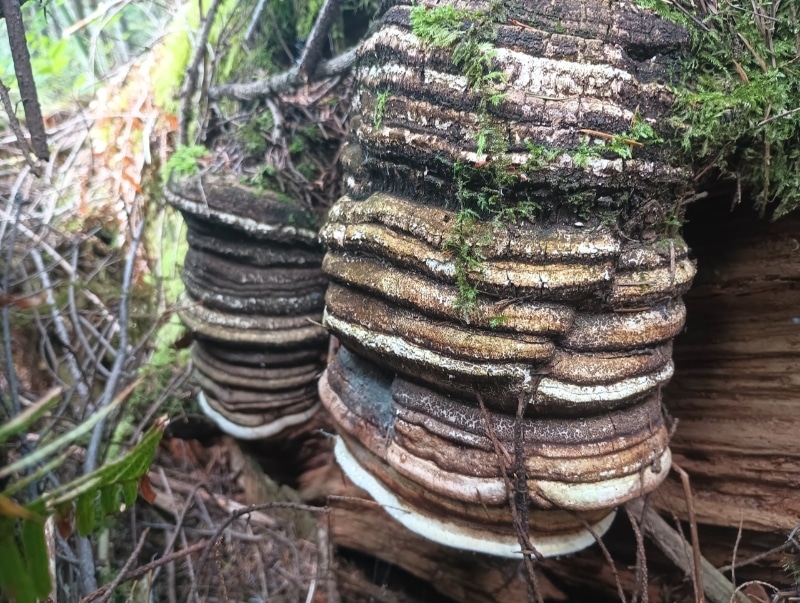
You may have heard about agarikon as an ancient medicinal mushroom. It is widely touted as a possible remedy for cowpox, herpes viruses, swine flu, bird flu, and SARS-CoV-2, the virus that causes COVID-19, but that is only one part of its story. Agarikon is a very special and rare fungus that grows on old conifers and can live for 60 to 70 years.
Researchers have tested agarikon extracts against viruses and bacteria in the laboratory, but those experiments have not established it as a medical treatment. And, unfortunately, the increased harvesting of these mushrooms for medicinal purposes puts more pressure on the species that is already classified as endangered.
Agarikon (Laricifomes officinalis) is a large wood decay fungus that infects conifers and forms perennial conks on their trunks. Its previous scientific name, Fomitopsis officinalis, is still widely used in scientific literature, so you might see it named as that. It grows in the Pacific Northwest, northern Europe, Asia, and Morocco. The species is rare and classified as endangered because so many old forests have been lost and the wild agarikon has been widely collected for medicinal use.
- Scientific Name: Laricifomes officinalis, formerly Fomitopsis officinalis
- Common Names: Agarikon, eburiko, quinine conk, tree biscuits
- Habitat: Old-growth conifer forests
- Edibility: Inedible fresh, possible medicinal use
Jump to:
All About Agarikon
Agarikon was first described to science in 1789 as Boletus officinalis. Later, it was reclassified as Fomitopsis officinalis, which is still widely used today. In 1957, it was moved into Laricifomes, and later DNA analysis supported that separation from Fomitopsis. Agarikon is currently the only recognized species in its genus.
The species name officinalis comes from the Latin word officina, which is a storeroom for medicines, and refers to the fungus’s long association with herbal medicine. The common name eburiko is from the indigenous Karafuto Ainu people in Japan and means “medicinal.”
It’s also been called the quinine conk because it was thought its intense bitterness meant it contained quinine. It was even collected for the production of what was believed to be medicinal quinine. It does not have quinine, though, and has no antimalarial properties.
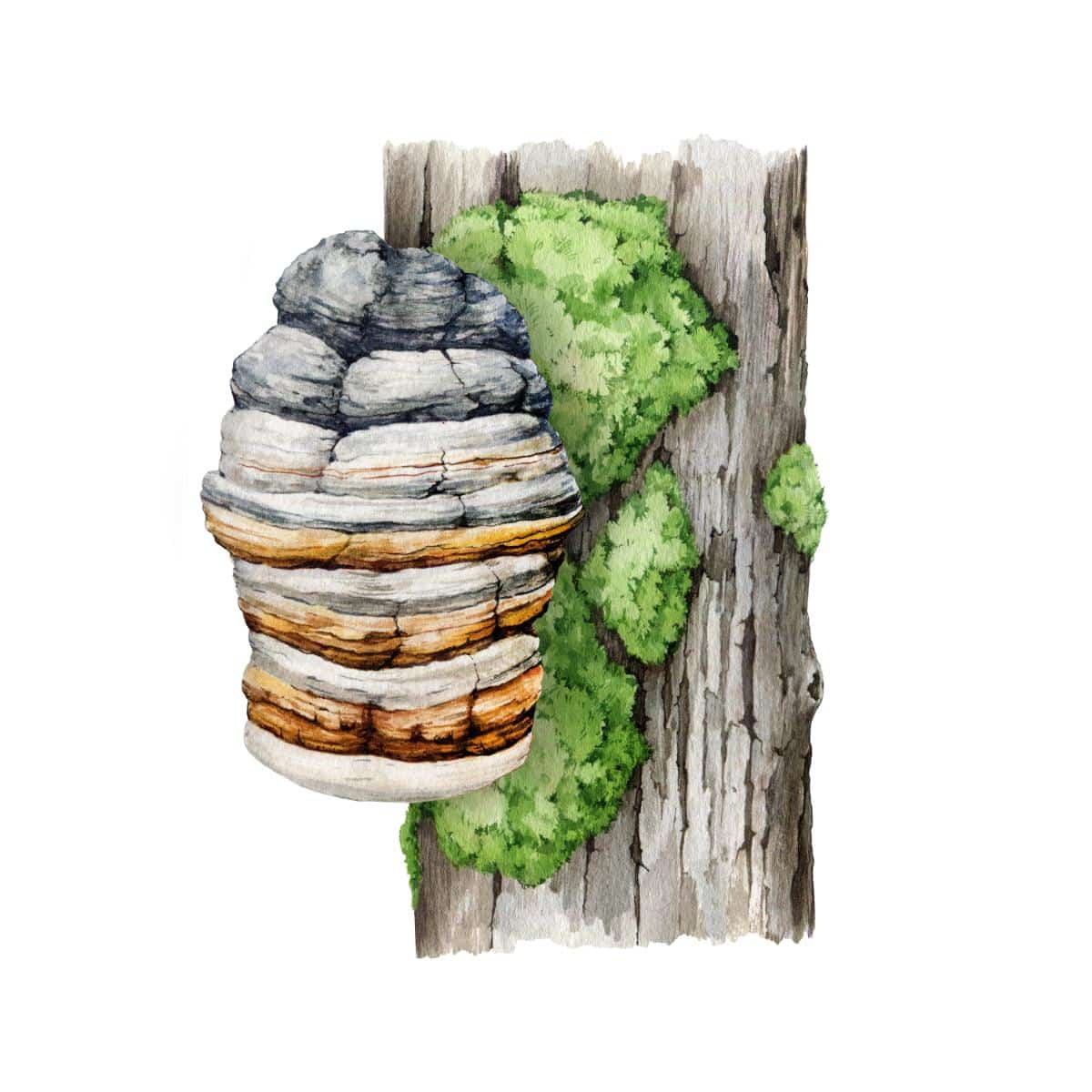
Indigenous peoples of the Pacific Northwest Coast, including the Tlingit, Haida, and Tsimshian, used the conks for spiritual and ceremonial purposes. The local names for this mushroom are translated as “bread of the ghosts” and “tree biscuits.” Carved figures made from the conks were placed at the heads of shamans’ graves as guardians for the shaman’s “long death sleep.” Other figures carved from agarikon were hung from the ceilings of dance houses to protect people during rituals.
In the nineteenth century, explorers and archaeologists collected some of these carved grave figures and sent them to museums. It was initially thought they were carved from wood, because the layers of tubes inside the agarikon conks were mistaken for tree rings. When scientists later examined them under a microscope, they confirmed that they had been carved from conks. Several figures remain in North American museum collections.
The fungus was turned into a leather-like material as well as being carved. When the agarikon mycelium grows through rotting wood, it forms dense mats that can be peeled out and worked into a material close to leather in texture. In 2021, a study examined two wall pockets made by a Tlingit woman in Alaska in 1903 and now held at the Hood Museum of Art at Dartmouth College. When they scanned them with electron microscopy, they discovered that they were made of agarikon.
The Spokan people of Washington State used agarikon mats in cradleboards for diaper rash, and twentieth-century loggers used the material to bandage wounds.
Agarikon Identification
Season
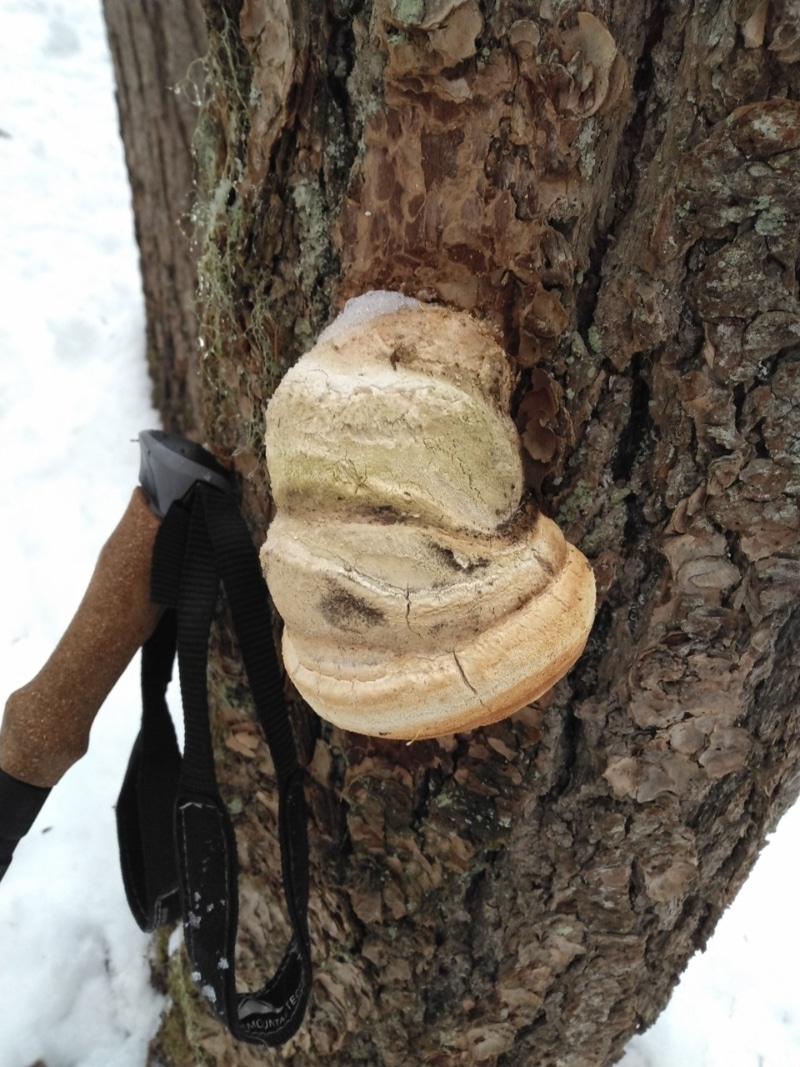
Agarikon conks are perennial and stay on their trees year-round. An individual conk may grow for 60 to 70 years, slowly adding more tissue to create layers.
Habitat
Agarikon grows along the Pacific Coast from California through Oregon, Washington, and British Columbia. There are also historical records for it from northern Wisconsin and the Great Lakes region, but the species is no longer considered to occur in the Midwest.
It grows on several conifers, including Douglas fir, Sitka spruce, ponderosa pine, western larch, firs, hemlocks, and other pines and spruces. In California, it mainly grows on old Douglas firs. Agarikon prefers large, old trees in forests that have remained undisturbed for long periods of time.
Across Europe and Asia, agarikon is much more commonly found on larch, and its hosts include European, Polish, Siberian, Dahurian, and Cajander larches. In Spain, it has been recorded on a subspecies of black pine. Its range extends to the Alps, the Urals, Siberia, the Russian Far East, China, Mongolia, Japan, Korea, India, and the Atlas Mountains of Morocco.
This fungus is a parasite and attacks the heartwood of a tree, causing brown cubical heart rot. After the tree dies, it continues feeding on the dead wood. Agarikon mycelium may grow inside the trunk for several decades before a conk forms at the infection site. The conks can be found from the base of the tree to more than 65 feet up the trunk, and only rarely does it grow on branches.
Identification
Conk
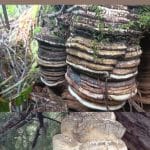
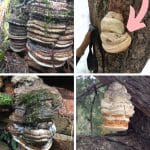
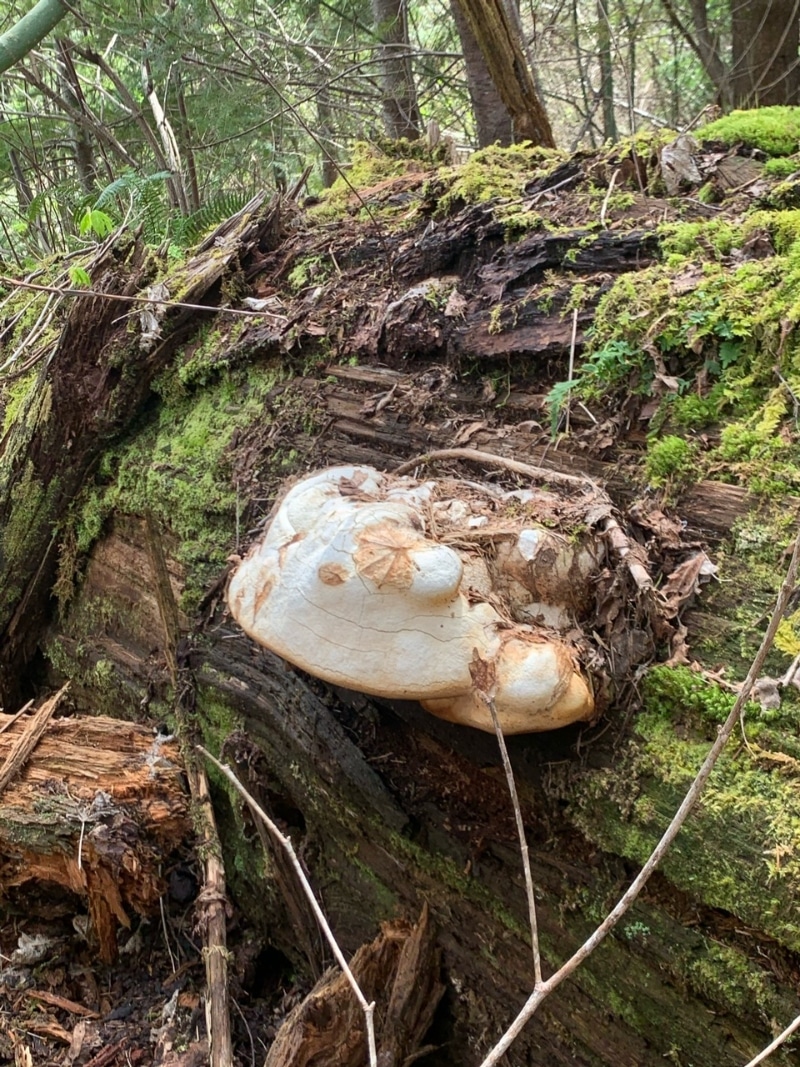
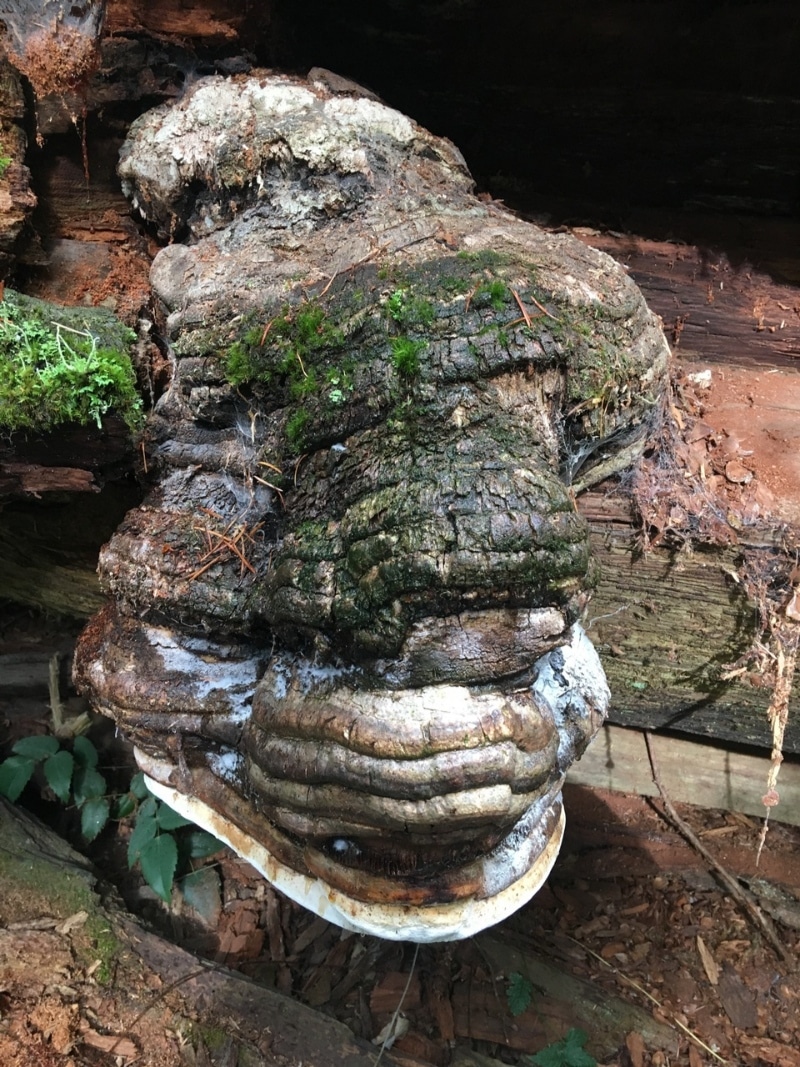
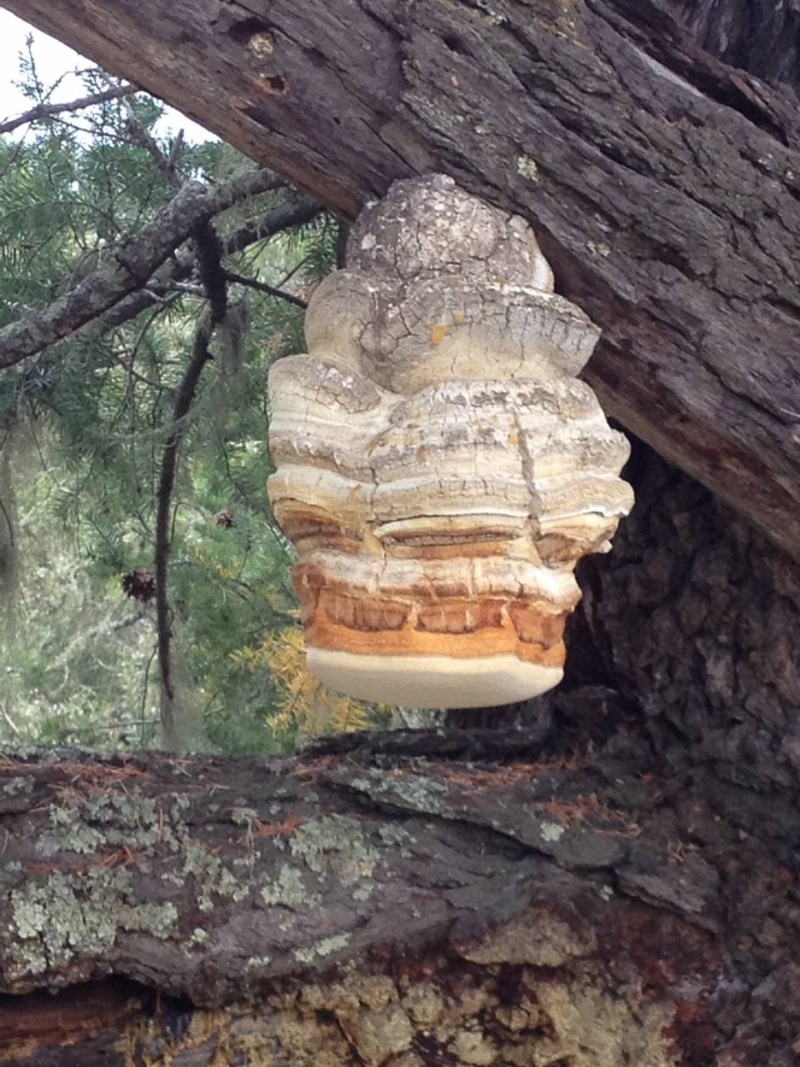
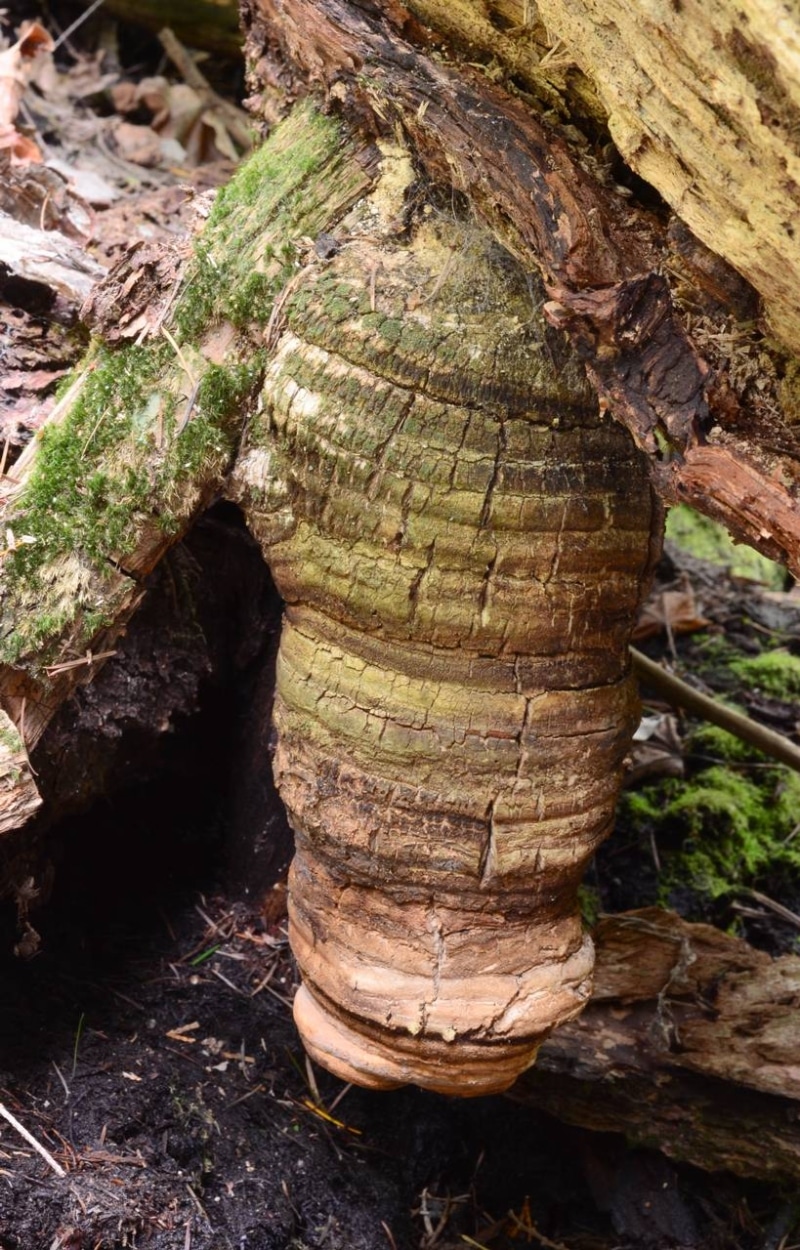
The fruiting body begins as a hoof-shaped bracket and then lengthens into a thick column that hangs from the side of a trunk. A conk can grow 16 by 26 inches long and can weigh close to 22 pounds.
Young agarikon conks are soft and yellow-white. As the tissue hardens, the surface becomes pale and chalky. Then red, brown, or gray areas develop with age, and the surface breaks into deep, block-shaped cracks. There is often thick white felt visible inside the larger cracks.
Pore Surface
The pores are white when they are young and turn tan to beige with age.
Stem
There is no stem. The conk attaches directly to the host tree.
Taste and Smell
The conk and the felt inside its cracks have a strong, distinctive bitter taste, and it smells mild and flour-like.
Flesh Color and Texture
The flesh is chalky white to pale yellow. It is softer while fresh and actively growing, then becomes hard and crumbly with age. The dry flesh breaks apart like chalk.
Spore Print
The spore print is white.
Why Agarikon Is Endangered
The IUCN listed agarikon as Endangered on March 28, 2019. Its population is estimated to have fallen by 70 to 75 percent because its old-forest habitat has been degraded or destroyed, and so many conks were collected for medicinal use. The population continues to decrease, although the present decline is thought to be slower than before.
Logging is the main threat because agarikon depends on old, thick conifers and has a long life span. When veteran trees are cut, it changes the tree types and growth within the forest, which removes both present hosts and the potential for future populations. Collecting the conks for medicinal products is another source of pressure.
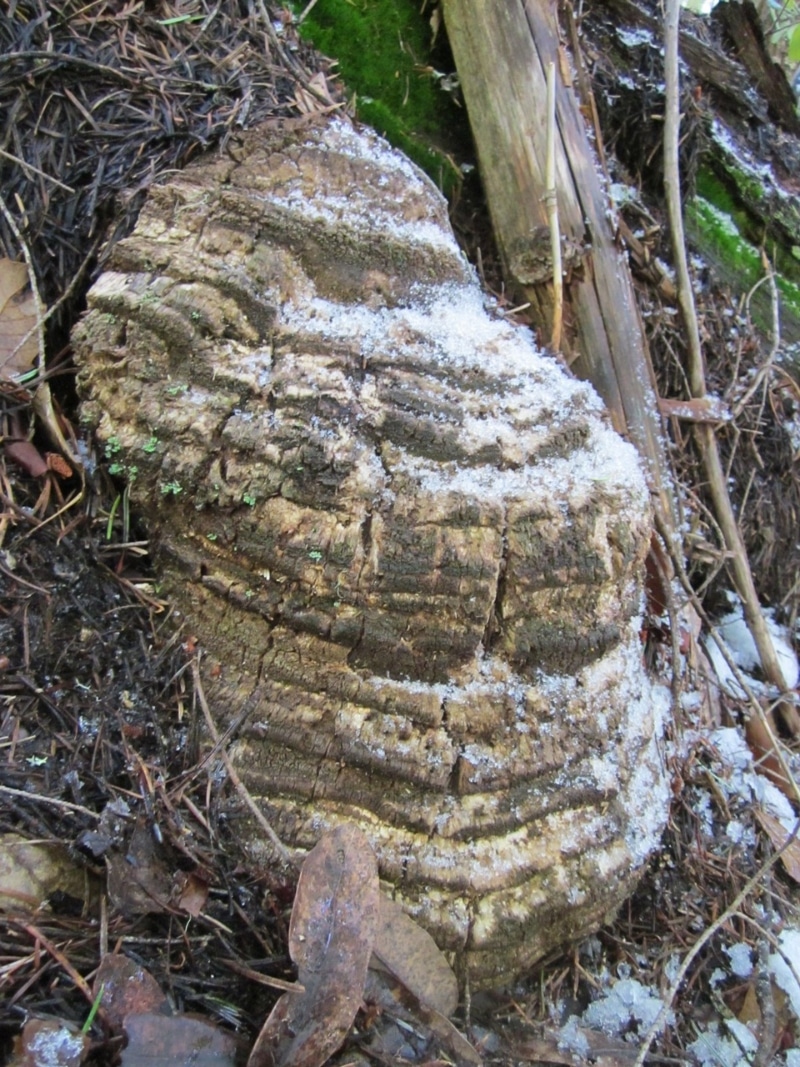
The clearest declines have been seen in Poland and the Altai region of southern Siberia. Agarikon was described as frequent in Poland through the eighteenth century, but there are only six places it is known to grow today. In the Altai region, reports from the early twentieth century estimated that the fungus infected about 10 percent of the larches. By 2001, investigators found it there only once. These changes match the loss of old larch forests on which agarikon depends.
Germany, Lithuania, Poland, and Slovenia have laws protecting agarikon. The species also appears on national Red Lists in Austria, France, Germany, Lithuania, Poland, Russia, Slovakia, and Switzerland.
In North America, agarikon’s range is centered in the Pacific Northwest, but the fungus is rare there. Most finds are in old-growth mountain forests, where it grows on large conifers that may take centuries to develop. The loss of old trees has clearly reduced the habitat available to the fungus.
Protecting existing old forests is the main conservation measure, but researchers have also tested whether agarikon can be introduced to suitable living trees. In a 2005 experiment, pieces of larch heartwood colonized by agarikon mycelium were inserted into living larches, and it worked to grow new ones. A 2022 conservation review later discussed this kind of inoculation as one possible way to move the threatened agarikon into suitable habitats.
Agarikon Lookalikes
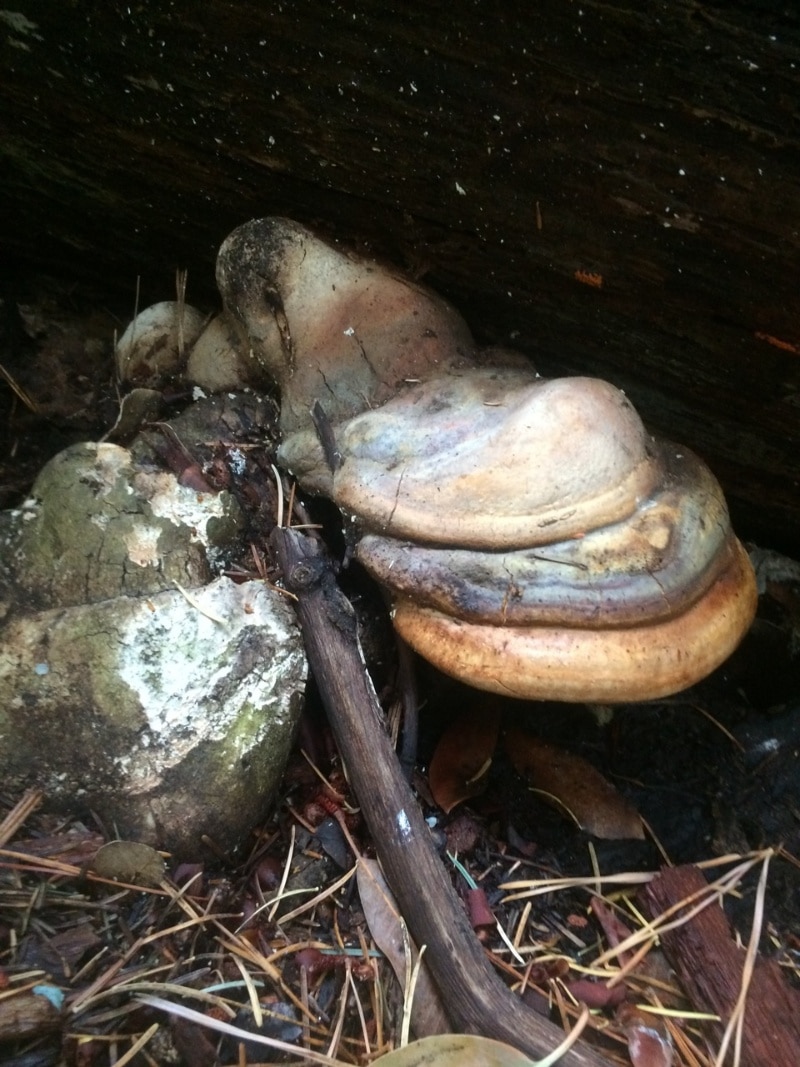
Several perennial conks also have hoof shaped fruiting bodies, like agarikon. The host tree, color, flesh texture, and spore print need to be examined together to figure out if it is agarikon.
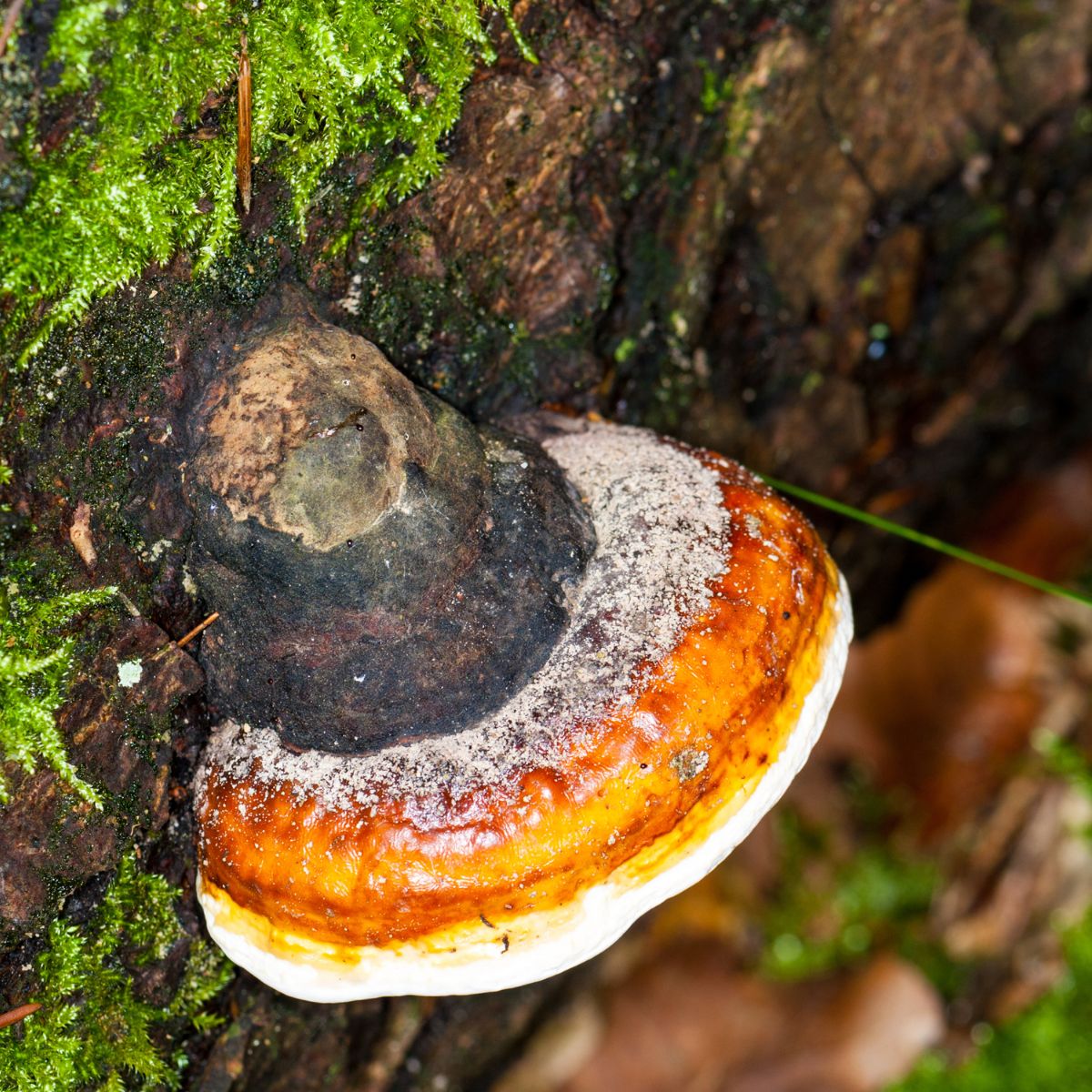
Red Belted Polypore (Fomitopsis mounceae)
The red belted polypore differs from agarikon primarily in its color. It is orange to red, with shiny, varnished-looking zones. Its brackets measure about 3 to 9.5 inches across and develop a thick white or pale yellow edge. When it’s mature, it turns dark red or gray-brown in the center but keeps its red or orange belt around the edge of the cap. Its flesh is creamy, leathery to woody, and has a strong, fragrant smell.
The red-belted polypore grows mainly on dead conifer and hardwood logs, and is widespread across northern North America. Older references may call these conks Fomitopsis pinicola, but that species only grows in Europe and Asia. The North American group also includes Fomitopsis ochracea, which doesn’t have the red coloring, and Fomitopsis schrenkii, which grows in the Great Plains and southern Rocky Mountains.
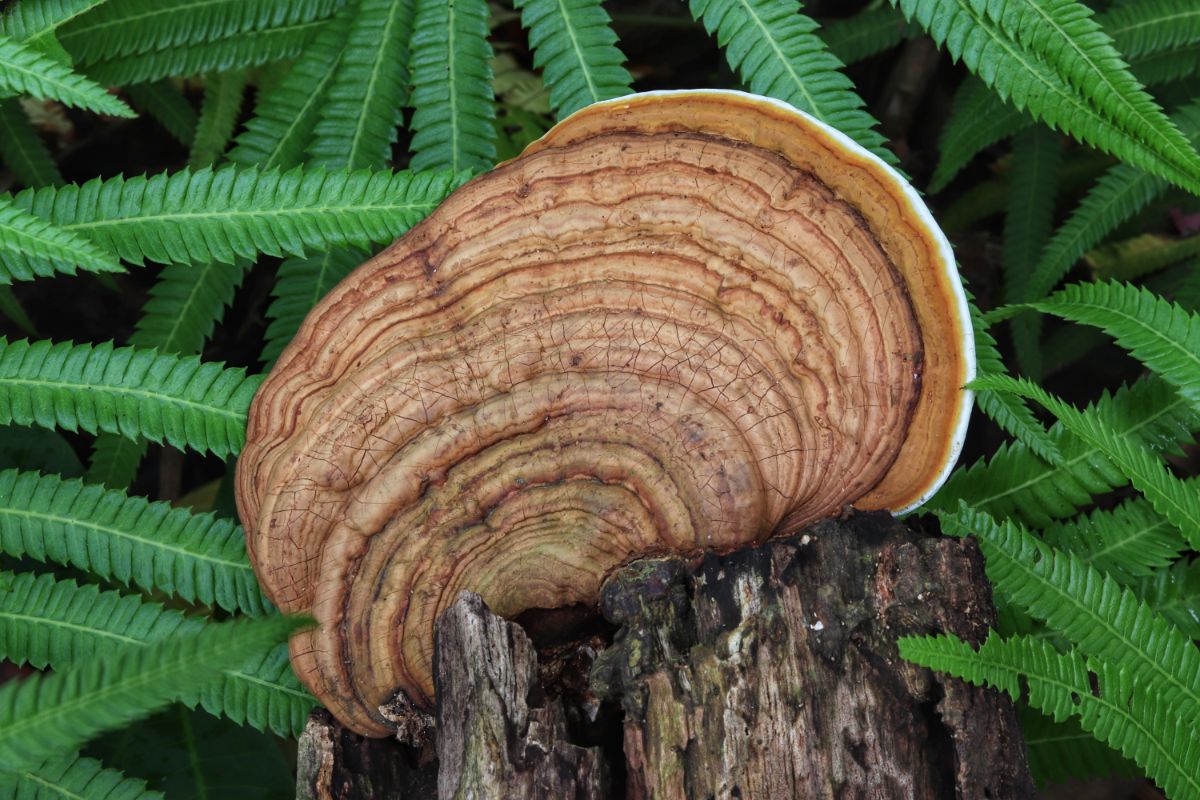
Artist’s Conk (Ganoderma brownii and Ganoderma applanatum)
Artist’s conk grows mainly on hardwoods and is 4 to 8 inches across, with a dull, rugged, pale to medium brown surface. The pore surface of the artist’s conk is white and bruises dark brown when injured. Inside, the flesh is purple-brown and has visible growth zones. It also has a brown spore print. Agarikon has pale, chalky flesh instead. Artist’s conk is woody and inedible.
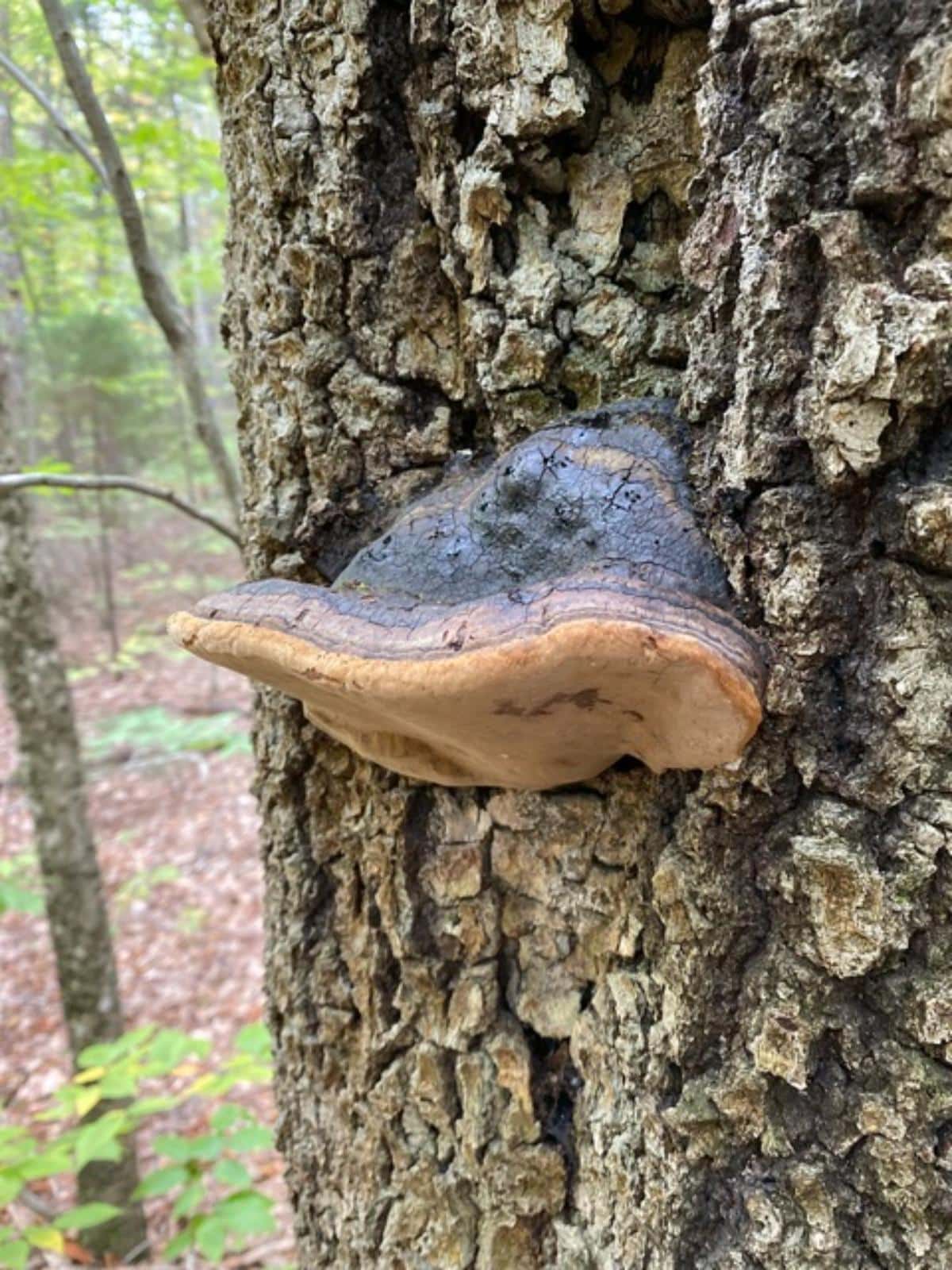
Willow Bracket (Phellinus igniarius) and Related Species
Willow bracket and related Phellinus species are darker than agarikon and grow on hardwoods, including willow, birch, and alder. The upper surface has a dark gray to black crust that may crack with age. This differs from agarikon, which stays broadly pale even after it develops red, brown, or gray areas.
Willow bracket ranges from about 2 to 8 inches across, although very large specimens can be 16 inches wide. Its brown flesh hardens with age and is not chalky like agarikon.
Agarikon Edibility and Toxicity
Agarikon is inedible because of its hard, chalk-like flesh and bitter taste. Some field references also classify it as mildly poisonous, but the basis for that warning is unclear. No confirmed human poisoning cases have been documented.
Traditional Medicine and Medical Research
The earliest known written record of agarikon comes from the Greek physician and pharmacologist Pedanius Dioscorides around 65 CE. He listed agarikon as a treatment for consumption (tuberculosis). In later European and Central Asian traditions, agarikon was used for coughing illnesses, asthma, rheumatoid arthritis, bleeding, and infected wounds. The Pacific Northwest peoples also used it for smallpox and used the powdered fungus to treat illnesses believed to have supernatural causes.
Paul Stamets and Agarikon Claims: A Disclaimer
Many modern medical claims about agarikon come from a series of patents by mycologist Paul Stamets, not from human medical trials. The patents describe agaric acid, a chemical found in agarikon, as reducing inflammation and affecting nerves that control automatic functions such as sweating. Stamets also reported antiviral activity in agarikon extracts, but in one study, the agarikon extract remained active against viruses even after its agaric acid had been removed. It’s good to remember patents can record experimental findings and proposed uses, but they do not prove that a product safely or effectively treats disease. Agarikon is not an established medical treatment.
Other scientists have focused on laboratory tests of agarikon extracts and individual chemicals. In a 2016 comparison of four medicinal polypores, an alcohol extract of agarikon prevented the growth of every bacterial strain in the experiment. These included bacteria linked to tuberculosis and pseudotuberculosis, along with Staphylococcus aureus, Bacillus cereus, Bacillus subtilis, Escherichia coli, and Salmonella typhimurium. However, the experiment required a high concentration of extract. This means a large amount was needed to stop the bacteria, which means it may not be practical as a medicine.
Researchers have also isolated two unusual chemicals called chlorinated coumarins from agarikon. At low concentrations, these chemicals stopped bacteria in the tuberculosis group from growing. A 2018 review reported that agarikon was the only fungus then known to contain these particular coumarins, although some plants have related chemicals.
Other chemicals found in agarikon, known as fomitopsins, were successful in fighting microbes in laboratory tests. Fomitopsin D slowed herpes simplex virus 1, while fomitopsins E and F prevented the growth of Bacillus cereus. Several related compounds also killed some Trypanosoma congolense parasites, although not thoroughly. None of these tests established a safe or effective treatment in people.
In 2026, a human trial was conducted to test whether agarikon and turkey tail mycelium could be taken safely alongside vaccination and whether the combination could reduce vaccine side effects without weakening the antibody response. The researchers proposed that the fungi might regulate the immune response rather than simply strengthen it. In theory, this could support antibody production while reducing symptoms such as fever, fatigue, muscle aches, and nausea.
Ninety people receiving a COVID-19 vaccination were randomly assigned to take either a placebo or capsules containing agarikon and turkey tail mycelium. The treatment group took eight 500-milligram capsules three times a day for four days. The main goal was to assess short-term safety, so the researchers checked kidney and liver function over 14 days. All participants completed the trial, and no adverse events were reported. Kidney and liver results were similar in the two groups.
The researchers also tracked vaccine side effects and antibody levels. Among participants who had not previously had COVID-19, the mushroom group reported fewer side effects on days three and five. However, the trial tested agarikon and turkey tail together, so it cannot establish what agarikon did by itself. It also tested a supplement taken with a vaccination, not a treatment for COVID-19 or another infection.
Common Questions About Agarikon
Does quinine conk contain quinine?
No. The name came from collectors who thought the conk’s bitter taste meant it had quinine. Agarikon has no quinine and has no antimalarial properties.
Can agarikon treat viral or bacterial infections?
In lab studies, agrikon extracts have acted [worked?] against several viruses and bacteria, but these results do not mean agarikon is a safe or effective treatment for people. There has been one human trial that tested agarikon combined with turkey tail as an addition [co-treatment?] to COVID-19 vaccination, not as a treatment for infection.
Where does agarikon grow in North America?
It grows along the Pacific Coast from California through British Columbia on old conifers, including Douglas fir, Sitka spruce, ponderosa pine, and western larch.
Is collecting wild agarikon a conservation concern?
Yes. Collection for medicinal purposes is one of the threats identified in its Endangered assessment.
How long can an agarikon conk live?
An individual conk can continue growing for 60 to 70 years.
Leave a Reply