
Many people search the woods for true turkey tail, hoping to find this celebrated medicinal fungus, but lookalikes can cause confusion. Turkey tail is found in many supplement teas and capsules, and it is touted for immune support and as an add-on to cancer treatment. Extracts called PSK and PSP have been studied for stomach, colon, and esophageal cancers, and PSK is an approved adjuvant therapy in Japan. The FDA hasn’t approved these extracts in the United States, though.
The medicinal properties inspire many to gather it for homemade tinctures and remedies. The great thing about foraging it is that it costs nothing, except for the time spent searching for it. Anyone seeking true turkey tail, though, needs to know the lookalikes, because there are many and some are very close-looking.
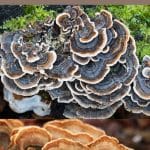
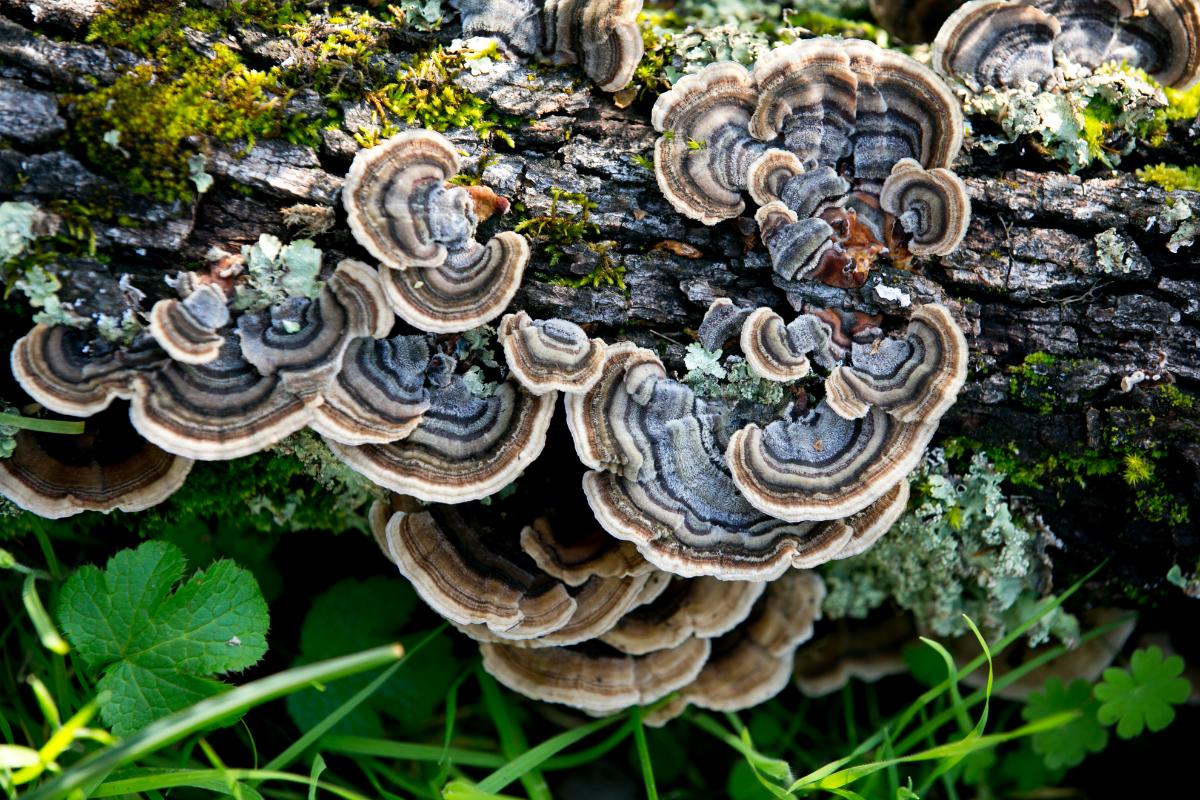
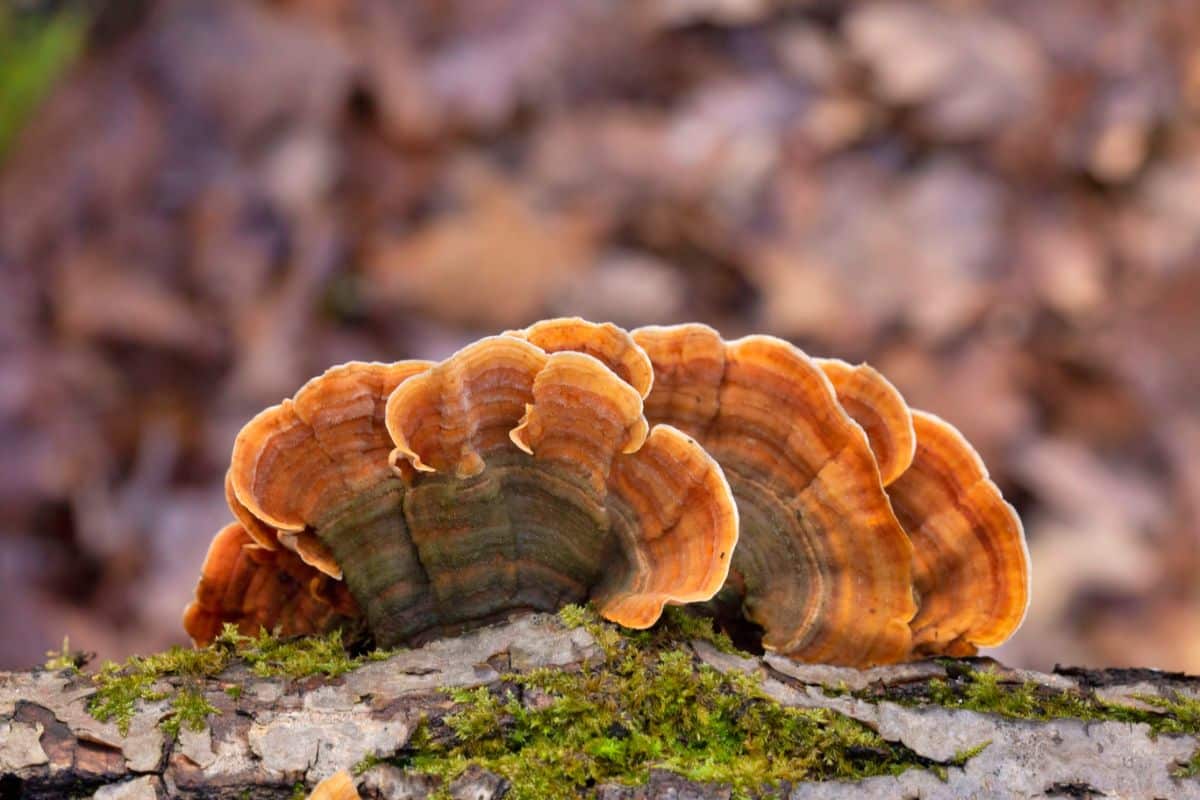
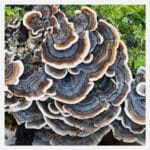
Turkey tail is among the most common mushrooms in North America. It’s not uncommon to find a fallen hardwood log covered end to end in thin fan-shaped brackets banded in brown, tan, and gray. The banding looks like the spread tail of a strutting wild turkey, which is how it got the common name.
- Scientific Name: Trametes versicolor
- Common Names: turkey tail, turkeytail, many-zoned polypore, yunzhi
- Habitat: Dead hardwood
- Edibility: Medicinal
All About Turkey Tail
In the United States, this bracket fungus is known as turkey tail. In Britain and Ireland, it used to be known as the many-zoned polypore, but turkey tail is now the more common name. In China, the mushroom is called yunzhi, and it has been used medicinally there for thousands of years.
The genus name Trametes comes from the prefix tram-, meaning thin, which is a reference to how thin these brackets are in cross-section. The species name versicolor means of several colors. A single true turkey tail bracket has several color bands running across it’s cap, and these colors vary a lot from one fruiting to the next. This color range has inspired the use of turkey tail for decorating over the years, including as a hat decoration at one time.
Many field guides and supplement labels still list this mushroom as Coriolus versicolor or Polyporus versicolor, which are older scientific names. All these names refer to the same fungus.
Turkey Tail Identification Guide
Turkey tail brackets grow on decaying hardwood all year. They’re annual, and they stay on the wood for months before decaying. It’s also common to see fruiting bodies from the previous year, although they are usually in pretty rough shape. The old brackets are usually faded and breaking down, and they aren’t worth harvesting. Fresh growth is thin, flexible, and brightly banded.
True turkey tail grows on the deadwood of hardwoods, and sometimes conifer wood. It’s a saprobic fungus, which means it feeds on dead wood instead of on living trees, though it’s sometimes a weak parasite on a living tree. It causes white rot and grows in dense, overlapping clusters or rosettes on logs and stumps. Outside North America, it grows across Britain, Ireland, and mainland Europe, from northern Scandinavia down to the Mediterranean, and in Asia.
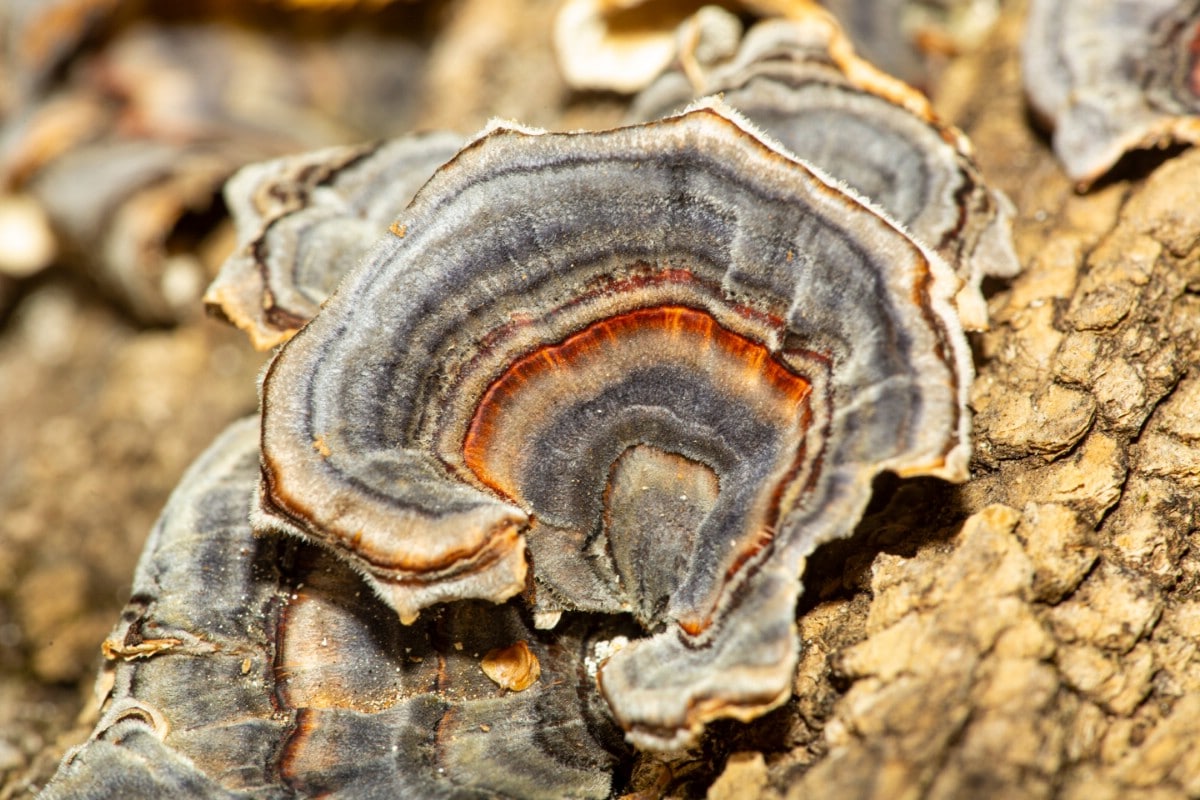
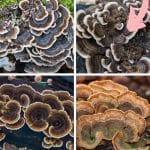
The cap is between 0.8 and 4 inches across and under 1/8 inch thick, and it grows circular, semicircular, fan-shaped, or kidney-shaped. It’s flat to slightly rounded and flexible when fresh, and caps fuse with the fruiting bodies packed in beside them to form large sheets. The surface is densely hairy or velvety and feels like felt to the touch. The color zones contrast sharply and range from white, gray, brown, cinnamon, and reddish brown, and sometimes blue, green, and orange, too.
The zones of true turkey tail brackets often differ in texture as well as color, and there are commonly fuzzy bands alternating with smoother ones. The outer edge of the cap is always the palest zone. Underneath the cap, the pores are tiny and are whitish to pale brownish. There’s no stem; the cap attaches directly to the wood along one edge.
Turkey tail has no distinctive smell or taste. The flesh is white, thin, tough, and leathery, and it doesn’t change color when cut. If you do a cross-section of the cap, it has a very thin black line separating the hairy cap surface from the white flesh underneath.
For a more in-depth guide to turkey tail identification, see Tracking The Turkey Tail: Complete Identification Guide.
False Turkey Tail Guide
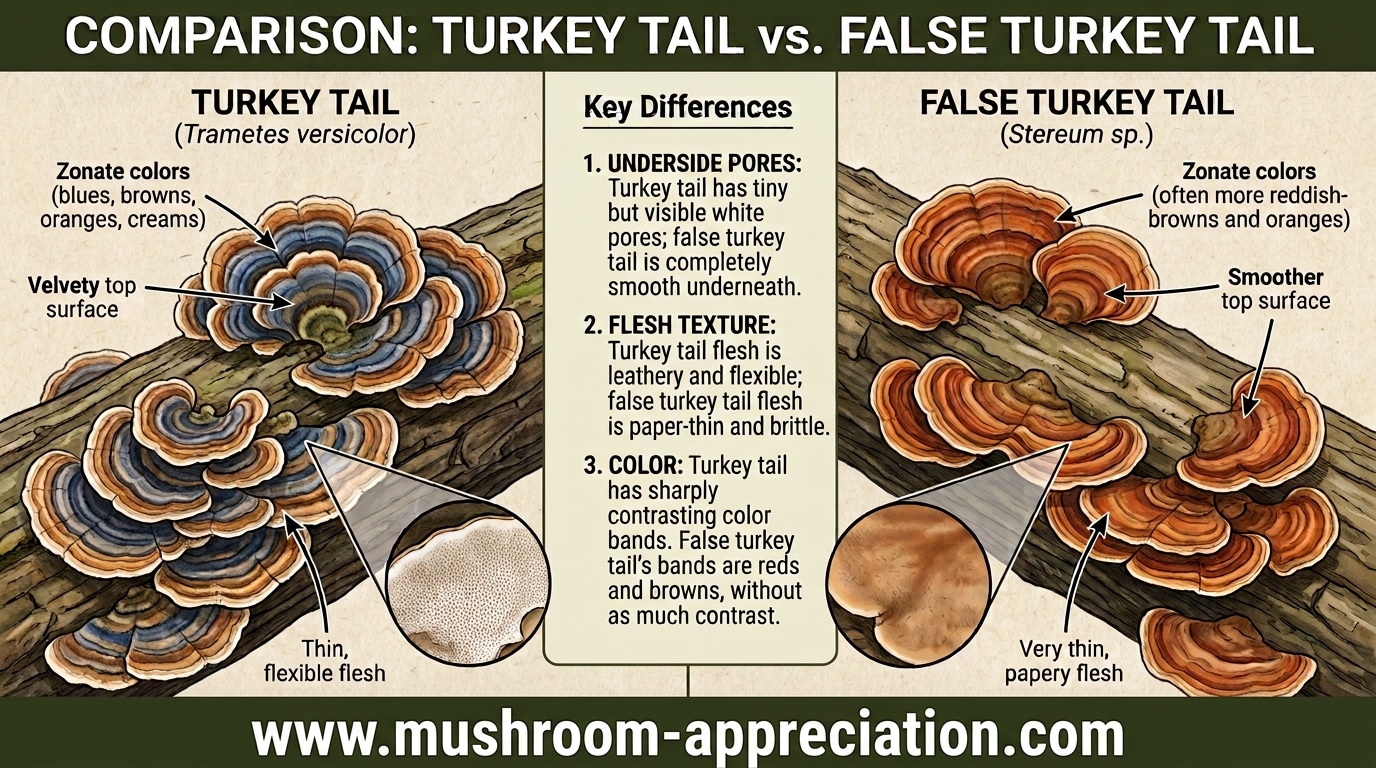
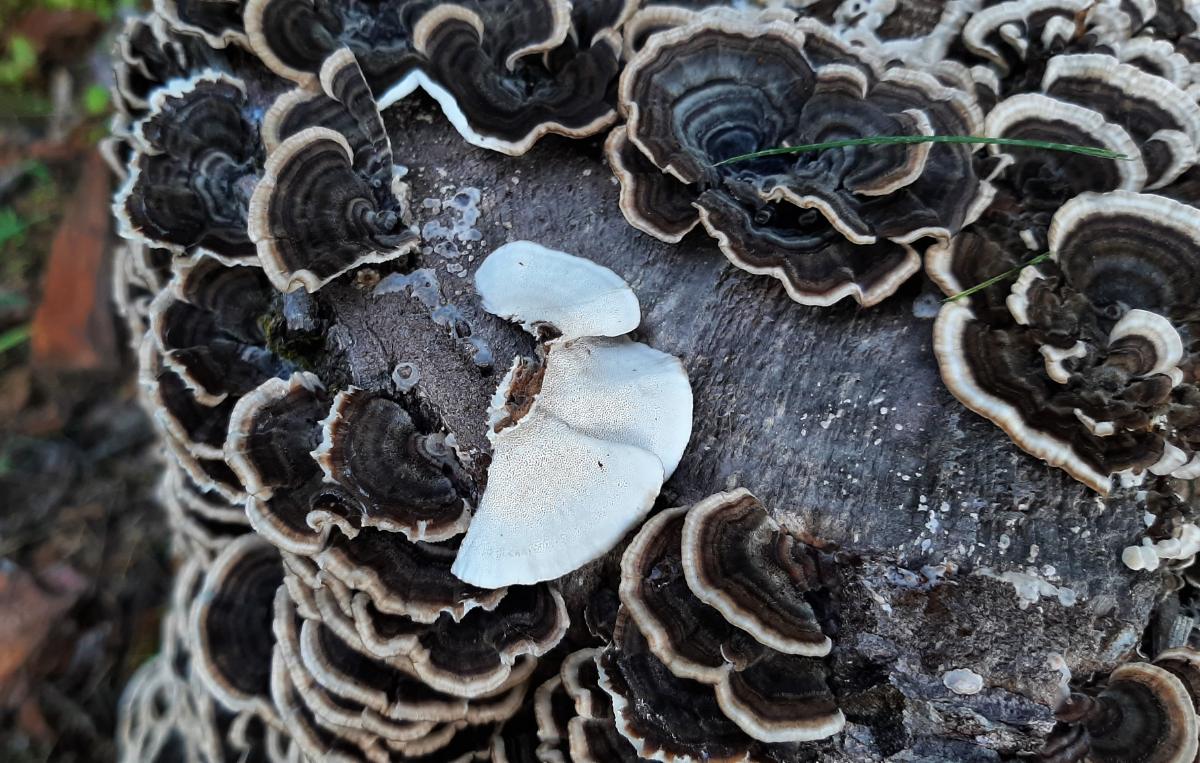
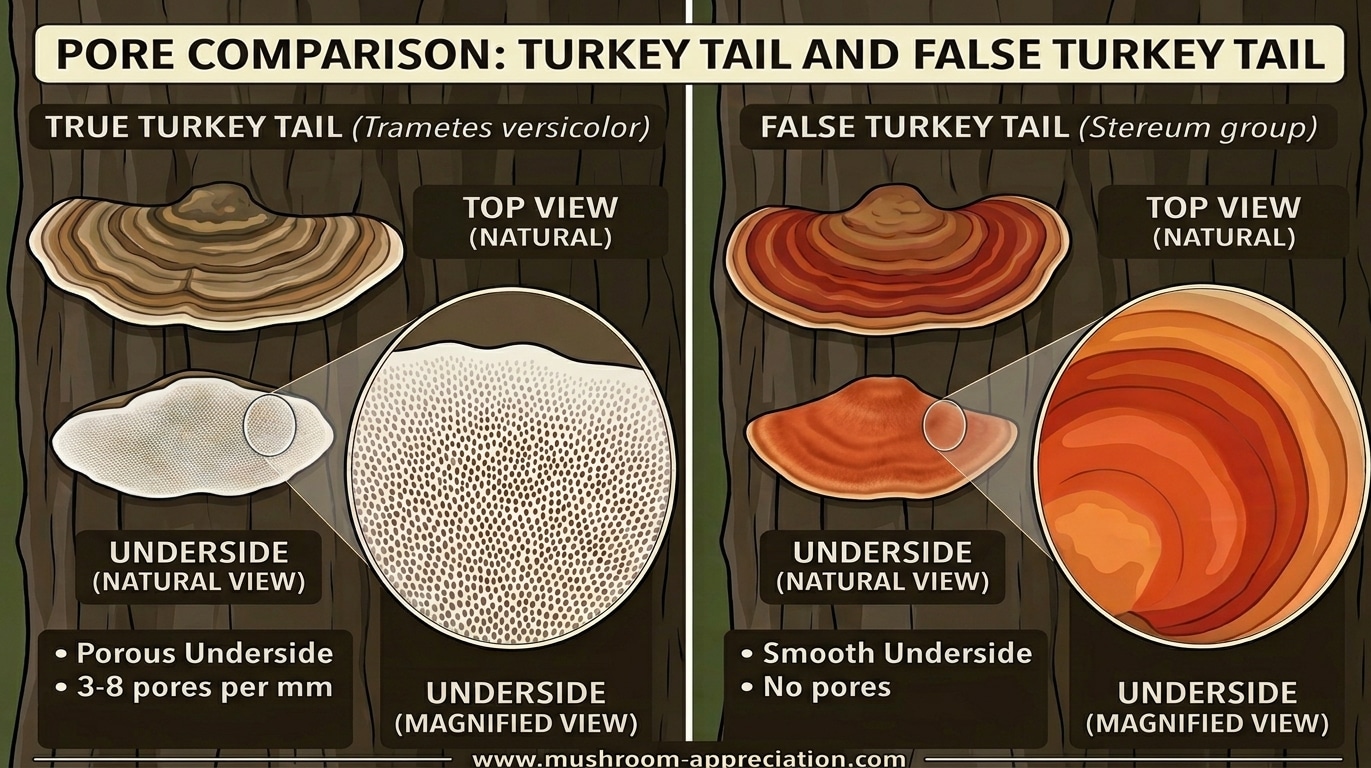
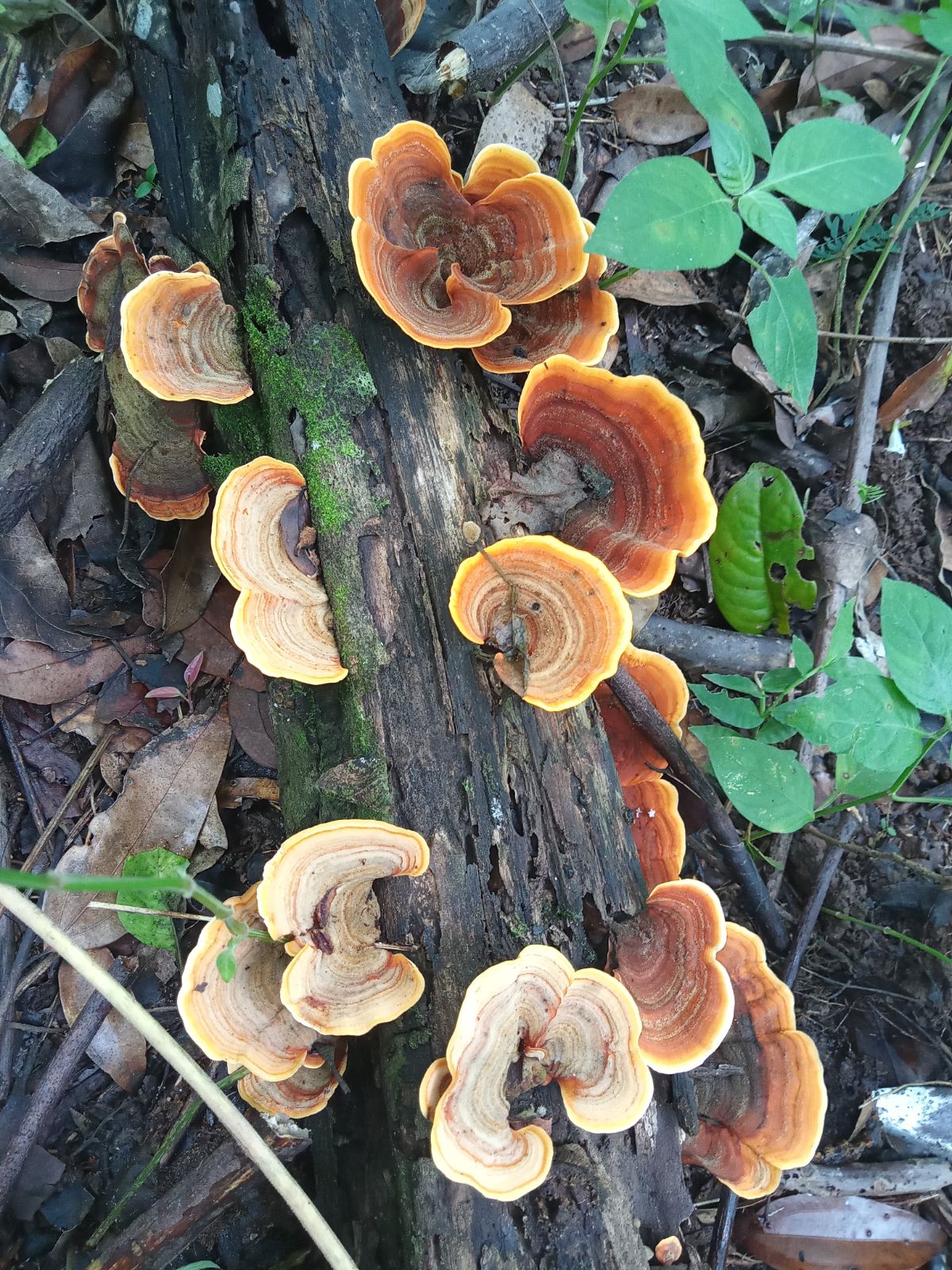
False turkey tail has the same zoned, sometimes hairy, fan-shaped cap as turkey tail and the same way of covering dead hardwood. The difference is underneath. False turkey tail has a smooth undersurface with no pores at all, because it’s a crust fungus instead of a polypore.
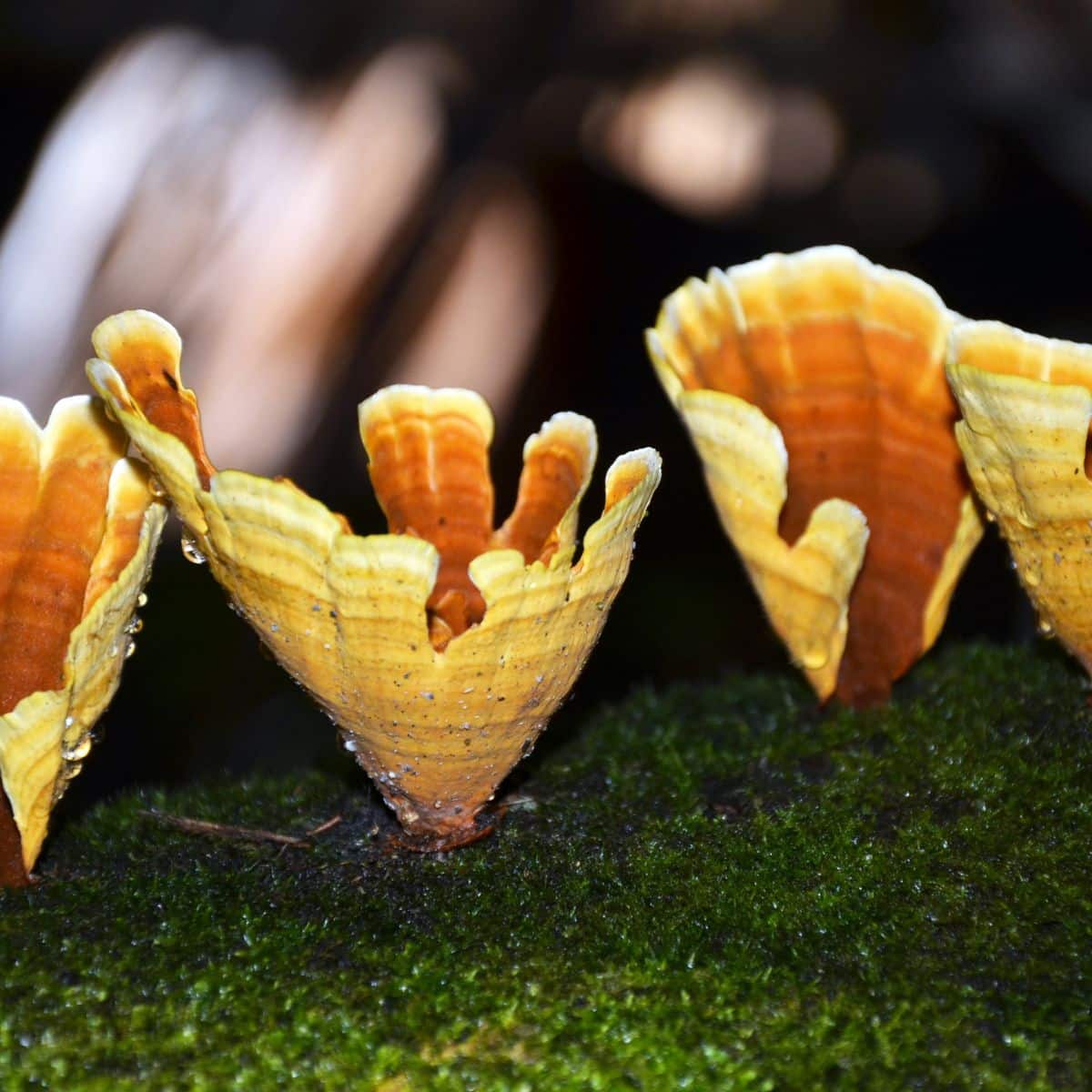
False turkey tail brackets are about 0.4 to 2.75 inches across. They grow densely but individually, without fusing into wide sheets the way turkey tail caps do. Each one is shaped like a funnel that’s been sliced down one side, though they can be fan-shaped or semicircular brackets.
The underside is whitish to grayish or pale reddish brown. The top ranges from red, orange, yellowish, brown, and buff shades, and it’s redder than true turkey tail is. With age, the brackets turn green when algae grow on them. The upper surface is often densely velvety or hairy at first and becomes smoother with maturity.
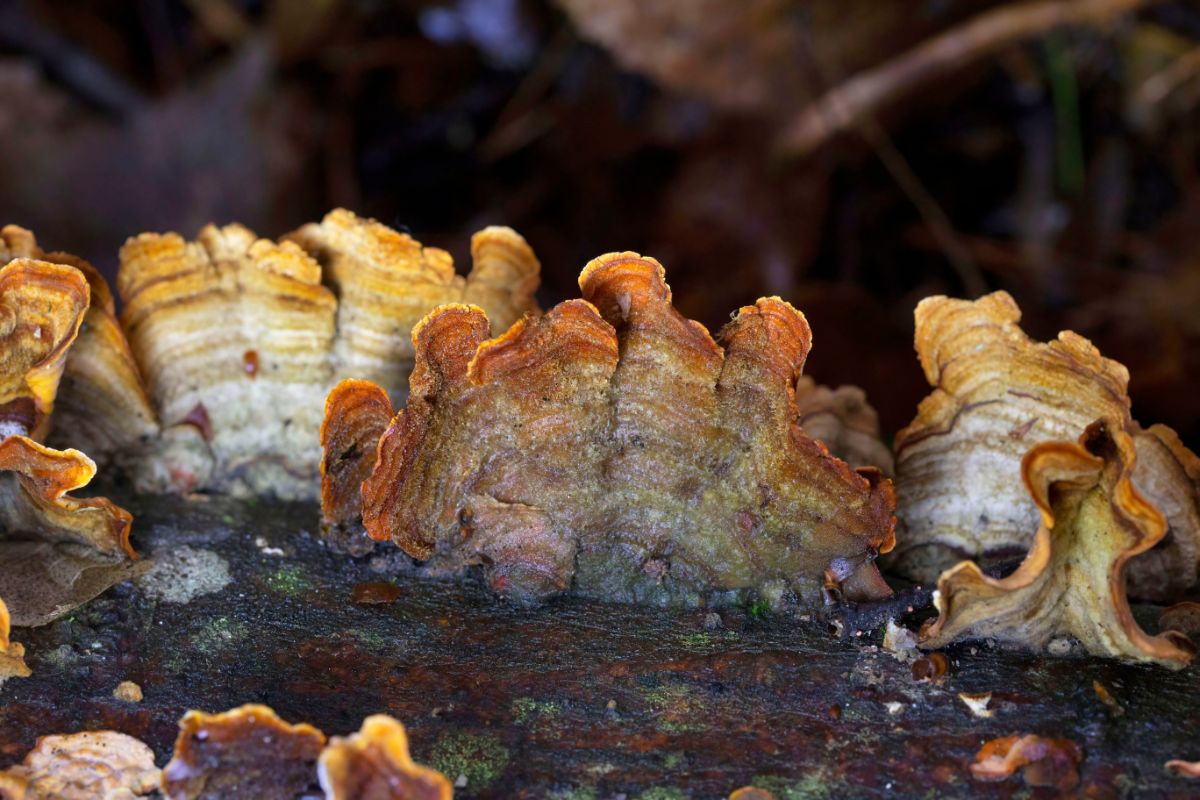
There are actually several false turkey tail species in North America: Stereum fasciatum, Stereum lobatum, Stereum subtomentosum, Stereum hirsutum, and Stereum complicatum. The differences between them are their cap hairs and staining. For decades, the scientific name used for false turkey tails was Stereum ostrea, but DNA sequencing has shown this species doesn’t occur in N. America. This name is still common in older textbooks and online, though.
- Stereum fasciatum has coarse hairs that gather in clumps and resist wearing off. Its underside looks wet when bruised or dampened but doesn’t change color.
- Stereum lobatum has short, matted, felted hairs that wear off in concentric bands from the edge inward. Underneath, it is shiny chestnut-brown, and the underside stains bright yellow when bruised or dampened.
- Stereum subtomentosum has longer, woollier tufts. Its brackets are thicker and more irregular, and the cap and underside are a richer coffee brown. It stains bright yellow, too.
- Stereum hirsutum grows to about 0.2 to 1.2 inches across, fuses with its neighbors, and has a yellowish to yellow-brown underside that sometimes bruises darker yellow.
- Stereum complicatum is about 0.8 inches across, commonly fuses with its neighbors, and has an orange underside.
How to Check For True Turkey Tail in the Field
- Underside: Turkey tail has a white pore surface with visible holes. If the underside is smooth, the mushroom is a crust fungus, not a turkey tail.
- Pore size: Turkey tail pores are so small they’re hard to make out. Other Trametes species have larger pores, and those are easy to see.
- Cap surface: It should be fuzzy, velvety, or finely hairy under a lens or against your thumb. If the cap is bald, it is a different species.
- Color: A turkey tail cap has sharply contrasting bands of color. There will be dark rings next to pale ones, and the difference is clear to see. The bands are mostly earth tones: white, gray, tan, brown, cinnamon, and reddish brown. Some might have blue, green, or near-black bands, too. The outermost band of the cap is always the palest, no matter what the rest of the colors are.
- Bendability: A fresh turkey tail is thin and flexible. A bracket that’s rigid and hard is not turkey tail.
Picking the Wrong One
Accidentally harvesting look-alikes isn’t seriously problematic because it won’t poison you. False turkey tail isn’t toxic. And, there are no poisonous Trametes species anywhere in the world, and none of the crust fungi or polypores that are called false turkey tail are reported as toxic.
The primary issue is that you won’t be getting the medicinal value of true turkey tails if you collect the wrong species. Stereum species lack the extensive scientific research and active bioactive compounds that make true turkey tail medically valuable.
Other Lookalike Species
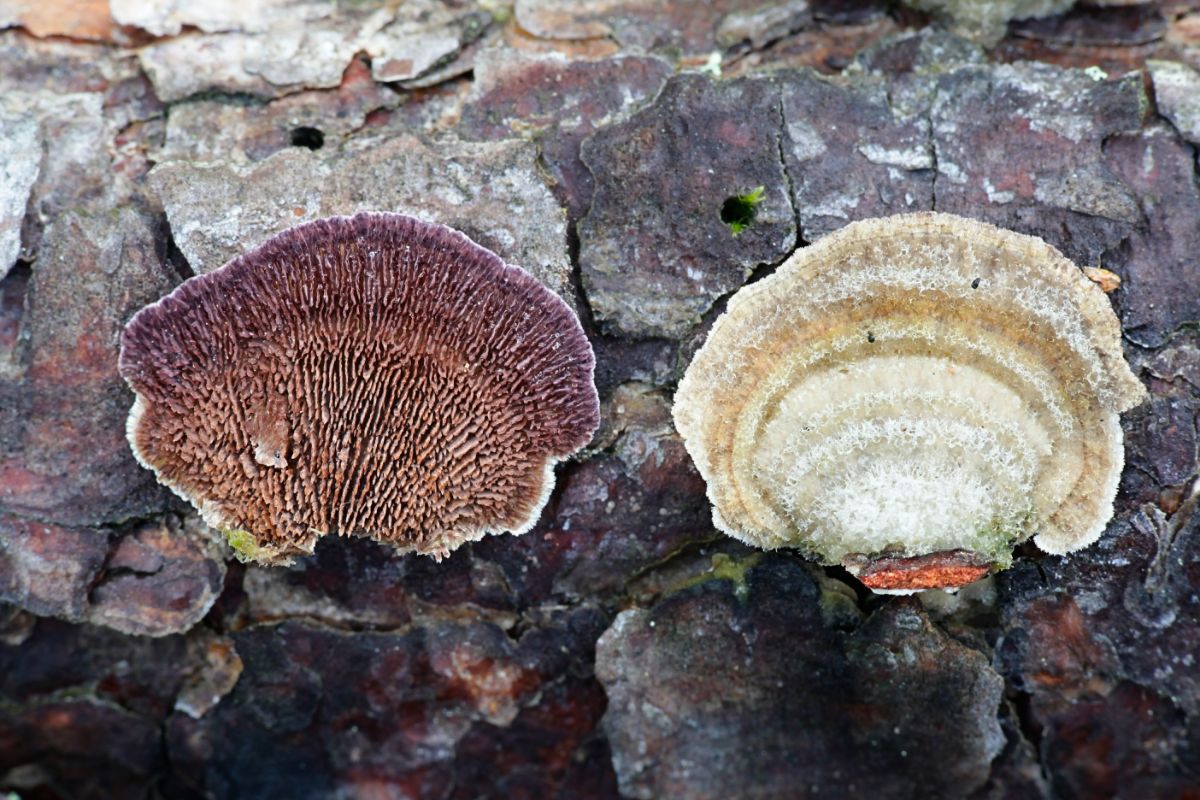
Violet Toothed Polypore (Trichaptum biforme)
From above, the violet polypore is a faded, zoned, whitish-to-grayish bracket, with some light purple lines that look like a washed-out turkey tail. The underside, though, is purple to lilac when fresh, not white like true turkey tail. The purple does fade with age, though, and a faded one can look close to turkey tail from underneath. The caps are around 2.4 inches across and about 1/8 inch thick.
The pore surface of the violet polypore breaks down as the mushroom matures and develops spines or teeth. This makes the older bracket look more like a toothed fungus than a polypore.
In the PNW, Trichaptum abietinum is a twin of the violet polypore and grows on conifers.
Gilled Polypore (Lenzites betulinus)
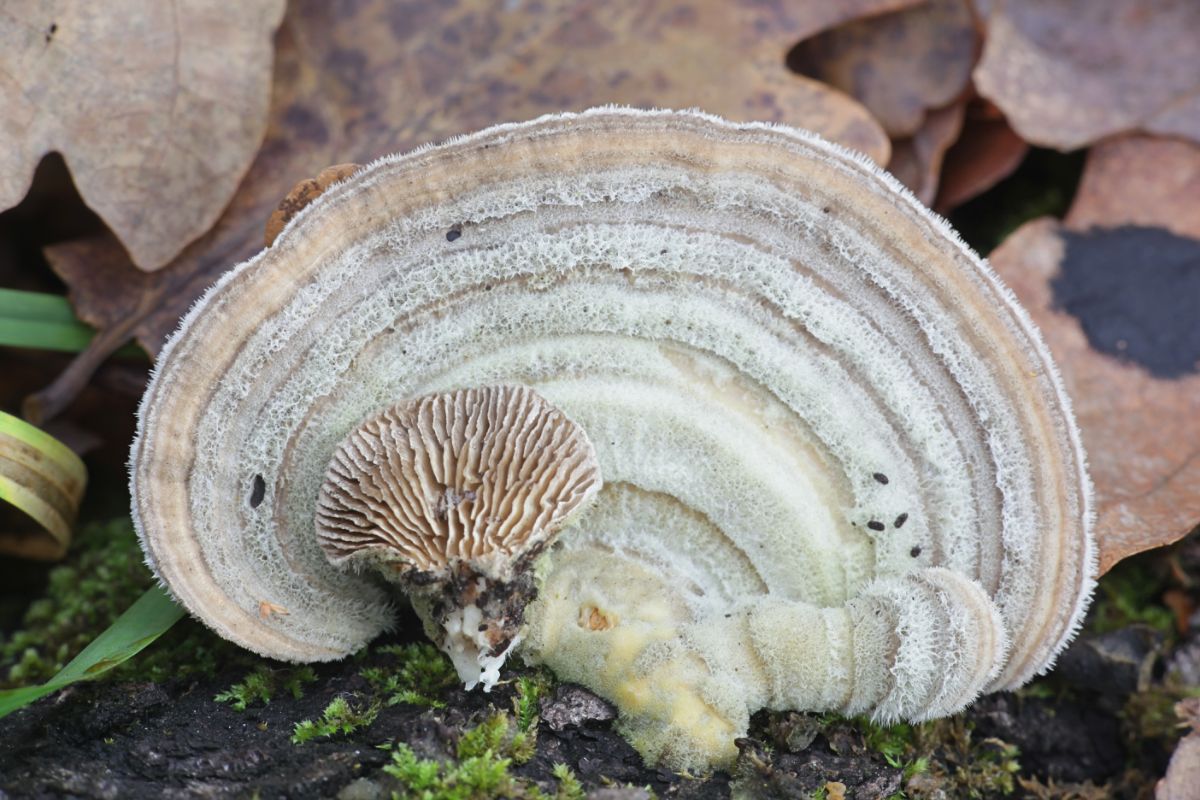
The gilled polypore has a fuzzy, zoned cap that ranges in color from whitish to gray, brown, and cinnamon. The underside has true gills, though, and not pores. The gills are white at first and turn ivory with age. The caps are about 0.4 to 4 inches across, and the flesh is white and extremely tough.
Hairy Bracket (Trametes hirsuta)
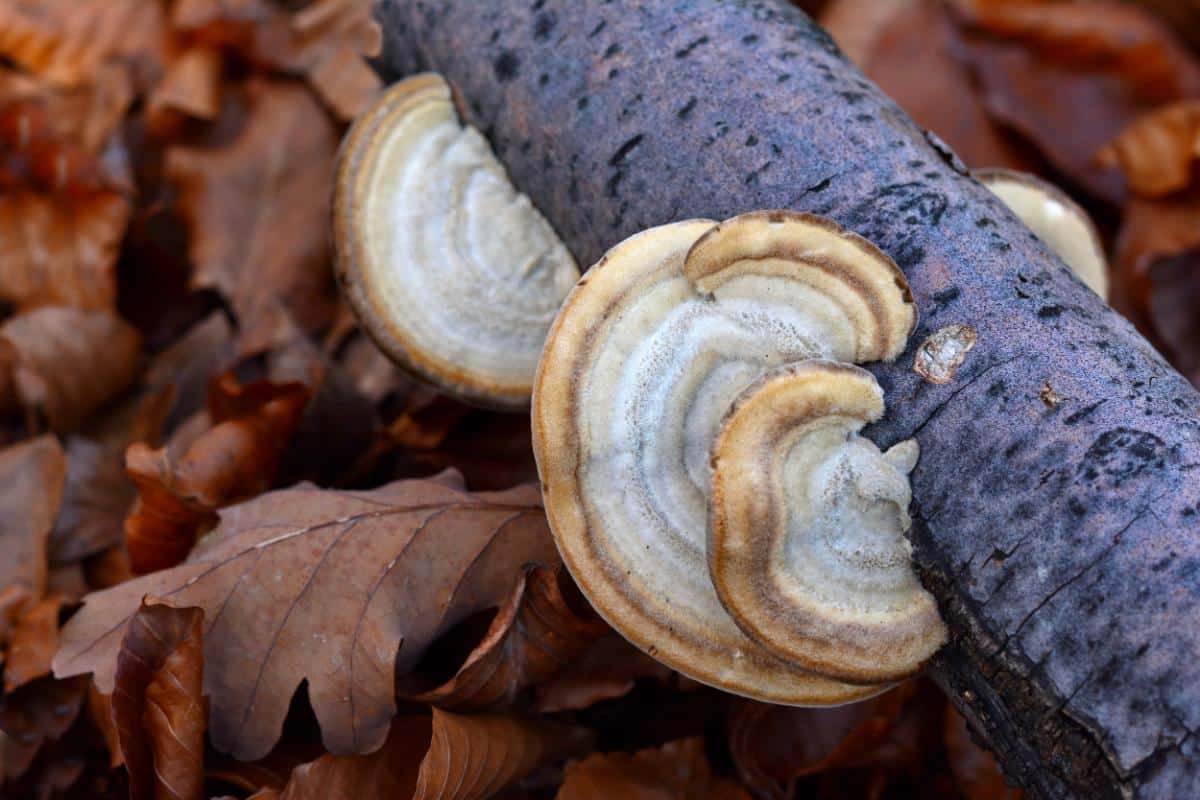
The cap of the hairy bracket is whitish and grayish and very densely hairy, and the edge of the cap is brownish to brown or blackish. It doesn’t have sharply contrasting color zones like the turkey tail mushroom. The caps are about 4 inches across, and the whole bracket is tough and corky instead of flexible.
Smoky Polypore (Bjerkandera adusta)
The cap on this bracket is whitish, grayish, tan, or brownish and sometimes zoned, which makes it look similar to the true turkey tail. The pore surface, though, is gray to black and sometimes bruises darker black. The mature caps of the smoky polypore have a brown to black edge and reach about 4 inches wide.
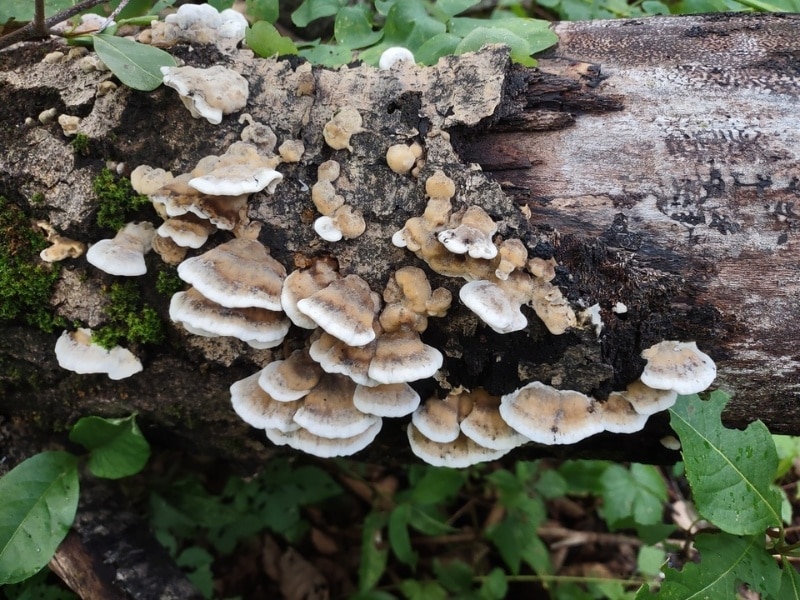
Mossy Maze Polypore (Cerrena unicolor)
The cap of the mossy maze polypore is velvety to hairy and whitish to brownish, and it often has algae growing on the cap that turns many brackets green. The underside has maze-like or slot-like pores that become tooth-like with age.
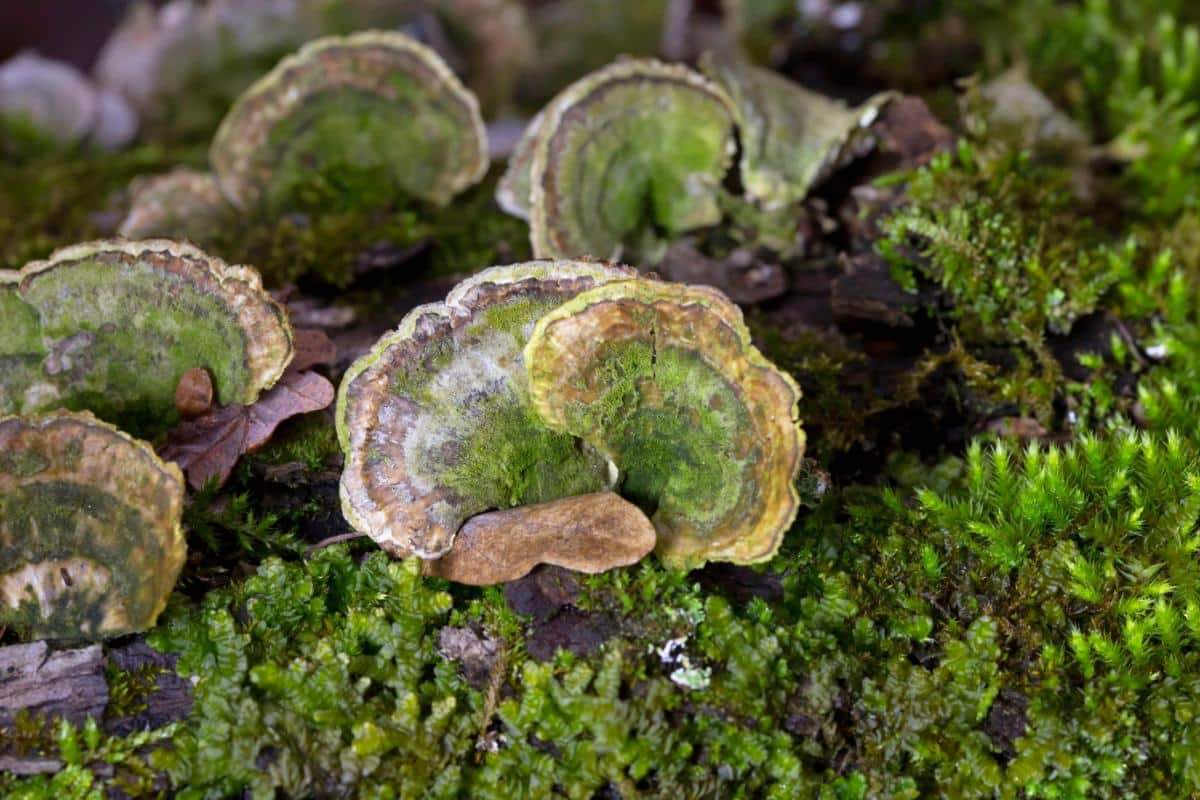
Ochre Bracket (Trametes ochracea)
The ochre bracket is white to buff or reddish brown, and its color bands are less distinct than a turkey tail’s. It has the same fan shape and fine hairs on the cap, and it grows on dead hardwood. The caps reach about 4 inches across and are thicker and stiffer overall. The caps do not bend easily like the true turkey tail.
Ochre brackets also have no black line between the hairy surface layer and the white flesh below it. If you’re in doubt, cut the mushroom in half.
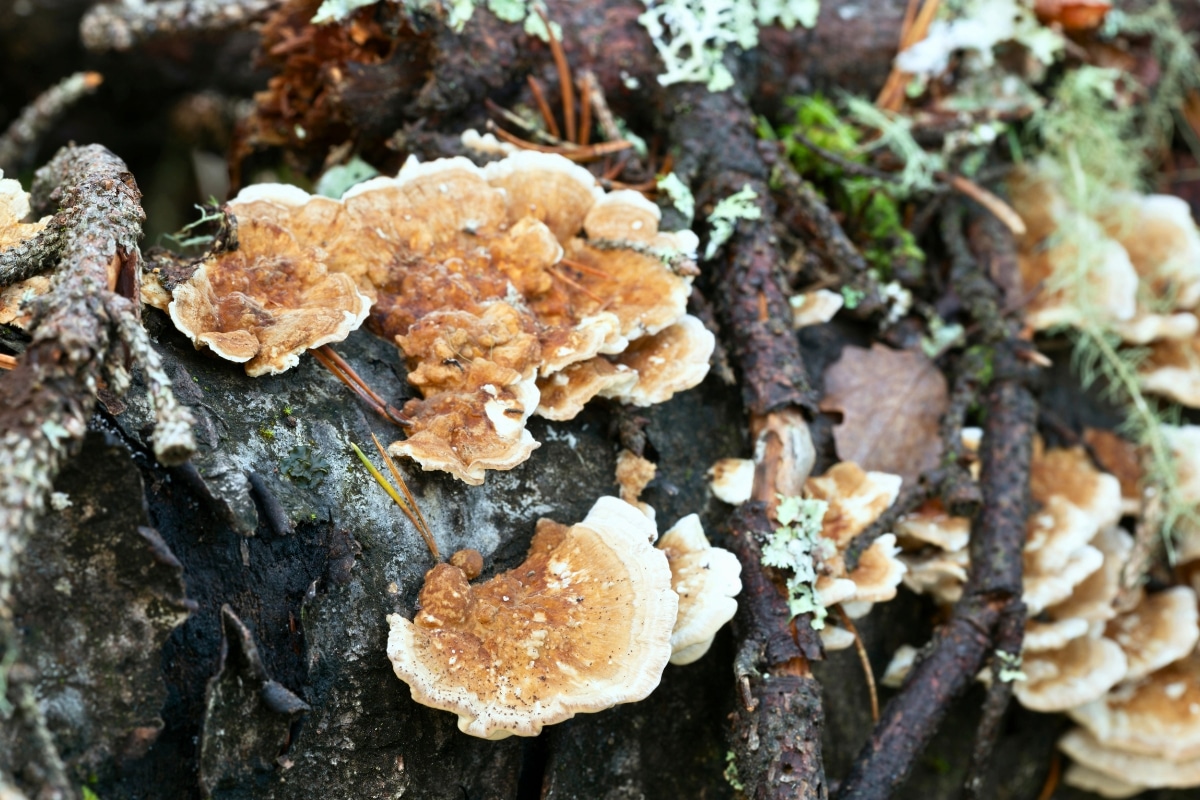
Lumpy Bracket (Trametes gibbosa)
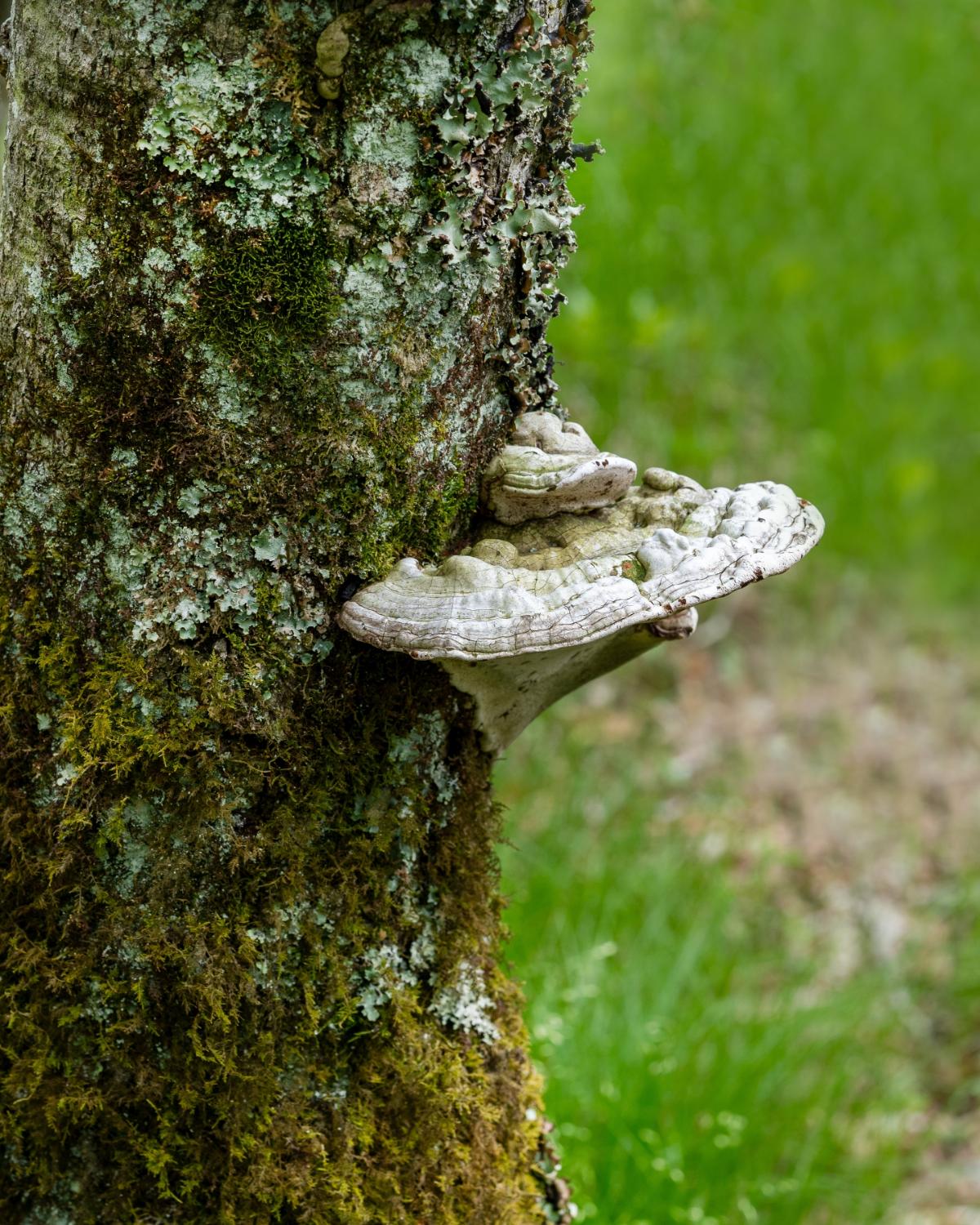
The lumpy bracket is thick and heavy, with caps 2 to 8 inches across and up to 3 inches thick. The cap is white to cream, and the pores are long, narrow slots, not round holes, and they’re big enough to see easily.
Green algae grow on the cap so reliably that the green color helps identify this one. The green is concentrated toward the back of the cap and thins out near the outer edge, so a bracket can be green at the base, brown through the middle, and white along the rim.
Common Questions About Turkey Tail
Is turkey tail edible?
Turkey tail is not poisonous, but it’s much too tough and leathery to eat fresh. It’s prepared as a tea, tincture, or a powder instead.
What’s the fastest way to tell a true turkey tail from a false turkey tail?
Turn the bracket over. Turkey tail has a whitish pore surface with tiny holes. False turkey tail has a smooth undersurface with no pores.
Does turkey tail grow on conifers?
Turkey tail usually grows on the deadwood of hardwoods, but it does grow on conifer wood once in a while.
Leave a Reply