
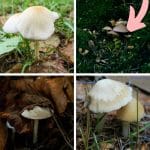
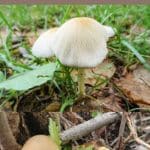
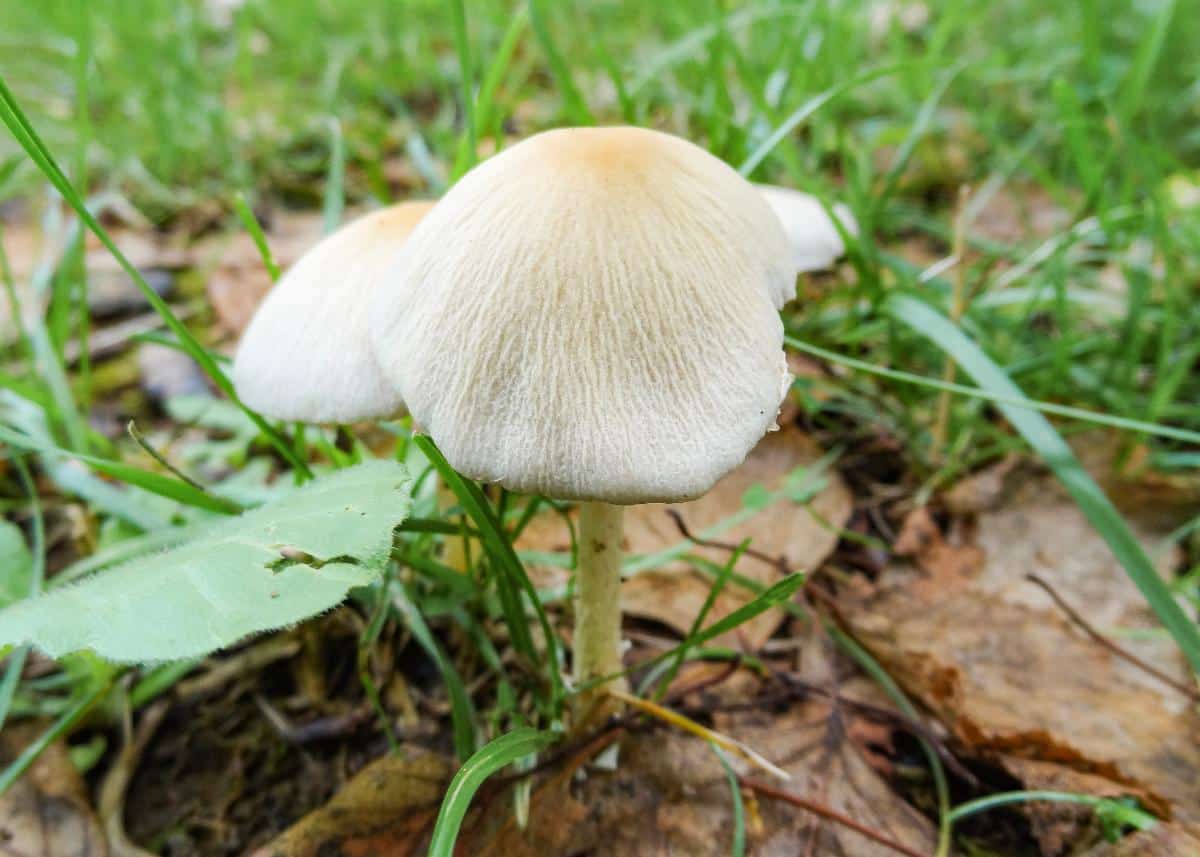
The pale brittlestem (Candolleomyces candolleanus) is a widespread and common mushroom in North America that grows near recently dead hardwood trees, their roots, and their stumps. It grows in lawns, pastures, cultivated ground, urban areas, and the woods, which means it’s also commonly encountered. Its edibility is questionable, with some guides listing it as okay while other reports say it may be slightly toxic. The pale brittlestem is a very fragile mushroom, as the name suggests.
This mushroom is honey brown to honey yellow when it’s young, and it fades to nearly white as it dries. And the whole mushroom is so crumbly that you’ll be lucky to get one home in one piece. Its old common name was common crumblecap.
- Scientific Name: Candolleomyces candolleanus
- Common Names: pale brittlestem, common brittlestem, common crumblecap (an older name)
- Habitat: saprobic, near recently dead hardwoods, in lawns, pastures, gardens, and woods
- Edibility: edible but not worthwhile, and not recommended
Jump to:
All About the Pale Brittlestem
This mushroom was first described to science in 1818 and named Agaricus candolleanus. It went through several name changes, including Hypholoma candolleanum and Drosophila candolleana, and for a long time it was known as Psathyrella candolleana. The current name, Candolleomyces candolleanus, is very new. It was given this updated name in 2020 based because of DNA analysis.
The species name actually has nothing to do with candles. Instead, it honors the Swiss botanist Augustin Pyramus de Candolle. The genus name Psathyrella is a diminutive of Psathyra, which comes from the Greek word psathuros and means friable, or easily crumbled. This refers to the crumbly caps, gills, and stems of the mushroom.
In Japan, the mushroom is called Itachitake, the weasel mushroom. It is likely called that because the cap is yellowish brown to tawny, which is close to the fur color of a Japanese weasel.
Pale Brittle Stem Identification
Season
In most areas, it fruits in spring and early summer, and sometimes in fall. In warmer climates, it fruits year-round. In California, it fruits from late fall to mid-winter.
Habitat
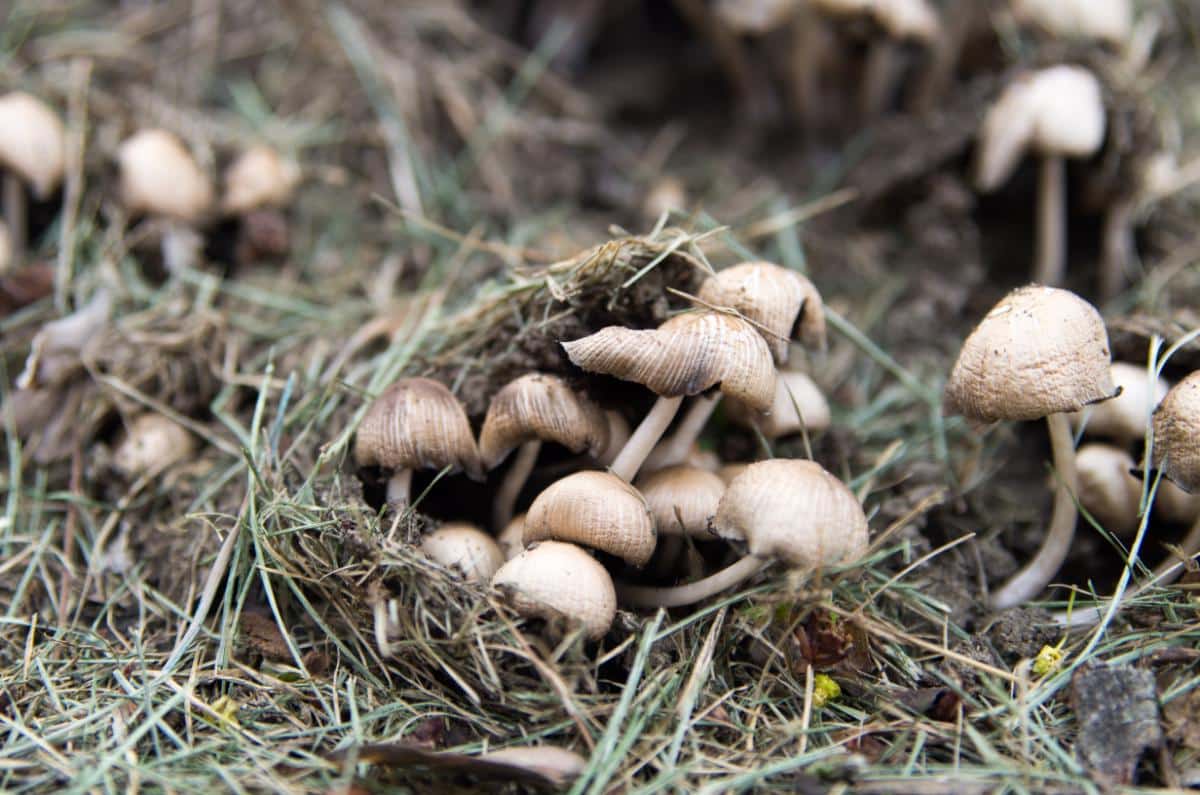
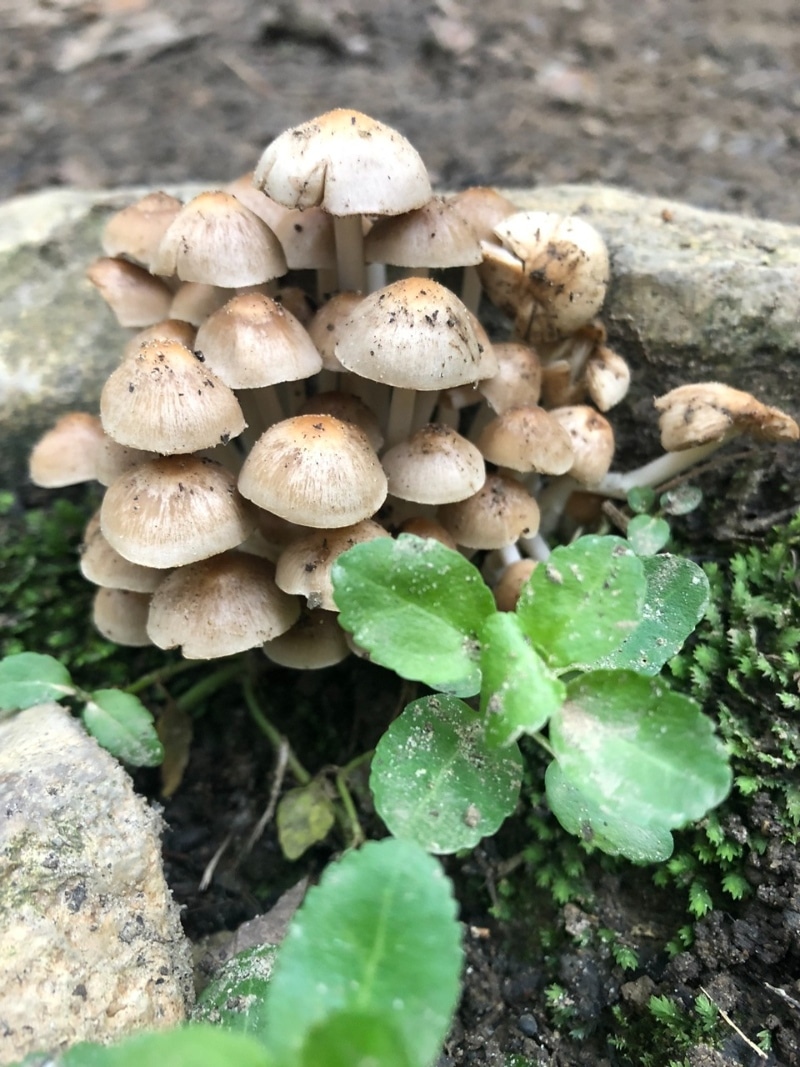
This is a saprobe that grows near recently dead hardwood trees, including around their roots, and their stumps. It is commonly found in lawns, pastures, cultivated ground, gardens, urban areas, well-shaded grassland, woods, and along trails. It has a huge and varied growth adaptability. The pale brittlestem will grow alone or in large dense clusters, and in small groupings around stumps and tree roots.
Identification
Cap
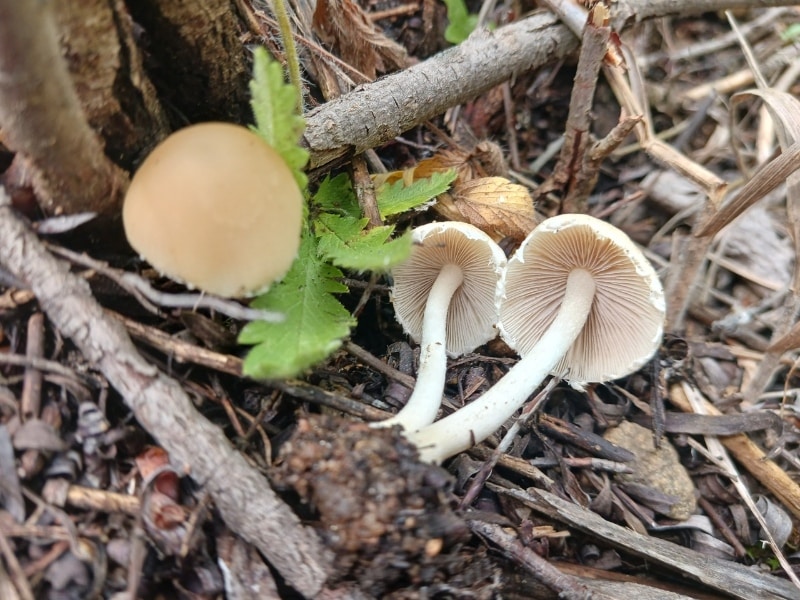
The cap is rounded or cone-shaped when it’s young, and then, with age, it expands to broadly rounded or bell-shaped. With full maturity, it can be nearly flat. It’s about 1¼ to 4⅓ inches across, and the surface is bald and dry. Around the edges of the cap are shallow radial wrinkles, and the edges might be wavy and can crack in dry weather. There may also be remnants of the partial veil hanging from the edges.
Common brittlestem caps are honey brown when they’re young, but they fade to nearly white rather quickly, especially when they grow in open areas. The caps are hygrophanous, which means their color changes as they dry out. The center of the cap will go from light brown or honey brown to pale buff as it dries.
Gills
The gills are attached to the stem or nearly free, and they’re close or crowded and narrow. They start whitish in color, then turn grayish or pinkish gray, and finally, with maturity, turn dark brown. They don’t deliquesce, or “melt,” at maturity, like other related species.
When the pale brittlestem is young, the gills are covered by a thin veil. This breaks quickly, and there are often remnants of the veil hanging from the edges of the cap and gills.
Stem
The stem is white, equal in size along its entire length, and it’s sometimes twisted as well. It is hollow or mostly hollow, depending on its age and condition. It’s about 1½ to 5 inches tall and is either smooth, faintly lined, silky, or satiny, and it snaps easily.
Even though the mushroom has a partial veil, it seldom has a residual ring around the stem. What’s left of the veil is sometimes found in a few loose fragments clinging to the upper stem, as well as the cap edges.
Taste and Smell
The odor and taste are mild and not distinctive.
Flesh Color and Staining
The flesh is very thin, fragile, and brownish, dingy brown, or whitish. It doesn’t stain when cut or handled.
Spore Print
The spore print is purplish-brown.
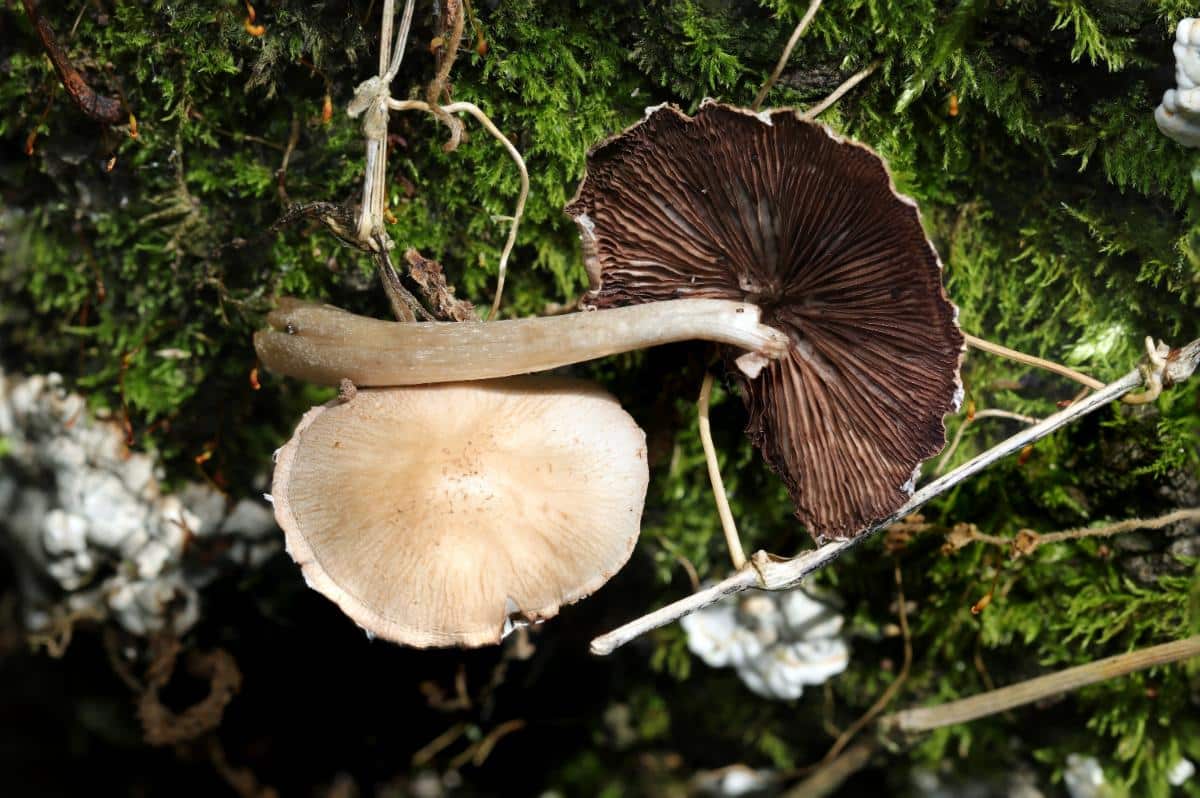
Pale Brittlestem Lookalike Species
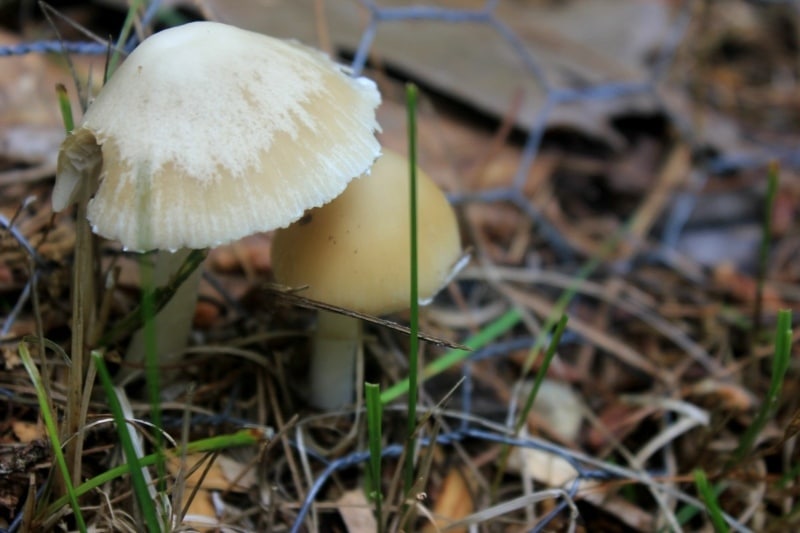
Candolleomyces species look a lot like Psathyrella species, because they are so closely related. Until very recently, the pale brittlestem was in the Psathyrella genus. They have many of the same features and the same habitats, and often, the only way to tell them apart is under a microscope.
Psathyrella incerta
This lookalike varies slightly in cap color and overall shape, but they need close attention to differentiate. The cap of young P.incerta is more clear yellow than the pale brittlestem’s honey yellow color. Its cap is also less cone-shaped and more rounded. Another potential difference is that the stem might have a slightly bulbous base and sometimes a fragile ring around the upper part.
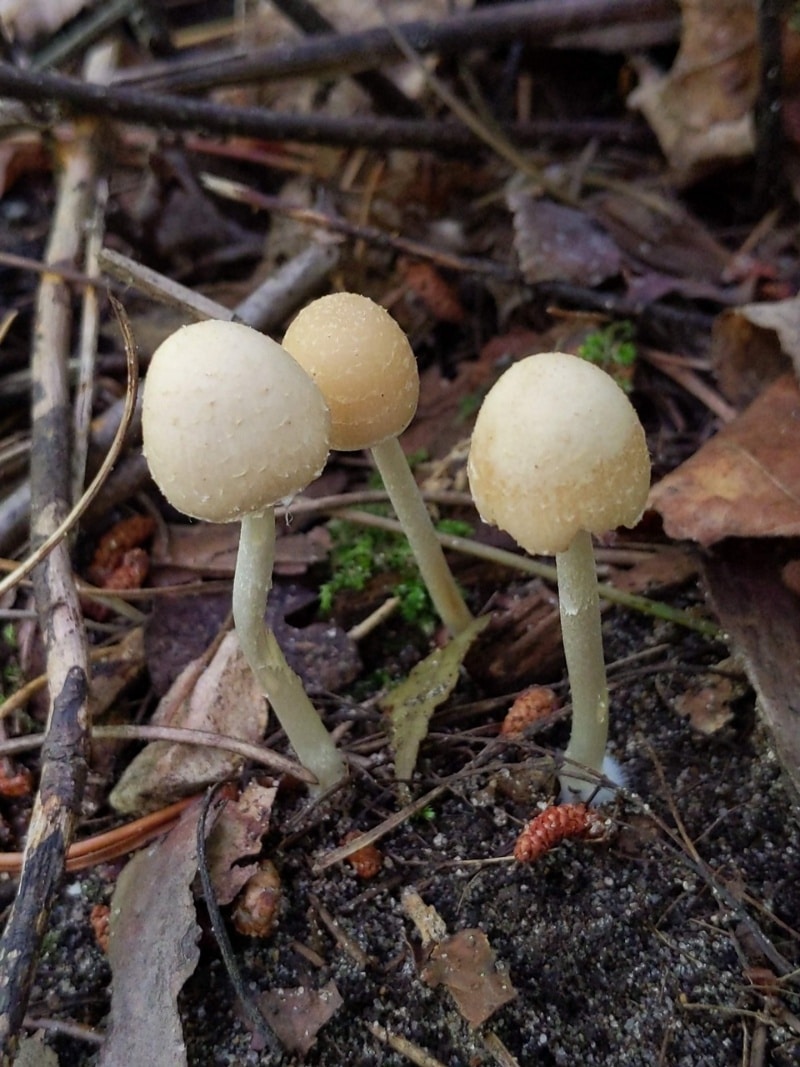
Psathyrella hymenocephala
The young cap of this lookalike is cinnamon-colored, unlike the pale brittlestem’s honey yellow coloring. The stem also might be slightly wider at the base, and there might be remnants of the partial veil on the stem and hanging from the cap’s edge.
Red-Edge Brittlestem (Psathyrella corrugis)
The cap of the red-edge brittlestem is much smaller than the common brittlestem. It also has reddish gills and a dark brown-to-black spore print. Red-edge brittlestem caps are ⅜ to 1½ inches wide, bell-shaped, and translucent when young. With age, they flatten and turn opaque. This species is also very common in North America, and it grows around dead wood and grass.
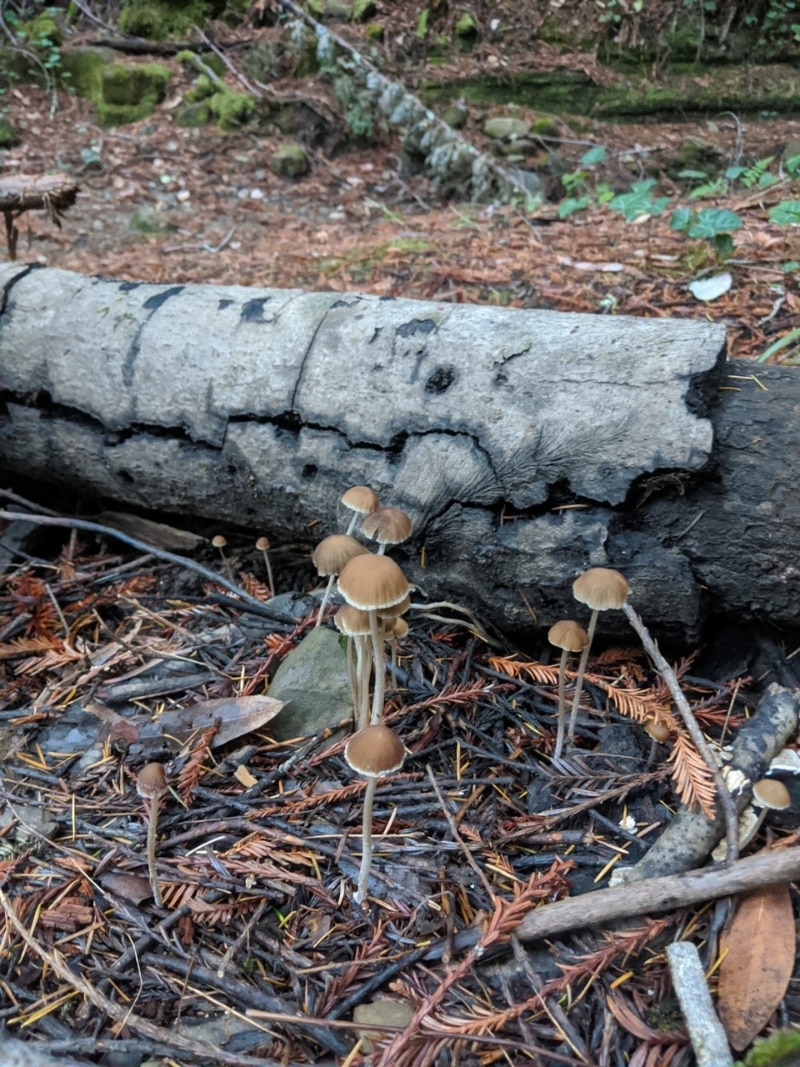
Common Stump Brittlestem (Psathyrella piluliformis)
The common stump brittlestem is also a wood-rotting species that grows on and around the stumps of dead deciduous trees. The cap is ¾ to 1½ inches across, rounded and then bell-shaped before becoming almost flat. It’s dark red-brown at first, then fades to dark brown and yellow-brown. There are white veil fragments that hang from the rim of the cap. It has a darker cap than the pale brittlestem, and it’s smaller. It grows in much larger groups, also, and it tastes bitter.
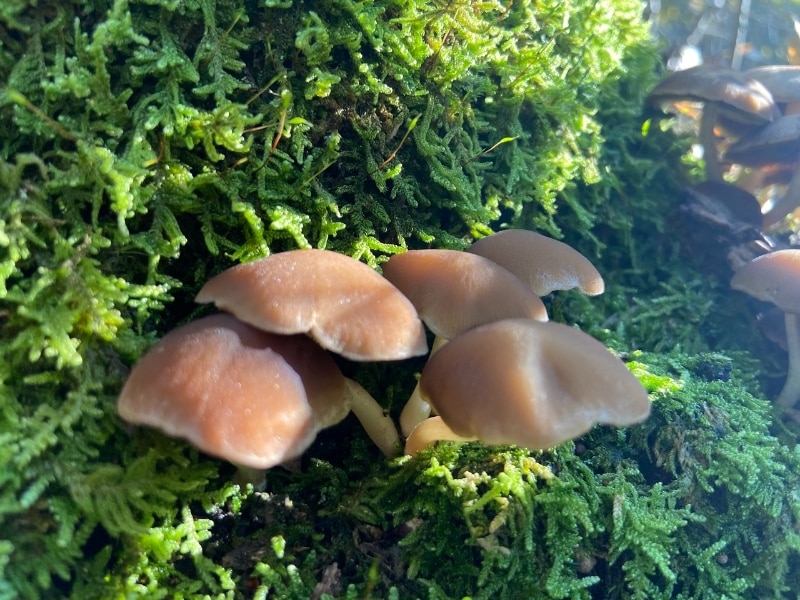
Clustered Brittlestem (Britzelmayria multipedata)
No brittlestem fruits in denser bunches than the clustered brittlestem. The stems all have a common fused base which they grow out of. The cap of this species is ¼ to 1¼ inches across, rounded or cone-shaped at first and then bell-shaped with maturity. It’s hygrophanous, reddish or clay brown when moist, and pale ochre with a brownish center when dry. It does not have a ring around the stem.
Members of Coprinopsis
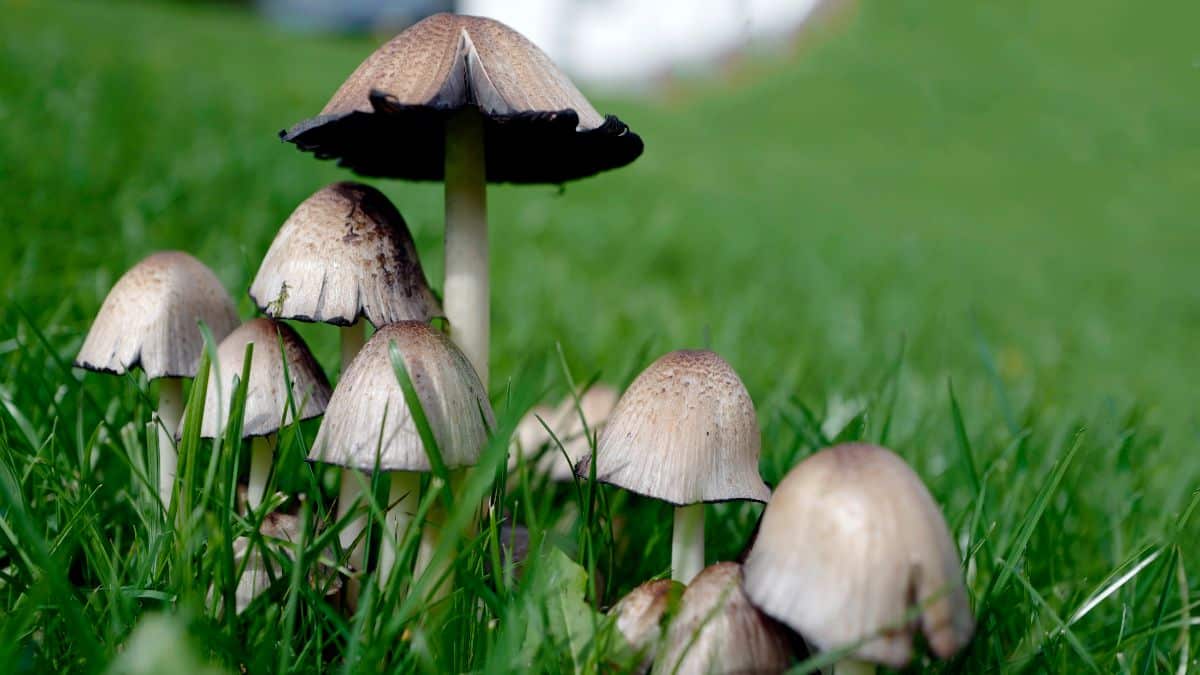
The genus Coprinopsis is in the same family, Psathyrellaceae, and the primary species is the alcohol inky cap, Coprinopsis atramentaria. This mushroom has a gray brown bell shaped cap that is 1¼ to 4 inches. As its cap opens, it flattens out and then disintegrates into black, inky goo. The pale brittlestem doesn’t deliquesce (disintegrate) at maturity.
Pale Brittlestem Edibility and Toxicity
The pale brittlestem is usually listed as edible, and some sources say it has a pleasant flavor, but eating it is not recommended. Its flesh is very thin and poorly textured, and because it is a small, fragile brown mushroom that resembles several other little brown mushrooms, it is easily confused with toxic ones.
In China, the pale brittlestem has been involved in a small number of poisoning incidents, with most of them reporting gastrointestinal issues. The only death associated is from an incident in which the pale brittlestem was eaten together with Amanita oberwinklerana (now Amanita oberwinkleriana), an Amanita that causes acute renal failure. Two people ate the mixed meal, and one died but the death was because of the Amanita, not the brittlestem.
Common Questions About The Pale Brittlestem
Is the pale brittlestem mushroom medicinal?
There are no recorded medicinal uses for the pale, or common brittlestem.
Leave a Reply