


The toxin orellanine is found in several webcap mushrooms in the genus Cortinarius. This toxin is extremely dangerous because it can cause kidney failure, but even more dangerous is the fact that the signs of poisoning may take a few days up to two weeks to appear. The delay makes it easy for a person to forget the meal or assume that the stomach illness has another cause. A suspected webcap poisoning is a medical emergency even when a person still feels well.
Webcaps are gilled mushrooms with rusty brown spores, and many are quite common. They get the name “webcap” because they have a cortina, a cobweb-like veil covering their gills when they are young. Orellanine has been confirmed in several Cortinarius species, including the fool’s webcap, the deadly webcap, and the red banded webcap.
Jump to:
The History of Orellanine
In 1952, 102 people in Bydgoszcz, Poland, became ill after eating fool’s webcaps, and 11 died. The cause remained unclear until 1957, when the Polish physician Stanisław Grzymała connected the illnesses to Cortinarius orellanus. He isolated orellanine in 1962 and confirmed that it damaged the kidneys, and then named the toxin after the mushroom involved in the poisoning.
How Orellanine Damages the Kidneys
Our kidneys make urine by filtering our blood. During filtration, water and small dissolved substances move out of the blood and into tiny kidney tubes, called proximal tubules. These tubules return most of the water, salts, sugar, and other useful material to the bloodstream, and send waste and excess water to the liquid that becomes urine. Orellanine poison damages the cells lining these tubules, which then causes inflammation, death of the cells, and scarring that can prevent the kidneys from removing waste and balancing water and salts normally.
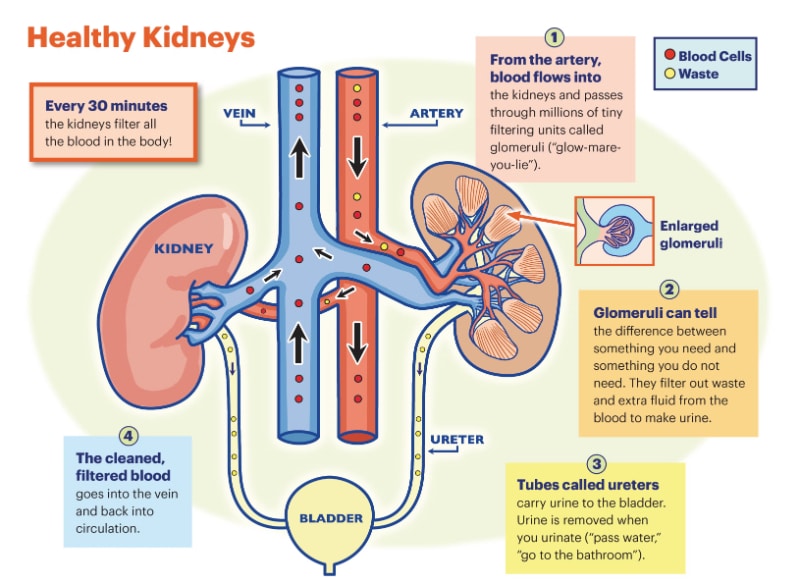
Researchers know that orellanine injures cells in the kidney’s proximal tubules, but they don’t yet understand exactly how the toxin kills those cells. One explanation is that orellanine causes oxidative stress, which is a buildup of oxygen molecules that can damage cell membranes, proteins, and DNA. Other studies conflict with this, though.
Kidney damage from orellanine can at first cause more urine, not less. The injured proximal tubules can’t return enough filtered water to the bloodstream, so more water leaves the body as urine, which causes frequent urination and deep thirst. If the injury becomes severe, the kidneys lose their ability to filter enough blood, and urine output then slows or stops entirely. If the kidneys are severely damaged, patients may need dialysis to remove waste and excess fluid and to keep the salts and acids in the blood at safe levels.
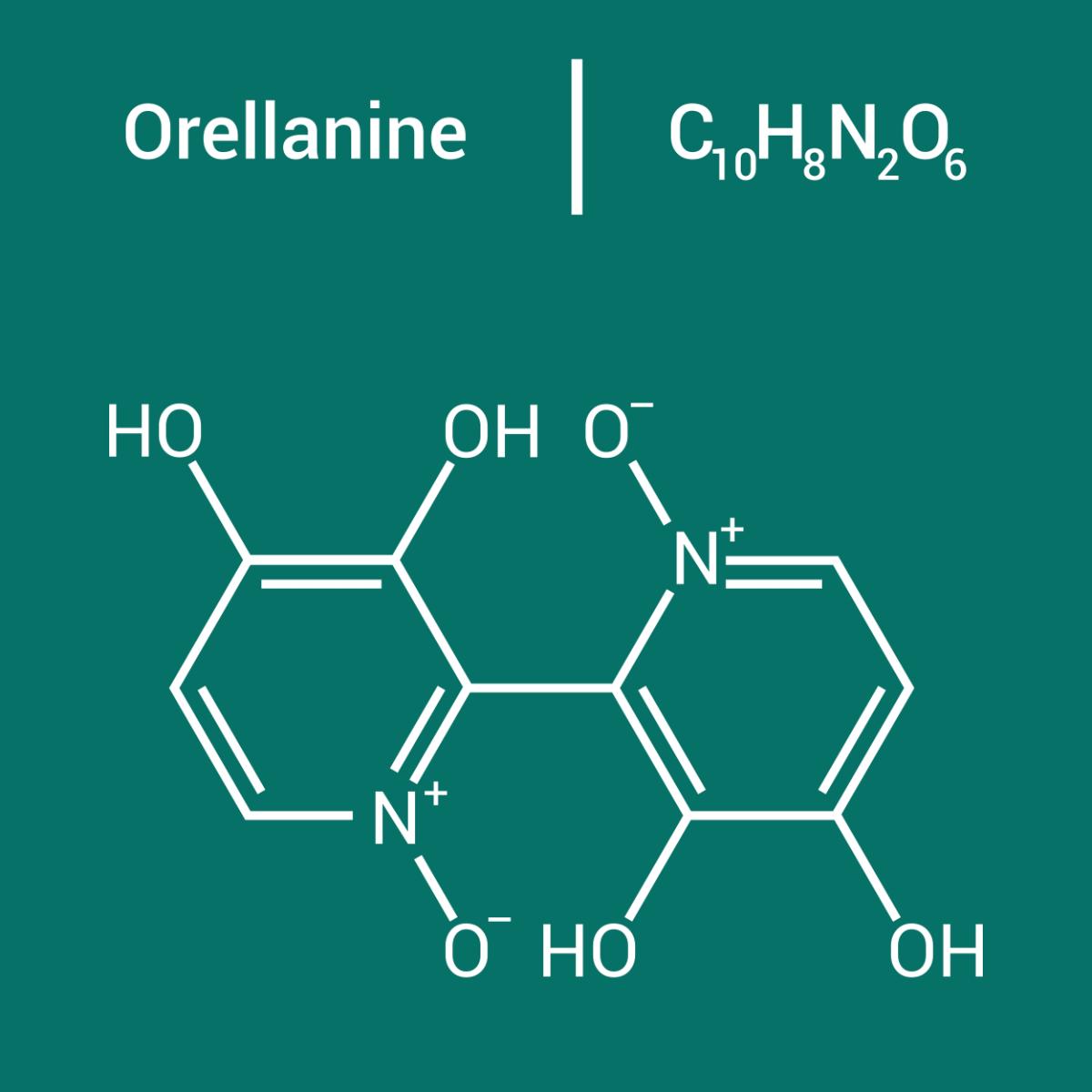
Mushrooms That Contain Orellanine
The genus Cortinarius, which has the orellanine-containing mushrooms in it, is very large with 2,000+ species and many that look alike. Young Cortinarius mushrooms have a cortina that covers their gills. When it breaks as the mushroom grows, it might leave a few fibers on the stem or a rusty band. There is no way to tell whether a webcap contains orellanine unless you identify it individually.
- Cortinarius orellanus (Fool’s webcap)
- Europe (Poland, Czech Republic, France, Switzerland, Germany, Austria, Britain).
- Documented poisonings: ~102 in the 1952 Bydgoszcz outbreak (11 deaths); 26 in France late 1980s ; 4 in Austria 1997; 2 in Ireland 1997.
- Cortinarius rubellus (Deadly webcap)
- Europe (Scandinavia, British Isles, northern/central Europe) and North America (British Columbia, western Washington, Ohio, West Virginia, Michigan, New England).
- Documented poisonings: 4 in Finland 1972; 3 in Scotland 1979; 22 in Sweden 1979–1993; 1 in Austria 1996; 4 in the 2008, 1 in 2020.
- Cortinarius orellanosus
- North America (Michigan).
- Documented: 1 confirmed case in 2008 (first confirmed North American orellanine poisoning from a native Cortinarius).
- Cortinarius armillatus (Red-banded webcap)
- Northern North America.
- Documented poisonings: 0 confirmed human poisonings (contains very small amounts of orellanine).
- Cortinarius eartoxicus
- Tasmania, Australia.
- Documented poisonings: 2 in December 1985 (1 required kidney transplant).
- Cortinarius henrici
- Europe
- Documented poisonings: 0 confirmed human poisonings but has confirmed orellanine content.
- Cortinarius bruneofulvus
- Europe.
- Documented poisonings: 0 confirmed human poisonings but has confirmed orellanine content.
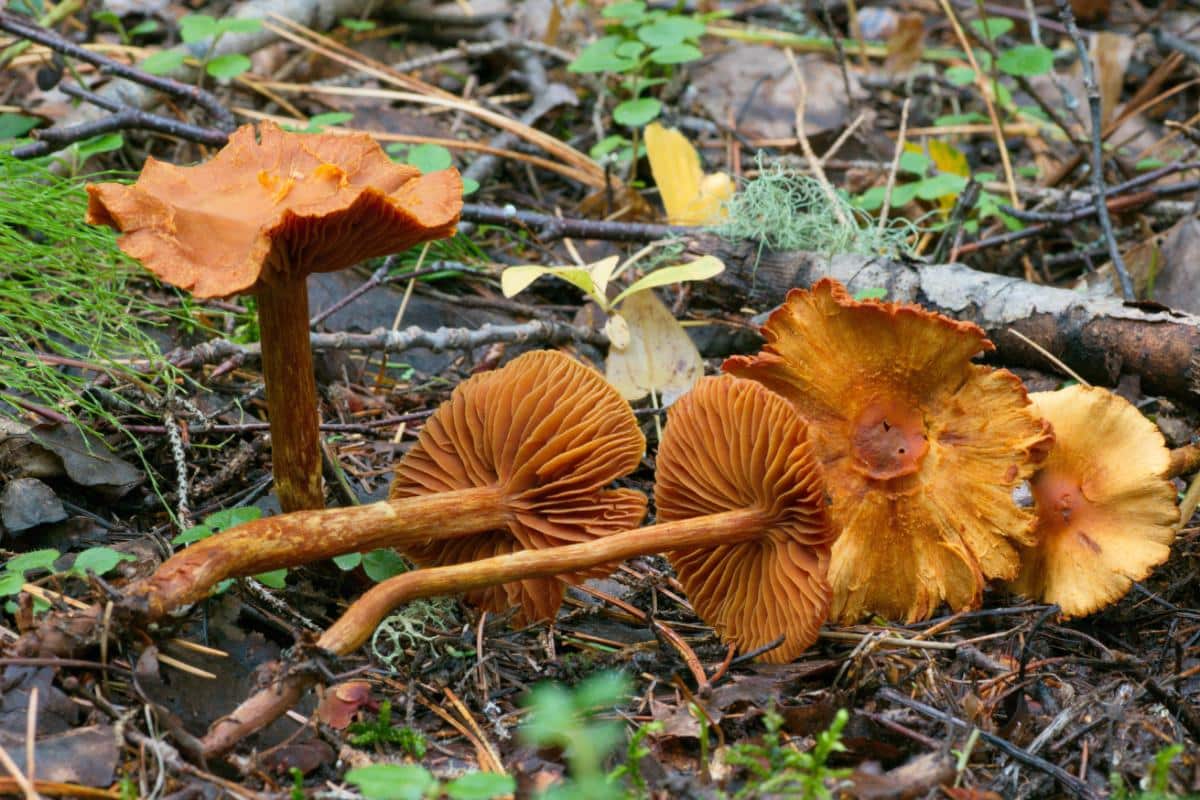
Fool’s Webcap (Cortinarius orellanus)
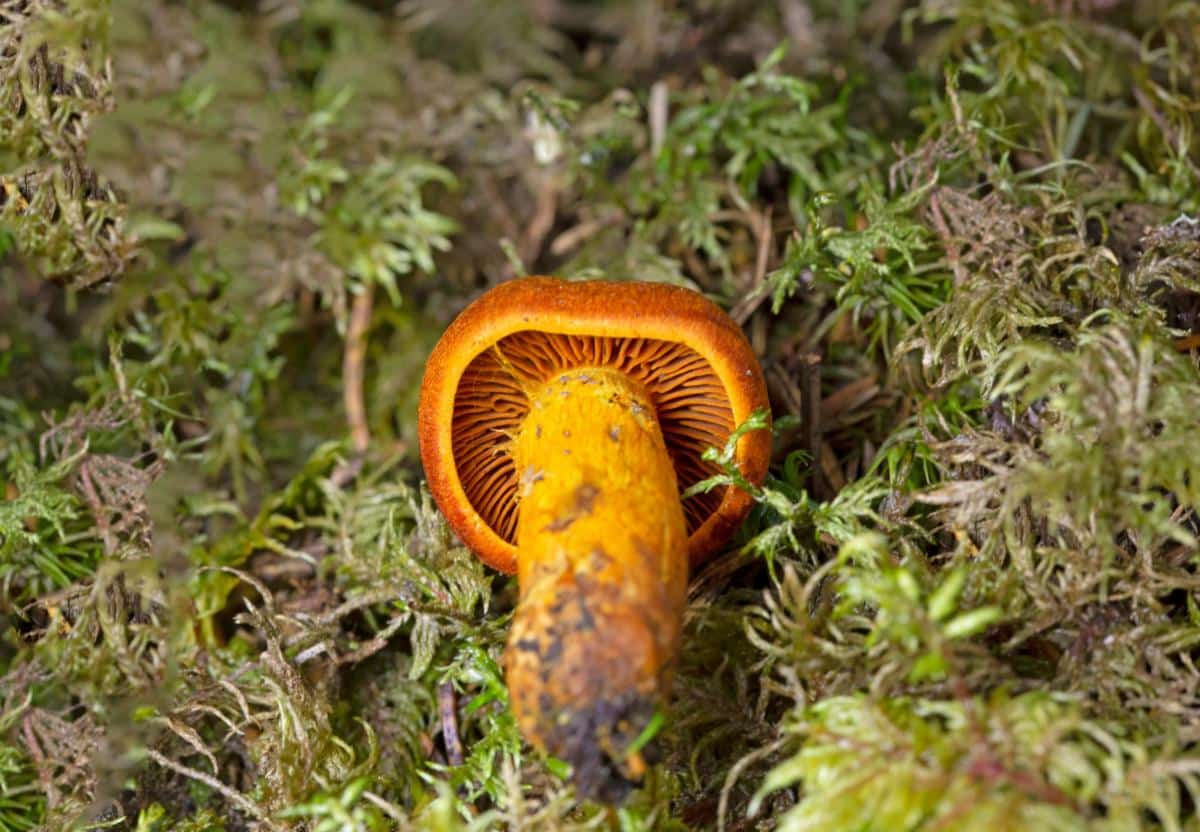
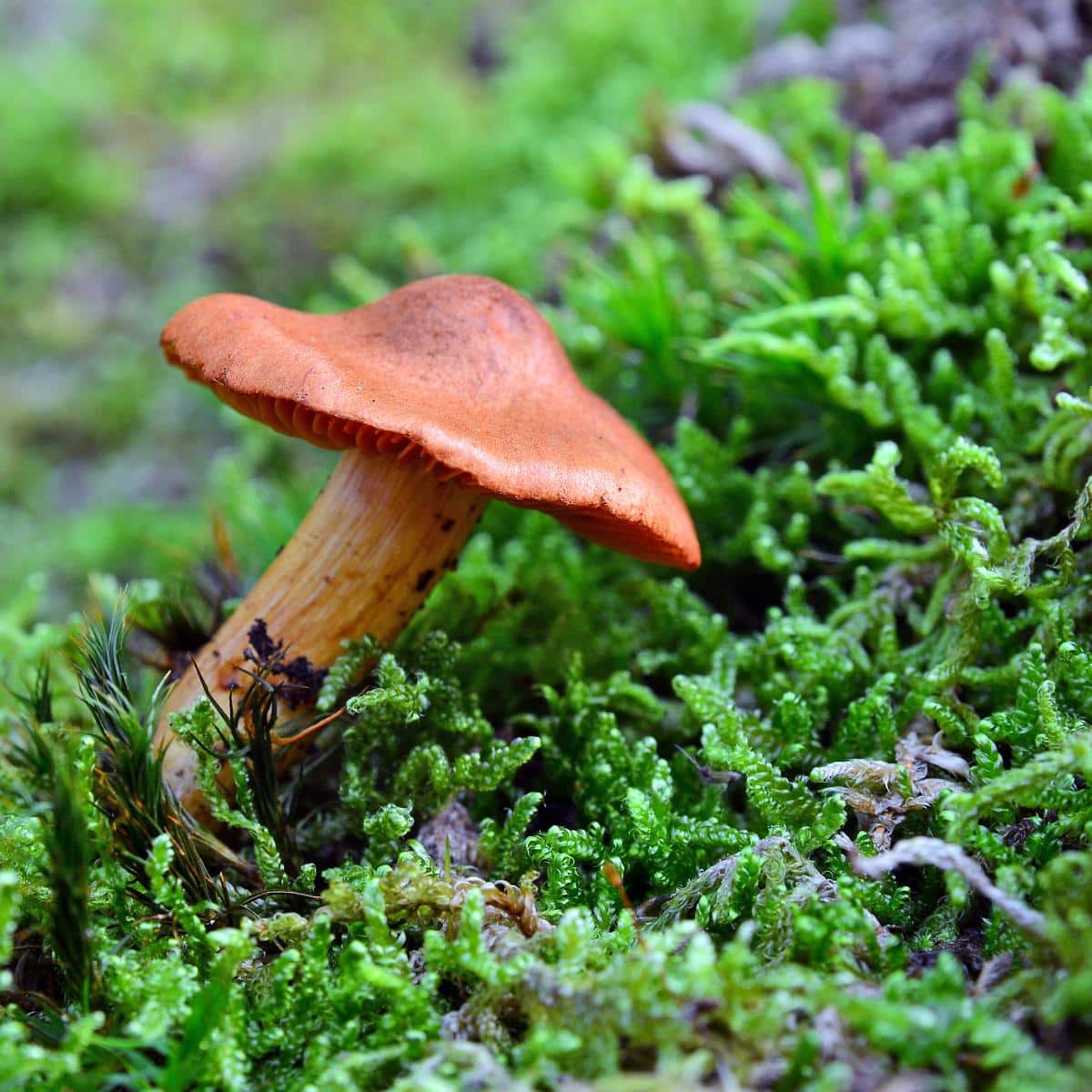
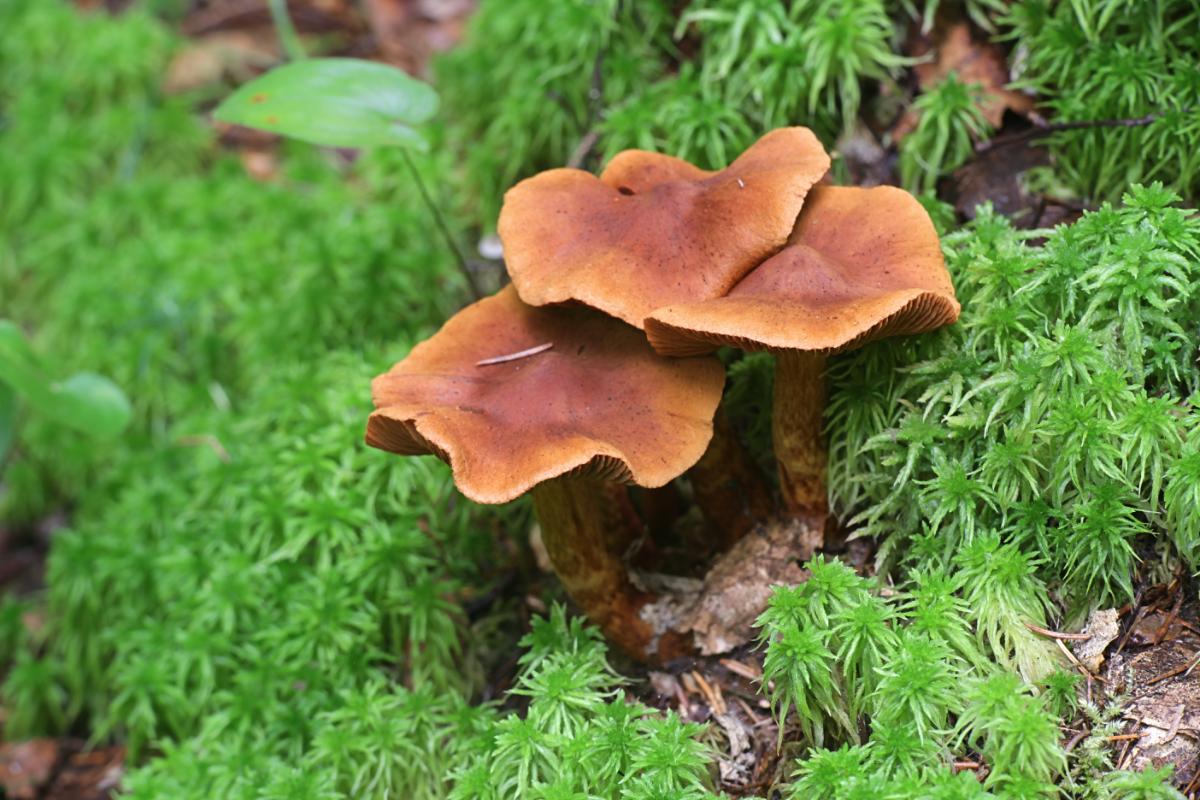
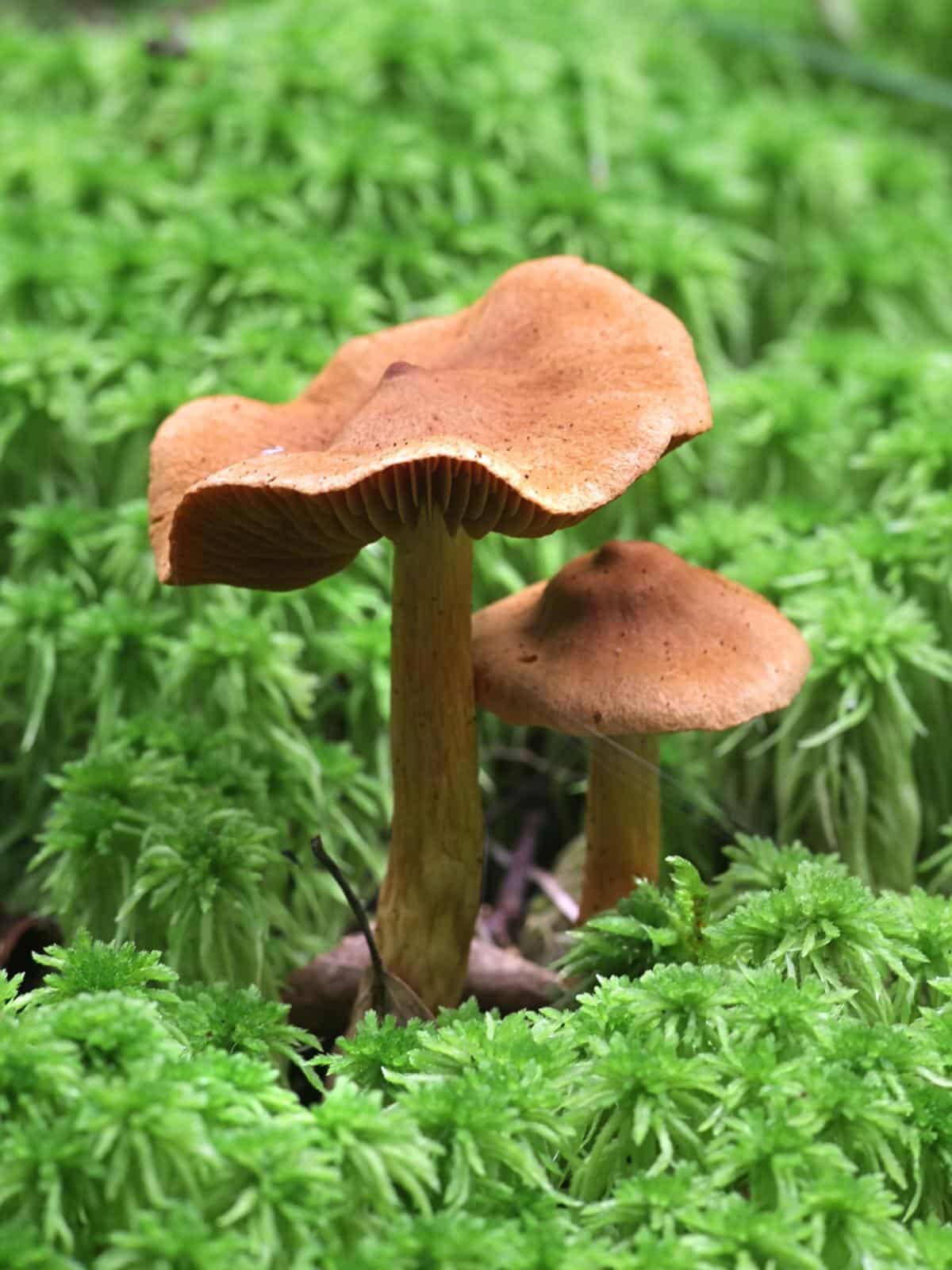
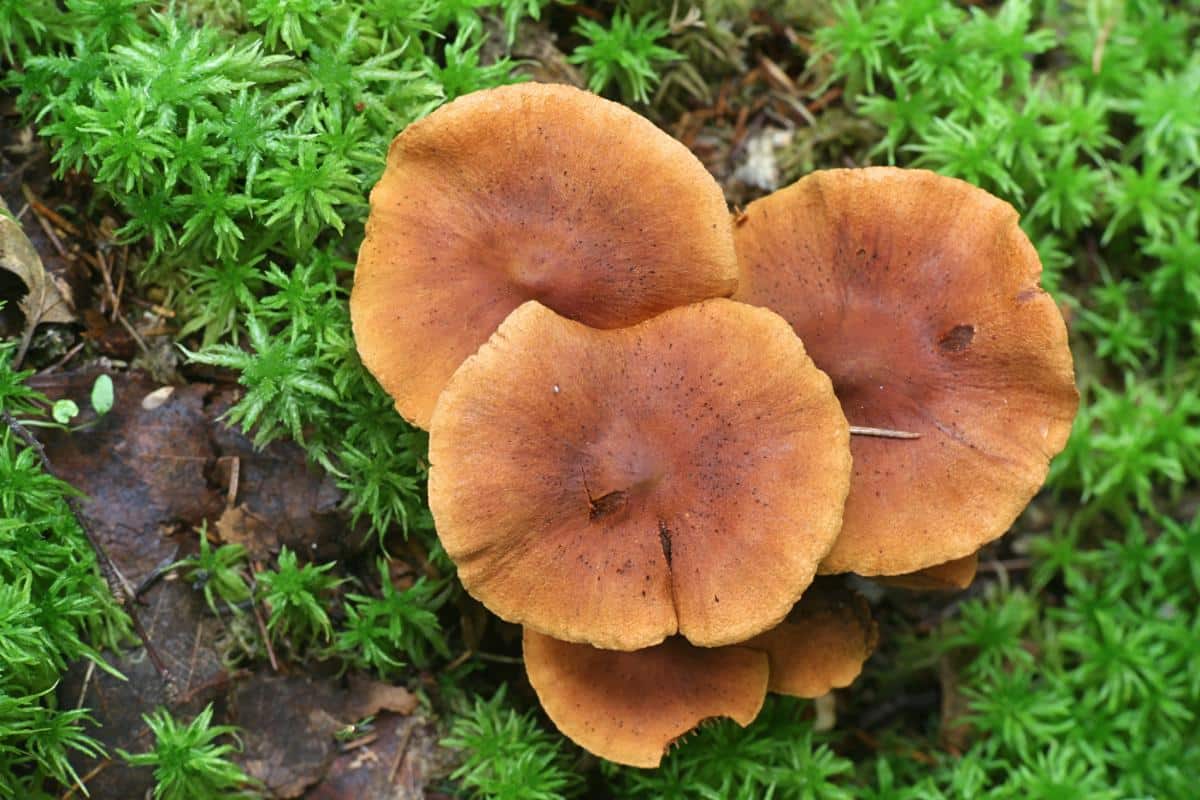
The fool’s webcap has a dry orange-brown, copper, or rust-brown cap that is 1.2 to 3 inches wide. The cap starts out cone-shaped or bell-shaped and later flattens with age, but keeps a small upraised bump in the center called an umbo. It has thick, widely spaced gills that start out pale ochre or yellowish and become rust brown with age.
This is a European species that grows with oak and other hardwoods, and it also occurs with some conifers. It has one of the better-documented high orellanine concentrations among poisonous webcaps. Some victims have mistaken it for chanterelles or honey mushrooms.
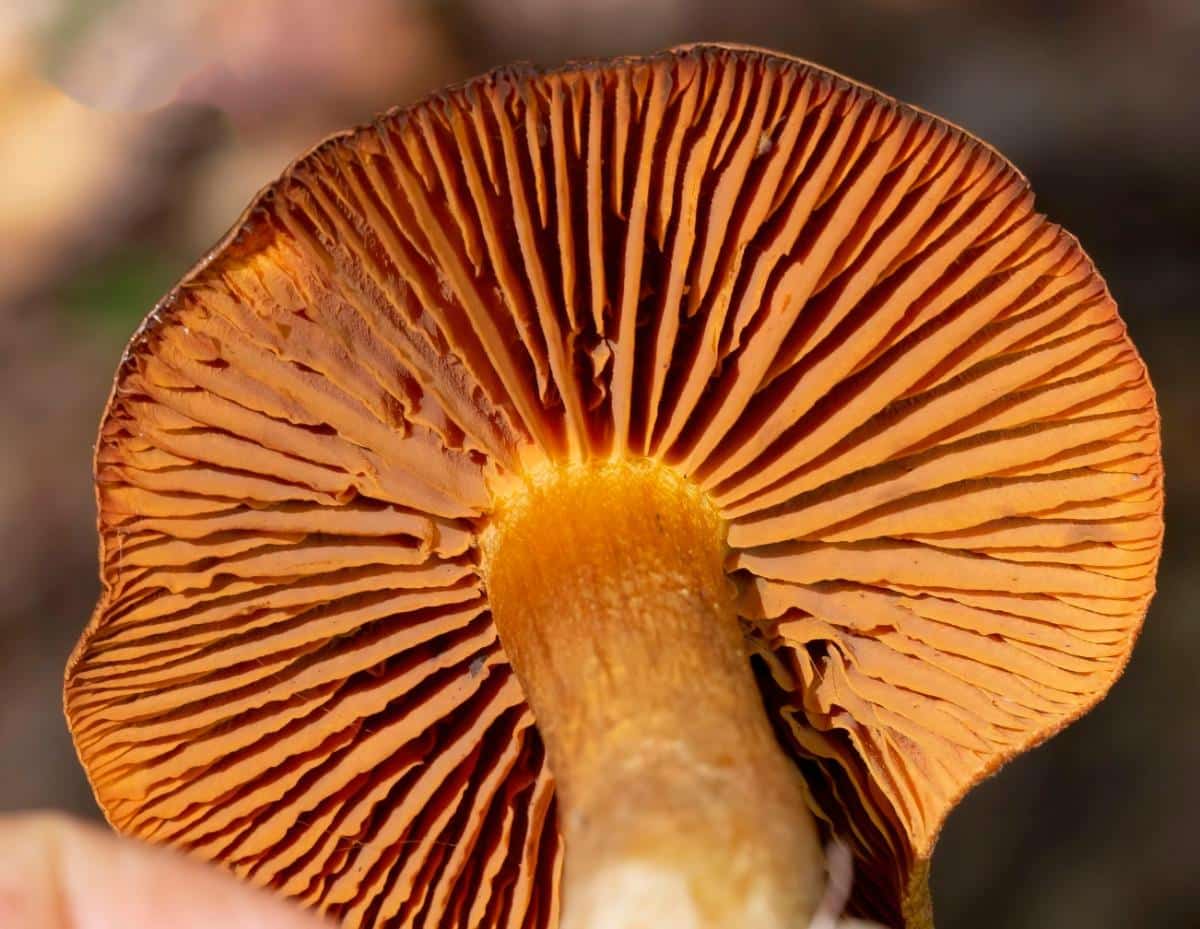
Deadly Webcap (Cortinarius rubellus)
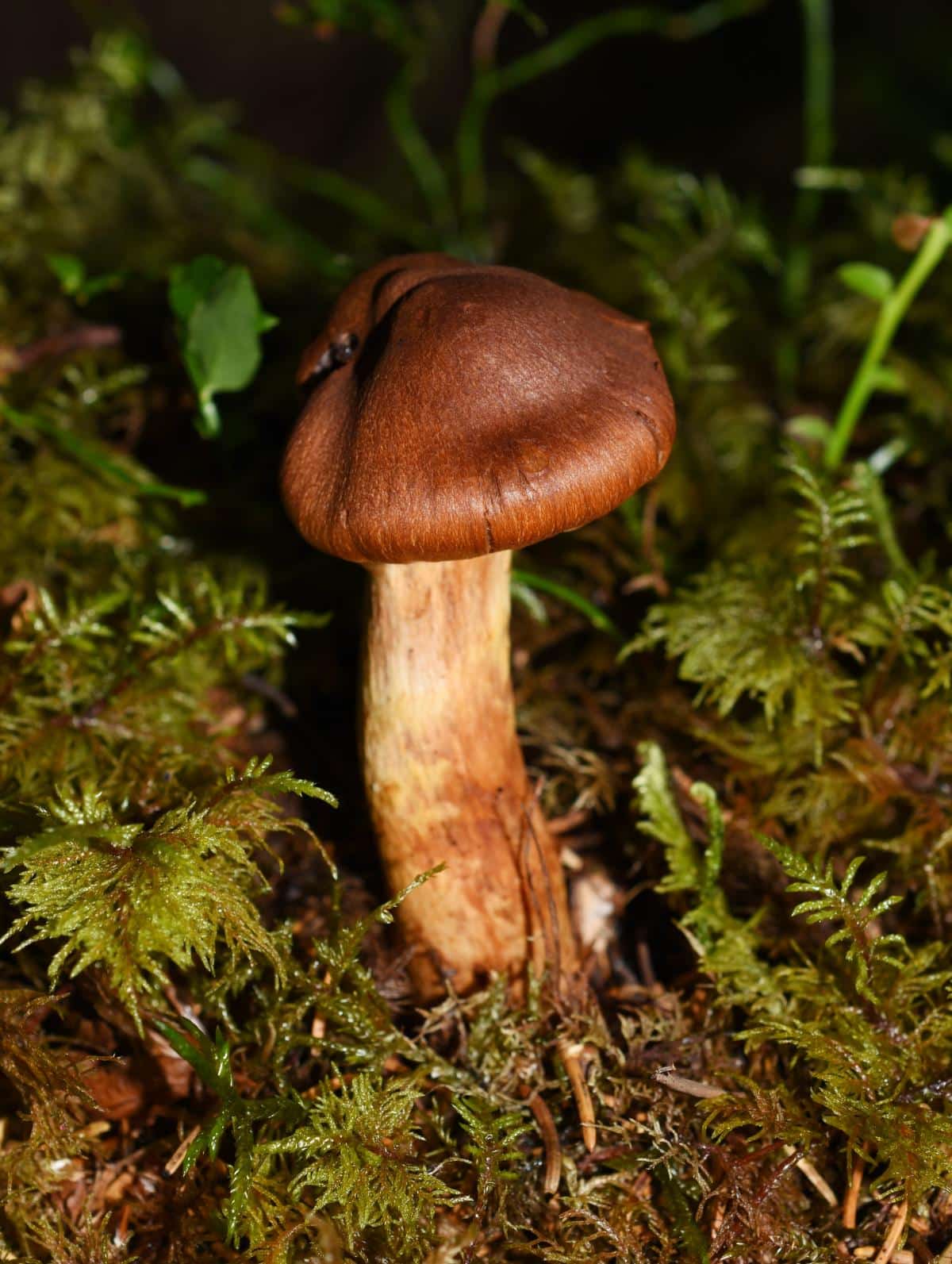
The deadly webcap has a tawny to dark brown cap that is 1 to 3 inches across. The cap starts out cone-shaped and may have a pointed center as it expands. The stem is 2 to 4.3 inches long and may have yellowish fibers on it left over from the cortina. It grows primarily with conifers in temperate and subalpine forests.
In North America, this species grows in British Columbia, Washington, California, Oregon, New England, eastern Canada, and Michigan. There are also a few reports from W. Virginia, Florida, Ohio, Illinois, and North Carolina. The species also grows across northern and central Europe. Victims have mistaken it for chanterelles, yellowfoot mushrooms, Hygrophorus species, and ceps.
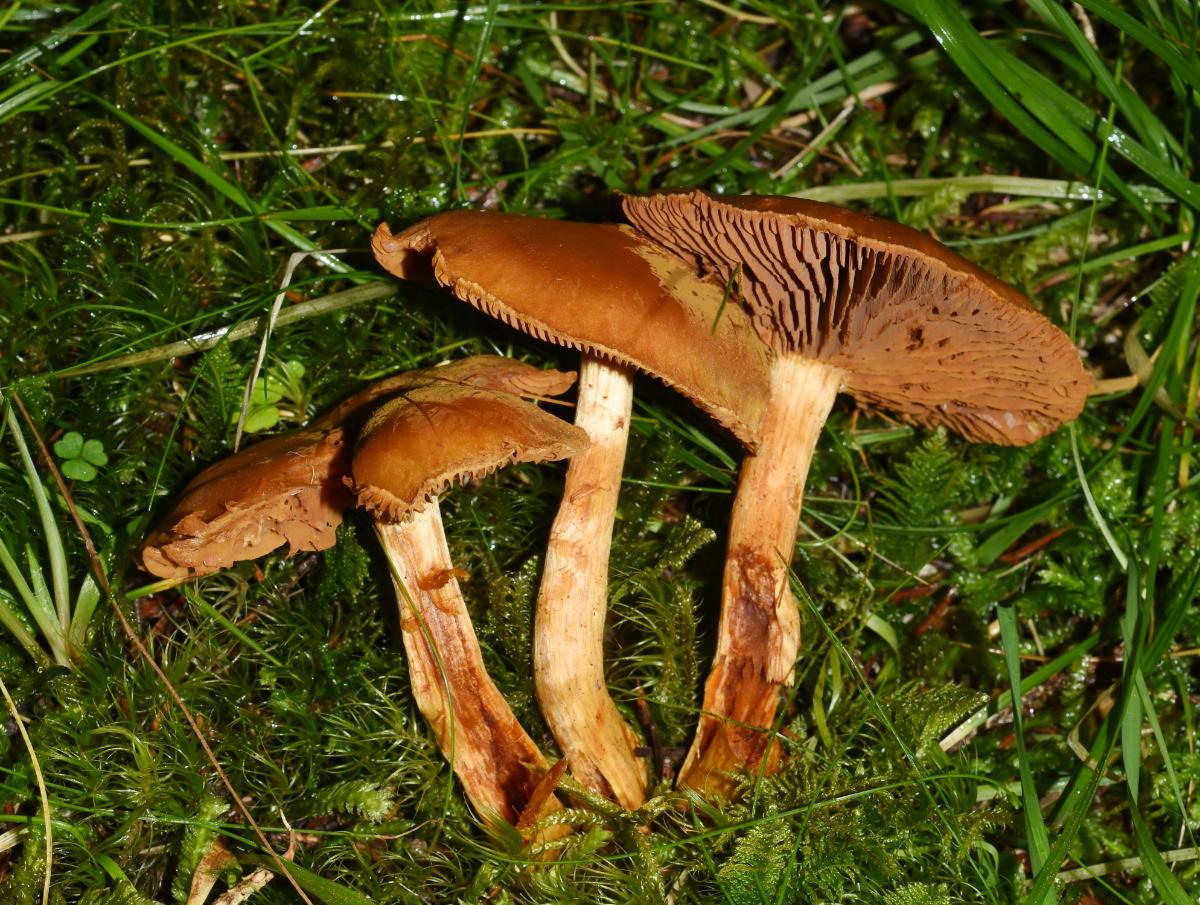
Cortinarius orellanosus
In 2010, there was a mushroom poisoning in Michigan that caused chronic kidney failure. The mushrooms had been collected under an oak tree, and chemical testing found a high concentration of orellanine. DNA analysis showed the mushroom was genetically closely related to the European fool’s webcap (Cortinarius orellanus) but was a separate species. It was later formally described as Cortinarius orellanosus, and was the first confirmed North American orellanine poisoning from a native Cortinarius.
The cap of this species is rounded and brownish-orange when its young. With age, it spreads but keeps a small upraised bump (umbo) at the center. The gills start out yellowish but deepen to a rusty brown as they mature. The stem is roughly the same color as the cap, slightly bulbous at the base, and often has a fibrous pattern with remnants of the cobweb-like cortina. It fruits under oaks and other hardwoods and is currently known only from Michigan, though it may be present across the midwest and northeast.
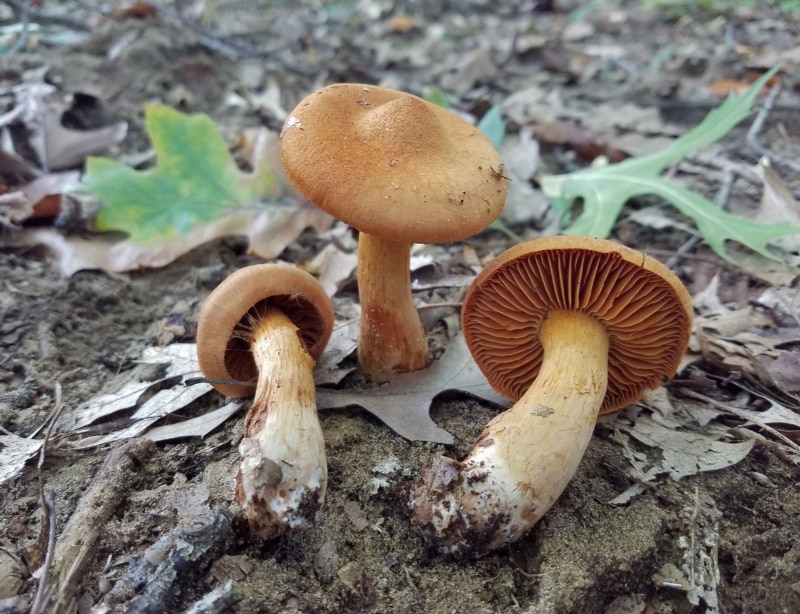
Red Banded Webcap (Cortinarius armillatus)
The red-banded webcap is widespread in northern North America and grows with birch. Its stem has two to four bright orange-red bands that look like bracelets. A 2016 study found that it contains a very small amount of orellanine. No human poisonings have been confirmed from this species.
The cap is reddish-brown to orange-brown, 2 to 4 inches across, and rounded when young. It flattens out with age and often has a small raised center. The gills are pale cinnamon at first and darken to rusty brown. The stem is pale and fibrous, 4 to 6 inches tall, and has two to four bright orange-red bands or “bracelets” encircling the stem . These are remnants of the partial veil. It fruits exclusively with birch and is widely distributed across northern North America.
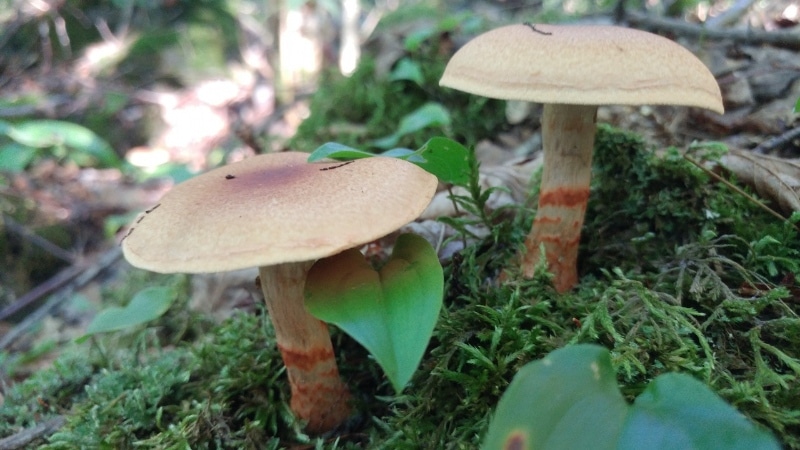
Cortinarius Lookalikes
Other Cortinarius Species
The main poisonous webcaps are small to medium gilled mushrooms with orange, tawny, and brown caps. These traits overlap with many harmless and poisonous webcaps, and there’s no simple way to differentiate them. They must be identified to species.
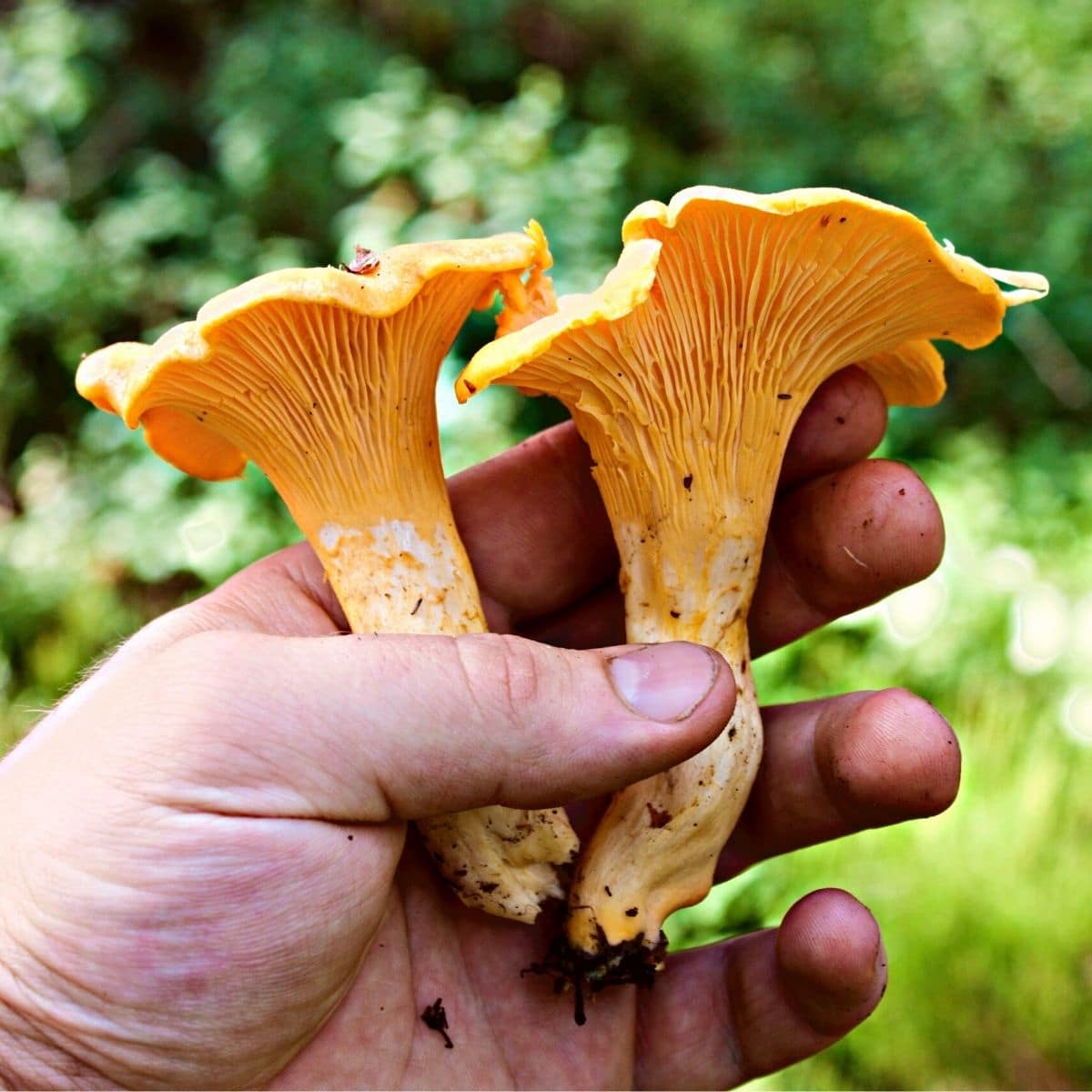
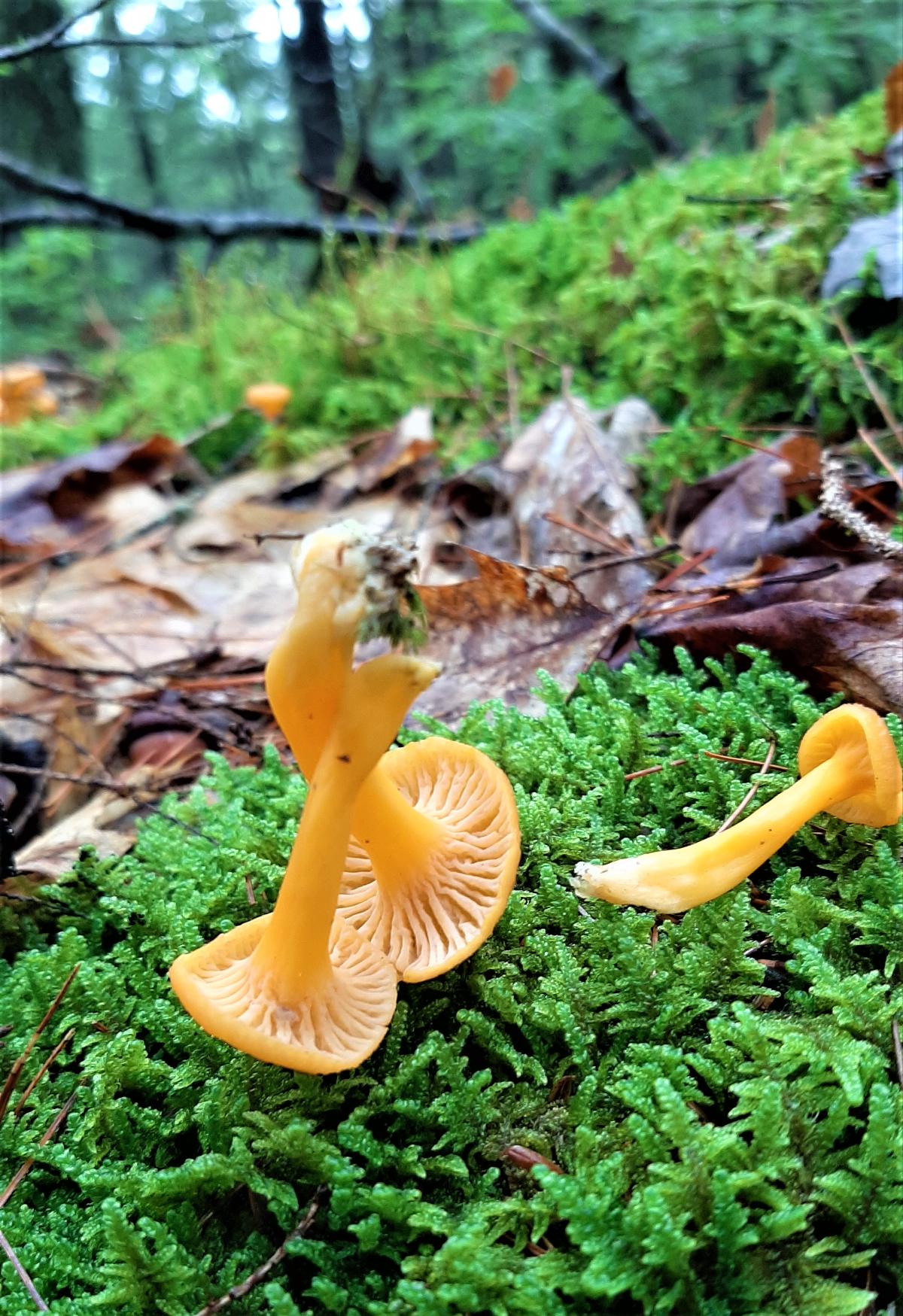
Chanterelles
People have mistaken poisonous webcaps for chanterelles more than once. This usually happens only with inexperienced foragers who hope they’ve found the delicious chanterelle. There are many differences, though. Chanterelles don’t have thin, blade-like gills like the webcaps. Their undersides have blunt ridges or wrinkles that run down the stem, and their spore prints are pale, not rusty brown. The cap and stem of chanterelles also form one solid body instead of separating into a distinct cap, gills, and stem.
Yellowfoots
Yellowfeet are related to and look somewhat like chanterelles, and so have the same confusion issues. The yellowfoot mushrooms do not have true gills like webcaps and they have one solid body, not separated cap, stem, and gills like the Cortinarius species.
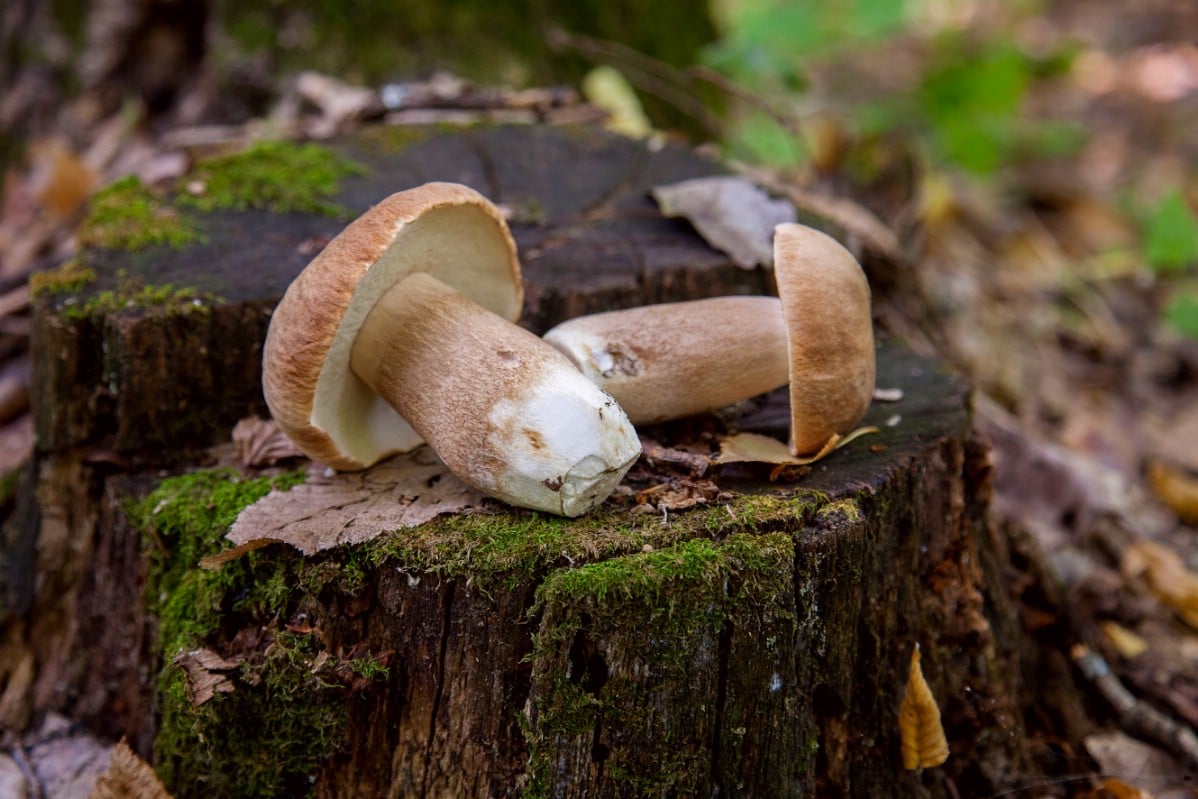
Porcini (King Boletes) and Related Boletes
Boletes have a sponge-like layer of pores under the cap instead of gills. This should be enough to tell them apart; the presence of gills says the mushroom is not a porcini. However, in 2008, the author Nicholas Evans and three relatives made this mistake and foraged deadly webcaps that they thought were porcini.
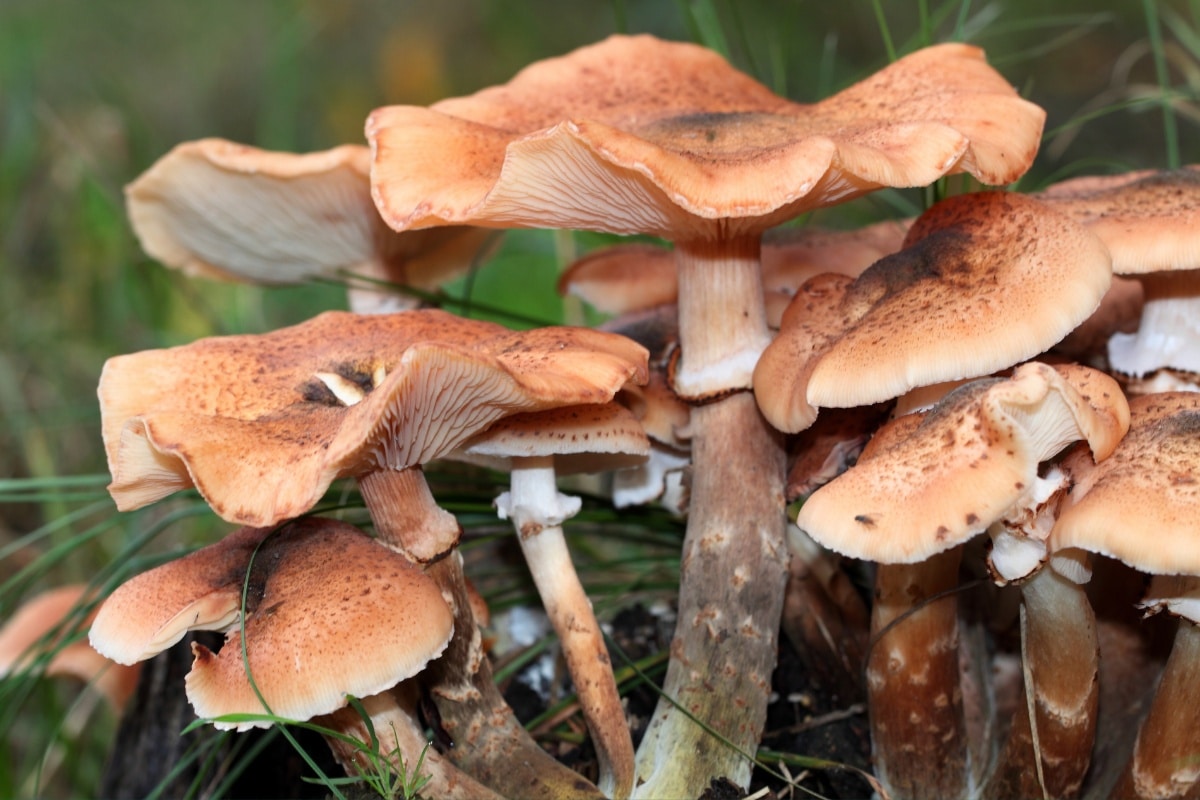
Honey Mushrooms
Honey mushrooms are a common and prolific fall mushroom in many areas. They have brown caps, brownish stems, and grow on the ground like many Cortinarius species. The honey mushroom is an edible species, and people sometimes mistake dangerous orellanine species for them.
Honey mushrooms have white gills, though, not brown, they they can turn buff to tannish with age. They often grow in dense clusters and have dense fibers either covering the cap or in the center of it.
Orellanine Symptoms
Orellanine poisoning is unusual because the symptoms might not start until long after the mushrooms were eaten. The delay can be anywhere from 12 hours to 14 days, although most people become sick after 2 to 4 days. Some people have no early symptoms at all, but feeling well for several days doesn’t mean there isn’t damage happening.
When symptoms begin, they may resemble a stomach virus or the flu, with loss of appetite, nausea, vomiting, diarrhea, headache, dizziness, chills, and muscle or joint pain. As the kidneys are injured, the symptoms become more intense and include strong thirst, frequent urination, pain around the kidneys or lower back, and severe tiredness. If the damage continues, the kidneys make less urine, and urination may eventually stop.
The long delay also makes the cause difficult to identify because the mushroom meal may have happened many days earlier. By the time kidney damage becomes clear, orellanine may no longer be detectable in the blood or urine, although it can remain in kidney tissue for months. Doctors may need details about the meal, any remaining mushroom samples, blood and urine tests, and sometimes a kidney biopsy to confirm the cause.
Treatment and Recovery From Orellanine Poisoning
There is no antidote for orellanine. Anyone poisoned by orellanine must get professional treatment in a hospital. The care focuses on preventing dehydration, keeping salts in the blood at safe levels, and watching closely for declining kidney function. The primary goal at this time is to prevent permanent damage to the kidneys. Getting to the hospital early makes a big difference because when a person is vomiting and urinating frequently, that can cause fluid loss and place more strain on the injured kidneys.
When the kidneys can no longer clean the blood well enough, doctors use dialysis to remove waste and excess fluid. Some patients only need dialysis while their kidneys recover, but others have permanent damage and need lifelong dialysis or a kidney transplant.
A 2001 review of 90 published cases of Cortinarius poisoning reported that acute renal failure progressed to chronic renal failure in about half of patients, and dialysis or kidney transplantation was needed in about a third of all cases. A more recent 2023 review put the fatality rate of orellanine poisoning at approximately 5.5%.
Orellanine Poisonings on Record
- In 1972 in Finland, four people were poisoned by the deadly webcap, Cortinarius rubellus, which was then called Cortinarius speciosissimus. Two of the people poisoned suffered permanent kidney failure. This mushroom had previously been labeled edible in some guides, but this case made it clear it is poisonous.
- Between 1979 and 1993, Sweden recorded 22 people poisoned in 13 separate incidents involving toxic webcaps. Some victims had collected deadly webcaps with yellowfoot mushrooms or waxy cap mushrooms. Nine of the 22 patients suffered kidney damage and needed kidney transplants.
- In 1979, three people were poisoned in Scotland after they mistook deadly webcaps for chanterelles. All three had kidney damage, and two needed kidney transplants.
- In Tasmania in 1985, two people ate an unidentified webcap and both developed orellanine poisoning. One suffered kidney damage severe enough to require a transplant. The mushroom hadn’t been formally described when the poisoning occurred. In 2004, it was named Cortinarius eartoxicus, and testing done later showed it does have orellanine.
- In France in the late 1980s, 26 young men ate soup made entirely from fool’s webcaps (Cortinarius orellanus). This case showed that the long delay before symptoms appeared affected how long it took them to seek help; they didn’t go to the hospital until 10-12 days after eating the soup. Twelve of the men had acute kidney failure, and eight of them needed dialysis. Eight others recovered quickly, four had kidney problems for several months, and the other 14 had normal kidney function during the following year. Testing was done, but it doesn’t explain why the same meal affected them so differently.
- In Austria in 1996, one person ate a deadly webcap that they thought was a psychoactive mushroom. The mushroom was Cortinarius rubellus (previously Cortinarius speciosissimus). The orellanine poisoning progressed to end-stage kidney failure, and the patient needed dialysis.
- In August 1997, a 66-year-old Austrian woman and her daughter collected fool’s webcaps (Cortinarius orellanus) while vacationing in Ireland and used them in soup. About two weeks later, both developed abdominal pain, vomiting, and diarrhea. The mother, who had eaten more of the mushrooms, went into acute kidney failure, while her daughter suffered milder kidney damage. Both survived after receiving dialysis and medication for several weeks.
- In 1997, four people in Austria mistook fool’s webcaps (Cortinarius orellanus) for chanterelles. All four developed kidney damage, although the severity and outcomes differed. Doctors figured out it was orellanine poisoning by checking for the toxin in blood plasma and kidney tissue. One person recovered without going to the hospital, and the other three all had kidney damage and needed dialysis.
- In 2008, a woman in Michigan developed chronic kidney failure after eating webcaps. The mushrooms looked similar to the European fool’s webcap, but DNA testing confirmed that they belonged to a separate species. Chemical analysis found a high concentration of orellanine in the mushrooms. The species was formally described as Cortinarius orellanosus in 2010. This was the first confirmed North American case of kidney failure caused by a Cortinarius mushroom.
- In September 2008, the author, Nicholas Evans, gathered mushrooms he thought were porcini (aka king boletes) and served them to three adults. All four were admitted to the hospital after they realized that they had eaten the same mushrooms and developed similar problems. Evans needed dialysis three times a week for nearly three years because his kidneys didn’t recover. One person later received a kidney from her son, another received one from a friend, and the third recovered without a transplant. Evans eventually received a kidney from his daughter. The mushroom was identified as Cortinarius rubellus.
- In 2020, a healthy 61 year old man in Quebec went to the hospital with abdominal pain, weight loss, and severe fatigue, and his blood work pointed to acute renal failure. It had been 18 days since he’d eaten the wild mushrooms, so they were not suspected as the cause. Doctors treated him for acute kidney failure and his kidney function improved but hadn’t returned to normal six weeks later. The man went back to the woods and collected the mushrooms he’d foraged previously and after much discussion in the mycological community, it was determined they were Cortinarius rubellus.
Orellanine In Medicine
Cancer researchers have tested orellanine against clear cell and papillary renal cancer, two forms of kidney cancer. The goal was to use the toxin’s natural tendency to collect in the kidneys to deliver its cell-killing effects to the tumor. In the lab, orellanine killed human clear cell kidney cancer cells. It also killed healthy cells, which makes safe treatment difficult.
At the doses tested, the toxin caused severe kidney injury, but it didn’t cause damage in other organs. These were preclinical studies, so they couldn’t establish whether the treatment would be safe or effective in people. The planned early human trials were limited to people with advanced clear cell kidney cancer who were already receiving dialysis, and people with functioning kidneys were excluded. The early tests didn’t establish a safe orellanine treatment for patients whose kidneys were still working.
References
- Lyons et al. 2023 — Orellanine: From Fungal Origin to a Potential Future Cancer Treatment, Journal of Natural Products. https://pmc.ncbi.nlm.nih.gov/articles/PMC10294258/
- Danel et al. 2001 — Main features of Cortinarius spp. poisoning: a literature review, Toxicon. https://pubmed.ncbi.nlm.nih.gov/11223095/
- Judge et al. 2010 — Ingestion of a newly described North American mushroom species from Michigan resulting in chronic renal failure: Cortinarius orellanosus, Clinical Toxicology. https://pubmed.ncbi.nlm.nih.gov/20615153/
- Shao et al. 2016 — A novel orellanine containing mushroom Cortinarius armillatus, Toxicon. https://harvardforest.fas.harvard.edu/publications/pdfs/Shao_Toxicon_2016.pdf
- Holmdahl & Blohmé 1995 — Renal transplantation after Cortinarius speciosissimus poisoning, Nephrology Dialysis Transplantation.
https://pubmed.ncbi.nlm.nih.gov/8592605/ - Short et al. 1980 — Poisoning by Cortinarius speciosissimus, The Lancet.
https://pubmed.ncbi.nlm.nih.gov/6107589/ - Hedman et al. 2017 — Long-term clinical outcome for patients poisoned by the fungal nephrotoxin orellanine, BMC Nephrology. https://pmc.ncbi.nlm.nih.gov/articles/PMC5379567/
- Buvall et al. 2017 — Orellanine specifically targets renal clear cell carcinoma, Oncotarget. https://pmc.ncbi.nlm.nih.gov/articles/PMC5710908/
- Mushroom Appreciation — North American Cortinarius Mushrooms: Identification, Habitat, and Lookalikes. https://www.mushroom-appreciation.com/north-american-cortinarius-mushrooms.html
- First-nature.com — Cortinarius orellanus (Fool’s Webcap).
https://www.first-nature.com/fungi/cortinarius-orellanus.php - NAMA / Beug 2021 — Thirty plus Years of Mushroom Poisoning: Summary of the Poisoning Reports in the NAMA Mushroom Poisoning Case Registry 2018–2020.
https://namyco.org/wp-content/uploads/2023/08/2018-2020_Summary_of_Mushroom_Poisoning_Reports_Corrected_final-1.pdf



Leave a Reply