
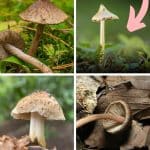
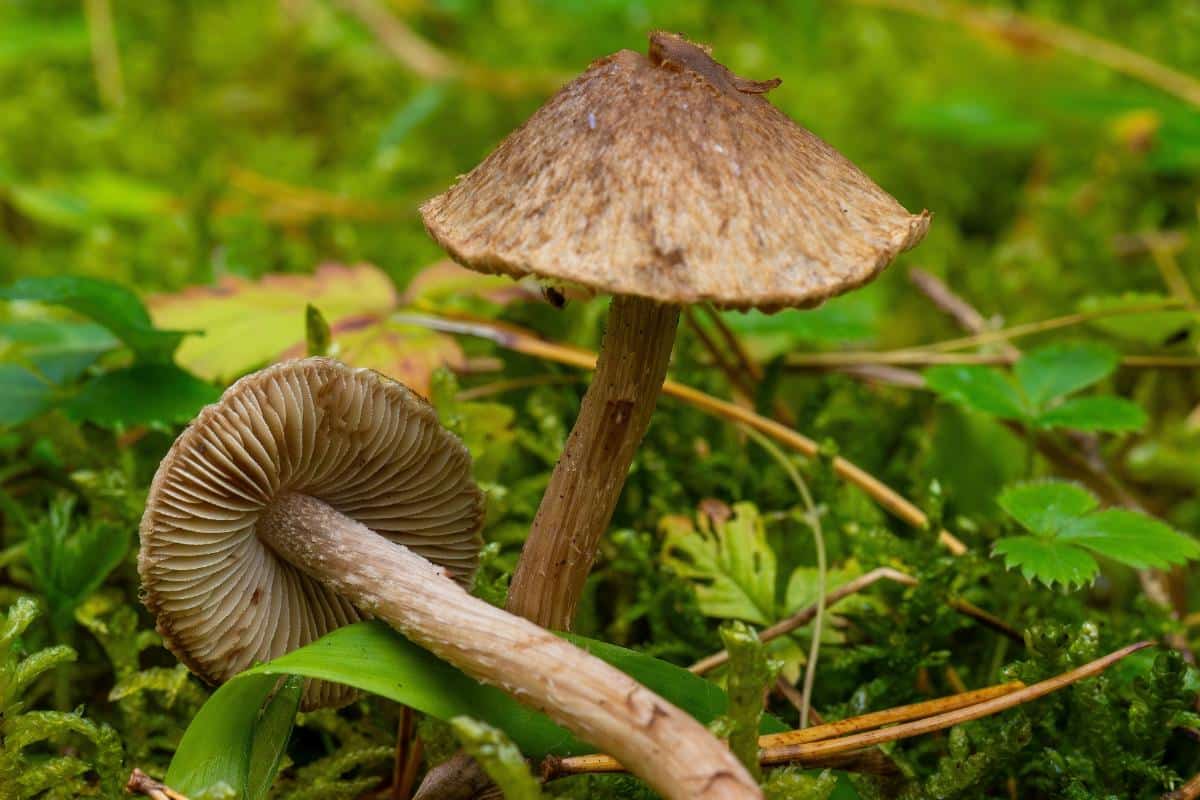
A fibercap is a small brown mushroom with a cone-shaped cap covered in fine hairs, like a little straw hat. These mushrooms grow on the ground and are extremely common and quite difficult to identify. The fibercap is one of the quintessential LBMs of the mushroom world (little brown mushrooms).
Most fibercaps belong to the genus Inocybe, which has over a thousand species worldwide. Many of them contain muscarine, which is a poison, and there’s no easy way to tell the dangerous ones from the harmless ones by eye. As far as edibility goes, its best to leave the entire fibercap family alone because identifying them to a species level is difficult.
- Scientific Name: Inocybe
- Common Names: fibercap, fibrecap, fiber head
- Habitat: on the ground in association with trees
- Edibility: not edible, poisonous
Jump to:
All About Fibercaps
An LBM is a type of little brown mushroom, but it isn’t a scientific rank. The label is a catch-all for the hundreds of small to medium mushrooms that are brown or tan and have the plain stalk and cap most people picture when they think of a mushroom. Even experts sometimes struggle to sort them into species. Many LBMs are harmless, some are poisonous, a few are hallucinogenic, and a small number are deadly.
The fibercaps fit into this designation perfectly, with a few purple colored outliers. They have brown spore prints, cone-shaped caps, and they are small, drab, and hard to tell apart. There are also hundreds of species, and many are poisonous. The poison in most fibercaps is muscarine, which is more commonly known from the fly agaric, Amanita muscaria.
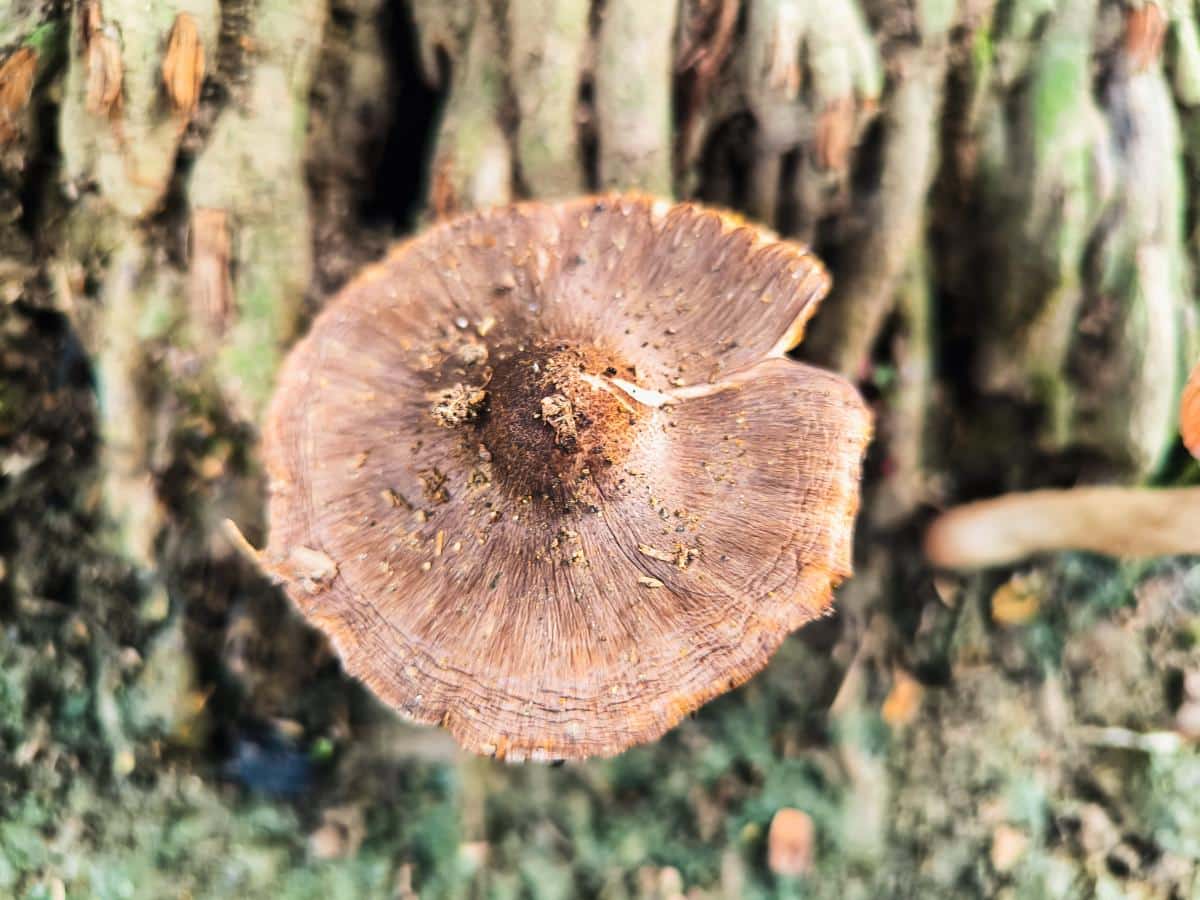
The genus name Inocybe means “fibrous hat.” It comes from the Greek words is and kybe. The first means muscle, nerve, or fiber, and the second means head.
The work around Inocybe species designations and families is still ongoing, and likely will be for a long time. A study done in 2020 recombined or newly named 180 species across three other genera, and kept about 1,050 in Inocybe.
That split moved a lot of familiar, previously Inocybe species out of the genus. The old Inocybe rimosa is now Pseudosperma rimosum, and the old Inocybe sororia is now Pseudosperma sororium. Another one, Inocybe calamistrata, is now Inosperma calamistratum. Many field guides printed before 2020 still use the old names, and so do plenty of websites and databases. If you’re doing any research on these mushrooms, be aware of the many recent name changes!
After the split and moving around of species, it was determined that there are now seven genera in the Inocybaceae family. These are all still considered fiber caps, even though they are not specifically Inocybe species. All of them are small to medium mushrooms with fibrous or scaly caps, dull brown to yellowish-brown gills, brown fruit bodies, and brown spore prints, and they grow out of soil. Many have strong smells.
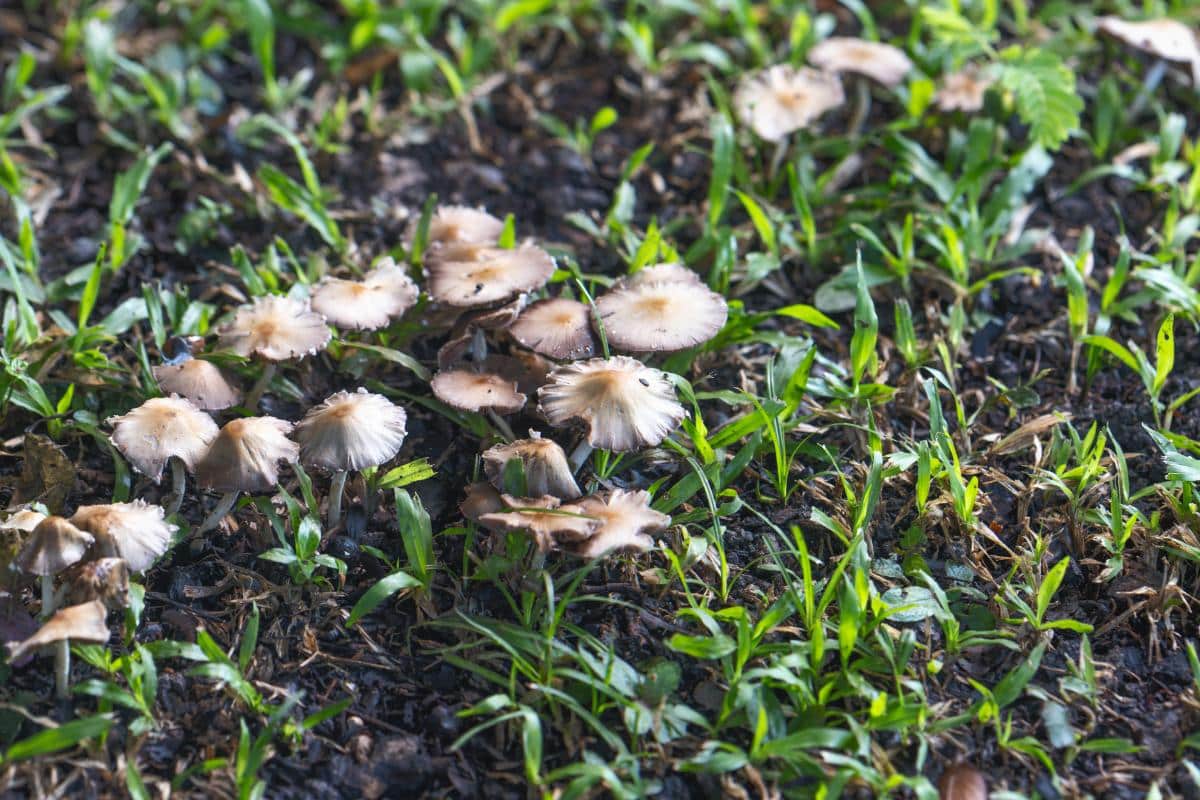
Four of the seven groups grow in North America. It takes a microscope to see the differences between many of them.
- Inocybe is the largest group with around 1050 known species, and its spores can be smooth, angular, knobby, or spiny. Inocybe species have pleurocystidia, which are large sterile cells on the flat sides of the gills, and in many species, they’re thick-walled and crusted with crystals. The other six genera don’t have them at all.
- Pseudosperma has about 70 species. Its spores are smooth, its caps crack in lines running out from the center, and its smells range from nothing at all to musty to green corn.
- Inosperma has more than 70 species. Its spores are smooth and narrower than those of Pseudosperma, and its smells are fruity, honeylike, fishy, or like bruised geranium leaves. The flesh of some species turns red.
- Mallocybe has more than 55 species. Its caps are woolly and scaly, and its gills are broadly attached or run a little way down the stem. Its stem is shorter than the cap is wide.
The last three don’t grow in North America. Auritella has 7 to 13 species in temperate Australia and tropical Africa, and its spore-making cells collapse and turn ochre once the spores drop. Nothocybe has a single species from tropical India, and Tubariomyces was named in 2010 and contains two species from Mediterranean Europe and perhaps northern Africa.
There are probably hundreds of undocumented cryptic Inocybe species, meaning species that look identical to a named one but are genetically distinct. This is one group where microscopic features are often the only way to figure out the species name.
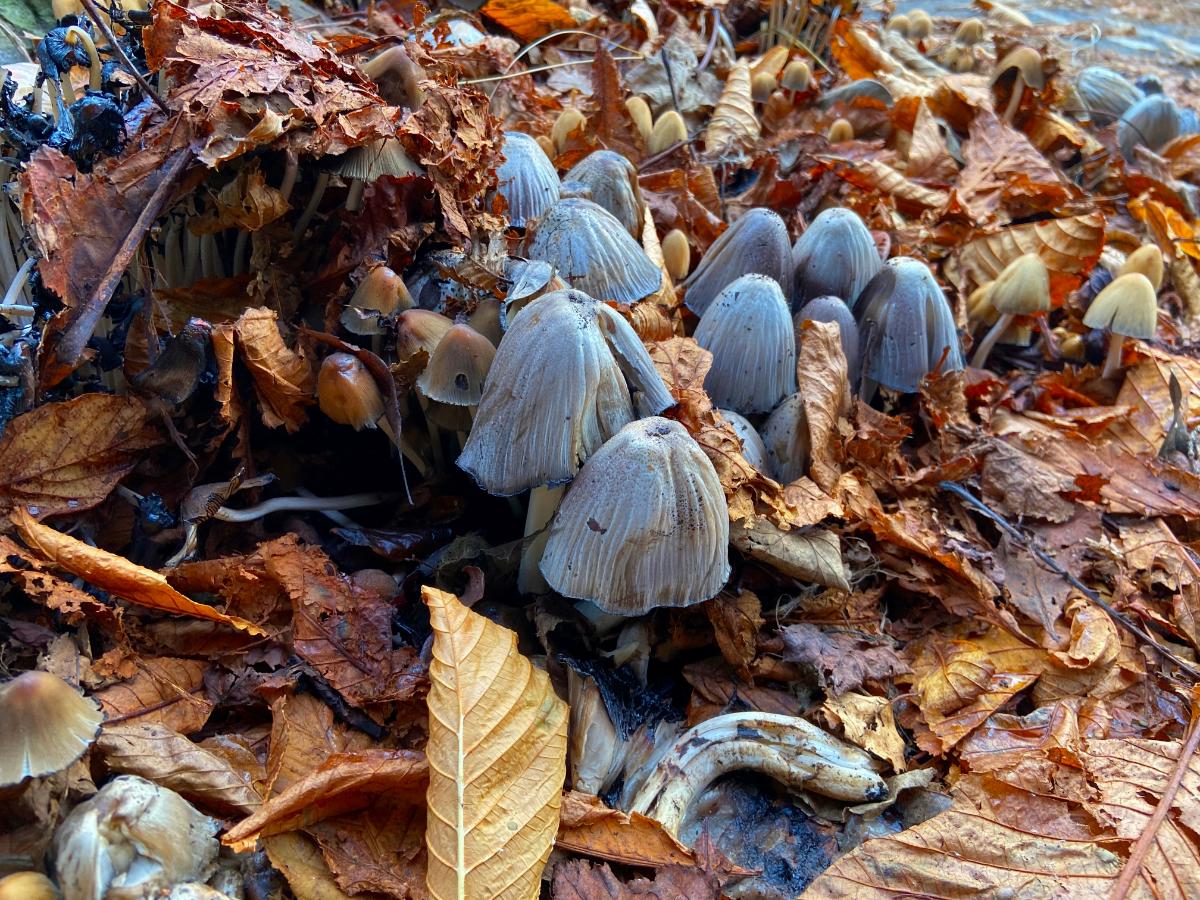
Fibercap Identification Guide
Season
These mushrooms fruit in summer and fall across most of North America. In warm places like California, they also fruit through the winter. Some western species don’t fruit until late fall and then keep going into midwinter.
Habitat
Almost all fibercaps grow on the ground in association with specific trees, though a rare few do grow from rotting wood. They’re ectomycorrhizal, which means the fungus lives on tree roots and trades nutrients with the tree. The Inocybaceae family partners with at least 23 different plant families, and is part of why there are so many species.
In North America, several of the common species are widely distributed. Others are limited to one part of the continent. For example, Inocybe calospora grows east of the Great Plains, and the corn silk fiberhead grows in the west. The family is widespread and also grows in Africa, Australia, New Zealand, Southeast Asia, South America, and the tropics.
Inocybe mushrooms like growing at the edges of paths, roads, and parks. They like disturbed ground.
Identification
Cap
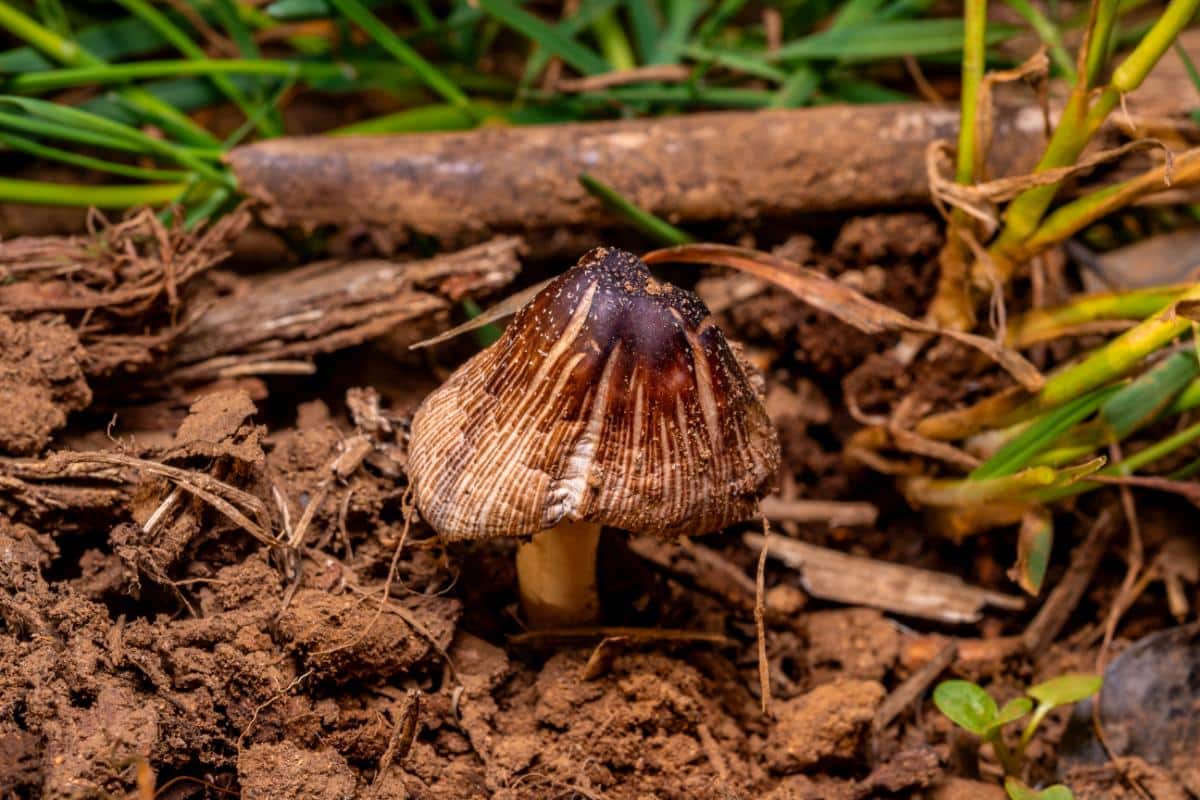
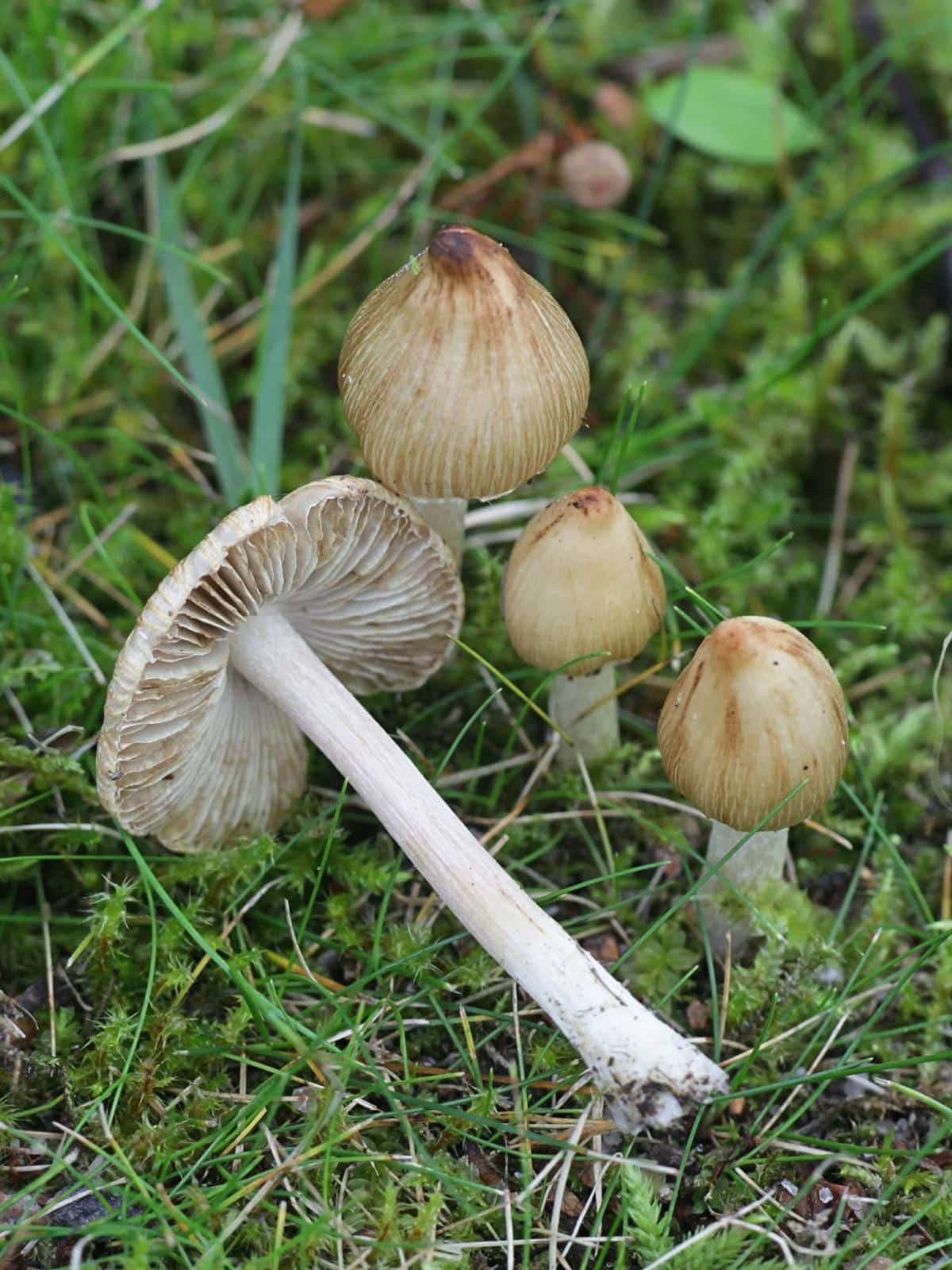
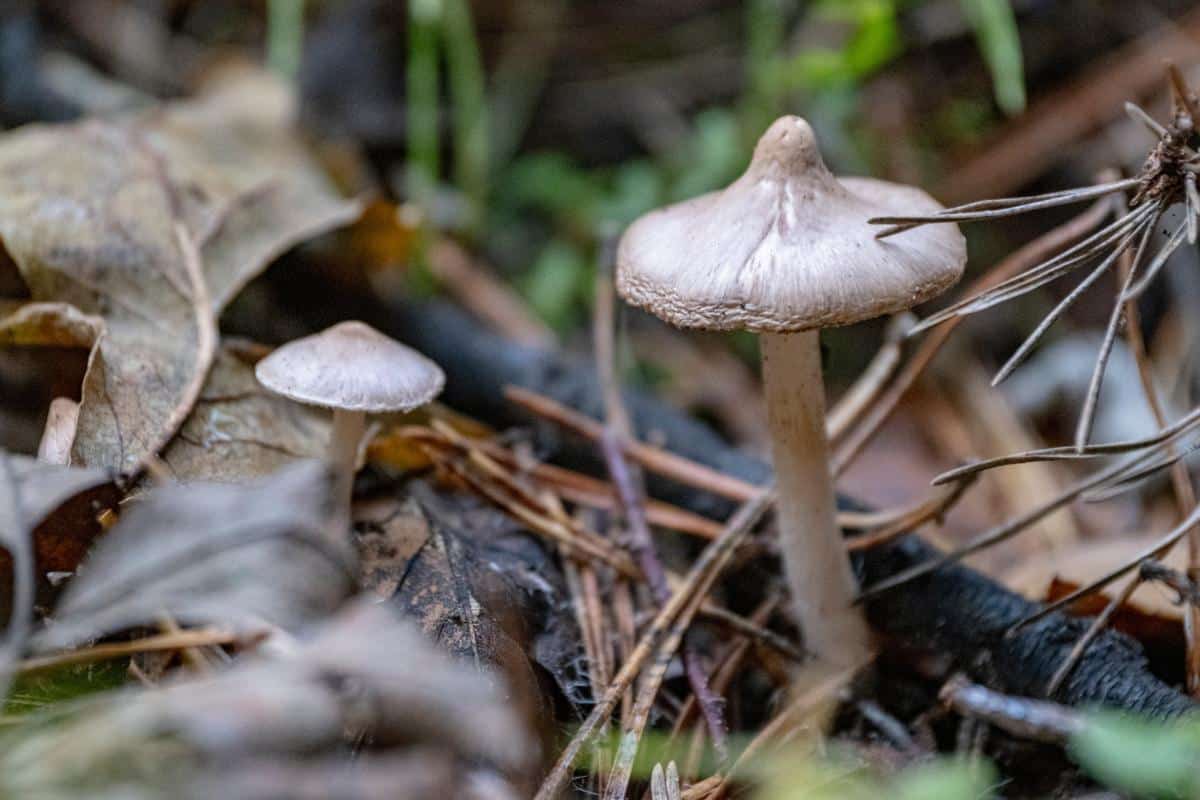
This is a generally small mushroom overall, though it varies by species. The caps can range from 0.4 to 3 inches across. It starts out cone-shaped or bell-shaped and then flattens out with age, though it keeps a raised bump in the middle called an umbo. The surface is dry in most species, and it ranges from silky to hairy to scaly.
Most fibercaps are some shade of brown, tan, or straw yellow. A few are white, and a few are lilac to deep purple. The edge of the cap splits into radial cracks as the mushroom matures.
Gills
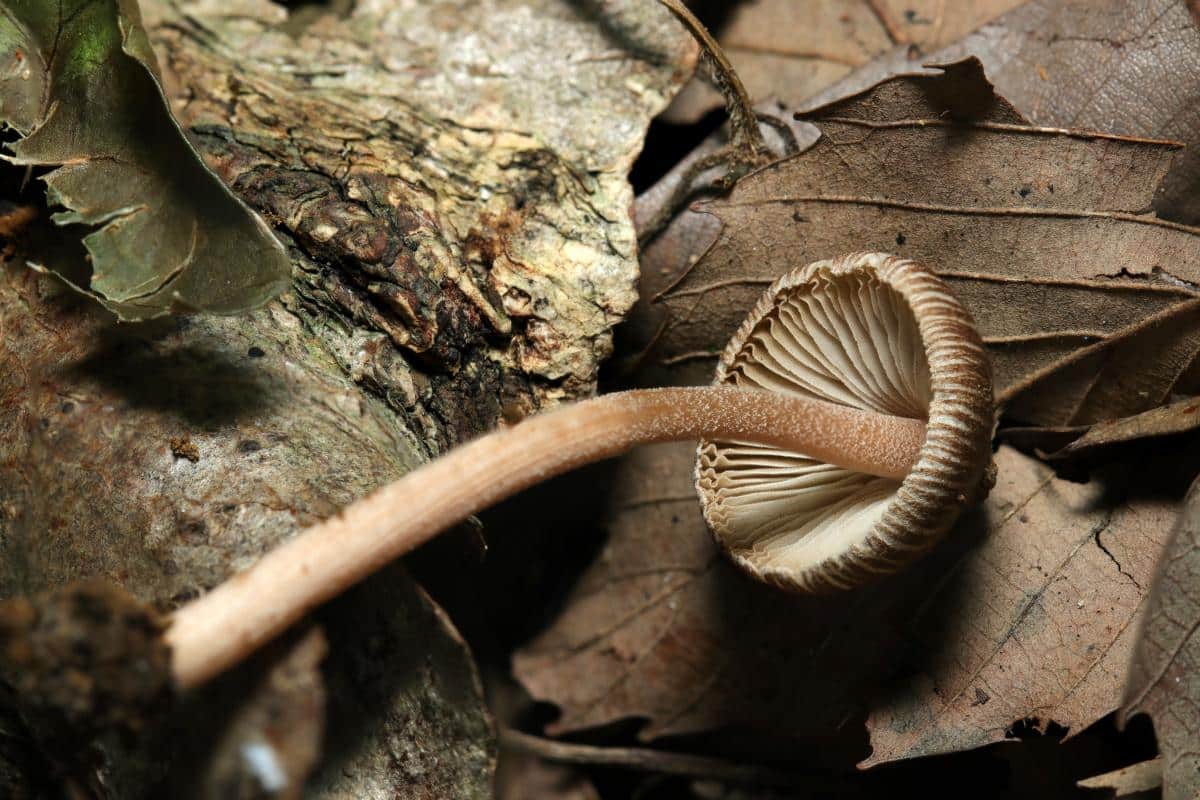
The gills are crowded and narrowly attached to the stem, sometimes almost free of it. They start white or pale buff and darken to gray brown, olive brown, or snuff brown as the spores mature. In some species, the gill edges are paler than the flat sides; in others, they aren’t.
The young gills of many species are covered by a cobwebby white veil called a cortina. It tears and vanishes fast, though, and so it isn’t always noticeable. In some species it leaves a faint ring zone or a roughened band on the upper stem.
Stem
The stem is thin, fibrous, and usually about the same width top to bottom. It grows roughly 0.4 to 4 inches tall. The color is whitish, pale yellow, or brown. In many species, the top of the stem is granular or finely dotted, like it was dusted with flour.
Some species have a small bulb at the base of the stem, and a few have a bulb with a distinct rim. The base of the stem matters for identification, so it’s important to dig up the entire mushroom with the basal bulb attached, if it has one.
Taste and Smell
Smell is one of the main clues mycologists use to sort fibercaps. The primary odor ranges from nothing at all to mealy to strongly musty. Some also smell like fresh green corn or corn silk, and some are sweet and fruity.
The taste has been recorded as mild in some species and sharp in others. These are often poisonous mushrooms, though, and tasting any part of one isn’t advisable.
Flesh Color and Staining
The flesh is thin, white to pale yellowish, and it doesn’t change color when sliced in most species. A handful stain pinkish or red when they’re cut or handled, though. One group has a stem base that turns blue-green.
Spore Print
The spore print is dull brown to dull yellow-brown. Some guides call it rusty brown, though it’s duller than the rust of a true webcap.
Fibercap Lookalike Species
Webcaps (Cortinarius)
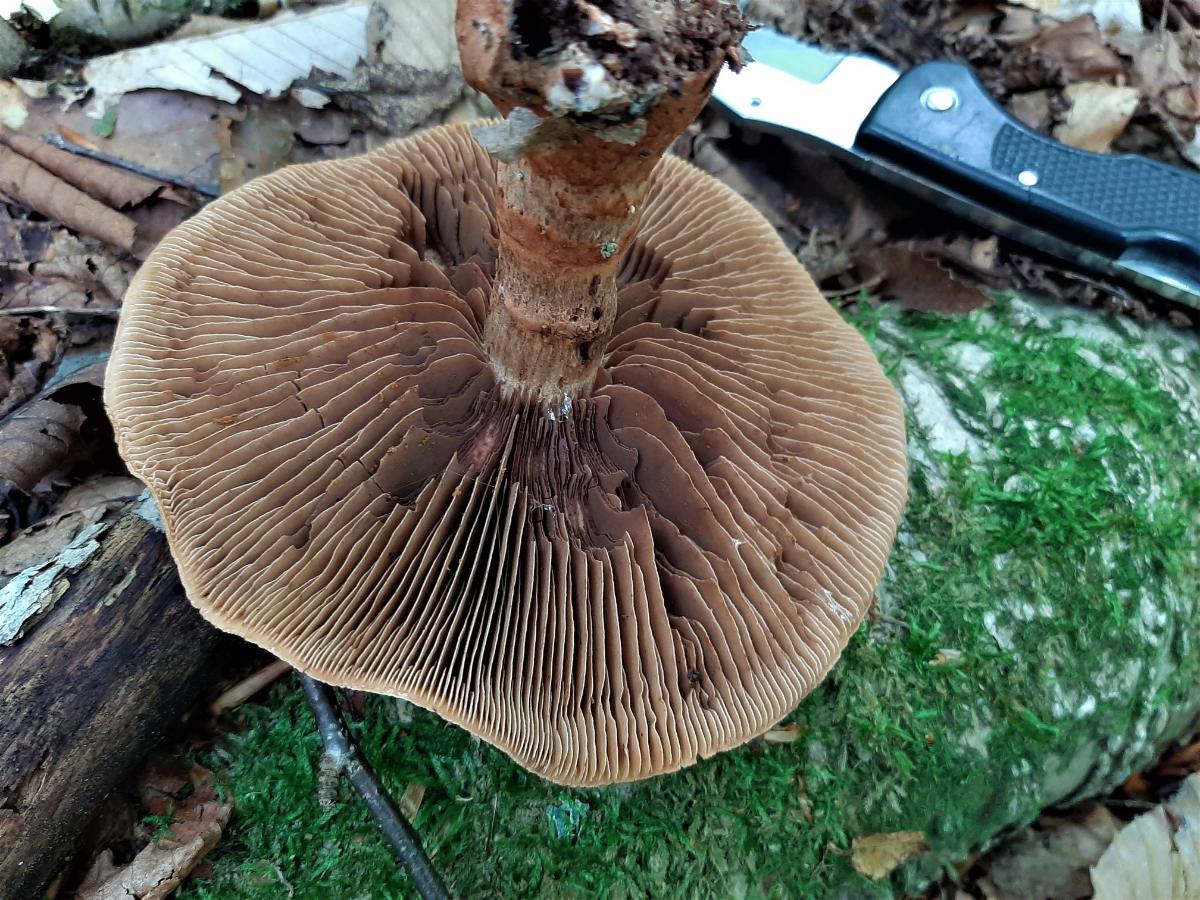
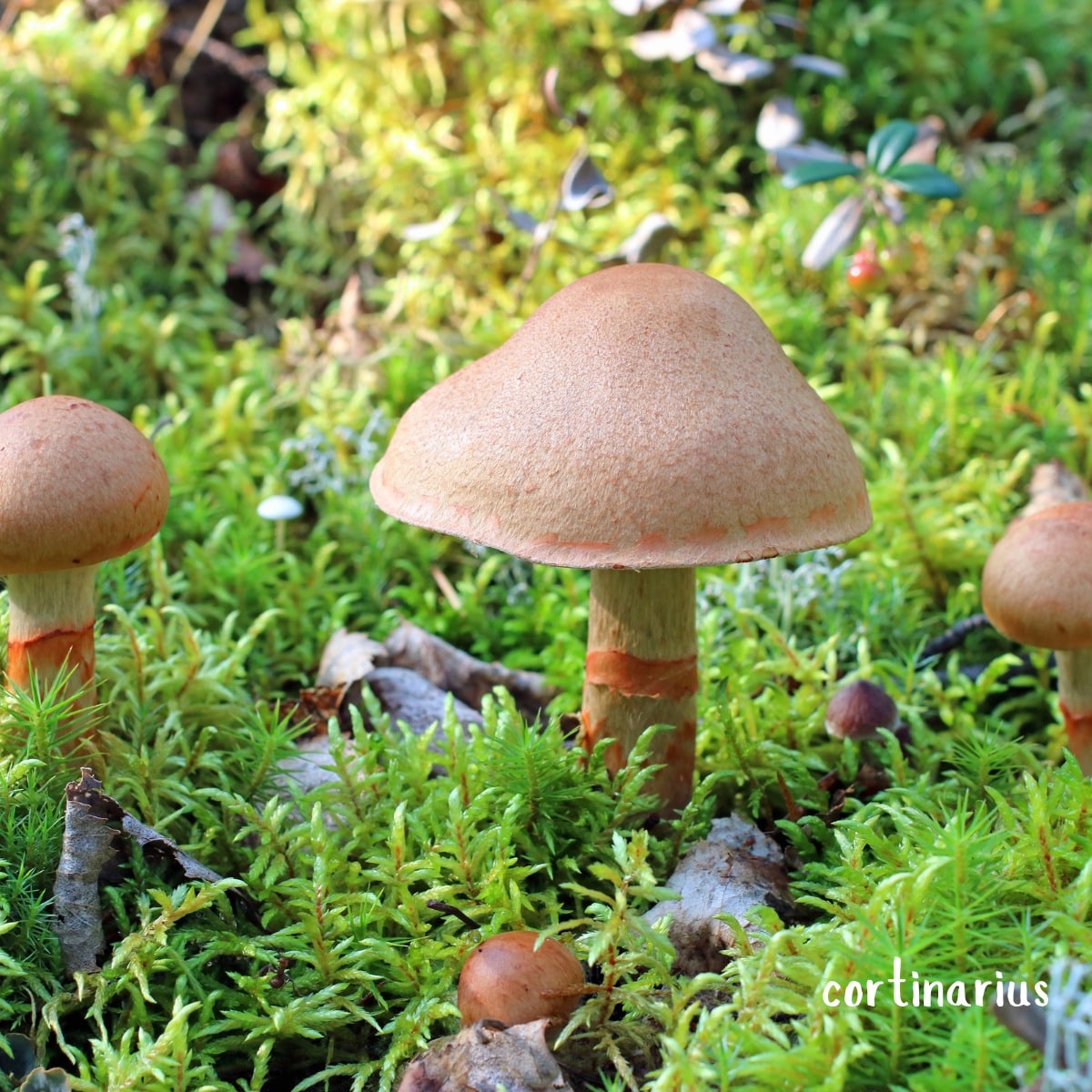
The webcaps are close relatives, and they look a lot like fibercaps. They also grow in association with trees, and many of them are brown and dull-looking. A young webcap has a cobwebby cortina over the gills, as well, the same as many fibercaps do.
The webcap, though, has a well-developed veil that collapses against the stem and creates a noticeable ring zone. The rusty spores also often stain that zone as they drop. On a fibercap, the partial veil is thin and fleeting, and it leaves at most a faint band or a roughened patch.
Many webcaps have a slimy cap, a slimy stem, or both, while fibercaps usually have a dry cap. They also tend to have different smell profiles. Fibercap odors range from musty to green corn, while webcap odors are more varied, including radish, sweet and strongly fragrant, iodine, and flat-out foul.
The spore print is the clearest way to differentiate these groups. A webcap has a rusty brown spore print, and its mature gills turn rusty brown to match. The spores of a fibercap are a duller, flatter brown.
Poison Pies (Hebeloma)
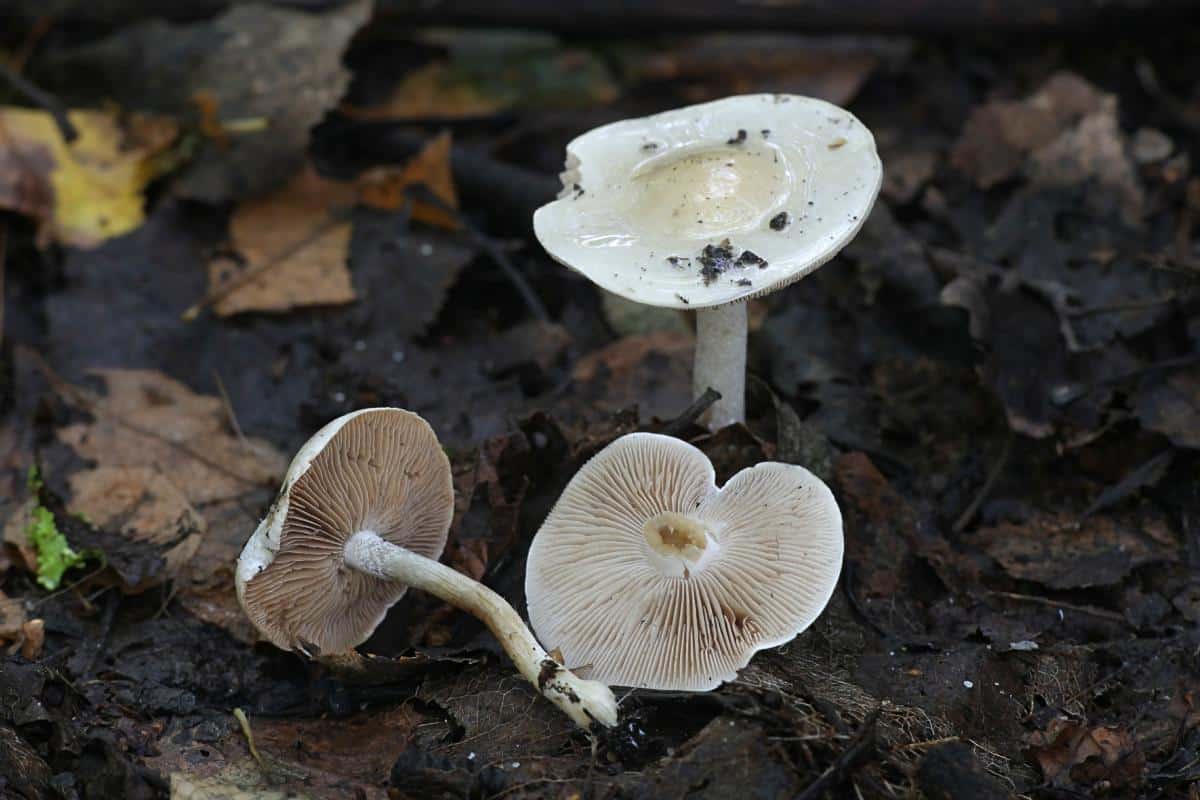
Poison pies are brown-spored mushrooms that grow in association with trees, as some fibercaps do. The top of the stem often looks powdery in both groups, too. The crushed flesh of many Hebeloma species smells strongly of radish, which is one way to differentiate them.
The cap surface is the clearest way to tell them apart. A poison pie has a smooth cap that becomes sticky when it’s damp. A fibercap has a dry cap covered in fine fibers that run from the center out to the edge.
Another difference is with the gills. The gills of a young poison pie bead up with watery droplets along the edges, and the droplets dry into dark spots on the gills. The gills of a fibercap don’t do that.
Meadow Mushrooms (Agaricus)
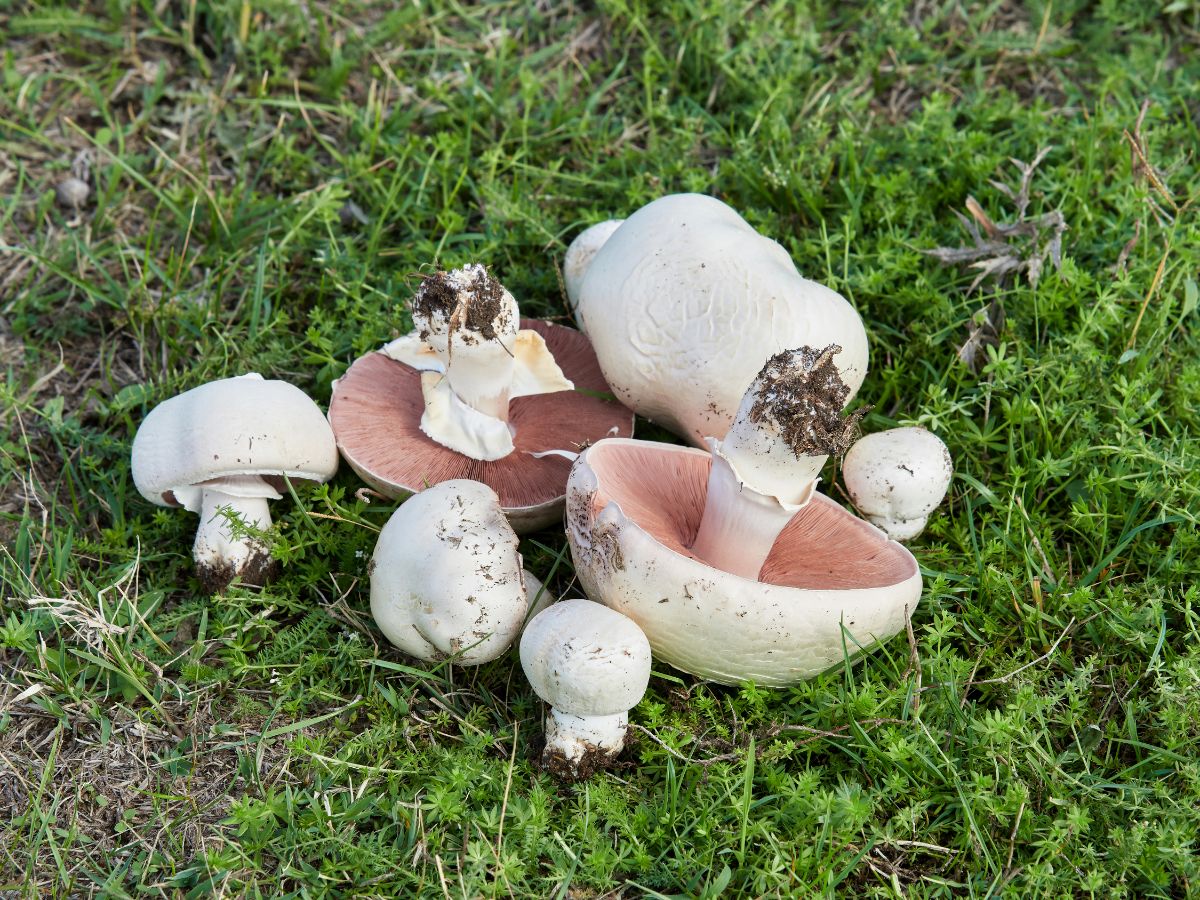
People often mistake white fibercaps for edible meadow mushrooms or other Agaricus species, and that mistake is very dangerous. Meadow mushrooms are stockier than fiber caps, and their gills are deep pink at first and then turn chocolate brown with age. They also have a white ring on the upper stem. A fibercap has no ring and gills that turn gray-brown instead of chocolate brown.
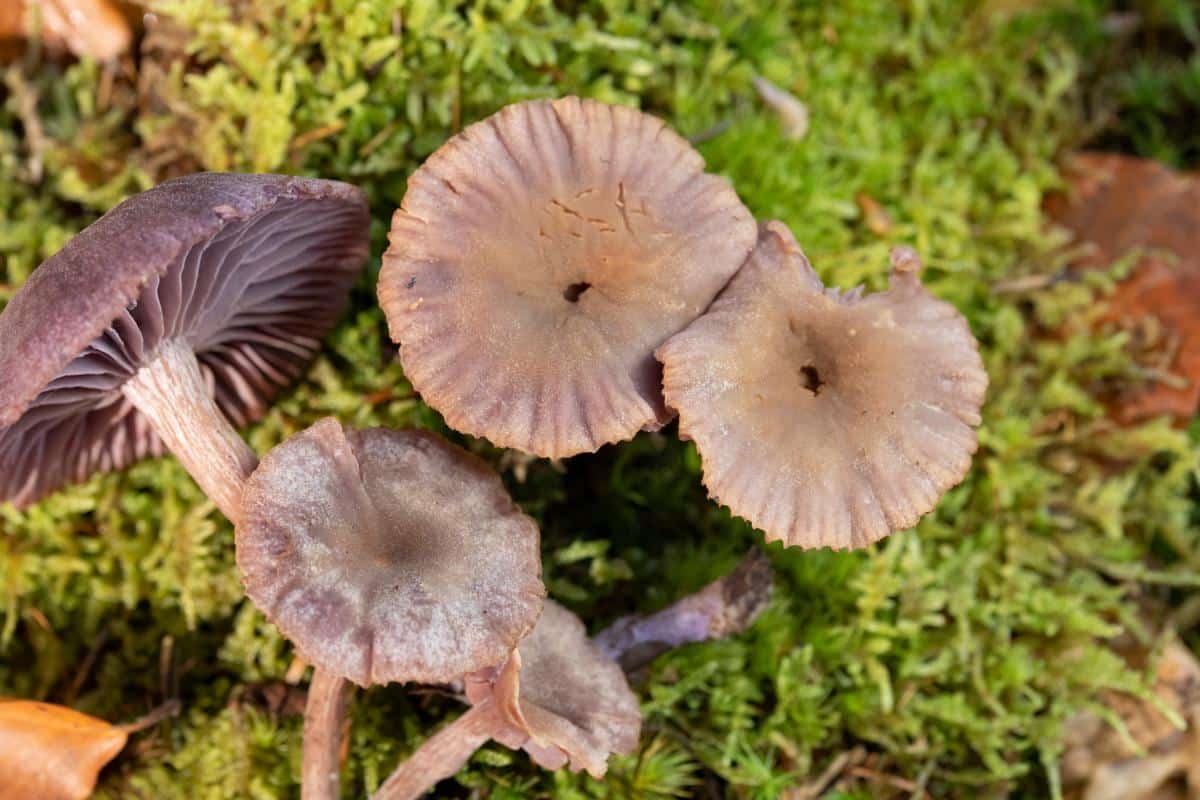
Amethyst Deceivers (Laccaria sp)
The purple fibercaps look a lot like amethyst deceivers, which are purple all over when they’re young. They fade with age, though, and lose most of their purple coloring. Laccaria species have white spores, while fibercaps have brown ones. The gills of an amethyst deceiver are also thick and widely spaced, and the stem is strongly grooved and shaggy.
Pholiota terrestris
Several Pholiota species look like the scaly brown fibercaps, but most of them grow on wood. This species, though, grows in dense clusters on the ground. Its stems come up packed tightly together from a shared base, while fibercaps come up one at a time, scattered, or in loose patches. Pholiota terrestris also has a hairy partial veil that turns into a ring around the upper stem, and the stem is long compared to the cap.
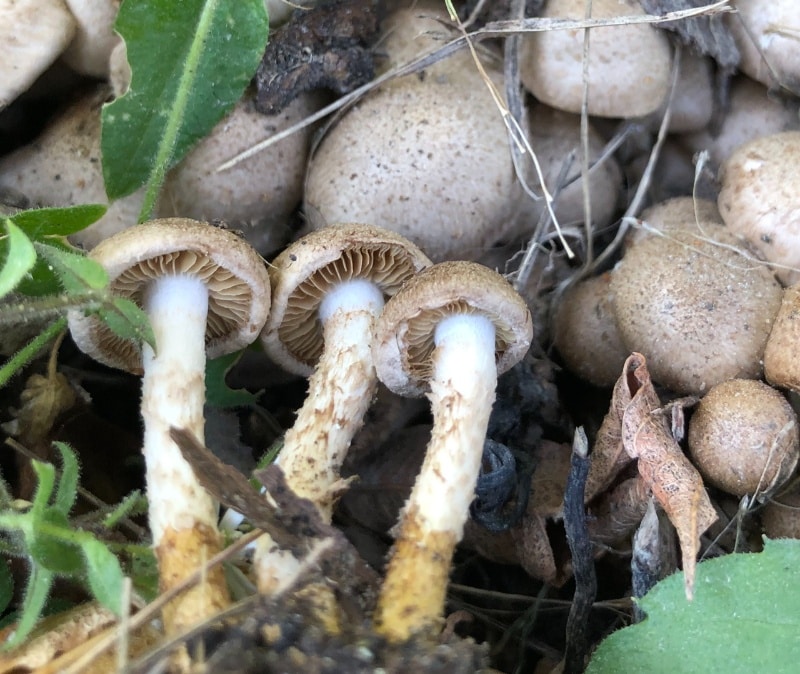
Pholiota terrestris by purplecloud on Mushroom Observer
Culinary Uses of Fibercaps
Fibercaps should not be eaten. Many of them are poisonous, and the flesh is thin enough that there isn’t much reason to forage them even if they weren’t. There’s no simple field test that separates a toxic fibercap from a harmless one.
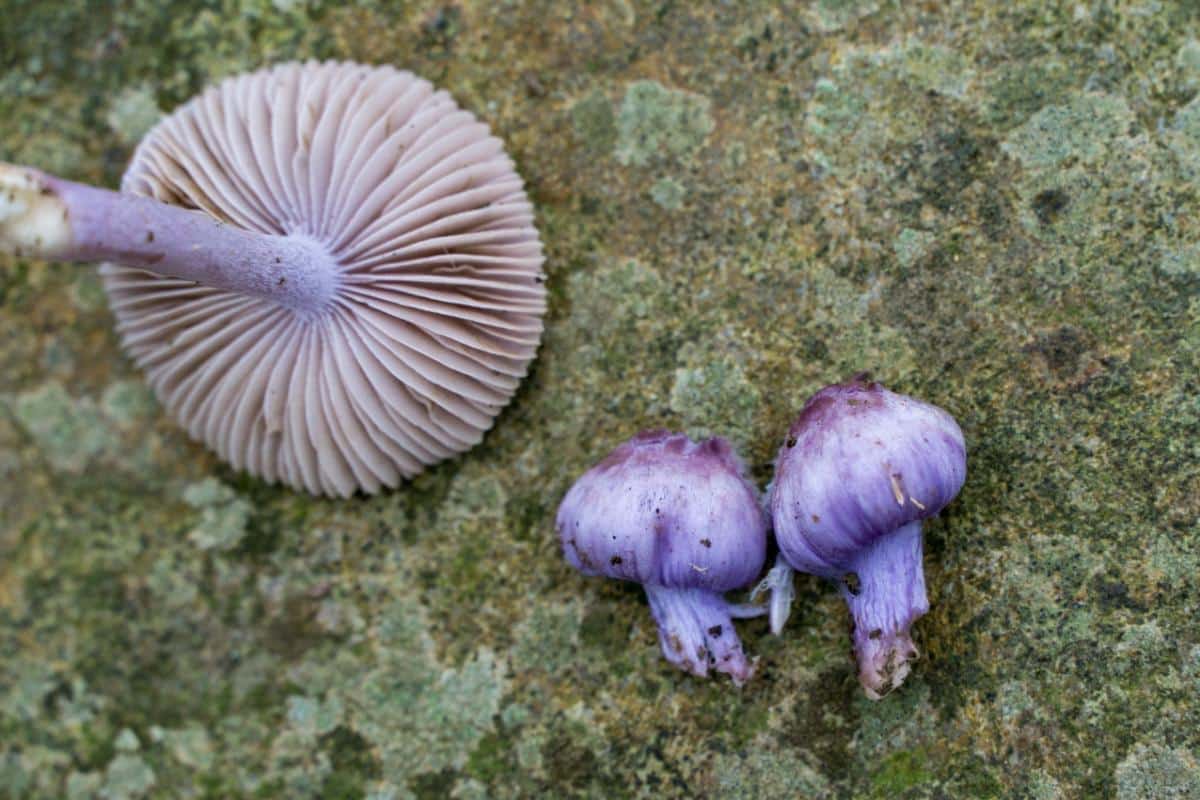
Poisonous Traits of Fibercaps
The main toxin in fibercaps is muscarine, the same toxin that is in the well-known fly agaric. Some fibercap species have up to 1.6 percent muscarine by weight, while a fly agaric is around 0.0003 percent. Poisoning from a fly agaric is rare because the dose in it is so small, but from a fibercap, it’s a real danger.
The symptoms start quickly, and most people feel them between 20 and 30 minutes after the meal. The full recorded range for symptom onset, though, is anywhere from 15 minutes to 2 hours.
The first signs of poisoning are heavy sweating, drooling, watering eyes, and shrunken pupils. Next come nausea, blurred vision, and a slow heartbeat. After that, the person experiences stomach cramps, diarrhea, and a painful need to urinate.
If the poisoning is severe, the symptoms get much worse. Breathing becomes difficult, and blood pressure drops until the body goes into shock. In about 5 percent of reported poisonings, the person died 8 to 9 hours after the meal.
Thankfully, there is treatment for muscarine poisoning. The drug atropine works as an antidote, and a person can recover if they get treatment straight away.
A small number of species in this genus contain a different set of chemicals called indole alkaloids, and those cause hallucinations instead.
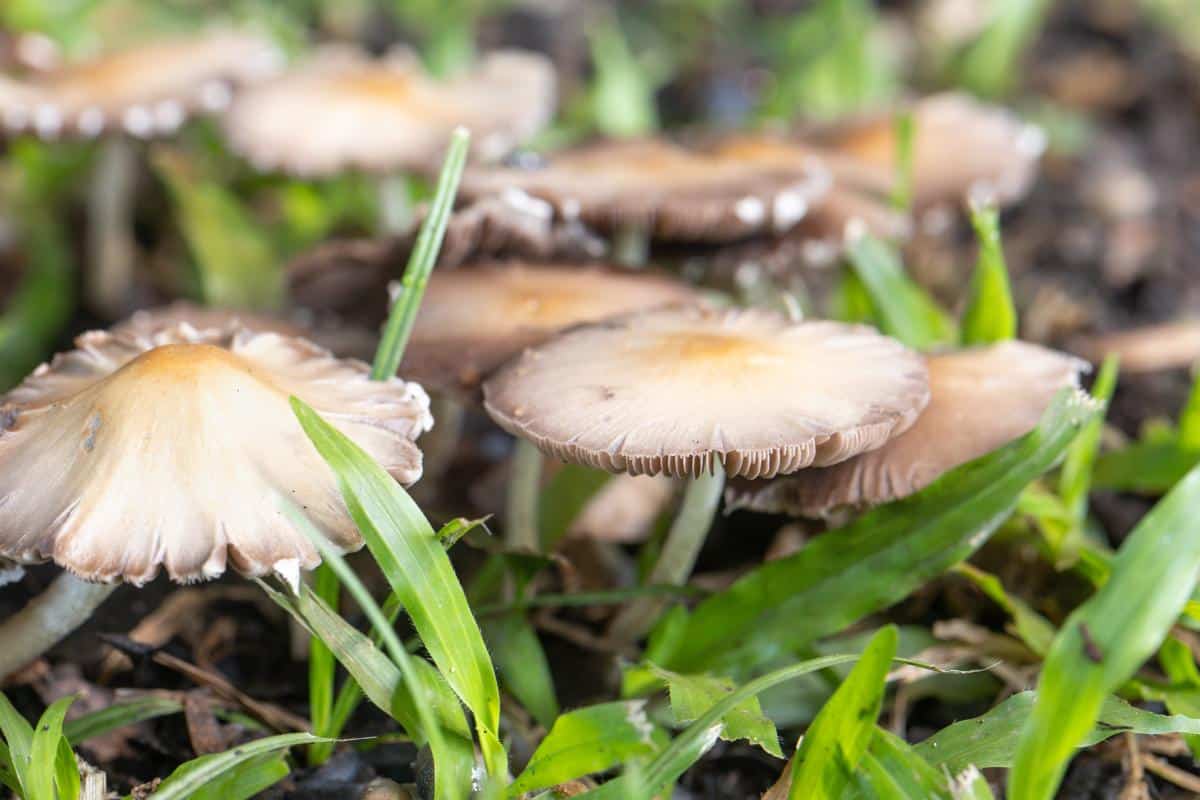
Common Fibercaps in North America
Split Fibercap (Pseudosperma rimosum, formerly Inocybe rimosa)
This species looks like dozens of other fibercaps, and even under a microscope, it’s hard to distinguish it from them. It’s widely distributed across North America and grows with both hardwoods and conifers.
The cap is about 0.8 to 3 inches across, straw yellow to yellowish brown, and cone-shaped to bell-shaped with a sharp central bump. The stem is 1.2 to 3.5 inches long and whitish or pale yellow, with no swollen base. Its cap splits open as it matures, which makes it look torn.
The gills are whitish at first, then gray, then brown. The odor ranges from nothing at all to strongly musty, depending on who is describing it.
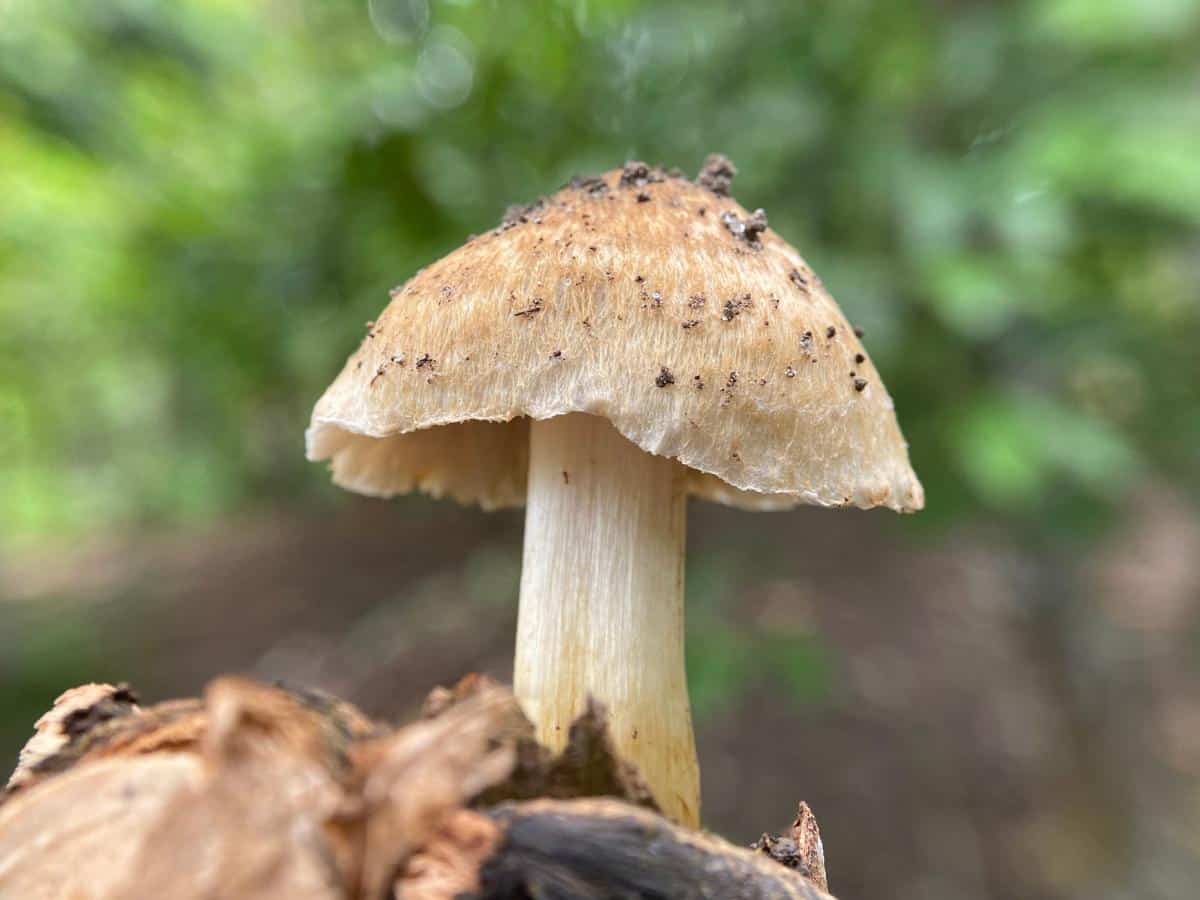
White Fibercap (Inocybe geophylla)
There aren’t many white fibercaps, and this is a common one. It grows with both hardwoods and conifers and is widely distributed across North America.
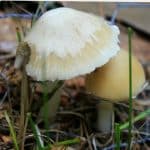
The cap is 0.4 to 1.6 inches across, cone-shaped at first and then broadly bell-shaped. It’s dry, silky, and whitish, and the cap edge splits when the mushroom matures.
The stem is silky and whitish, and fairly firm, and the mushroom smells musty or sometimes not distinctive. The species name comes from Greek words meaning earth and leaf.
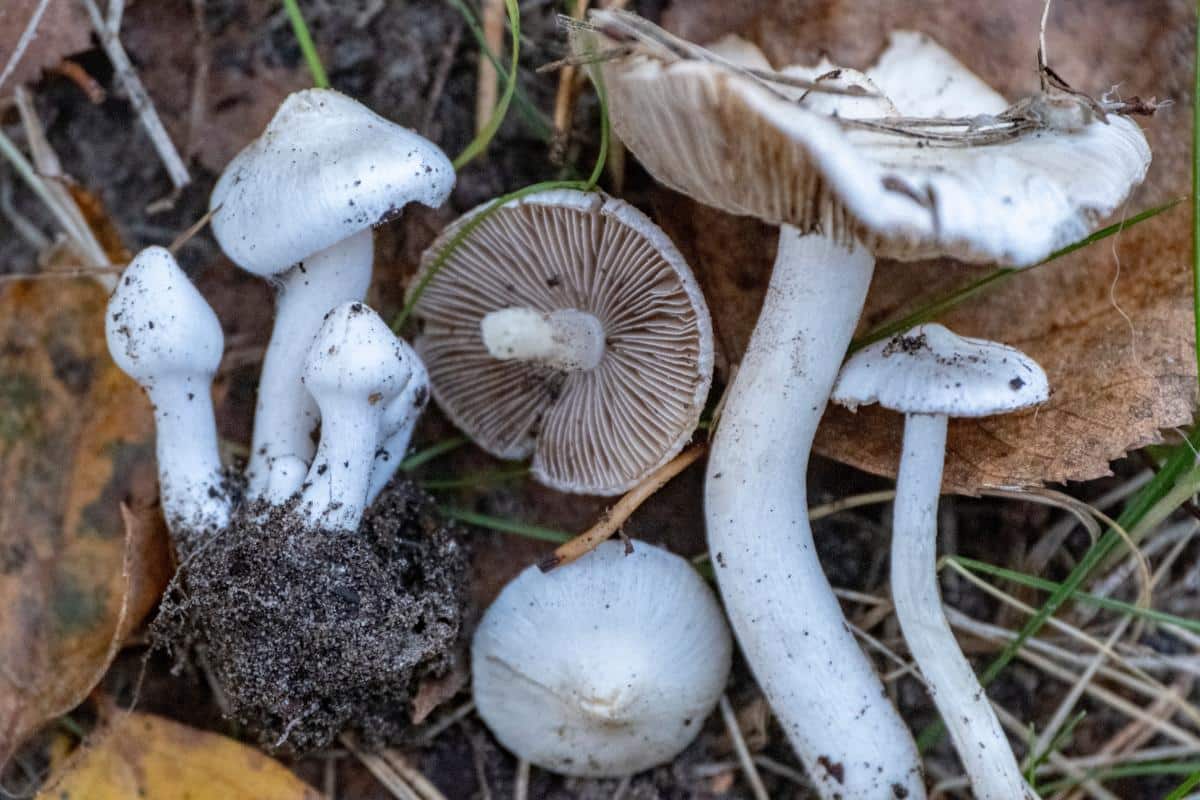
Lilac Fibercap (Inocybe lilacina)
This species is lilac to deep purple when young, which is uncommon among the fibercaps. The cap is 0.4 to 1.2 inches across and sticky when young but then turns dry and silky, and is covered in thin fibers. The stem is whitish to lilac on the upper part and lilac to purple at the bottom, and its odor is strongly musty.
A 2018 study found at least four lilacina-like species in North America. The true Inocybe lilacina grows from upper New York south to the southern Appalachians. One of the other three is Inocybe ionocephala, which is larger and has a white stem. It grows on the coast of California. The remaining two have yellowish cap centers, lilac caps that fade faster, and thicker stems.
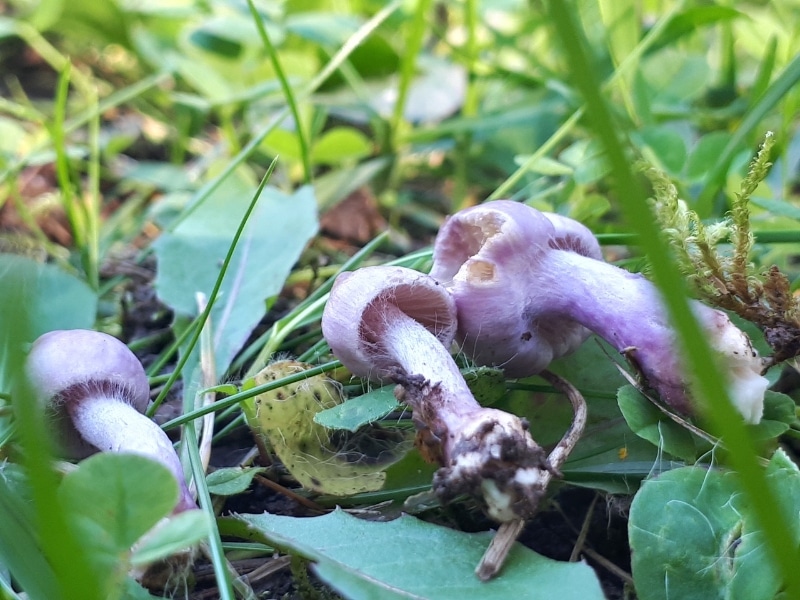
Torn Fiber Cap (Inocybe lacera)
This brown fibercap grows with conifers or hardwoods and is widely distributed across North America. The cap is 0.6 to 1.6 inches across, densely hairy or scaly, and it cracks and tears with age. The stem is pale brownish and finely hairy, and its smell is mild.
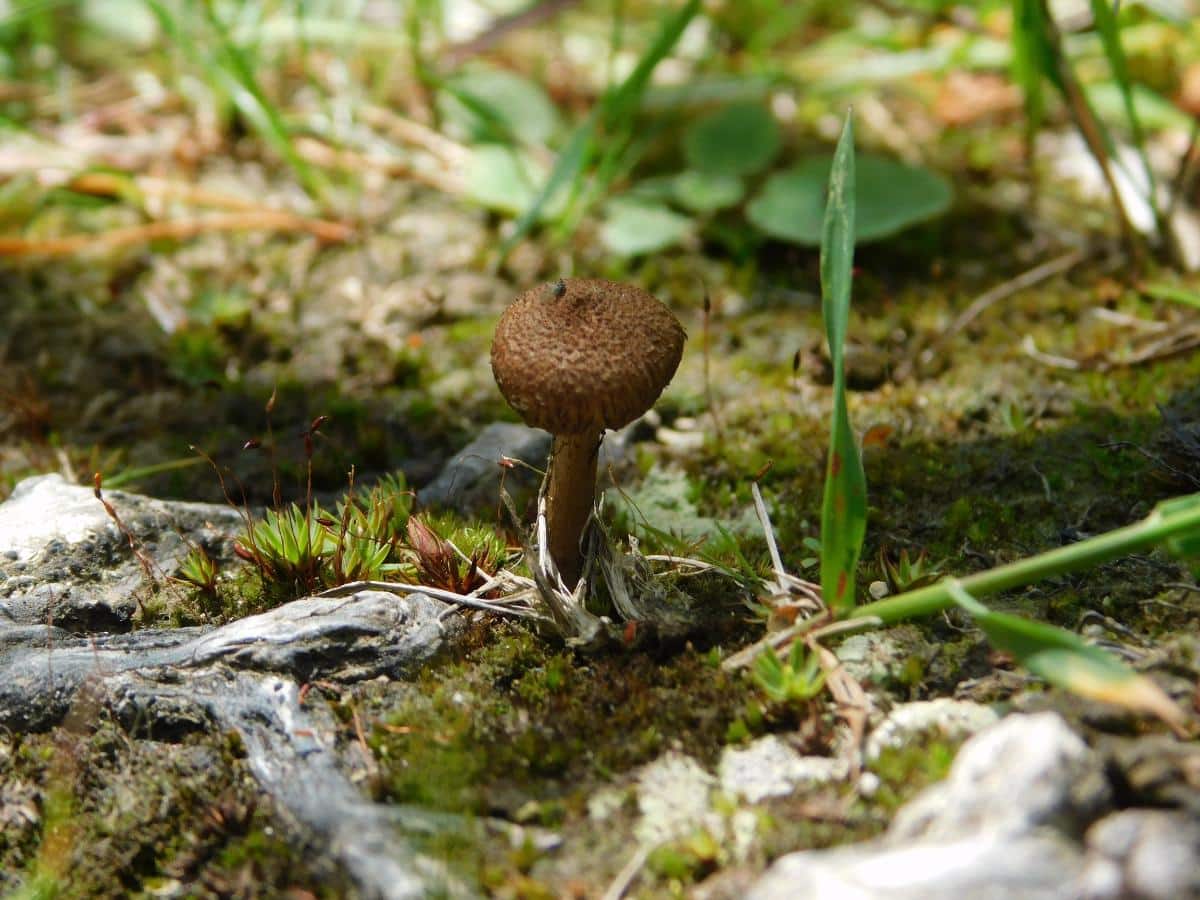
Inocybe hystrix
This is one of the easier fibercaps to identify, because the cap and the stem are both covered in dark brown scales. Few species in the genus have that combination. The cap is 0.6 to 1.6 inches across, and as it matures, the scales spread apart, revealing a paler surface underneath.
The stem is 1.2 to 3.1 inches long and scaly to the base. It looks sheathed at first, but the sheathing breaks into separated brown scales with age, also revealing a pale surface underneath. This species grows with hardwoods and is widely distributed in North America.
Inocybe calospora
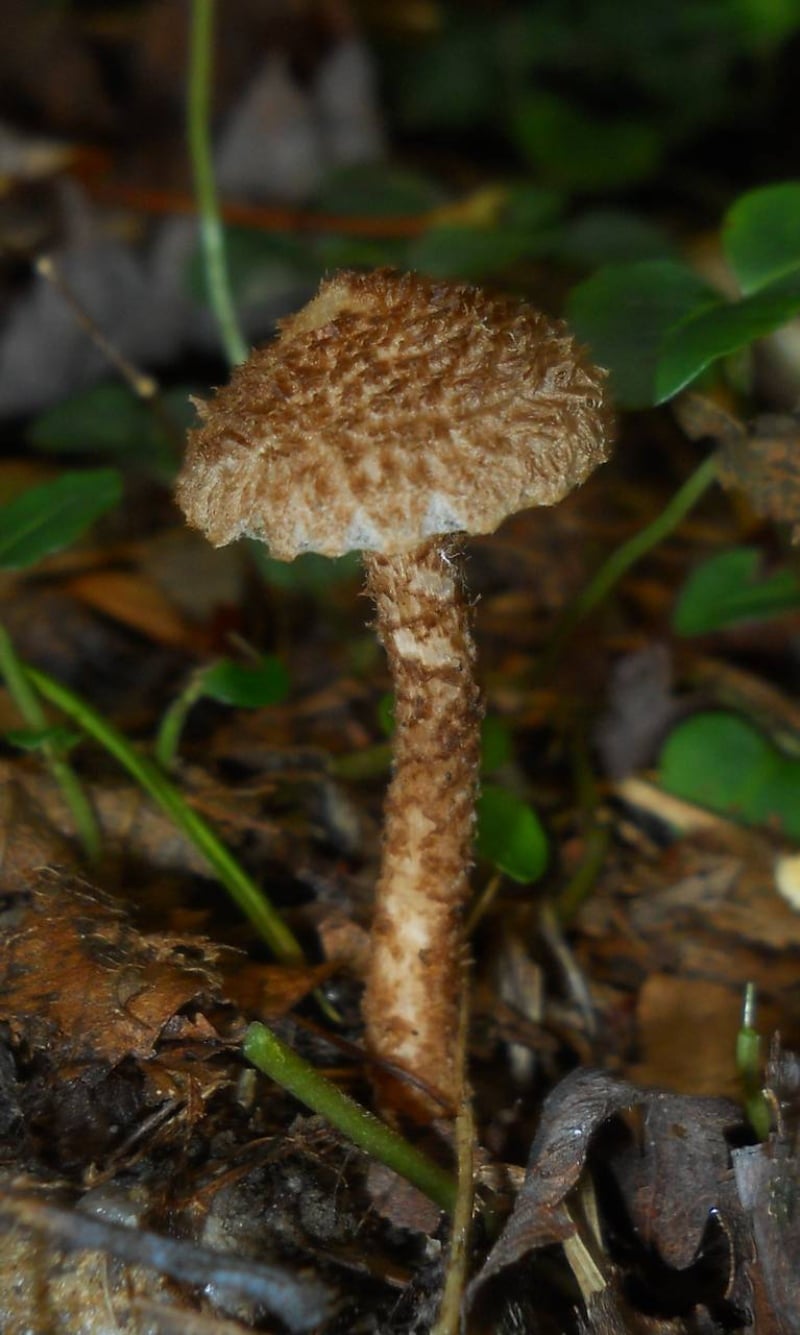
This small brown fibercap grows with hardwoods east of the Great Plains. The cap is 0.4 to 1.2 inches across, dark brown to brown and scaly. It starts out cone-shaped and then becomes flat with a pointed bump. The stem is thin and tough, pale cinnamon to pale reddish brown, and has a small bulb at the base.
The smell is slightly sweet and fragrant, or nothing much at all, which is different from the usual fibercap odors. It grows in patches of about a dozen.
Corn Silk Fiberhead (Pseudosperma sororium, formerly Inocybe sororia)
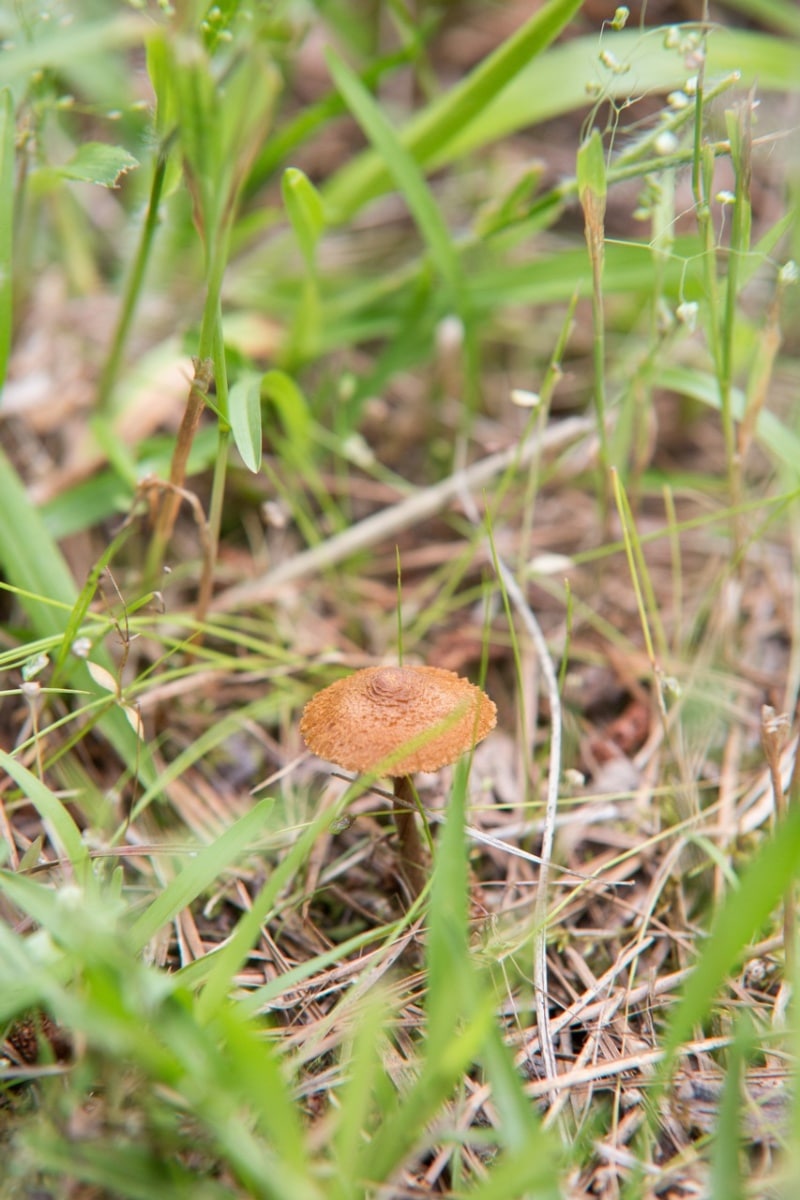
This species grows in western North America. The cap is about 1 to 2.6 inches across and starts out cone-shaped. It then becomes bell-shaped before maturing into a nearly flat cap with a distinct bump. It’s pale yellowish buff with a slightly darker center, and the surface cracks into radial fibers. The stem is 1.6 to 4 inches tall and pale.
When you crush a piece of the cap, it has a strong green corn smell. It grows under hardwoods and conifers, and in the San Francisco Bay Area it fruits with Monterey pine from late fall into midwinter. This species contains a significant amount of muscarine.
Inosperma calamistratum (formerly Inocybe calamistrata)
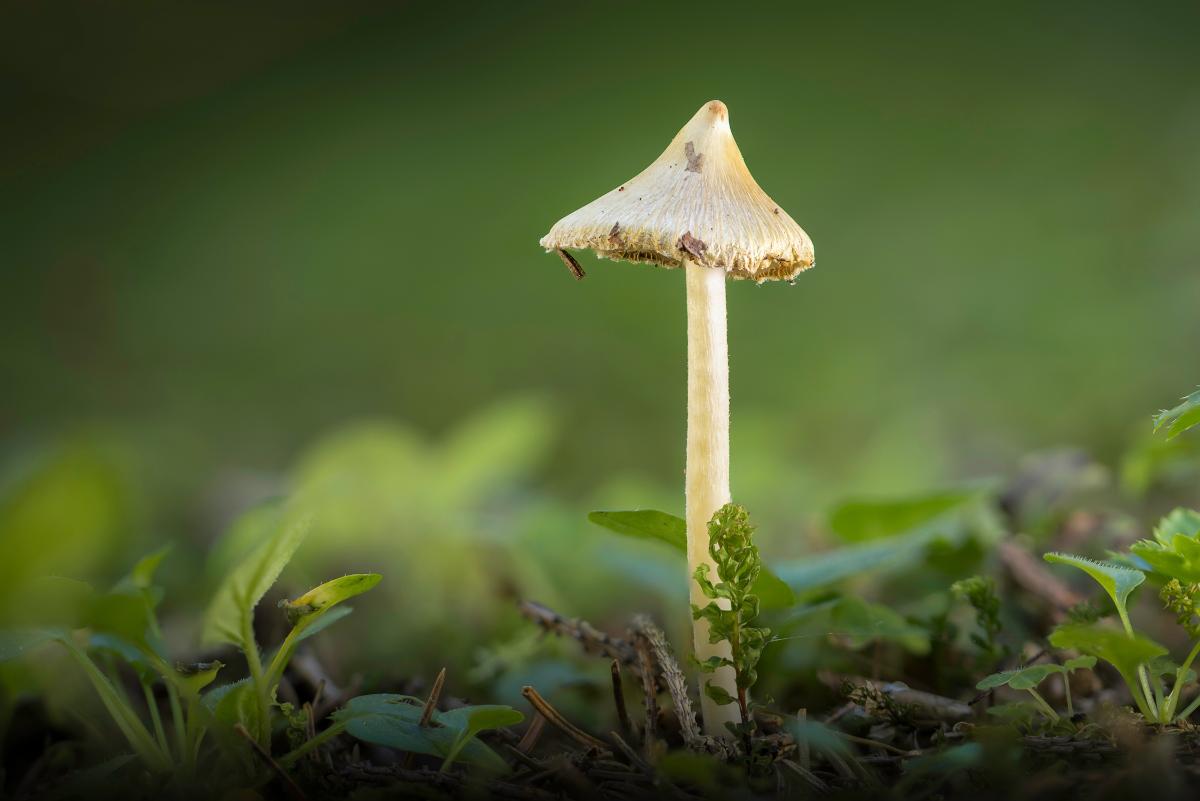
The stem base of this species turns blue-green, which sets it apart from most others. The tan cap grows up to 2 inches across, and the stem is up to 6 inches long and can also stain reddish toward the top. The gills are beige and fairly closely spaced.
In North America, it fruits from July through September in the east and from August through November along the West Coast. The blue-green stem base led to a long-standing guess that it contained psilocybin. An analysis found no psilocybin in it, though it is still regarded as poisonous. The suspected toxin is unknown.
Common Questions About Fiber Cap Mushrooms
Are fibercaps poisonous?
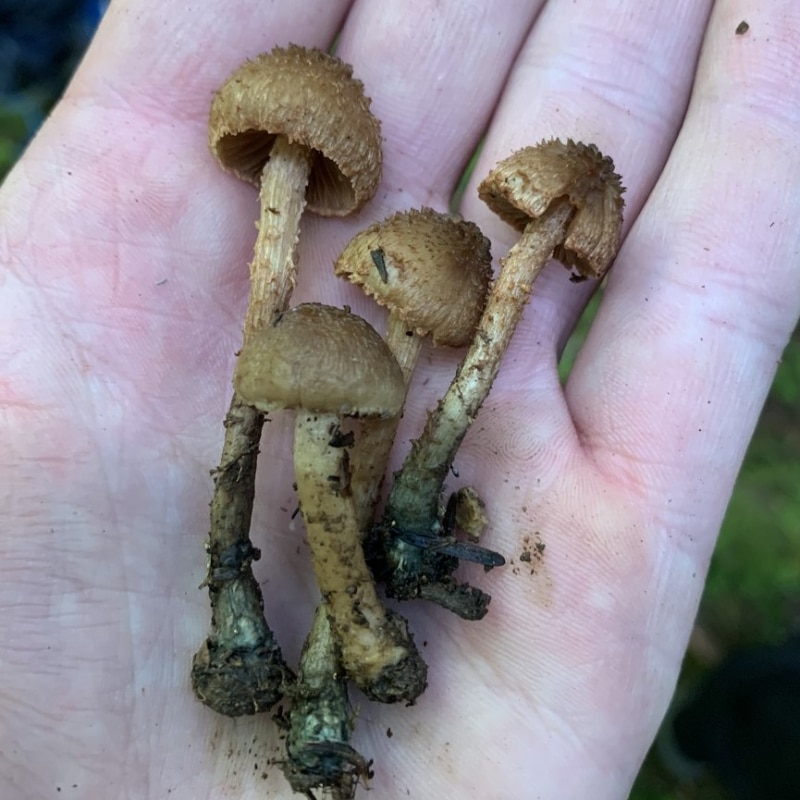
Many fibercaps contain muscarine, a fast-acting poison. Some species are up to 1.6 percent muscarine by weight. There’s no simple field test that separates a toxic fibercap from a harmless one, so it’s best to treat the whole family as off limits.
What happens if someone eats a fibercap?
Muscarine poisoning starts fast; most people feel it 20 to 30 minutes after eating the mushroom. The first signs are heavy sweating, drooling, watering eyes, and shrunken pupils. Nausea, a slow heartbeat, stomach cramps, and diarrhea follow. Anyone who has eaten a fibercap needs medical care right away. Not all species contain muscarine or any toxins at all, but it is better to be safe than sorry.
Are fiber cap fungi medicinal?
There are no reported medicinal benefits of Inocybe species.
Do any fibercaps contain psilocybin?
A few of them do. Inocybe aeruginascens was the first fibercap found to contain psilocybin, and it bruises blue where it’s damaged. A few other species contain psilocybin as well, and several of those have greenish gray stems. The color isn’t proof, though. Inosperma calamistratum has a blue-green stem base, and it doesn’t contain psilocybin.
Leave a Reply