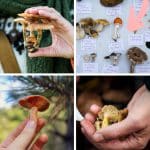
If you’re seriously, or even slightly, curious about mushrooms, and want to learn how to differentiate edible species from non-edible ones, or just want to be around people as mushroom-obsessed as you, consider joining a club. A mushroom club is a group of people who get together to find, identify, and learn about wild mushrooms and other fungi. The members will range from complete beginners to professional mycologists, and everyone in between. You don’t have to be a fungi nerd who can memorize all the Latin names to join a club. Mushroom clubs are for anyone and everyone interested in learning more about fungi.
The main activities of mushroom clubs are guided group mushroom hunts called forays, as well as classes and public events. Many local clubs also have newsletters, host dinners, plan festivals, and other fun activities for club members.
Joining a club is one of the best ways to learn about everything from basic mushroom identification and differentiating edible species from non-edible ones to more in-depth mycology. Books and apps are helpful, but nothing beats time in the woods with experienced people to answer questions.
The History of Mushroom Clubs
The Boston Mycological Club was founded in 1895, and it is believed to be the oldest amateur mushroom club in the world that has existed continuously. A Washington, DC club formed earlier but broke up for a while. The Société Mycologique de France is older too, but it’s now a professional society.
In 1897, the first New York Mycological Club was founded, but it only lasted a few years. The present New York Mycological Society was founded in 1962.
On the West Coast, the Mycological Society of San Francisco was founded in 1950 to promote the understanding and enjoyment of mushrooms and other fungi. Its mission later grew to include preserving mushroom habitats. It also works to protect the public’s right to collect mushrooms on public lands for study and recreation.
The Puget Sound Mycological Society in Seattle was founded in 1964 by a small group, and it has since grown into one of the largest mushroom societies in North America, run entirely by volunteers with no paid positions.
The most well-known mushroom club in North America is the North American Mycological Association (NAMA). It is a nonprofit organization for professional and amateur mycologists and mushroom lovers, with more than 90 affiliated clubs in the United States and Canada.
The North American Mycological Association started in November 1959 as the People-to-People Committee on Fungi. That committee grew out of People-to-People Hobbies, an international friendship program inspired by President Dwight Eisenhower in 1956. Its members soon wanted an independent group devoted to amateur mycology, and NAMA was launched on February 20, 1967.
Mushroom Clubs 101
Where Clubs Are
The NAMA directory lists affiliated clubs by United States state and Canadian province, from Alaska to Nova Scotia. It also includes a map so you can find a club nearby.
Some mushroom clubs aren’t affiliated with NAMA, but NAMA does often work with those clubs too. In the Northeast, the Northeast Mycological Federation (NEMF) links clubs from northeastern Canada down to Pennsylvania and New Jersey. The website Mushroom the Journal has a directory of North American clubs, sorted by state and province, that covers all of them, NAMA-affiliated or not.
Club Seasons
The calendar season of each club follows its local mushroom season, and that season varies widely across North America. The Boston club holds walks almost every week from June to late October, while the San Francisco society holds its meetings from September through May, which is the active mushroom season there. In areas west of the Rocky Mountains, winter is the peak season, while in the Midwest morel hunting starts in mid-spring.
Forays and Walks
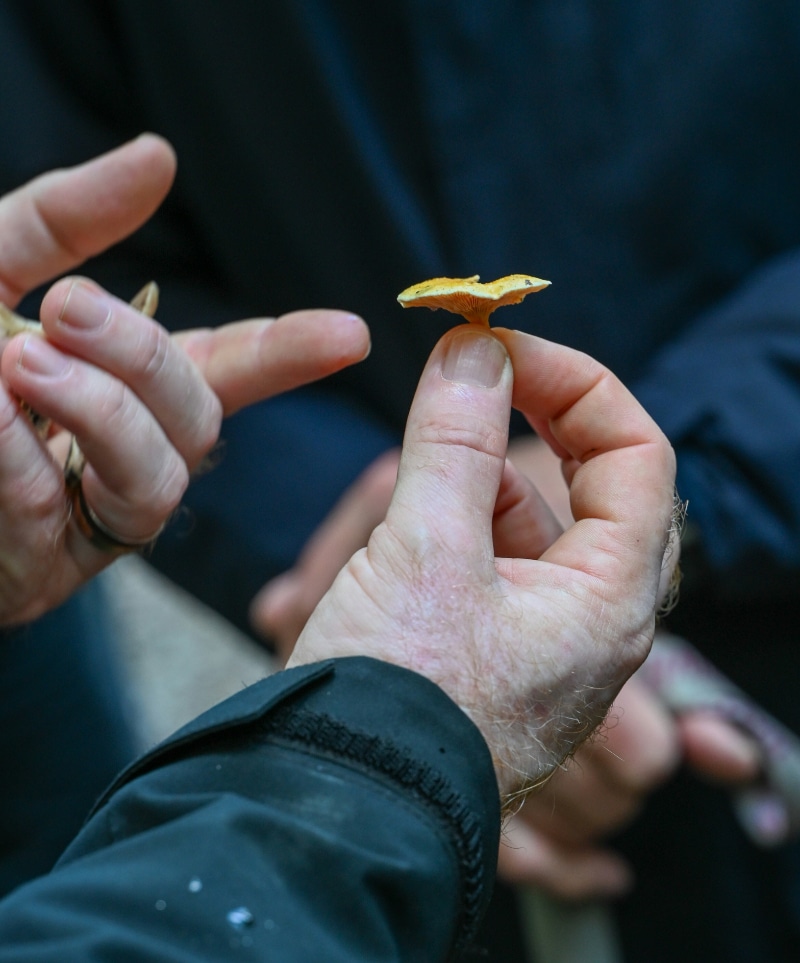
A foray is a group mushroom hunt led by someone who helps with identification and answers questions. Newcomers can walk with the leader or one of the more experienced members, while experienced members tend to wander more widely. These leaders are an excellent source of basic mushroom knowledge and identification. At some sites, collecting is allowed; at others, it isn’t.
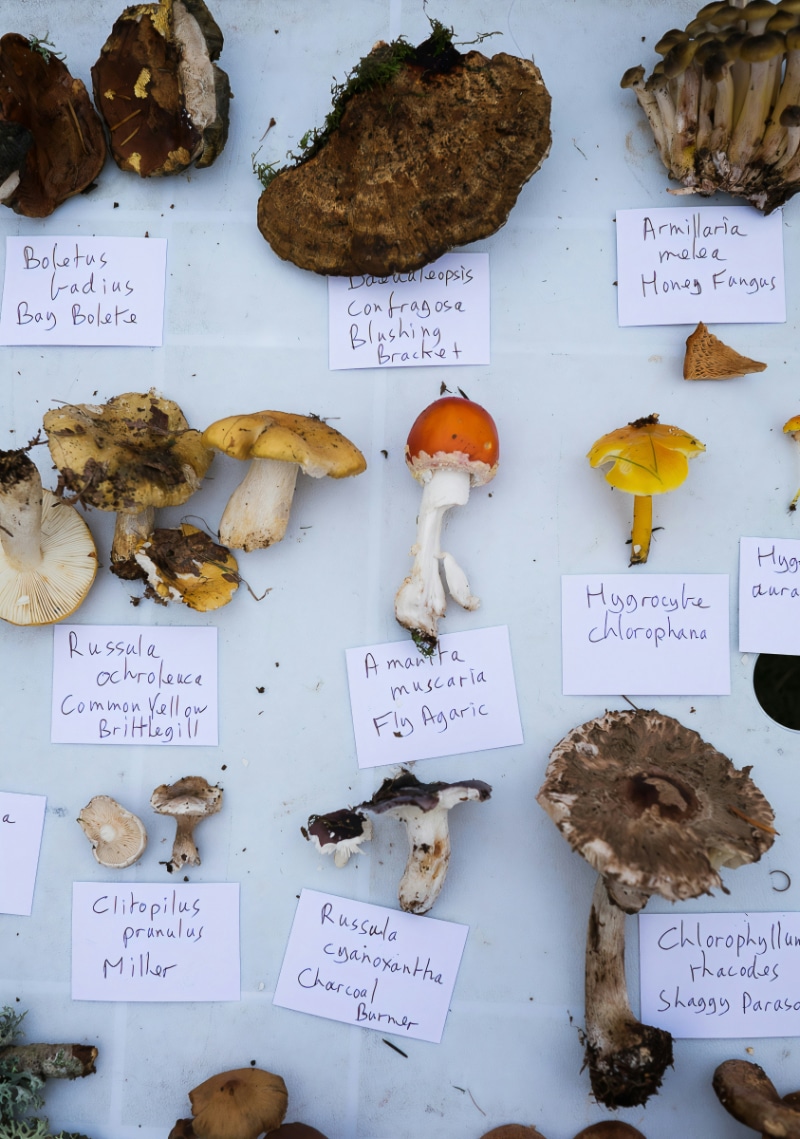
Most club walks last 2-3 hours, and each walk ends with an identification table where the day’s finds are identified and discussed.
Meetings
Every club is different in how many, if any, public meetings it has outside of the regular forays. These meetings may be online or in-person. The meetings are often open to everyone, and no prior knowledge is needed. At the meetings, people bring photos of their finds or look at what others have found.
Free Public ID Clinics
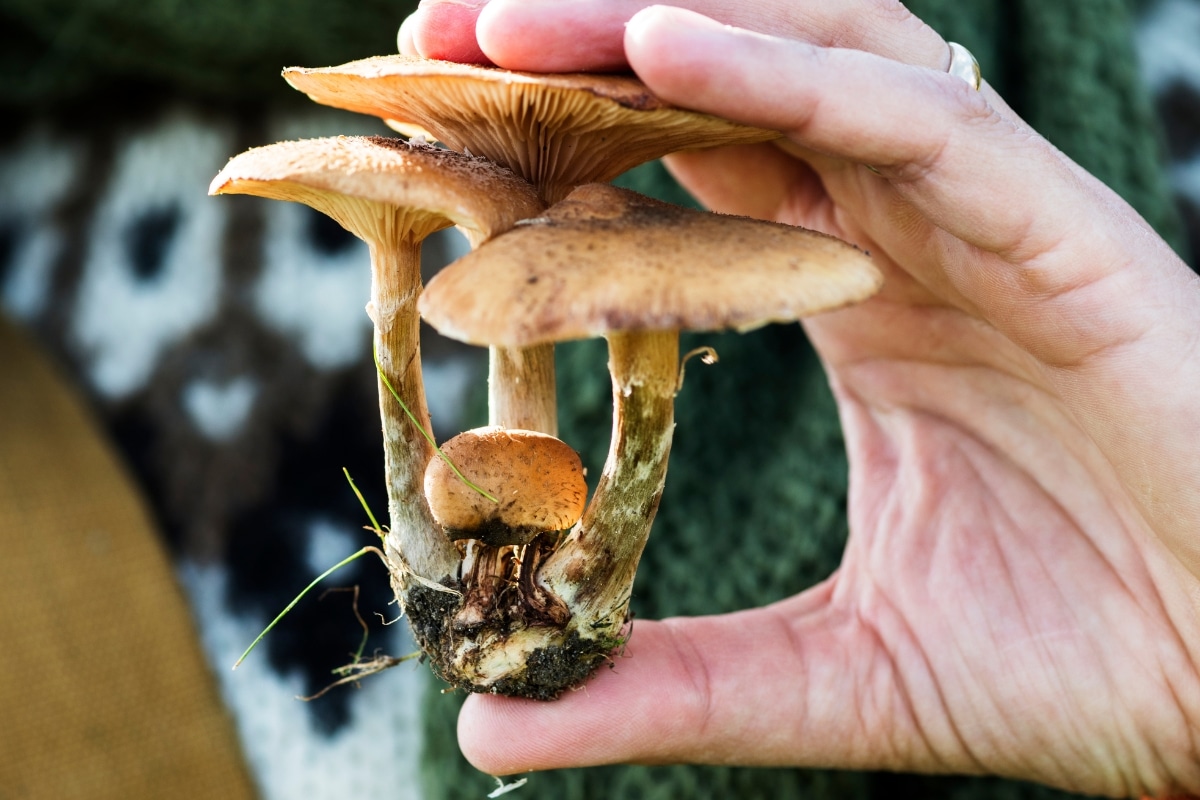
Some clubs, like the Puget Sound Society, run a free public mushroom identification clinic. At this clinic, one or more of the society’s identifiers are there to name the wild mushrooms people bring in and answer their questions.
Classes, Workshops, and Events
Again, a lot depends on the club and how active its members are. Some of the events hosted by different clubs around the country include:
- weekend mushroom camps
- weekend forays
- night UV hikes
- bonfires
- lectures and expert talks
- one day mushroom expos
- cooking demos
- mushroom papermaking classes
- mushroom dyeing workshops
- fungi watercoloring classes
- felt mushroom workshops
- workshops on growing mushrooms on logs
- visits to mushroom farms and research stations
- potluck dinners
- monthly members’ dinners
- photo contests
- mushroom costume contests
- national mycology conferences
Public Mushroom Fairs
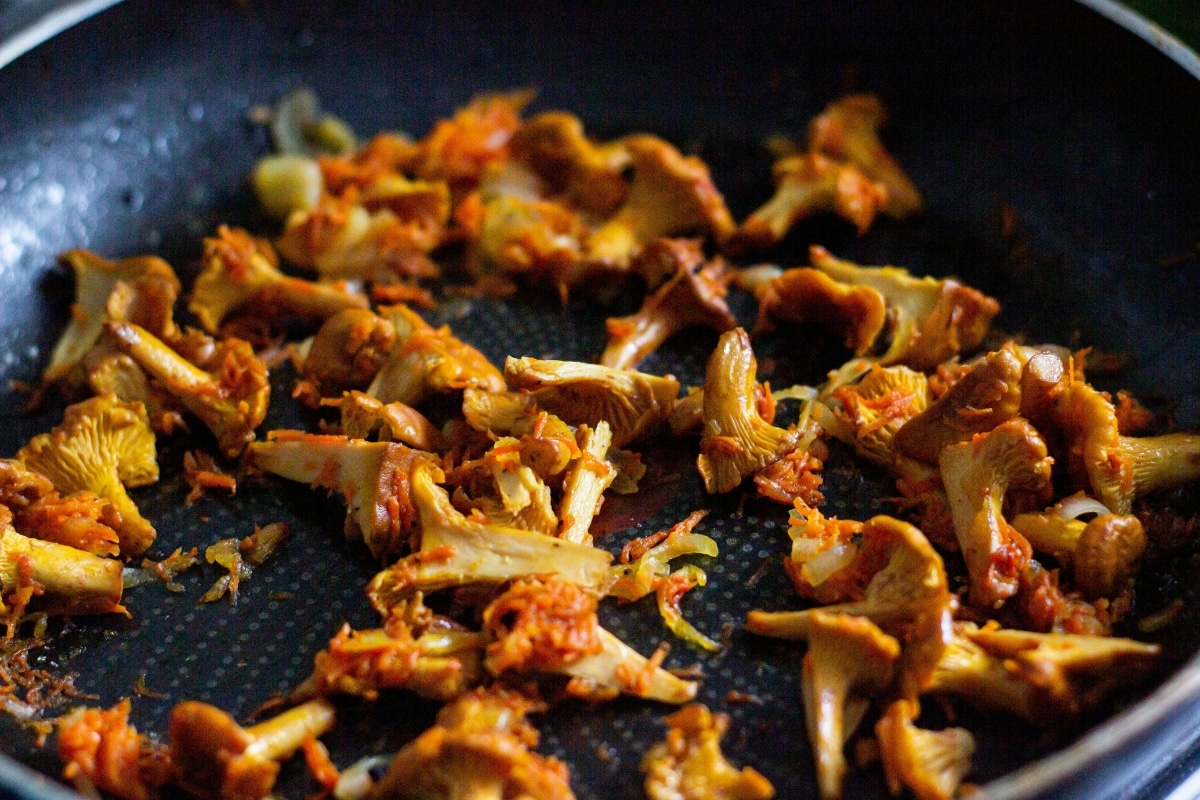
The larger clubs, like the Puget Sound Society, host big events where up to 400 kinds of wild mushrooms are displayed and identified. Visitors can also bring in mushrooms from their gardens or walks for the society’s experts to identify. At this event, there are cooking and tasting demos and a station for making oyster mushroom growing kits. There are also lectures and vendors.
In winter, the San Francisco society holds a Fungus Fair. Its members collect, identify, and display hundreds of mushroom species from around the Bay Area for the fair. The collecting forays happen the day before, and the finds are brought back to the fair site for identification. In New York, the society’s first Fungus Festival in 2022 drew almost 1,000 people.
Community Science
Community science, also called citizen science, is when members of the public volunteer to help with real scientific research. We are all part of a community of mushroom appreciators and can contribute in meaningful ways. Mushroom clubs are priceless for recording the mushrooms members find and saving specimens so scientists can study them.
There are about 2.5 million species of fungi in the world, and of those, only about 155,000 have been named so far. And there aren’t nearly enough professional mycologists to document all of North America’s fungi. On top of that, money and time for surveys are limited. Amateur foragers and mushroom clubs can provide useful data, simply by saving specimens for DNA sequencing instead of throwing them out.
For over 50 years, the San Francisco society has collected mushrooms at its annual Fungus Fair and created a long-term record of the fungi that grow in the area each winter. The society says this record may help scientists understand climate change in the region.
The Western Pennsylvania Mushroom Club keeps a life list of the species its members have found, and in 2025 it had 1,621 species. Since 2015, the Hoosier Mushroom Society has DNA-sequenced more than 10,000 specimens from Indiana, covering well over 2,200 species.
Since 1997, 200 to 500 specimens from each annual NAMA foray have been photographed and dried for a permanent collection. The collection is now housed at the Field Museum of Natural History in Chicago. The NAMA foray database lists more than 3,000 fungus names.
Club Etiquette
If you decide to go to a club foray, it’s good to keep a few things in mind:
- Don’t ask other members exactly where they found prized mushrooms.
- Don’t pick every mushroom in a patch; leave some behind to reproduce.
- Share your finds. Most clubs split the top edible finds between attendees so everyone can enjoy them.
- The purpose of the club is to facilitate learning about mushrooms, not to help you find prime spots for picking on your own or go home with epic hauls.
Why Join A Mushroom Club?
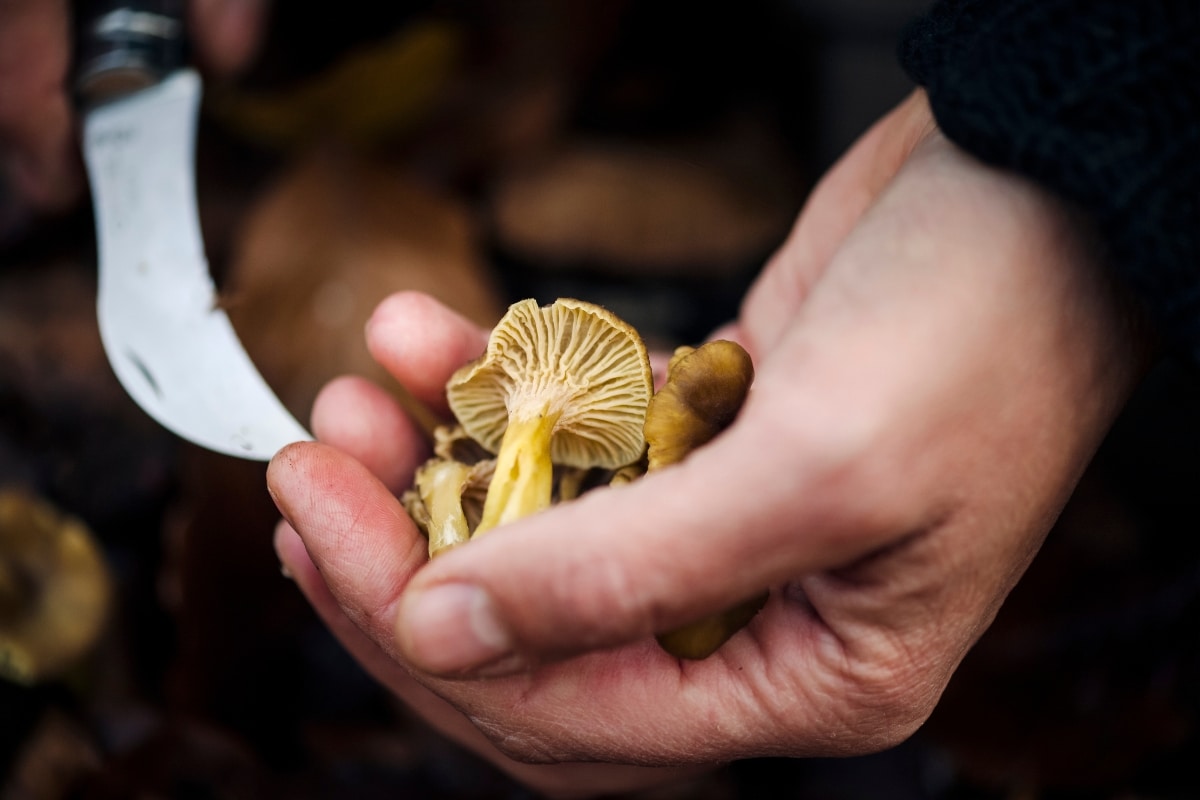
Experienced club members are an invaluable resource and can help beginners understand features like gills and pores, as well as how fungi connect to the trees around them. The more experienced members usually are involved in surveys of local fungi, DNA sequencing, and conservation work, and a literal wealth of knowledge. Mushroom foraging clubs bring together people from many different lines of work, all with one common love.
Members come to clubs for everything from forest walks and photography to cooking, microscopy, and DNA analysis. It’s also a good way to get regular exercise while also learning, and some clubs have fun events like lectures, banquets, and film showings. Most clubs are volunteer-run and welcome people at any level of knowledge.
Local Clubs, NAMA, and Regional Federations
Local Clubs
The majority of mushroom clubs have small membership dues, usually no more than $25-30 for the year. This covers expenses like liability coverage while out on forays, advertising, and any events the club sponsors throughout the year. To find a local club near you and learn more about them, check out this directory of North American clubs.
NAMA (North American Mycological Association)
Unlike a local club, NAMA holds one main event each year. The yearly foray takes place in different parts of North America, with lectures by professional mycologists, cooking showcases, and social events. It also publishes a newsletter, The Mycophile Quarterly, and a yearly online journal called McIlvainea.
A NAMA membership costs $30 a year for a household in the United States, $20 in Canada, and $10 in Mexico. Members of an affiliated club pay a discounted rate of $25 in the United States or $15 in Canada. A student membership is $15, and a life membership is $500.
Regional Federations
The Northeast Mycological Federation has about two dozen clubs, and its mission is to get people interested in mycology by studying the fungi of northeastern North America together.
The main activity of this group is a yearly foray, hosted in turn by one member club or a group of clubs. It features three days of collecting and identifying fungi, with lectures and workshops. The topics have included eating wild mushrooms, medicinal fungi, dyeing, papermaking, and photography. The foray draws more than 250 people and is open to anyone in the world.
The Fédération québécoise des groupes de mycologues was founded in 2010, and it has mushroom clubs across Quebec. It supports learning about fungi and meetings between clubs. It also works to make the public and politicians aware that fragile habitats need protecting so fungi species survive. Each year, one of the member clubs hosts a foray weekend in its own region.
The North American Truffling Society, hosts forays and studies on truffles and fungi like them. The data from these forays goes into a database open to scientists who study this type of fungus.
Curious How To Get Started Foraging Wild Mushrooms?
How To Be A Successful Mushroom Forager

Leave a Reply