
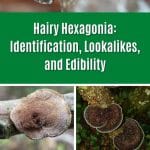
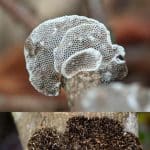
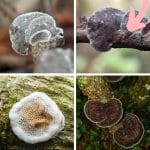
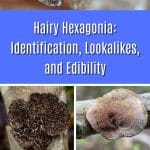
The hairy hexagonia is an hardwood bracket fungus found mainly in warm regions of the southeast. It causes white rot as it breaks down wood. It is not an edible species because its flesh is so tough and woody.
- Scientific Name: Hexagonia hydnoides, also accepted as Cerrena hydnoides
- Common Names: hairy hexagonia, hexagon bracket
- Habitat: Dead hardwood, fallen trunks, wooden poles, and occasionally living wood
- Edibility: Inedible because of its tough, woody flesh
Jump to:
All About The Hairy Hexagonia
This species was first described by Olof Swartz in 1788 and named Boletus hydnoides. In 1838, Elias Magnus Fries established the genus Hexagonia. The name Hexagonus is from Latin and means “with six angles,” and refers to the shape of the pores.
The hairy hexagonia was given many scientific names before being placed in Hexagonia in 1968. Another transfer was suggested in 2001, which would give it the new name Cerrena hydnoides. Major taxonomic indexes now accept Cerrena hydnoides as the current name and list Hexagonia hydnoides as a synonym.
However, field guides, conservation records, and written records still use Hexagonia hydnoides as the primary name, so both names are accepted for now. However, to complicate things even more, a study published in 2013 said the hairy hexagonia is related to Irpex lacteus and Emmia latemarginata. It also differed microscopically from Hexagonia apiaria and Hexagonia hirta. The researchers suggested returning it to Pogonomyces, but that change has not happened.
The species name hydnoides means “resembling Hydnum.” Hydnum species, like the hedgehog mushroom, have toothlike spines under their cap. They look somewhat similar to the long bristles on the hairy hexagonia’s cap.
Hairy Hexagonia Identification
Season
Hairy hexagonia can fruit throughout the year in warm climates. However, each bracket is annual, so it completes its growth in one season rather than adding new layers over several years.
Habitat
In North America, this species grows in Florida, Texas, and other parts of the Gulf Coast. There is one documented collection outside its main southern concentration, and that is in southern Missouri. Its range extends through Mexico, the Caribbean, Central America, Colombia, Brazil, and other parts of South America.
The hairy hexagonia grows alone or in groups on dead hardwood, including fallen trunks, logs, and wooden poles. It fruits in secondary and tropical forests and causes white rot.
Identification
Cap
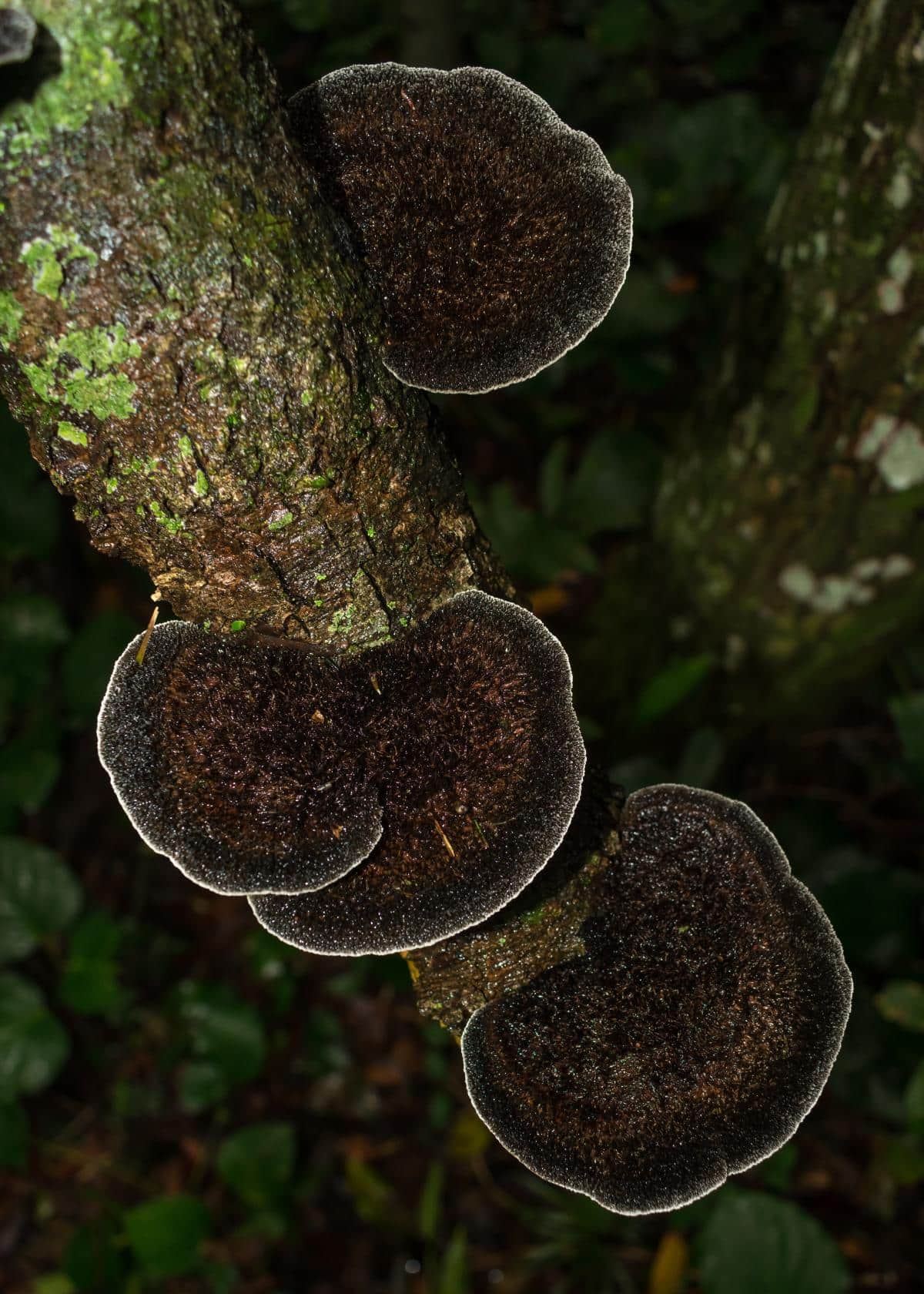
The cap is a thin, irregular semicircle or fan, and it is attached directly to the wood. It may be nearly flat or slightly rounded and has faint concentric bands that become clearer near the edge.
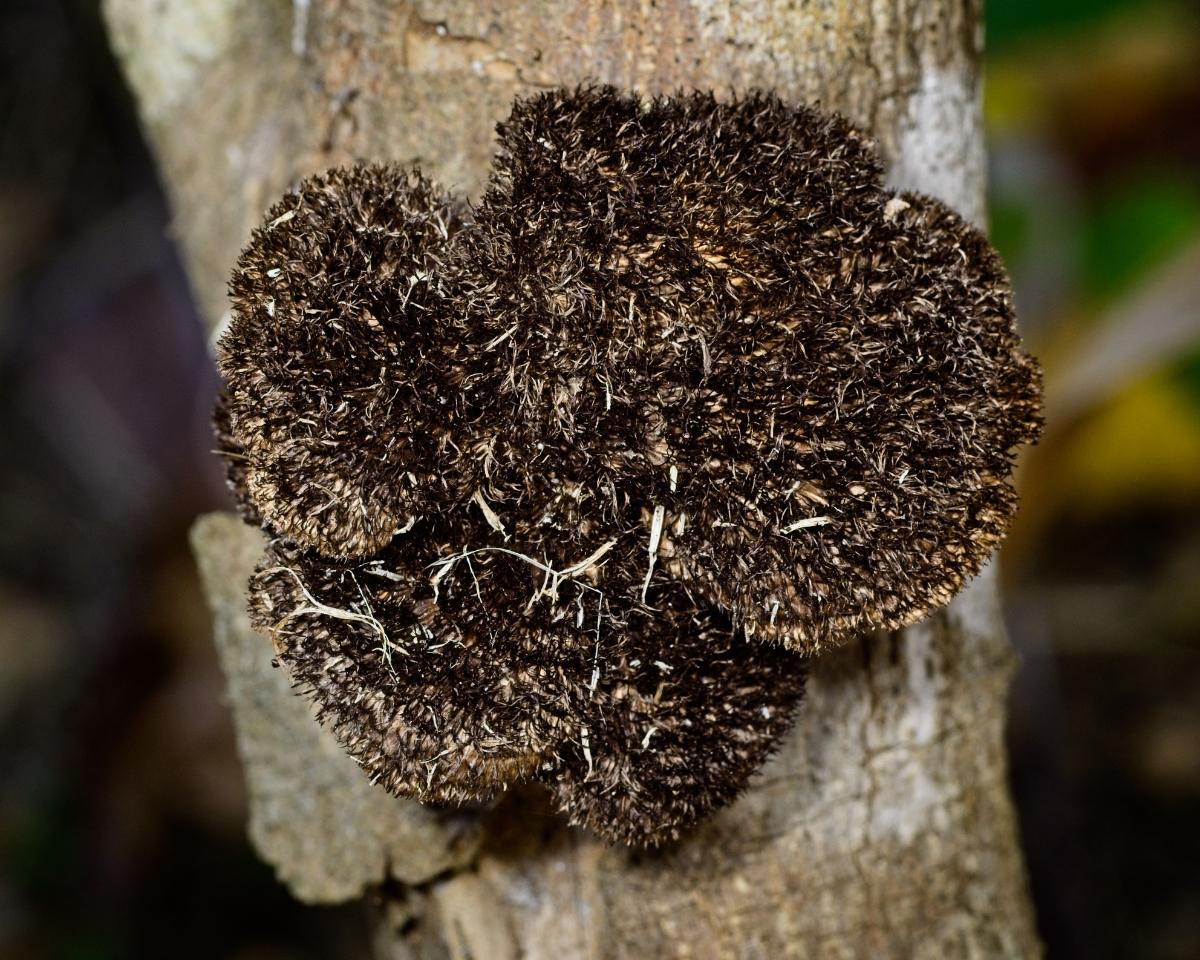
The mature caps grow to around 2 to 4 inches wide. When the hairy hexagonia is young, the cap is brown to dark brown and is covered with a dense coat of fine, forked hairs. These hairs range from dark brown to almost black and can grow to ¼ inch long. This makes the surface look like the bristles on a hairbrush.
With age, though, the hairy bristles harden and fall off. This exposes the concentric dark lines beneath them. An old bracket may turn into a blackish crust with only a few stiff hairs.
Pores
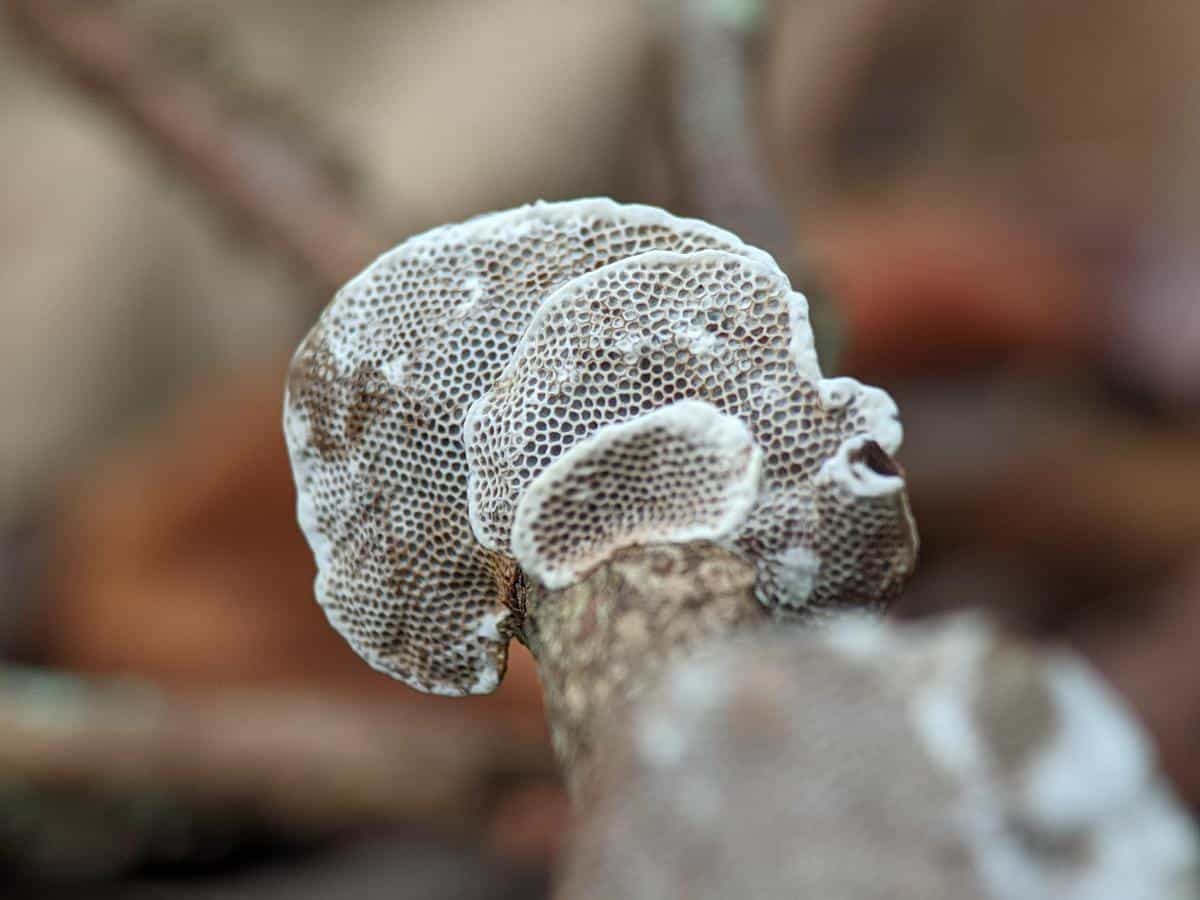
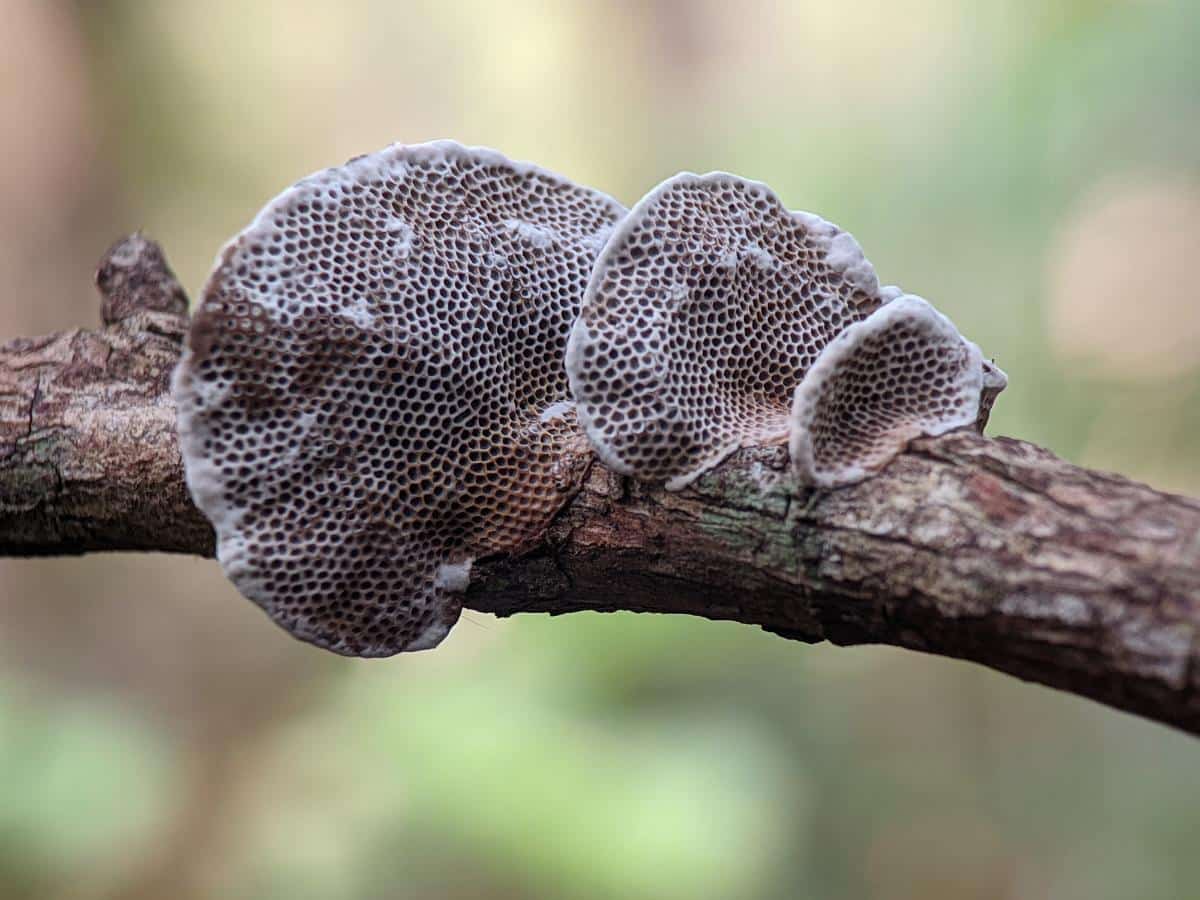
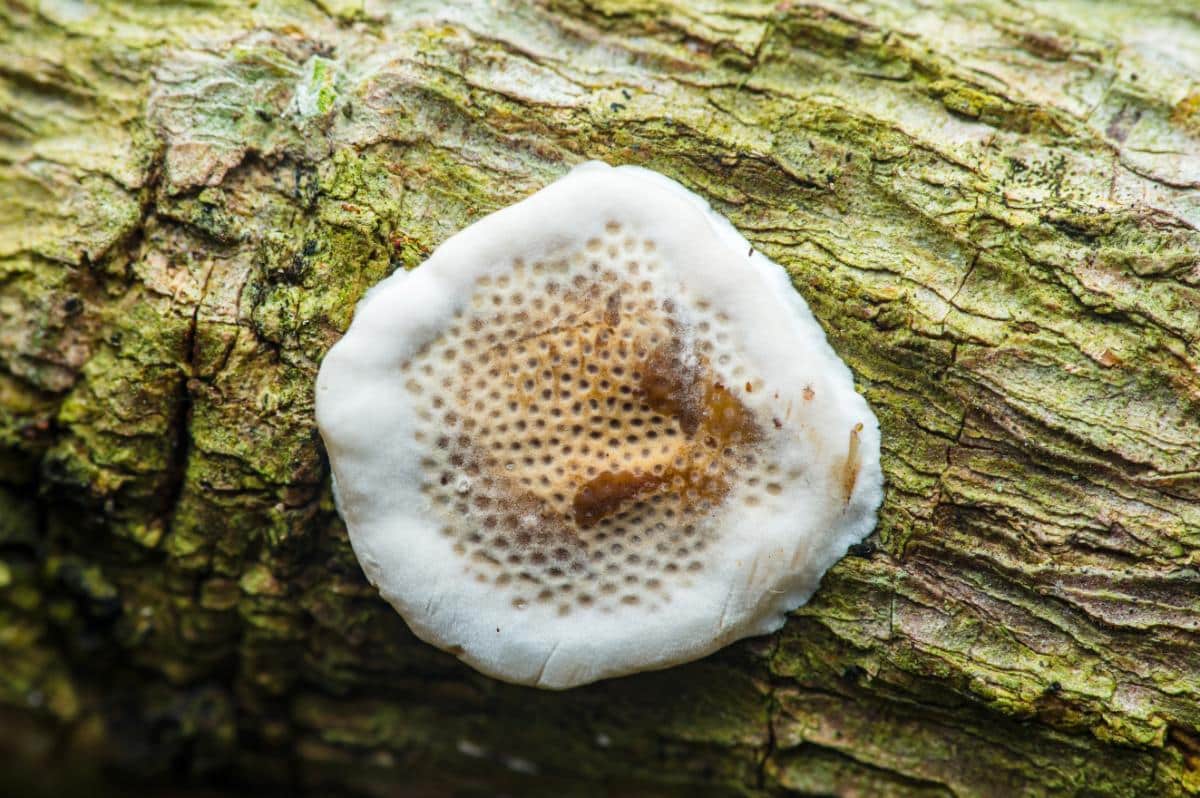
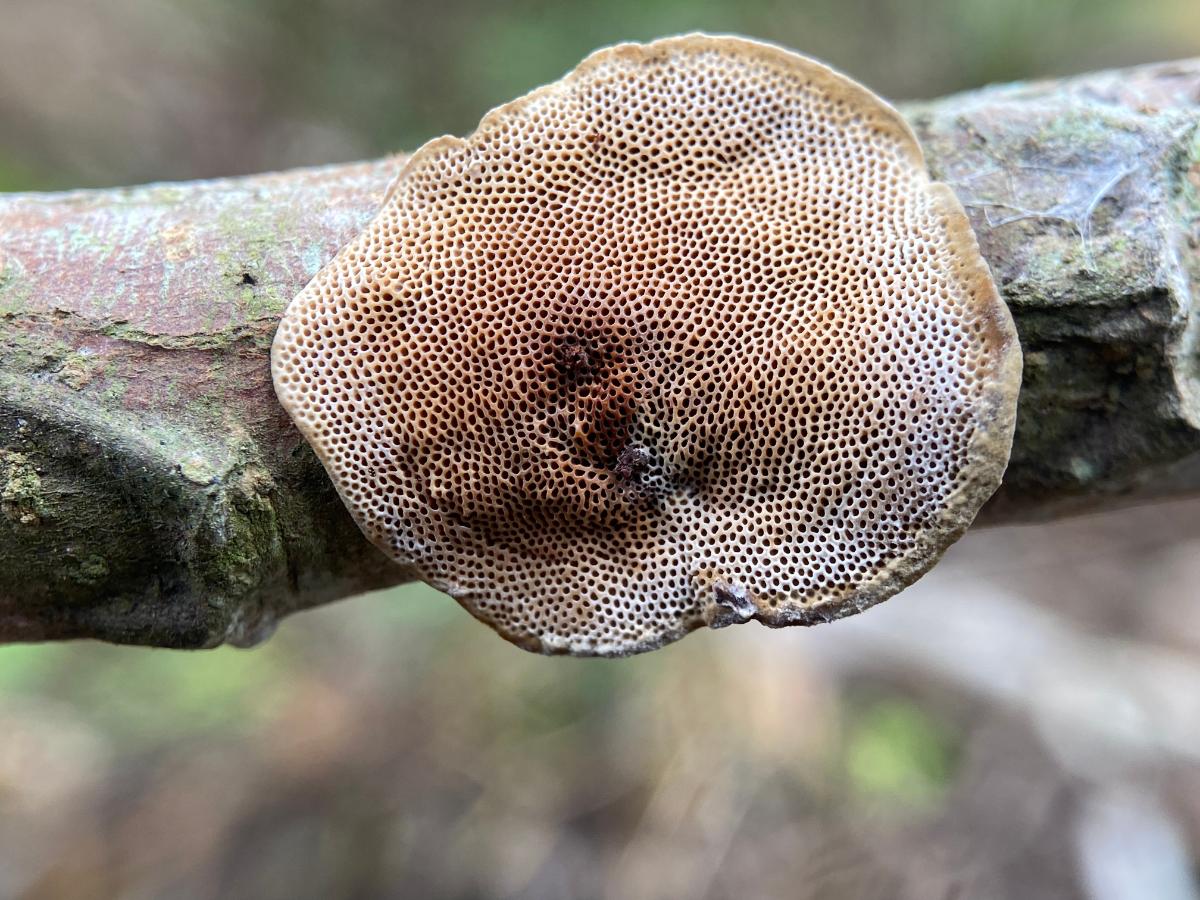
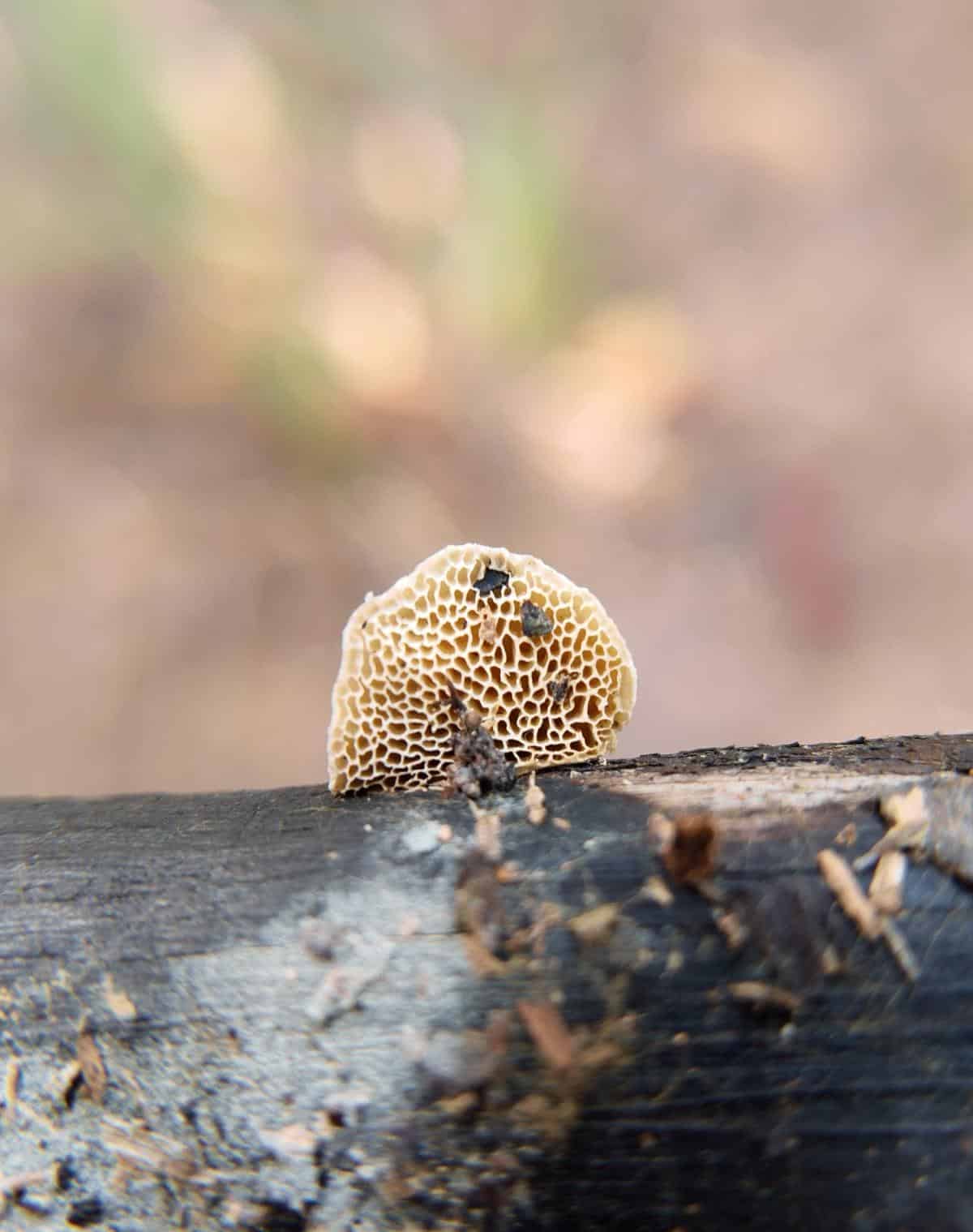
The underside is brown, dark brown, or grayish brown, and has many small angular pores. Although the genus name suggests they will have six angles, the openings are not all perfect hexagons.
Stem
There is no stem. The bracket attaches directly to the wood along one side.
Taste and Smell
The taste and odor are not distinctive.
Flesh Color and Staining
The flesh is thin, tough, and ranges from rusty to orange-brown. It does not change color when cut. When the cap is fresh, young, and wet, its pale undersurface easily bruises darker brown or black when pressed or rubbed. However, as the mushroom matures, dries out, and turns leathery, its underside naturally darkens to a deep chocolate brown. If you bruise the underside at this point, there won’t be any visible change at all.
Spore Print
The spore print is white.
Lookalike Species
Several brackets have similar dark coloring, hairy caps, or angular pores. To differentiate them, look at the features together. A dark or hairy cap by itself is not enough.
Turkey Tail (Trametes versicolor)
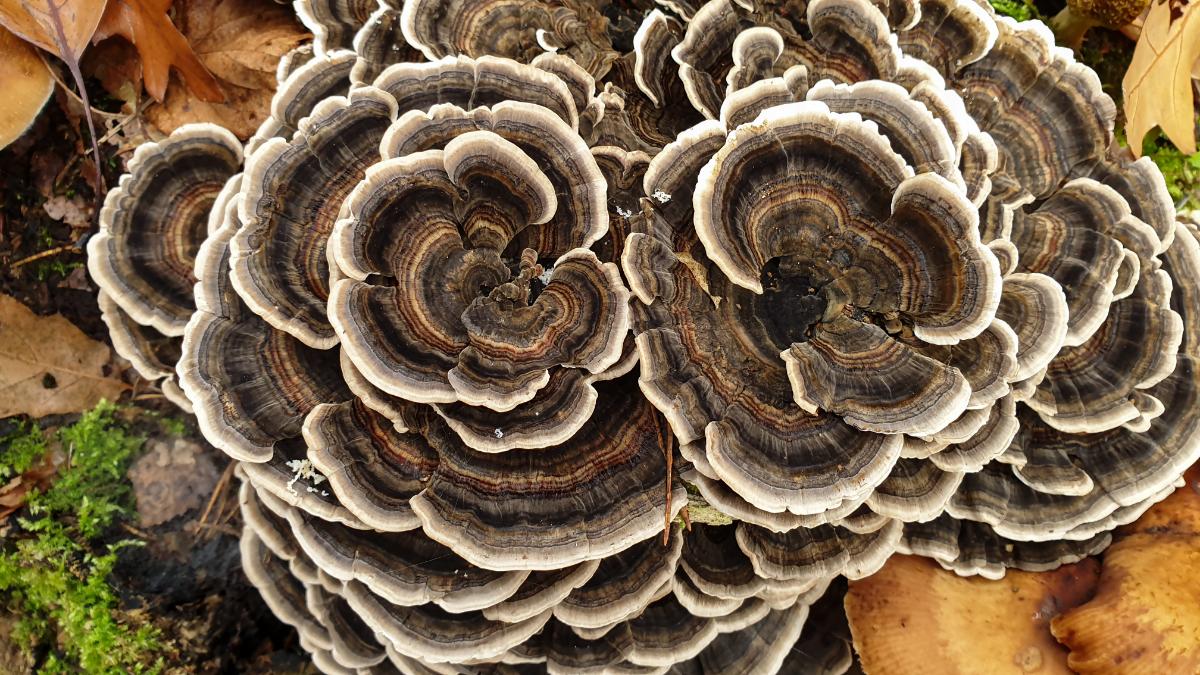
Turkey tail has a thin, flexible cap with strongly contrasting bands of white, gray, cinnamon, orange, reddish brown, or deep blue. Its pore surface is whitish to pale brown and does not turn the complete brown of hairy hexagonia.
Turkey tails grow in dense, overlapping clusters across much of North America. It is much thinner, with more distinct bands of color on the cap. The pores on the underside are much tinier and not hexagonal.
Hairy Bracket (Trametes hirsuta)
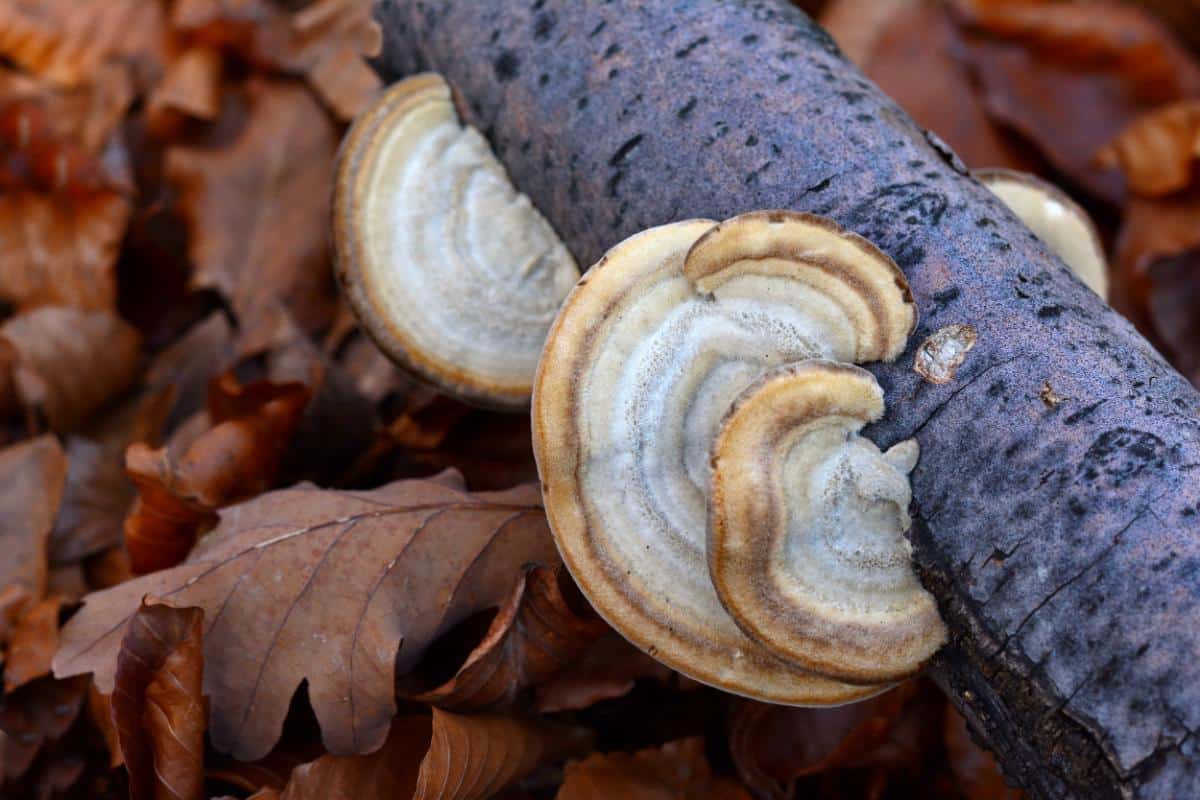
The hairy bracket also has semicircular shelves covered with dense hairs. Its caps are gray, whitish, or brownish rather than dark brown to black, though. And the hairs are white to pale, and not dark black like the hairy hexagonia.
This species grows in clusters on hardwood logs and stumps across North America. The pale cap and hairs separate it from the dark brush and brown pores of hairy hexagonia.
Oak Conk (Fuscoporia gilva)
The oak conk, also called the mustard yellow polypore, grows as overlapping semicircular shelves on dead hardwoods, especially oak. Its caps are rusty brown to dark reddish brown, and usually have a bright mustard-yellow margin, though it fades with age. The caps of young specimens are velvety and rough, but don’t have the dense black hairs of young hairy hexagonia. The caps smooths out with age.
Oak conks are often annual but can be perennial and keep growing for several years. The species is common in across N. America.
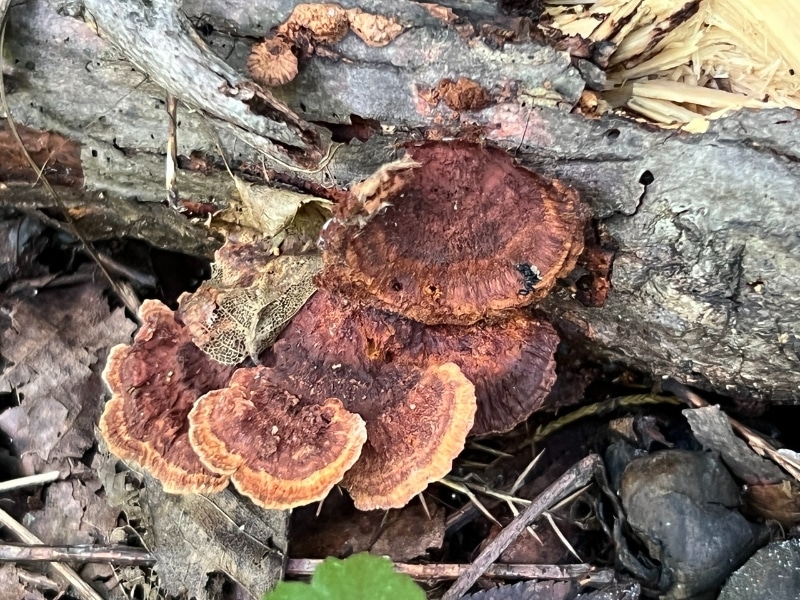
Blushing Bracket (Daedaleopsis confragosa)
Blushing brackets, also known as thin walled maze polypores, have elongated pores that form a maze. They may look hexagonal when young, but they don’t stay that way. Sometimes, the fruiting bodies get so large that the maze-like pores start looking like gills. The blushing bracket’s pale pore surface bruises salmon pink to reddish when handled, not brown like the hairy hexagonia.
This tough, inedible bracket grows on decaying hardwood, including willow and birch. It is more common in northern temperate woodlands than tropical and subtropical areas like hairy hexagonia.

Hexagonia hirta
Hexagonia hirta is the hardest lookalike because its cap can be almost identical. It is an annual, stemless bracket with a fan- to hoof-shaped cap. It also has rigid bundles of black hairs that cover the dark brown to almost black cap surface.
The known range of H. hirta was once considered limited to Africa, but now it extends to tropical America, including Mexico and São Paulo, Brazil. However, it is still more common in Africa, South and Southeast Asia, and Australia.
Hairy Hexagonia Edibility and Toxicity
The hairy hexagonia fungus is inedible because its flesh is thin, stiff, leathery, and woody. It is not known to be toxic or poisonous, though.
Traditional Uses and Medical Research
Hairy hexagonia has been used in folk remedies. In several cases, the fruiting bodies are powdered and added to tea. In Mexico, the fruiting body has been used to treat pimples, warts, and fungal skin infections. A 2021 study also described its use by rural communities in northeastern Brazil for infant colic and digestive spasms.
The study linked this use to the saponin compounds in the fungus and possible antibacterial activity, but this is not confirmed. There is no human clinical evidence establishing that hairy hexagonia treats colic, skin conditions, or infections.
In a 2003 lab experiment, scientists tested a liquid extract made from the hairy hexagonia mushroom against the bacteria Bacillus cereus, which causes food poisoning. The mushroom extract successfully stopped the bacteria from growing in the lab setup. However, this was only a laboratory test, and no human studies have been done.
Common Questions About Hairy Hexagonia
Is hairy hexagonia poisonous?
No, it is not known to be toxic or poisonous, but that does not mean the mushroom is safe. It is considered inedible because its flesh is tough, leathery, and woody.
Is the correct name Hexagonia hydnoides or Cerrena hydnoides?
Both names are in use. Major taxonomic indexes use Cerrena hydnoides, while field guides, conservation records, and much of the research literature continue to use Hexagonia hydnoides.
Is hairy hexagonia rare in the United States?
The species is concentrated in the southern United States, with documented findings in Florida, Texas, and other warm areas around the Gulf Coast. It may be expanding its range; there is one documented collection from southern Missouri.
Leave a Reply