
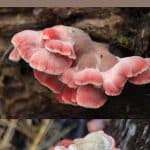
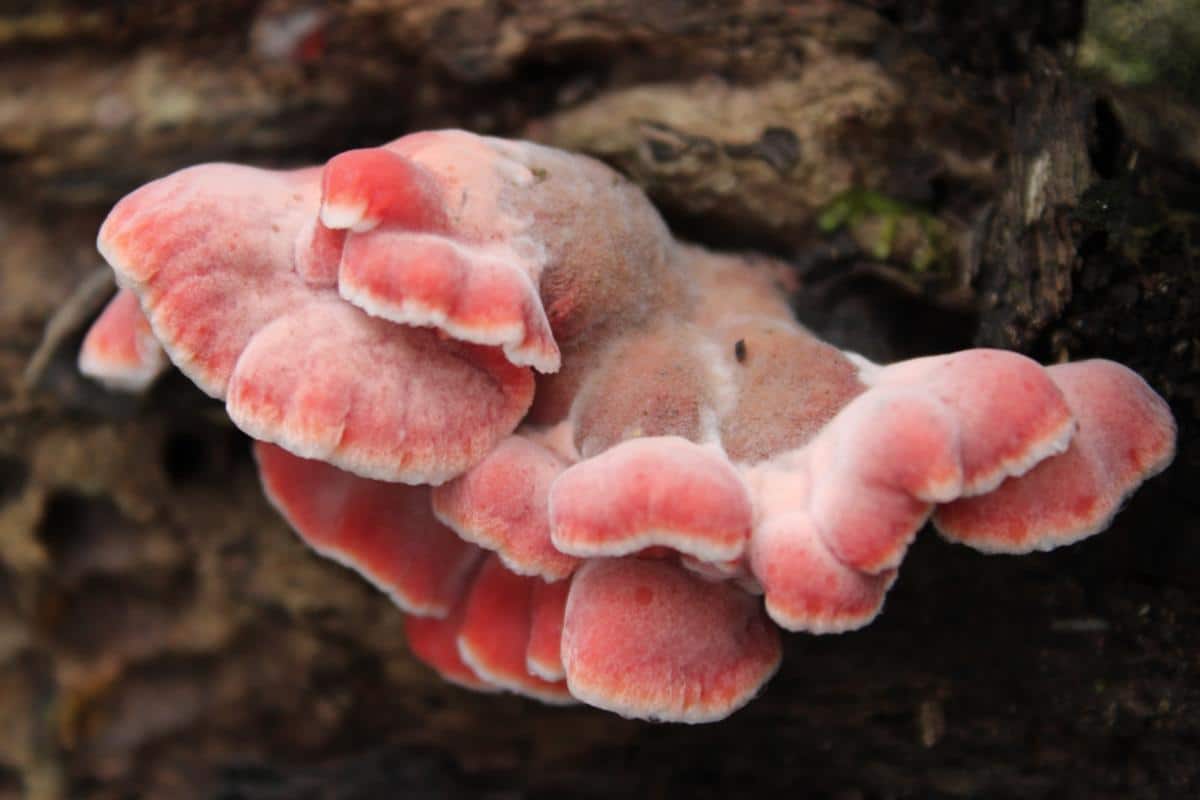
The coral pink Phlebia (Phlebia incarnata) is a mushroom that might stop you in its tracks. It has vivid coral-pink caps that stand out against the gray and brown of decaying logs it grows on. It looks like a paint splash! This mushroom isn’t edible, but it might be a great aid in cleaning up environmental pollution.
This small crust fungus grows on dead hardwood logs and stumps, primarily east of the Great Plains and into Mexico. Recently, it has also been found in Brazil. It fruits from late spring through fall, and in warmer regions, and it can grow well into winter. Coral pink Phlebia is a saprobic species, meaning it feeds on dead wood. It causes white rot as it breaks down the lignin and cellulose in the logs it colonizes.
- Scientific Name: Phlebia incarnata
- Common Names: Coral Pink Merulius, Coral Pink Wood Crust, Coral Pink Phlebia
- Habitat: Dead and decaying hardwoods
- Edibility: Inedible
Jump to:
All About The Coral Pink Phlebia
This mushroom has several common names, all of which point to the same two primary features: its color and its bracket-like structure. It is called the Coral Pink Merulius, Coral Pink Wood Crust, and Coral Pink Phlebia.
The species was first described to science in 1822 by Lewis David de Schweinitz. He named it Merulius incarnatus. The name incarnata is Latin, from the word carnis, meaning flesh. The prefix “in” makes the word mean “flesh-colored” or “like flesh.” The genus name Phlebia comes from the Greek phlebos, meaning vein. This is a reference to the vein-like texture of the undersurface.
The species has moved around a lot taxonomically. After its original description as Merulius incarnatus, it was moved to the genus Cantharellus, then to Sesia, and reclassified as a form of Merulius tremellosus at one point before being placed in Byssomerulius. In 1984, mycologists Nakasone and Burdsall synonymized Merulius with Phlebia and transferred the species to its current name, Phlebia incarnata.
However, some places, like IndexFungorum, still list it as Byssomerulius incarnatus. And DNA sequencing has suggested the species may not cleanly belong to any of these genera. For now, though, it is in Phlebia. Because of all the name changes, this fungus might be listed online and in books under any of these species names.
The coral pink Phlebia looks like a polypore because of how it grows in overlapping clusters on wood. However, it has an unusual spore surface — it does not have pores, gills, or teeth. True polypores have pores, and because the coral pink Phlebia does not, it is technically a crust fungus despite its bracket-like appearance.
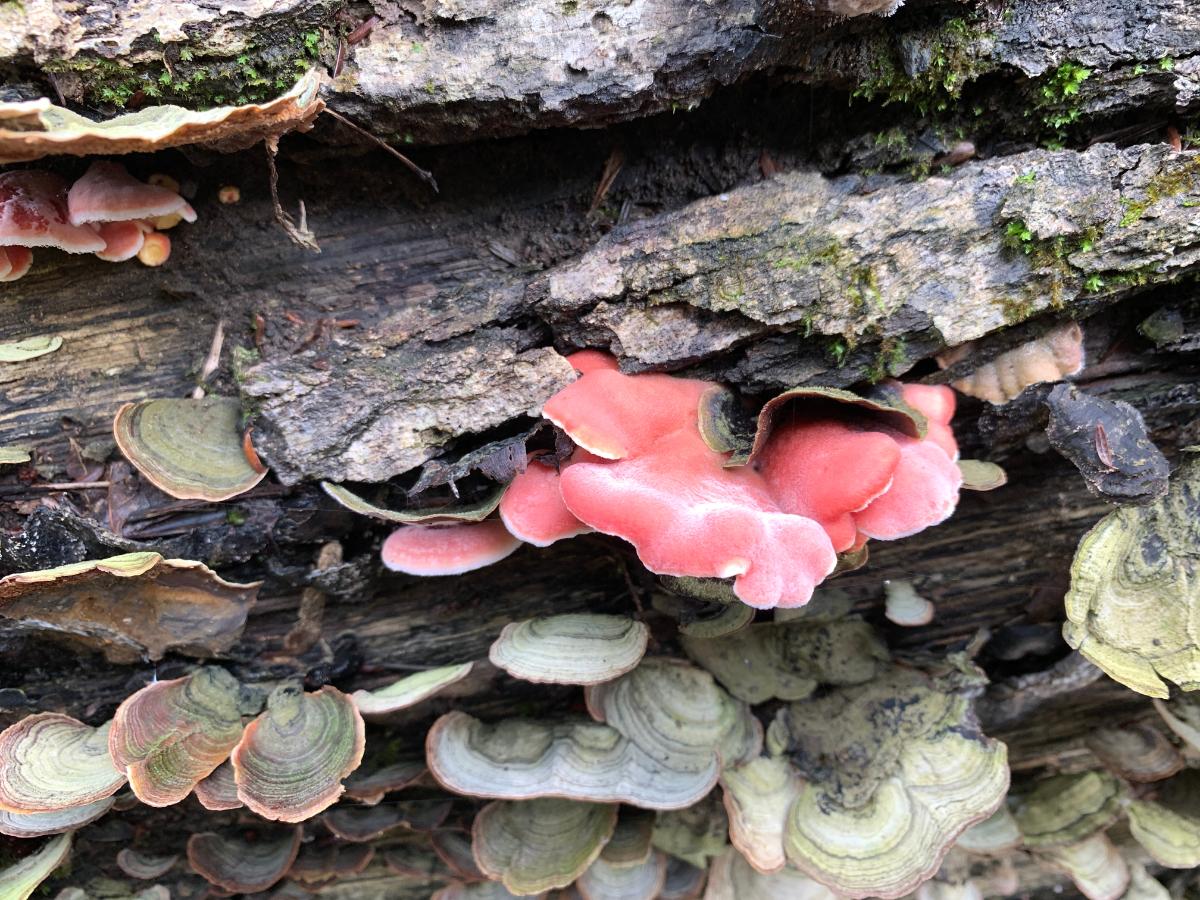
Coral Pink Phlebia is very commonly found growing alongside false turkey tail (Stereum ostrea) — so reliably that finding one is practically a signal the other is nearby. This pattern has been documented for decades. Whether the two fungi share a specific relationship or simply prefer the same logs and conditions has never been formally studied.
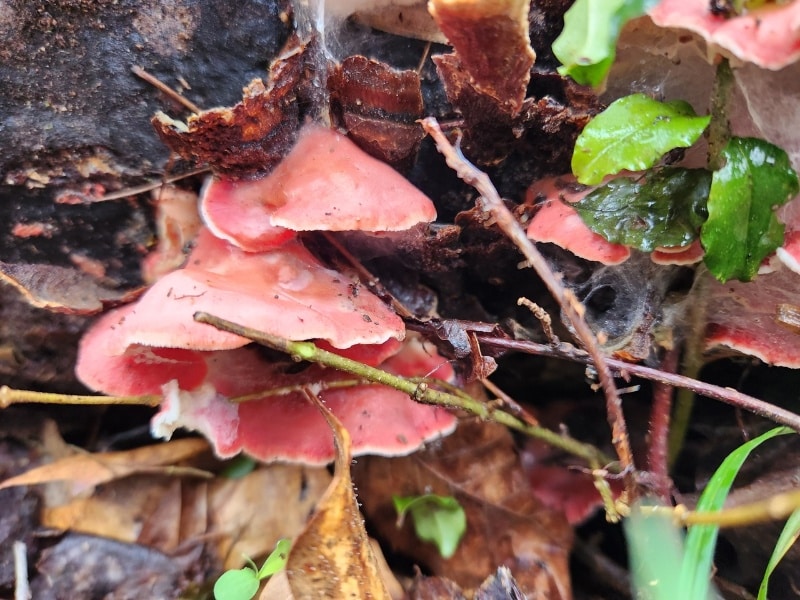
Phlebia incarnata by Ryan on Mushroom Observer
Coral Pink Phlebia Identification Guide
Season
This mushroom fruits from late spring through fall across most of its range. It is most common in the fall. Along the Gulf Coast, fruiting bodies grow from June through January, effectively making it a near year-round species.
Habitat
The coral pink phlebia grows on dead hardwood logs and stumps. It is most common on white oak, beech, maple, and birch. It grows in overlapping clusters and is very commonly found alongside false turkey tail fungi. It is sometimes so closely intertwined with it that the two species are difficult to separate. It always grows from wood; it does not grow from the ground or from soil.
It is found east of the Great Plains and is most concentrated in the Mississippi watershed region. It also grows in parts of Texas and Mexico.
The fungus is a saprobe — it lives off dead wood — and causes white rot, meaning it breaks down the wood, leaving behind a pale, fibrous decay.
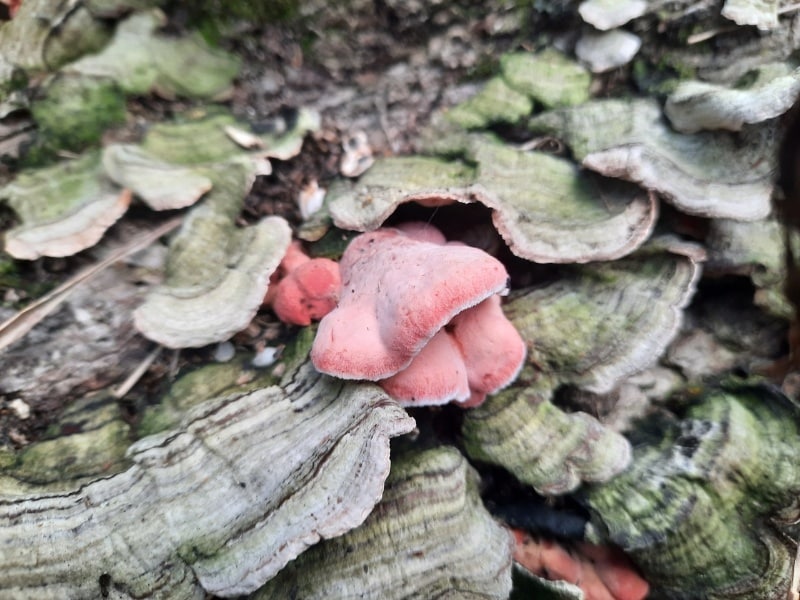
Phlebia incarnata by FofX on Mushroom Observer
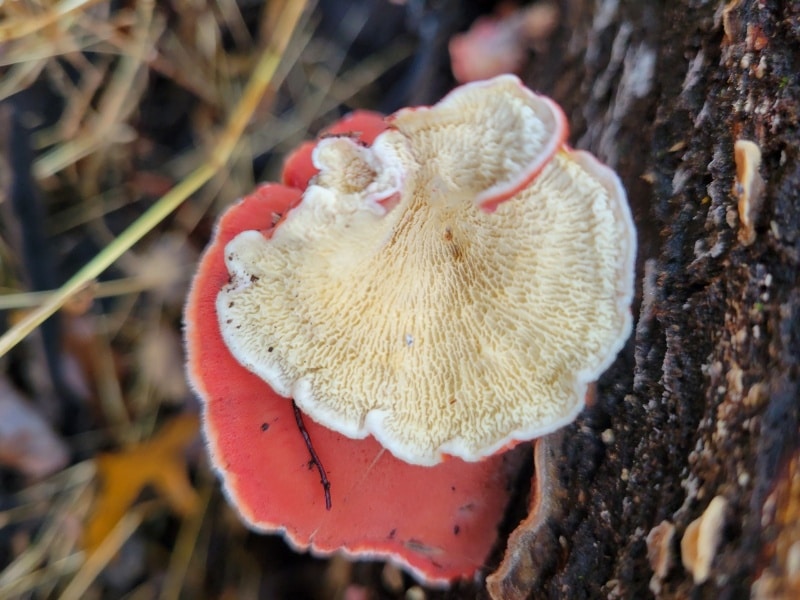
Phlebia incarnata by myco20200701 on Mushroom Observer
Identification Guide
Cap
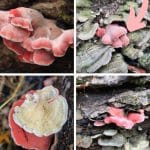
The cap ranges from about 0.6 to 2.75 inches across and is roughly semicircular. It can also be irregularly bracket-shaped or kidney-shaped. The surface is smooth or finely hairy. When it is dry, the cap has a slightly fuzzy texture.
When young, the color is vivid coral pink — one of the most distinctive colors of any wood-rotting fungus in North America. With age, however, the cap fades to salmon and eventually a pale cream or whitish pink.
The edge of the cap is wavy and is often white, especially when the mushroom is young. These mushrooms often cluster and frequently fuse together, producing larger, layered formations.
Spore Surface
The coral pink Phlebia does not have true gills or pores. The undersurface is wrinkled, folded, and veined, particularly where it attaches to the wood. This gives the impression that it has shallow pores or even small teeth — this texture is called merulioid.
This surface is whitish to pinkish and becomes dirty white or tan with age. It might bruise mustard yellow on older specimens.
Stem
There is no stem. The cap attaches directly to the wood.
Taste and Smell
This mushroom does not have a distinctive taste or smell.
Flesh Color and Staining
The flesh is white and soft when the mushroom is young – very flesh like. It becomes fairly tough and leathery with age. The undersurface of older specimens bruises mustard yellow when handled.
Spore Print
The spore print is white.
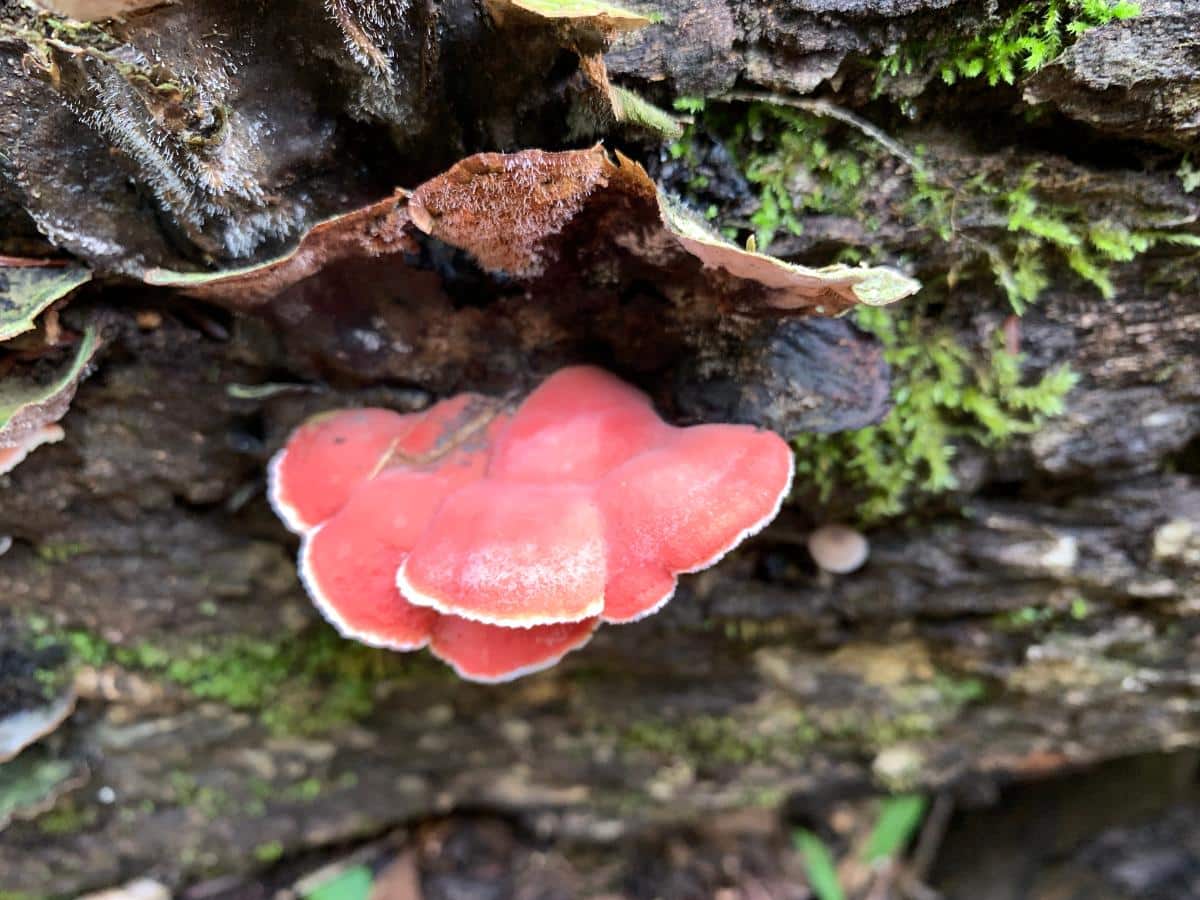
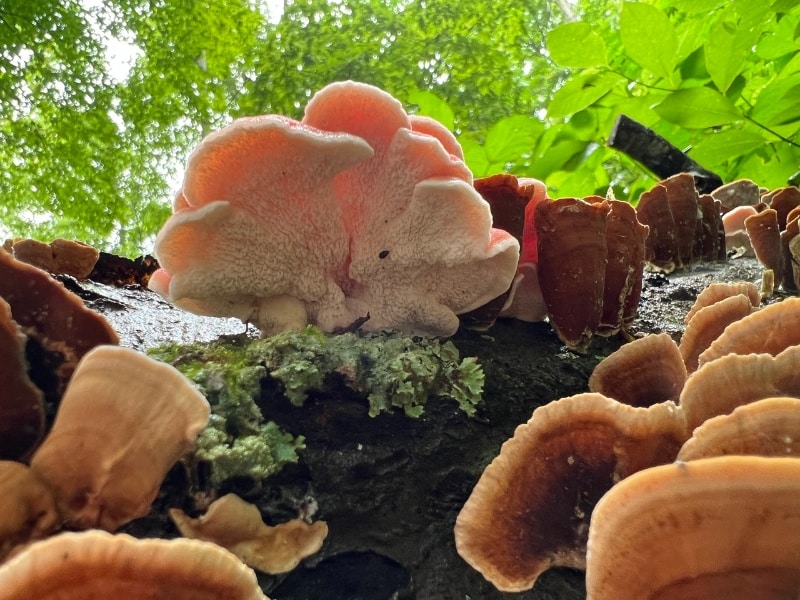
Phlebia incarnata by David A. Riggs on Mushroom Observer
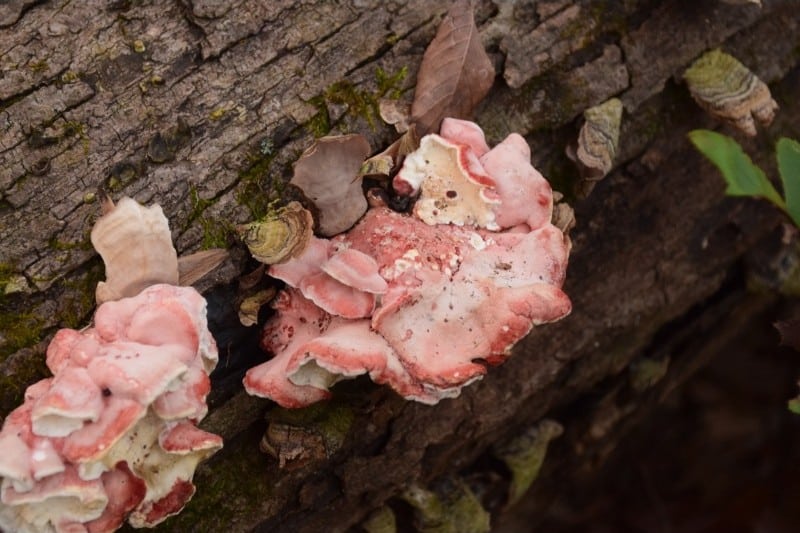
Phlebia incarnata by Clara on Mushroom Observer
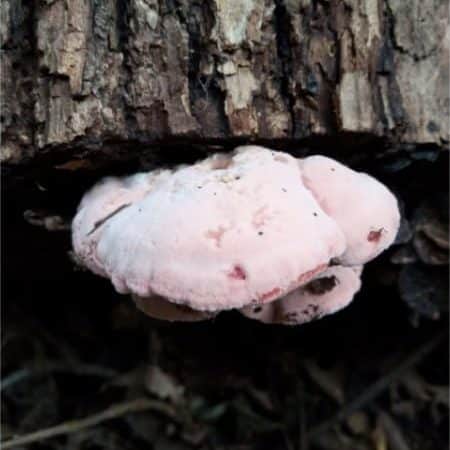
Phlebia incarnata by jasonalan1980 on Mushroom Observer
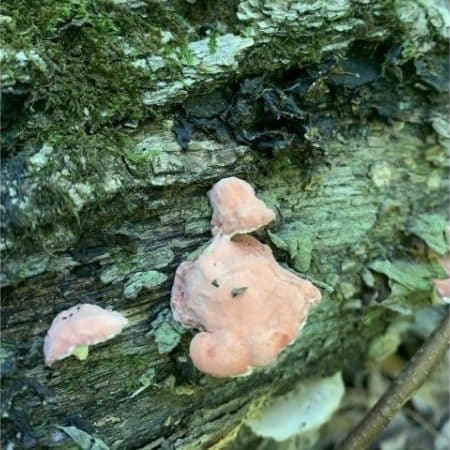
Phlebia incarnata by Jason Simpson on Mushroom Observer
Coral Pink Phlebia Lookalikes
Jelly Rot or Trembling Merulius (Phlebia tremellosa/Merulius tremellosus)
Both of these species grow on hardwood as overlapping bracket formations with wrinkled undersurfaces. The key difference is color: the trembling meruilius is whitish to cream-colored on top and pinkish orange below. This is basically the exact opposite of the coral pink Phlebia, which has a vivid coral pink upper cap and a light pinkish to white undersurface.
The trembling Meruilius also has a more gelatinous, rubbery texture and is generally larger. The two are not difficult to tell apart when the specimens are fresh and in good condition. However, faded or dried mushrooms can look a lot alike.
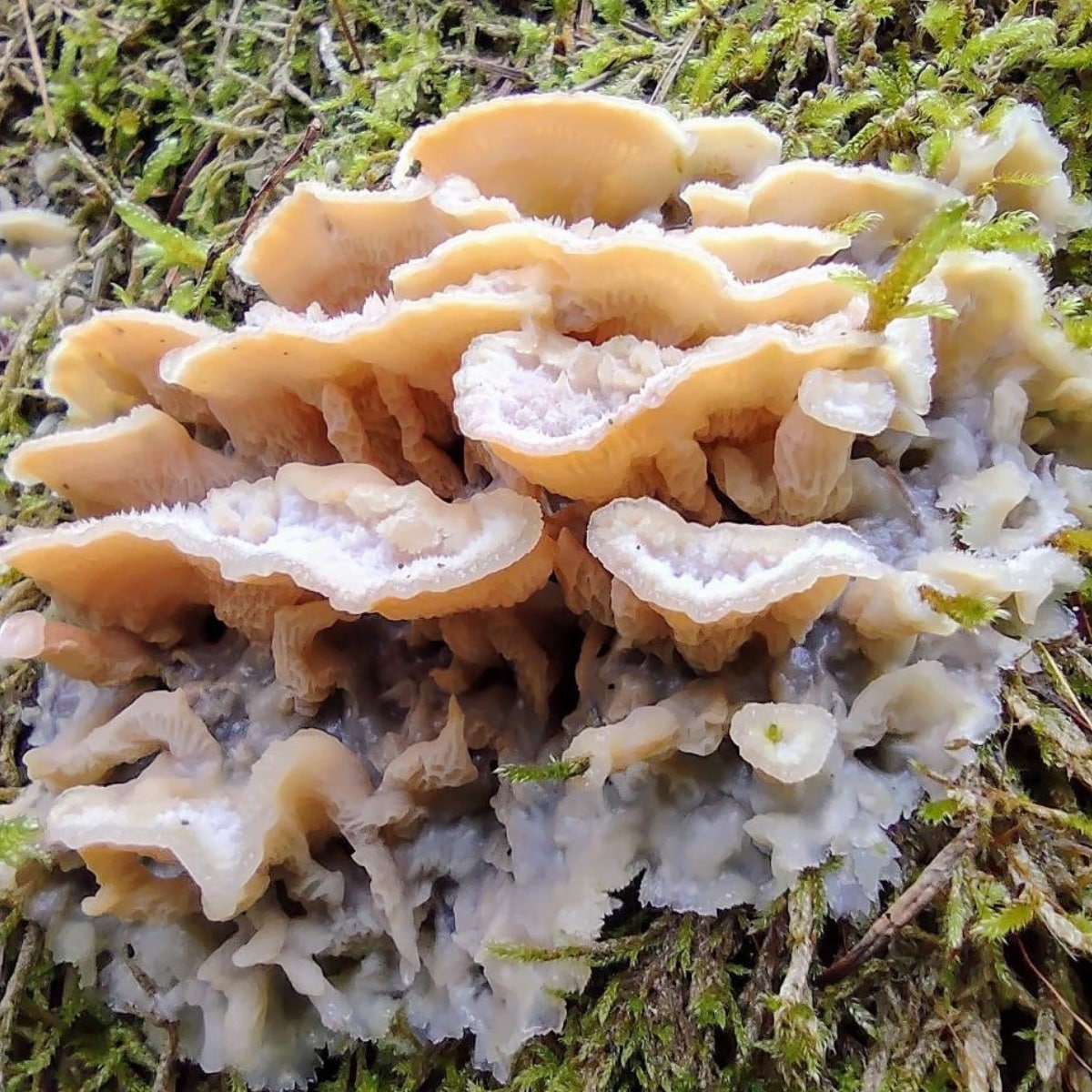
False Turkey Tail (Stereum ostrea, Stereum hirsutum, Stereum complicatum)
The false turkey tail is not a true lookalike, but it commonly grows alongside the coral pink Phlebia — so closely that the two can be physically intertwined. False turkey tails have a tough cap with concentric bands of brown, orange, and cream tones. Its undersurface is smooth and pale tan, not wrinkled or veined.
Once the two species are examined side by side, the coral pink caps of Phlebia incarnata are unmistakable. The consistent co-occurrence of these two fungi is well known among collectors, to the point where spotting Stereum ostrea has become an informal cue to look for Coral Pink Phlebia nearby.
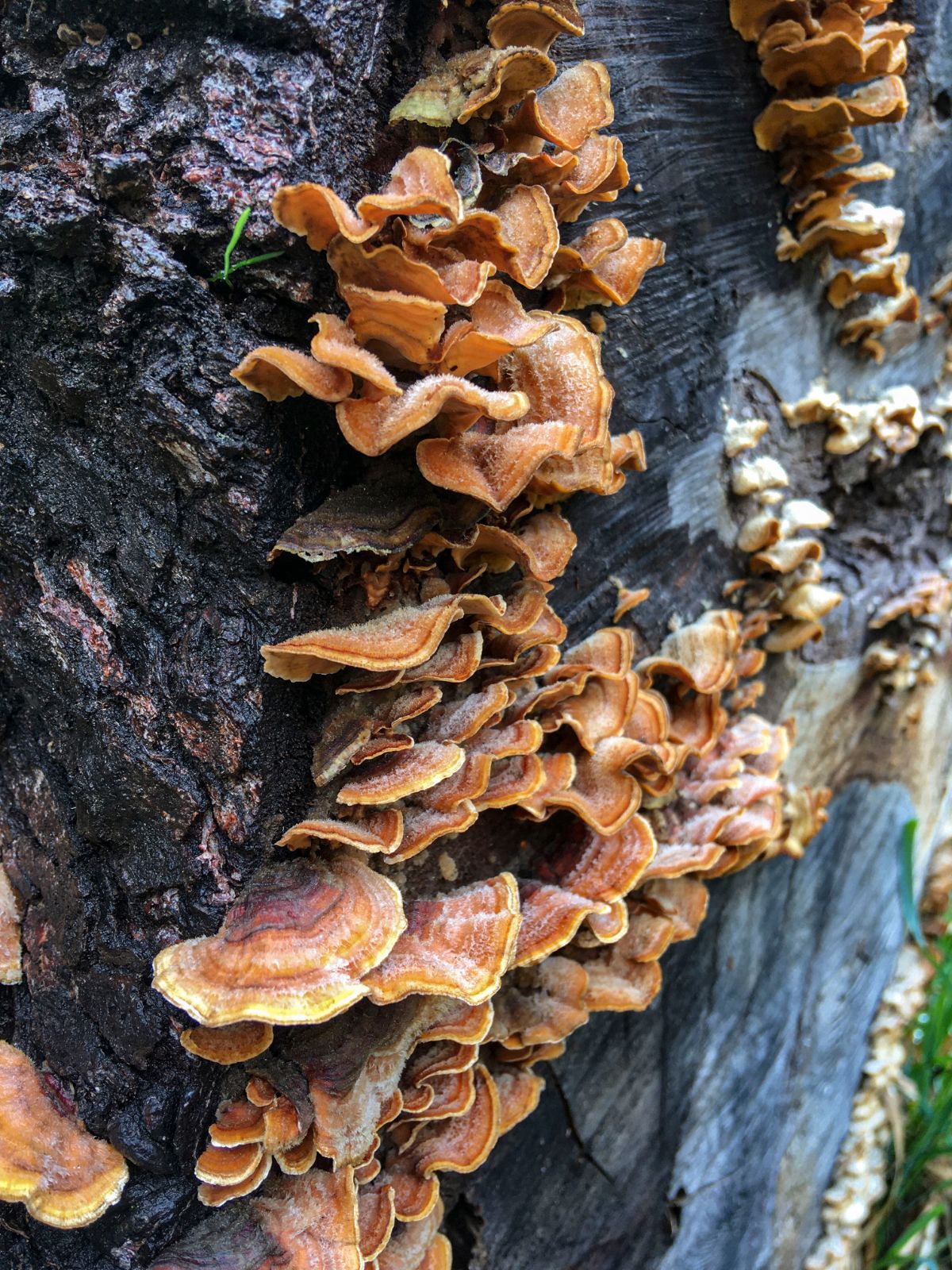
Mycoremediation Possibilities
Research published in 2020 in the journal Bioprocess and Biosystems Engineering found that the coral pink Phlebia was the top performer among several white rot fungi tested for breaking down polycyclic aromatic hydrocarbons (PAHs). These are a class of toxic compounds released by the incomplete burning of fossil fuels, and they accumulate in soil and water. Phlebia incarnata degraded between 40% and over 90% of PAHs in the study, outperforming the other species tested. This fungus might be useful in cleaning contaminated environments.
Coral Pink Phlebia Edibility
The coral pink Phlebia is inedible. This is not because it’s toxic or poisonous; it is neither. However, it has a tough, leathery texture and is not enjoyable to eat.
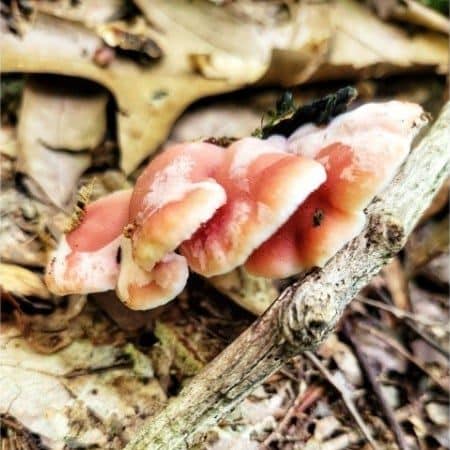
Phlebia incarnata by Rachel on Mushroom Observer
Common Questions About Coral Pink Phlebia
Is Coral Pink Phlebia edible?
No. Coral Pink Phlebia is not edible. The flesh is tough and leathery. It is not known to be toxic, though.
What does Coral Pink Phlebia grow on?
It grows on dead hardwood logs and stumps. It prefers white oak, beech, maple, and birch.
Is Coral Pink Phlebia medicinal?
There are no traditional or clinical medicinal uses that have been documented for this species.
Leave a Reply