
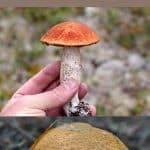

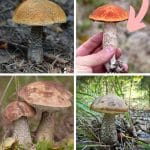
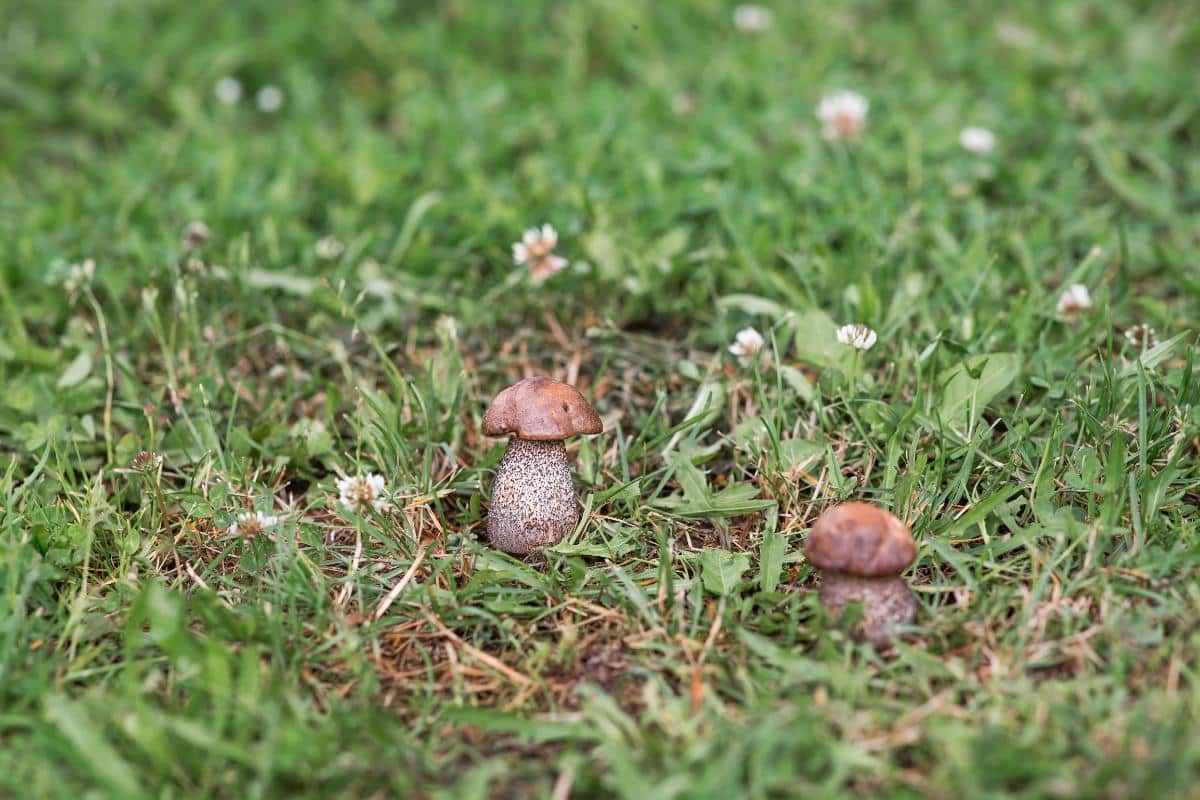
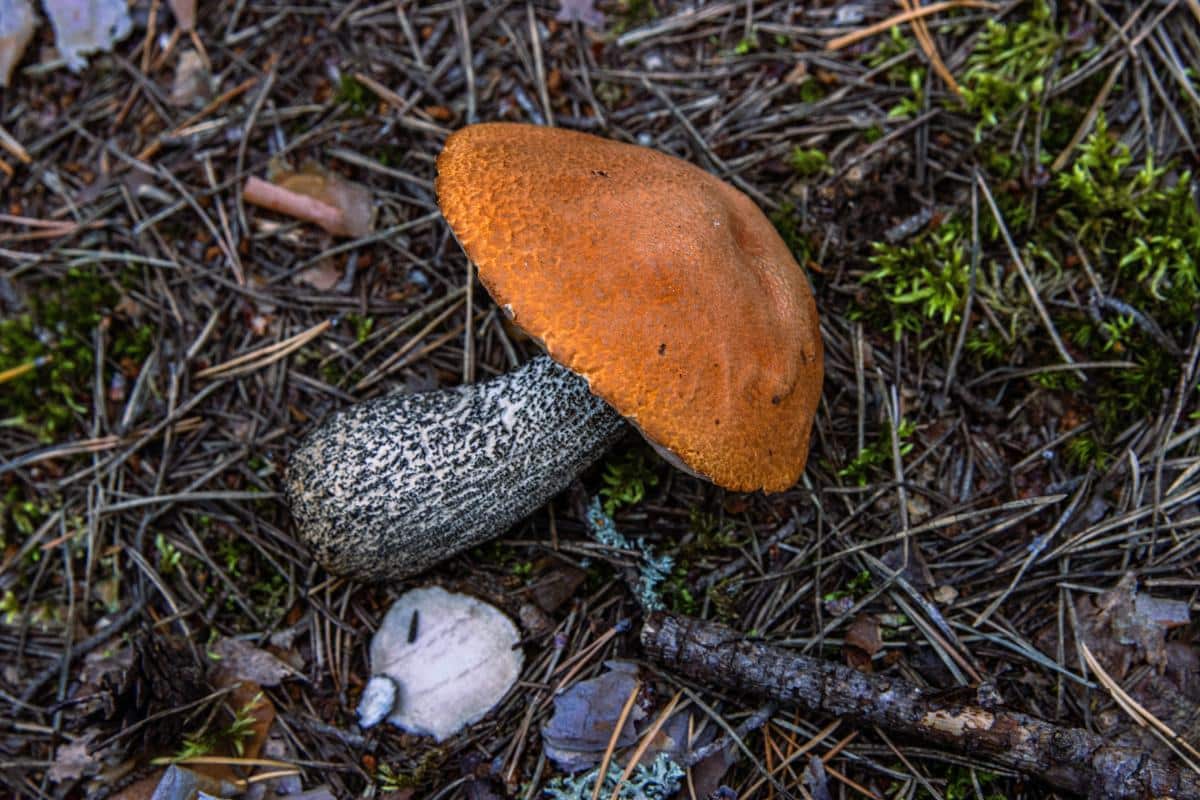
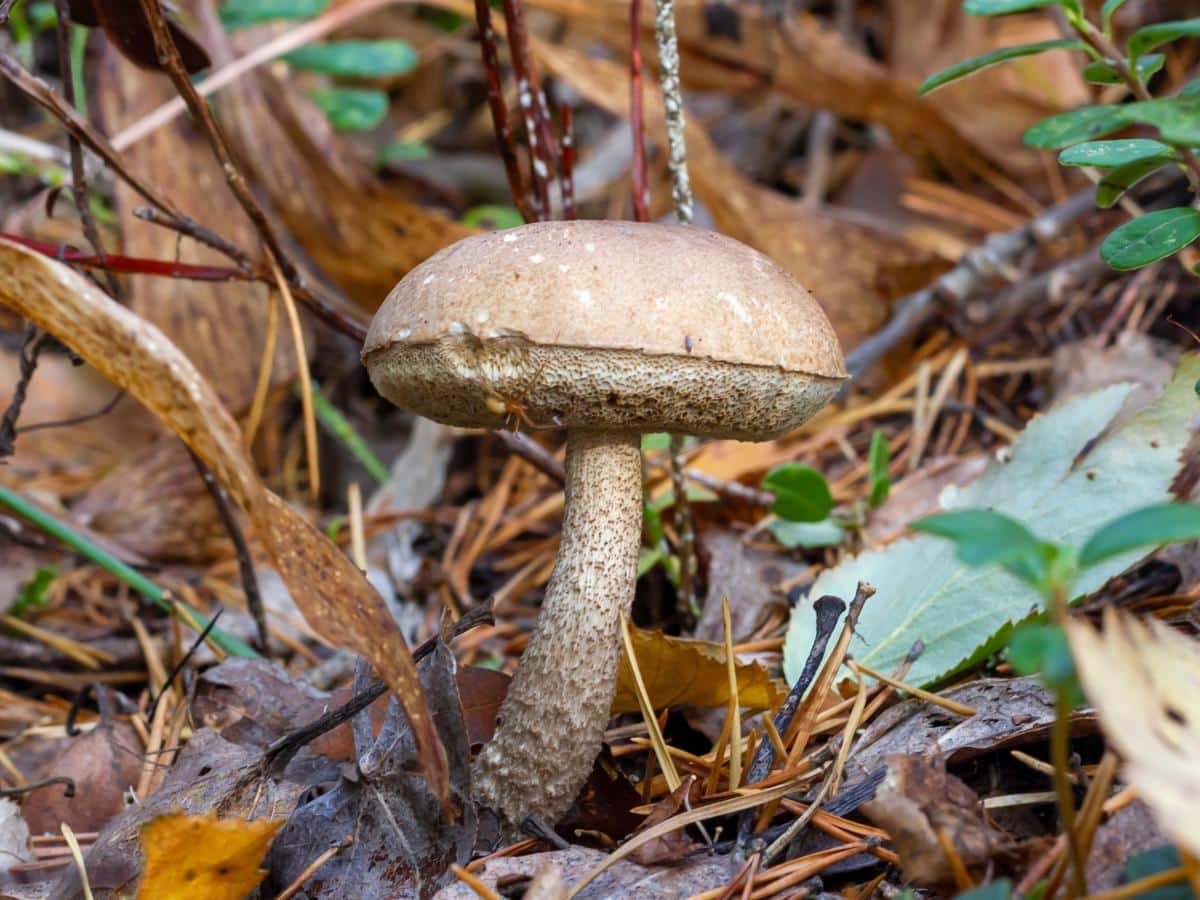
If you find a mushroom with a stem covered in tiny dark bumps, as if it rolled through ground pepper, it is almost always a scaber stalk bolete (Leccinum sp.). Those bumps are called scabers (hence the common name), and no other bolete genus has the same rough, speckled look covering the entirety of the stem. This makes them easier to differentiate from the hundreds of other boletes, but it can still be complicated to figure out which scaber stalk you’ve found. Leccinum species are edible but with caveats; they must be cooked very thoroughly, and even then, some people still can’t tolerate them.
There are more than 100 Leccinum species that grow in North America, and mycologists have only recently sorted out some of the confusion between them, with the help of DNA testing, though it is for sure ongoing. Scaber stalk mushrooms tend to be tree host-specific, which can help narrow down their identification, but not always.
- Scientific Name: Leccinum species
- Common Names: Scaber stalk
- Habitat: Mycorrhizal with trees
- Edibility: Varies, can be complicated
Jump to:
All About Scaber Stalks
The British botanist Samuel Frederick Gray created the genus Leccinum in 1821 and based it on the species Leccinum aurantiacum. The name comes from “leccino,” an old Italian word for a type of rough-stemmed bolete. Every Leccinum species has these scabers on their stems, and this sets them apart from other bolete mushroom species.
Almost every Leccinum species partners with just one kind of tree. This is a relationship known as host specificity, and it makes the trees growing nearby just as important as the mushroom itself for identification. Because of this, scaber stalks with similar-looking orange or brown caps can belong to a completely different species. The key to identification usually depends on whether it grew under aspen, birch, or a conifer.
Leccinum mushrooms are known to pull minerals and metals out of the soil more efficiently than many other fungi. Studies done in Europe measured the elevated levels of mercury, cadmium, and other trace metals in some scaber stalk populations. In birch boletes collected from Ukraine, radioactive cesium-137 is still detectable even decades after the 1986 Chornobyl accident.
Scaber Stalk Mushroom Identification
Season
Scaber stalk mushrooms fruit from summer through fall across most of North America. The exact timing depends on the species and the region: some start as early as June, while a few West Coast species keep fruiting into November.
Habitat
Every Leccinum species is mycorrhizal, meaning it grows in partnership with trees. They are also host-specific, meaning in most cases each Leccinum species only grows with one type of tree. Because of this host specificity, the tree growing nearby is one of the best clues to a scaber stalk mushroom’s identity. Across North America, scaber stalks grow under aspen, birch, manzanita, madrone, and several other trees. Since many of the tree species are regional, so are the scaber stalk species.
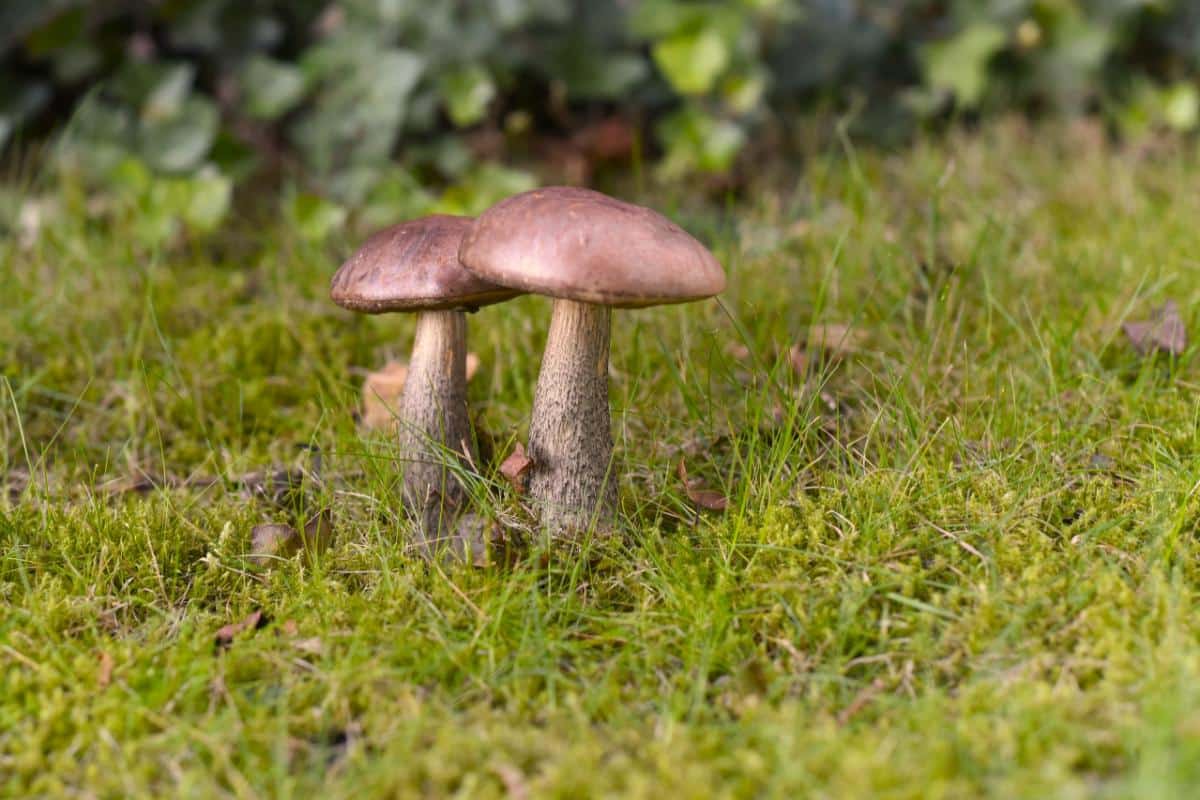
Scaber stalks grow from the ground, never on wood. They often fruit in mowed, grassy places like park lawns, yards, and cemeteries because a birch, aspen, or another host tree is planted nearby.
Identification
Cap
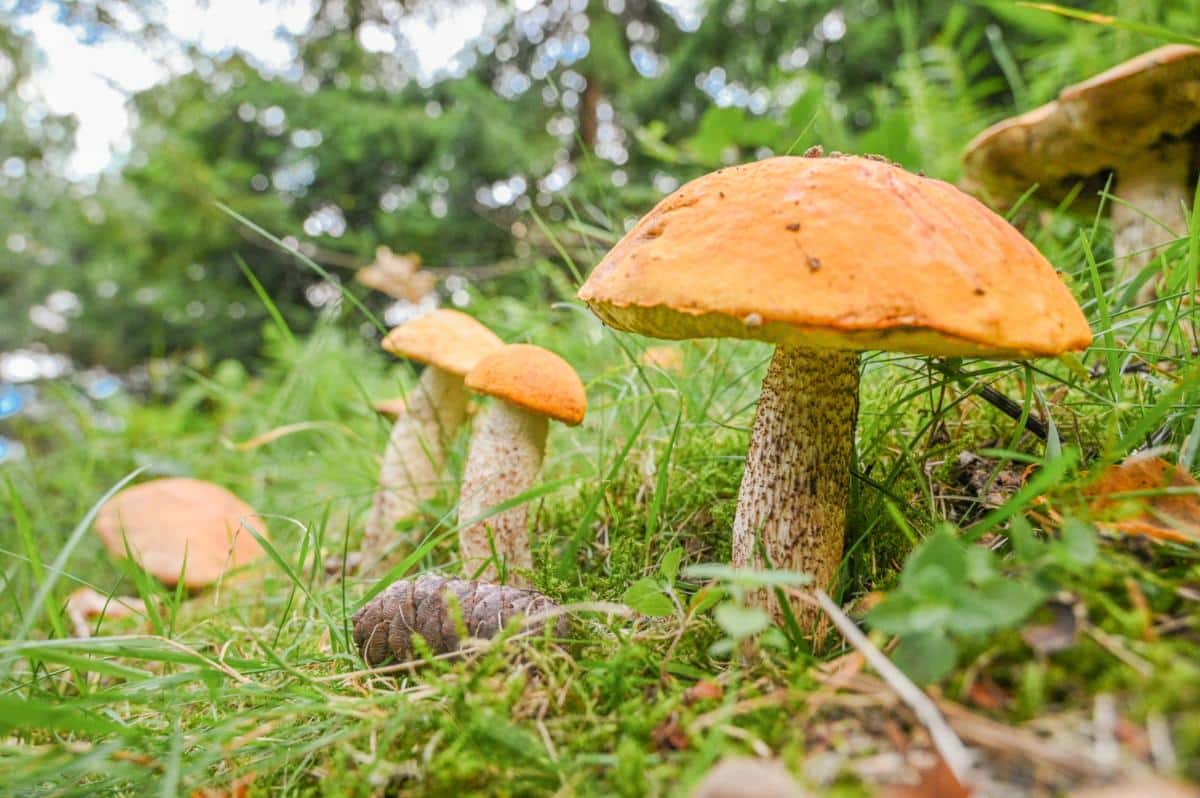
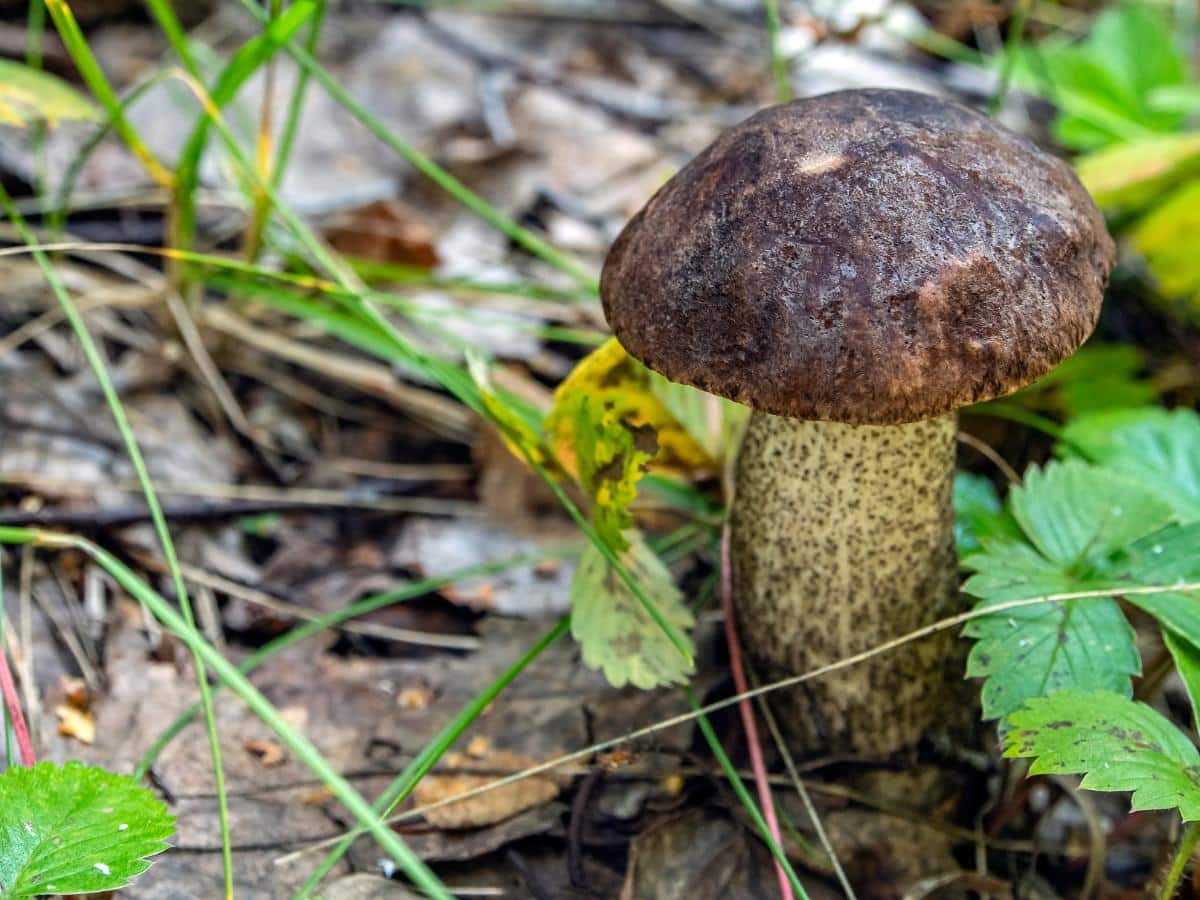
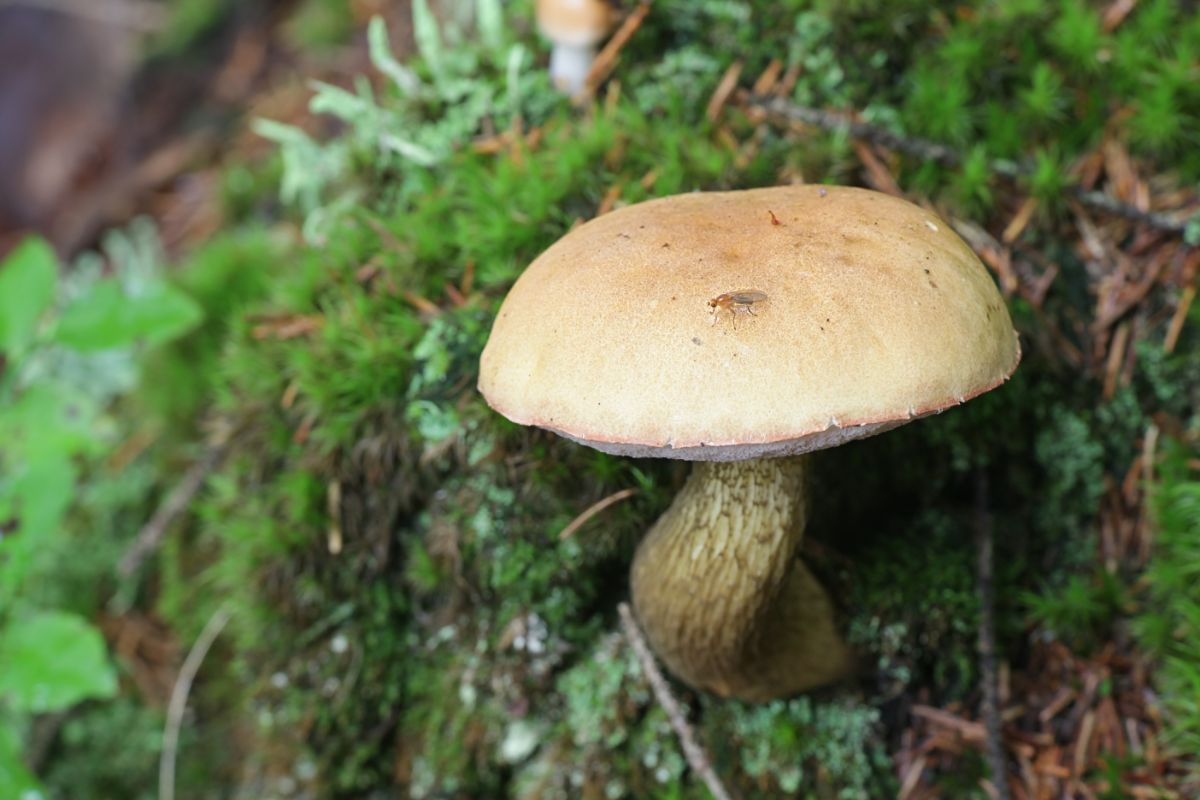
The cap size and color vary widely across the genus, from small, two-inch caps to caps nearly eight inches across. The colors also vary a bit, from red, orange, brown, and pale cream depending on the species. In many scaber stalks, the caps of young specimens have small flaps of tissue hanging along the edges. Cap surfaces range from dry to sticky depending on the species and the weather.
Pores
Scaber stalk mushrooms have pores, which are a spongy layer of tubes on the underside of the cap. The pore surface starts out pale in most species and darkens a little with age, though the exact color and staining reaction vary by species.
Stem
Every species will have a stem covered in scabers, which are small, rigid projections or dots that cover most of or all of the stem. The scabers usually start out pale and darken with age, before turning brown or black by the time the mushroom matures.
Taste and Smell
Leccinum mushrooms are mild-tasting and mild-smelling across the genus, and most don’t have a distinctive odor.
Flesh Color and Staining
Every Leccinum species has white flesh, but some stain when cut or bruised, and that can be a good way to differentiate between species. Some species change color slowly, from white to gray to black. Others turn a reddish or pinkish color before darkening to gray or black. A few species have forms that don’t stain at all. In general, though, the majority of Leccinum species do experience some type of color change when their flesh is cut, though it may be faint in some instances, or take a while to show up.
Spore Print
The spore print is some shade of brown, ranging from tan to olive brown depending on the species.
Common Scaber Stalk Species of North America
The Red-Capped Scaber Stalk Species Confusions
For most of the twentieth century, North American field guides used the name Leccinum aurantiacum for any large, orange to red-capped scaber stalk, regardless of what tree it was growing under. However, DNA testing has since found that the true Leccinum aurantiacum most likely does not grow in N. America at all and is a European species. This hasn’t been settled with certainty, though.
The majority of the red-capped scaber stalks growing under aspens are now called Leccinum insigne, aka the aspen bolete. A smaller number are two rarer relatives: Leccinum discolor and Leccinum brunneum. These both only grow in high-elevation aspen stands in the Sierra Nevada. Birch-associated red-capped scaber stalks are now primarily Leccinum atrostipitatum, the black-footed bolete, which is closely related to the European orange birch bolete.
Orange-capped scaber stalks that grow with oak trees and were once considered Leccinum species are now primarily reclassified to a different genus. The wrinkled Leccinum, now Leccinellum rugosiceps, rows with oak, with pin oak being a frequent host. Leccinum rubropunctum was moved even further, into a third genus called Hemileccinum.
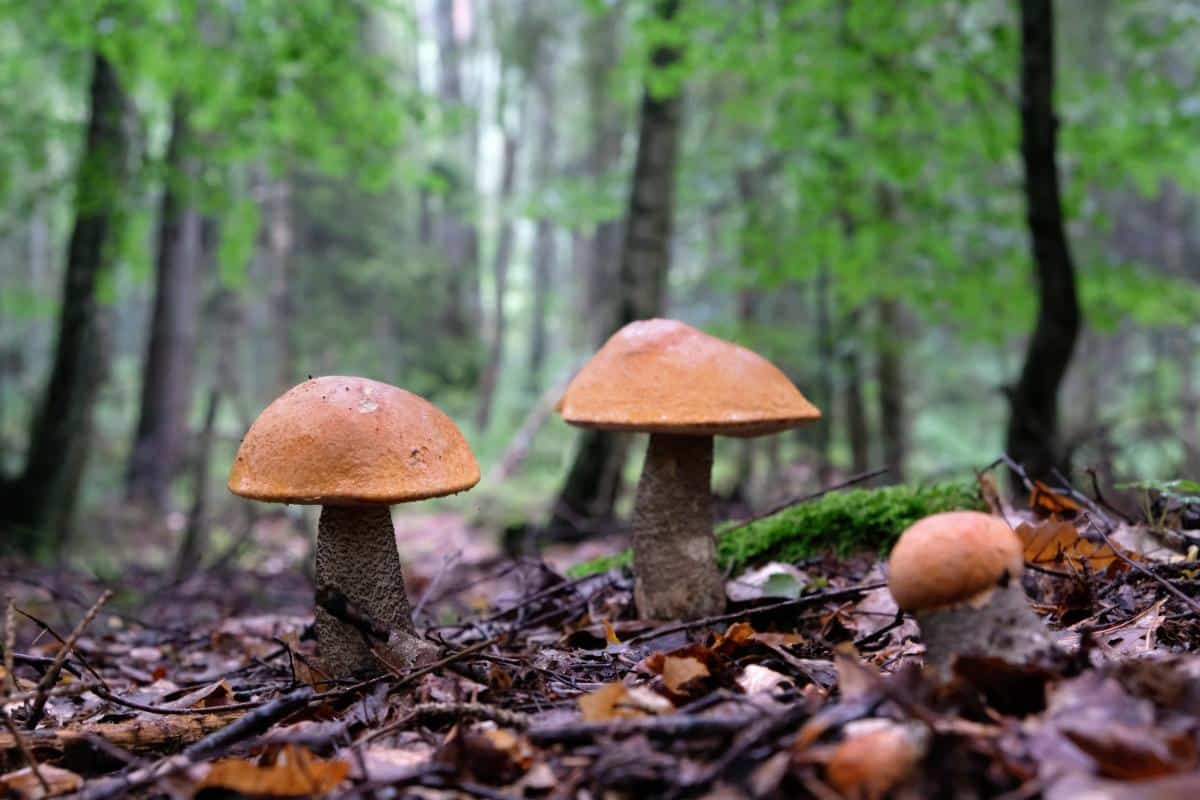
The conifer-associated scaber stalks, which make up the bulk of the L. aurantiacum records, still don’t have a confirmed N. American name. The placeholder name Leccinum vulpinum is being used until DNA testing sorts out what they actually are. The true Leccinum vulpinum was described in Scotland and is tied to Scots pine in Europe. Whether the same species actually grows in North America, or whether this continent’s conifer-loving red caps belong to one or more entirely different, still unnamed species, remains an open question.
In older guidebooks and texts, you will still see Leccinum aurantiacum used widely for all red or orange-capped scaber stalks.
To make things even more confusing, in early 2026 a paper was published saying L. aurentiacum does appear in North America. A large review of the genus pulled together nearly 300 studies and counted roughly 150 Leccinum species worldwide. The review confirmed that many mushrooms once filed under Leccinum have been moved out into other genera, including Leccinellum and Hemileccinum, as DNA studies showed they were never close relatives to begin with.
The 2026 review also shows how unsettled the red-capped names still are. It lists Leccinum aurantiacum as growing in the United States and Canada under oak, birch, poplar, and other trees, and treats several old names like Leccinum quercinum as the same species. That contradicts other recent work suggesting the true European Leccinum aurantiacum may not grow in North America at all, and that the mushrooms here are separate species. So, there is some disagreement, and the scientific names given to North America’s red-capped scaber stalks may keep changing as more DNA work gets done.
Aspen Bolete (Leccinum insigne)
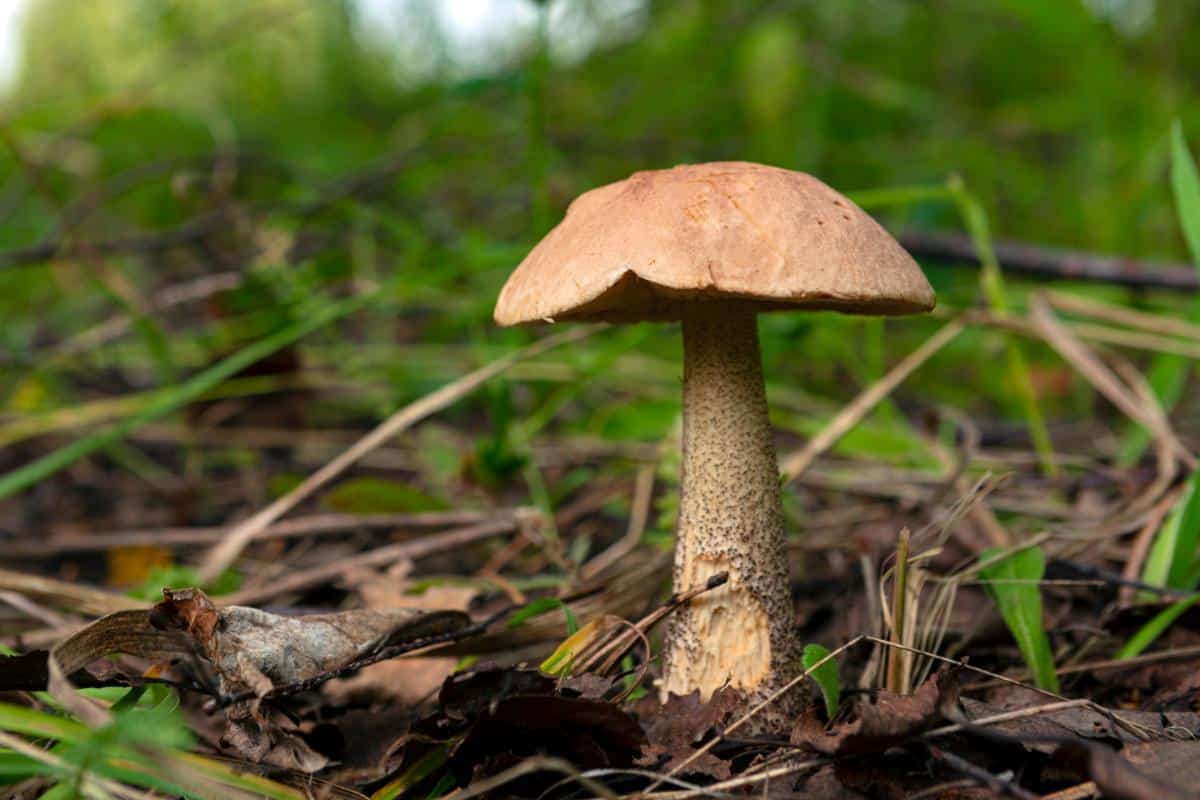
The aspen bolete grows on the ground only under quaking aspen, and nowhere else. Its range includes eastern Canada south to New Jersey and west into the northern Rocky Mountains, and it also grows at high elevations in the Sierra Nevada and the Cascades.
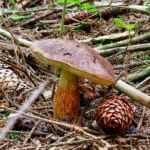
The cap of this scaber stalk is 2⅓ to 6¾ inches across and ranges from cinnamon to reddish brown to tawny. It usually has small flaps of sterile tissue along the edge of it, especially when the mushroom is young. The flesh is white and changes slowly to gray to purplish gray to black. Its name, insigne, is Latin for distinctive.
The two less common but related aspen boletes are Leccinum discolor and Leccinum brunneum. Both these species only grow in high-elevation aspen stands in the Sierra Nevada.
- Leccinum discolor has a cinnamon brown cap and flesh that turns pink, then gray, before darkening to black.
- Leccinum brunneum has a darker, chocolate brown cap, and its flesh doesn’t turn pink, only smoky gray. Both are considered uncommon even within their limited range.
Foxy Bolete (Leccinum vulpinum species complex)
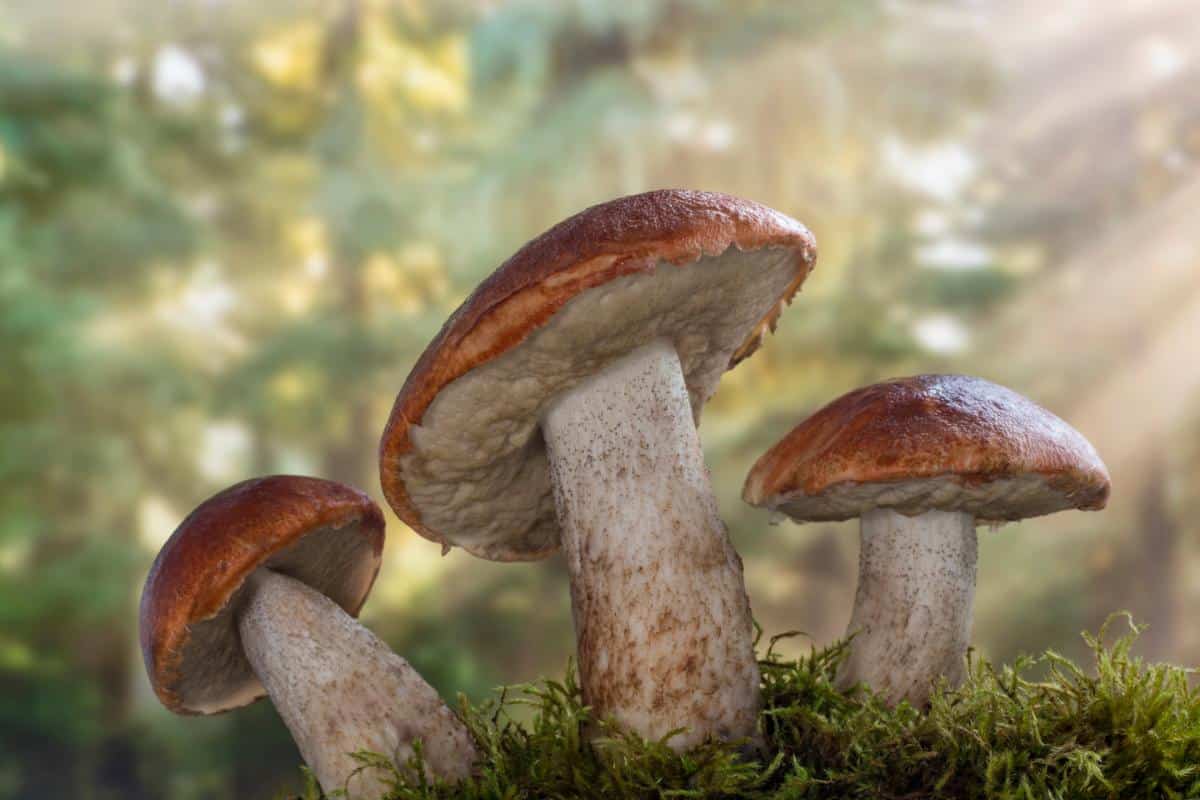
This scaber stalk grows under conifers, mainly pine, in the Rocky Mountains and the Pacific Northwest. The scientific name is a placeholder for this species, though. The true Leccinum vulpinum was described from Scotland in 1961, and it grows across Europe, mainly with Scots pine. Whether the same species grows in North America has not been confirmed, and the ones found under conifers here may turn out to be one or more separate, still unnamed species.
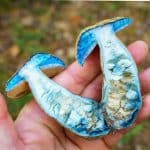
The cap is smallish, 1⅛ to 3½ inches across, and a muted fox red with cocoa-brown tints that deepen to a burnt sienna with age. The stem is 3⅜ to 5⅜ inches tall, and pale at first. The scabers on the stem darken from whitish to reddish brown and finally to dark chocolate brown, and the base bruises blue-green.
The white flesh stains very slowly: first it turns a faint pink or wine color at the top of the stem, then blue-green near the base, and finally a patchy steel blue throughout.
Birch Bolete (Leccinum scabrum)
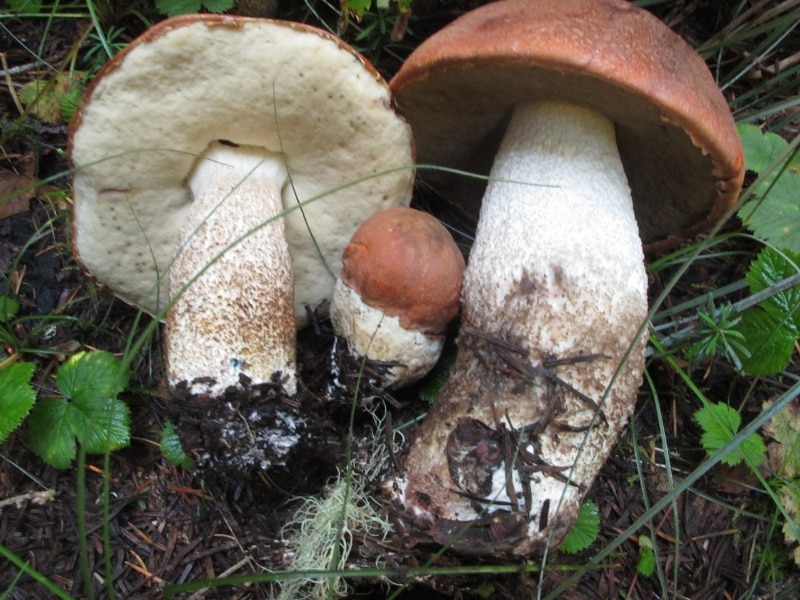
The birch bolete grows only with birch trees, and it is widespread across Canada and the northern United States wherever native birch grows. In places like California, it appears under ornamental birch trees planted in yards and parks, most likely introduced along with nursery stock. The cap grows 2 to 6 inches across, and its color ranges from brown to tan to dark brown. The surface of the cap is velvety when young and smooths out with age.
The stem is white to buff and covered in dark brown to blackish, woolly scabers. The flesh is white and sometimes turns slightly pink where it is cut, but it never turns blue, a helpful trait for telling it apart from several of its birch-loving relatives.
Ghost Bolete (Leccinum holopus)
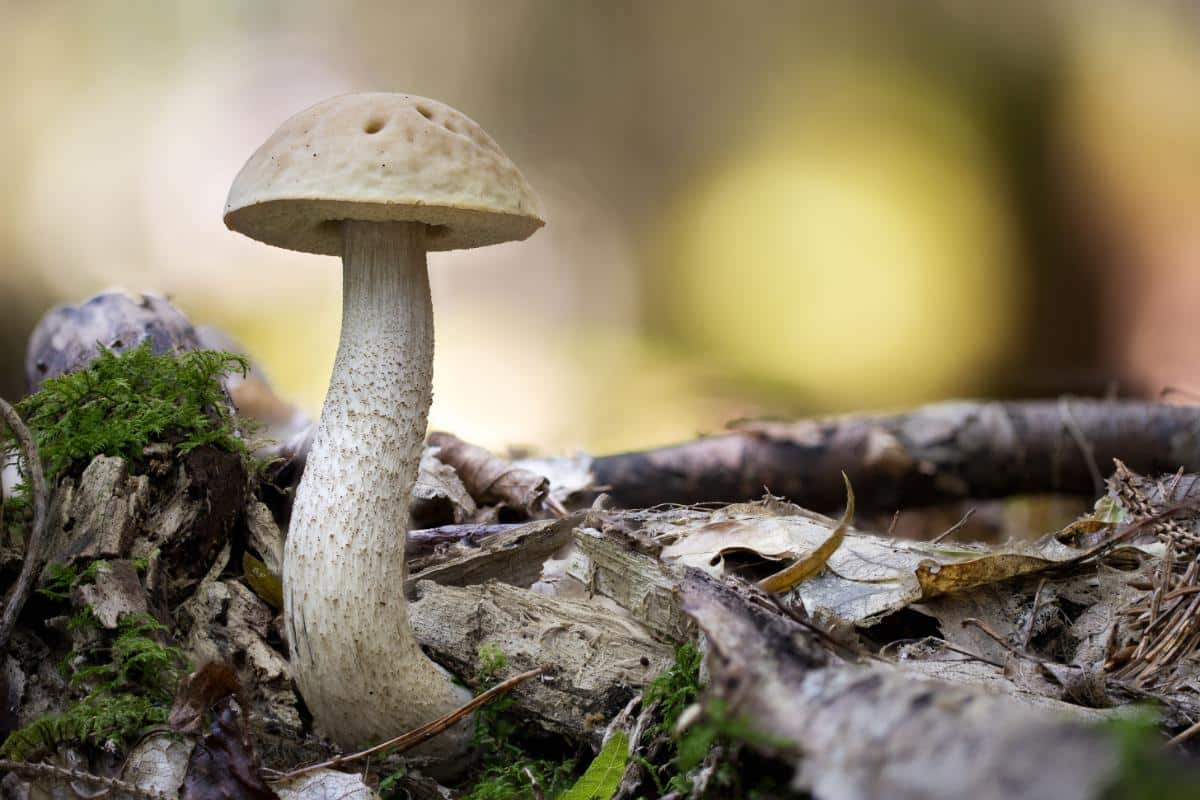
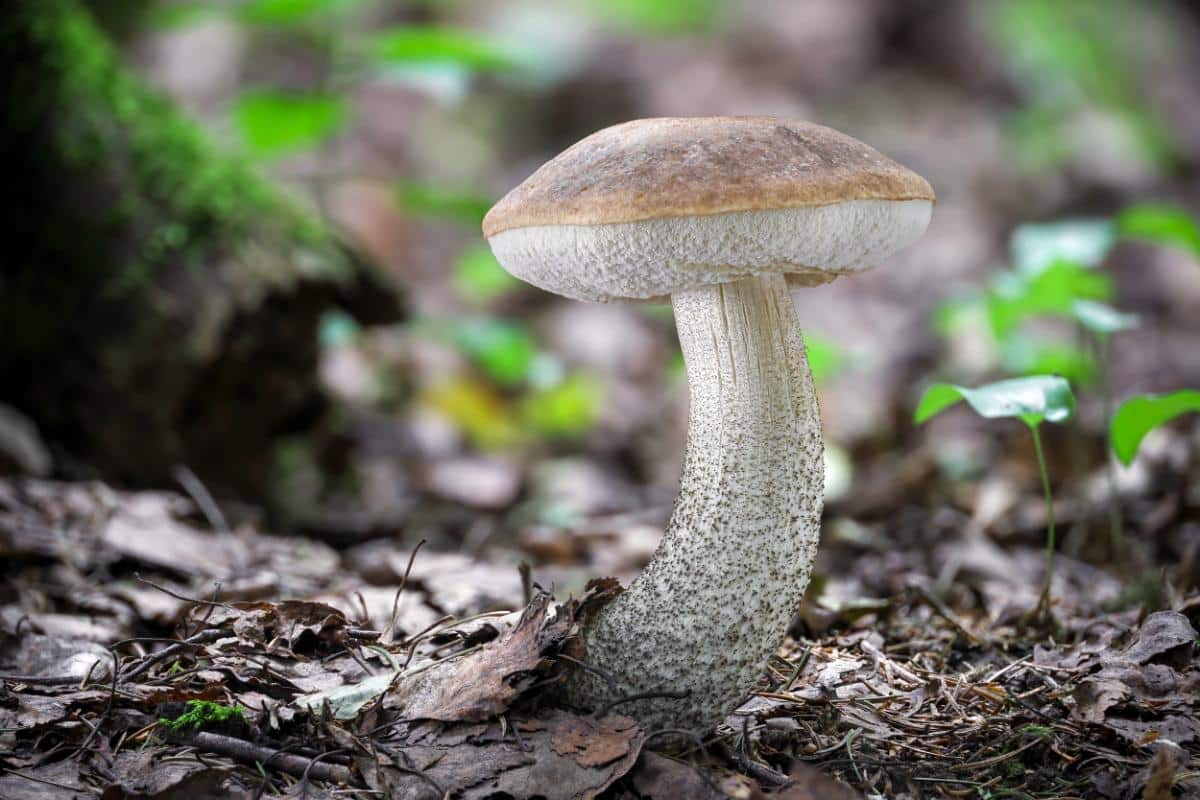
The ghost bolete also grows with birch, but its cap is pale brown to nearly white instead of tan or brown. It grows across northern North America, mostly north of the 43rd parallel, and it also grows under water birch in the Rocky Mountains. The cap is small, only 1 to 3 inches across. Sometimes, the white flesh stains pink slowly or blue at the stem base, but other times it barely stains at all.
Black-Footed Bolete (Leccinum atrostipitatum)
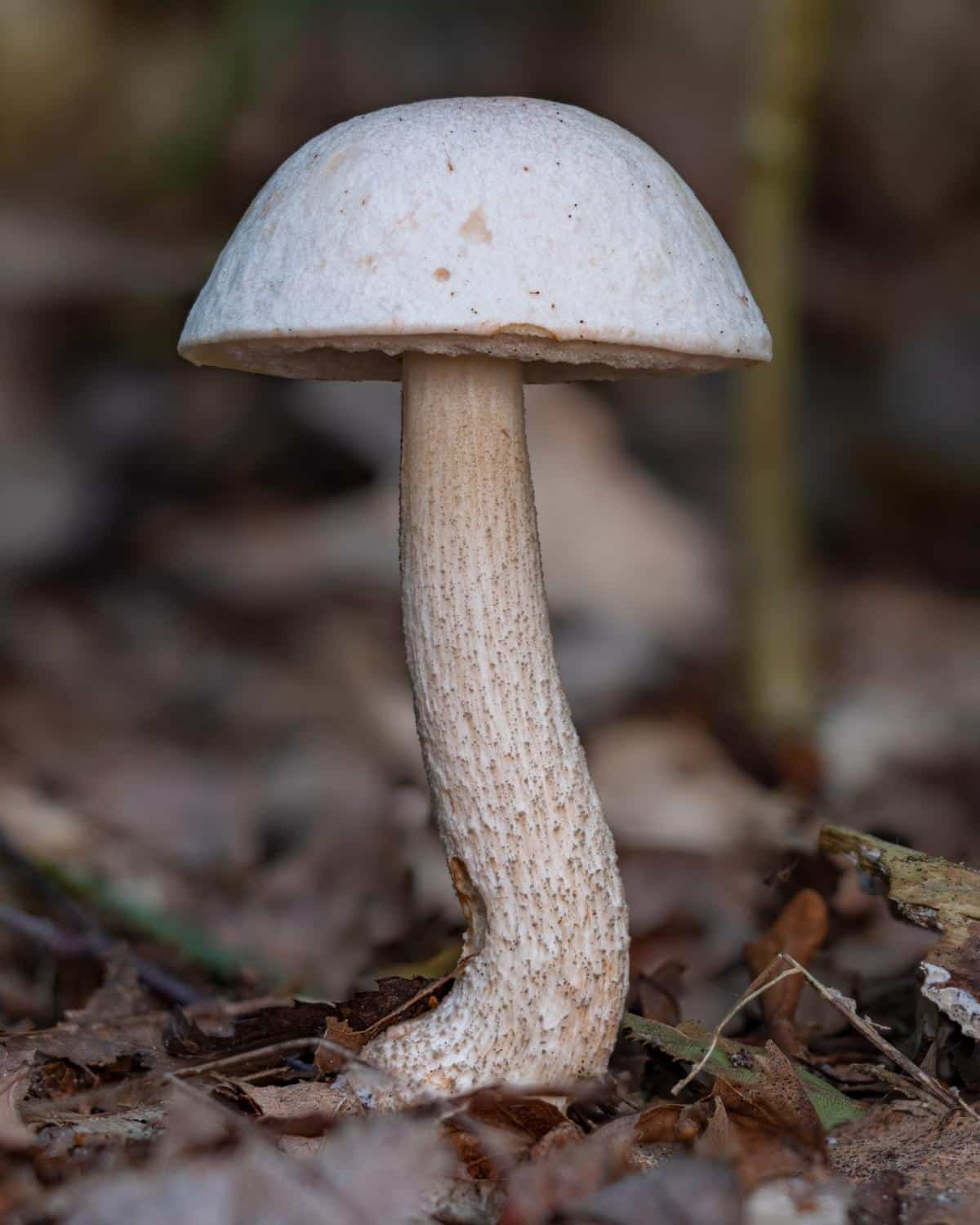
The black-footed bolete grows with birch across the northeastern United States, Canada, and the Great Lakes region. The cap grows up to nearly 8 inches across and is buff to yellow-orange or ochre and has a dry, finely hairy surface. The stem is up to 8 inches tall and has a heavy dusting of raised black scabers all over it, which is how it got its common name. The flesh of this scaber stalk is white and stains gray and then black.
Manzanita Bolete (Leccinum manzanitae)
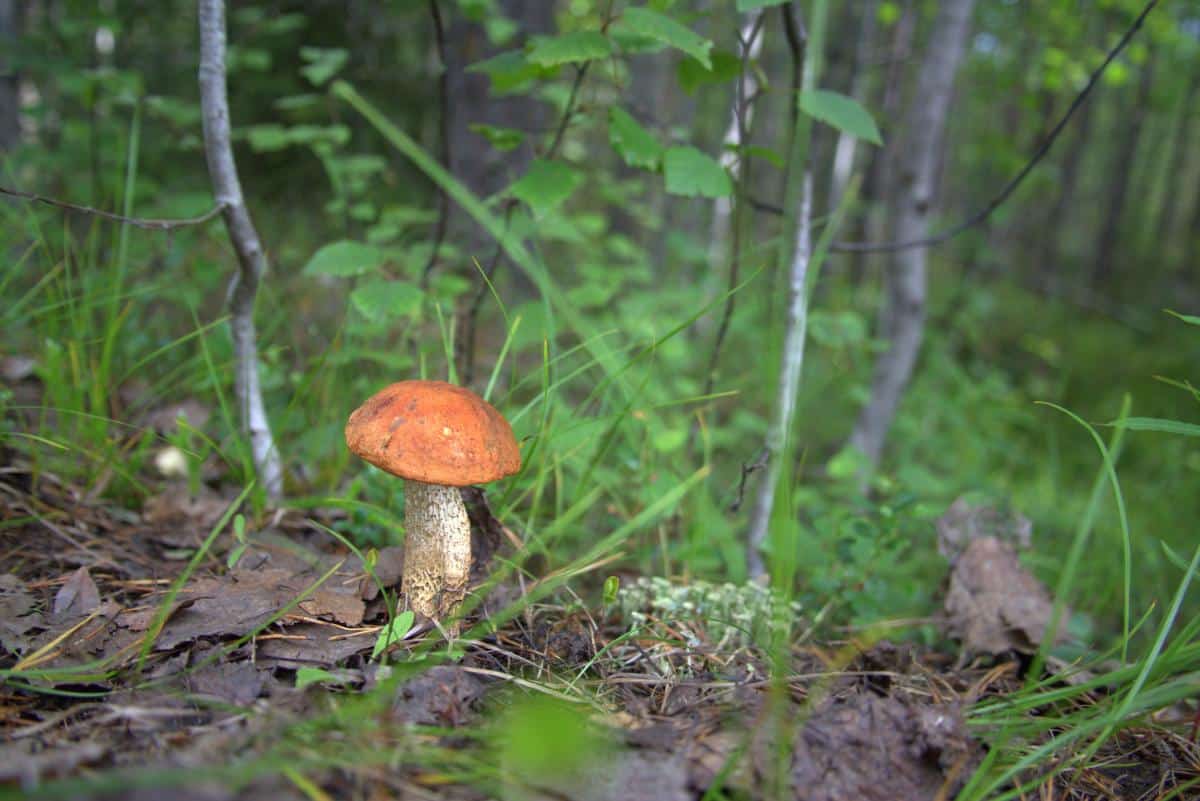
The manzanita bolete grows only along the Pacific coast of the United States and Canada, under manzanita and madrone trees. It is the most common Leccinum species in California. Its cap is sticky and dark red-brown and can be pitted or wrinkled. The fruit bodies can weigh several pounds, which makes it one of the largest Leccinum species in North America. Its white flesh darkens slowly to grayish brown.
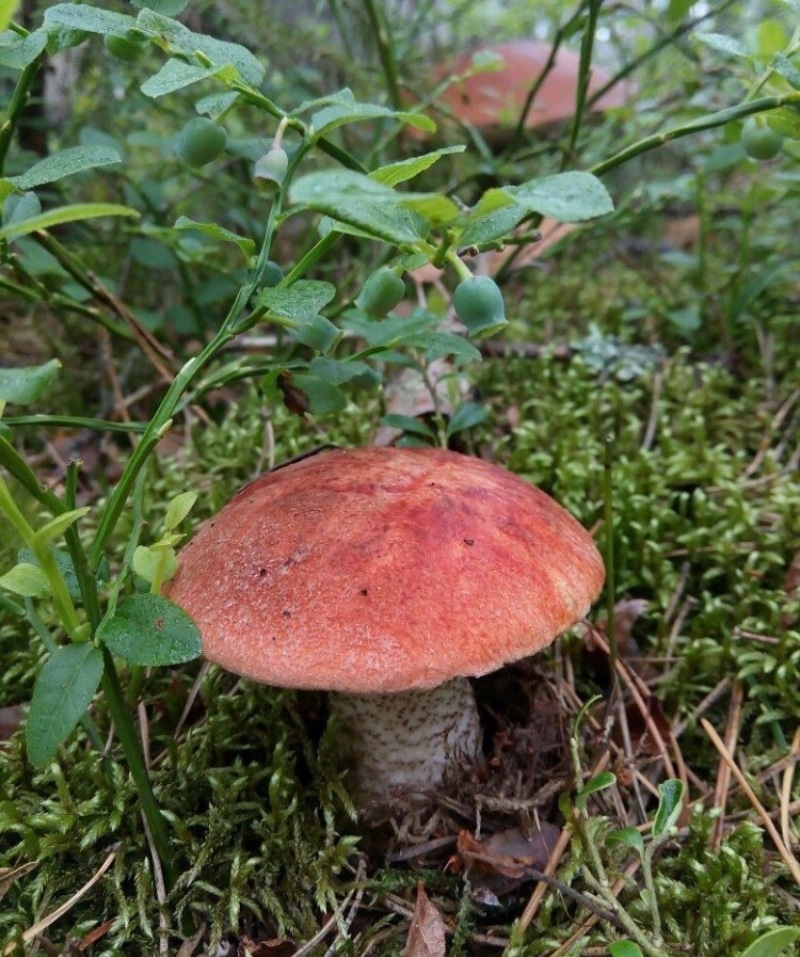
Scaber Stalk Lookalikes
Chrome-Footed Bolete (Harrya chromapes)
The chrome-footed bolete, once known as Leccinum chromapes, is no longer a Leccinum species. It does have small reddish scabers on its stem, but it varies in other ways. It is not host-specific to a certain type of tree, and its flesh doesn’t stain. This mushroom is easy to identify in the field because it has a rose-pink cap that fades to tan with age and a bright yellow stem base. You may have to dig up the stem to see it, but the yellow is hard to miss. This bolete grows across eastern North America, and in older field guides, you might still find it under its former name.
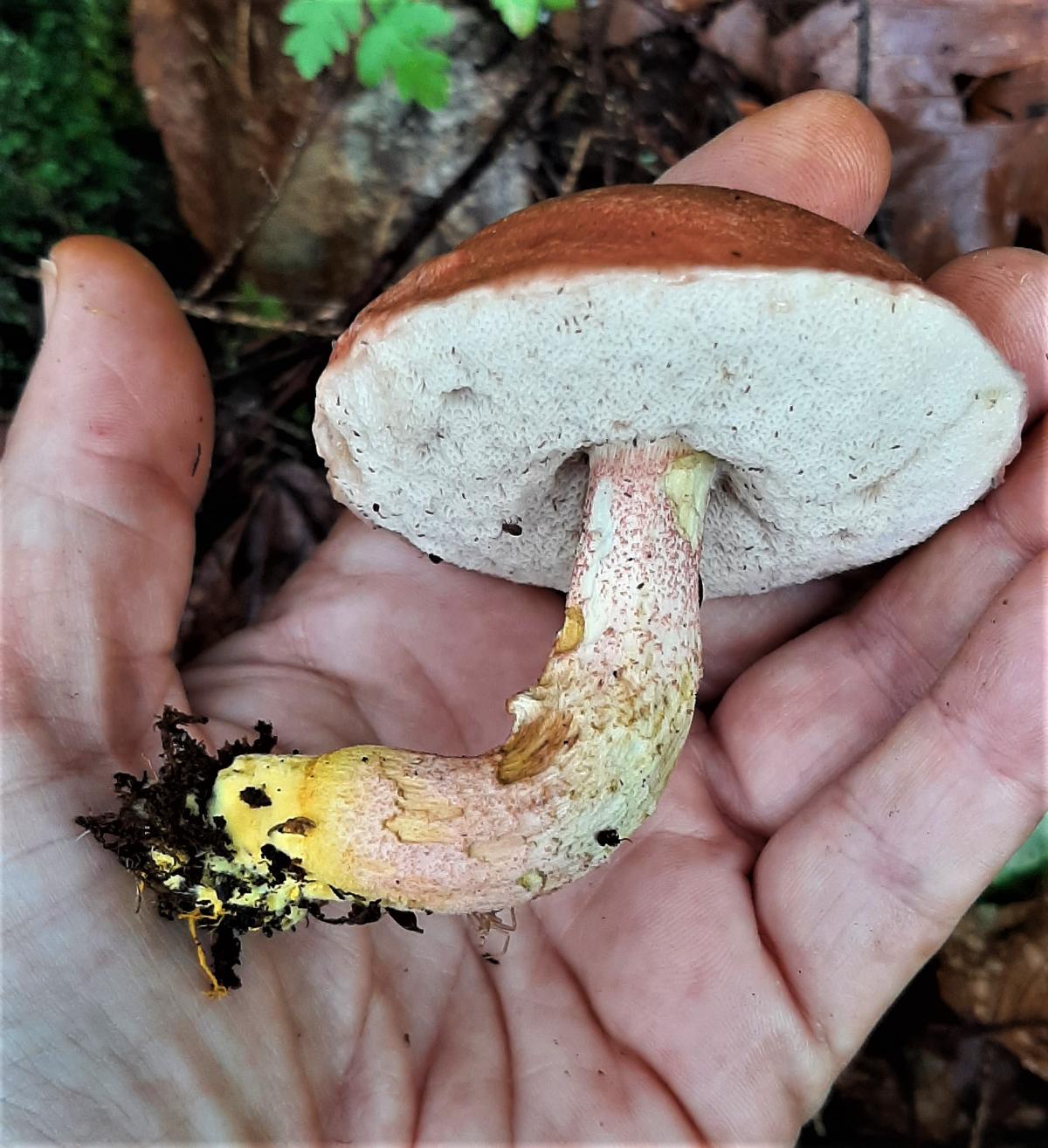
Oak Bolete (Leccinellum albellum, formerly Leccinum albellum)
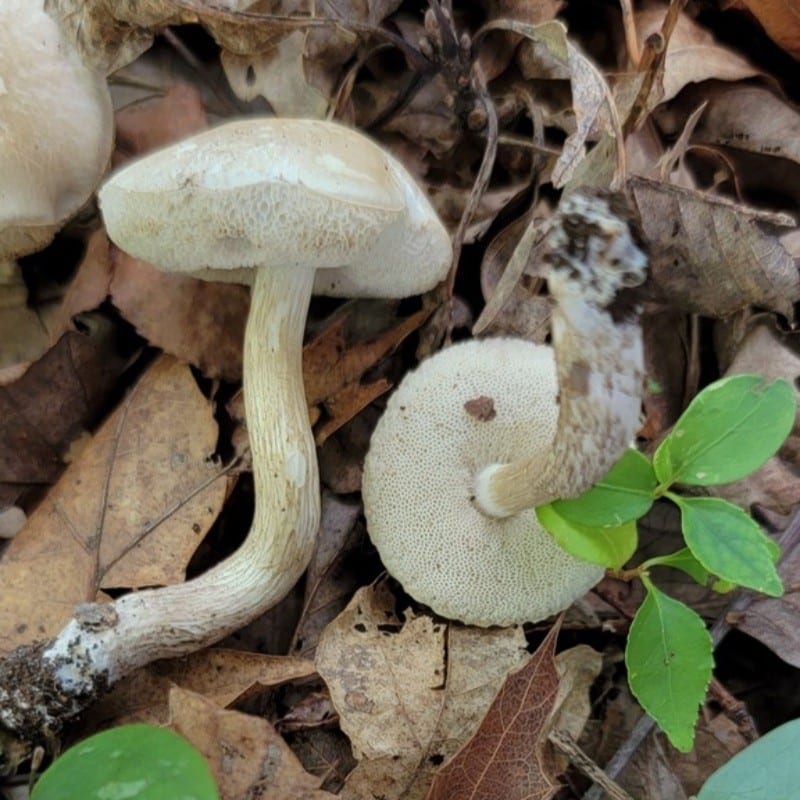
The oak bolete, once known as Leccinum albellum, is a pale, oak-loving relative of the ghost bolete. It grows across eastern North America, from the northeast through the upper Midwest and south into Texas and Mexico. It always fruits with oak or other hardwoods instead of birch. The cap is light brown to whitish, only 1 to 3 inches across.
The stem is covered in tiny white scales that darken to gray or brown with age. The fact that it grows with oaks is the easiest way to separate it from the ghost bolete, which looks similar but always grows with birch.
Wrinkled Leccinum (Leccinellum rugosiceps, formerly Leccinum rugosiceps)
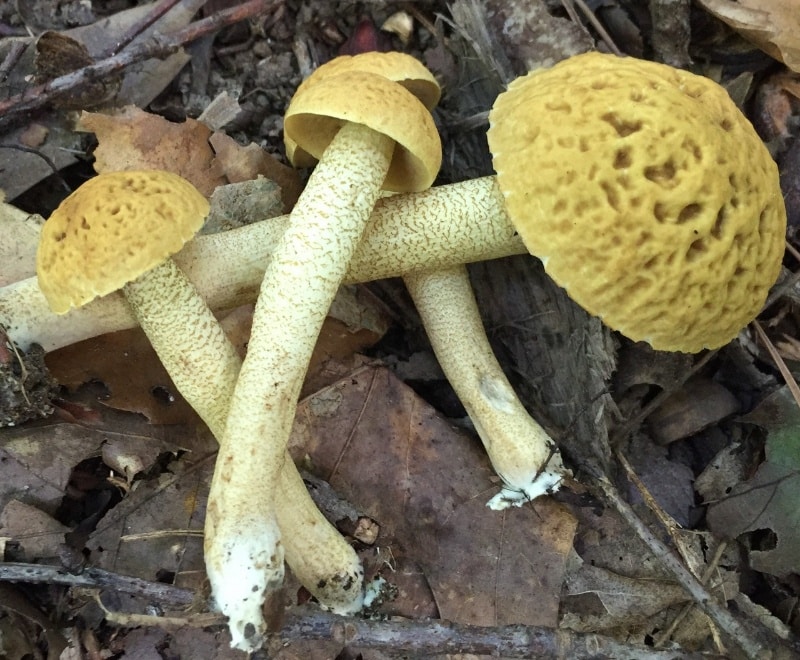
The wrinkled Leccinum grows with oak, and is commonly found with pin oak in eastern North America. The cap starts bright orange-yellow and then with maturity, turns yellow-brown to pale tan. A key trait is the wrinkling and cracking on the cap which happens as it matures. The flesh stains reddish to burgundy when cut. This species moved to Leccinellum in 2020.
Bitter Bolete (Tylopilus felleus)
This bolete isn’t a Leccinum at all, but beginners can confuse it with the scaber stalks because of its similar size and brown cap. The bitter bolete has no scabers on its stem, but its stem is decorated. It has a raised, net-like pattern called reticulation. The pores start white before turning distinctly pink with age, and the flesh is intensely bitter. If you do a nibble and spit taste test, you can see just how bitter it is.
Leccinum Bolete Medicinal Uses
Lab tests have found several health-related compounds in Leccinum mushrooms, though none of this research has led to any real medical treatment. Extracts from the birch bolete have antioxidant and antibacterial effects in lab tests, and they may help lower blood sugar.
Scaber Stalks Toxicity and Culinary Uses
Leccinum mushrooms were long considered a safe group of boletes, but that reputation has shifted over the past several decades. For decades, poison control centers and the North American Mycological Association have logged a recurring pattern of stomach illness tied to Leccinum consumption. Symptoms include nausea, vomiting, and sometimes diarrhea. In some cases, the symptoms appeared even after the mushrooms were cooked well. At least one death has been linked to a meal that included a Leccinum, though the mycologist consulted on that case considered the mushroom a possible contributing factor at most, not a clear cause.
No specific toxin has been isolated from any Leccinum species, and no one has proven exactly why some people get sick and others do not. Several explanations have been proposed, including undercooking, individual sensitivity, and an unidentified compound that may only be in some specimens. The orange and red-capped species seem to cause the most issues (the aspen bolete, the red-capped scaber stalk/insigne complex, and the black-footed bolete) and show up repeatedly in poisoning reports.
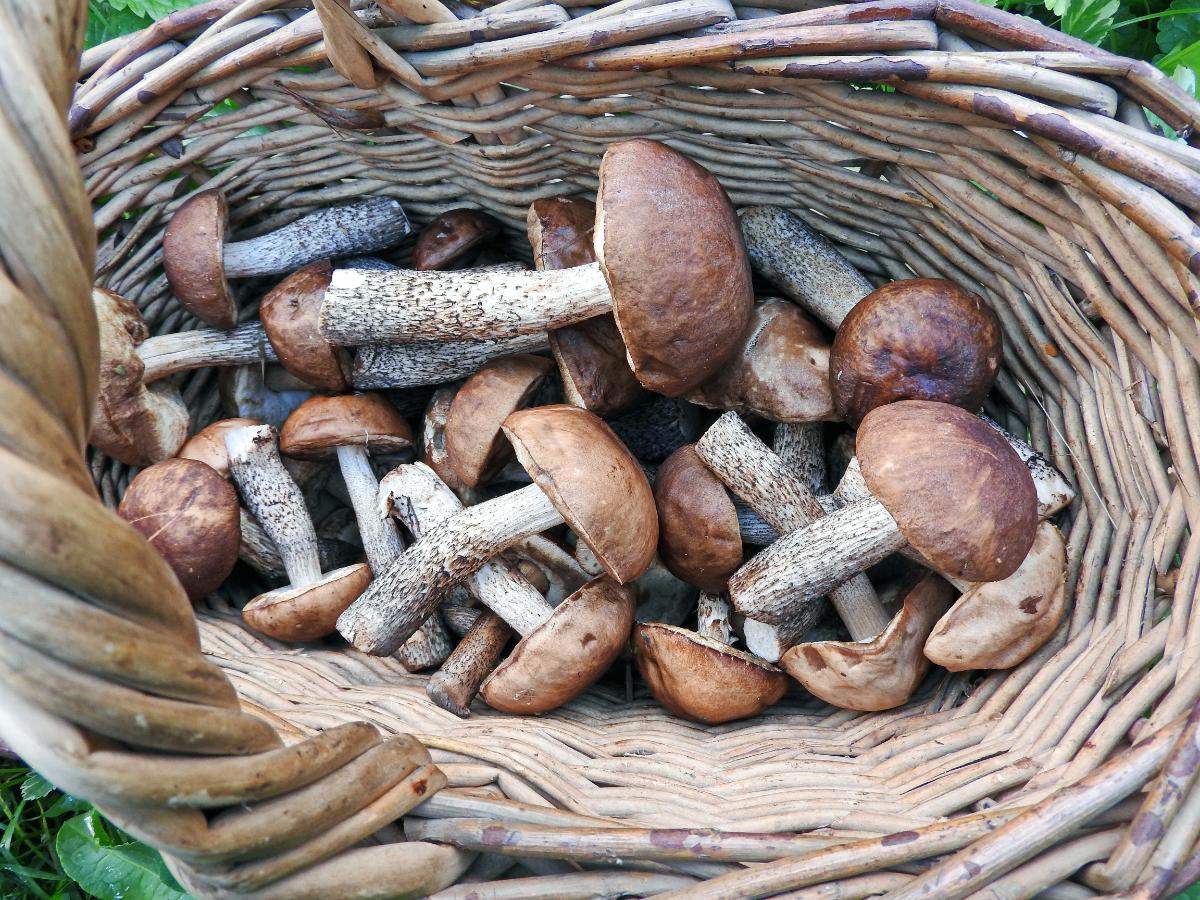
The advice for anyone eating Leccinum mushrooms is to cook them thoroughly and never sample them raw. Many people still eat them and consider them quite good, but usually stick to the few well-known species described above. In Eastern European countries, there is a long tradition of gathering scaber stalks by the bucketful, then drying or pickling them to last through the winter.
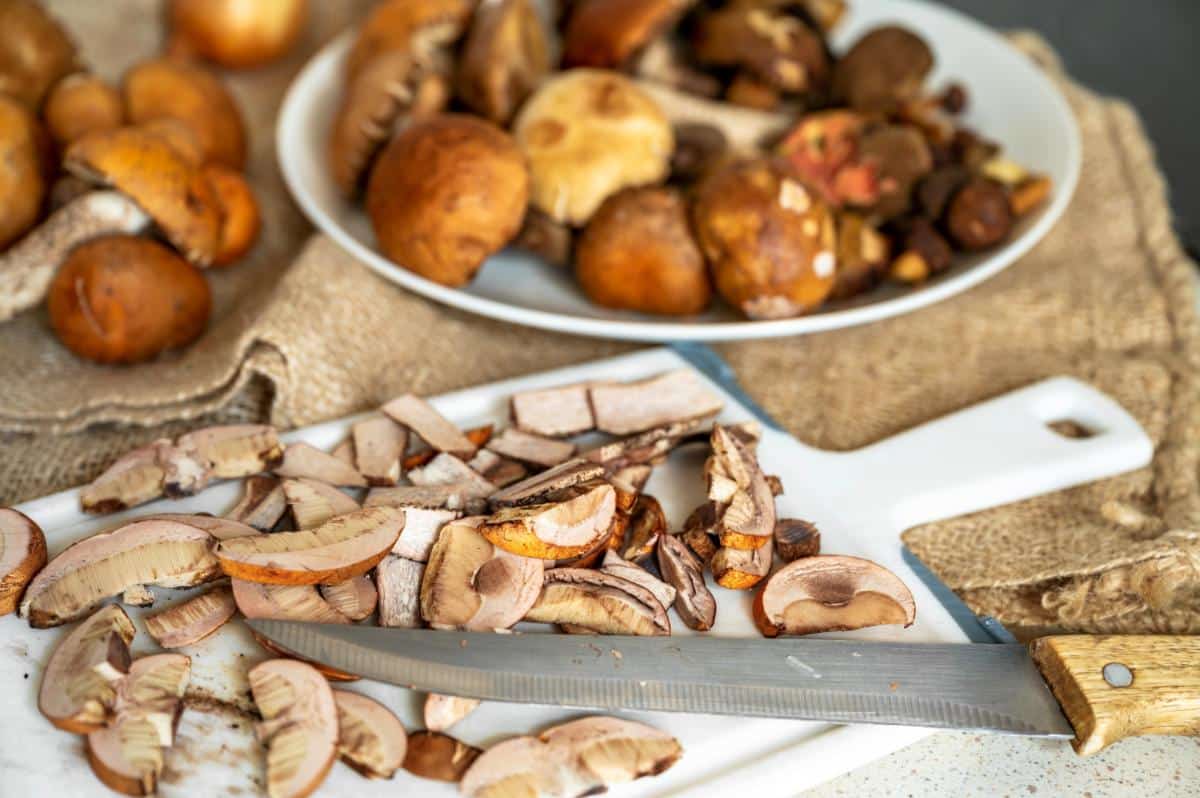
The flavor of scaber stalks is usually mild to bland, and their texture can be firm or marshmallowy if they’re more mature. The flesh of most species darkens considerably during cooking, turning gray or black.
Common Questions About Scaber Stalk Mushrooms (Leccinum)
Are all Leccinum mushrooms edible?
Most Leccinum species are considered edible once they are cooked thoroughly, but the genus has a documented history of causing gastrointestinal issues in some people, even after careful cooking. No specific toxin has been identified. The orange-capped species are the ones most often found in poisoning reports. The safest approach is to cook any Leccinum all the way through and never eat one raw.
Why does Leccinum flesh turn dark when it’s cut or cooked?
The color change comes from compounds in the flesh reacting with oxygen once the tissue is exposed to air. It’s the same basic process that turns a sliced apple brown. Some scaber stalks turn a pink or red first, and others don’t and just go straight to gray and black.
What separates a Leccinum from other boletes?
The stem of the scaber stalk is the key to differentiating it from other boletes. Every Leccinum has scabers, which are small, rigid, dark projections running the length of the stem.
Which trees do Leccinum mushrooms grow with?
It depends on the Leccinum species, since almost every one partners with only one kind of tree. Aspen and birch are the two most common North American tree species that scaber stalks grow with. Manzanita, madrone, and various conifers also have dedicated Leccinum species that grow with them.
Leave a Reply