
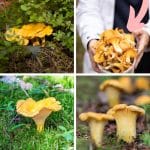
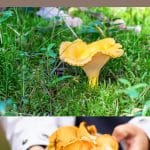
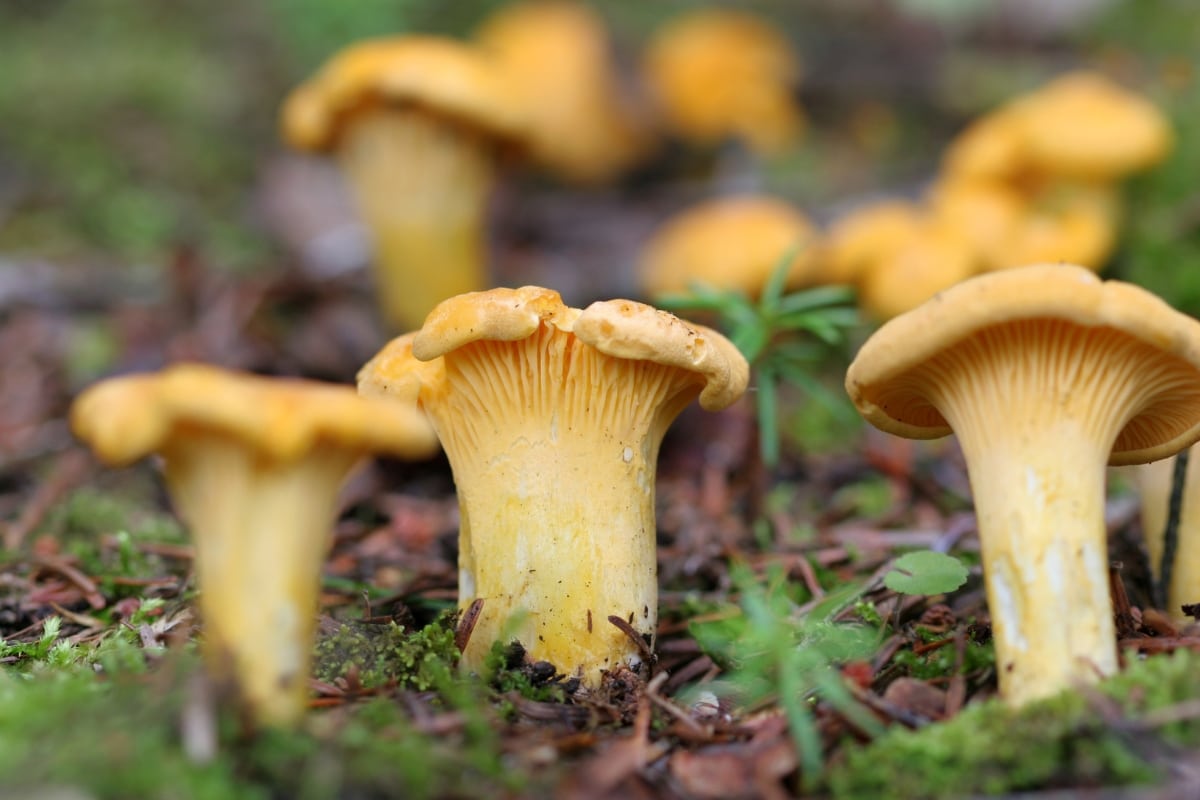
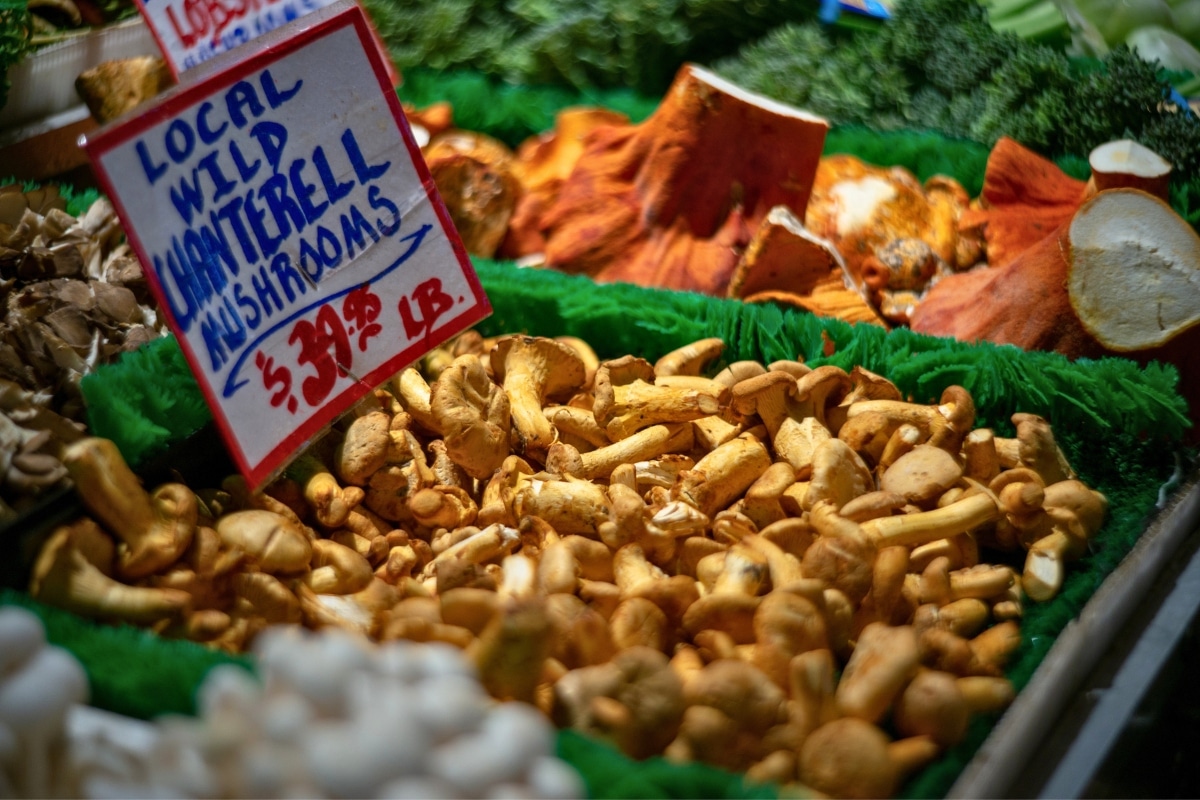
Chanterelle cultivation has been tried by many folks, but so far, they aren’t available commercially. Chanterelle mushrooms are one of the top edible wild mushroom species, and they are delicious! Fruity, slightly sweet, and with a nice dense texture, there is nothing else quite like them. And, every chanterelle for sale anywhere in the world was picked by hand from a forest. There is no chanterelle farm anywhere.
The price of a fresh chanterelles reflects this fact, and so does the unpredictability of supply from one season to the next. This is excellent for foragers, as chanterelles are a big market, but it would be nice to be able to grow these yummy mushrooms, too.
Many mushrooms are grown commercially, like button mushrooms, oyster mushrooms, shiitake, lion’s mane, and even reishi. But the chanterelle has never been grown at a large scale on a commercial farm. There is one published case of a chanterelle fruiting in a greenhouse, and a Swedish company spent years trying to turn that result into a reliable business, without much luck. Chanterelles are quite resistant to cultivation!
Jump to:
The Life Cycle Of Chanterelles
The mushrooms that can be farmed are usually saprobic. They feed on dead organic matter, and a grower can provide the mycelium with pasteurized straw or sawdust, and the fungus has everything it needs to grow and fruit. The substrate is the food source, and that is enough.
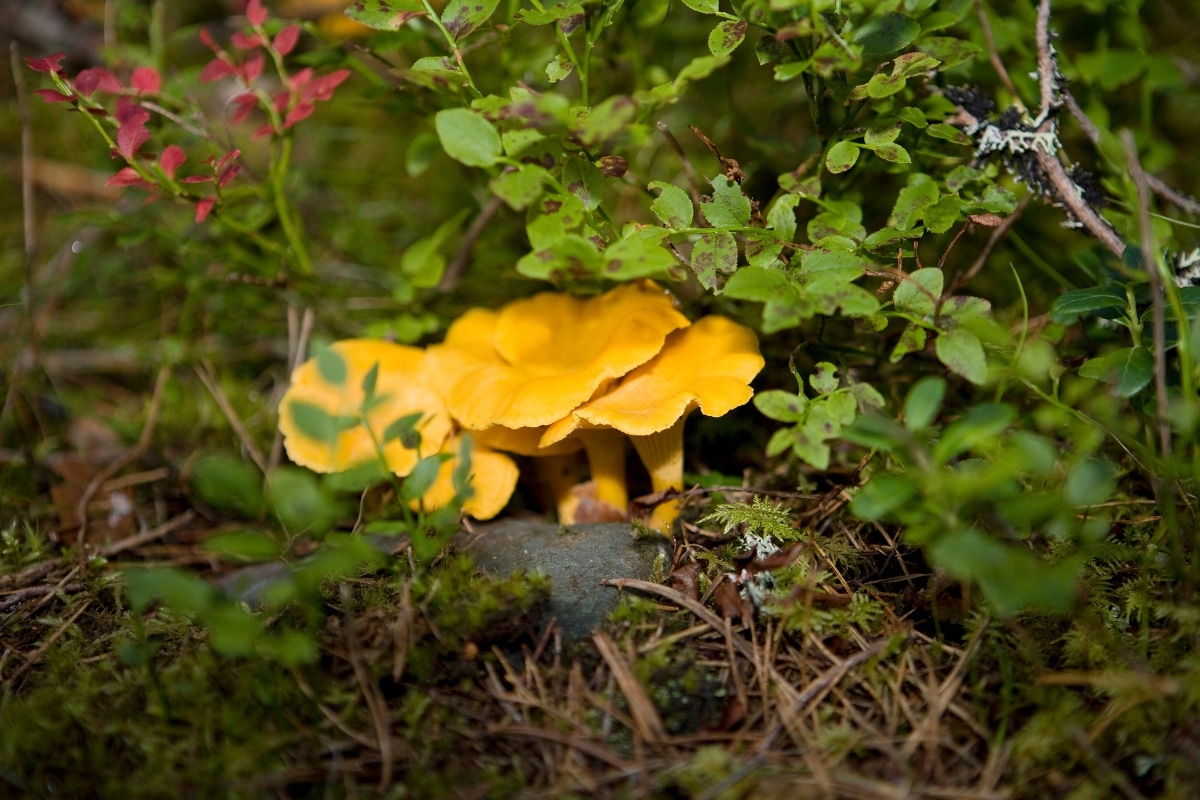
The chanterelle does not feed on dead matter. It is ectomycorrhizal. This means it has a close relationship with a tree that is vital to its survival. The host tree varies by chanterelle species. Pine, spruce, fir, Douglas fir, hemlock, oak, beech, and birch are all hosts to different chanterelles. These trees give the chanterelle sugars made by photosynthesis, and the chanterelle gives the trees water and dissolved minerals pulled from a much wider area of soil than the roots alone can reach.
Without a living tree, the chanterelle has no source of sugar. It can grow as mycelium for a while in a lab dish on a sugar-rich medium, but it will not fruit. To get a chanterelle to come up out of the soil, the fungus has to be physically connected to a living host tree’s roots.
Growing Chanterelles: Early Attempts
The first hurdle to chanterelle cultivation was getting a pure culture of chanterelle mycelium to grow on its own in a lab. Chanterelle fruit bodies in the wild are full of bacteria and other fungi. And, these contaminants will take over a Petri dish much faster than chanterelle mycelium can establish.
The Swedish mycologist Nils Fries published the first pure culture of Cantharellus cibarius in 1979. The strain was called 740b, and it grew well on the agar. But, it didn’t get much further than that.
In 1989, Dutch researchers reported the first laboratory ectomycorrhizal synthesis of Cantharellus cibarius with a tree seedling. The fungus formed the symbiotic sheath structures on tree roots in a controlled setting, but then, no fruiting bodies came up. By 1992, Swedish researcher Eric Danell had developed the technique for getting chanterelle mycelium to colonize tree roots in a lab, which had become routine, but there was no luck getting the mushrooms to form.
The 1997 Greenhouse Breakthrough
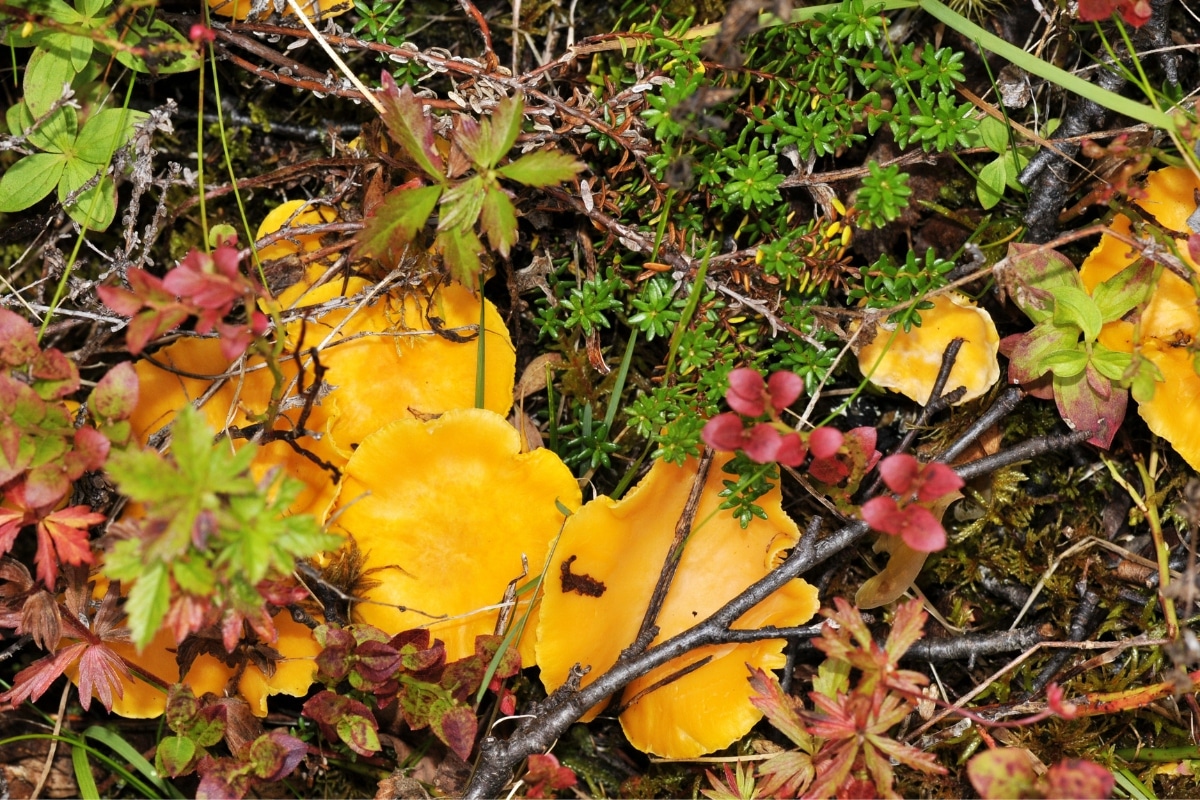
In 1995, Danell got a chanterelle to fruit in a greenhouse at Oregon State University. The trees used were 16-month-old Scots pine (Pinus sylvestris) seedlings. The tree roots were colonized by chanterelle mycelium grown in pure culture for one year, and one tree produced one chanterelle fruit body.
Earlier work done on chanterelle cultivation had assumed that chanterelles needed mature trees and an established mycelial network in the soil, but this study proved that assumption to be incorrect. It was the first time anyone had ever grown a true chanterelle fruit body in a controlled greenhouse setting.
Chanterelles in Cultivation
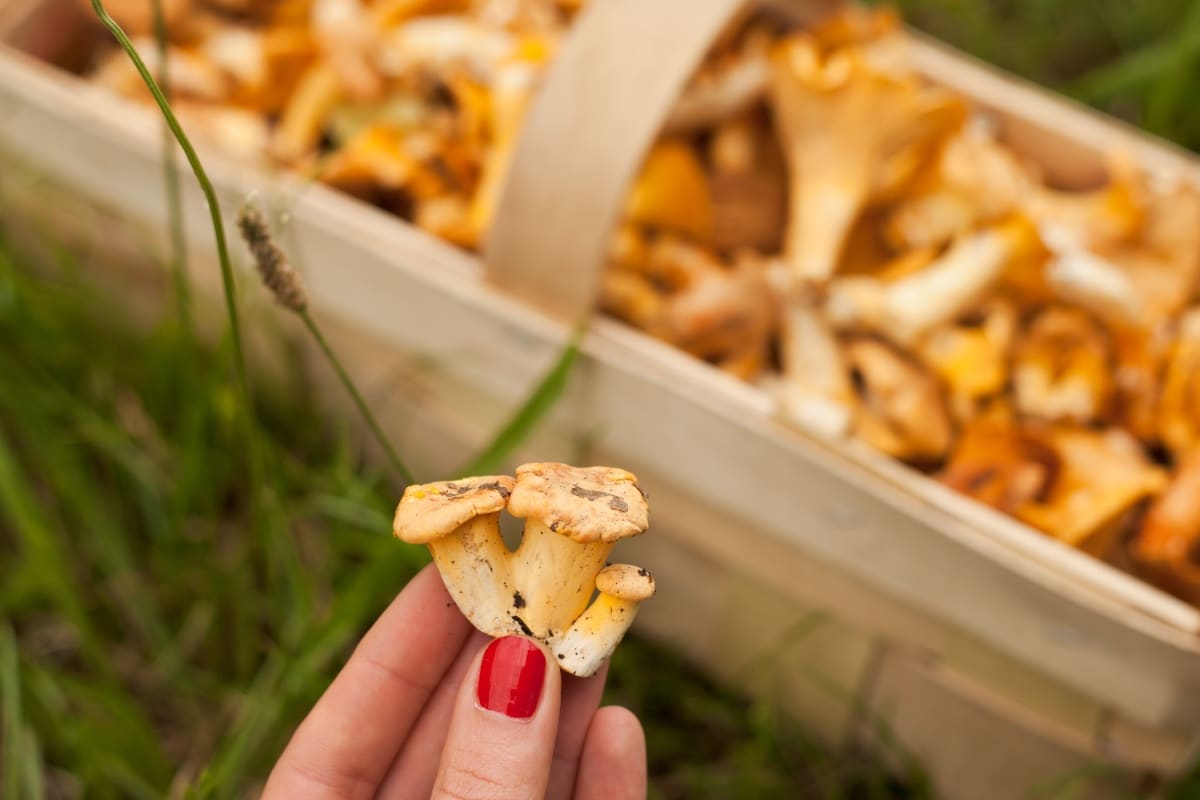
On September 19, 1997, Danell filed a U.S. patent application for the chanterelle cultivation method. The patent was granted on January 16, 2001, and a Swedish company began to commercialize the technique. The patent covered a specific chanterelle strain designated SNGT2-A. The suitable host trees listed in the patent were Norway spruce (Picea abies) and Scots pine (Pinus sylvestris).
The chanterelle cultivation method worked, but it turned out it did not pay well enough to make it worthwhile to continue. The technique was labor-intensive and complicated. And, the cost of growing a chanterelle this way was much higher than the price the mushroom would sell for in a Swedish shop, which was about $35 per kilogram at the time.
A few years later, the company switched to growing matsutake, which is also an ectomycorrhizal mushroom, but is much easier to grow. And, it sells for significantly more, too, which made it more attractive to the company.
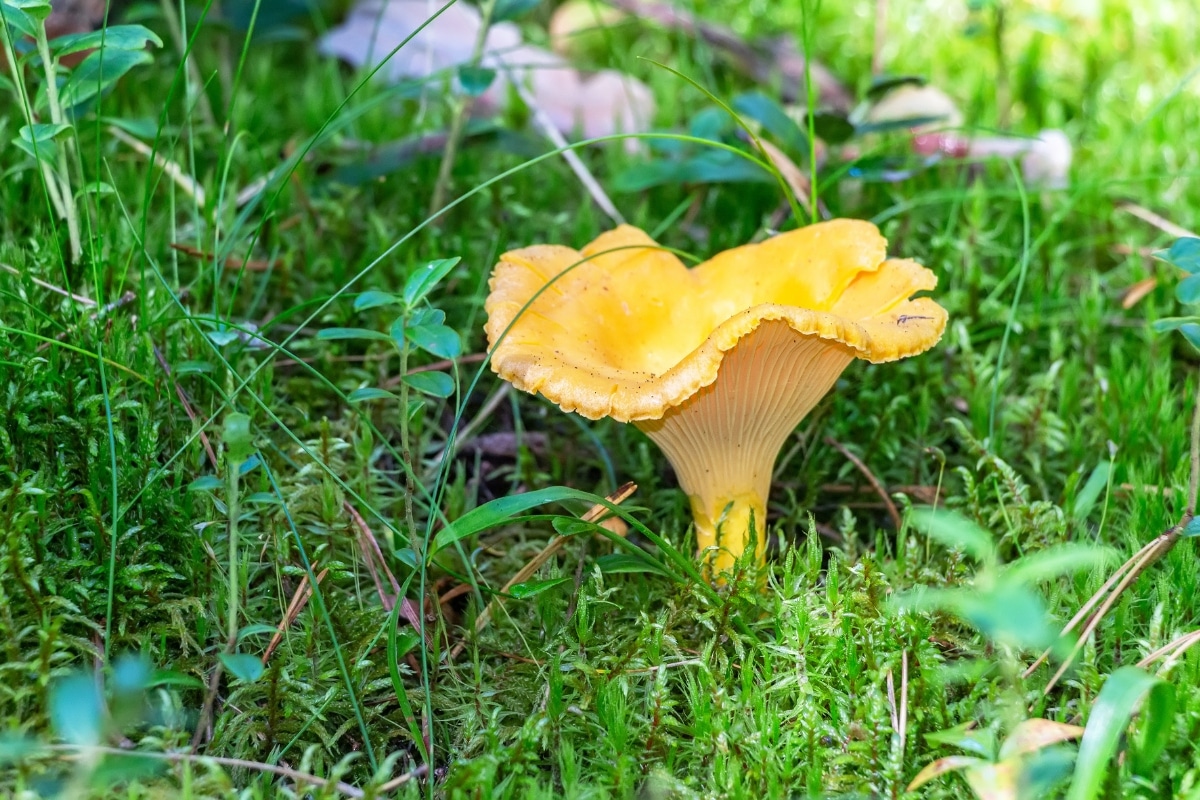
Current Chanterelle Cultivation
More recent work in Japan (2019) has gotten a related species, Cantharellus anzutake, to fruit repeatedly in pots with young pine and oak seedlings. The fruiting is reliable and has been repeated many times, but hasn’t been scaled up to commercial chanterelle cultivation. Possibly it will happen in the future, but for now, all chanterelles being sold were picked from the wild.

Leave a Reply