
Before you head out into the woods, take some time to learn about morel mushroom identification. Although not usually difficult to identify, true morels do have poisonous look-alikes.
The term “false morel” describes a few species of mushrooms that contain a toxin known as monomethyl hydrazine (MMH). This is the same chemical found in certain rocket fuels and can cause dizziness, vomiting, and in some cases even death.
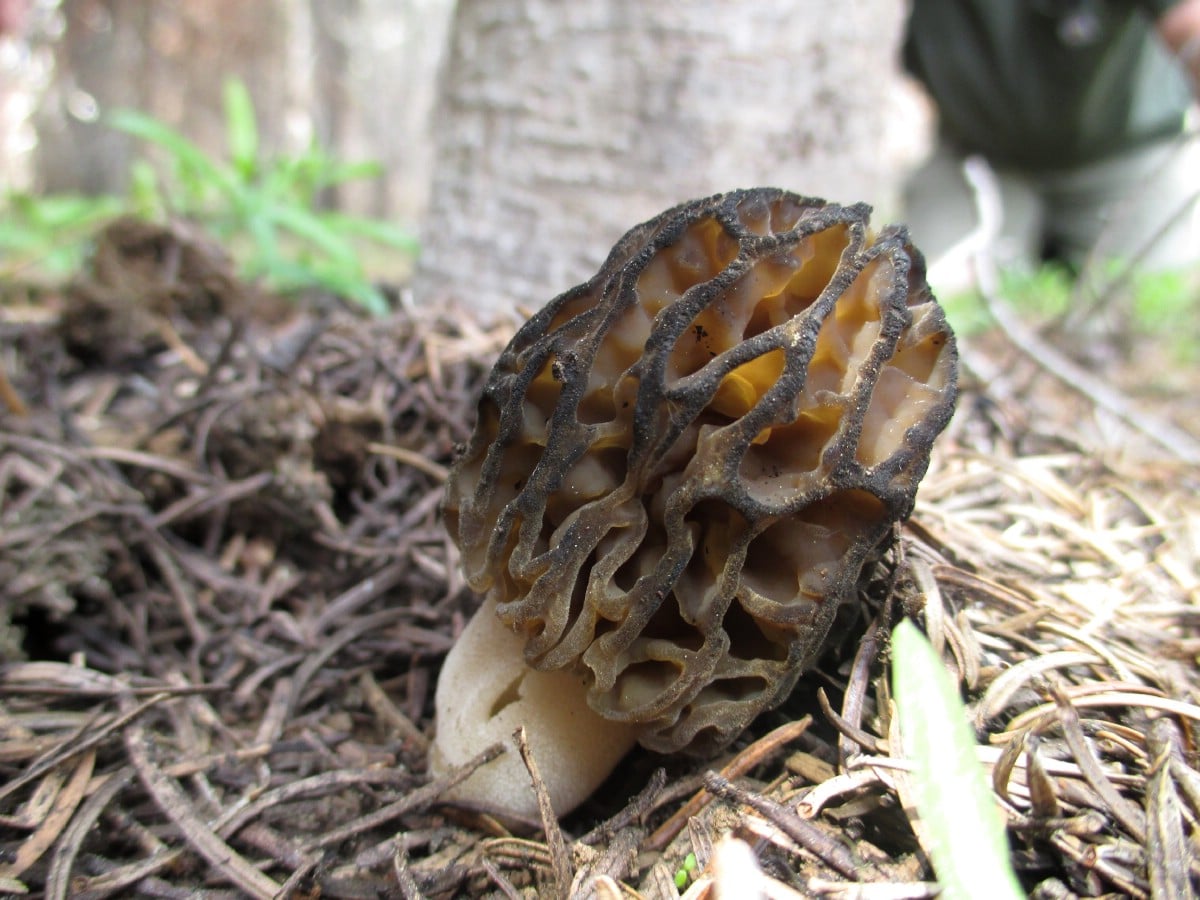
Although certain people and cultures do eat the false morel, the truth is one never knows how toxic any given false morel will be. Plus, most false morels require special cooking preparations. So, unless you learn from someone who knows the false morels very well, it’s best to avoid them.
There have been no deaths from these mushrooms, most in the Verpa and Gyromitra species. Moreover, no one really knows the long-term carcinogenic effects of consuming MMH.
Jump to:
How to Find the Good Stuff and Avoid the Look-alikes!
I also have to add my standard disclaimer: don’t eat anything solely on the basis of what you’ve read here. If you’re new to morel mushroom identification, have an experienced hunter take you out and check your first finds.
Now don’t let all that scare you off! Morel mushroom identification isn’t too hard, and with some experience, you’ll be able to distinguish true from false. I’ll start with the two main features to look at, and then move on to some other identification hints.
Of course, before you identify them you have to find them! Read this page on morel hunting tips if you need help finding morels.
Morel Mushroom Identification 101
The two most important features to examine when trying to identify a morel mushroom are the cap shape and whether the interior is hollow.
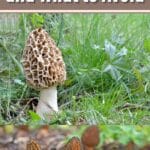
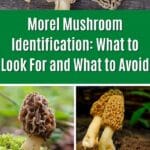
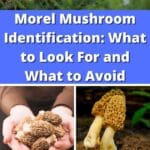
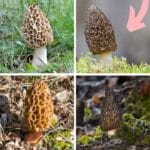
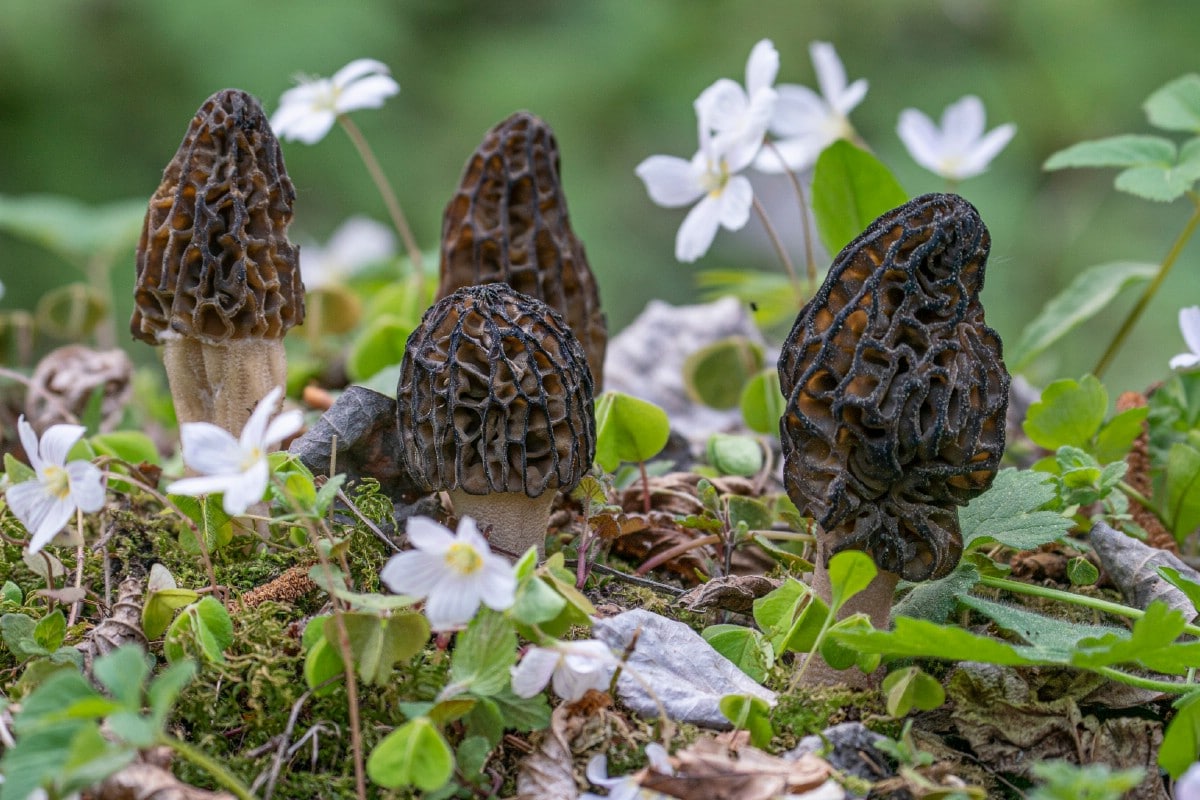
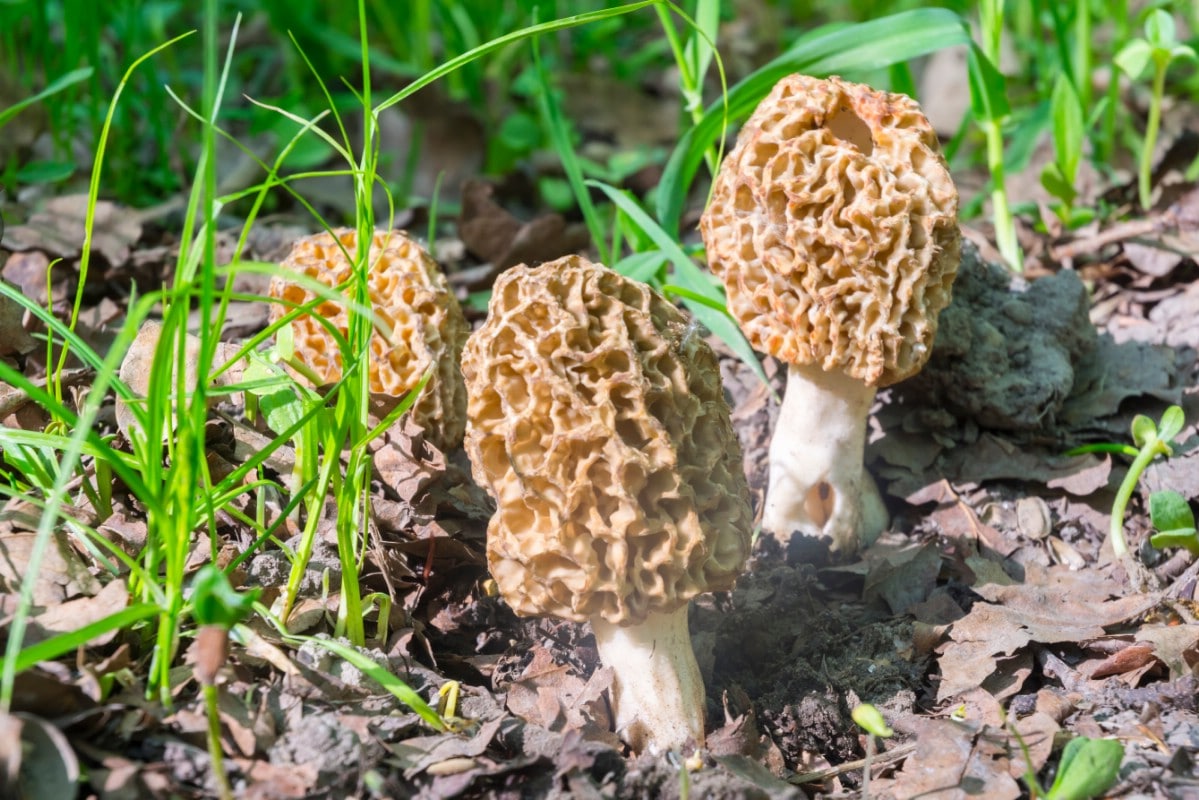
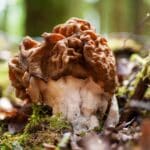
Morels have a very distinct cap. Fairly uniform, they appear ridged and pitted inwards. See the picture to the right for a close up of a morel cap.
On most morels the cap will be attached to the stem, not hanging free as with Amanitas and many other mushrooms.
There are species known as “half-free morels”, where only the bottom of the cap hangs freely from the stem. These can be harder to identify so discard if you have any doubts.
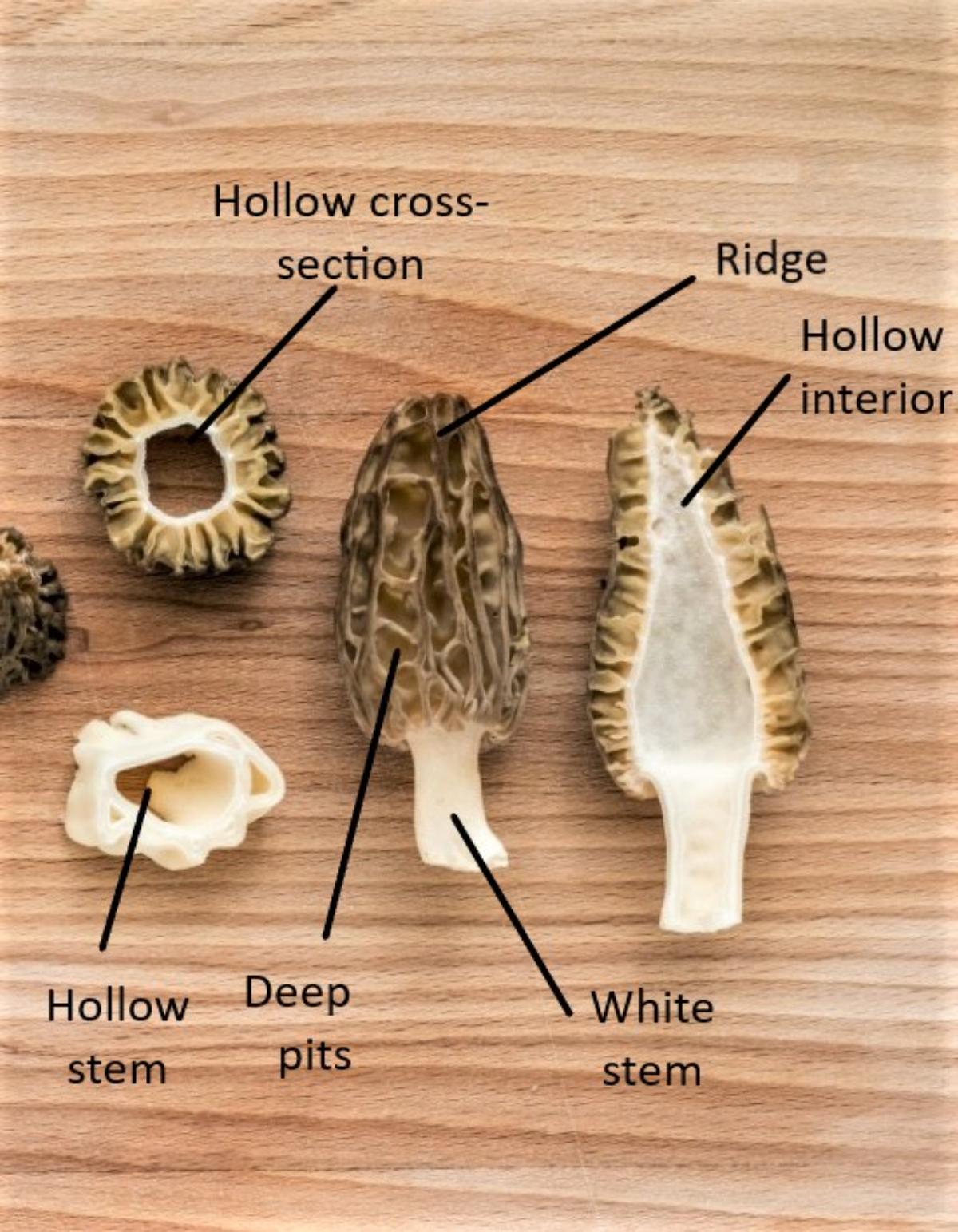
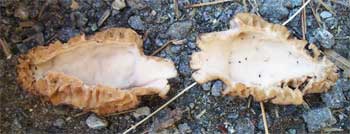
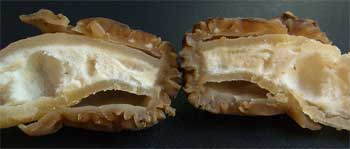
After you’ve examined the cap the next important identification step is to slice the mushroom lengthwise. A true morel will be hollow inside from the tip of the cap to the bottom of the stem.
In the picture below, note how the inside is hollow and how the cap is attached directly to the stem.
Other Identification Hints
Here are a few other features that may aid in morel mushroom identification.
- Learn the species: There are over 18 morel species in North America. Each one has it’s own habitat and tree preference — learn the ones in your region so you can start the hunt in the right place.
- Nearby trees. Morels are known for their relationships with trees, particularly ash, elm, and apple trees. Learn more about trees morels associate with here.
- Time of year. These are spring mushrooms, fruiting anywhere from February to June depending on where you live. Cooler areas will see fruiting later in the year (May-June).
- Cap length. In most morels the cap is longer than the stem. This may not be the case with half-free morels, so be sure to check cap attachment as well.
- Spore print. The morel spore print is usually light colored, cream to light yellow.
To make a spore print, simply set the mushroom down on dark colored paper and place a bowl or vase over it to avoid air current disruption. Leave overnight and the next morning you should see a collection of light-colored spores around the mushroom.
Will the True Morel Please Stand Up?
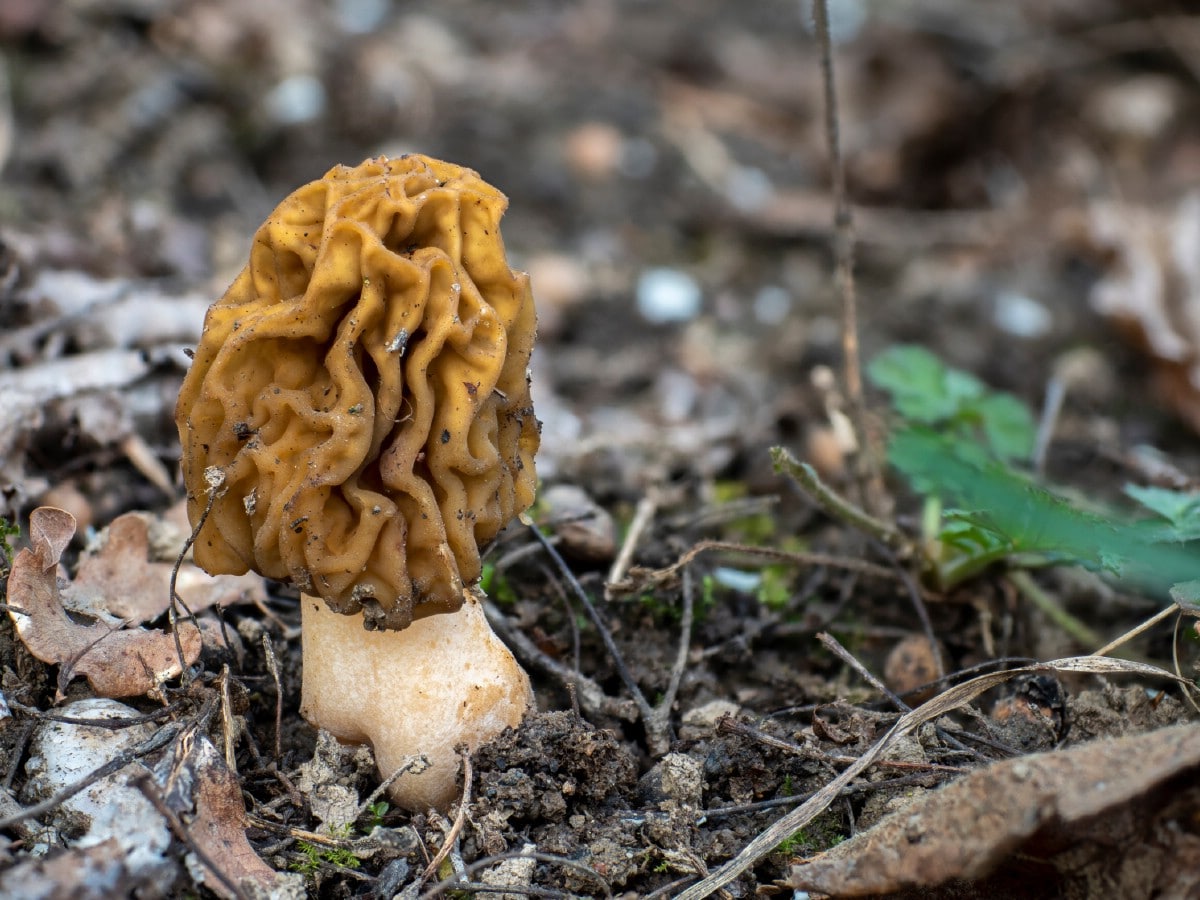
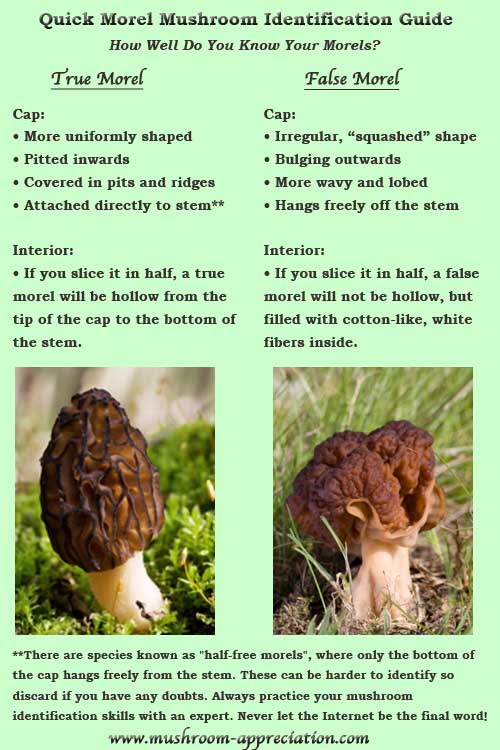
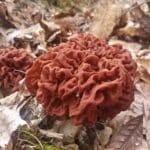
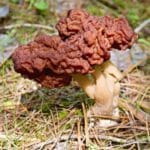
Below is a list of some differences between true and false morels. Look at the accompanying pictures. Note the tall inward-pitted true morel cap in the first picture, and the shorter outwards-bulging false morel cap in the second.
True Morel Mushroom:
- Cap is covered in pits and ridges. It appears to be pitted inwards.
- Cap is more uniformly shaped and often longer than the stem (not always true with half-free morels).
- Cap is attached directly to the stem. With half-free morels half of the cap is attached to the stem, with just the bottom half hanging free.
- If you slice the mushroom lengthwise the inside will be completely hollow. It looks like a “morel mold”.
False Morel Look-alike:
- Cap is more wavy and lobed. It appears to be bulging outwards.
- Cap often has an irregular shape and appears “squashed”, almost as though it has been stepped on.
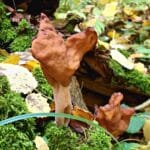
- Cap hangs freely off the stem. If you slice it lengthwise you’ll see the cap is attached to the very top of the stem.
- The inside is not hollow. It will be filled with some cottony fibers or chunks of tissue.
- Learn more about false morel identification here.
Now take this knowledge and see if you can apply it in the woods. Just remember that catchy old adage that’s repeated throughout this site and in mushroom clubs everywhere: When in doubt, throw it out!
Carol White
My brother-in-law just died a horrible death from consuming “morel” mushrooms he had wild harvested himself. He had dried & powdered them, and that evening he consumed a larger amount that usual for more energy for paddling on his gentle family canoe trip the next day. I don’t know whether he cooked them long enough. He vomited violently for 5 hours and died before morning. My advice is -Don’t !
Jenny
I’m so sorry to hear this! My condolences to you and your family! It is highly unlikely that what he ate was a real morel. There are several lookalikes, some with very toxic traits which will make you extremely ill to the point of vomiting and may lead to death. The main culprit is the “False Morel” Gyromitra esculenta. —> this article explains the species and toxicity issues https://www.mushroom-appreciation.com/false-morel.html
Folks have been eating true morels for centuries without issue, so it is safe to eat them. The issue is being SURE of your identification and not taking chances, and knowing ALL the lookalikes, including the toxic false morel species (which are actually also edible but most be cooked 2-3 times in boiling water with the water drained out between each boiling — a complicated preparation that makes them safer). This is why we advocate being 110% sure of your identification and never taking chances if you’re unsure.
AnonymousLeekEater
Carol, so sorry for your loss. Is it possible that he had been drinking alcohol that night? I’ve heard that alcohol mixed with morels can cause serious illness. Although I’ve never heard of it actually killing someone.
jonas
Can’t be certain that the mushrooms are what ended his life. Did he get “vaccinated”? That’s killing so many people.
John
We had a couple of exchange faculty who picked a bunch of chlorophylum molibites which they mis-identified as an edible lepioda species. I’ve never seen two people vomit so enthusiastically – they even got short of air and developed cyanosis fora brief time. Both needed ICU treatment for 48 hours.
Jenny
Wow! Thanks for sharing that story. yes, those are not mushrooms to make mistakes with!
Dave Weilder
Dear Mushroom Appreciation,
I wanted to express my gratitude for your informative article on morel mushrooms. As a mushroom enthusiast and avid forager, I found your detailed exploration of morel mushrooms to be both fascinating and educational.
Your article covers various aspects of morel mushrooms, providing valuable insights for mushroom enthusiasts. Here are a few key points that stood out to me:
Identification: Your article begins with a comprehensive overview of morel mushroom identification, highlighting the distinct characteristics that differentiate them from other mushrooms. The descriptions, accompanied by clear photographs, are incredibly helpful for those seeking to identify morels in the wild.
Habitat and Season: I appreciate how you delve into the habitat preferences and seasonal patterns of morel mushrooms. Understanding where and when to find these elusive fungi can greatly enhance the chances of a successful foraging expedition. Your article provides useful information on the types of ecosystems and specific conditions where morels are likely to thrive.
Culinary Uses: The inclusion of culinary tips and suggestions for morel mushrooms is a delightful addition to the article. You offer a variety of cooking methods and recipes, highlighting the unique flavor and texture of morels. It’s wonderful to see the versatility of these mushrooms showcased, from simple preparations to more elaborate dishes.
Safety and Ethical Foraging: I appreciate the emphasis you place on safety and ethical considerations when foraging for morel mushrooms. Your article reminds readers to be cautious and responsible foragers, respecting the environment and ensuring proper identification to avoid any potential risks.
To further enhance the article, you might consider including information about the nutritional value and potential health benefits of morel mushrooms. Additionally, mentioning any preservation methods or tips for extending the shelf life of morels would be valuable for readers looking to enjoy these mushrooms beyond the harvest season.
Thank you for sharing this insightful article on morel mushrooms. Your attention to detail, inclusion of photographs, and practical tips make it a valuable resource for mushroom enthusiasts and foragers alike. If you have more articles or resources on different mushroom species or foraging techniques, I look forward to exploring them.
Jenny
Thank you! I don’t dive too much into the medicinal uses or properties of mushrooms simply because it is an evolving science without many human trials and lots of hype. I’m not a doctor, so I’m restrained in my reportings of what a mushroom can and can not do medicinally. This article on preservation might be just what you’re looking for https://www.mushroom-appreciation.com/morel-mushrooms-2.html
I appreciate your feedback and am glad you found it useful and informative! Happy foraging and here’s to finding a honey hole of morels in the near future!
Jacoby Johnson
I was delighted to stumble upon your article about the morel mushroom. Morels are truly a fascinating and highly sought-after mushroom, and your comprehensive guide provides a wealth of information for both novice and experienced mushroom enthusiasts.
Your article captures the essence of the morel mushroom, from its unique appearance to its elusive nature and exquisite flavor. The detailed descriptions of the different types of morels and their distinguishing features are particularly helpful for identification purposes.
I appreciate the inclusion of tips and techniques for foraging morels, as well as the emphasis on responsible foraging practices. Your advice on timing, habitat preferences, and environmental considerations is invaluable for those venturing into the world of morel hunting.
Furthermore, your article’s discussion on the culinary delights of morels and the various ways they can be prepared and enjoyed is mouthwatering. From simple sautéing to incorporating them into gourmet dishes, the versatility of morels in the kitchen is remarkable.
I also found your cautionary note about potential look-alikes and the importance of accurate identification to be responsible and safety-conscious. It’s essential to exercise caution when foraging wild mushrooms, and your guidance in this regard is commendable.
The inclusion of personal anecdotes and experiences with morel hunting adds a delightful personal touch to your article. It showcases the joy and excitement that comes with discovering these prized mushrooms in their natural habitat.
Thank you for sharing your passion and knowledge about the morel mushroom. Your article is a valuable resource for anyone interested in learning more about this captivating fungus. I’m inspired to venture out into the wilderness and embark on my own morel-hunting adventure armed with the insights you’ve provided.
myrna garcia
Hi, while doing some clean up, I found a mushroom growing under our back staircase that looks like morel. Is it possible it is morel? I’ve read they can be found in the forest, but we are in a city.
Jenny
Yes, there are actually morels called landscape morels, that grow in urban settings. This guide should help — scroll down the list and look at region and then habitat to see what matches what you’ve found. https://www.mushroom-appreciation.com/morel-species.html
Barb
I’m curious about the different looks and species of the “pecker head” mushroom..what is the difference between a real and look alike of it? We’ve been finding some that just don’t look the same
Jenny
I think by peckerheads you mean the half-free morels, like Morchella punctipes? This guide details all the morel species, including the half-free ones – https://www.mushroom-appreciation.com/morel-species.html#about-yellow-morels. If these half-free ones don’t match, you might be finding verpas which also look similar — this guide should help with that https://www.mushroom-appreciation.com/false-morel.html