
You’ve likely heard of a morel mushroom, but what’s the deal with the “fake” one? And, why does it matter? If you’re new to morel foraging, you’ll want to fully understand all the look-alikes. And, sadly, there isn’t just one. There’s actually several morel look-alikes that are called false morels.
Jump to:
What Is A False Morel?
The term “false morel” encompasses a number of different species including Gyromitra esculenta (the beefsteak mushroom), Gyromitra caroliniana, and others in the Verpa and Helvella genera. They are often mistaken for the edible delicacies in the Morchella genus (true morels).
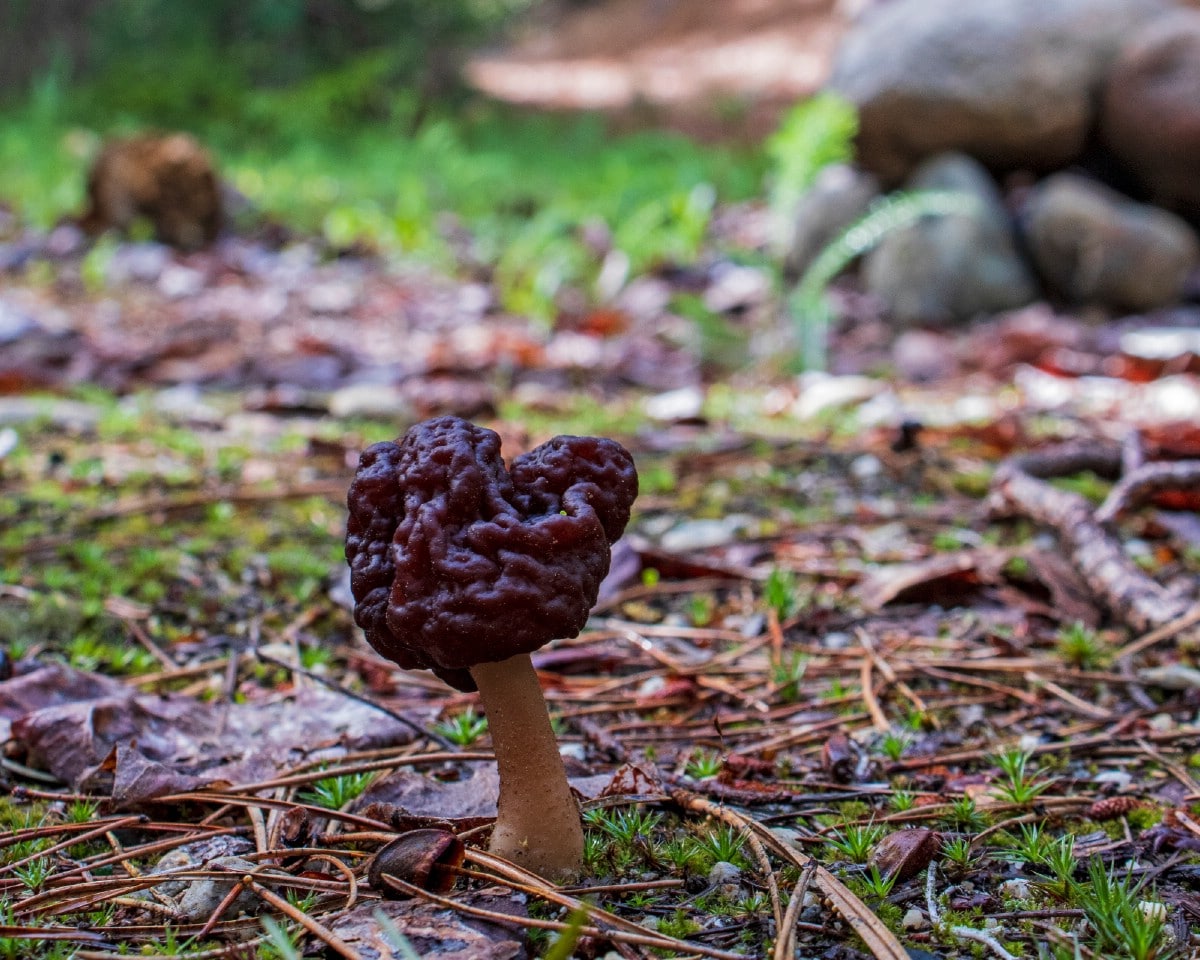
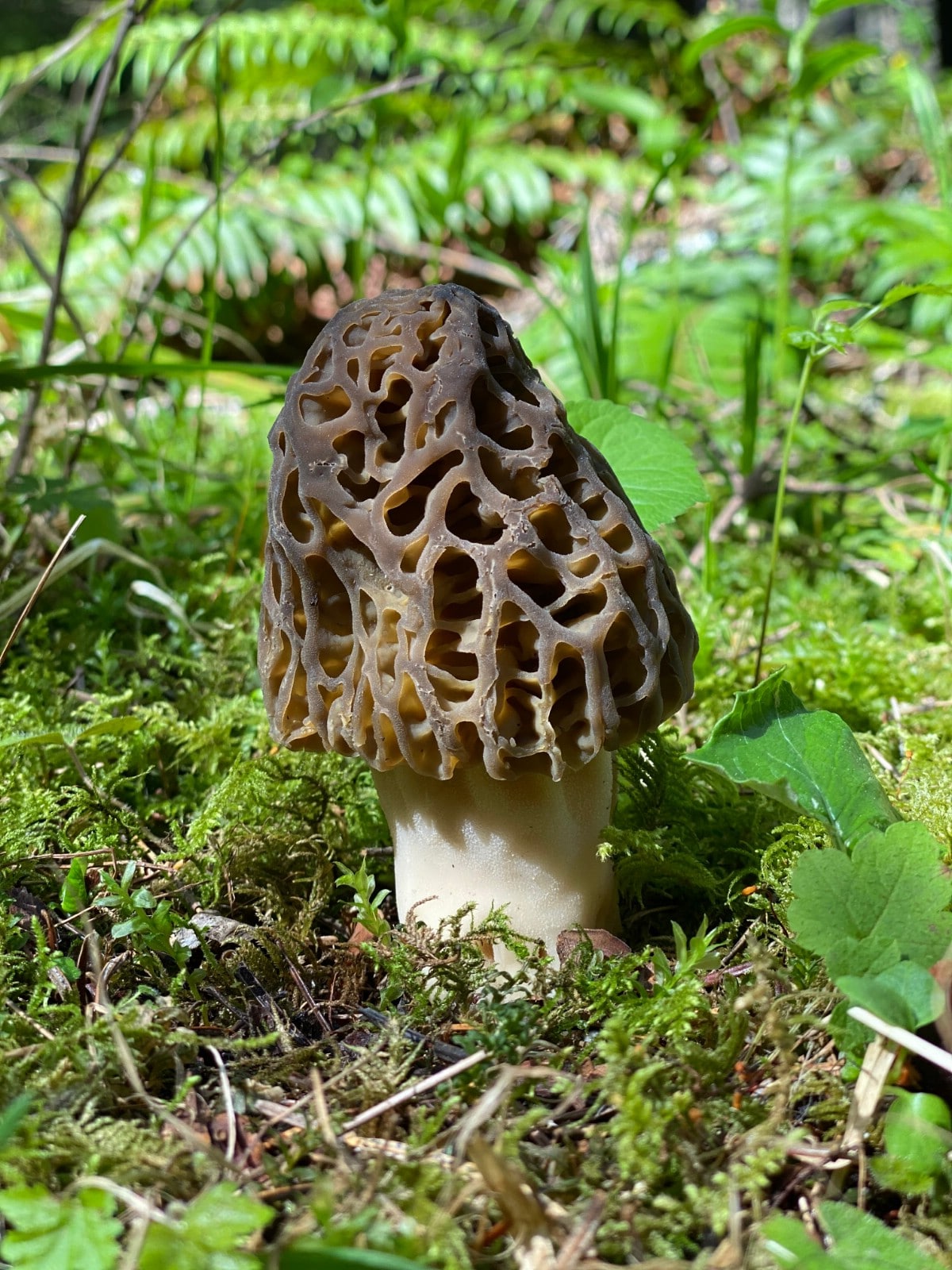
The false morels include some poisonous mushrooms that contain the chemical monomethyl hydrazine (MMH). MMH causes vomiting, dizziness, diarrhea, and sometimes death. Furthermore, MMH is suspected to be carcinogenic. (Read more and, here)
“But wait,” you ask, “haven’t I heard of people eating these mushrooms with no ill effect?”
You probably have. Many people have eaten them and even hunt for them specifically. It may surprise you that Gyromitra esculenta is considered a delicacy in parts of the United States and in parts of Scandinavia. You can buy them in Finland, where they come with preparation instructions.
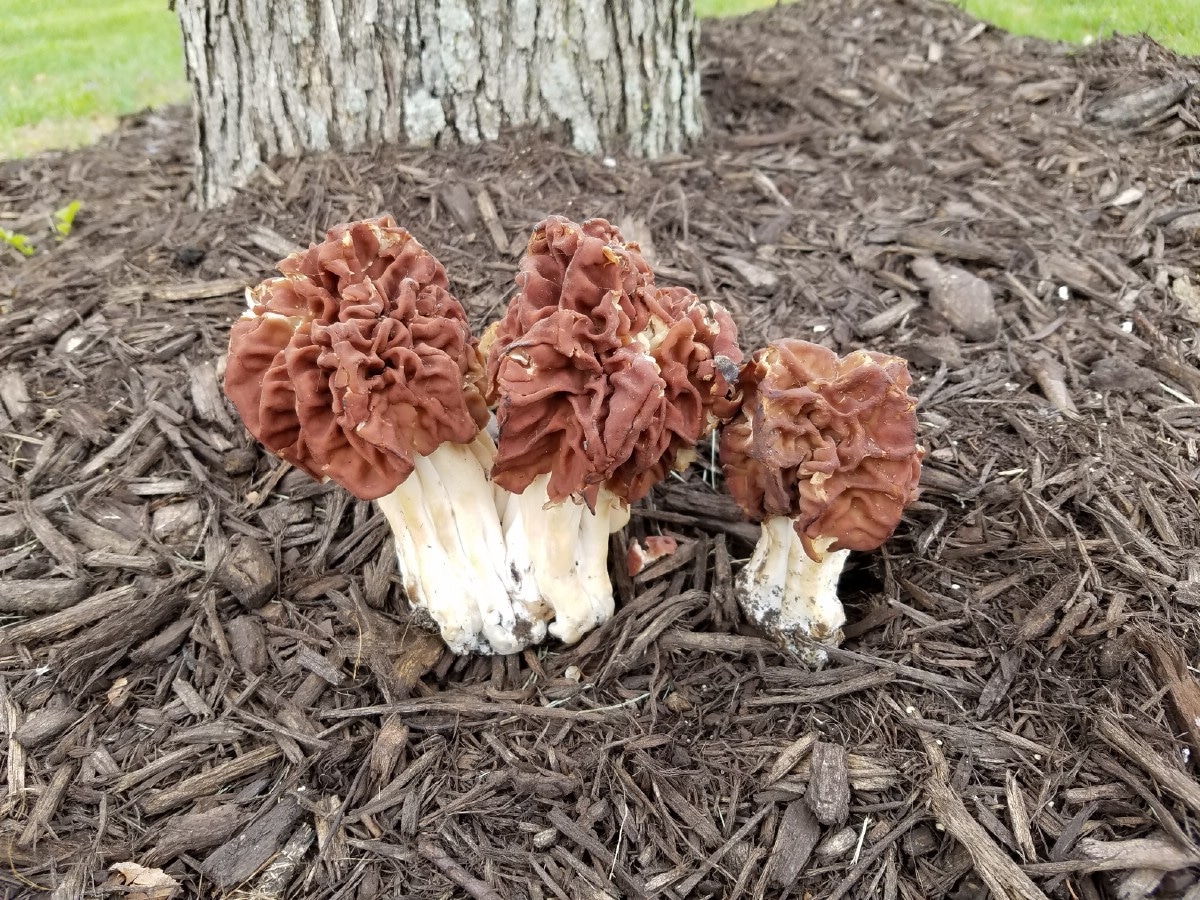
So what’s the problem? One danger is the varying levels of MMH in different gyromitra mushrooms. Some species contain very little, others contain enough to kill. MMH levels also vary among geographic regions within a single species. Nobody knows how toxic any false morel will be in any location.
Let’s learn more about the fake morel. We’ll start with some facts, move on to identification, and finally take a look at who eats these mushrooms. For a more complete list of straight morel mushroom hunting tips click here.
False Morel Mushroom Facts
- Most gyromitra appear in the spring and summer and grow directly on the ground. Although some are found on wood or later in the year, they are unlikely to be mistaken for true morels.
- Caps are usually brown or reddish-brown and occasionally yellow. Most stems are a light color, ranging from white to tan.
- These mushrooms are considered saprotrophs, meaning they feed on dead and decaying organic matter. Some have suggested that they may be mycorrhizal as well (forming a symbiotic relationship with trees).
- Like true morels, false ones are often found in areas where the forest floor has been disrupted. You’re more likely to see them near washes, rivulets, man-made disturbances in the ground, and roadsides.
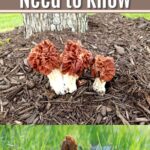
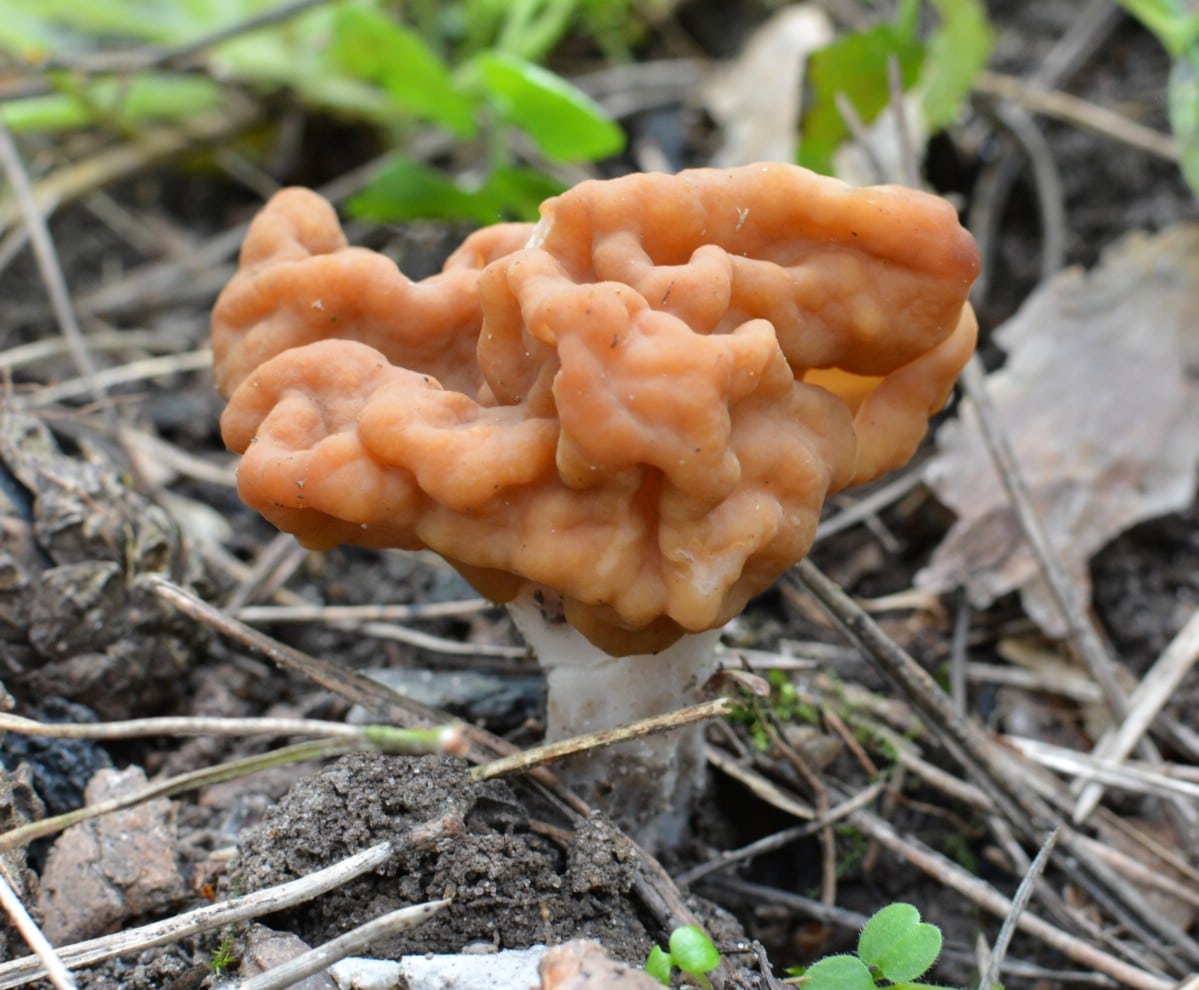
- Some species that are considered false are Gyromitra esculenta, Gyromitra caroliniana (above), Gyromitra infula, Verpa bohemica, and Verpa conica.
- There are many common names associated with the more commonly foraged false morels, including beefsteaks and calf’s brain. Beefsteak is also the common name for another edible mushroom, which is VERY confusing. Common names are tricky,; be sure you are firm on your identifications and understanding!
How to Identify the False Morel Mushroom
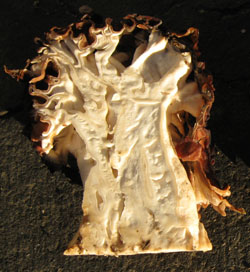
So how do you tell a true morel from a false one? Observe the following:
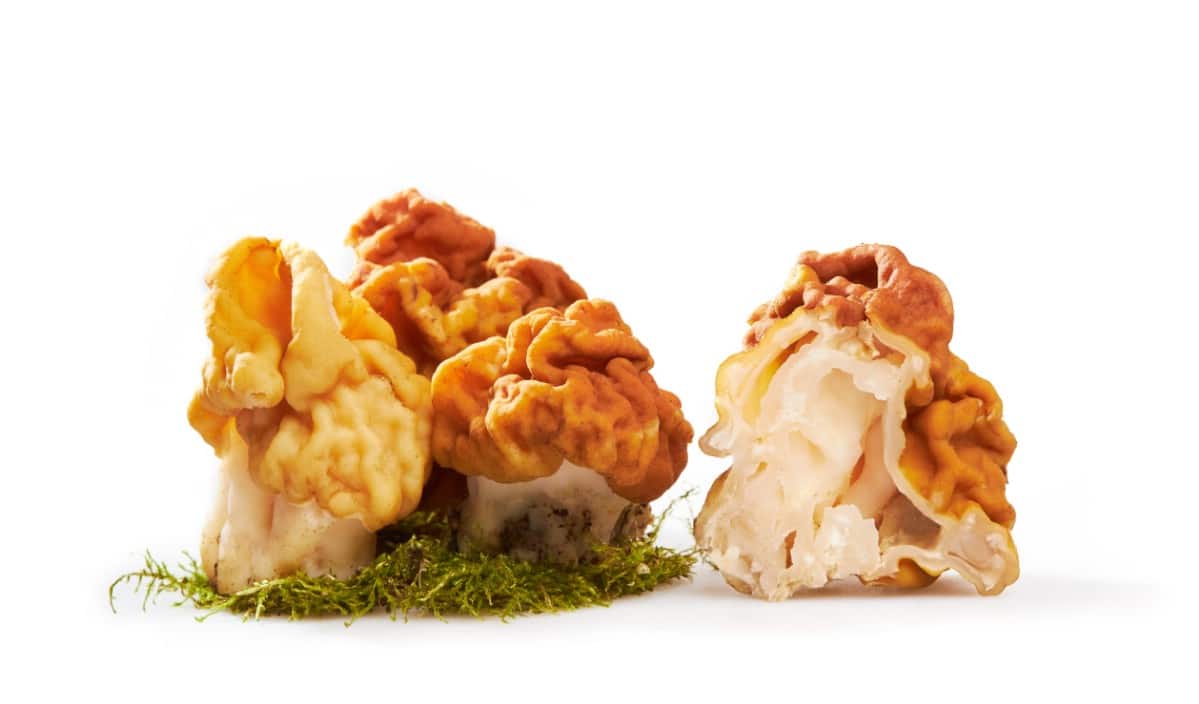
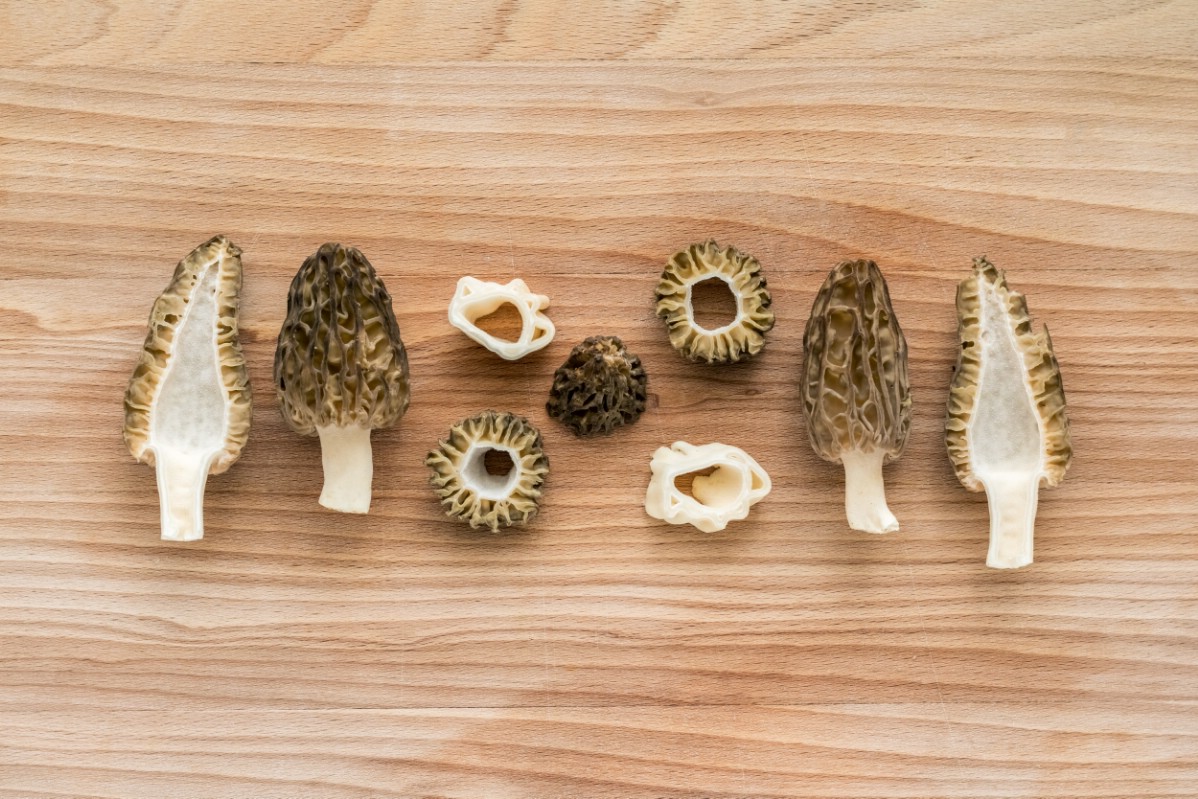
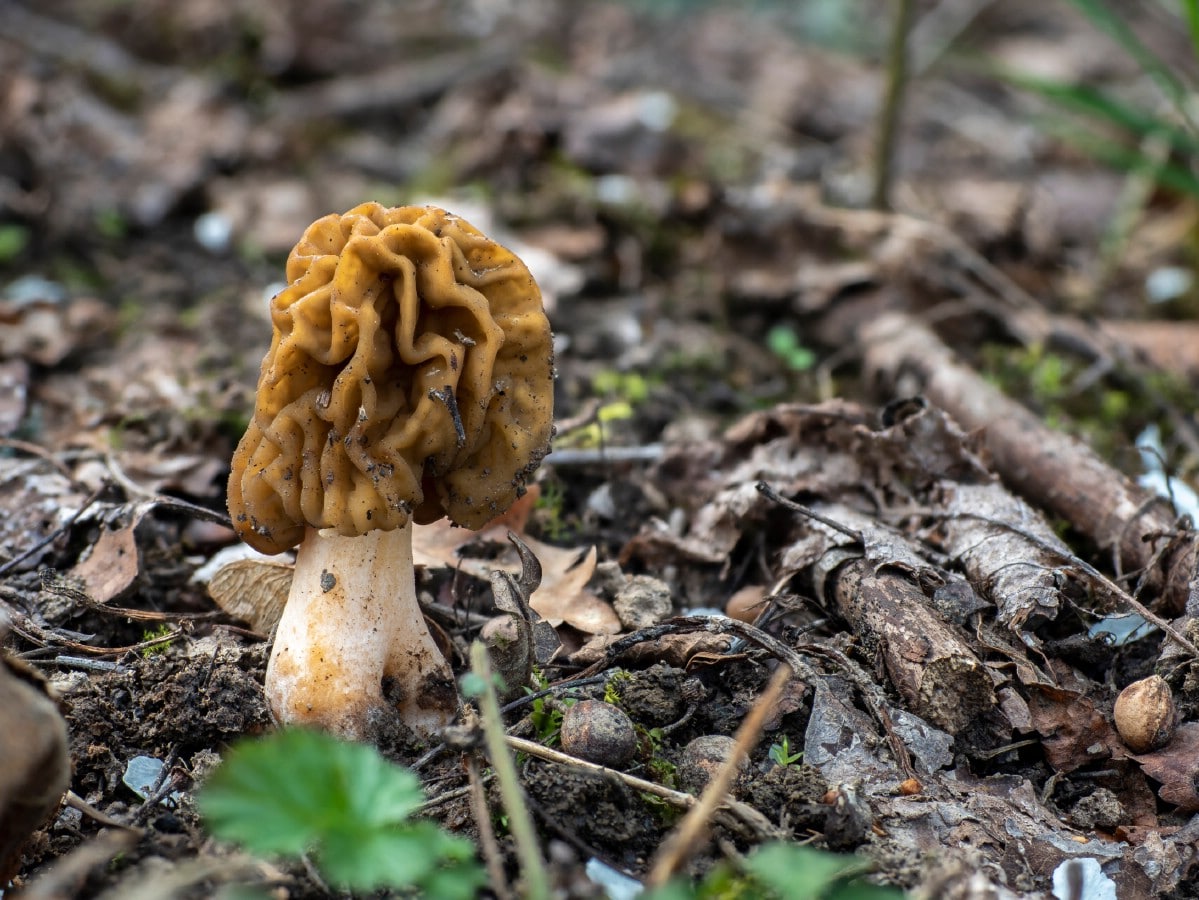
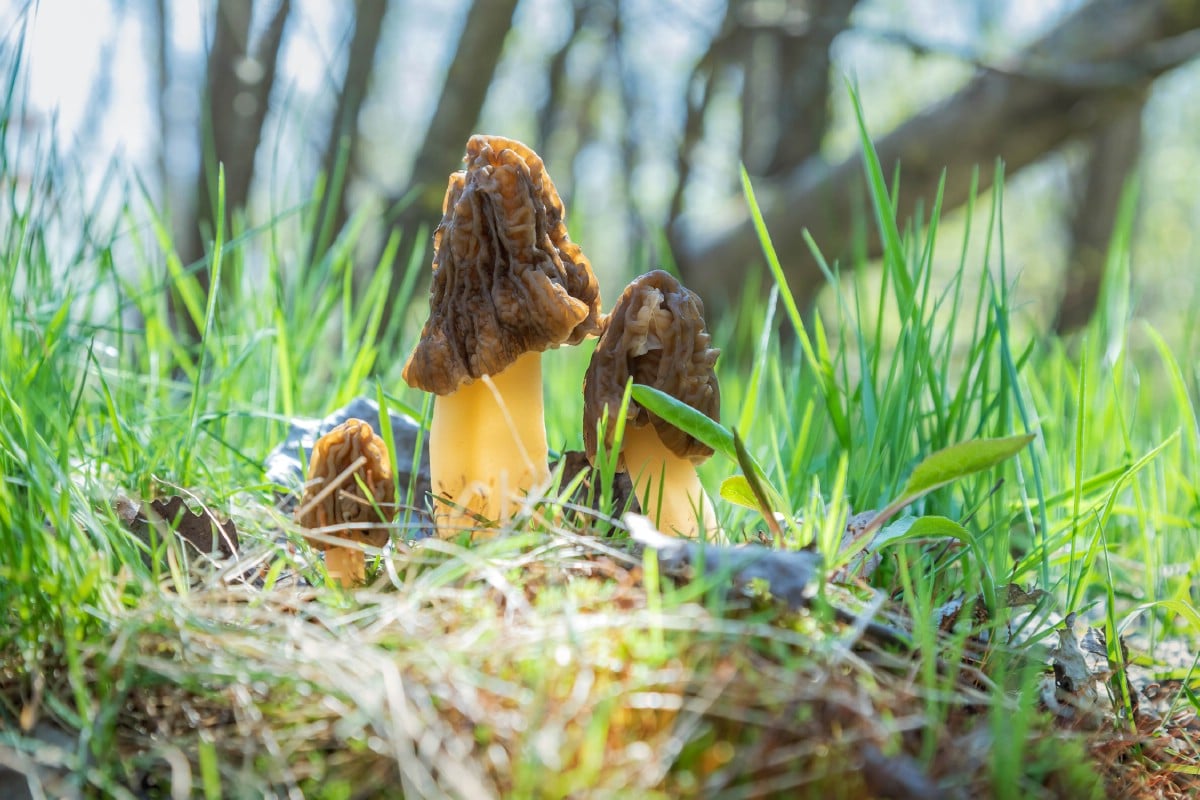
- Make note of the cap shape. The false caps that are “wavy” or “lobed”. They appear to be bulging outwards. True morels have a more uniformly shaped cap with pits or ridges. The true morel cap looks like honeycomb with pits angled inwards rather than bulging.
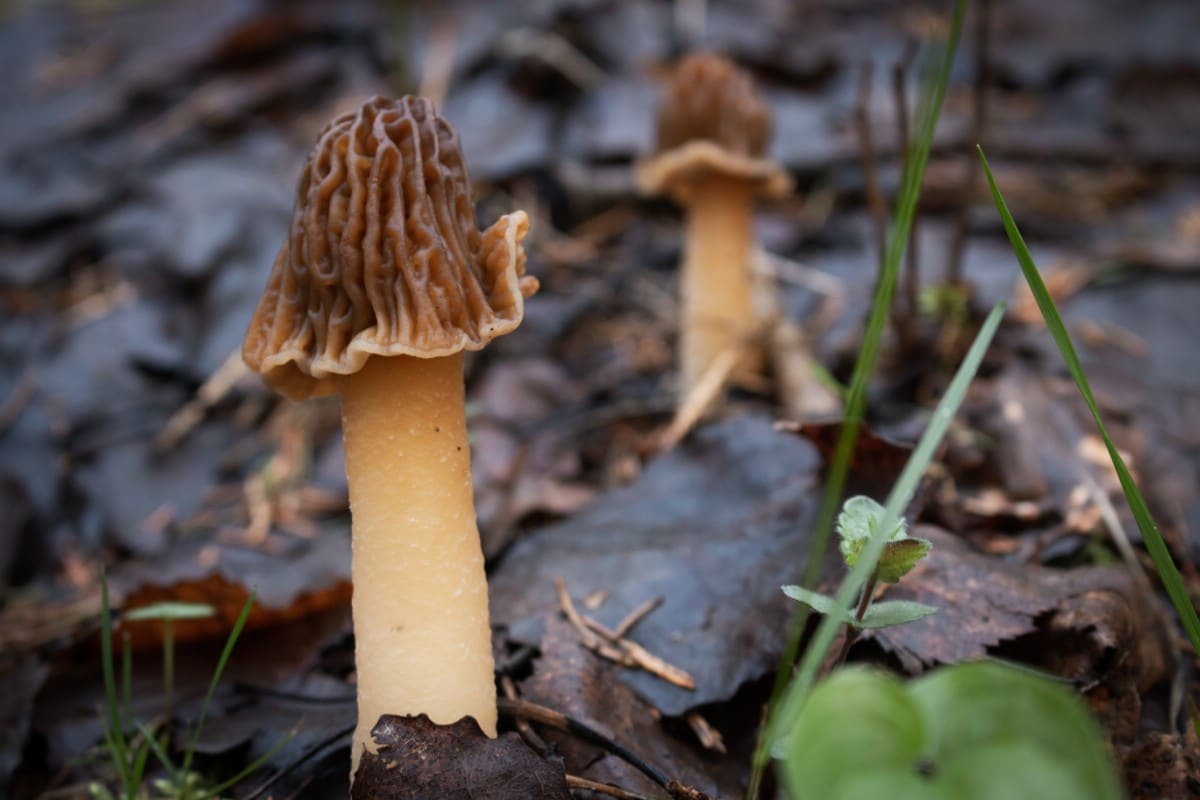
- The cap of the false mushroom hangs freely from the stem. A true morel has a cap that will be attached to the stem. This is not always the case but more often than not it is.
- If you slice an edible morel open from top to bottom it will be hollow inside. A non-edible one will usually be filled with wispy cotton-like fibers or chunks of tissue. (Fabulous example of this on the right).
Go here for a more in-depth article, including a handy chart, on how to tell a true morel mushroom from a false morel.
A False Morel Quiz:
*answers at the bottom
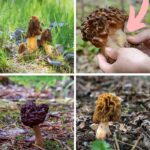
#1. In the two pictures below, which one is the true morel and which is a verpa bohemica? Hint: Look closely at the cap design.
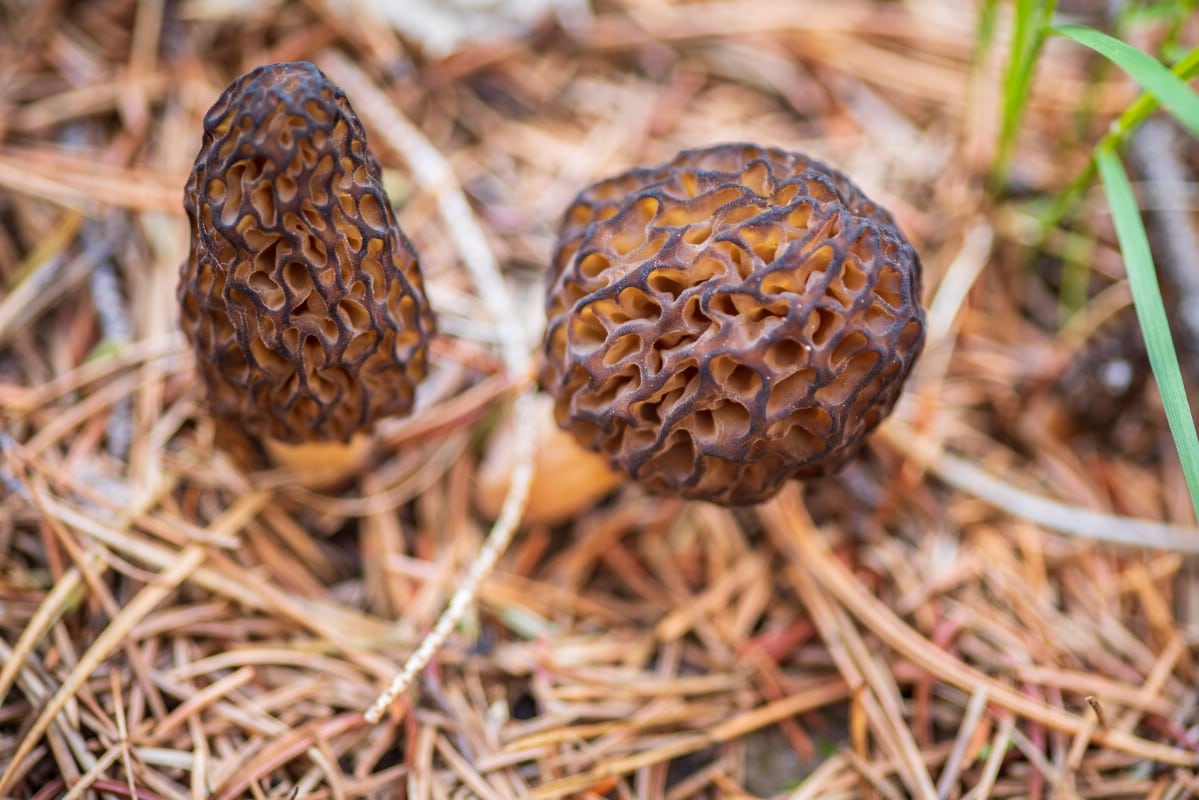
#2. In the two pictures below, which one is the true morel and which is verpa bohemica?
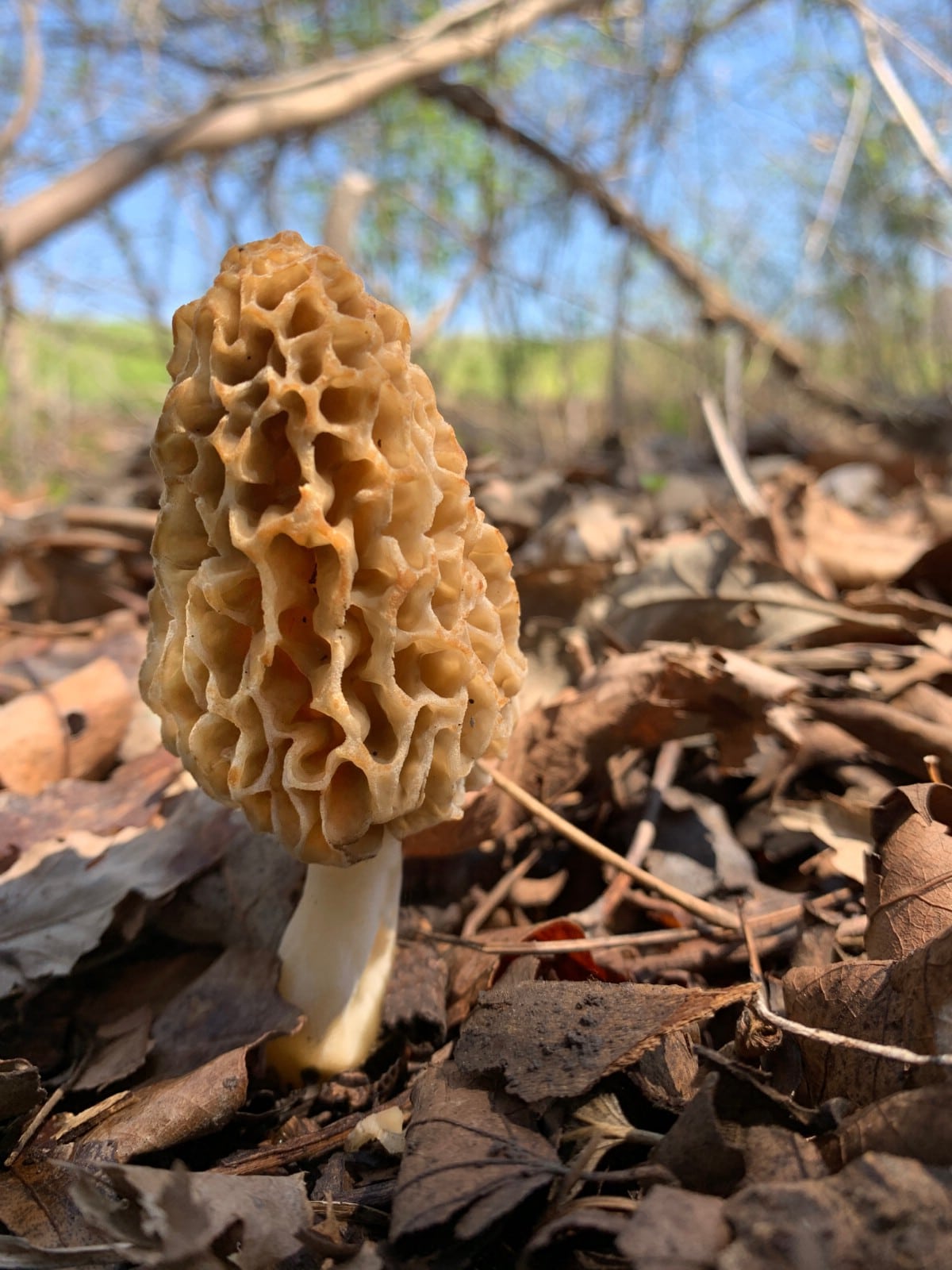
#3. Which one is a true morel and which is a Gyromitra false morel?
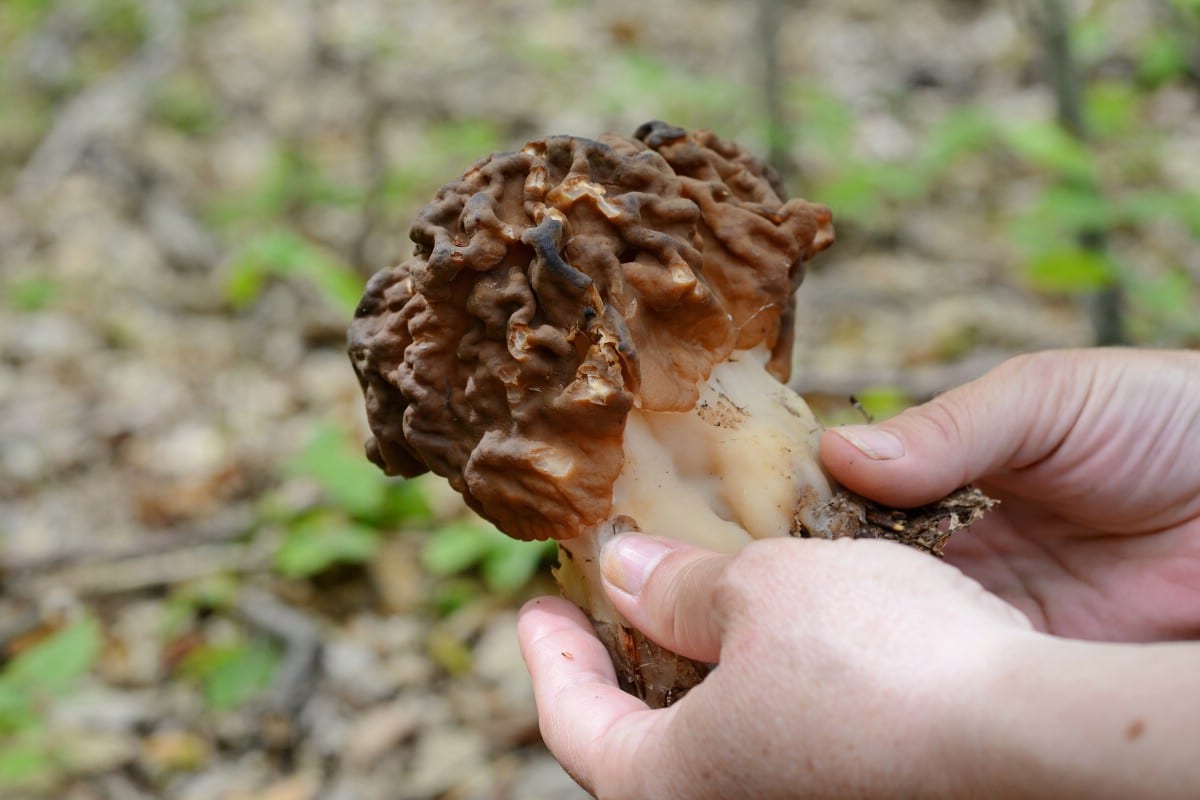
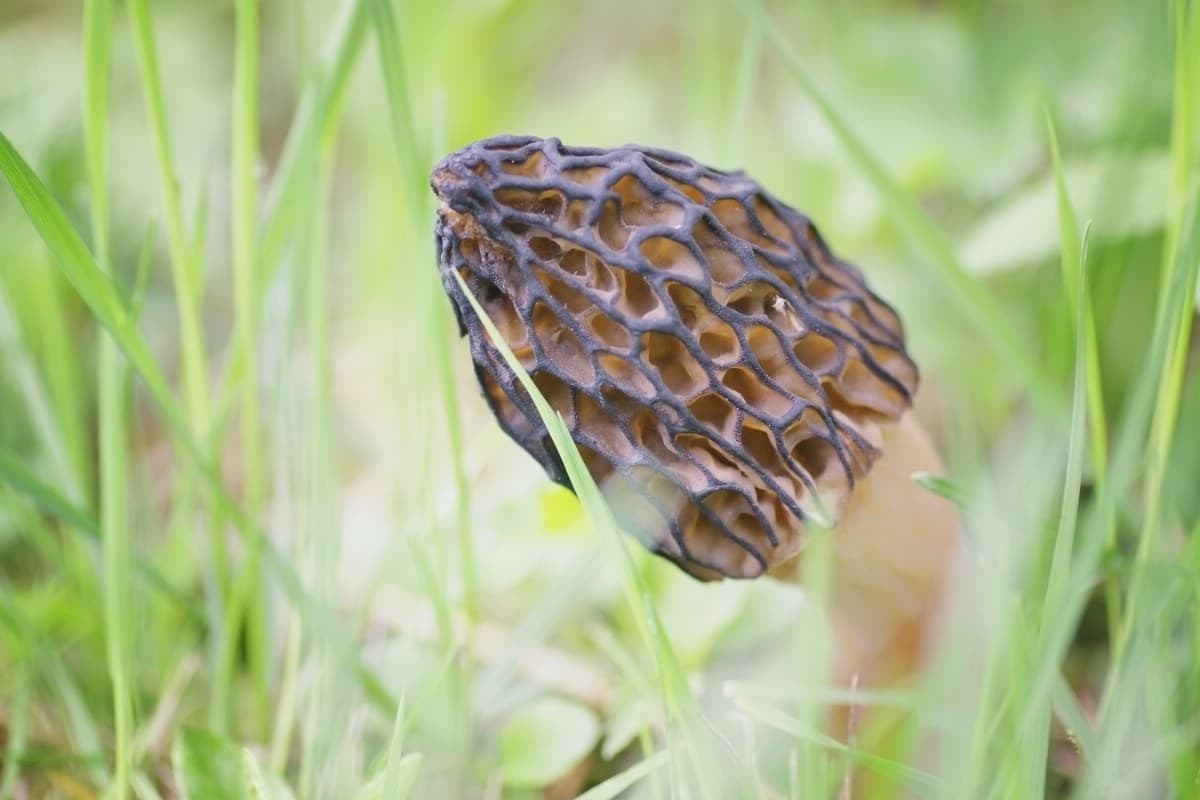
#4. In the two pictures below, which one is the true morel and which is a verpa?
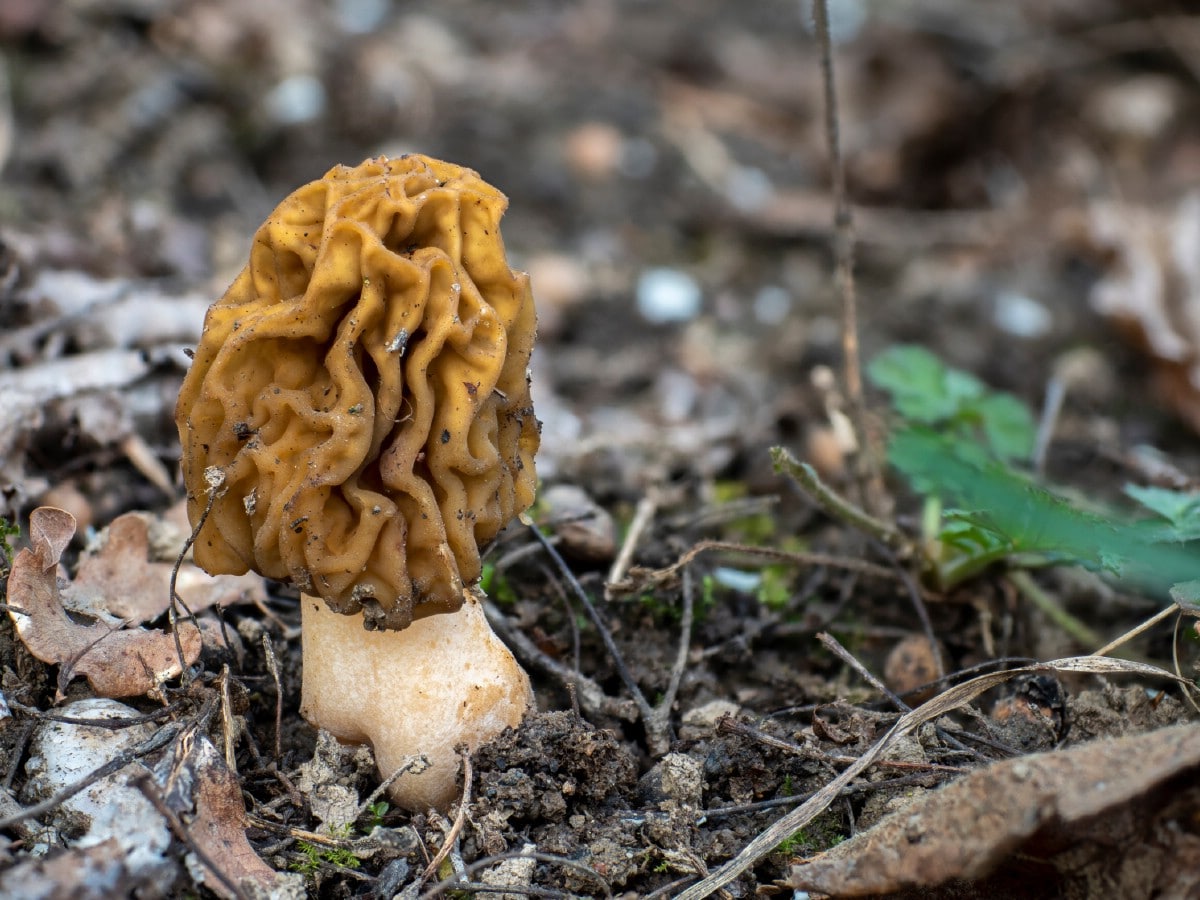
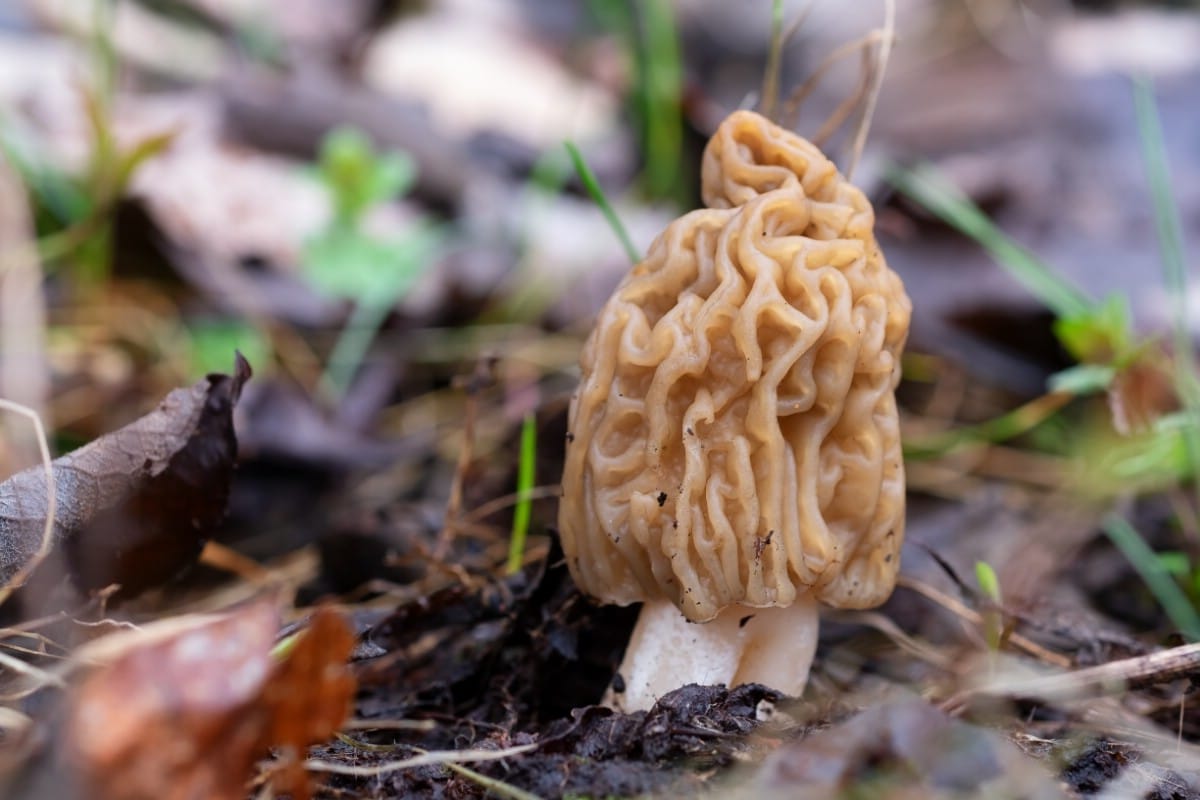
Answers: #1 – true morel on the top, #2 – true morel on the bottom, #3 – true morel on the bottom, #4 – trick question, both are verpas!
Be Safe
Always consult a local expert if you’re inexperienced or uncertain. Never eat a mushroom-based solely on mushroom pictures that you’ve seen on the Internet! This goes for ALL mushrooms, not just morels or false morels.
If you feel sick or dizzy after eating what you thought was an edible morel, seek help immediately!
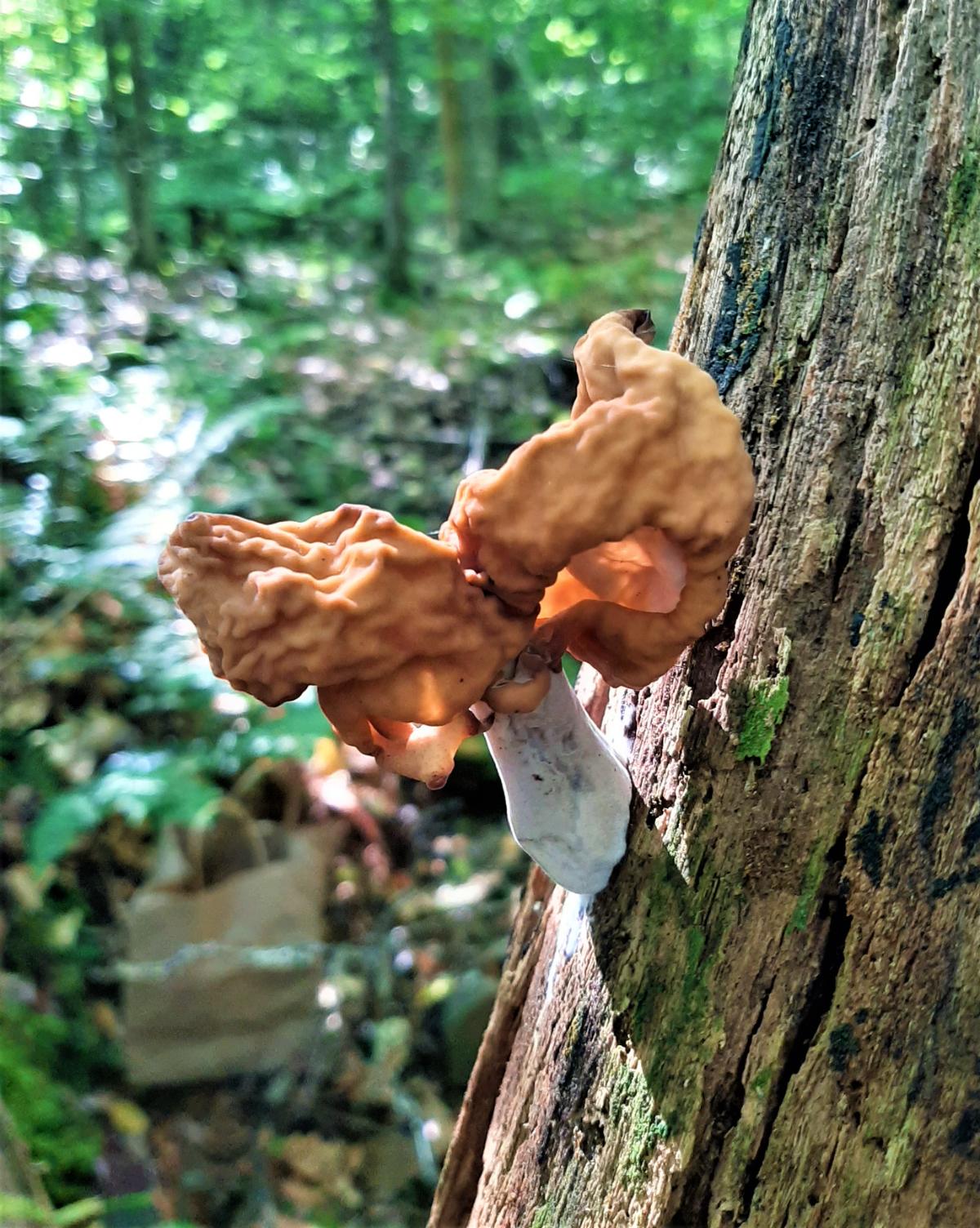
Who’s Eating These Mushrooms….and Why?
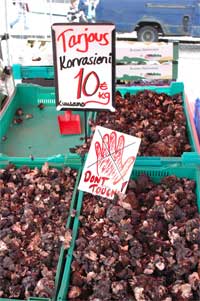
The picture at the right shows false morels for sale at a market in Helsinki, Finland. People in other parts of Europe and parts of the United States eat them as well. They often come with warnings and preparation instructions.
While some false morels are prepared simply, others must be boiled 2-3 times to remove toxins before they are safe to eat. Through boiling, the toxins are reduced and the mushrooms become edible. This practice of double (or triple) boiling has been used for centuries to make the mushroom safe to eat.
However, studies show that MMH is a cumulative toxin. This means that its levels will build up in your body after repeated consumption. This could lead to illness or even death. Please, keep that in mind before eating. It may be that there isn’t much of a danger since rarely is a person eating enough of these mushrooms to cause extreme danger, but it’s possible. More studies need to be done with humans first.
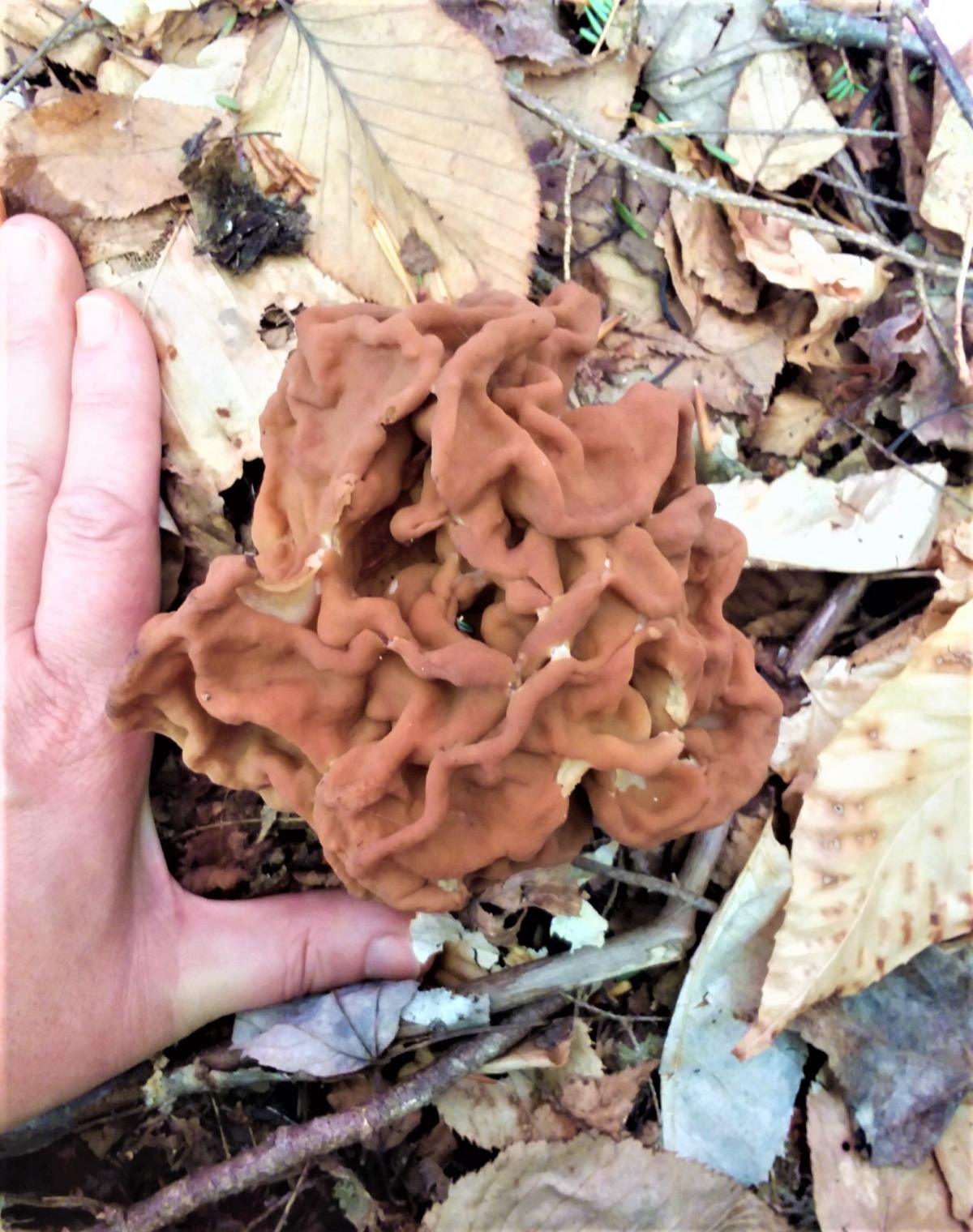
Plenty of people eat these for years with no problems. But do you want to risk it? Personally, since no one knows exactly how toxic any given mushroom will be, we think it’s best to just avoid them altogether.
Many gyromitra enthusiasts will disagree, and that’s fine. We always err on the side of caution. The choice is yours, ultimately, so do your research well before eating. There’s a great active community on Facebook called False Morels Demystified which explores eating and safe preparations. They are a wealth of information for the curious.
Ange says
The morels I found have tiny light blue bugs on them that sort of look like lice. Any idea what they are and how to deal with them so I can eat the morels?
I can send a picture.
Jenny says
It’s probably springtails (also known as snow fleas) — they aren’t actually fleas, though. I’d soak the morels in hot water for 15-20 minutes and see if that removes them. If not, you might just have to take the extra protein with the morels. They’re not harmful or dangerous, just high on the “icky” scale. Unfortunately, there are some bugs that are very difficult to remove, especially when they enjoy morels as much as we do. https://northernwoodlands.org/outside_story/article/springtails-tiggers
Russ says
Soak them in salt water overnight, to rid them of the bugs and snails.
Donald says
Just too bad your “left” and “right” designations are useless on my Google view of your article, where the photos appear up and down!
Jenny says
OH! good catch! I recently changed the layout of some posts and forgot about the left/right. It should be top/bottom now — off to fix it now. Thanks for the heads up!
TJ says
There is new research on the edible false morels. Check out @falsemorelsdemystified on Facebook to learn what is and isn’t safe and stop leaving tasty mushrooms in the woods.
Jenny says
Yes, that facebook page is linked at the end with a note that if people want to delve into eating them, that is the best resource. That group is amazing! I’ve learned a lot, but am not prepared to change my article just yet, as the new information is just that — new. I’m following the subject closely and will likely update my article with clear preparation instructions and information about the different species edibility in the near future.
Rica says
I’m greatly appreciated for your information