
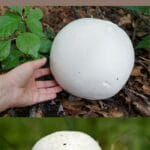


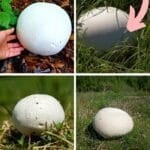
Perhaps you’ve seen some giant puffball mushrooms in a meadow. As you stare at one of the huge globes a thought comes to mind…
I cannot wait to kick this thing!
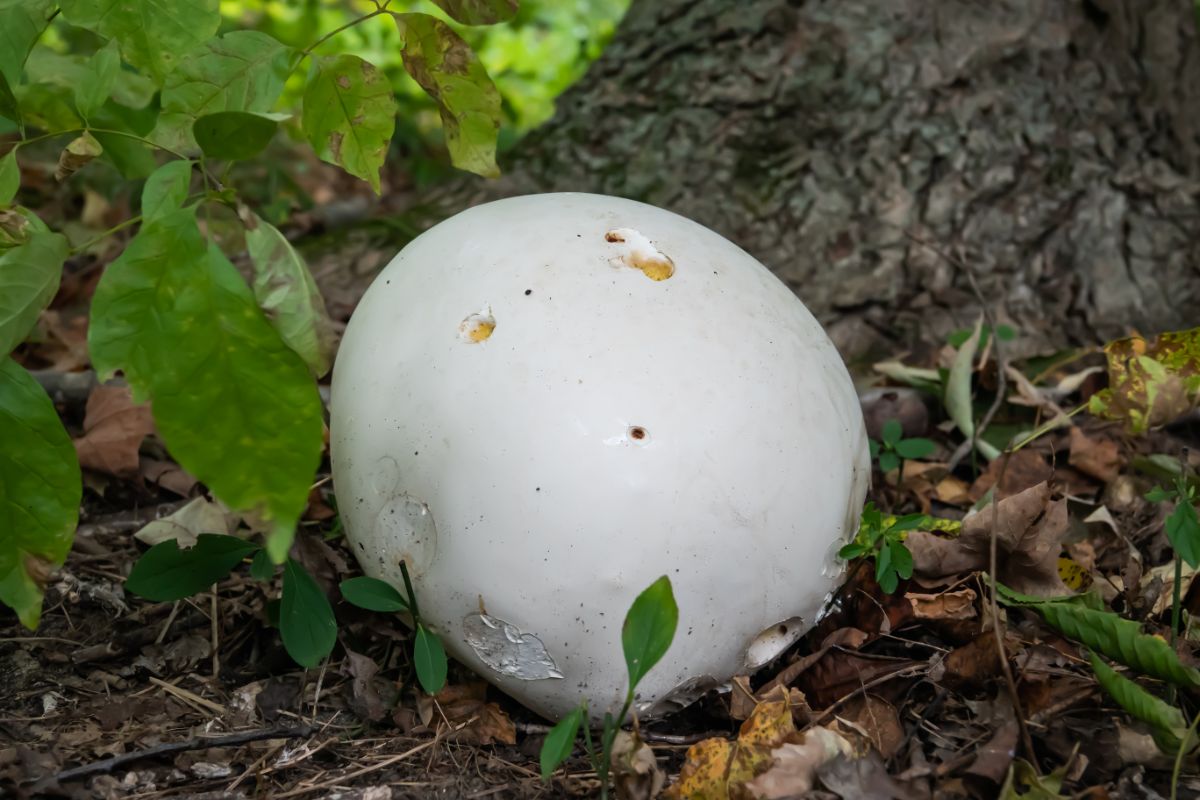
Well, wait a little longer! First off if the mushroom is white it is still immature and hasn’t produced spores yet. So you won’t kick up the desired spore cloud quite yet. Secondly, there is more to the puffball than meets the eye.
Jump to:
What Is A Giant Puffball?
For the purposes of this guide, we are saying any puffball that is softball-sized or larger is “giant.” A softball is 3.8 inches in diameter. While this is the cut-off point for this guide, it is by no means a commonplace partition. To learn about puffball mushrooms that are smaller than a softball, check out our guide to Little Puffballs.
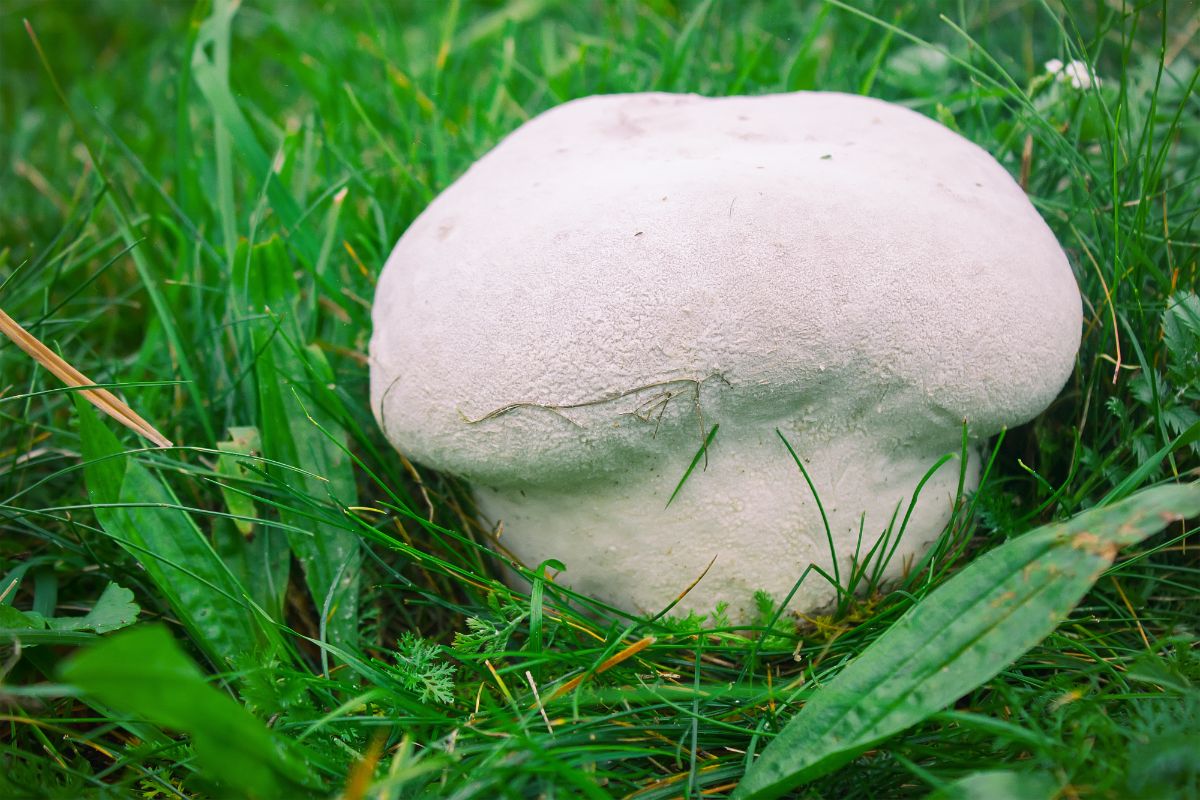
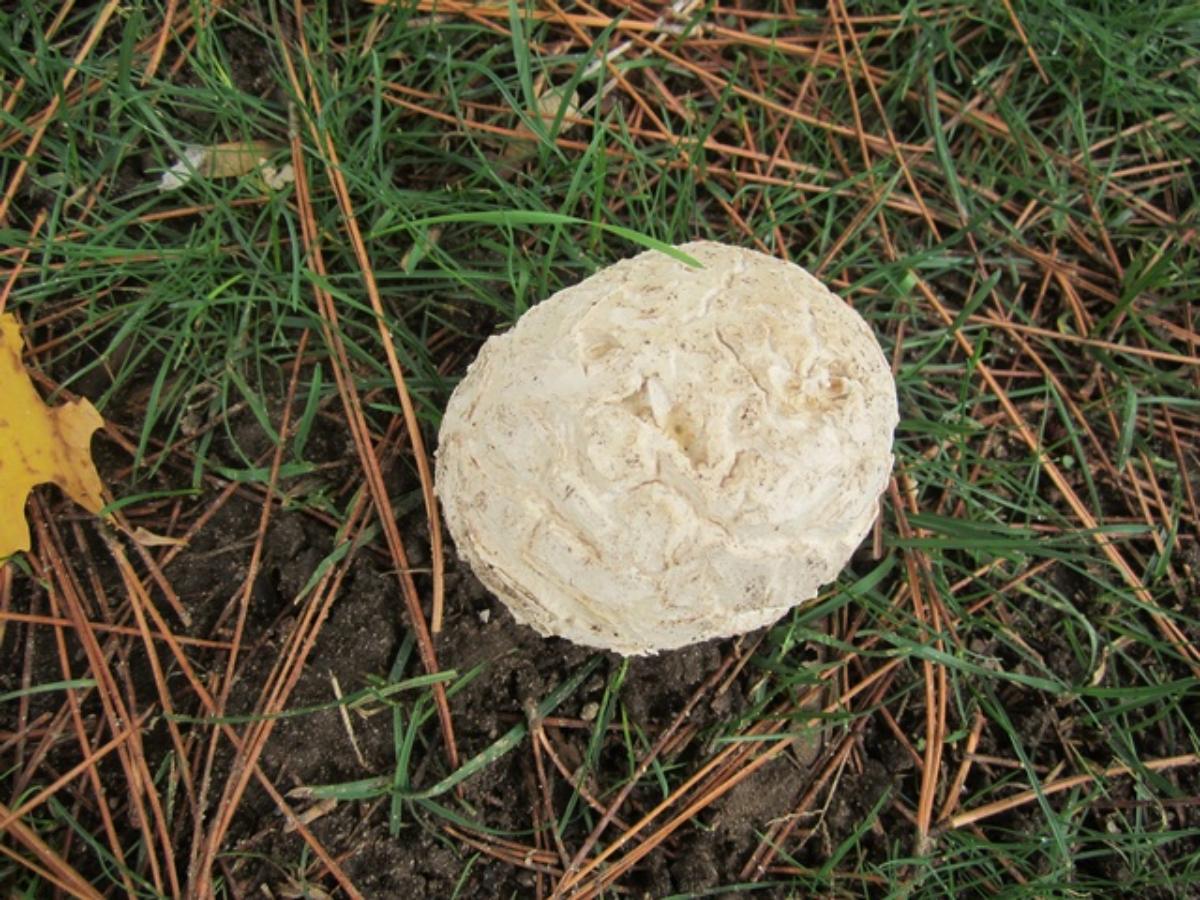
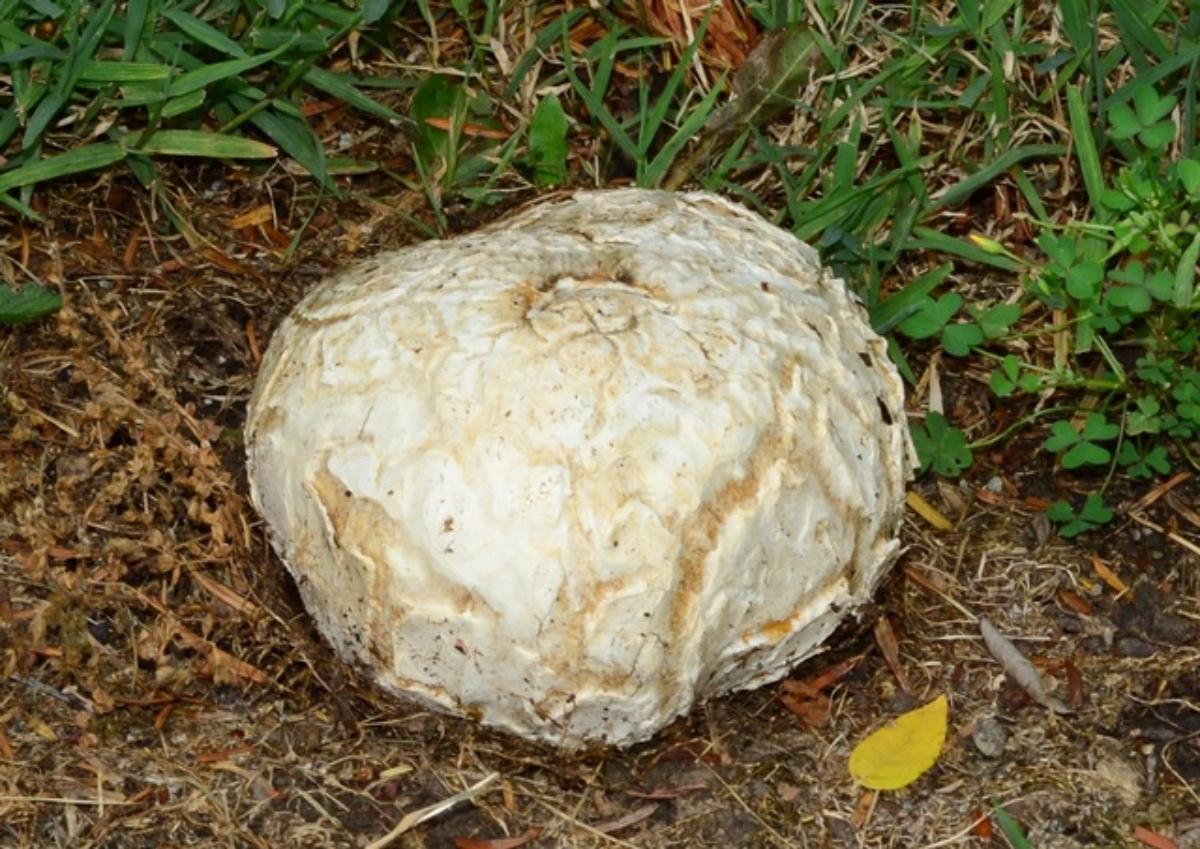
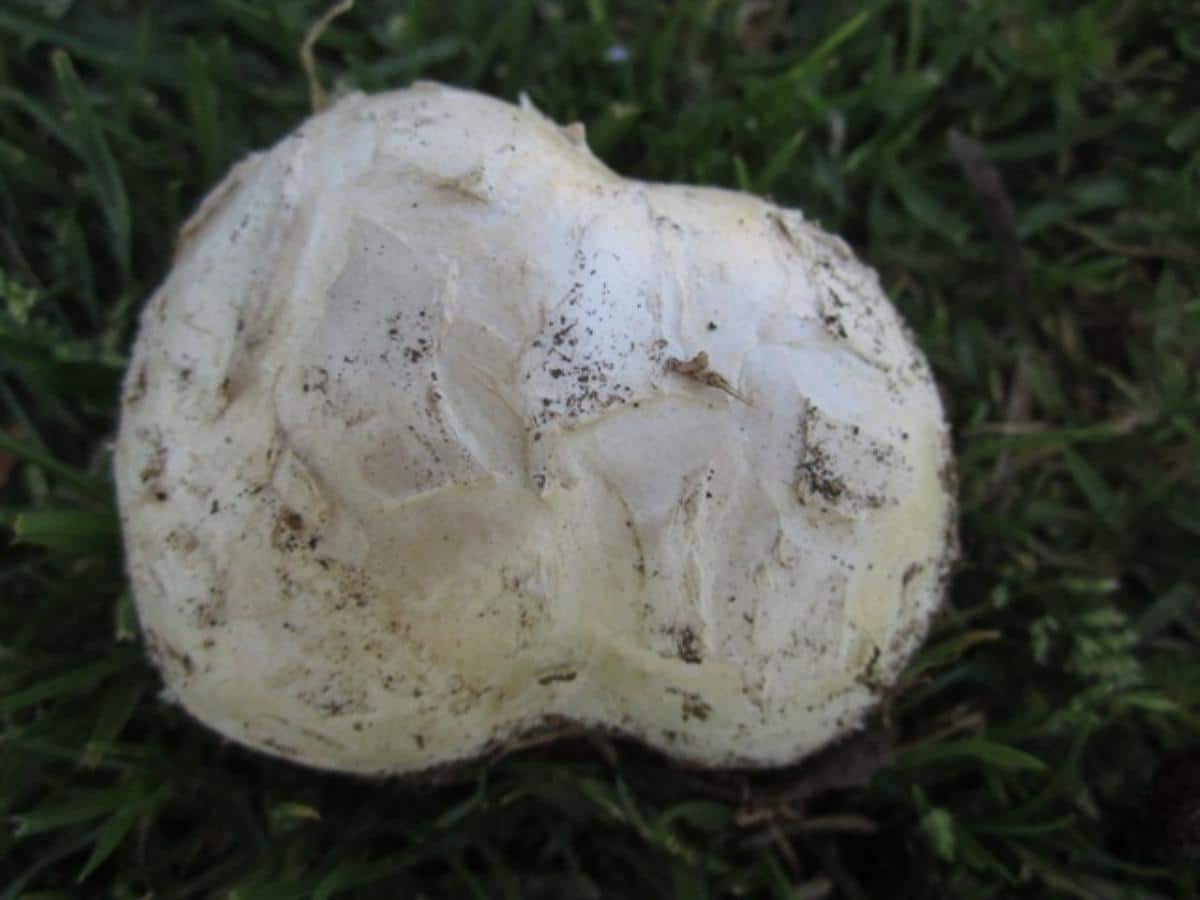
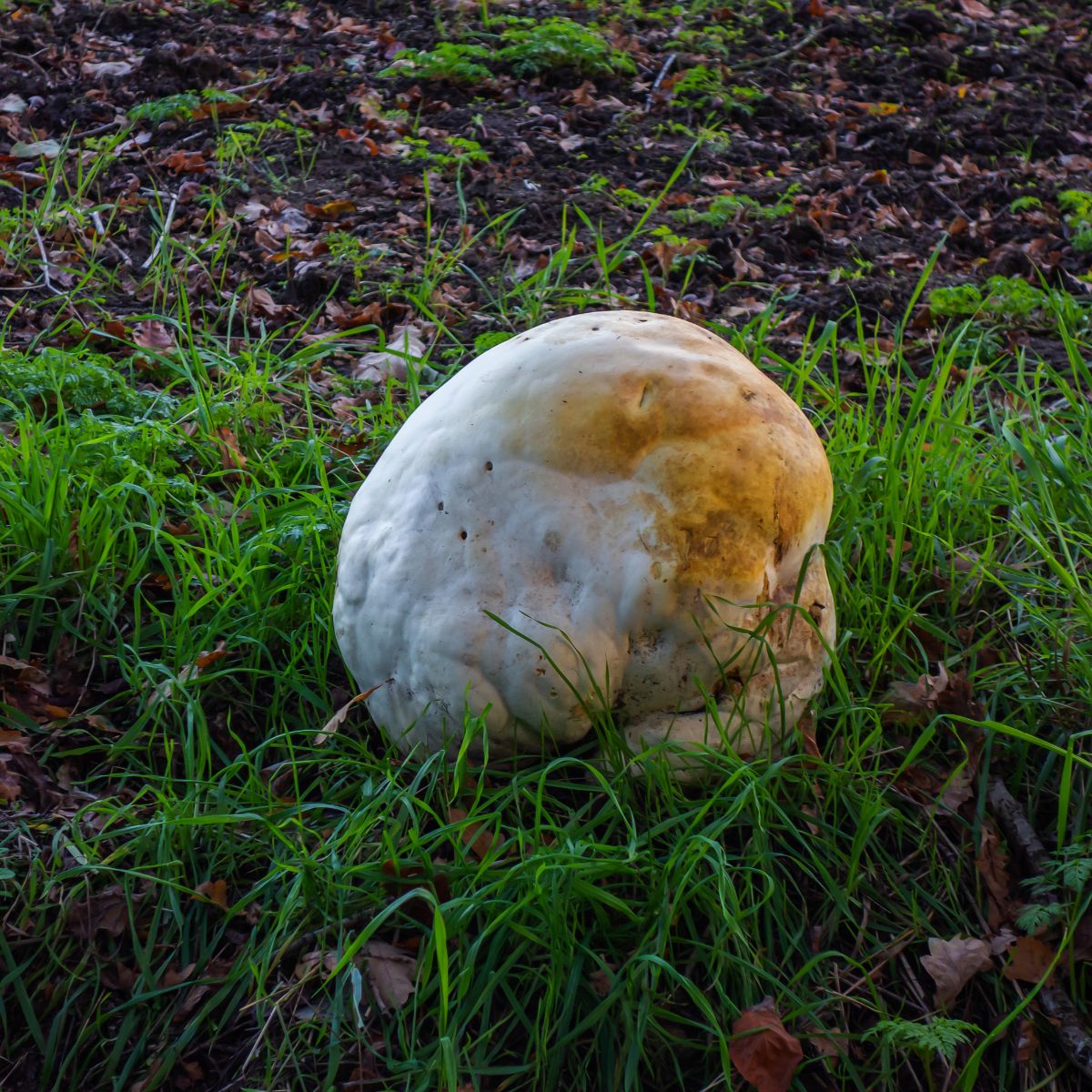
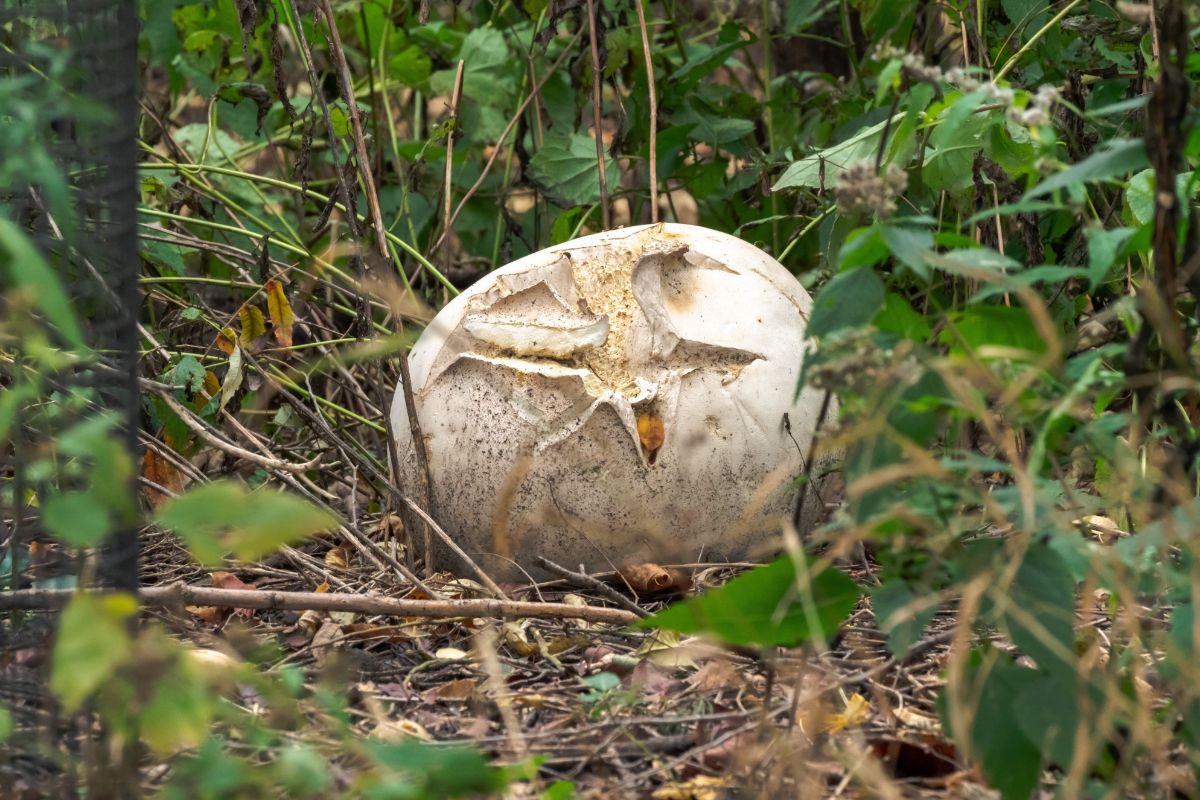
Puffballs are large, mostly rounded mushrooms that don’t have gills, caps, or stems in the traditional sense. They really look like volleyballs or golf balls laying around in a field.
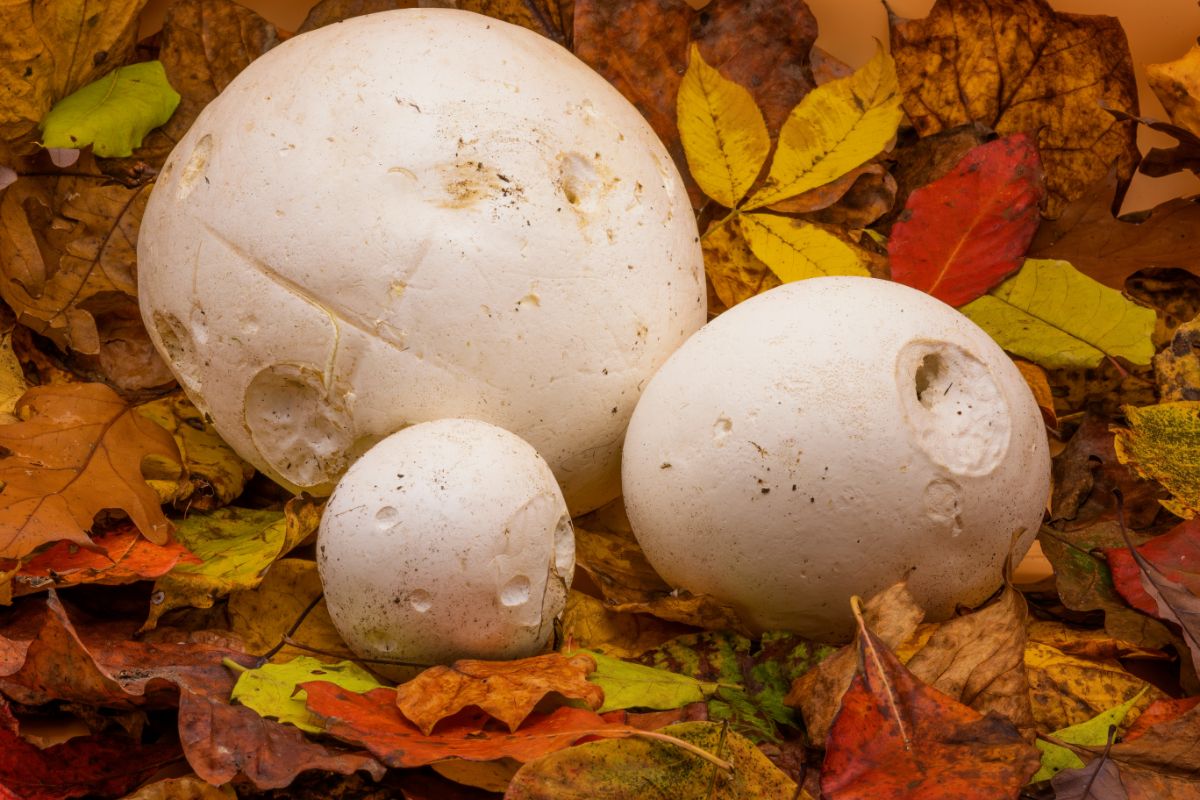
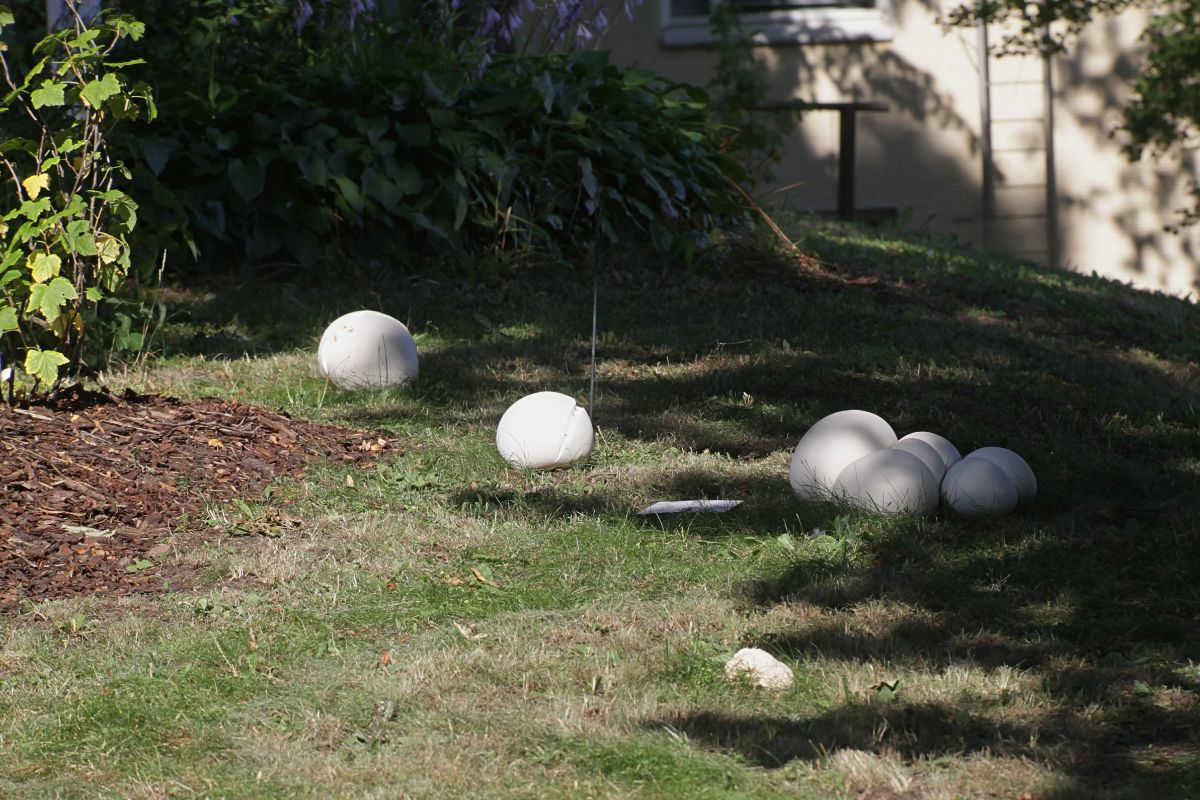
Most puffballs grow in meadows, lawns, or other grassy areas which accentuates their ball-like appearance. It’s easy to think someone left a big white ball in a field or lawn. Upon closer inspection, you can see the white thing is not an inanimate object, but is actually growing from the ground.
Puffball mushrooms have a long history as a food source for indigenous peoples around the world. They are usually seared, sautéed, or dried and powdered to be added to soups.
While finding a giant puffball is an incredible moment, they sadly aren’t the most delectable of mushrooms. In fact, they’re rather bland. Most people call them the “tofu” of puffballs. They aren’t bad tasting, they just need a LOT of flavoring.
Basic Puffball Identification
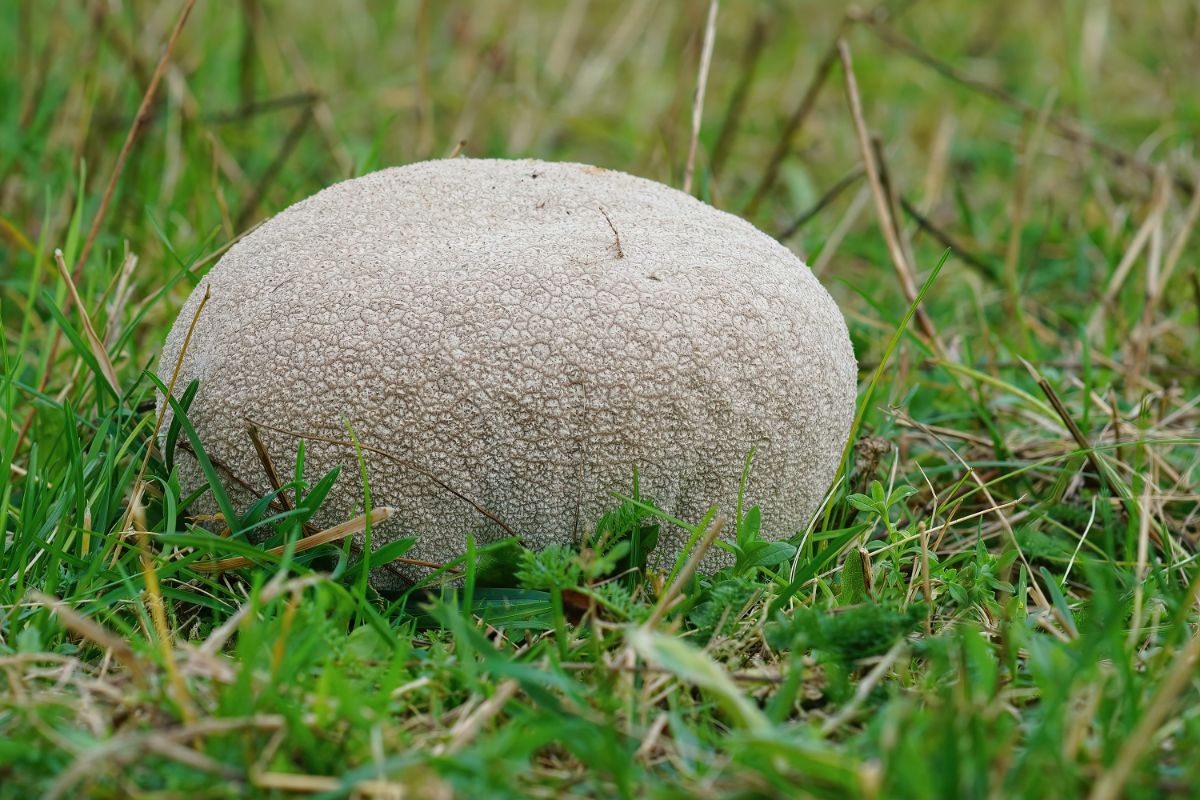
There are many dozens of puffballs in North America, and we’ve found that separating them by size is how most people start with identification. Finders either say it’s a little ball or a huge one, so we drew a line to help folks find the puffball they’re searching for without getting overwhelmed by sifting through the dozens of puffballs out there.
Of course, this designation of large or small isn’t foolproof and shouldn’t be taken as infallible. All puffballs start out small, so even the most giant, if found in a youthful state, will be considered small. Mushrooms, after all, are living and growing things with several stages. This is what makes identification challenging. And, fun!
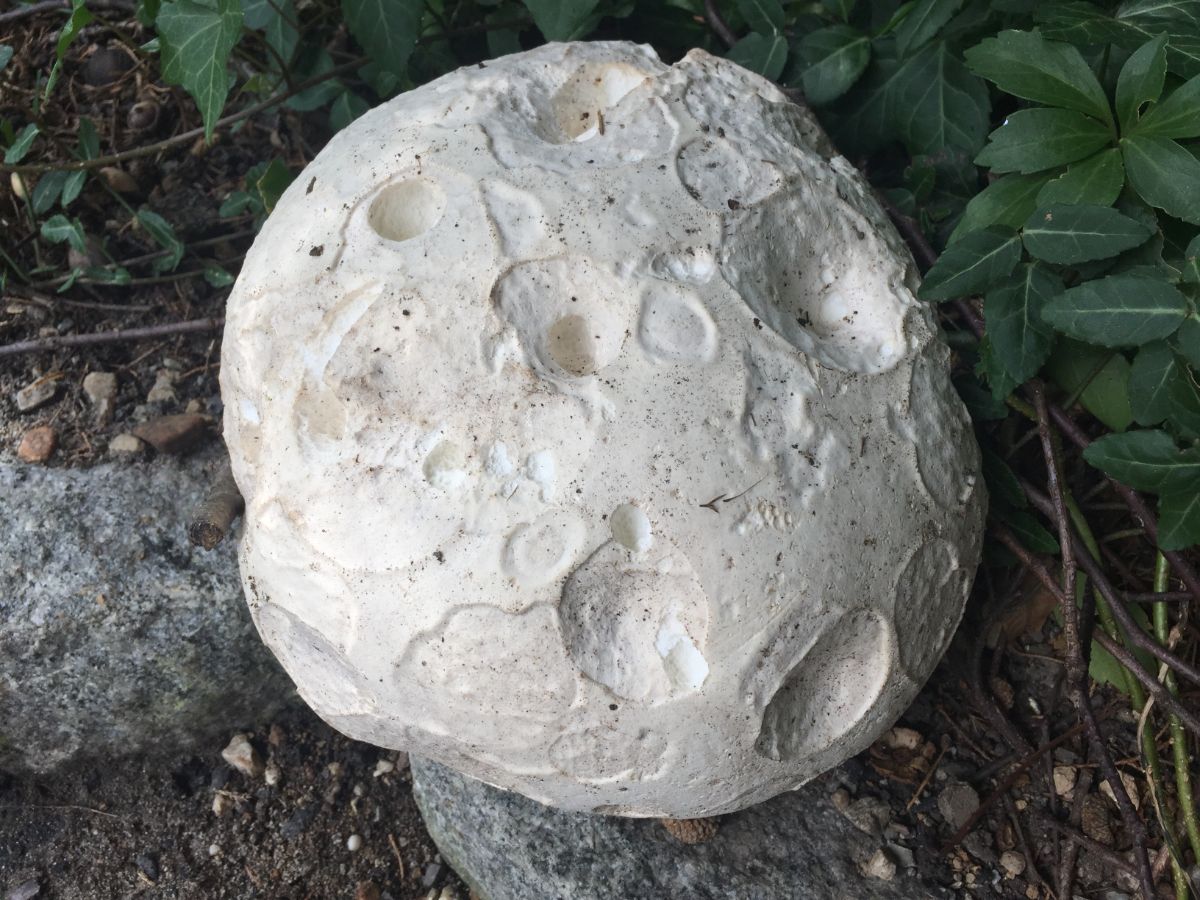
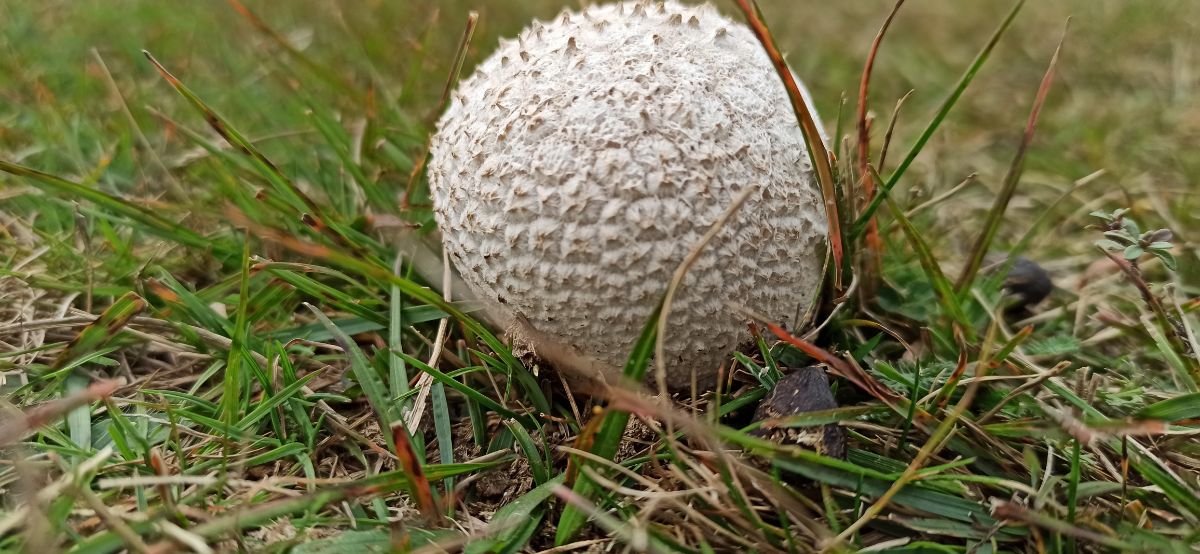
Giant Puffball Mushroom Facts
- Giant puffballs are saprotrophs, meaning they feed on dead organic matter. They’re more likely found in meadows and grasslands than in the forest.
- They are always found growing on the ground rather than up in trees. They never grow on wood.
- Giant puffballs often re-appear in the same place each year. This has caused some people to suspect they may be mycorrhizal rather than saprotrophic, but this has not been proven.
- Puffballs are sometimes found in a large circle called a “fairy ring”. Check out the page on fairy rings to learn more about this fun phenomenon.
- Puffball mushrooms usually fruit in late summer to early fall. However, this depends on the locations. Western species tend to also occur in spring after heavy rains.
- Despite their large size, fruiting happens quickly. The fruit body will appear in about a week’s time.
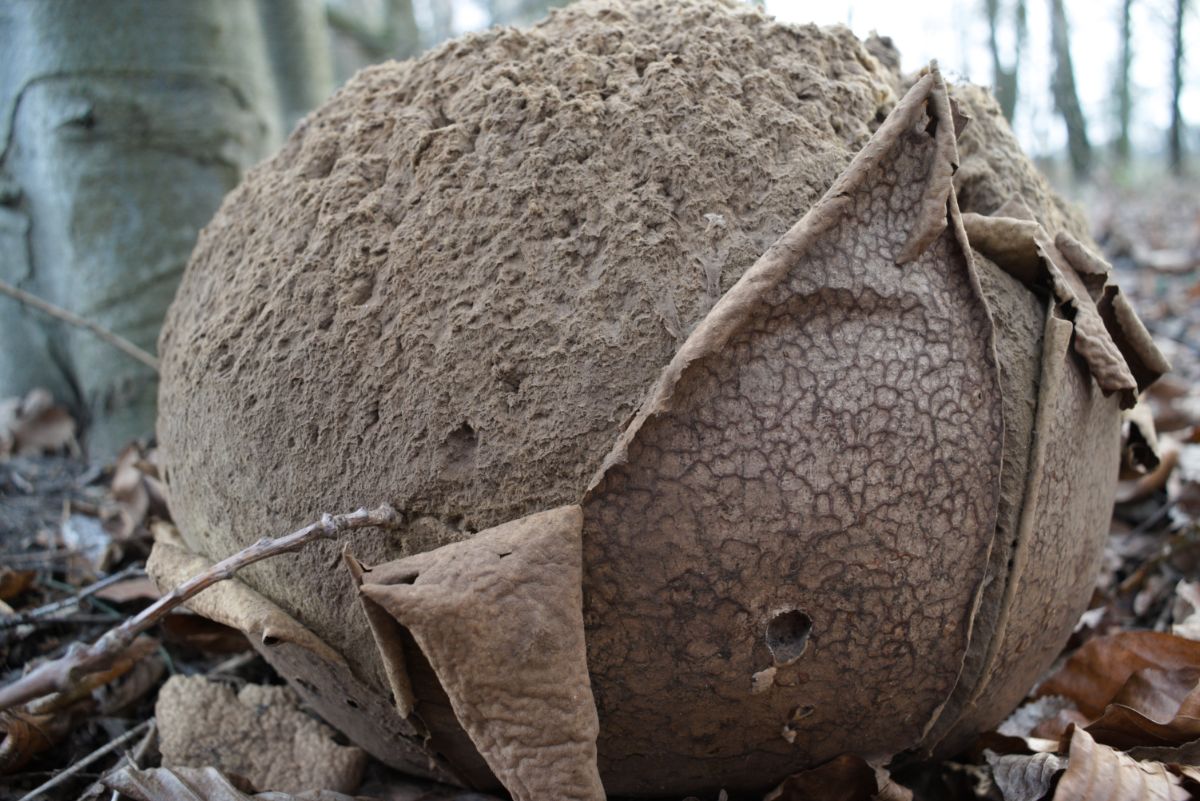
- Young giant puffballs have a white, fleshy interior. They become brown and discolored when past their prime and ready to release spores. They are also not edible at this stage.
- All puffball mushrooms bear spores inside the mushroom rather than through external gills.
- The exterior of the mushroom will eventually crack to release spores. This process is usually hurried along by weather, animals, and humans.
- A mature giant puffball contains trillions of spores!
- Puffball species are spread through the central and eastern United States, Canada, and Europe, and around the world.
- Giant puffballs are well named! They typically grow between 10 and 70 cm (around 4 to 27 inches). One of the largest specimens on record was 150 cm (59 inches)!
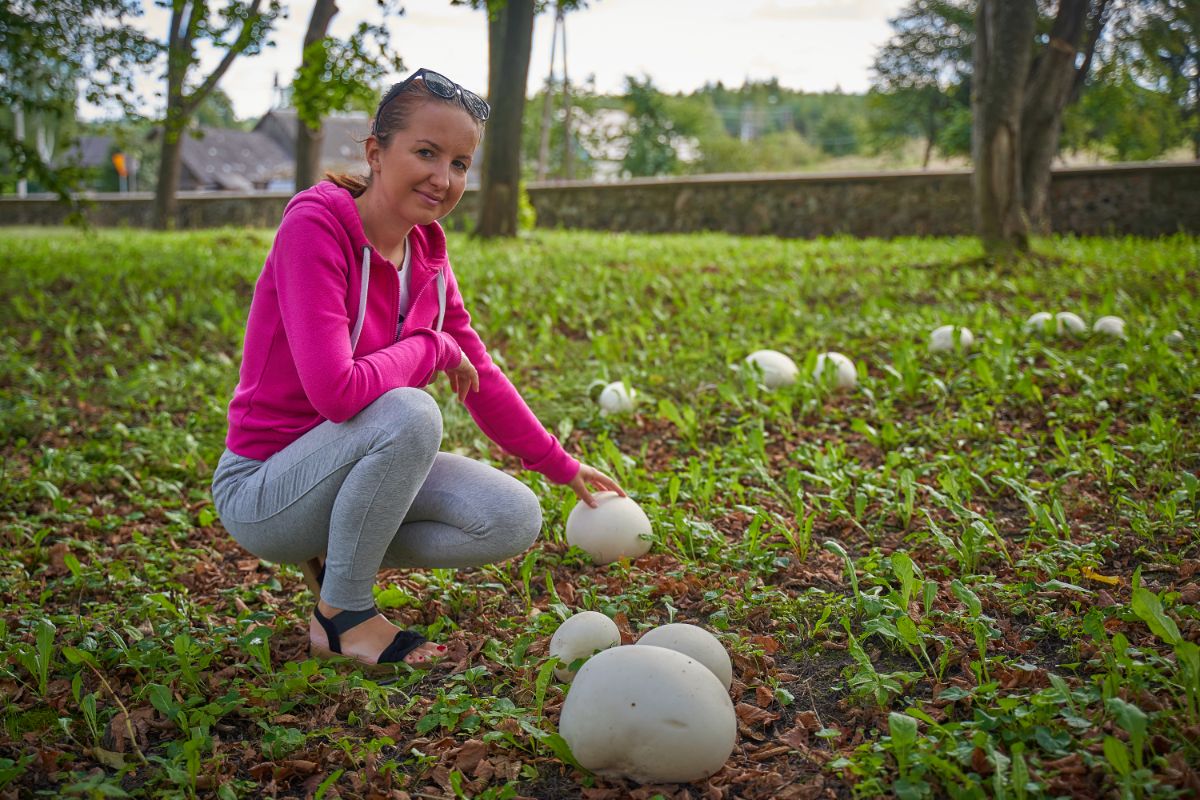
Giant Puffball Species of North America
This list is organized alphabetically. Usually, I try to organize by location, generally east and west coast, as many mushrooms seem to stay on one side or another of the Rocky Mountains. Puffballs, though, aren’t so easy to categorize by location. Yes, some are specific to the west or east coast, but it’s not as straightforward as it often is with other mushrooms.
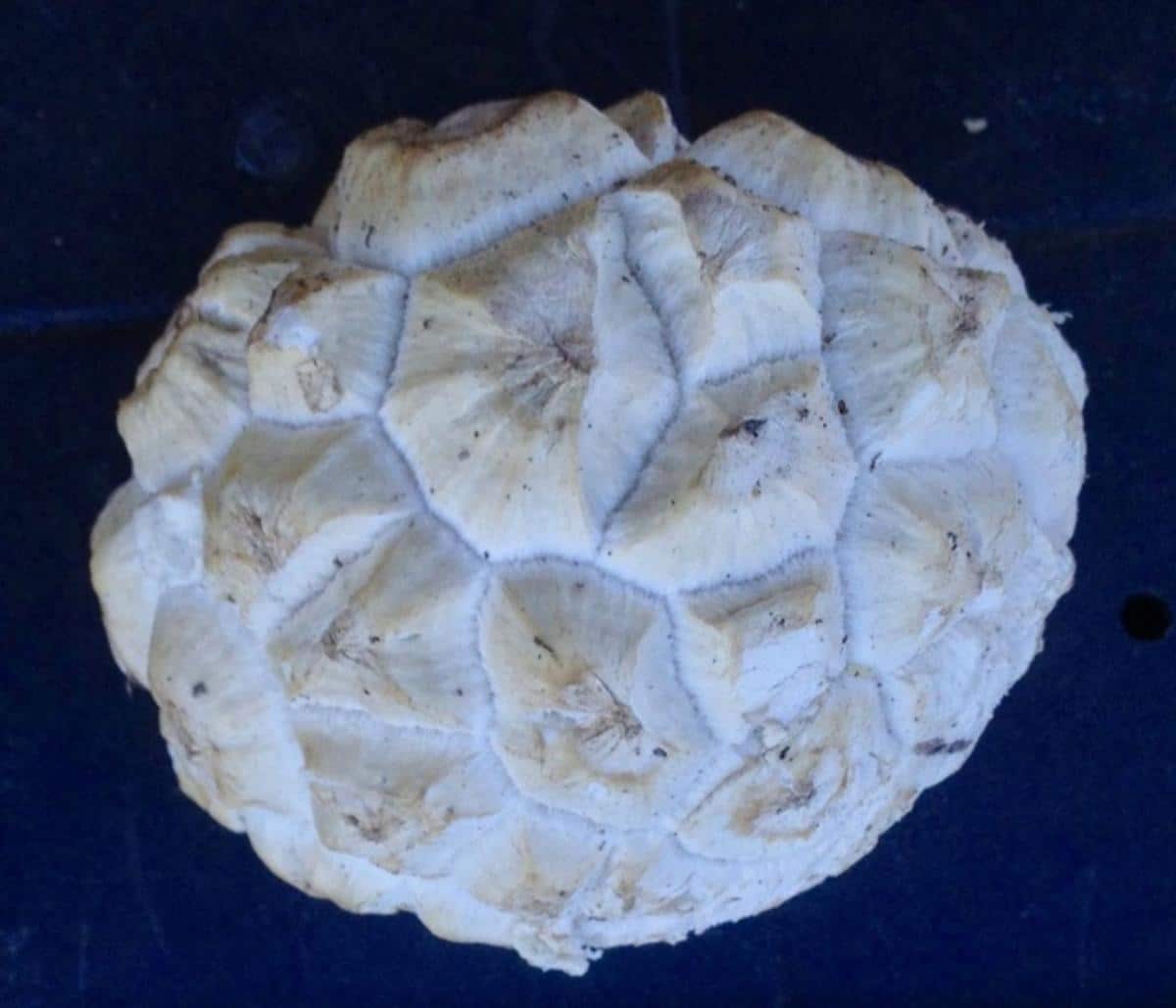
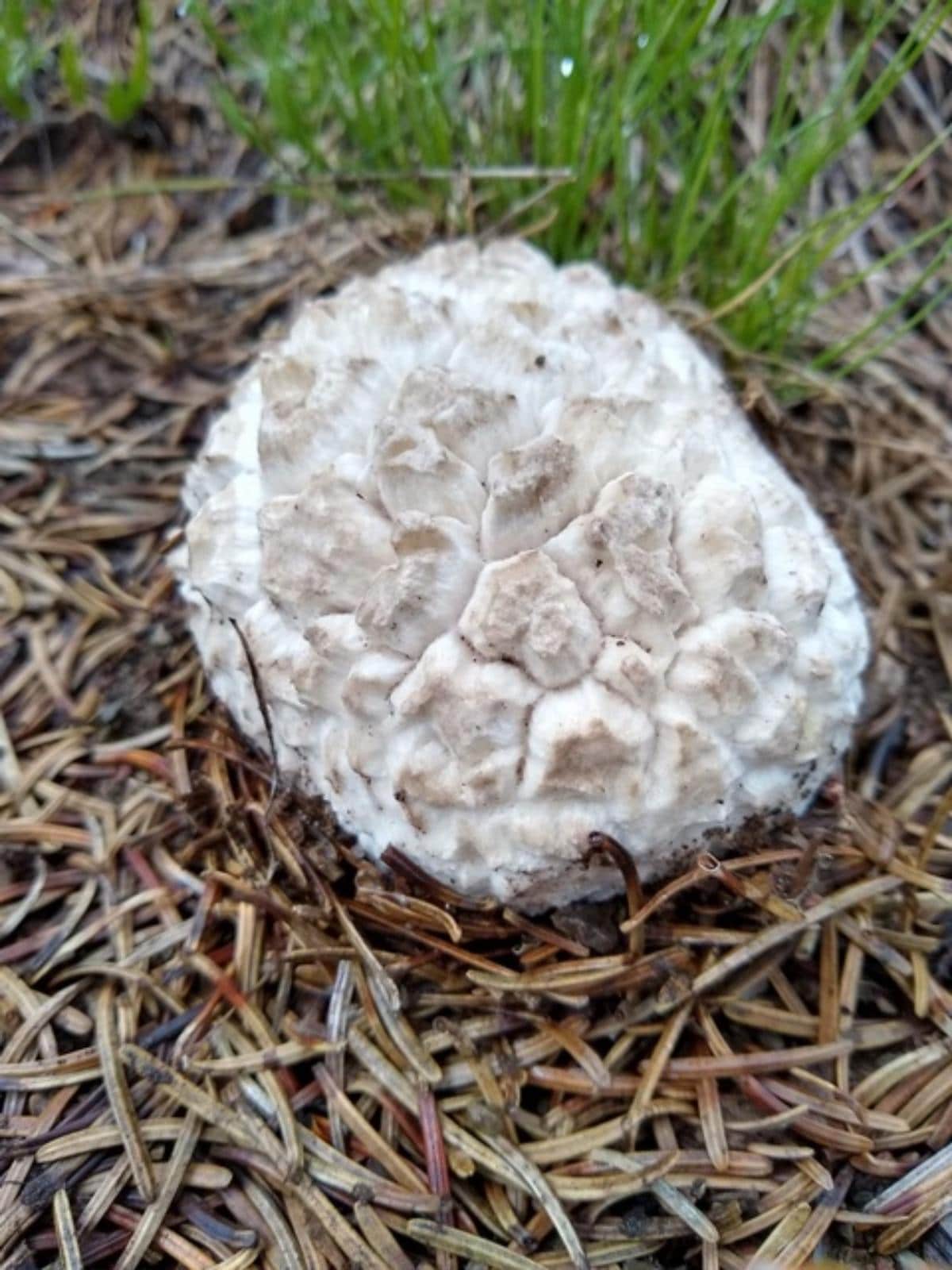
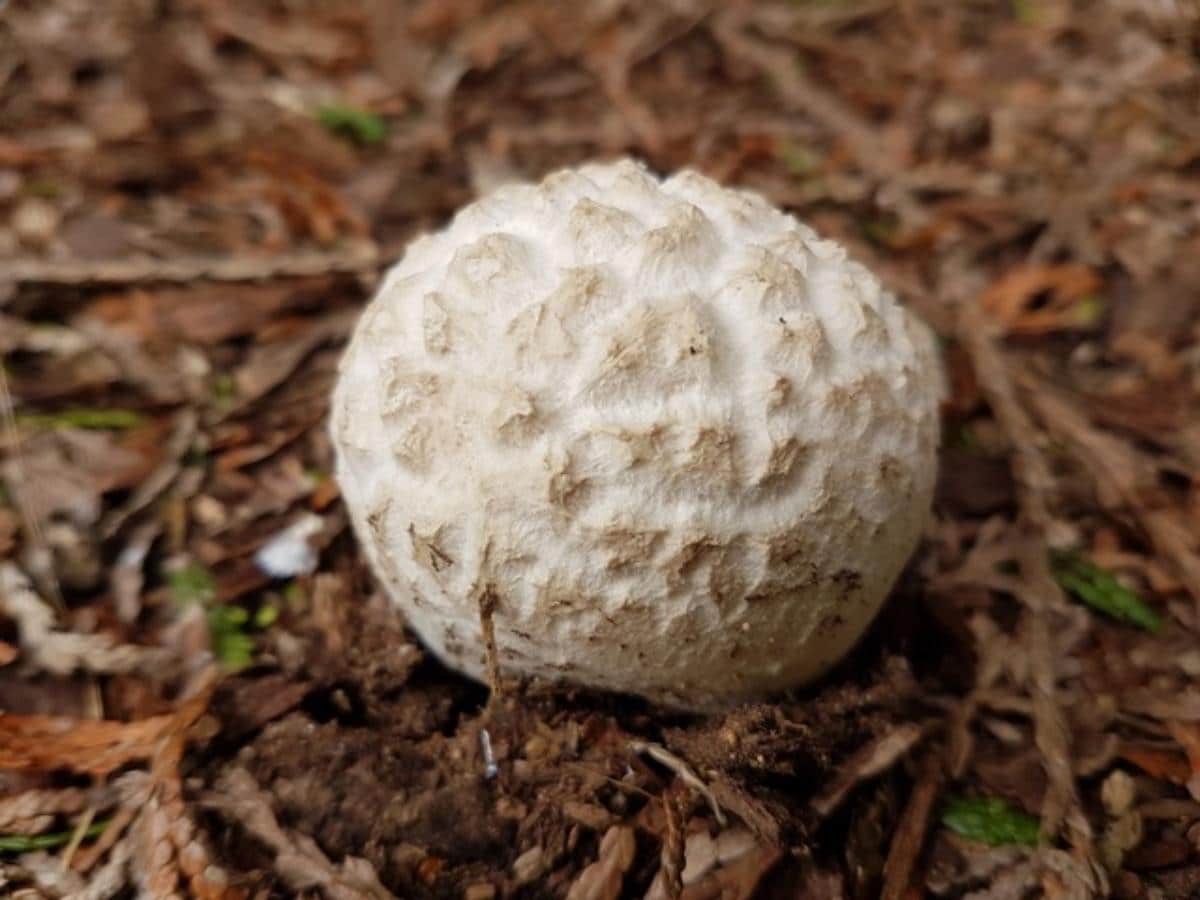
Calbovista subsculpta (Sculpted Puffball)
This puffball is often confused with C. sculpta and shares a common name. They may be tricky to differentiate for new foragers, but the differences become apparent once you see them out in the wild.
- Region: Pacific Coast, western North America – high elevations (3,000-11,000 feet)
- Season: Spring through fall
- Habitat: Open areas in conifer forests, roadsides, meadows, disturbed areas
- Size: 2.5 – 4.5 inches tall, 3-6.5 inches wide (softball-sized)
- Shape: Roundish or generally spherical, though often lopsided. Covered with shallow blunt pyramid-shaped scales.
- Color: White
- Inner flesh color: White, then turns dark brown
- Notes: C. subsculpta has pyramid-shaped scales, while C. sculpta has pyramid-shaped tall warts. Subsculpta looks like a fine architectural drawing, and sculpta looks like a big pile of meringue topping. Basically, this one has less prominent warts, and it is also more common. C. subsculpta is also attached to the ground with a long root-like cord, which is uncommon with puffballs.
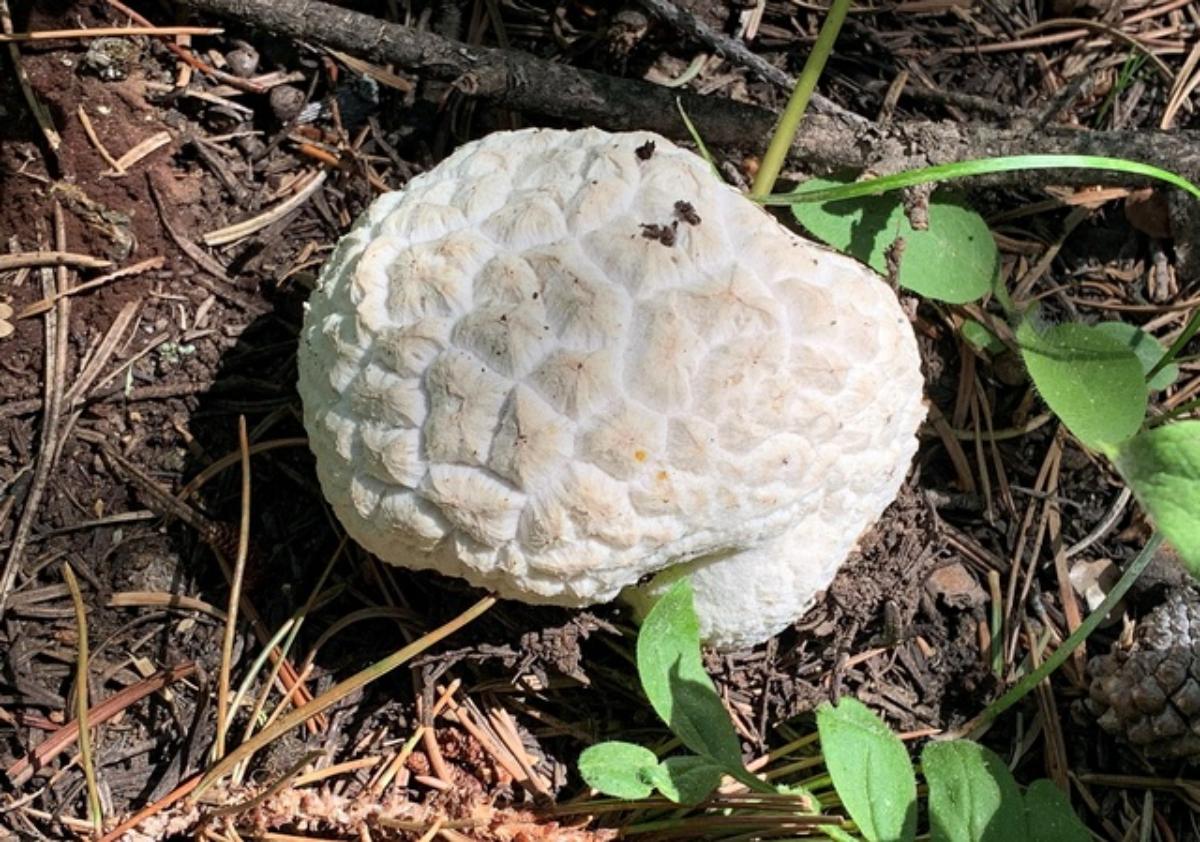
Calvatia boonia (Western Giant Puffball)
This massive puffball is found only west of the Rocky Mountains. It’s hard to miss this monster.
- Region: Western, common in the Rocky Mountains
- Season: Summer and fall
- Habitat: Grassy areas, meadows, fields
- Size: 10-12 inches tall, 6- 12 inches wide (volleyball-sized)
- Shape: Round or oblong
- Color: White
- Inner flesh color: White when young, greenish-yellow with age
- Notes: The outer flesh breaks into polygonal sections as it grows that make it look sculpted. They may look like upraised pointed warts. It may reach 24 inches wide, but not regularly.
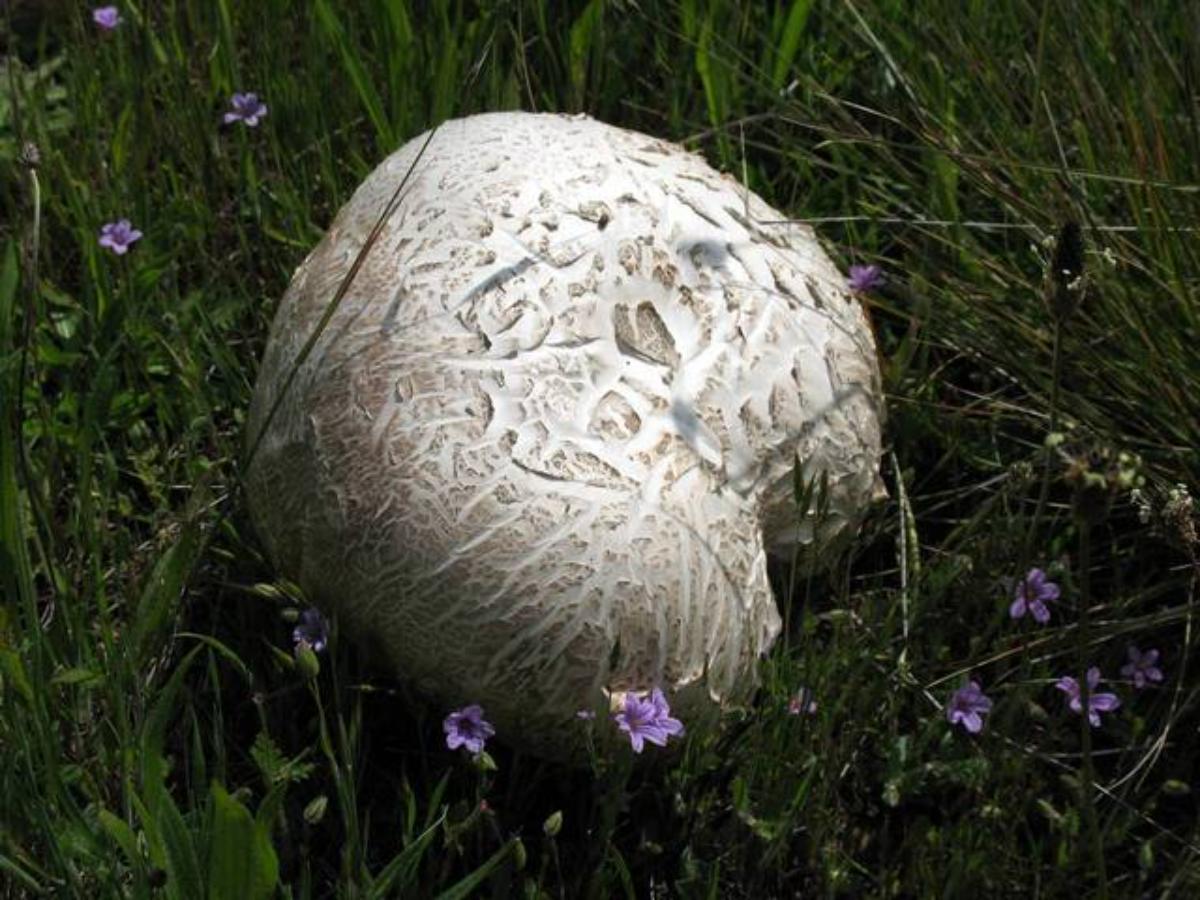
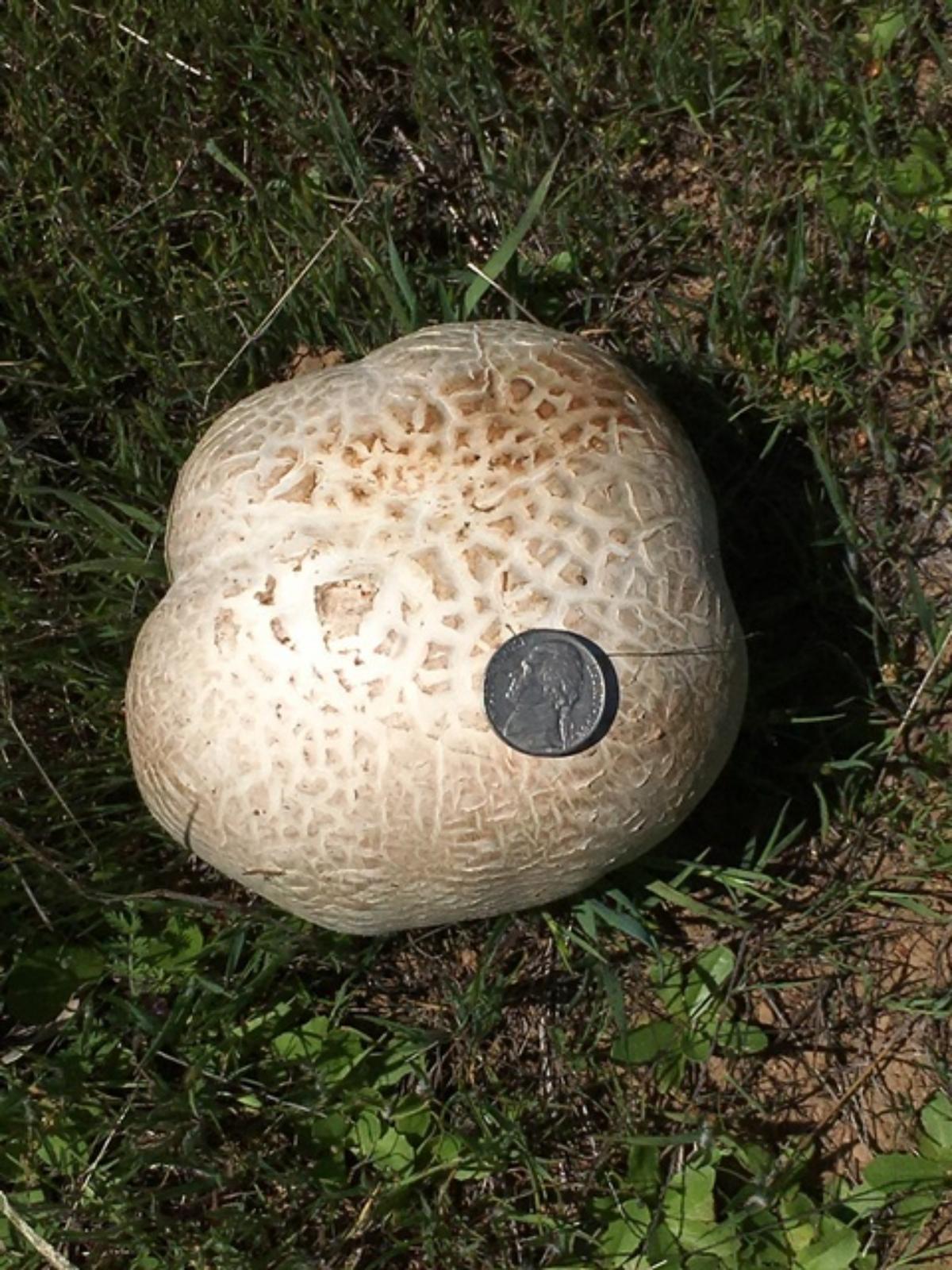
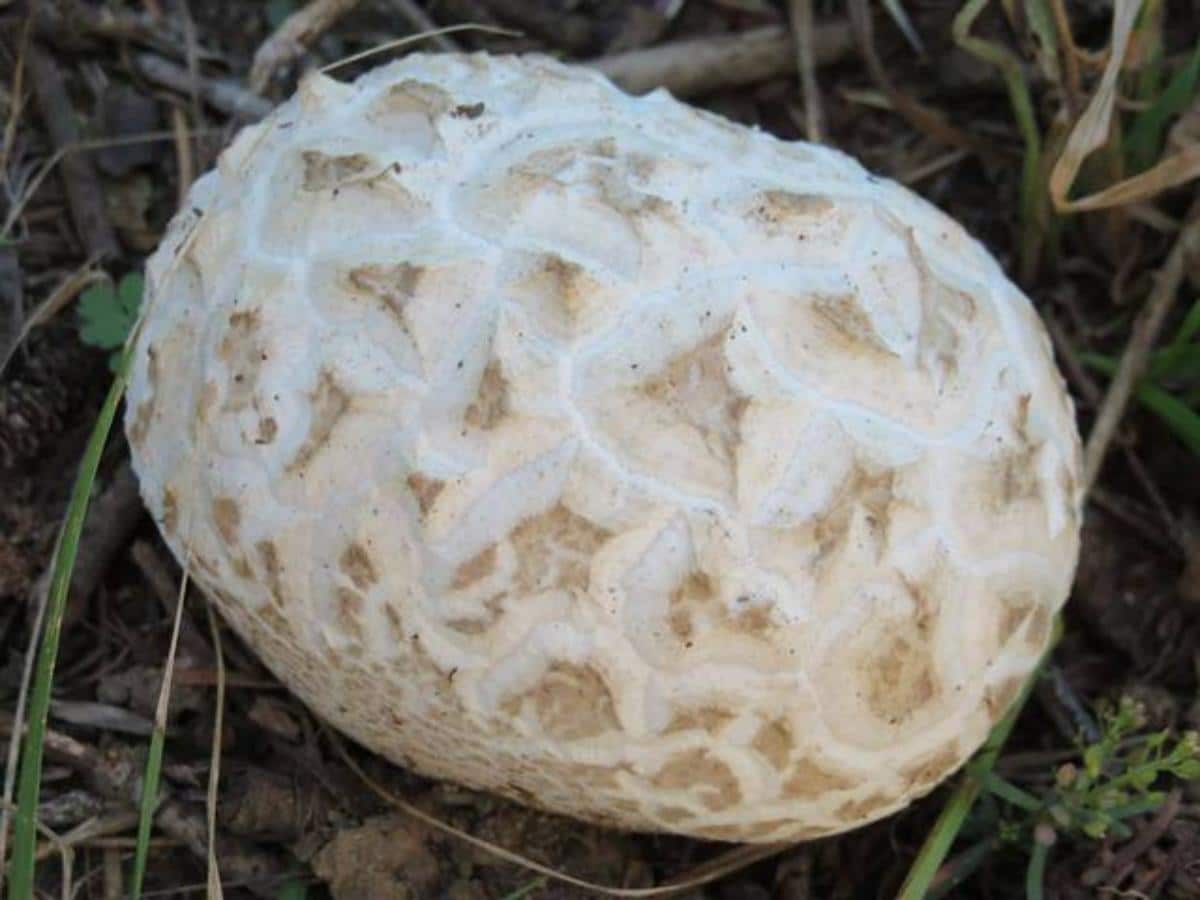
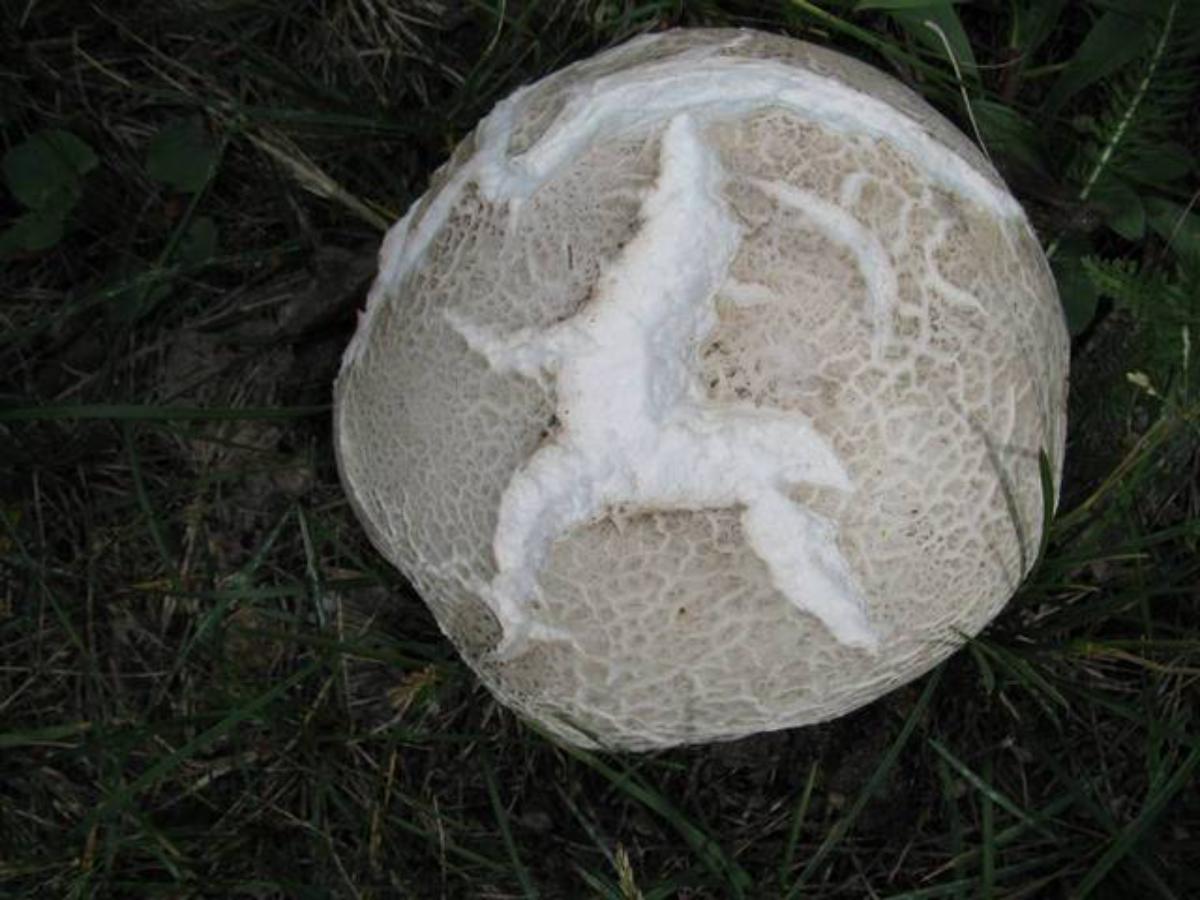
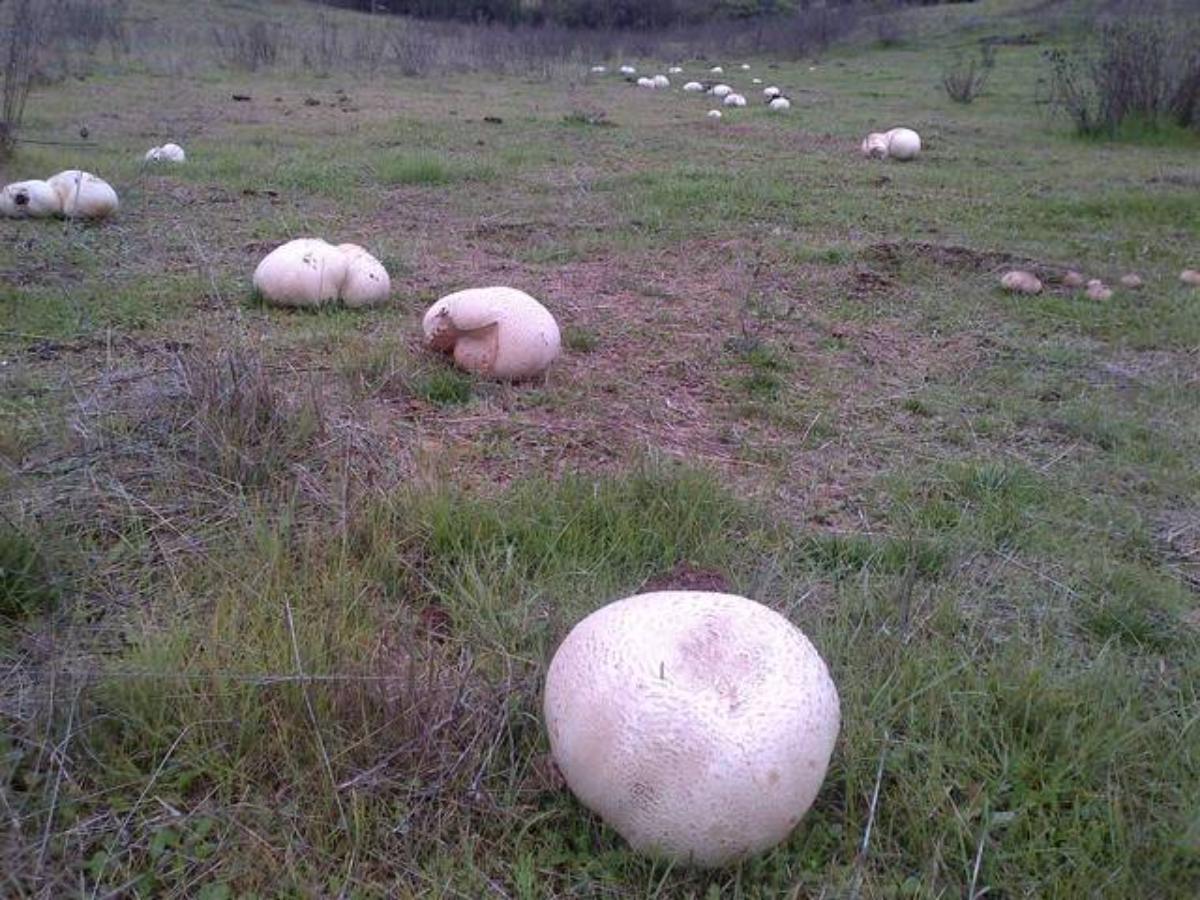
Calvatia booniana by J-Dar on Mushroom Observer
Calvatia bovista
It may or may not be the same as Calvatia craniformis or a variation. Not a lot of information about what is and is not C. bovista and quite a bit of contradictory images and features. Every online source parrots the Wikipedia page, which is sparse. Other mushroom sources do not list this species.
However, I list this species because it appears all over the internet, and anyone doing identification research will likely wonder about it.
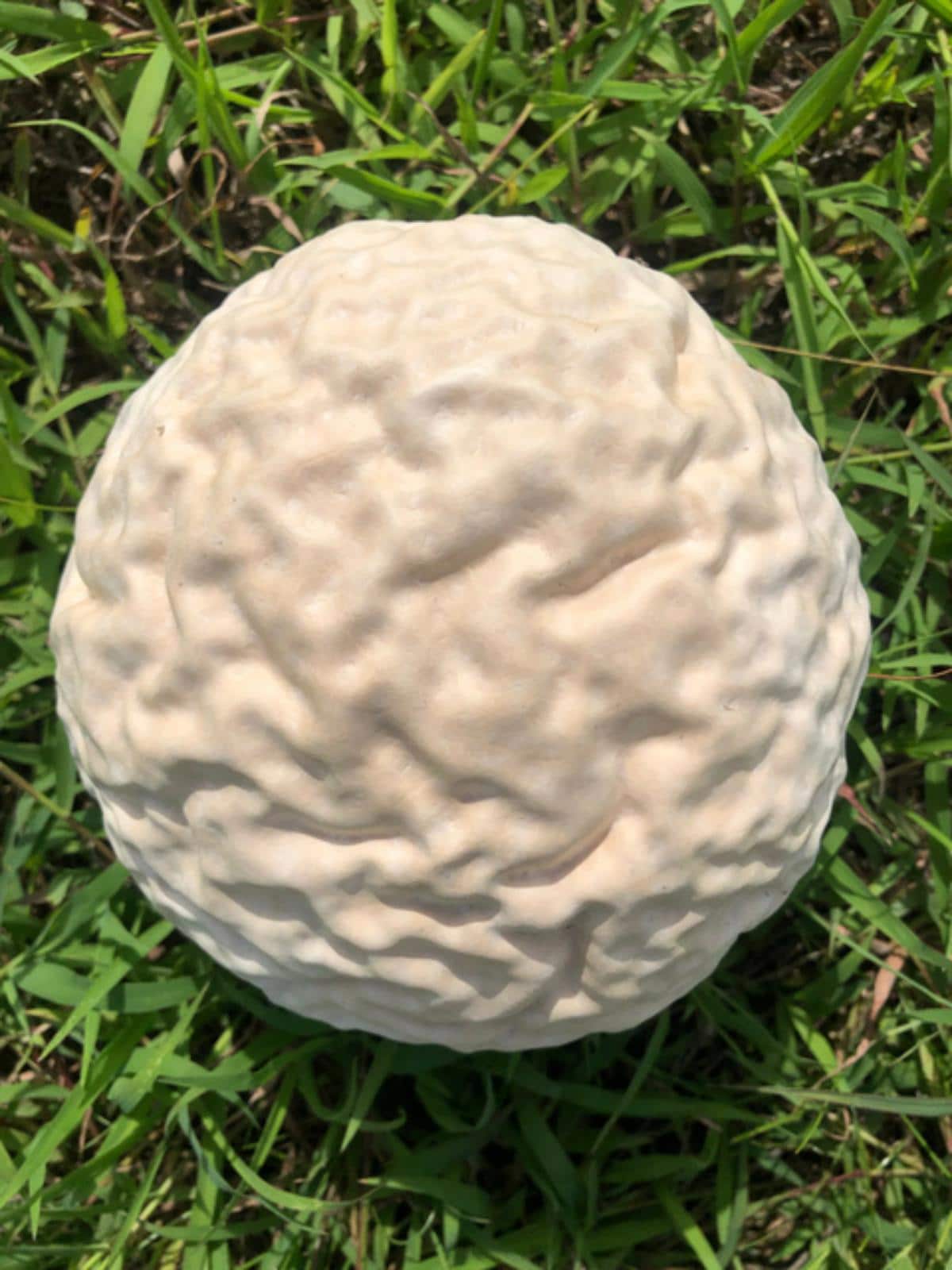
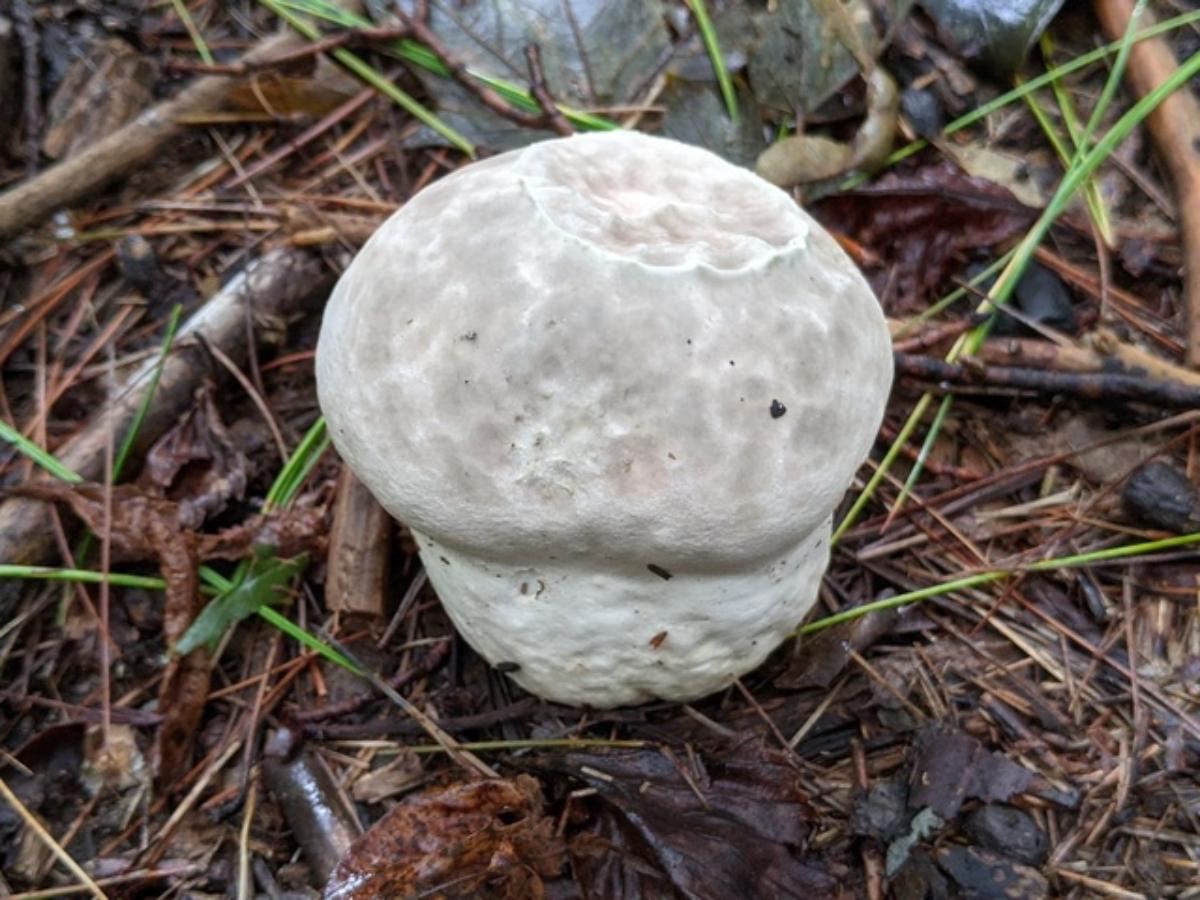
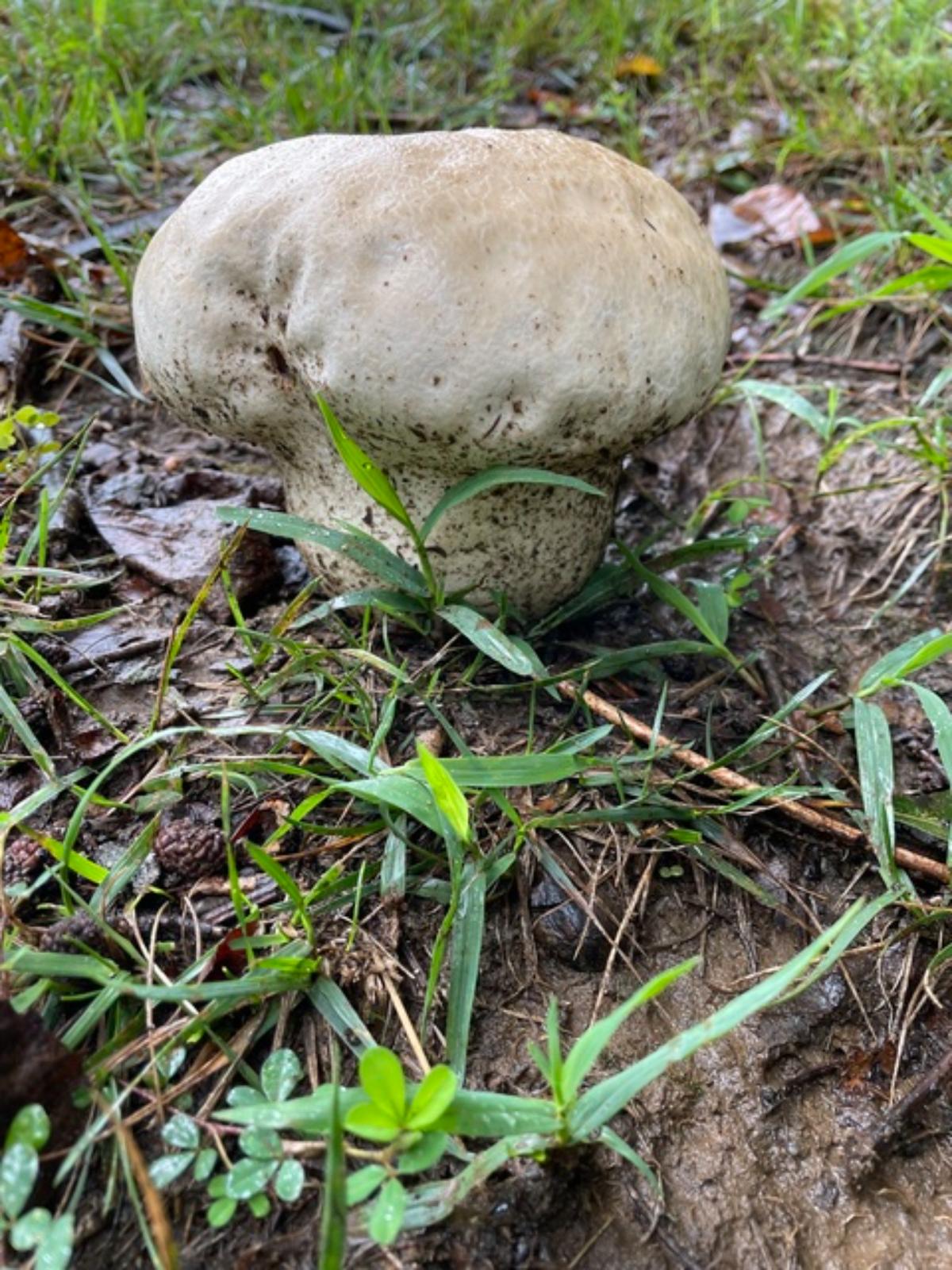
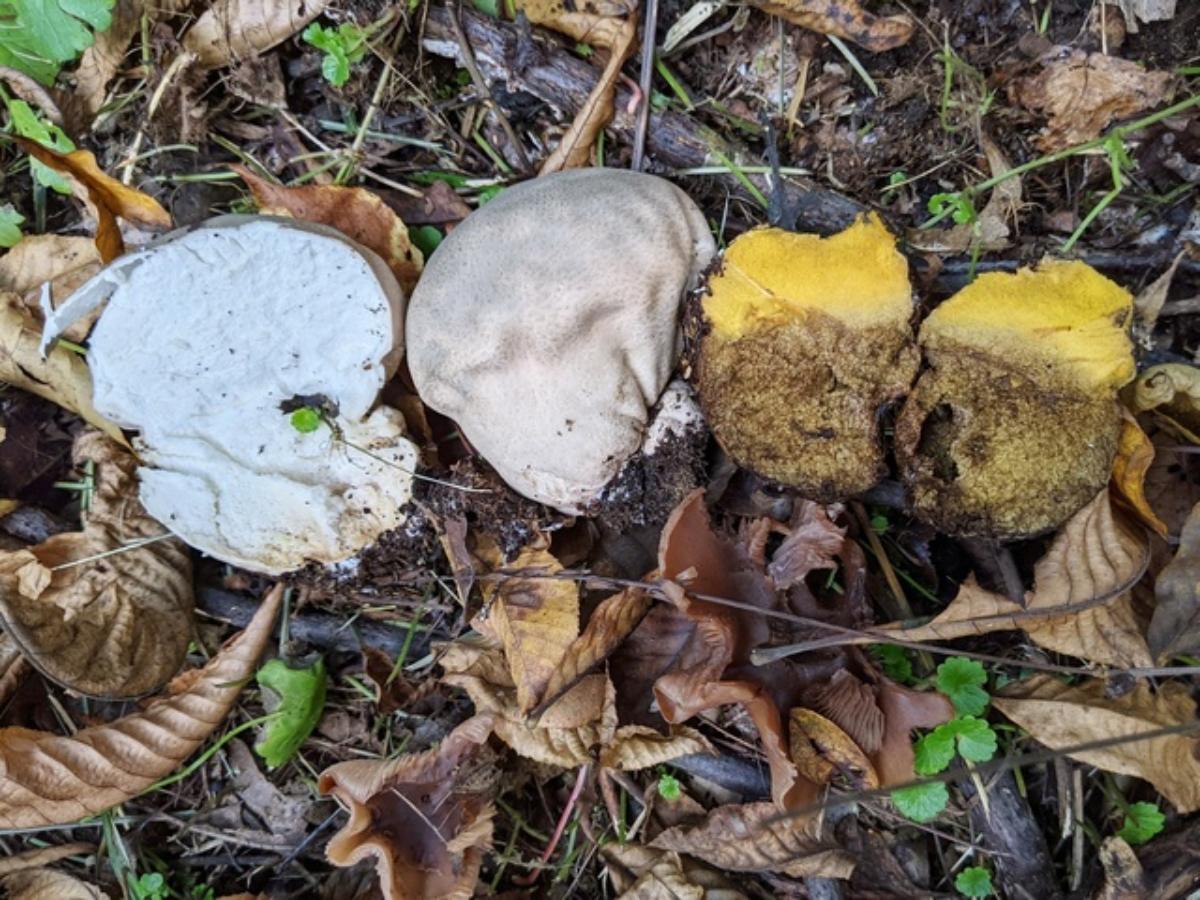
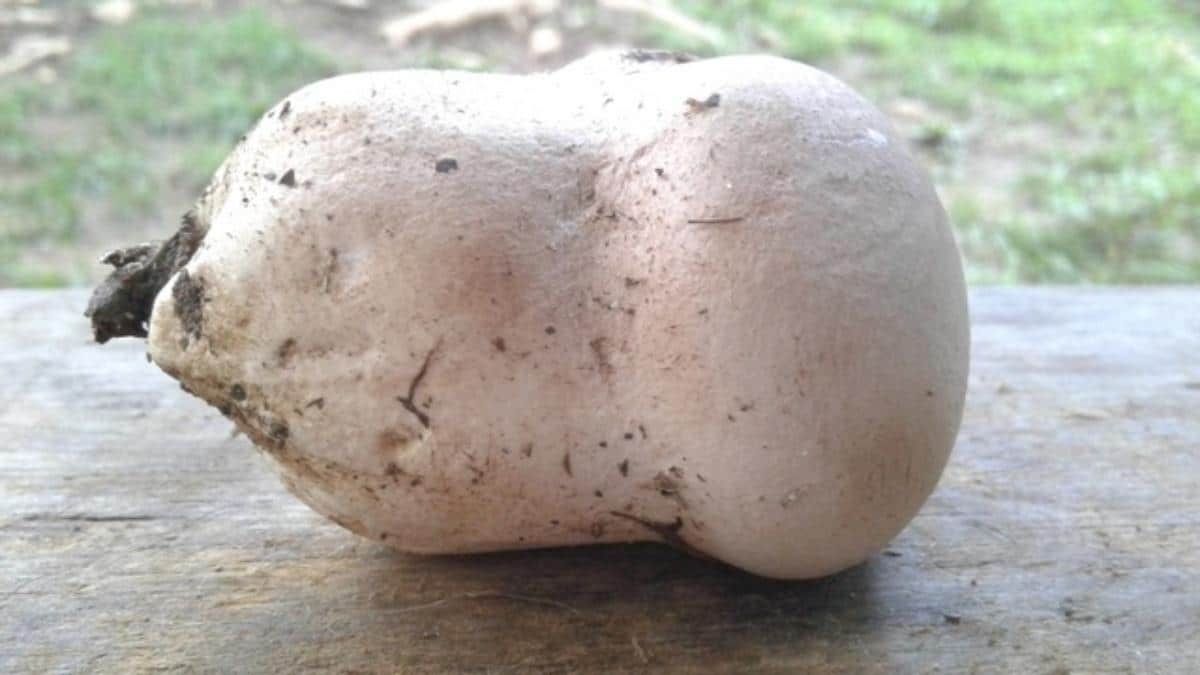
Calvatia craniiformis (Brain Puffball or Skull-Shaped Puffball)
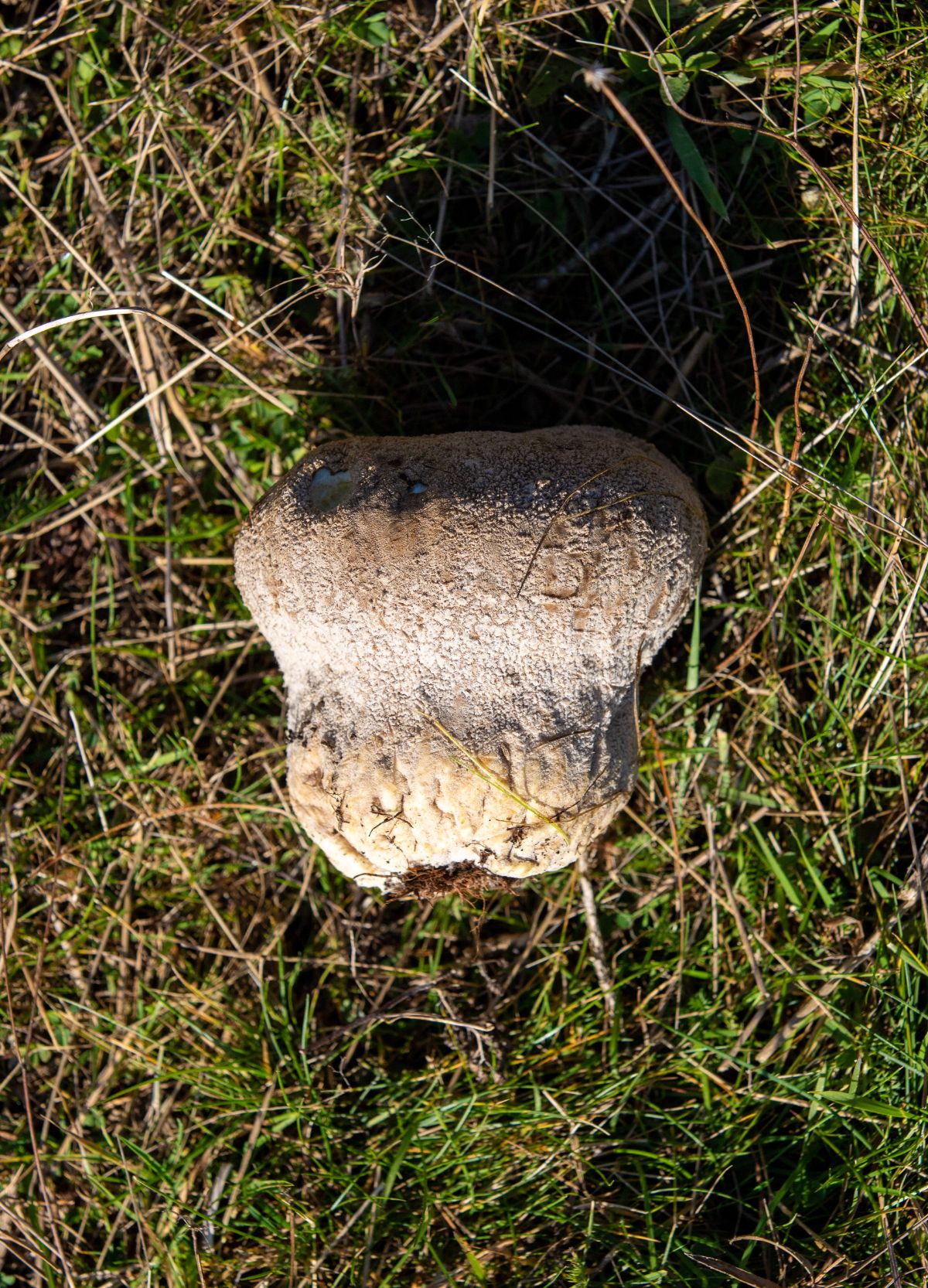
A medium to large puffball that looks eerily skull-shaped in maturity. Folks with less morbid minds might say it looks like an upside-down pear.
- Region: Northeast and southwest, rarely found west of the Rocky Mountains
- Season: Summer and fall
- Habitat: Grassy areas, lawns, ditches, the edge of woods
- Size: 2-8 inches tall, 3-8 inches wide is average but may get much larger (softball-sized)
- Shape: Skull-shaped or upside-down pear.
- Color: White or light tan
- Inner flesh color: White when young, yellow to olive-brown when mature
- Notes: As it matures, C. craniiformis develops squiggly brain-like wrinkles and folds on its exterior, accentuating the skull-like appearance. In youth, though, this puffball looks much like many other puffballs – roundish, white, and smooth.
Calvatia cyathiformis (Purple-spored Puffball)
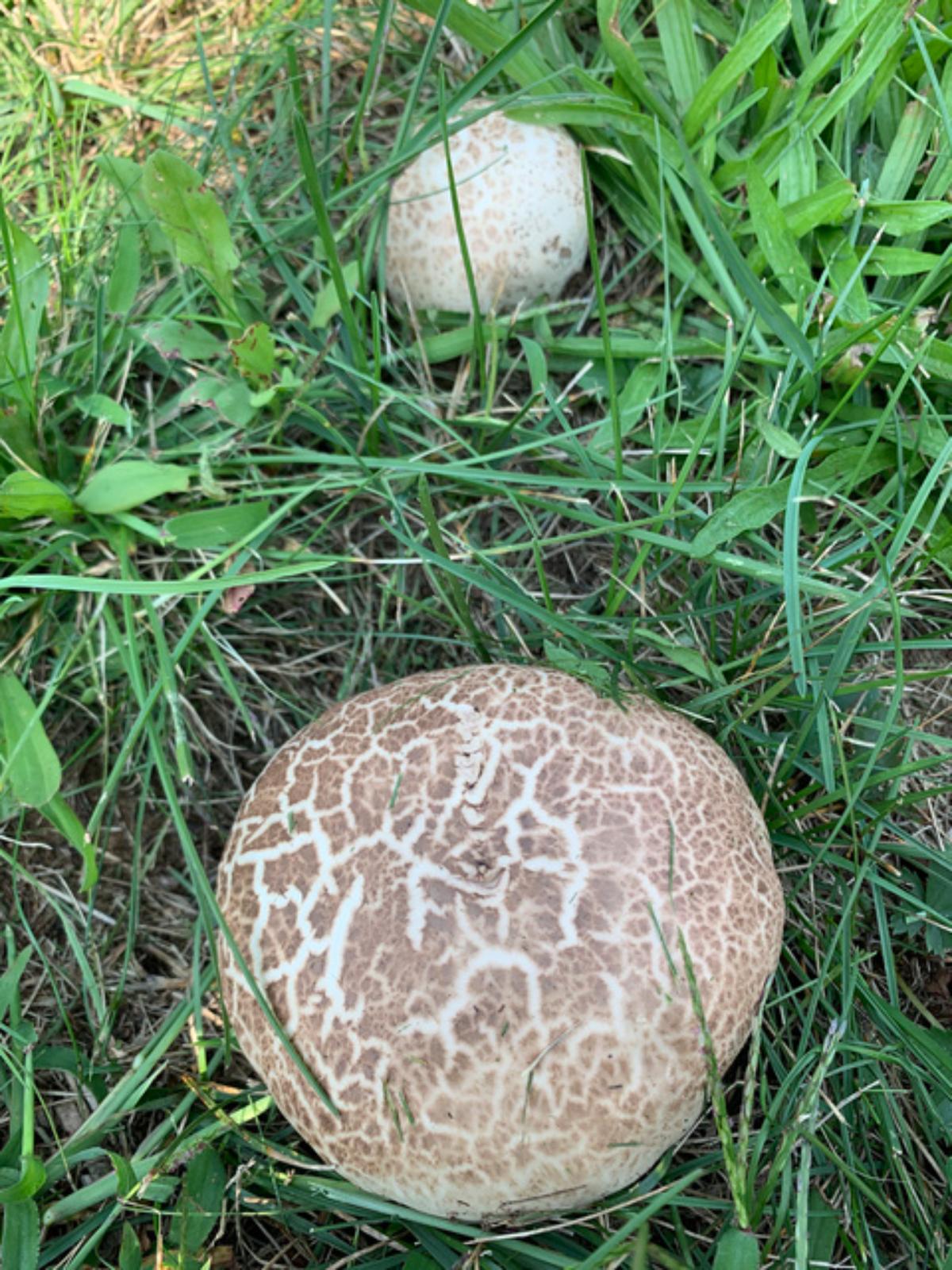
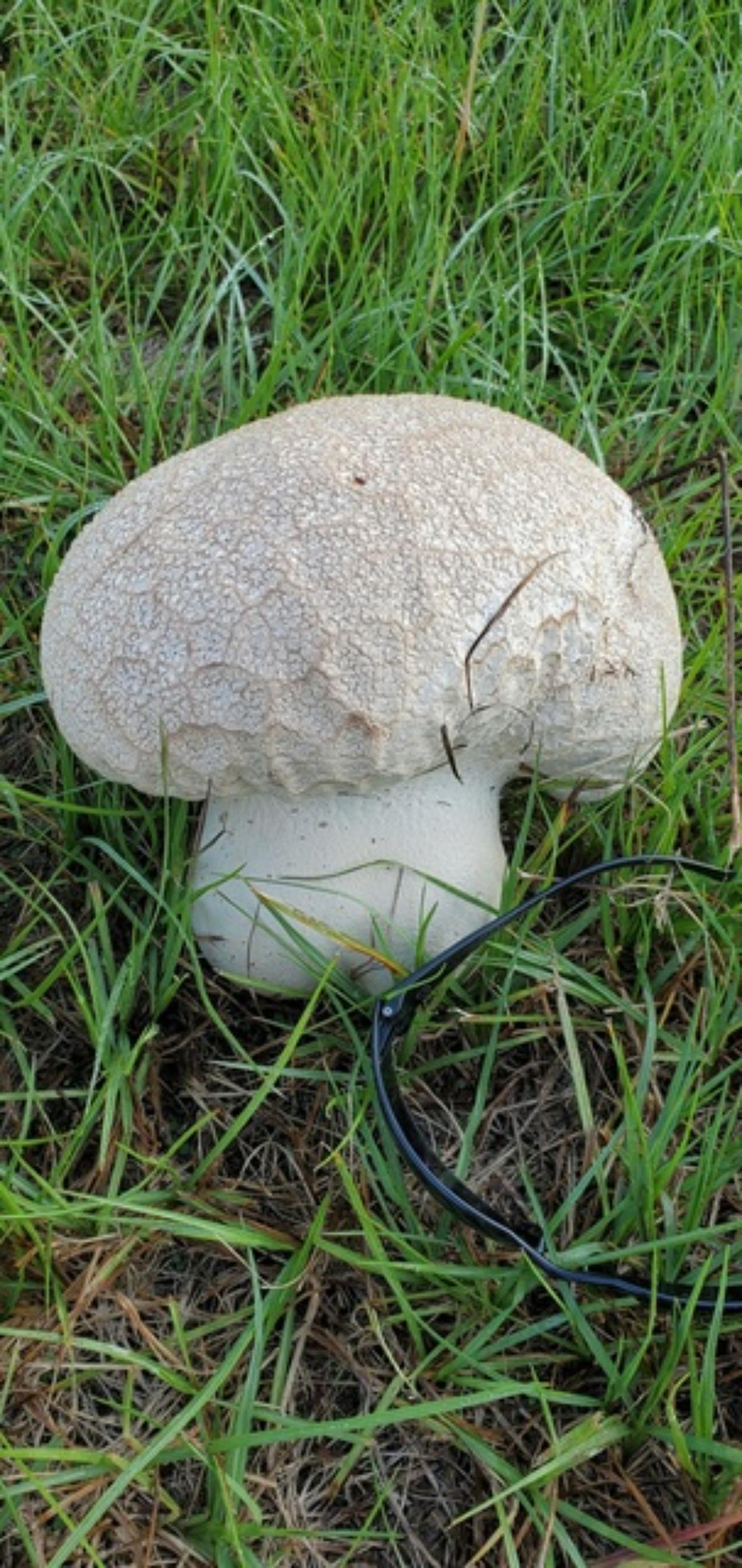
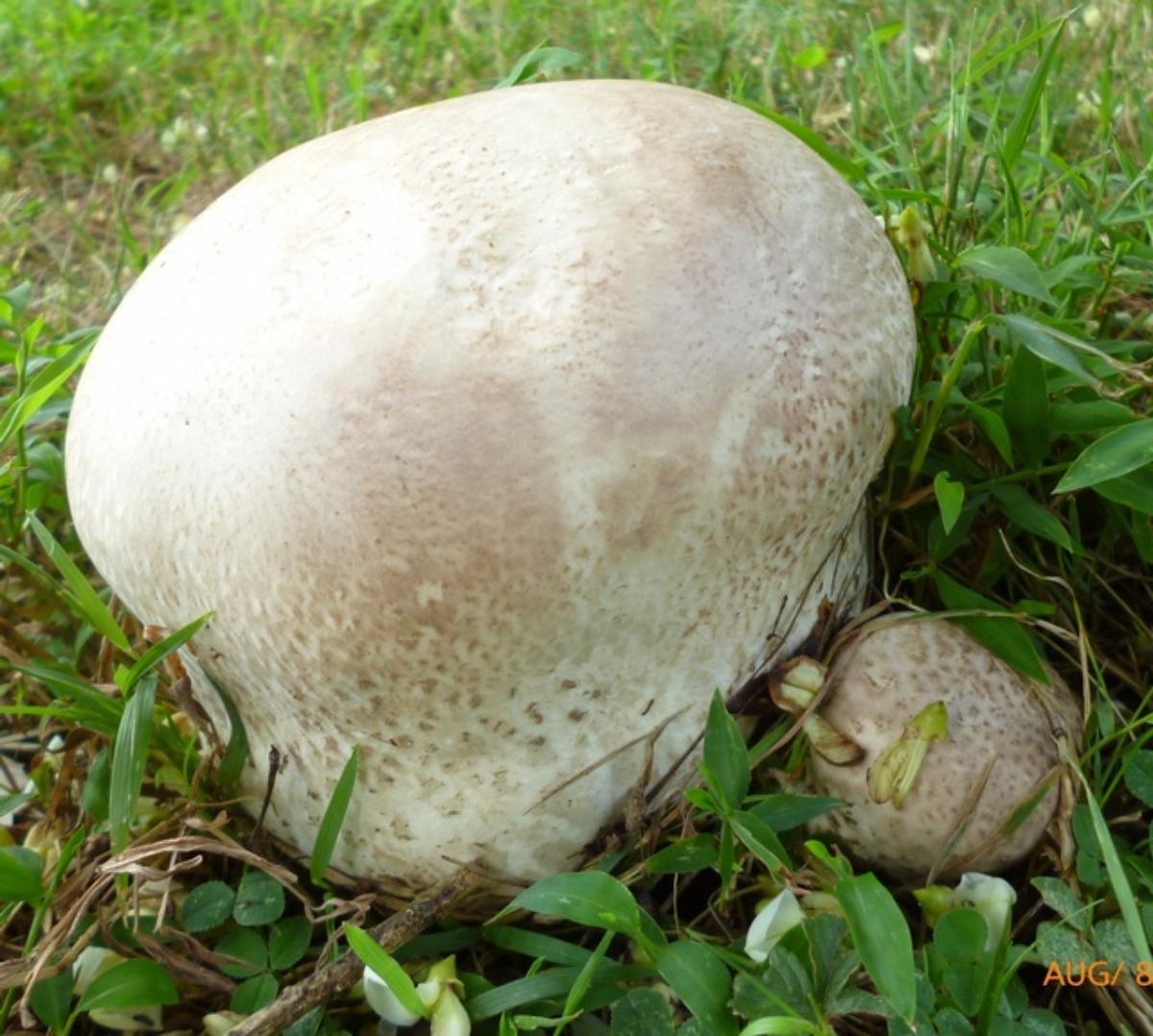
A puffball found across North America, C. cyathiformis resembles C.craniiformis but with some simple differences.
- Region: Across North America, but uncommon or absent on the west coast
- Season: Summer through fall in most areas
- Habitat: Meadows, lawns, pastures, parks
- Size: 3- 7 inches tall, 3- 7.5 inches wide (softball to soccer ball-sized)
- Shape: Rounded when young, then forms a narrow lower portion to become light bulb-shaped or like a loaf of bread.
- Color: Tan or light brown, scaly mosaic design. As it matures, the outer skin turns a dark silvery color.
- Inner flesh color: White, then turns yellowish and purple-brown
- Notes: When this puffball is cut in half, it is apparent the lower narrower portion is texturally distinct from the upper rounded section. The outer skin is either pale and smooth like other puffballs or marked with brown mosaic-like scales.
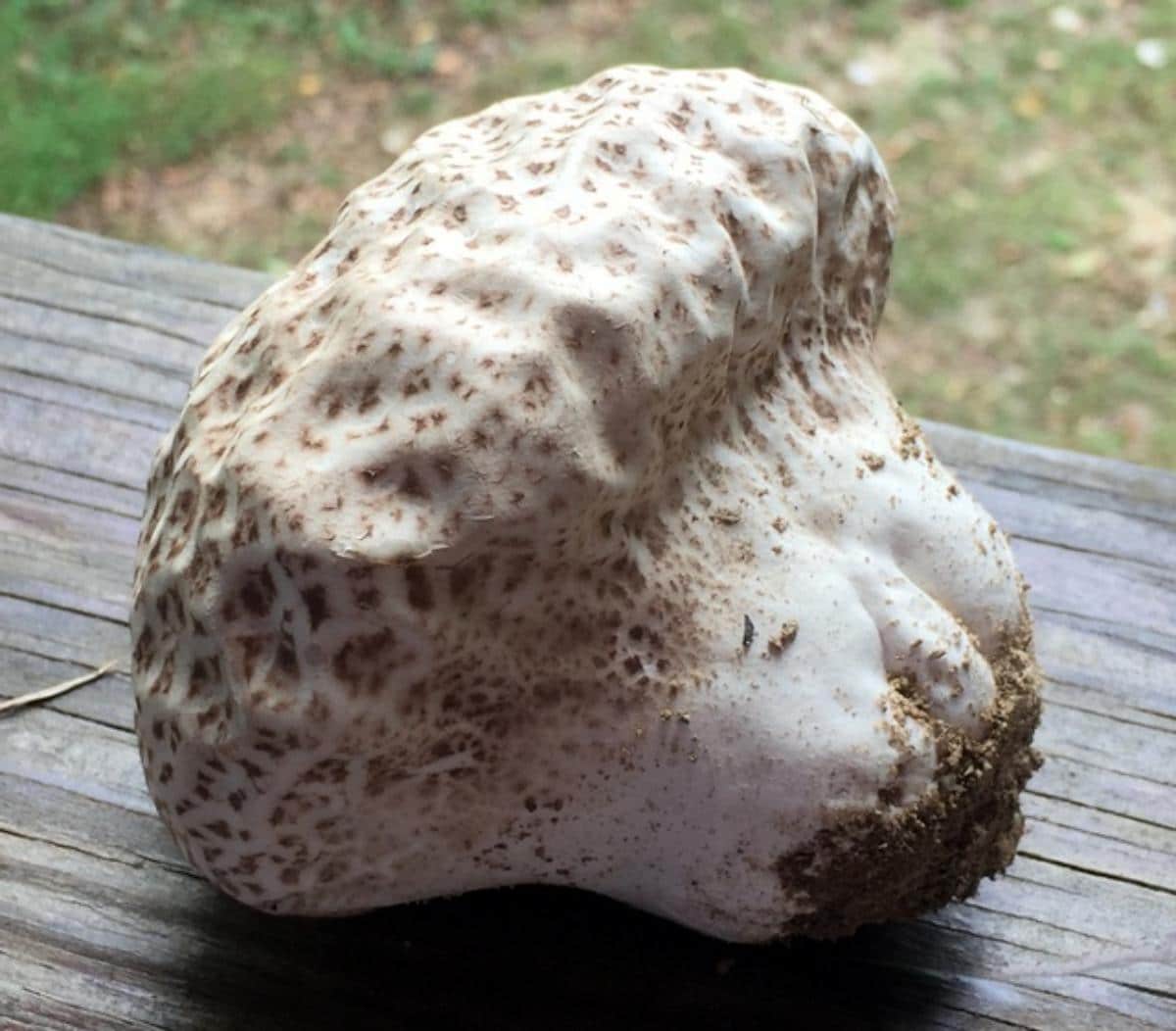
Calvatia gigantea (The Giant Puffball)
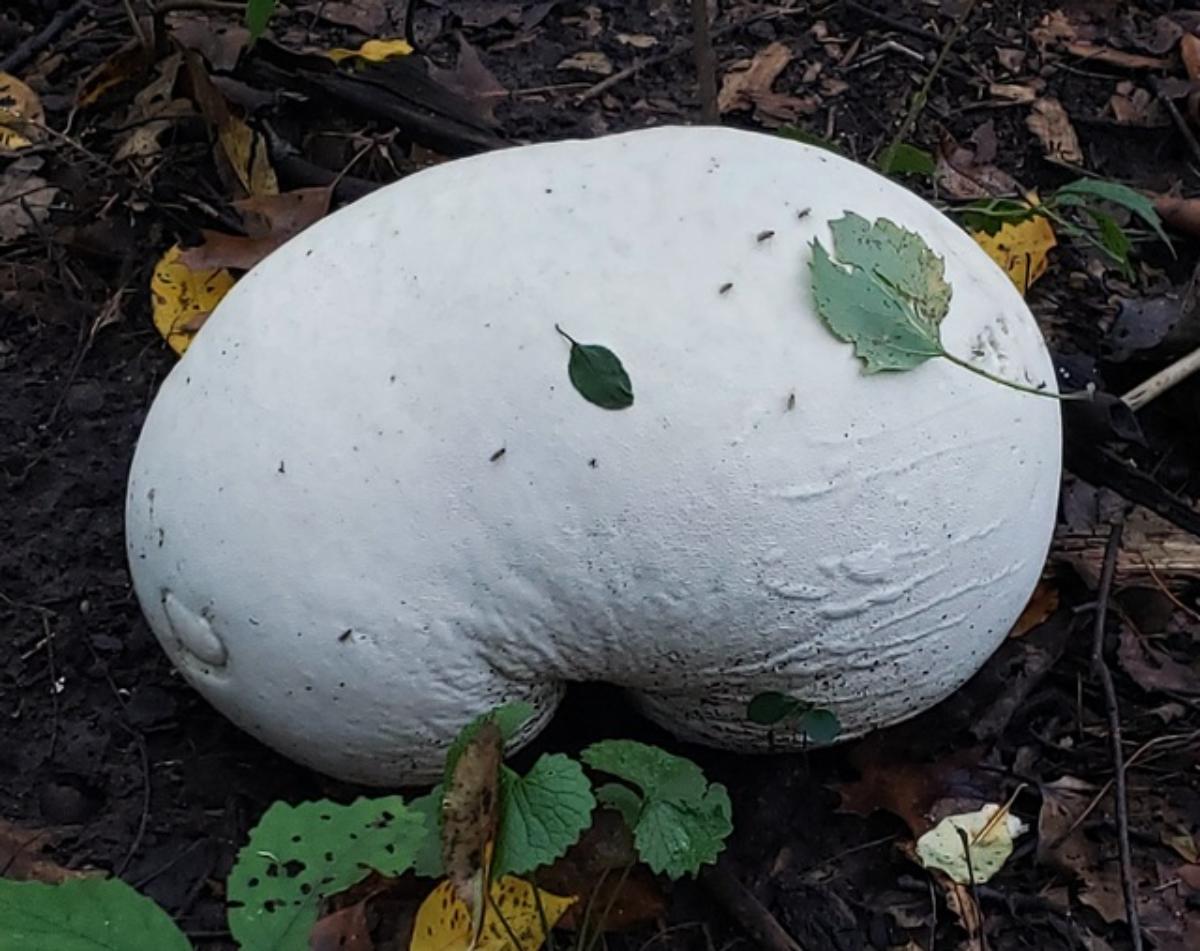
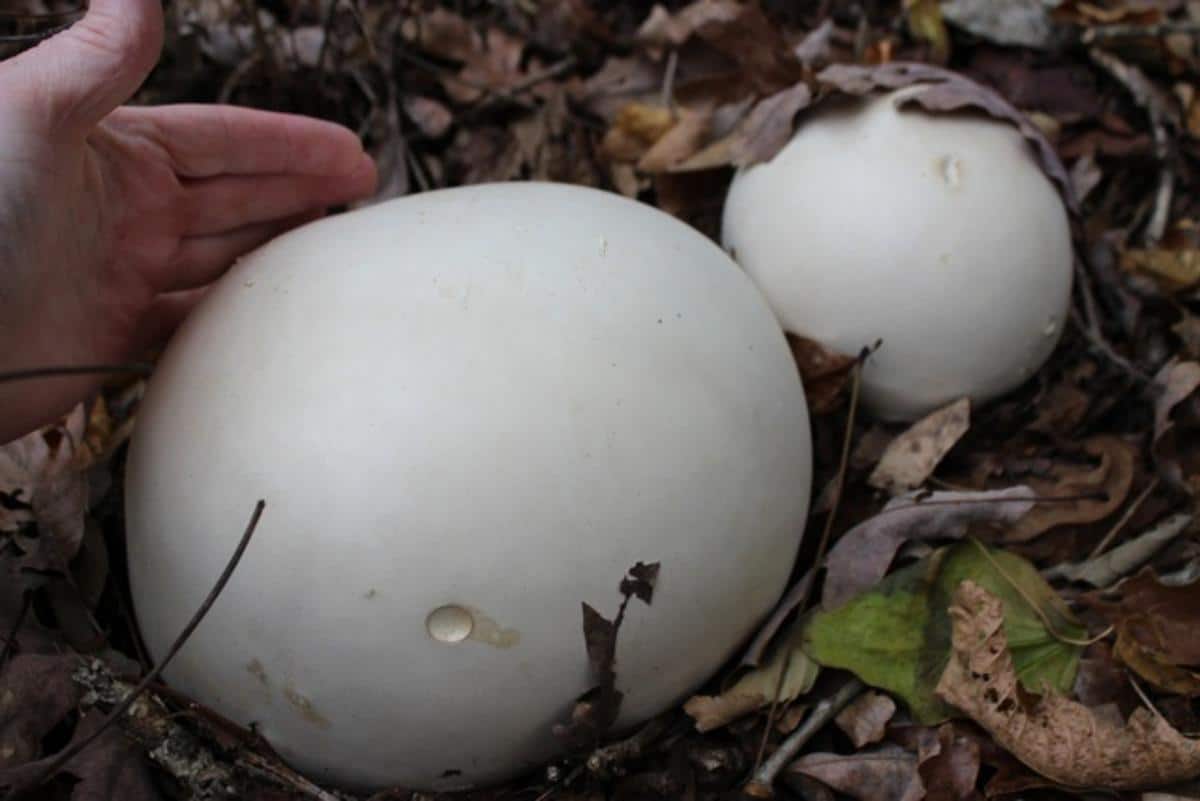
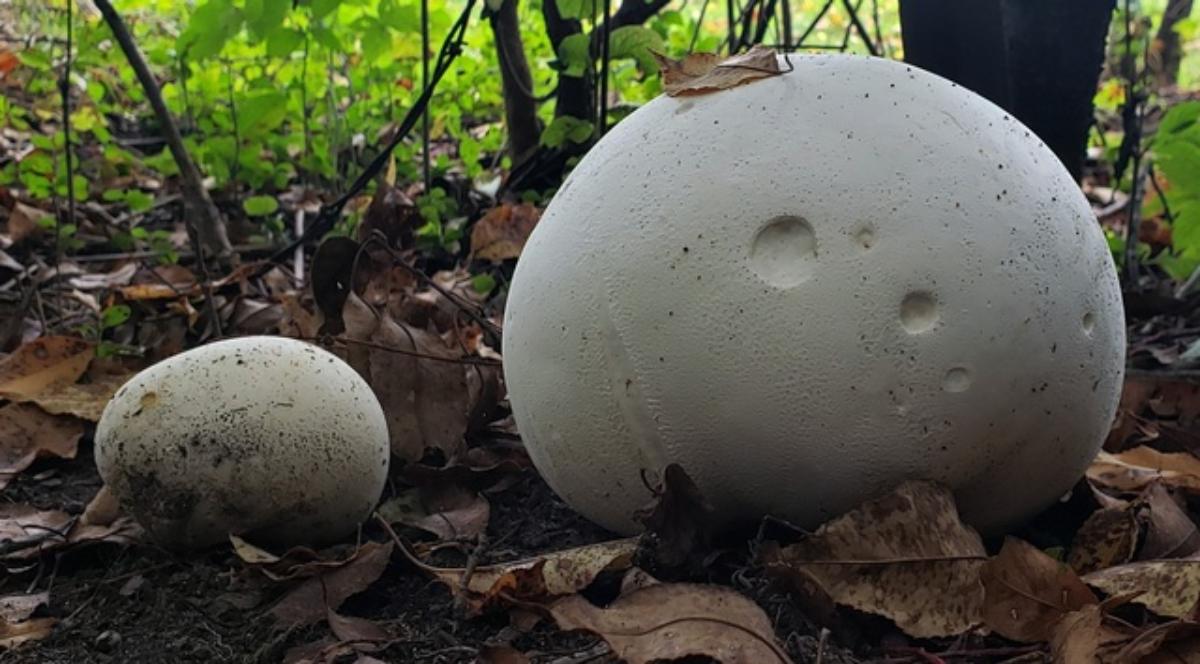
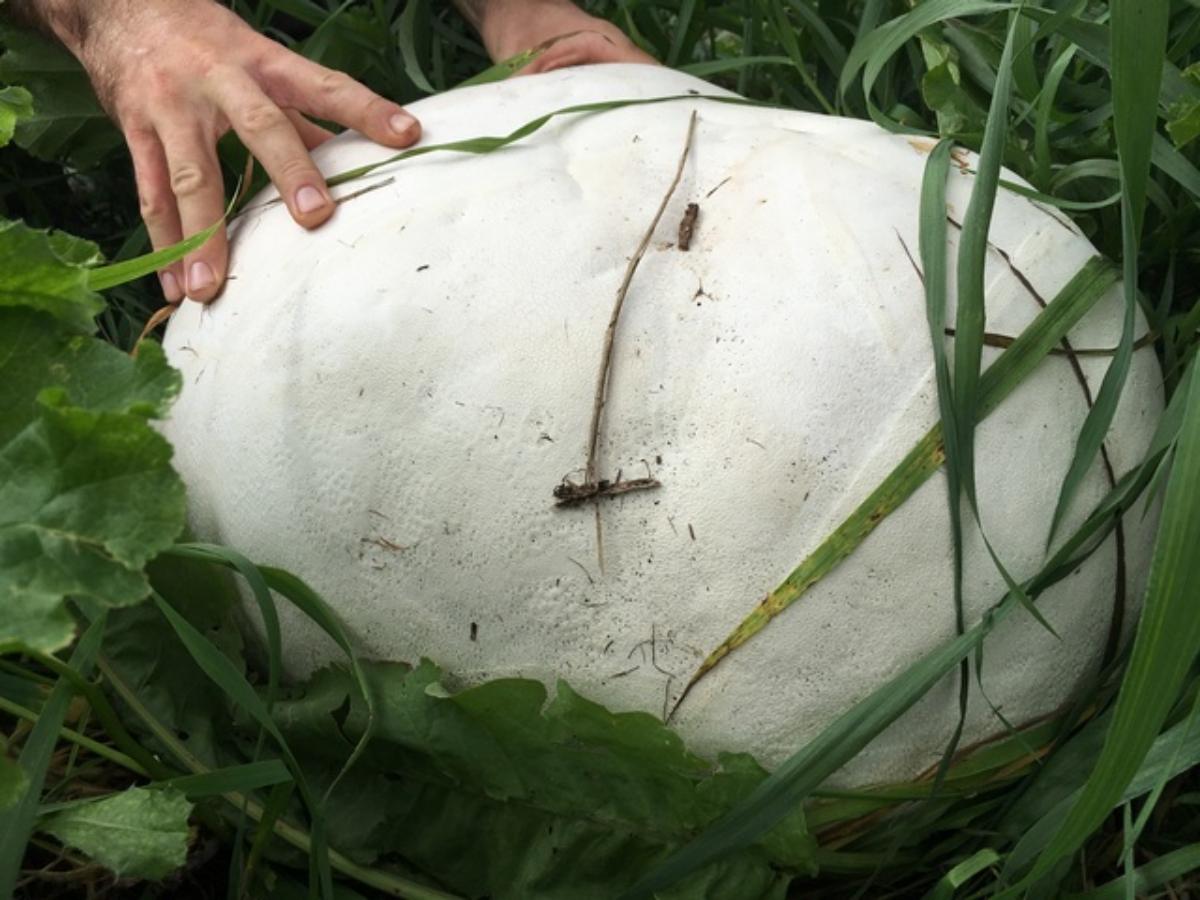
This is the puffball that most people think of when they hear the term giant puffball. It’s enormous and looks like a bright white volleyball lying on a field. But then, as you get closer, you realize that it isn’t a ball at all. It’s a giant mushroom! Some still can’t resist the urge to kick it. But, if it looks still fresh, you’ll do better harvesting it for a puffball pizza.
- Region: East of the Great Plains
- Season: Late summer into early fall
- Habitat: Meadows, grassy areas, forest edges, under brush
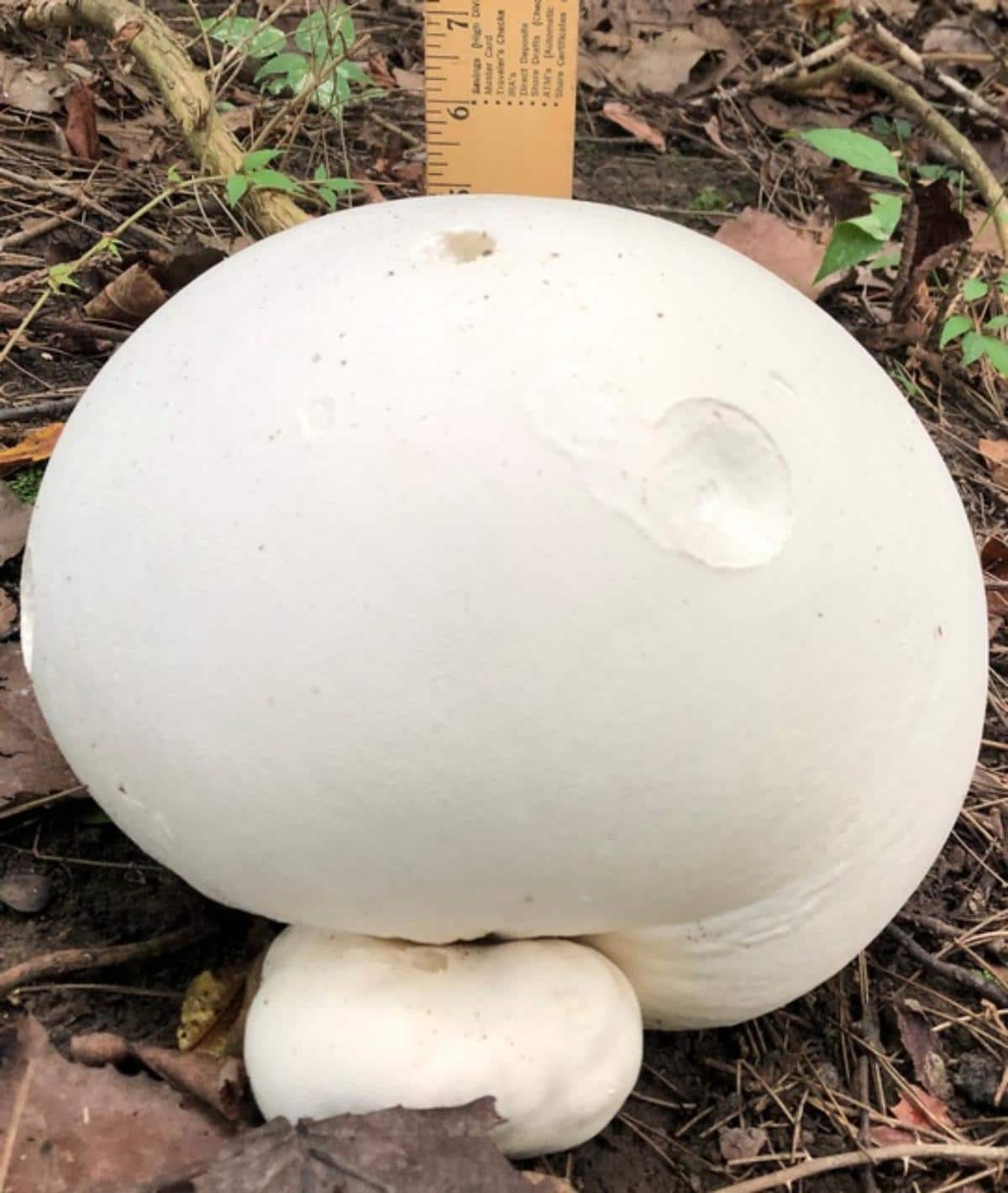
- Size: 5-10 inches tall, 7-12 inches wide (volleyball-sized)
- Shape: Round
- Color: White, smooth
- Inner flesh color: White when young, yellow to olive-brown with age
- Notes: Usually has a short thick “stem” where it attaches to the ground.
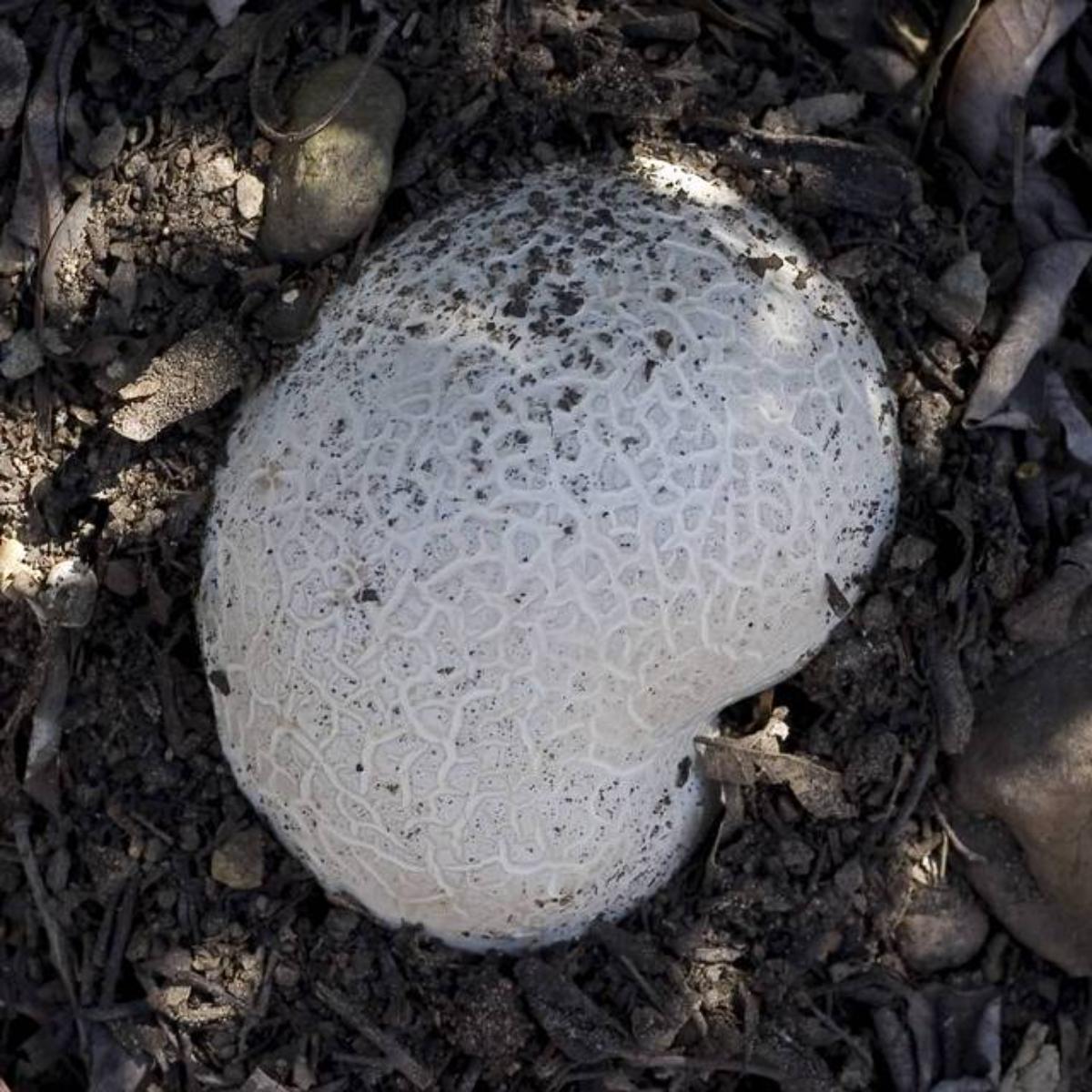
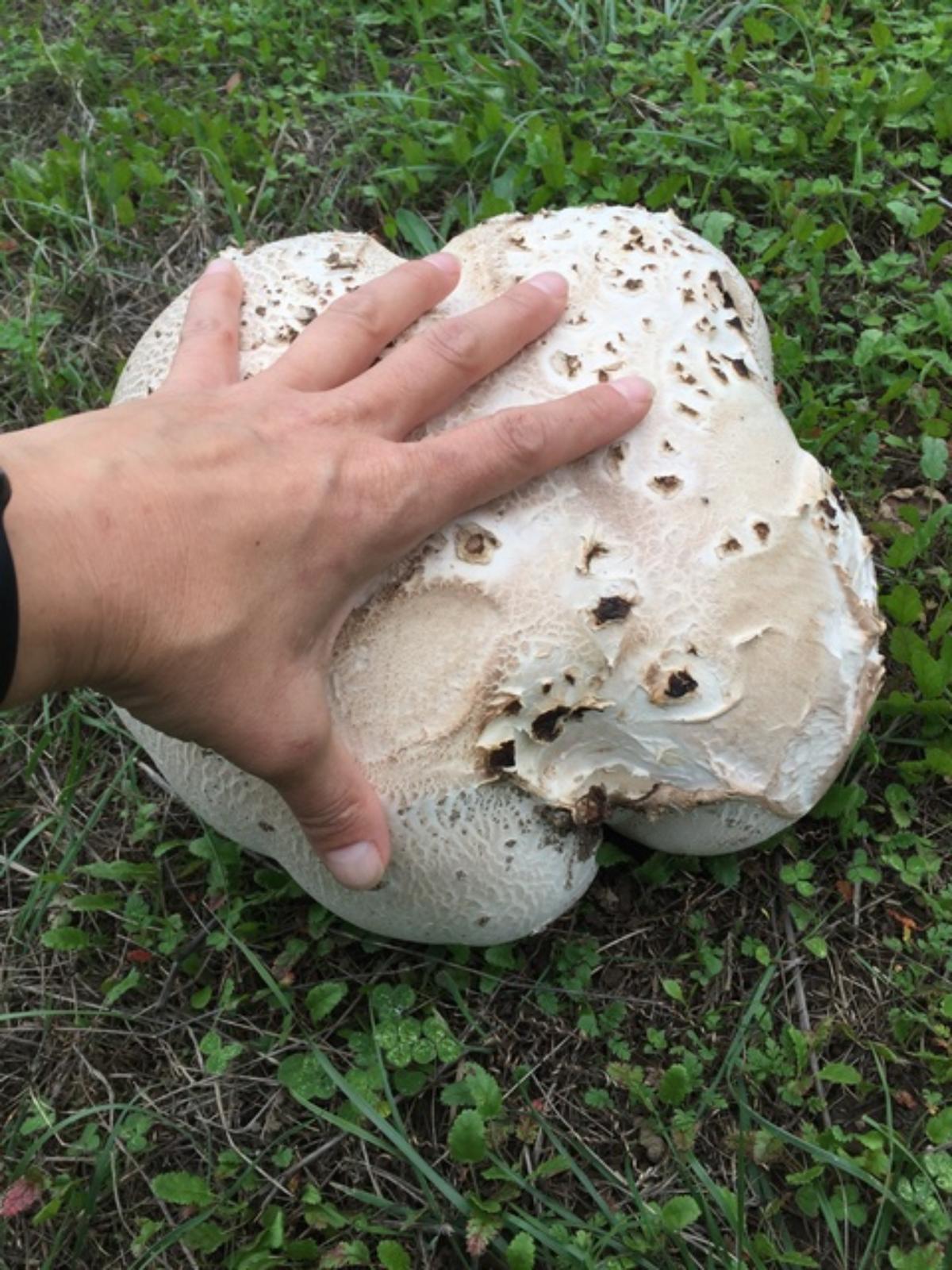
Calvatia pachyderma (Elephant Skin Puffball)
- Region: West coast
- Season: Fall and spring, after significant rains
- Habitat: Meadows, grasslands, open areas
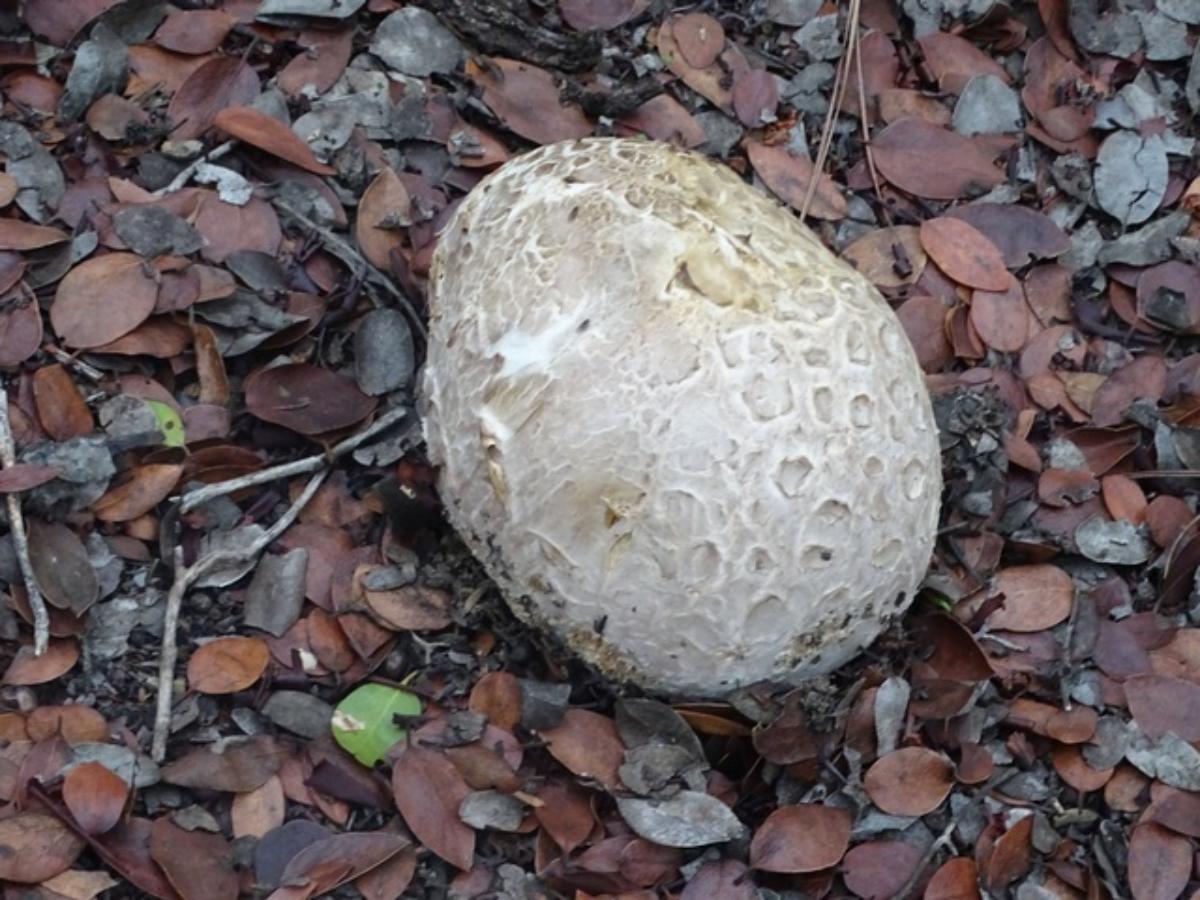
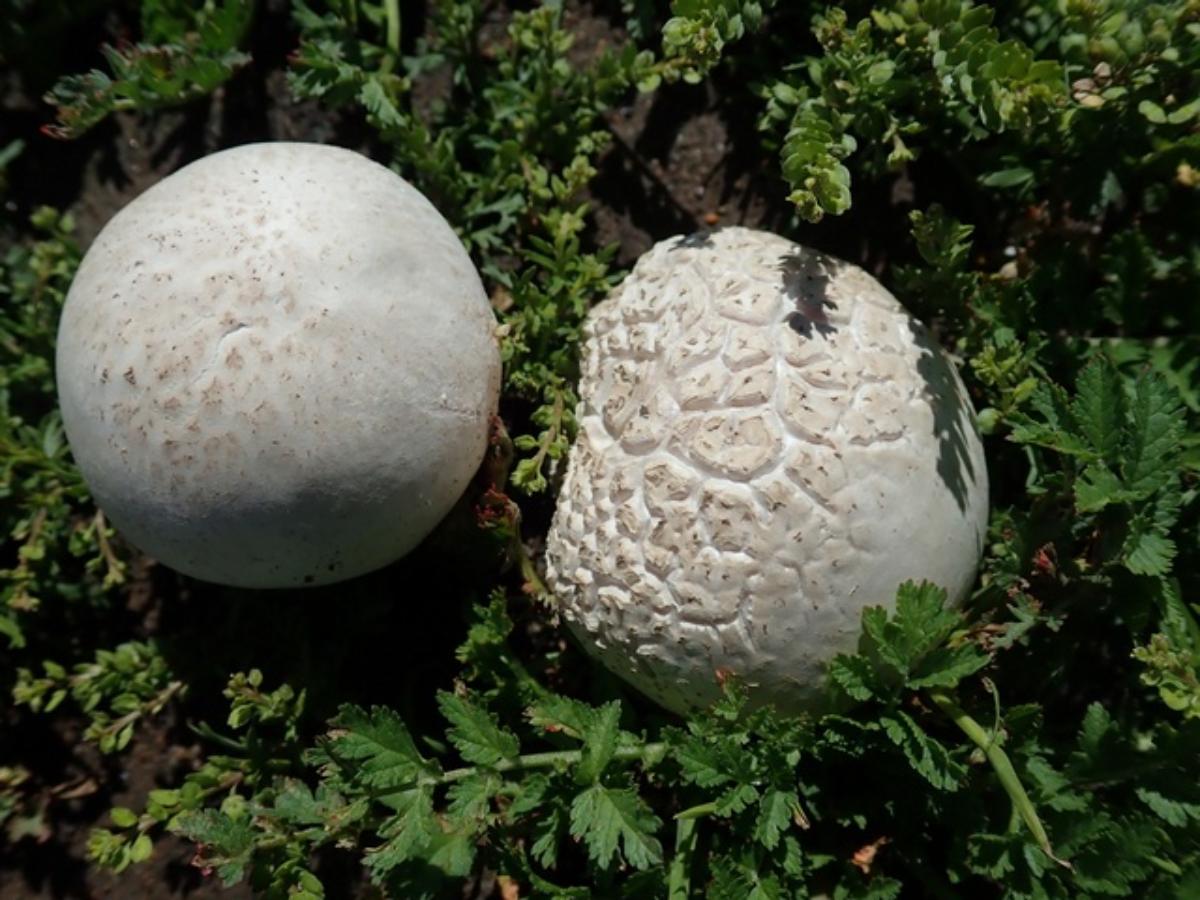
- Size: 2-4.5 inches tall, 2.5-5 inches wide
- Shape: Rounded, mostly oblong, being wider than it is tall (softball-sized)
- Color: White or tan-brown, often mottled
- Inner flesh color: Creamy white, then yellowish-brown to olive-brown
- Notes: Very thick leather-like outer skin that doesn’t crack easily.
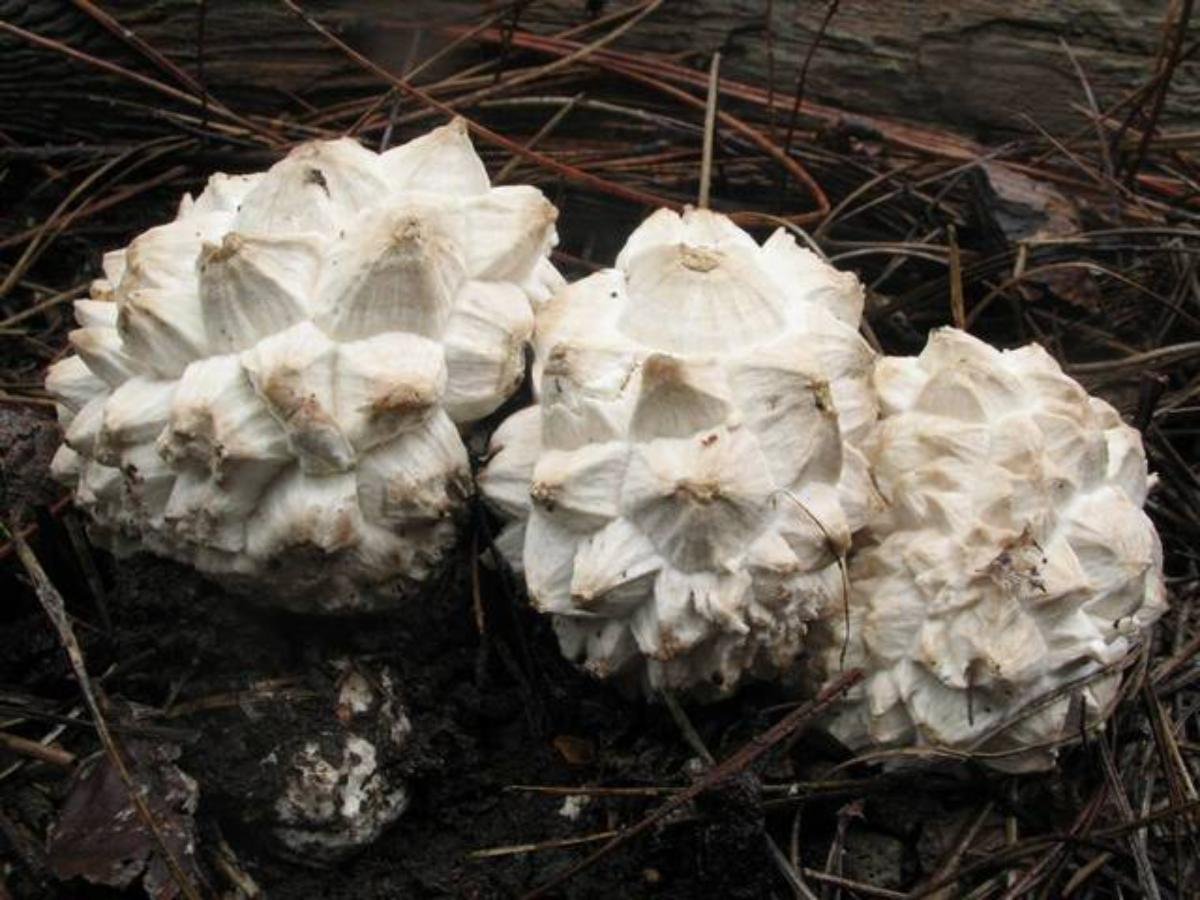
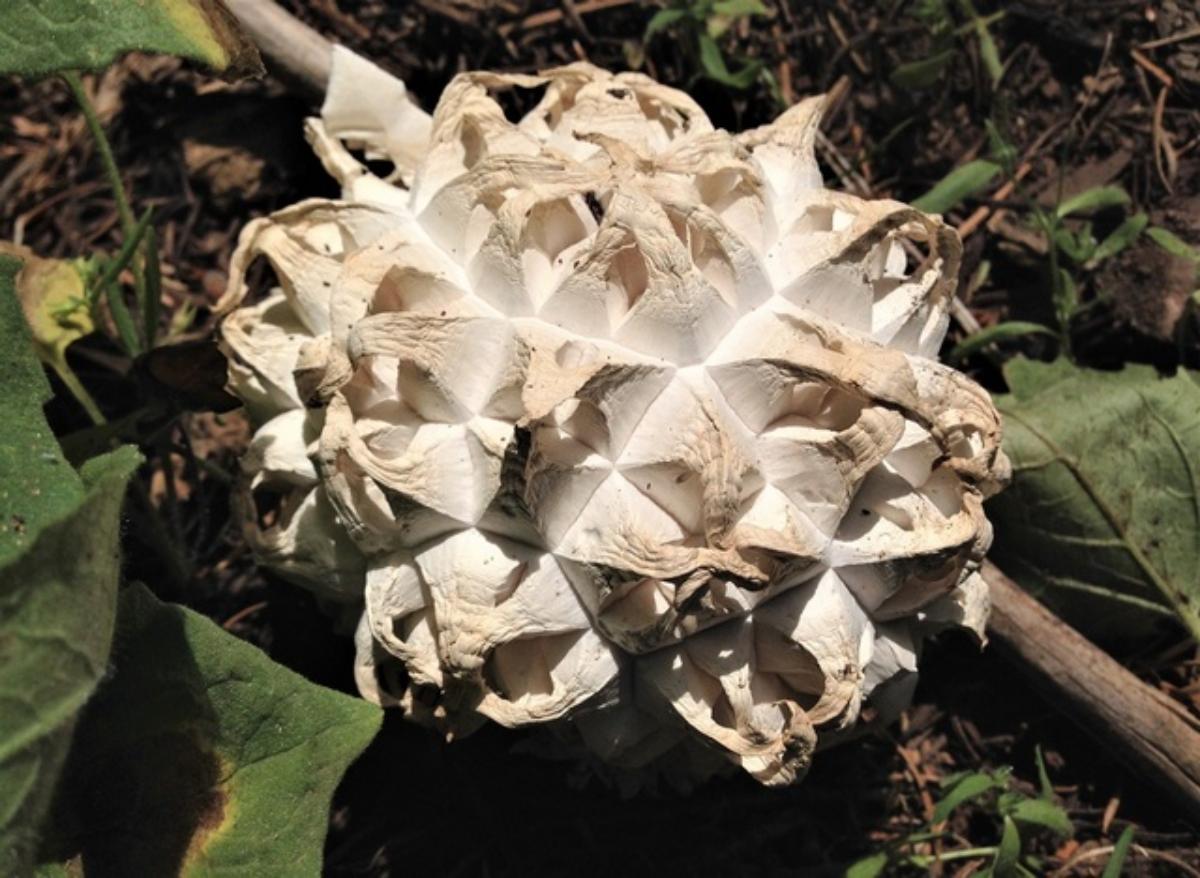
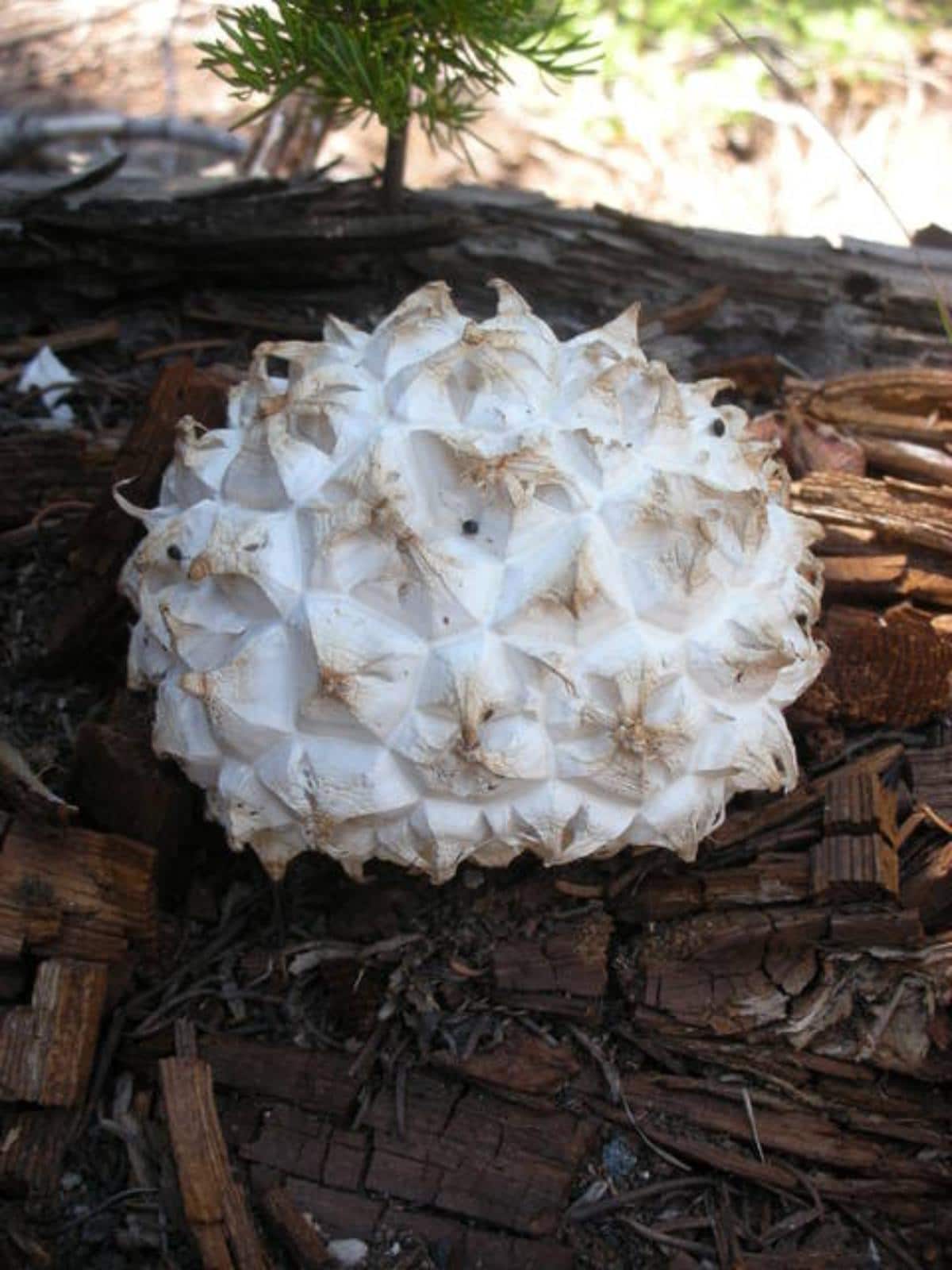
Calvatia sculpta (Sculpted Puffball)
This puffball is bizarre, unmistakable, and rather architecturally stunning.
- Region: Western, mountainous regions like the Sierra Nevadas – high elevations above 2,500 feet.
- Season: Late spring to early summer.
- Habitat: Open areas in conifer woods, around dirt roads, disturbed areas
- Size: 3-6 inches tall, 3-4 inches wide (softball-sized)
- Shape: Many pointed pyramid-shaped tapered warts, resembling a Baked Alaska with pointy meringue. Usually taller than it is wide.
- Color: White
- Inner flesh color: White, then turns olive-brown or purple-brown
- Notes: Sometimes, the warts break off, leaving an empty space. As C. sculpta matures, the pyramidal warts bend downwards until they flatten out. Their quintessential sculptural appearance becomes less distinguishable.
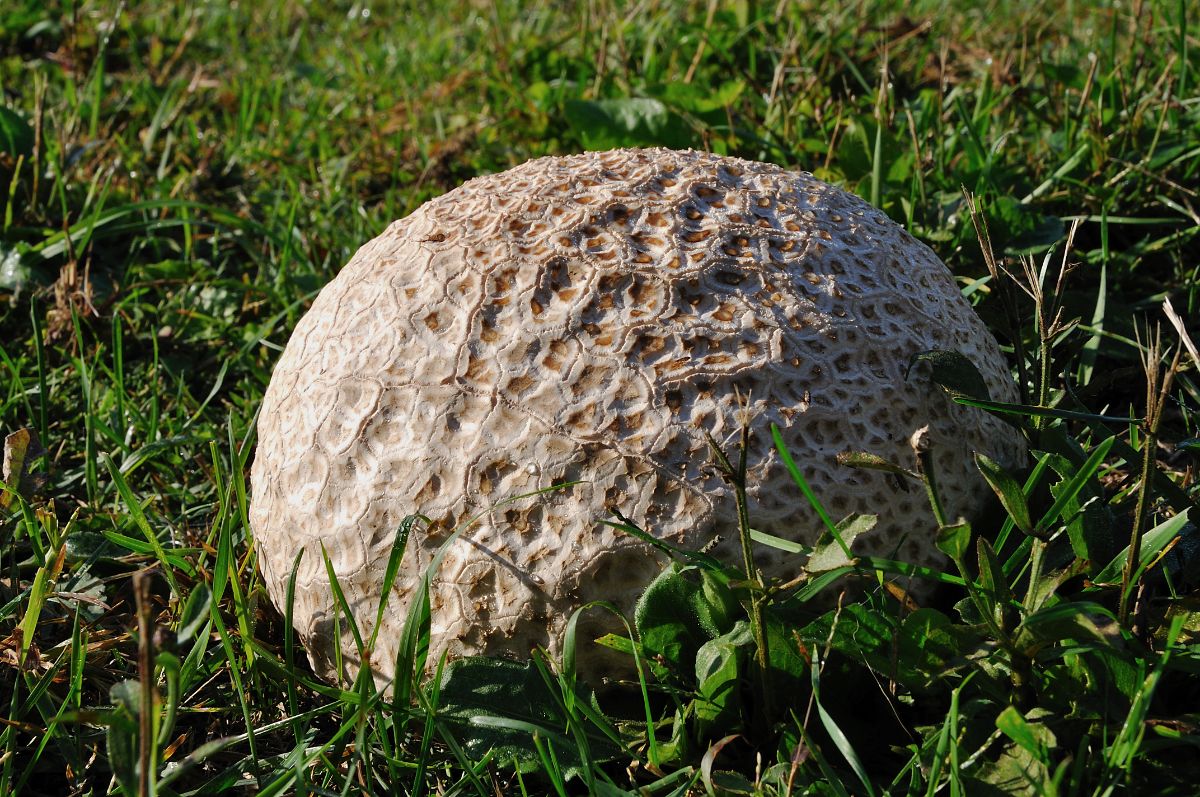
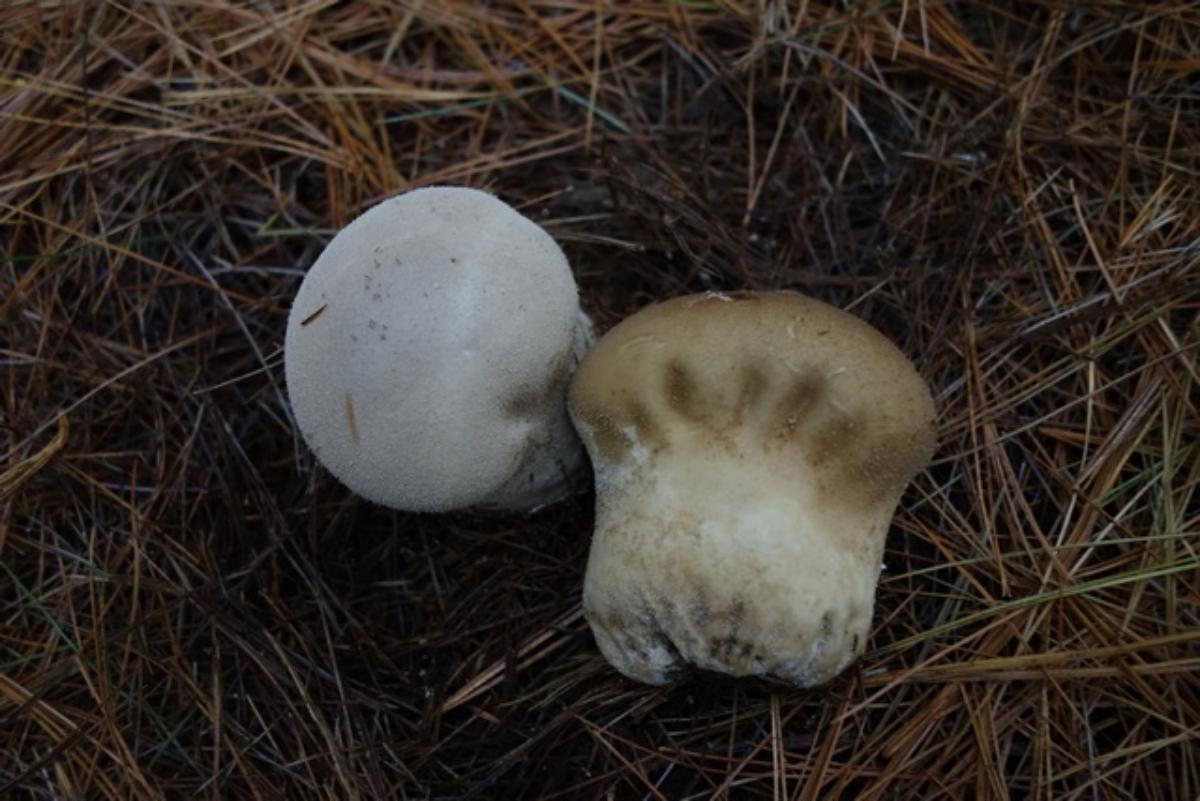
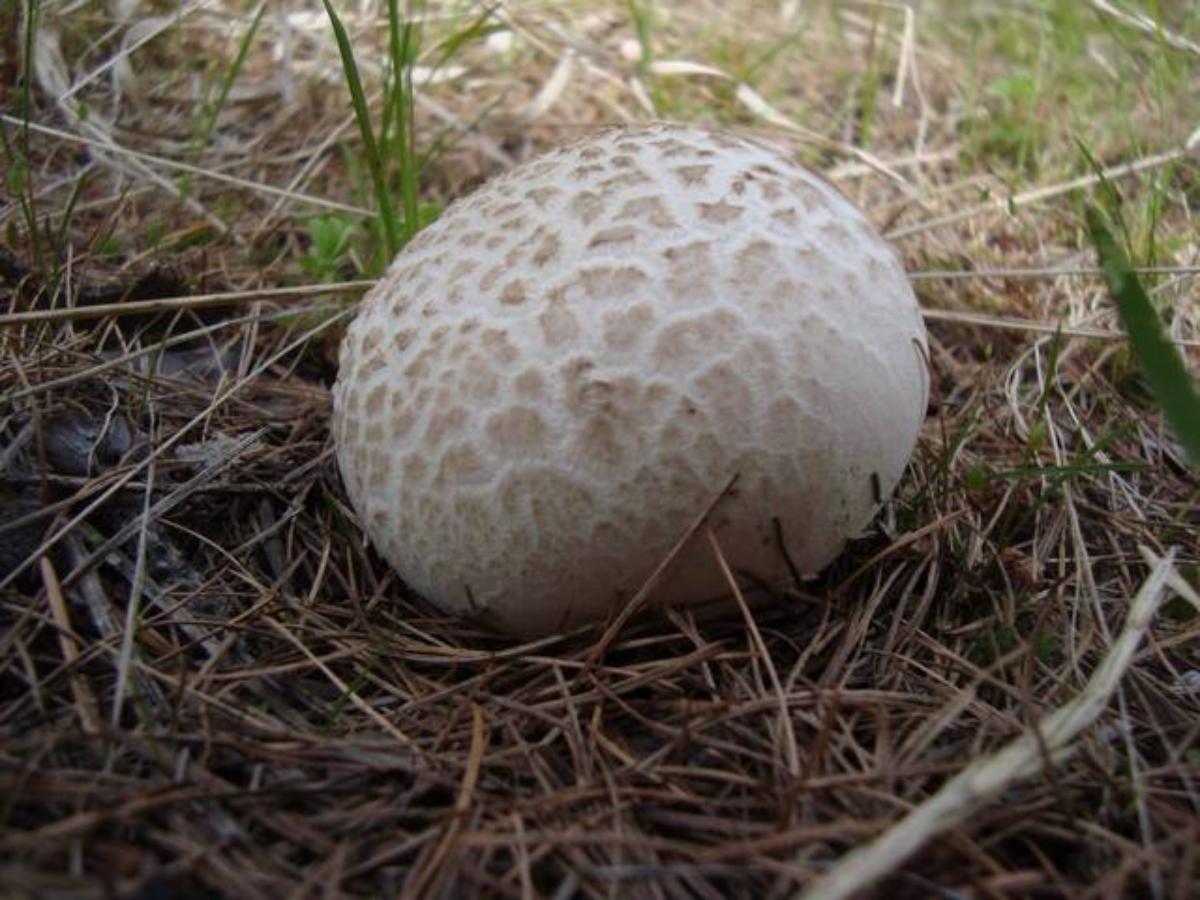
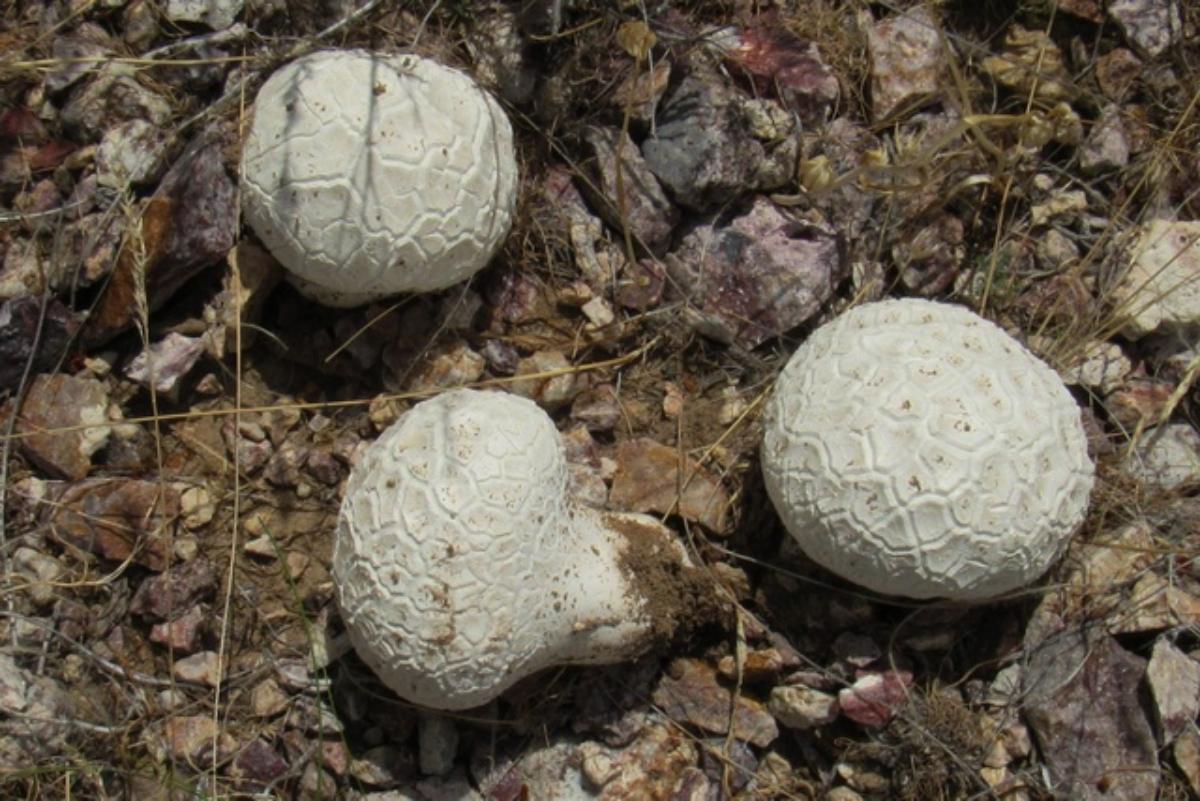
Calvatia utriformis (or Lycoperdon utriforme or Handkea utriformis)(Mosaic Puffball)
This puffball has bounced around the fungi genus like a giant pinball, and maybe has finally landed in Lycoperdon, but maybe not. It’s a huge white puffball that’s impossible to miss, no matter which genus it lands in.
- Region: Widespread, more common in eastern Atlantic regions but occurs in western states.
- Season: Summer through fall, occasionally spring
- Habitat: Sandy pastures, coastlines, shrubby habitats, grasslands, sagebrush
- Size: 4-8 inches tall and 3-10 inches wide (volleyball-sized)
- Shape: Round, squat
- Color: White, mosaic-like white patches or flat warts
- Inner flesh color: White, then turns brown and powdery
- Notes:
Mycenastrum corium (Giant Pasture Puffball)
This puffball loves cow pastures but is also found in yards and meadows across North America.
- Region: West of the Rocky Mountains, sometimes in eastern states
- Season: Summer and fall
- Habitat: Grassy areas, lawns, and fields, especially around cow and horse pastures
- Size: 2-3 inches tall, 2.5-6.5 inches wide (softball-sized)
- Shape: Oblong, wider than it is tall but generally rounded.
- Color: White or buff, with patchy, checkered, or scaly skin
- Inner flesh color: White, then turns greenish-yellow and dark olive-brown
- Notes: The outer skin starts out covered by a thick white layer. This eventually cracks to display a smooth and quite thick light brown surface. This is what causes the patchy or scaly appearance. The surface is tough and leathery and withstands kicking.
This oddball species can also grow underground. In these cases, the outer skin is totally smooth and chocolate brown.
While this species is listed as edible, there are reports of folks suffering gastrointestinal distress after eating it. It won’t hurt you, just give you a bad day or two. Proceed with caution.
Giant Puffballs at the Dinner Table
Giant puffball mushrooms are edible. Some say they have no real taste of their own and just absorb the flavors around them like tofu. Others have described their taste as rich, earthy, and nutty (good descriptions, I think).
Harvesting and Eating Puffballs
Before you pick any of these species for the frying pan, make sure you know how to check whether they’re good eating. It’s easy to do but must be done, so you don’t get sick.
Calvatia cyathiformis by Crystal on Mushroom Observer
How To Tell If A Puffball is Edible:
- All puffball species are edible in youth, except maybe Mycenastrum corium, which has mixed edibility reports.
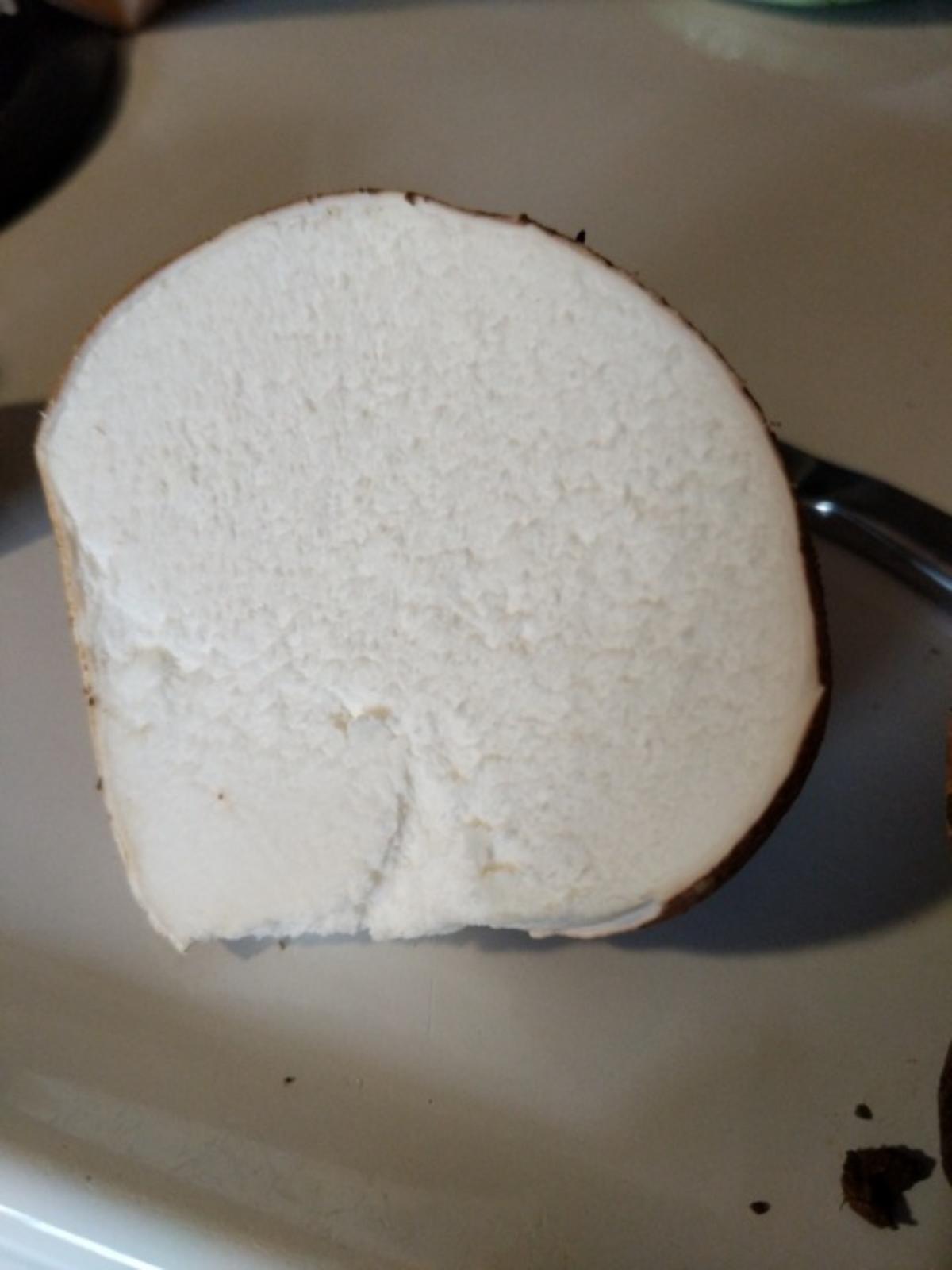
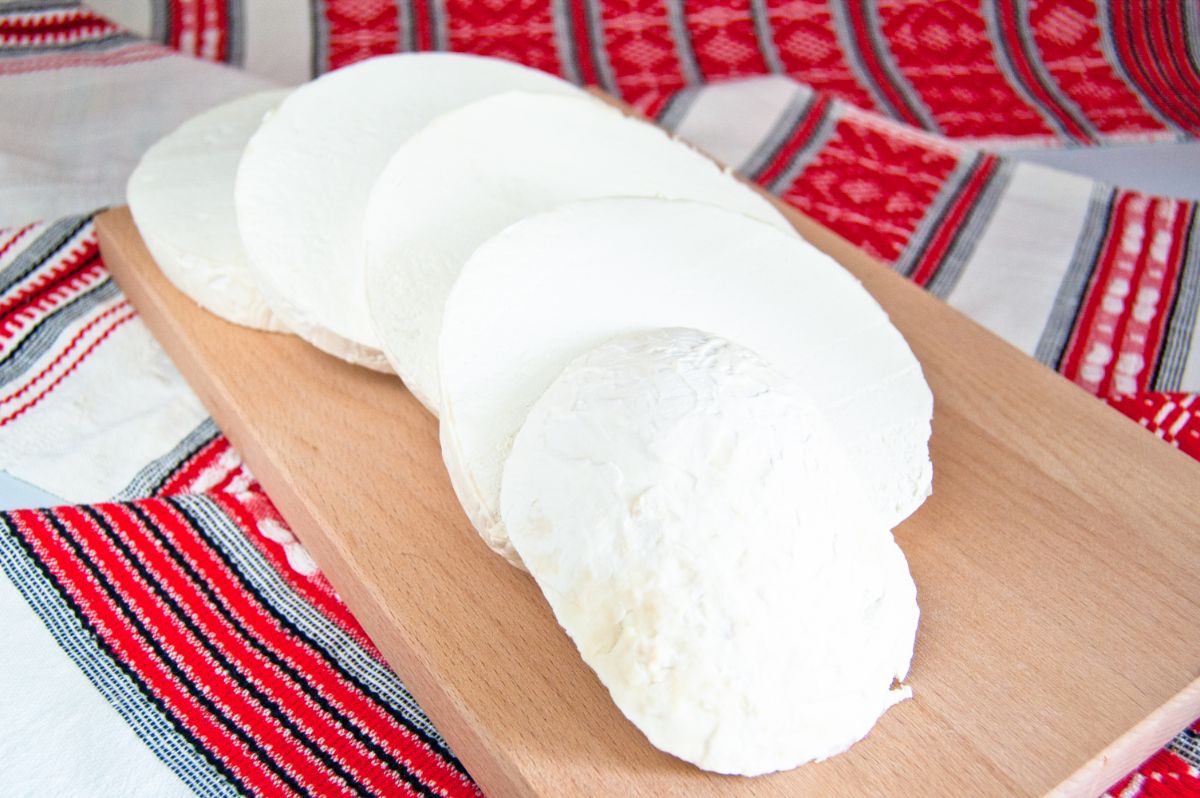
- The inner flesh must be dense and PURE WHITE. No yellow, no brown, no other color than white. Yellow or brown insides mean the puffball is starting to break down and decompose. It will give you severe gastrointestinal distress if eaten at this stage.
- Never eat a puffball unless you’ve cut it open to check the flesh color.
- This white flesh should be solid with no gills. If you see any evidence of gills disregard immediately. Some species, including the deadly Amanita, have a “universal veil” of tissue that surrounds the mushroom when young. This can make it look like a puffball. Inexperienced hunters should check with someone knowledgeable if they think they’ve found a giant puffball. An incorrect guess can kill if it turns out to be an Amanita! Please be careful.
- Only the younger, immature giant puffballs are edible. Again make sure the flesh is white and solid. Anything brown, broken, soft, or full of brown, dusty spores is too mature to eat.
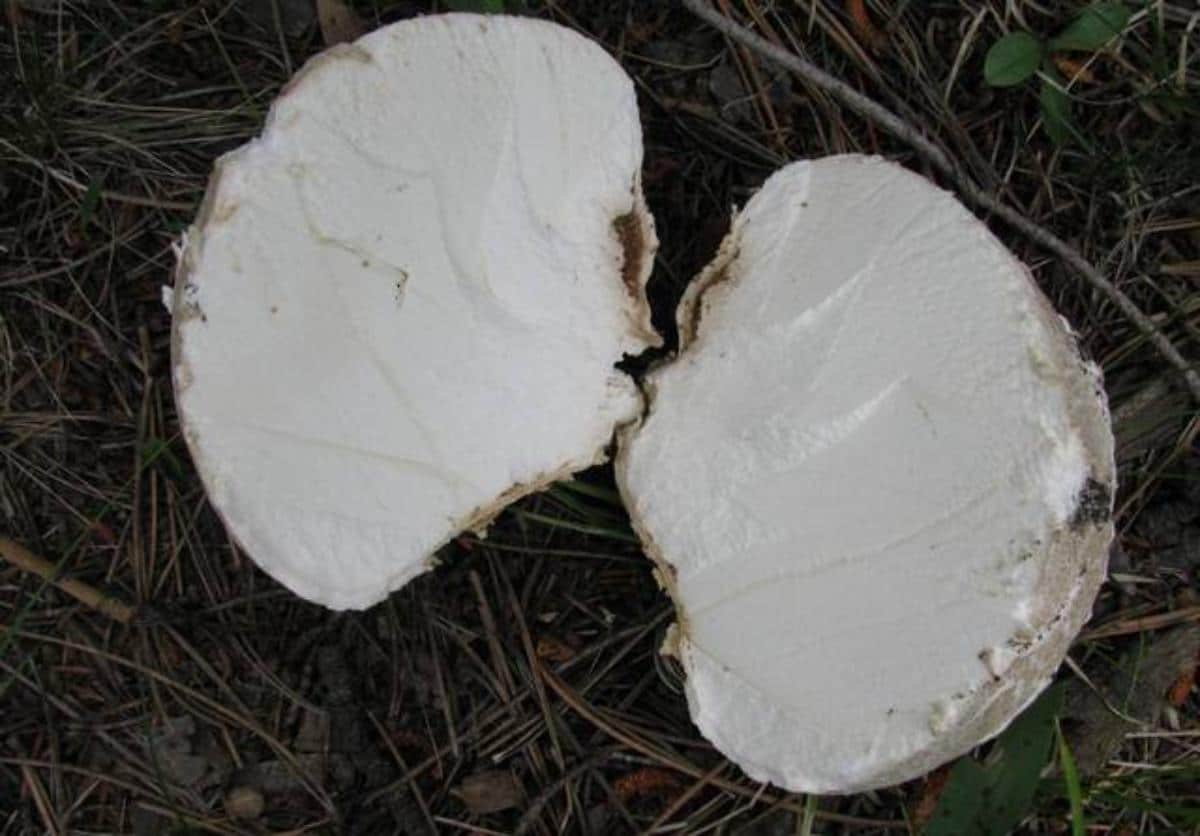
Calvatia booniana by weed lady on Mushroom Observer
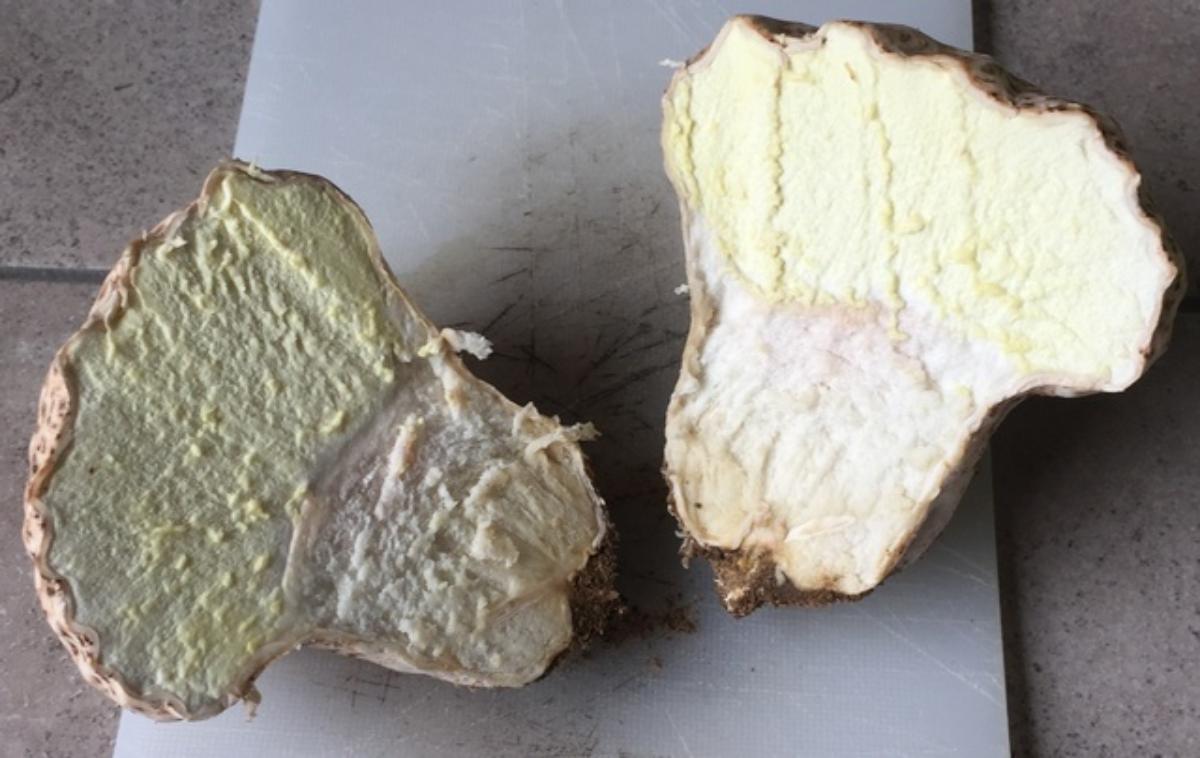
Calvatia cyathiformis by Penny Firth on Mushroom Observer
Storage and Preparation of Puffball Mushrooms:
- After picking, puffballs start to deteriorate pretty quickly. It’s best to use it immediately or very soon after harvesting.
- Puffballs don’t store well but can potentially keep for a few days in the fridge.
Giant Puffball Recipes
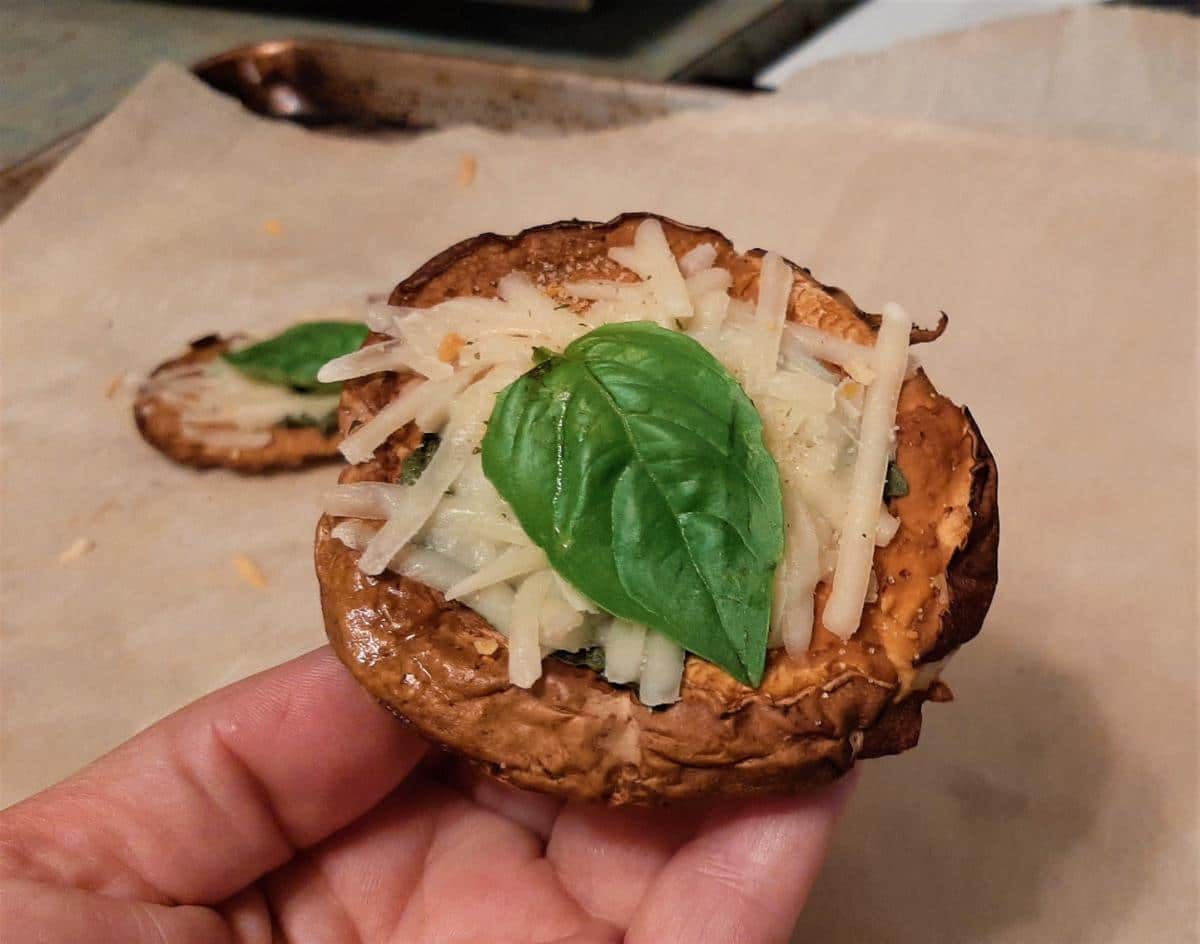
The most popular way to eat them is to fry in oil with a batter (really good). These mushrooms can be a versatile food item. Some other quick ideas to enjoy them:
- Sautéed alone or with vegetables.
- Broiled alone with a marinade or in conjunction with another recipe.
- Dice them into smaller pieces and stir fry in place of tofu.
- Use instead of eggplant in any recipe. Giant puffballs are a great replacement for eggplant!
- Remove the top and hollow out the mushroom into a bowl. Cook the hollowed out pieces with some other ingredients (peppers, spices, whatever you like) and place back into the puffball shell. Wrap the whole thing in foil and bake in the oven, checking on it occasionally to see if it’s done. Delicious!
Other Uses for Giant Puffballs
Giant puffball mushrooms have possible medicinal uses as well. Remember those trillions of spores they produce? The dried spores can slow bleeding if they’re used as a coagulant. They were reportedly used in Native American folk medicine to treat bleeding and prevent infection.
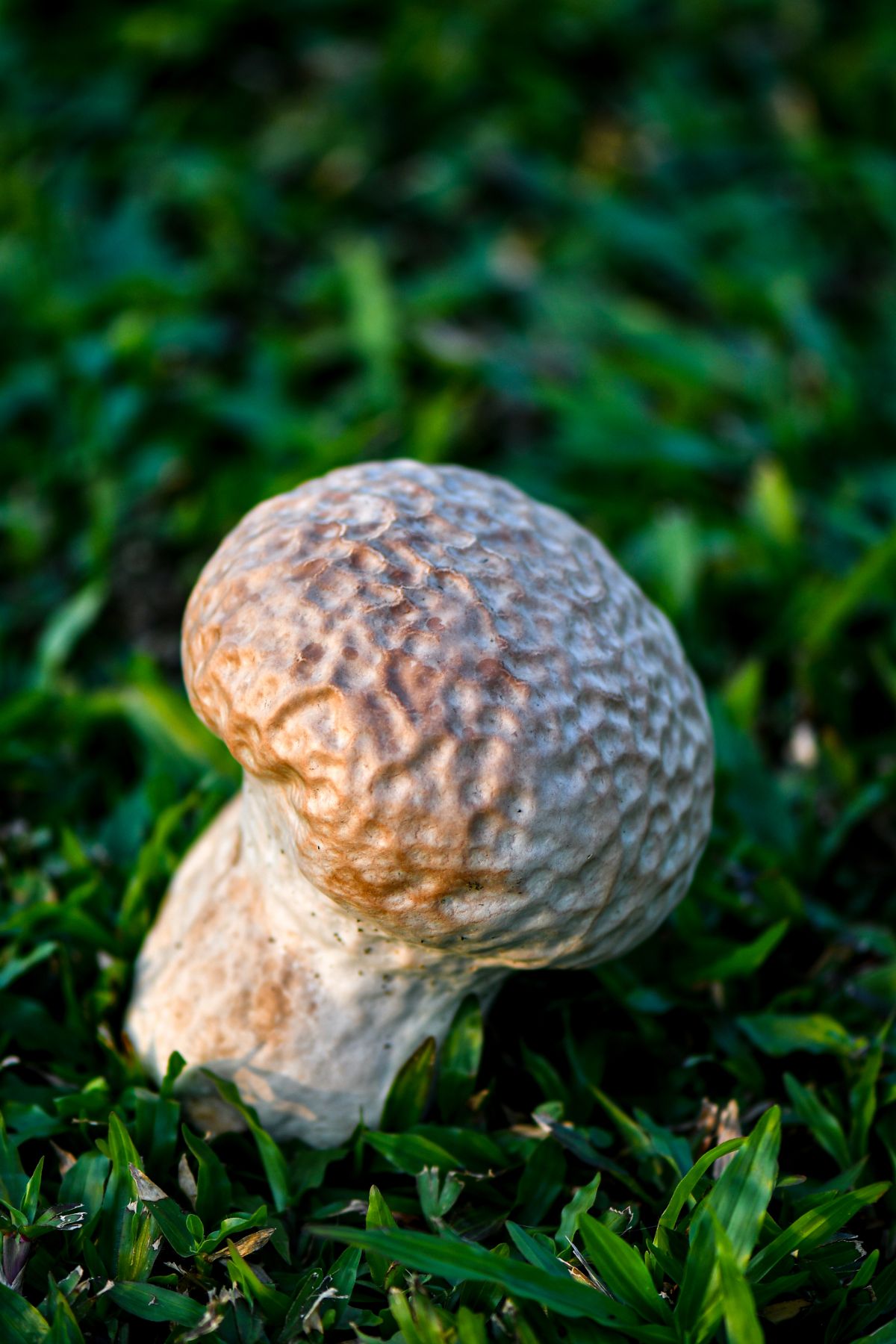
The use of Calvatia gigantea in folk medicine led researchers to to investigate it further. In the 1960’s they isolated the substance calvacin, which was shown to inhibit sarcoma in lab mice. Calvacin is now cited as one of the first substances with antitumor activity isolated from a mushroom.
Unfortunately I am unable to find any detailed experiments on calvacin or giant puffballs on the web. If you know of something, or if you just want to tell someone about the huge puffball you found in your yard, please contact me.
Giant Puffball Common Questions
Are there any poisonous giant puffballs?
No. There are no giant puffballs, but eating a puffball past maturity will make you sick. Just like any fruit or vegetable, once it starts rotting, you do not want to eat it.
Puffballs when they’re small also slightly resemble baby amanita mushrooms (very poisionous). The way to prevent eating a rotten puffball or mistaking it for an amanita is cutting it open. It should be all white and have no gills or anything inside, just solid white flesh.
Where do puffballs grow?
Usually, they grow on the ground, in meadows and on disturbed land. They feed of off dead and decaying material. Giant puffballs don’t grow on trees.
What is the easiest way to identify a puffball mushroom?
Giant puffballs are white with firm white flesh inside. If they are yellowish or brown, it means that it is about to or has gone to spore, and is not edible anymore.
Before the mushroom turns brown or becomes too mature, there will be a point when the white exterior cracks and the white interior shows through.
Always (and we mean, always!) cut the puffball in half to verify the flesh inside is firm, all white, and not hiding gills or a stem.
Billye
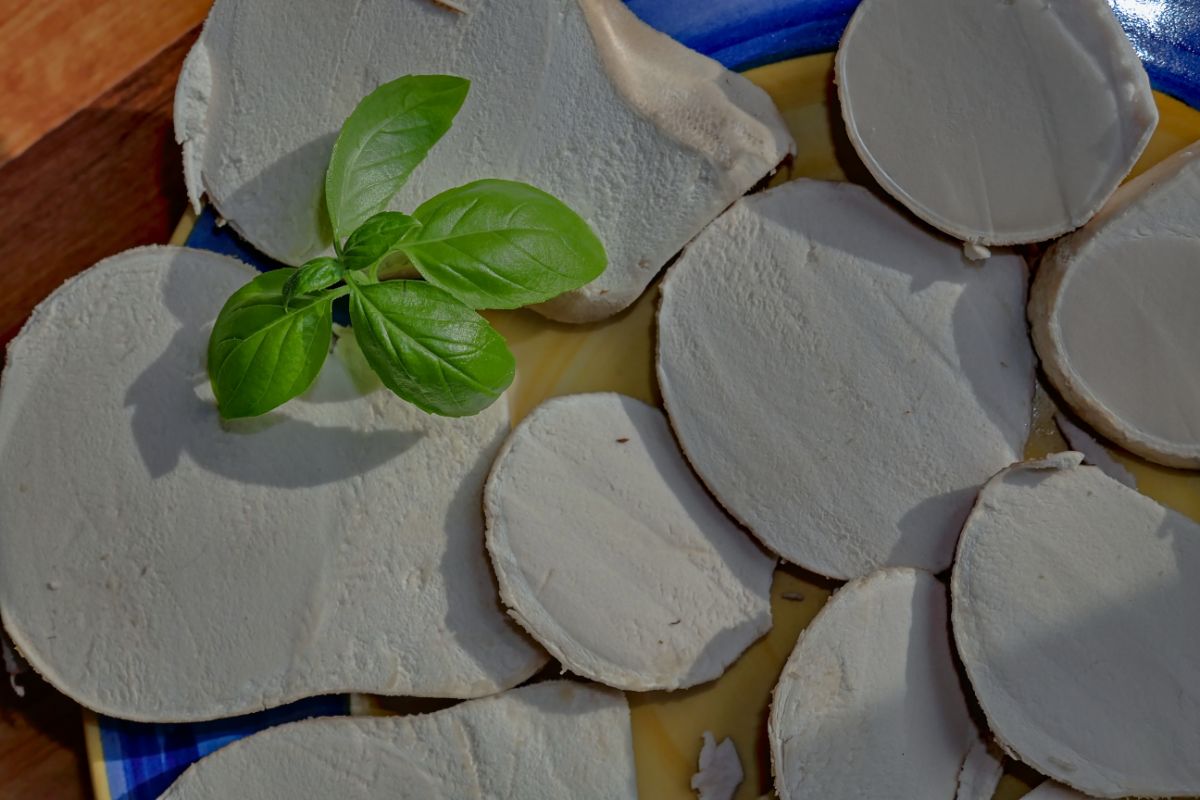
It’s confusing to see the photo above of the solid grey mushroom, nicely sliced and ready to eat, when your text says to only eat the white ones. Please tell more about the grey one.
Thanks
I would love to see a large one!
Jenny
Hi and thanks for the comment. Sorry for the confusion! The image I think you are referring to has text attached to it explaining it is a puffball past maturity. It is there to show comparison of what an edible vs. non edible specimens look like. Or, if you’re referring to the sliced specimen, the coloring in the photo is a little off (there were shadows), but the flesh is white even though the image is dark. Hope that helps!
David
I foraged a giant puff ball earlier today and had some of it. For the most part, the flesh was pure white. However, there were tiny parts of the mushroom that had a small brown tint in spots where it looked like bugs may have been. These parts were discarded and only parts that were pure white were used. However, both me and my son started feeling a little nauseous later. Do you think this could have been caused by the puff all? I’m confident in the identification, but have never attempted to eat one before. Thanks in advance!
Jenny
Hm. So, it definitely is possible. Any brown or yellow spots mean the mushroom is decomposing, and as soon as it starts that process it is potential cause for digestive issues. That being said, I’ve totally done the same thing — cut off the good parts and eaten them and have been fine. But, we all have different digestive systems and tolerances, so it may be you’re more sensitive to them. If you’ve never eaten puffball before, it could just be that you’re slightly allergic to it even if it is in prime condition. That happens too. Personally, there are a few edible species that I can’t eat because my body does not approve. Other people eat them fine. That’s just how it goes. I have a friend who breaks out head to toe in hives after eating Lion’s Mane, a species I eat without any issues. I think the only way you’ll know for certain is possibly trying again with a really good prime all-white puff and seeing if you have the same symptoms? That is, if you’re up for the adventure! Good luck!